Part Two of Two, In Which Susan’s Ger Is Set Up For The First Time…

1. arrived at site
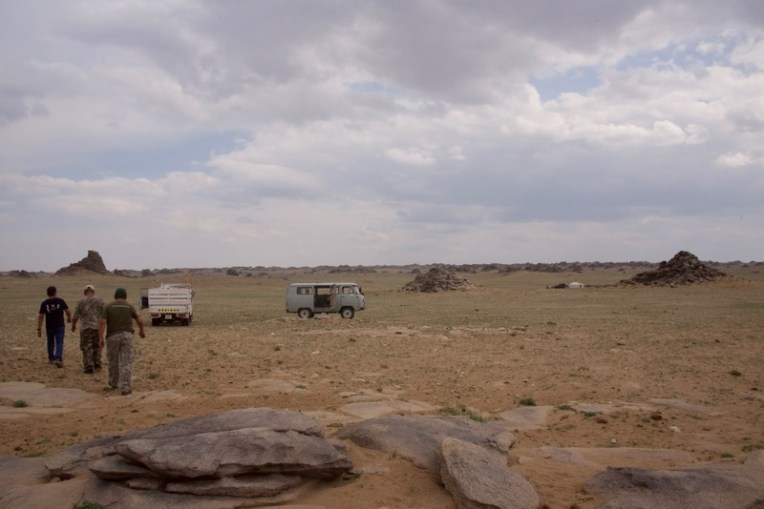
My ger arrives on-site in Ikh Nartiin Chuluu Nature Reserve, Mongolia.

Last week I shared photos of buying my ger at the Narantuul Market in Ulaanbaatar. This week you’ll see it put up for the first time.

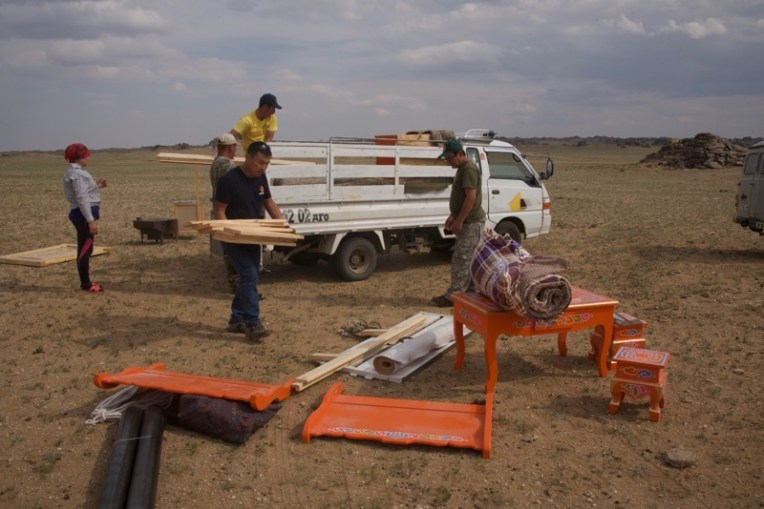
A few hours after all the shopping was done I caught the evening train down to Dalanjargalan Soum, where the Ikh Nart reserve headquarters is located. The reserve Director, Dr. Amgalanbaatar, was kind enough to let me stay overnight in the “dorm” room used for visitors. The next day he and I and Anand, a member of his staff, drove out to the set-up location in the reserve’s grey Russian fergon van. Shavka arrived with his truck and the unloading and set-up began.

I had been given a choice of three locations, all in the vicinity of local herders in case I needed assistance. I was in the reserve itself, but not in the Core Area where, other than the research camp that has been there since 2001, no camping is allowed. I liked this location the best.

Note: You can find a number of sites and videos about putting up a ger. Mine’s a little different, I believe, since it shows one being put up for the first time, so there are first time steps that you normally wouldn’t see.
2. unloading
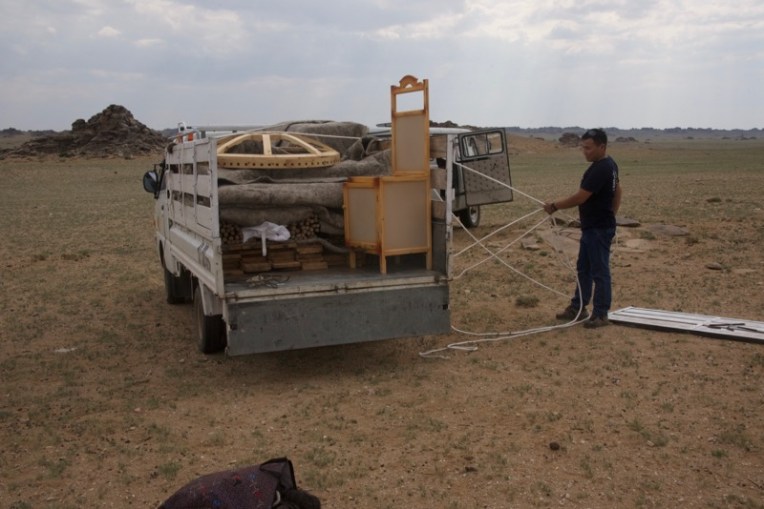
Unloading everything. That’s the sink stand at the back.
3. unloading
Ger parts on the ground and the furniture coming out. That’s the headboard for the bed.
4. unloading
Some of the furniture, my felt bed pad and the stovepipe.
5. unloading
Anand pulling the traditional hand-braided horsehair ropes out a bag, which will go around the ger to hold the cover on. I’d specifically requested them instead of the, more common these days, cloth straps. It turned out that they were included in the ger “kit”.
6. unloading lattice
The wall lattice (bagana) sections being unloaded. There are four of them, hence a “four wall ger”.
7. pieces in place
Ger parts being laid out on the ground. On the right are the felt cover pieces.
8. threading pole ends
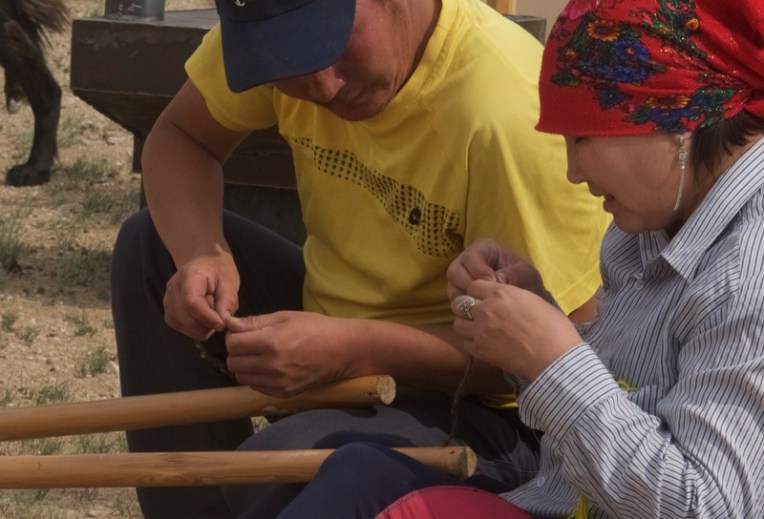
It took longer than usual for set-up since there were things that had to be done first, but that would not have to be done again, like threading loops of braided strands of horsehair through the ends of the roof poles and knotting them in place. I was put to work which was great  but, never having done it before, had trouble getting the hang of how the knot was tied, so only managed one of the 82.
9. threading pole ends
Horsehair thread looped through hole in roof pole.
10. stovepipe hole
In the meantime, Shavka trimmed and fastened onto the toono the sheet metal piece that would hold the stovepipe so that it would never come in contact with the wood.
11. inside door handle
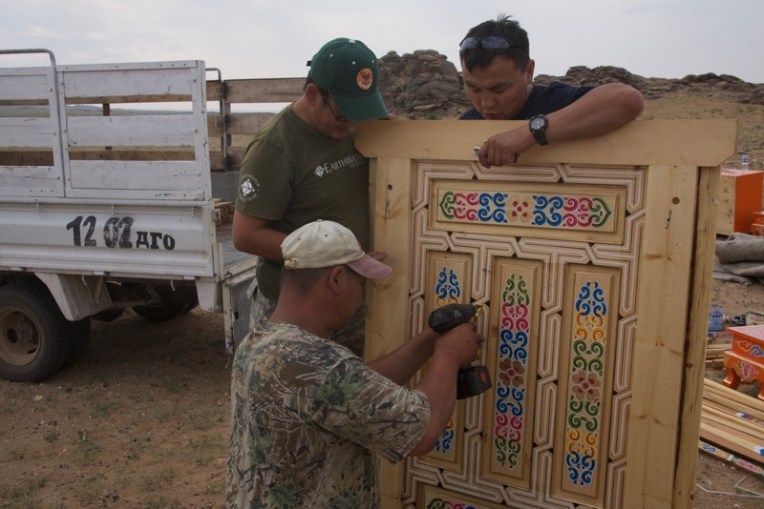
Before the door was set in place Shavka fastened on the interior door handle. It’s toward the center so that when it’s open you can reach out to it to close the door without having to step out of the ger. Great when it suddenly starts to rain or the wind comes up.
12. first lattice
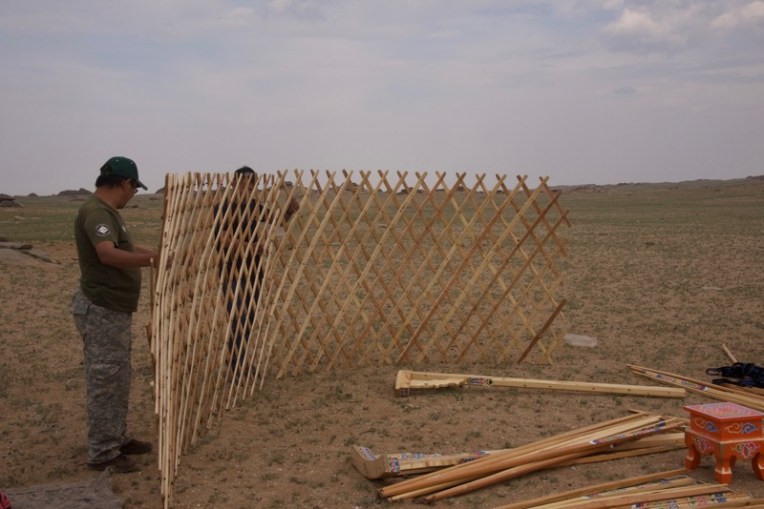
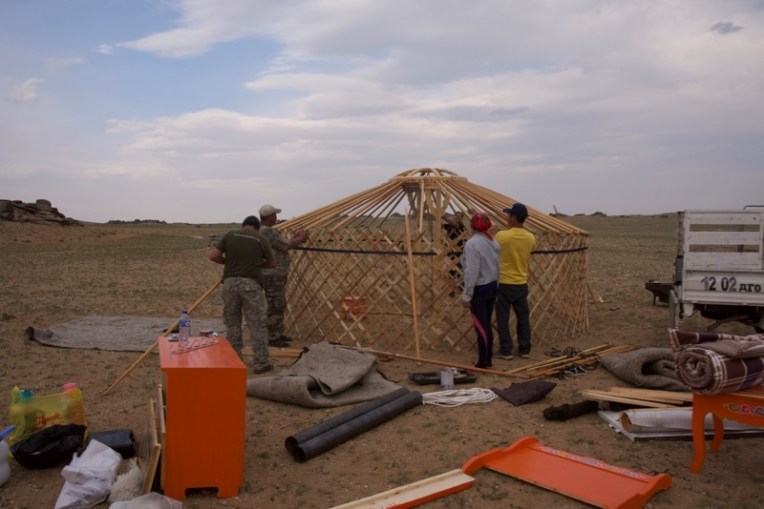
Prep done! The first section of lattice (khana) is put in place.
13. tieing lattice together
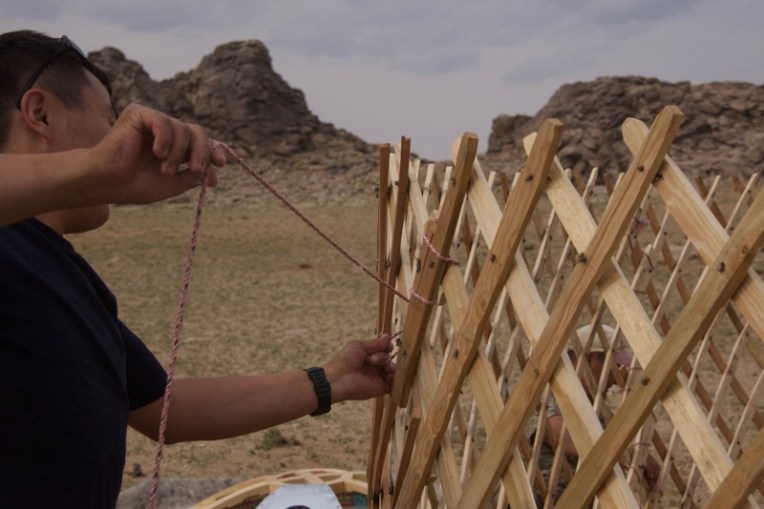
Each section is tied together with sturdy cord.
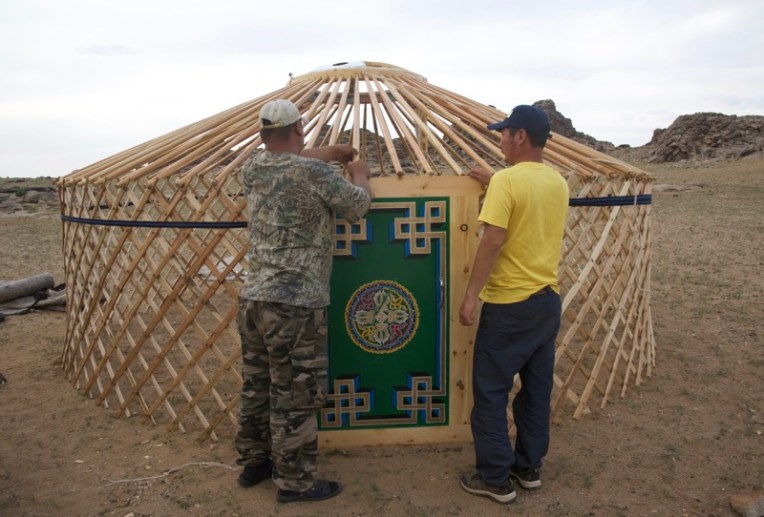
14. installing the door
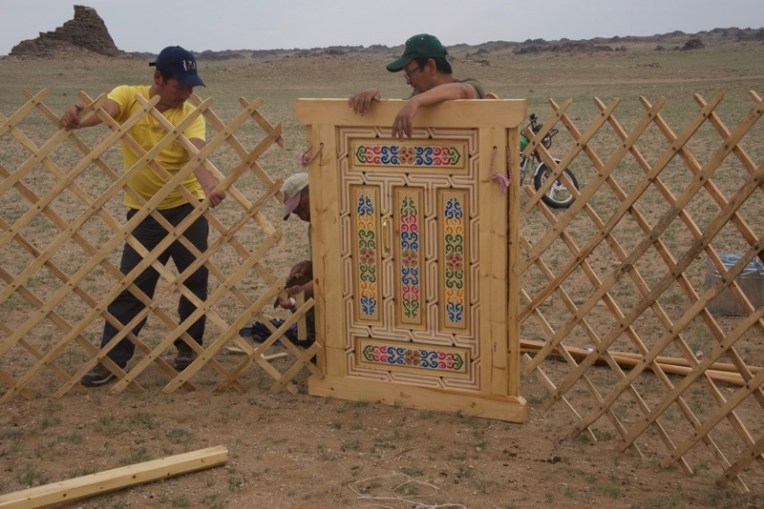
The door (khalga) is set in place. The lattice didn’t come to the edge of the door the way Shavka wanted them to so he sawed off the ends of each lattice piece to fit. Another task that only needed to done once.
15. roof ring
The toono is handed over the walls to be set up.
16. vertical supports
The toono is laid upside down on the ground and the vertical supports (bagana) are held in place flush, without slots, holes or other connectors.
17. tieing roof to supprts
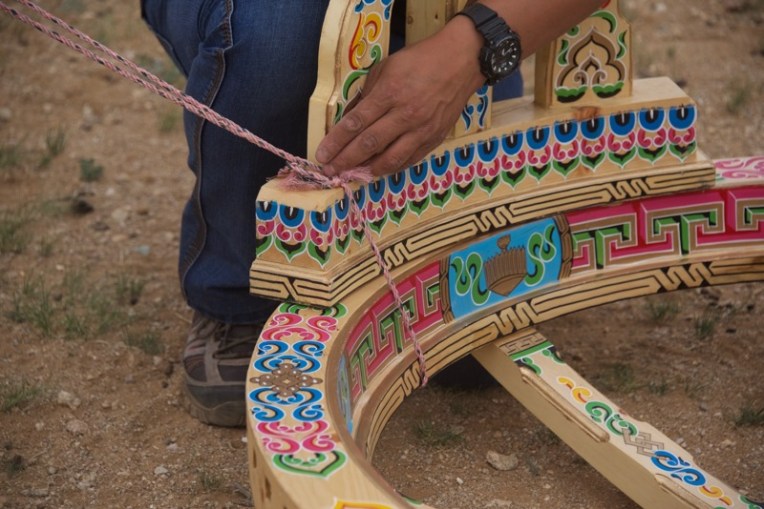
The toono and bagana are tied together by lengths of the same cord that was used to tie the lattice wall sections to each other. And yes, I really love the decorative painting!
18. first pole
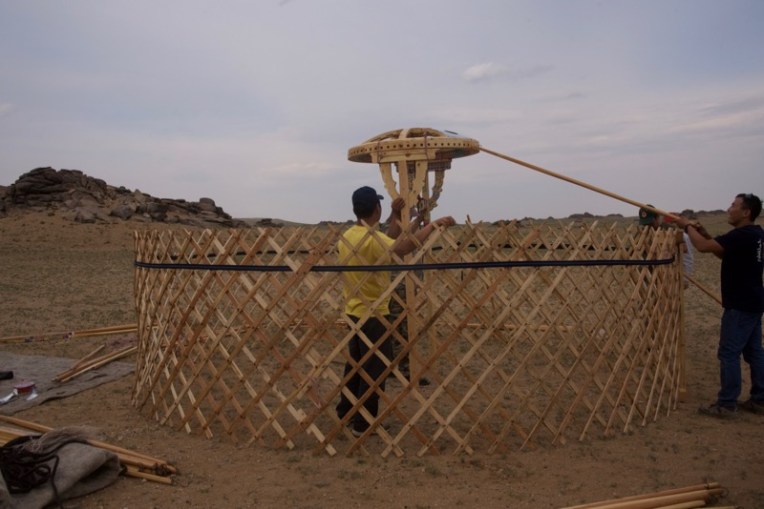
The toono/bagana combination is now held in place by two people while a few poles (uni) are added around the perimeter. The dark cloth band is what holds the door in place.
20. pole and lattice
The horsehair loops in action, attaching the roof poles to the lattice sections.
21. making pole ends thinner
It became clear within minutes of trying to insert the roof poles into the holes in the toono that the ends were too big. Amgaa, Shavka and Anand got out knives and took three or four large shavings off of each of the 82 poles.
22. poles almost done
Once the pole ends fitted the toono holes, the roof went on pretty quickly.
23. door
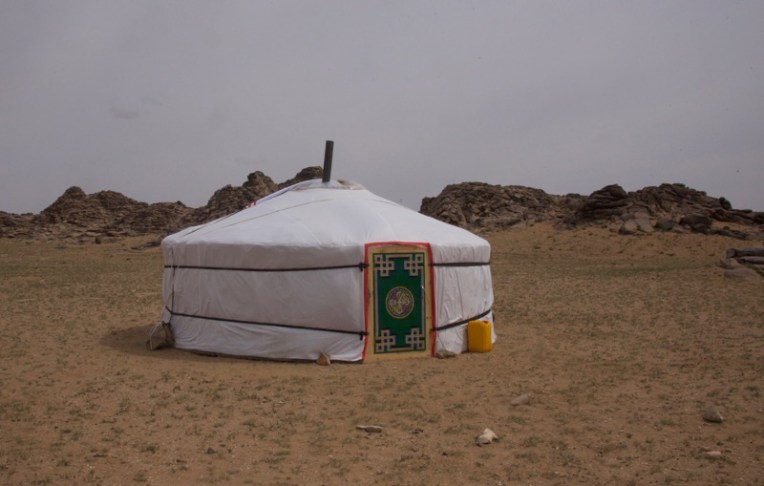
Shavka adjusts a roof pole. The exterior design on the door was different than any I’d seen before and I liked it.
24. inside roof cover
The first part of the cover (tsavag) to go on was a light weight one that would be visible inside the ger.
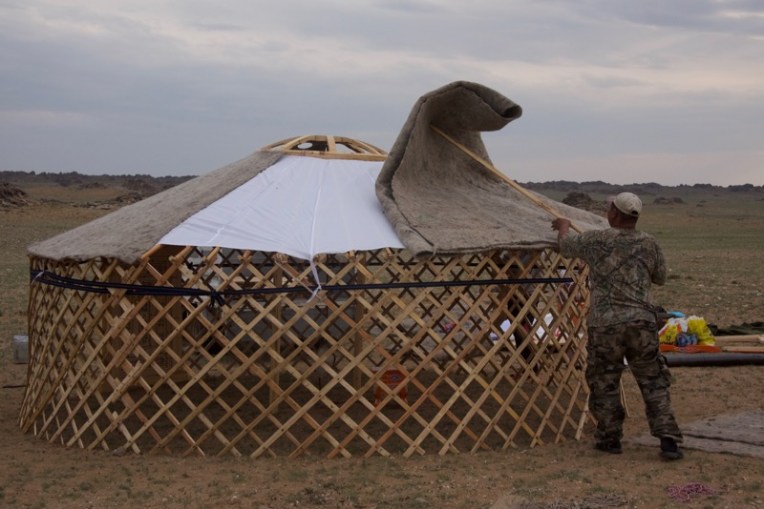
26. roof felt
The felt roof pieces (deever) go on. There’s definitely a technique one has to know to be able to flip a folded roof felt into place in one motion.
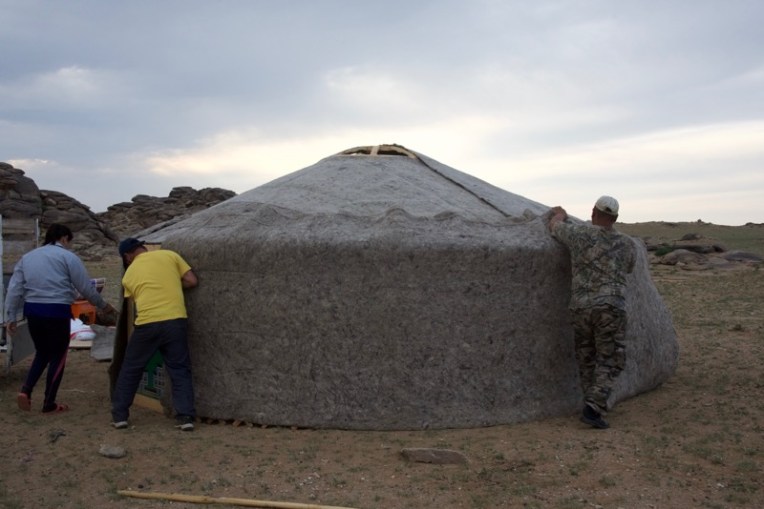
27. wall felt
Roof felt on, wall felt (tuurga) almost on.
28. plastic cover
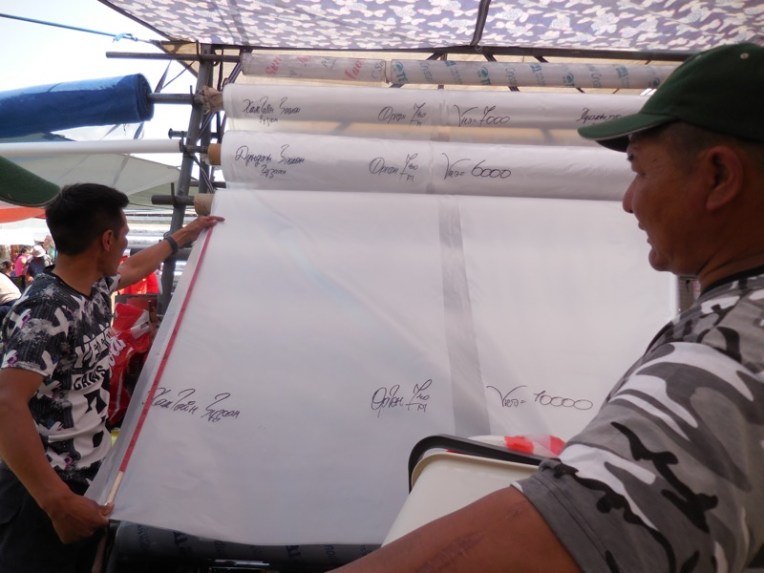
If you’ll remember from last week’s post a quantity of plastic sheeting was purchased. Here’s why. It’s a fast and inexpensive way to add rain protection since the felt will soak through if it rains hard enough (the voice of experience from a couple of occasions). We also got what the Mongols call “Russian canvas” with the ger, which is waterproof, but Shavka had wisely decided to use it as a layer between the ground and the sheet vinyl flooring. I bought the wood for him to make a sectional wood floor for me for next year.
29. outer cover
The final step was the outer cover , held in place by two bands of the braided horsehair rope. Choi and his wife, were my “hosts”. They had their ger nearby, Here he is attaching the triangular top cover piece (urkh) which generally left open and pulled back but is closed when it rains. No glass or plexiglass in the toono openings. It was open to the sky, which is what I like.
30. my ger
And here’s my ger the next day, all set up. We started putting it up the day before around 5pm and finished at 10pm. I was moved in by 10:30. The yellow container on the right is one of two I bought so that my host could bring me well water via his motorbike.
31. interior
All moved in. The big rock, along with three more on the outside are to keep the ger in place and stable in high winds. Gers are not otherwise fastened to the ground. No stakes. On the left is my water filter system, which consisted of a LifeStraw 5 liter gravity feed filter which emptied into the plastic container I bought at the market. The wonderful $9 teakettle sits on the one-burner gas cooktop which is on the stove. I love the quality of light in a ger as it comes through the roof.
32. ger interior
The “kltchen” and dining side of the ger. A cabinet is on the list for next year, although the table does have a pull-out drawer where I put my flatware and utensils. Also note that the roof poles provide a useful place to put things like bags, towels and clothes.
24. my and choi's ger
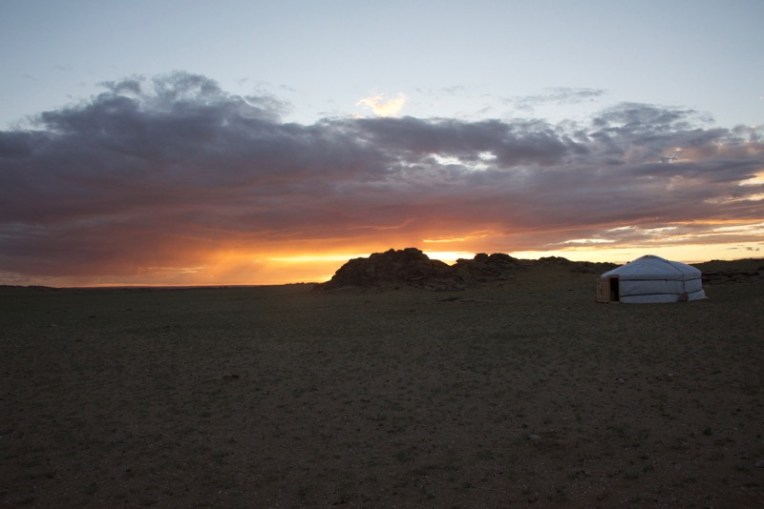
My ger in its setting. On the right you can just see Choi’s ger, about a five minute walk. There was a rock formation between us, so I had visual privacy and could only see the natural landscape. I did have Choi’s goats and sheep coming by on a few evenings and that was pretty entertaining.
33. ger at sunset
Sunset evening in Ikh Nart with my ger.

So how did it go, my week of living in my own ger for the first time? Really well. There was one very strong storm with heavy wind and rain that pulled part of the cover almost halfway off, but Choi and his wife fixed that the next morning. Wind blew a lot of dust in on the bottom on one side one afternoon, but putting up a section of the interior curtain (which hadn’t been done since there was no cord to string it up with, but I found a way to fake it) so that it fell onto the floor solved that problem. I used my cooktop for heating water for coffee in the morning and tea for visitors. I also had bansh (small meat dumplings used for soups) for dinner a couple of nights. I did a little laundry using the steel basins I’d bought and also managed a standing bath and hair wash.

Food storage became an issue and I lost some items, like a loaf of bread that turned moldy, due to lack of refrigeration. A small solar powered refrigerator with battery storage is on the list for next year. One often sees them in herder gers these days. I was happy with candlelight at night, so not really feeling the need for an “electric” light. My toilet was the great outdoors, which I’m used to, but it was a bit much for a week in one place. My current thought is to have a small vertical wall maikhan (the cloth summer tent) made with a divider down the middle. On one side would be a pit toilet with a seat and on the other a place to take a shower using a sun shower bag.

I slept well (I always do in a ger anyway) and found that I had, in fact, understood what was needed to do this to be happy and comfortable for a week or more. In the evenings I took one of the stools outside and put it close enough to the ger wall that I could sit with back support and watch the sun go down. A nice nip of Chinggis Gold vodka and some Ukrainian chocolate nougat candy (from Roshan, my favorite) and life was just about perfect.


Save

Part One Of Two, In Which Susan Buys Her Very Own Ger…

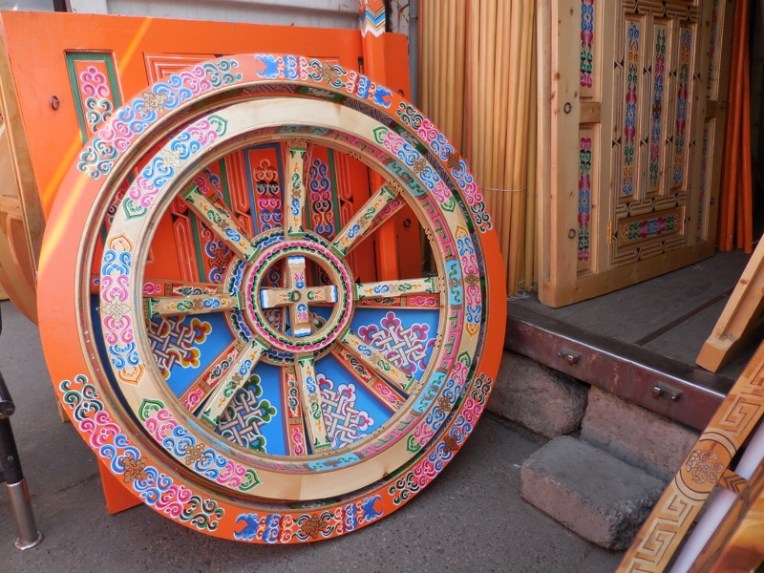
The ton for my ger is the smaller one inside the larger orange one
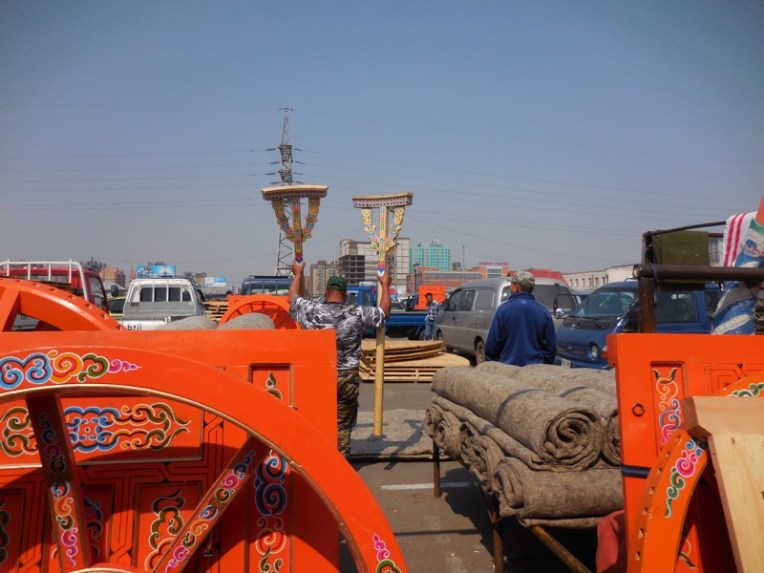
The roof-ring, “toono” in Mongolian,  for my ger is the smaller one inside the larger orange one. I had originally planned to get the traditional orange, but Shuka (see below) observed that the clear wood was better because one could see the quality of construction. He’d already reconnoitered the various ger sellers before I got there and had picked this one as having the best quality for the money. I ended up really liking the feeling of the interior structure with the decorative painting on the lighter color.

On June 15, exactly one month ago, I got to spend some of the most fun hours I’ve had in eleven years of traveling to Mongolia, buying a ger at the Narantuul Market in Ulaanbaatar.  Not to bring home, but to use at one of my favorite places in the world, Ikh Nartiin Chuluu Nature Reserve in Dornogobi Aimag, which I went to on an Earthwatch project (still going strong) on my first trip to Mongolia in 2005.

Before I left home, calls were made for me to get price estimates so I would know approximately how much things would cost. As it turns out, it’s impossible to get traveler’s checks anymore and foreigners are limited on how much money they can take out of an ATM per day. So I carried $1500 in cash with me, which was converted into tugrik, the Mongolian currency, before we went to the market.

I didn’t do this on my own, but had the expertise and assistance of two Mongols. One, Dr. Amgalanbaatar Sukhiin (Amgaa), is the Director of the Ikh Nartiin Chuluu Nature Reserve Park Administration who I’ve known for eleven years. He granted my request to be able to set up a ger in the reserve, designated some choices for the location and helped with the shopping (talking to the sellers, carrying the money and paying for things) and the set-up. The second is Batbold (generally known by his nickname “Shavka”), a herder who lives with his family near the reserve, in a ger, of course. He was kind enough to drive his truck to Ulaanbaatar, help with all the purchases, transport everything back to Ikh Nart and help with the set-up. This dream come true would not have happened without them, along with other helpers you’ll meet next week.

“Ger” means simply “home” in Mongolian, but it’s generally associated with the round “felt tents” that the Mongols have lived in for over a thousand years. It’s a structure that is perfectly adapted to conditions in the Mongolian countryside. I thought of buying and living in one for a week to ten days a year as a kind of final exam to see how much I’d learned over the years staying at the Ikh Nart research camp, tourist ger camps and visiting many herder families.

The exterior of the door.
The exterior of the door, “khalgaa” in Mongolian. An unusual color and design that I hadn’t seen before. The doors come already framed in.
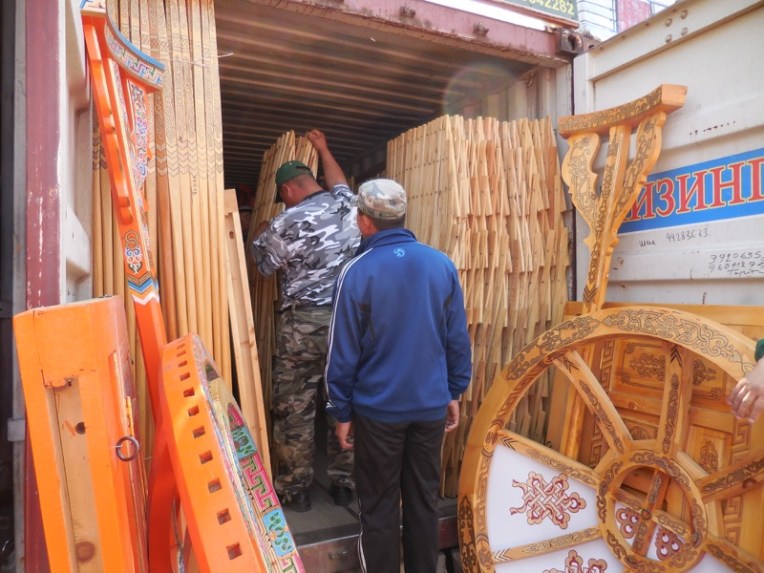
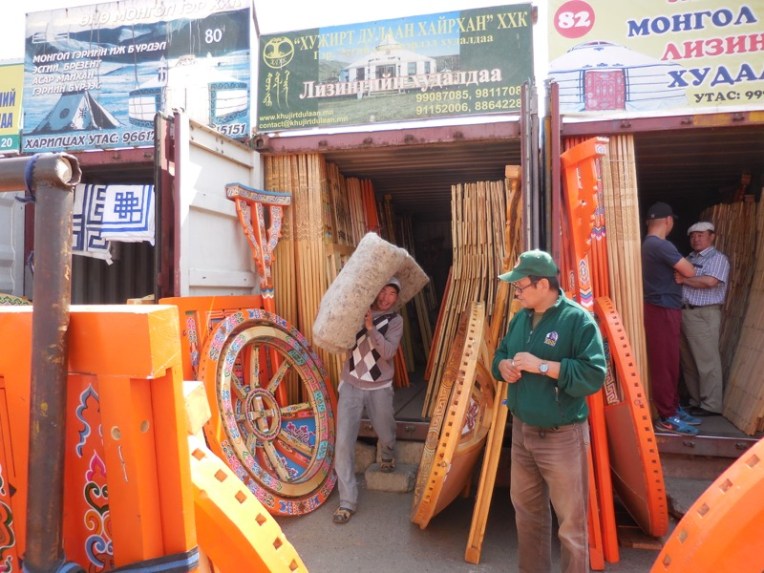
The vertical supports, called "bagana", being carred to the truck.
The vertical supports, called “bagana”, being carried to the truck.
I bought a "four wall ger", which means four of the standardized wood latttice walls
I bought a “four wall ger”, which means four of the standardized wood latttice walls, called “khana”. Gers are described by the number of walls, which also indicates how big in diameter they are. Shavka is picking out four sections.
Bringing out the felt cover.
Bringing out the felt cover. I bought one layer since it’s summer. More layers can be added as the weather gets colder. It’s a tremendous insulator. That’s Dr. Amgalanbaatar in the green jacket.
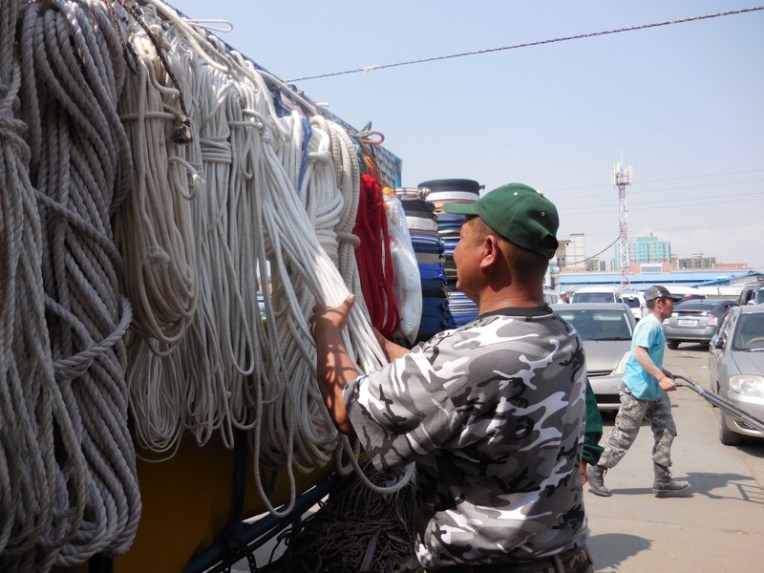
Choosing sturdy rope
Choosing sturdy rope for holding the rocks that will weigh down the ger to keep it in place when it’s windy.
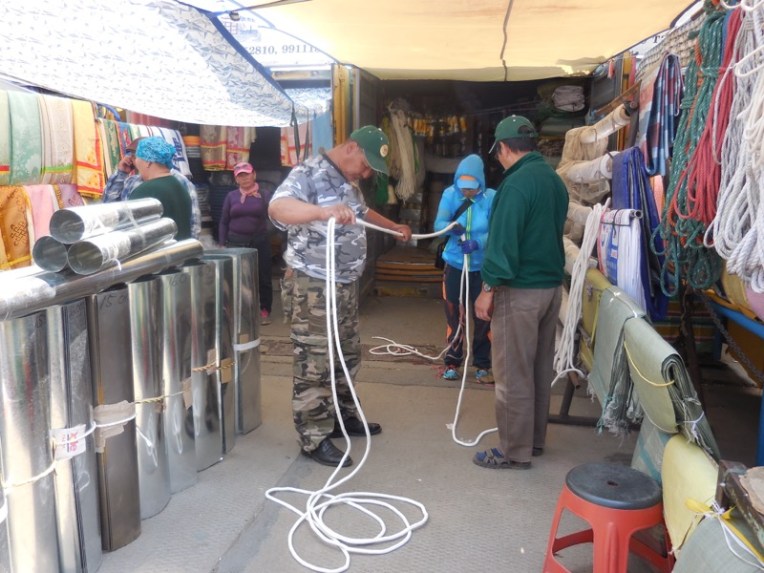
Measuring out the rope.
Measuring out the rope. Shavka was very particular about every aspect and item.
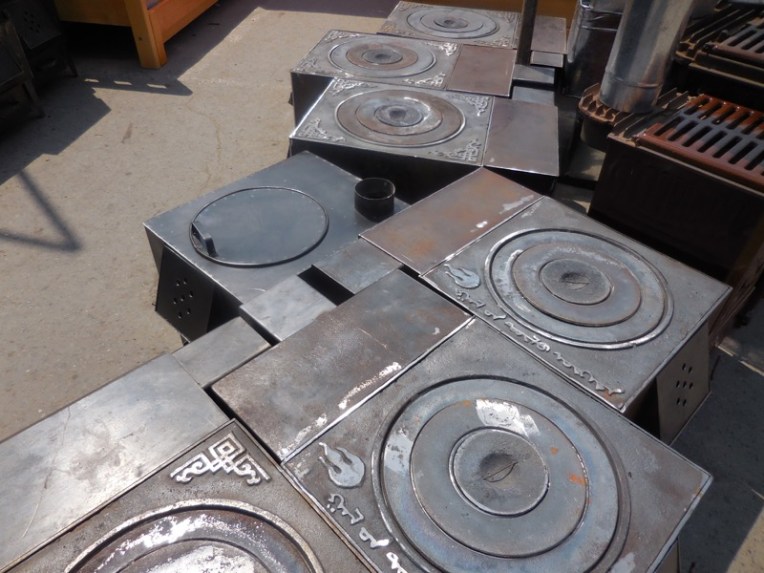
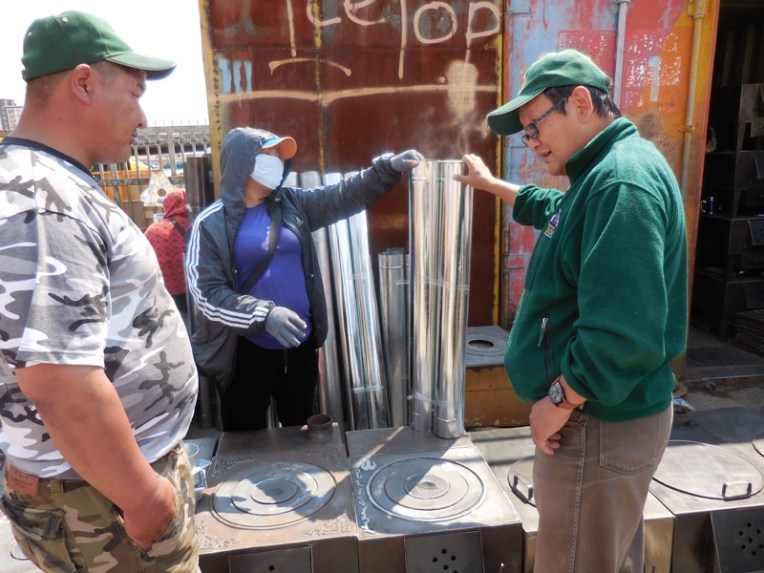
Ger stoves.
Ger stoves. There are lighter, thinner ones that are for summer use and heavier, thicker ones that are used in winter. I chose the latter to not foreclose the option for cold weather use. There were two designs to choose from. I went with the one that had the flame motif and the vertical Mongol script, called “bichig”.
Stovepipes.
Stovepipes. They come in two sections to be assembled in the ger. There’s also a sheet metal piece that fits onto one of the openings in the toono which has a pre-cut hole for one.
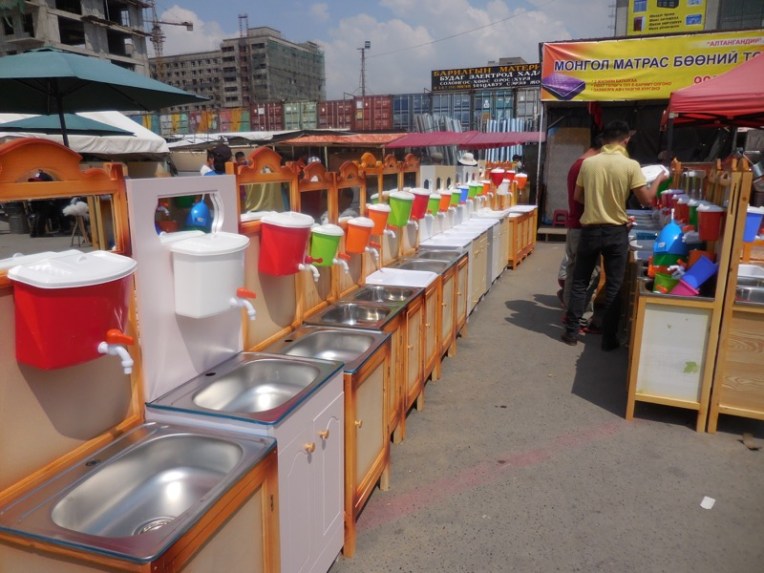
Sink stands.
Sink stands. How to have running water in a ger. Mostly I’ve seen these in tourist ger camps, but having one for mine made sense and it came in very handy. I chose the one on the front left. I also bought a bucket which went underneath the sink to catch the water.
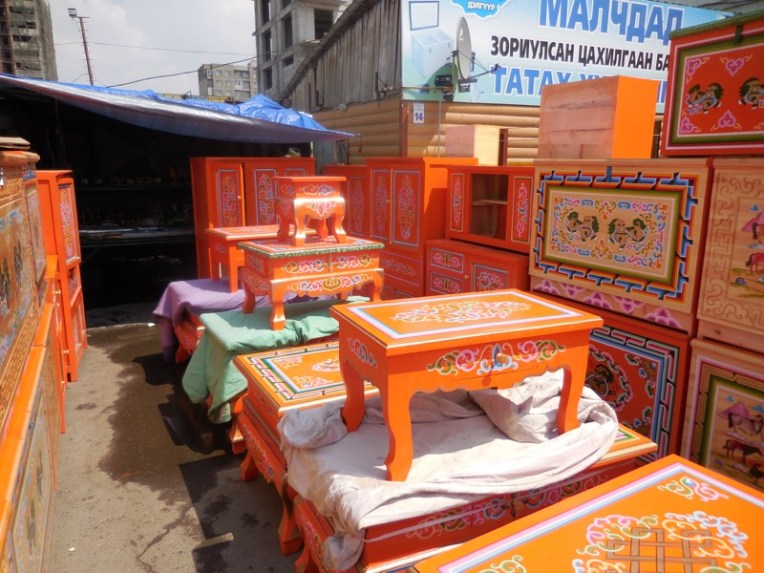
Ger furniture in the traditional orange.
Ger furniture in the traditional orange. I bought a bed, a table, two stools and a cabinet.
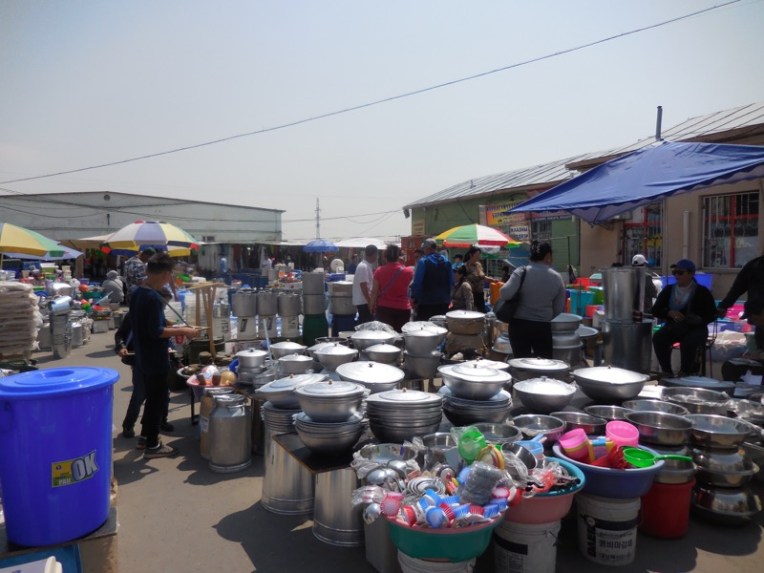
Kitchenwares.
Kitchenwares. I got one of the aluminum pots with a lid like you see in every ger.
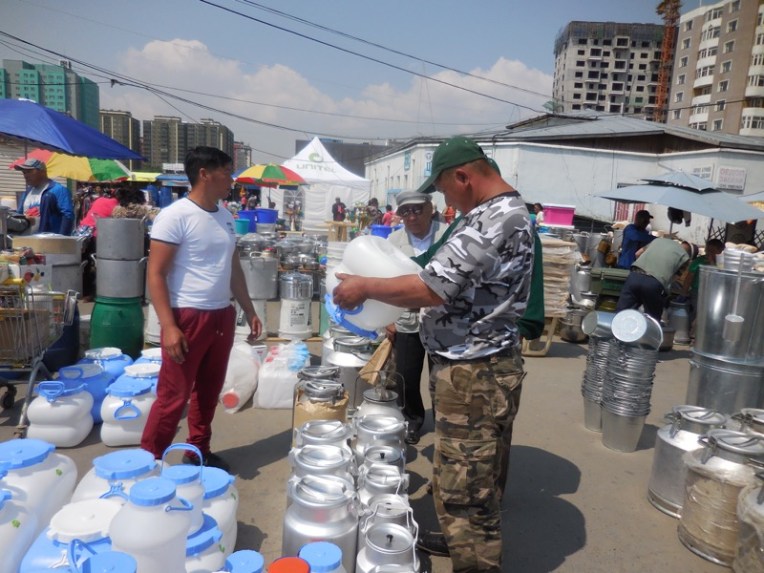
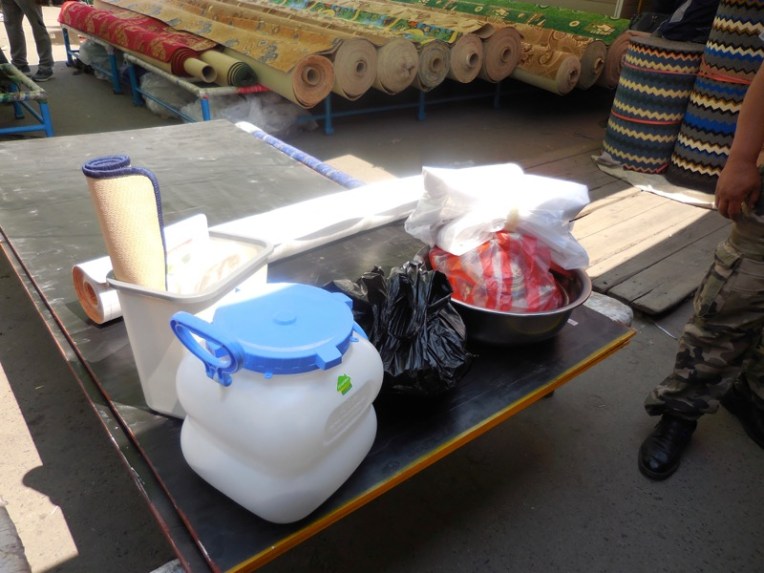
Water container.
Water container. I purchased a LifeStraw gravity feed water filter before I left home. The idea was that I would be provided with well water (for that I purchased two yellow rectangular containers that could be carried on a motorbike). The 5 liter filter bag would be filled from those and drain into the container that Shavka is holding. It worked quite well and drinkable water was no problem.
Plastic sheeting.
Plastic sheeting. There are two ways to rainproof a ger. One is covering the roof (and sometimes the sides) with what is called “Russian canvas”, heavy waterproof cotton. A bundle of it was included in the price for the ger. Shavka also bought enough of the plastic to cover the whole ger. And it was a good thing…
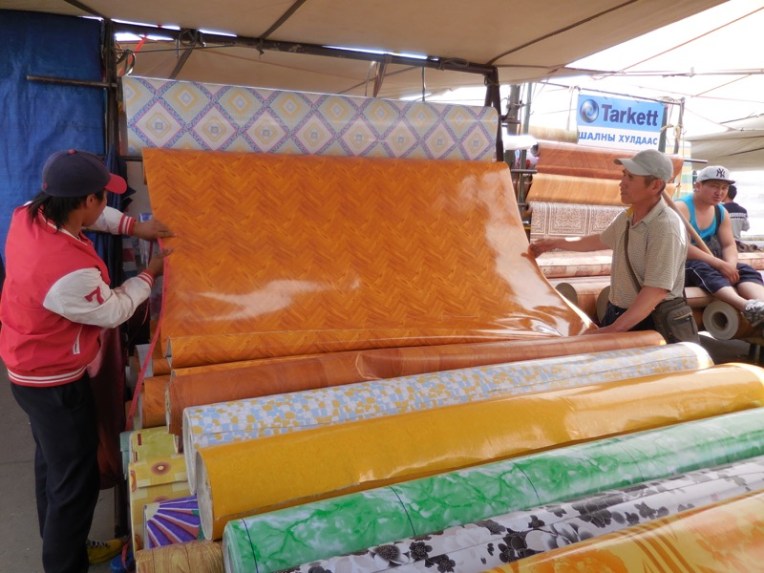
Vinyl flooring.
Vinyl flooring. The ubiquitous choice these days. I’ve only been in a couple of gers ever that had the old school felt rugs on the floor. I found that the sheet vinyl comes in different thicknesses. We got the thickest.
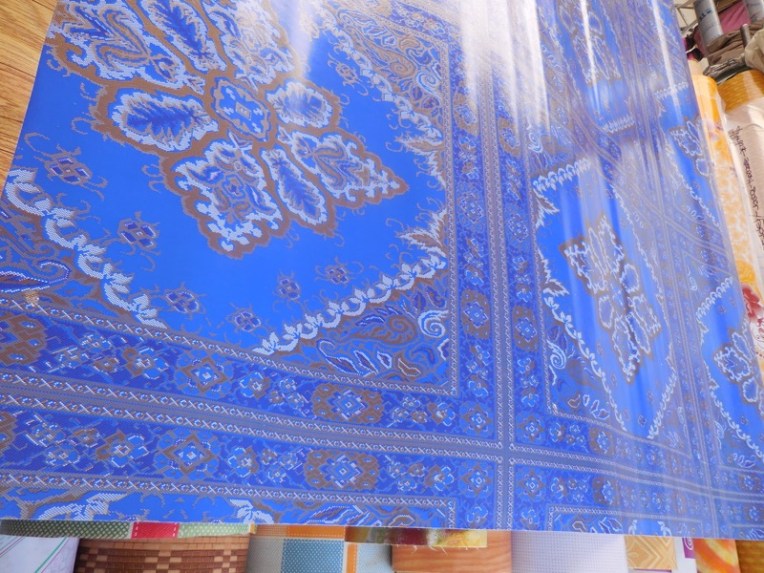
My first choice.
My first choice. I thought the rug pattern was cool, I liked the color and it was different than the very common fake wood floor pattern. But I let myself be talked out of it because Shuka and Amgaa said that it would be too dark. And I think they were right. The lighter, less complex pattern of the fake wood pattern one I chose worked well.
Purchases.
Miscellaneous purchases. There were lots of small items to get like a wastebasket, a doormat, steel basins and, in the red and white striped bag a fabulous tea kettle that was only 18,000 tugrik, about $9.00 USD. You’ll see it next week. Also a kitchen knife, flatware, cutting board, dishwashing supplies…
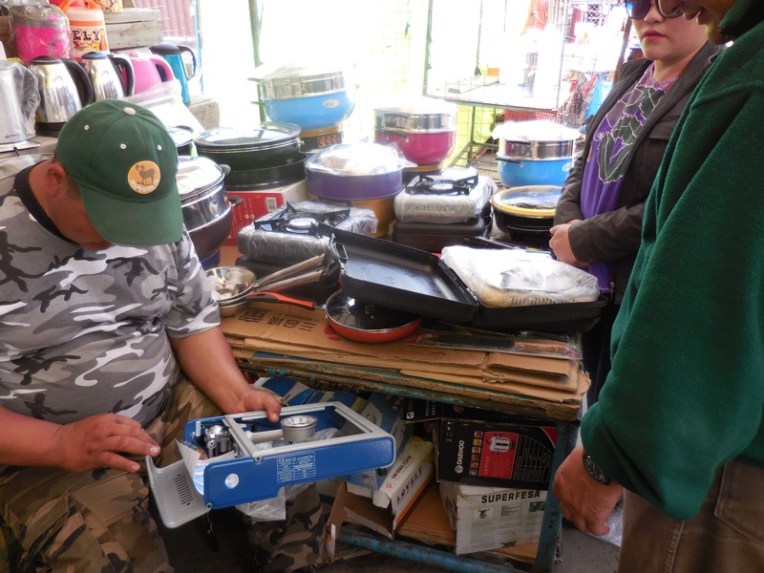
Cookstove.
Cookstove. I left the choice of which one to my helpers. Shavka really went over them before deciding. I knew I wasn’t going to use the wood/dung/coal burning stove and had seen these in a few gers. It worked out great. The fuel comes in what look like spray paint cans. Simple to pop in and out of the receptacle. In the ger I set it up on the stove.
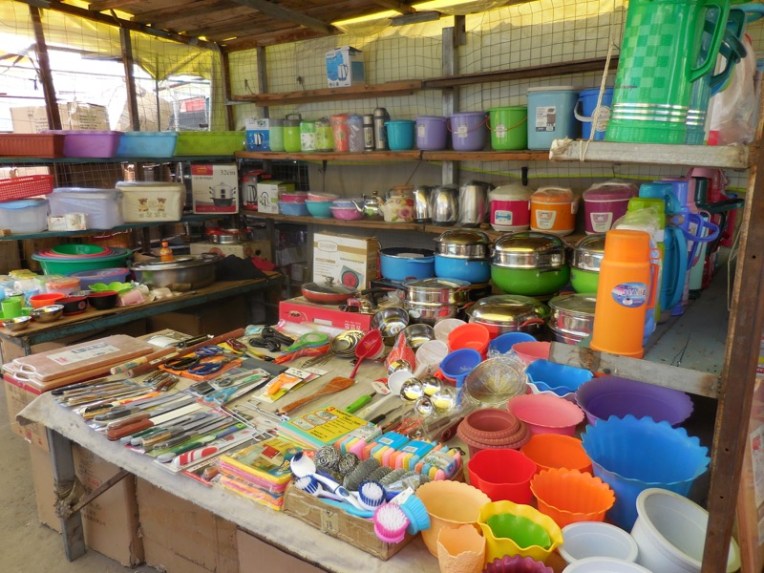
Housewares.
Housewares. Typical of the “mini-shops” one finds at the market. I got a couple of thermos’ (which turned out to be too big at two and three liters; will get a couple one liters for next year), four tea bowls and two larger bowls for morning cereal and soups.
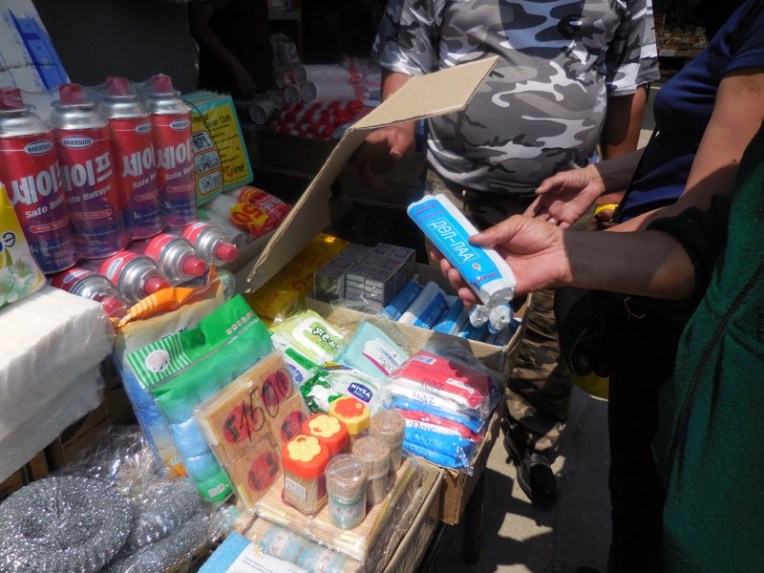
Candles and propane cans.
Candles and propane cans. No solar panel yet, so candles for light if needed. A candlielit ger is very comfy. Also lots of matches. The cans are for the one burner cooktops. In a week I went through one, plus a little of a second, heating water multiple times a day for coffee, washing up, a batch of bansh (small meat dumplings) soup, etc.
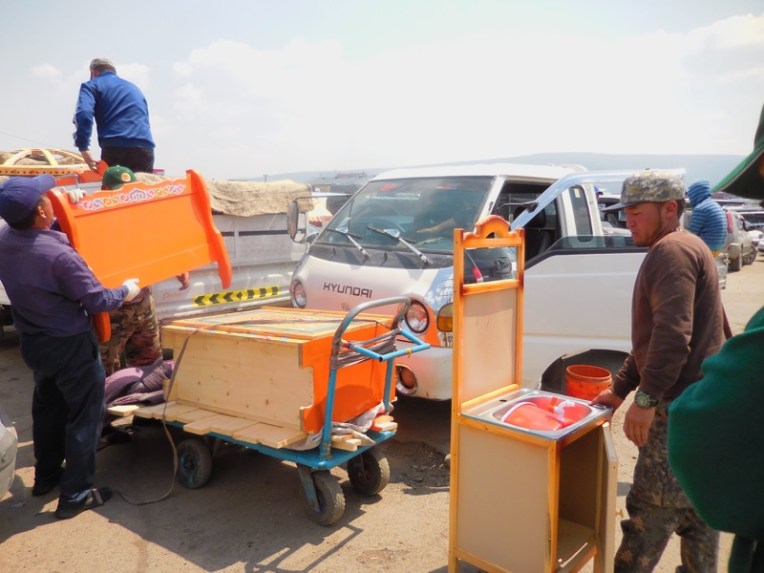
Delivering the furniture to the truck.
Delivering the furniture to the truck. There were a number of trips back and forth. Once we’d finished all the shopping, we went back to the furniture seller, who had my choices ready to go on the hand truck, along with the sink stand. We’d also carried the small items to it a couple of times.
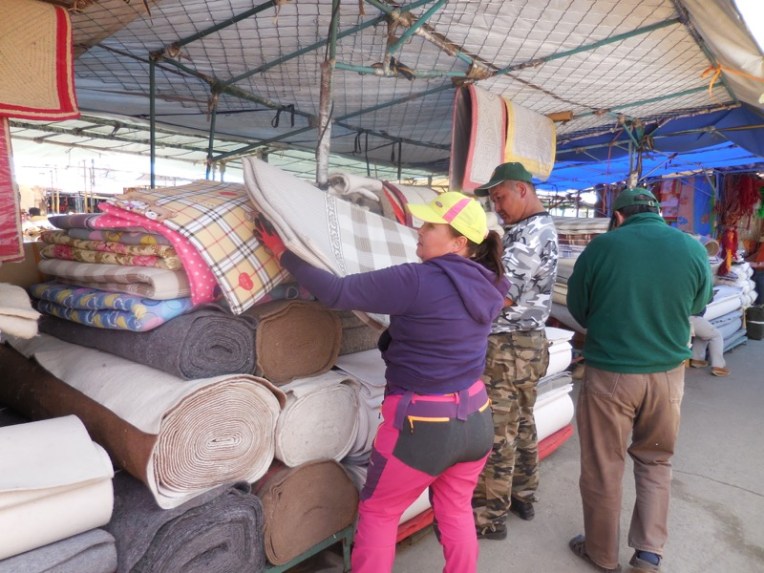
Felt pad for the bed.
Felt pad for the bed. I had a choice between a mattress and a felt pad. The mattresses have very stiff springs and thin covers with no padding. I always have my Thermarest pad with me, so opted for the more traditional felt pad covered in cloth. I got a big one that could be folded in half on the single size bed.
Buying the stove.
Buying the stove. Last stop was back to the stove merchant to make the final choice. The purchase price included the stove, stovepipe, stovepipe metal piece for the toono and a typical fuel box.
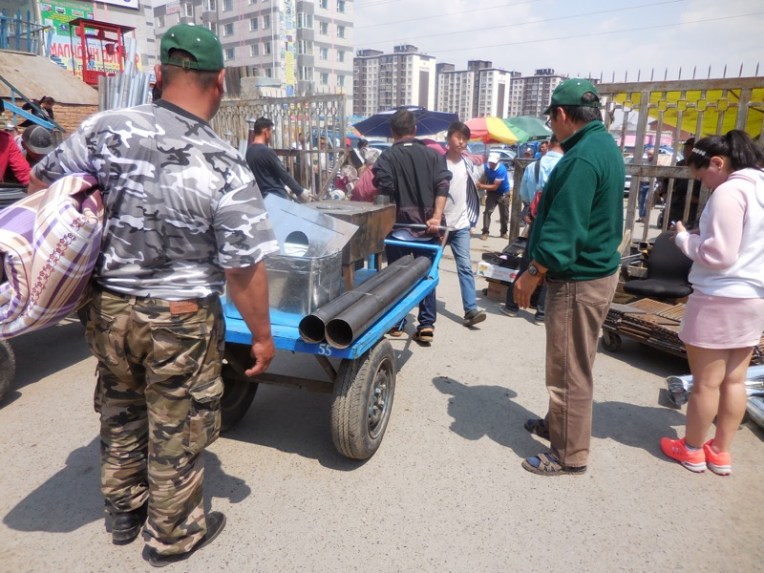
Last load.
Last load. You can see the stovepipe roof piece and the fuel box in front of Shavka. Once this delivery to the truck was done, Shavka re-packed everything for the drive to Ikh Nart, about five and a half hours. I went by train that evening.
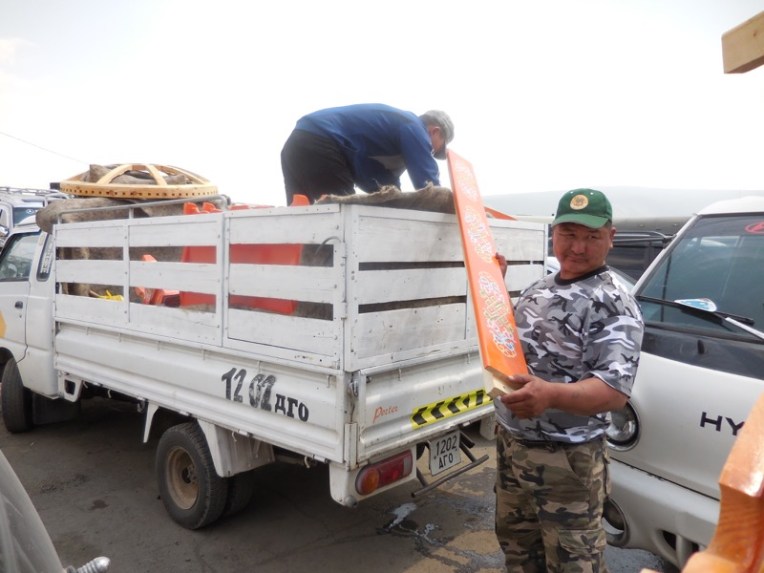
Loading the truck.
Loading the truck. Although this was taken earlier when the furniture was being loaded (that’s the front of my bed in Shavka’s hands), it shows how the ger was loaded. Traditionally, the toono is ALWAYS on the top. This past trip I actually saw a couple of vehicles in which the toono was laying on its side against the side support. I was happy that mine was going to be carried correctly.

So, how did I do on the budget? The ger cost 1.5 million tugrik…$750 USD. We were moving fast so I didn’t write down what everything else cost. All of it together came to $1200, pretty much what I’d estimated. I also paid Shavka’s gas and road fees and something for his helper and that took care of the rest.

Next week: Putting up my ger at Ikh Nartiin Chuluu Nature Reserve.


The 2016 WildArt Mongolia Expedition Has Returned!

wild bactrian camels
Wild bactrian camels, en route to Great Gobi A Strictly Protected Area

I’m still in Mongolia with adventures to come, but wanted to share some favorite images from the Expedition. Once I’m home I’ll be doing my usual multi-part series covering all aspects of the trip. As far as weather, we had some of everything….snow, rain, wind, heat and cold, typical Mongolia. As far as sights, also typical, there was something worth having seen every day.

We did not see any Gobi bear, which was not surprising considering their rarity, but we did see tracks and scat. Just as special, we saw a herd of a dozen wild bactrian camels (see above photo), of which there are estimated to be around 900. They crossed the road in front of us some hundreds of yards away (the image above is cropped). Unlike the domestic version, they can really RUN.

snow
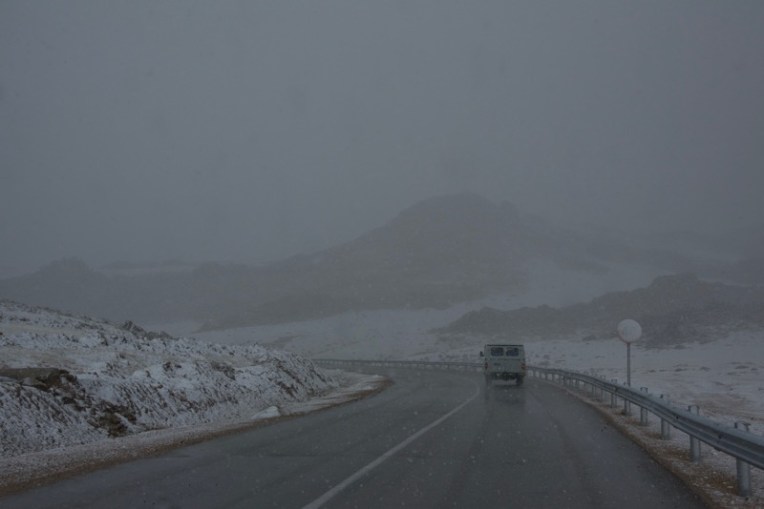
Second day out May snowstorm between Arvaykheer and Bayanhongor
Ranger and last line of mountains
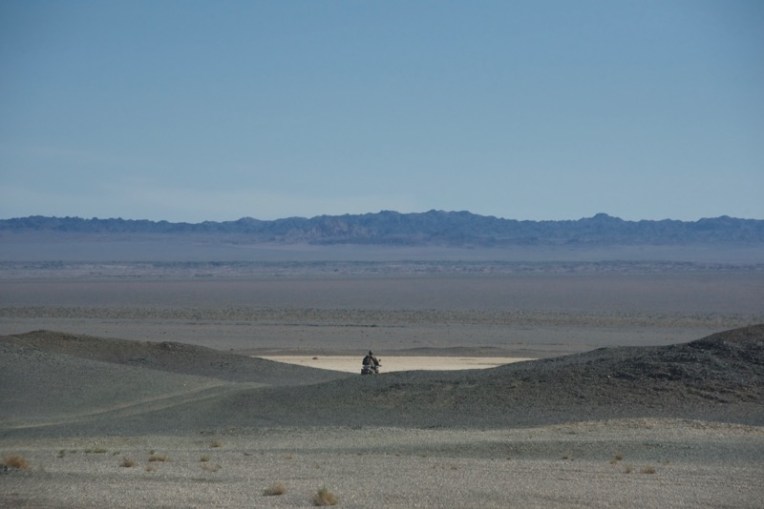
A local ranger leads us ever south into the deep Gobi
Me in GG A
After a five day drive we arrived in the Great Gobi A Strictly Protected Area. This photo was taken not far from one of the feeding stations.
Feeding station
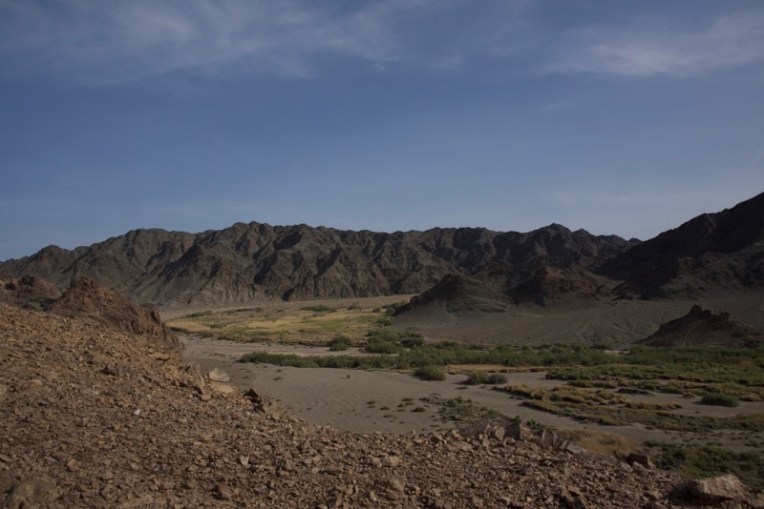
Valley with oasis about a kilometer hike from camp where two Gobi bear feeding stations are located. The photo of me above was taken in the grey sandy area just beyond the ridge.
Grass snake – Version 2
One afternoon at our campsite, I was sitting in the shade of our dining tent writing in my journal and all of a sudden I saw a snake coming towards me. It was the second steppe ribbon racer we’d seen, the other having been on the way south when we had to stop for awhile while the drivers cleared a blocked fuel pump. This one went right through camp and into this bush, holding still long enough to get some nice photos.
Pallas' pika – Version 2
When we headed back north we went on past Bayanhongor another 30km to Erdenesogt Soum, where we camped for a few days. We didn’t realize it when we set up camp, but quickly found that we were in the middle of a very large colony of Brandt’s voles, who were very entertaining. All I had to do to get dozens of photos was sit in a camp chair with my camera and fire away.


saker falcon
And of course there were also raptors around, including this lovely saker falcon.
flashy stallion – Version 2
En route to our final stop, Hustai National Park and the Mongolian Bankhar Dog Project, we camped in an area where the local herders had a lot of horses, including this very flashy stallion, who was kept busy for awhile chasing off a much younger challenger.
Hustai takhi
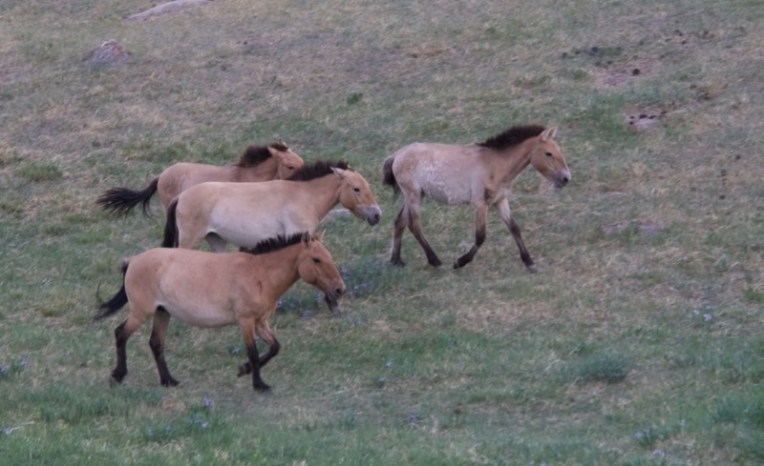
The weather was overcast, but the takhi were still wonderful. We saw up to seven family groups at one time in the main valley.
Baagii and bankhar
Batbaatar Tumurbaatar of the Mongolian Bankhar Dog Project with one of the male bankhar. Lots more to come on this important effort to both revive the tradition of using bankhar as livestock guardian dogs and, in doing so, help with the conservation of predators like the endangered snow leopard.
MBDP herder – Version 2
We were able to meet and talk with a local herder who has one of the project’s pups, a nine month old male.
group shot, MBDP
And finally, for now, a group shot at Hustai. From left to right: Batbaatar Tumurbaatar (Baagii), Susan Fox, Oliver Hartman from Jungles in Paris (film company), Kim Campbell Thornton (nationally known pet writer and journalist) and Greg Goodfellow, director of the project in Mongolia


The 2016 WildArt Mongolia Expedition Departs Tomorrow!

WildArt Logo 2016 600

I arrived in Ulaanbaatar, Mongolia last Sunday evening. This past week has been spent in confirming a number of things with the tour company, Nomadic Journeys, who is handling all the logistics, meeting with the guide and lead driver, getting acquainted with the two other participants who arrived over the last couple of days (we went to the National Museum of Mongolia and the Museum of the Chojin Lama today) and repacking for three weeks on the road. We depart tomorrow morning. We’ll return to Ulaanbaatar on June 10.  In between there will be much to see as we travel to the far southern part of Great Gobi A Strictly Protected Area and then back north to the buffer zone of Hustai National Park to meet up with the Mongolian Bankhar Project.

So, as the Mongols would say, “daraa ulzii”…see you later!

Susan

New Takhi Paintings for Mazaalai Art Gallery In Ulaanbaatar, Mongolia!

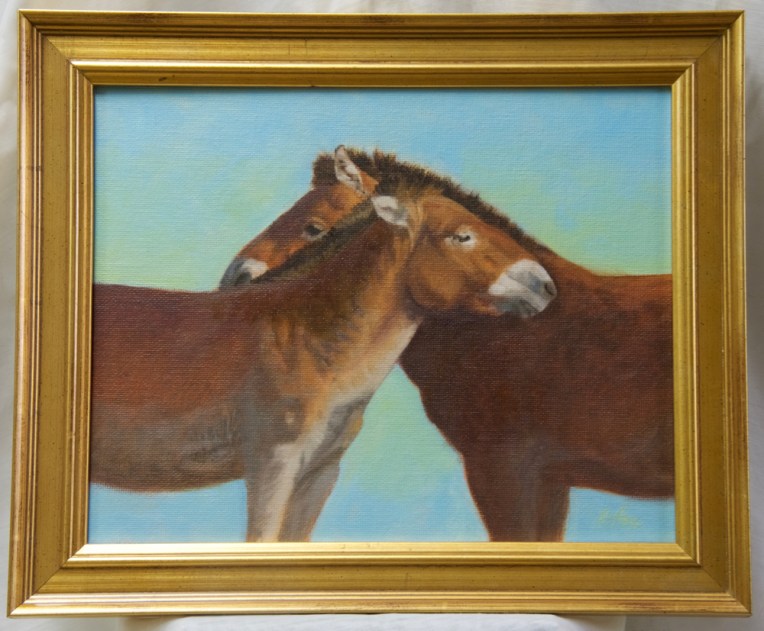
Grooming (Hustai Takhi) 8x10" oil
Grooming (Hustai Takhi) 8×10″ oil

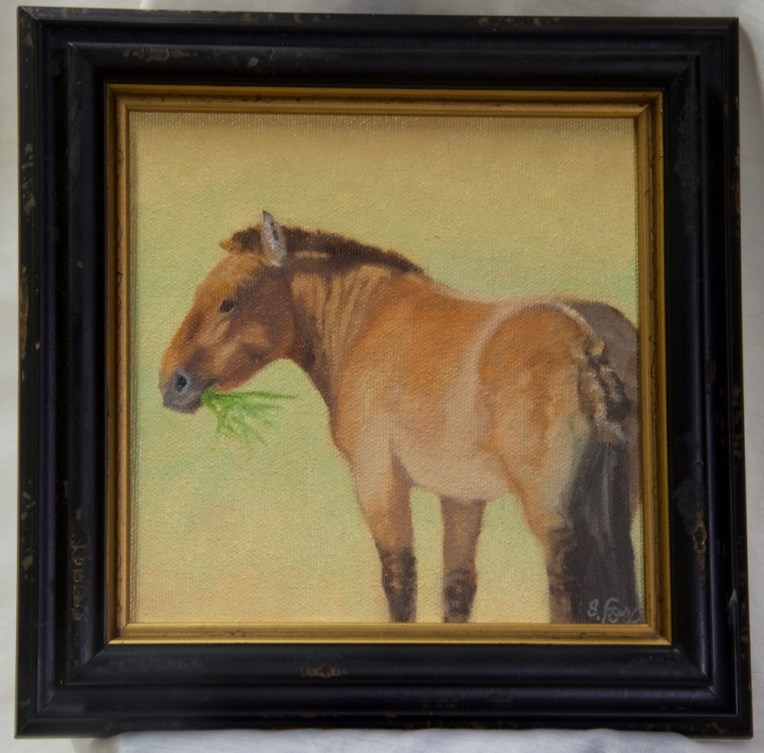
I leave for my 11th trip to Mongolia on Saturday. Going with me will be five new small works in oil for Mazaalai Art Gallery, which represents me in Ulaanbaatar. All of them are of takhi/Przewalski’s horse from Hustai National Park, which I have visited seven times over the years and will once again this year. 10% of the sales price will be donated to Hustai. You can visit their Facebook page here. And here are the rest of the paintings.

Hustai Takhi Foal 8x10" oil
Hustai Takhi Foal 8×10″ oil
Good Grass (Hustai Takhi 6x6" oil
Good Grass (Hustai Takhi 6×6″ oil
Hustai Takhi Stallion oil 6x6"
Hustai Takhi Stallion oil 6×6″
Hustai Takhi Mare and Foal oil 5x7"
Hustai Takhi Mare and Foal oil 5×7″


Introducing the Mongolian Bankhar Dog Project!

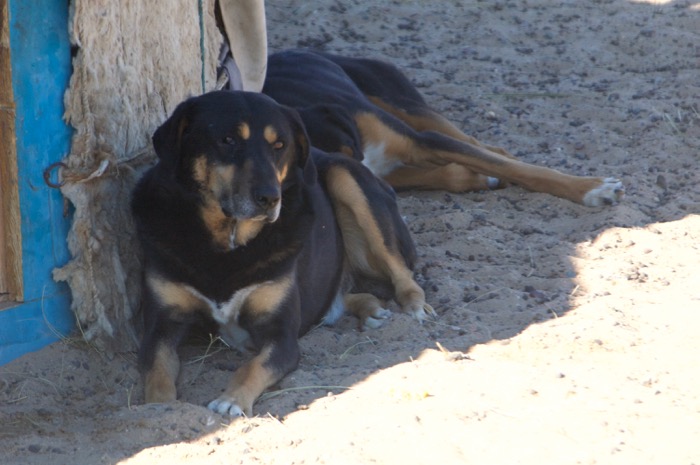
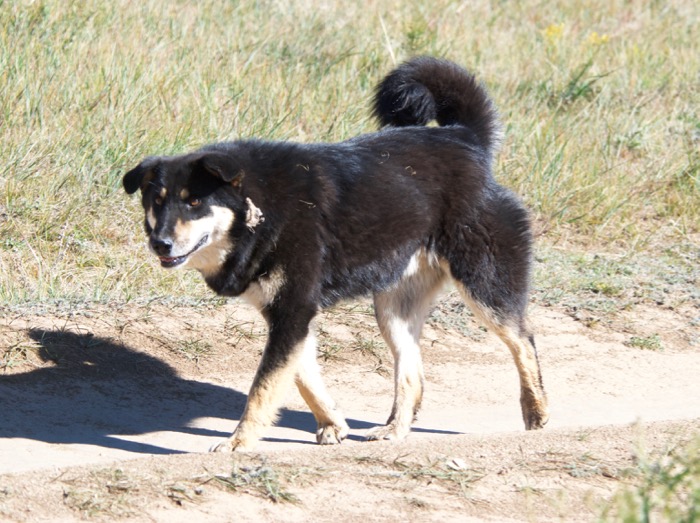
bankhar

I am truly honored and excited to announce that the Mongolian Bankhar Dog Project will now be a featured conservation organization for this year’s WildArt Mongolia Expedition! Accompanying the announcement are photos I’ve taken of bankhar over the years.

dog and herder

To quote from their mission statement: “The Mongolian Bankhar Dog Project is a 501(c)3 nonprofit organization whose mission is to help slow down and reverse the desertification of the Mongolian Grassland Steppes, and to preserve and protect traditional Mongolian culture. We strive toward these goals by resuscitating the traditional use of the livestock guardian dog known as the ‘Bankhar dog’.”

Khomiin Tal to Hovd2006-09-23

“Lethal predator control (shooting, trapping, poison) and retribution killings of predators are major threats to predator populations in Mongolia. The use of the Livestock Protection Dog has been shown to reduce predation on domestic livestock by 80-100%, eliminating the need for lethal predator control and allowing predators to target natural prey species instead of domestic ones.”

dog pack

The predators in question are snow leopards and wolves. Desertification means the the herders must move their animals to higher elevations, into snow leopard territory, with the risk that entails. Wolves have always preyed on domestic animals, but environmental degradation has contributed to decreasing populations of wild prey species such as the gazelles, which has in turn increased their predation on livestock. Add climate change, which is resulting in unstable and more severe weather, and the struggle for herder families to survive, much less thrive, has become increasingly difficult. Yet the Mongols have always felt themselves to be a part of nature and believe that wildlife, including predators, has as much right to live as they do, a dramatic contrast with attitudes one often encounters in the US.

WAME 2013

The Mongolian Bankhar Dog Project addresses all these issues, but of particular interest to me is how the program reduces the killing of the endangered snow leopard and also wolves, who seem to be holding their own and who play an important role in Mongol culture since the Mongols believe that they are descended from a blue wolf and a doe.

bankhar argument – Version 2

The herders have always had general-purpose guardian dogs. The difference is that, as is done in a number of other countries, the program’s puppies are bonded with the livestock from the earliest age and, once placed, stay with the sheep and goats 24/7. Even though the project is still relatively new, it has already been proven to work. The herders don’t lose animals and the predators, a critical part of a healthy ecosystem, survive.

Dog Hustai – Version 2

Our last stop on the Expedition will be near Hustai National Park (one of the three takhi/Przewalski’s horse reintroduction sites in the country), where local herder families have “adopted” puppies bred by the project. We will meet with them, learn about their lives, experiences and the place of wolves in Mongol culture, reporting back what they have to say. We’ll also meet with project staff and learn first-hand about what I believe to be a very important conservation initiative, one that I’ve had the pleasure of being in contact with from the beginning.

bankhar front viewYou can learn more about the Mongolian Bankhar Dog Project here.

Sketches and Watercolors From My Trip Back East

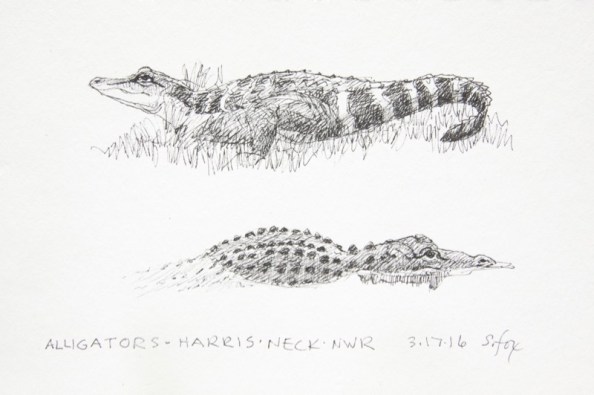
Alligators at Harris Neck NWR, Georgia

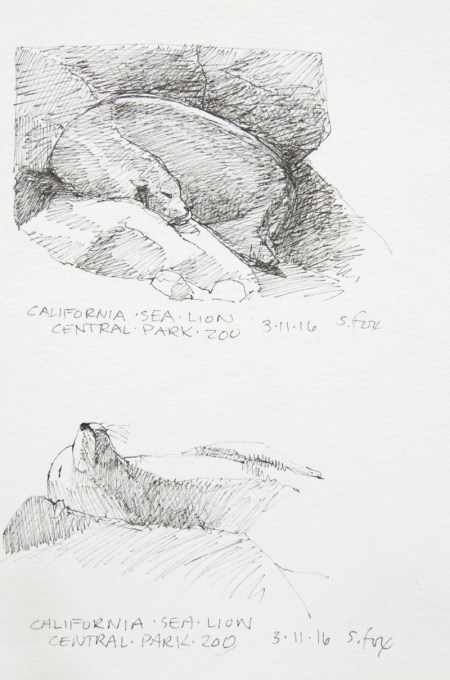
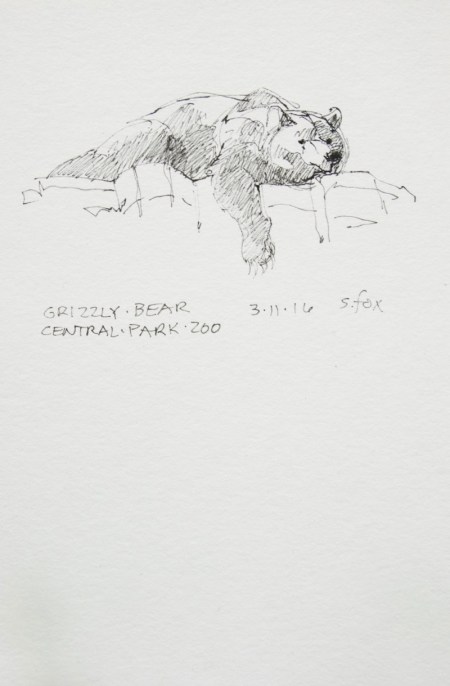
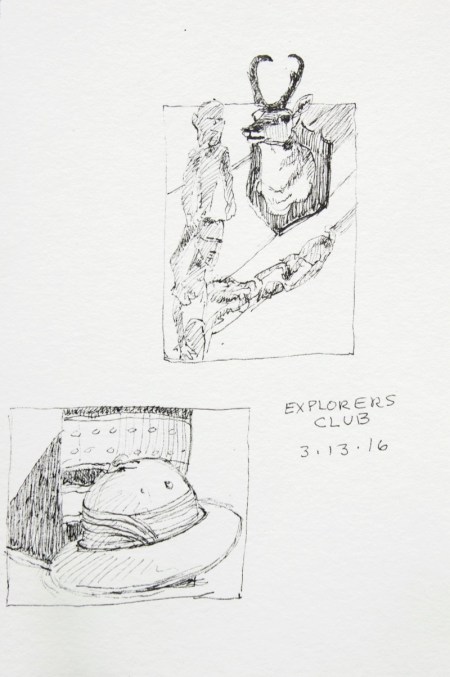
Here’s an album of the art I created while I was traveling last month. I had a lot of fun drawing the alligators at the Okefenokee NWR and Harris Neck NWR. They’re good models because they don’t move much. There really is no substitute for drawing from live animals, although I took a ton of photos, too. Other than the one at the top, they’re in chronological order, starting with New York. All but one pencil sketch was done with a Sakura Micron .02 black pen. I used a Pentalic Nature Sketch 7×5″ sketchbook, a very handy size. Drawings on white paper are difficult to scan or photograph. I lightened them as much as I could.

Central Park View
Central Park View
Calfornia sea lion, Central Park Zoo, New York
Resting grizzly bear, Central Park Zoo, New York
Turtles, snow leopard cub, Central Park Zoo, New York
Pronghorn head mount and hat, Explorers Club, New York
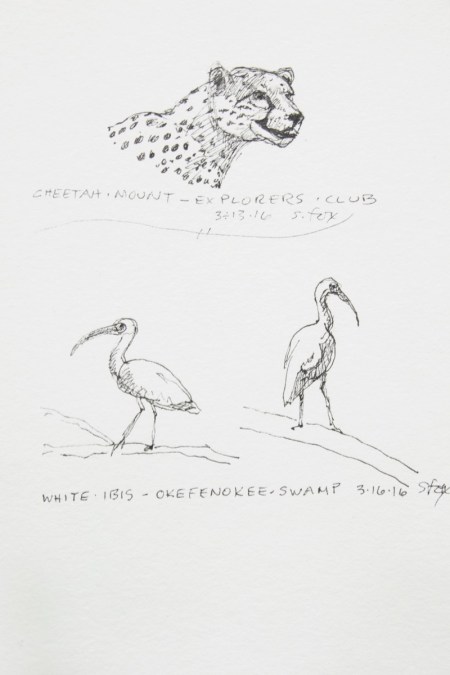
Cheetah mount, Explorers Club, New York; White ibis, Okefenokee NWR, Georgia
Ibis in tree
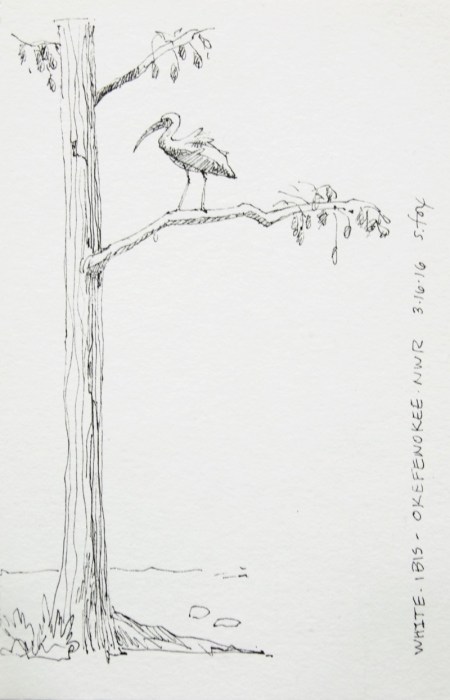
White ibis in tree, Okefenokee NWR, Georgia
Water lily, Okefenokee NWR, Georgia; River cooter (turtle), Harris Neck NWR, Georgia
Alligator 2
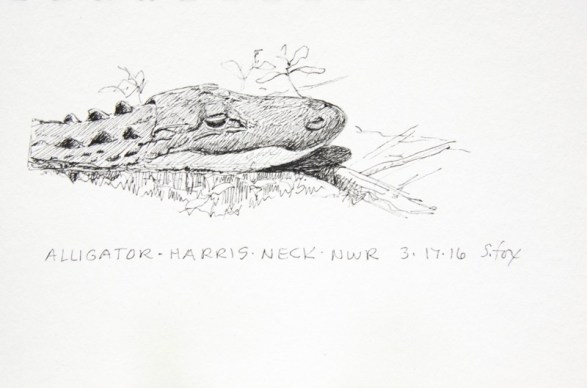
Alligator, Harris Neck NWR, Georgia
Alligator leg 3
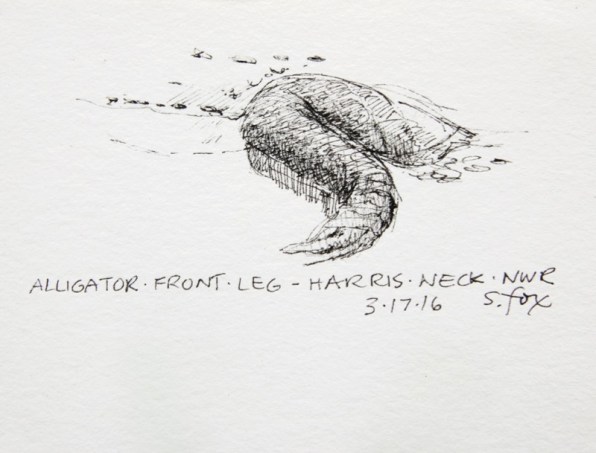
Alligator front leg, Harris Neck, NWR. Georgia
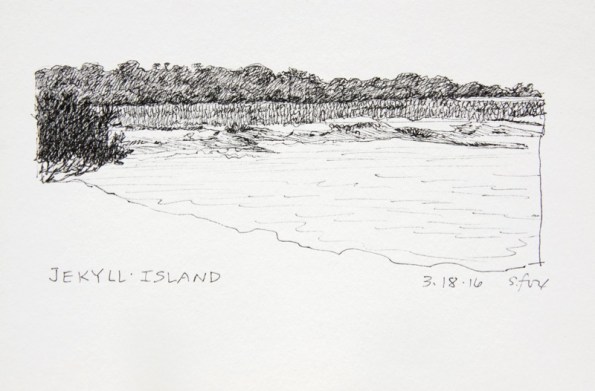
Jekyll Island
Jekyll Island, Geogia
Alligator Crazy 4
“Crazy”, 12′ long, 800-900 lb. bull alligator, Okefenokee Swamp Park, Georgia
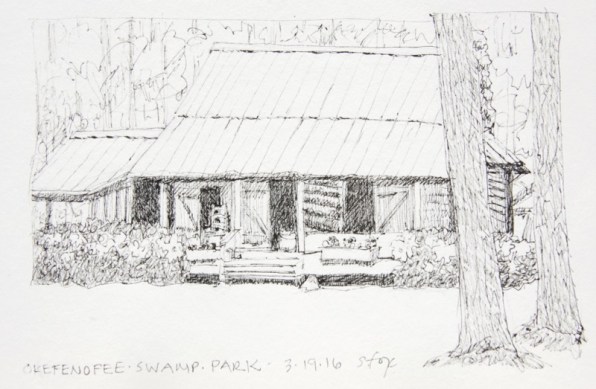
Farmstead
Farmstead, Okefenokee Swamp Park, Georgia
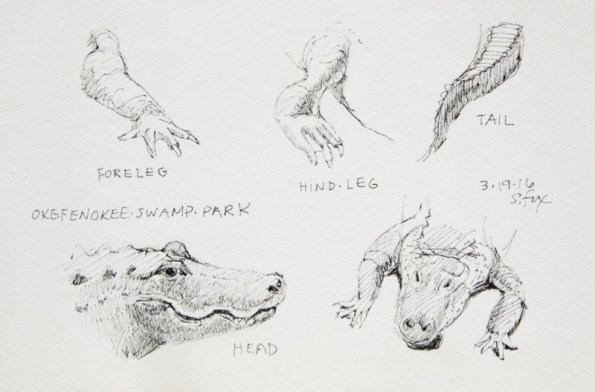
Alligator details 5
Alligator details, Okefenokee Swamp Park, Georgia
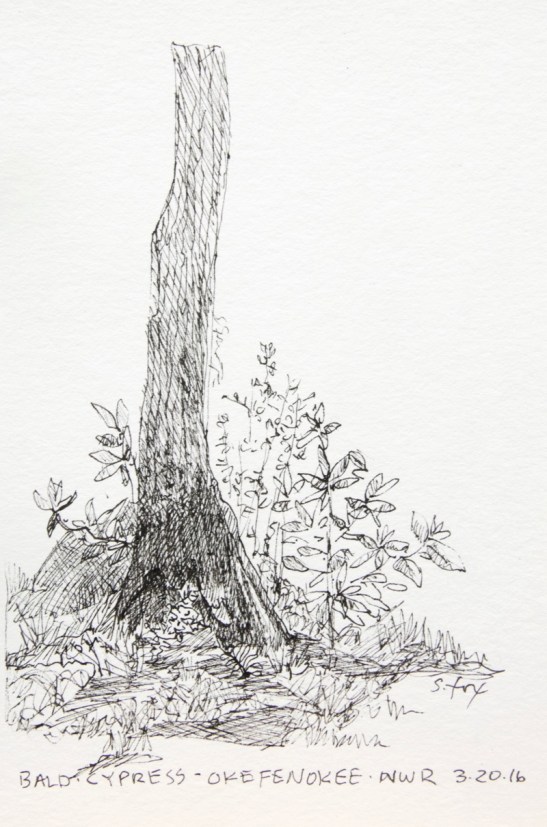
Bald Cypress tree
Bald cypress tree, Okefenokee NWR, Georgia
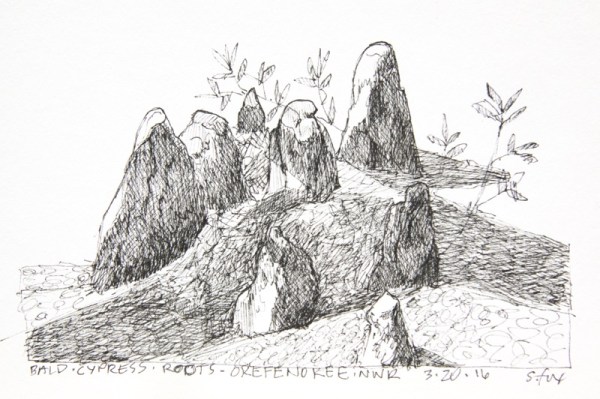
Cypress roots
Bald cypress roots, Okefenokee NWR, Georgia
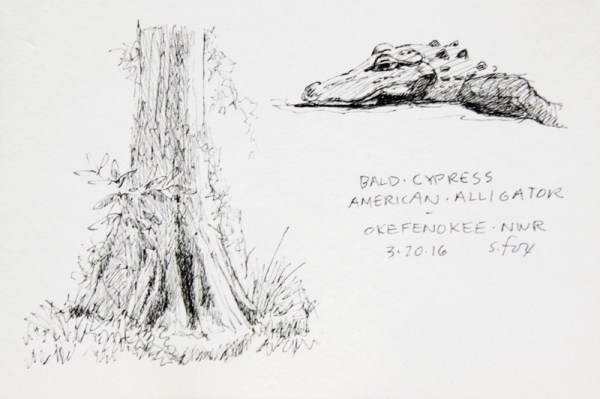
Cypress and alligator
Bald cypress, American alligator, Okefenokee NWR, Georgia
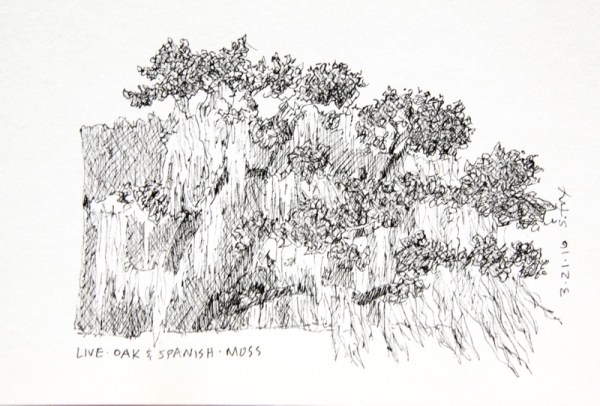
Live oak and moss
Live oaks and Spanish moss, Fort Clinch State Park, Amelia Island, Florida
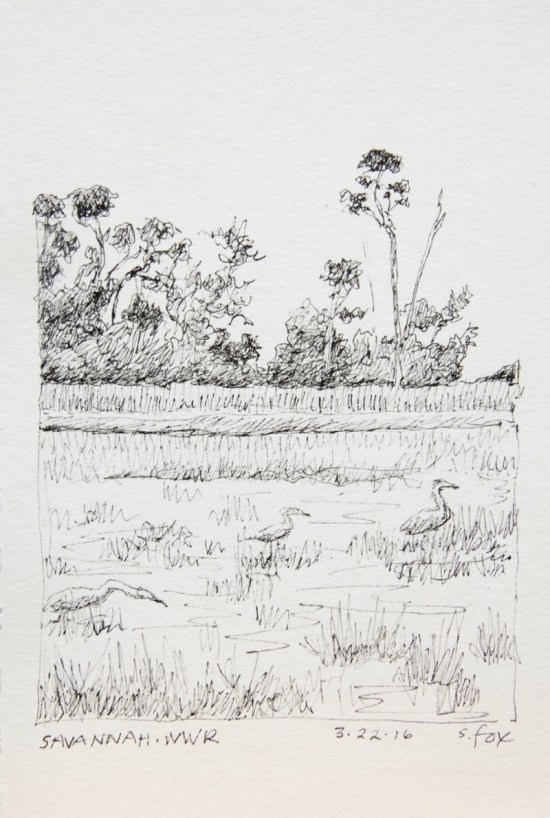
Savannah, egrets
Savannah NWR, South Carolina
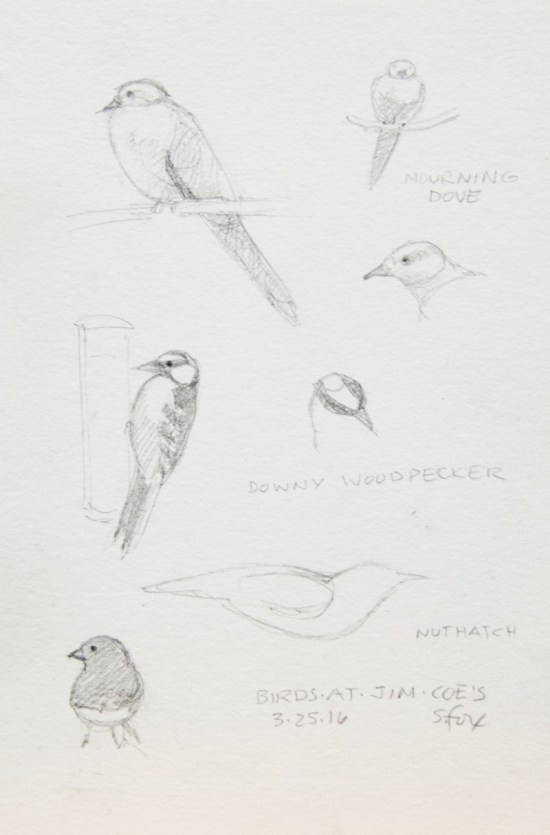
Pencil birds
Birds, Hudson River Valley, New York State

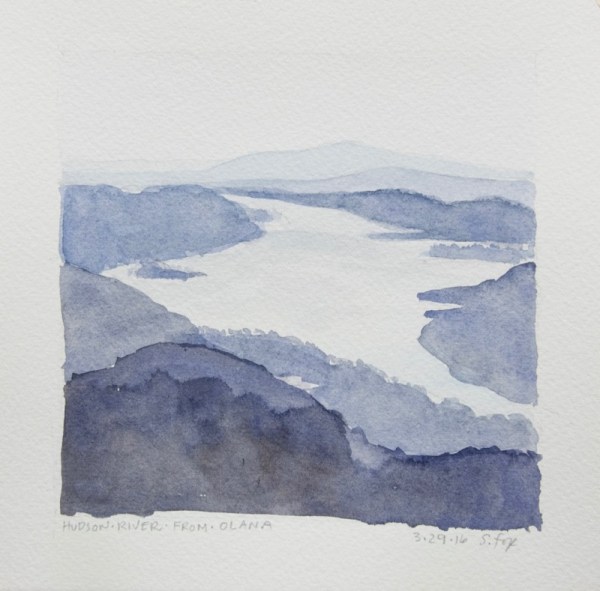
When I got back north and was up in the Hudson River Valley, I visited Olana, the home of American artist Frederic Church. The house wasn’t open but the grounds were. It was windy and pretty cold, but I was determined to do at least a couple of watercolors since the view from the house is famous and has been painted by a number of artists over the years.

Hudson River from Olana
Hudson River from Olana, New York State; 8×8″
Catskills from Olana
Catskill Mountains from Olana, New York State; 8×8″

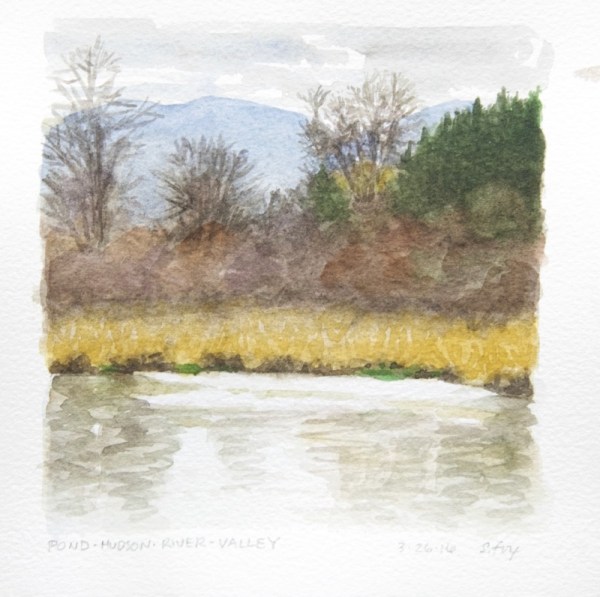
I also spent a couple of days with an artist friend at his home in the Hudson River Valley. We spent one morning on location at this lovely pond.

Pond wc
Pond, Hudson River Valley, New York State; 8×8″

Wildlife Sightings In Georgia and New York State, March 2016

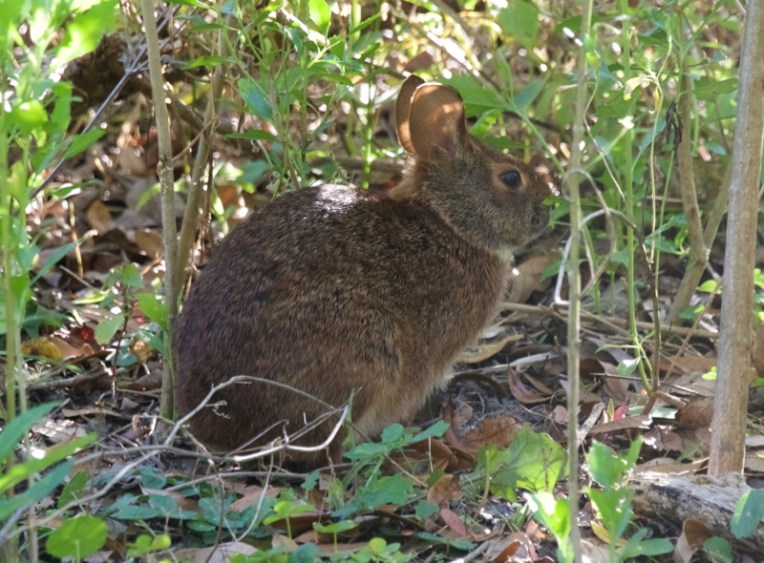
Eastern cottontail
Eastern cottontail, Egan’s Creek Greenway, Fernandina Beach, Amelia Island, Florida

This is a wildlife wrap-up of my trip back east since my next trip to Mongolia is coming up in three weeks and I’ve got posts coming about that. I was going to do a short post about the wildlife that I saw in Georgia, a bit of Florida and New York state. Instead it took me almost all of yesterday to pick out one of each of as many critters as I had decent photos of and make any adjustments necessary. Turns out I saw a LOT. I’m going to start with mammals, then birds, reptiles and finally insects. It’s a long post, but I wanted everything in one place for future reference. Hope you enjoy this wildlife trip!
MAMMALS

White-tailed deer
White-tailed deer, Okefenokee NWR. Stephen C. Foster State Park, Georgia
Eastern grey squirrel
Eastern grey squirrel, Okefenokee NWR, Stephen C. Foster State Park, Georgia
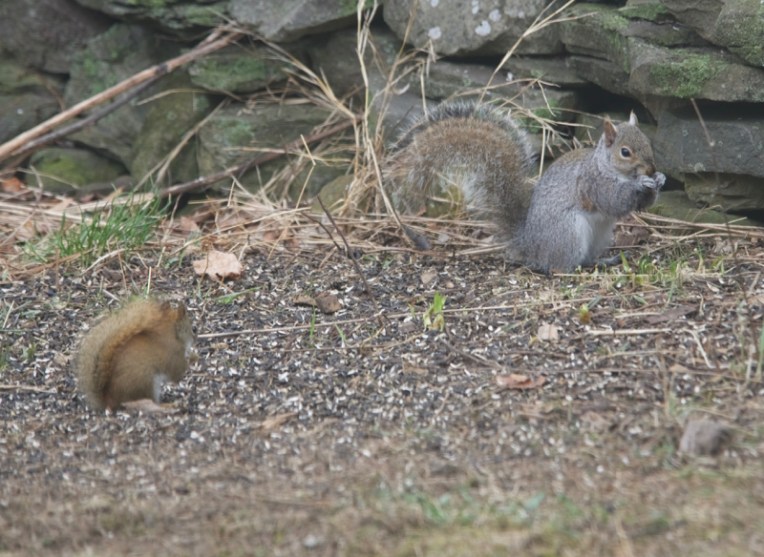
Eastern grey squirrel, red squirrel
Eastern grey squirrel and red squirrel, Hudson River Valley, New York State (red squirrel was a new species for me)
Eastern chipmunk
Eastern chipmunk, Hudson River Valley, New York State
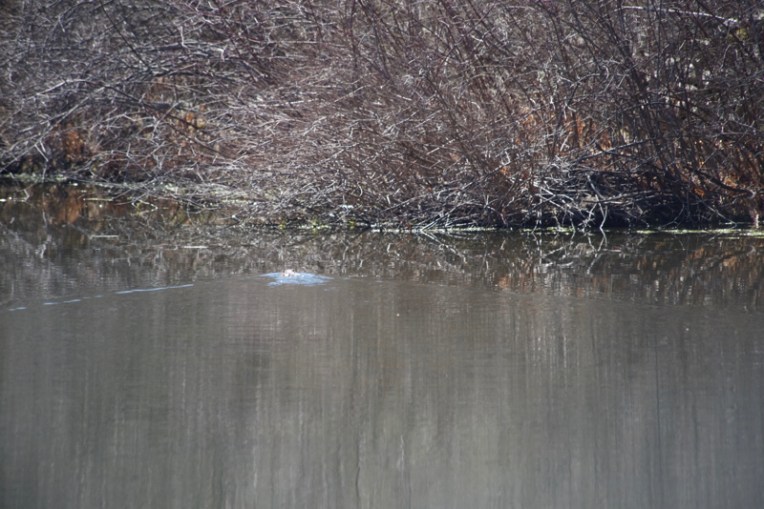
Muskrat
Muskrat, pond in the Hudson River Valley, New York (seen while out painting on location with Jim Coe; first muskrat I had ever seen, so had to post a photo even though it’s not a good one; for the record)

BIRDS

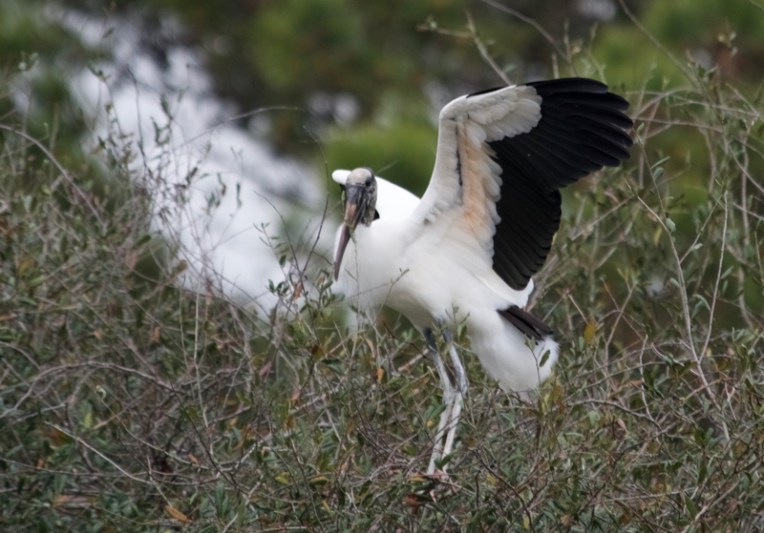
Wood stork
Wood stork, Harris Neck NWR
White ibis
White ibis, Okefenokee NWR, Stephen C. Foster State Park, Georgia
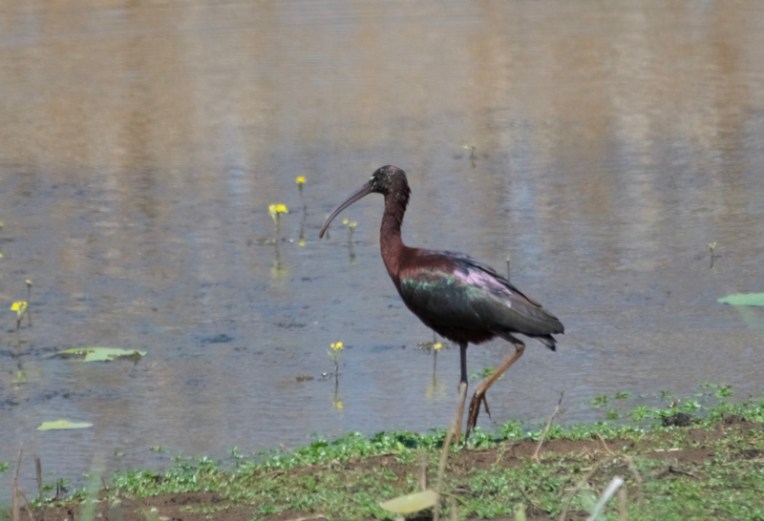
Glossy ibis
Glossy ibis, Savannah NWR, South Carolina
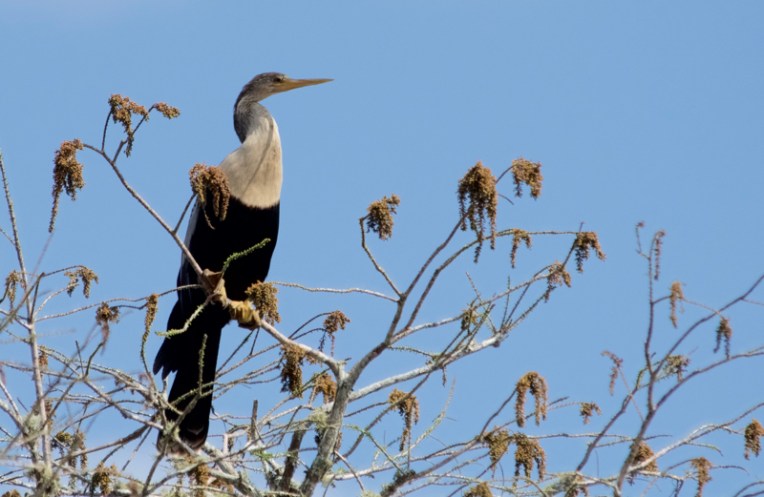
Anhinga
Anhinga, Okefenokee NWR, Georgia
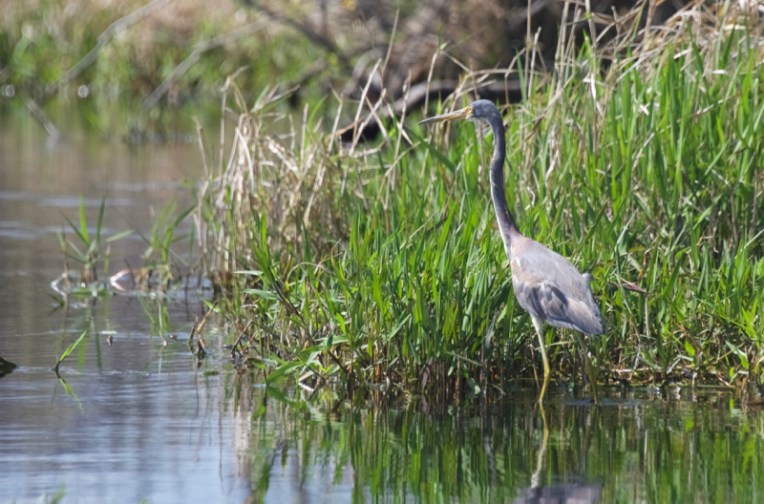
Tricolor heron
Tricolor heron, Okefenokee NWR, Georgia
Great blue heron
Great blue heron Egan’s Creek Greeway, Fernandina Beach, Amelia Island, Florida (notice the turtles off to the right)
Great egret
Great egret, Egan’s Creek Greenway, Fernandina Beach,  Amelia Island, Florida
Little blue heron
Little blue heron, Turtle River area, Georgia
Green heron
Green heron, Harris Neck NWR, Georgia
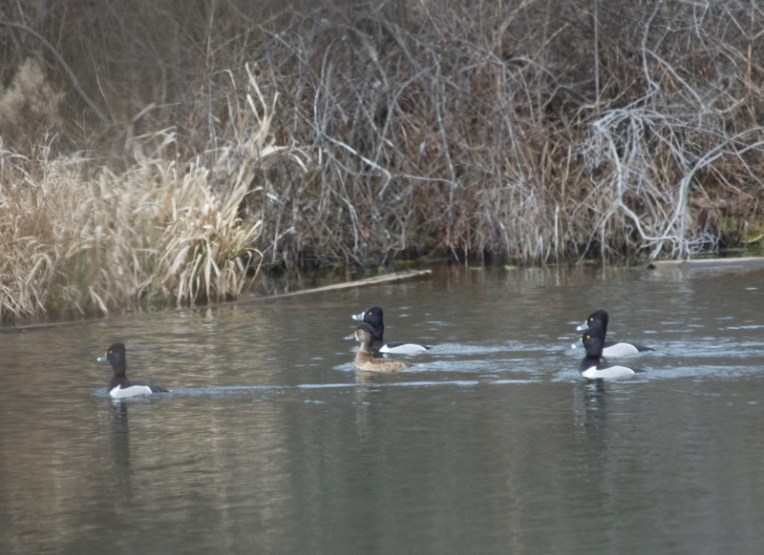
Ring-necked ducks
Ring-necked ducks, Hudson River Valley, New York state
Blue-winged teal; American alligator
Blue-winged teal; American alligator, Savannah NWR
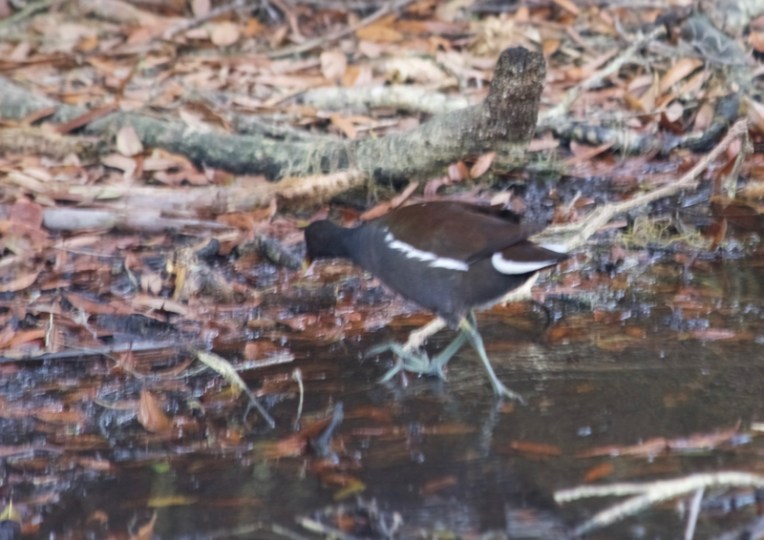
Common moorhen
Common moorhen (juvenile), Harris Neck NWR
Turkey vultures
Turkey vultures, Hudson River Valley, New York state
Turkey
Turkey, Hudson River Valley, New York state
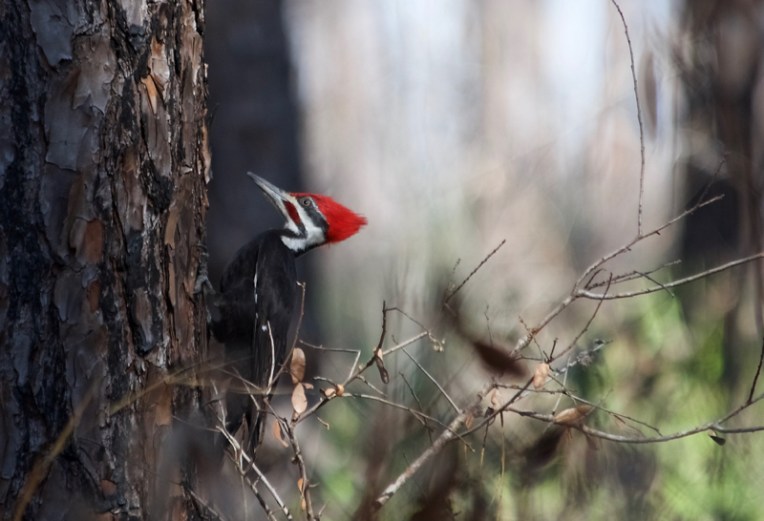
Pileated woodpecker
Pileated woodpecker, Okefenokee NWR
Hairy woodpecker
Hairy woodpecker, Hudson River Valley, New York state
Red-bellied woodpecker
Red-bellied woodpecker, Hudson River Valley, New York state
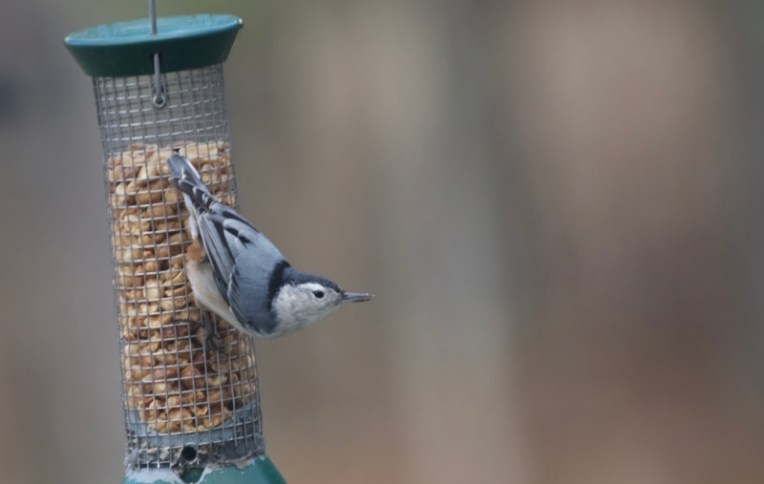
White-breasted nuthatch
White-breasted nuthatch, Hudson River Valley, New York state
Blue jay
Blue jay, Hudson River Valley, New York state
Purple finch
Purple finch and goldfinches, Hudson River Valley, New York state
Tufted titmouse
Tufted titmouse, Hudson River Valley, New York state
Cardinal
Cardinal, near Harris Neck NWR
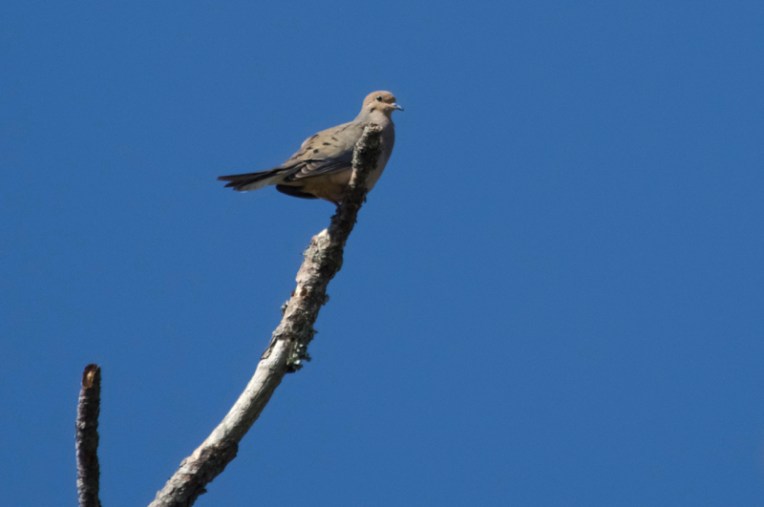
Mourning dove
Mourning dove, near Turtle River, Georgia
Mockingbird
Mockingbird, near Turtle River, Georgia
Blur-grey gnatcatcher
Blue-grey gnatcatcher, near Turtle River, Georgia
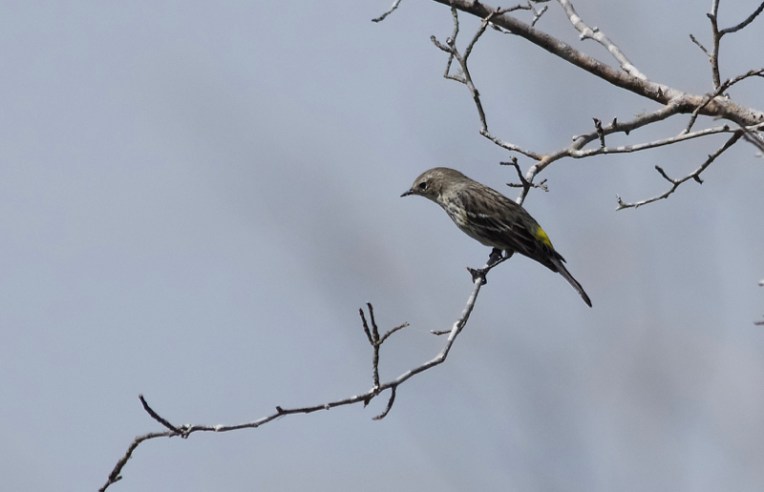
Warbler
Warbler, Okefenokee NWR, Stephen C. Foster State Park, Georgia
-Palm warbler
Palm warbler, Egan’s Creek Greemway, Fernandina Beach, Amelia Island, Florida
Slate-colored junco
Slate-colored junco, Hudson River Valley, New York state
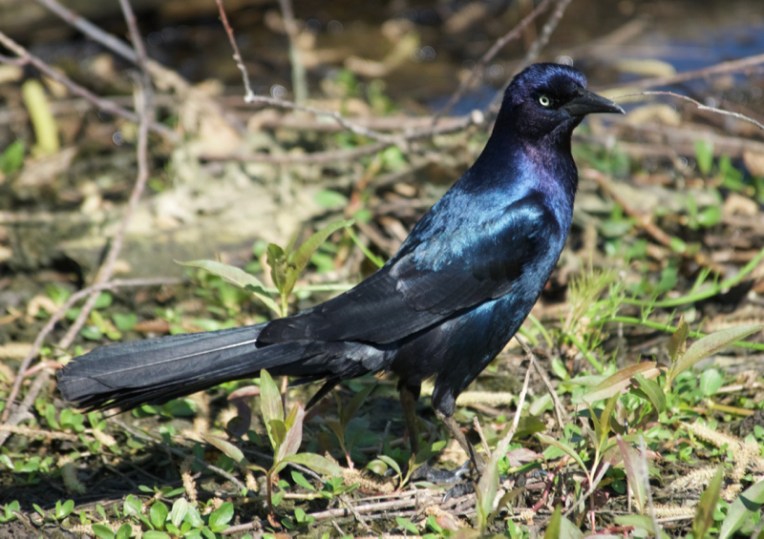
Boat-tailed grackle
Boat-tailed grackle, Savannah NWR

Birds I saw but did not get photos of or don’t have good ones include: swallowtail kite (no photo), cormorants, various ducks, a belted kingfisher, cowbird, snowy egret, and gallinule.

REPTILES

American alligator
American alligator, Okefenokee NWR, Okefenokee Swamp Park ( The park people named him”Crazy” because he is very aggressive and is the current dominant bull gator; 12′ long, 800-900 lbs.)
American alligator
American alligator, Okefenokee NWR
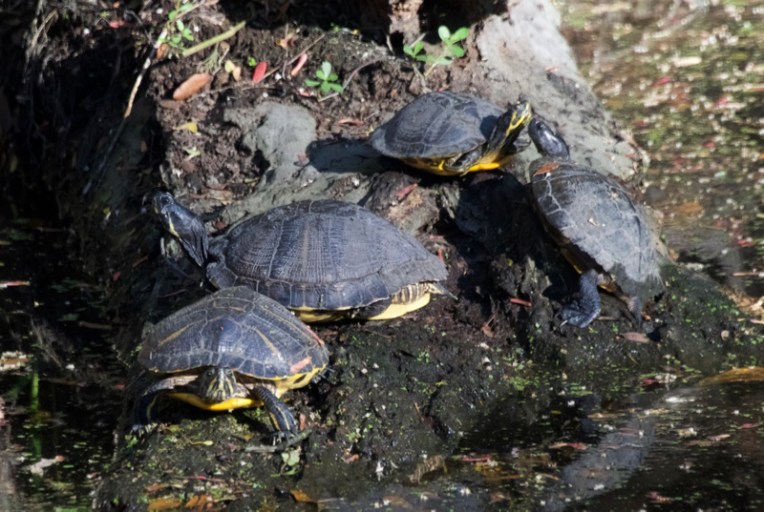
River cooters
River cooters, Egan’s Creek Greenway, Fernandina Beach, Amelia Island, Florida
Soft-shelled turtle
Soft-shelled turtle, Okefenokee NWR
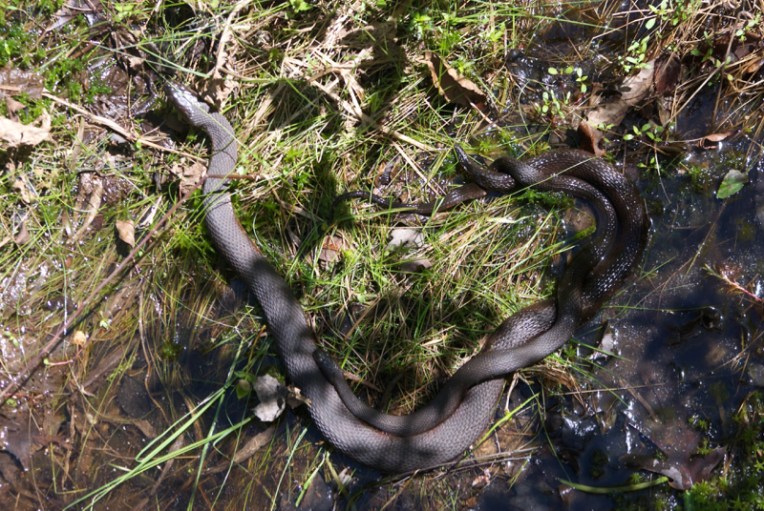
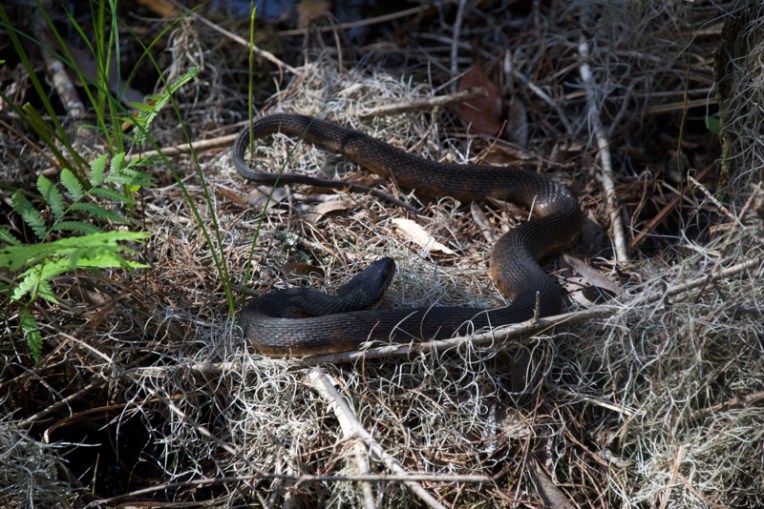
Banded water snakes
Banded water snakes, Okefenokee NWR
Midland water snakes
Midland water snake, Okefenokee NWR
Midland water snake
Midland water snake, Okefenokee NWR
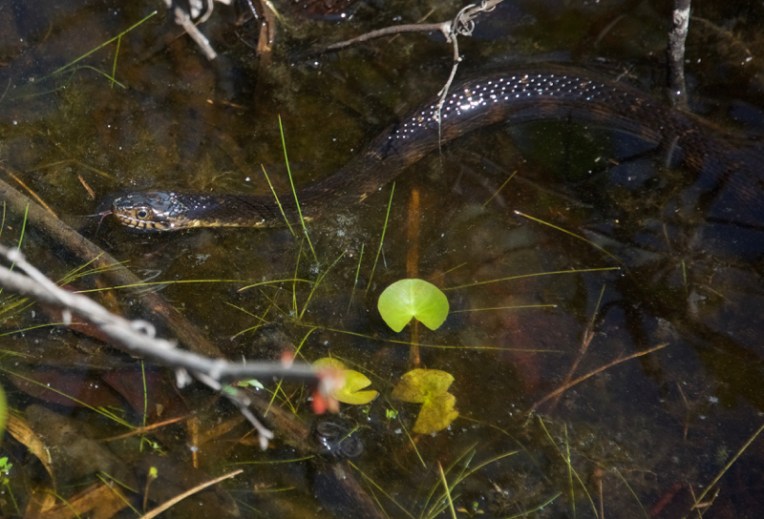
Penninsula ribbon snake
Penninsula ribbon snake, Okefenokee NWR
Water moccasin
Water moccasin/cottonmouth, Okefenokee NWR
Water moccasin
Water moccasin/cottonmouth (I was told by a local who works in the woods, so has to know snakes, that this was the biggest one he’d ever seen and, from the bulge, it looked like the snake had a “belly full of frogs). This species is extremely venomous)
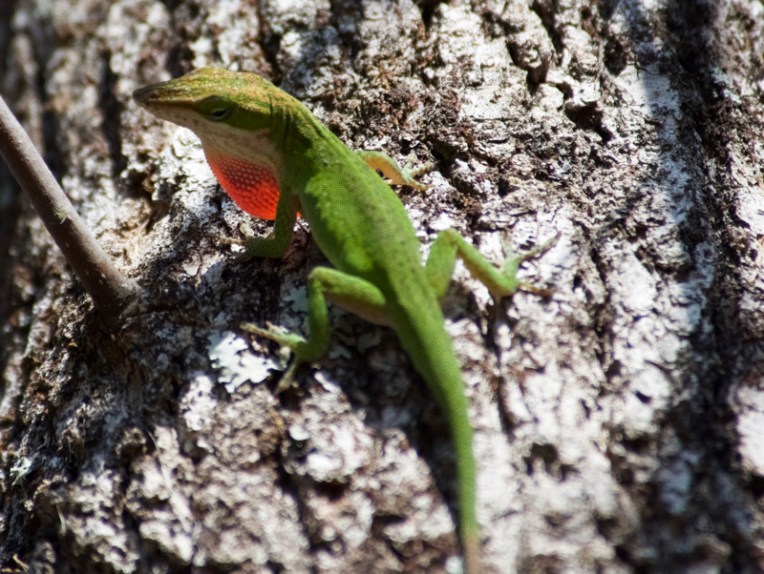
Green anole
Green anole, Okefenokee NWR

INSECTS

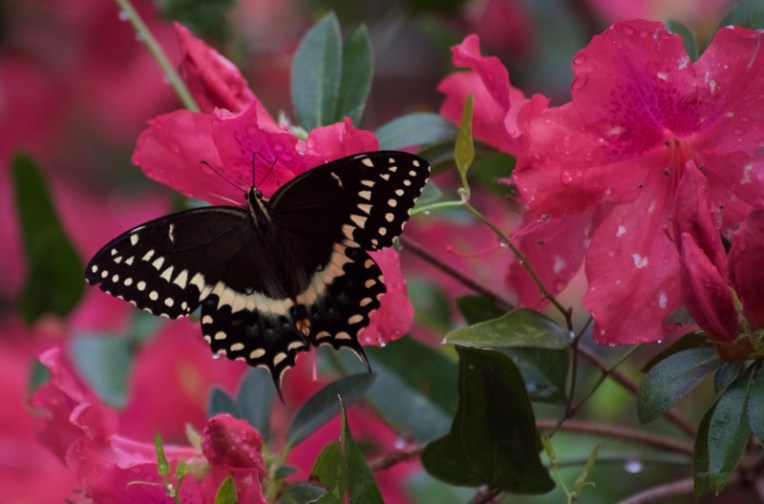
Spicebush swallowtail butterfly
Spicebush swallowtail butterfly, Okefenokee NWR
Spicebush swallowtail butterfly
Spicebush swallowtail butterfly, Okefenokee NWR
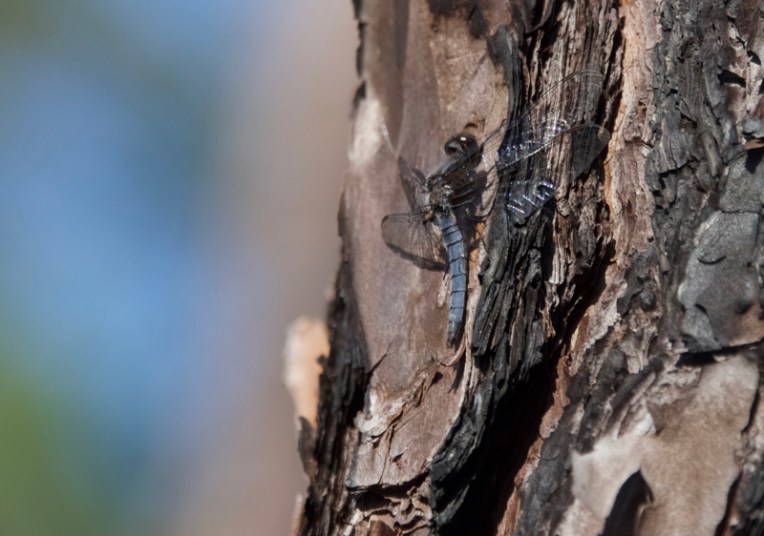
Dragonfly
Dragonfly, Okefenokee NWR


The Opening Weekend of “Wildlife Art: Field To Studio”!

Group shot 1

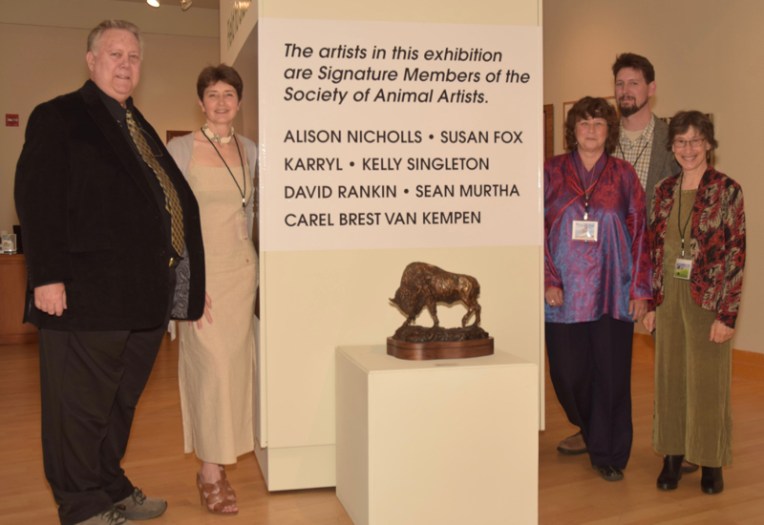
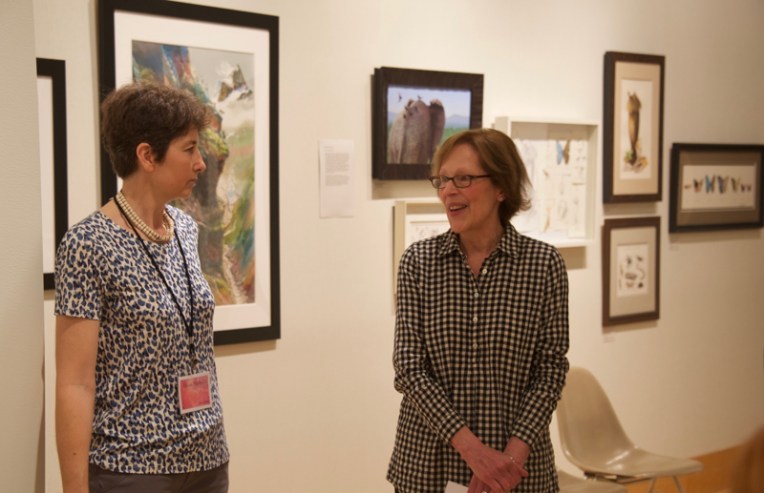
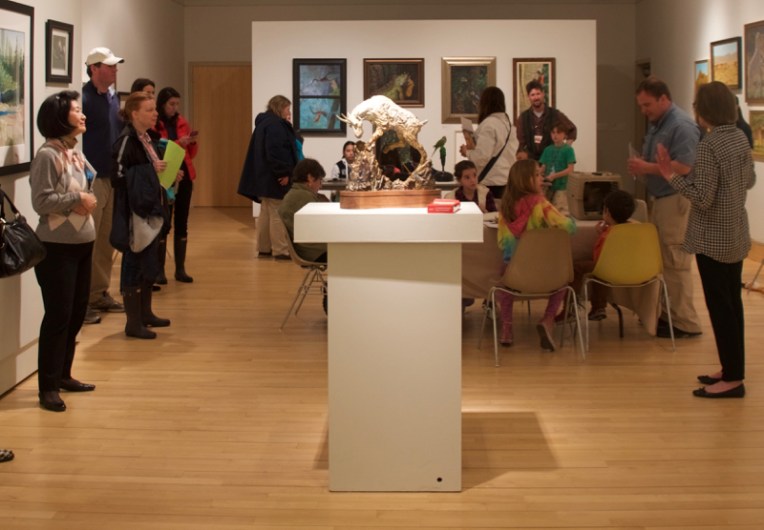
I’m back home after my three plus week trip back east and pretty much caught up. I had a great time at the Explorers Club Annual Dinner and down south visiting a number of wildlife refuges. The frosting on the cake was the opening reception on March 31 and also weekend activities for “Wildlife Art: Field to Studio” at the Flinn Gallery in Greenwich, Connecticut. Five of the seven participating artists were able to attend. From left to right in the photo above: David Rankin, Alison Nicholls, Susan Fox, Sean Murtha and Karryl. All our hard work has paid off. It’s a fantastic exhibition that I’m so proud to be part of!

Here’s a album of photos from the events…

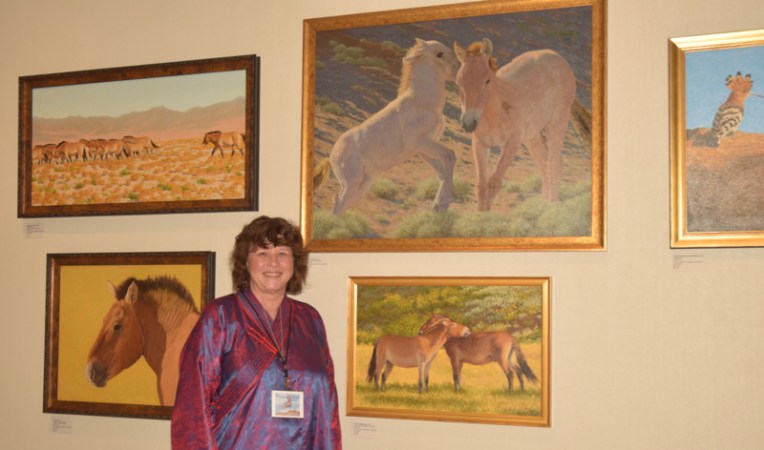
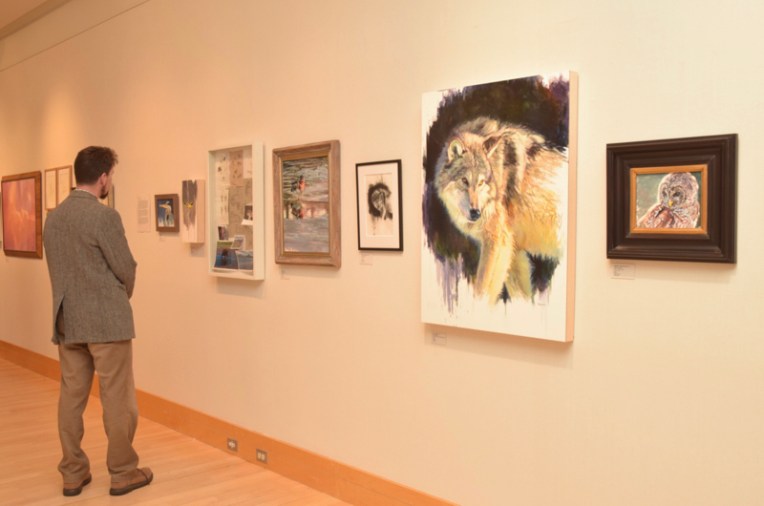
Susan Fox poses with some of her paintings
Susan Fox poses with her takhi paintings
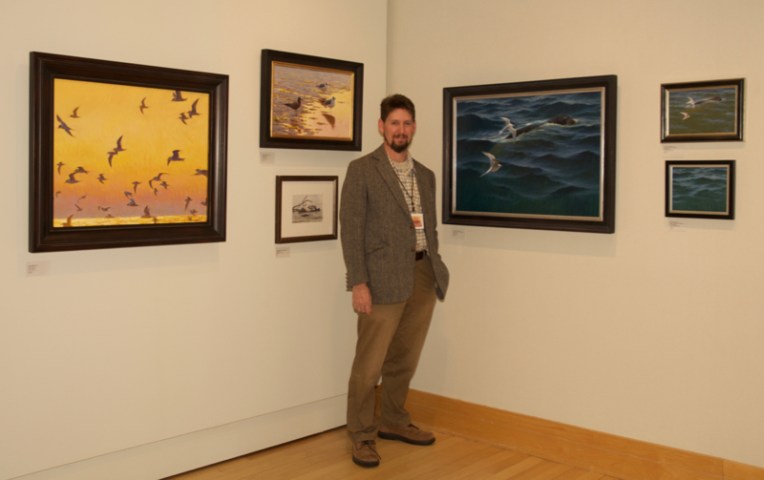
Sean Murtha with some of his work
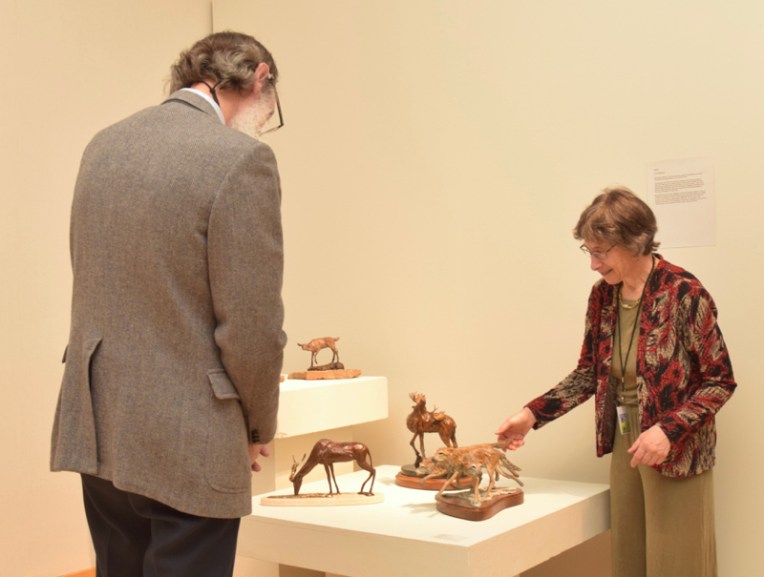
Karryl chats about her sculpture with a guest
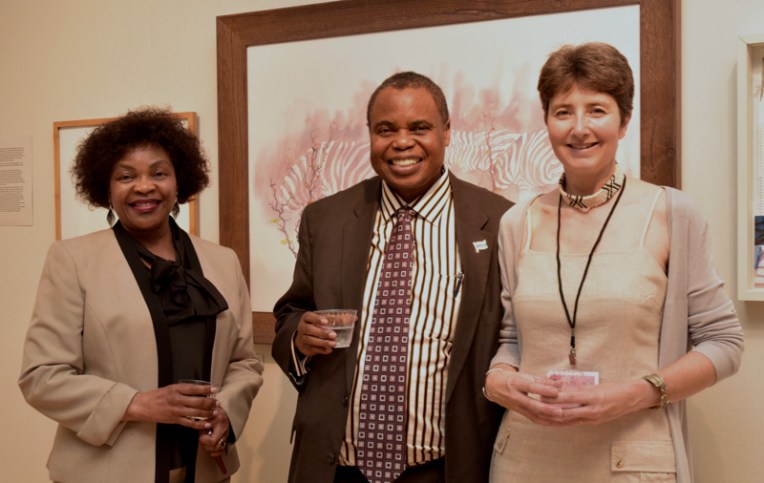
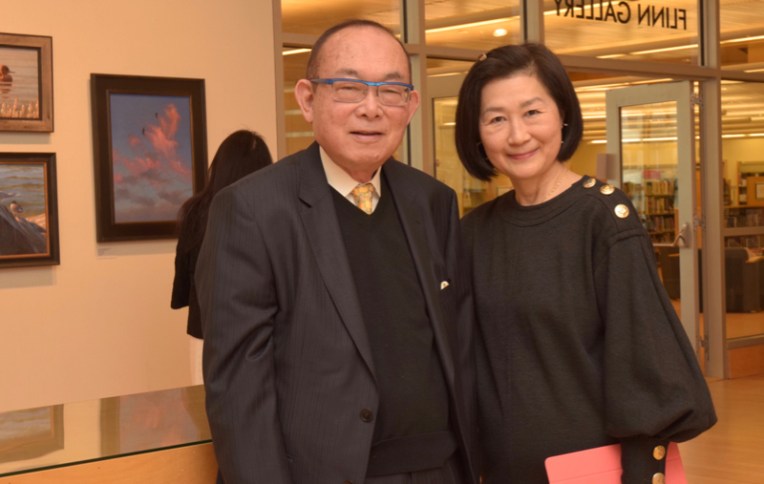
Alison Nicholls with the Un Ambassador from Botswana and his wife
Alison Nicholls with the UN Ambassador from Botswana and his wife
David Rankin in front of his work and Karryl
David Rankin in front of his work and. on the left, Karryl
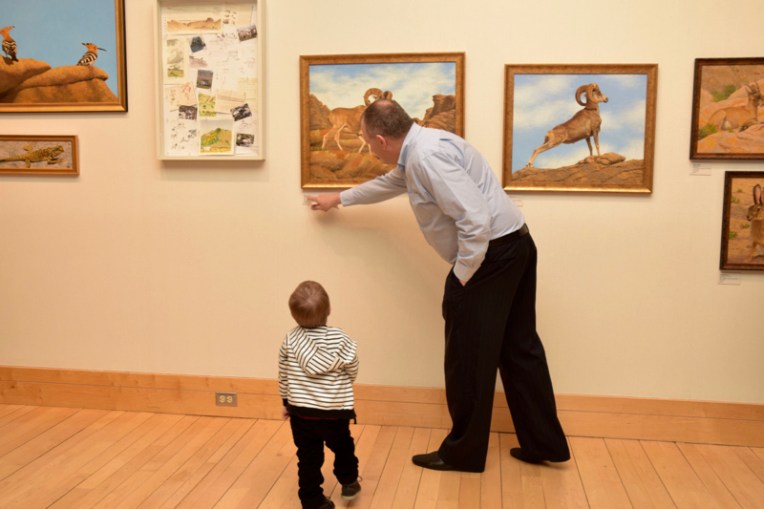
Looks like I had a young admirer
Looks like I had a young admirer. We each had one of the framed “fieldwork boxes” on the wall with our work to carry out the main theme of the exhibition, which is that we all do fieldwork, including sketches, paintings and sculpture, which inspires and informs our art.
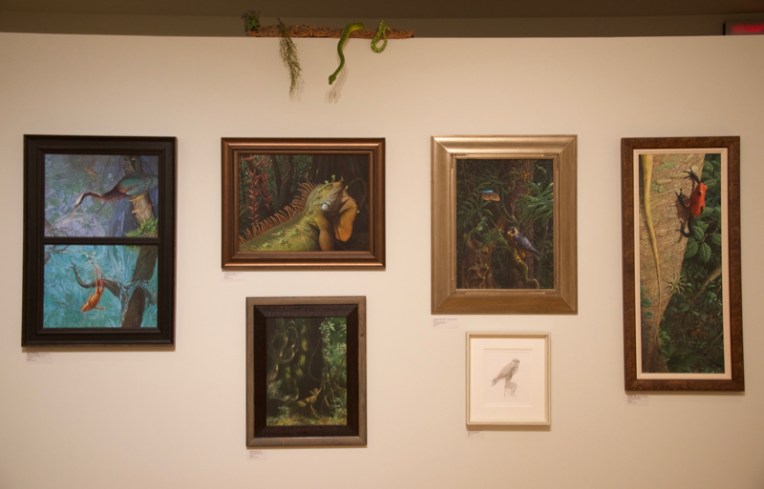
Carel Brest van Kempen's work. And the snake. Seemed appropriate.
Carel Brest van Kempen’s work. And the snake which was one of the models for a Saturday morning event.
Sean Murtha checking out Kelly Singleton's fieldwork box
Sean Murtha checking out Kelly Singleton’s fieldwork box
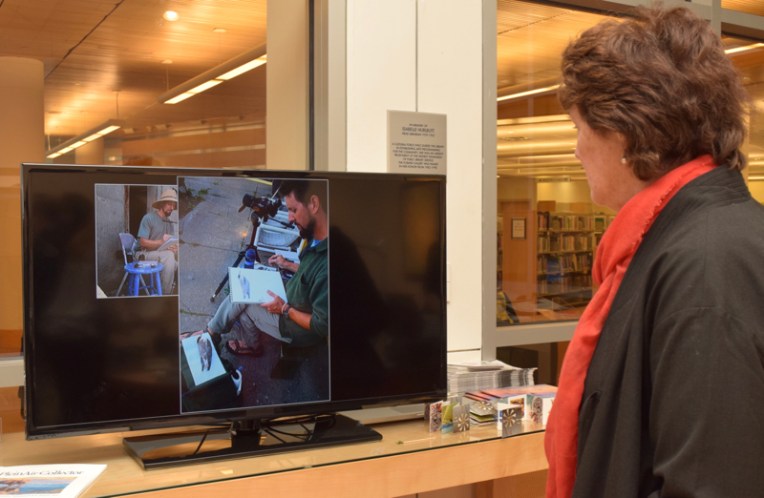
David Rankin created a video featuring all of us in the field and examples of our work
David Rankin created a video featuring all of us in the field and examples of our work. It’s playing on a loop at the gallery.
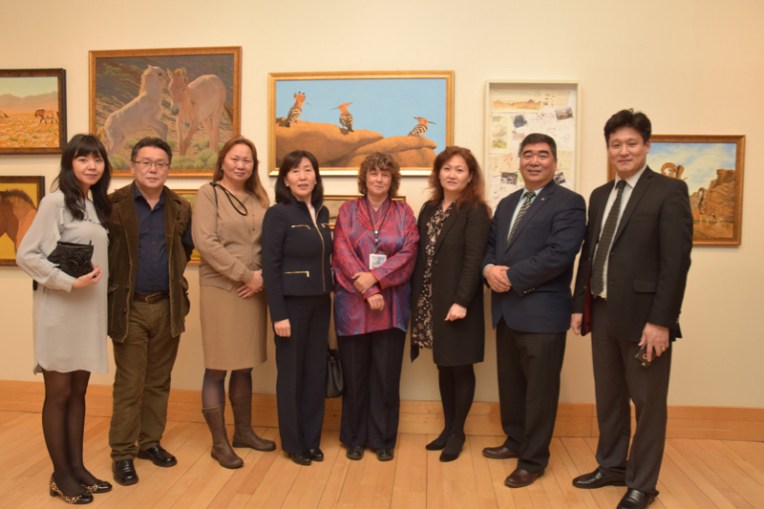
I was honored
I was honored to have guests from the Mongolia Permanent Mission to the UN and some of their friends
Lillian Tung Lum and guest
Exhibition curator Lillian Tung Lum and guest
Curator Claudia Schipper
Curator Alice Sherwood (right) and Alison Nicholls

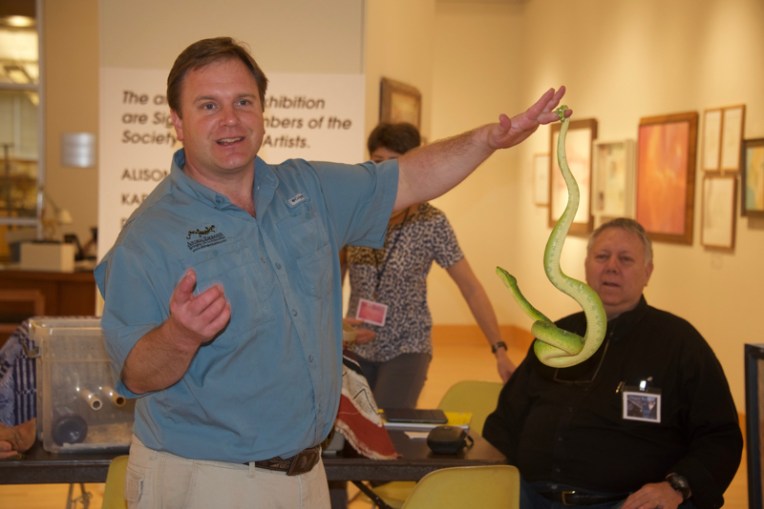
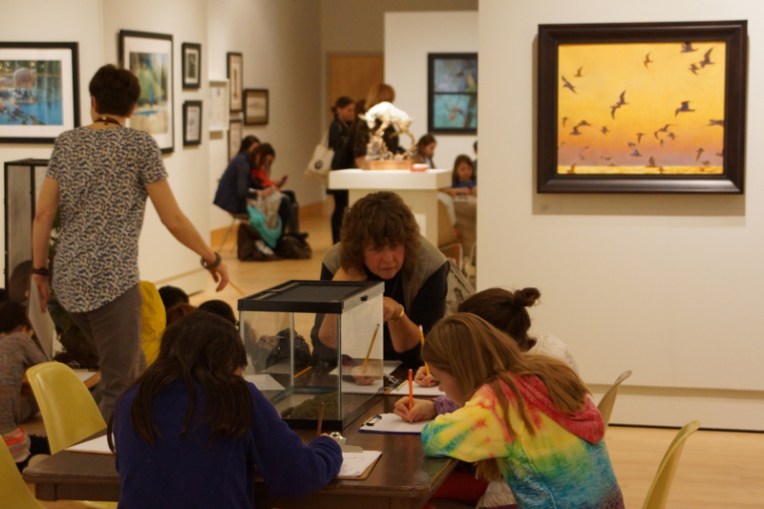
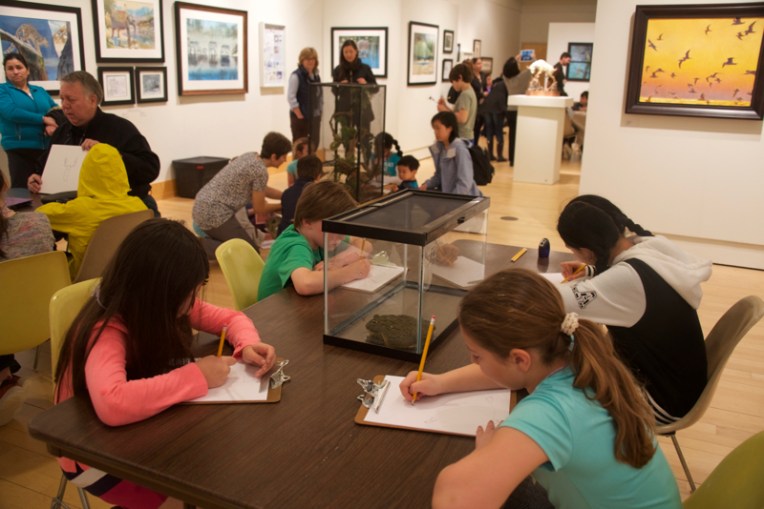
On Saturday morning the gallery hosted a special event for children, bringing in live animals from Animal Embassy for them to draw.

Chris Evers of Animal Embassy and green tree snake
Chris Evers of Animal Embassy and the emerald tree boa
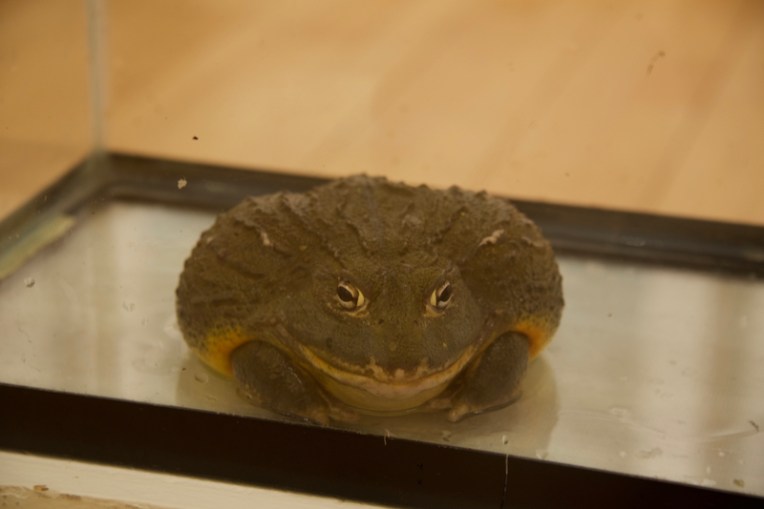
African bull frog; A young one, less than half the size of an adult. They are the second largest species of frog in the world
African bull frog; A young one, less than half the size of an adult. They are the second largest species of frog in the world. He was the model for my groups.
Explaining how to see larger shapes first
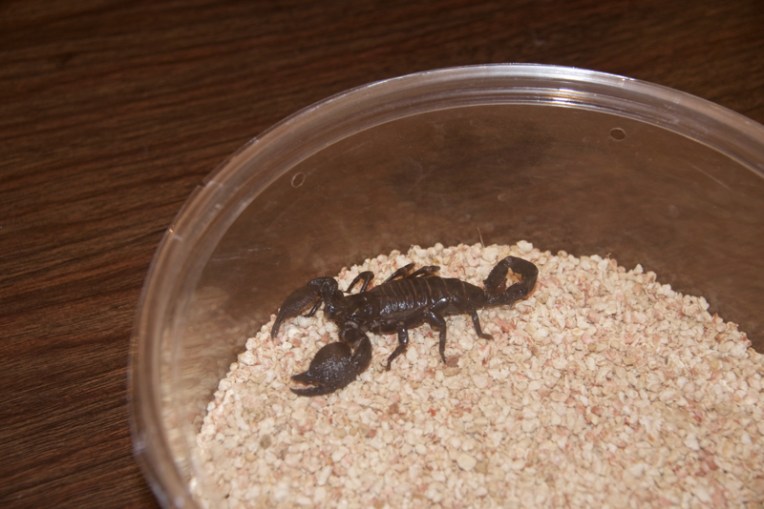
Scorpion
Scorpion, one of three who “modeled” for the kids
All the kids did a great job!
All the kids did a great job! David Rankin on the left showing how to draw a scorpion
We had five tables going
We had five tables of young artists going. In the background you can see Sean Murtha and his model, a small parrot
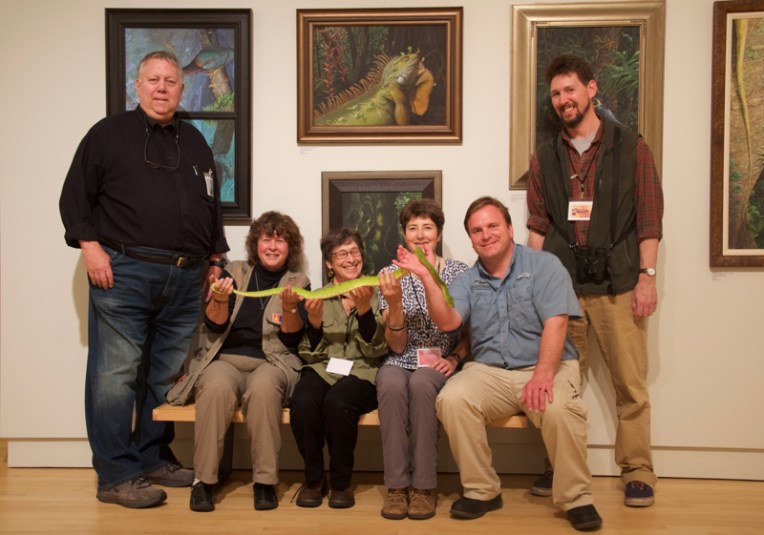
A final group shot
A final group shot. As animal artists, of course we couldn’t resist the opportunity to pose with the emerald tree boa

“Wildlife Art: Field to Studio” will be open until May 4 at the Flinn Gallery in Greenwich, Connecticut. You can find out hours and more at the Flinn Gallery website.