This will be a occasional, on-going series of images of my favorite places in Mongolia. Baga Gazriin Chuluu means “Small Earth/Land Rocks”. There is also an Ikh Gazriin Chuluu (Great Earth Rocks), but I haven’t gotten there yet.
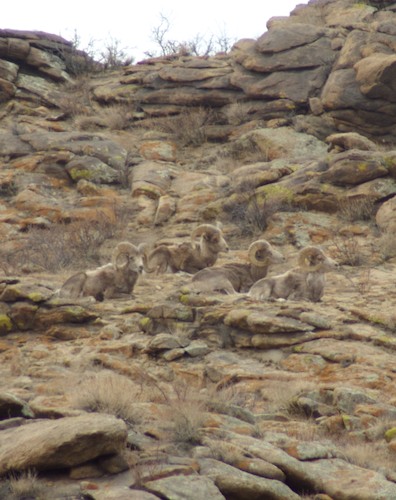
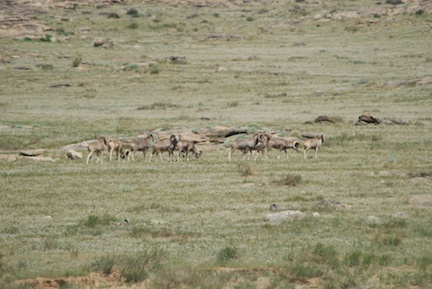
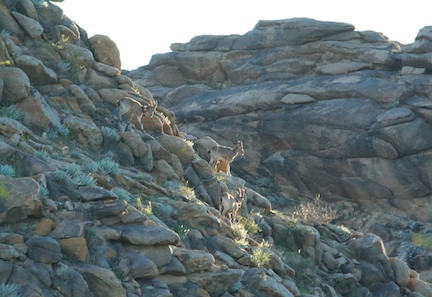
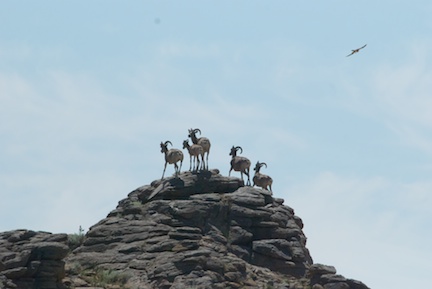
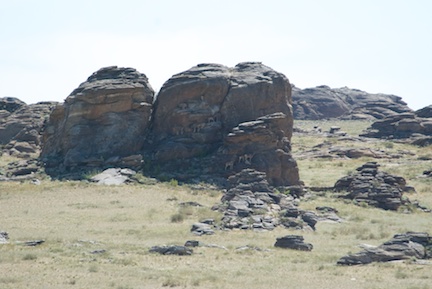
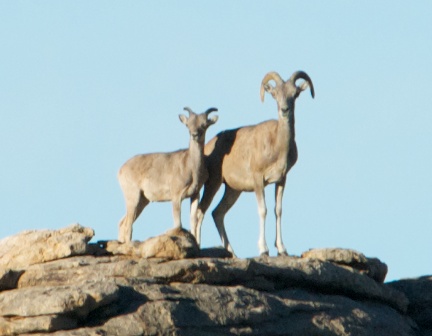
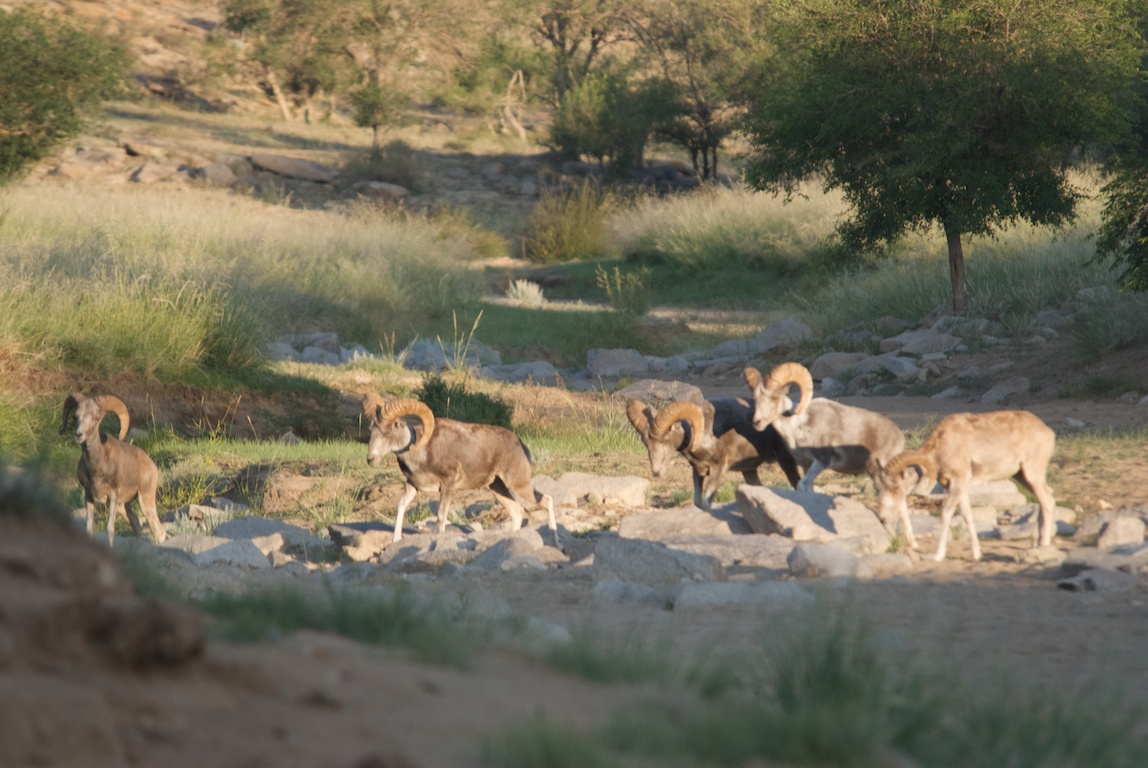
In July of 2009, my driver/guide and I pulled into the ger camp, which is located in the reserve and got settled in. I came out of my ger and was greeted with this amazing light and a woman riding down the valley. I had a feeling I was going to like this place.It was my good luck to be there on the day of a local mountain blessing ceremony or local naadam. There was a horse race, wrestling, anklebone shooting and lots of people just riding around on their horses.Seeing argali was my purpose for going there and within a couple of hours the first morning, my driver spotted this group of rams within sight of the car.The following year, 2010, I got to go back as the first stop on a two-week camping trip. Here's the spot my driver/guide (same one as in 2009) picked.Driving around, we came upon a short valley which had a number of cinereous vulture nests, including this one with a juvenile who was almost ready to fly. We climbed up on the rocks to get above him and I got some great photos.
There are more photos of Baga Gazriin Chuluu, including the story of my first trip there in 2009 here.
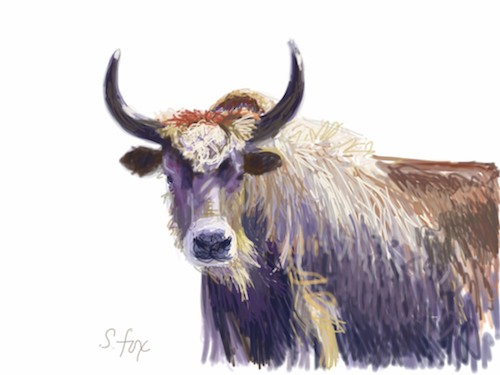
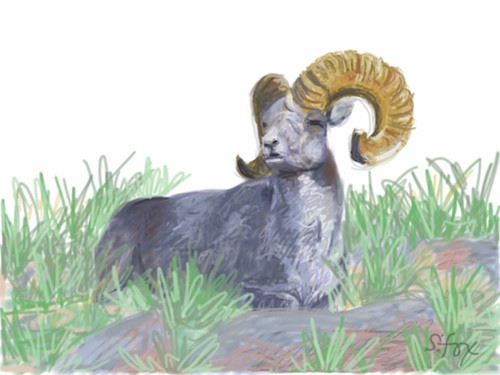
I’ve been having a lot of fun with the Sketchbook Pro app for my iPad. It works well for fast location sketching, but I’ve been wanting to see how I could use it for more finished work.
I keep the iPad with me in the living room and I have a lot of photos from my latest Mongolia trip on my MacBook Pro. So it’s easy to sit and work while a football game is on.
I’ve settled on just a couple of the drawing tools to keep it simple for now as I learn how to use other features like the size of the line and how opaque or transparent it is.
The one thing I have found is that it is difficult to do animal heads that are small because the size of the stylus end makes it hard to do small strokes for features like eyes. But I managed. I’ll definitely be taking the iPad to Mongolia again next year for location work.
Juvenile cinereous vulture, Ikh Nartiin Chuluu, August 2011Cashmere goat, Khan Khentii Mountains, August 2011Yak, Burget Uul, August 2011Argali ram, Ikh Nartiin Chuluu Nature Reserve, August 2010
We arrived at the Steppe Nomads ger camp at Gun-Galuut Nature Reserve with a broken rear spring on the Land Cruiser, not sure what this meant for the remainder of the trip. While Pokey and I settled in, Khatnaa got on his mobile phone and called the Nomadic Journeys’ office to sort things out. We got laundry done and took welcome hot showers.
That night, at dinner, Khatnaa explained the situation. He would need to take the car out to the tarmac road (13km on earth road each way to get to and from the reserve) the next afternoon to meet up with someone from UB who would bring the new spring out. Then it would have to be installed. How long? Half a day. Did we want the office to also send out a new guide and driver to finish the trip or would we wait for the repair? That decision took about two seconds….we’d wait and finish the trip together. In any case, Pokey and I weren’t sorry to have a break to simply hang around camp and relax.
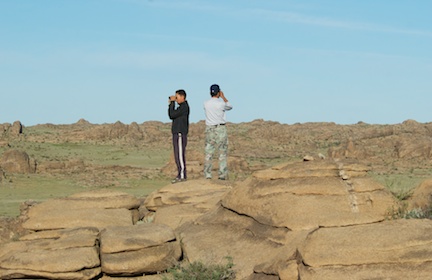
Khatnaa then said that the car was drivable, with care, and we would go out the next morning at 6am, which is exactly what we did. I was impressed by what he considered staying on “easy” roads. We parked and took a good, long hike down to where he thought we might see argali, which we spotted off in the distance almost as soon as we stopped to glass the mountain.
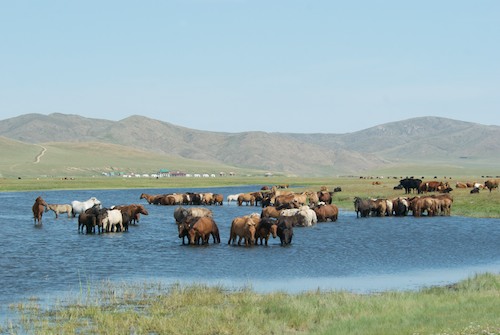
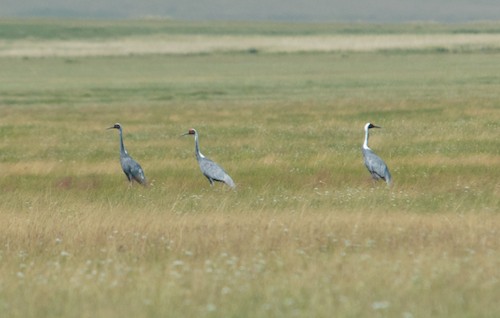
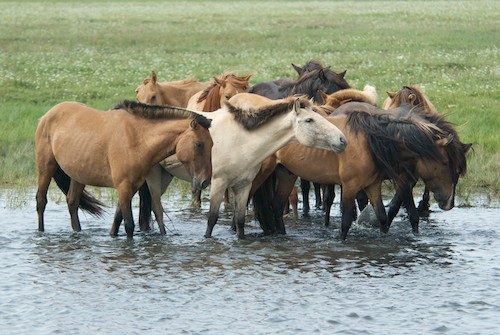
We also got great photos of a big herd of Mongol horses and cranes, but really had to dodge the mosquitos. Back at the ger camp around 1pm, Khatnaa grabbed a quick lunch and took off. To our surprise and pleasure he was back at 5:15, after having to replace BOTH back springs because the replacement was longer than the original one. Dinner was quite festive with beers all around.
We only had one day at Gun-Galuut, but it was a full one, packed with great scenery and animals.
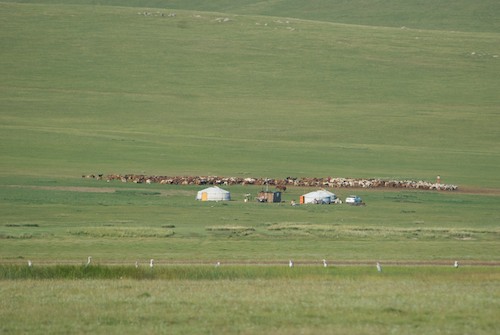
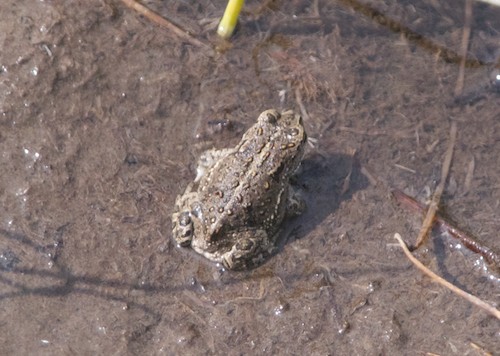
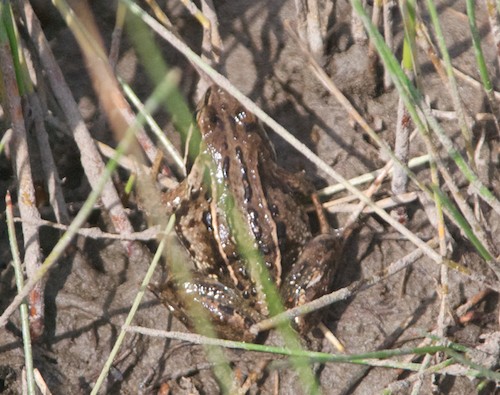
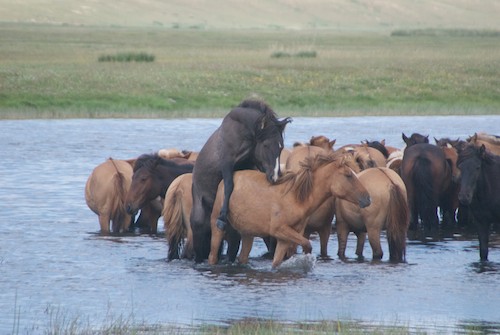
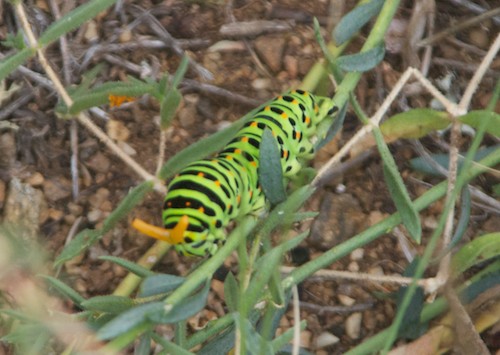
Steppe Nomads Tourist CampMorning coffee in front of my ger in my comfy Mongol del and felt slippersEarly morning light along the Kherlen Gol with Baits Uul ahead on the right12-13 argali grazing; look in the middle among the shrubs for the white dots which are their rumps; why good binoculars are a mustRiverside viewLocal herder's gers with a line of grey herons in frontI believe this is a Japanese quail chickThe horses we got great photos of, with the ger camp in the background; they were in the water to get away from the mosquitosEndangered white-napped cranesSmall toadFrogWetland and mountain, with cranesMore of the horses; in the afternoon a breeze had come up which kept the mosquitos away, from us at leastSometimes the action got pretty hot and heavyFirst time I ever saw a caterpiller in Mongolia
That evening Khatnaa told us that the next day’s drive wouldn’t be a long one, so we would go out into the reserve in the morning and leave after lunch. We went around the “backside” of the mountain, the side away from the river, parked in a draw, got out and almost immediately spotted four big rams running over a ridge to our right. I only was able to get a couple of butt shots before they were gone. But, within minutes, we spotted an argali ewe and lamb to our left. And then a large group moving up the draw directly in front of us, but a pretty long ways off. It’s estimated that there are less than 100 argali in Gun-Galuut, so we saw a fairly good percentage of the population in two tries.
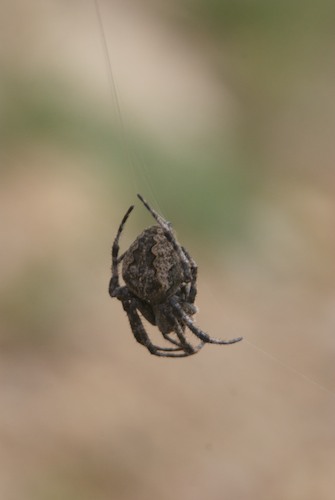
Argali Ewe and lambGood-sized spider
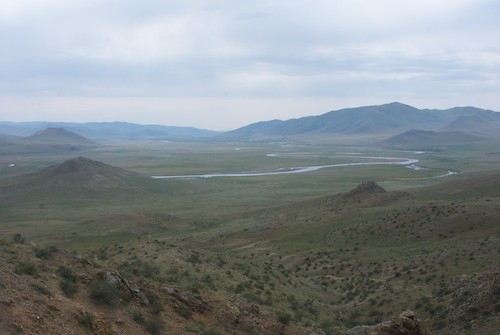
We drove to the next draw over where we hoped the argali rams had gone, but saw no one. Pokey wanted to do some sketching, so she stayed with the car while Khatnaa and I hiked up onto the mountain again. Coming around a ridge, the view opened up to the entire river valley. We found a couple of rocks to sit on and simply enjoyed the scenery for a half hour. It was so quiet, except for the occasional animal. No cars, no planes, no radios, no voices. Just. Quiet. One of the things I treasure about being in the Mongolian countryside.
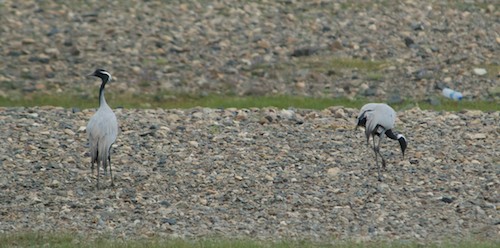
View of the Kherlen Gol valley, looking eastOf course I had to have my picture takenBack down on the wetland, we spotted a whooper swanA beautiful butterflyAnd on the other side of the river, a pair of demoiselle cranesOn our way out of the reserve that afternoon, we stopped by this small lake to photograph another whooper swanThis enormous coal mine at Baikhanuur is visible from the road to and from the reserve
Next week: Onward to Jalman Meadows in the Hentii Mountains
Those of you who have followed this blog for awhile know that I’ve been going to Ikh Nart since my first trip in 2005. This time I had the pleasure of sharing the reserve with a fellow artist, Pokey Park.
Wildlife being what it is, one never knows what one will see on a given trip, or even if. But this visit exceeded our every reasonable expectation. For two of the four days, it seemed like we could hardly go an hour as we drove around the reserve without seeing argali, ibex, argali and ibex in the same place or cinereous vultures, a golden eagle or other birds. And we had sightings both other days, but not nearly as often.
The universe being what it is, on our way out of the reserve we drove through one of the areas where we had had multiple sightings of argali and ibex the previous morning and saw not a single animal.
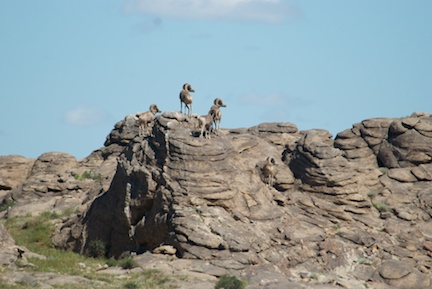
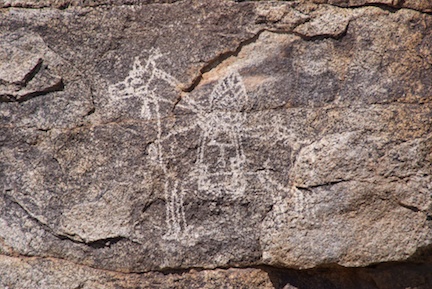
We stayed at Nomadic Journey's Red Rock Ger CampIkh Nart landscapeScanning for argali and ibexBut I was the lucky one who first spotted a single ram, who then joined up with a big group making ten all together. What a sight they were!We maneuvered through the rocks, caught up and re-sighted them three timesThey've seen something, we had no idea whatGolden eagleA herder's winter shelter for his livestockOne of the pictographs on the rock cliffWe went to the valley where the research camp is located and got great sightings of a large group of ibexAnd for a bonus, a beautiful sunsetWe also were able to follow this group of ewes and lambsHow many sheep can you see?They are totally at home in these rocky uplandsBlack kiteWe drove south to see the pictographs and Tibetan inscriptions on the cliff in the backgroundPokey helped fill the troughs; it's a Mongol tradition that passersby will fill them if they are emptyIbex pictograph; researchers have just started to catalog and study the cultural resources of the reserve, of which there are manyArgali ewe and lambArgali ram
Five wonderful weeks in Mongolia just flew by. I managed to spend three of those weeks in the countryside: two weeks doing the “wildlife watching” tour with nationally-known sculptor Pokey Park and then a week of camping with a guide/cook and driver.
Lots of great reference and stories to match will be posted here in the weeks to come, but for now I’m still catching up and working on a couple of new projects, about which more later.
In the meantime, here’s a collection of the photos that have me in them, most taken by our great driver/guide, Khatnaa, who brought his own camera and who definitely has an eye as a photographer.
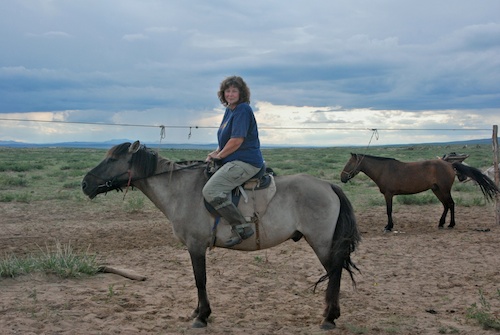
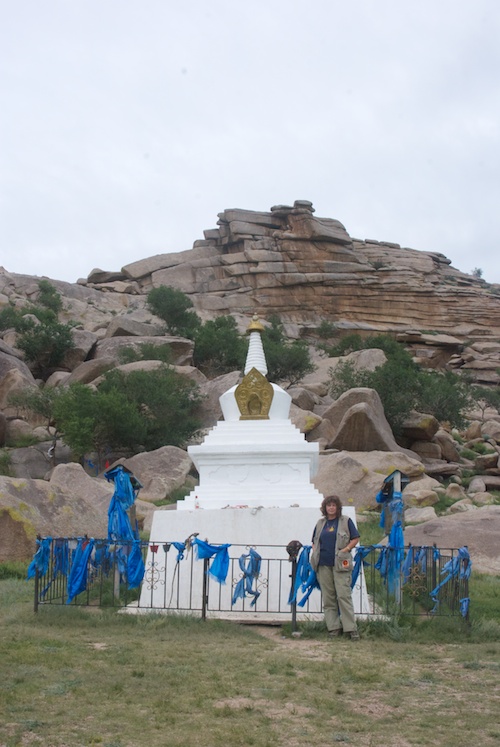
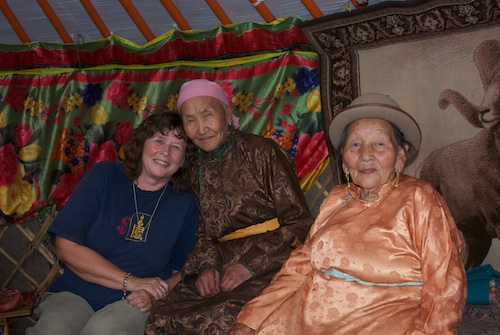
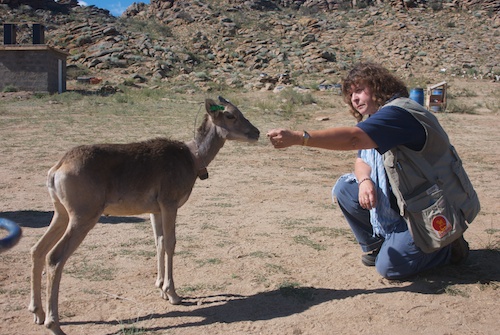
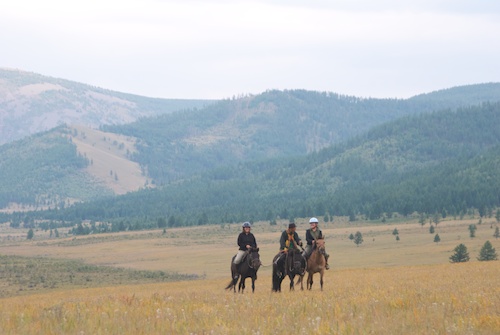
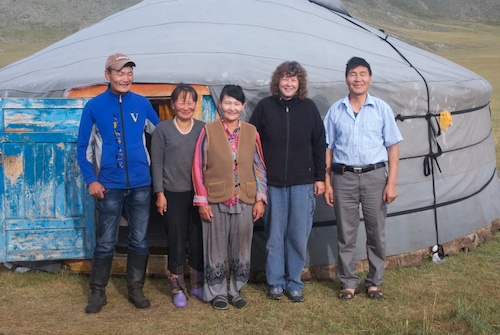
Lunch up in the mountains of Hustai National ParkMongol horse ride #1 at Arburd Sands ger campStupa at Zorgol Uul, a mountain not far from Arburd SandsProbably my favorite photo from the trip; I met these women in 2008 when my husband and I went to Arburd Sands and I was thrilled to see them again this year; Lkhamsuren, on the right, is the widow of famous horsetrainer, Choidog, whose son, Batbadrakh, is now family patriarch; Surenjav, next to me, and I somehow connected in 2008 even though we couldn't talk to each other due to the language barrier. She's 92 now and is Batbadrakh's brother's mother-in-law. Being Mongolia, neither expressed any real surprise at this western woman who they met three years ago walking into the ger one morning to say "Sain bain uu"Orphaned argali lamb at the Ikh Nartiin Chuluu Nature Reserve research campHappiness is a nice ger and comfy del at Gun-Galuut Nature ReserveAfter the second longish hike up a steep slope in one morning, I was rewarded with this great view of the valley of the Kherlen Gol; Chinggis Khan almost certainly knew and rode through this placeMongol horse ride #2 at Jalman Meadows ger camp, up north in the Hentii Mountains, and overlooking the valley of the Tuul Gol, which also flows through UlaanbaatarThe second night of the camping trip, I got to stay overnight with a herder family for the first time. It happened to be the home of my driver, Puugee, who on the right. Next to me on the left is Hashchuluun, his wife, then a lady who I did not catch the name of and, finally, Puugee's oldest son, one of three
I’ll be open the second weekend, June 11-12 from 11am to 5pm. You can find directions to my studio and more information about this annual Humboldt County art event here.
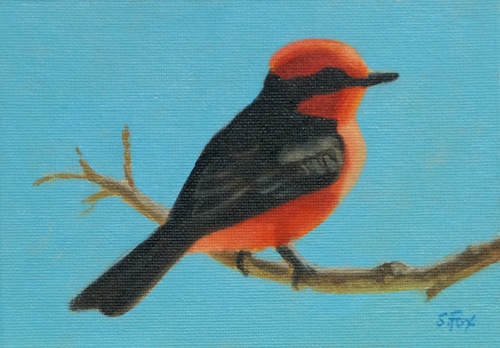
Between now and the 11th I’ll be posting a painting every day so that you can see what I’ll have available. They will be small works and very affordable. Here’s today’s featured painting, a vermillion flycatcher which I saw near Tucson, Arizona during my March trip to the Sea of Cortez:
"Vermillion Flycatcher" 5x7" oil on canvasboard $50
I’ll also have prints and cards, plus a selection of my large, framed pieces, including my latest major work, “Then They Walked Out Into The Morning Light”.
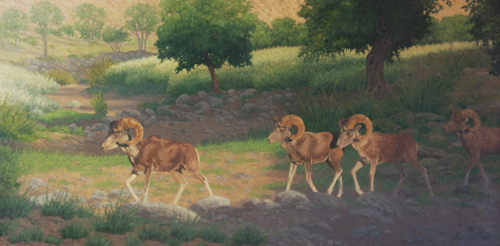
Then They Walked Out Into The Morning Light 24x48" oil
Continuing on from last week, I knew that I was going to do a big painting (big for me, at this point) when the five rams walked across the stream bed in the beautiful morning light.
I also knew that it would be a complex piece that would take more planning than I’d done in the past. I’ve started a couple of big paintings, only to have them bog down and fail because, while I did do preliminary sketches and drawings, I found that I hadn’t really solved some critical problems and then was faced with figuring them out on the canvas. A recipe for frustration and failure.
Not this time. First, I thought about what it was that made me want to paint this scene. It was not only the argali, but the interesting alternating pattern of light and shadow, which started in the foreground and went all the way back. And it was important that it be about my emotional response to this very special experience.
Here’s one of the reference shots. I create Albums in Aperture where I can put all the images I’m using on a painting. In this case, thirteen. Here’s the lead ram.
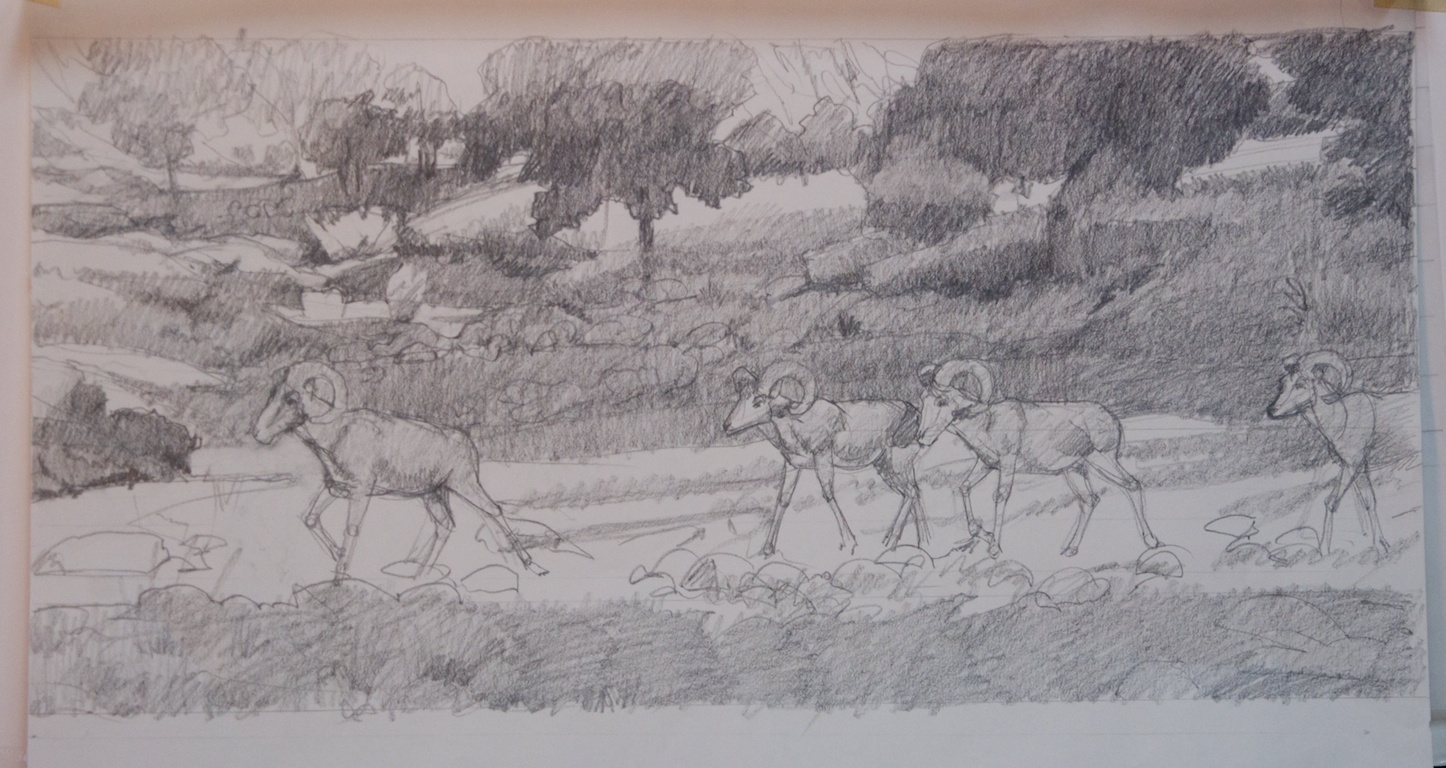
Since I had a pretty clear image in my head of where I wanted to end up, I didn’t do thumbnails this time. And, having struggled with understanding how to work larger, I decided to start larger right away. This is the first layout, done on 19×24″ Canson Calque tracing paper.
As you can see, I adjusted the proportions as needed. I wanted the emphasis to be on the rams, but still show enough of the background to place them in a specific setting and show that alternating light and shadow pattern.
You will also notice that I have an even number of animals, which breaks a “rule”. But they are in an uneven number of “groups”. This doesn’t happen by accident. Or if it does, then there is a conscious decision to keep it.
I had also done a finished drawing of the two rams, which some of you saw a few months ago on Facebook (you can “Like” my public page here).
The next step was to do a small color rough to figure out how I would achieve the visual effect I was looking for. This is on a 6×8″ canvasboard. I blocked out the part that didn’t fit the proportion.
What was critical was to play up the golden light on the ram’s horns and to make sure the argali were the objects of highest contrast by placing them against the central shadow shape. Notice that I’m just painting blobs of color to get the relationships down.
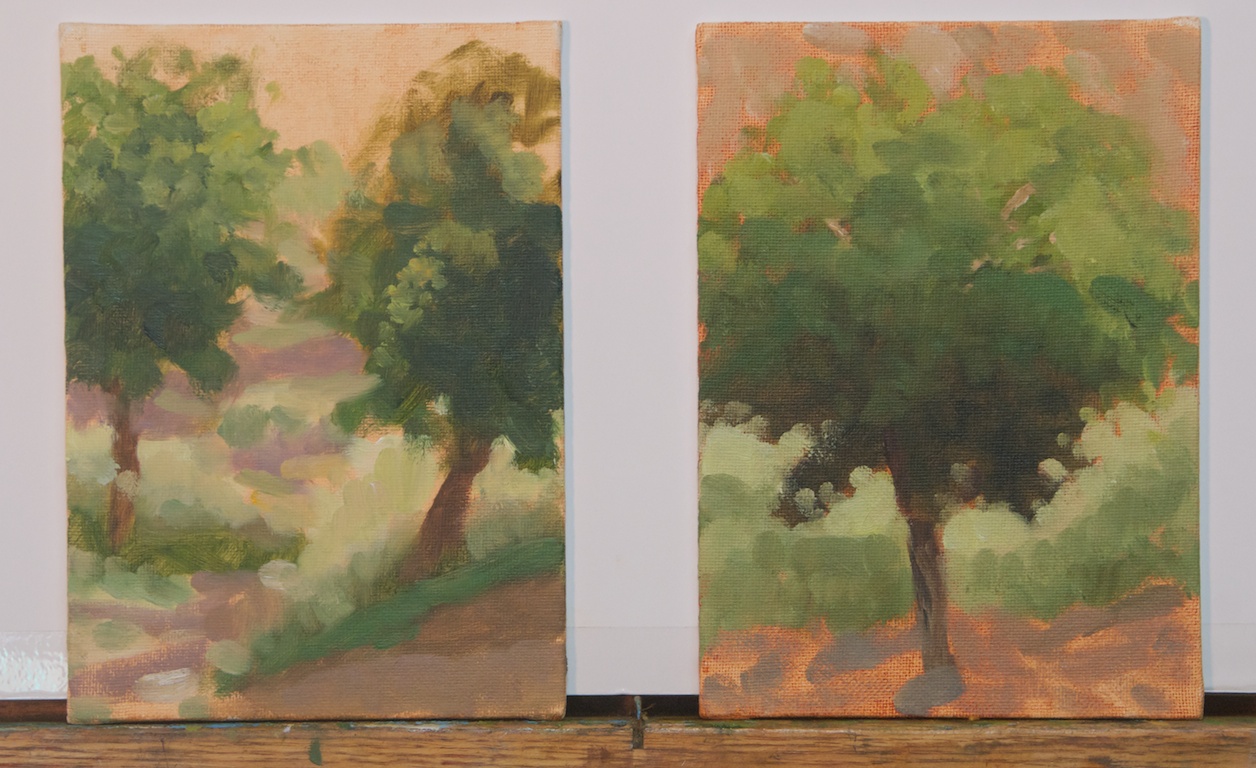
The central tree has a cast shadow. This is something that has given me trouble in the past. The shapes, edges and value relationships have to be just right. So I did a couple of studies of just that tree, along with another to figure out some of the same things where the stream bed goes back into space.
Now it was time to do a large value study, 12×24″. I adjusted the relative position of the rams, moving the pair forward a little.
I had to know if what I had come up with would work at the final size I had decided upon- 24×48″. This is where I’d gotten into trouble before. I asked an artist colleague for advice and he said to take my finished drawing to a copy place and have it blown up to the final size, which I think is a really good idea.
But I chose to try something else. I have found great value in the re-drawing process. It allows me to refine, correct, simplify and really learn to know my subjects in a way that would not be possible if I simply did a drawing, transferred it and started to paint, or worse, heaven forbid, projected them. The depth of understanding and flexibility I get is critical to the quality of my finished product.
First I put a sheet of tracing paper over the drawing above and drew a one inch grid on it.
Then I placed my untoned canvasboard on the easel and ruled a grid on it in pencil. I taped tracing paper to it. It took three sheets to cover it. I lightly sketched a transfer drawing so that every element was in the right spot.
Once the background was laid in, I taped on three more pieces of tracing paper and did the final pencil drawings of each argali. Now I had this:
Because the argali were all on their own pieces of paper, I could do a final check on position and easily move them if needed. I also now had the whole composition at the final size and could see that it did, in fact, work. Whew!
I removed the tracing paper, toned the canvas, re-attached it and, using a No. 7 pencil and a sheet of homemade graphite transfer paper, transferred the drawing.
Using the tracing paper drawings as a guide and referring back to the photo reference if necessary, I carefully re-drew the argali with a brush, figuring I’d get the most important elements down first. Here’s a close-up which also shows the loose lay-on of the background. Notice that you can see three of the four hooves. They vanish later as I decide to add additional and larger rocks to create more of a visual separation between the sheep and the viewer.
Here’s the finished drawing, with basic values starting to be indicated. Notice that the rocks in the foreground and middle ground are just roughed in. No need to spend a lot of time on them at this point.
Finally it was time to start adding color! I work all over a canvas in a sitting, keeping the edges soft and letting colors “bleed” into each other. This lets me control where the harder edges will be later on. I’ll also “lose” the drawing, knowing that, having drawn the animals multiple times, I can “find them” again with no problem. First I established the shadow shapes, letting the undertone be the light.
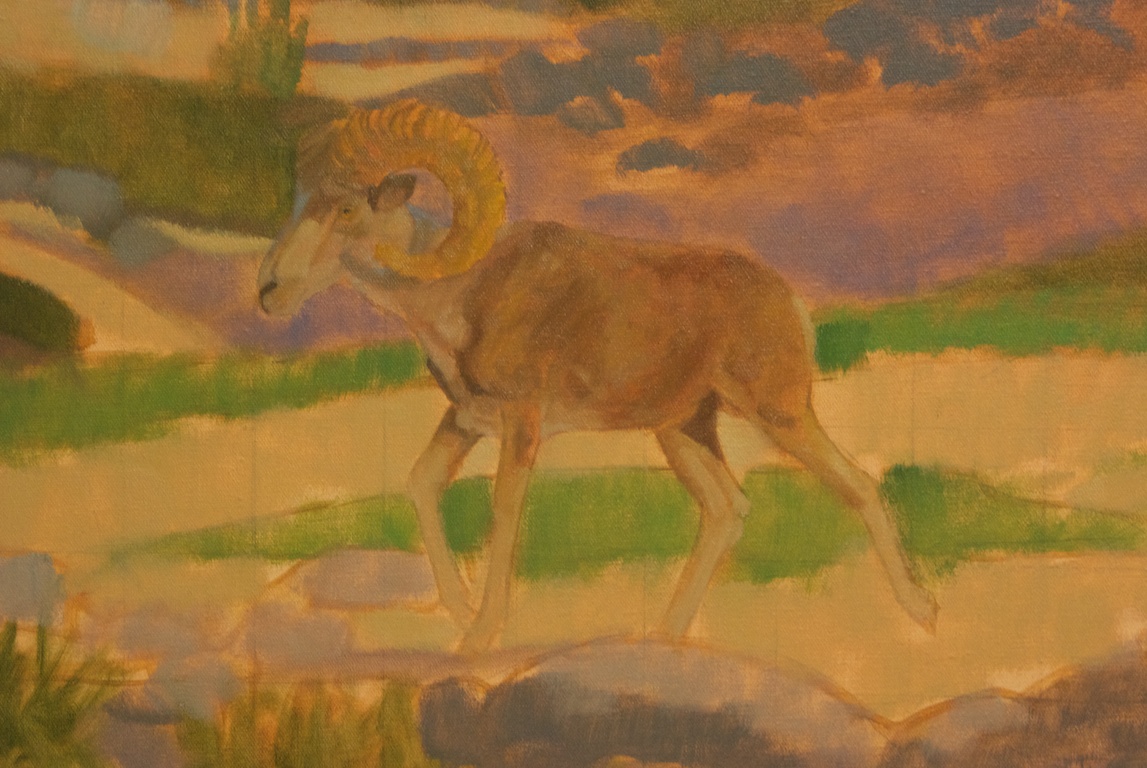
Here’s a close-up of the lead ram in progress. Still keeping it loose, but working on light and shadow and correct structure.
I started to see a problem in the forequarters and it nagged at me for a couple of sittings until I realized that the leg closest to the viewer was too far forward. Moving it and the shoulder back about a quarter of an inch solved the problem. His head was also a little too small. That’s a big advantage of working this way. I can make changes at any point in the process, which turned out to be really important when I was trying to keep track of so many pictorial elements and their relationships to each other.
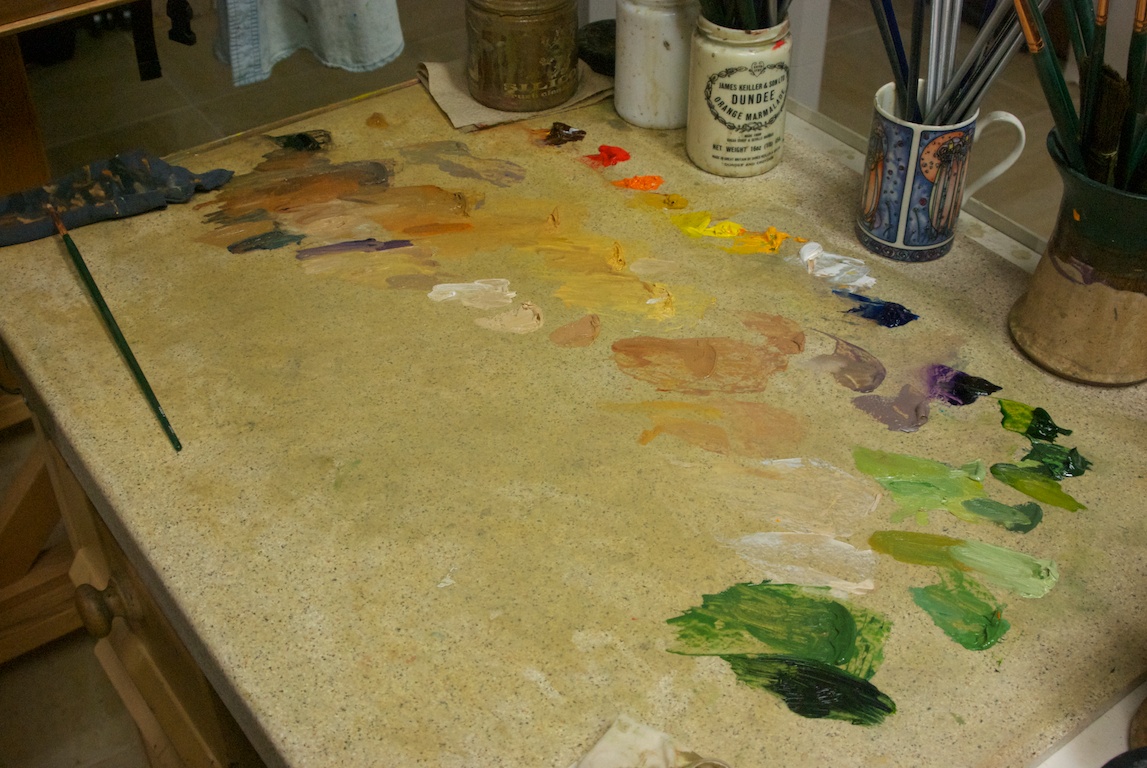
Let’s take a quick break. Here’s my palette. For this painting, I used my standard color range: transparent oxide red, cadmium red medium, cadmium orange, yellow ochre light, cadmium yellow pale, cadmium yellow, titanium white, ultramarine blue, Winsor violet (dioxine), sap green, terra verte, chromium oxide green.
Missing this time around is cobalt blue and magnesium blue hue. I mix my own earth colors and greys. My black is a mix of transparent oxide red and ultramarine blue. I can easily shift the color temperature by changing the proportions.
The palette itself is a scrap of Swanstone solid surface countertop. I got the idea from another art blog and I like it much better than the glass one I’d been using.
Ok, back to the painting. I’m probably about mid-way through at this point. All the value relationships are set (at least I thought so) and basic colors are on.
Oh, darn. I realized that having all the rams in the same light wasn’t very interesting. I went back to my reference images and found a nice shot of the very first one coming out of the shadows. Now I needed to put the fourth ram in that light. Aperture is great for this since it lets you show multiple images at once.
Much better. Having solved that final, somewhat major problem, it was now a matter of simply pushing on, solving all the problems, making decisions, tweaking and tweaking (what Scott Christensen more elegantly calls “orchestration”).
Until, finally, after far longer than I have ever spent on a single painting, it was done.
Then They Walked Out Into The Morning Light 24x48" oil
I completed a major painting last week. It’s one I’ve been anxious to take on since I spent a hour with a group of five argali rams this past July at Ikh Nartiin Chuluu Nature Reserve. I was there for six days, staying in one of the gers and taking meals with the scientists and an Earthwatch team.
I’d gotten up at 5:30am, thrown on the clothes that I’d laid out the night before, hoisted my camera pack onto my shoulder, slipped out of the ger and began a slow, careful walk down the valley.
I had learned that the only water in the area was coming from a spring just a few dozen yards from camp and that argali were coming to the valley regularly in the morning and evening. Which was quite convenient, saving me a lot of walking around and clambering over rocks trying to find them.
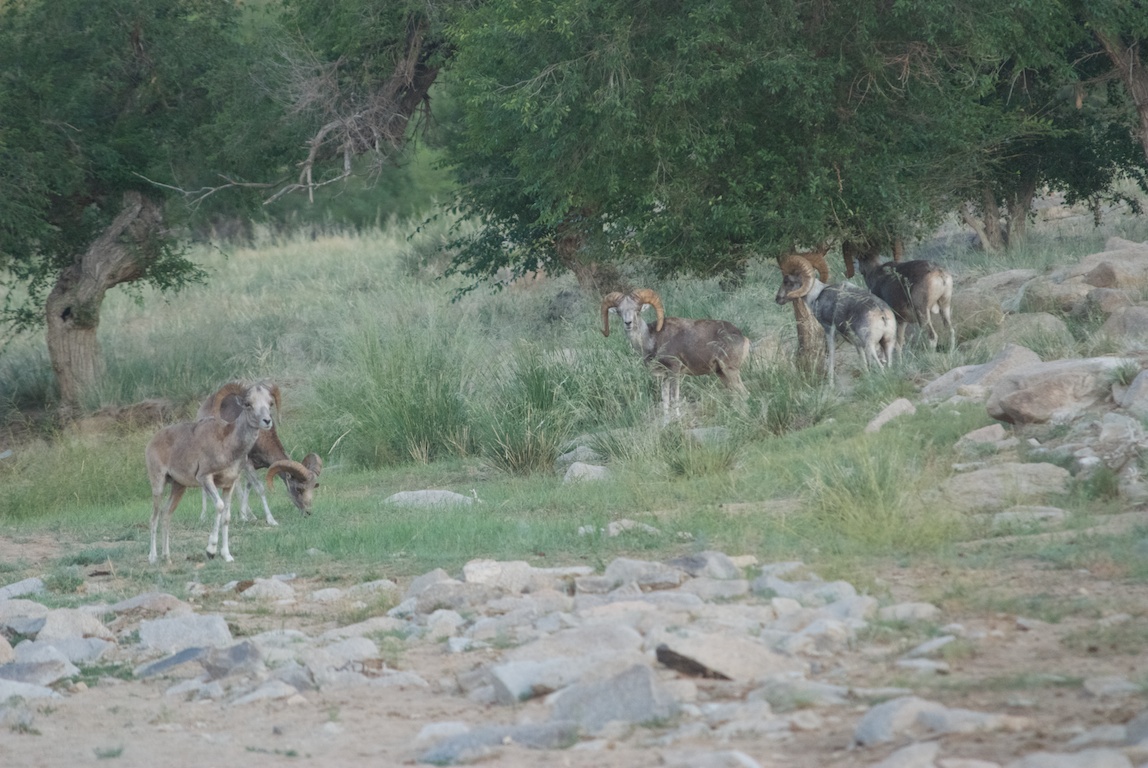
I picked a spot and sat down in plain view, having been told that makes them less nervous than if you try to hide behind a rock. Took a look around through my binoculars and, within a few minutes, up on the cliffs to my right…
Morning "scouts".
As I watched them, wondering if anyone was going to come down, I had a feeling…and looked back over my shoulder to my left.
Less than 100 feet away.
How long they had been standing there watching me, I have no idea. Then they started to move towards the stream bed.
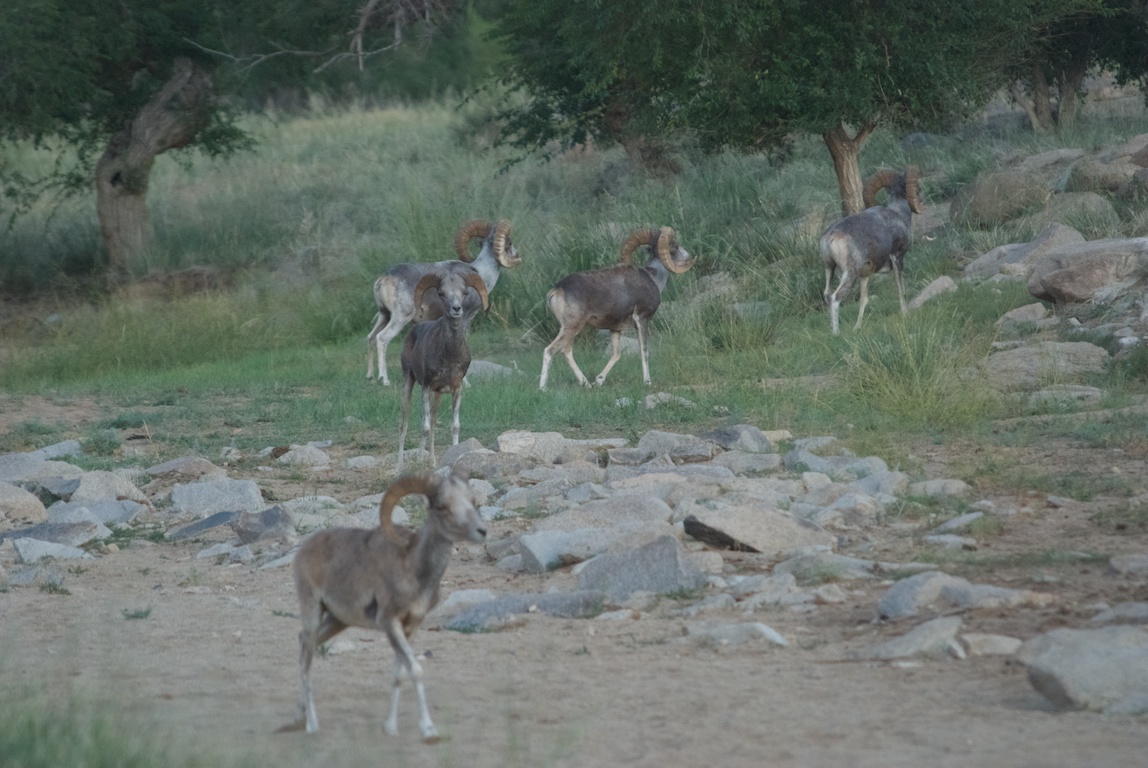
Oh, look, there's three!Coming down the hill.
As I watched, the sun started to hit the tops of the cliffs. Would I get to see these guys in morning light before activity in the camp behind me spooked them?
Out into the valley as the sun comes up.
The first three crossed the stream bed to a small clump of trees. Two more rams had come down from the cliffs on the right. The Sunrise Boy’s Club was now in session.
Five rams hanging out.
There were three older adults with massive horns and two younger rams. The big guys were almost grey, their juniors a reddish-brown.
They browsed in the trees, did a little pre-rut testing (a future painting). And then….
Noise from camp. Oh, no.
But everyone settled back down. Except for this young one who decided to check me out, walking almost straight towards me. It made the others nervous at first, but they didn’t run.
It was a bit much for the three older rams.
I sat there in disbelief. For me, this is the grail of wildlife fieldwork: sitting out in plain view and having a wild creature choose to approach you.
He finally stopped and looked straight at me from about 30 feet away.
But I wasn’t so paralyzed with delight that I forgot to take pictures, getting the best argali head reference I’ve shot so far.
Returning to the group.
He finally turned and walked back to the others who, as you can see, are standing there, watching. I found myself running this little thought thread: “We didn’t get this old and big by being stupid. Let the young guy check her out.” And then imagining the adventurous ram, kind of like a young British officer, reporting back to his superiors. “No problem, sir. None at all. Piece of cake.”
I guess I was just part of the furniture by now.
But he wasn’t done yet. For a second time, he walked down the stream bed towards me.
Comfortable enough to put his head down and graze.
He finally rejoined the group. Suddenly they were up on their feet just as the light was starting to reach the valley floor. Oh, no! They’re facing the wrong way. Are they going to run up the hill?
Up on their feet.
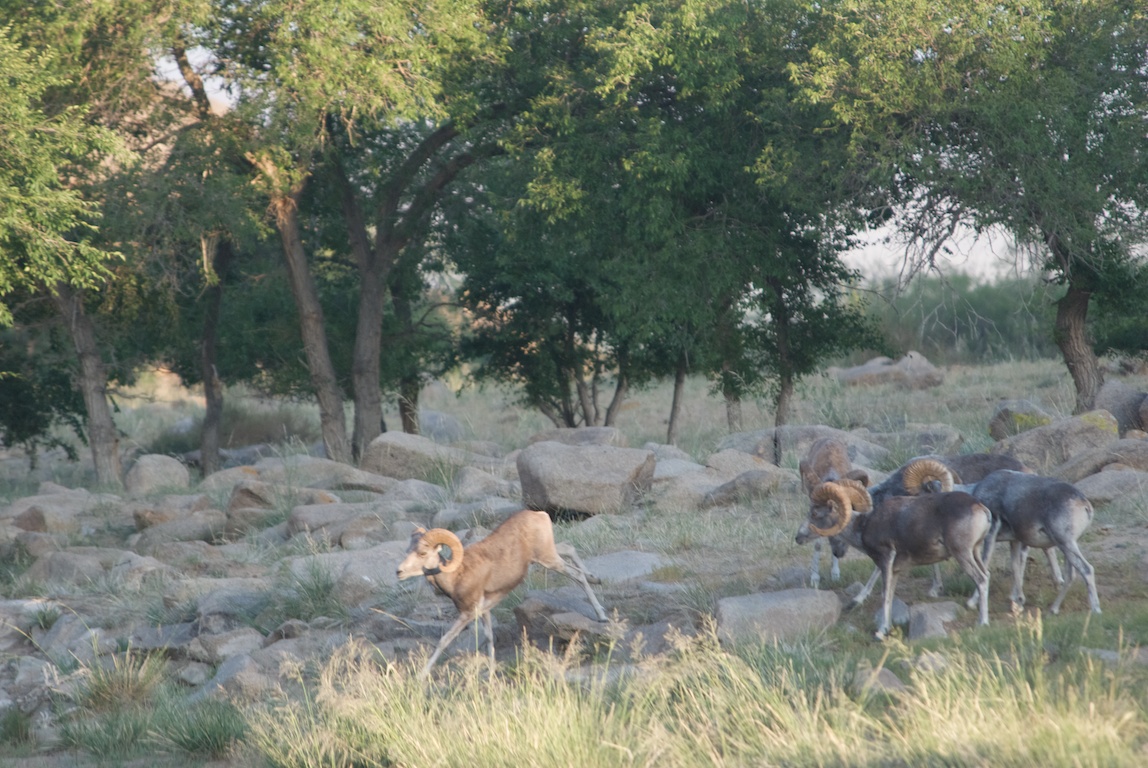
Suddenly one of the young rams turned and bounded into the light. Yes!
Into the light. At last!
And everyone else followed, crossing right in front of me and occasionally stopping for a nibble.
A short pause.
But now I could hear movement in the camp. The group split up, two of the rams going up into the rocks.
One went right up the cliff face.
Three of them walked on down the valley in the bright sunshine.
Time to move on.
I looked behind me and saw one of the scientists from the camp. He walked past me. The rams kept moving, but never ran. It’s good they’ve learned that in this place they don’t have to fear people.
Last look.
The three finally made a right turn up into the cliffs, stopping, as argali often do, to take one last look.
On Friday, Part 2 will present a step-by-step post on the painting that came out of this wonderful experience.





































 Susan Fox, American Artist
