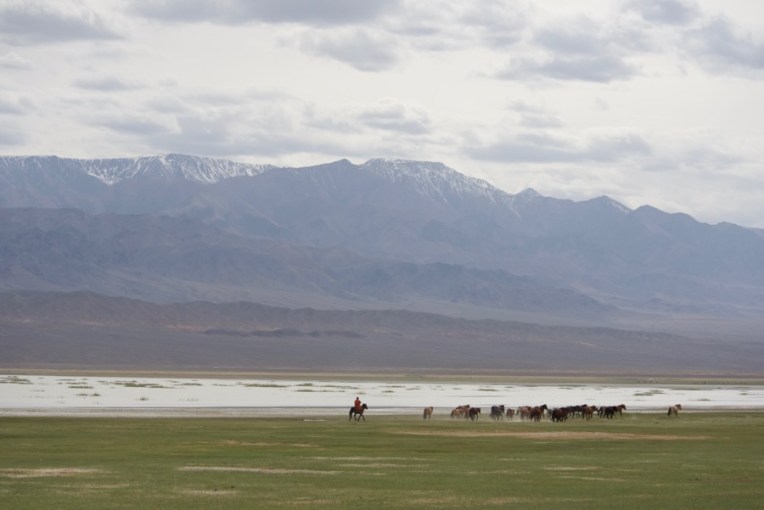
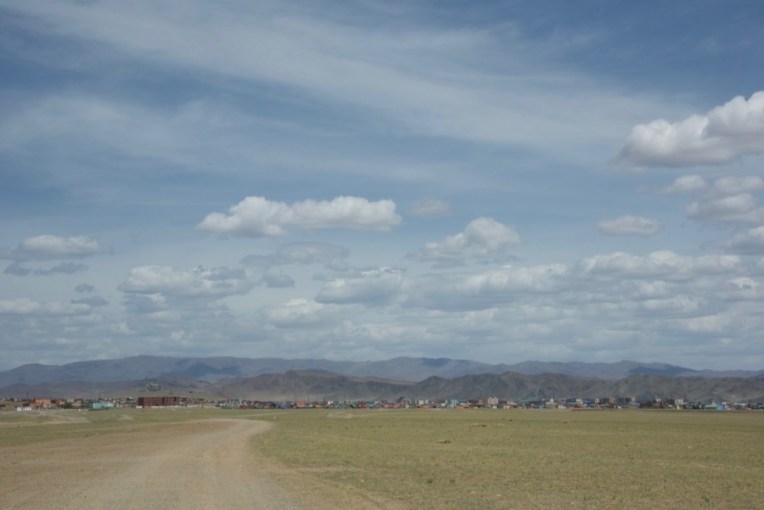
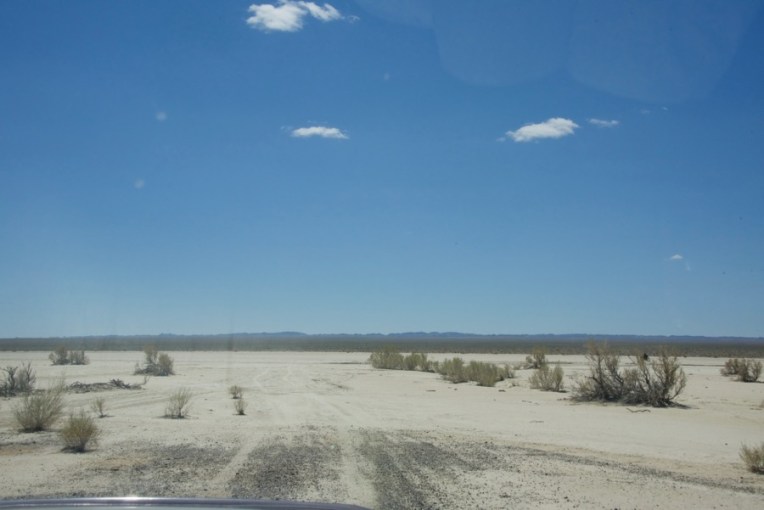
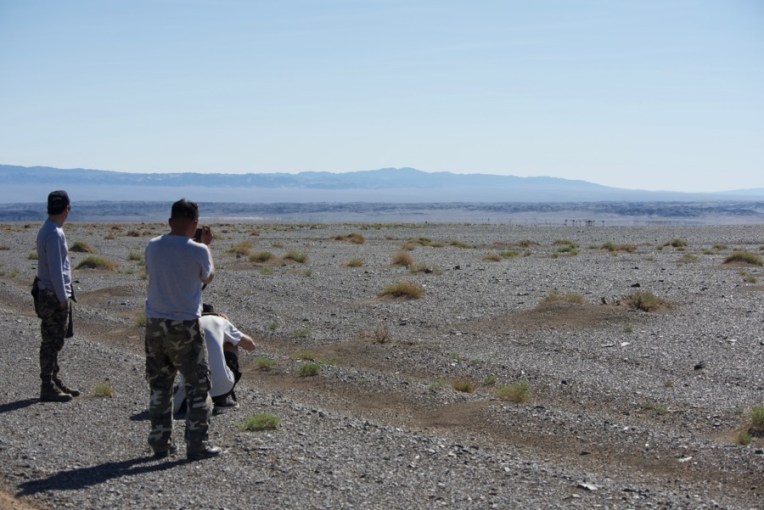
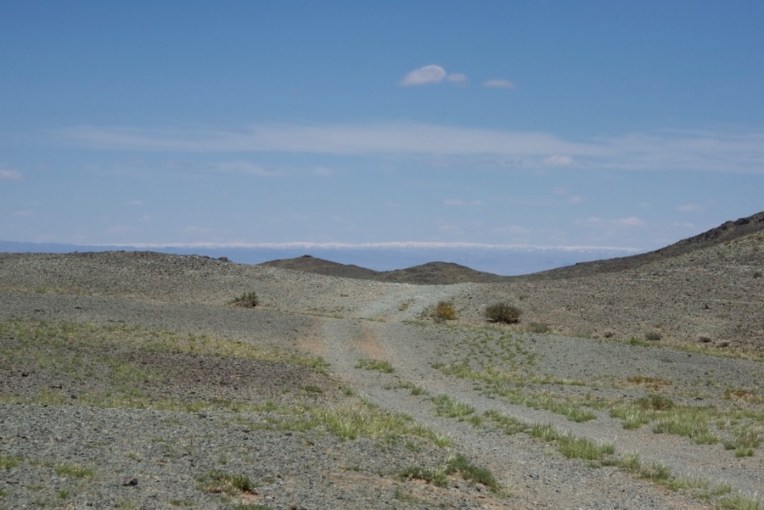
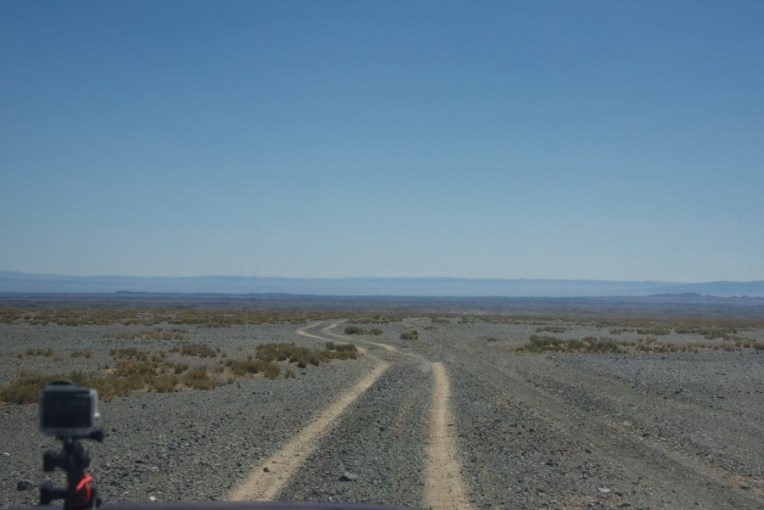
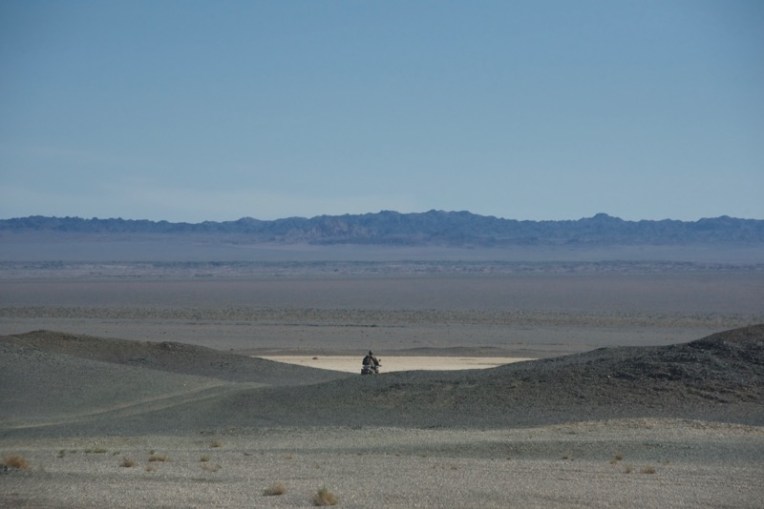
Departure from Great Gobi A, looking north on a hazy day
Our time in Great Gobi A at an end, we packed up and headed back north the way we’d come. The fuel level in the Land Cruiser was low so the first order of business was to get to a soum center, Bayan-Ondor, to fill up. We also had lunch there. Soyoloo, our cook, went into a cafe and arranged for us to use a table and to get a thermos of milk tea. This worked out very nicely.
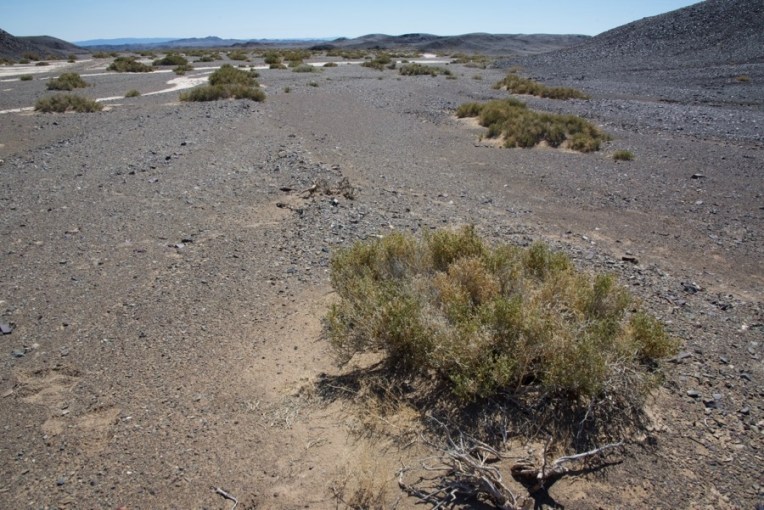
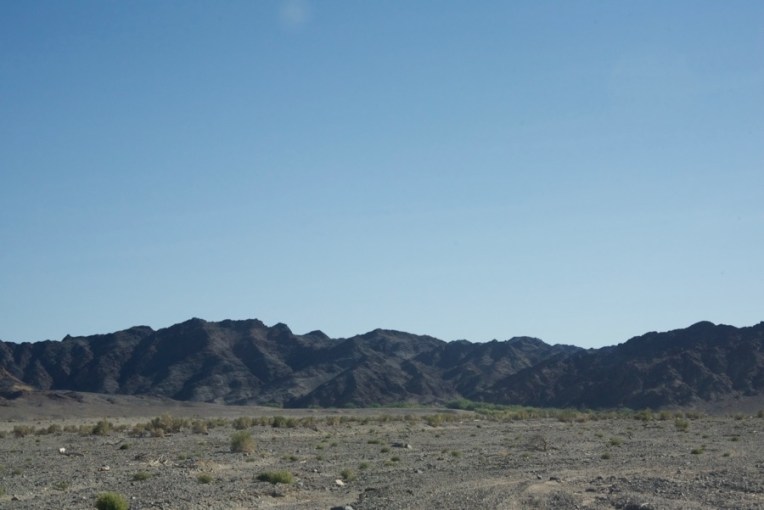
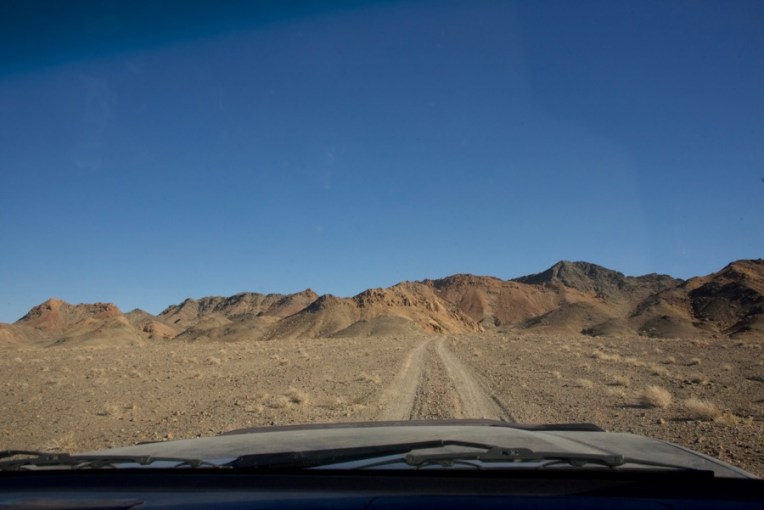
Once again I’ve included a fair number of photos to show our route in case it might be of interest to someone else doing research about going there.
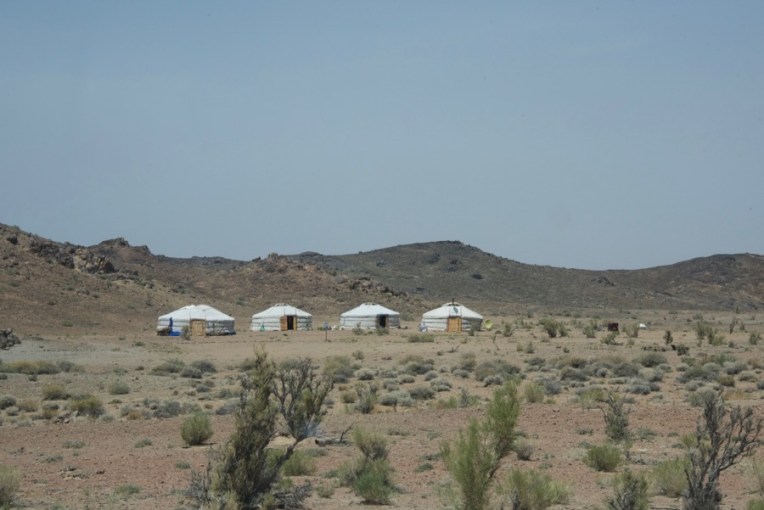
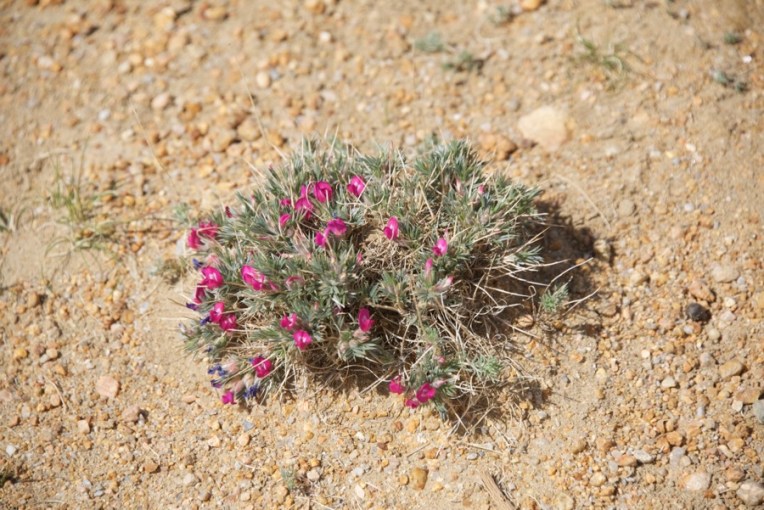
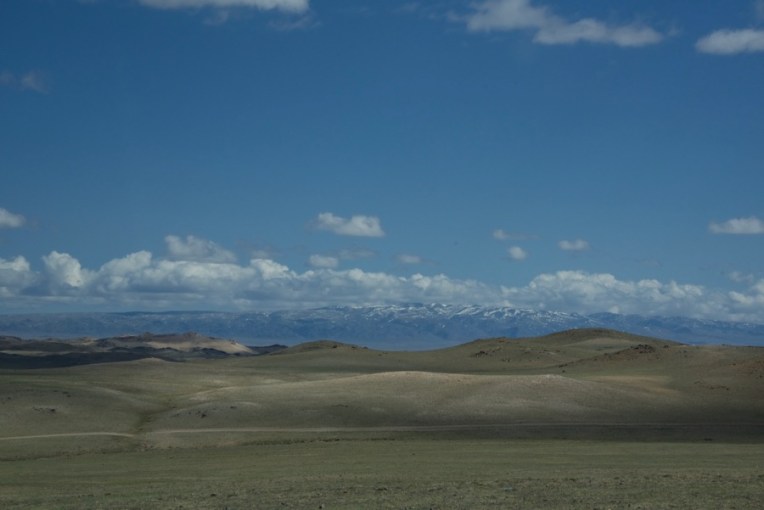
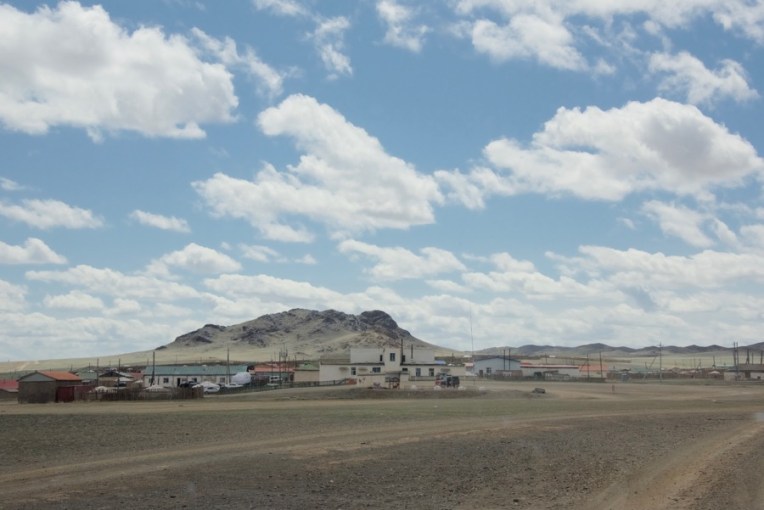
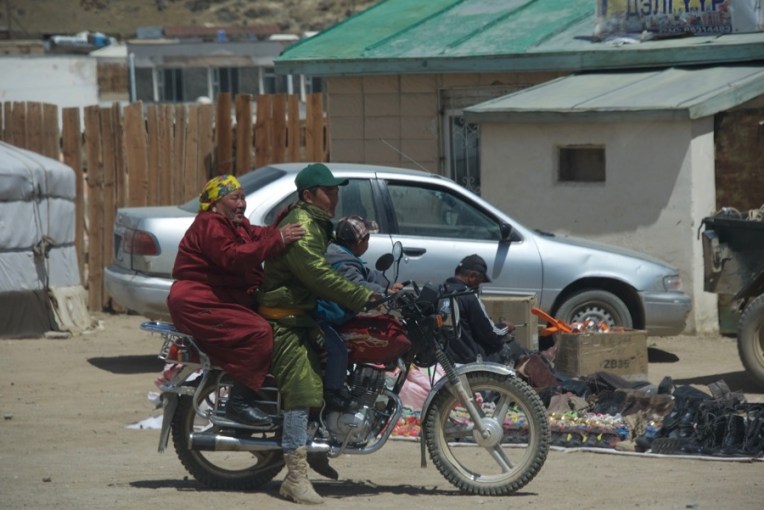
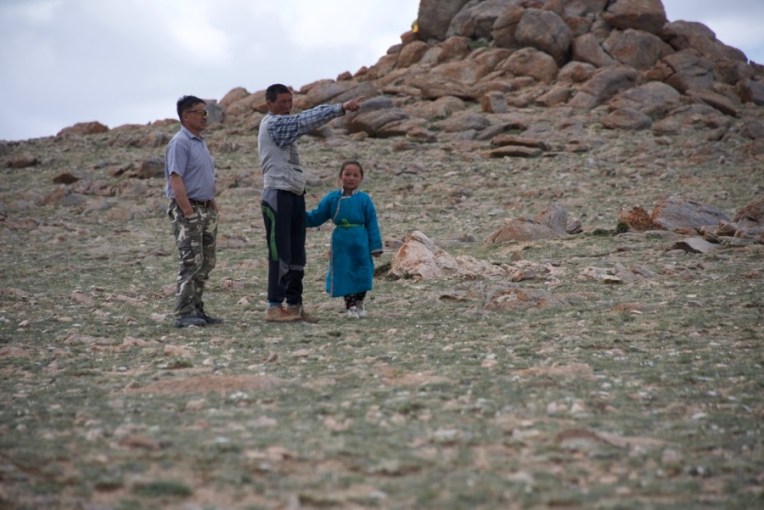
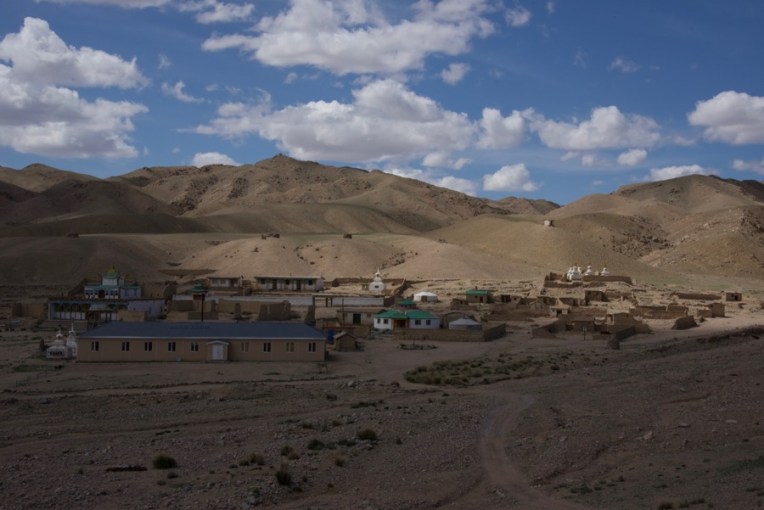
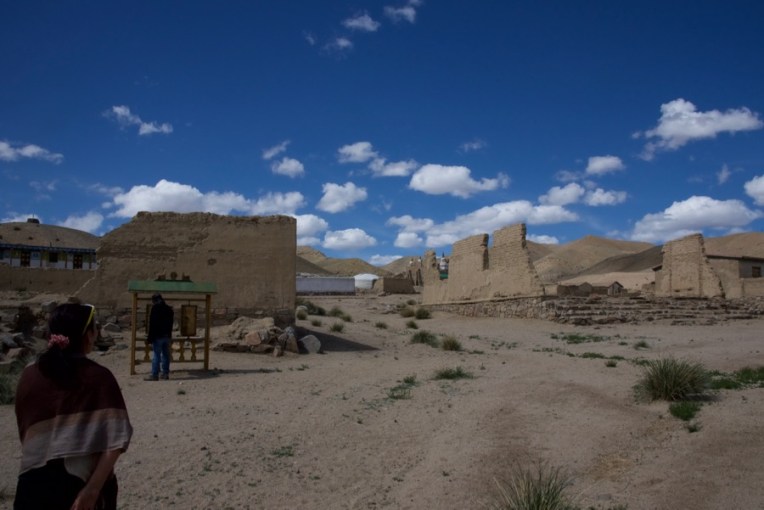
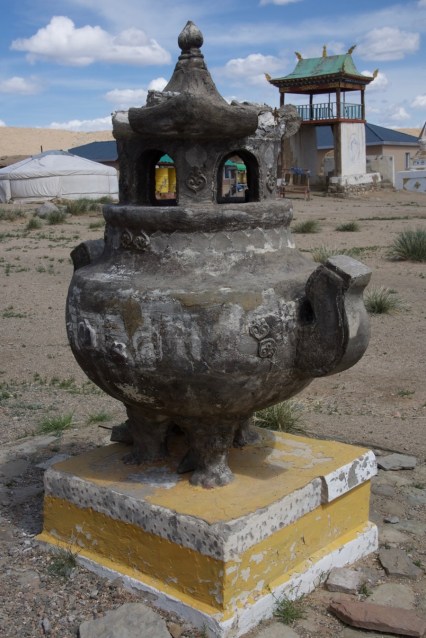
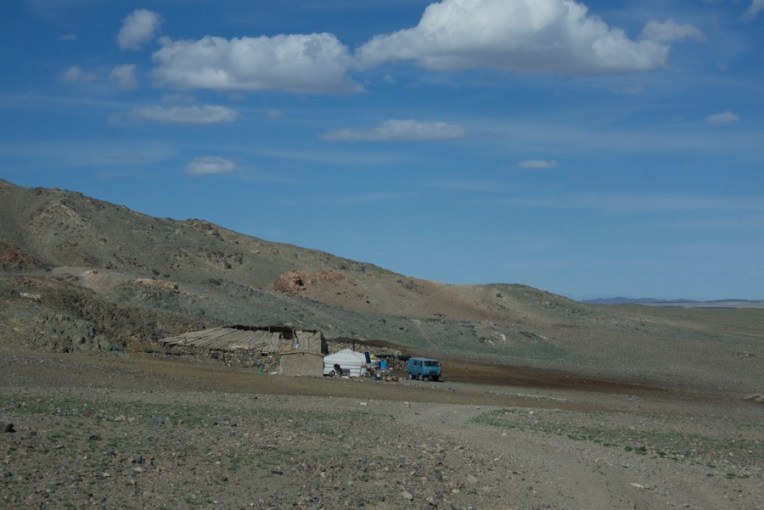
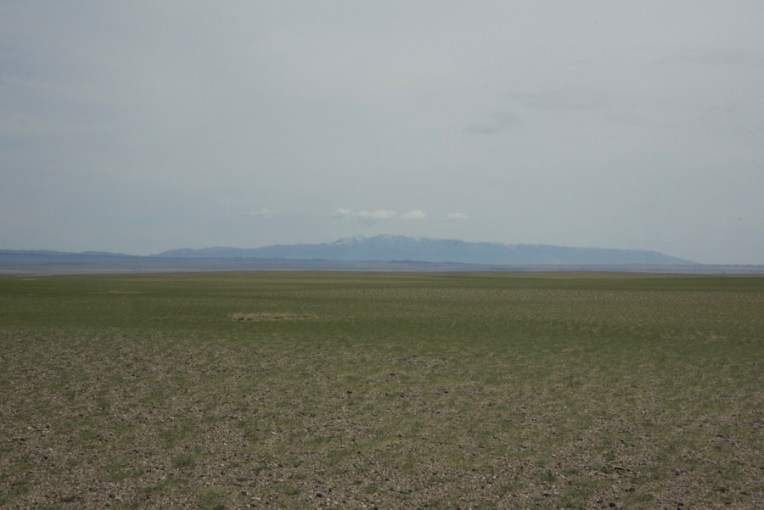
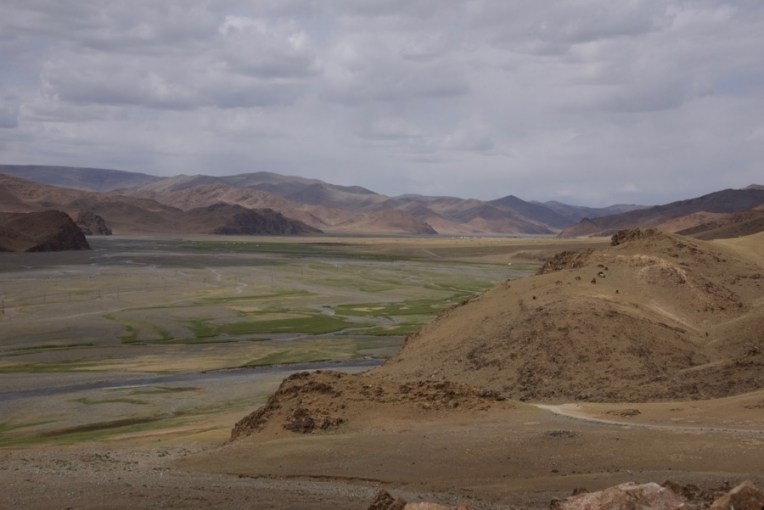
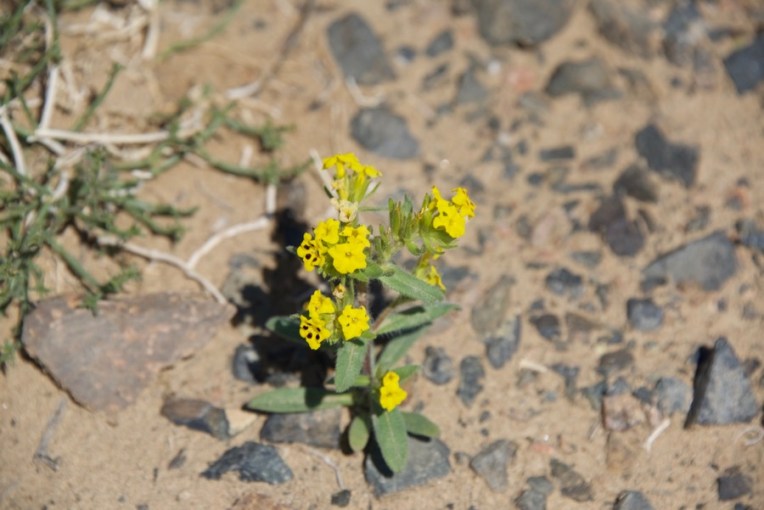
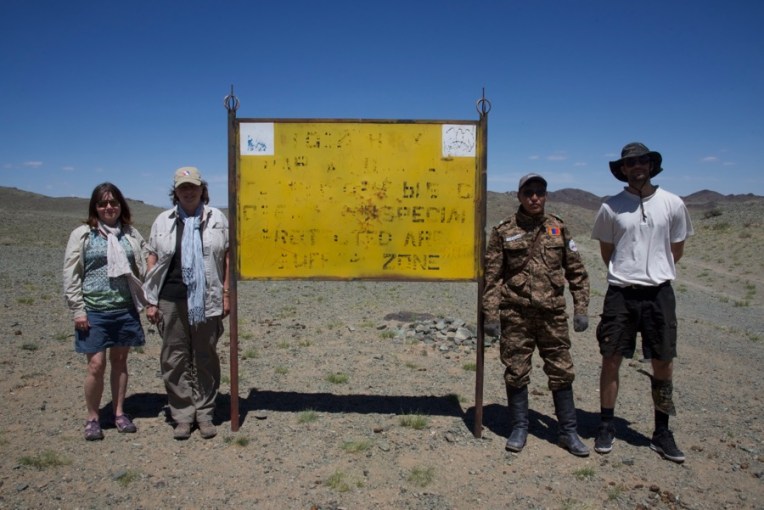
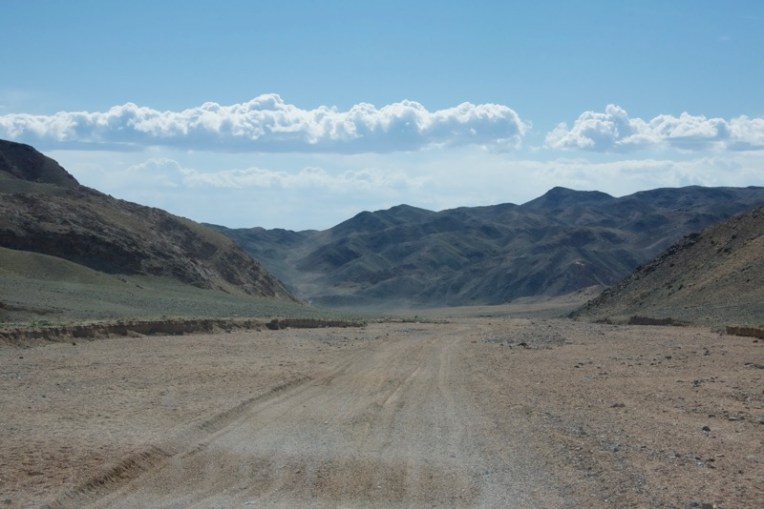
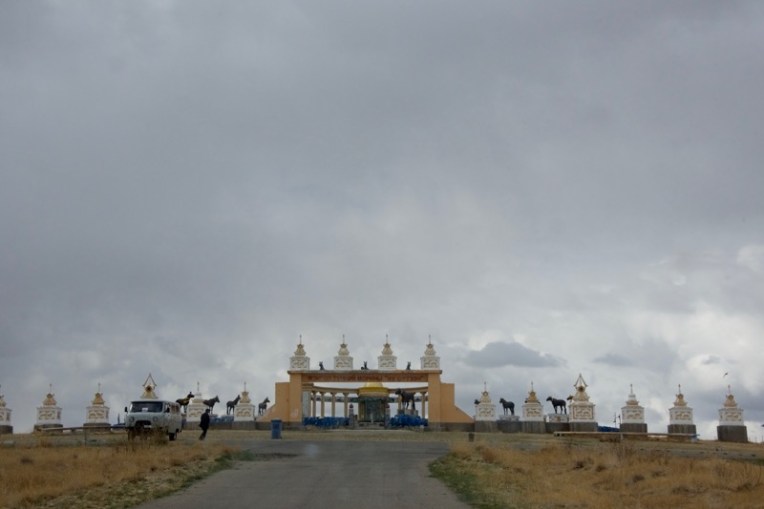
Heading northThe areas of haze created interesting atmospheric perspectiveThe boundary sign we passed going into Great Gobi A. I hope to see it again sometime on another trip there.Not far north of the SPA boundary, we started to see livestock. There was a fairly large herd of goats in the distance. You can see that we are now in an area of more red soil than gravel.We came upon this line of gers with no one around, as far as we could tell, since we didn’t stop. No dogs or any of the things outside that one sees at herder’s gersHowever, there was this cleared area which had been divided into a grid and bags of something laying within each squareA little farther on and back into a shrubby area we suddenly spotted two gazelles! I was barely able to get a few grab shots from the car and then they were gone.We stopped for some reason that I can’t recall now and someone saw this arachnid. She was over an inch long. No idea of the species.We drove through the afternoon back through the basin and range topographyOn another short stop I photographed a couple of wildflowers. From the shape of the flowers I think this one is a member of the pea familyWe finally had the mountain in view which had been totally covered in snow when we saw it on our way southBayan-Ondor, where we got gas for the vehicles and had lunch The man probably was bringing his or his wife’s mother into town to shop and maybe visit with friendsThen we were on our way to our next stop, Amarbuyant Monastery, which had been destroyed in the late 1930s as had been so many, but was supposed to be undergoing restoration. The Dalai Lama had been there and this stupa was built in his honor.But we were on a very “local road” and Erdenbat had never been this way, so when we saw a herder and a little girl sitting up on rock keeping an eye on their livestock we stopped to ask directions. We were quite charmed by the two of them as a father out with his daughter, who he clearly had great affection for. She was very self-possessed, not an uncommon thing to see in Mongolian country kidsThe herder decided that the best thing was to show us the way, so off we went with him in the leadWe finally reached a point where we could apparently go the rest of the way on our own, so we gave them each a gift as a thank you and went on our way through some pretty rugged terrainWe came upon a well and stopped for Kim and Oliver to see how they work. This one is typical in that a very large commercial tire has been split lengthwise to form the trough, a great reuse of something that would otherwise be thrown awayWe came up over a rise and there before us was Amurbuyant Khiid…what was left of it. It had been a major commercial caravan route and a hive of activity. That all ended in 1937 when the Mongolian communist government destroyed it and hundreds of other monasteries in the country to break the political and social power of the lamasWall sections like these are pretty much all that is leftThere were a very few artifacts to see like this incense burner, which would have been outside of one of the templesThere has been some rebuilding and there are monks and students in residence again. But it felt like rather a sad, isolated place. We asked for and were given a tour of the two temples, but not with much enthusiasm or welcome
I started to feel uneasy not long after we started to visit the second temple. Wasn’t sure why. There was a stillness I found unsettling and not just that it was quiet. We were shown a couple of large panels in the main temple that listed all the people who had donated to the restoration, along with the amounts they had given. It added up to millions and millions of tugrik. The surviving old temple was in poor condition and visible repairs were cheaply done, although the interior wood framing and supports looked sturdy and good. The new temple, in the shape of a ger, also had a feeling of being built quickly and cheaply. The ceiling was made square panels a little like the acoustic tiles one sees in America. Some were askew and some seemed worse for wear. In both cases, it felt like no one had noticed and no one cared. The tower for, I assumed, calling the monks to prayer, looked to be in pretty bad shape. A new long, low building, had been constructed (visible in the front of the photo of the complex above). There was also a good array of solar panels to provide power. Our young student tour guides walked us past the newish long living quarters building on our way out, answering some last questions, and a very unfriendly male voice ordered them back inside. The closest school was 60km away and the boys only attended one week a month. The rest of their time was at the monastery taking classes in Buddhist practice. And so we left. We had been given permission to camp somewhere in the vicinity and we drove around looking for a spot. I became more and more uncomfortable and stressed, to the point that I finally had to say that I needed to leave now, right now. Something felt bad and wrong there and I needed to get away from it. It was so very odd and I was clearly the only one who felt it, or at least no one else said anything. Have never had anything like this happen on any of my travels to any place before. But leave we did and found a spot on an open plain to the north with a great view. As sometimes happens a local herder and his wife showed up on their motorbike to check us out and have a visit. We went to their ger the next day.
Our “neighbors”, a kilometer or two from where we were camped
As we pulled up the woman came out. She was holding her hand which was wrapped in a plastic bag. We could see instantly that it was terribly swollen, a bite of some kind. I gave her a half-dozen or so ibuprophen for the pain, emphasing that she should take no more than three at a time. Her husband was going to take her to the soum center hospital, probably more of a clinic. It turned out after some chat and a translation from our guide, Batana, that the woman had gotten down on the floor of the ger, reached under a bed to get something and felt a sting. At that point all the Mongols decided that it had been a scorpion. Her life wasn’t in danger, but she definitely needed to see a doctor. They left and we were on our way a short time later after getting water from their well.
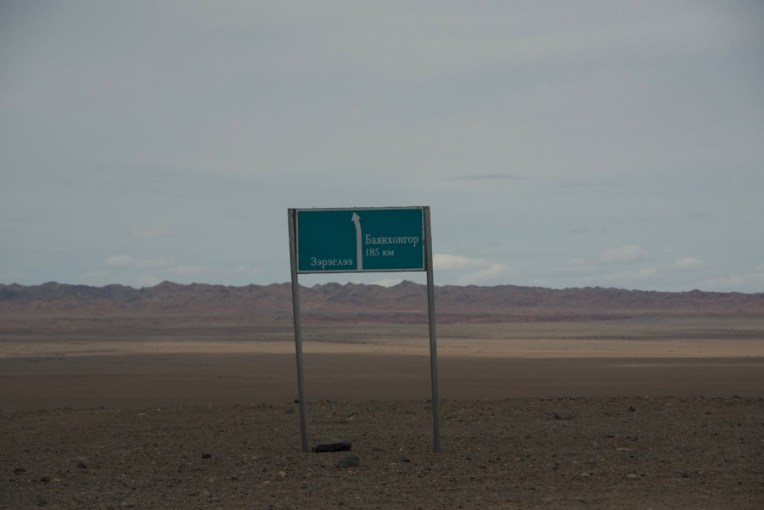
Ikh Bogd Nuruu from the south. Orog Nuur (Lake) is on the other sideWe now drove towards Ikh Bogd Nuruu and worked our way around the south end of the mountain, passing this ovoo on the wayA road sign!We drove back along the north side of the mountain, passing large herds of animals. The hope had been to camp in the area or by the lake but the presence of many herders and their dogs made that unsafe, so we had to settle for stopping a few times for photosAnd what a photo opp!After working our way through some extremely rough ground, we arrived at an overlook for Orog Nuur. It was a big deal for me to see the lake again since I had camped there on the south shore in 2010 on my very first tent camping trip in Mongolia. It was also the first time I’d traveled with Soyoloo. So it was special for both of us since it’s pretty remote
We continued on and found a sheltered spot not far from a soum center. It was quite windy, as it had been for a lot of the Expedition. The drivers and guide went into town to get gas and buy snacks.
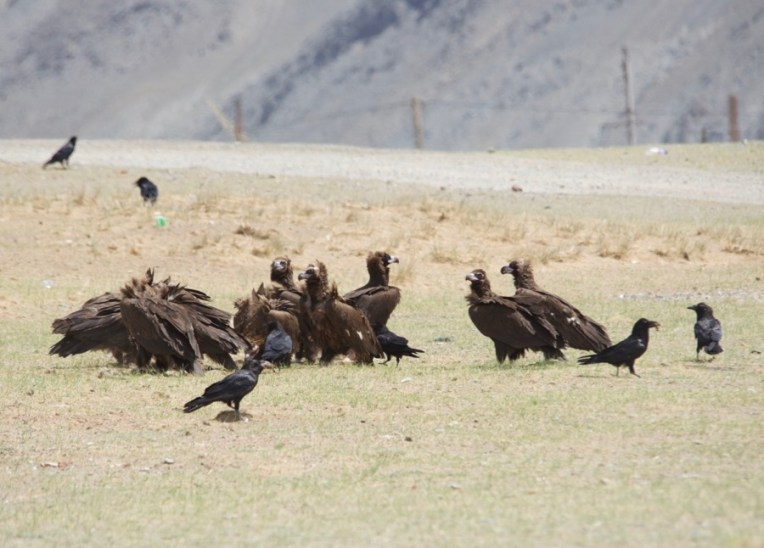
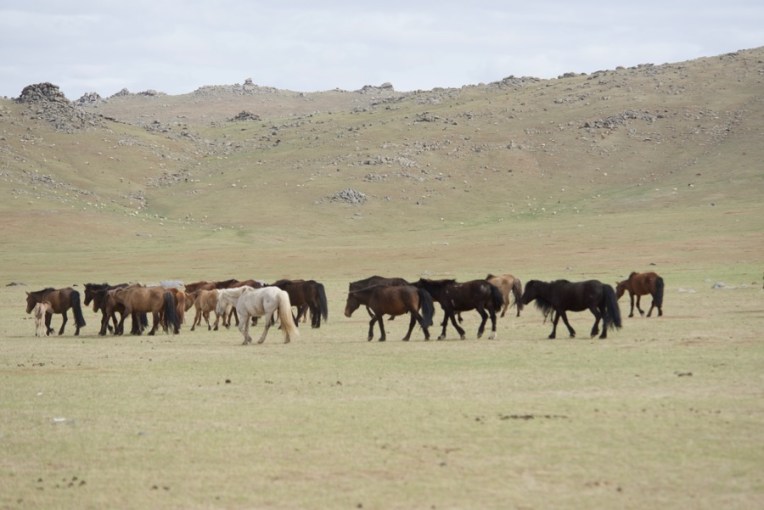
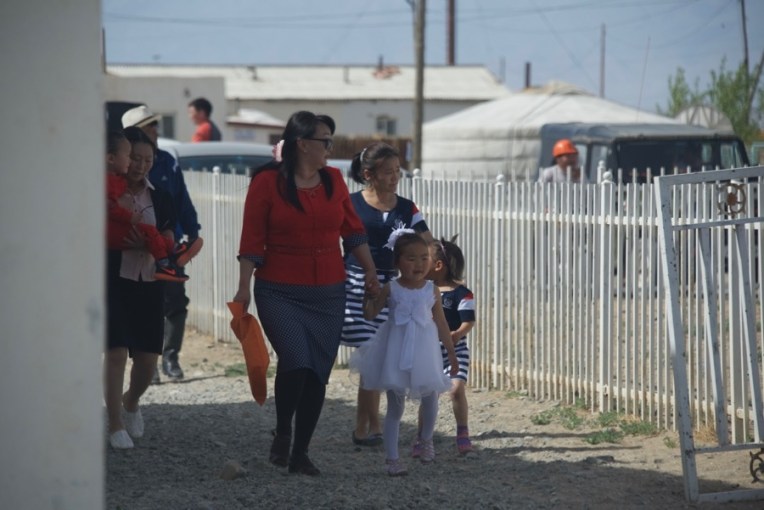
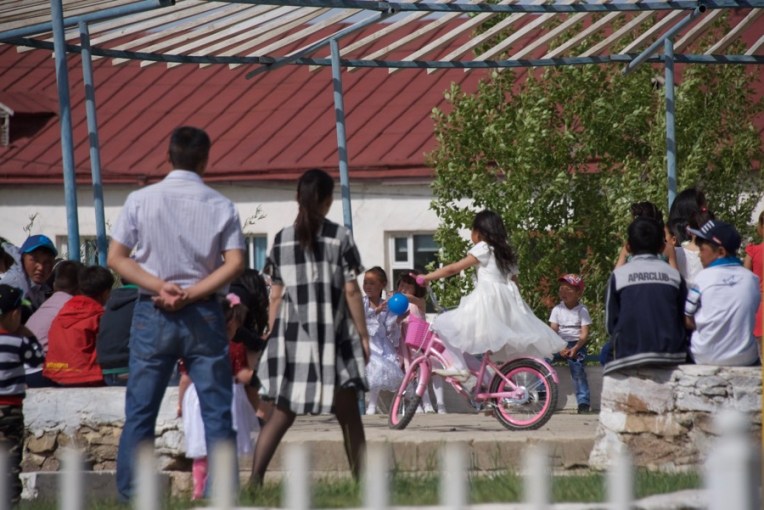
The next morning, not far from the soum center we came upon this flock of eurasian black vultures and I got a lot of really good reference photosAnd it’s always nice to see a herd of horses on the wayOne mare and her foal had other ideas, though, and the owner was still trying to catch up and turn them back when we went out of sightTurned out that it was International Children’s Day, which is a very big deal in Mongolia, with celebrations in every town. Lots of the children are all dressed up and as cute as can beThere was a fenced area that was obviously for community gatherings and this day it was all for the childrenIn the far distance were the mountains we were heading for. And, look, a second road sign!Closing the loop, we arrived back in Bayahongor, which had been our jumping off point for the journey south. We stopped in town and did some final grocery shoppingThen we did what I had originally planned to do when we were there before…travel north up the river valley into the Hangai Mountains to Erdenesogt, which is in the far background
We drove up to a high point with an ovoo and wonderful view of the river valley, then backtracked a short way to a special spot where we set up camp for a few days. And that will be next week’s story.
There are a lot of photos in this post (and the previous one of our trip here from the soum center), partly because when I was online before my departure researching the Great Gobi A SPA there was very little available, either in images or information. Very few people go there (or to any of the Strictly Protected Areas for that matter), mostly researchers and sometimes filmmakers who want to film the wild bactrian camels or the bears. In fact, a lot of the images to be found in a Google search for “Great Gobi A Strictly Protected Area” are from this blog and most of those are from Takhiin Tal, which is actually in Great Gobi B. So I’m hoping that this post might be of use to someone else who is planning to go to Great Gobi A. It’s also what I felt would best tell the story of our time at this remote but compelling place.
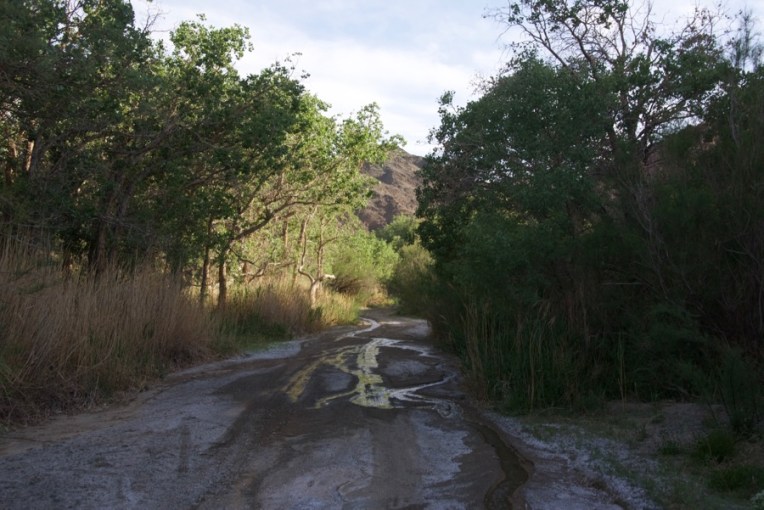
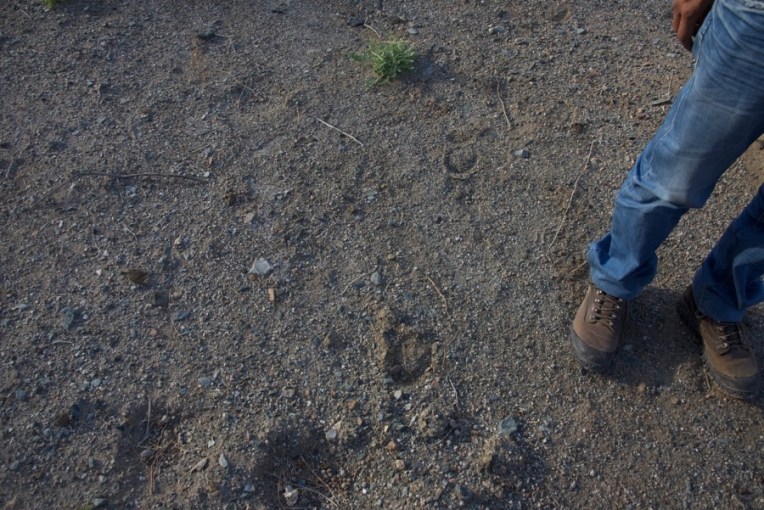
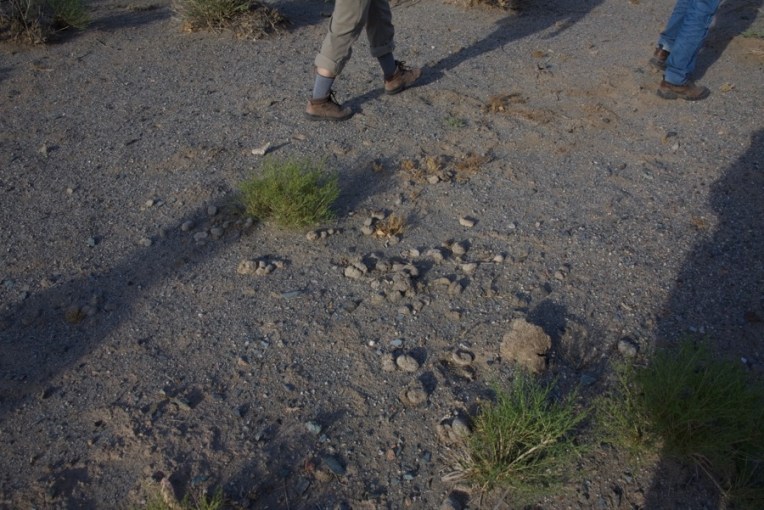
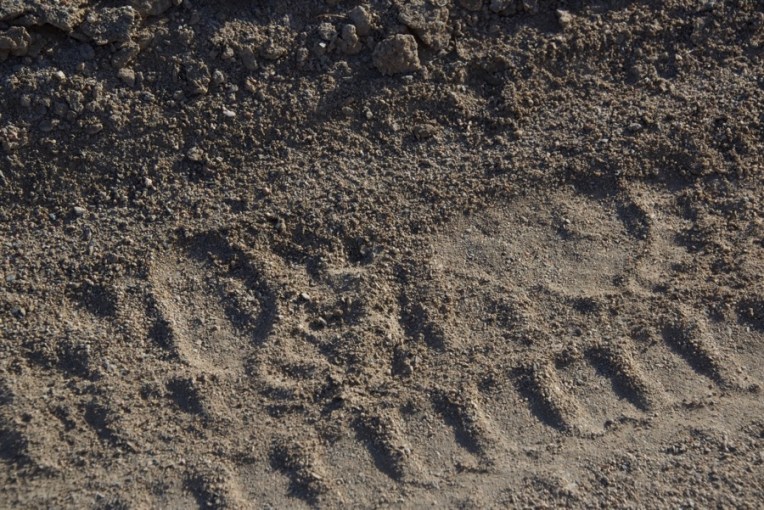
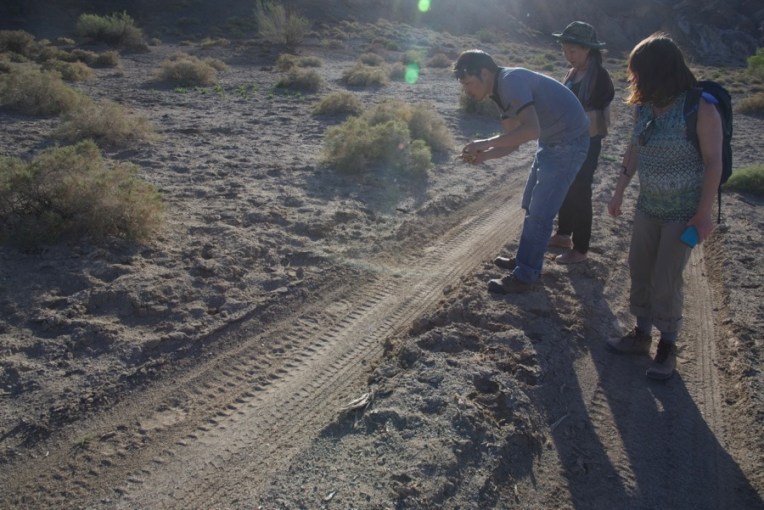
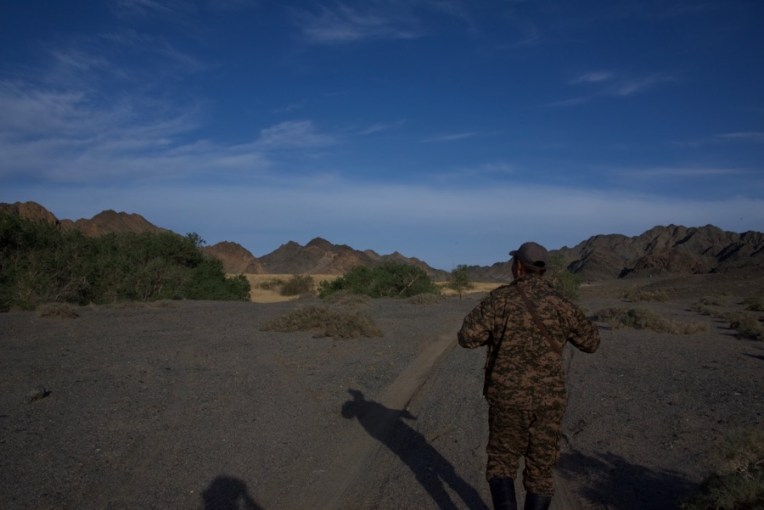
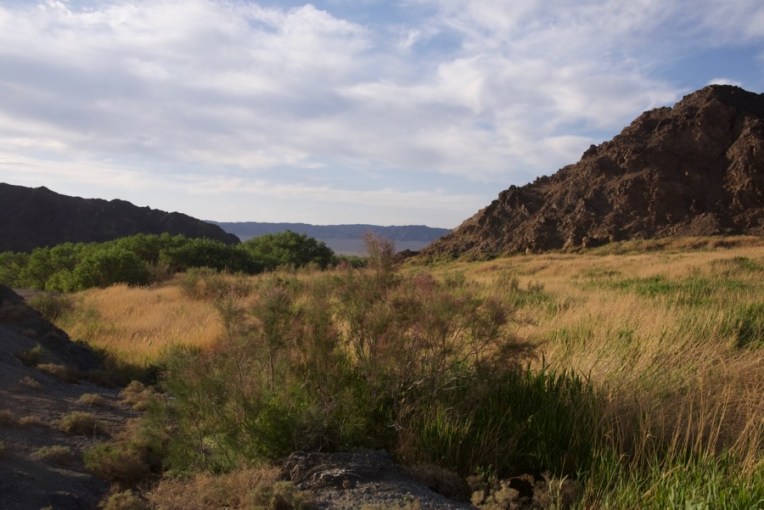
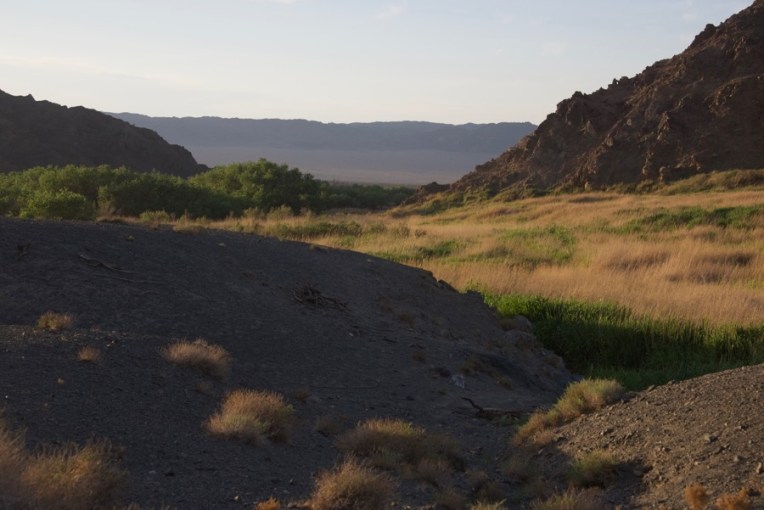
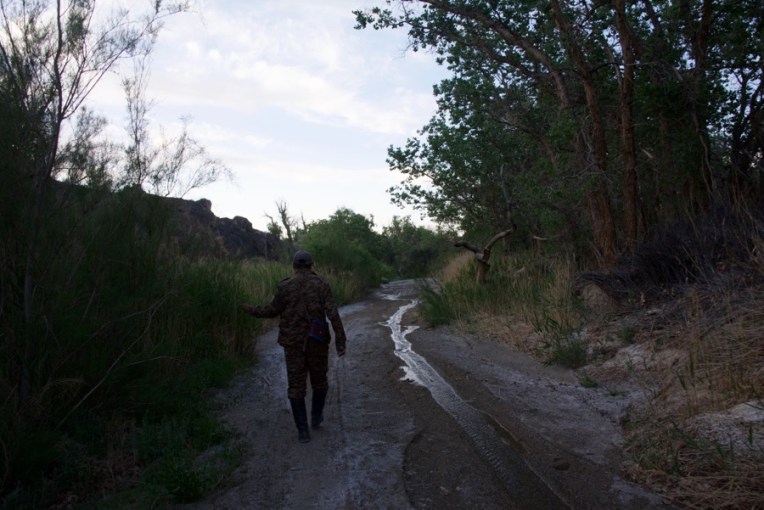
Into the oasis. Quite a lot of water present. Spring-fed areas like these are the only natural sources of water in the reserve and all the wildlife depend on them.Bilgee, the ranger, took us on an evening hike to see the two feeding stations set up for the bears. As we walked down the road he pointed out things we would have missed or not been able to identify if we’d been on our own, like these tracks of khulan, Mongolian wild ass.Khulan dungBut then we hit the jackpot…mazaalai tracks! And pretty fresh.The low evening light was perfect for getting good photos.We all took pictures of the evidence of the presence of the rarest bear in the world.
Bilgee explained to us that the bear’s favorite food, wild rhubarb, had already sprouted and grown faster than usual. So the bears had dispersed from the areas of the feeding stations for the year. I was happy to know that their natural food supply was in good shape, but it did reduce further our chances of seeing any. The Expedition was timed with the hope of catching the bears after they had emerged from hibernation and were using the feeding stations and before their main food was readily available, which would cause them to scatter out over a wide area.
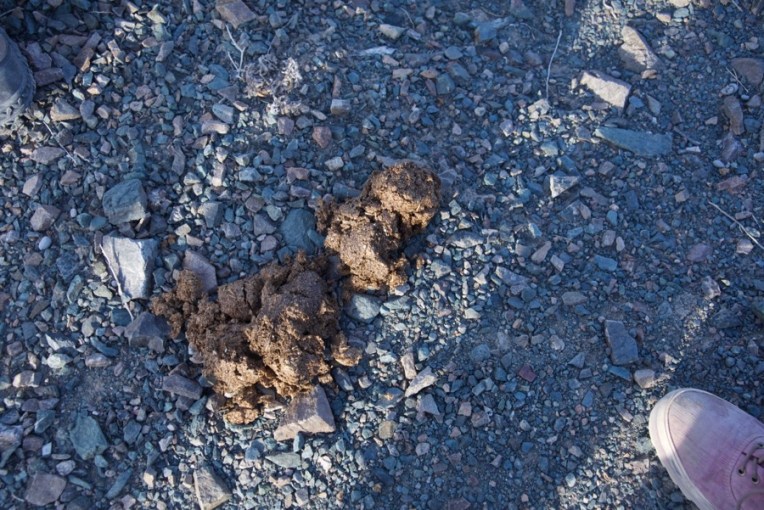
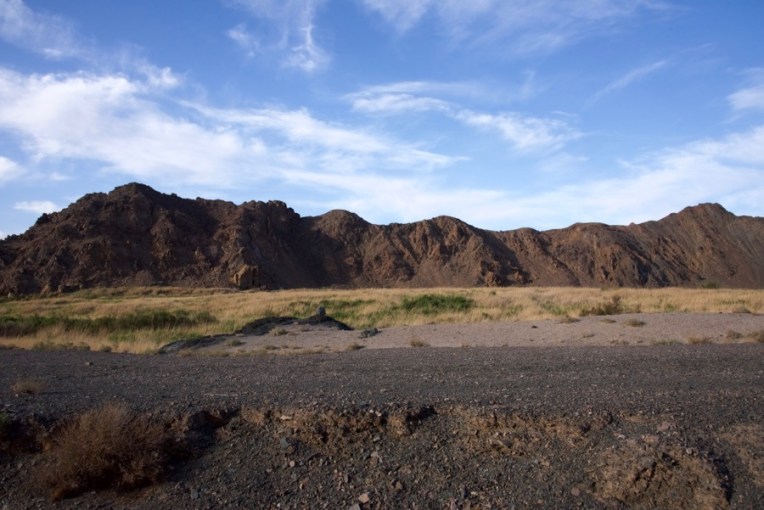
We came out of the wooded stretch of the oasis and into the open.We came upon Gobi bear scat as we walked.
Ok, well, most people won’t get excited about seeing animal poop, but in the interests of science and completeness, here it is.
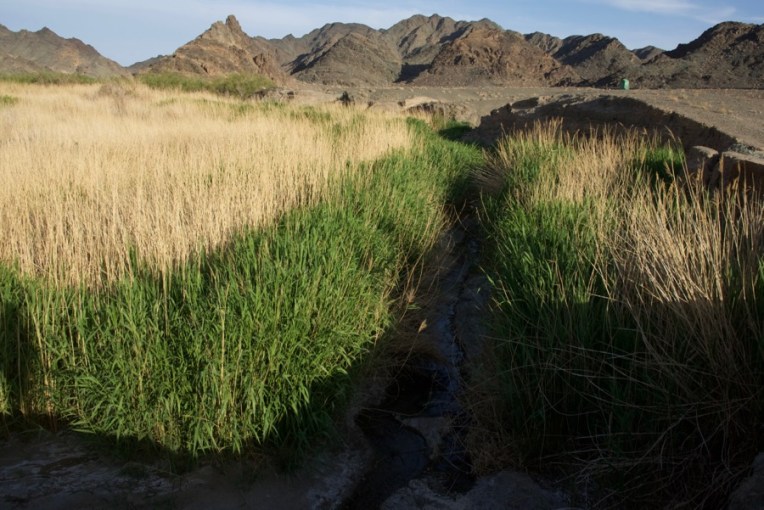
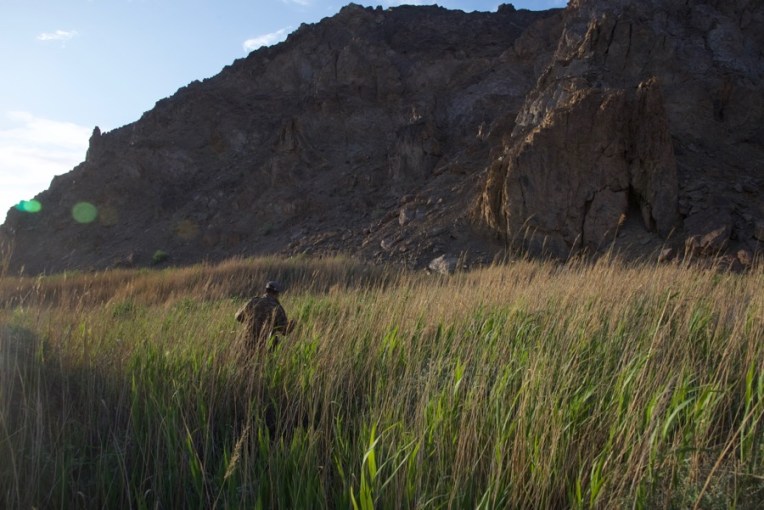
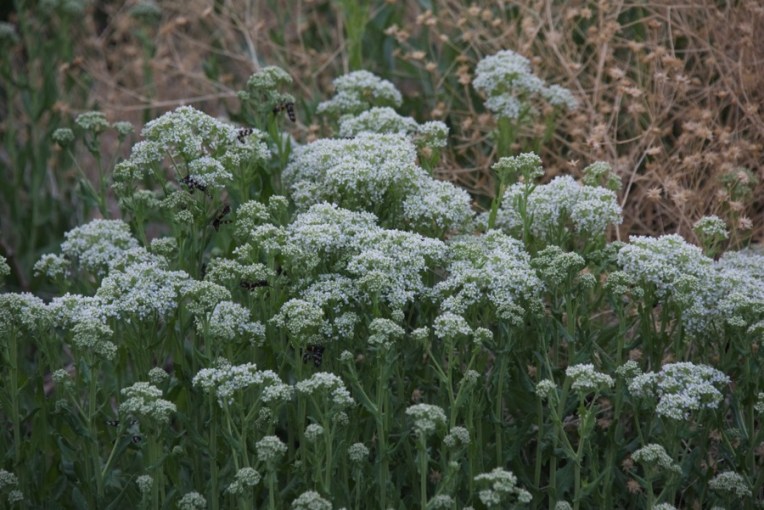
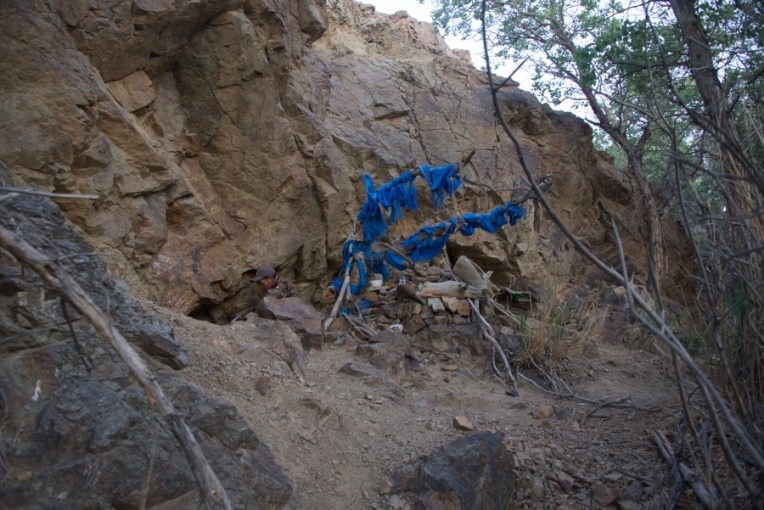
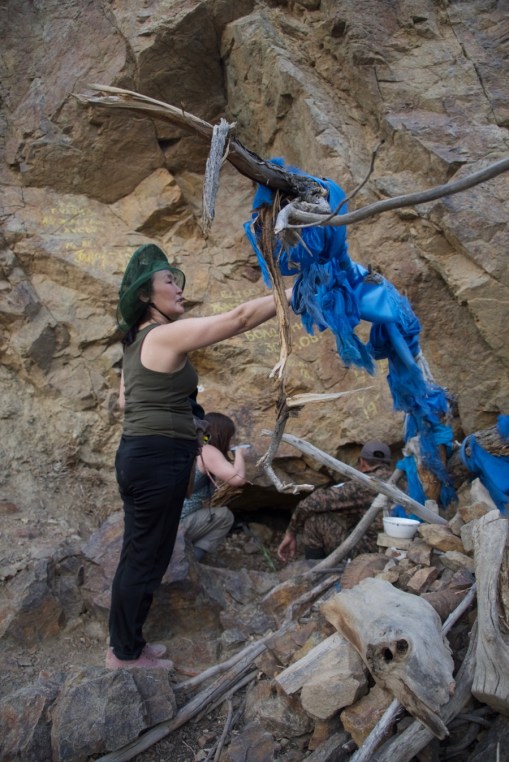
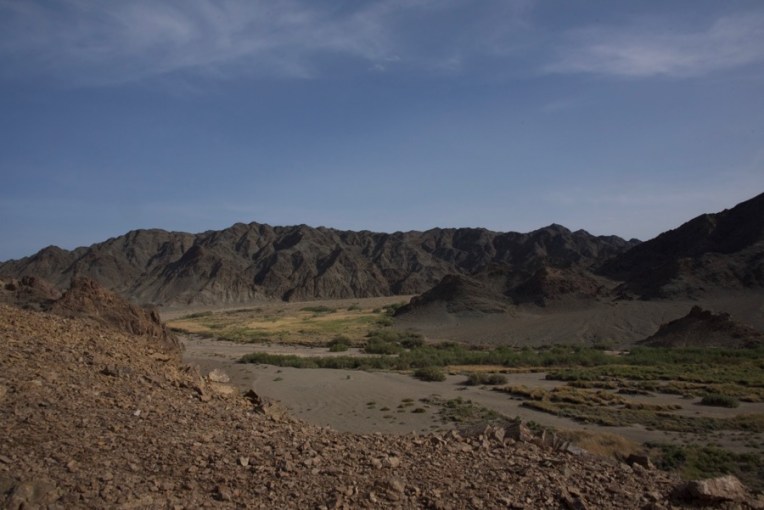
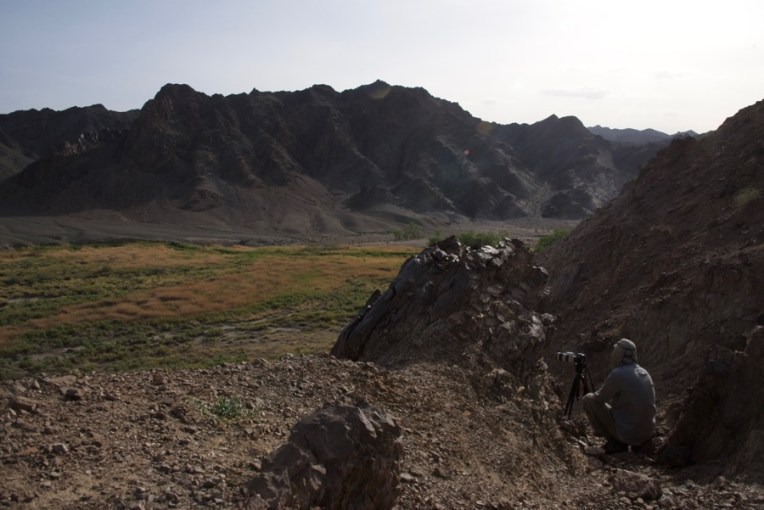
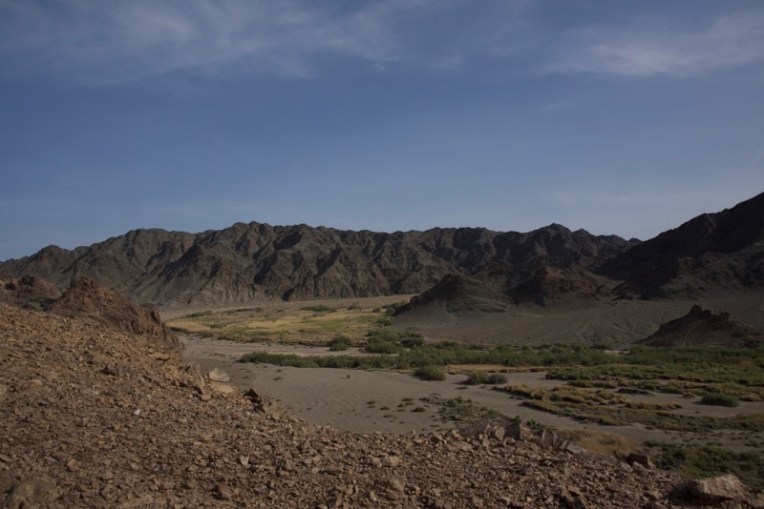
View of the valley floorStream which ran through the valley, edged with reeds. One doesn’t expect to encounter such rich greens in the middle of a place known for its aridity, but where there’s water…Looking back down the valleyThe first feeding station we checked outBilgee checks the motion camera; no imagesThe feed pellets. The bears really spread them around on the groundWe took turns taking photos of each other in this special placeBilgee spotted another bear printWe also hiked over to the second feederIt was a fair distance from the first one. It was great to be able to hike around on such a beautiful evening!The light was really greatI followed Bilgee into these reeds as he tried to cut across to another trail back. The ground was dry, but I suddenly went into a hole up past my knee and had to work a bit to get myself out. We gave up on the “shortcut” and went back to the trail we’d come in onI just loved the light, the colors and the shapes. This would be great place to come paint en plein air. It’s just a long five day drive to get to…Back out we went, following the streamIt being spring, there were a number of flowering plantsBilgee suddenly took a left turn and disappeared. We followed up behind him and found ourselves at a sacred spring (most springs seem to be considered sacred in Mongolia, for obvious reasons, especially in such an arid land as the Gobi)The water is coming from within that dark hole that Kim is in front of, having a drink. Our cook, Soyoloo, is touching some of the khadag wrapped around the tree branch.
So, yes, we drank the water. In the United States it’s extremely unwise to drink from streams, rivers and even springs in some cases. I’ve learned that in Mongolia there is no giardia present in the water, which is the problem in the US. But rivers and streams can still be contaminated by livestock. On a case by case basis, I will drink from springs there and once have drunk from a river. It was explained to me by the Mongols I was traveling with that the water had to be swiftly flowing over rocks for them to drink it, so I went ahead and had some. It was delicious! (If anyone reading this has additional information or corrections, please leave a comment)
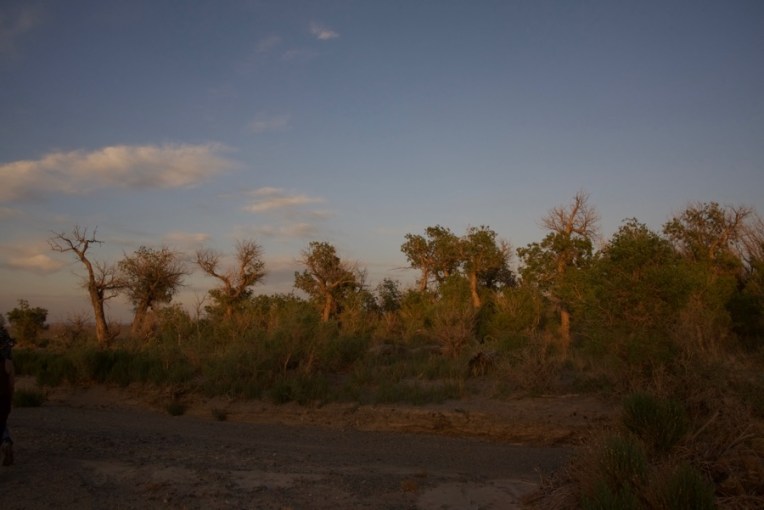
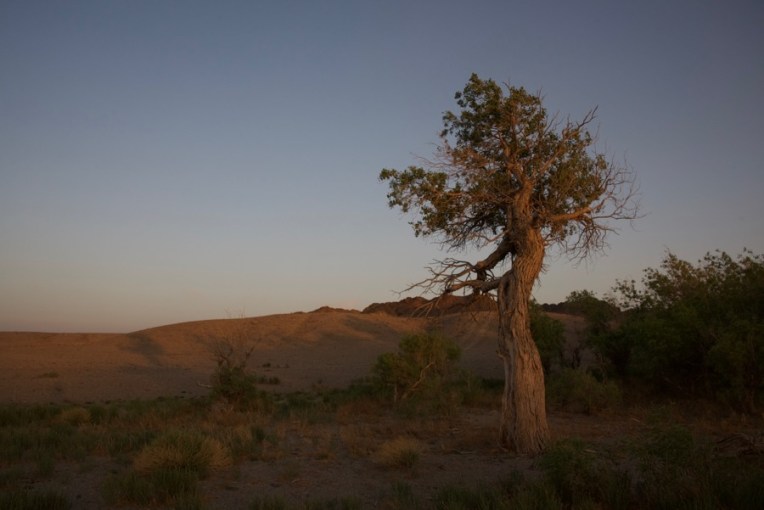
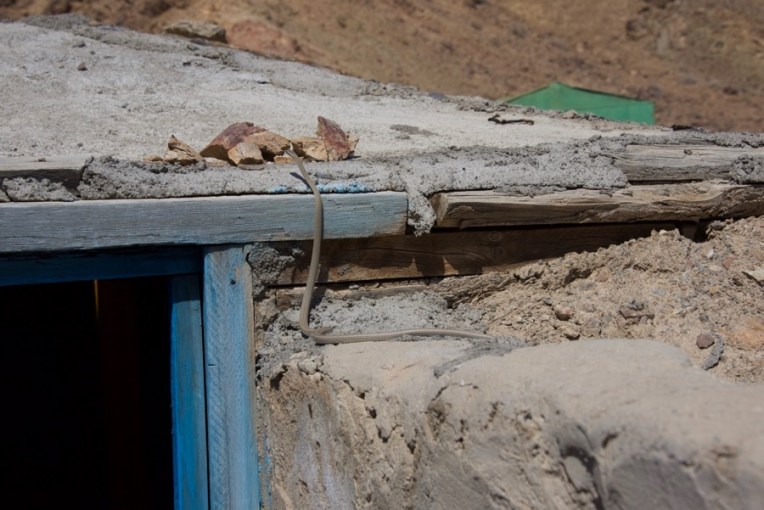
A previous visitor left this quite appropriate offering.There was also, to my surprise, a very old and worn argali sheep hornWhile we waited for the car to come pick us up, the last glowing light of the day turned these old elms trees golden orangeIf I ever go back and have the time, I will paint this wonderful old treeBack at camp, the drivers had set up the gravity feed shower. First one we’d had since leaving Ulaanbaatar almost a week before. The low humidity in Mongolia, around 10%, makes it more bearable than in a more humid climate, but it sure felt goodThe next day I got some good photos of this long-legged buzzard flying overAnd then it was snake time again! Another steppe ribbon racer. It first showed up coming towards me as I sat reading in front of the dining tent. I thought it was going to move through it, but it made a right turn and headed towards the “ger” and up onto the roof.It came down on the other side of the doorway into this bushThen it moved along on a bank almost at eye level to me. By this time most of the people in camp were following it alongIt came to another shrub and stopped, clearly trying its best to be invisible. Deciding that it had been followed enough and having gotten a few dozen photos, at this point I left it beBehind the camp there was a 1km trail that led up over the hills to this place where one could sit and look out over the valley where the feeding stations were located. This is where we tried to see the bears but, alas, none cameOliver watching the feeding station across the valley, the second one we went to on our evening hikeBreaking camp. Looking toward the hills where the trail to the overlook is
So, no, we didn’t see any Gobi bears, but it was exciting to see their tracks (and scat). It would have taken quite a stroke of good fortune, given their rarity and the fact that they had already dispersed for the summer, and I knew the chance was small when I planned the Expedition. However the chance was zero if we didn’t go at all and with wildlife you never know. You start by showing up and then seeing what happens. But we experienced their habitat, got to camp in it and explore it and learned a lot firsthand about how they live, something very few people will ever be able to do.
Next week we head back north to a very different destination and ecosystem.
The adventure really began on May 26, the morning that the Great Gobi A ranger, Bilgee, led us south to the Strictly Protected Area. No gers, no herders, no livestock, just Gobi for as far as we could see. But even in this forbidding looking landscape, spring flowers were blooming.
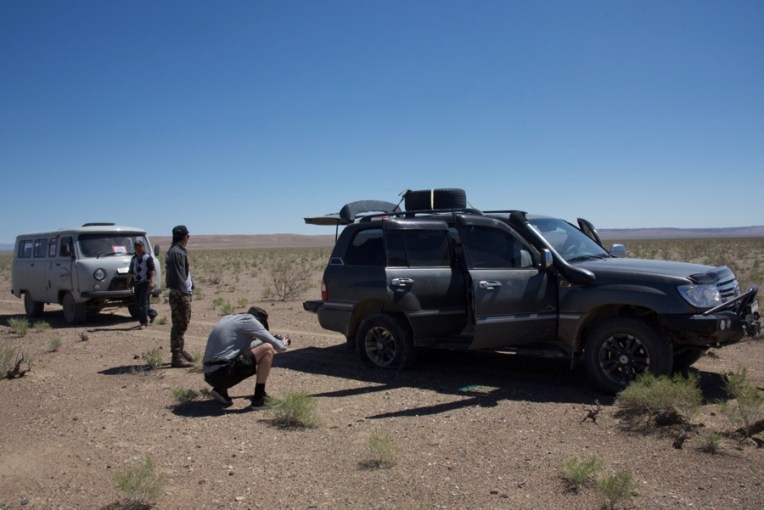
Gobi wildflower (species unknown)Our destination was beyond those far mountains.The Land Cruiser had a flat tire, so we took the opportunity to wander about.Not far off the road were the remains of a camel, which Kim is checking out.Tire replaced, we drove on, crossing this area of white sandy soil that probably has water in it during the rare times that it rains.
The van had been having some overheating problems earlier. stopping a few times to cool down. It was quite hot in the middle of the day, even though it was only May. During one our stops to wait for them we saw a tolai hare.
Tolai hare. He sat for a few photos and then ran up the hill and behind the rocks.Driving out onto yet another plain between the mountain ranges, our driver suddenly stopped. Wild bactrian camels! They crossed the road right in front of us, running from left to right. We stopped, got out and I took many photos as I could of this critically endangered species that few people ever see. It is estimated that there are 900 of them. I counted about 16 in this herd. This is with my normal lens showing how far away they were. You can just see them in front of the cloud of dust to the left of the road.I got out my Nikon D750 with the 80-400mm lens and kept shooting as they ran past.This close-up is cropped in from one of the zoom images. Amazingly they had stopped running and were warily standing. Our Land Cruiser driver, Erdenebat, had a point and shoot camera with a good zoom lens on it, so he got some pretty special photos as a souvenir of the Expedition. It was an exciting encounter for all of us!
And we hadn’t even gotten to the Strictly Protected Area yet…
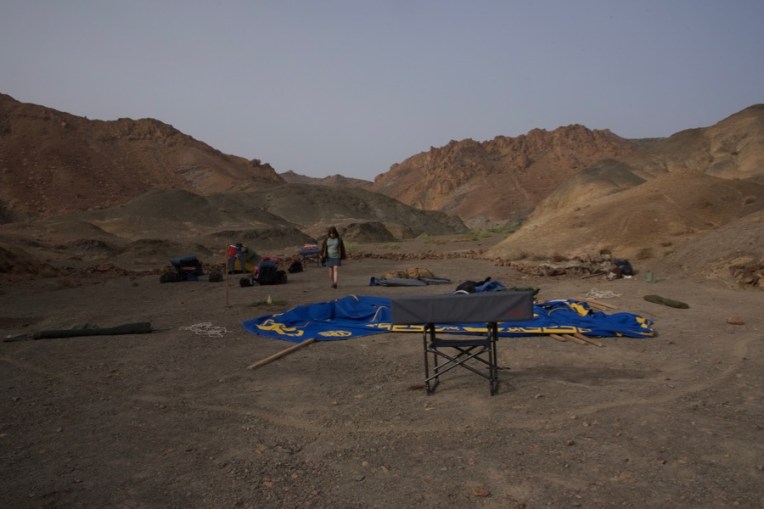
Kim Campbell Thorton, myself, the ranger Bilgee and Oliver Hartman at the entrance to the Great Gobi A Strictly Protected Area. Photo by our guide, BatanaI took this shot standing near the sign looking back the way we’d come, distant mountains still with snow on them from the storm we’d driven through a few days earlier.And now looking south to where we were going. Oliver had mounted a GoPro camera on the hood of the Land Cruiser. This was good fast earth road, as you can see.The route we took led through a succession of basins and ranges. Our destination lies ahead.We’d gotten fairly far out ahead of the van and stopped to wait for them to catch up. And waited. And waited. After about twenty minutes, knowing there was an overheating issue, Erdenebat, the driver, decided that we had to go back. When we got to the van it was clear that something was wrong. The driver’s seat had been removed so that the engine compartment, which is in between the seats, could be accessed.While the van was being worked on, I walked around and came upon this snake, a steppe ribbon racer.It disappeared under a shrub. I saw that there was a hole and kept watch. Sure enough, the snake reappeared, looking like a little periscope.The snake’s “home” is under the shrub in the foreground. Quite a habitat.I also saw this Mongolian agama lizard. They’re pretty common. Although the basic markings and that red spot stay the same. I’ve seen a number of color variations, adapted to their surroundings. All in all it was a pretty good wildlife day.It turned out that the van had overheated yet again and the cause was a blocked fuel pump. The photo shows Erdenebat blowing it clear of the gunk that was blocking it. Our guide, Batana, explained that the insides of the tanks of the trucks that deliver petrol to the soum centers are really dirty and that that dirt and crud is emptied along with the fuel into the tanks at the petrol stations, where it then ends up a vehicle’s gas tank. This is apparently a well-known problem that people in Mongolia have to deal with all the time.Fuel pump cleaned out, the van was fine and we were on our way again.As we drove through the final range of mountains before the one we were heading for, we followed this wide flat drawWe came out of the draw into another basin and saw our destination before us.On the right, at the base of the mountain, is the Shar Khuls oasis. There are no rivers in this part of the Gobi. The only water comes from springs, or wells dug by researchers.And here we were, driving right into the oasis, which had water running in the road in a number of places. The lush greenery after a long day in the desert was a pleasant sight.Coming back out of the oasis we stopped at this ovoo and circled it three times.Straight ahead is where we would camp, nestled in a sheltered spot at the base of those hills.We set up in the same location that the bear researchers use. It turned out that we missed them by just a few days. The big tent, called a maikhan, was for dining and hanging out. Oliver is getting ready to leave for a ride with Bilgee, the ranger.The only permanent structure was a “ger” built into a berm on one side of the camping area. It had a wood roof and plastered walls and was the coolest place to be, literally, during the heat of the day. Our cook, Soyoloo, used it as her kitchen. Oliver, with Batana’s help, interviewed Bilgee about his life and work, the reserve and the bears.So, here we were, camped in the habitat of the world’s most critically endangered bear.
I’ve said for many years that in Mongolia, more than in most places, the journey really is the destination. It’s something most visitors miss with the usual emphasis tour companies have of going from sight to sight on paved roads. Eleven trips in twelve years and I’ve never been bored and have never slept while rolling. It takes time, effort and money for me to go to Mongolia every year and I don’t want to miss a minute of the limited time I have in the countryside. So while this week’s post doesn’t have a lot of incident or excitement, it will give you a chance to see a little of what’s “in between” on the road day to day, this time in the Gobi.
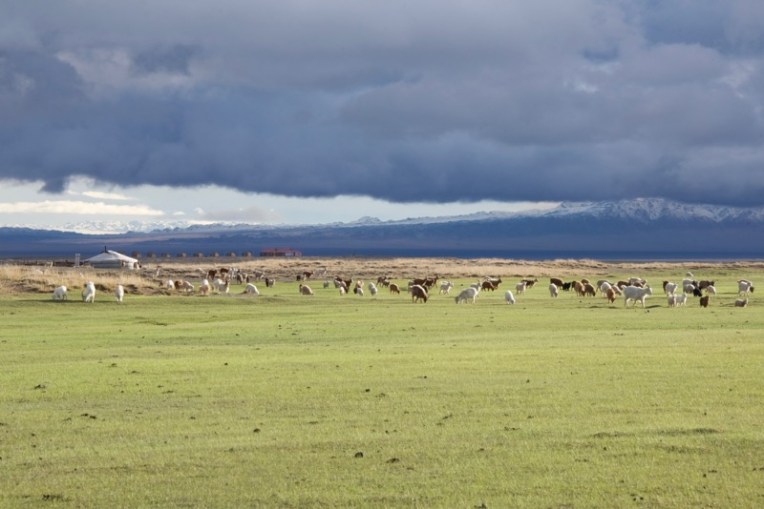
We hadn’t realized it when we set up camp at Boon Tsagaan Nuur, a remote lake in the Gobi, but we were not far from a herder’s ger (see above photo). A short walk towards the lake revealed it settled behind a dune. We found the goats and sheep to be entertaining, but could also see that they had grazed the grass down to the ground in the entire area except for one section that was fenced off, something one sees all too often these days.
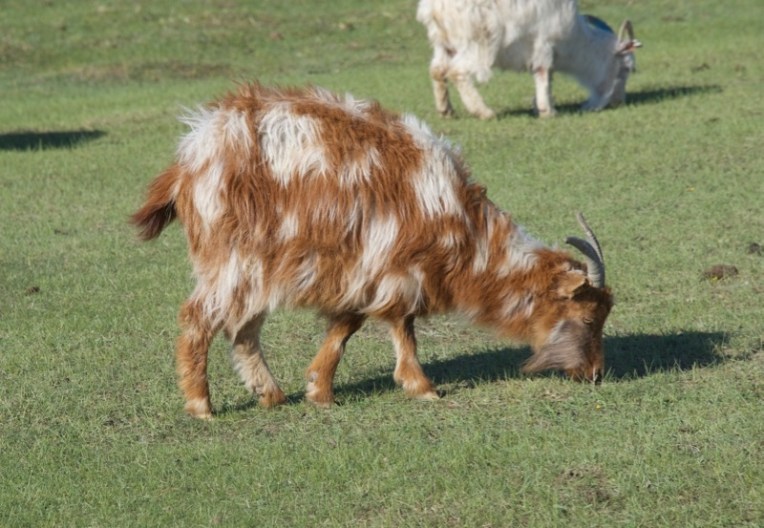
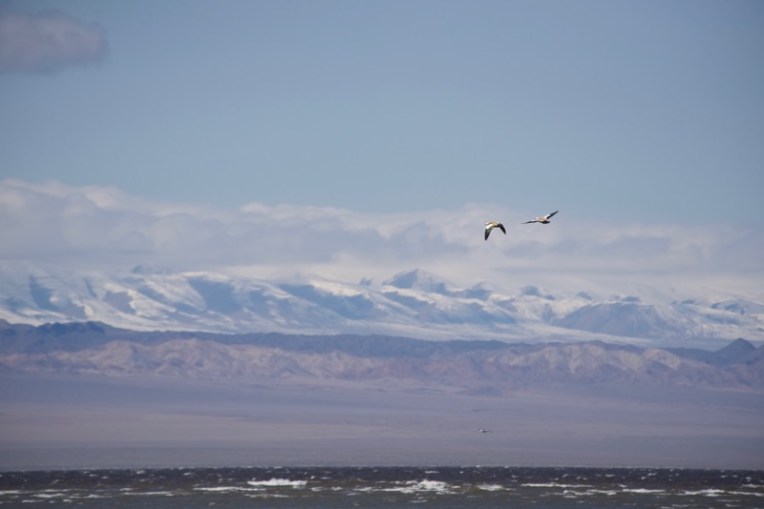
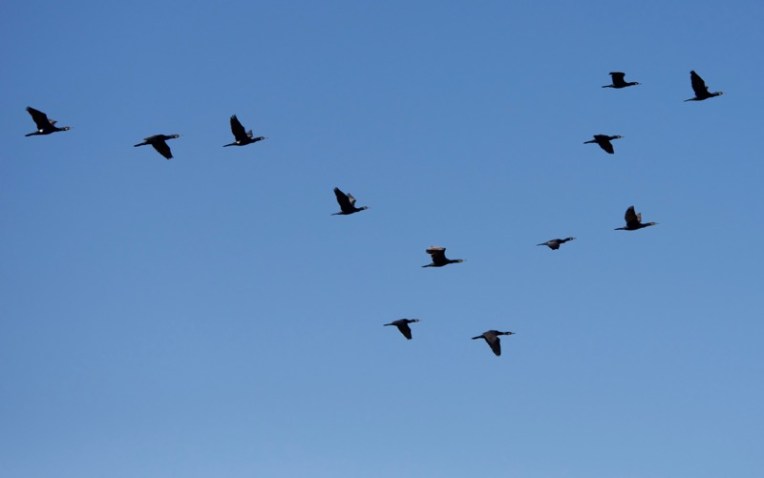
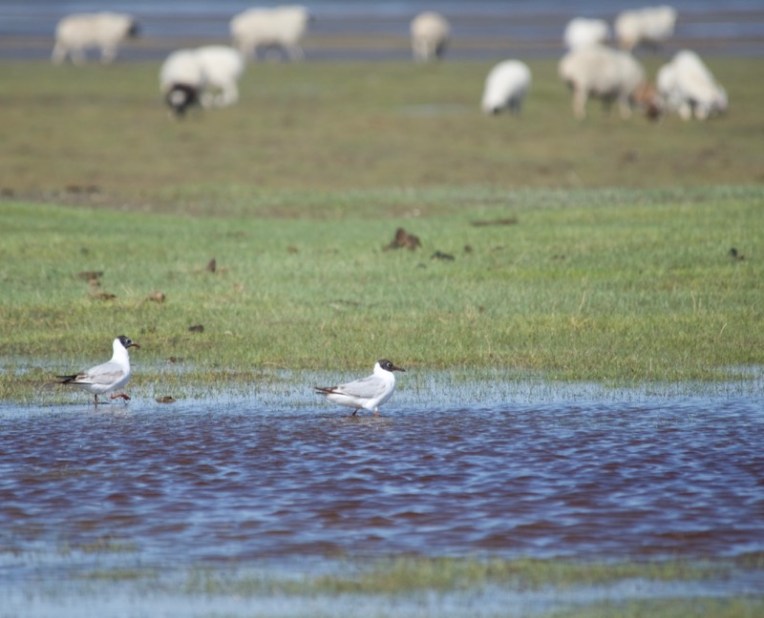
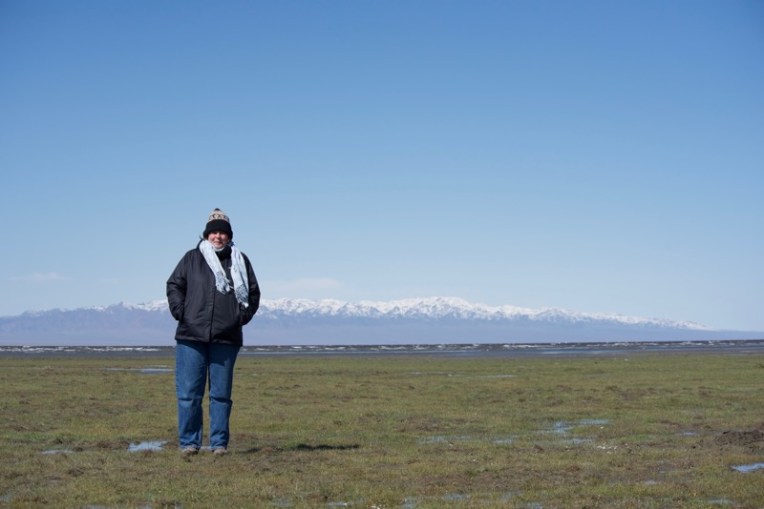
Loved the markings and color of this spotted cashmere goat.After breakfast we picked our way to the lakeshore through wet ground to do some birdwatching. The lake was rough with white caps and backed by a snowy mountain, Dund Argalant Nuruu. It was cold and windy.A pair of ruddy shelducks flew over. That’s the lake at the bottom of the photo.There was also a flock of great cormorants.Black-headed gulls.
There were a number of shorebirds…plovers and a redshanks, but I couldn’t get close enough for decent photos.
Did I say it was cold?
We left the lake driving south around the east shore, a route that I had not been on before, which was great!
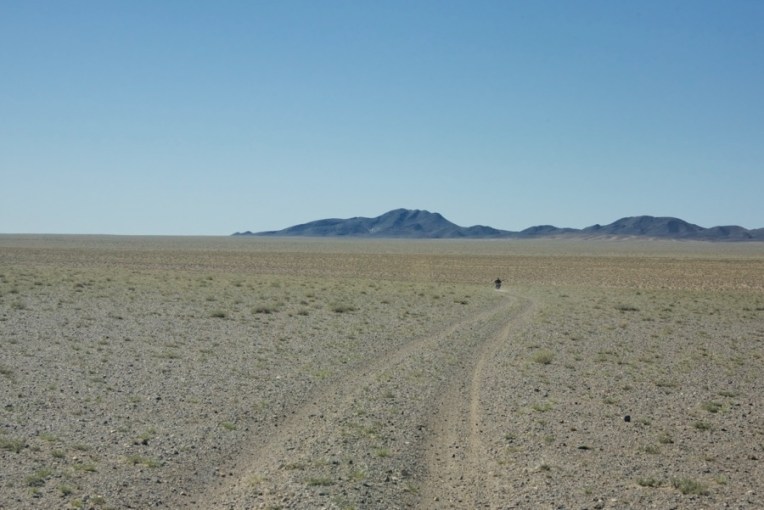
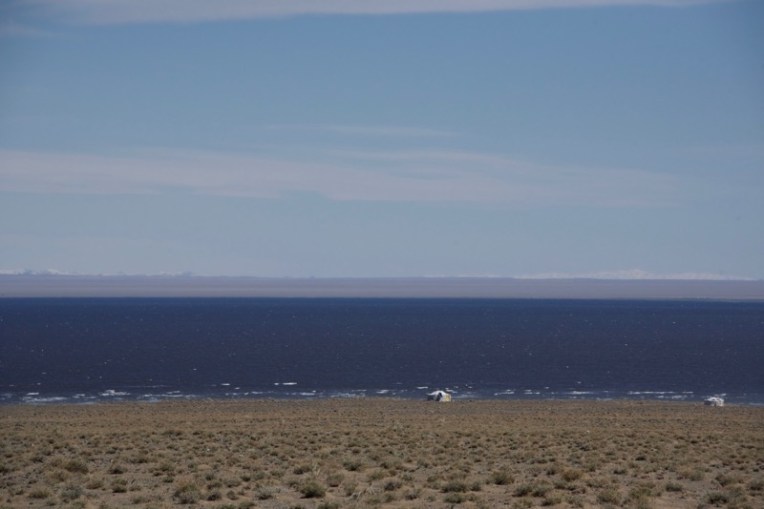
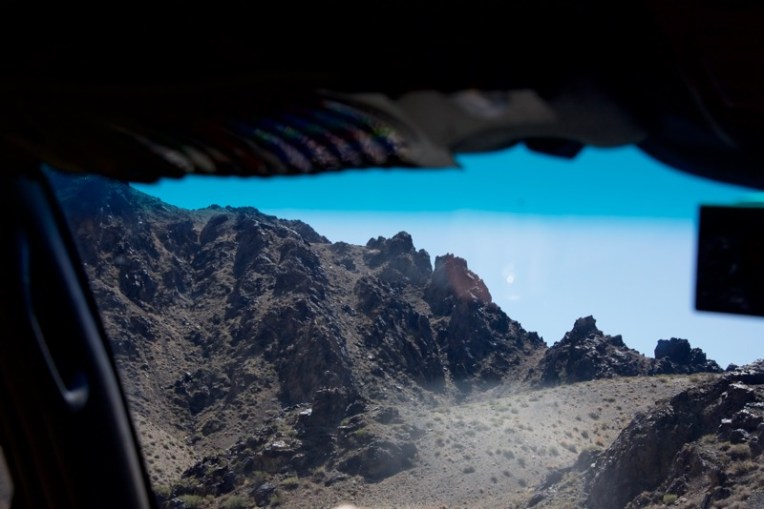
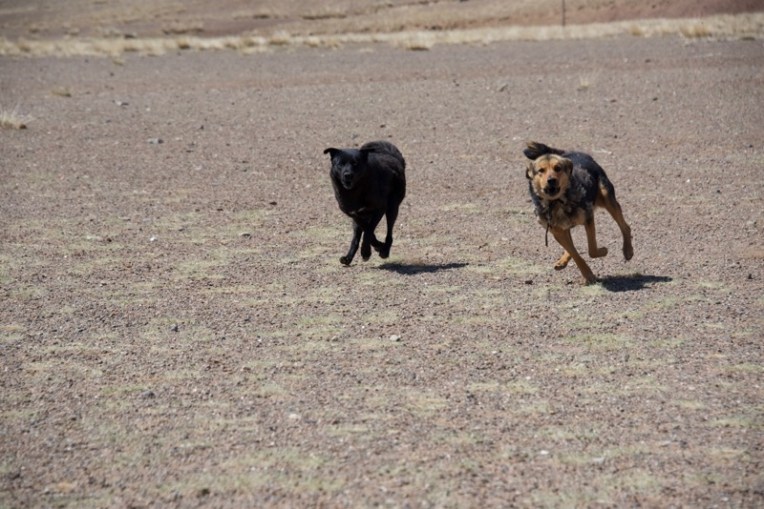
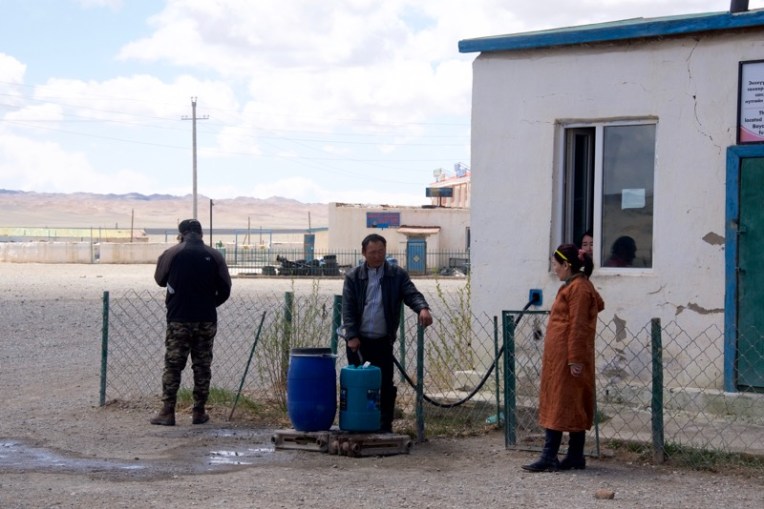
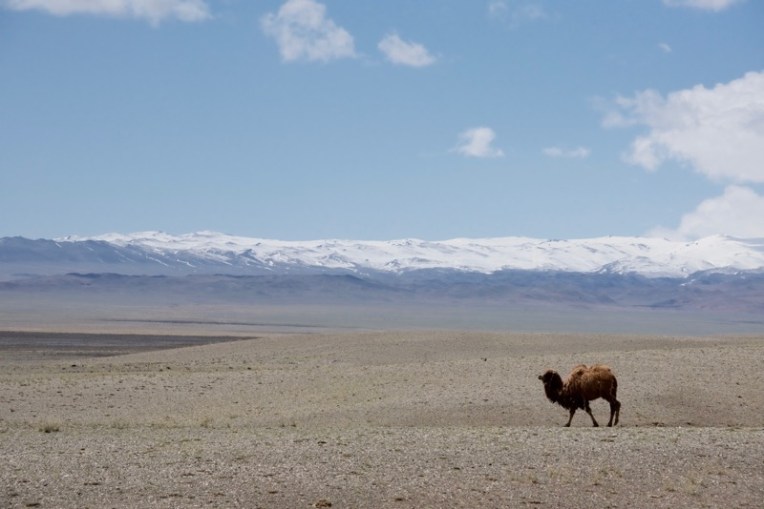
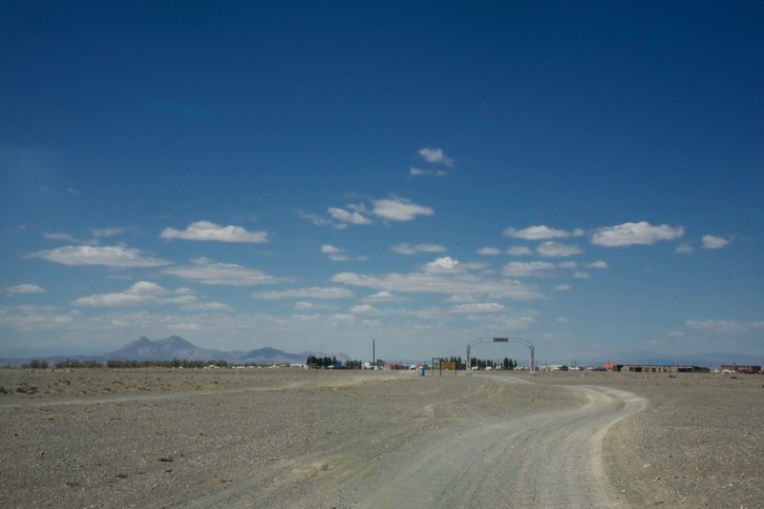
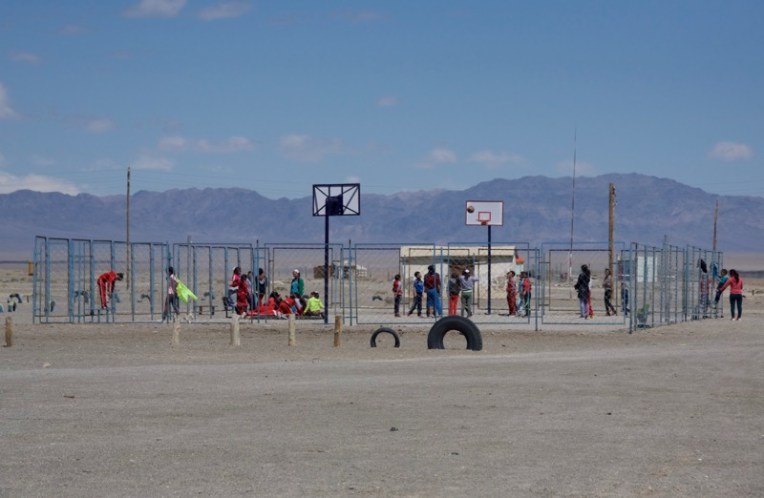
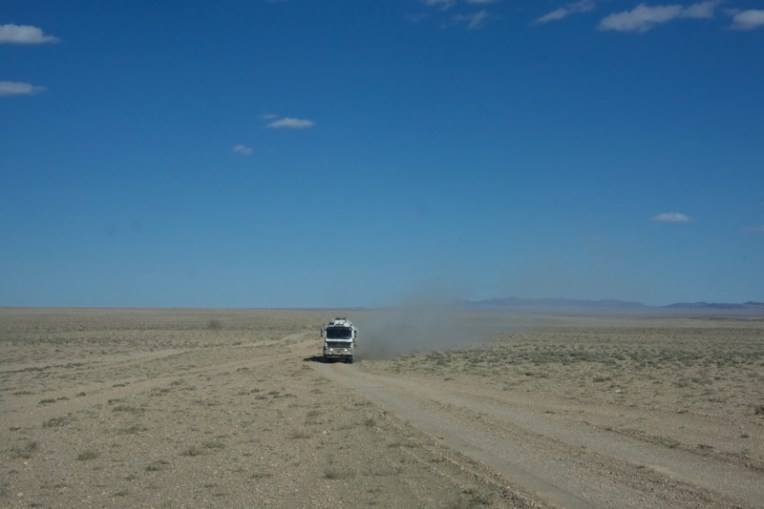
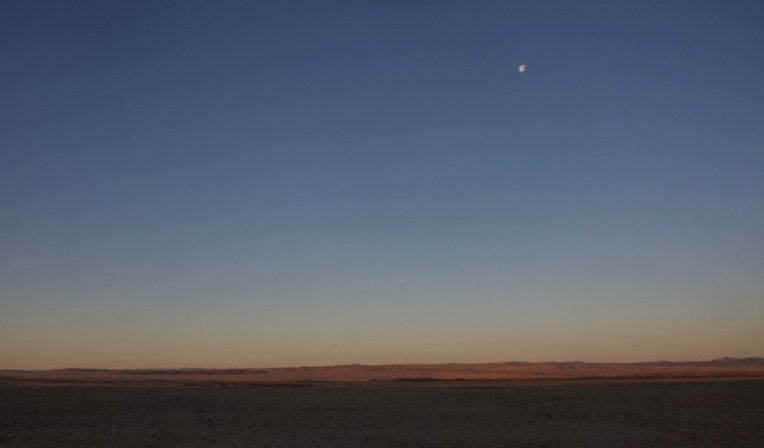
The lake was a deep indigo blue with white caps from the wind. This ger with a solar panel was the last one we saw for awhile.As we headed south it got warmer. There was an minor cognitive disconnect between driving through the warm Gobi and seeing heavy snow on the mountains from the front we’d driven through farther north two days earlier.We started to climb through the first of a number of rugged passes. Grabbed this shot through the windshield of the Land Cruiser.There were some impressive rock formations along the way.And then we entered a stretch with quite a bit of vegetation, including flowering shrubs. I think this is a wild apricot. I’m usually in Mongolia later in the year when the fruits have already formed, so am not sure. But the pink flowers made quite a contrast with the edgy roughness of the rocks.Our Russian fergon support van with our great cook. Soyoloo, waving from the passenger side. Fergons aren’t the most comfortable ride, but they will get you there. No electronics, all mechanical, with the engine between the front seats, which means it can be accessed without getting out of the car, highly desireable when it’s -30F or 90F outside. And they can be fixed by the drivers, who know them inside out and backward, on the road.I always try to get photos of gers in the landscape, maybe THE quintessential Mongolian countryside scene.Also part of the landscape, ger dogs chasing one’s vehicle as a send-off after a visit. The traditional greeting upon approaching a herder’s ger is “nokhoi ga”….”Hold the dog!”. I never, ever, ever get out of the car or van until told to do so by the driver or guide since they can be highly aggressive and are not vaccinated against rabies or anything else.View from one of our lunch stops. Blue sky, fluffy clouds, open space that goes on for hundreds of kilometers.But deserted? Not at all. While Soyoloo and our guide, Batana, got everyone’s lunch boxes out of the cooler, this motorbike rolled up, the family either coming or going from the soum center or maybe visiting family or friends.We spot the first camels! These are domestic bactrian camels. It was great for Kim and Oliver since it was the first time on the trip, but I never tire of seeing camels.Same with the horses, especially with a backdrop like this.We rolled into a small soum center to get water from the local well. This one was quite a set-up with a permanent building and a window through which one paid.More camels. My “ship of the desert” shot. Three days since the snow storm and these higher southern mountains were still blanketed.We had to get south through a range of mountains to our south to reach our next destination, the soum center of Bayantooroi. The driver started to look for a camping spot, but then we noticed possible rain clouds coming up behind us. We needed to get out and down to the plain asap since you can see that the road follows the same path run-off from a rain storm would take.We did make it down to the upland area and out of the mountains. While the rain ended up missing us to the east, it was very, very windy that night. The next day was calm and we found ourselves in an area with saxaul trees.Our lunch stop was at a large out cropping which had a “terrace” that we climbed up to and where we sat to eat. Nice view looking back the way we’d come.The day’s destination, Bayantooroi, where the headquarters of the Great Gobi A Strictly Protected Area is located. We had to go there, quite a bit out of our way, to get a border permit since we were going to be within 50km of the Chinese border. In the background, on the left, is Eej Hairkhan Uul, the sacred mother mountain. On the first WildArt Mongolia Expedition in 2013, we spent two nights camping at the base of the mountain, doing a day hike up onto it. You can read about that wonderful day here.Many westerners have this idea of Mongolia of a somewhat backward, poverty-stricken place and while incomes are low by western standards and there are poor people as is true anywhere, the country is also absolutely up to date in many ways, including an increasing use of alternate energy sources like wind and solar. Bayantooroi is a long way from any major town (I think the aimag center of Altai might be the closest and at least a two day drive, judging from the road atlas I’m consulting) and look at this big solar array that has been installed.Basketball is quite popular in Mongolia. Every soum center seems to have at least one basket set up somewhere. Bayantooroi has a full two-basket court which some local girls and boys were using.Our guide and drivers handled not only getting the border permit, but also arranging for a ranger to take us into the strictly protected area. He lived quite a way out of town, so we had to wait for him to come in to plan the next day’s travel. In the meantime, Batana chatted with another local family getting more information. There’s only so much one can do from Ulaanbaatar. Final contacts and arrangements often have to be made once one is in the field.Everything settled, we now had to backtrack over three hours to where we would turn south into the protected area. The only “traffic” we saw all day.We reached the pre-arranged location and set up camp for the night. The next day the ranger would come to our camp, impossible to miss in its open location on the upland plain, and lead the way to our destination. In the meantime we all enjoyed this gorgeous sunset.
Next week we’ll travel far, far south, deep into the Great Gobi A Strictly Protected Area, one of the most remote locations in Mongolia. No towns, no herder families, no mobile phone service. I could hardly wait!
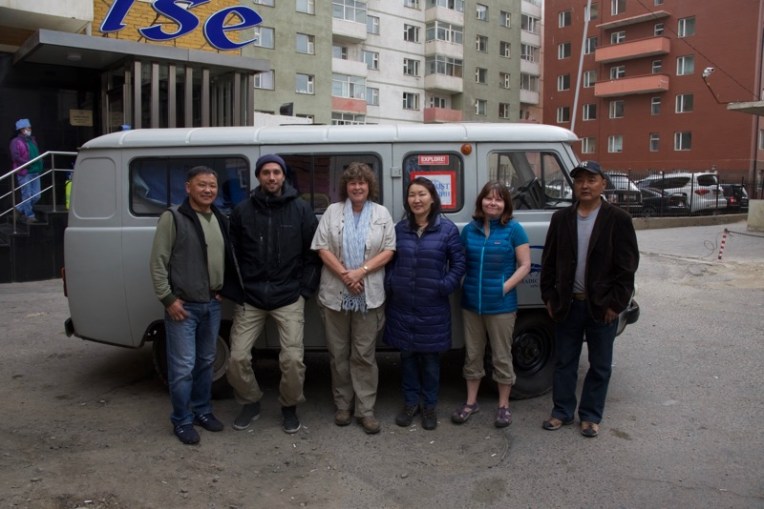
2016 WildArt Mongolia participants and staff, from left to right: Erdenebat (driver), Oliver Hartman (Explorers Club Fellow, filmmaker), Susan Fox (Expedition leader, Explorers Club Fellow), Soyoloo (cook), Kim Campbell Thornton (journalist and author), Puugii (driver). Photo by Batana, our guide. Behind us is our Russian fergon van support vehicle
We left Ulaanbaatar on Sunday, May 15. heading far south to the Great Gobi A Strictly Protected Area, a five day drive. Our main goal was to try to see Gobi bear, a subspecies of brown bear/Ursus arctus gobiensis, which is critically endangered (IUCN Red List). Population estimates range from a low of 28 (the number researchers have counted) to as high as 60 (an estimate based on extrapolation of captured and counted bears. It was highly unlikely that we would succeed, but it was still more than worth the trip to see their habitat and learn about what is being done to conserve them. Wild bactrian camels (Critically endangered, IUCN Red List) also live in that part of Mongolia, along with a variety of other wildlife.
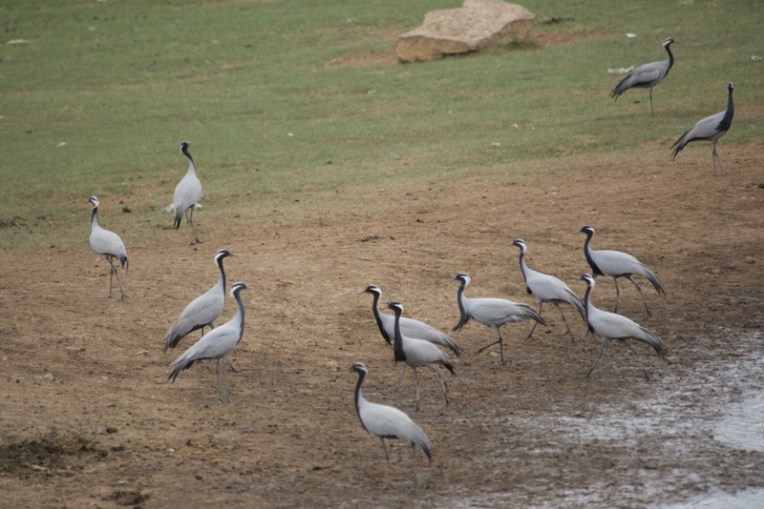
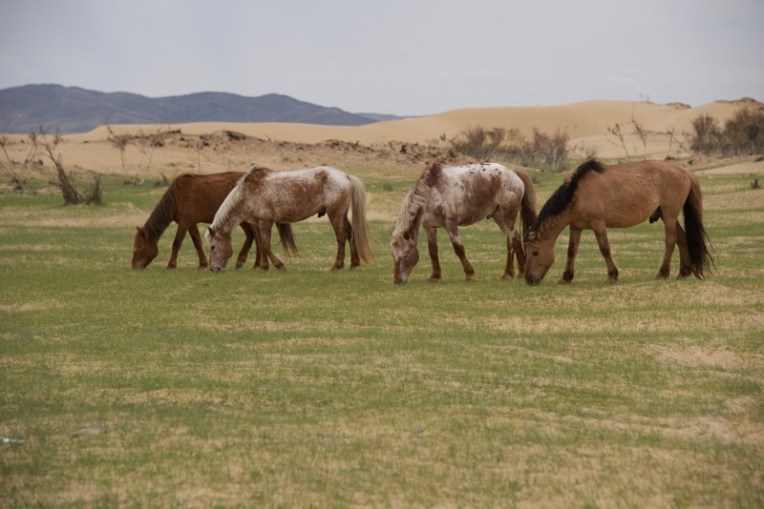
Demoiselle cranesWe stopped at an area with sand dunes for lunch, enjoying watching some of the local horses wander by
Our route took us west and then south. Along the way we saw a large flock of demoiselle cranes, which are quite common in Mongolia and always a delight. Once we were on the road our guide Batana asked if we could stop at his aunt and uncle’s ger to deliver a new ger cover to them. This was great because I knew it would, right away, give Kim and Oliver a chance to visit a herder’s ger and experience Mongolian hospitality.
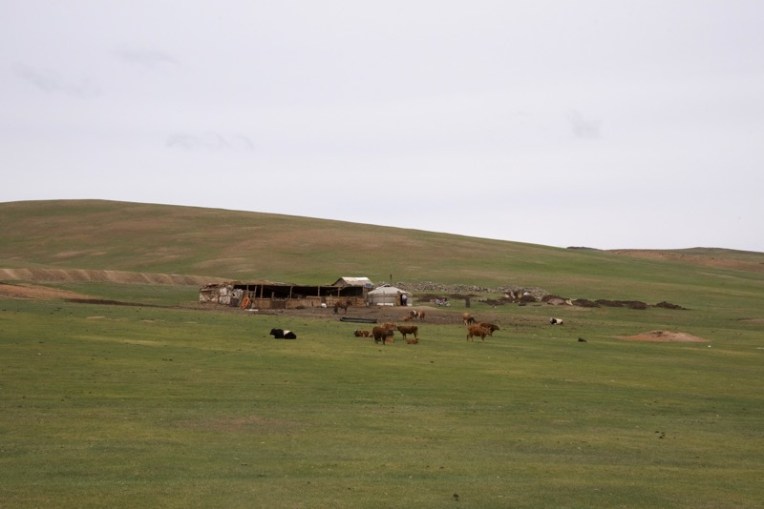
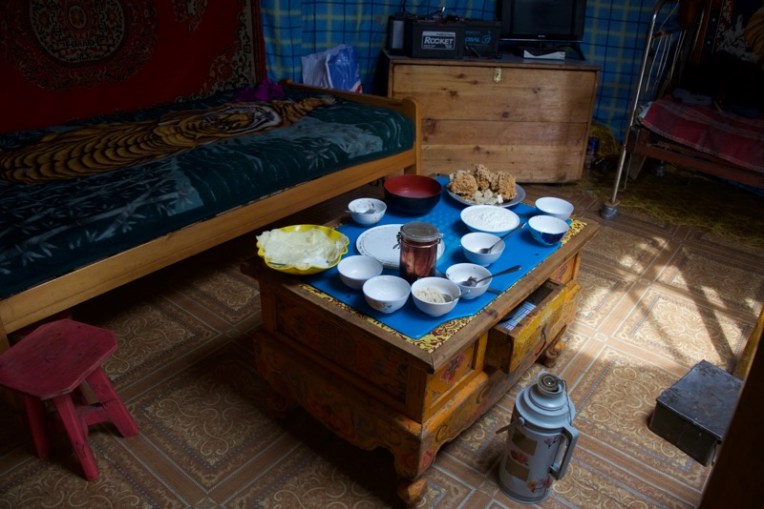
The home of Batana’s aunt and uncle, which was quite near the main roadThey have a lot of sheep and cashmere goatsWe were treated to classic Mongolian dairy foods (tsagaan idee/white food)
Continuing on we came to the race horse memorial south of Arvaykheer. I’d been to it before, but was more than happy to stop there again. It was late afternoon and was pretty windy.
A must-see if you’re heading south towards Bayanhongor. A quintessential bit of Mongolian culture. Last time I was there, a wedding party showed up to have their photos taken and apparently just relax and visit with friends and family.Bronze portrait statues of famous race horses.
The original plan had been to camp near by, but the location was an open plain and the wind was really starting to pick up. We drove on looking for a more sheltered spot, which took awhile. The idea was to get out of the worst of the wind, but not be so close to a slope that if it rained we’d have to worry about run-off. The problem was finally solved, camp was set up, we had dinner and it was off to bed. On what was one of the coldest nights I’ve experienced in eleven years of travel in Mongolia. Ah, spring in Mongolia….
Kim bundled up the next morning, as were we all.Heading right into this storm front, driving southwest. Rain on the windshield.
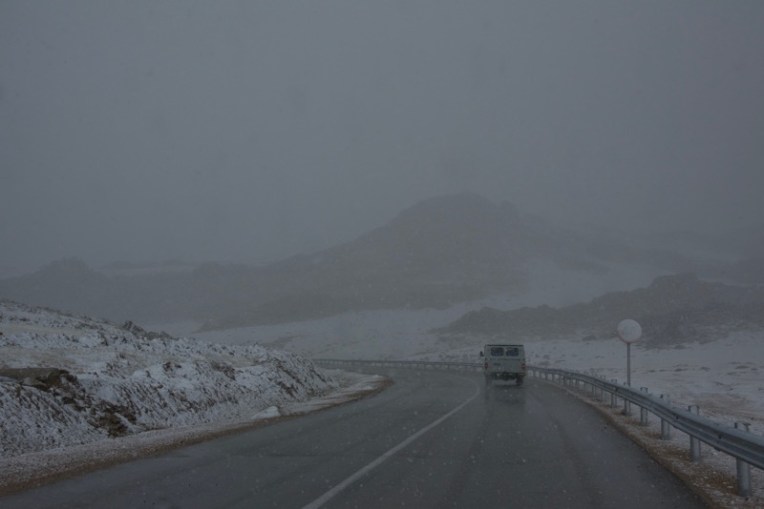
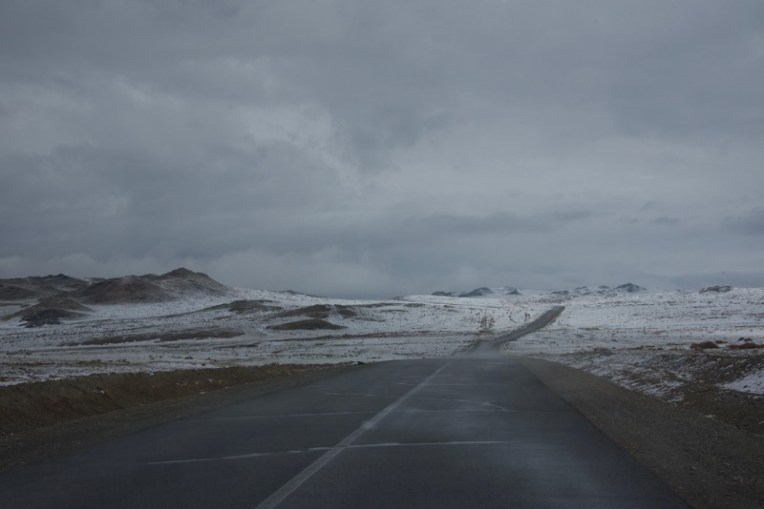
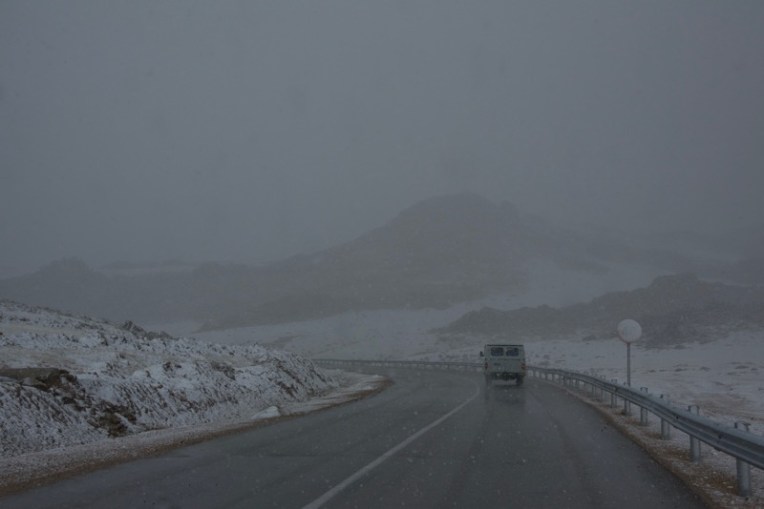
First it was rain, then kilometer by kilometer it turned to snow. And then blowing snow.
Horses walking through a dusting of snow.As we went up in elevation, visibility went down.As we drove on I grabbed this shot of a ger. Believe it nor not, the owners were toasty warm inside. Felt is a good insulator and once the stove is really going it absorbs the heat and releases it back into the space.Finally we came through the other side of the front and it stopped snowing.By the time we could see Bayanhongor, there was no snow on the ground, but the Hangai Mountains behind the city were covered.
We went into the city for gas and groceries. Plan A had been to go north up the river valley to Erdenesogt and spend a night there, visiting Gachen Lama Khiid (monastery) in the morning, but there was no way we would be able to get there in current conditions. We’d go there on our return instead and so turned south towards the Gobi.
For me, my trips in Mongolia have always begun once we leave the paved roads and are on the earth roads. Here we are, heading south towards Boon Tsagaan Nuur.We got the feeling that it had been raining heavily in this area…Ah, Mongolia.
We drove on through the day, bearing southwest. Snow-covered Dund Argalant Nuruu appeared in the distance and then we got our first glimpse of the lake Boon Tsagaan Nuur.
Boon Tsagaan Nuur in the distance with small guest cabins near the shore.The ground was too wet to set up near the lakeshore, but we found a pleasant grassy area farther back. The weather, though overcast, wasn’t cold and there wasn’t much wind, a change from the previous day much appreciated.As the clouds rolled through we were treated to this beautiful shifting light on the mountain.
Next week we’ll explore a bit of the lakeshore, get in some birdwatching and be entertained by local livestock before heading west to get a required permit for our destination.
My ger arrives on-site in Ikh Nartiin Chuluu Nature Reserve, Mongolia.
Last weekI shared photos of buying my ger at the Narantuul Market in Ulaanbaatar. This week you’ll see it put up for the first time.
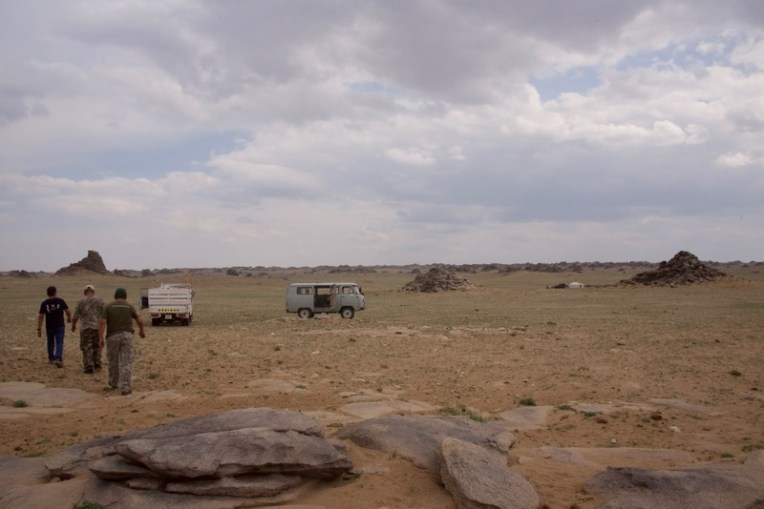
A few hours after all the shopping was done I caught the evening train down to Dalanjargalan Soum, where the Ikh Nart reserve headquarters is located. The reserve Director, Dr. Amgalanbaatar, was kind enough to let me stay overnight in the “dorm” room used for visitors. The next day he and I and Anand, a member of his staff, drove out to the set-up location in the reserve’s grey Russian fergon van. Shavka arrived with his truck and the unloading and set-up began.
I had been given a choice of three locations, all in the vicinity of local herders in case I needed assistance. I was in the reserve itself, but not in the Core Area where, other than the research camp that has been there since 2001, no camping is allowed. I liked this location the best.
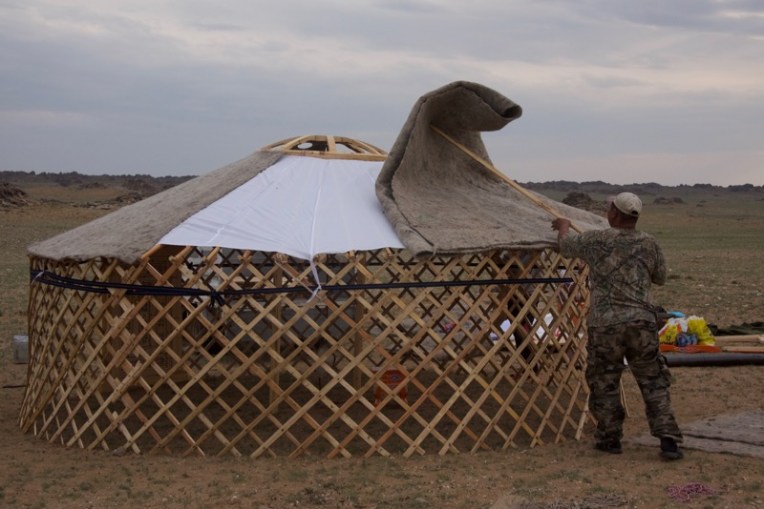
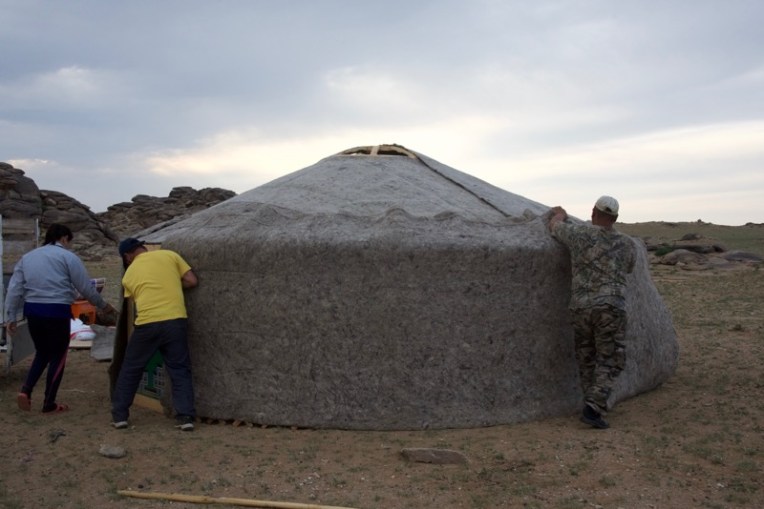
Note: You can find a number of sites and videos about putting up a ger. Mine’s a little different, I believe, since it shows one being put up for the first time, so there are first time steps that you normally wouldn’t see.
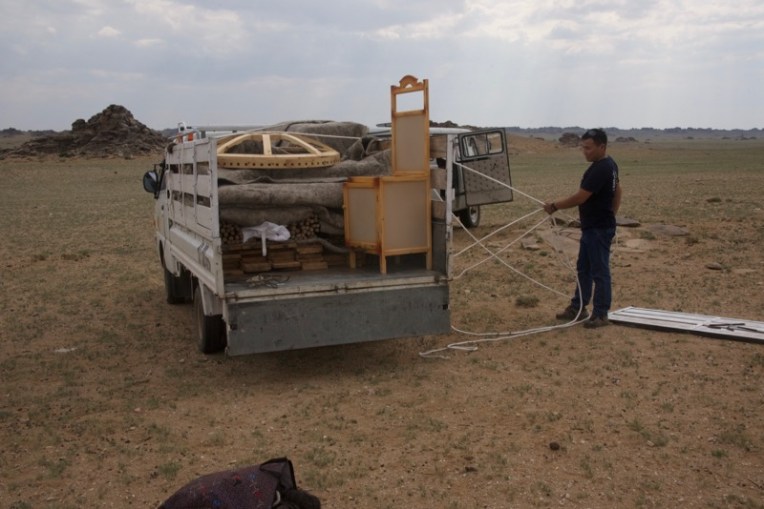
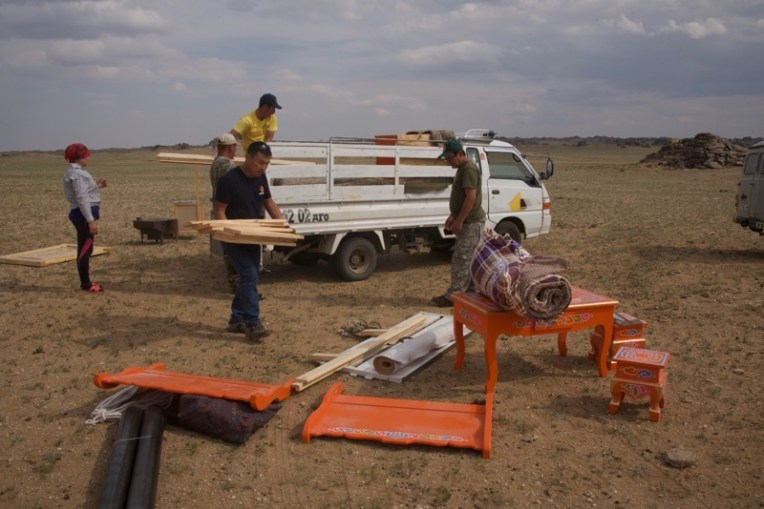
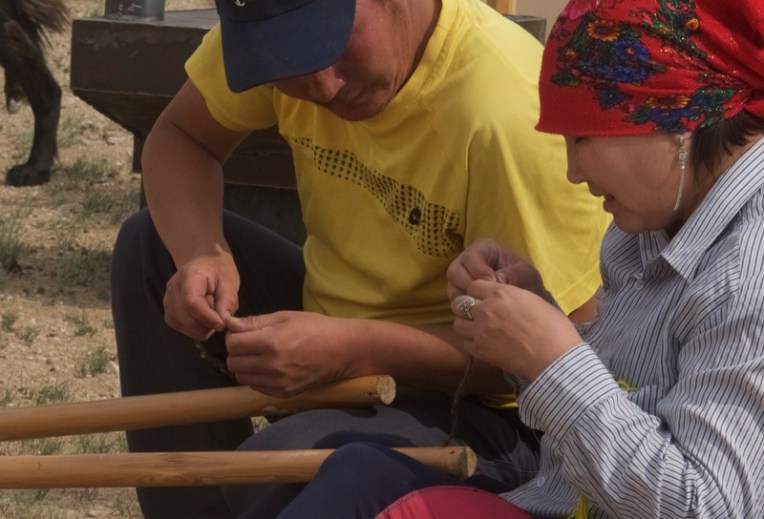
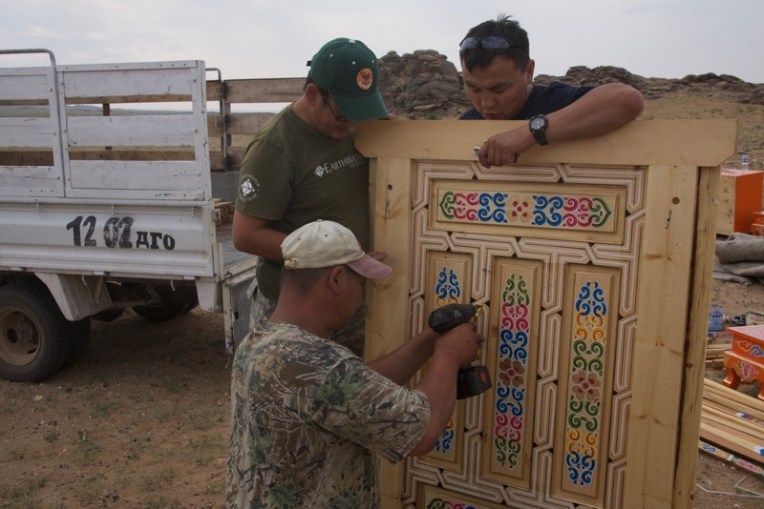
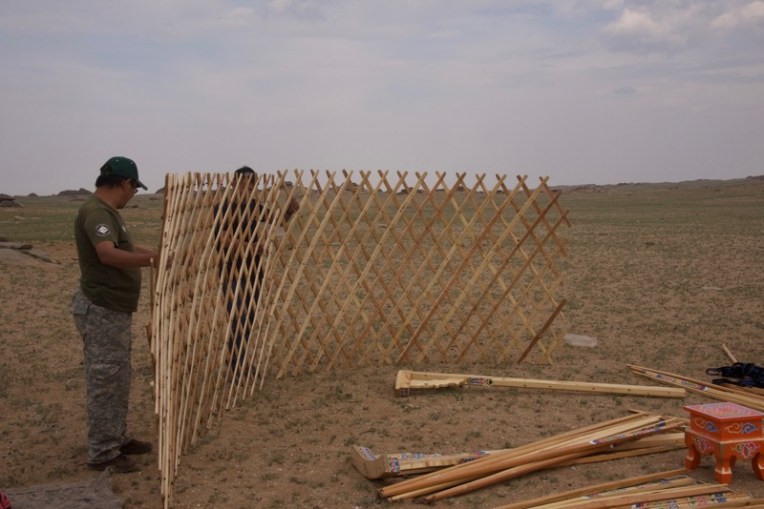
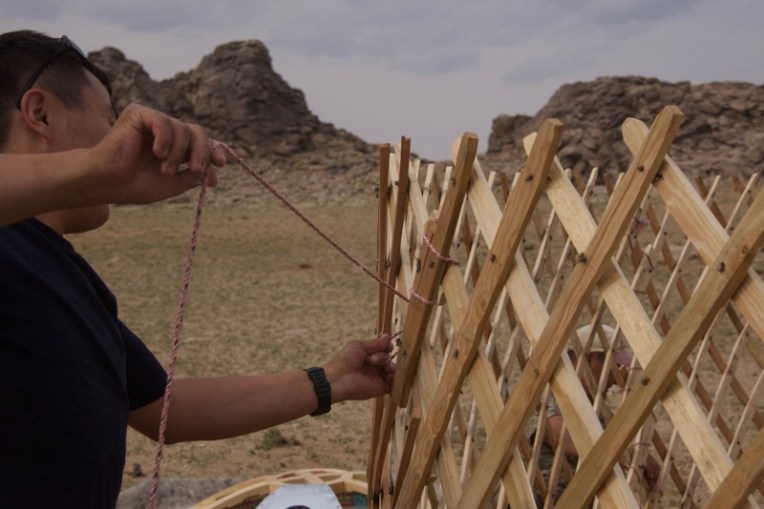
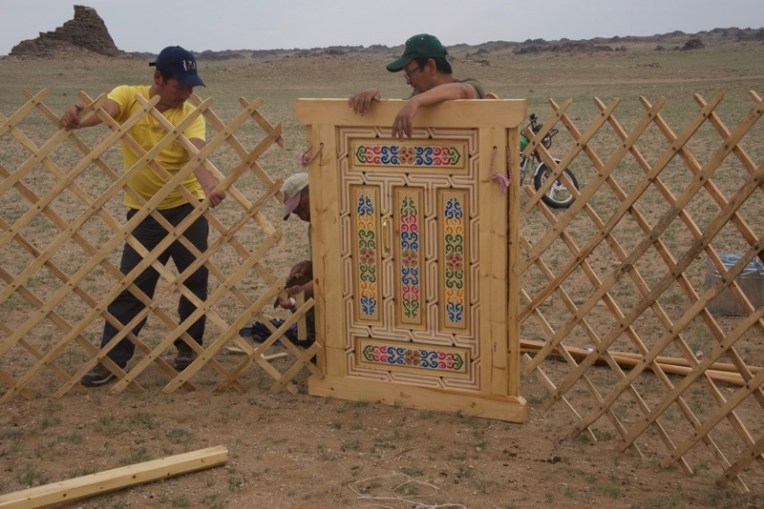
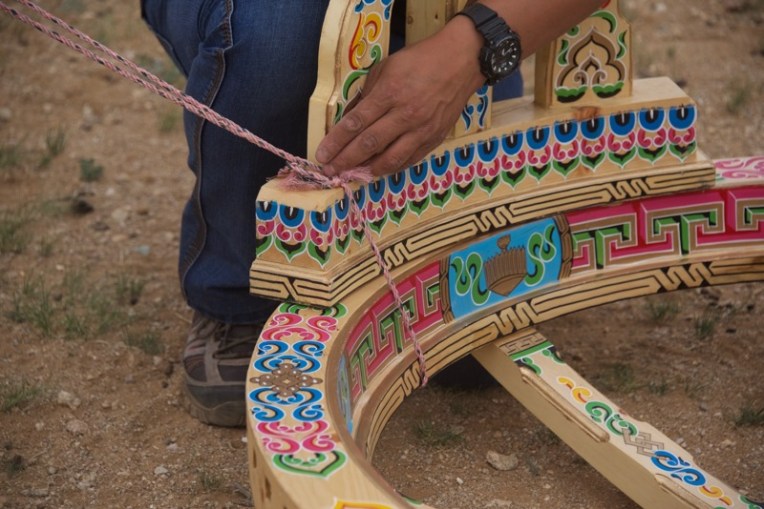
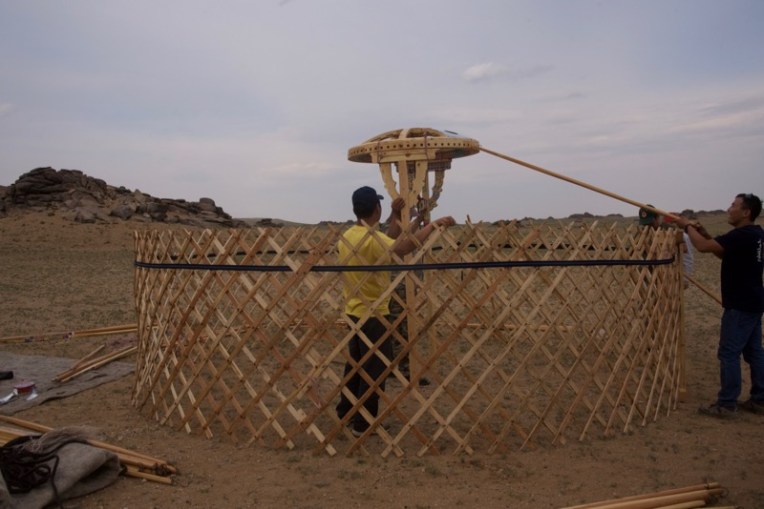
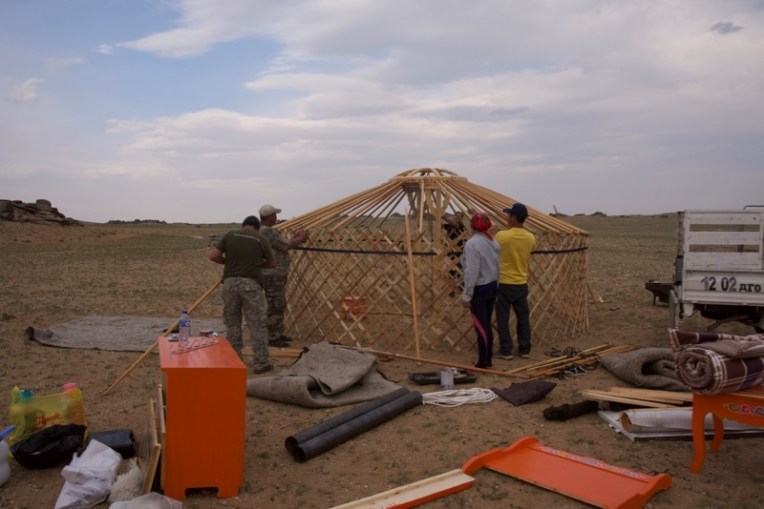
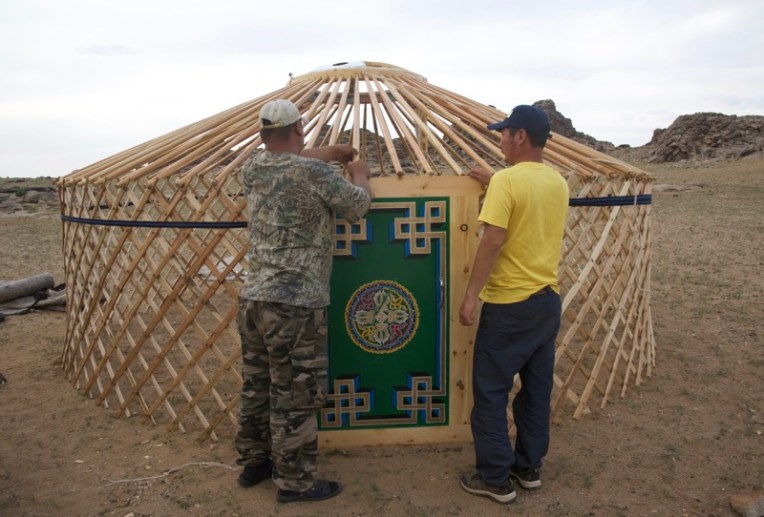
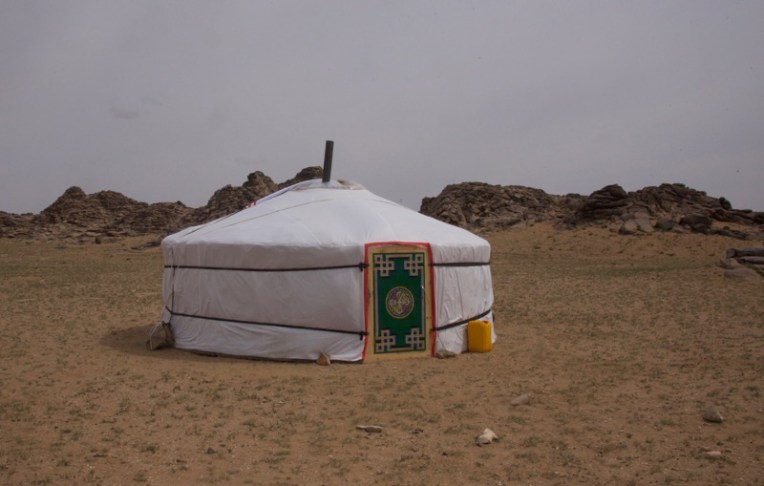
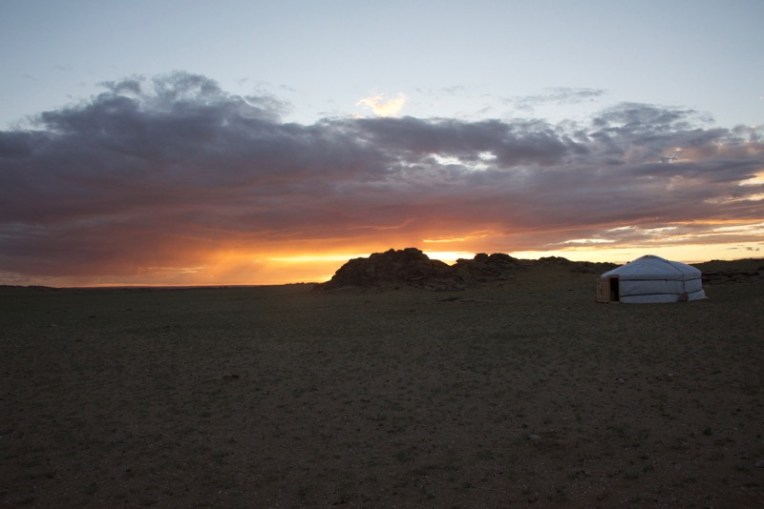
Unloading everything. That’s the sink stand at the back.Ger parts on the ground and the furniture coming out. That’s the headboard for the bed.Some of the furniture, my felt bed pad and the stovepipe.Anand pulling the traditional hand-braided horsehair ropes out a bag, which will go around the ger to hold the cover on. I’d specifically requested them instead of the, more common these days, cloth straps. It turned out that they were included in the ger “kit”.The wall lattice (bagana) sections being unloaded. There are four of them, hence a “four wall ger”.Ger parts being laid out on the ground. On the right are the felt cover pieces.It took longer than usual for set-up since there were things that had to be done first, but that would not have to be done again, like threading loops of braided strands of horsehair through the ends of the roof poles and knotting them in place. I was put to work which was great but, never having done it before, had trouble getting the hang of how the knot was tied, so only managed one of the 82.Horsehair thread looped through hole in roof pole.In the meantime, Shavka trimmed and fastened onto the toono the sheet metal piece that would hold the stovepipe so that it would never come in contact with the wood.Before the door was set in place Shavka fastened on the interior door handle. It’s toward the center so that when it’s open you can reach out to it to close the door without having to step out of the ger. Great when it suddenly starts to rain or the wind comes up.Prep done! The first section of lattice (khana) is put in place.Each section is tied together with sturdy cord.The door (khalga) is set in place. The lattice didn’t come to the edge of the door the way Shavka wanted them to so he sawed off the ends of each lattice piece to fit. Another task that only needed to done once.The toono is handed over the walls to be set up.The toono is laid upside down on the ground and the vertical supports (bagana) are held in place flush, without slots, holes or other connectors.The toono and bagana are tied together by lengths of the same cord that was used to tie the lattice wall sections to each other. And yes, I really love the decorative painting!The toono/bagana combination is now held in place by two people while a few poles (uni) are added around the perimeter. The dark cloth band is what holds the door in place.The horsehair loops in action, attaching the roof poles to the lattice sections.It became clear within minutes of trying to insert the roof poles into the holes in the toono that the ends were too big. Amgaa, Shavka and Anand got out knives and took three or four large shavings off of each of the 82 poles.Once the pole ends fitted the toono holes, the roof went on pretty quickly.Shavka adjusts a roof pole. The exterior design on the door was different than any I’d seen before and I liked it.The first part of the cover (tsavag) to go on was a light weight one that would be visible inside the ger.The felt roof pieces (deever) go on. There’s definitely a technique one has to know to be able to flip a folded roof felt into place in one motion.Roof felt on, wall felt (tuurga) almost on.If you’ll remember from last week’s post a quantity of plastic sheeting was purchased. Here’s why. It’s a fast and inexpensive way to add rain protection since the felt will soak through if it rains hard enough (the voice of experience from a couple of occasions). We also got what the Mongols call “Russian canvas” with the ger, which is waterproof, but Shavka had wisely decided to use it as a layer between the ground and the sheet vinyl flooring. I bought the wood for him to make a sectional wood floor for me for next year.The final step was the outer cover , held in place by two bands of the braided horsehair rope. Choi and his wife, were my “hosts”. They had their ger nearby, Here he is attaching the triangular top cover piece (urkh) which generally left open and pulled back but is closed when it rains. No glass or plexiglass in the toono openings. It was open to the sky, which is what I like.And here’s my ger the next day, all set up. We started putting it up the day before around 5pm and finished at 10pm. I was moved in by 10:30. The yellow container on the right is one of two I bought so that my host could bring me well water via his motorbike.All moved in. The big rock, along with three more on the outside are to keep the ger in place and stable in high winds. Gers are not otherwise fastened to the ground. No stakes. On the left is my water filter system, which consisted of a LifeStraw 5 liter gravity feed filter which emptied into the plastic container I bought at the market. The wonderful $9 teakettle sits on the one-burner gas cooktop which is on the stove. I love the quality of light in a ger as it comes through the roof.The “kltchen” and dining side of the ger. A cabinet is on the list for next year, although the table does have a pull-out drawer where I put my flatware and utensils. Also note that the roof poles provide a useful place to put things like bags, towels and clothes.My ger in its setting. On the right you can just see Choi’s ger, about a five minute walk. There was a rock formation between us, so I had visual privacy and could only see the natural landscape. I did have Choi’s goats and sheep coming by on a few evenings and that was pretty entertaining.Sunset evening in Ikh Nart with my ger.
So how did it go, my week of living in my own ger for the first time? Really well. There was one very strong storm with heavy wind and rain that pulled part of the cover almost halfway off, but Choi and his wife fixed that the next morning. Wind blew a lot of dust in on the bottom on one side one afternoon, but putting up a section of the interior curtain (which hadn’t been done since there was no cord to string it up with, but I found a way to fake it) so that it fell onto the floor solved that problem. I used my cooktop for heating water for coffee in the morning and tea for visitors. I also had bansh (small meat dumplings used for soups) for dinner a couple of nights. I did a little laundry using the steel basins I’d bought and also managed a standing bath and hair wash.
Food storage became an issue and I lost some items, like a loaf of bread that turned moldy, due to lack of refrigeration. A small solar powered refrigerator with battery storage is on the list for next year. One often sees them in herder gers these days. I was happy with candlelight at night, so not really feeling the need for an “electric” light. My toilet was the great outdoors, which I’m used to, but it was a bit much for a week in one place. My current thought is to have a small vertical wall maikhan (the cloth summer tent) made with a divider down the middle. On one side would be a pit toilet with a seat and on the other a place to take a shower using a sun shower bag.
I slept well (I always do in a ger anyway) and found that I had, in fact, understood what was needed to do this to be happy and comfortable for a week or more. In the evenings I took one of the stools outside and put it close enough to the ger wall that I could sit with back support and watch the sun go down. A nice nip of Chinggis Gold vodka and some Ukrainian chocolate nougat candy (from Roshan, my favorite) and life was just about perfect.
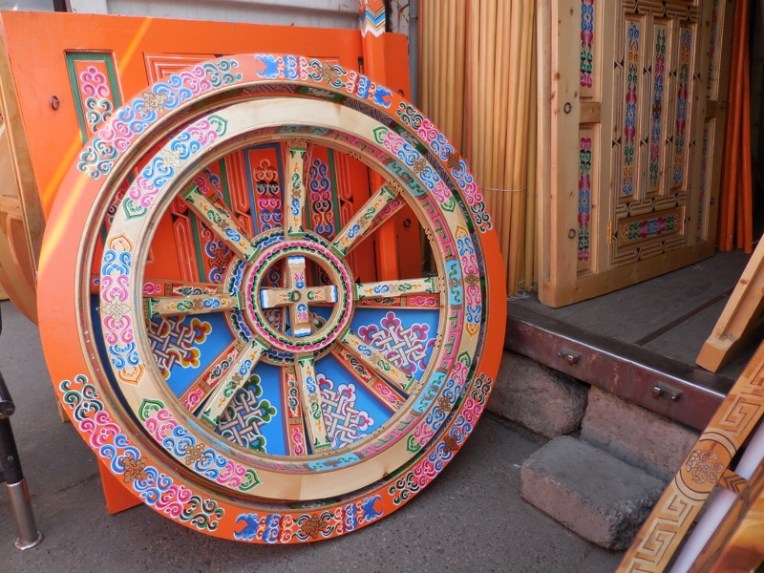
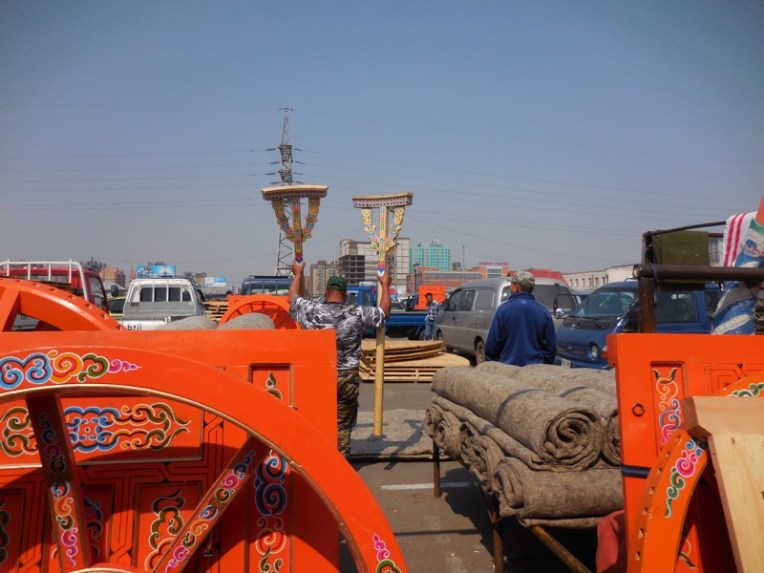
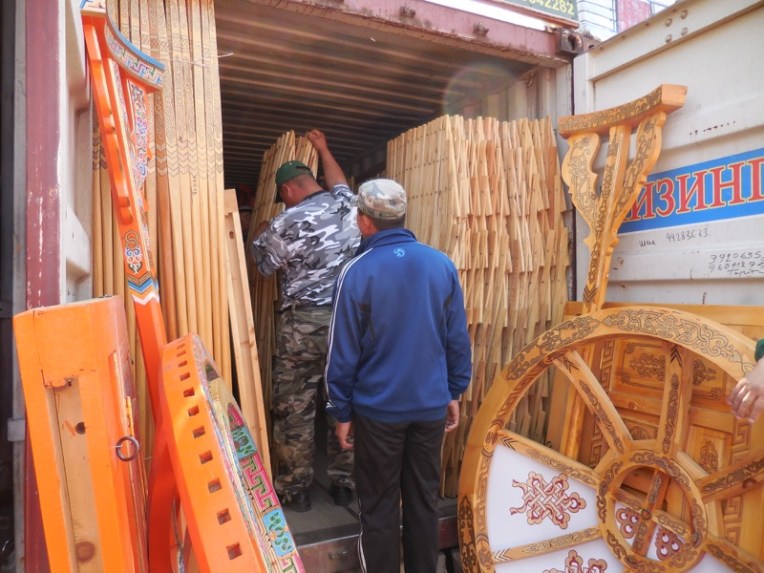
The roof-ring, “toono” in Mongolian, for my ger is the smaller one inside the larger orange one. I had originally planned to get the traditional orange, but Shuka (see below) observed that the clear wood was better because one could see the quality of construction. He’d already reconnoitered the various ger sellers before I got there and had picked this one as having the best quality for the money. I ended up really liking the feeling of the interior structure with the decorative painting on the lighter color.
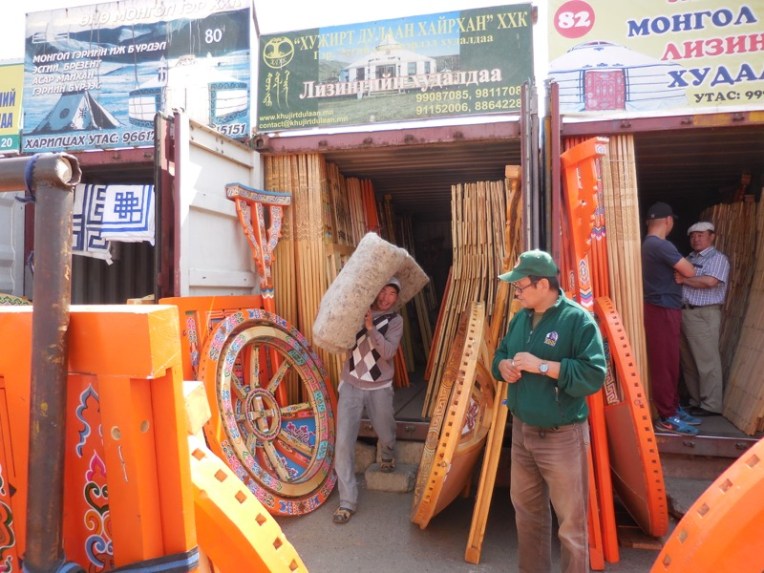
On June 15, exactly one month ago, I got to spend some of the most fun hours I’ve had in eleven years of traveling to Mongolia, buying a ger at the Narantuul Market inUlaanbaatar. Not to bring home, but to use at one of my favorite places in the world, Ikh Nartiin Chuluu Nature Reserve in Dornogobi Aimag, which I went to on an Earthwatch project (still going strong) on my first trip to Mongolia in 2005.
Before I left home, calls were made for me to get price estimates so I would know approximately how much things would cost. As it turns out, it’s impossible to get traveler’s checks anymore and foreigners are limited on how much money they can take out of an ATM per day. So I carried $1500 in cash with me, which was converted into tugrik, the Mongolian currency, before we went to the market.
I didn’t do this on my own, but had the expertise and assistance of two Mongols. One, Dr. Amgalanbaatar Sukhiin (Amgaa), is the Director of the Ikh Nartiin Chuluu Nature Reserve Park Administration who I’ve known for eleven years. He granted my request to be able to set up a ger in the reserve, designated some choices for the location and helped with the shopping (talking to the sellers, carrying the money and paying for things) and the set-up. The second is Batbold (generally known by his nickname “Shavka”), a herder who lives with his family near the reserve, in a ger, of course. He was kind enough to drive his truck to Ulaanbaatar, help with all the purchases, transport everything back to Ikh Nart and help with the set-up. This dream come true would not have happened without them, along with other helpers you’ll meet next week.
“Ger” means simply “home” in Mongolian, but it’s generally associated with the round “felt tents” that the Mongols have lived in for over a thousand years. It’s a structure that is perfectly adapted to conditions in the Mongolian countryside. I thought of buying and living in one for a week to ten days a year as a kind of final exam to see how much I’d learned over the years staying at the Ikh Nart research camp, tourist ger camps and visiting many herder families.
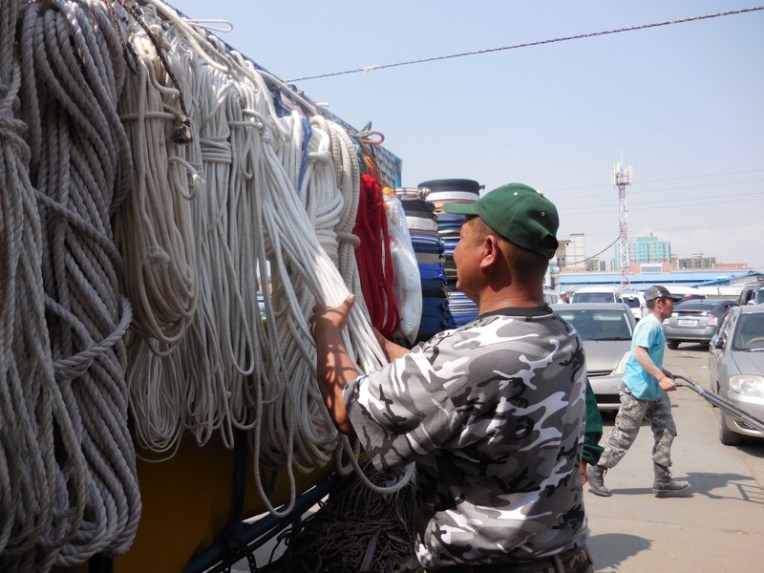
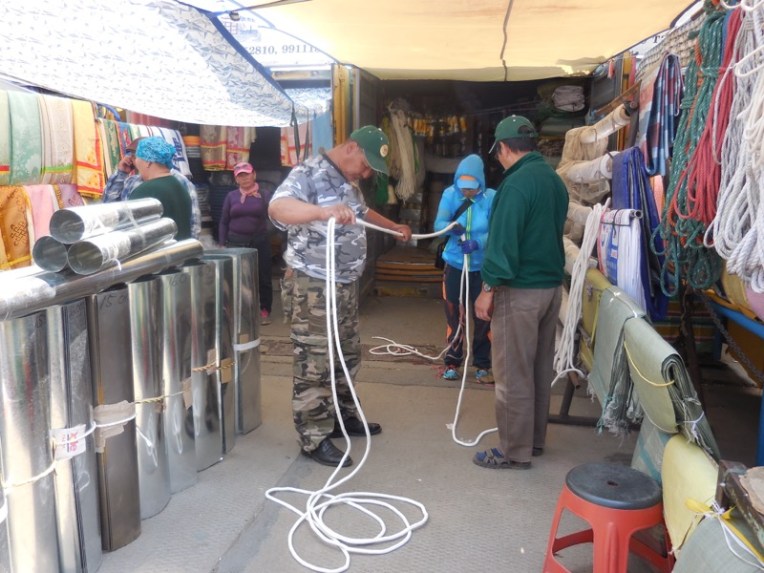
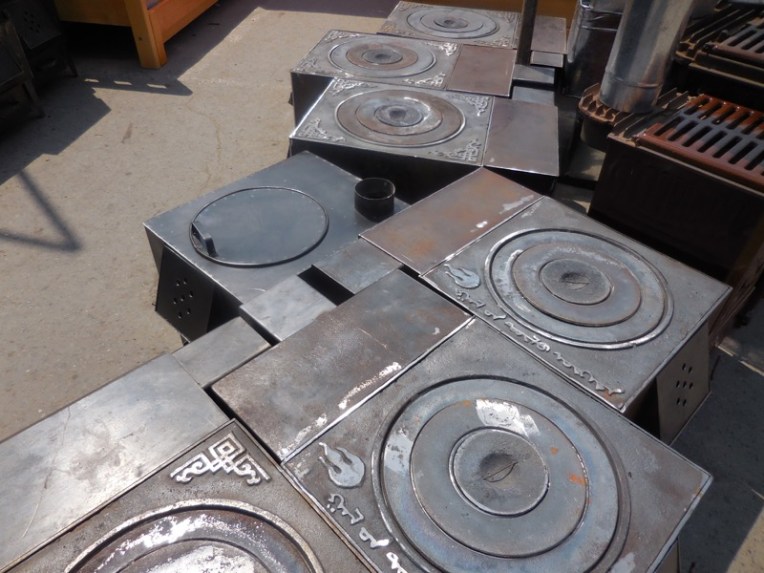
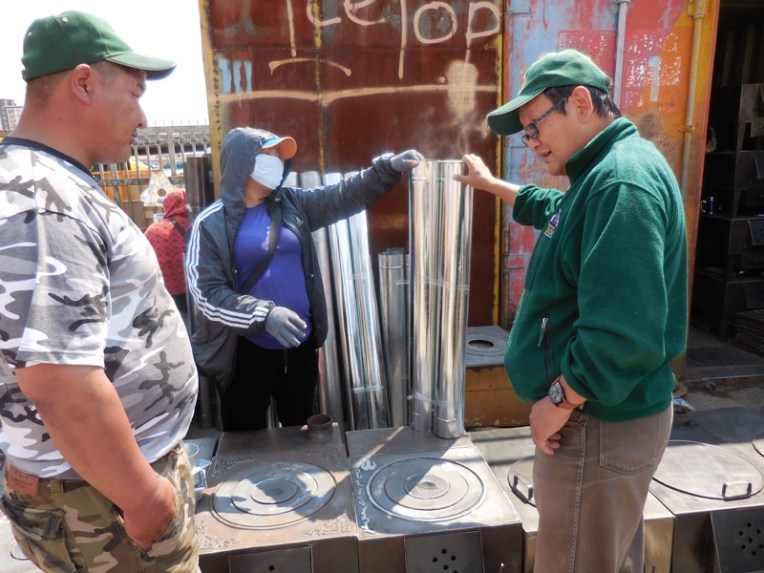
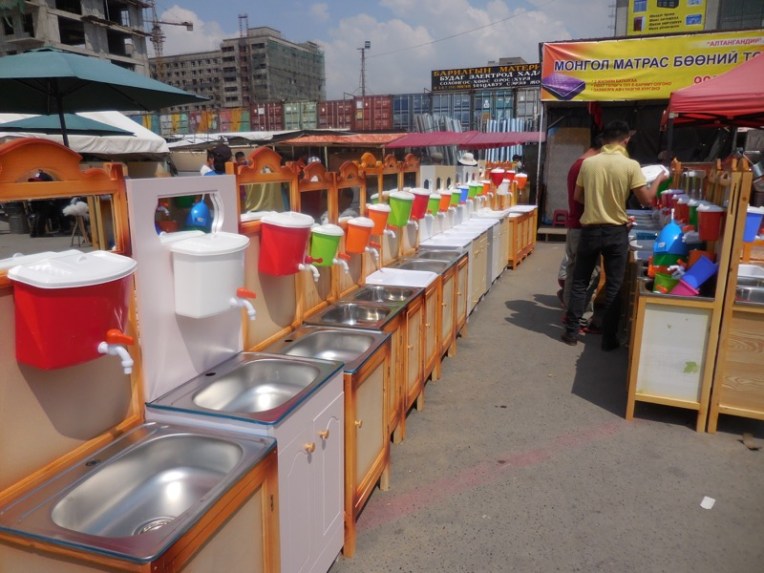
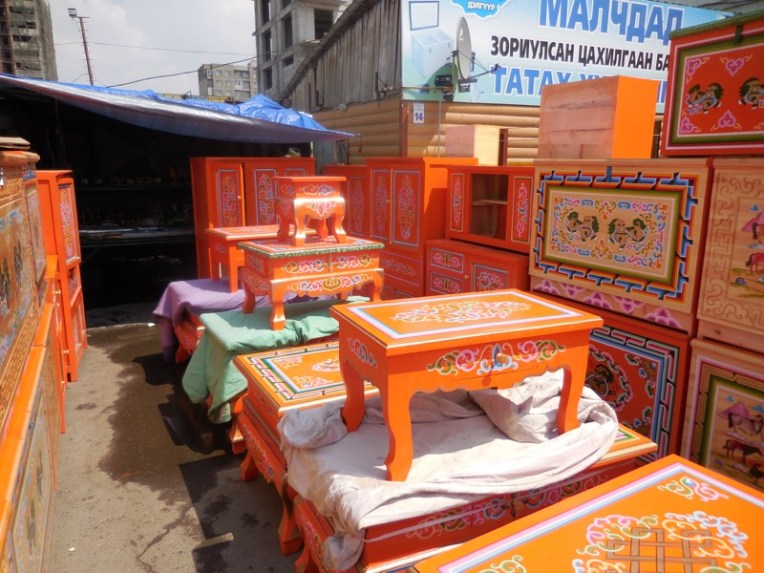
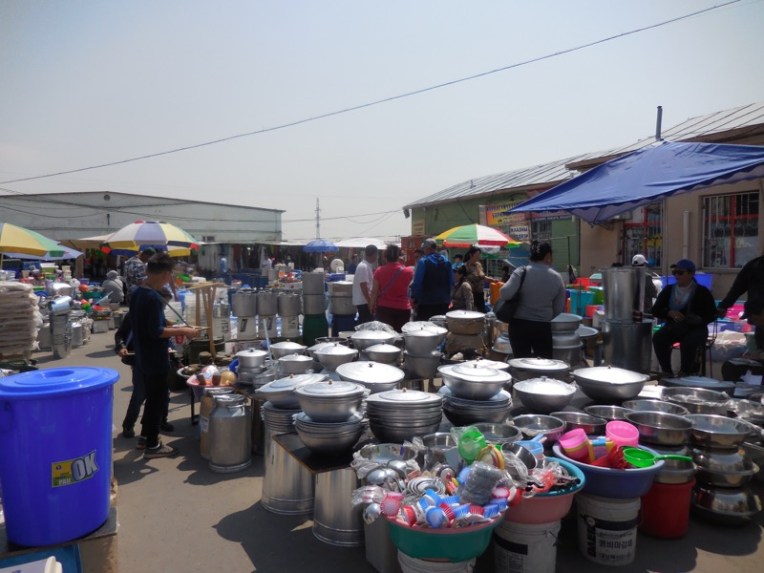
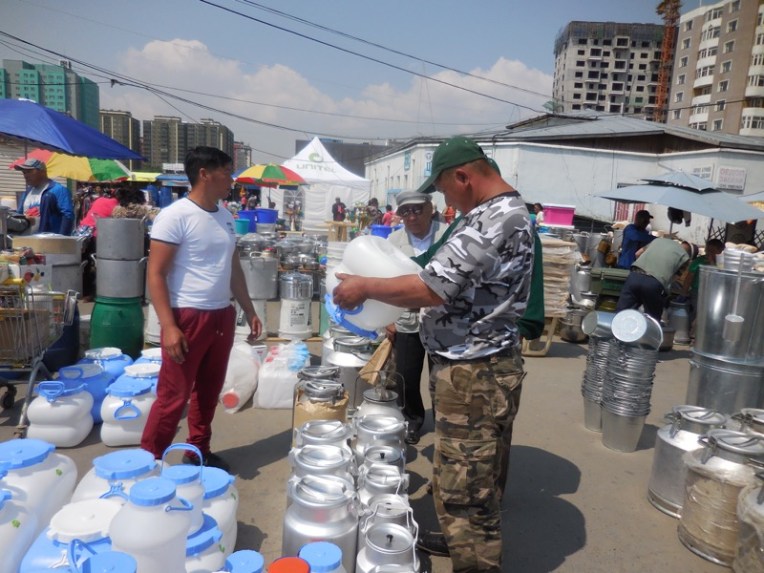
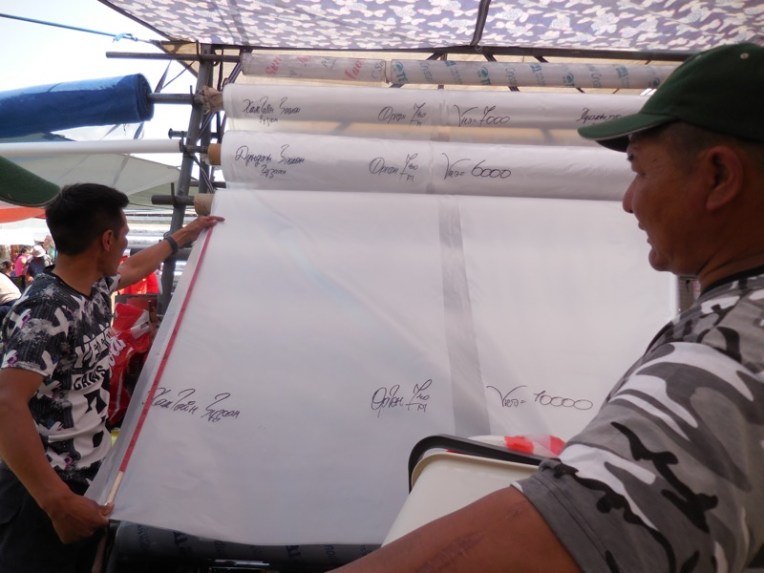
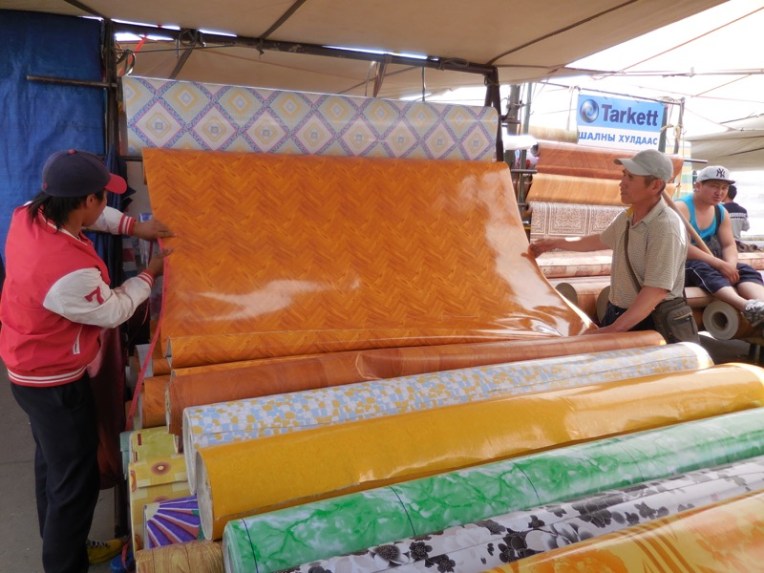
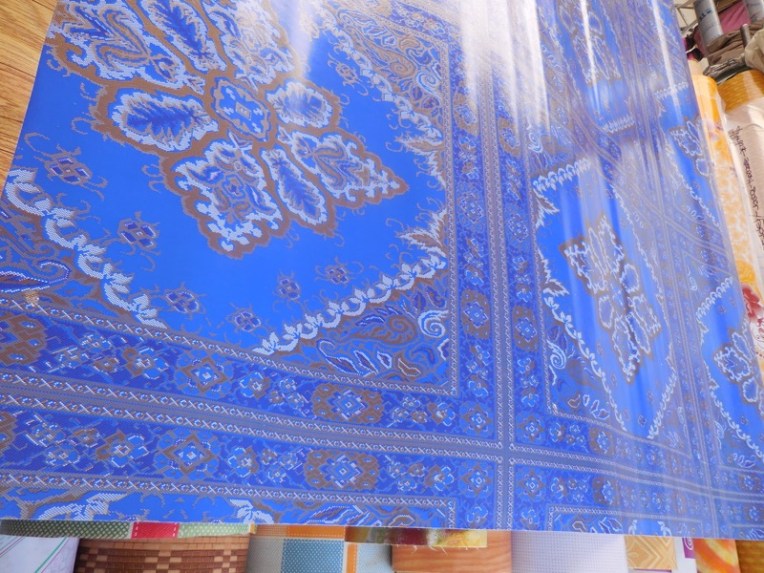
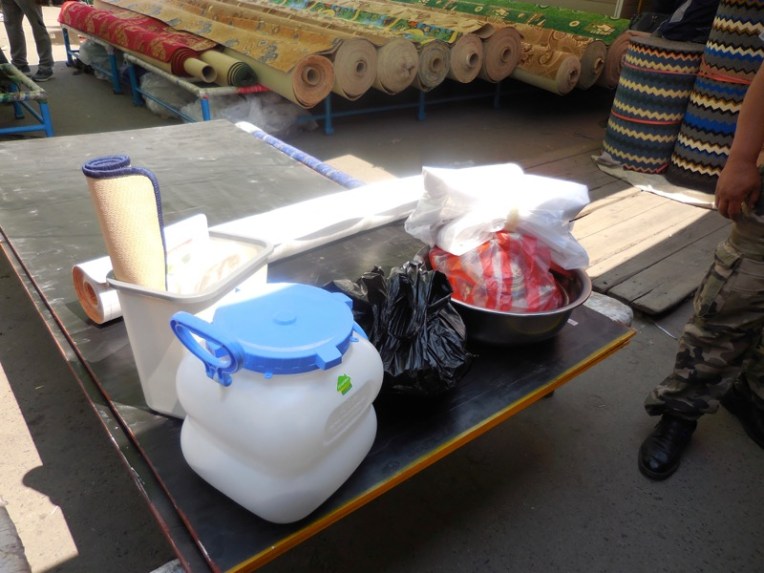
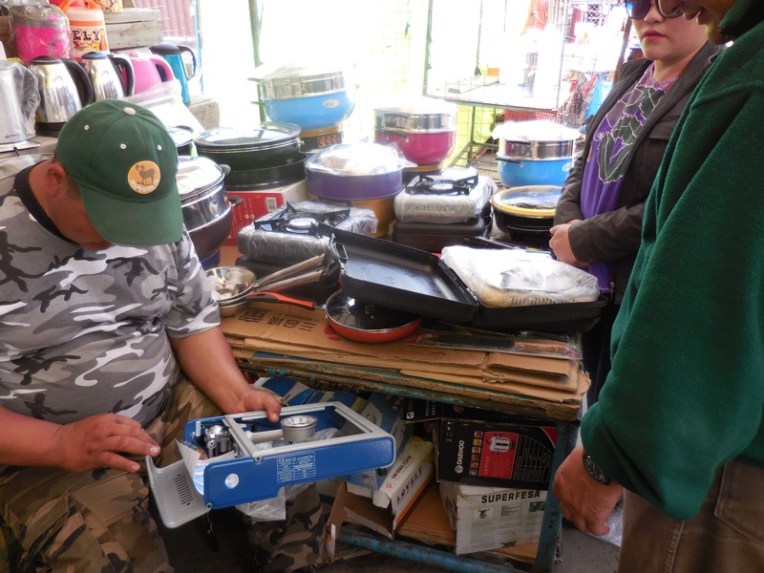
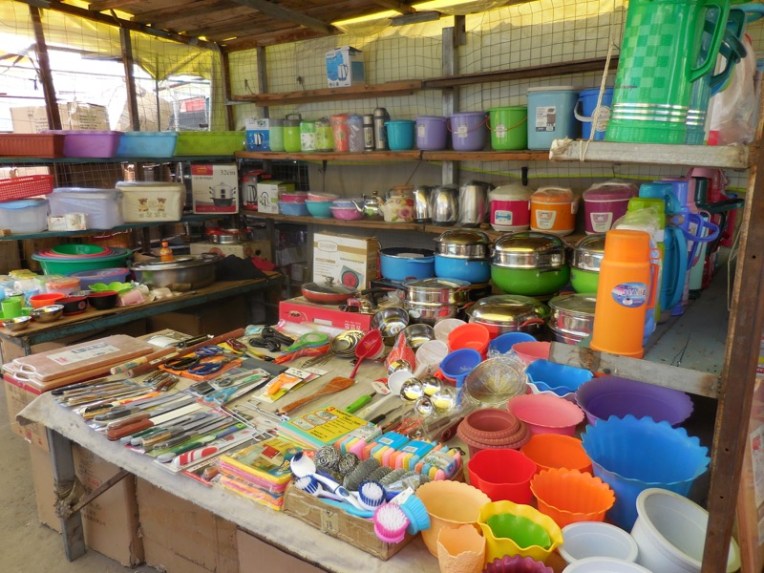
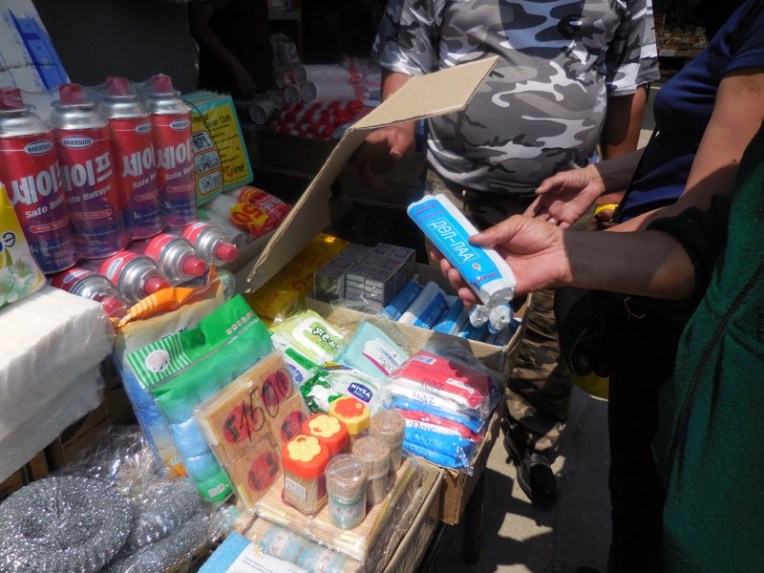
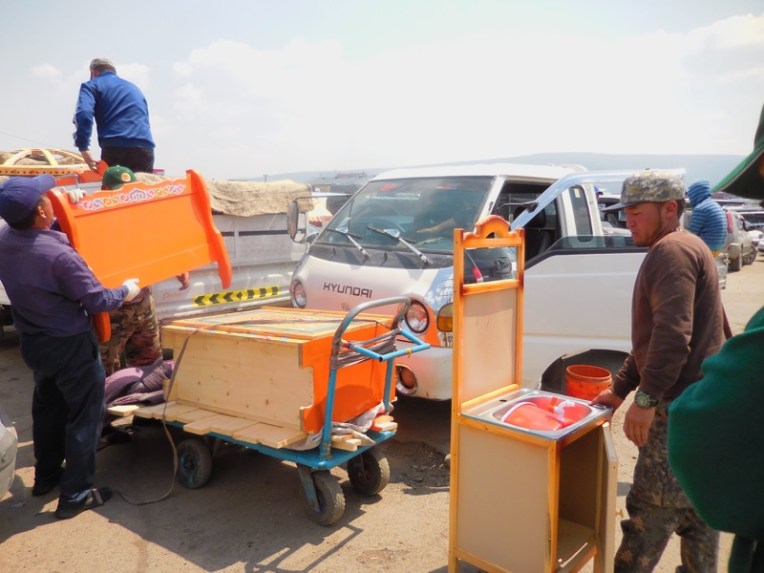
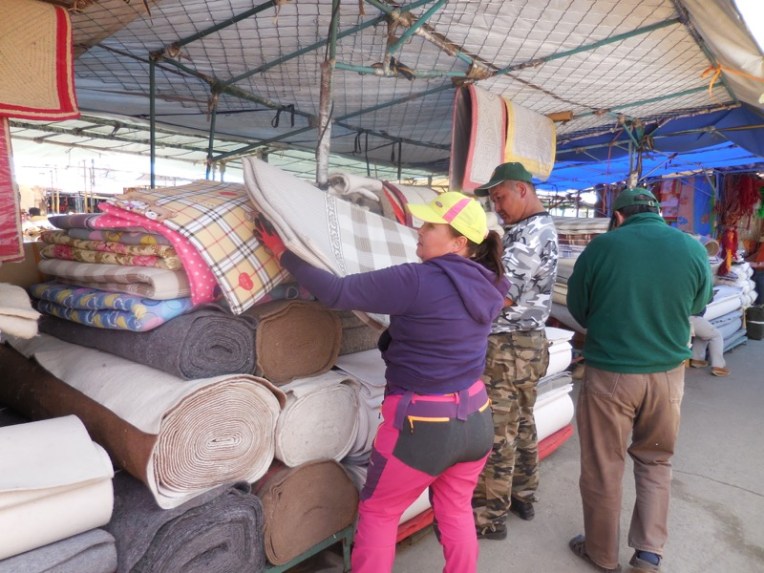
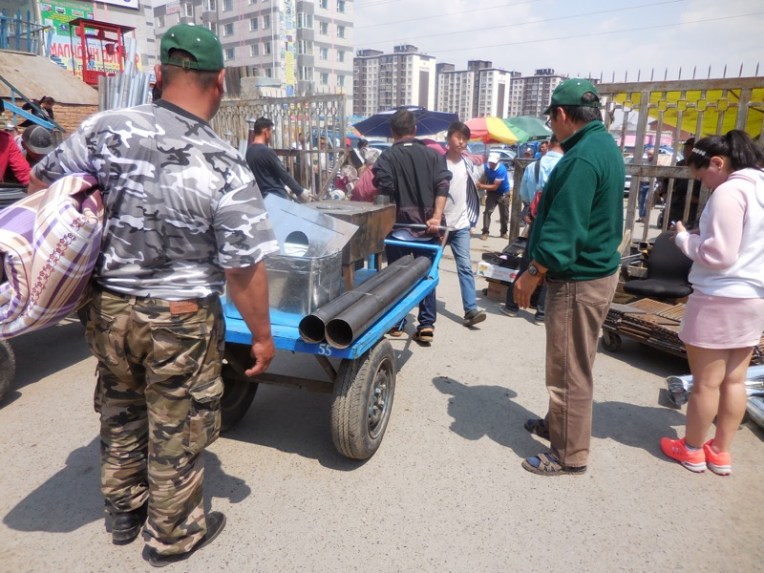
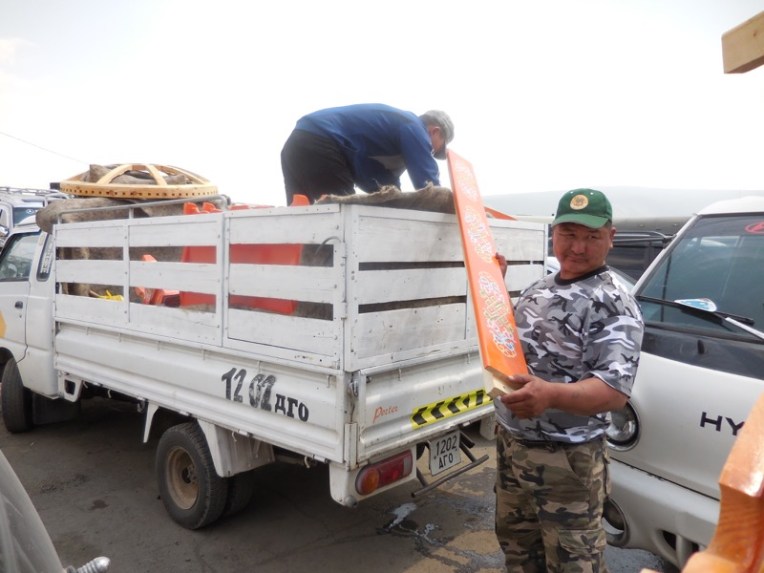
The exterior of the door, “khalgaa” in Mongolian. An unusual color and design that I hadn’t seen before. The doors come already framed in.The vertical supports, called “bagana”, being carried to the truck.I bought a “four wall ger”, which means four of the standardized wood latttice walls, called “khana”. Gers are described by the number of walls, which also indicates how big in diameter they are. Shavka is picking out four sections.Bringing out the felt cover. I bought one layer since it’s summer. More layers can be added as the weather gets colder. It’s a tremendous insulator. That’s Dr. Amgalanbaatar in the green jacket.Choosing sturdy rope for holding the rocks that will weigh down the ger to keep it in place when it’s windy.Measuring out the rope. Shavka was very particular about every aspect and item.Ger stoves. There are lighter, thinner ones that are for summer use and heavier, thicker ones that are used in winter. I chose the latter to not foreclose the option for cold weather use. There were two designs to choose from. I went with the one that had the flame motif and the vertical Mongol script, called “bichig”.Stovepipes. They come in two sections to be assembled in the ger. There’s also a sheet metal piece that fits onto one of the openings in the toono which has a pre-cut hole for one.Sink stands. How to have running water in a ger. Mostly I’ve seen these in tourist ger camps, but having one for mine made sense and it came in very handy. I chose the one on the front left. I also bought a bucket which went underneath the sink to catch the water.Ger furniture in the traditional orange. I bought a bed, a table, two stools and a cabinet.Kitchenwares. I got one of the aluminum pots with a lid like you see in every ger.Water container. I purchased a LifeStraw gravity feed water filter before I left home. The idea was that I would be provided with well water (for that I purchased two yellow rectangular containers that could be carried on a motorbike). The 5 liter filter bag would be filled from those and drain into the container that Shavka is holding. It worked quite well and drinkable water was no problem.Plastic sheeting. There are two ways to rainproof a ger. One is covering the roof (and sometimes the sides) with what is called “Russian canvas”, heavy waterproof cotton. A bundle of it was included in the price for the ger. Shavka also bought enough of the plastic to cover the whole ger. And it was a good thing…Vinyl flooring. The ubiquitous choice these days. I’ve only been in a couple of gers ever that had the old school felt rugs on the floor. I found that the sheet vinyl comes in different thicknesses. We got the thickest.My first choice. I thought the rug pattern was cool, I liked the color and it was different than the very common fake wood floor pattern. But I let myself be talked out of it because Shuka and Amgaa said that it would be too dark. And I think they were right. The lighter, less complex pattern of the fake wood pattern one I chose worked well.Miscellaneous purchases. There were lots of small items to get like a wastebasket, a doormat, steel basins and, in the red and white striped bag a fabulous tea kettle that was only 18,000 tugrik, about $9.00 USD. You’ll see it next week. Also a kitchen knife, flatware, cutting board, dishwashing supplies…Cookstove. I left the choice of which one to my helpers. Shavka really went over them before deciding. I knew I wasn’t going to use the wood/dung/coal burning stove and had seen these in a few gers. It worked out great. The fuel comes in what look like spray paint cans. Simple to pop in and out of the receptacle. In the ger I set it up on the stove.Housewares. Typical of the “mini-shops” one finds at the market. I got a couple of thermos’ (which turned out to be too big at two and three liters; will get a couple one liters for next year), four tea bowls and two larger bowls for morning cereal and soups.Candles and propane cans. No solar panel yet, so candles for light if needed. A candlielit ger is very comfy. Also lots of matches. The cans are for the one burner cooktops. In a week I went through one, plus a little of a second, heating water multiple times a day for coffee, washing up, a batch of bansh (small meat dumplings) soup, etc.Delivering the furniture to the truck. There were a number of trips back and forth. Once we’d finished all the shopping, we went back to the furniture seller, who had my choices ready to go on the hand truck, along with the sink stand. We’d also carried the small items to it a couple of times.Felt pad for the bed. I had a choice between a mattress and a felt pad. The mattresses have very stiff springs and thin covers with no padding. I always have my Thermarest pad with me, so opted for the more traditional felt pad covered in cloth. I got a big one that could be folded in half on the single size bed.Buying the stove. Last stop was back to the stove merchant to make the final choice. The purchase price included the stove, stovepipe, stovepipe metal piece for the toono and a typical fuel box.Last load. You can see the stovepipe roof piece and the fuel box in front of Shavka. Once this delivery to the truck was done, Shavka re-packed everything for the drive to Ikh Nart, about five and a half hours. I went by train that evening.Loading the truck. Although this was taken earlier when the furniture was being loaded (that’s the front of my bed in Shavka’s hands), it shows how the ger was loaded. Traditionally, the toono is ALWAYS on the top. This past trip I actually saw a couple of vehicles in which the toono was laying on its side against the side support. I was happy that mine was going to be carried correctly.
So, how did I do on the budget? The ger cost 1.5 million tugrik…$750 USD. We were moving fast so I didn’t write down what everything else cost. All of it together came to $1200, pretty much what I’d estimated. I also paid Shavka’s gas and road fees and something for his helper and that took care of the rest.
Next week: Putting up my ger at Ikh Nartiin Chuluu Nature Reserve.
Wild bactrian camels, en route to Great Gobi A Strictly Protected Area
I’m still in Mongolia with adventures to come, but wanted to share some favorite images from the Expedition. Once I’m home I’ll be doing my usual multi-part series covering all aspects of the trip. As far as weather, we had some of everything….snow, rain, wind, heat and cold, typical Mongolia. As far as sights, also typical, there was something worth having seen every day.
We did not see any Gobi bear, which was not surprising considering their rarity, but we did see tracks and scat. Just as special, we saw a herd of a dozen wild bactrian camels (see above photo), of which there are estimated to be around 900. They crossed the road in front of us some hundreds of yards away (the image above is cropped). Unlike the domestic version, they can really RUN.
Second day out May snowstorm between Arvaykheer and BayanhongorA local ranger leads us ever south into the deep GobiAfter a five day drive we arrived in the Great Gobi A Strictly Protected Area. This photo was taken not far from one of the feeding stations.Valley with oasis about a kilometer hike from camp where two Gobi bear feeding stations are located. The photo of me above was taken in the grey sandy area just beyond the ridge.One afternoon at our campsite, I was sitting in the shade of our dining tent writing in my journal and all of a sudden I saw a snake coming towards me. It was the second steppe ribbon racer we’d seen, the other having been on the way south when we had to stop for awhile while the drivers cleared a blocked fuel pump. This one went right through camp and into this bush, holding still long enough to get some nice photos.When we headed back north we went on past Bayanhongor another 30km to Erdenesogt Soum, where we camped for a few days. We didn’t realize it when we set up camp, but quickly found that we were in the middle of a very large colony of Brandt’s voles, who were very entertaining. All I had to do to get dozens of photos was sit in a camp chair with my camera and fire away.
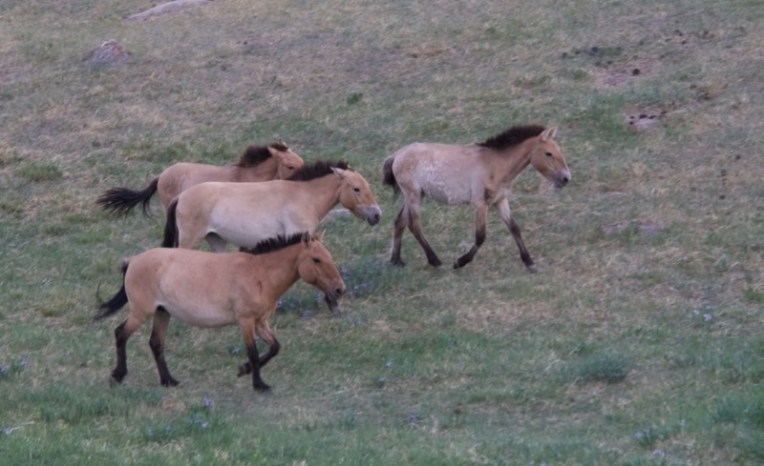
And of course there were also raptors around, including this lovely saker falcon.En route to our final stop, Hustai National Park and the Mongolian Bankhar Dog Project, we camped in an area where the local herders had a lot of horses, including this very flashy stallion, who was kept busy for awhile chasing off a much younger challenger.The weather was overcast, but the takhi were still wonderful. We saw up to seven family groups at one time in the main valley.Batbaatar Tumurbaatar of the Mongolian Bankhar Dog Project with one of the male bankhar. Lots more to come on this important effort to both revive the tradition of using bankhar as livestock guardian dogs and, in doing so, help with the conservation of predators like the endangered snow leopard.We were able to meet and talk with a local herder who has one of the project’s pups, a nine month old male.And finally, for now, a group shot at Hustai. From left to right: Batbaatar Tumurbaatar (Baagii), Susan Fox, Oliver Hartman from Jungles in Paris (film company), Kim Campbell Thornton (nationally known pet writer and journalist) and Greg Goodfellow, director of the project in Mongolia
I arrived in Ulaanbaatar, Mongolia last Sunday evening. This past week has been spent in confirming a number of things with the tour company, Nomadic Journeys, who is handling all the logistics, meeting with the guide and lead driver, getting acquainted with the two other participants who arrived over the last couple of days (we went to the National Museum of Mongolia and the Museum of the Chojin Lama today) and repacking for three weeks on the road. We depart tomorrow morning. We’ll return to Ulaanbaatar on June 10. In between there will be much to see as we travel to the far southern part of Great Gobi A Strictly Protected Area and then back north to the buffer zone of Hustai National Park to meet up with the Mongolian Bankhar Project.
So, as the Mongols would say, “daraa ulzii”…see you later!



















































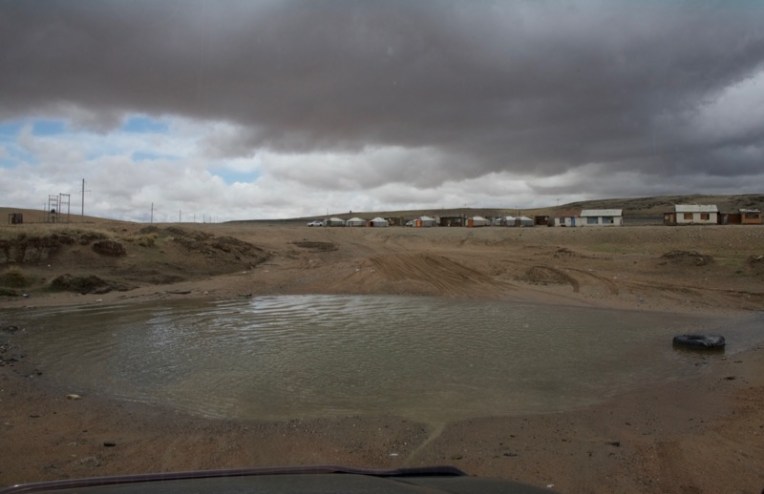
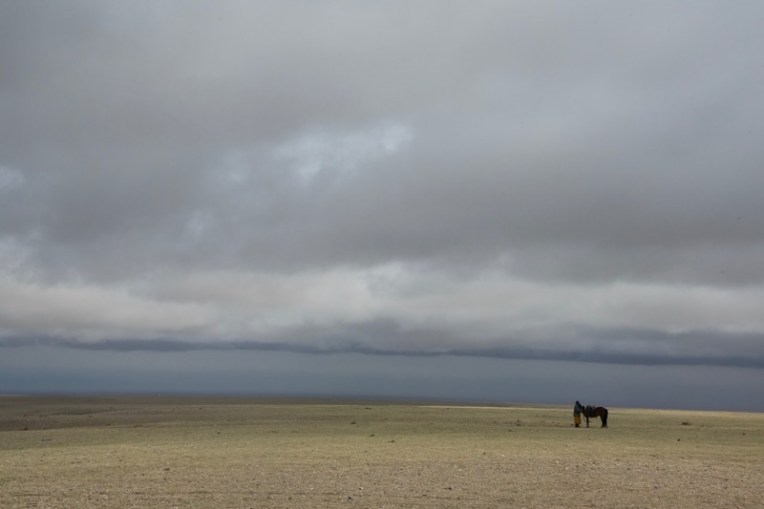
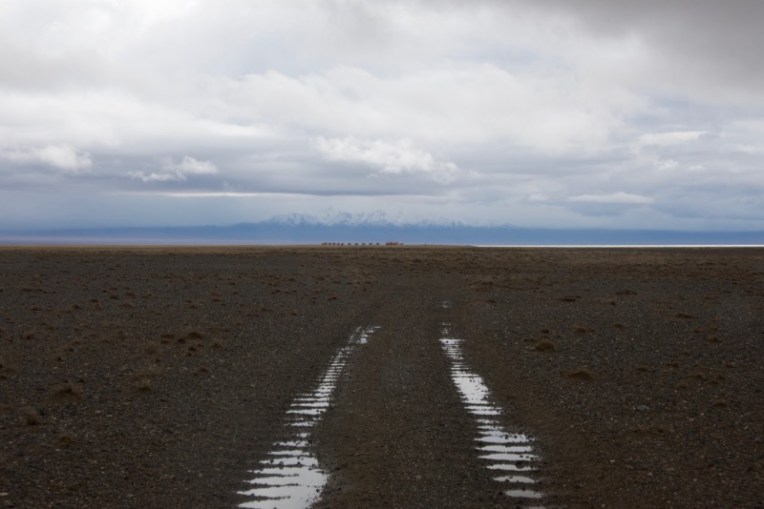

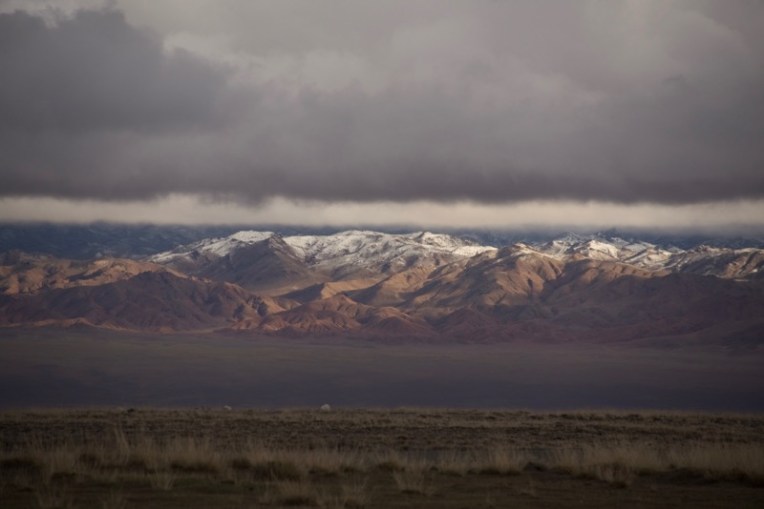






















 Susan Fox, American Artist