Mongolia Monday- 6 Cultural Must-Sees in Ulaanbaatar

While Ulaanbaatar may not be a well-known destination city, it has plenty of interest to offer visitors, especially if they are interested in Buddhism, history, nature or art. Here’s my list of the places I’ve found so rewarding that I’ve been back to most of them twice so far and will probably visit them again.

1. Gandantegchinlen Khiid– the full name translates as “the great place of complete joy”. More commonly known as Gandan Monastery, it was built starting in 1838. Ninety-nine years later, it was one of the very few monasteries to survive the Stalin-style purges that led to the destruction of hundreds of temples and the deaths of an estimated 17,000 monks. These days, with the revival of Buddhism in Mongolia, Gandan is a busy place. There are a number of temples. Visitors are only allowed into the main one, as seen below, Migjjid Janraisig Sum. Within it is an enormous statue of Buddha, well worth the modest price of admission.
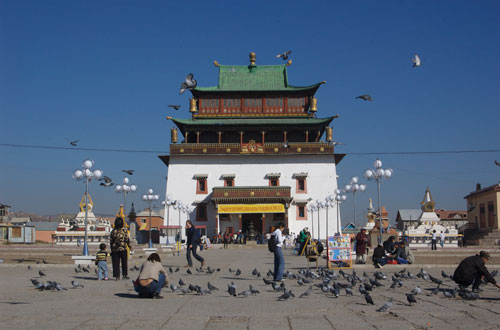
Migjid Janraisig Sum, the main temple
Spinning the prayer wheels at Gandan

2. Chojin Lama Temple Museum– Smaller than Gandan, but with an intimate, decorative charm, this old temple is tucked away down a side street and is surrounded on three sides by modern buildings. But once inside the walls, it’s a place of beauty and peace. Construction started in 1904 and took four years. It was saved from destruction for use as an example of past “feudal” ways. Although it is considered a museum and there don’t seem to be any monks in attendance, every time I’ve been there, people have been in the temples praying and leaving offerings. There is also a concrete ger “Art Shop” shop on the grounds that can be accessed without paying admission. I think it’s the best place in UB for souvenirs, although it doesn’t have the wide selection you can find at the State Department Store. What it does have is the feeling of a treasure hunt in a curiosity shop.

Interior gate at the Chojin Lama Temple Museum
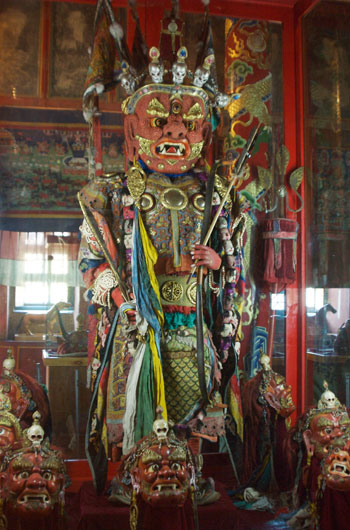
One of the incredible Tsam dance costumes on display; the mask is covered with coral beads; Tsam dances are a pre-Buddhist survival that are now part of Buddhist practice in Mongolia

3. The Natural History Museum– Speaking of curiosity shops, the Natural History Museum is like a survivor from another time. It needs and deserves to be modernized, but something charming and fun will be lost when that happens. It is home to a very good collection of dinosaur fossils that have been found in Mongolia over the years, including eggs and a huge Tarbosaurus. The most spectacular fossil on display is the famous “fighting dinosaurs”,  a protoceratops and a velociraptor locked in mortal combat as they were possibly trapped in a mud slide. Another personal favorite, which I hope will be preserved in any modernization, is the “camel room”, see below.

The fighting dinosaurs
The Camel Room

4. The National Museum of Mongolian History– Only a block away from the Natural History Museum, the history museum has been renovated to an international standard. There are three floors of exhibits, starting with the superb section of stone and bronze age items on the first floor, an amazing display of ethnic Mongol historic costume and jewelry on the second floor, the can’t-be-missed third floor collection of artifacts from the time of the Mongol Empire and on through to the changeover twenty years ago from socialism to democracy.

Khalkh Mongol woman's costume (should look very familiar to Star Wars fans)
The Real Deal; Mongol metal scale armor from the 13th-14th century

5. Mongolian National Modern Art Gallery– Housed in one of my favorite buildings, the Palace of Culture, anyone who is interested in excellent representational or abstract art will find a couple of hours here very rewarding. For a more thorough tour from my visit there during my 2009 Artists for Conservation Flag Expedition, click here. It’s clear that many of the artists have had classical training, either in Russia or other Eastern European art schools. But, as seems to be the case with most of the art forms practiced in the country, what is on display has a unique Mongol sensibility.
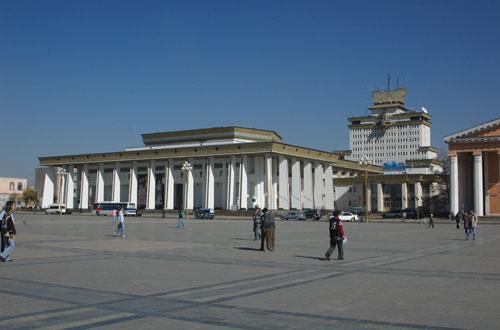
The Palace of Culture, Ulaanbaatar
One of the galleries, with a large shaman's drum

6. Zanabazar Museum of Fine Arts– Zanabazar was one of the greatest artists to have lived and worked in Mongolia. He is best known for his exquisite bronze sculptures of Buddhist manifestations such as Tara. The best images that I was able to get, however, due to low light or glare on glass, were of some of the appliqued and embroidered thangkas, or devotional works. The Red Ger Gallery on the first floor has an excellent collection of work by contemporary Mongol artists available for purchase.

Thangka detail
Thangka detail

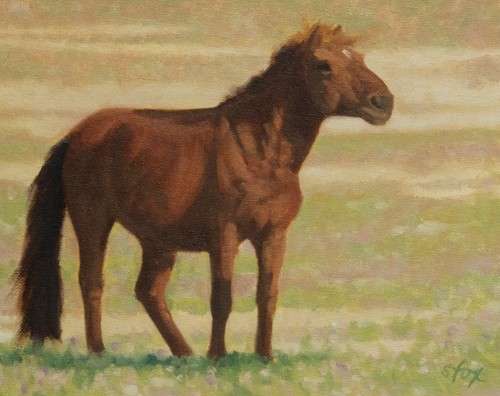
New Painting Debut! “Hustai Takhi Stallion”

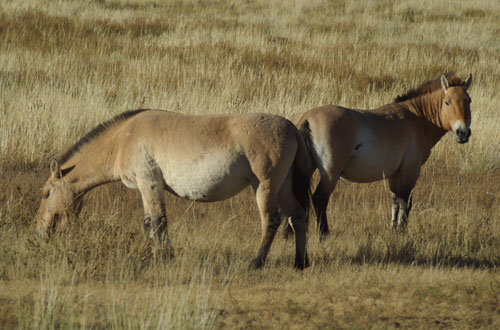
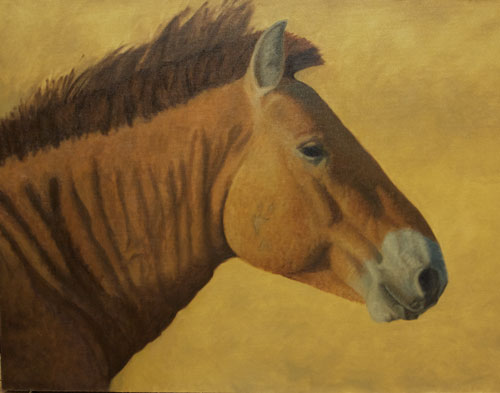
I’m currently working on a large painting that is the most complex one I’ve done yet. I’ll post it when it’s finished. But, in the meantime, I’ve kind of taken a break from it on and off to do something simpler and more straightforward, a head study of a takhi stallion I saw at Hustai National Park in 2006. I had a reference shot that I liked because of the shadow pattern, but as you’ll see there were adjustments that had to be made for it to work as a painting. I hope this step-by-step illustrates how important it is to not, as they told us in art school, get “married to your reference”.

My subject is on the right. A stallion keeping an eye on his mares on a sunny fall day.
The reference photo. It's a little out of focus, but, hey, I'm an artist. 🙂
When it's a simple subject like a head study, I dive right in with a brush drawing. Notice that I'm looking for basic shapes, not detail.
First pass with color, laying in shadow areas.
All-over basic color lay-in. Composition, drawing, value pattern set.
About mid-way through. The stage is set for the fun part. Head is almost done and it's time to do the neck, ear and mane. I worked those folds for most of yesterday afternoon. They had to read correctly, but not stand out too much. Notice that by this point I've ditched the hard cast shadow because it was too visually distracting. I want viewers to look at his head, not his neck. I worked the boundary of the shadow until I got what I wanted, keeping the edge soft.
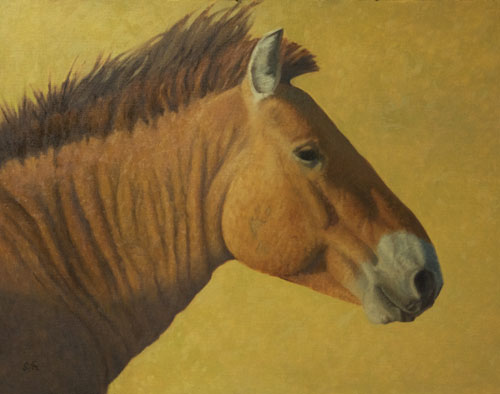
The horse is done. Now I've started to put in a second color on the background. Not sure where I was going to go with it, but ended up liking it enough that I made it the final color. I liked the complementary color relationship between the reddish horse and the greenish background.
Hustai Takhi Stallion 22x28" oil on canvasboard

Mongolia Monday- 6 Cool Souvenirs To Bring Back From Mongolia

Mongolia is probably terra incognita for what comes from there that would be of interest to western visitors. The Lonely Planet guide has a section on souvenirs, but until you’ve walked through the 5th floor of the State Department Store in Ulaanbaatar, you can’t appreciate the possibilities or the variety. Plus, in general, the good stuff is still inexpensive and eminently packable. Here’s my list of six favorite momentos of Mongolia.

1. Cashmere


The good news- the world’s finest cashmere comes from the cashmere goats of Mongolia. The bad news- goats are really hard on the land because they pull plants out by the roots when they graze, unlike sheep, cattle and horses. But…cashmere is currently the best source of income for many, if not most, of the herder families. (Land sustainability issues in Mongolia is a subject for a future post.) Unfortunately, most of the cashmere they, or rather their goats, produce, goes to China which is where it is turned into finished products.

However, you can get cashmere products that are produced in Mongolia. There are a number of factories, Gobi Cashmere being the best known. The point is to make sure that you are buying Mongolian-made cashmere. Our Earthwatch team got to visit the factory store of Gobi Cashmere in 2005. At the time, a lot of the clothing had kind of a dated look and the colors were, let’s just say bright and cheerful. That’s all changed and the downtown stores stock very stylish fashions. I came home with a long scarf (see above) woven in three natural colors. It’s fabulous.

2. Clothes


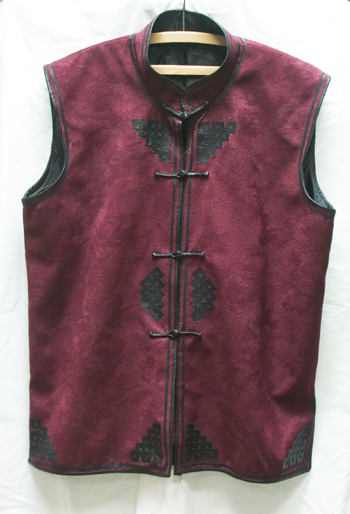
Not everyone is into ethnic clothing, but I’ve loved the look since the 1960s. Mongolia is a dream come true for me. There are vests (see above) and jackets to choose from in different colors, both in wool and cotton. What I’ve really fallen in love with are del, the national garment. I wear one in the morning as a robe and always have one with me when I travel. They’re perfect for staying in ger camps when you need to get to and from the toilet and the shower. They’re practical and packable. I wear my vests all the time; out to dinner and to art openings. A cotton jacket is perfect for wearing into town.

3. Felt


There’s been an explosion in the production of felt products, especially, it seems, slippers. The trick here is to learn the difference between the items that are factory-made with machine-made felt and the ones that are hand-crafted out of hand-made felt. As you can imagine, cost is one giveaway, plus the former are almost too perfect and lack that quality of being made by a human hand. These are hand-made. Not sure what was used for the color. It turns out that footwear with upturned toes originates in the traditional Mongol land ethic, which is to not damage the land that supports you, even if it’s just scuffing it with the front of a regular boot.  As regular readers of this blog know, I’m involved in supporting a women’s felt crafts cooperative “Ikh Nart Is Our Future”. More felt craft pics here.

4. Art


For me, one of the greatest discoveries about Mongolia has been how artistic the culture is. Bali gets a lot, if not most, of the attention, but Mongolia deserves a spot in the sun, too. A BIG spot.

The lively art scene is still unknown to most of the world. On any nice day at Sukhbaatar Square in Ulaanbaatar, one is likely to encounter art students carrying around portfolios of their work for sale. And, in one case, I bought two pieces from a woman who was selling work by her husband. When I go to Mongolia now, I try to find one new artist per trip. That hasn’t been hard as I usually find at least two. The above small painting is from my last trip. It’s a 3×6″ original watercolor and it cost all of about $3.00 USD. I try to find two or three by the same person so I can hang them as a group. It is very typical of what you find in the souvenir stores; charming little “slice of life” scenes with all the traditional elements. One of the others by this artist had camels, too.

The second painting is watercolor on canvas and is one of six my husband and I bought when we were in Mongolia in 2008. It’s 13.5×18″ and was about $35 USD. I don’t know who he is (Can anyone translate the signature, which is in the old Mongol classical script?), but he’s phenomenal!

Both of these pieces came from the State Department Store, which has, by far, the best selection of art for sale.

5. Music

Besides art, another aspect of Mongol culture that deserves to be better known is the contemporary music scene. If you went by what was on Amazon, you’d think that Mongols still only do traditional forms like khoomii (throat singing), long song and play the morin khuur, but you would be wrong. Once again, regular readers know how much I like current Mongol music. The CDs are impossible to buy over here, but there are a lot of videos on YouTube. I posted some of my favorites here, here and here. The Hi-Fi shop on Seoul St. in Ulaanbaatar has a good selection and is where I’ve gotten the ones I’ve brought home.

6. Poetry Books

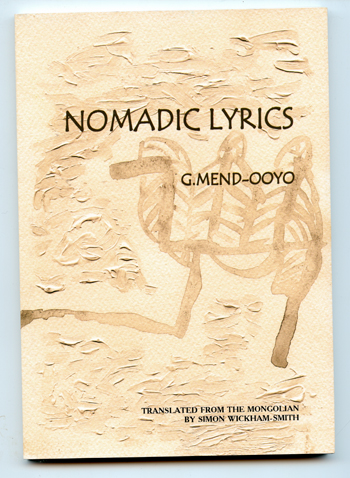
Finally, the literature of Mongolia is also not well-known in the West. Only recently has any amount of it been translated into English. I came across an old book of poetry at the Chojin Lama Museum, then found the one above and some others in the gift shop at the Bayangol Hotel. The translator, Simon Wickham-Smith, is working with the Mongolian Ministry of Poetry and Culture (Wouldn’t it be nice if the USA valued those things enough to have a government agency devoted to them?) to bring Mongol poetry and literature to the world. Simon was nice enough to contribute two guests posts to this blog here and here.

I’ve come to believe that a non-Mongol really needs to read some of the poetry to start to understand the Mongol’s relationship with the land, the seasons and, of course, their horses.

Mongolia Monday- Juried Show News!

We interrupt our regularly scheduled series on cool things to see and do in Mongolia because I got a packet in the mail yesterday informing me that my painting “Choidog and Black” has been accepted into a special exhibition of the American Academy of Equine Art, “The Horse in Fine Art, a Salute to the World Equestrian Games 2010”, which are being held in the United States for the first time ever.

Submission was by invitation only, so that was gratifying all by itself, but to have a painting accepted is a thrill! Especially when the invitation encouraged artists to submit images that reflected the events to be held at the Games, such as dressage, show jumping, reining and endurance, none of which I have ever seen in person. The only work of mine that the Academy has seen was the Mongol horse piece which was in their fall juried show, so I figured they knew that that was what I do and what they would get.

I submitted three paintings, two of horse racing with the boy jockeys ( here and here) and one of Choidog, the horsetrainer. They chose what I would consider the “purest” Mongol one, because he is wearing traditional clothing, not the modern clothes the kids have on. I hope they post the show on their website so I can see the other paintings!

Choidog and Black 18x24" oil on canvasboard

So I am in the happy position of having one of my Mongol subject paintings in a show that will be viewed by horsey people from all over the world. Nice way to start the week.

Next Monday, I’ll return to my six part series with my personal choices for the six best souvenirs to bring home from Mongolia.

Mongolia Monday- The 6 Ecosystems

Continuing on with our series, I’ve always thought it would be fun to do a trip that would start either in the north or south and travel through all six major ecosystems in Mongolia, which run roughly parallel to each other in bands going from east to west.

Here is a map that shows them very well. It’s from a booklet, “Mongolia’s Wild Heritage: Biological diversity, protected areas and conservation in the land of Chingis Khan”, that was published in 1999. It was a cooperative effort between the Ministry of Nature and Environment, the Mongolian Academy of Sciences, the Mongolian Biodiversity Project and the Worldwide Fund for Nature. I don’t know if it’s still available, but if you are interested, drop me a note and I’ll see what I can do.

Starting in the north:

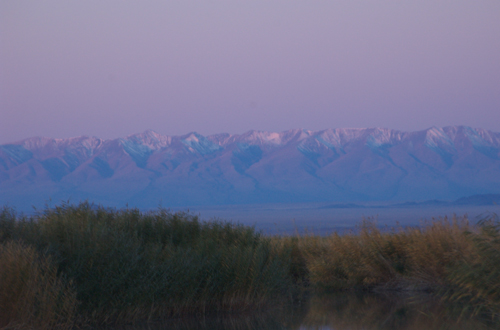
1. High Mountain– I haven’t been up into the mountains yet, but I did get the above photo of Jargalant Hairhan, which is part of the western Altai Mountains. The high mountains make up about 5% of Mongolia’s land. The climate is extreme. There are still some glaciers in the Altai Mountains. Animals that can be found there include argali, snow leopard, ibex, Altai snowcock and two species of ptarmigan. The photo was taken during my 2006 trip to Khomiin Tal on our way back to Hovd.

2. Taiga– the southermost part of the vast world-circling boreal forest, or taiga, extends into northern Mongolia.  It covers about 5% of Mongolia’s land area. The weather is also extreme with more rain and lower temperatures than most of the country. The most common species of tree is Siberian larch. Animal species include reindeer, wolves, wolverine, lynx, Eurasian river otters, stone capercaillie and three species of owl. This is the famous Turtle Rock, which I photographed in Gorki-Terelj National Park in May of 2005. It was snowing.


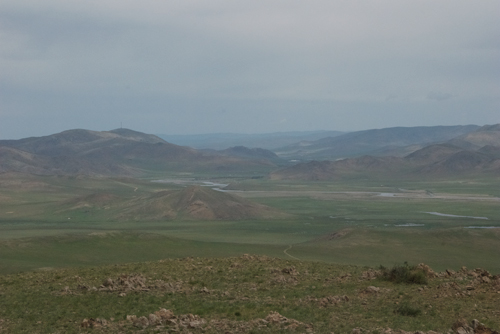
3. Mountain Forest Steppe- As the name indicates, this is a transition zone between the mountain forests and the grasslands of the steppes. It accounts for about 25% of the country’s land area. The mountains are of a lower elevation and include wide river valleys. Most of the population of Mongolia lives in this zone. Animal species include roe deer, elk (marel), wolf, red fox, Eurasian badger, Pallas’ cat, wild boar, great bustard, black kite and darian partridge. The image above was taken from Mt. Baits in Gun-Galuut Nature Reserve in July of 2009, looking north into the Kherlen River valley and on to the mountains.

4. Steppe– This is the landscape that most foreigners envision when they think of Mongolia. The famous grasslands cover about 20% of the country. The largest remaining area in Central Asia of this ecosystem is in eastern Mongolia. The climate runs from hot in the summer to cold in the winter, but not as extreme as the zones to the north and south. It provides much of the main grazing land for the herders’ livestock. Animal species include Mongolian gazelle, wolf, corsac fox, Siberian marmot, tolai hare, demoiselle crane, steppe eagle and saker falcon. The photo was taken en route between Ulaanbaatar and a ger camp at Arburd Sands in July of 2009.

5. Desert Steppe- This is the transition zone between the grasslands and the Gobi (which means “desert” in Mongolian). It accounts for over 20% of the land area. Drought is frequent, along with strong winds and dust storms. Many herders live in this ecosystem, however. Animal species include takhi (Przewalski’s horse-reintroduced), khulan or wild ass, saiga antelope, marbled polecat, Mongolian hamster, houbara bustard, lammergeier and cinereous vulture. The image was taken at Ikh Nartiin Chuluu Nature Reserve in September of 2008.

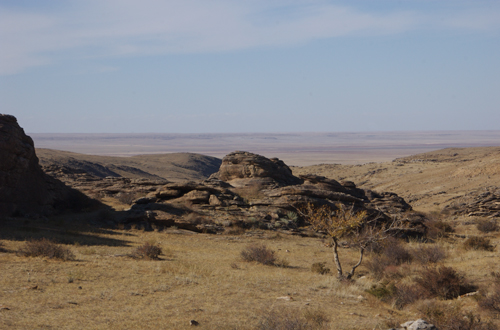
6. Desert- The Gobi is one of the most famous deserts in the world, but, contrary to common belief, very little of it is sand. It’s mostly gravel and small rock and as you can see, there is vegetation. It accounts for around 25% of the land area. Where there are springs, families have truck gardens and it is well-known that the best and sweetest vegetables in the country come from the Gobi. The weather is, once again, extreme, climbing to well over 100F in summer and dropping to -40F in the winter. Animal species include wild bactrian camel (very endangered), Gobi bear (critically endangered; maybe 30 left), khulan, saiga antelope, argali, Pallas’ sandgrouse, saxaul sparrow and desert warbler. I took this picture in September of 2006. The red rock formations in the distance are the Flaming Cliffs, where the first fossil dinosaur eggs were found.

All this, in a country that is about twice the size of Texas!

Mongolia Monday- 6 Great Places To See Wildlife

The travel season is almost upon us. I’ve got my plane tickets for my July departure to Mongolia. For anyone else thinking about or planning to go there, I thought I’d offer one list a week for six weeks, of six “themes” for things to see, with six suggestions.  I’ll start with the one that’s probably nearest and dearest to my heart – wildlife viewing destinations. I’ve been to all of them at least once.

Takhi grazing, Hustai National Park

1. For horse-lovers, Hustai National Park is a must if you are going to Mongolia. It is one of three places where tahki (Przewalski’s horse) have been reintroduced and is only about two hours west of Ulaanbaatar, mostly on tarmac road. You may also see marel (a species of elk), Mongolian gazelle, marmots and a variety of birds, such as demoiselle cranes, golden eagles, saker falcon, and black storks. There is a permanent ger camp that is open year around. The main building has a pleasant dining hall. There are three large concrete “gers”. One houses a gift shop, one has displays about the park and another is where presentations about the park are given by staff scientists. You can explore the park by vehicle, on foot or horseback. When I was last there in the fall of 2008, there were 15 harems of over 200 horses.

Reedbeds, Khar Us Nuur National Park

2. Bird-watchers should consider traveling out to western Mongolia to go to Khar Us Nuur (Black Water Lake) National Park. Khar Us Nuur is the second largest freshwater lake (15,800 sq km) in Mongolia . The Khovd river flows into it, creating a large marsh/wetland that is home to the largest remaining reed beds in Central Asia. The lake provides habitat for wild ducks, cormorants, egrets, geese, wood grouse, partridges, the rare relict gull and also the herring gull.  May and late August are the best birding times.  Another freshwater lake, Khar Nuur (Black Lake), which is connected to Khar Us Nuur via a short river called Chono Kharaikh, hosts the migratory and globally threatened dalamatian pelican. Direct access to the lakeshore is limited due to the reedbeds, but there is open shoreline near the soum center (county seat) on the north shore and an observation tower on the east side. As far as lodging, I can’t make any recommendations since I was rough camping when I was there, but I’m sure there’s something in or near Hovd, the main town. From Ulaanbaatar, flying to Hovd is the only practical way to get there since it’s about a thousand miles west of the capital.

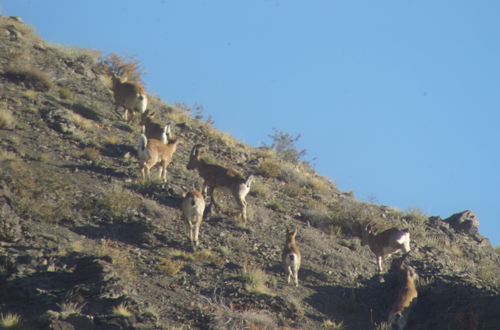
Siberian ibex, Gobi Gurvansaikhan National Park

3. The legendary Gobi is home to Gobi Gurvansaikhan National Park, created partly as a refuge for an endangered population of wild bactrian camels. They are in a remote and inaccessible (except for researchers) part of the park, however. There are also snow leopards and argali, which visitors should not expect to spot. What there is a good chance of seeing are Siberian ibex, pika, two species of gazelle, steppe eagles, golden eagles, lammergier or bearded vultures, black vultures and a variety of smaller birds. I stayed at Nomadic Journeys’ Dungenee eco-ger camp, which is taken down at the end of each season, leaving almost no trace. The kitchen and dining “room” are in connected gers. The setting is terrific, on an upland that has the park’s mountains in one direction and the Gobi stretching out in the other. To get there from Ulaanbaatar one either drives south on the main road, which is an earth road and takes, I think, two days, or flies into Dalanzadgad, which takes about two hours.

View of Steppe Nomads Ger Camp overlooking Kherlen River; the wetland is off to the right with the base of Mt. Baits behind it, Gun-Galuut Nature Reserve

4. A relatively new park, Gun-Galuut Nature Reserve is only a couple of hours east of Ulaanbaatar, mostly on tarmac road. There are two main wildlife attractions here: around 100 argali mountain sheep, which live on Mt. Baits and a wetland area with endangered white-napped cranes, along with a variety of other birds like cinereous vultures, demoiselle cranes, black storks, whooper swans, ducks and terns. The permanent ger camp has a lodge which houses a dining hall and bathroom facilities. There are many activities to choose from besides wildlife watching, including boating, archery, yak cart and horse riding, hiking and homestays with herder families, all of which provide employment for local people. This was the first stop on my Artists for Conservation Flag Expedition in July of 2009.

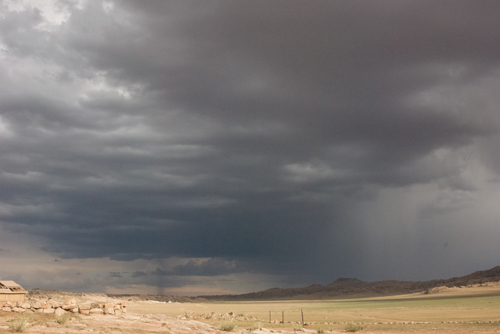
View from my ger, with passing summer rain storm, Baga Gazriin Chuluu Nature Reserve

5. I knew nothing about Baga Gazriin Chuluu Nature Reserve when I arranged to go there as part of my July 2009 Artists for Conservation Flag Expedition other than it had argali. I was only there for two days, but they were two of the most memorable days I’ve had in four trips to Mongolia. The reserve is home to about 60 argali, which are more tolerant of people and vehicles than the ones I’ve seen elsewhere, along with Siberian ibex, cinereous vultures, columbia rock doves and other birds.  The rocky uplands cover a smaller area than Ikh Nart (no.6 below), and are easy to get around in on foot or by vehicle. There is a ger camp tucked up against one of the rock formations with an amazing view down the valley. A concrete “ger” serves as the dining hall and has a covered patio area. There is a toilet/shower block, for which the water is heated by solar power. Baga Gazriin Chuluu is about a six hour drive on an earth road southwest of Ulaanbaatar.

Argali ewe with two lambs; one with radio collar, Ikh Nartiin Chuluu Nature Reserve

6. And last, but certainly not least, Ikh Nartiin Chuluu Nature Reserve, my destination when I first went to Mongolia on an Earthwatch project in spring of 2005. Ikh Nart may be the best all-around place to see wildlife in the country. There are argali mountain sheep, Siberian ibex, corsac fox, red fox, tolai hare, cinereous vultures, golden eagles, black kites, kestrels and many other birds. Nomadic Journeys also has an eco-ger camp here, Red Rocks, and offers guided and unguided trips. It is a great place to hike. There are fabulous rock formations, some of which have Tibetan inscriptions carved on them. You will need a GPS since, while there are some dirt tracks, there are no marked trails. This was the third stop on my Artists for Conservation Flag Expedition in July of 2009. Ikh Nart is a seven hour train ride or a five to six hour drive south and slightly east, mostly on tarmac, from Ulaanbaatar.

There are more photos in other posts on this blog. Look under “Mongolia” on the blog roll at the right or do a name search.

Mongolia Monday- Mongol Culture in Music Videos

As I’ve wandered around YouTube looking for music from Mongolia, one thread I’ve noticed is the use of traditional clothes, historical themes, stories and cultural elements across musical genres. I thought I’d share four of my favorites this week.

First up is Batbold, whose video “Bi Mongol Hun” or “I Am A Mongolian” is a visual compendium of traditional Mongol steppe culture. One of the things I like about it is seeing how the bowls, buckets and other household items that you see for sale in the antique shops in UB were and are actually used by the herders.

Sometimes the videos tell stories. The famous Mongolian rock band, Haranga, seems to have dipped back into history, possibly to the time of Chinggis Khan, for this song. I’ll admit that I’m a little hazy on the plot, not being able to understand the words, but the horse is clearly the star. Anyone who can explain this song or provide a translation of the lyrics, please comment!

Other times, all you need is horses, snow and a song about a woman.

Finally, an all-star cast (I recognized Ganaa from the vocal group Camerton), provides an eight minute crash course in Mongol history and culture. Fabulous traditional costume. All singing, all dancing!

Enjoy!

EBay Auction, 2-22-10; Mongol Horse, Arburd Sands

Mongol Horse, Arburd Sands 8x10" oil on canvasboard

“Mongol Horse, Arburd Sands” is a study of a horse I saw one morning near the Arburd Sands Ger Camp in Mongolia. He and the rest of the herd were all grazing together in great morning light. Click to bid here

Mongolia Monday- Favorite Ger Photos

Two of the things I like best about traveling to Mongolia are staying in a ger and visiting people in their gers (“ger” means “home” in Mongolian).

Actress Julia Roberts was hosted by a family of horse trainers during the filming of an episode of the PBS series “Nature” called “The Wild Horses of Mongolia” (which isn’t what it was about, although there was a little takhi footage from Hustai National Park included). At the end, she’s sitting in a ger filled with Mongolians, looking into the camera with this big grin, saying something to the effect of “I’m sitting here in this ger and I don’t understand a word of what these people are saying, but I’m as happy and content as I’ve ever been in my life.”

Yup, she nailed it. I feel the same way. There’s something about the quality of space created by a ger that is very special. I’ve been in clean ones, dirty ones, sat on stools, beds and the floor, seen beautifully furnished ones and ones with next to nothing in them and I get the same content feeling in all of them. Hand me a bowl of suutei tsai (milk tea) or airag (fermented mare’s milk) and some aruul (dried yogurt) or tsotsgii (cream) and I’m a happy camper (and a cheap date too, I guess, although my husband would probably beg to differ). Anyway, here are some of my favorite images of gers from my four trips to Mongolia.

First, ger camps:

My ger at Gun-Galuut Nature Reserve (AFC Flag Expedition), July 2009
Dungenee Ger Camp (Nomadic Journeys), Gobi Gurvansaikhan National Park, Sept. 2006
Dungenee ger interior; notice large rock to help hold it down in high winds, Sept. 2006
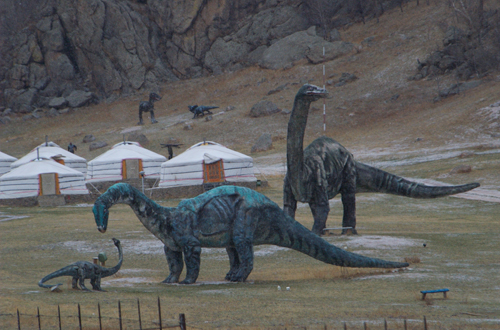
Dinosaur Ger Camp, Gorkhi-Terelj National Park, May 2005 (haven't stayed here; yet)
Arburd Sands Ger Camp (Nomadic Journeys) with lightening storm, July 2009
Red Rocks Ger Camp (Nomadic Journeys) with oncoming storm, July 2009; two hours of heavy rain soon followed
Dining ger door, Red Rocks Ger Camp, Ikh Nartiin Chuluu Nature Reserve, Sept. 2008

In 2005, I got to visit a ger factory and see how they are made:

Ger factory, Ulaanbaatar, May 2005

Then we went to the Black Market where you can buy anything ger; from individual parts to the whole thing.

Everything ger at the Black (or Narantuul) Market

The research camp at Khomiin Tal (takhi reintroduction site) in western Mongolia is spectacularly sited in a river valley:

The research camp at Khomiin Tal, western Mongolia, Sept. 2006
Ger interior with goat meat, Khomiin Tal, western Mongolia, Sept. 2006

My first experience of staying in a ger was during my first trip to Mongolia on an Earthwatch project “Mongolian Argali” (now called “Wildlife of the Mongolian Steppe”; highly recommended) in the spring of 2005. The camp is much bigger now; seven gers, two containers and a volleyball court:

The research camp at Ikh Nartiin Chuluu Nature Reserve, Earthwatch project, April 2005
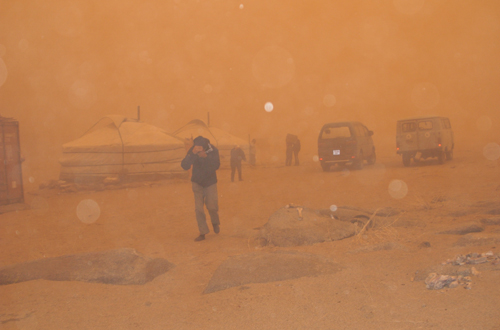
Typical spring dust storm, Ikh Nartiin Chuluu Nature Reserve research camp, April 2005; photo taken out the door of the ger; circles are the flash bouncing off dust particles; the wind was howling, too

And, private homes:

Small ger with aruul drying on the roof; en route from Baga Gazriin Chuluu Nature Reserve to Ulaanbaatar, July 2009; my guide helped me buy some aruul from the family
Prosperous establishment in the Gobi, Sept. 2006; they breed racing camels
Dung fuel with traditional gathering basket, western Mongolia, Sept. 2006; the owner manages a nearby salt deposit
Ger in western Mongolia, Sept. 2006; we bought fresh cow's milk from her
Gers above the Tuul River, near Hustai National Park, Sept. 2006; they have great view!
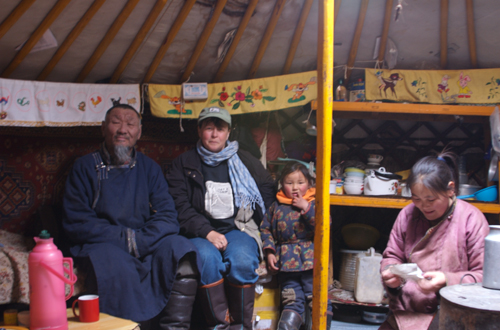
Ger visit, near Hustai National Park, May 2005; my first encounter with Mongolian hospitality, but not the last!