Saikhan Eej (Beautiful Mother) 18x14" oil (price on request)
I was wandering around sketching at Gandan Monastery in Ulaanbaatar last year and was resting in the shade in a courtyard. There were lots of people around, monks in red and gold robes, families feeding the pigeons and older people wearing beautiful del, like this woman. I got just a few photos of her. To me she personifies the character and dignity of Mongol elders. She has seen so much in her life, so many changes. Mothers are particularly honored in Mongolia. I’ve been told that 60% of Mongol songs are about them.
One of the joys of my travels to Mongolia is the opportunity to meet or just be around these older women and men. America could learn a lot from the Mongols about how to treat the wise, experienced elders in our society.
I’m on my way to New York for a Society of Animal Artists board meeting, so I’m taking a break from the story of my 2011 trip to Mongolia.
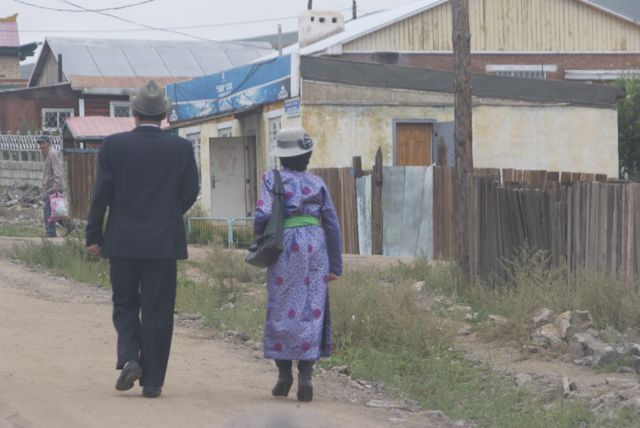
Mongol couple, Erdenet, August 2011: the city
Instead, I thought I would share a few proverbs from a book that I found in Ulaanbaatar called, appropriately enough, Mongolian Proverbs. They were collected by Janice Raymond and the book published in 2010 by Alethinos Books, San Diego.
You will have four nights Taking a short cut
That’s one we all know….the short cut that ends up taking much longer than the original route.
Fox will starve to death
While waiting under an ox
This one describes trying to do something impossible since the fox will never be able to eat the ox
Calf is not grown But he thinks he can make bull’s dung
A good description of someone who talks big, but can’t deliver
One finger short
Of being crazy
This one doesn’t really require an explanation, but is interesting because of how it resembles similar American sayings
Mongol kids, south of Bulgan, August 2011: the countryside
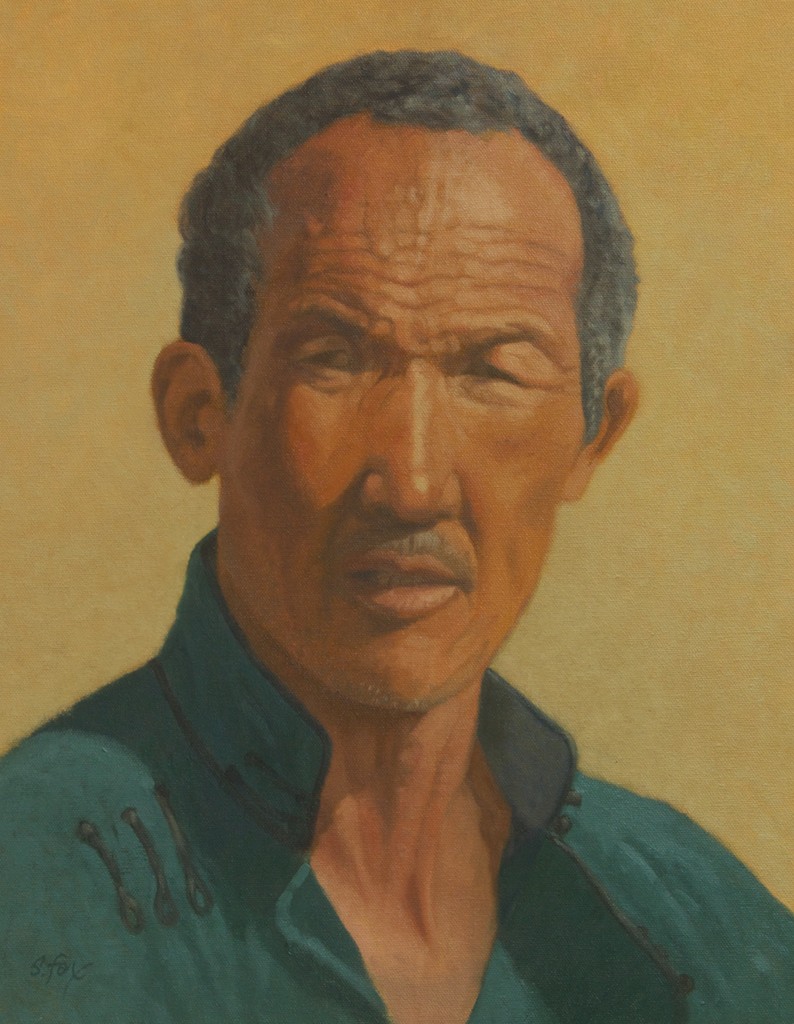
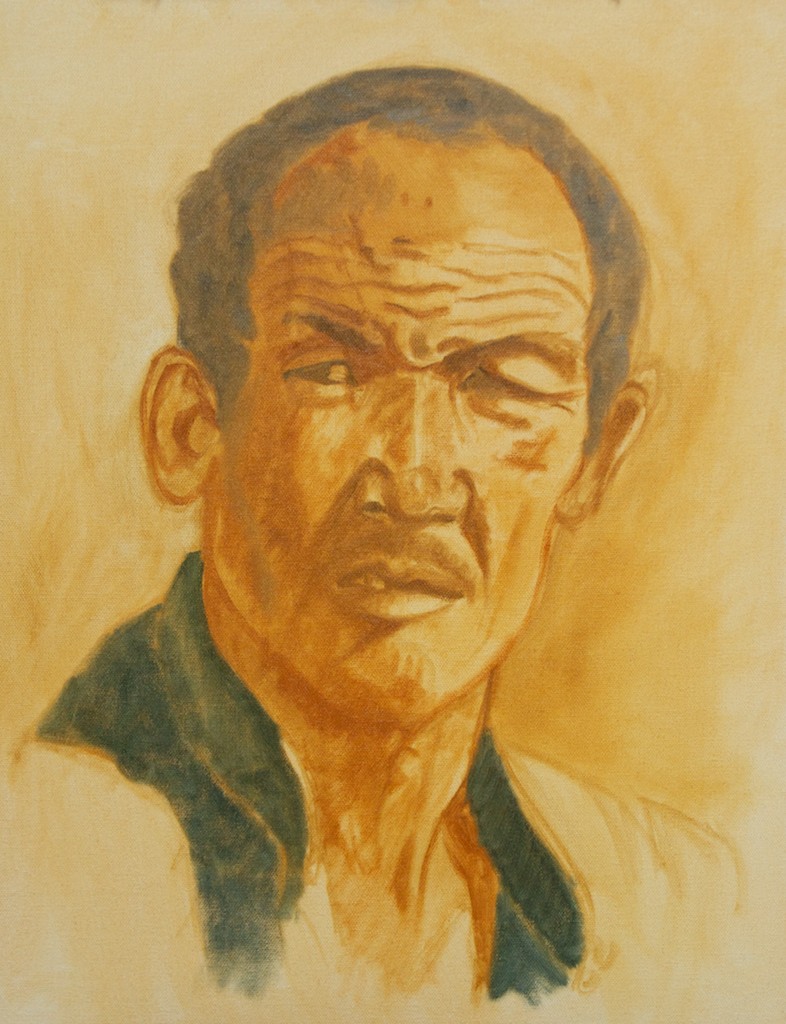
Yak Herder-Hentiii Mountains, Mongolia 18x14" oil (price on request)
And here’s the step by step process by which I created this painting:
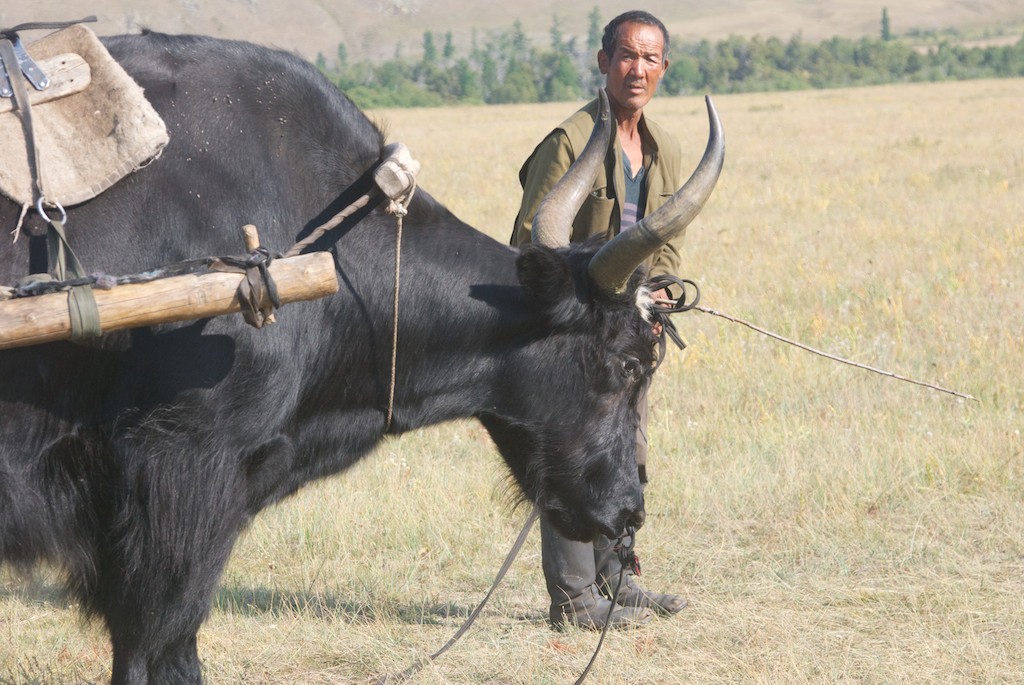
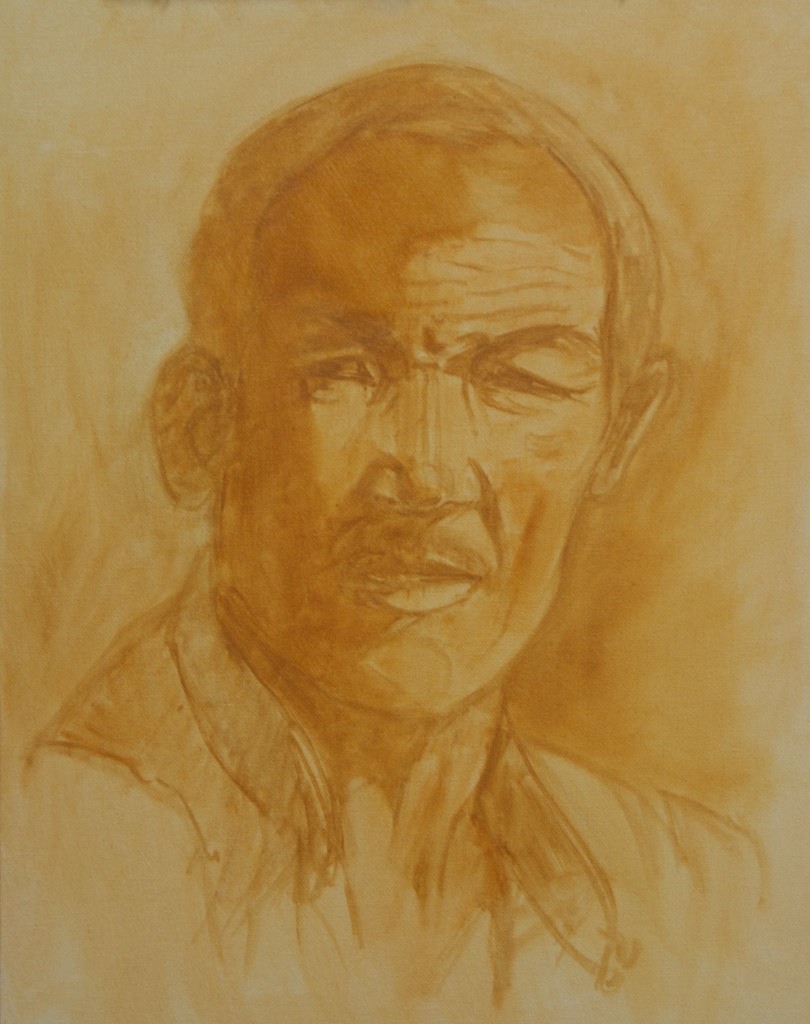
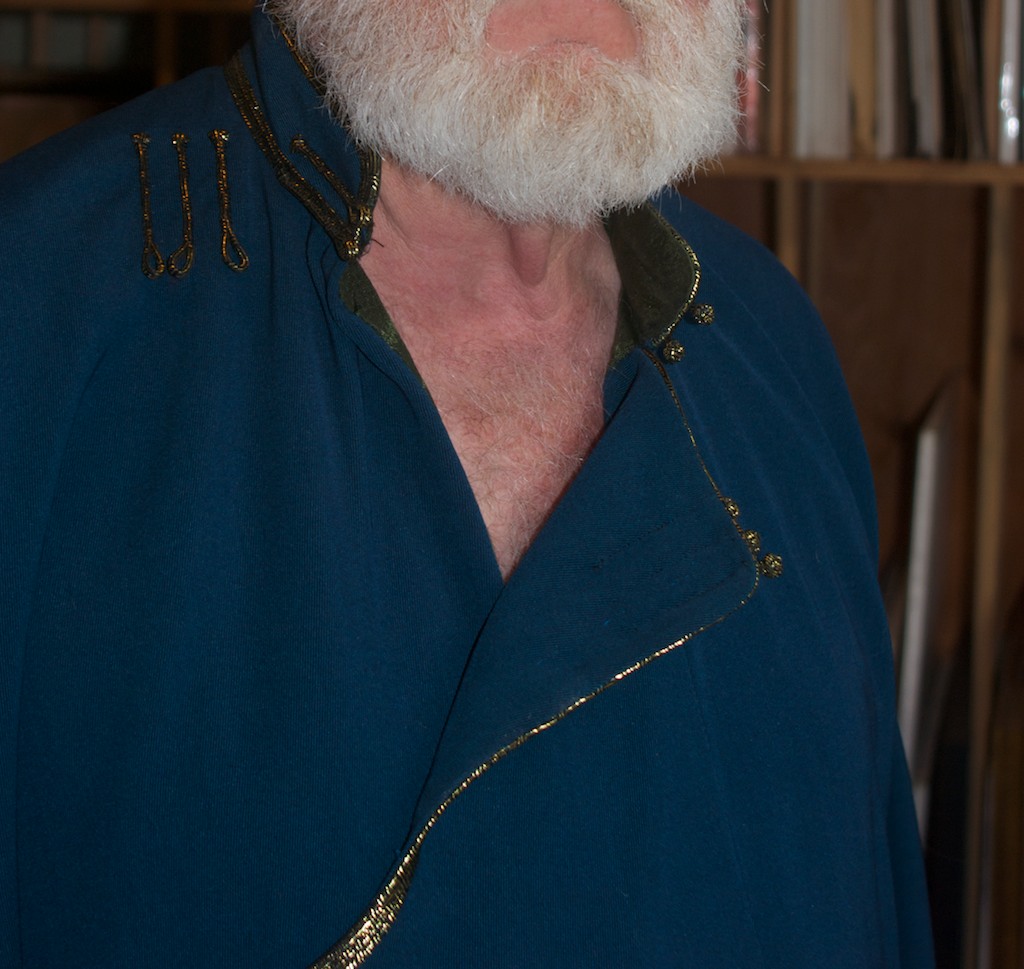
The reference photo I used of a local man who hauled water to the Jalman Meadows ger camp where I was staying with another artist this past August.I started out with a raw sienna toned RayMar canvasboard and began with a loose brush drawing for placement and position of the head and features. I've already changed him into a del instead of western clothes.Next I established the light and shadow areas.I re-drew the features and started to add some color.I went darker with the background and launched into modeling his head.I was using two or three other photos for the del and continued to model his head, paying particular attention to the features, value relationships and the various colors in the shadows.At this point I realized that the del was opening the wrong way due to the other photos i was using and that I needed much better reference for itI'd had del made for myself and my husband in 2009. He was kind enough to model for me in his.I decided to finish the bottom to the edge of the canvas and I also lightened up the background. So, once more, "Yak Herder-Hentii Mountains, Mongolia"
(This is a re-post since for some unknown reason it was posted as a Page, not a post when I originally did it last Friday)
While I first went to Mongolia for the wildlife, after a trip or two I started to notice the domestic animals, what the Mongols call The Five Snouts: horses, sheep, goats, camels, and cattle, which include “real” cattle and also yaks.
Mongol yaks are found in the northern part of the country, up in the mountains. Like the other “snouts”, they provide a number of products and functions, including being trained for riding. There will be a painting of that at some point, which I saw in the Hangai Mountains in 2010.
Sometimes they are crossed with cattle to create a hybrid called a “khainag”, which are stronger than the pure yaks and more easily trained to pull carts. But they don’t really look the same. The heads are a somewhat different shape and the coat can be much shorter.
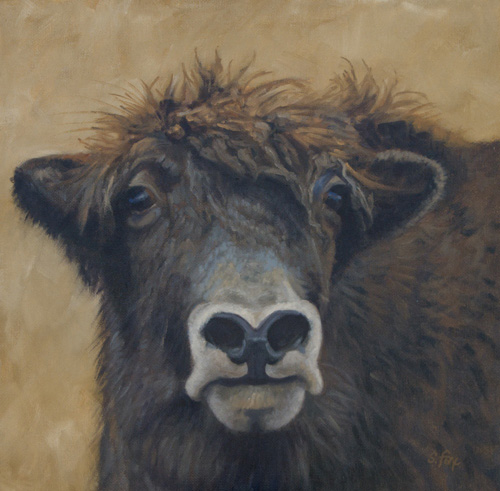
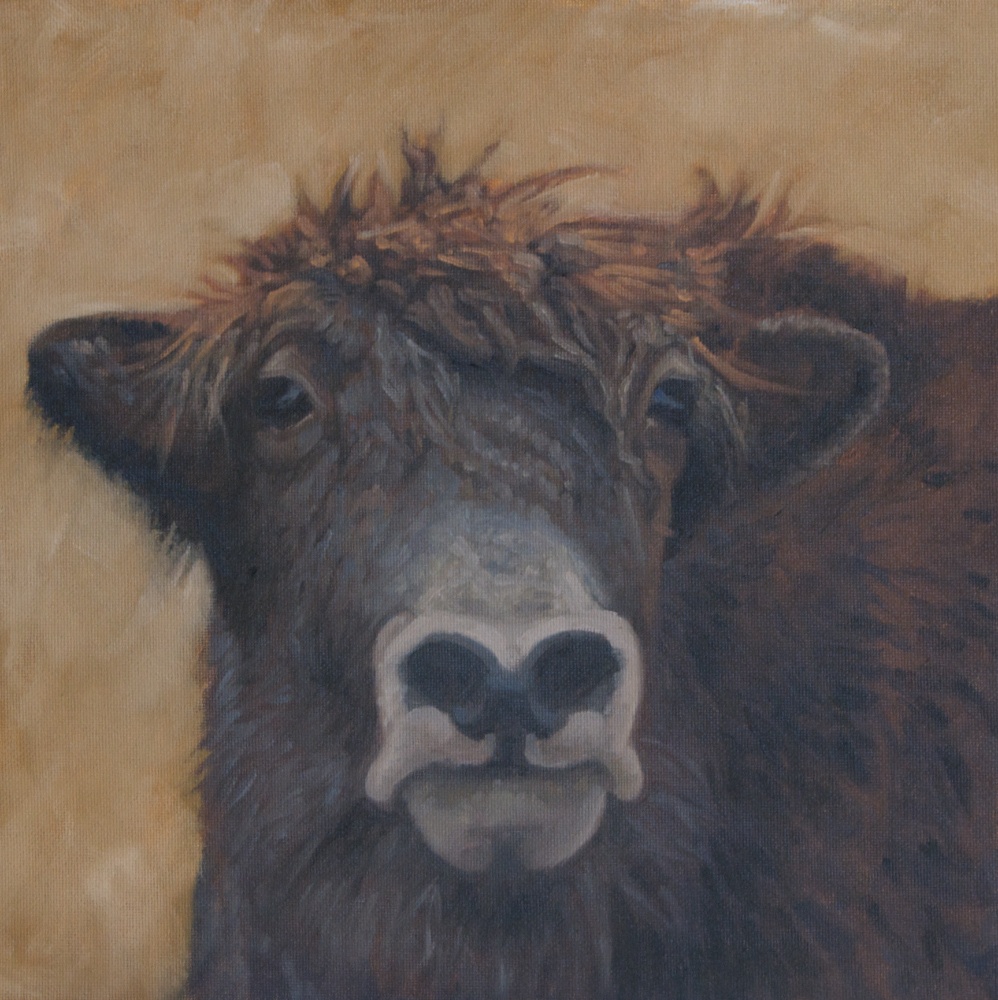
The pure yaks make me smile whenever I see them. The cow yak in the painting is one that I saw this past August at Gun-Galuut Nature Reserve.
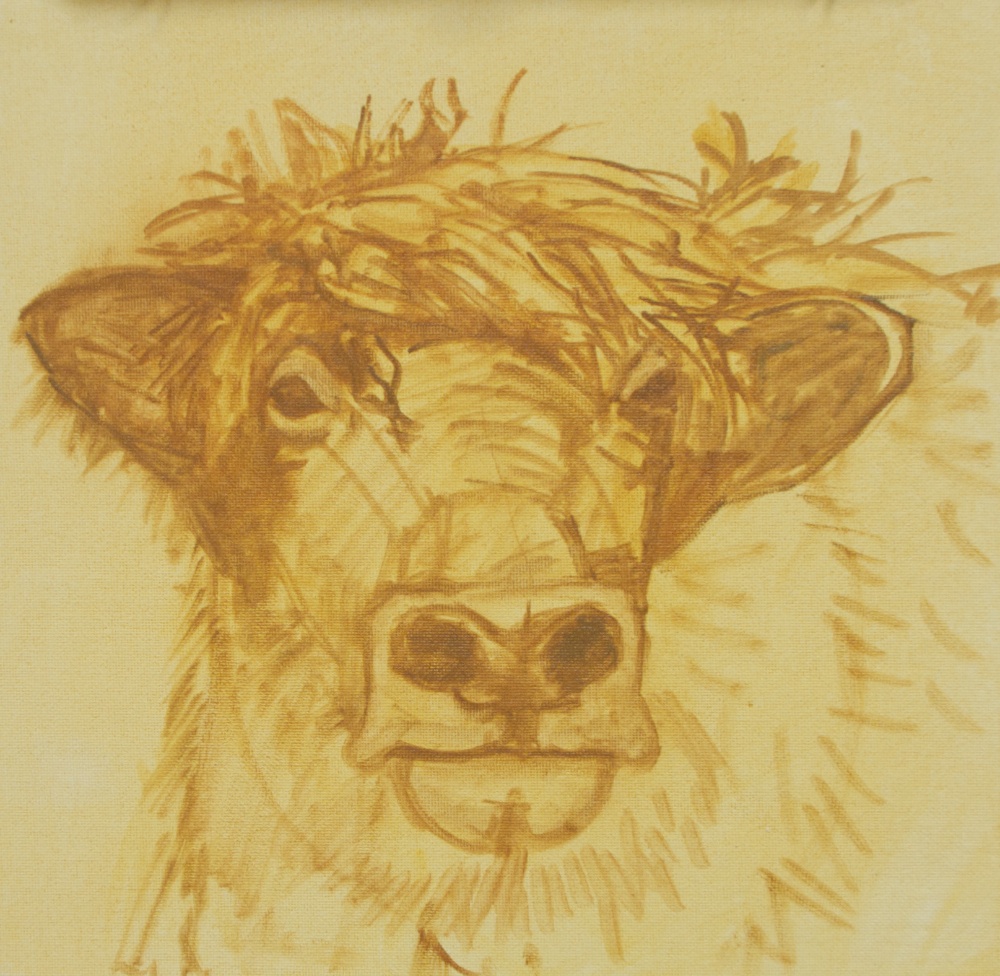
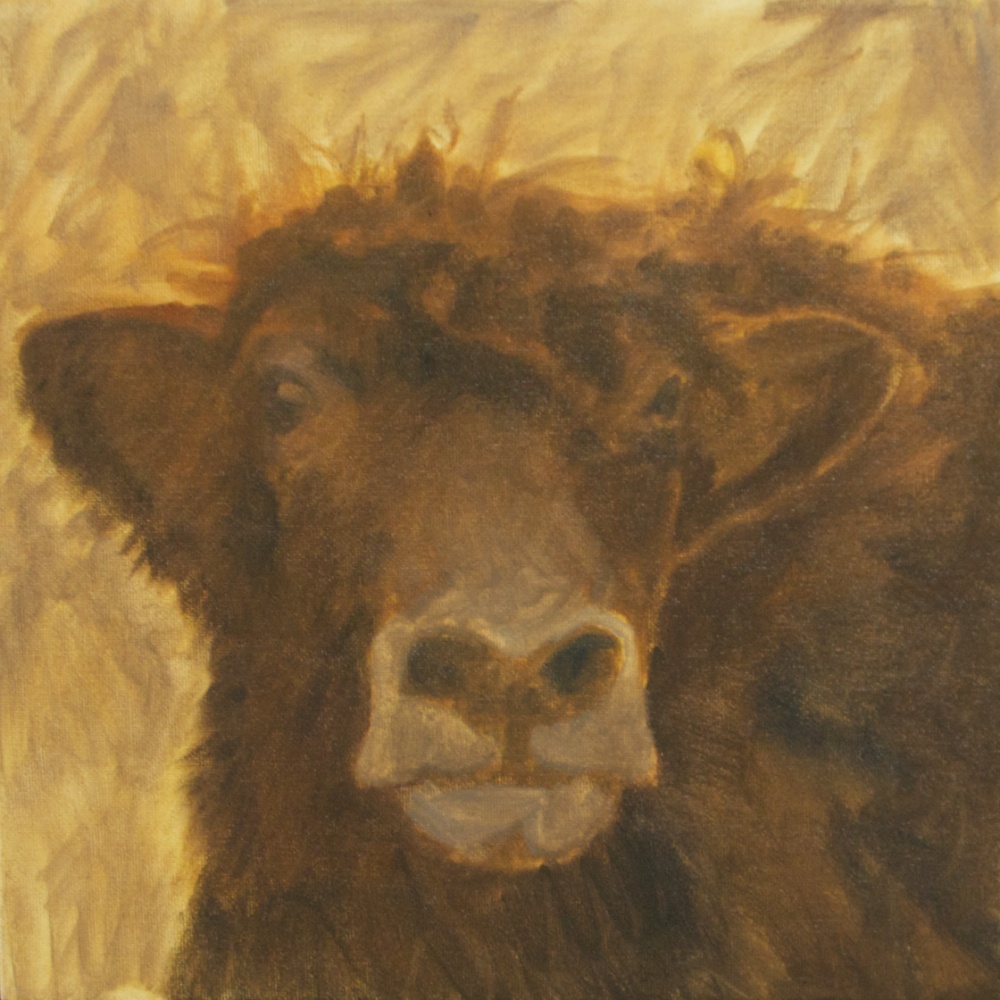
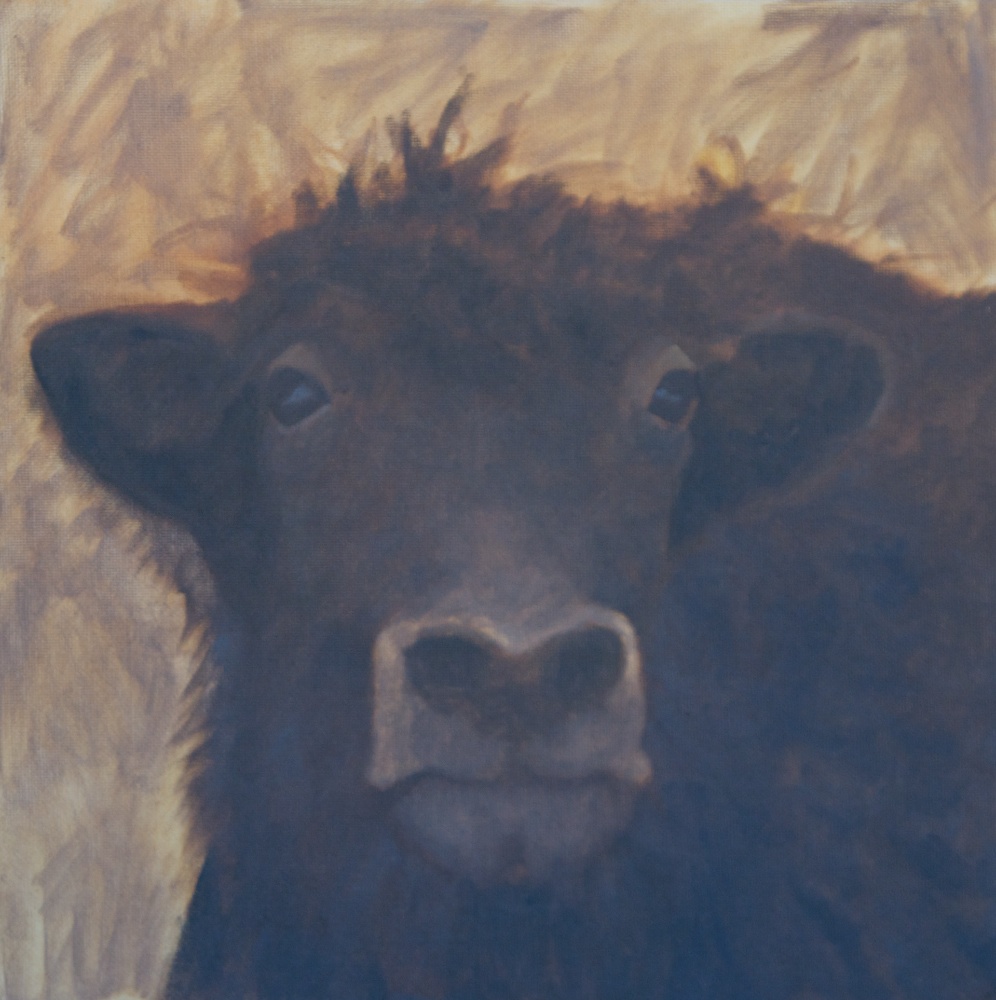
Here’s a step-by step of “Checking You Out”:
The reference photo. Not great light, but I liked her head with its fuzzy topknot and white muzzle; I also wanted to work on doing a 3/4 view.I decided that a square format would work well and started on a tinted canvas with a brush drawing, both in raw siennaThe next step is to get color all over the canvas and establish the relative values of her head, going darker; I'm always correcting the drawing as needed as I paintI now have my darkest dark areas in a cool tone and will come in lighter and warmer over it. The muzzle's been moved a little and the eyes re-stated also.Everything is now set up for the final push as I will refine shapes, tweak edges and work on value contrastOnce again....Checking You Out 12x12" oil (price on request)
The next leg of the artist’s tour was from Ikh Nart to Gun-Galuut Nature Reserve. I had only been there once, in 2009, driving east from Ulaanbaatar. This time we were going to go almost straight north…we hoped.
Great bustard we spotted not long after we left the reserve. It was the first time I had ever seen one.
We got back to the main tarmac road between Ulaanbaatar and China and traveled on it for awhile. Then we passed a spot where a dirt road went off to the right at an angle. Khatnaa started to drive on, spotted a white van coming toward the tarmac, stopped, backed up, got out and walked over to them as they slowed down and then stopped. After a short conversation, he came back to the car, backed us up and off we went onto the earth road. He had been able to get enough information about weather and road conditions that he felt ok about taking the “local road”. As usual, this made me very happy.
Why you don't just pick up a rental car at the airport and head out into the countryside in Mongolia on your own. You can now get a good road atlas, but it's deceiving because this is what the roads are like all over the country except for a very few wide gravel roads and a slowly increasing amount of tarmac on main routes.We drove through a small soum center.As we headed north, there was a dark storm front to our left and fluffy white clouds and sunshine to our right. The road going north was running right along the front. We were out in steppe countryside with no one else around...not a single other car, not even a ger.After some spatters, we found ourselves traveling in pretty heavy rain for about 15-20 minutes and then came to a stream that we had to cross. Now I started to wonder what the road conditions would be up ahead of us.The light was really spectacular, though, as we went up some in elevation and started to see gers again. It had stopped raining where we were, but was still stormy to the west and north of us.Dropping down into a valley and, crossing it, we encountered something I'd seen before....really hard greyish dried mud combined with many very deep potholes. Khatnaa, with extreme care, had almost picked our way through it when we felt the rear end on the passenger side drop down hard, accompanied by a noise that didn't sound good at all. He pulled over on a level spot and crawled under the car. The verdict? The spring (new and Chinese-made) was broken. What to do? We drove on very carefully. VERY carefully.What Khatnaa knew, that I didn't, was that over the rise that you can see almost in the middle in the above photo was our destination, the Steppe Nomads ger camp at Gun-Galuut. With much creaking and care, we made it over the pass and across the valley to the camp.
Those of you who have followed this blog for awhile know that I’ve been going to Ikh Nart since my first trip in 2005. This time I had the pleasure of sharing the reserve with a fellow artist, Pokey Park.
Wildlife being what it is, one never knows what one will see on a given trip, or even if. But this visit exceeded our every reasonable expectation. For two of the four days, it seemed like we could hardly go an hour as we drove around the reserve without seeing argali, ibex, argali and ibex in the same place or cinereous vultures, a golden eagle or other birds. And we had sightings both other days, but not nearly as often.
The universe being what it is, on our way out of the reserve we drove through one of the areas where we had had multiple sightings of argali and ibex the previous morning and saw not a single animal.
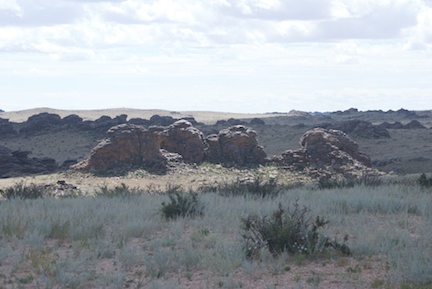
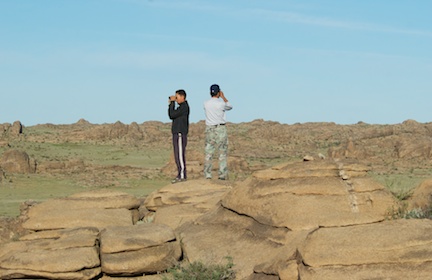
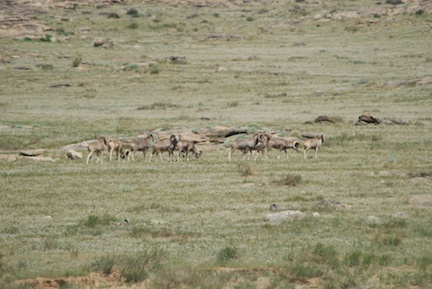
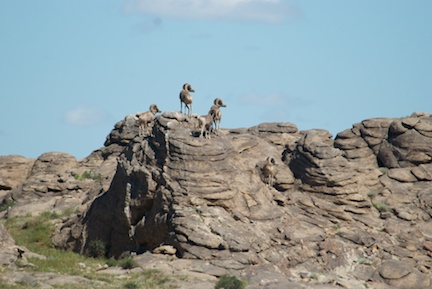
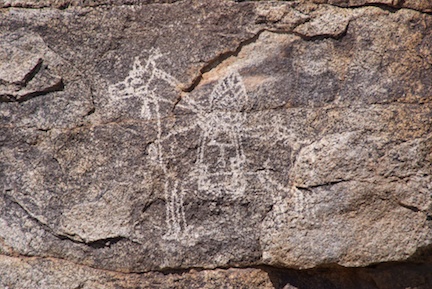
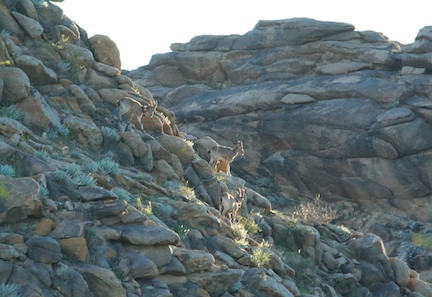
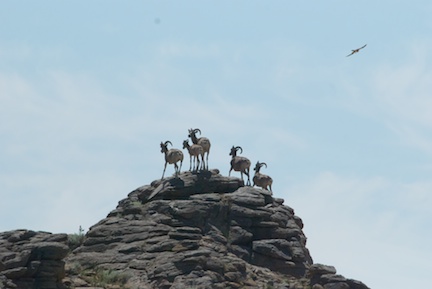
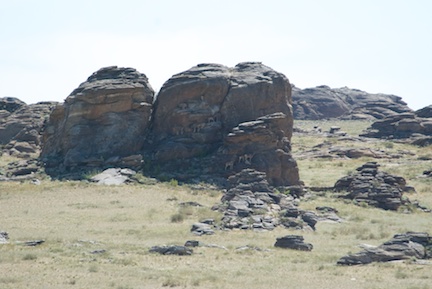
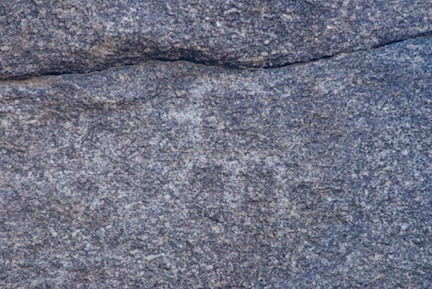
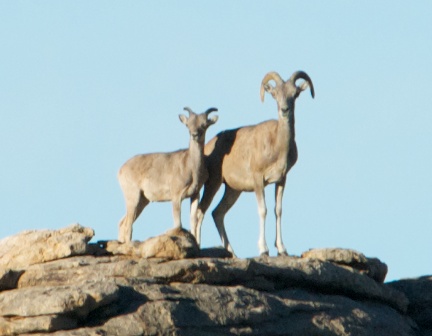
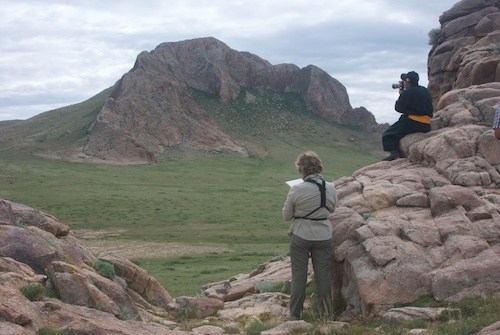
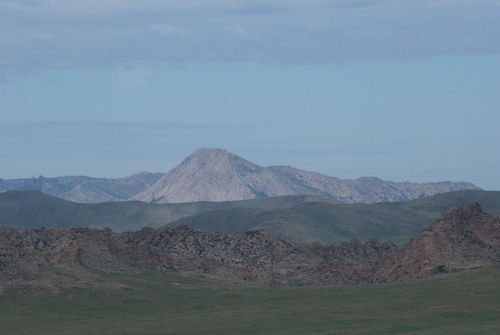
We stayed at Nomadic Journey's Red Rock Ger CampIkh Nart landscapeScanning for argali and ibexBut I was the lucky one who first spotted a single ram, who then joined up with a big group making ten all together. What a sight they were!We maneuvered through the rocks, caught up and re-sighted them three timesThey've seen something, we had no idea whatGolden eagleA herder's winter shelter for his livestockOne of the pictographs on the rock cliffWe went to the valley where the research camp is located and got great sightings of a large group of ibexAnd for a bonus, a beautiful sunsetWe also were able to follow this group of ewes and lambsHow many sheep can you see?They are totally at home in these rocky uplandsBlack kiteWe drove south to see the pictographs and Tibetan inscriptions on the cliff in the backgroundPokey helped fill the troughs; it's a Mongol tradition that passersby will fill them if they are emptyIbex pictograph; researchers have just started to catalog and study the cultural resources of the reserve, of which there are manyArgali ewe and lambArgali ram
While I had planned an itinerary to go to specific locations to see wildlife, I knew from experience that over any hill or around any corner one can encounter sights in Mongolia that will take one’s breath away and result in many requests for the driver to stop or at least slow down.
This trip was no exception. We left Arburd Sands for Ikh Nart, heading, I believed based on previous conversations and planning, almost due east across an area that I had not seen before.
We weren’t on the road for long when the “Stop!” requests started. Here’s what we saw:
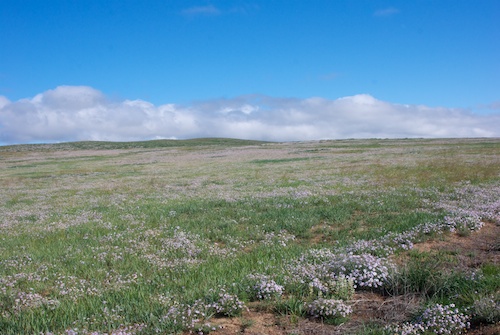
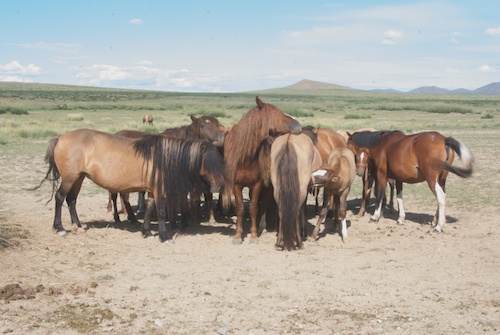
Typical mid-morning light on the steppeThe fields were covered with asters almost as far as we could see along both sides of the roadWe started to come down into a valley and spotted a herd of Mongol horsesThen we came upon more, in beautiful morning lightA young herder in a very nice dark red del carrying a very long urga rode over to have a chat with our driverWe drove over the ger where he lived and I got a few quick shots of what was clearly quite a horse operation in a spectacular settingDriving on, we quickly came upon even MORE horses, including these two young stallions mock-fightingBy now we'd dubbed this area the Valley of the Horses. They were everywhere we looked! And they were in great condition due to good rains creating excellent graze.It was absolutely idyllic. We could have stayed there all day. But Ikh Nart beckoned.
A few hours later I saw a largish-looking city up ahead and couldn’t square it with what I had seen on the map. We drove around the edge of it.
Zuunmod
When we came to the railway line and I saw the tarmac road, I realized what route we had taken. As it turned out, Khatnaa was not able to get reliable information on road conditions or weather on the route we were going to take and Jan had pointed out when we were discussing it back in UB that along the way was a type of mud that, if it rained (and it had been raining quite a lot) was very easy to get stuck in.
So Khatnaa did the sensible thing, which was to take the longer, but certain route north back towards Ulaanbaatar. The mountain behind Zunnmod in the photograph is Bogd Khan. On the other side of it is Ulaanbaatar.
We crossed the railroad tracks and picked up the main paved road south, which literally leads to China, and that I have traveled on quite a few times now.
Even though it at least tripled the distance we drove, it actually took less time to get to Ikh Nart because we could travel at 50-60 mph instead of 15-30mph that is all one can safely do on large stretches of the earth roads. Such is travel in Mongolia. If we had followed the original plan, we would have missed the Valley of the Horses. But I do want to check out that other route some day ’cause I know there will be something good there, too.
The next stop on the “artist’s tour” was Arburd Sands ger camp. This was more a “cultural” stop, than for wildlife viewing, but we got some of that, too.
This was the third time I had stayed at the camp and it was great to see owners Batbadrakh and his wife, Densmaa, again.
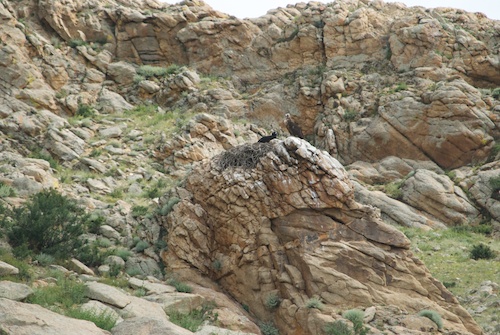
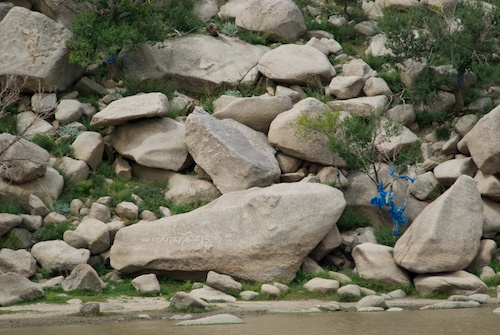
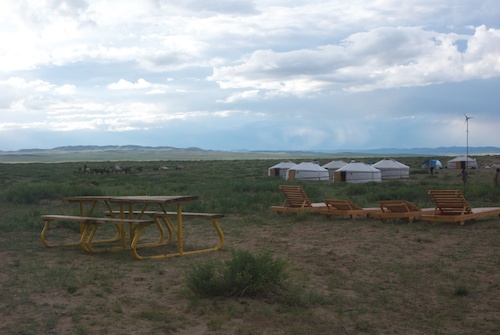
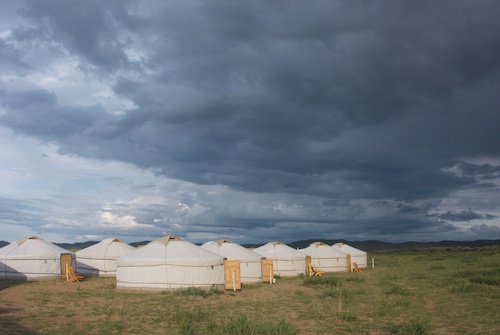
Arburd Sands ger camp; the dune complex behind the camp is about 20km long and is one of the northernmost extensions of the Gobi.Exercising a young Mongol race horse; the owners of the camp are members of a prominent horse racing family.We took a day trip to two local sacred mountains; this is Baga Hairhan Uul (Small Sacred Mountain).Scanning the mountain paid off with this sighting a few female Siberian ibex; you can just see one on the lower right side of the second pointed rocks from the left, the head and half the body are visible.Nearby, to the left of where we were sitting, was a cinereous vulture nest with an adult and fledgling.Our second destination...Zorgol Uul, one of my favorite mountains.On the south side is this lovely stupa; the fence is festooned with khadag, blue offering scarves.On the "front" facing the main road south was a cinereous vulture nest that I don't remember seeing on previous trips.At the base of the mountain is a small seasonal lake; to the left of the khadag is a large rock with a Tibetan inscription and if you look up to the top you can see a black kite perched on another big rock; quite a composition.The family that runs the ger camp is known for its horses. One came in third in the State Naadam race this year, which is a big deal since the first five are considered almost equally winners in a 35km race that may have over 400 entries; I asked if the horses were nearby and could we take pictures of them and, yes, they were only a kilometer or so away. The stallion's manes are allowed to grow and grow and grow....because that is believed to give them strength. We got some great shots!While we were there, three men, probably relatives or friends of the owner, came by to check out the horses.One of the highlights of the entire trip was seeing Sodnam again; I "met" her when my husband and I were at Arburd Sands in 2008 and we took to each other immediately even though we couldn't speak each other's language. She's 92 now and I'll bet she's caused some mischief in her time. She's Batbadrakh's brother's wife's mother. The lady on the right is the mother of Batbadrakh and the widow of Choidog, his father.Then it was our turn to ride; I really liked this sarel (grey) gelding and asked Densmaa if they could box him up and send him to California; a joke since I don't think Mongol horses would do well at all in our higher humidity sea level climate.The Arburd Sands ger camp is set up in a new spot every year or so to protect the land; this year Densmaa grinned at me, pointed to the table and lounges and said "How do you like our beach?" We liked it a lot even though it's a bit far from the ocean.And one of the reasons is that it was a great place to watch spectacular sunsets like this one.There really is nothing quite like storm light over Mongol gers.
It’s always interesting to sit down at the easel again after a “lay-off”. This time it was over six weeks. Things feel awkward and thoughts of “Oh, jeez, will I remember how to paint.” flit through one’s head.
But it always works out. I get back in the saddle by doing a few small, warm-up pieces using my newest reference. This time I picked three different subjects that I thought had great light, so that I could work on light/shadow and value relationships. The first two were done in two sittings with a some additional tweaking after I’d let them sit overnight. The third took somewhat more time since I was also working to catch a likeness and keep the shadow somewhat high key.
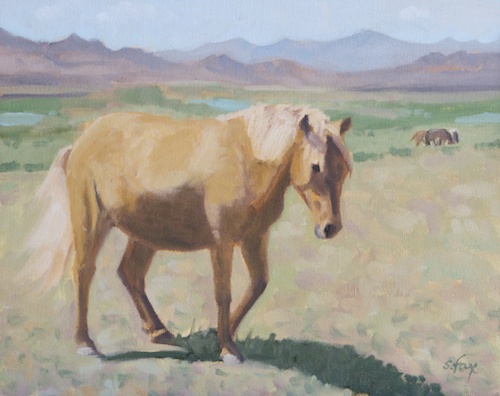
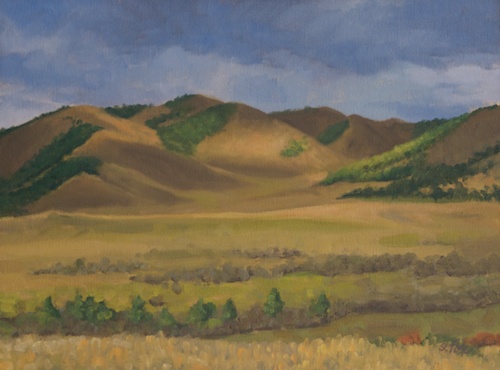
Shar Mor (Yellow Horse) 8x10" oilLight On Hills 9x12" oilYak Herder 12x9" oil





























 Susan Fox, American Artist