Five wonderful weeks in Mongolia just flew by. I managed to spend three of those weeks in the countryside: two weeks doing the “wildlife watching” tour with nationally-known sculptor Pokey Park and then a week of camping with a guide/cook and driver.
Lots of great reference and stories to match will be posted here in the weeks to come, but for now I’m still catching up and working on a couple of new projects, about which more later.
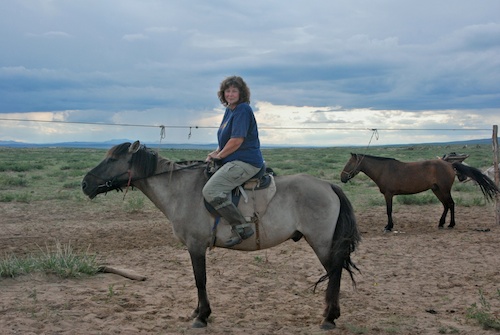
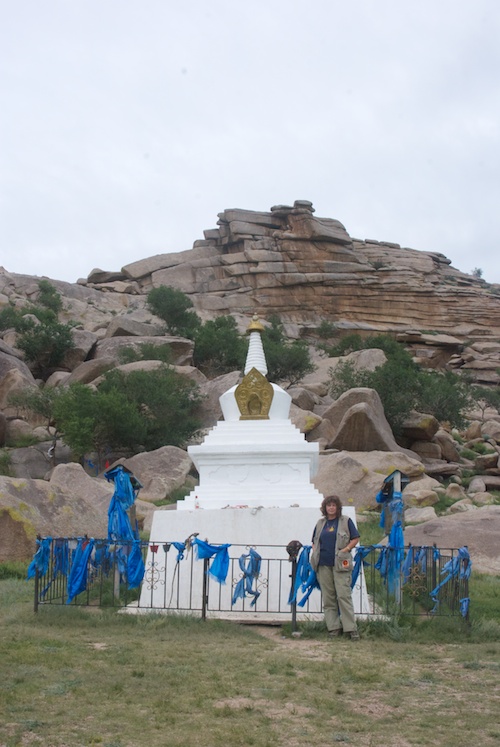
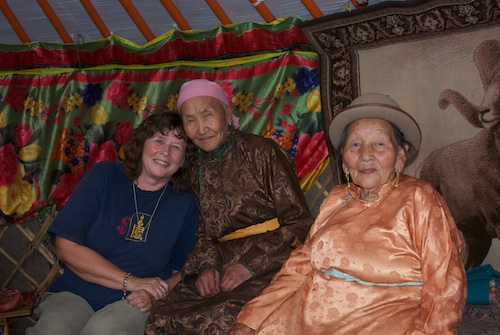
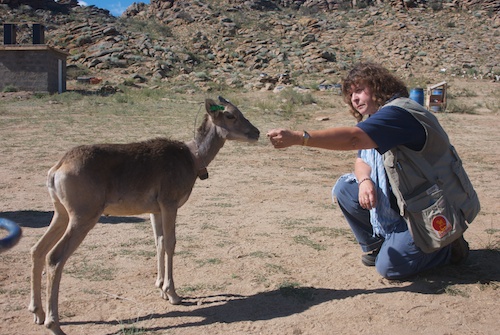
In the meantime, here’s a collection of the photos that have me in them, most taken by our great driver/guide, Khatnaa, who brought his own camera and who definitely has an eye as a photographer.
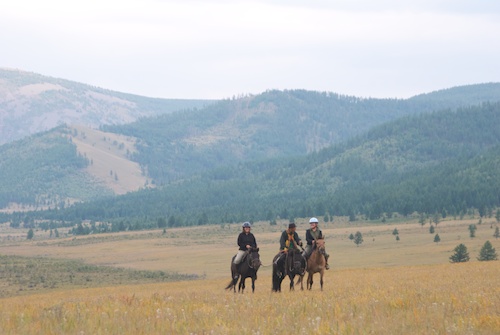
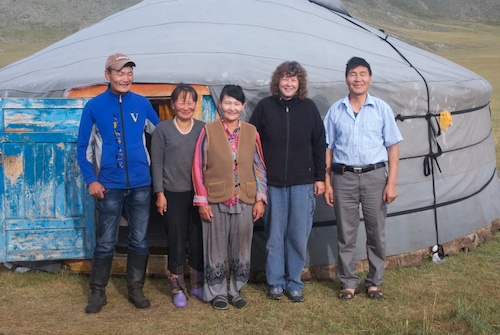
Lunch up in the mountains of Hustai National ParkMongol horse ride #1 at Arburd Sands ger campStupa at Zorgol Uul, a mountain not far from Arburd SandsProbably my favorite photo from the trip; I met these women in 2008 when my husband and I went to Arburd Sands and I was thrilled to see them again this year; Lkhamsuren, on the right, is the widow of famous horsetrainer, Choidog, whose son, Batbadrakh, is now family patriarch; Surenjav, next to me, and I somehow connected in 2008 even though we couldn't talk to each other due to the language barrier. She's 92 now and is Batbadrakh's brother's mother-in-law. Being Mongolia, neither expressed any real surprise at this western woman who they met three years ago walking into the ger one morning to say "Sain bain uu"Orphaned argali lamb at the Ikh Nartiin Chuluu Nature Reserve research campHappiness is a nice ger and comfy del at Gun-Galuut Nature ReserveAfter the second longish hike up a steep slope in one morning, I was rewarded with this great view of the valley of the Kherlen Gol; Chinggis Khan almost certainly knew and rode through this placeMongol horse ride #2 at Jalman Meadows ger camp, up north in the Hentii Mountains, and overlooking the valley of the Tuul Gol, which also flows through UlaanbaatarThe second night of the camping trip, I got to stay overnight with a herder family for the first time. It happened to be the home of my driver, Puugee, who on the right. Next to me on the left is Hashchuluun, his wife, then a lady who I did not catch the name of and, finally, Puugee's oldest son, one of three
I’m proud to announce that “Mongol Horse #5-Evening Run” has been accepted into the Society of Animal Artists 51st Annual Exhibition of “Art and the Animal”. The subjects are part of a herd of horses which wandered past the Red Rocks ger camp at Ikh Nartiin Chuluu Nature Reserve when my husband and I were staying there in 2008.
Currently I’m down on the Delaware Coast. My artist friends, Guy Combes and Andrew Denman, and I are planning to spend tomorrow exploring Assateague and, if we have time, Chincoteague islands.
There’s a certain rhythm to creating paintings. I usually have a number of them underway at various stages of completion. Of course, most of them are hanging around unfinished. Then I get to the final sitting on one of them and pretty soon, Ta Da!, it’s done!
I finished one yesterday and one this morning. First, my latest Mongol Horse series painting:
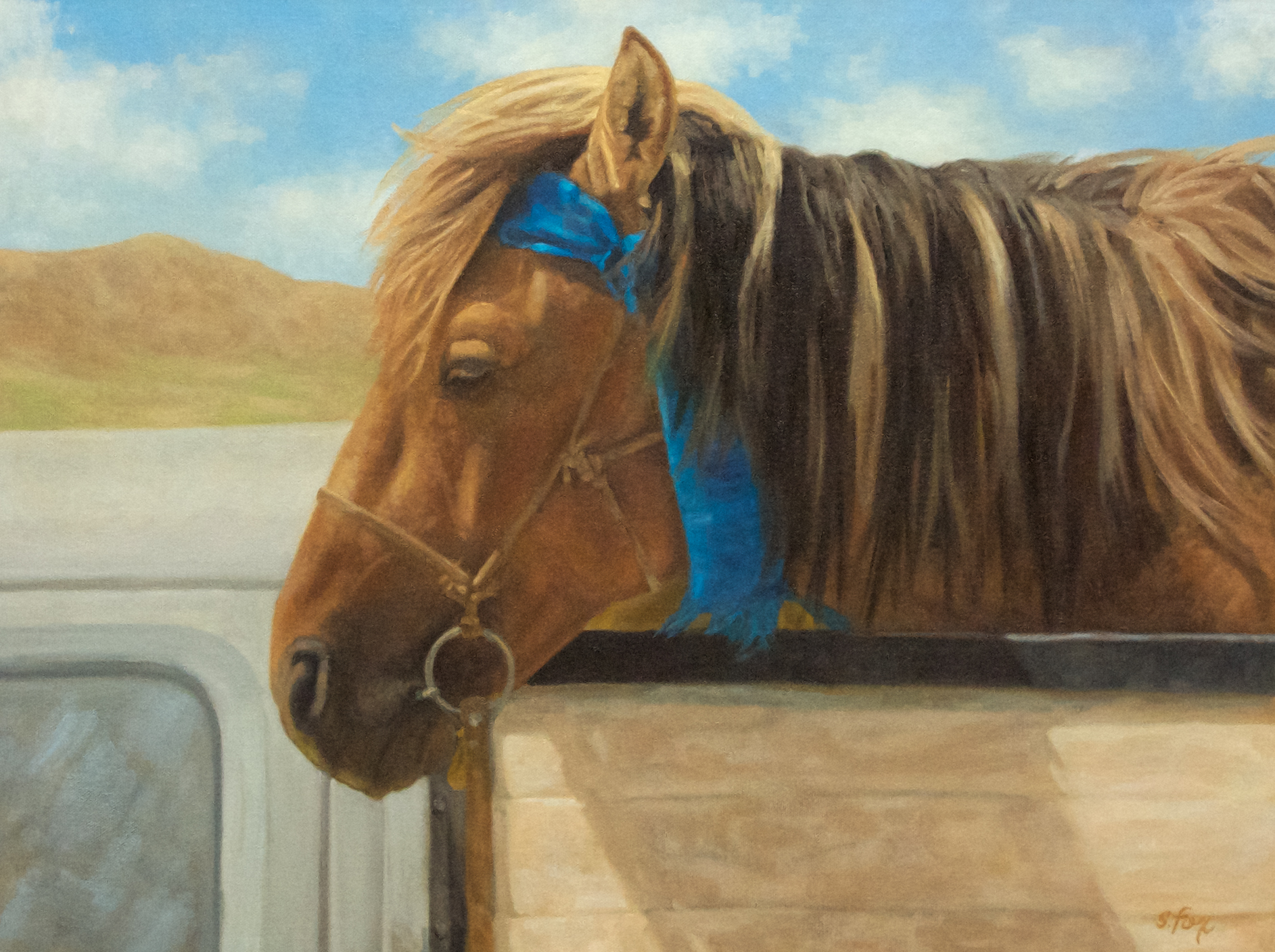
Mongol Horse #6, Race Winner 18x24" oil on canvasboard price on request
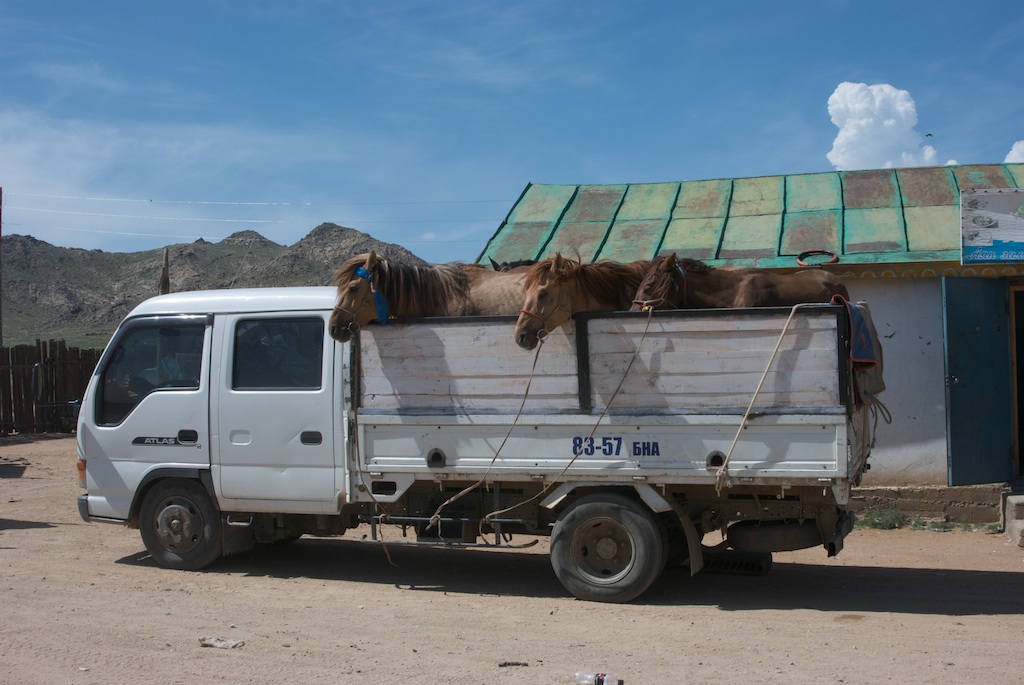
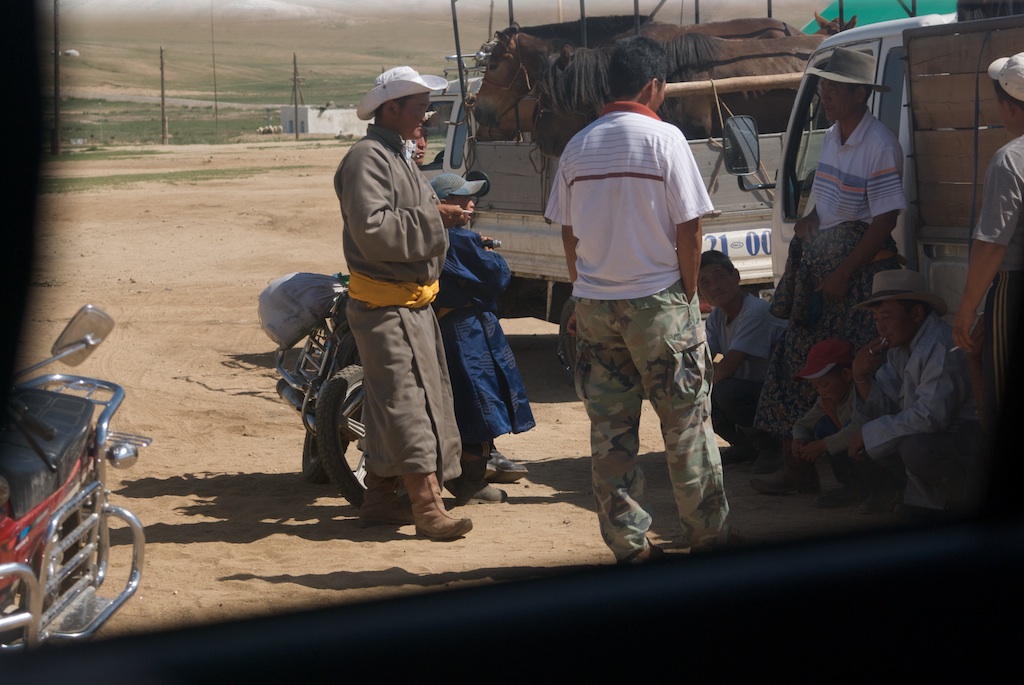
I shot the reference for this one on my camping trip in Mongolia this last July. We had pulled into a soum center, which is the American equivalent of a county seat. My guide went over to some trucks filled with horses and chatted with the men, who were taking a break in the shade since it was a warm day at the northern edge of the Gobi. I stayed in the car, but got some good photos. My goal in this piece was to capture the wonderful quality of light that is one of the things I love about Mongolia.
This is a typical Mongol horse who is being taken on a “Naadam (festival) tour” for the horse race events. He’s a winner since he’s wearing a blue scarf called a khadak. He’s not spiffy looking compared to a thoroughbred, but he can also run 20 miles or more without stopping. I also always like seeing the bi-colored manes, which adds a bit of flash.
Minii Govi (My Gobi) 16x12" oil on canvasboard
I grew up with the redwood forests of northern California and have never been a “desert person”. But I love the Gobi (which means “desert” in Mongolian). This scene was also from my 2010 camping trip. The air was incredibly clear, almost crystalline. And it was obvious why Mongols call their country “The Land of Blue Skies”. This is a small piece that I’ve done for myself to start to understand how to paint an amazing part of the world.
This poem is from a book that I found in the Art Shop at the Museum of the Chojin Lama. It is called “Modern Mongolian Poetry (1921-1986)” and was published in 1989, just before the non-violent revolution in which Mongolia made the transition from communism to democracy. It was my first introduction to Mongol poetry.
Poets and other creative people who objected to the communist government had to be very careful in what they said, wrote and painted. There are many poems in the book extolling the wonderfulness of the socialist system, heroic workers and battle victories. But, carefully couched in metaphor, are other points of view. I’ll be posting some of both in the future, but today’s poem is about a subject that I suspect all Mongols of the time could agree on…HORSES!
Mongol horses, Baga Gazriin Chuluu, July 2010
MONGOLIAN HORSE
Crowning our glorious motherland
With victory after victory.
Raising the victorious banner,
We always went on horseback.
As a Mongolian’s courage
Is measureless,
So the Mongolian horse’s strength
Is boundless.
When the good Mongolian people
With their history of victory
Did their good deeds
Their good horses played their part.
As a Mongolian’s courage
Is measureless,
So the Mongolian horse’s strength
Is boundless.
In doing work
For our happiness
Our spirited Mongolian horses
Will work with us ceaselessly.
As a Mongolian’s courage
Is measureless
So the Mongolian horse’s strength
Is boundless.
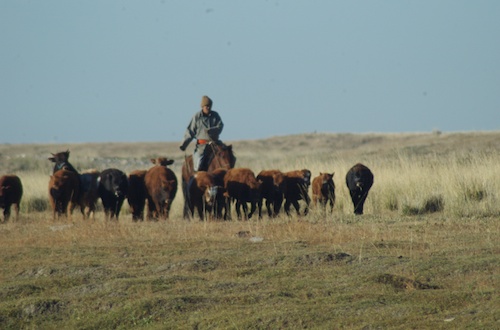
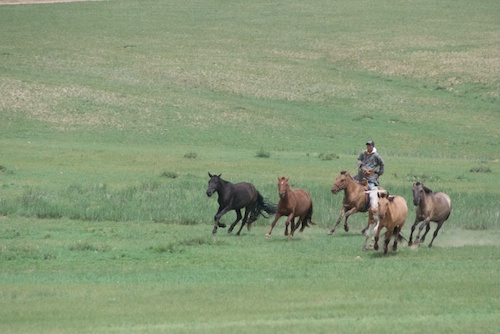
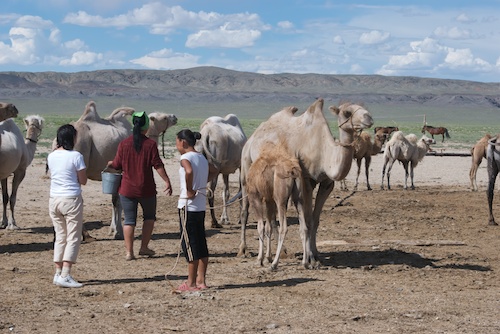
Going to let the pictures tell the story today. Here’s a collection of some of the photos I’ve taken of Mongol herders. Included are all of the Five Snouts, plus camels. Now I’m sitting here missing tsagaan idee (white food): airag (fermented mare’s milk), aruul (dried yogurt), byaslag (cheese), orom (sliced dried cream) and tsotsgii (cream, just cream, eaten using aruul as a base to put it on; heavenly). Bi ter bukh dortei! (I like it all!). Mongol friends-correct my sentence if it is wrong.
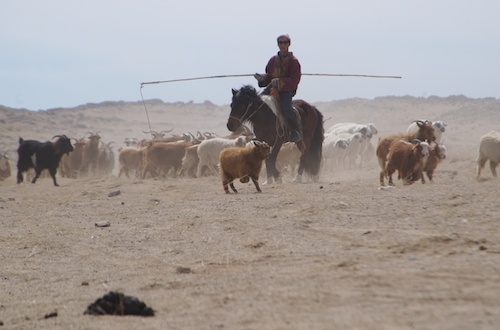
Herder with urga, Ikh Nartiin Chuluu, April 2005 (my first trip to Mongolia)Camel herder, Gobi near Bayanzag, Sept. 2006 (these are racing camels)Herding cattle near Tuul Gol (River), Sept. 2006Herding sheep and cashmere goats near Hustai National Park. Sept. 2008Rounding up horses, Gun-Galuut, July 2009Local herders coming to check out flooded river crossing, The Gobi, July 2010En route shot from car, July 2010Herder, Hangai Mountains, July 2010Time for a morning chat, Hangai Mountains, July 2010Yak herder's ger, Naiman Nuur, Hangai Mountains, July 2010Rounding up yaks, Orkhon Falls, July 2010Camel's milk airag coming up soon, the Gobi, near Orog Nuur, July 2010
One of the places I most want to go back to and spend a week camping, painting and sketching is this place. For me, the “Valley of the Yaks” is the whole package. Green mountains, beautiful small rivers, herders, their gers and their animals, raptors like black kites and absolutely no visitor infrastructure at all.
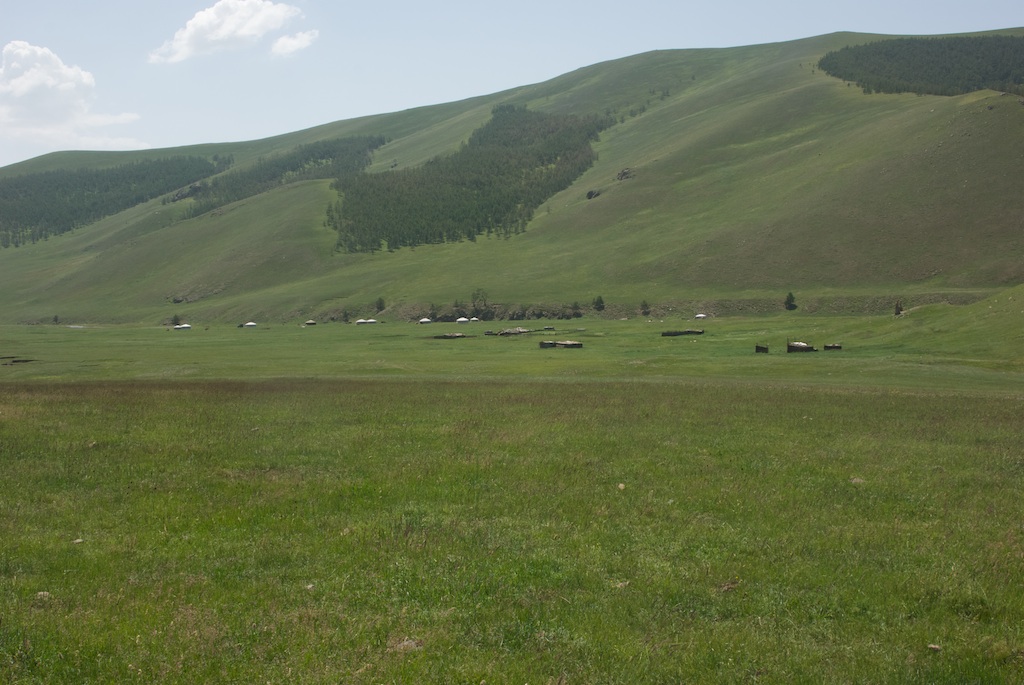
Gers in the valley
First yaks we saw
We drove more or less to the end of the road, which was at the top of a steep slope. There was, of course, an ovoo. Getting out and looking over the top, I noticed two things right away: A drop dead gorgeous mountain lake, one of eight in the park (“naim” means “eight” in Mongolian”) and that the road continued down, and I do mean down, the other side at about a 45 degree angle. Needless to say, almost no one is crazy enough to drive it even though it is the only road in the park that provides access by car to any of the lakes. The only other way to get to them is to walk or ride a horse. We climbed up the slope, joining quite a few Mongol day-trippers. Even though nothing in particular was going on, there was a festive feeling in the air.
One of the lakes of Naiman Nuur National Park; road to right, after it's leveled out some
Wildflowers
I took my lake photos and also got some more good wildflower images, then it was time to drive back down the hill and find a campsite. We passed some Mongol guys who were sitting and chatting by the side of the road. As we went by, one of them, who had obviously noticed that I was a westerner, yelled out “I love you!” Almost without thinking, I yelled back “Bi mongol dortei!”, “I like Mongolia!”. For some reason, Khatnaa and Soyoloo thought this was hilarious, burst out laughing and high-fived me. Khatnaa then decided that I had to learn another Mongol sentence: “Bi argaliin udad dortei” which means “I like dung smoke.”, a reference to our stay at Orog Nuur in the Gobi. I think I ended up having to repeat it at every ger we visited after that. All in good fun, of course.
The time had now come to find a spot to camp for the night. I was looking a little longingly at a place right down next to the river, certainly a prime spot that one would gravitate to in America. But up on higher ground was a dirt ring where someone had set up a ger. That’s the spot that Khatnaa picked and when it started to rain pretty hard later on, it was obvious that he had made the right choice and my choice might have gotten us quite wet if the river level had gone up very much.
Campsite after the tents had been taken down; what a view!
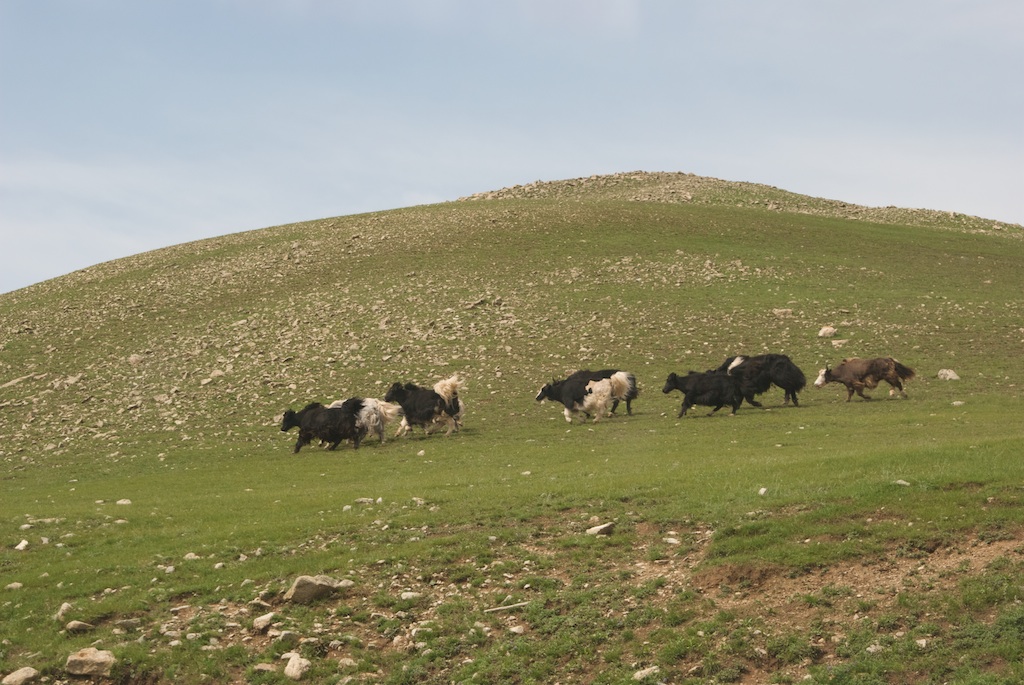
As I sat enjoying the late afternoon light, suddenly I had to grab my camera body with the long lens. A herder had come down the other side of the river and was rounding up his yaks. I reeled off about 170 images from the comfort of my camp chair.
Local yak herder
After dinner, we all sat and chatted until suddenly the wind kicked up and then it started to rain. Bedtime.
The next morning was beautiful and I got some more long range shots of the same herder milking some of his yaks. Soyoloo and I took turns washing each other’s hair down by the river.
I hated to leave, but promised myself that I would return and have more time.
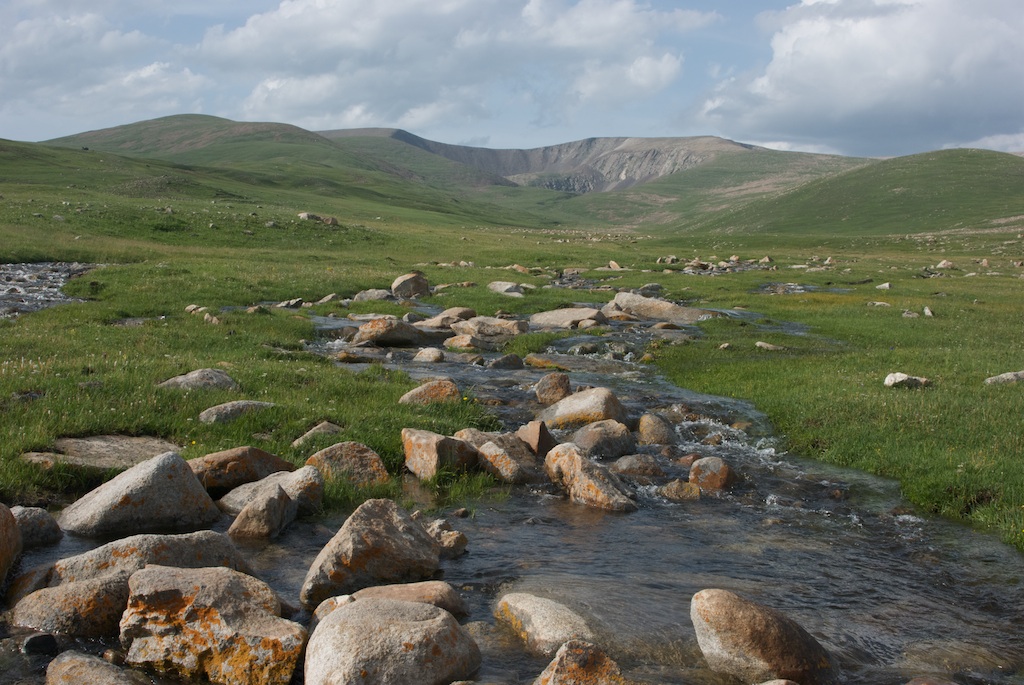
One of the rivers
We re-traced our route back down the valley. On the way, we stopped for more yak photos. I had, not unreasonably, thought that the bigger ones with horns were the bulls. Then I saw an actual bull. He was absolutely huge and had no horns. The herders remove them because, armed with what are essentially two long, sharp spikes, a bull yak would be a very dangerous animal to have around.
Bull yak on right
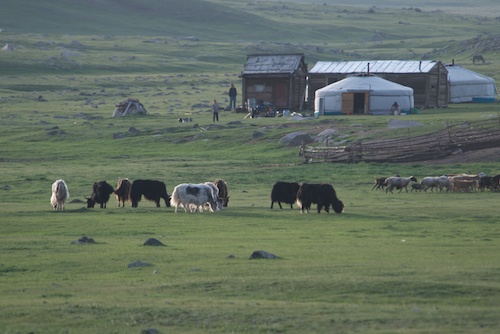
Yaks, gers, windmill, car
The gelded yaks, like the ones above, are called “shar”, Mongolian for “yellow”. It seems to be the term applied to any gelded livestock. I don’t know why yet.
We also passed a number of herds of horses. It looked like the airag supply was good.
Horses
Back out of the valley, we passed this little riverside drama, but didn’t stay to see what happened next.
Someone made a poor decision
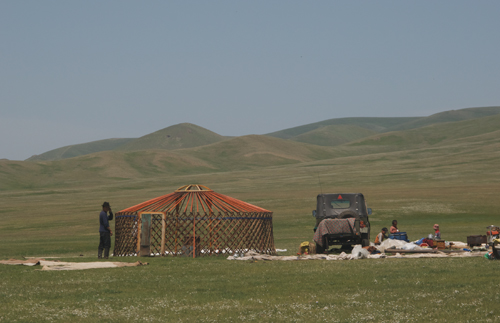
We drove past a family who was setting up housekeeping. I thought this was a good photo of a ger without the felt covering, plus, what a lovely spot to live!
Soon to be home, sweet home
We also went by this small monastery, located outside of a soum center.
Small monastery, with stupas
Continuing on, we were soon going up in elevation and I started to see forests for the first time. We stopped for lunch on a hillside covered with wildflowers.
Lunchtime view
Next week: wildflower heaven and a famous waterfall.
We came south down out of the mountains and into a small soum center, stopping at a petrol station. There was a truckload of horses parked near us and Khatnaa spent some time chatting with the men while I snuck a few photos from inside the car.
Horse transport, Mongol-styleKhatnaa chatting with the herders
Our next stop was in front of a fenced compound, which turned out to be the home of Khatnaa’s cousin and his family. We spent a few hours visiting them, being fed a feast of airag, buuz and other goodies. Since this was a very special social stop, I left the camera in the car. Not only did it seem inappropriate to even ask to take pictures, but I’ve found that sometimes I simply want to fully be a part of whatever is going on and using a camera creates a barrier that makes me an observer instead.
We finally went on our way, richer by a container of fresh, delicious airag.
It was fairly late in the afternoon by the time we left, going north back into the mountains. We crossed over a pass and on through a valley, finally stopping for the night on an open slope. The next morning we were visited by a young local herder, who was obviously nervous, but unwilling to pass up a chance to meet us. He did seem to have a quiet, confident way about him and I asked Khatnaa to ask him if he had been a jockey in naadam races. And the answer, as I expected, was “yes”.
View from our campsite, with yaks
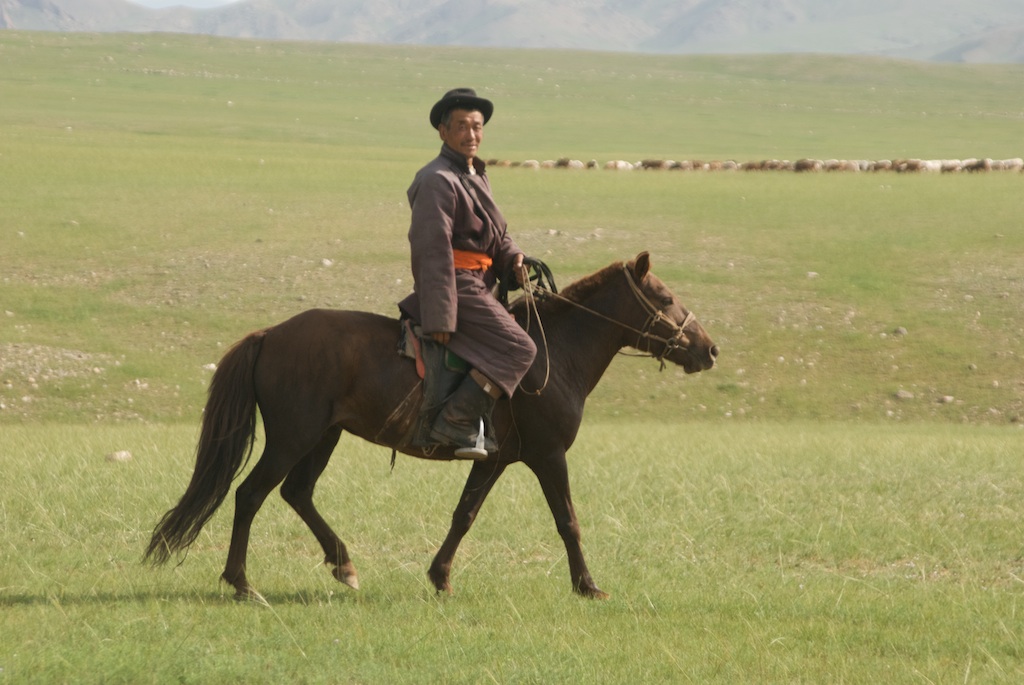
There were small groups of horses and yaks around, so I got some good photos just sitting in our camp. Then a well-dressed older gentleman rode over to us and stopped for a chat. He really was the quintessential Mongol herder.
Local herder
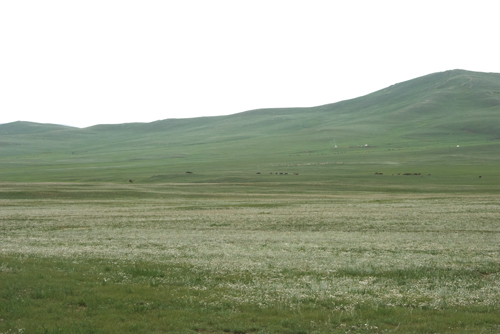
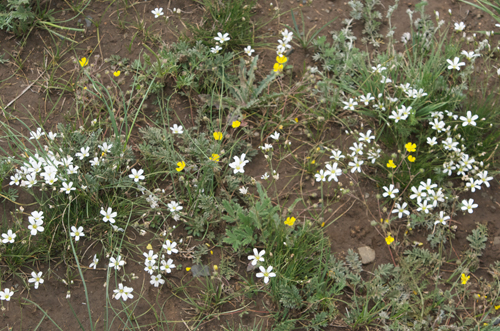
We finally got all packed up and on the road, crossing a river as we drove up a beautiful green valley. But suddenly, the green turned white. Khatnaa stopped the car immediately and I saw that the ground on either side of the car was carpeted with tiny white flowers. We got out and took in the beauty of the scene. Khatnaa spoke with Soyoloo and then said to me in English that it looked like the very first light snow in October and one didn’t see this large an area of the flowers very often. Even though it was cloudy, the fields had an airy, delicate quality which was quite magical.
Carpet of white flowersClose-up of flowers; don't know the species
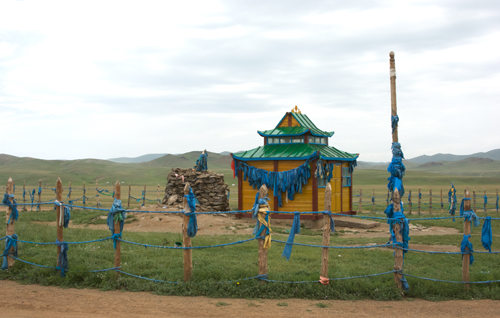
Our next stop was at a small temple which stood on the outskirts of a soum center. The statue and offerings on the inside were quite extraordinary, at least to me.
Temple on outskirts of soum centerThe occupant of the interior of the temple, with offerings
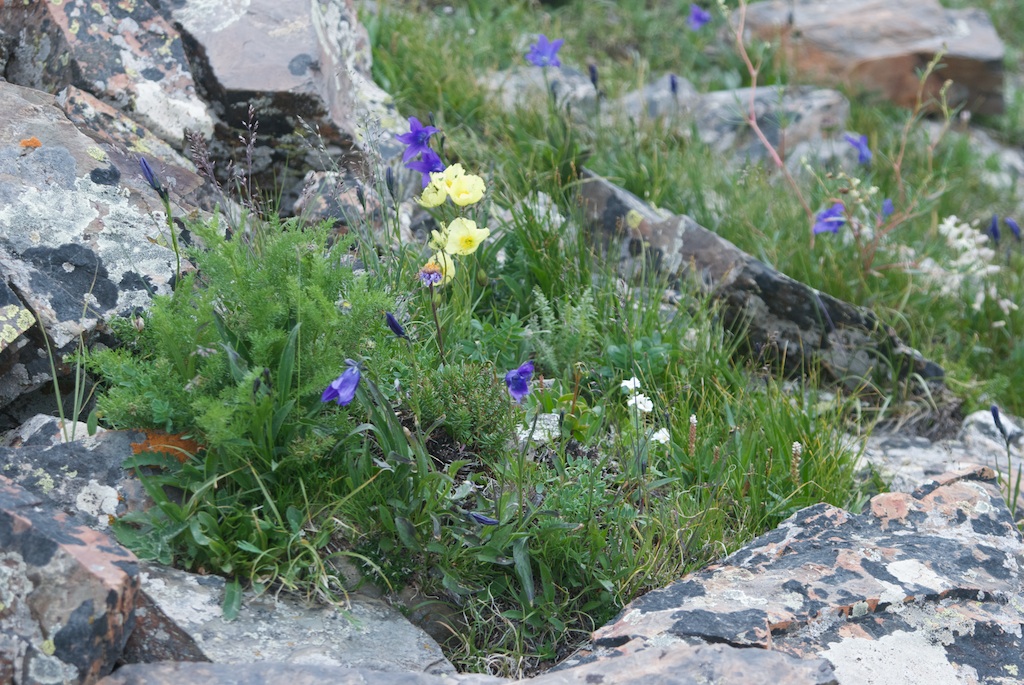
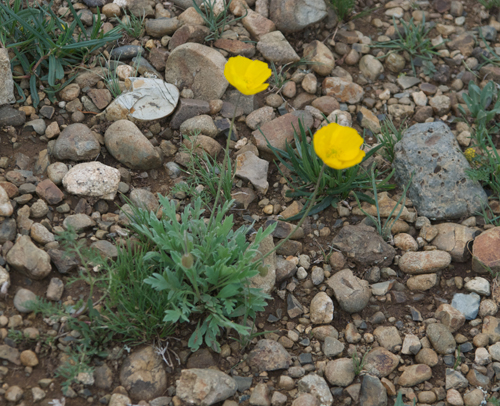
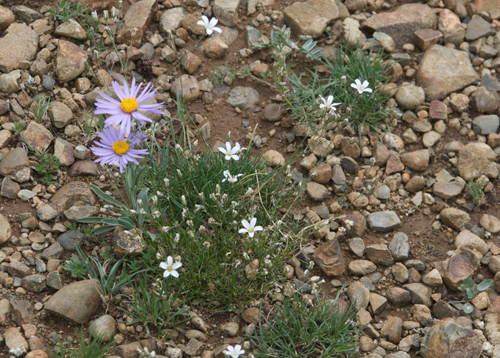
Driving on, we were soon going up in elevation again, stopping for lunch at a turnout in the road that, at first, looked good simply for its lovely view. But once out of the car and walking around, I found that we were in the middle of an alpine rock garden, filled with delicate flowers, like yellow poppies, which were delightful miniatures of the kind one finds in western gardens.
Lunchtime view"Rock garden"Miniature yellow poppiesAsters and unknown white flower
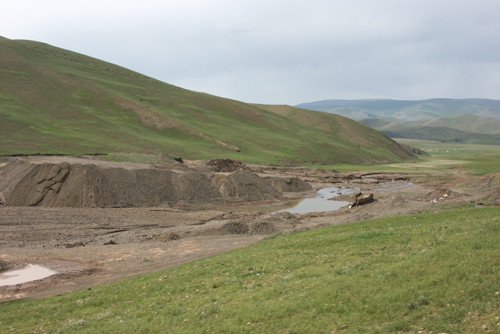
Coming back down into a valley filled with gers and livestock, we passed the remains of one of the illegal “ninja gold mines” that are disfiguring the Hangai Mountains. These mines have also affected the run-off which fills lakes like Orog Nuur, causing them to be dry now, more often than not. Very sad in a country that has traditionally had such a strong land ethic. But understandable when there are not enough jobs and people have families to support.
Illegal gold mine
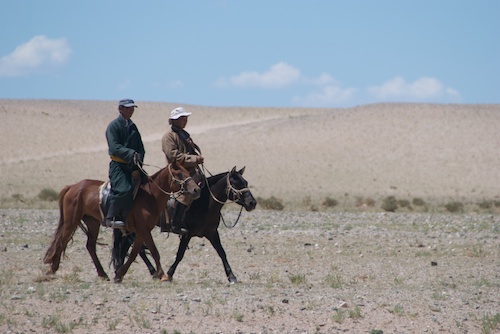
As we continued on, we saw two young men on horses riding in our direction. We stopped and Khatnaa got out to chat with them while I took photos from the car (do you see a pattern here? :0) . I don’t know where they were going, but they were all dressed up and looking good.
Local lads
We continued on into the valley and a huge freestanding rock came into view.
Another river to crossAs we came around the bend...
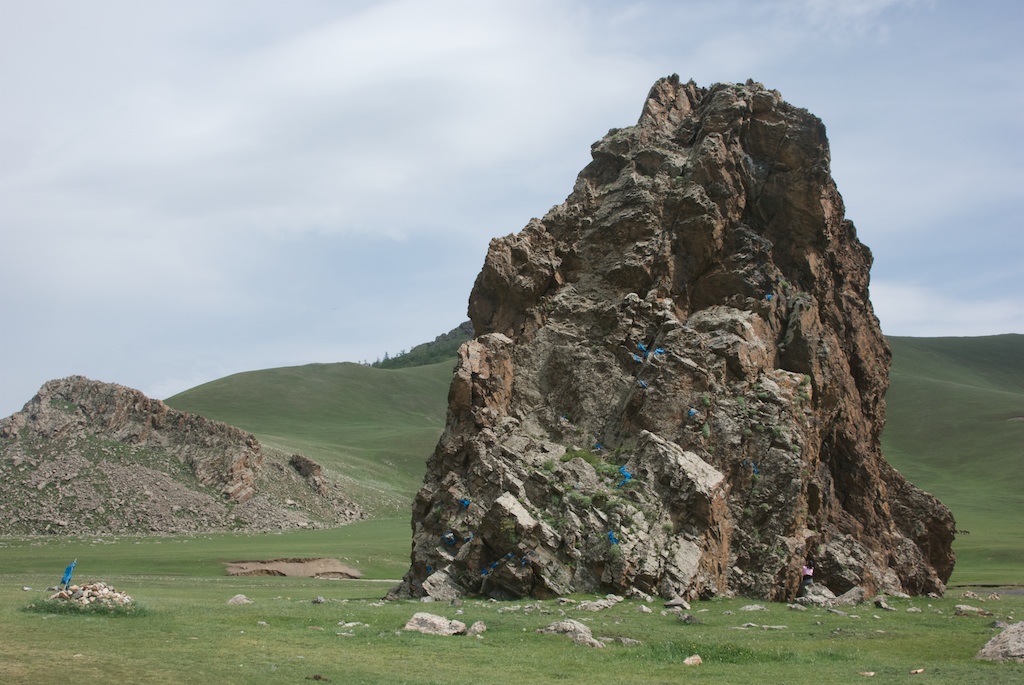
Driving up to it, I could see that it was festooned with khadak, the ceremonial blue scarves. We stopped for a short time, walking around it.
Sacred rock (I didn't get its name)
As it turned out, just past this local sacred landmark was what I will always think of as the “Valley of the Yaks” and which I think is one of the most beautiful places I saw on my trip.
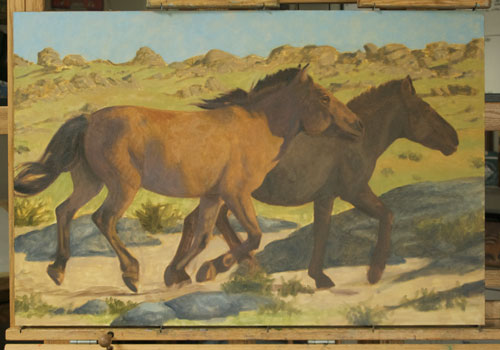
Mongol Horse #5-Evening Run 24x36" oil (price on request)
I was at Ikh Nartiin Chuluu Nature Reserve in Sept. of 2008. While sitting outside my ger, a small herd of local horses came wandering by. It was early evening and some of them were feeling frisky, like this stallion. I loved the quality of light on his reddish coat. The background shows some of the fantastic rock formations at Ikh Nart, which provide habitat for argali sheep and Siberian ibex.
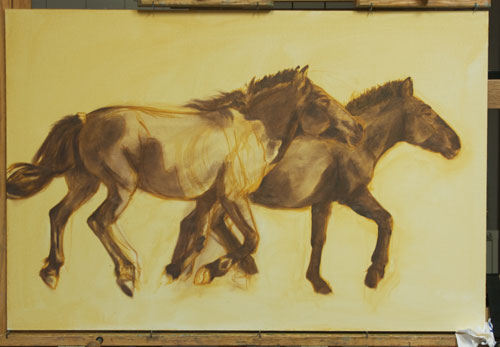
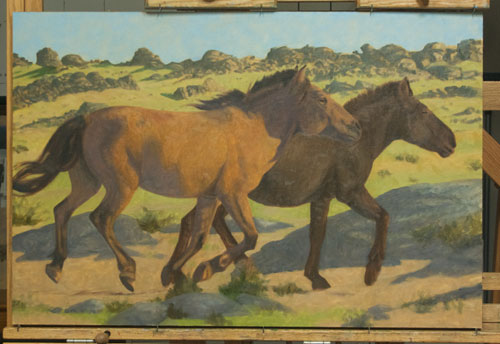
Here’s the step and step creation of this painting:
The brush drawing startLaying the shapes of the shadowsFirst indication of the backgroundShadow shapes for background elementsFirst pass of color for sky and groundProgress on the horsesLight and dark sides established for rocksApproaching the finishThe finished painting
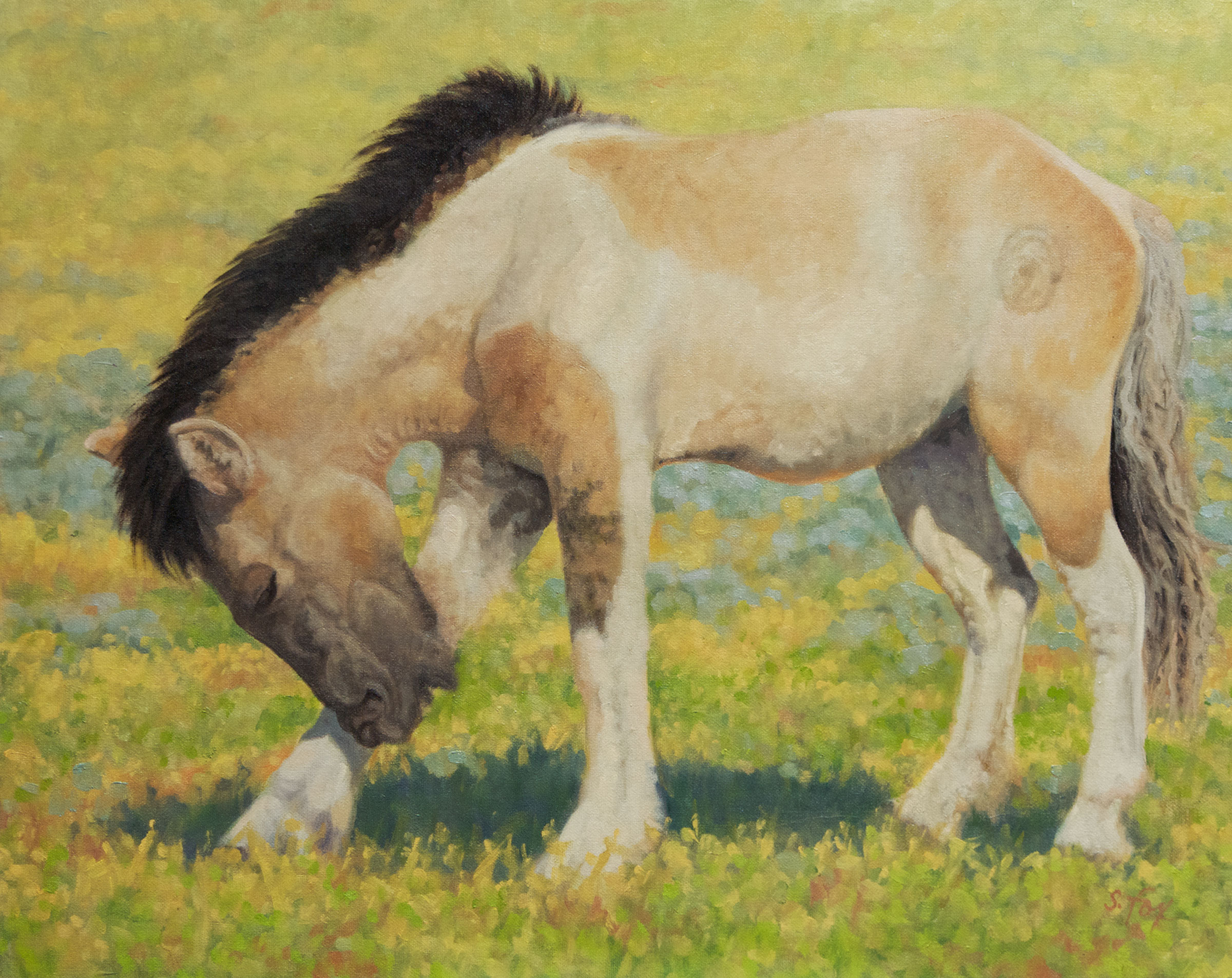
I received word this afternoon that my painting “Mongol Horse #3-Young Stallion” has been accepted into Art and the Animal, the prestigious 50th Annual Exhibition of the Society of Animal Artists. This is the second year in a row I have had work in the show. Last year it was bactrian camels, the detail of which is currently on my masthead.
I’ll be at the opening weekend of the show, which will debut at the San Diego Natural History Museum the first weekend in September. More later….
Mongol Horse #3-Young Stallion 16x20" oil on canvasboard



























 Susan Fox, American Artist