My ger arrives on-site in Ikh Nartiin Chuluu Nature Reserve, Mongolia.
Last weekI shared photos of buying my ger at the Narantuul Market in Ulaanbaatar. This week you’ll see it put up for the first time.
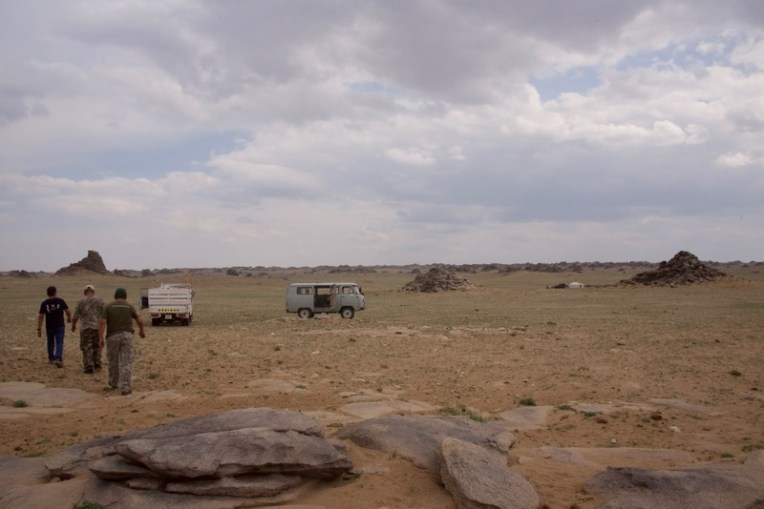
A few hours after all the shopping was done I caught the evening train down to Dalanjargalan Soum, where the Ikh Nart reserve headquarters is located. The reserve Director, Dr. Amgalanbaatar, was kind enough to let me stay overnight in the “dorm” room used for visitors. The next day he and I and Anand, a member of his staff, drove out to the set-up location in the reserve’s grey Russian fergon van. Shavka arrived with his truck and the unloading and set-up began.
I had been given a choice of three locations, all in the vicinity of local herders in case I needed assistance. I was in the reserve itself, but not in the Core Area where, other than the research camp that has been there since 2001, no camping is allowed. I liked this location the best.
Note: You can find a number of sites and videos about putting up a ger. Mine’s a little different, I believe, since it shows one being put up for the first time, so there are first time steps that you normally wouldn’t see.
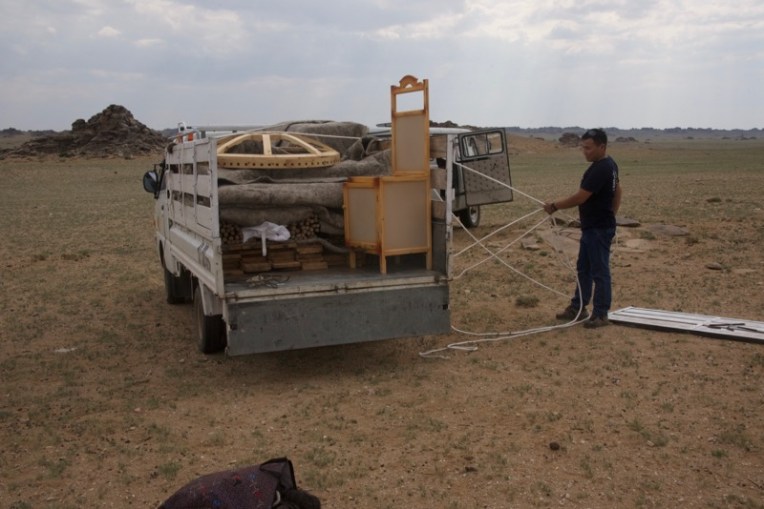
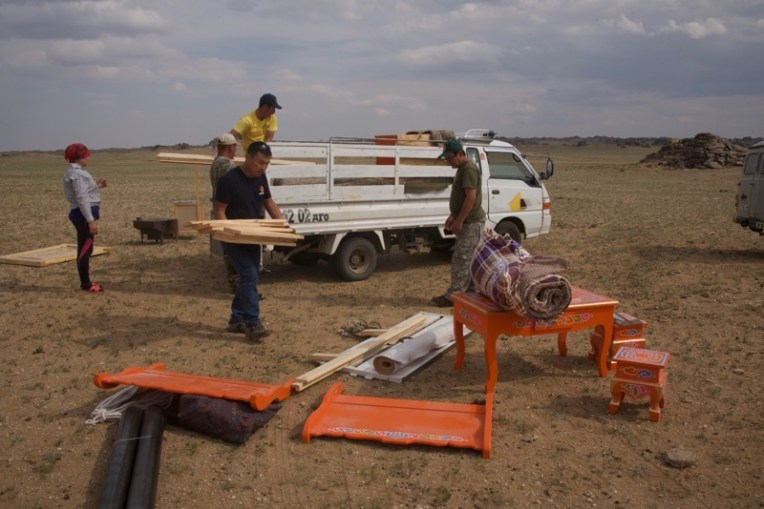
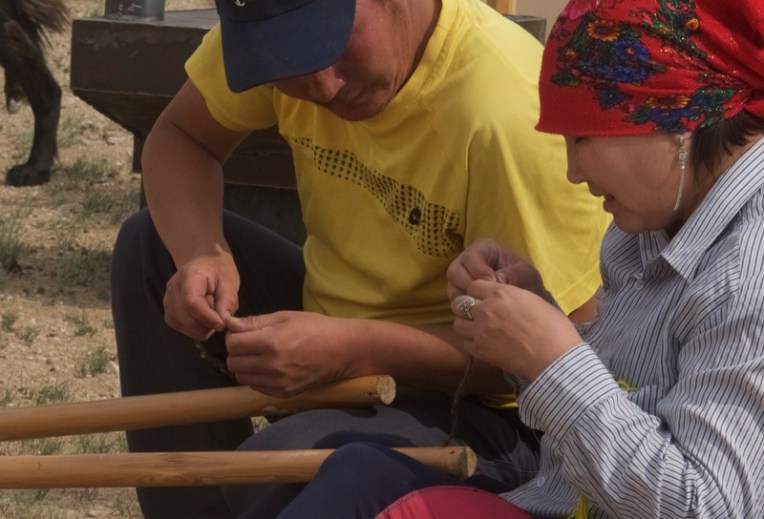
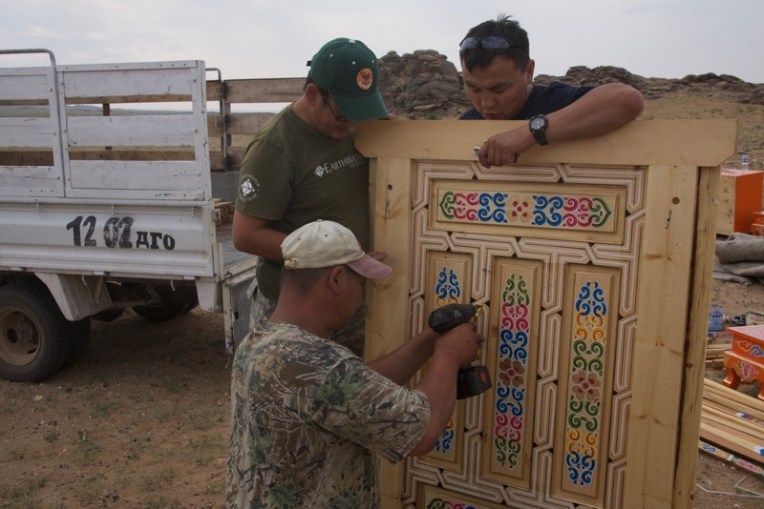
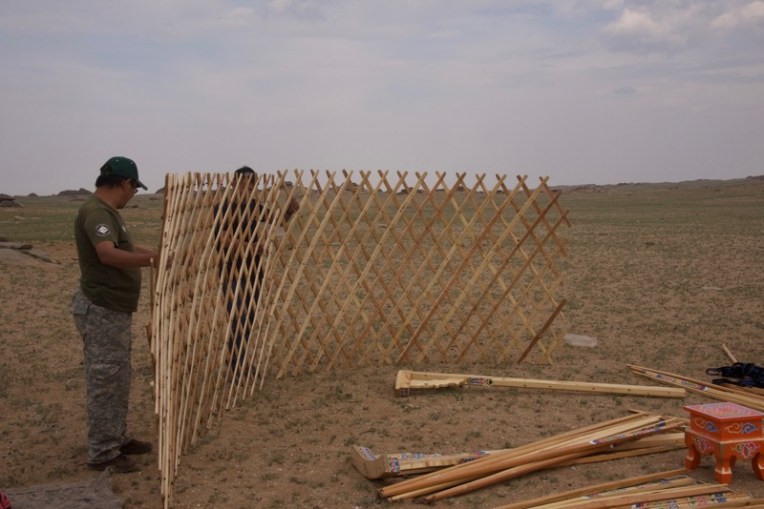
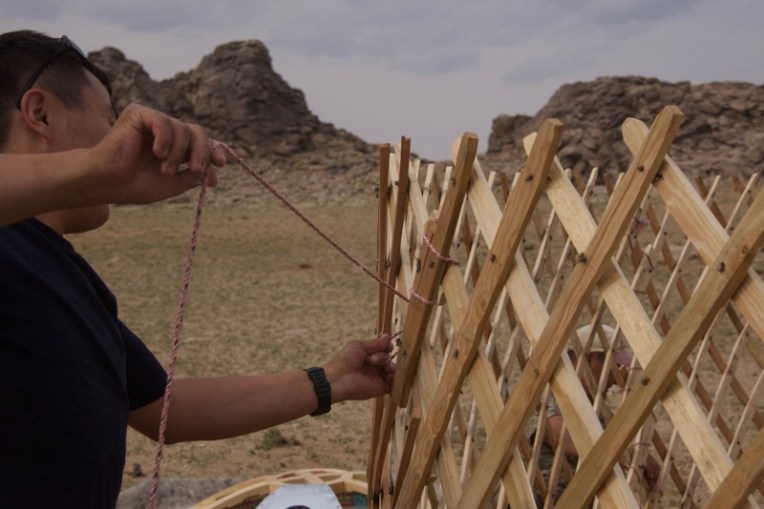
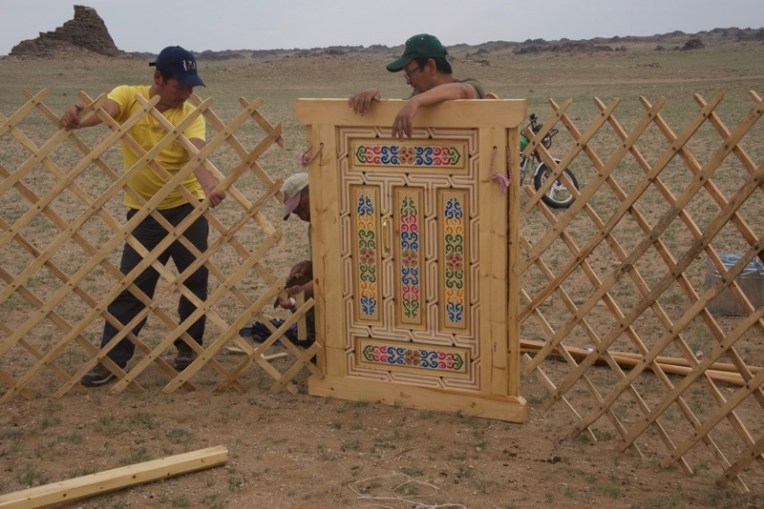
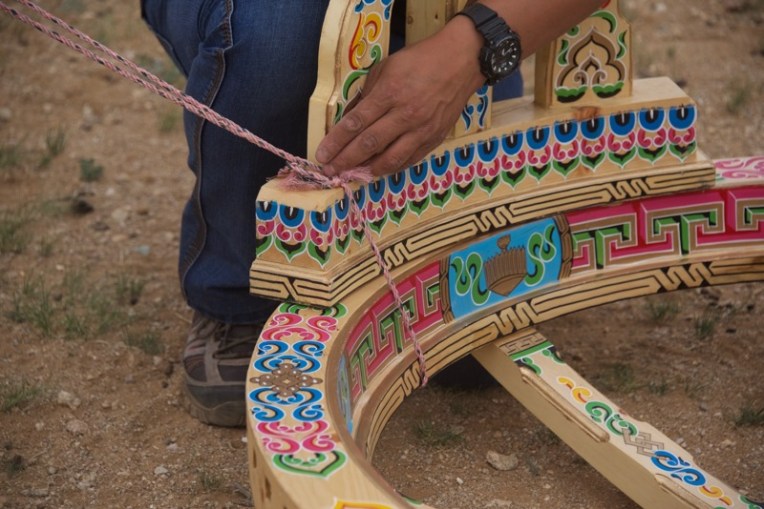
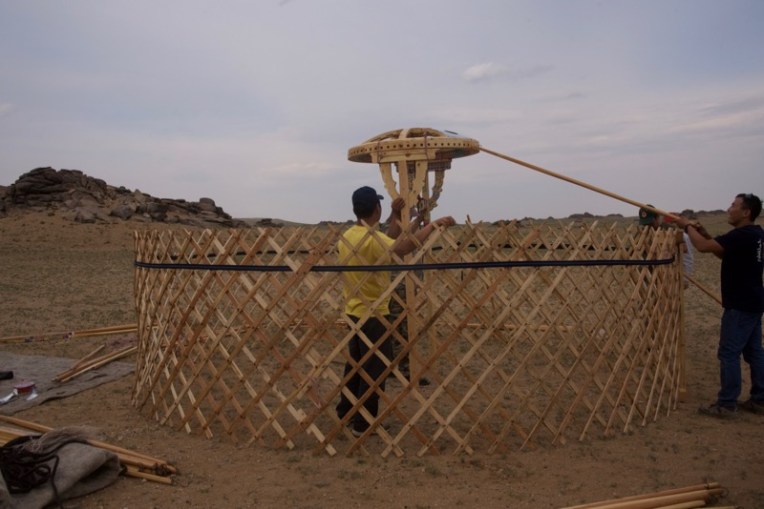
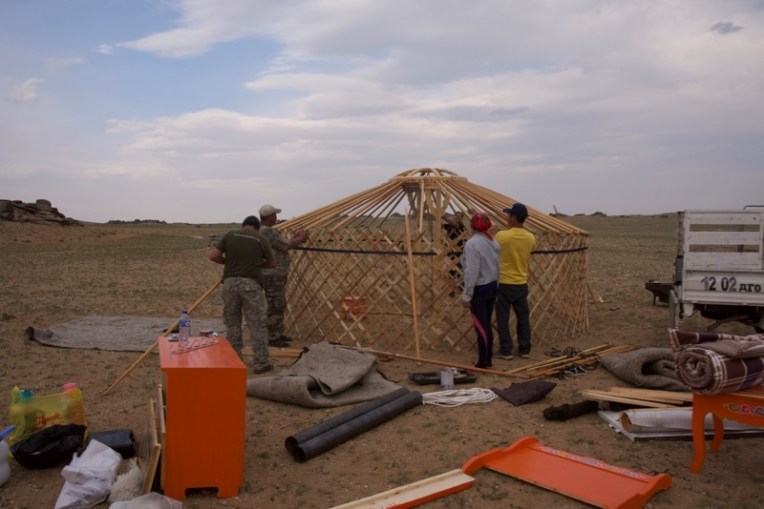
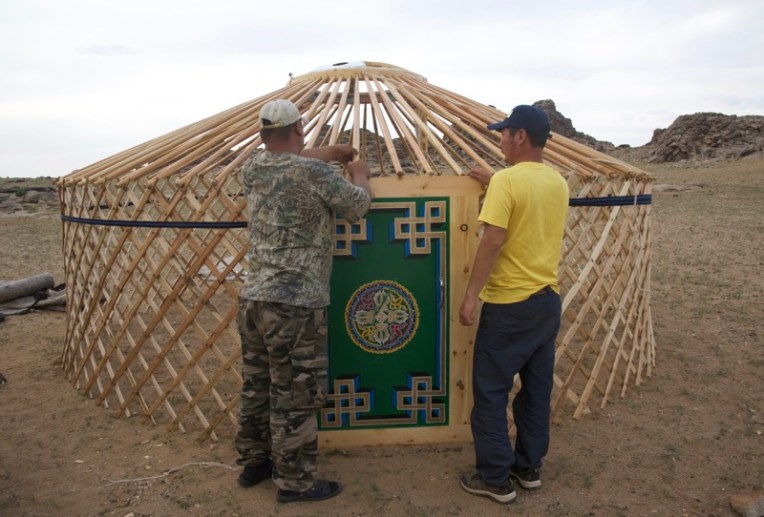
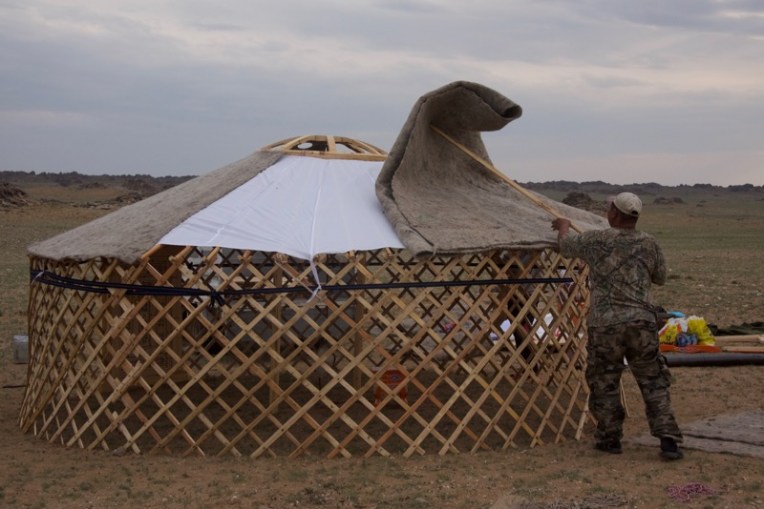
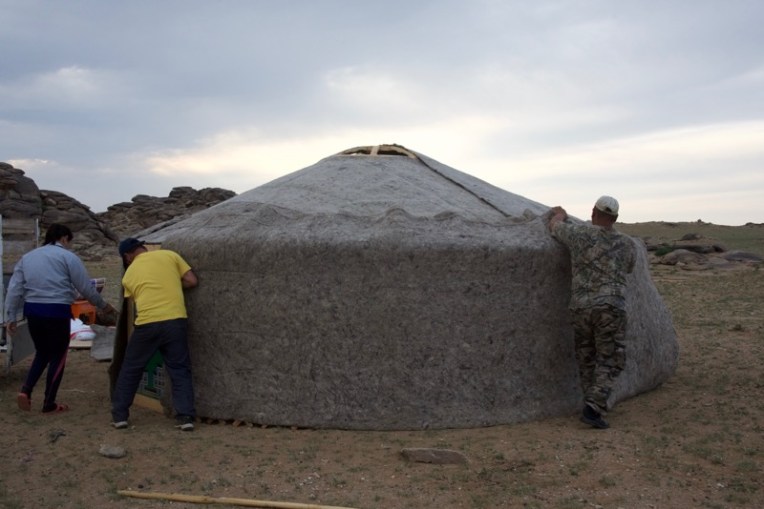
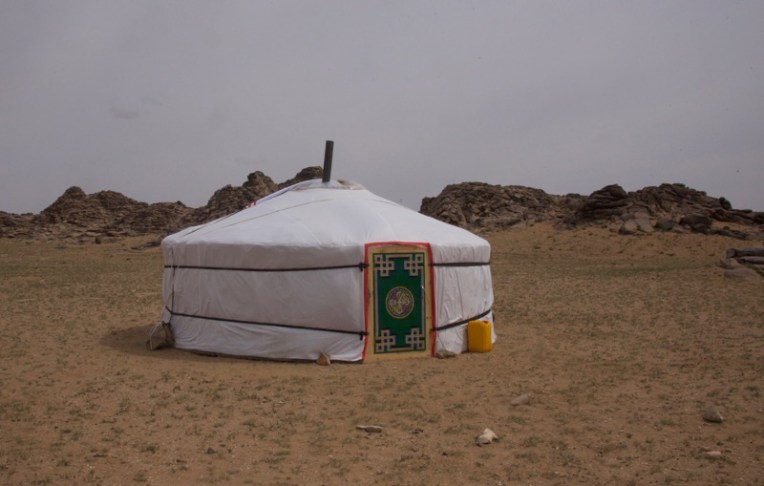
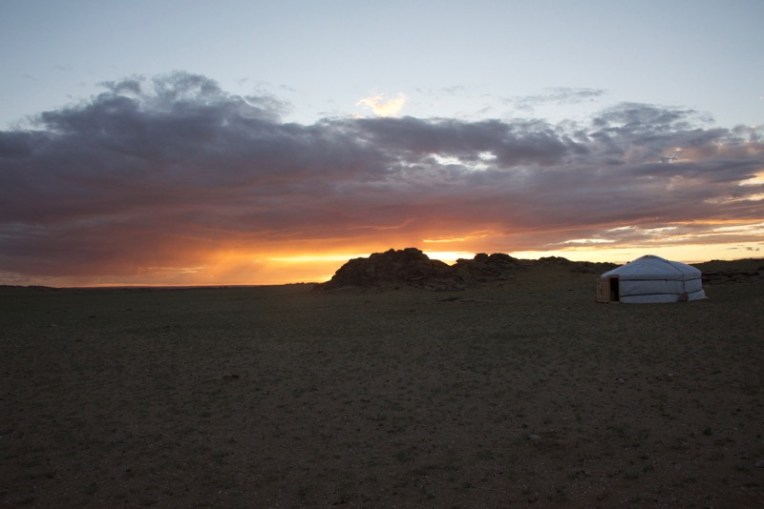
Unloading everything. That’s the sink stand at the back.Ger parts on the ground and the furniture coming out. That’s the headboard for the bed.Some of the furniture, my felt bed pad and the stovepipe.Anand pulling the traditional hand-braided horsehair ropes out a bag, which will go around the ger to hold the cover on. I’d specifically requested them instead of the, more common these days, cloth straps. It turned out that they were included in the ger “kit”.The wall lattice (bagana) sections being unloaded. There are four of them, hence a “four wall ger”.Ger parts being laid out on the ground. On the right are the felt cover pieces.It took longer than usual for set-up since there were things that had to be done first, but that would not have to be done again, like threading loops of braided strands of horsehair through the ends of the roof poles and knotting them in place. I was put to work which was great but, never having done it before, had trouble getting the hang of how the knot was tied, so only managed one of the 82.Horsehair thread looped through hole in roof pole.In the meantime, Shavka trimmed and fastened onto the toono the sheet metal piece that would hold the stovepipe so that it would never come in contact with the wood.Before the door was set in place Shavka fastened on the interior door handle. It’s toward the center so that when it’s open you can reach out to it to close the door without having to step out of the ger. Great when it suddenly starts to rain or the wind comes up.Prep done! The first section of lattice (khana) is put in place.Each section is tied together with sturdy cord.The door (khalga) is set in place. The lattice didn’t come to the edge of the door the way Shavka wanted them to so he sawed off the ends of each lattice piece to fit. Another task that only needed to done once.The toono is handed over the walls to be set up.The toono is laid upside down on the ground and the vertical supports (bagana) are held in place flush, without slots, holes or other connectors.The toono and bagana are tied together by lengths of the same cord that was used to tie the lattice wall sections to each other. And yes, I really love the decorative painting!The toono/bagana combination is now held in place by two people while a few poles (uni) are added around the perimeter. The dark cloth band is what holds the door in place.The horsehair loops in action, attaching the roof poles to the lattice sections.It became clear within minutes of trying to insert the roof poles into the holes in the toono that the ends were too big. Amgaa, Shavka and Anand got out knives and took three or four large shavings off of each of the 82 poles.Once the pole ends fitted the toono holes, the roof went on pretty quickly.Shavka adjusts a roof pole. The exterior design on the door was different than any I’d seen before and I liked it.The first part of the cover (tsavag) to go on was a light weight one that would be visible inside the ger.The felt roof pieces (deever) go on. There’s definitely a technique one has to know to be able to flip a folded roof felt into place in one motion.Roof felt on, wall felt (tuurga) almost on.If you’ll remember from last week’s post a quantity of plastic sheeting was purchased. Here’s why. It’s a fast and inexpensive way to add rain protection since the felt will soak through if it rains hard enough (the voice of experience from a couple of occasions). We also got what the Mongols call “Russian canvas” with the ger, which is waterproof, but Shavka had wisely decided to use it as a layer between the ground and the sheet vinyl flooring. I bought the wood for him to make a sectional wood floor for me for next year.The final step was the outer cover , held in place by two bands of the braided horsehair rope. Choi and his wife, were my “hosts”. They had their ger nearby, Here he is attaching the triangular top cover piece (urkh) which generally left open and pulled back but is closed when it rains. No glass or plexiglass in the toono openings. It was open to the sky, which is what I like.And here’s my ger the next day, all set up. We started putting it up the day before around 5pm and finished at 10pm. I was moved in by 10:30. The yellow container on the right is one of two I bought so that my host could bring me well water via his motorbike.All moved in. The big rock, along with three more on the outside are to keep the ger in place and stable in high winds. Gers are not otherwise fastened to the ground. No stakes. On the left is my water filter system, which consisted of a LifeStraw 5 liter gravity feed filter which emptied into the plastic container I bought at the market. The wonderful $9 teakettle sits on the one-burner gas cooktop which is on the stove. I love the quality of light in a ger as it comes through the roof.The “kltchen” and dining side of the ger. A cabinet is on the list for next year, although the table does have a pull-out drawer where I put my flatware and utensils. Also note that the roof poles provide a useful place to put things like bags, towels and clothes.My ger in its setting. On the right you can just see Choi’s ger, about a five minute walk. There was a rock formation between us, so I had visual privacy and could only see the natural landscape. I did have Choi’s goats and sheep coming by on a few evenings and that was pretty entertaining.Sunset evening in Ikh Nart with my ger.
So how did it go, my week of living in my own ger for the first time? Really well. There was one very strong storm with heavy wind and rain that pulled part of the cover almost halfway off, but Choi and his wife fixed that the next morning. Wind blew a lot of dust in on the bottom on one side one afternoon, but putting up a section of the interior curtain (which hadn’t been done since there was no cord to string it up with, but I found a way to fake it) so that it fell onto the floor solved that problem. I used my cooktop for heating water for coffee in the morning and tea for visitors. I also had bansh (small meat dumplings used for soups) for dinner a couple of nights. I did a little laundry using the steel basins I’d bought and also managed a standing bath and hair wash.
Food storage became an issue and I lost some items, like a loaf of bread that turned moldy, due to lack of refrigeration. A small solar powered refrigerator with battery storage is on the list for next year. One often sees them in herder gers these days. I was happy with candlelight at night, so not really feeling the need for an “electric” light. My toilet was the great outdoors, which I’m used to, but it was a bit much for a week in one place. My current thought is to have a small vertical wall maikhan (the cloth summer tent) made with a divider down the middle. On one side would be a pit toilet with a seat and on the other a place to take a shower using a sun shower bag.
I slept well (I always do in a ger anyway) and found that I had, in fact, understood what was needed to do this to be happy and comfortable for a week or more. In the evenings I took one of the stools outside and put it close enough to the ger wall that I could sit with back support and watch the sun go down. A nice nip of Chinggis Gold vodka and some Ukrainian chocolate nougat candy (from Roshan, my favorite) and life was just about perfect.
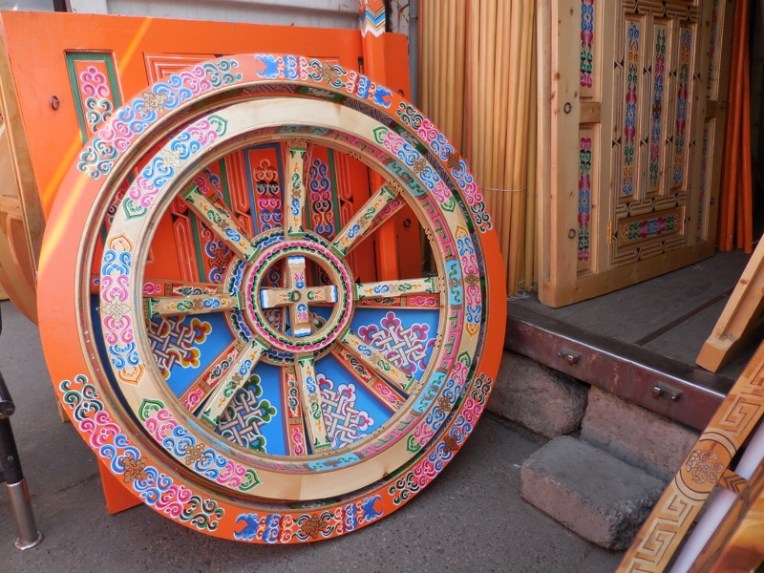
The roof-ring, “toono” in Mongolian, for my ger is the smaller one inside the larger orange one. I had originally planned to get the traditional orange, but Shuka (see below) observed that the clear wood was better because one could see the quality of construction. He’d already reconnoitered the various ger sellers before I got there and had picked this one as having the best quality for the money. I ended up really liking the feeling of the interior structure with the decorative painting on the lighter color.
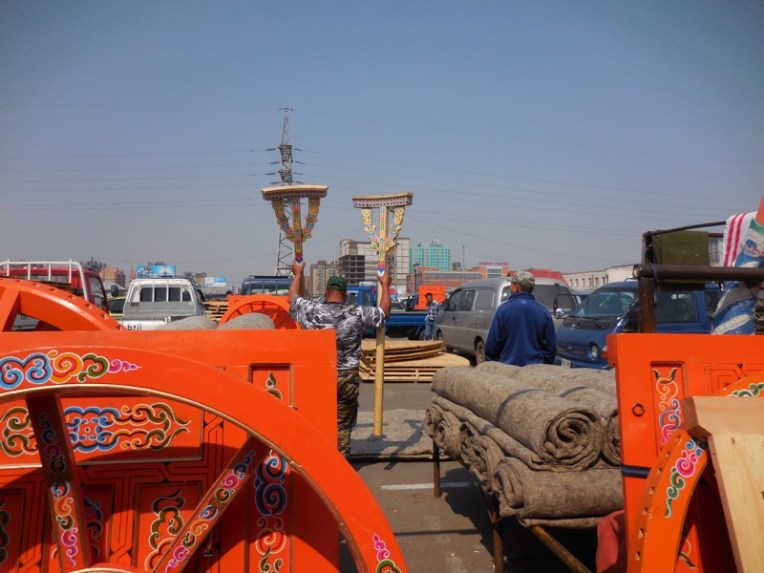
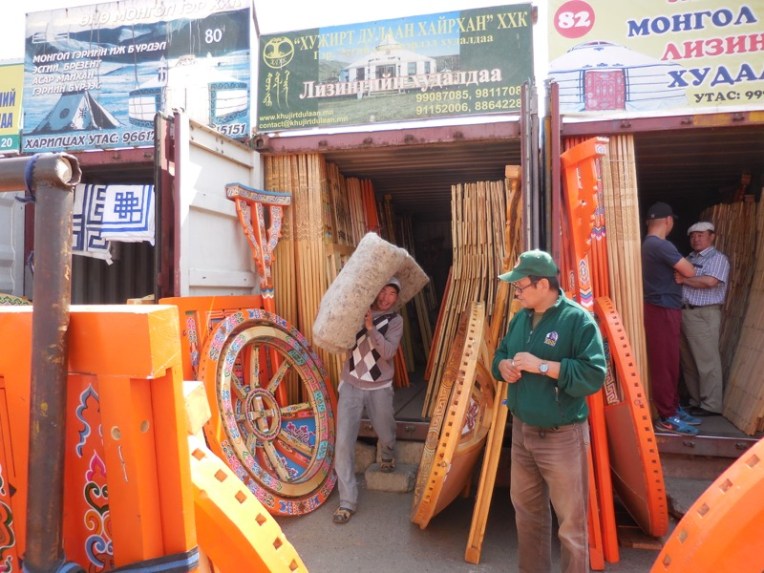
On June 15, exactly one month ago, I got to spend some of the most fun hours I’ve had in eleven years of traveling to Mongolia, buying a ger at the Narantuul Market inUlaanbaatar. Not to bring home, but to use at one of my favorite places in the world, Ikh Nartiin Chuluu Nature Reserve in Dornogobi Aimag, which I went to on an Earthwatch project (still going strong) on my first trip to Mongolia in 2005.
Before I left home, calls were made for me to get price estimates so I would know approximately how much things would cost. As it turns out, it’s impossible to get traveler’s checks anymore and foreigners are limited on how much money they can take out of an ATM per day. So I carried $1500 in cash with me, which was converted into tugrik, the Mongolian currency, before we went to the market.
I didn’t do this on my own, but had the expertise and assistance of two Mongols. One, Dr. Amgalanbaatar Sukhiin (Amgaa), is the Director of the Ikh Nartiin Chuluu Nature Reserve Park Administration who I’ve known for eleven years. He granted my request to be able to set up a ger in the reserve, designated some choices for the location and helped with the shopping (talking to the sellers, carrying the money and paying for things) and the set-up. The second is Batbold (generally known by his nickname “Shavka”), a herder who lives with his family near the reserve, in a ger, of course. He was kind enough to drive his truck to Ulaanbaatar, help with all the purchases, transport everything back to Ikh Nart and help with the set-up. This dream come true would not have happened without them, along with other helpers you’ll meet next week.
“Ger” means simply “home” in Mongolian, but it’s generally associated with the round “felt tents” that the Mongols have lived in for over a thousand years. It’s a structure that is perfectly adapted to conditions in the Mongolian countryside. I thought of buying and living in one for a week to ten days a year as a kind of final exam to see how much I’d learned over the years staying at the Ikh Nart research camp, tourist ger camps and visiting many herder families.
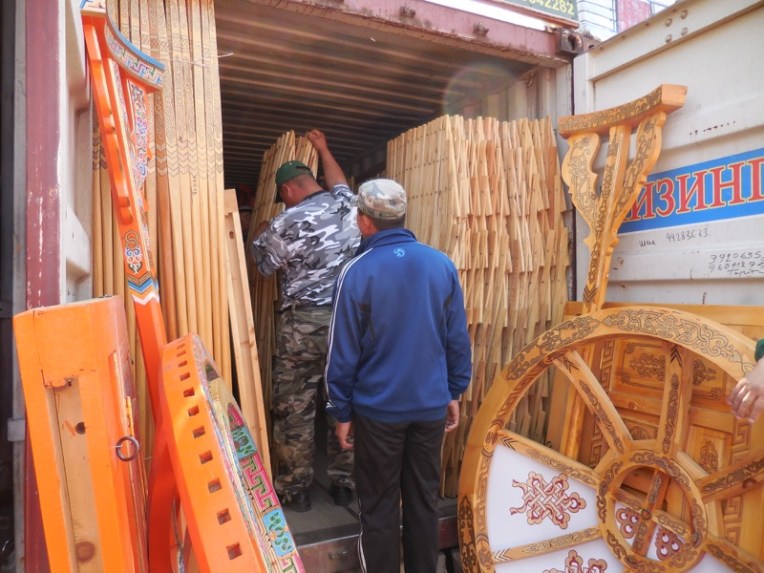
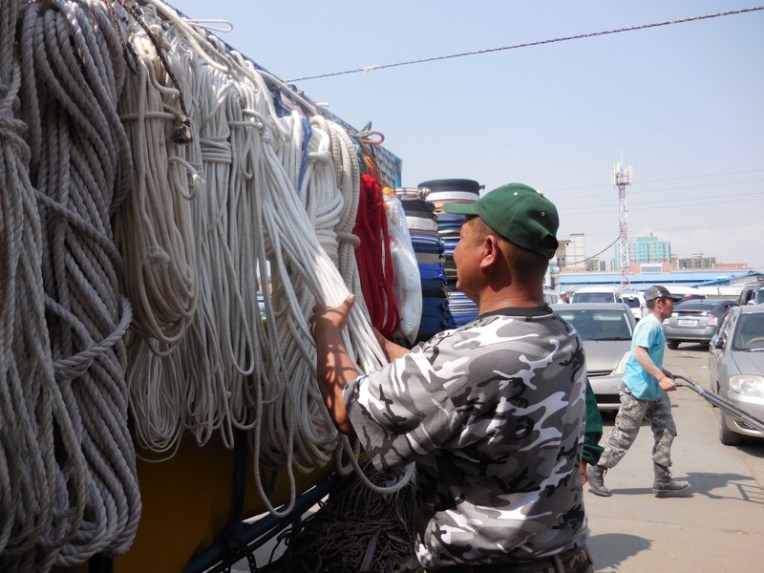
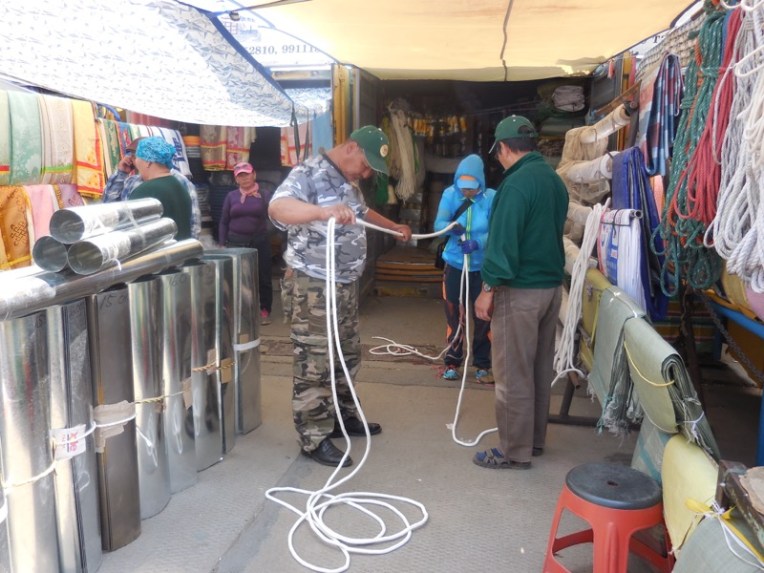
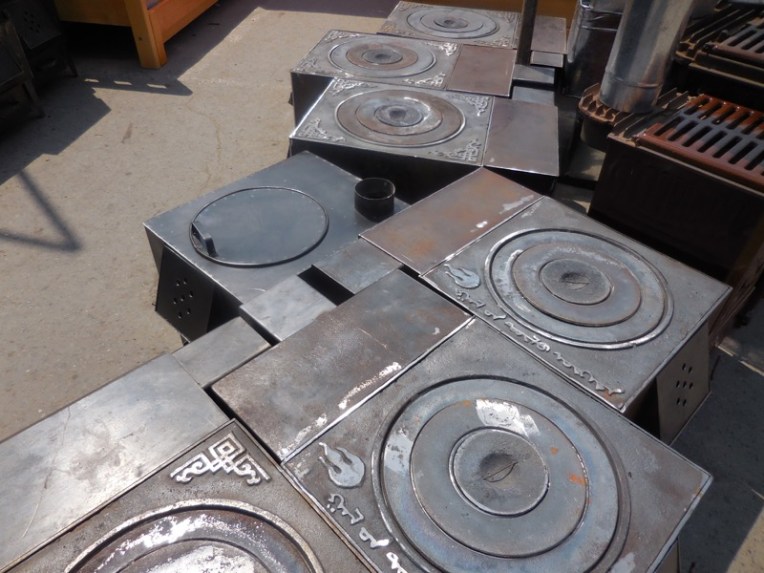
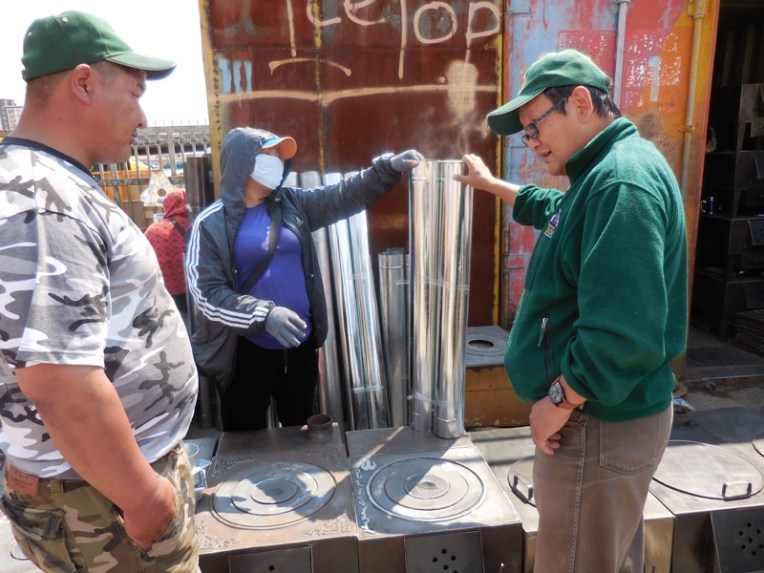
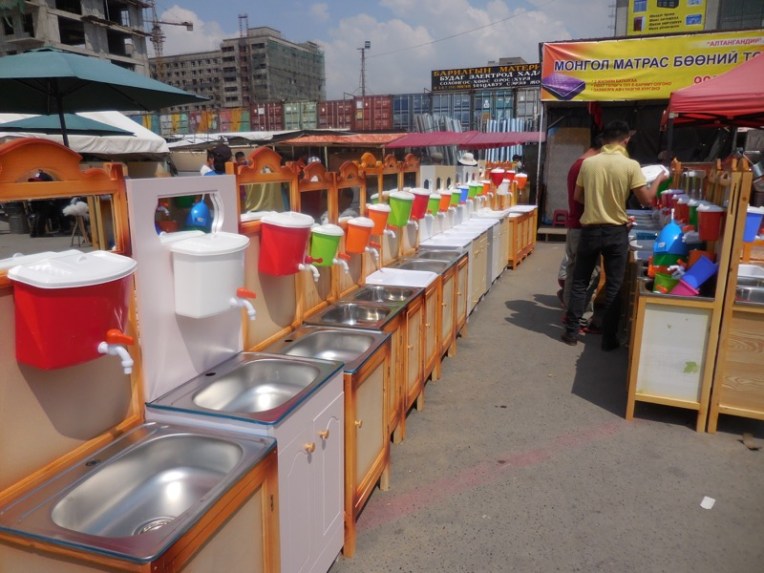
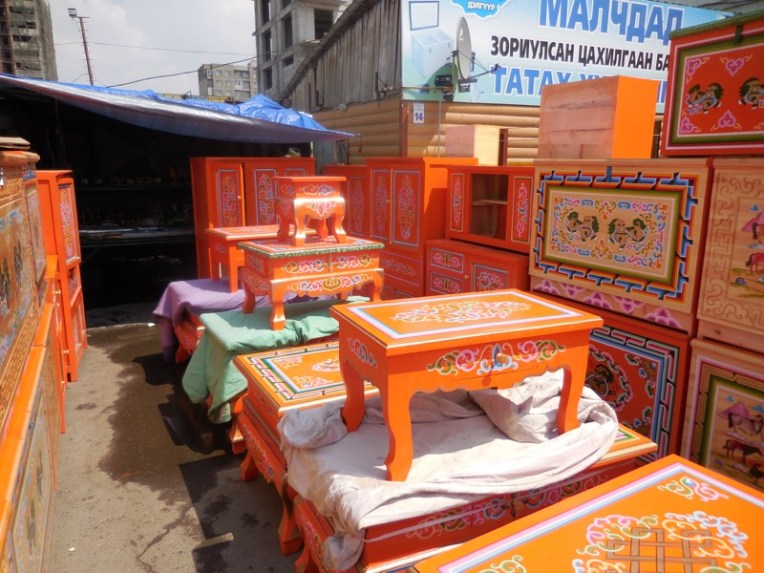
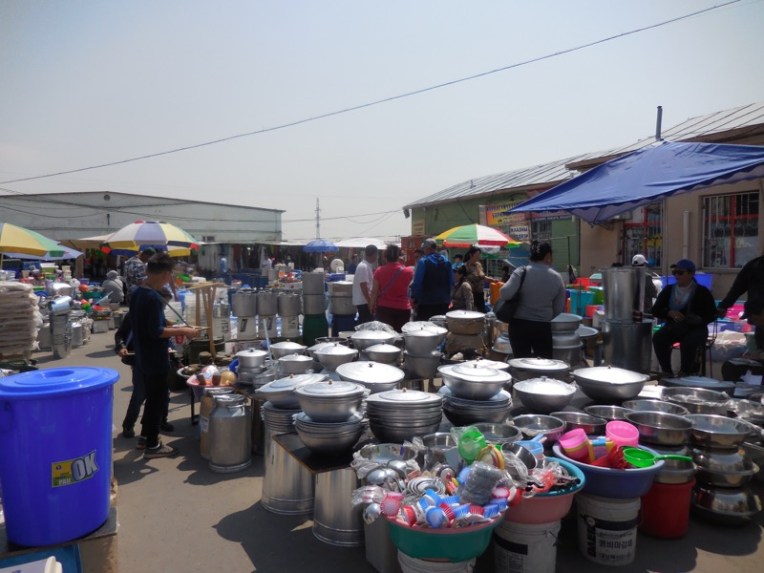
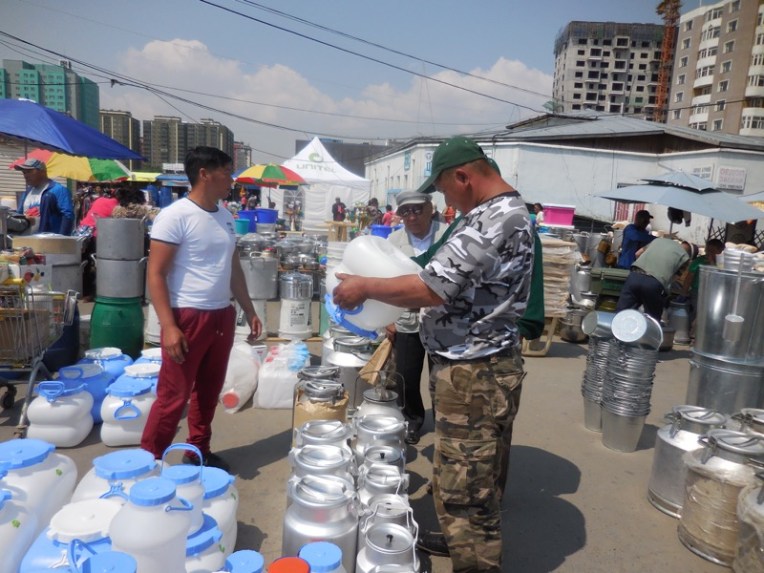
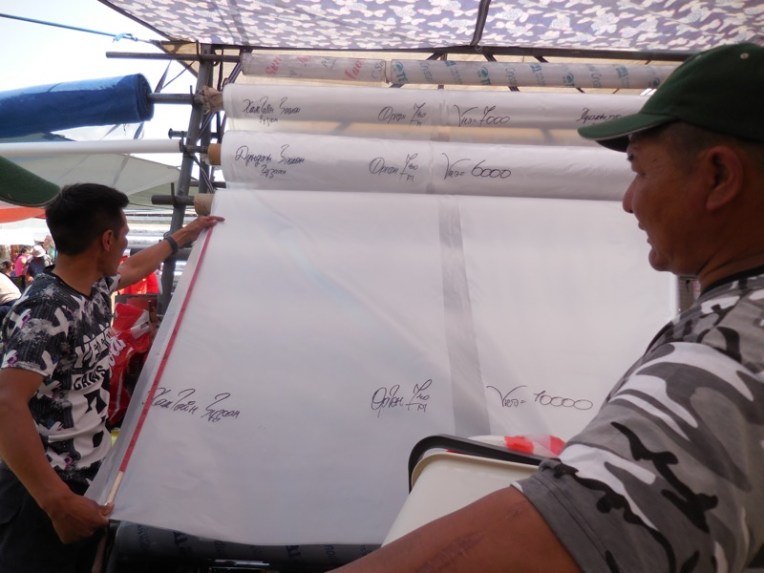
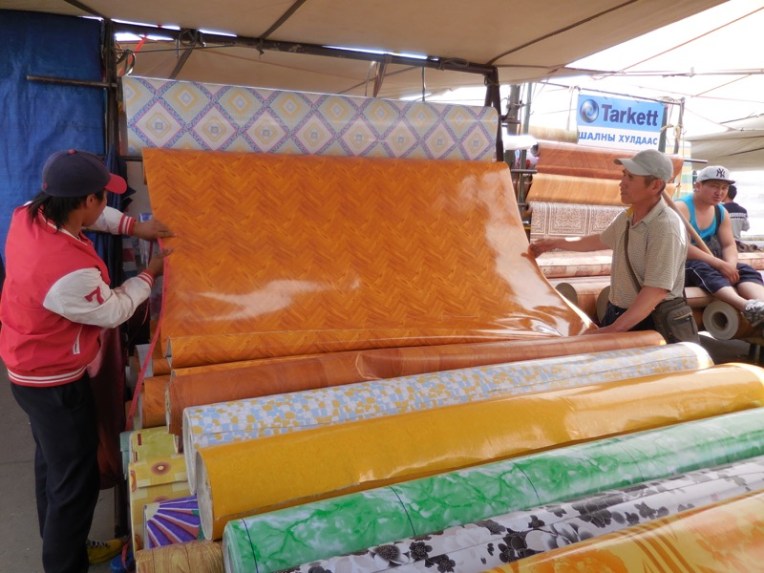
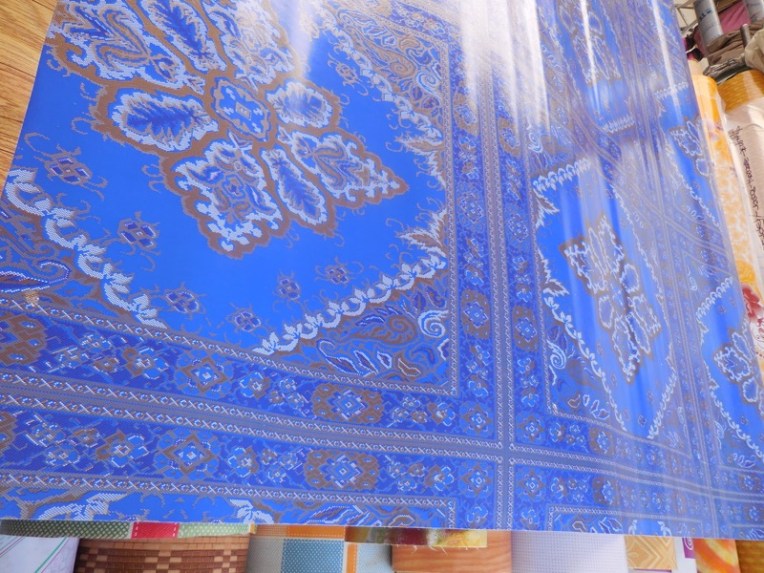
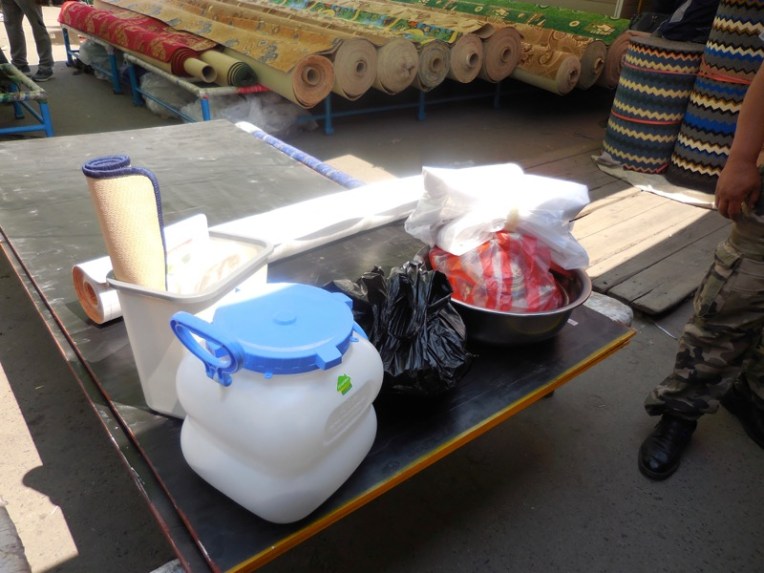
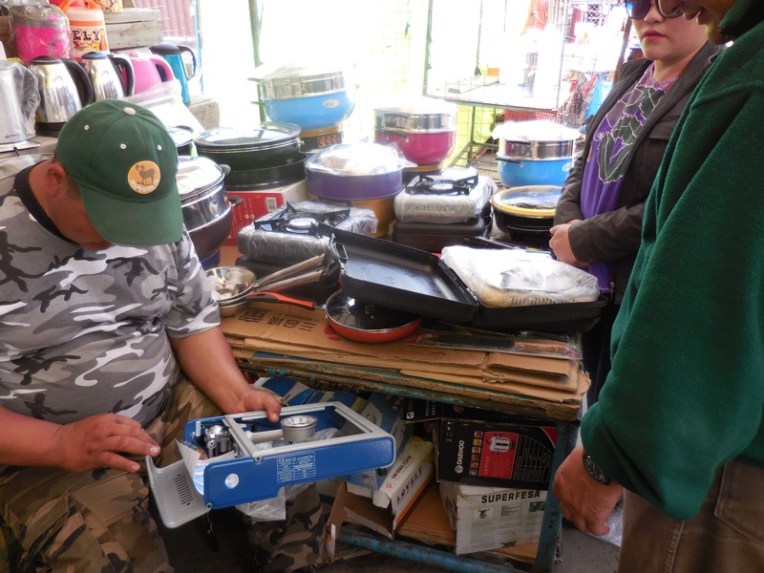
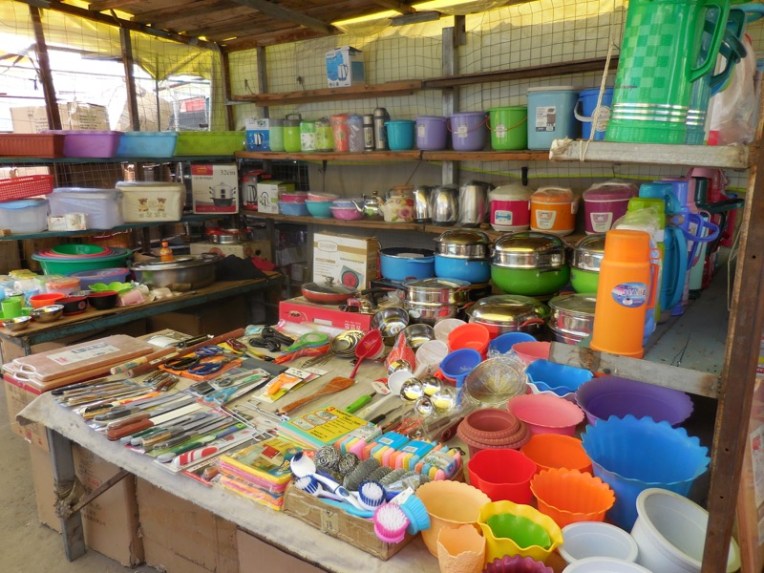
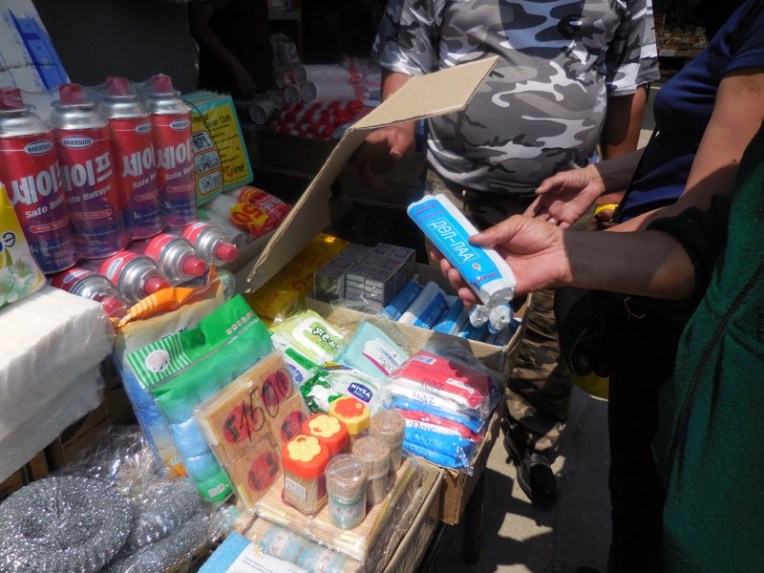
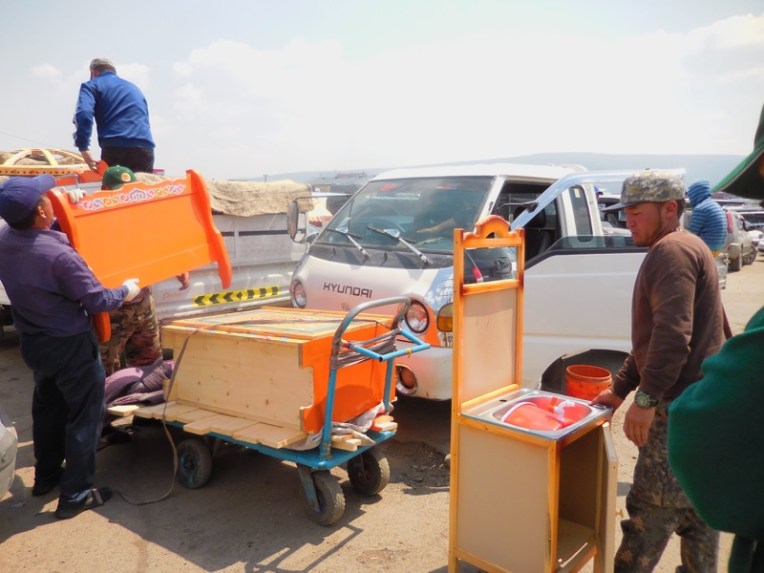
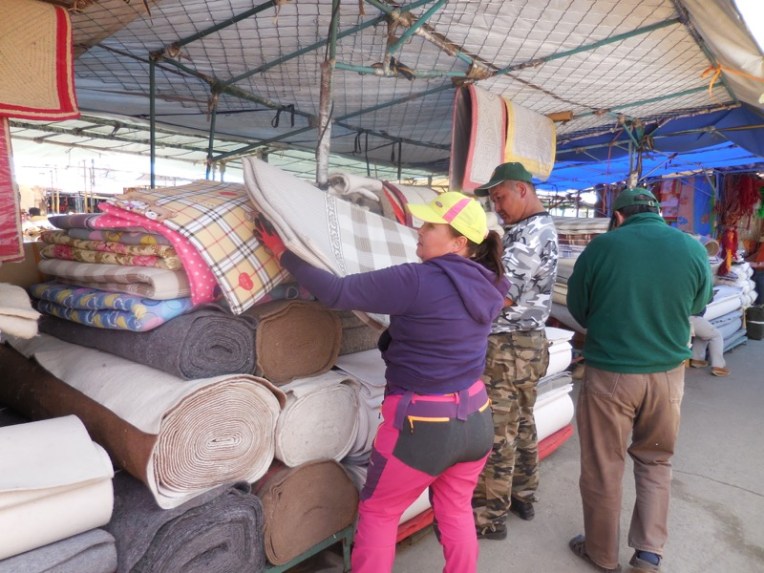
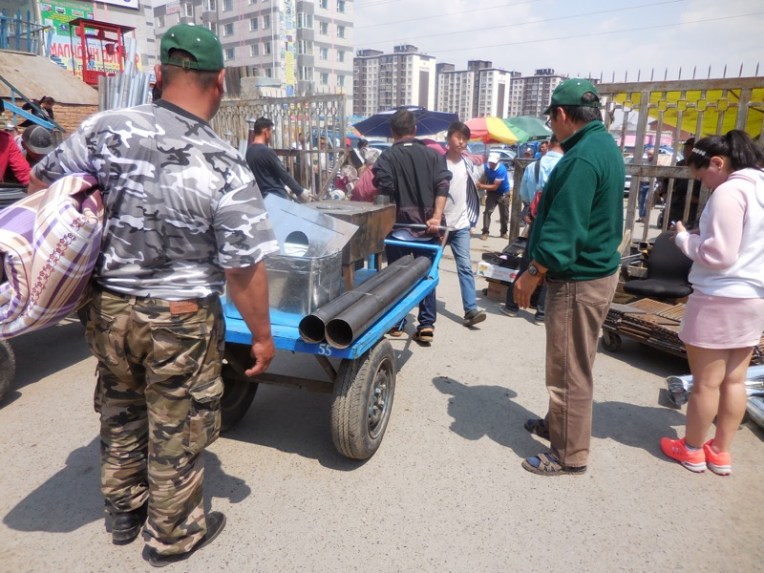
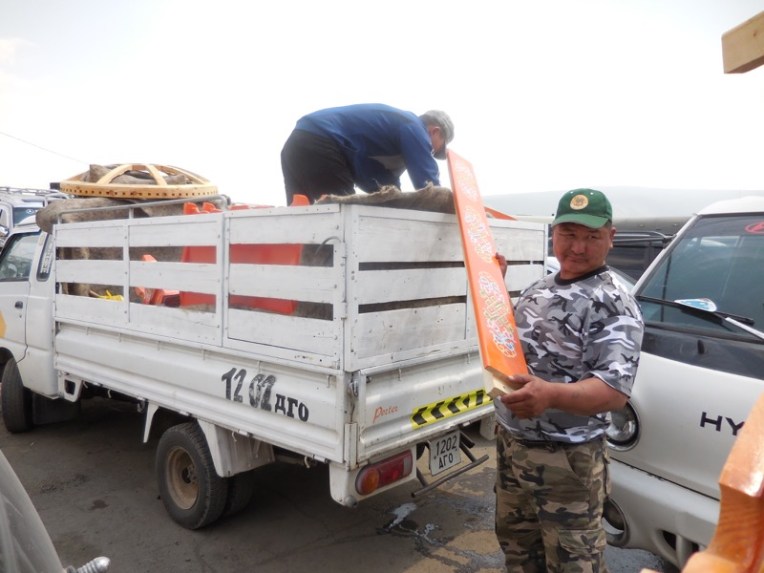
The exterior of the door, “khalgaa” in Mongolian. An unusual color and design that I hadn’t seen before. The doors come already framed in.The vertical supports, called “bagana”, being carried to the truck.I bought a “four wall ger”, which means four of the standardized wood latttice walls, called “khana”. Gers are described by the number of walls, which also indicates how big in diameter they are. Shavka is picking out four sections.Bringing out the felt cover. I bought one layer since it’s summer. More layers can be added as the weather gets colder. It’s a tremendous insulator. That’s Dr. Amgalanbaatar in the green jacket.Choosing sturdy rope for holding the rocks that will weigh down the ger to keep it in place when it’s windy.Measuring out the rope. Shavka was very particular about every aspect and item.Ger stoves. There are lighter, thinner ones that are for summer use and heavier, thicker ones that are used in winter. I chose the latter to not foreclose the option for cold weather use. There were two designs to choose from. I went with the one that had the flame motif and the vertical Mongol script, called “bichig”.Stovepipes. They come in two sections to be assembled in the ger. There’s also a sheet metal piece that fits onto one of the openings in the toono which has a pre-cut hole for one.Sink stands. How to have running water in a ger. Mostly I’ve seen these in tourist ger camps, but having one for mine made sense and it came in very handy. I chose the one on the front left. I also bought a bucket which went underneath the sink to catch the water.Ger furniture in the traditional orange. I bought a bed, a table, two stools and a cabinet.Kitchenwares. I got one of the aluminum pots with a lid like you see in every ger.Water container. I purchased a LifeStraw gravity feed water filter before I left home. The idea was that I would be provided with well water (for that I purchased two yellow rectangular containers that could be carried on a motorbike). The 5 liter filter bag would be filled from those and drain into the container that Shavka is holding. It worked quite well and drinkable water was no problem.Plastic sheeting. There are two ways to rainproof a ger. One is covering the roof (and sometimes the sides) with what is called “Russian canvas”, heavy waterproof cotton. A bundle of it was included in the price for the ger. Shavka also bought enough of the plastic to cover the whole ger. And it was a good thing…Vinyl flooring. The ubiquitous choice these days. I’ve only been in a couple of gers ever that had the old school felt rugs on the floor. I found that the sheet vinyl comes in different thicknesses. We got the thickest.My first choice. I thought the rug pattern was cool, I liked the color and it was different than the very common fake wood floor pattern. But I let myself be talked out of it because Shuka and Amgaa said that it would be too dark. And I think they were right. The lighter, less complex pattern of the fake wood pattern one I chose worked well.Miscellaneous purchases. There were lots of small items to get like a wastebasket, a doormat, steel basins and, in the red and white striped bag a fabulous tea kettle that was only 18,000 tugrik, about $9.00 USD. You’ll see it next week. Also a kitchen knife, flatware, cutting board, dishwashing supplies…Cookstove. I left the choice of which one to my helpers. Shavka really went over them before deciding. I knew I wasn’t going to use the wood/dung/coal burning stove and had seen these in a few gers. It worked out great. The fuel comes in what look like spray paint cans. Simple to pop in and out of the receptacle. In the ger I set it up on the stove.Housewares. Typical of the “mini-shops” one finds at the market. I got a couple of thermos’ (which turned out to be too big at two and three liters; will get a couple one liters for next year), four tea bowls and two larger bowls for morning cereal and soups.Candles and propane cans. No solar panel yet, so candles for light if needed. A candlielit ger is very comfy. Also lots of matches. The cans are for the one burner cooktops. In a week I went through one, plus a little of a second, heating water multiple times a day for coffee, washing up, a batch of bansh (small meat dumplings) soup, etc.Delivering the furniture to the truck. There were a number of trips back and forth. Once we’d finished all the shopping, we went back to the furniture seller, who had my choices ready to go on the hand truck, along with the sink stand. We’d also carried the small items to it a couple of times.Felt pad for the bed. I had a choice between a mattress and a felt pad. The mattresses have very stiff springs and thin covers with no padding. I always have my Thermarest pad with me, so opted for the more traditional felt pad covered in cloth. I got a big one that could be folded in half on the single size bed.Buying the stove. Last stop was back to the stove merchant to make the final choice. The purchase price included the stove, stovepipe, stovepipe metal piece for the toono and a typical fuel box.Last load. You can see the stovepipe roof piece and the fuel box in front of Shavka. Once this delivery to the truck was done, Shavka re-packed everything for the drive to Ikh Nart, about five and a half hours. I went by train that evening.Loading the truck. Although this was taken earlier when the furniture was being loaded (that’s the front of my bed in Shavka’s hands), it shows how the ger was loaded. Traditionally, the toono is ALWAYS on the top. This past trip I actually saw a couple of vehicles in which the toono was laying on its side against the side support. I was happy that mine was going to be carried correctly.
So, how did I do on the budget? The ger cost 1.5 million tugrik…$750 USD. We were moving fast so I didn’t write down what everything else cost. All of it together came to $1200, pretty much what I’d estimated. I also paid Shavka’s gas and road fees and something for his helper and that took care of the rest.
Next week: Putting up my ger at Ikh Nartiin Chuluu Nature Reserve.
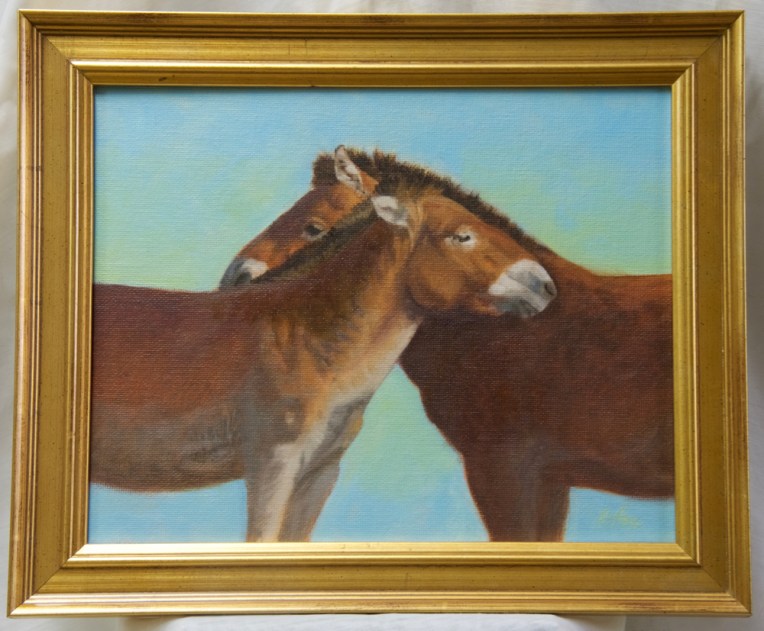
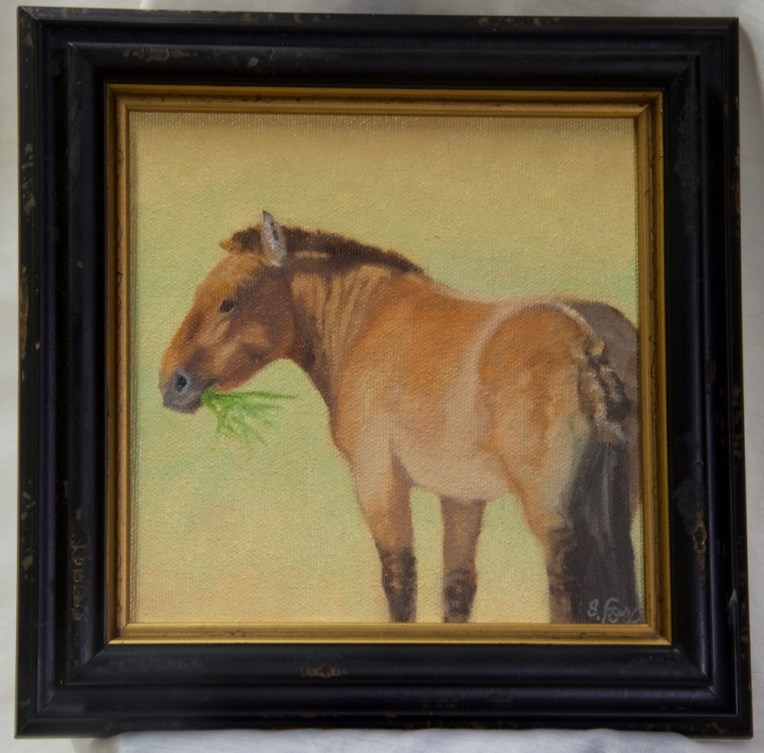
I leave for my 11th trip to Mongolia on Saturday. Going with me will be five new small works in oil for Mazaalai Art Gallery, which represents me in Ulaanbaatar. All of them are of takhi/Przewalski’s horse from Hustai National Park, which I have visited seven times over the years and will once again this year. 10% of the sales price will be donated to Hustai. You can visit their Facebook page here. And here are the rest of the paintings.
Hustai Takhi Foal 8×10″ oilGood Grass (Hustai Takhi 6×6″ oilHustai Takhi Stallion oil 6×6″Hustai Takhi Mare and Foal oil 5×7″
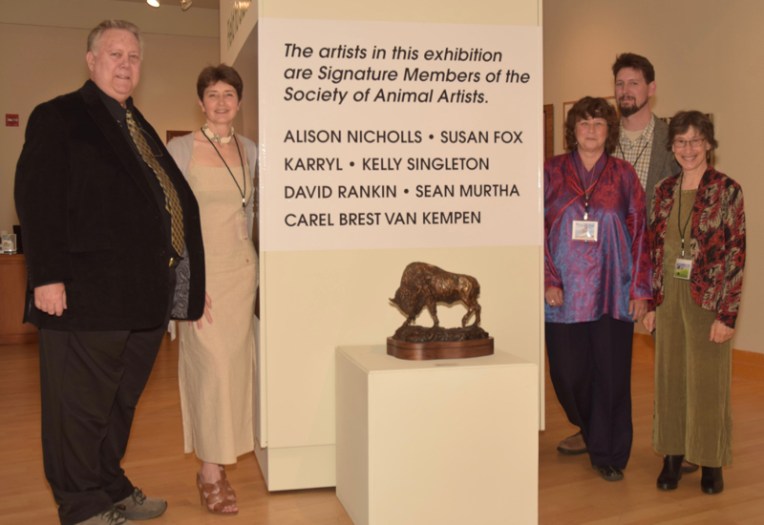
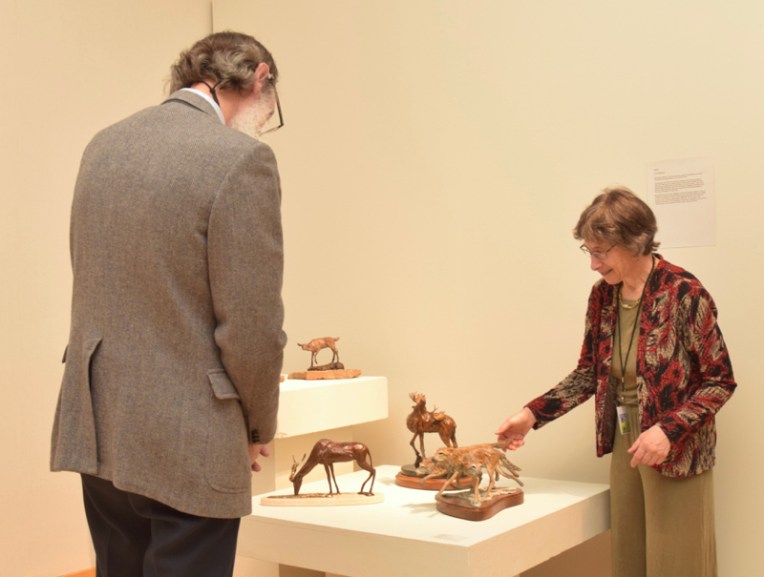
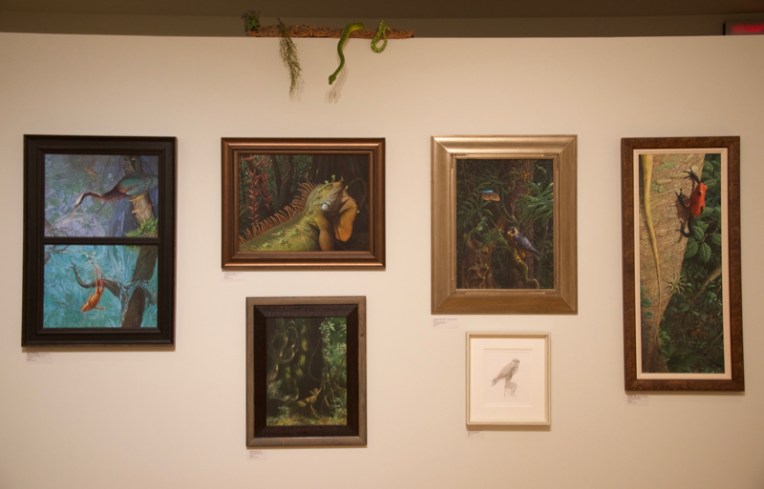
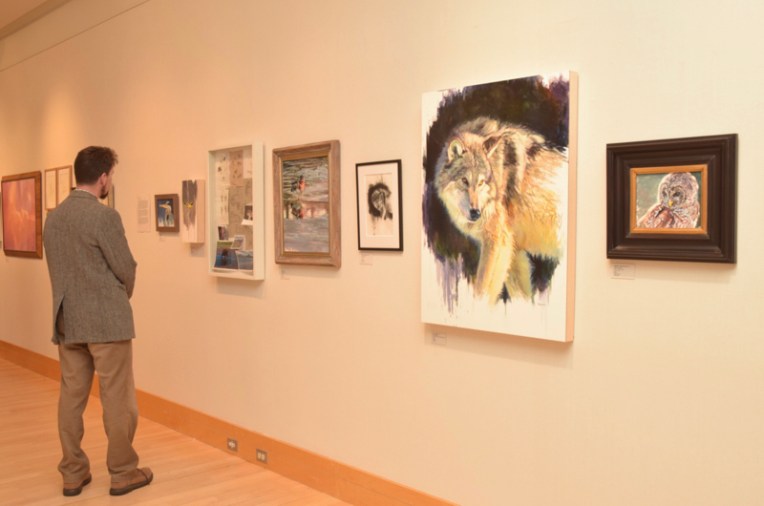
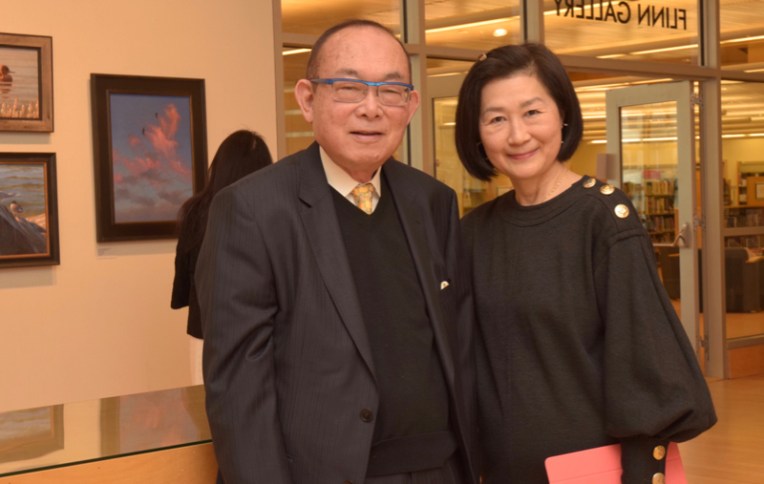
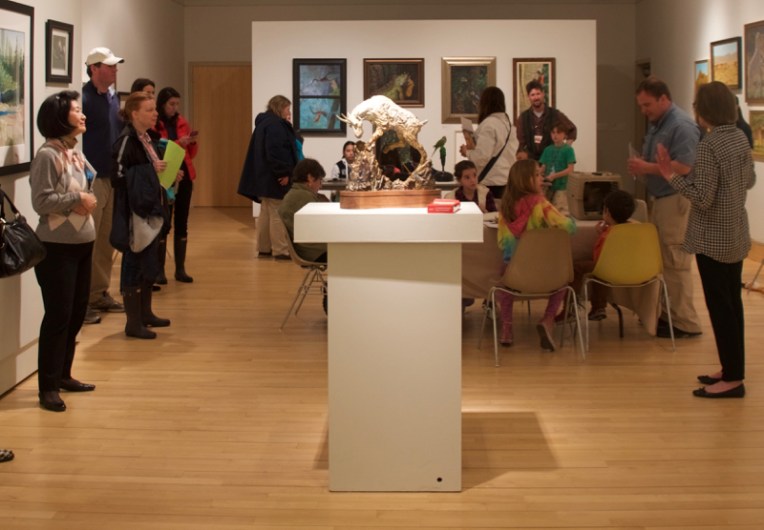
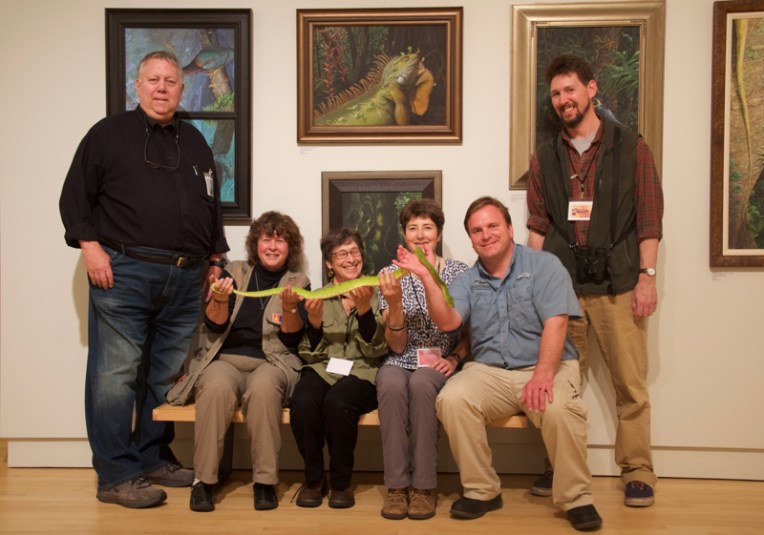
I’m back home after my three plus week trip back east and pretty much caught up. I had a great time at the Explorers Club Annual Dinner and down south visiting a number of wildlife refuges. The frosting on the cake was the opening reception on March 31 and also weekend activities for “Wildlife Art: Field to Studio” at the Flinn Gallery in Greenwich, Connecticut. Five of the seven participating artists were able to attend. From left to right in the photo above: David Rankin, Alison Nicholls, Susan Fox, Sean Murtha and Karryl. All our hard work has paid off. It’s a fantastic exhibition that I’m so proud to be part of!
Here’s a album of photos from the events…
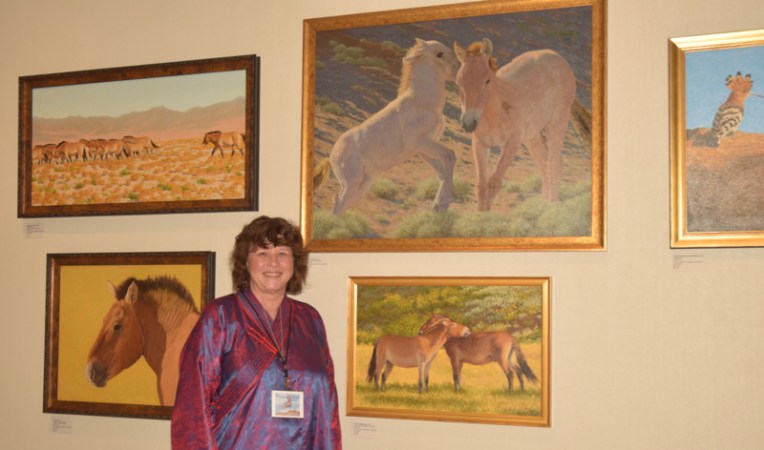
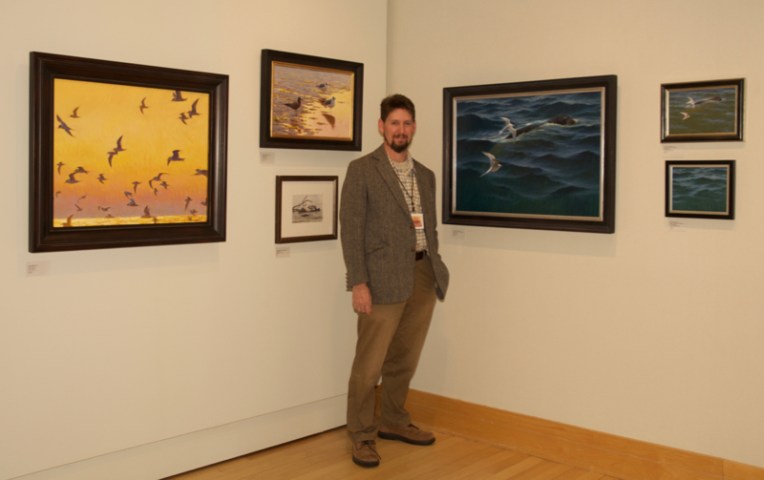
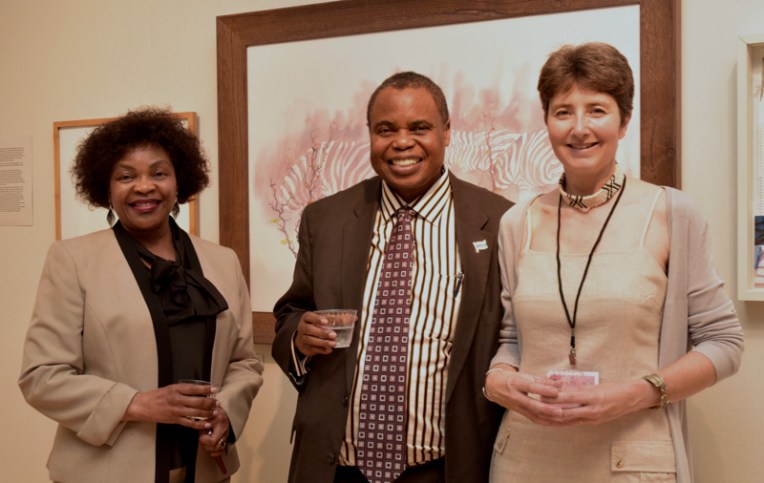
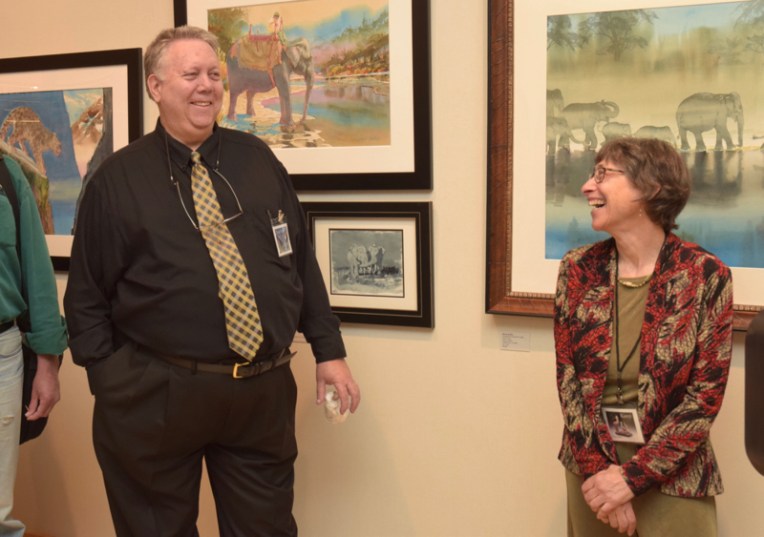
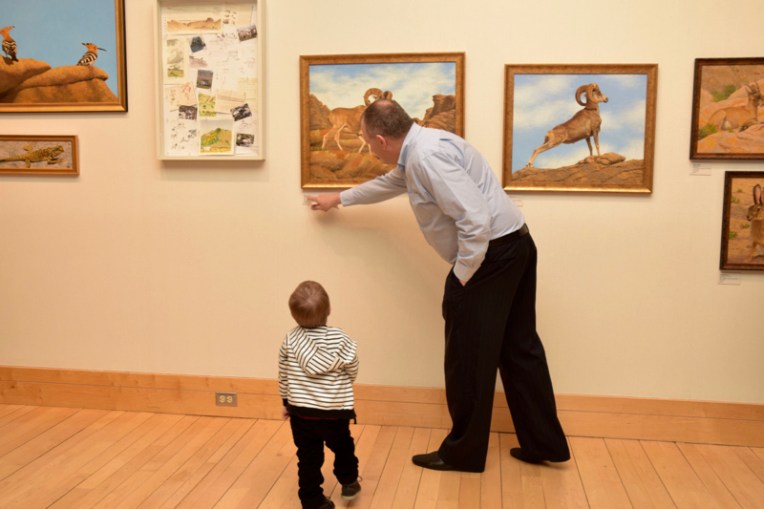
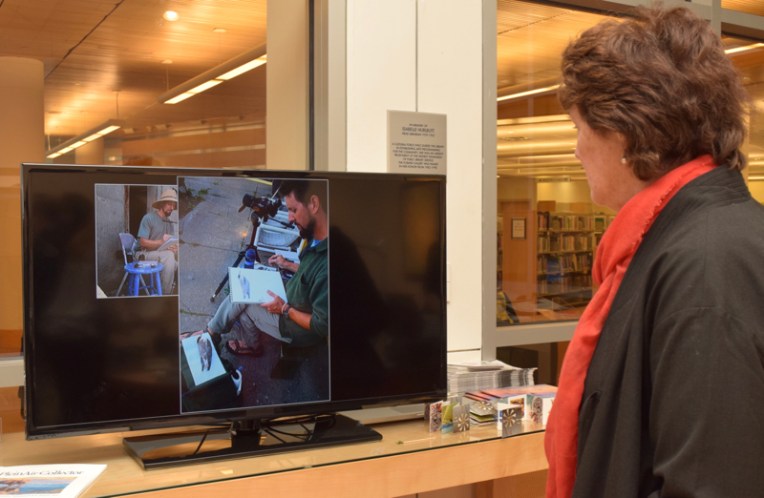
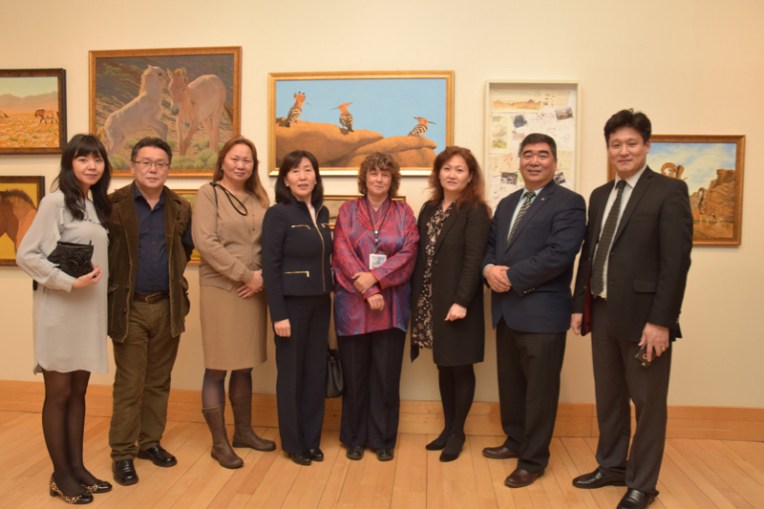
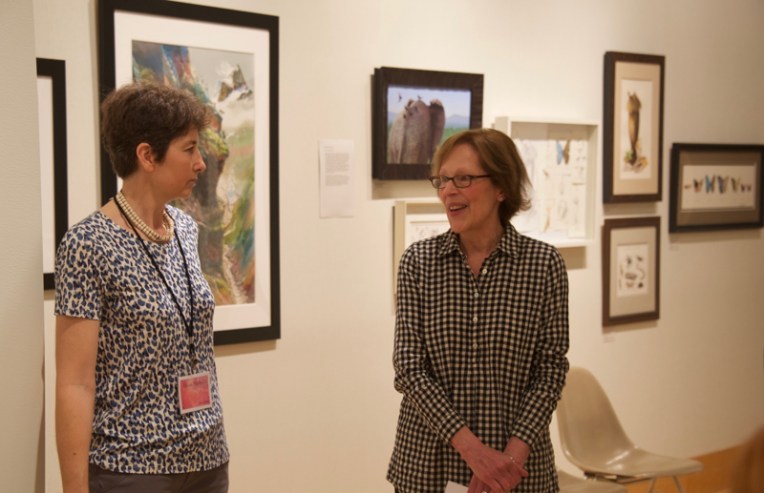
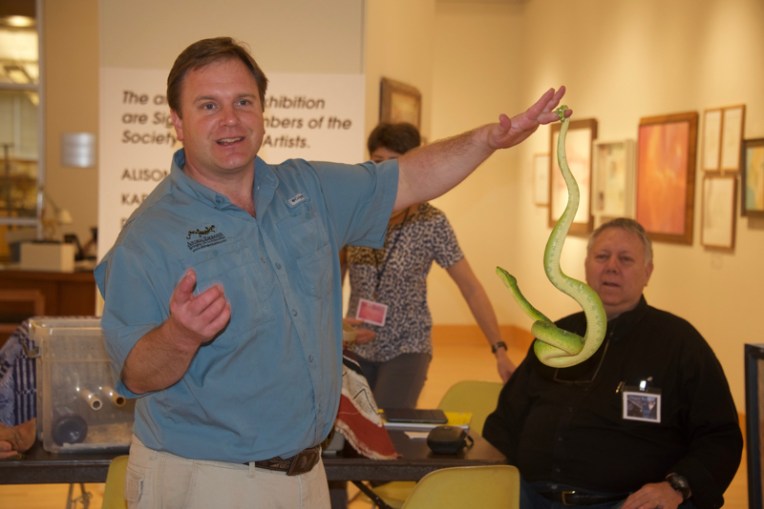
Susan Fox poses with her takhi paintingsSean Murtha with some of his workKarryl chats about her sculpture with a guestAlison Nicholls with the UN Ambassador from Botswana and his wifeDavid Rankin in front of his work and. on the left, KarrylLooks like I had a young admirer. We each had one of the framed “fieldwork boxes” on the wall with our work to carry out the main theme of the exhibition, which is that we all do fieldwork, including sketches, paintings and sculpture, which inspires and informs our art.Carel Brest van Kempen’s work. And the snake which was one of the models for a Saturday morning event.Sean Murtha checking out Kelly Singleton’s fieldwork boxDavid Rankin created a video featuring all of us in the field and examples of our work. It’s playing on a loop at the gallery.I was honored to have guests from the Mongolia Permanent Mission to the UN and some of their friendsExhibition curator Lillian Tung Lum and guestCurator Claudia SchipperCurator Alice Sherwood (right) and Alison Nicholls
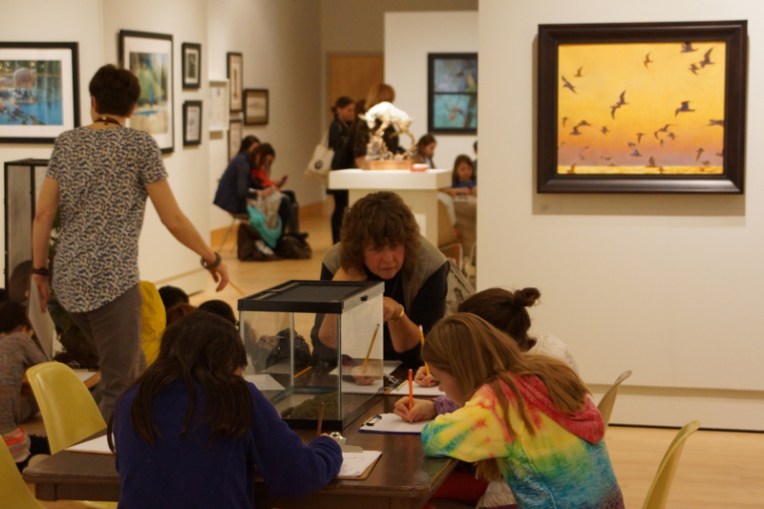
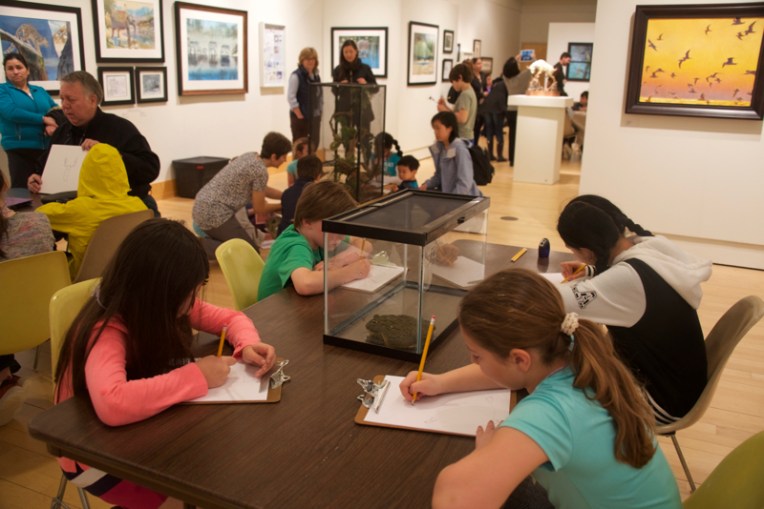
On Saturday morning the gallery hosted a special event for children, bringing in live animals from Animal Embassy for them to draw.
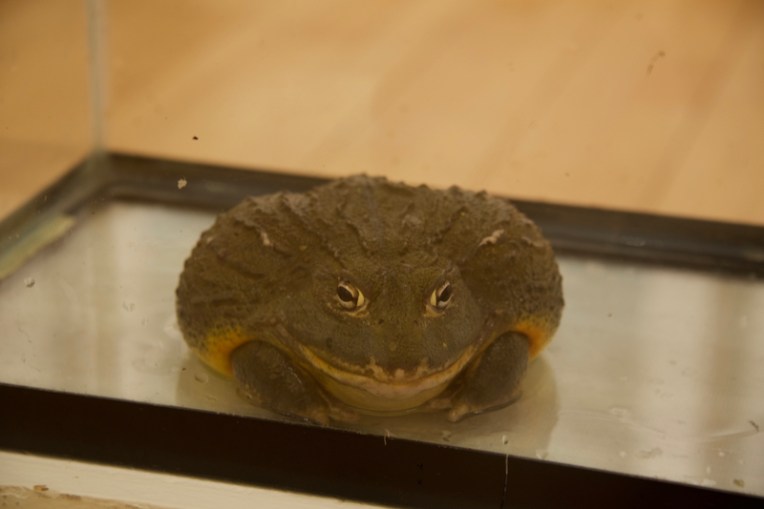
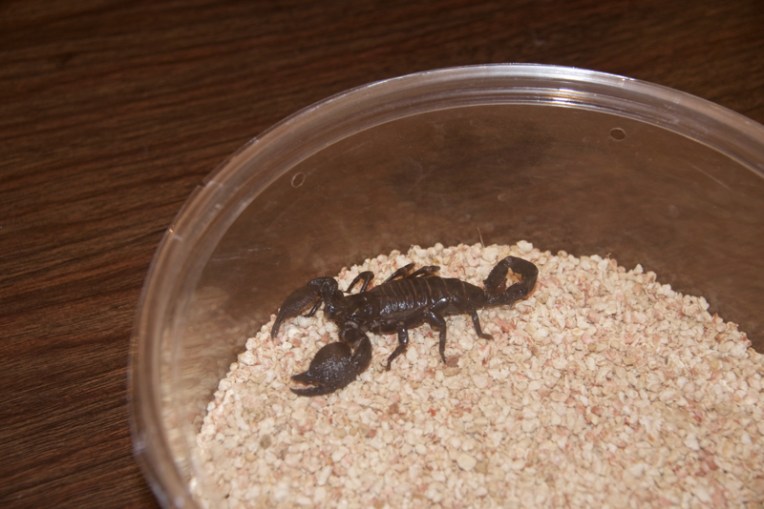
Chris Evers of Animal Embassy and the emerald tree boaAfrican bull frog; A young one, less than half the size of an adult. They are the second largest species of frog in the world. He was the model for my groups.Explaining how to see larger shapes firstScorpion, one of three who “modeled” for the kidsAll the kids did a great job! David Rankin on the left showing how to draw a scorpionWe had five tables of young artists going. In the background you can see Sean Murtha and his model, a small parrotA final group shot. As animal artists, of course we couldn’t resist the opportunity to pose with the emerald tree boa
“Wildlife Art: Field to Studio” will be open until May 4 at the Flinn Gallery in Greenwich, Connecticut. You can find out hours and more at the Flinn Gallery website.
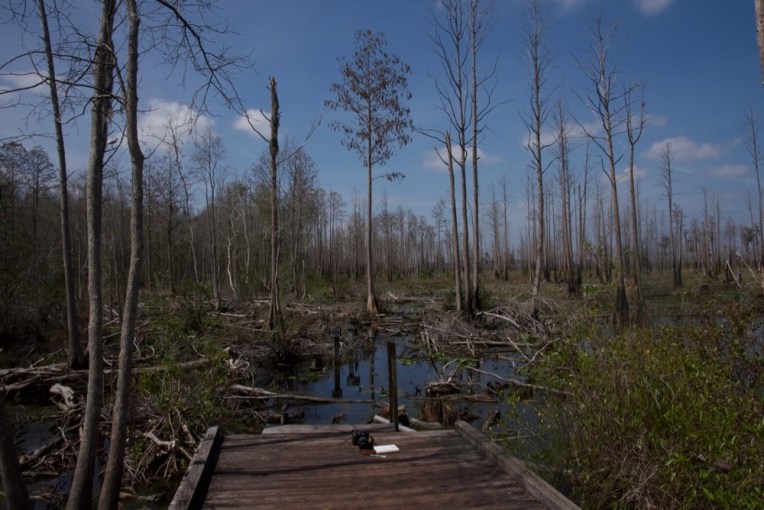
I’m currently on a road trip in southern Georgia. I flew to New York on March 10 (which is why there was no blog post last week) to attend the Explorers Club Annual Dinner (ECAD) and had a terrific time. The opening of the group exhibition “Wildlife Art: Field to Studio” is the evening of March 31 at the Flinn Gallery in Greenwich, Connecticut. What to do in between? It didn’t really make sense to fly home to California for two weeks and then fly back, so I decided to see what there would be to do on the east coast where it was warmer and in the same time zone. After considering a number of possibilities, some more ambitious than others, including flying to Paris for a week or going to somewhere like Belize or Costa Rica, I took another look at the map, Florida being too expensive and everything pretty much booked, and saw….the Okefenokee Swamp National Wildlife Refuge, somewhere I’d wanted to go since I was a kid. Plus there’s the barrier islands of the Georgia coast. Sold! I flew down on Monday to Savannah, picked up a rental car and drove to my first of three Airbnb lodgings, this one near Brunswick. The next day I did quite a long drive over to the western entrance to the swamp. Here’s some of what I saw:
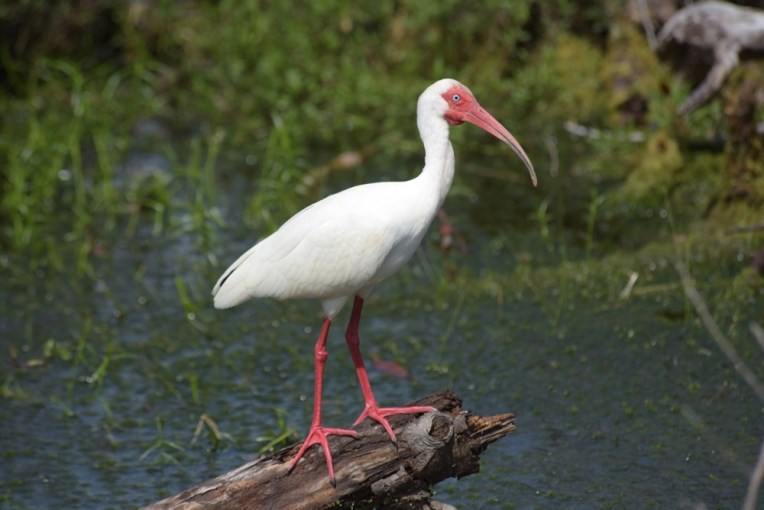
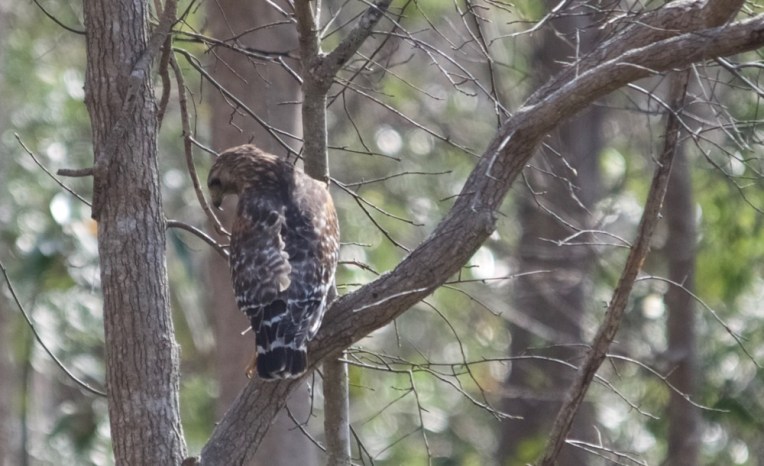
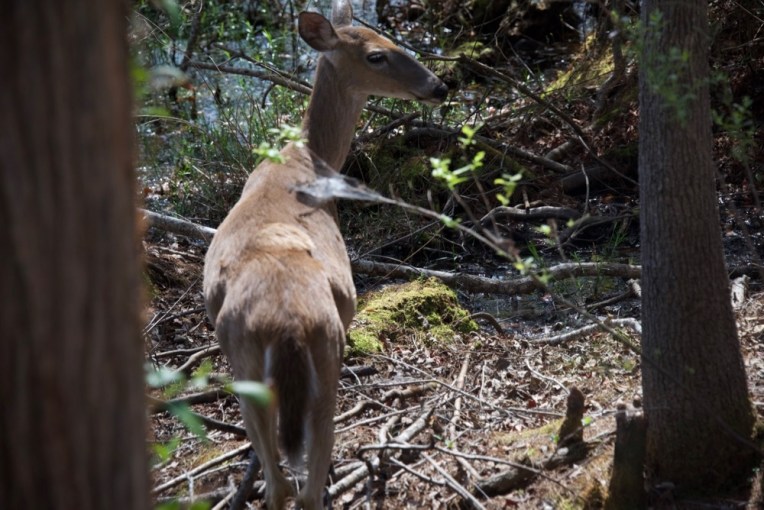
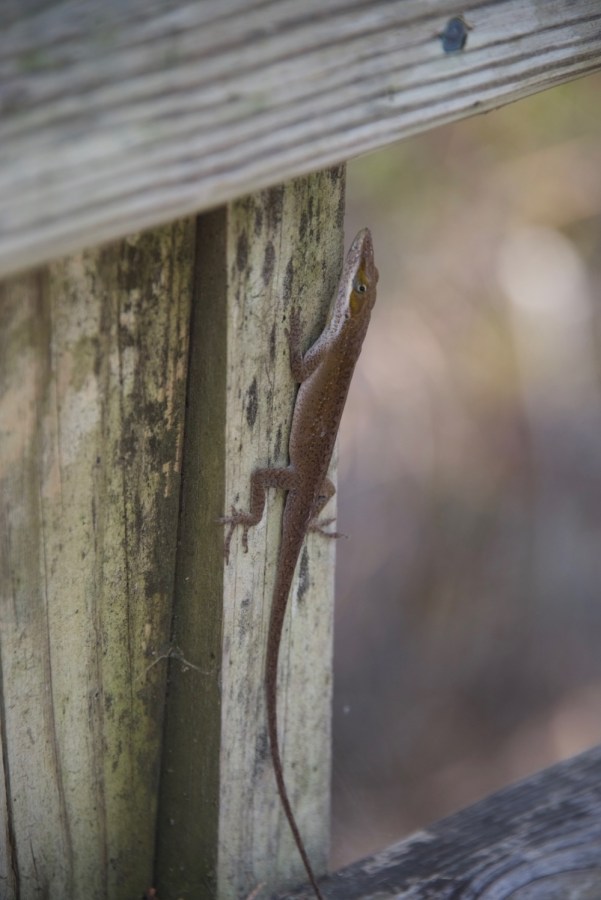
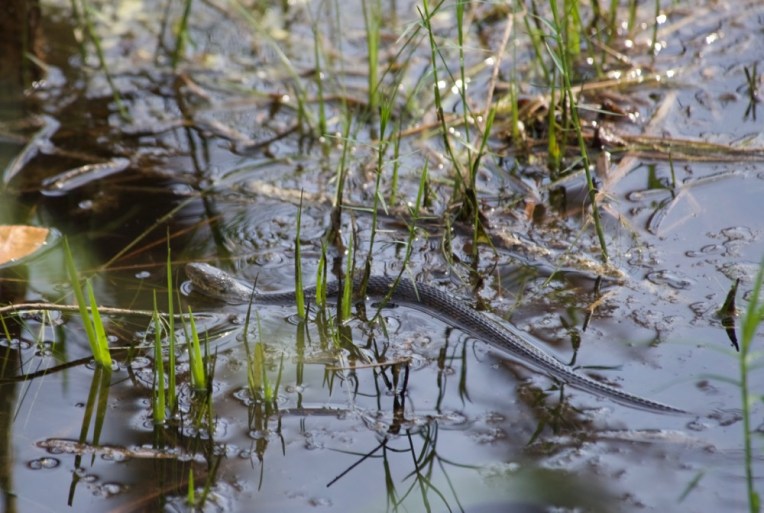
I sat at the end of this boardwalk to sketch and do a watercolor.There was a large flock of white ibis all aroundOf course everyone wants to see the alligators, but they’re a wild animal, so you never know. But this little one swam right across in front of where I was sitting.On the way back I spotted this red-shouldered hawkI was on another section of boardwalk over water and there was suddenly a loud “galoop” of water. This whitetail doe came out from underneath. I had walked right over where she was. But she stopped, had a little chin scratch and then started to browse the leaves on the trees.I took a break at a bump-out seating deck and there was this green anole (currently turned brown) who stayed around for me to take quite a few photosI got up to leave, walked over the balcony. looked down, saw a movement in the water and spotted this water snake (non-poisonous) swimming by
The next day I met up with artist and fellow Explorers Club member Alan Campbell, who took me around Harris Neck NWR.
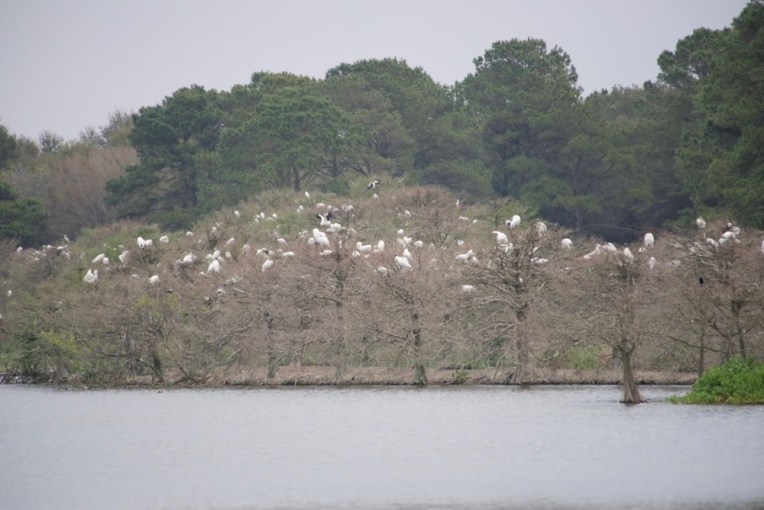
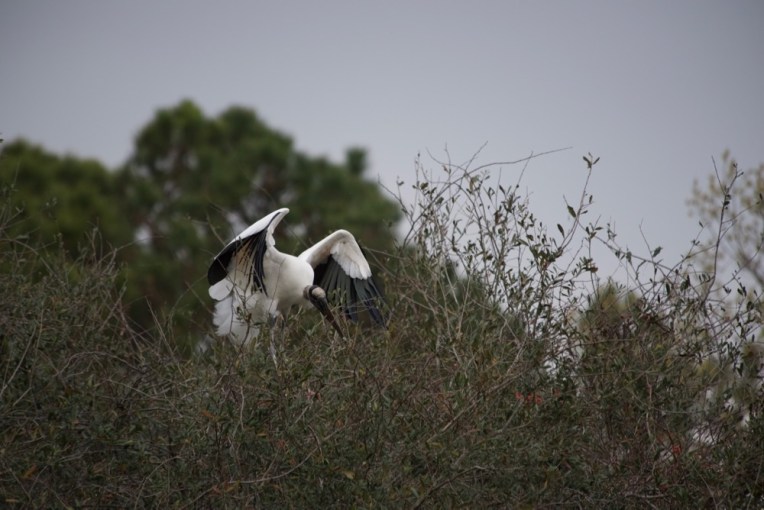
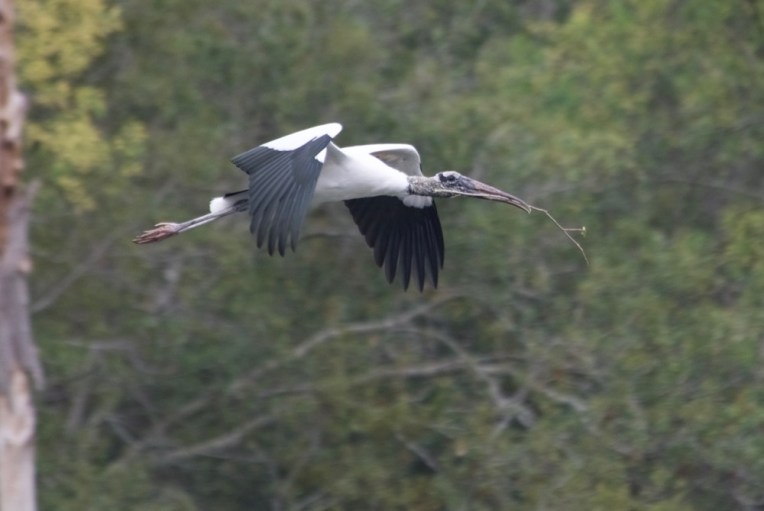
The refuge is known for it’s wood stork rookery.Wood stork gathering nesting materialsWood stork carrying twigs back to the rookery. The birds have recently been removed from the endangered species list.
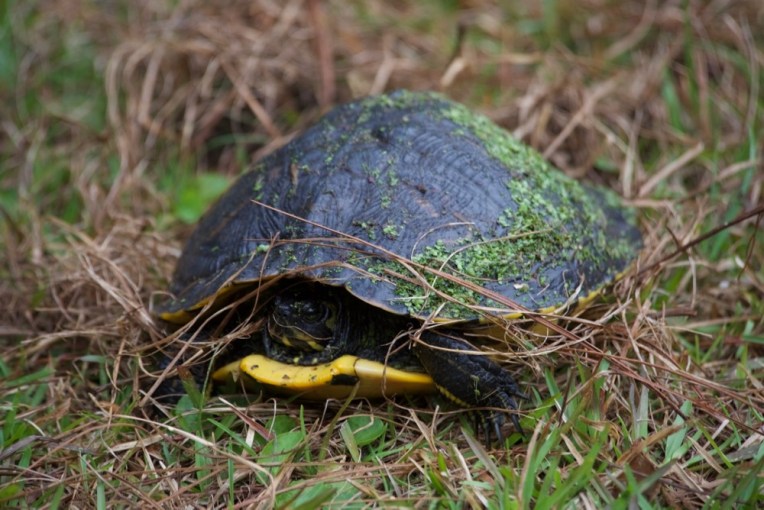
We twice drove the route through the refuge so went a couple of times to a dike bordering the big pond where the storks since things are always changing. The second time we saw this turtle!
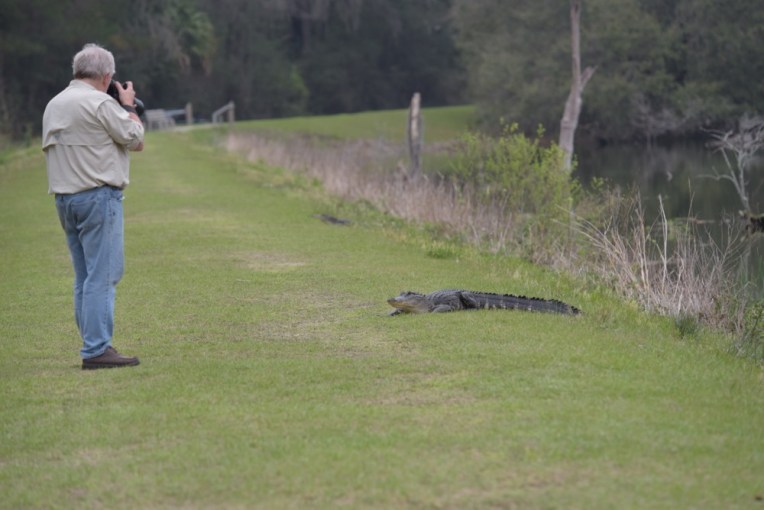
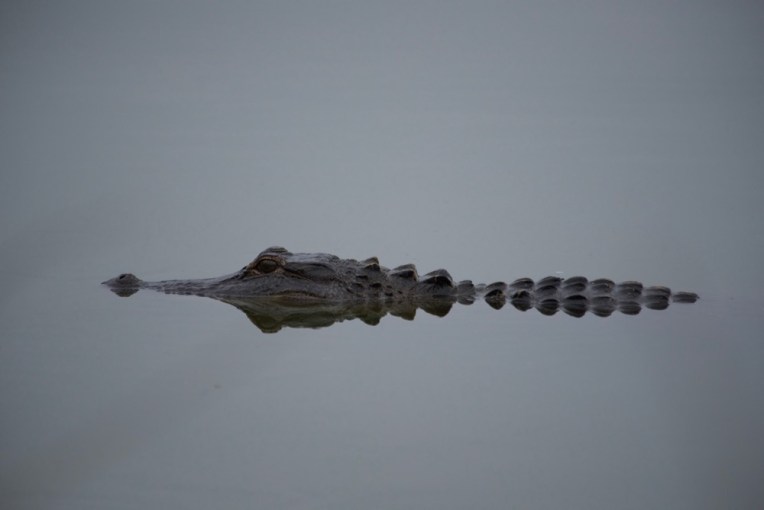
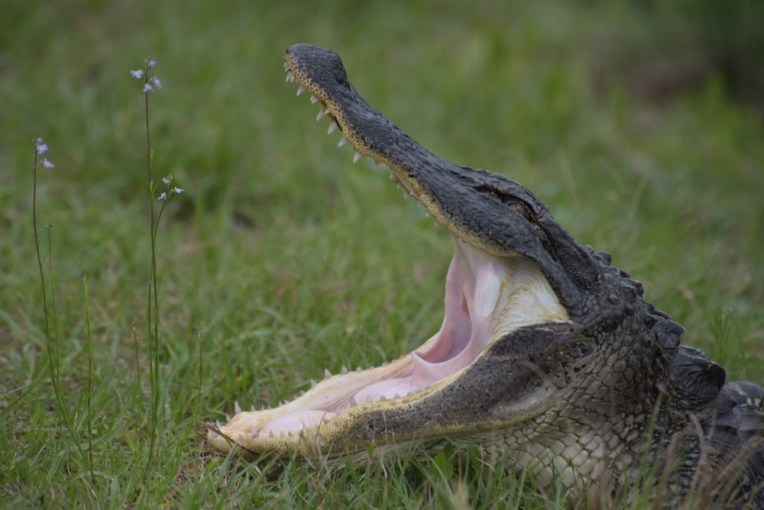
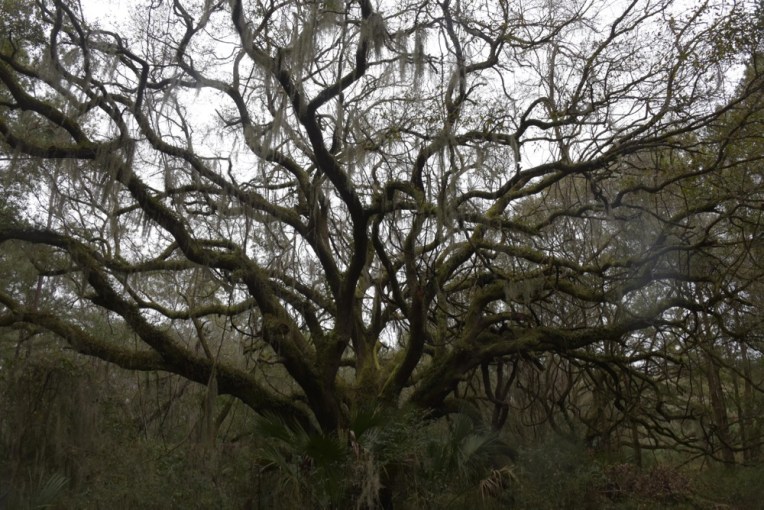
River cooter, a local species of turtleThere were a lot of little gators by the edge of the dike. This one came up onto the grass and Alan got some good close-ups. A few second later he raised his hind end and we both wondered what he was going to do, but he simply turned and walked back down into the water.Gator reflectionGator yawnOne of the quintessential trees of the Deep South…a live oak festooned with Spanish moss
It was a great day! I’m on the road again with trips to the other entrances to the Okefenokee and explorations of the barrier islands.
On my trip to Mongolia last year, I learned that out in the west the drivers are also the cooks. When it came time to head out into the countryside I went with him and my guide to the local Nomin Market in Hovd and helped with the shopping. It was really fun. And I learned what ingredients one can find for real Mongol food in a grocery store. I’d had the traditional noodle soup with mutton in it, but either made from scratch or served to me already done. This time I found out very useful information such as that boortz, the dried meat strips, which I’d only seen before hanging on a string tied between the roof poles of a ger, could be purchased dried, chopped up and packed in a bag ready to use! The driver also bought a few bags of dried noodles. Ah ha! Then during the trip I watched him make the soup and knew I could do it at home.
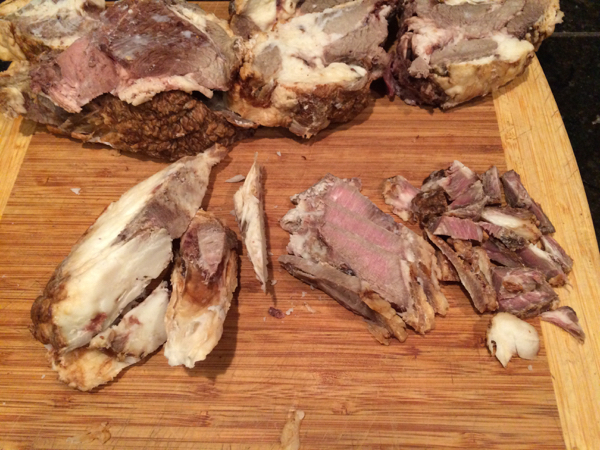
Last year, before I went to Mongolia, we had bought a ram and ended up with 108 lbs. of mutton in the freezer. In the top photo is what’s left over from the last shoulder roast we had. And a bag of noodles, half-used because I’ve made this soup once already. I knew that dishes like the soups and tsuivan (noodles with bits of mutton, mutton fat and vegies) were a way of using every last bit of meat. I set aside the big pieces for a second dinner and used the smallest pieces that were surrounded with fat. And there was plenty of it, as you can see on the left in the photo below. On the right is the leaner meat.
I’ve divided the mutton into the fat, the leftovers for the next dinner and, at the bottom, the meat and fat that will go in the soup.
Here’s the small stock pot I used with the water heating up on our gas cooktop.
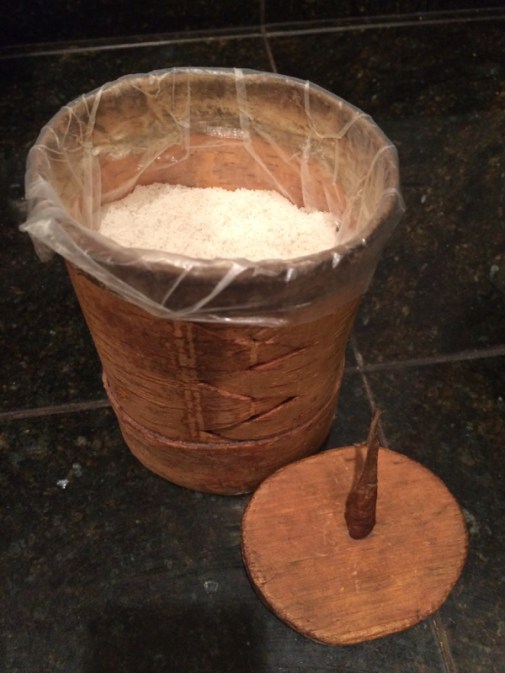
This is a very simple soup: water, mutton, mutton fat, salt and I added some onion flakes, although a Mongol cook would go out and snip some wild onion. But the salt I used is from Mongolia, lake salt from Uvs Aimag, out in the northwest. I bought a couple of boxes of it at the market a couple of years ago. I had stayed in an apartment with the mother of an acquaintance that same year and saw her kitchen. Next to the stove was a lovely little birch bark container that she kept her salt in. I loved it! And later on during the trip had the great good fortune to find the container below in an Ulaanbaatar antique shop for only $15. I swear I would have paid fifty for it since it even still had its handmade wooden lid.
I happily brought it and my boxes of salt home. My host had put her salt directly into the container. But since, as far I knew, mine would be irreplaceable, I lined it with a small plastic bag. You can see the salt, which is large-grained, crumbly and very tasty.
I let all the ingredients simmer for about 30 minutes and, voila!, a pretty authentic Mongol noodle soup. It’s delicious!
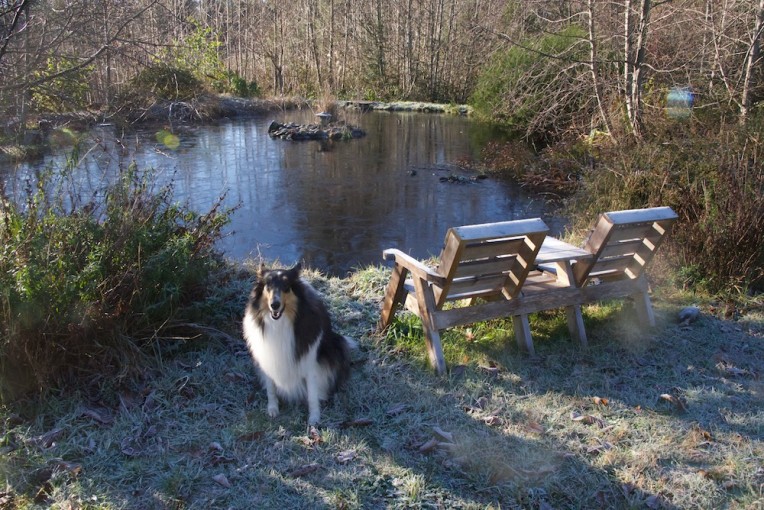
Thank you to everyone who reads my blog for your support and kind words. I wish you all the best in 2016! That’s Hailey, our tricolor rough collie girl, posing in front of our pond which froze over last night here in sunny California.
Lots coming up this year, including the next WildArt Mongolia Expedition in May/June, a major group exhibition, “Wildlife Art: Field to Studio” , featuring myself and six of my animal art friends and colleagues, at the Flinn Gallery in Greenwich, Connecticut, March/May; attending the Explorers Club Annual Dinner in New York, with maybe a short trip to Florida for some warm weather fieldwork in March; and plans to attend the Susan K. Black Foundation art conference and workshop this September in Wyoming.
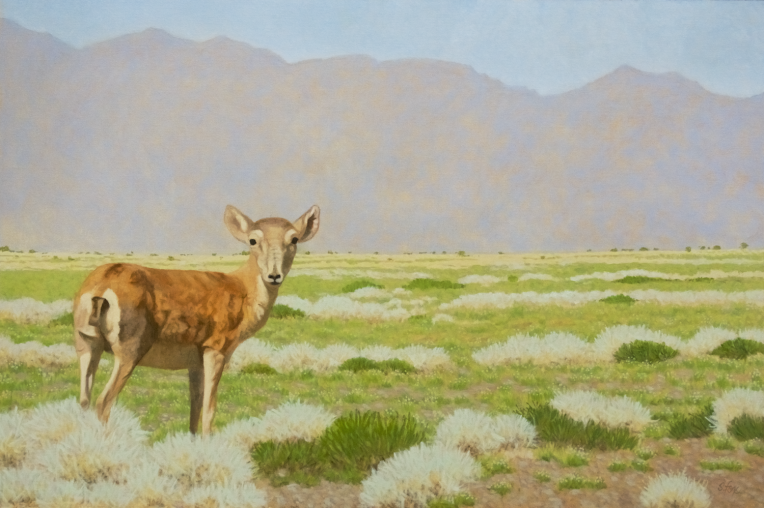
Here’s one of the new paintings that will be in the Flinn Gallery exhibition. The subject is a young saiga antelope who I saw on this past year’s WildArt Mongolia Expedition when we were at Khar Us Nuur National Park in western Mongolia. That’s Jargalant Hairkhan Uul in the background, where I got to camp in two different locations. I’ll be posting work-in-progress for a number of the paintings I’m doing for the show over the next couple of months.
Lots coming up in 2016, but right now we’re kicking back for our year-end downtime. Unstructured time is our luxury, so we alternate between doing some things around the house and just kicking back with a good book (I’m currently reading the first volume in the second Foundation Trilogy).
There’s a corker of a storm coming through northern California today. Snow levels dropping to below 2000′ in places, but we got a tiny flurry of snow a couple of hours ago and we’re 60 ft. above sea level and a mile inland from the beach! Here’s what it was looking like when we took the dog for a walk a short time ago.
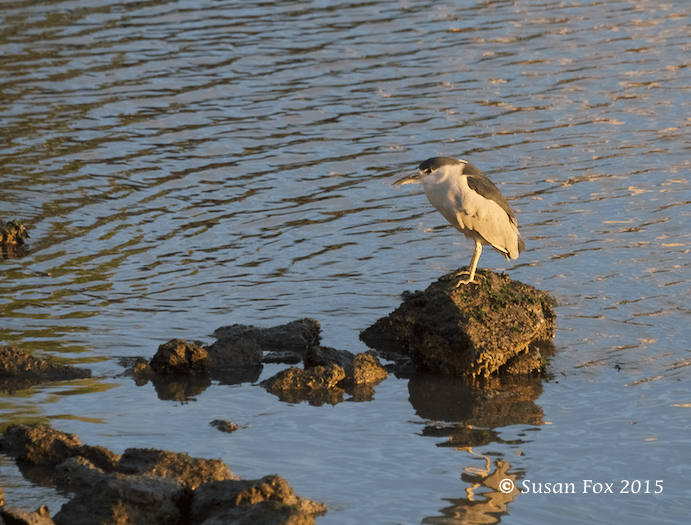
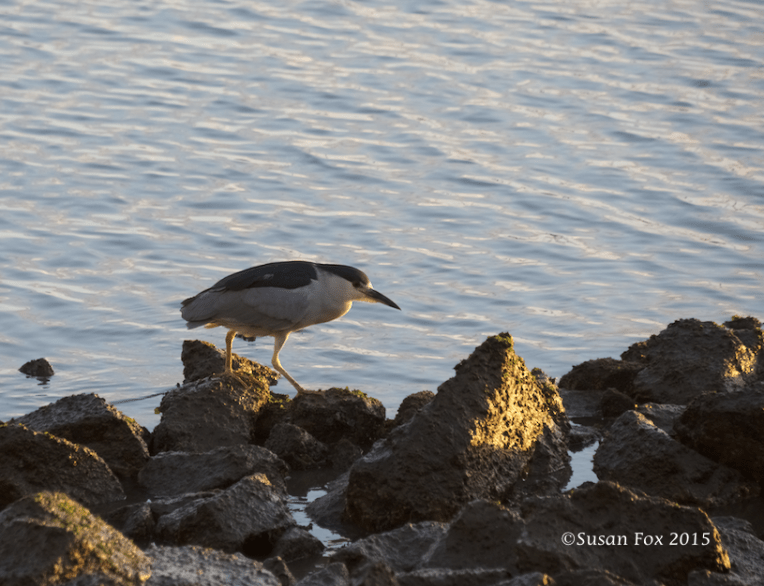
Black-crowned night heron. Minding its own business.
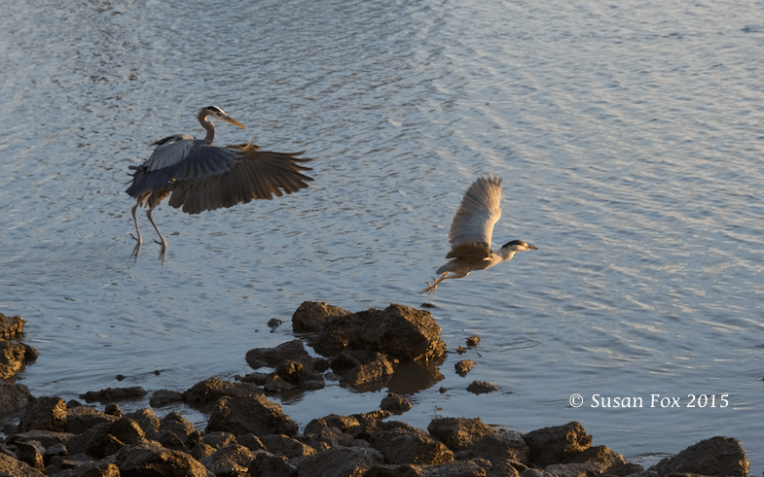
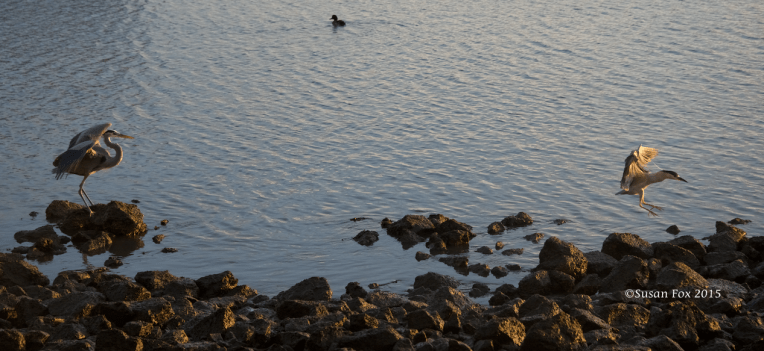
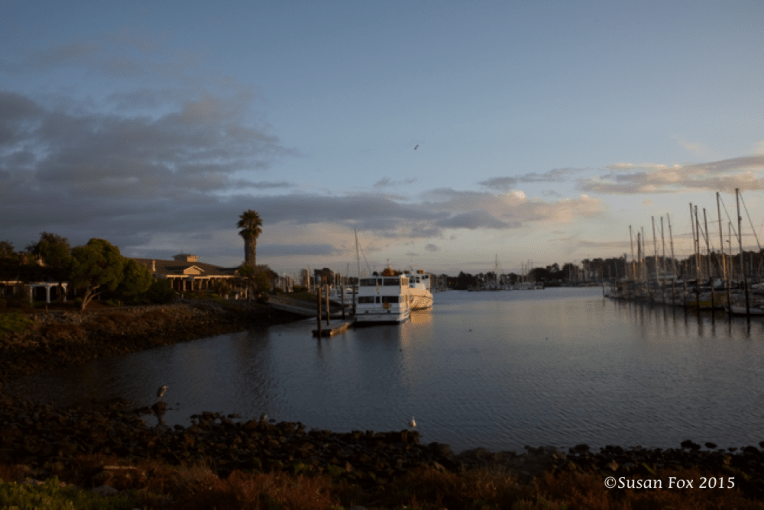
We just spent a couple of days in Berkeley, staying at the Berkeley Marina Doubletree. Our room was on the first floor overlooking the marina, so all I had to do was open the sliding glass door and walk ten feet to see and photograph the various birds that were hanging about, including this black-crowned night heron. As you can see, it was late afternoon and the light was really nice. I’d taken three shots when…
Incoming!
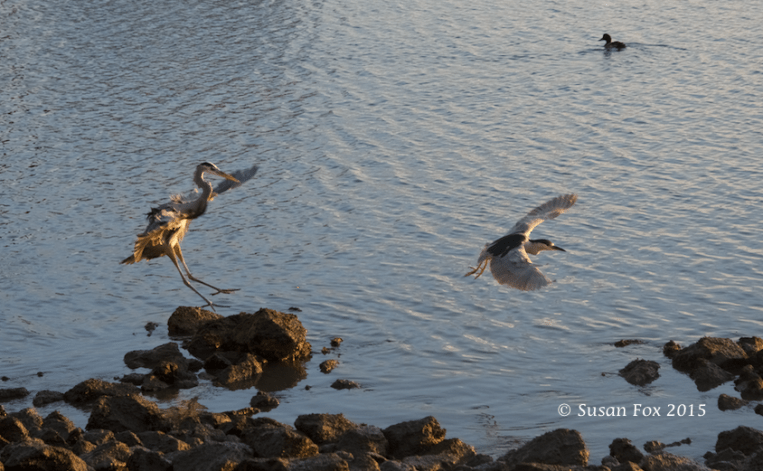
a great blue heron flew into the frame from stage left. I just stood there and kept shooting. The smaller heron sprang into the air.
I want THIS rock.
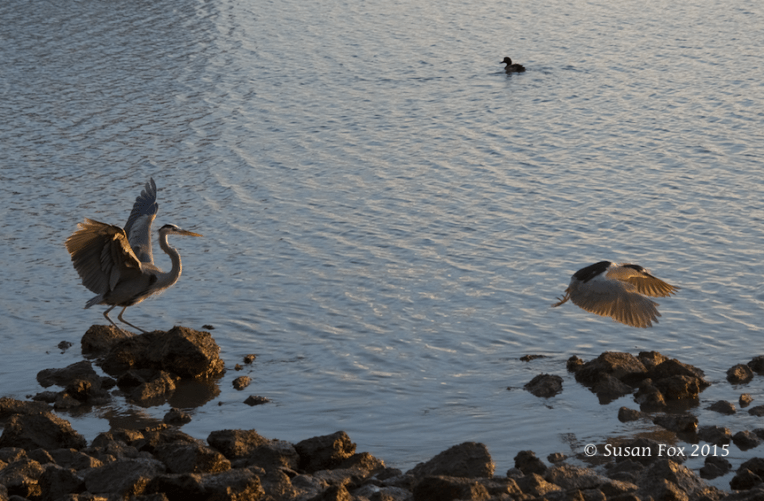
And got out of the way as fast as it could.
My rock.
Not only was this a great little slice of life sequence, but…wow….the light.
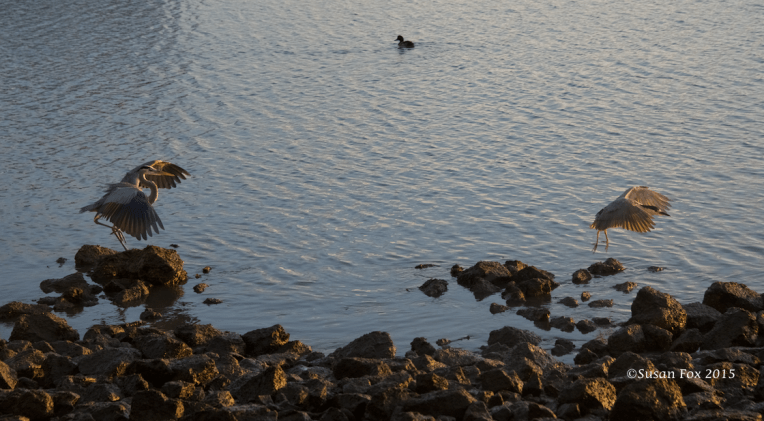
I am happy now.
It was all over in less than 30 seconds.
There.
The night heron, having moved not really any farther than it had to, continued on about its evening routine.




























 Susan Fox, American Artist