I unexpectedly got some very good reference this past July for ruddy shelducks, a species that I hadn’t seen much of before this trip. Some of the best photos are of a mother duck and her ducklings, swimming around in a stream surrounded by yaks. And I will certainly do a painting of that.
But, first things first. I need to do a couple of studies of the adult and ducklings to learn “what they look like” and how I want to handle painting the feathers. I have no interest in rendering every feather, so I need to use the process of painting to analyze the pattern and see what I can leave out while still making it clear that I have observed shelduck feathers correctly. I’ll probably also go to Google Images before I start a larger, more complex painting so that I can get a feel for what is typical and what is unusual or where my reference might be deceiving me.
In the meantime, I did this simple 12×12″ study of a shelduck in nice light.
"Ruddy Shelduck, Mongolia" 12x12" oil on canvasboard
I last sat at my easel with a brush in my hand at the end of June. So, how to get rolling again?
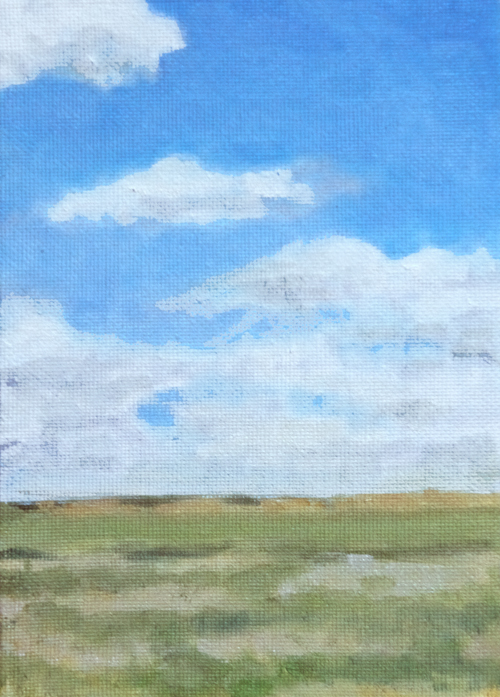
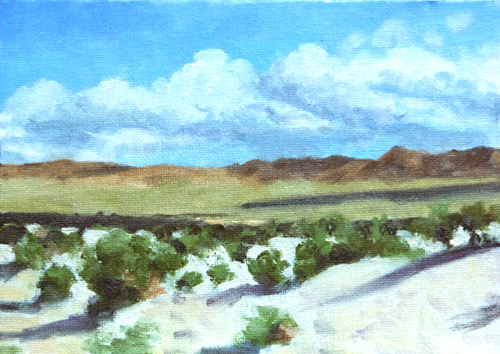
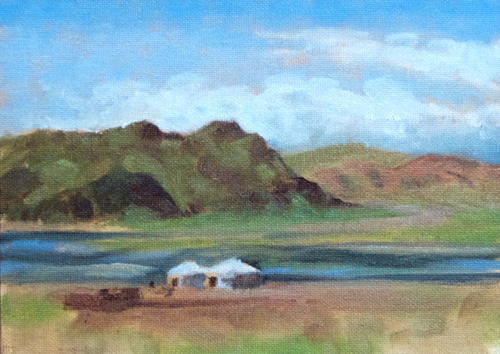
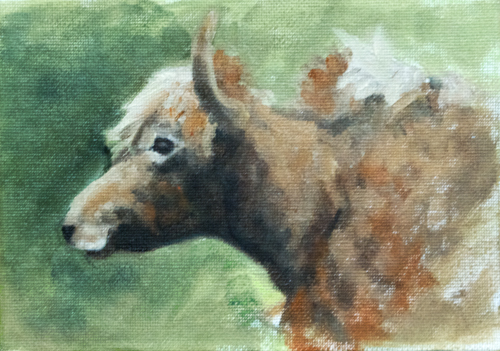
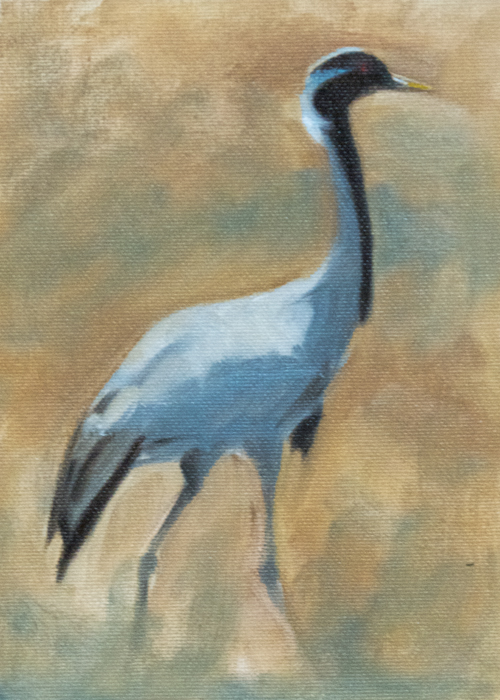
I decided to do some small studies, only 5″x7″, and only spend about an hour on each one. After four, I felt like starting a larger piece, which I’ll post once I’m sure it’ll be a keeper. Then I did a fifth study because I wanted to do a bird.
The purpose was to get my hand moving and my mind thinking about, well, what it needs to think about when I’m painting. I also solved a nagging problem – I have been struggling with the greens in my Mongolia subjects. I’ve had My Beloved Sap Green on the palette, along with Viridian. The first study was a struggle because I couldn’t get the green tones I wanted. So I dug into the paint drawer and pulled out tubes of Terre Verte and Chromium Green Oxide, both of which had been sitting for so long that I almost twisted a split in them opening the caps with pliers. But…Bingo!, those more muted colors were exactly what I needed. A quick repaint and Study #1, of the Gobi, worked much better.
So, without further ado, here are the quick studies:
Gobi viewSaxaul forest, the Gobi, near Orog NuurHangai Mountains, two gersYak head studyDemoiselle crane
With luck, you can see some improvement between the first one and the last in confidence and brushwork as I get warmed up.
I’ve planned this next trip to leave time for more sketching and to do studies using watercolor pencils and gouache. Last year it was all I could do to keep up my Flag Expedition Journal. This time I’ll be writing my journal in a Moleskin sketch book, but it won’t be a big narrative production like before.
The current plan is to spend the first two weeks traveling in the countryside camping out with a guide/driver and a cook. This will provide maximum flexibility since one can camp pretty much anywhere it seems reasonable to put up a tent. It’s one of the great things about Mongolia and something I haven’t been able to take advantage of before. Then I’ll be in and out of UB for a couple of weeks, then going to Ikh Nartiin Chuluu Nature Reserve for about ten days.
I’ve been easel painting almost exclusively for most of the year and haven’t done much field sketching, so I felt I needed to spend some time getting back up to speed. I got a start late last week and spent the afternoon doing the kind of work I plan to do in Mongolia when I can sit for awhile drawing something that isn’t moving much, like buildings or rocks.
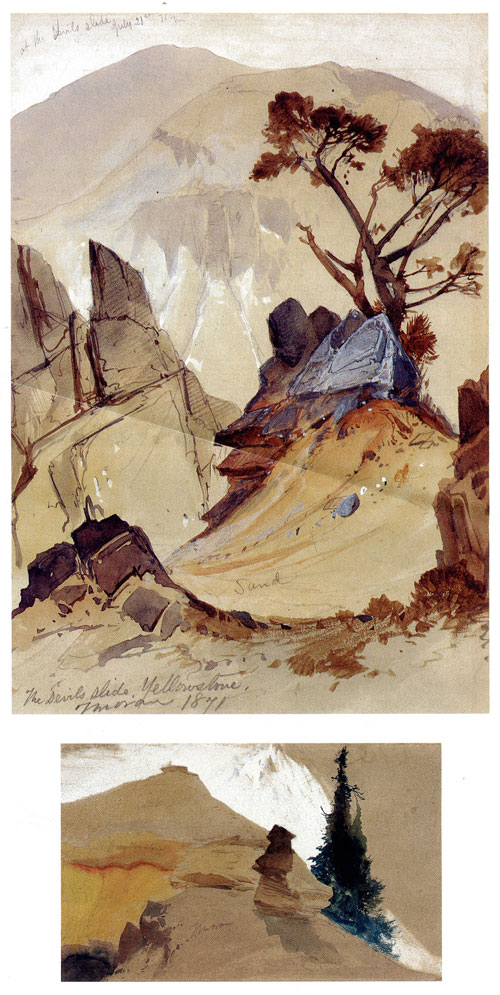
Some years ago, my husband and I saw a show of field studies Thomas Moran did when he was the artist accompanying the Hayden Expedition, which surveyed Yellowstone, resulting in the creation of Yellowstone National Park. He worked on toned paper with watercolor, using an opaque white for his body color. I really loved the look he got and started to experiment with different papers. What I’ve settled on is a 100% cotton paper, Annigoni, from Cartiera Magnani, an Italian company that dates back to 1404.
I’ll be using another Magnani paper, Pescia, when I want to work on a white surface. Both take water media quite nicely.
Here’s two examples of my inspiration, courtesy Thomas Moran. The light brown tone is the paper color, which means this method also saves time:
And an example that I did at Hustai National Park on my 2006 trip. As you can see, the toned paper is perfect for punching up the white on the sunlit side of the gers:
Pan gouache on Annigoni paper, 10x7"
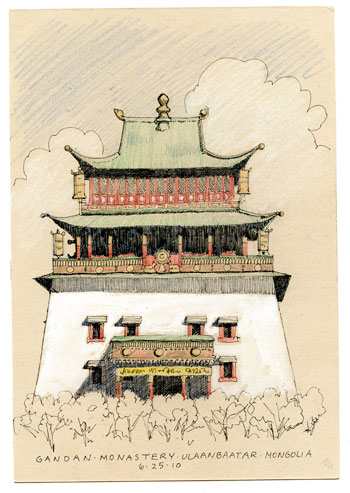
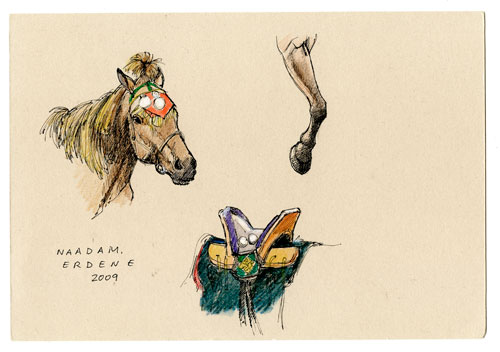
Last week’s pieces. I did them pretty quickly, less than a hour for each larger one. I wanted to replicate as closely as possible how I would do it in the field, even if I was working from photographs. For the pen work I chose Sakura Micron .01 pens. The ink is archival and waterproof. This means I can do the pen work first if I want to and then add water media:
Main Temple, Gandan Monastery- Sakura pen, watercolor pencils and body color, Annigoni paper, 10x7"Enroute from Ulaanbaatar to Arburd Sands ger camp- pan gouache, Annigoni paper, 10x7"Horse and tack studies- Sakura pen, watercolor pencils, Annigoni paper, 7x10"Rock formations, Baga Gazriin Chuluu Nature Reserve- Sakura pen, watercolor pencils, Pescia paper, 7x11"
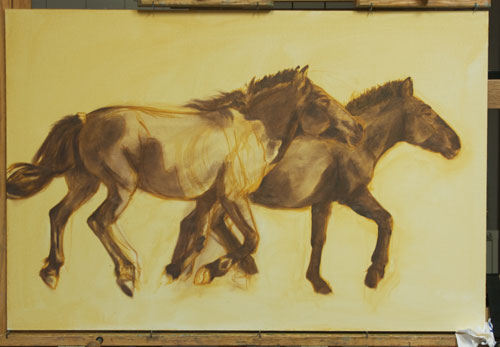
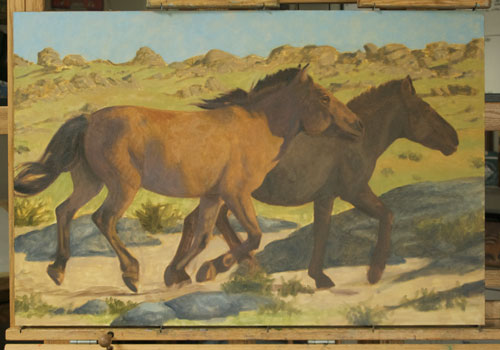
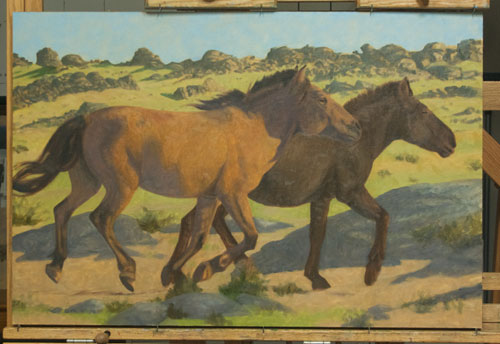
Mongol Horse #5-Evening Run 24x36" oil (price on request)
I was at Ikh Nartiin Chuluu Nature Reserve in Sept. of 2008. While sitting outside my ger, a small herd of local horses came wandering by. It was early evening and some of them were feeling frisky, like this stallion. I loved the quality of light on his reddish coat. The background shows some of the fantastic rock formations at Ikh Nart, which provide habitat for argali sheep and Siberian ibex.
Here’s the step and step creation of this painting:
The brush drawing startLaying the shapes of the shadowsFirst indication of the backgroundShadow shapes for background elementsFirst pass of color for sky and groundProgress on the horsesLight and dark sides established for rocksApproaching the finishThe finished painting
I thought that I would start to share some of what I’ve learned over 13 years of painting in oil and almost seven years of picture-making as an illustrator through a new on-going series, Improve Your Paintings!. We’ll start today with…
USE A MIRROR
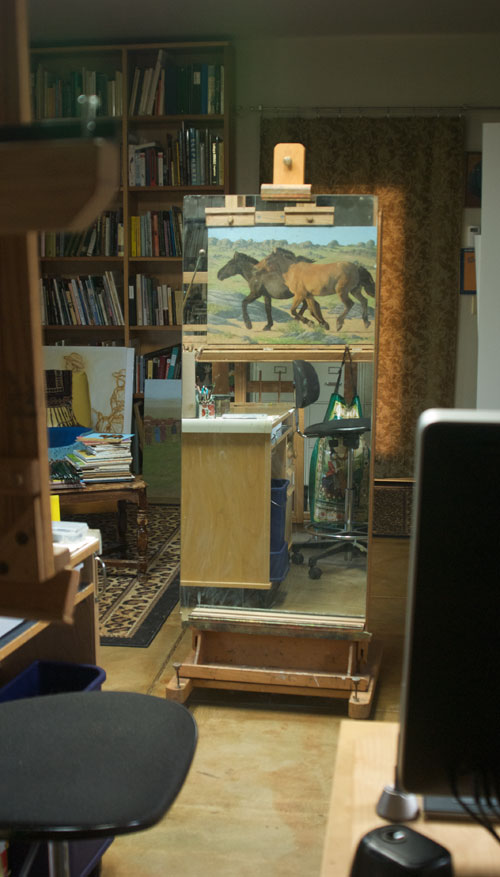
There really isn’t a better or faster way to check your drawing or composition for accuracy. Almost any decent mirror will work. I happened to have an old full-length mirror that I found for $15 at a yard sale many years ago. I mounted it onto my old easel, which lets me roll it to different positions and also out of the way.
A mirror is particularly useful when you have to get two sides of something that are similar to match up and need an “extra eye” to evaluate it. Do those butterfly wings match? Are the eyes of that wolf lined up properly?
It is also very valuable for checking the overall drawing. Do all the parts fit together accurately in that 3/4 view of the mountain lion’s head? Have you compensated correctly for the foreshortening and flattening effect in an image of a bighorn sheep, also in a 3/4 view? Is the body of that horse too big for the head or vice versa? In the example below, I’ve used my mirror to get a fresh look at the relative value pattern between the horses in the foreground and the background landscape.
Do you use a mirror? If so, what do you find it most useful for?
(And yes, you’re getting a sneak preview of my newest painting, “Mongol Horse #5-Afternoon Romp”. It’s almost done and I’ll post it next Friday)
Coming up soon! North Coast Open Studios. I’ll be doing Weekend 2, June 12-13.
Coming up soon is North Coast Open Studios the weekend of June 12-13 and, the following weekend, June 19-20, the Marin Art Festival. I’ll have framed paintings, prints and cards at both events, plus a variety of small, unframed affordable original oil paintings. I’ve been doing new ones in between working on larger paintings and it’s a nice way to take a break from the more complex pieces.
I generally do these in two sittings, plus maybe one more short one for final tweaking and try to keep them fairly loose and simple.
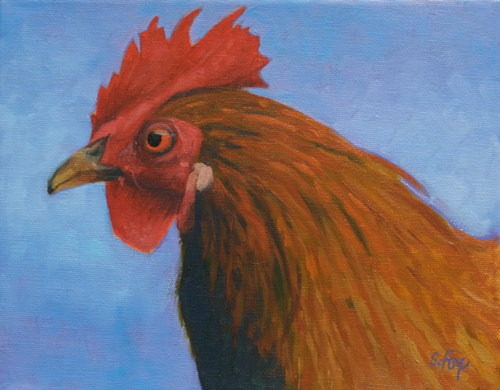
Rooster 8x10" oilChipmunk 5x7" oilThree Tule Elk, Point Reyes 8x10" oil
Coming up: a new on-going series on how to improve your paintings, based on all the mistakes and false starts I’ve made over the fifteen years I’ve been painting in oil. So it will be a looong series. ;0)
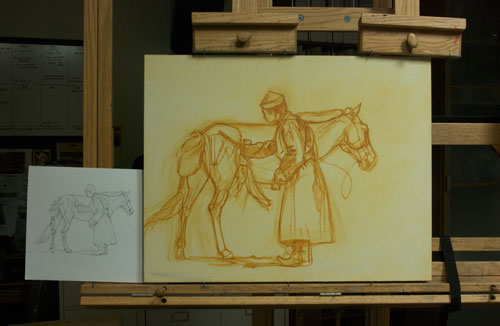
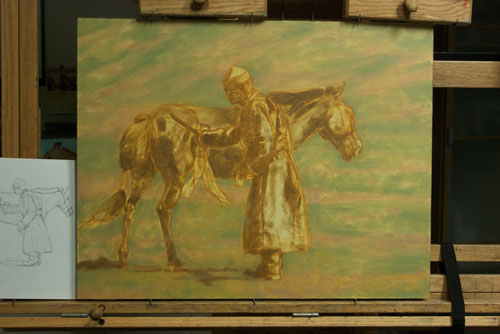
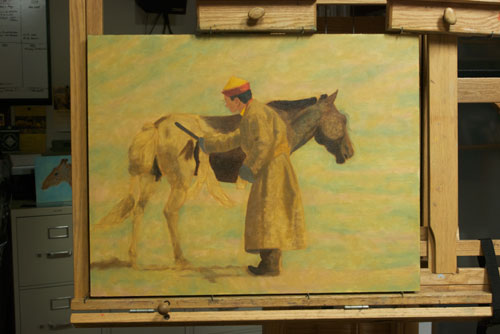
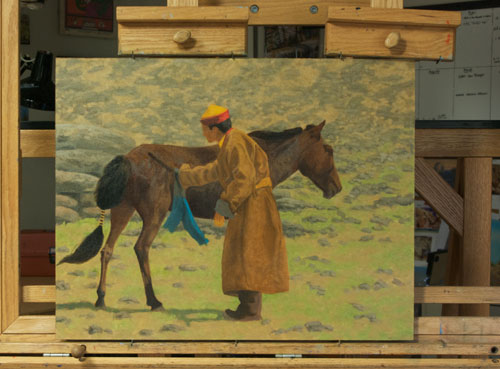
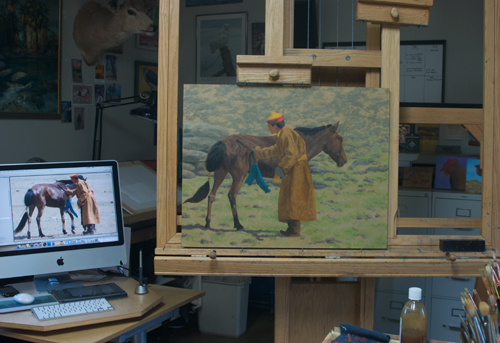
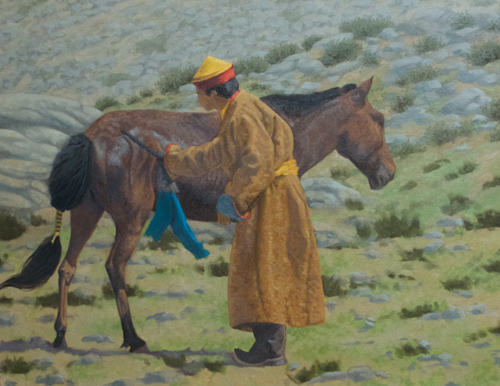
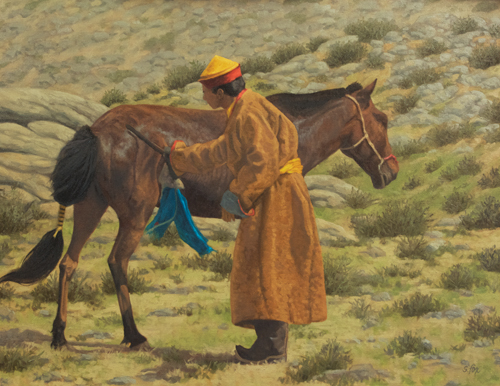
When traveling in Mongolia, one often sees the herders out taking care of their animals. Often they’re wearing western clothes, but a lot of them wear del, the traditional long garment. It’s very practical and makes them look very dashing. What isn’t quite so dashing are the ubiquitous baseball caps, however inexpensive and practical they are. So when I was at a mountain blessing ceremony at Bag Gazriin Chuluu and was walking around after the horse race, this gentleman really stood out with his red and yellow hat. I have no idea who he was, but he was scraping sweat off one of the horses with a special blunt, flat blade. I believe the sweat from a winning horse is considered to have the strength of that horse in it and so is very auspicious. The blue scarf is a khadak, which is used for offerings.
Here’s the step-by-step for “After the Race; Scraping Sweat:
Brush drawing with pencil preliminaryFirst pass of all-over color, plus shadow shapes; notice background goes in opposite direction of horseNext color pass; starting to define the drapery of the delNeeded another element in background, so I added the rocks in mid-ground on the left to anchor horse and manOne of the two main pieces of reference on the iMac; I like his gesture in this one but needed another for the horse's head; there was a third reference shot for the backgroundAll elements in place; everything is staged for the final push; spent yesterday finishing the background and making lots of tweaks and corrections to the horse; notice that the background has now been divided into two planes for more visual interestAfter the Race; Scraping Sweat 22x28" oil on canvasboard
I’m please to announce that the Letter from Mongolia which I recently wrote for Wildlife Art Journal was posted on their website this morning! It’s illustrated with lots of paintings, drawings and photos, many from my Artists for Conservation Flag Expedition last July. Thank you to Todd Wilkinson and the rest of the staff for providing the only publication (it’s online only, no print version) dedicated to wildlife art!
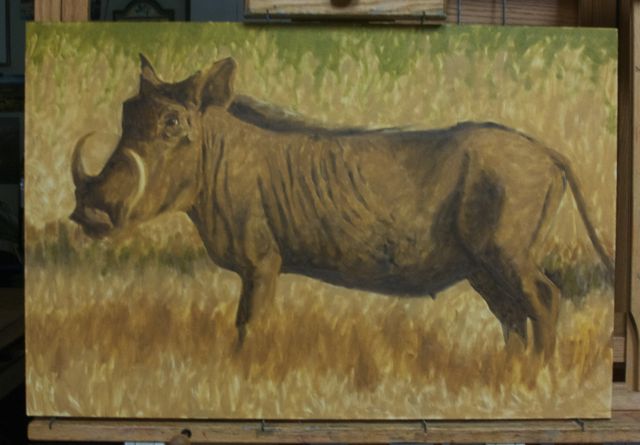
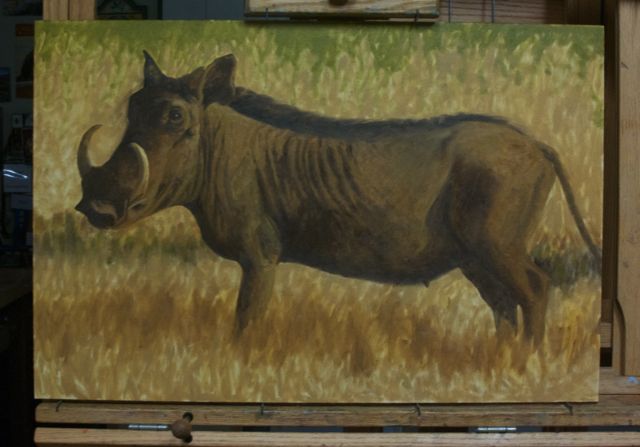
And yesterday I finished the warthog painting. Here’s the step-by-step from last week. I’m calling it “Gonna Run In 3…2…1”
Sometimes the Art Fairy floats down on gossamer wings and whispers something in your ear like….warthogs. And one must answer the call. So, I’m taking a break from my beloved Mongolian subjects and doing a painting of a warthog.
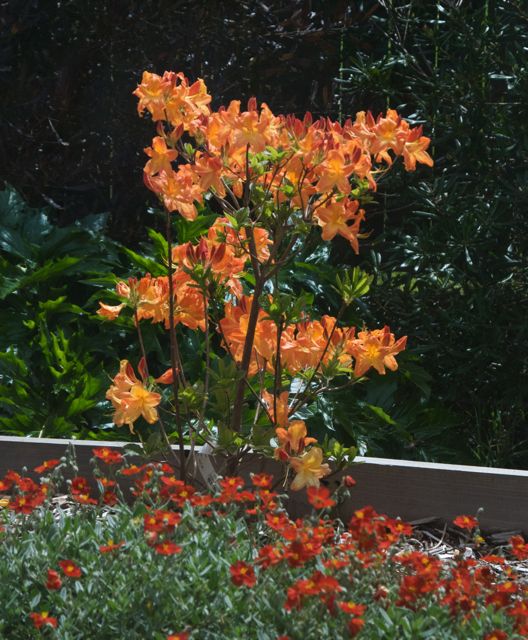
But first, here’s the azalea in full bloom that I can see outside one of my studio windows. It really brightens up a grey day.
On to the warthog. It’s from a reference shot I took during the October 2004 art workshop/safari in Kenya that I and ten other artists went on with the late Simon Combes. You can see pictures of the whole, wonderful trip here. The painting is 20×30″, a size that I use quite often.
Starting with the brush drawing done directly on the canvasLaying in the shapes of the shadowsFirst pass of all over colorSecond pass of color on the piggy













 Susan Fox, American Artist