The next ten or so posts will cover all the places I visited on this past trip, some familiar and well-loved and some new.
The two-week trip with Pokey emphasized the best wildlife viewing places that I’ve found. We headed west out of Ulaanbaatar on a sunny August morning….
and spent two productive days at Hustai, seeing lots of takhi and other wildlife. The wildflowers were still in bloom, too, which was lovely.
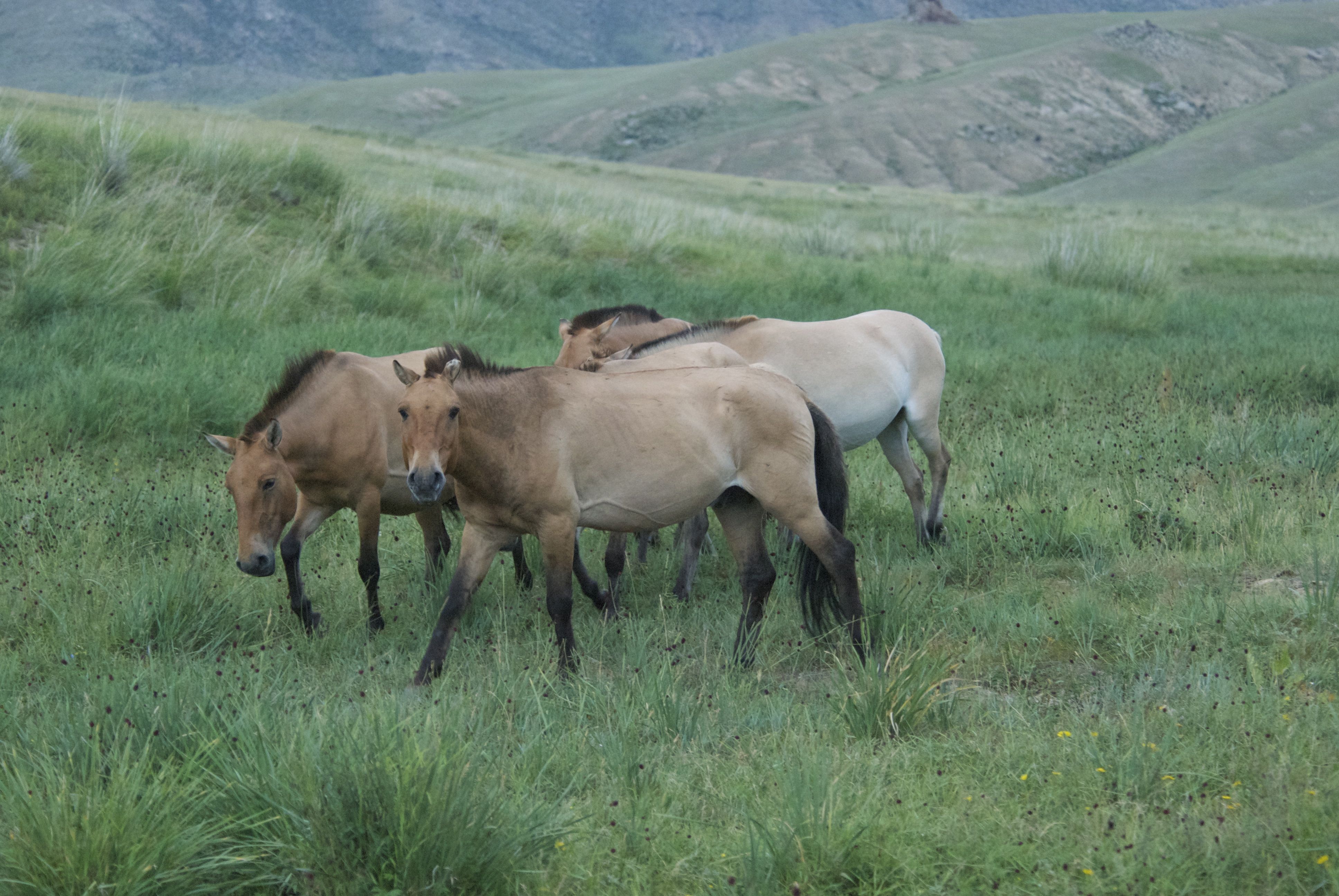
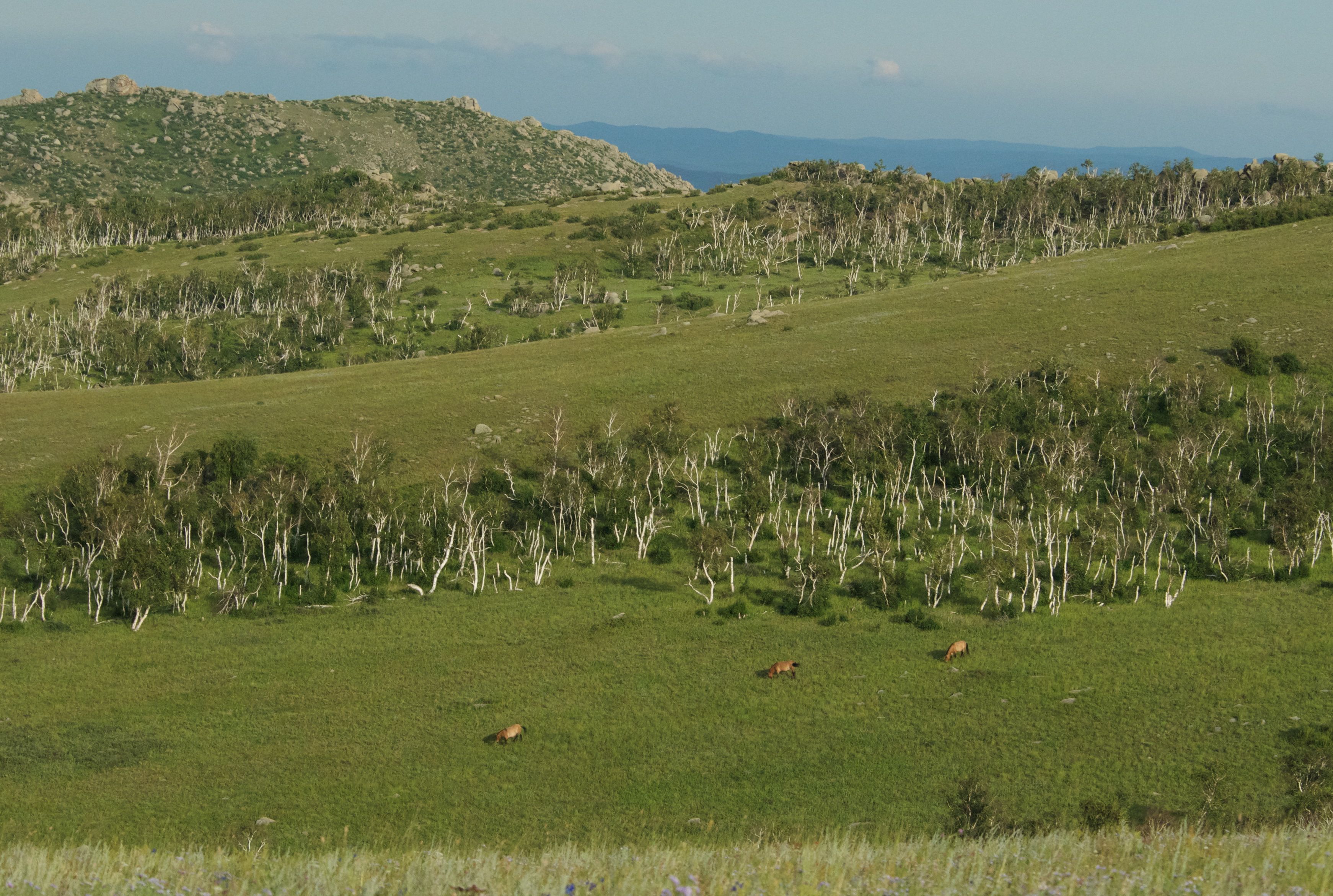
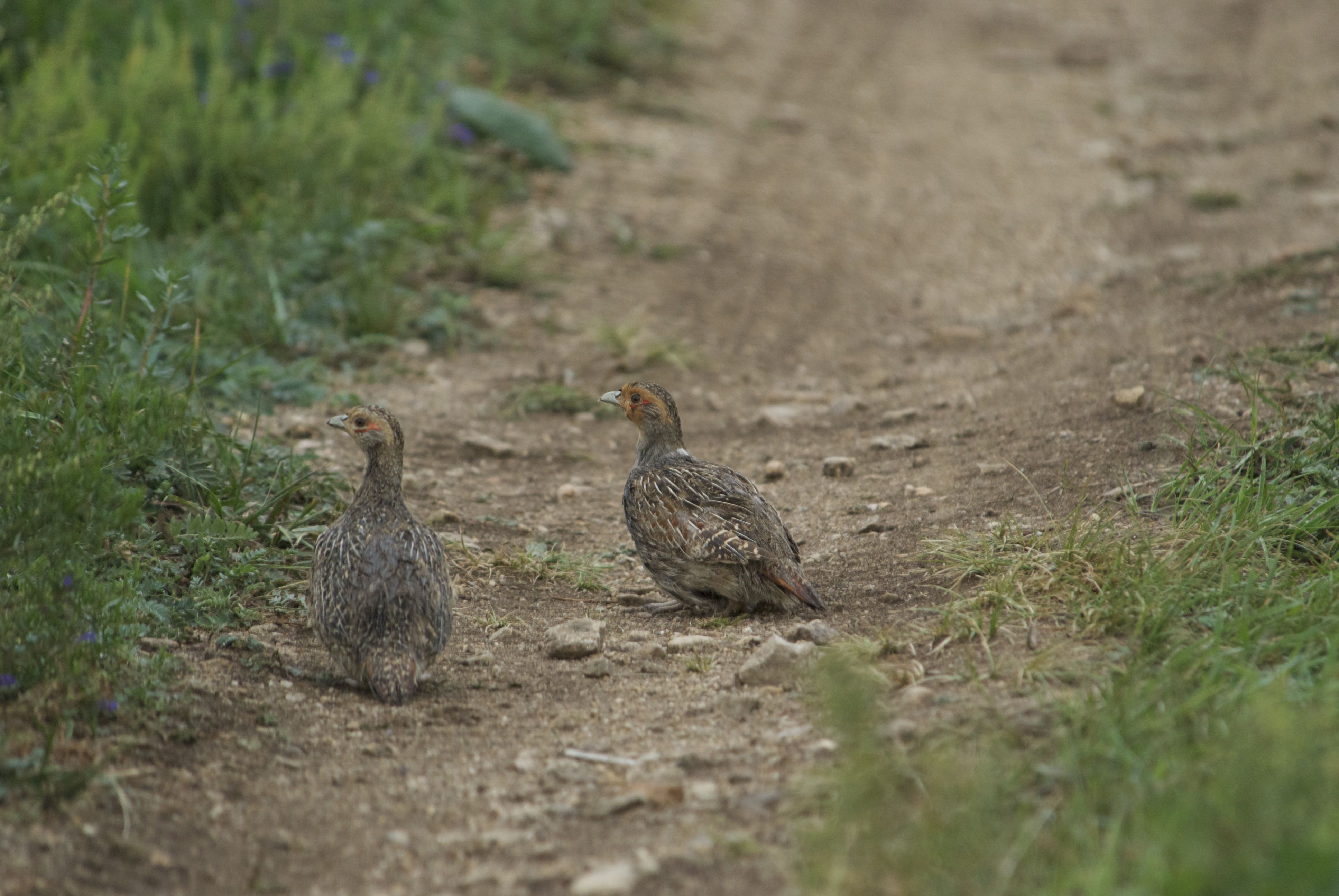
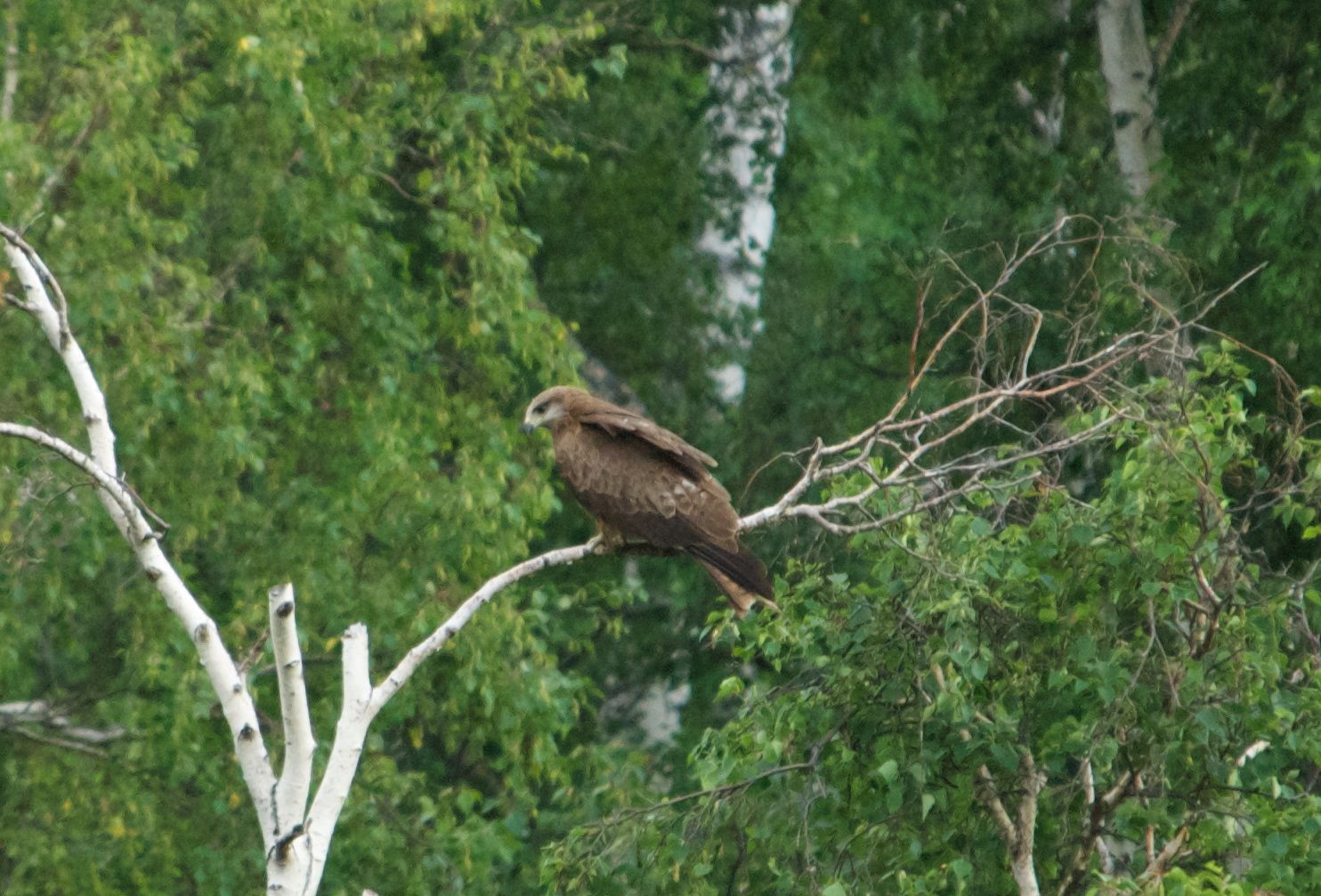
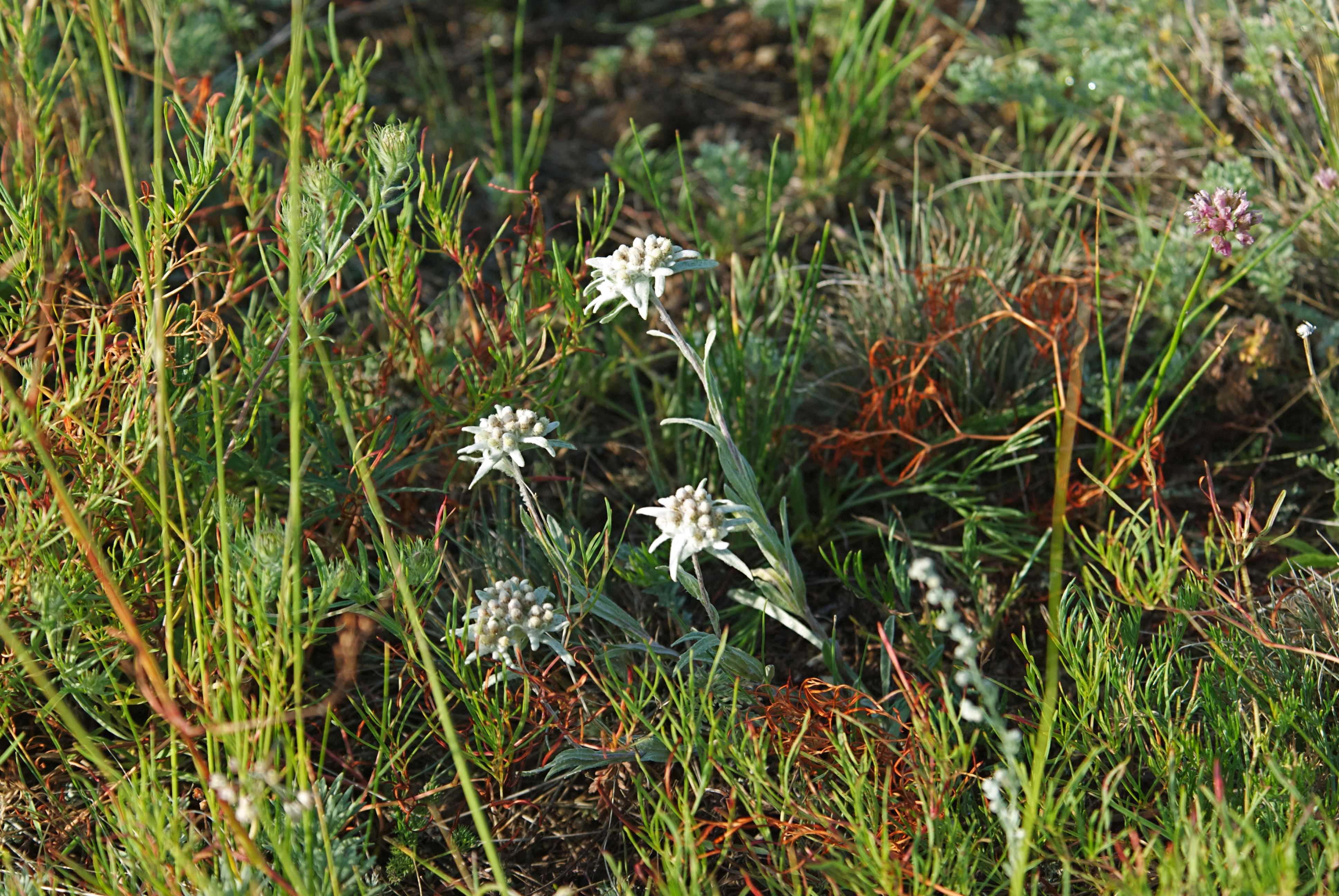
These horses were part of a group approaching a water hole right by the road; you'll have to wait for the painting to see the rest...At first this harem was a long way offBut as we watched from behind a line of rocks, they drifted closer and closerFinally, they grazed their way right past us in the fading light; it was quite wonderful to have them come so closeMarmots generally run straight for their holes when spooked, but for some reason we will never fathom, this one ran for a long way right down the middle of the roadThese darian partridges were a new species for meBlack kite in a birch tree; "Hustai" means "birch" in MongolianCinereous vulture, the largest Eurasian vulture which can weigh up to 30 lbs.This grasshopper suddenly appeared on our windshieldSaw more spiders on the trip this year than ever before, including this one on a member of the phlomis familyDeep purple globe thistlesEdelweis
Five wonderful weeks in Mongolia just flew by. I managed to spend three of those weeks in the countryside: two weeks doing the “wildlife watching” tour with nationally-known sculptor Pokey Park and then a week of camping with a guide/cook and driver.
Lots of great reference and stories to match will be posted here in the weeks to come, but for now I’m still catching up and working on a couple of new projects, about which more later.
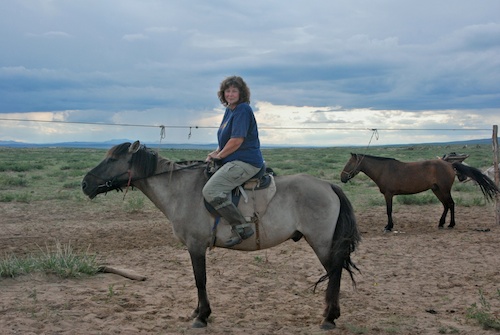
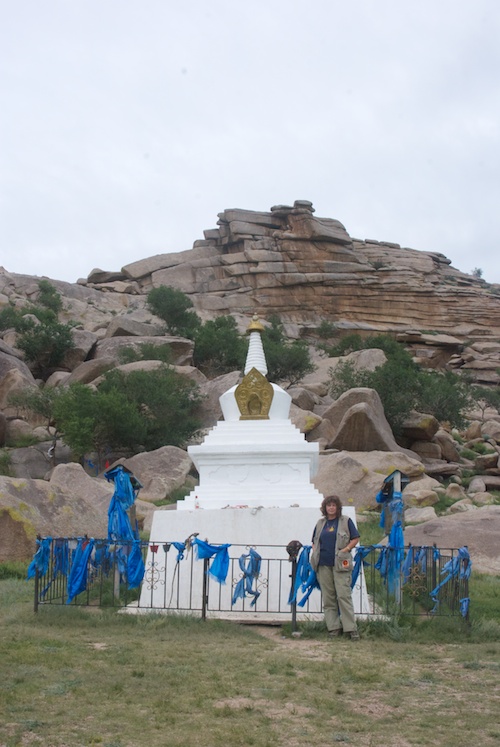
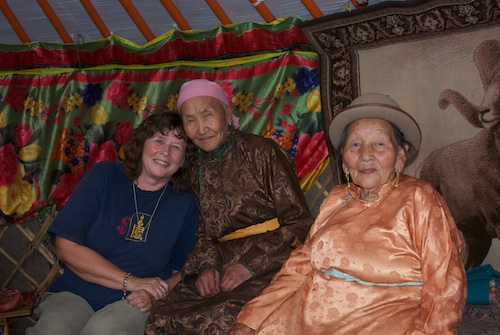
In the meantime, here’s a collection of the photos that have me in them, most taken by our great driver/guide, Khatnaa, who brought his own camera and who definitely has an eye as a photographer.
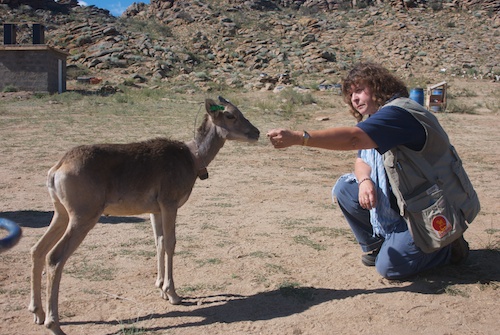
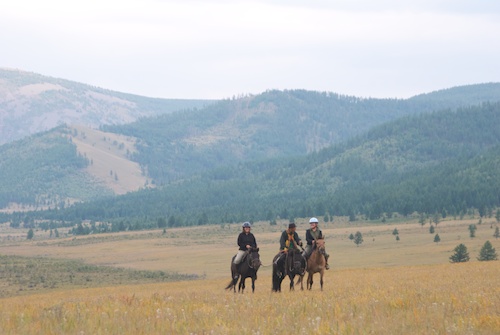
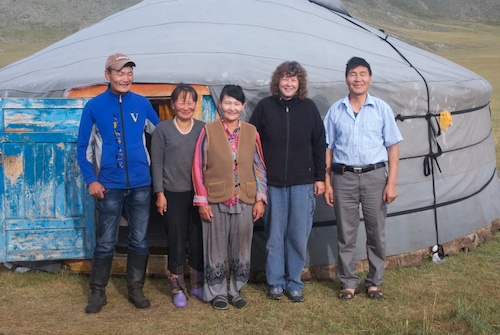
Lunch up in the mountains of Hustai National ParkMongol horse ride #1 at Arburd Sands ger campStupa at Zorgol Uul, a mountain not far from Arburd SandsProbably my favorite photo from the trip; I met these women in 2008 when my husband and I went to Arburd Sands and I was thrilled to see them again this year; Lkhamsuren, on the right, is the widow of famous horsetrainer, Choidog, whose son, Batbadrakh, is now family patriarch; Surenjav, next to me, and I somehow connected in 2008 even though we couldn't talk to each other due to the language barrier. She's 92 now and is Batbadrakh's brother's mother-in-law. Being Mongolia, neither expressed any real surprise at this western woman who they met three years ago walking into the ger one morning to say "Sain bain uu"Orphaned argali lamb at the Ikh Nartiin Chuluu Nature Reserve research campHappiness is a nice ger and comfy del at Gun-Galuut Nature ReserveAfter the second longish hike up a steep slope in one morning, I was rewarded with this great view of the valley of the Kherlen Gol; Chinggis Khan almost certainly knew and rode through this placeMongol horse ride #2 at Jalman Meadows ger camp, up north in the Hentii Mountains, and overlooking the valley of the Tuul Gol, which also flows through UlaanbaatarThe second night of the camping trip, I got to stay overnight with a herder family for the first time. It happened to be the home of my driver, Puugee, who on the right. Next to me on the left is Hashchuluun, his wife, then a lady who I did not catch the name of and, finally, Puugee's oldest son, one of three
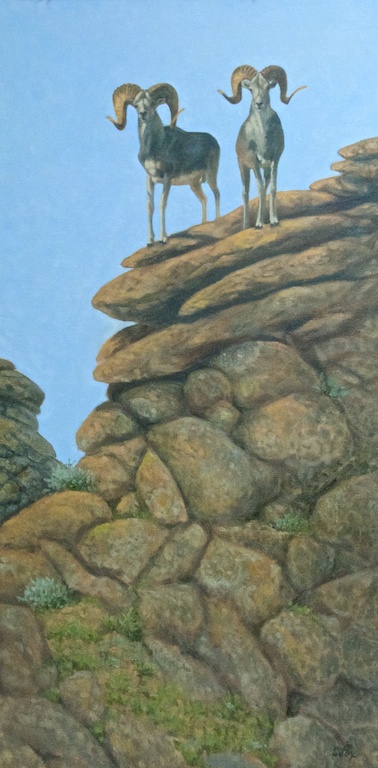
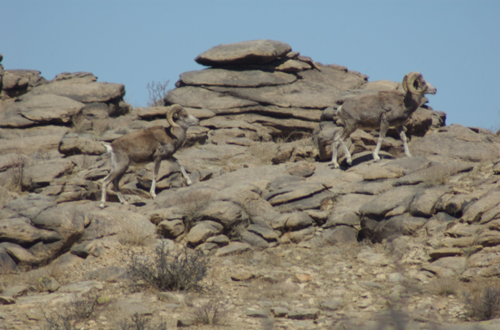
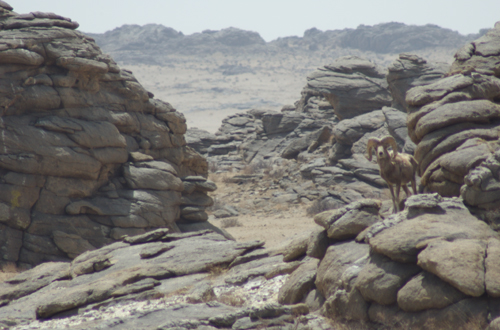
I had gone out very early from the research camp at Ikh Nartiin Chuluu Nature Reserve this past July and had settled down on a rock to see who would show up at the water hole.
I looked up and saw these two rams checking me out as they scanned their surroundings.
The sun was just hitting the cliff tops, so they really stood out against the morning sky.
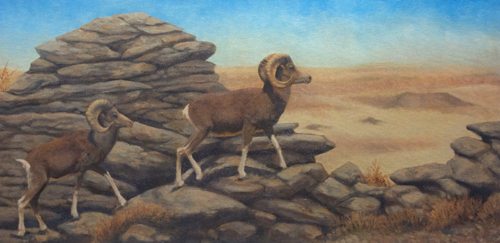
For the painting, I wanted to give a sense of the landscape that they live in and how comfortable they are on tilted surfaces that would make most of us somewhat nervous.
Soon after I took this and some more photos, they came down onto the valley floor and joined up with some buddies for a drink and a graze.
I got to watch them for about half an hour.
And yes, after 2 1/2 years, I’ve updated the look of my blog with a new theme. I finally found one that I liked and that has new features and functions the previous one lacked. Let me know what you think!
Hard to believe it, but I have reached 400 posts. I started my blog on December 10, 2007. It doesn’t seem like it has been that long. It’s become part of my weekly routine and a fun way to share my art and my travels.
I also really appreciate the support and comments that I get from my readers. Thank you!
Now, on to Mongolia Monday! Today I’m going to post links to 10 of my favorite sites, ones that I would recommend to anyone who is interested in learning about Mongolia or who is planning to go there.
Procession of the horse tail standards, Naadam, 2009
1. News.mn: http://english.news.mn/home.shtml– News.mn has consistently been the best place I’ve found for keeping up with what is going on in Mongolia. There is also the UB Post, which is better known, but the load time on the site is glacial.
Peace Avenue, Ulaanbaatar, September 2009
2. Asian Gypsy: http://asiangypsy.blogspot.com/– He doesn’t post nearly enough, but this is definitely my favorite blog written by a Mongol. I get the email feed so that I don’t miss a post.
Lightning storm at Arburd Sands ger camp, July 2009
4. Altan Urag: http://www.altanurag.mn/en.html– One of the best known groups to come out of Mongolia, Altan Urag (which means “Golden Lineage”, a reference to the family and descendents of Chinggis Khan), describes themselves as a “folk rock band”, which means an amazing synthesis of modern western and traditional Mongolian music, including morin khuur and khoomii (horsehead fiddle and throat singing). Their music can also be heard in movies like “Khadak” and “Mongol”. And their website is waaay cool.
Morin khuur, Union of Mongolian Artists gallery, Ulaanbaatar
5. Ganbold: http://www.ganbold.com/– Ganbold, who currently lives in the USA, is a graphic designer and artist with a very impressive client list. I had clicked on a banner ad he had placed on a Mongol site and really liked what I saw. Then, sometime later, a “Ganbold” left a comment on this blog. I clicked the url in the commenter info. and. low and behold, it was the same person! We’ve stayed in touch on and off since then. The home page of his website is, literally, a work of art. Click “Enter”. Highly recommended for bird lovers.
6. Budbayar Boldbaatar: http://www.budartist.com/– I absolutely adore his work, but Budbayar is also standing in for the many, many excellent artists that Mongolia produces and who deserve to be known to the world.
Palace of Culture, Ulaanbaatar; home to the Mongolian Modern Art Gallery
7. Circle of Tengerism- http://www.tengerism.org/– One thing that many westerners do know about Mongolia is what we call “shamanism” and the Mongols call “Tengerism”. “Tenger” is Mongolian for “sky”, also known as The Eternal Blue Sky or Eternal Heaven. This ancient belief system has survived centuries of persecution and suppression and today is an active part of the culture of the country.
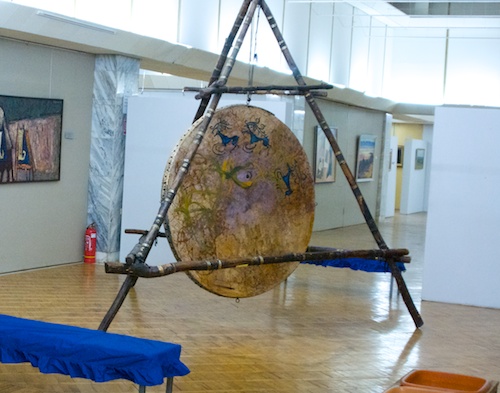
Shaman's drum- Mongolian Modern Art Gallery, Ulaanbaatar
8. Ikh Nartiin Chuluu Nature Reserve- http://www.ikhnart.com/home.html– My entry point into Mongolia in 2005, Ikh Nart is where I’ve been able to become actively involved in conservation and working with local herders. The reserve is home to the world’s only argali research project.
Argali ram- Ikh Nartiin Chuluu
9. Gun-Galuut Nature Reserve- http://www.argalipark.com/– Very different habitat from Ikh Nart, but also home to a population of argali sheep. This reserve was set up by the local government and is administered by a community association. Visitors can ride a horse or in a yak cart, try Mongol archery, take a boat out on the river and hike the surrounding area.
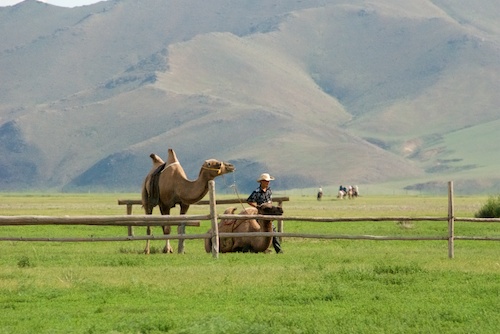
Camel ride?- Gun-Galuut Nature Reserve
10. Nomadic Journeys- http://nomadicjourneys.com/– Finally, a tip of the hat to the tour company that I have relied on to get me around Mongolia since 2006. The website not only describes their trip offerings, but is a wealth of information about Mongolia, the country, land, people and wildlife.
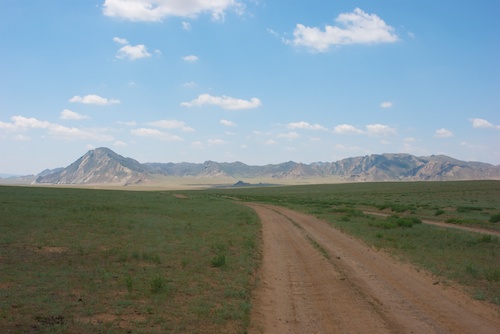
Tahilgat Hairhan (a sacred mountain), Tsenkher Tenger (blue sky) and Gazar Zam (earth road); Minii Mongol (my Mongolia)
I completed a major painting last week. It’s one I’ve been anxious to take on since I spent a hour with a group of five argali rams this past July at Ikh Nartiin Chuluu Nature Reserve. I was there for six days, staying in one of the gers and taking meals with the scientists and an Earthwatch team.
I’d gotten up at 5:30am, thrown on the clothes that I’d laid out the night before, hoisted my camera pack onto my shoulder, slipped out of the ger and began a slow, careful walk down the valley.
I had learned that the only water in the area was coming from a spring just a few dozen yards from camp and that argali were coming to the valley regularly in the morning and evening. Which was quite convenient, saving me a lot of walking around and clambering over rocks trying to find them.
I picked a spot and sat down in plain view, having been told that makes them less nervous than if you try to hide behind a rock. Took a look around through my binoculars and, within a few minutes, up on the cliffs to my right…
Morning "scouts".
As I watched them, wondering if anyone was going to come down, I had a feeling…and looked back over my shoulder to my left.
Less than 100 feet away.
How long they had been standing there watching me, I have no idea. Then they started to move towards the stream bed.
Oh, look, there's three!Coming down the hill.
As I watched, the sun started to hit the tops of the cliffs. Would I get to see these guys in morning light before activity in the camp behind me spooked them?
Out into the valley as the sun comes up.
The first three crossed the stream bed to a small clump of trees. Two more rams had come down from the cliffs on the right. The Sunrise Boy’s Club was now in session.
Five rams hanging out.
There were three older adults with massive horns and two younger rams. The big guys were almost grey, their juniors a reddish-brown.
They browsed in the trees, did a little pre-rut testing (a future painting). And then….
Noise from camp. Oh, no.
But everyone settled back down. Except for this young one who decided to check me out, walking almost straight towards me. It made the others nervous at first, but they didn’t run.
It was a bit much for the three older rams.
I sat there in disbelief. For me, this is the grail of wildlife fieldwork: sitting out in plain view and having a wild creature choose to approach you.
He finally stopped and looked straight at me from about 30 feet away.
But I wasn’t so paralyzed with delight that I forgot to take pictures, getting the best argali head reference I’ve shot so far.
Returning to the group.
He finally turned and walked back to the others who, as you can see, are standing there, watching. I found myself running this little thought thread: “We didn’t get this old and big by being stupid. Let the young guy check her out.” And then imagining the adventurous ram, kind of like a young British officer, reporting back to his superiors. “No problem, sir. None at all. Piece of cake.”
I guess I was just part of the furniture by now.
But he wasn’t done yet. For a second time, he walked down the stream bed towards me.
Comfortable enough to put his head down and graze.
He finally rejoined the group. Suddenly they were up on their feet just as the light was starting to reach the valley floor. Oh, no! They’re facing the wrong way. Are they going to run up the hill?
Up on their feet.
Suddenly one of the young rams turned and bounded into the light. Yes!
Into the light. At last!
And everyone else followed, crossing right in front of me and occasionally stopping for a nibble.
A short pause.
But now I could hear movement in the camp. The group split up, two of the rams going up into the rocks.
One went right up the cliff face.
Three of them walked on down the valley in the bright sunshine.
Time to move on.
I looked behind me and saw one of the scientists from the camp. He walked past me. The rams kept moving, but never ran. It’s good they’ve learned that in this place they don’t have to fear people.
Last look.
The three finally made a right turn up into the cliffs, stopping, as argali often do, to take one last look.
On Friday, Part 2 will present a step-by-step post on the painting that came out of this wonderful experience.
It’s clear that one lesson we, as a species MUST learn, is to share. All of these animals have just as much right to be here as we do. As they go, in the end, so shall we.
I’ve never made a point, for the most part, of specifically seeking out endangered or threatened species to photograph for my paintings. But, as it’s happened, in less than ten years I’ve seen two dozen, plus one, all in the wild. Quite a surprise, really.
Sometimes they’ve been pretty far away, but that in no way diminished the thrill of seeing them. Close-ups in a zoo or other captive animal facility can be useful, within certain limits, but seeing a wild animal in its own habitat, even at a distance, is much more satisfying and gives me ideas and information for my work that I couldn’t get any other way.
In no particular order, because they are all trying to survive on this planet:
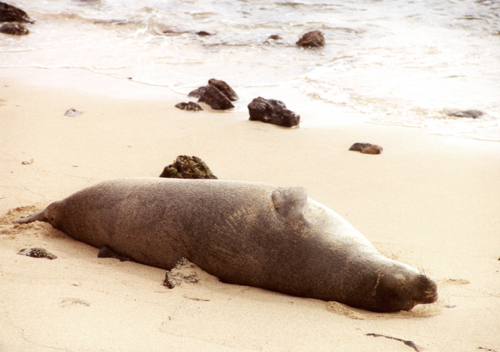
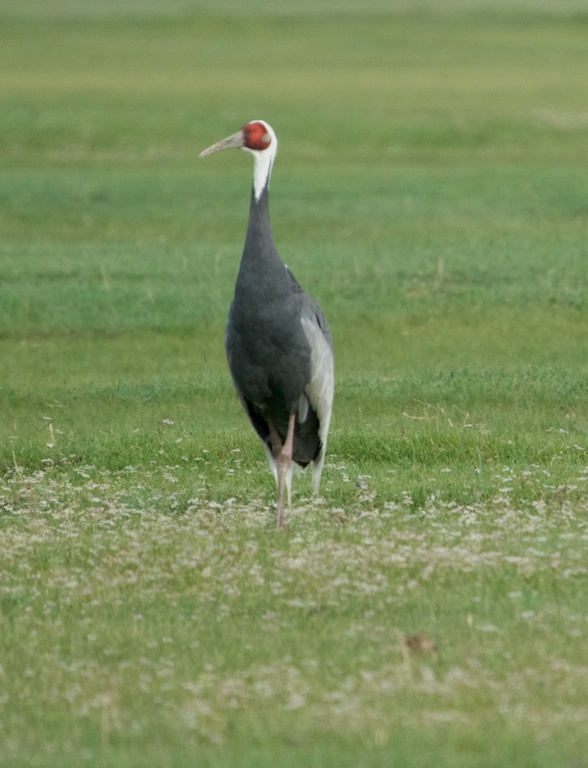
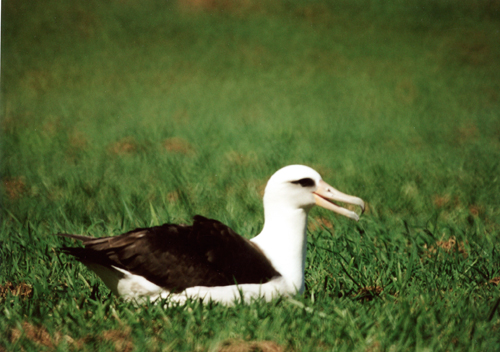
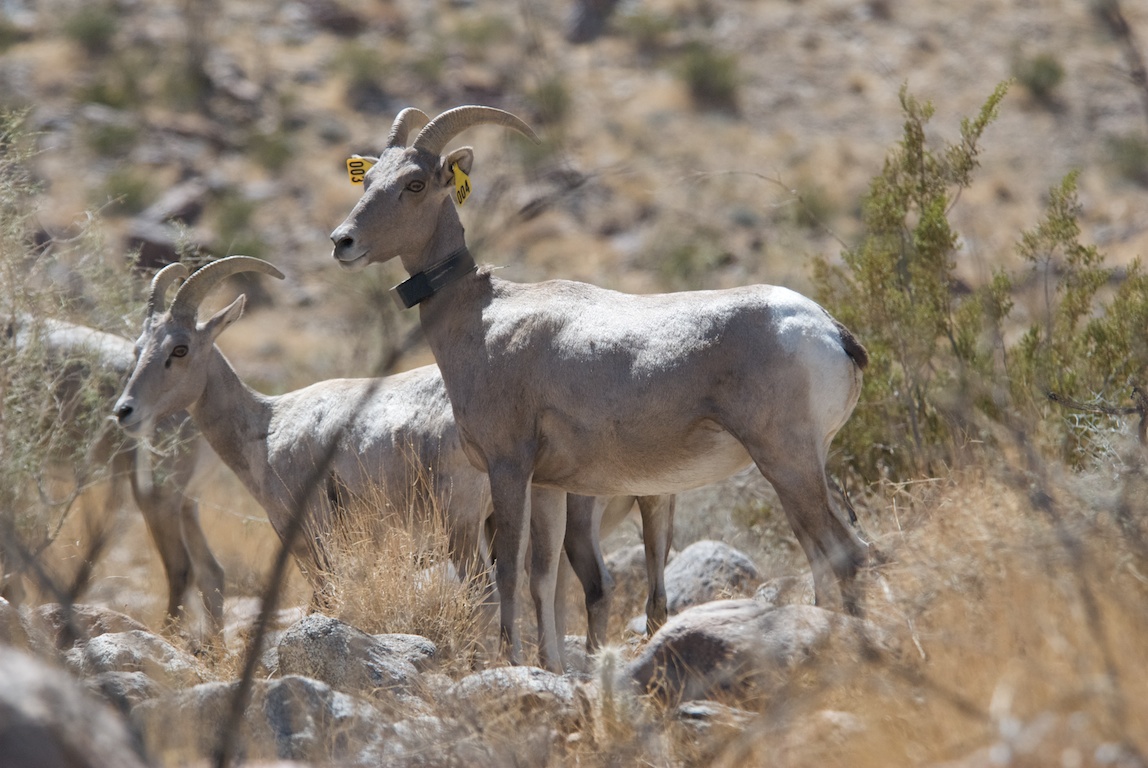
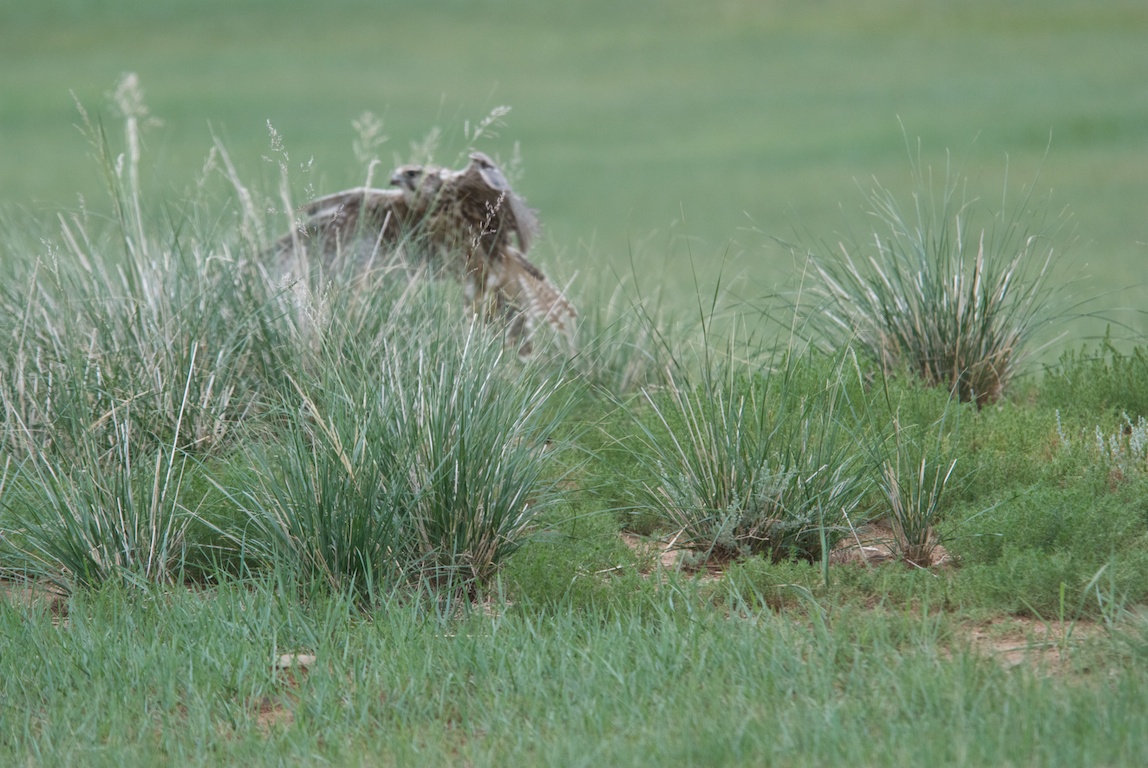
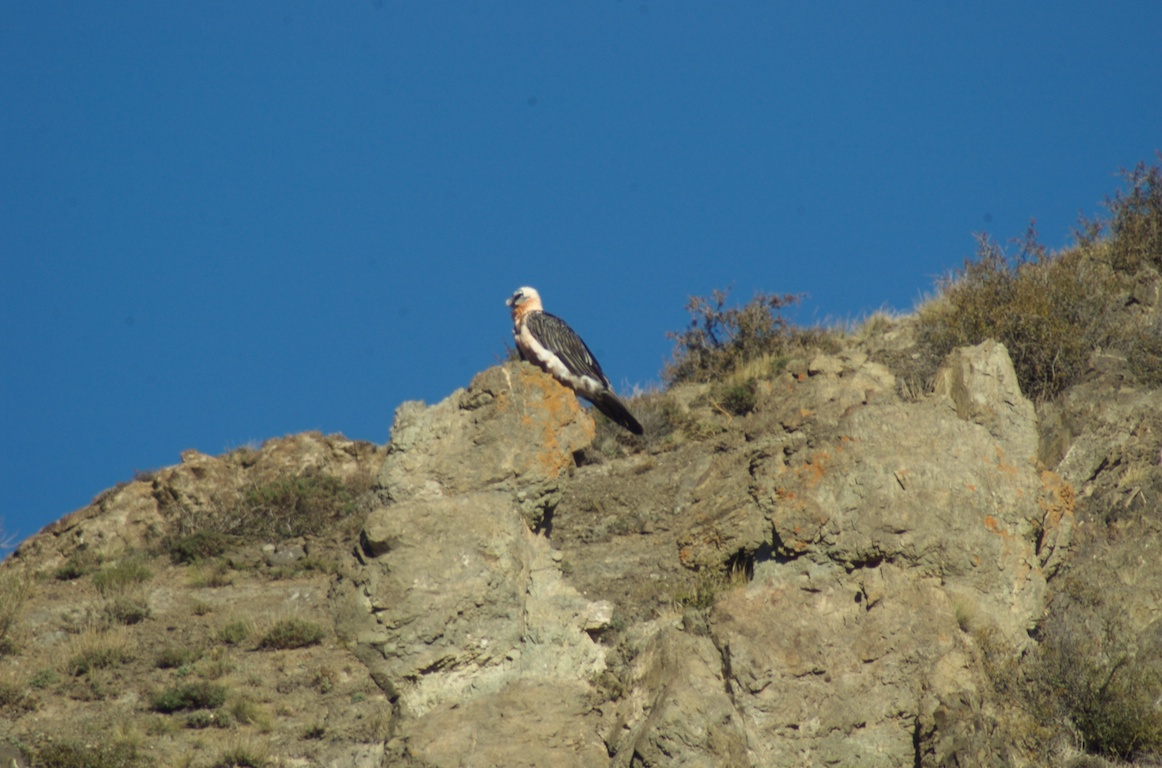
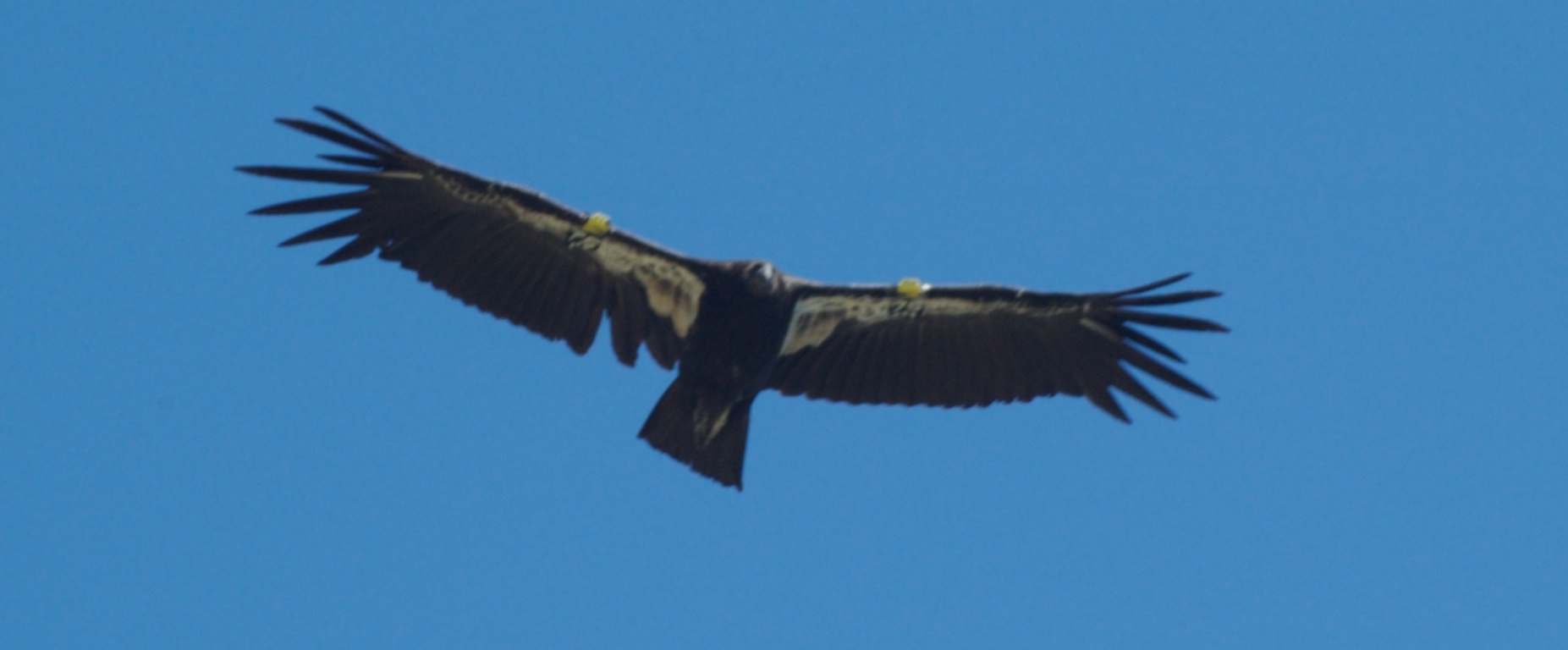
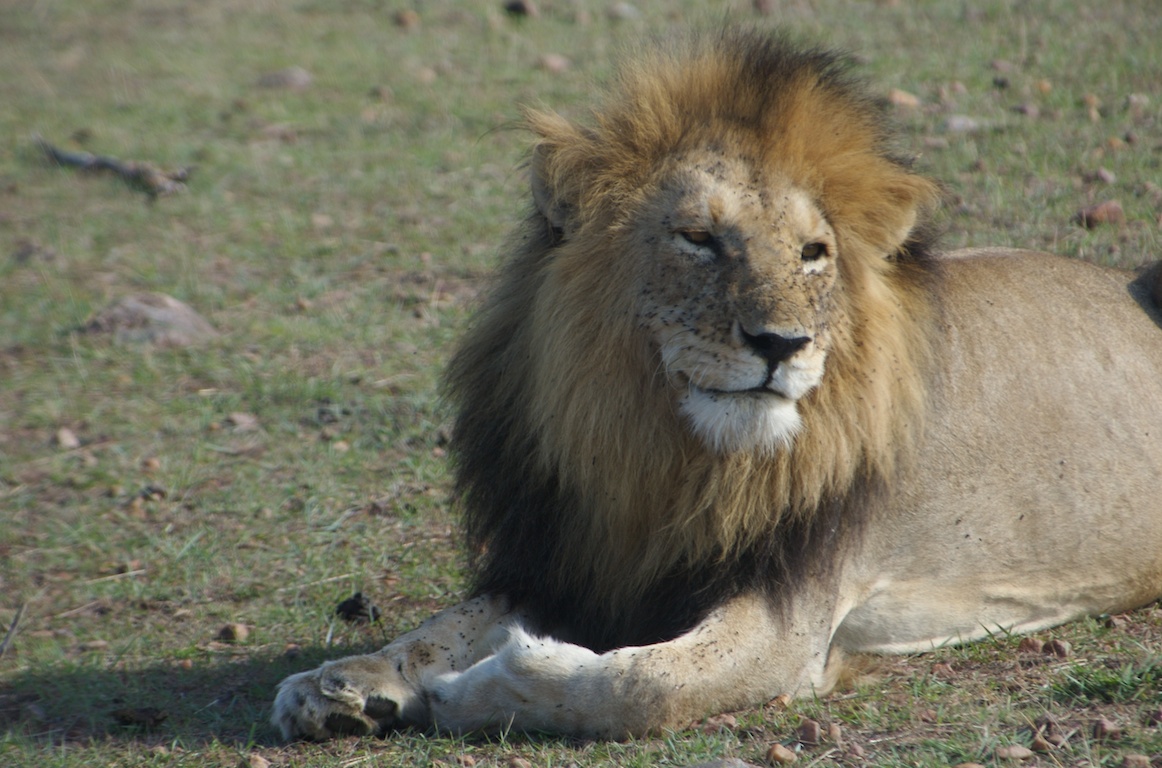
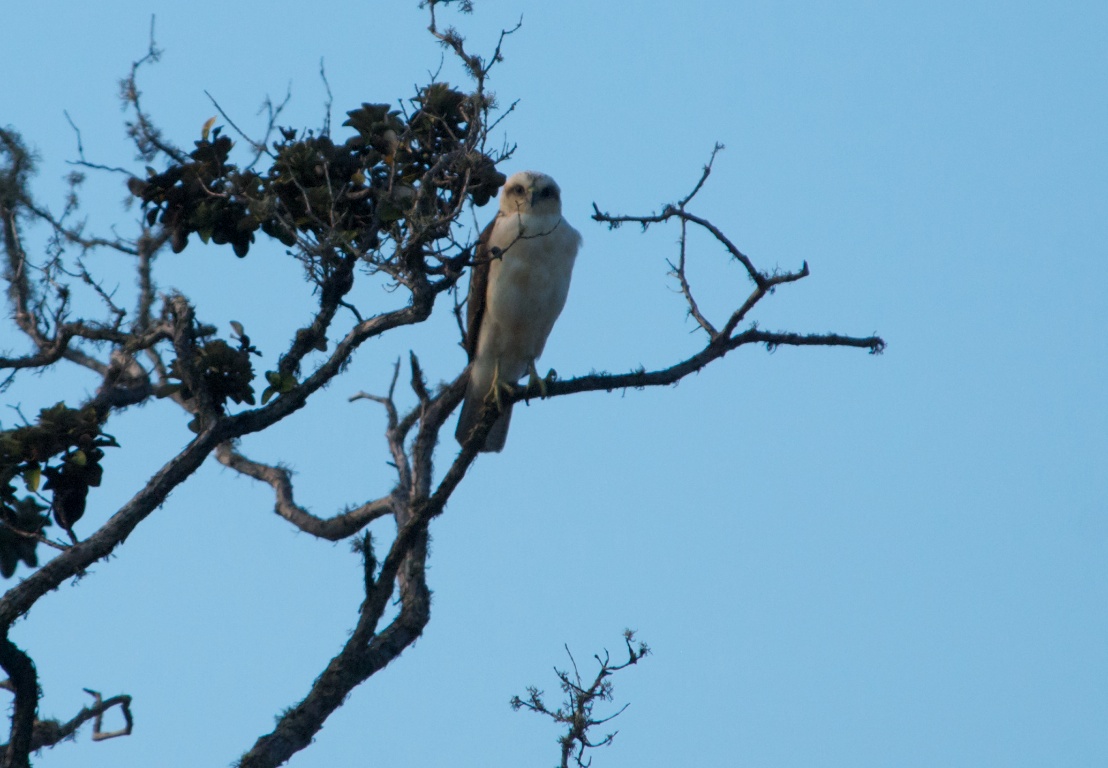
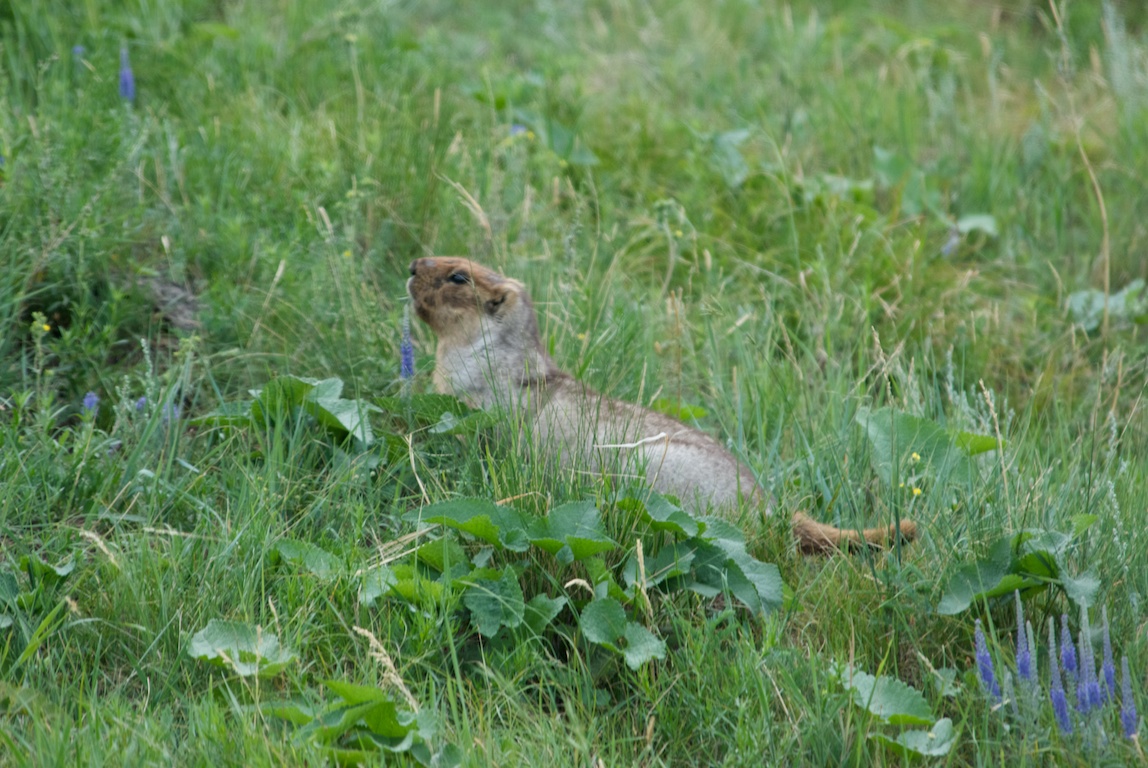
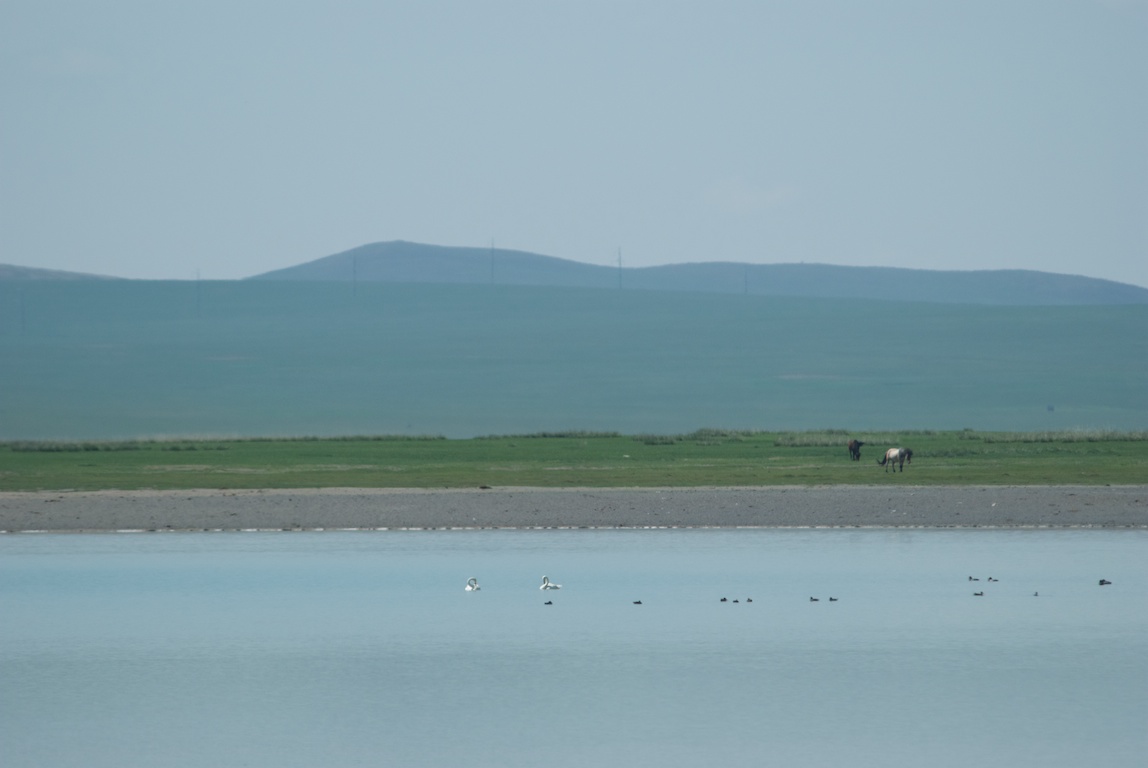
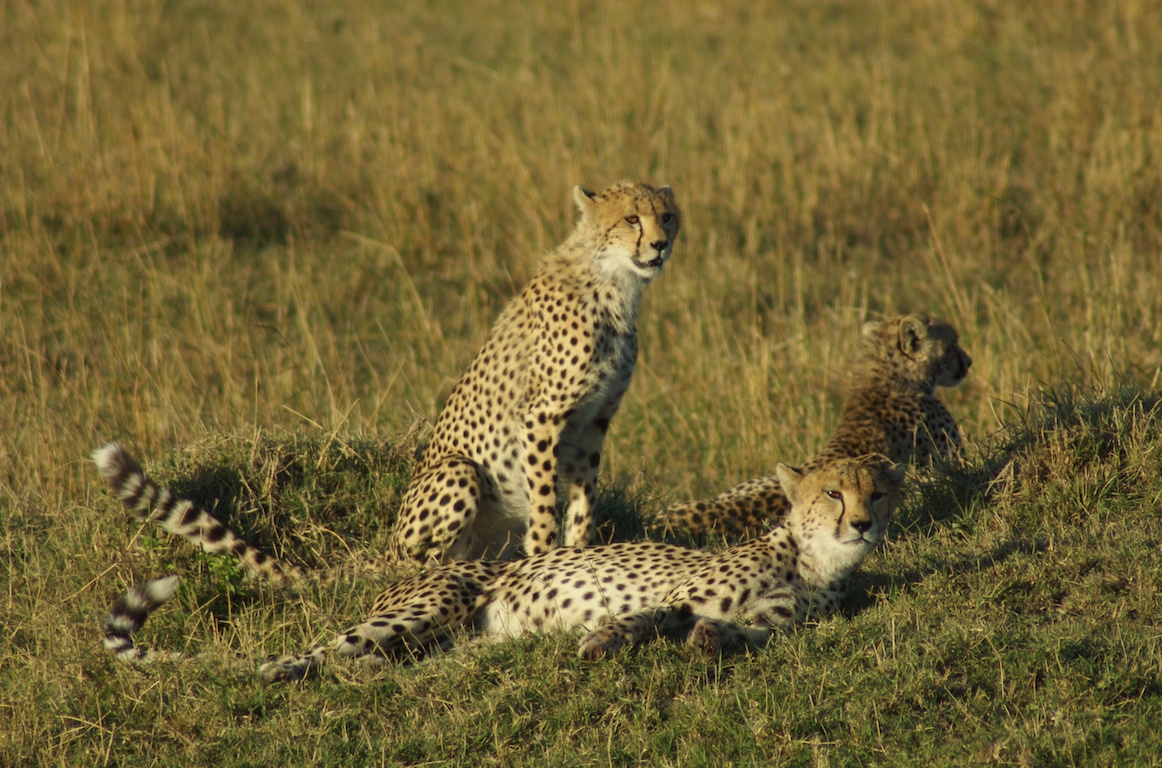
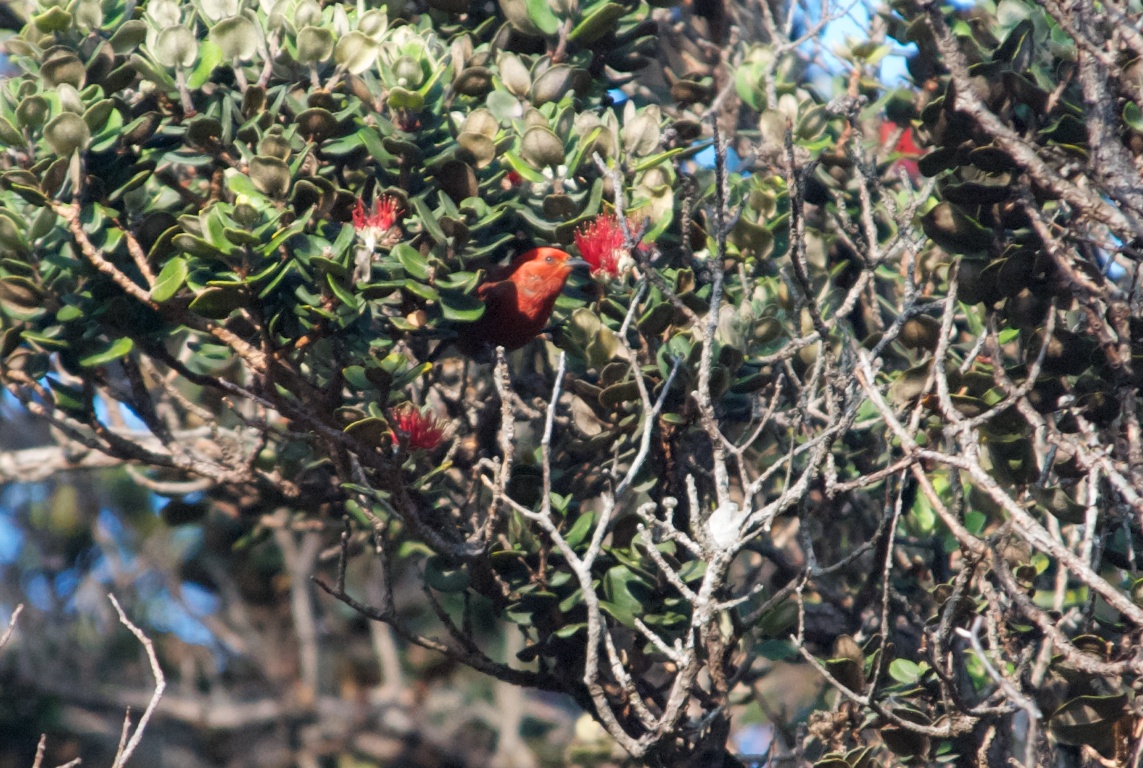
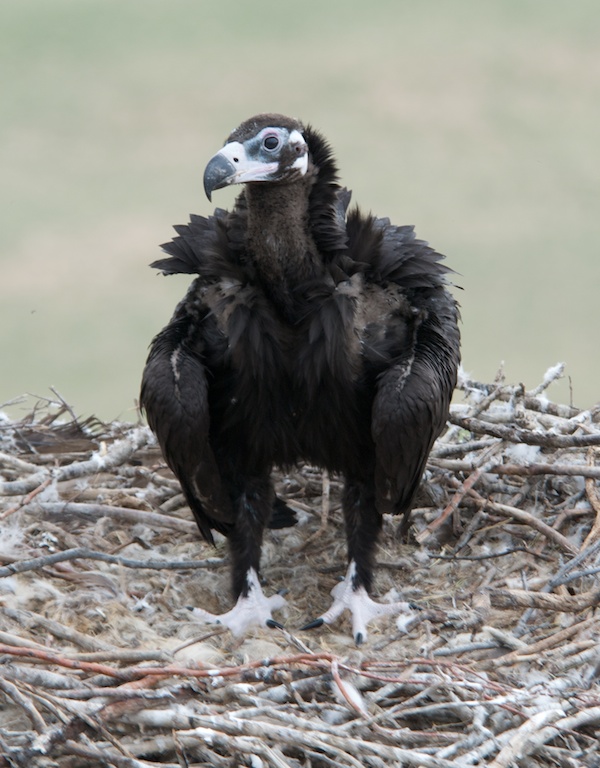
Takhi, Hustai National Park, MongoliaMonk Seal, Kauai, Hawaii, United StatesWolf, Lamar Valley, Yellowstone National Park, Wyoming, United StatesWhite-napped crane, Gun-Galuut Nature Reserve, MongoliaWhite Rhino, Lewa Downs Conservancy, KenyaLaysan Albatross, Kauai, Hawaii, United StatesTule Elk, Point Reyes National Seashore, California, United StatesRothschild's Giraffe, Soysambu Conservancy, KenyaNene, Hawaii Big Island, Hawaii, United StatesDesert Bighorn, Anza-Borrego State Park, California, United StatesGrizzly Bear, Yellowstone National Park, Wyoming, United States (Bear 264)Saker Falcon, near Hangai Mountains, MongoliaGreen Sea Turtle, Hawaii Big Island, Hawaii, United StatesGrevy's Zebra, Lewa Downs Conservancy, KenyaLammergeier, Gobi Gurvansaikhan National Park, MongoliaCalifornia Condor, Central Coast, California, United StatesAfrican Lion, Masai Mara, KenyaHawaiian Hawk (Juvenile), Volcano National Park, Hawaii Big Island, Hawaii, United StatesSiberian Marmot, Hustai National Park, MongoliaWhooper Swans, Gun-Galuut Nature Reserve, MongoliaCheetahs, Masai Mara, KenyaApapane, Hawaii Big Island, Hawaii, United StatesTrumpeter Swans, Yellowstone National Park, Wyoming, United StatesCinereous Vulture (Juvenile), Baga Gazriin Chuluu Nature Reserve, MongoliaArgali, Ikh Nartiin Chuluu Nature Reserve, Mongolia
My plan was to go back to Kenya in 2005 for an Earthwatch Institute-sponsored research project “Lions of Tsavo”. But I was leafing through the new Expedition guide and a project I hadn’t seen before caught my eye, “Mongolian Argali”, whatever those were. Oh. Wild sheep. But….Mongolia. Now there was a place that seemed like it might be interesting to travel to. And who knew how long the project would last. Some went on for a decade or more. Others only for a year or two. I called the Earthwatch office, changed projects and, without realizing it at the time, changed my life.
Argali (Ovis ammon) are the world’s largest mountain sheep. A big ram can weigh close to 400 pounds. The horn curl can reach 65″. Their preferred habitat is rocky uplands, mountains and steppe valleys. They are currently listed on the IUCN Red List as Near Threatened and Appendix II of CITES. Accurate population estimates are hard to come by. The most current one is perhaps as many as 20,000 in Mongolia. It is known that the total continues to drop in the western and central parts of the country, is stable in the south, but seems to be increasing in the east.
Group of four argali rams, Ikh Nartiin Chuluu, 2005
Threats include poaching, both for subsistence meat and for the horns, which are now in demand in China for use in traditional medicine. It has also been shown that there is a nearly 100% grazing overlap between the wild argali and domestic livestock, which includes horses, sheep, goats and cattle. Predation by the herder’s domestic dogs, particularly on lambs in the spring, is also a problem. Trophy hunting is not currently a large factor, but the license fee income (18,000 USD) ends up going almost entirely to the federal government. Very little trickles down to either the local people or for conservation projects. One response at the local level has been to create reserves where hunting is not allowed.
As you can see below, there is now an Argali Conservation Management Plan. My on-going involvement with the womens’ craft collective comes under item four on the list.
“Additional conservation measures are desperately required in Mongolia. Clark et al. (2006) outlined the following:
• Implement the recommendations outlined in the Argali Conservation Management Plan. • Improve enforcement of existing legislation that would help conserve argali. • Enhance conservation management in protected areas where argali are found at high population densities, and increase the capacity of protected areas personnel and other environmental law enforcement officers. • Work to improve the livelihoods of local communities in areas where argali are protected by local initiatives and re-initiate community-based approaches to argali conservation (Amgalanbaatar et al. 2002a). • Develop public education programmes to raise awareness of the status of and threats to the species. • Continue ecological research, monitor population trends, and study the impacts of threats, including work in the Altai and Khangai Mountains to complement research occurring in the Gobi Desert. • Implement the recommendations from the Mongolian Wildlife Trade Workshop as outlined in Wingard and Zahler (2006).
Argali ewes and lambs, Ikh Nartiin Chuluu, 2005
Until a joint research effort was started by the Mongolian Academy of Sciences and the Denver Zoological Foundation at the Ikh Nartiin Chuluu Nature Reserve in 2001, very little was known about argali ecology, behavior and population status. This was the research that I had signed up to help with as part of the second Earthwatch team ever to go to Mongolia.
It was April of 2005. Spring in Mongolia is a time of cold, wind and dust storms. Daytime temperatures during the team’s two week stay, living in a traditional felt ger, sometimes only reached 32F. I had the time of my life. When they found out I was an artist, one of the scientists asked if I would be willing to go out and do direct behavioral observations. And that’s what I did for the last three days, trekking out alone into the 43,000 hectare reserve with a clipboard, data forms, GPS, cameras, water bottle and snacks, trying to see the sheep before they saw me, otherwise any data I collected was invalid.
I saw this large group at Ikh Nartiin Chuluu in 2008; seventeen animals, I think, and they ran up that vertical cliff like water flowing uphill
Although a lot of the animals were in poor condition coming out of a typical Mongolian winter in which temperatures can plunge to -40F, I saw many groups that included rams, ewes and lambs, gathered some useable data and got some pretty good photographs. It was a perfect two-fer. I was able to contribute to scientific knowledge of a species and at the same time get information that would be invaluable for painting them.
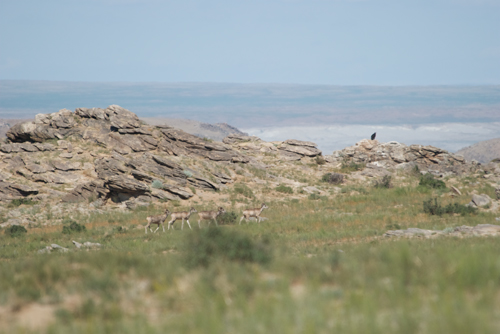
A typical sighting of some ewes and older lambs at Ikh Nart, but with a cinereous vulture, the world's largest, sitting on a rock in the background; in the distance is the desert steppe
I’ve been back to Ikh Nart five times since then and argali have become a particularly favorite subject. I’ve also seen them now at two other locations: Baga Gazriin Chuluu Nature Reserve and Gun-Galuut Nature Reserve.
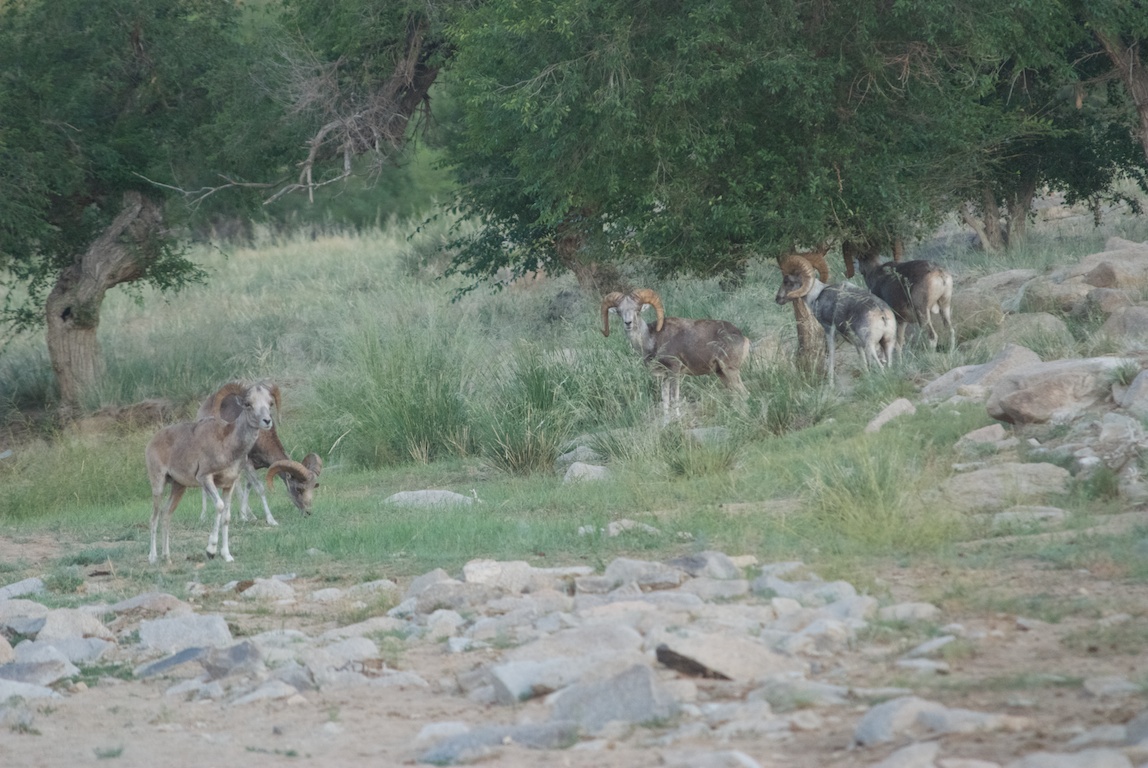
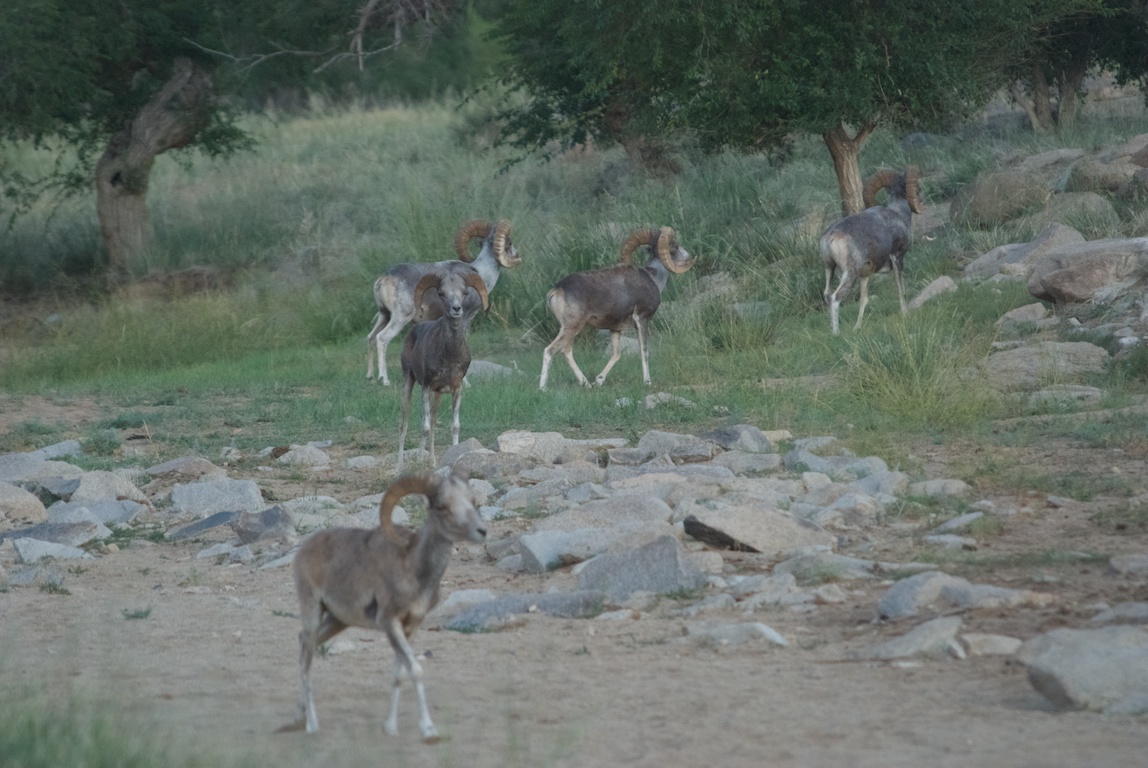
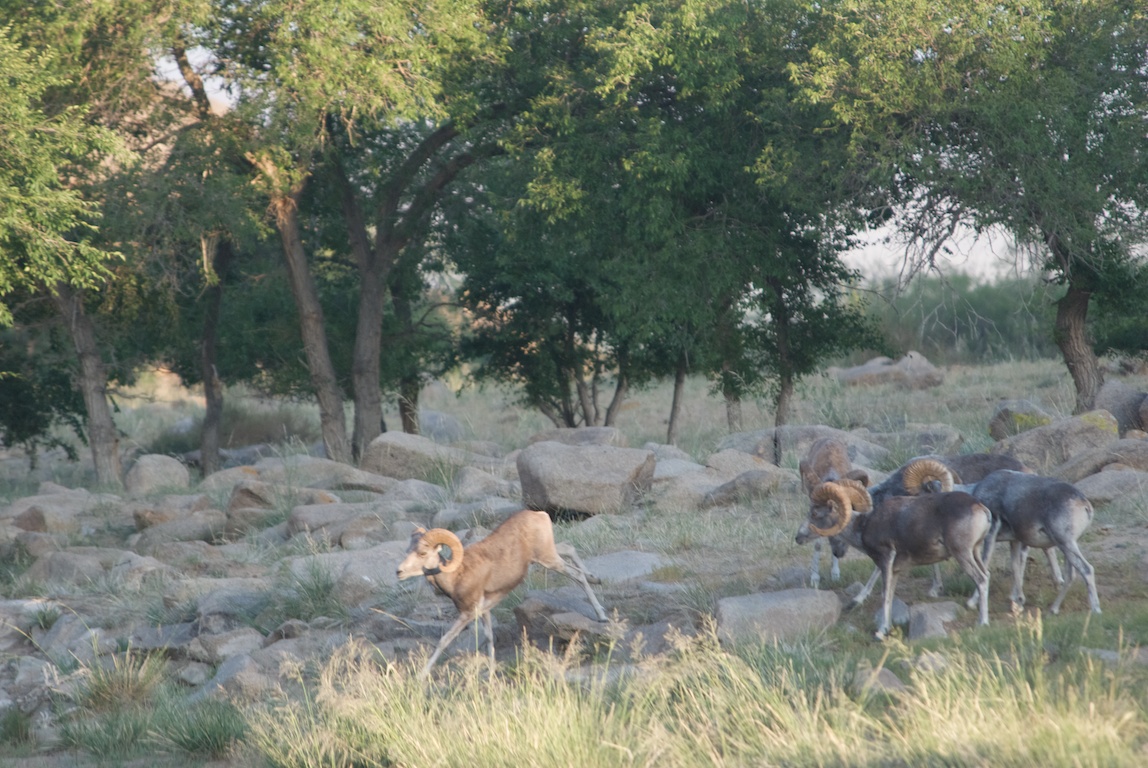
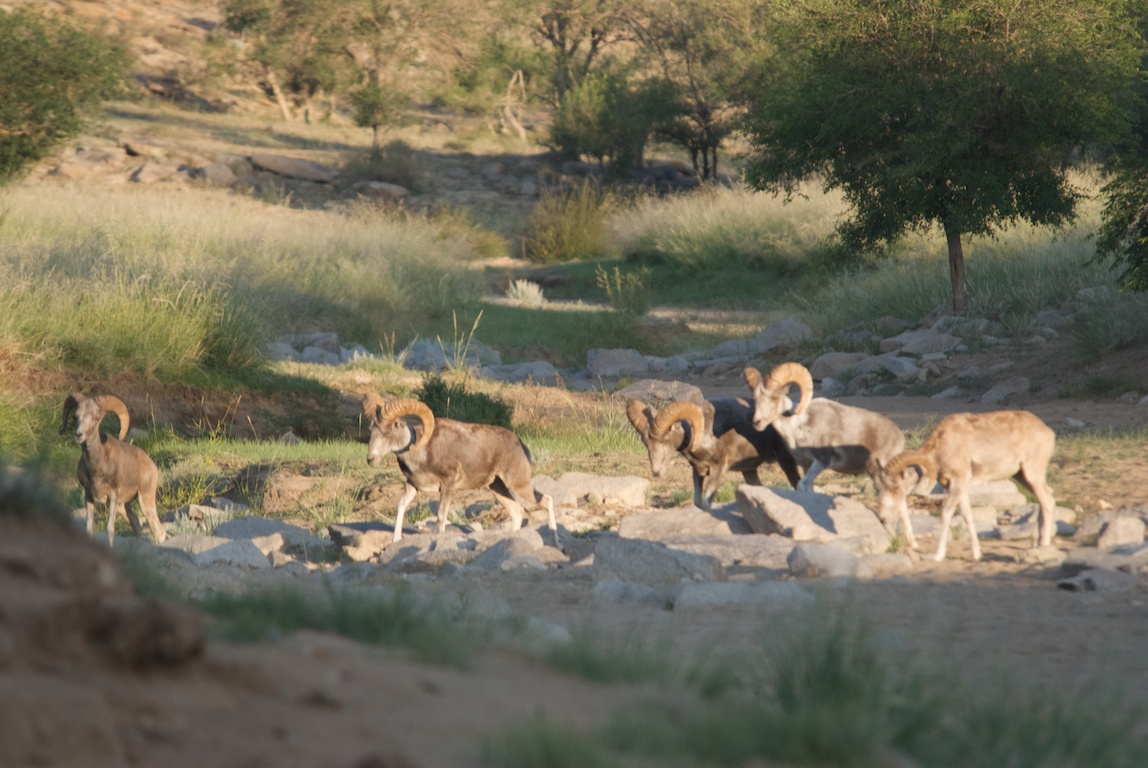
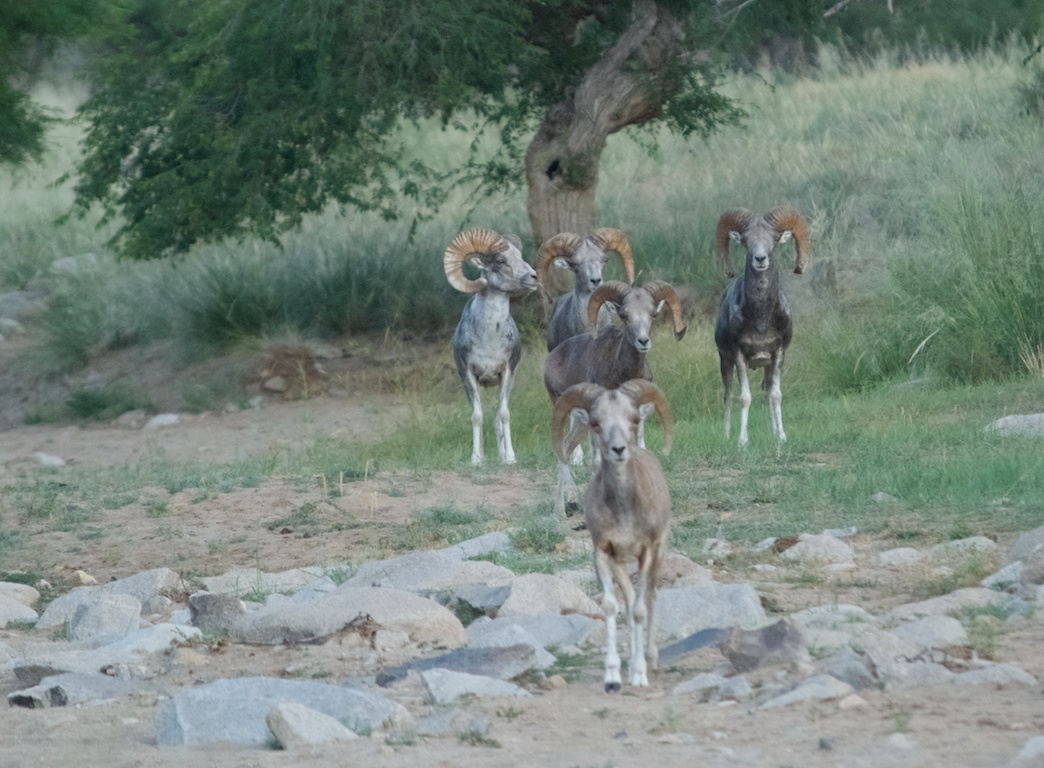
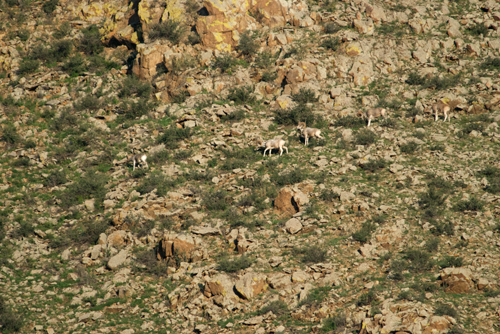
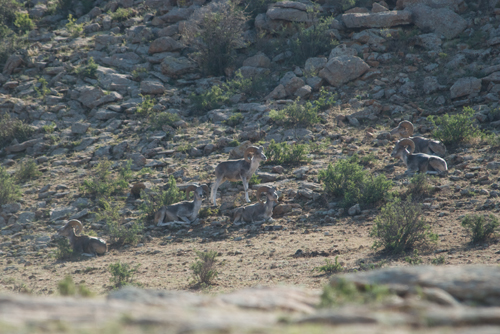
Driving into Ikh Nart in 2008; a grab shot from the car of four ramsRams on rocky hillside at Gun-Galuut Nature Reserve in 2009; the key to spotting them is to look for movement and those long, thin legs, which don't seem to quite fit the landscape; this was with my 80-400 mm lens (effectively 600mm on a digital body) at maximum zoomThis group of rams, at Baga Gazriin Chuluu Nature Reserve were about 800 meters away within plain view of the road through the park; "lazy" animal watching
I thought that I would share some of the photos I’ve taken and the paintings that have come out of them. It usually takes around three, often quite a few more, reference shots since I move animals around, change backgrounds or whatever it takes to make a composition work. I’m only going to show the main animal reference that I worked from. This fieldwork is critical. When working on a painting, I’m also remembering what it was like to be at that place, how the wind felt, the utter quiet when I stopped for a break, then trudging along, looking up and seeing that the sheep had already spotted and were watching me.
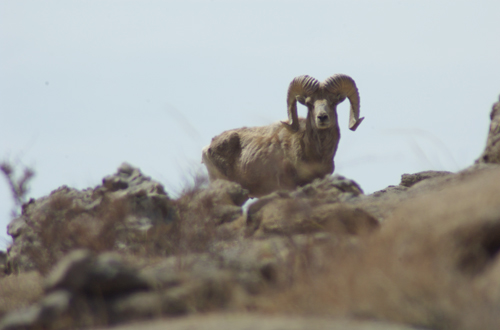
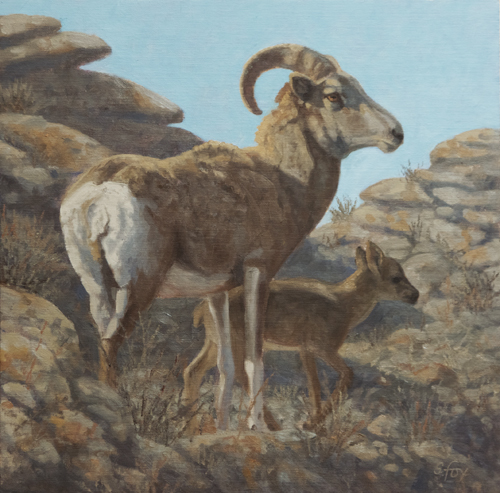
For one of my first argali paintings, I wanted to show them in the fantastic landscape of Ikh Nartiin Chuluu; April 2005Ikh Nartiin Chuluu Argali 15x30" oilArgali ewe, Ikh Nartiin Chuluu; April 2005; I added a lamb and moved the ewe up so her head would be against the sky for maximum contrastArgali Ewe and Lamb, Ikh Nartiin Chuluu; 12x12" oil on canvasboardOld ram, Ikh Nartiin Chuluu; April 2005; He's probably long gone, but we spent a, for me, memorable half hour together as he let tag along behind him after checking me out; that's also him in the first photo at the top of this postMutual Curiosity 17x30" oil
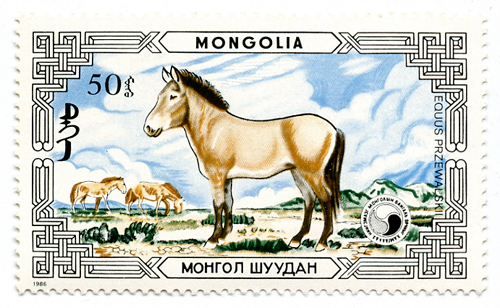
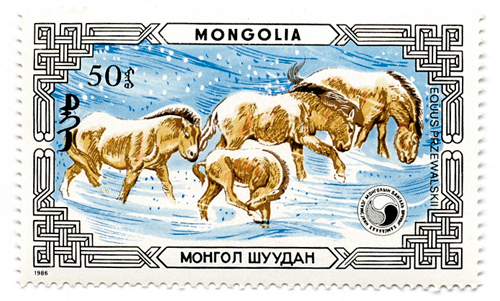
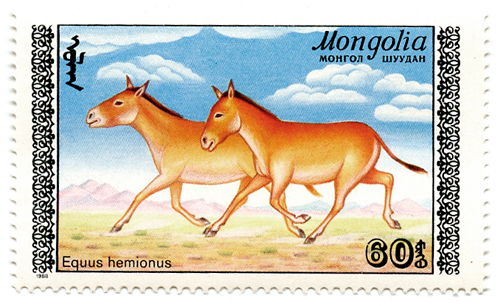
Concluding this series on postage stamps for now, today’s post features the two native equids of Mongolia, the takhi, traditionally known in the West as Przewalski’s horse, and the Khulan, one of a number of species of wild ass.
Takhi are the only remaining species of true wild horse. What Americans call “wild horses” or mustangs are really, simply, feral domestic horses. The two species diverged around 500,000 years ago, so the takhi is not the ancestor of modern horses, nor have any ever been successfully tamed, other than a few instances where a young horse was taught to tolerate humans riding it for a short time. The last wild takhi was a stallion seen in 1969. Captive animals started to be reintroduced to Mongolia in the early 1990s. Being a horse culture, the Mongols are very pleased to have takhi in their country again. And it’s not a surprise that they have been featured on a set of postage stamps.
Khulan are also known as the Mongolian wild ass. Their survival is threatened by habitat reduction and they are also subject to poaching. Not a great deal is known about their behavior or even their total numbers. However, there is an organization, started by a French researcher who is a friend of mine, which carries out the research needed to learn about the ecology of the animals and what their survival requirements are. You can find out more about her project here.
Unlike the takhi, which is a grassland species, the khulan live in the arid environment of the Gobi.
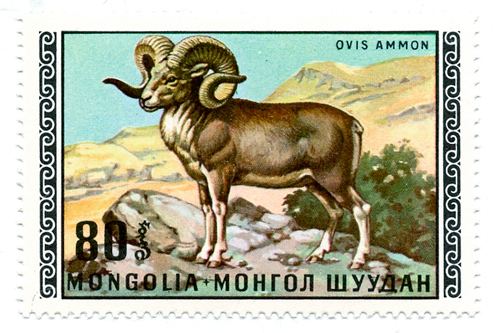
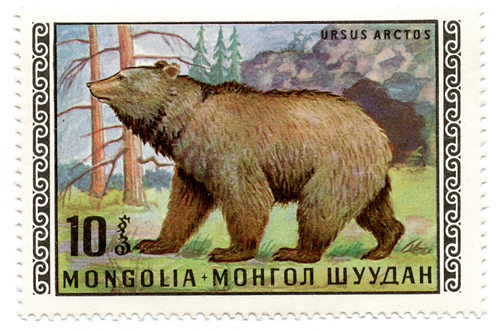
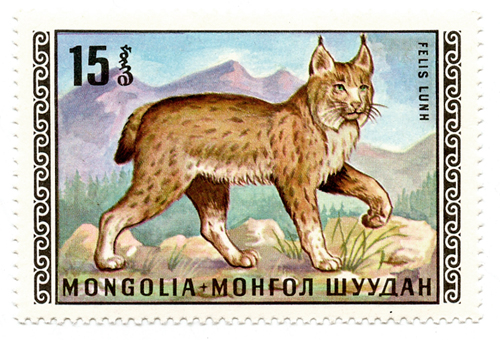
I ordered these to get the first stamp shown, but the whole set, uncanceled and in perfect condition, is so well-done that I wanted to share them all with you. I think that they are of interest not only because of their subjects, but as lovely little works of art. I wish I knew who the artist was.
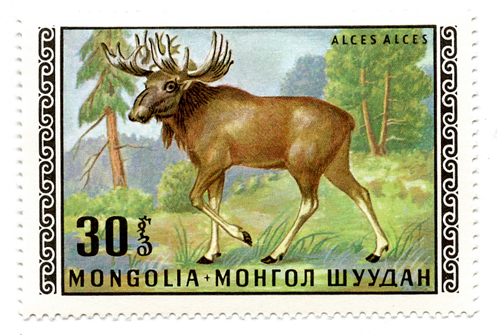
Argali (Ovis ammon); the legs are a little short, but otherwise this is quite good; found in the high mountain zone and mountainous areas of the GobiBrown bear (Ursus arctos) : found in the northern mountains of Mongolia , which is the southernmost part of the taiga or boreal forestLynx (Lynx lynx); found in the taiga (forest zone)Siberian marmot (Marmota sibirica); has undergone a tremendous population crash in recent decades; now exists in localized populations; found in the mountain forest steppe transition zone and the steppeMoose (Alces alces), called "elk" in Europe: found in the taiga; same species as found in North AmericaWild boar (Sus scrofa); found in the mountain forest steppe transition zone; a small population also inhabits the reed beds of Khar Us NurWolf (Canis lupus); found in the taiga, mountain forest steppe and steppe
Next week, I’ll be featuring two Mongolian equids, the takhi and khulan.





































 Susan Fox, American Artist