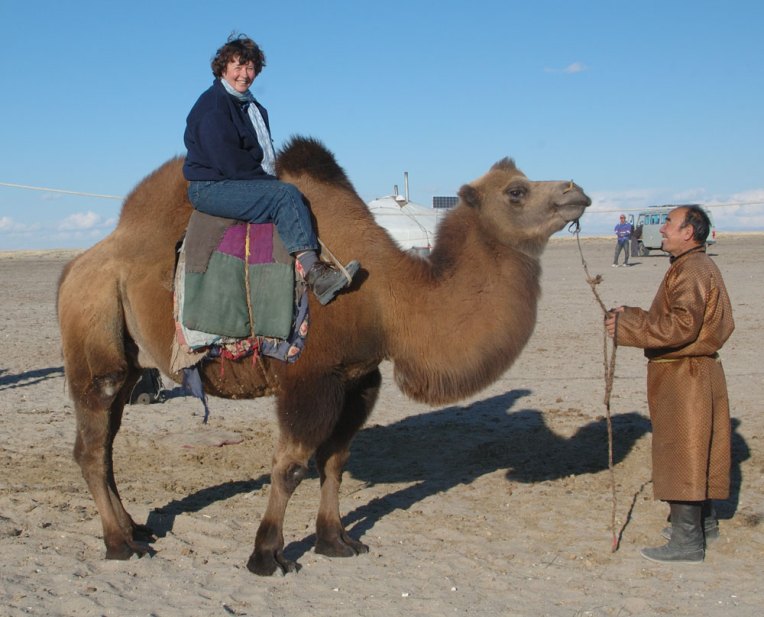
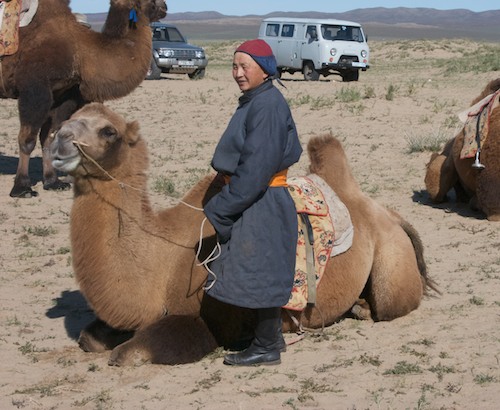
My first camel ride in Mongolia, September 2006. No, I didn’t fall off.
Owen Lattimore’s books are filled with information and lore about all kinds of things that one would encounter traveling with Mongols back in the 1920s, including the fine art of riding a bactrian (two-humped) camel.
“I have never been thrown by a camel when I was really trying to stick on unless the girth gave. Camels are too awkwardly built to do any fancy bucking, but when they do their best they can almost always burst the girth, because it is a healthy principle of camel-riding that the girth should always be weak. If the rider should be caught with a foot jammed in the stirrup when thrown or when the camel has managed to sling the saddle around under its belly it would be very serious. It is better to have the girth part and to be thrown clear, even though the fall is much higher than from a horse. As a matter of fact, the greater fall seems to let you hit the ground with muscles relaxed. I do not remember feeling badly shaken when falling from a camel, and the Mongols say: “Fall from a camel-nothing to worry about; fall from a donkey-break your leg.”
Taken from “Nomads and Commissars-Mongolia Revisited” by Owen Lattimore, Oxford University Press New York, 1962. I’ll be writing more about him in a future post, but suffice to say for now that Owen Lattimore was one of my inspirations for “getting involved” in Mongolia because of the affection he is held in by the Mongols for representing them and their culture accurately to the West, even to the point of being given a medal by the government.
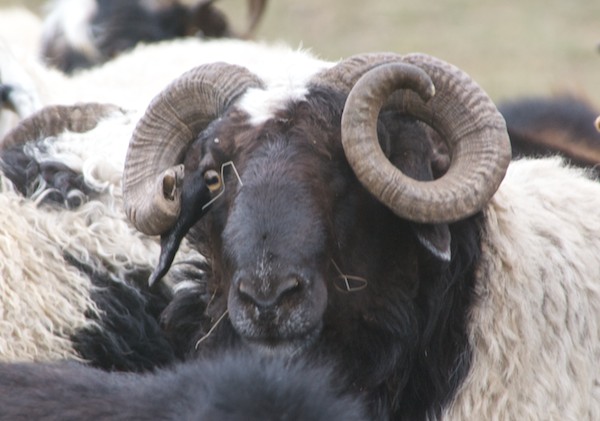
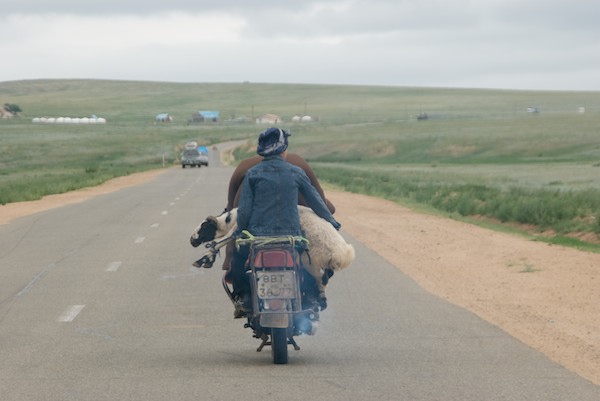
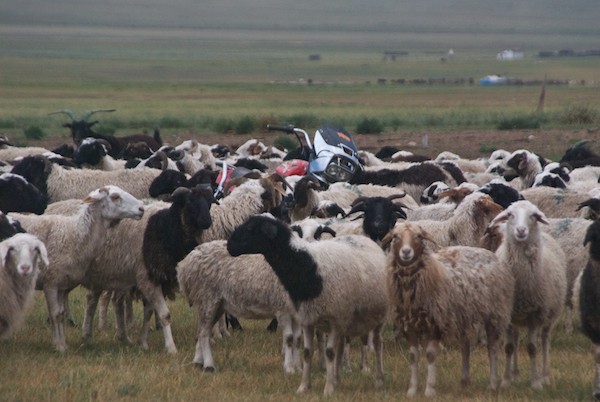
This post, however, has a somewhat more prosaic theme….sheep, one of what the Mongols refer to as The Five Snouts, the others being horses, goats, camels and cattle/yaks.
“There are several breeds of Mongolian sheep, adapted to all kinds of pasture-from the high and cold to the low and sandy. While the horse has always been the noble animal, the sheep is economically indispensible to the old nomadic life. It is the only animal that supplies all the basic needs: food, clothing, housing, fuel. Besides meat, it provides milk for drinking and for making cheese. The hide with the fleece on makes the best heavy winter gown. The wool, matted into felt, covers the ger, the round, domed Mongol tent. (Nowadays, although the inner covering of the tent is still felt, which is the best insulator, the outer covering is normally of heavy white canvas, which sheds water well and absorbs less dust than felt.) When sheep are penned at night, they trample the dung that they drop. It gradually builds up in thickness, until it can be spaded out in rectangular bricks and burned as fuel. It makes a very hot fire, but its smoke is irritating to the eyes. The best dung-fuel is cow dung; the next best is camel dung. The most obvious mark of the different breeds or strains of the Mongolian sheep is the size of the tail, which varies from a small, goat-sized tail to a huge mass of fat weighing forty pounds or more.
One of the great successes of experimental cross-breeding in Mongolia has been the establishment of a new breed of sheep, the “Orkhon”. It has almost all the hardiness of the native breeds and a finer, longer staple of wool. good for modern machine-made textiles. It also produces a good mutton. ”
Done for the Day 17×30″ oil- domestic bactrian camels.
Don’t forget to check out my 2013 calendar filled with images of my paintings of Mongolia! It includes “Done for the Day”, which was accepted into the Society of Animal Artists prestigious juried show “Art and the Animal” in 2009.
—————-
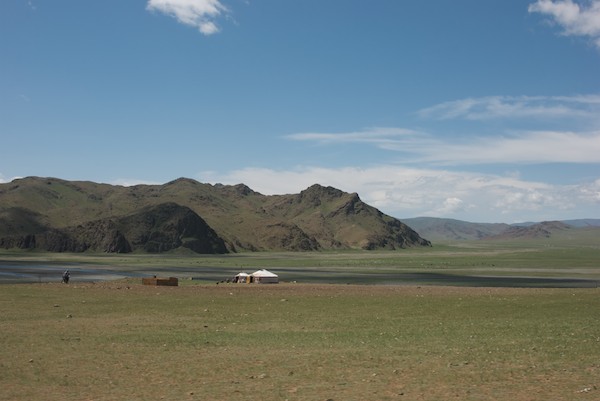
River valley, Hangai mountains north of Bayanhongor
Owen Lattimore was, in his time, considered one of the greatest western experts on Mongolia. He traveled extensively in what were then called Inner and Outer Mongolia in the 1930s. The former is now an autonomous region of China and the latter is the independent country of Mongolia. He revisited Mongolia in the early 1960s. I just finished his book “Mongol Journeys” and would have to say that it is one of the best books on Mongolia that I have read yet. It’s not easy to find, but you can currently get it here for a reasonable price.
I’d like to quote from it today about the traditional Mongol view of names for things. It’s a pretty good example of how untrue and simplistic the overgeneralizing statement is that “people are all alike”. In fact, people in different parts of the world operate from very different cultural assumptions which can, in equal parts, trip up, amuse or, with luck, enlighten a visitor and give them an insight into a different way of seeing the world.
For example, the exploration of America often consisted in being first to a place and then giving your name to it. If the name stuck, then it was the one that appeared on all maps henceforth down to today. We even get a kick out of places that have had the same place name for a very long time. For many Americans (I can speak only to my country, others may be the same though), the first thing they ask when arriving at a sight like a mountain or river or waterfall is to ask what it’s called.
But for the Mongols:
“Another very interesting thing about nomad life is the balance between the specific and the vague. In the Mongol vocabulary, for instance, the age, colour and individual characteristics of a horse or a camel or any other animal can be told with the most minute precision. There is also such an accurate terminology for different kinds of hills, ridges, plains, lakes, pools, streams and springs that you can get directions taking you across many miles of vague country without a mistake. On the other hand, it is often difficult to get a precise place name. A hill or a spring may have several names, of which some are descriptive and others honorific or propitiatory. The “real” name is likely to be taboo, so that if you ever hear it at all you are more likely to hear it when you are far away than when you are near it.
Why such taboos? Well, to begin with, if you are at a certain place you are obviously in some ways dependent on that place – for a safe camp, for good pasture and so on. It is better, therefore, to talk about that place vaguely in a ‘respectful’ way than exactly in a ‘familiar’ way. Even more important, perhaps, is that fact that, being a nomad, you do not want to be tied to any one place even by verbal associations. It is true that neither the Mongols nor any nomads are unlimited wanderers; you move in a framework which is partly the social frame of your tribe and partly the geographical frame of your tribe’s territory….the fact that you are a herder means that you always long for fluidity of movement. The Mongols, as nomads, call themselves nutel ulus, moving people….Your “homeland” is your nutuk (today this is spelled “nutag”)…your nutag is not only ‘the territory within which you move’ but ‘territory in which you are always moving about’.
Within this territory you do not want to be pinned down to any one place, nor do you want to be easily traced or spotted by an enemy (Note from Susan: this was written in the 1930s when there was still intertribal conflict and banditry in both Inner and Outer Mongolia). At the same time you do want your friends to be able to find you and you must be traceable by the authorities…..All of this explains why, when you are travelling and either asking your way or being asked from where you have come and where you are going, there are two extreme answers and any number of gradations in between; the vague answer and the exact answer. It all depends on the authority of the questioner and the degree to which the man questioned recognizes that authority and the necessity of being indentified or the desire to be traced. When, in short, you sometimes find yourself thinking that the nomad is frank and honest and at other times that he is evasive and a liar you must remember that this is as much a social convention as it is of personal veracity.”
My own personal experience with this whole cultural issue of place names was on my 2009 trip to Mongolia, heading south to Baga Gazriin Chuluu Nature Reserve. We stopped for lunch on a hillside with a view to an amazing mountain that rose out of the steppe. Naturally I asked what it was called. My guide/driver said “Hairhan”, which means “sacred”. Then he explained how the Mongols do not, out of respect, say the name of a mountain while in its presence. They are all called “Hairhan”. I observed that it got around the question like the one I had asked, that a visitor could ask the name, get an answer and be content, while the Mongol had preserved the correct cultural practice. And, in fact, I follow it myself now. If someone asks me the name of a mountain (they are all sacred since the top of a mountain is the closest one can get to Tenger, the Eternal Blue Sky), I say “Hairhan”, but also explain what that means and that I will tell them the “real name” once we are out of the mountain’s presence. It just feels like the right thing to do.
Morin khuur player who also sang khoomii. Hustai National Park, 2011
I thought I’d do a three part series on Mongolian music, using YouTube videos that I’ve found, and starting with three traditional forms- khoomii (throat singing), Urtyn Duu (long song) and morin khuur (horsehead fiddle). Next week, it will be Mongolian musicians and singers performing in western musical genres like rock and the third week will be music that is a synthesis of the first two.
Khoomii may the musical form best known by westerners due to a number of “folk” CDs available that feature throat singing, which originated in western Mongolia in an area just to the south of the Khar Us Nur lake complex.
Urtyn Duu means “long song”, but not that the songs themselves are long. The name refers to the singer stretching out the syllables of the words. Although both genders sing this form, the most famous long singers seem to be women.
Morin Khuur is the horsehead fiddle, probably the most famous Mongolian musical instrument and is one of the symbols of the country. With only two strings, the player can create truly beautiful musical sounds and also perfect imitations of the sounds that horses make. The selection in the video is one of my most favorite pieces of Mongolian music, “Mongolian Melody” by one of Mongol’s most esteemed composers, Jantsannarov.
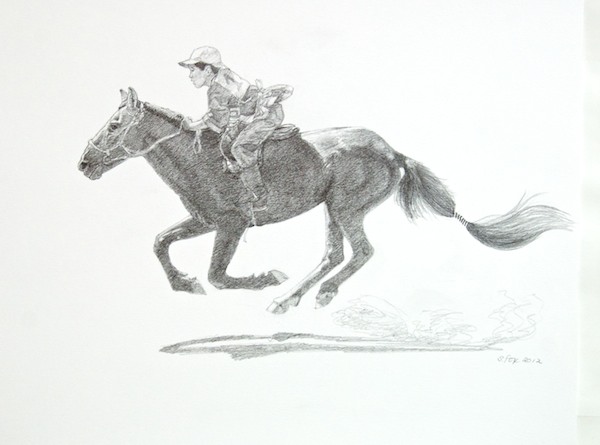
Winning horse and rider 14×17″ graphite on vellum bristol
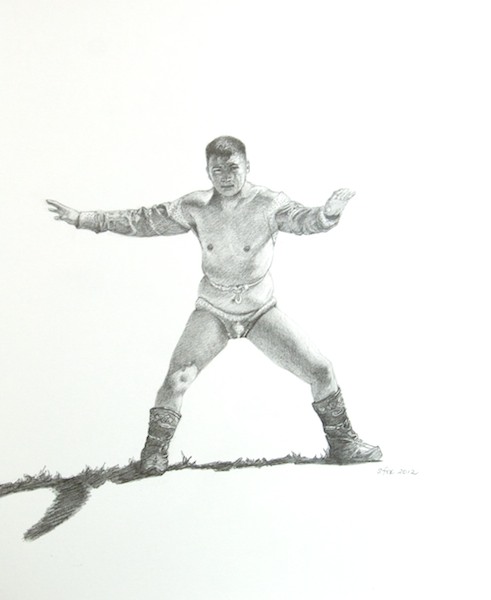
Particularly when it’s a subject I haven’t painted before or one that is somewhat complex, like a horse and rider, I’m more and more inclined to do finished drawings before I start the painting. It’s a good way to find out if the reference image “draws well”, sort out parts that turn out to be tricky to understand, work out the essential value relationships and just get a general feel for the subject. The more problems I solve while doing the drawing, the more I can concentrate on the painting part. It allows me to simplify and refine the shapes since I will have drawn everything at least twice. Drawing is really the best way there is to learn what something looks like because the information is stored physically and mentally. Just looking at a photo or, worse, photoshopping and tracing a composition, doesn’t even come close.
So here are four drawings I’ve done over the past few days, all graphite on vellum bristol paper. They took four to six hours each. The reference photos all happen to be from the local naadam I attended when I was at Arburd Sands ger camp in August.
Local Naadam wrestlerWrestler doing the devekh (Eagle Dance) before a boutCashmere goat
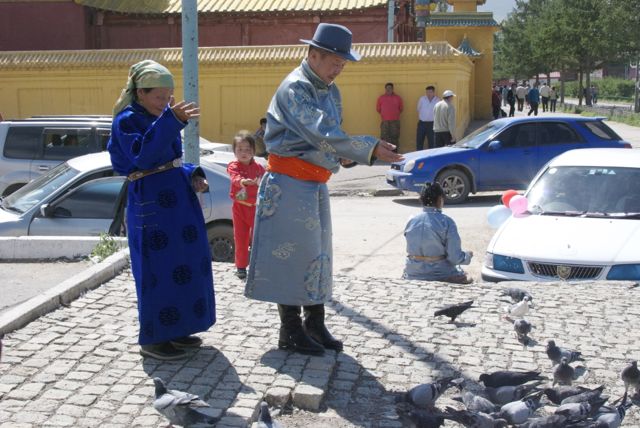
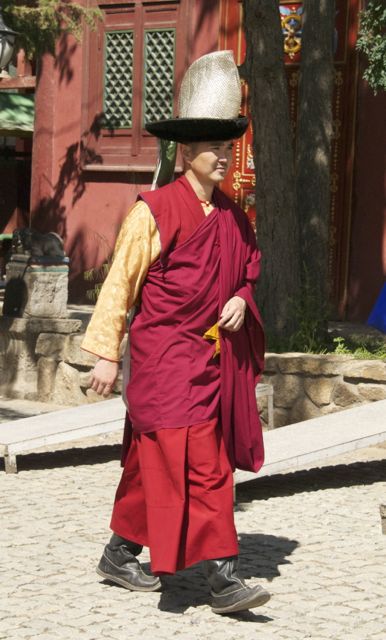
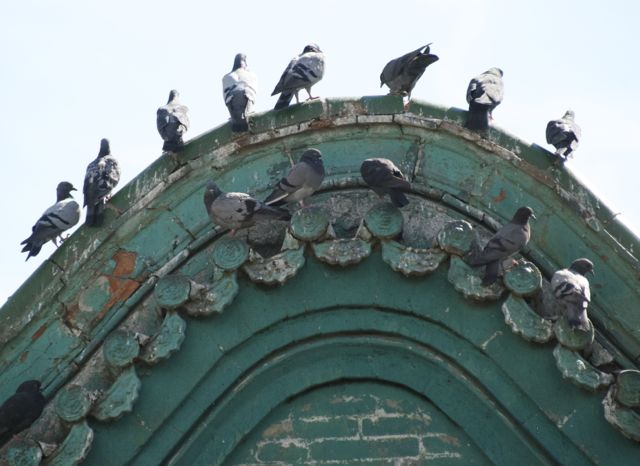
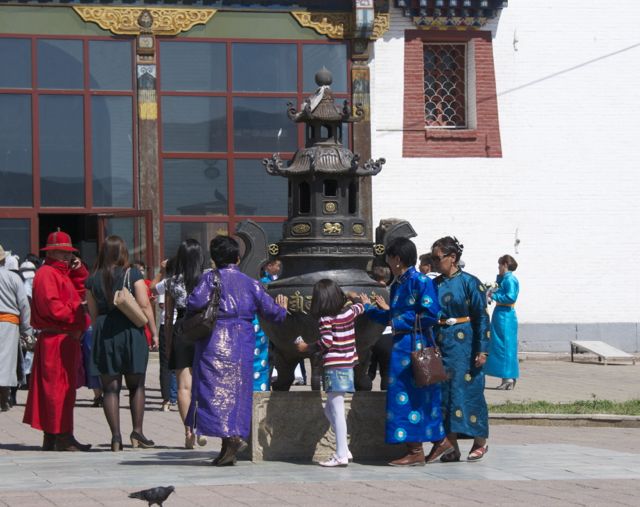
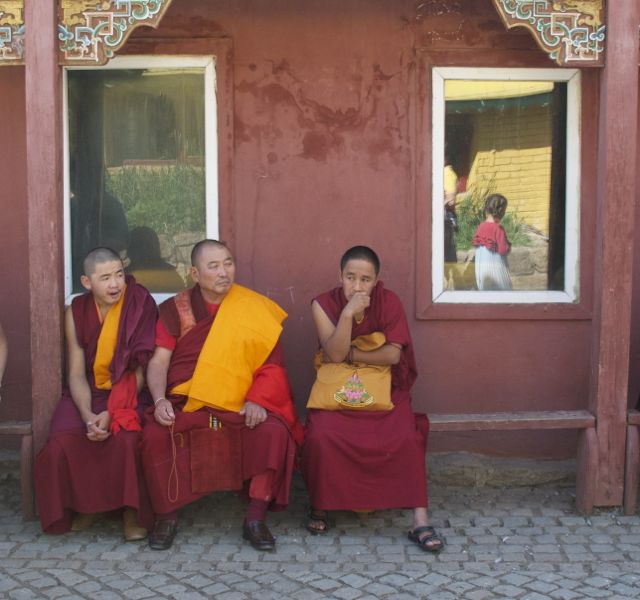
While I was in Ulaanbaatar this last trip, I spent a couple of mornings at Gandan Monastery sketching and taking photos. I thought that I would share some of my favorites with you of a truly special place that I always look forward to visiting when I’m in Mongolia.
Gandan’s main templeFeeding the pigeonsMonk leaving morning servicePigeons on a temple rooftopMonk with prayer beadsTemple visitors circling an incense burnerThree monksStupa with pigeons
I arrived home from my seven week trip to Mongolia last Tuesday. I’ve been alternating catching up and doing….nothing or at least nothing more strenuous than watching a baseball game. The first order of business was to download and start categorizing the over 8000 images I shot on the trip. I always feel better when everything is safely on the hard drive, backed up to the remote Vault and visible in Aperture.
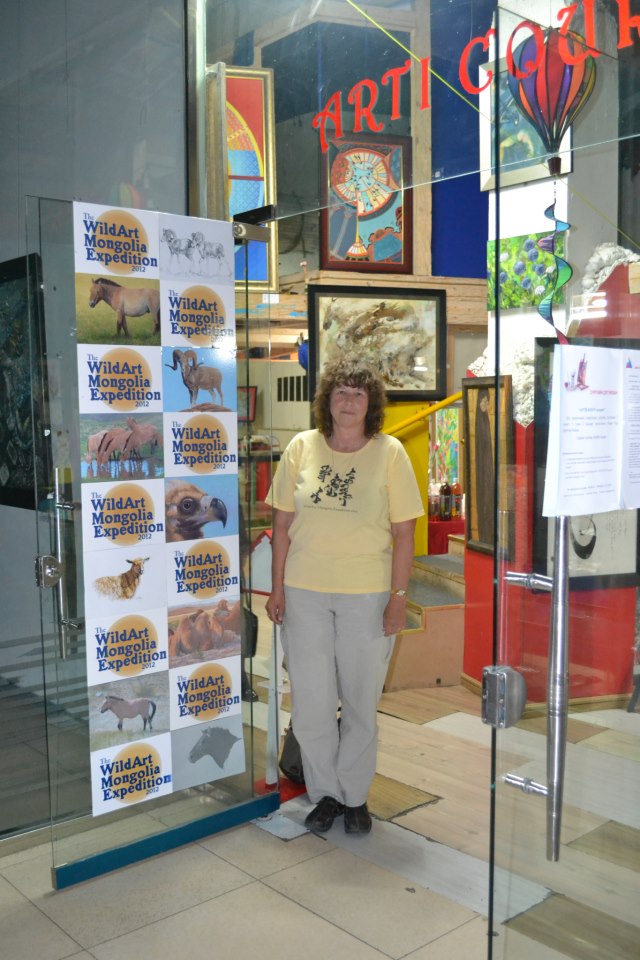
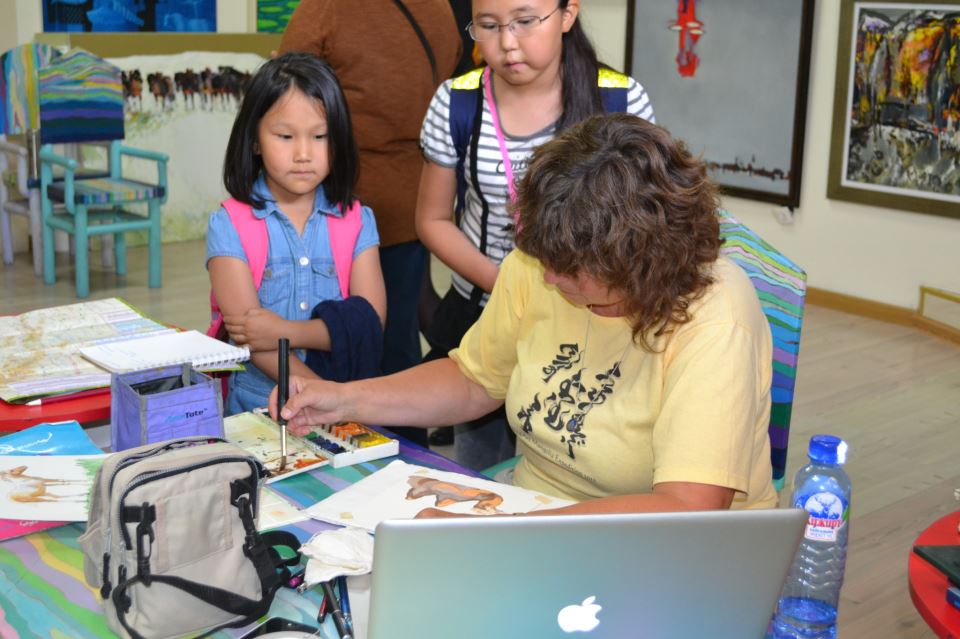
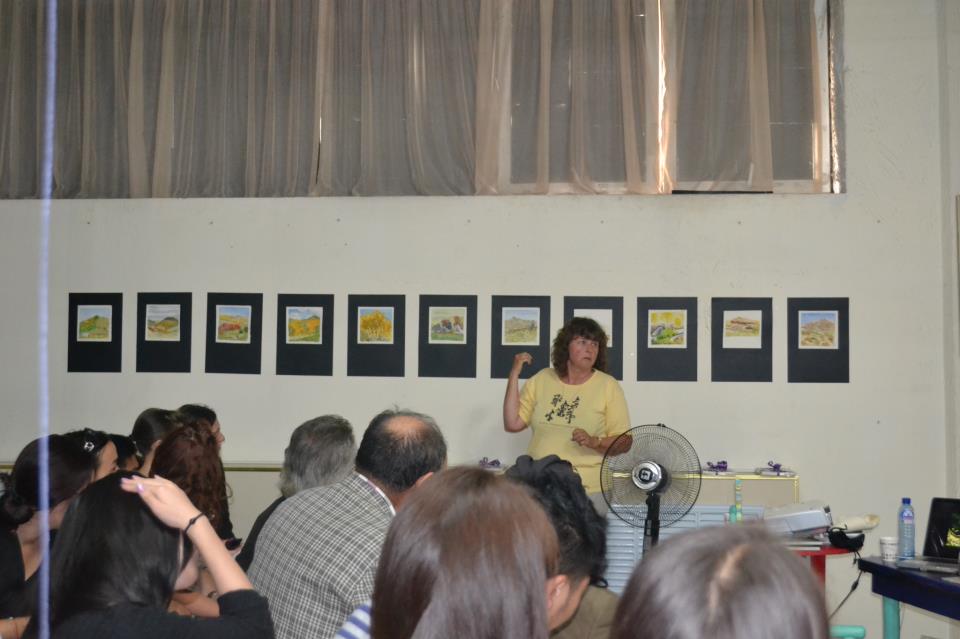
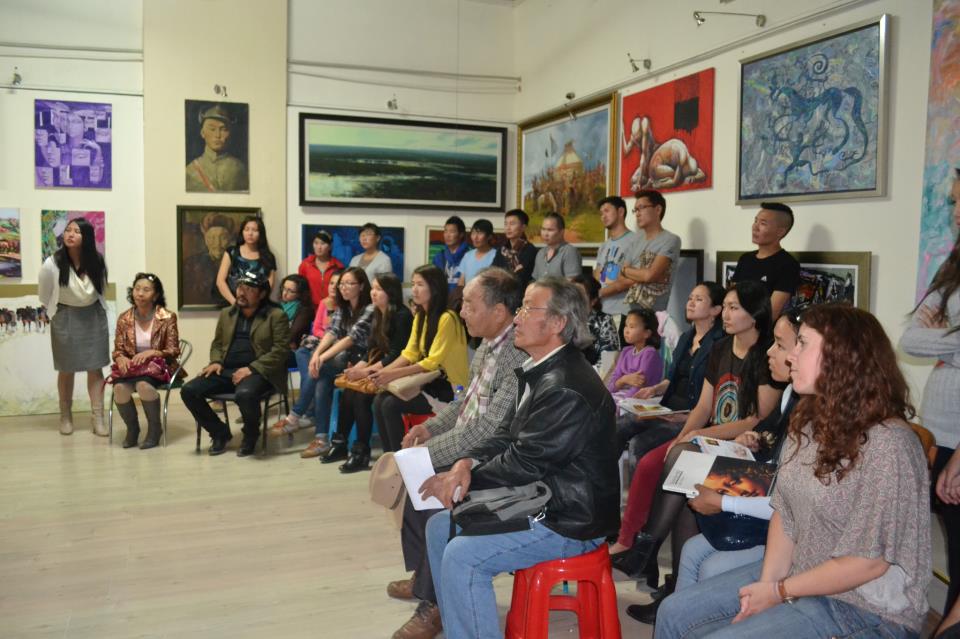
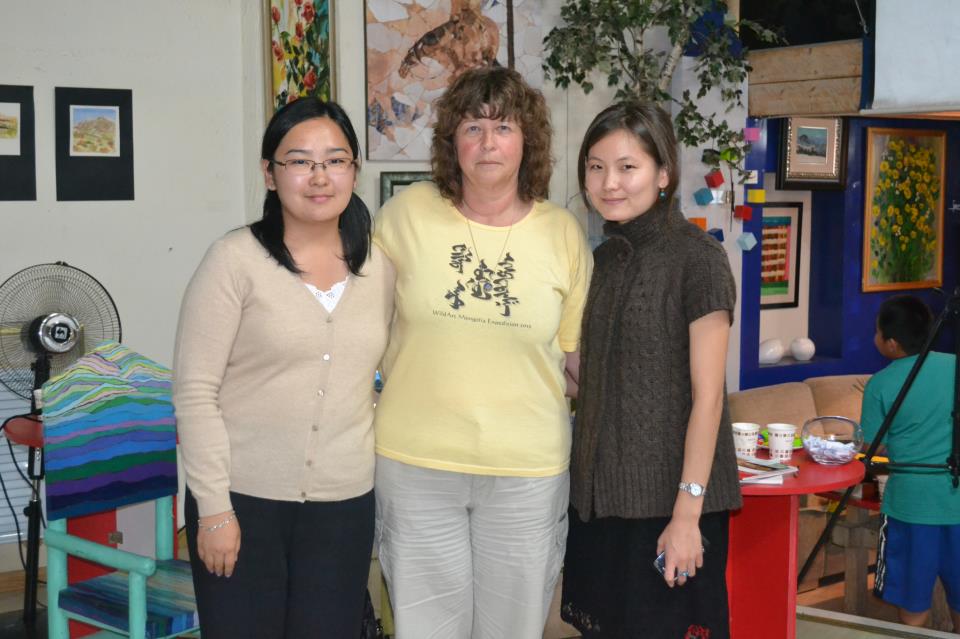
My final days in Ulaanbaatar were a bit of a whirlwind. The art event at ArtiCour Gallery was great! There was a steady stream of people all day, some of whom I knew. There was a lot of interest in the WildArt Mongolia Expedition and at least three artists expressed an interest in going next year. Many art students came by. The director of a Mongolian magazine which publishes articles on artists stopped in and said that they want to do an article on my and my work! Even more special to me personally, a number of very prominent Mongol artists attended, all of them members of the venerable Union of Mongolian Artists, which was founded in 1944. Two of them invited me to visit their studios. But that will be a tale for another post.
Here’s a selection of photos taken at “American Artist Susan Fox-The WildArt Mongolia Expedition”, which was the first in ArtiCour’s new Visiting International Artists series.
Entrance to ArtiCour GalleryMeeting E. Sukhee, one of Mongolia’s most famous artistsWatercolor demonstrationBactrian camel. watercolor demoDisplay of watercolors I did on location over two afternoons while I was visiting Hustai National Park, one of the three places in Mongolia where takhi (Przewalski’s horse) have been reintroducedMeeting Dunburee, also a very prominent Mongol artistDoing a fast sketching demo during my evening presentationI couldn’t have had a better, more attentive group and they asked some great questions later on.Meeting with Ekhbat Lantuu, President of the New Century Art Association, which promotes environmental issues through the arts.My interpreters, Khailiunaa and Buyandelger, without whom I wouldn’t have been able to talk to anyoneJanna Kamimila, the Director of ArtiCour Gallery and my host
1. Who demonstrated the strength in working together using arrows?- Hoelun, the mother of Chinggis Khan
2. What form does the tea used for milk tea traditionally come in?- Bricks or blocks
3. What side of a Mongol horse does one always mount from?- Left
4. Mongolia became independent in the early 20th century from what other country?- China
5. What two animals do the Mongols claim descent from?- Wolf and deer
6. What was the real name of the “mad monk of the Gobi”- who wrote the famous poem “Perfect Qualities”?- Danzanravjaa
7. What is the traditional greeting when approaching a herder’s ger?- Hold the dogs!
8. From what people did the Mongols get their classical vertical script?- Uighers
9. Why did the Mongol army leave Europe and return to Mongolia?- To elect a new Khan
10. Who created and bestowed the title “Dalai Lama”? For bonus points, what does the world “Dalai” mean?- Altan Khan; “ocean”
Large ovoo along main road south out of Ulaanbaatar
Part 2:
1. What is a “morin khuur”?- Horse-head fiddle
2. From what people did the Mongols get their classical vertical script?- Uighers (my apologies for missing that I’d used this one in the first 10)
3. What are each of the four sides of a sheep’s anklebone called?- Sheep, goat, horse, camel
4. Name the Five Snouts.- Horse, cattle, sheep, goat, camel
5. Which ikh khan founded Kharkhorin?- Ogedei
6. Which direction do gers always face?- South
7. Who is the lead singer of Hurd? For bonus points, what does his name mean?- Chono: wolf
8. What is the name of the mountain where Temujin took refuge?- Burkhan Khaldun
9. What are The Three Manly Sports?- horse racing, wrestling, archery
10. Name the two main political parties in Mongolia.- Democratic party and Mongolian People’s Party (I was a little flexible on this one since there have been fairly recent name changes. The MPRP changed its name last year. The other party is referred to in the media as the Democrats. But I knew what you meant)
And the winner is…..Carole Hollrigel! But it was close. Only two points separated her from the next closest entrant.
Today’s post is a poem about the Gobi and a “sandalwood brown camel”, but I also want to remind you that the deadline for the Mongolphile Quiz is this Friday at 5pm, Pacific time. Twenty questions here and here.
“From the Top of a Camel the Sun Seems so Near” by Zhanchyvn Shagdar
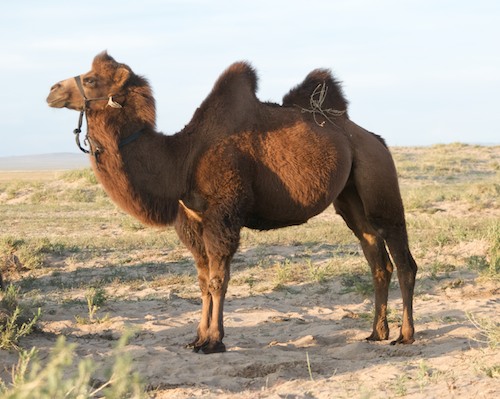
Bactrian camel, Arburd Sands, Sept. 2008
Gobi of exquisite mirage
Has the seven colors of the rainbow.
And my brown camel with graceful legs
Can travel for a month without rest.
Gobi bactrian camels, July 2010
When I ride my sure-footed brown camel
The sun in the sky seems so near,
Oh, I’m on my way, my sweetheart,
And I’ll be with you at sunset.
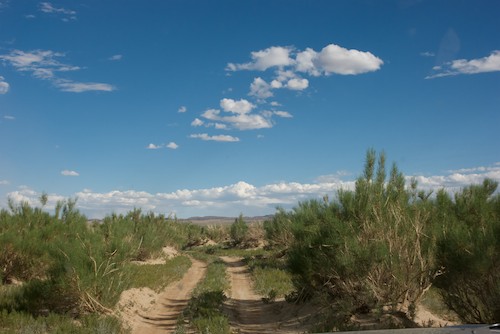
Saxaul forest with the Flaming Cliffs in the distance, Sept. 2006
Gobi, with its bushes of saksaul,
You are renowned in this wide world,
And my sandalwood brown camel
Can jog faster the longer the road.
Arburd Sands, Sept. 2008
When I ride my sandalwood brown camel
The moon in the sky seems so near,
Oh, my love, linked to me by fate,
I’ll be meeting you when the moon rises at night.
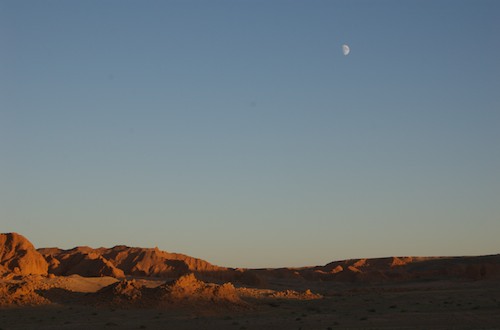
Moonrise over the Flaming Cliffs, Sept. 2006
Gobi in the radiance of pure gold
Is beautiful like a new family tent,
And the jogging of my straight humped brown camel
Can reach the distant horizon.
Saxaul forest near Orog Nuur, July 2010
My Gobi with its bushes of saxaul,
You are renowned in this wide world,
And my sandalwood brown camel
Can jog faster the longer the road.



















 Susan Fox, American Artist