I had gone out very early from the research camp at Ikh Nartiin Chuluu Nature Reserve this past July and had settled down on a rock to see who would show up at the water hole.
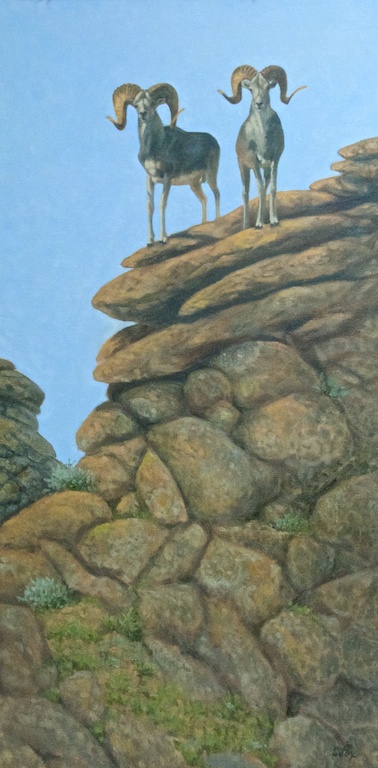
I looked up and saw these two rams checking me out as they scanned their surroundings.
The sun was just hitting the cliff tops, so they really stood out against the morning sky.
For the painting, I wanted to give a sense of the landscape that they live in and how comfortable they are on tilted surfaces that would make most of us somewhat nervous.
Soon after I took this and some more photos, they came down onto the valley floor and joined up with some buddies for a drink and a graze.
I got to watch them for about half an hour.
And yes, after 2 1/2 years, I’ve updated the look of my blog with a new theme. I finally found one that I liked and that has new features and functions the previous one lacked. Let me know what you think!
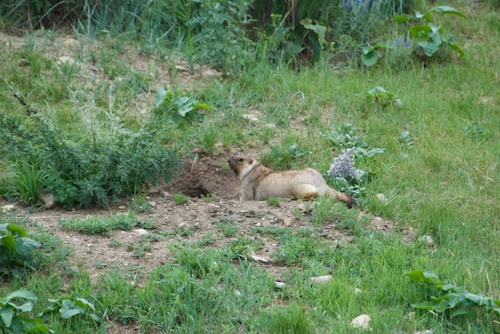
Siberian marmot in Gun-Galuut Nature Reserve, July 2009
Summer is here and I thought I’d present a photo essay on one of the most beloved foods in Mongolia….marmot. Say “tarvaga” to the average Mongolian and watch their eyes light up.
Unfortunately, the native Siberian marmots have gone from occupying the steppes in the millions to Endangered in just ten years, having experienced a 70% population drop. The major contributor to this decline was a demand for the pelts by….the Chinese.
Hunting is still allowed during August and September, depending on population numbers, according the species listing in the IUCN Red List. Hunting can also be shut down if bubonic plague flairs up. It turns out that marmots in Mongolia are the source vector for the bubonic plague that hit Europe in the 1340s. The Mongols know that if they see a marmot behaving strangely, then it is likely that plague is present.
Marmots in Hustai National Park, May 2005
The cooking traditions surrounding marmot in Mongolia is the stuff of visitor legend. A number of the travel accounts I’ve read have an account of the preparation of marmot, always with a “and you won’t believe this, but….” tone.
I finally had my chance to try it last year. Since this was a personal extension of hospitality to me because they knew I liked Mongol food, I will allow my hosts to remain anonymous.
(Important note: if you are squeamish or think that meat starts out wrapped in cellophane, you may want to stop reading here. This photo essay will show the whole process from beginning to end.)
Any Mongols reading this are invited to add comments, stories, corrections in the comment section. This is accurate to the best of my knowledge, based on what I saw and was told.
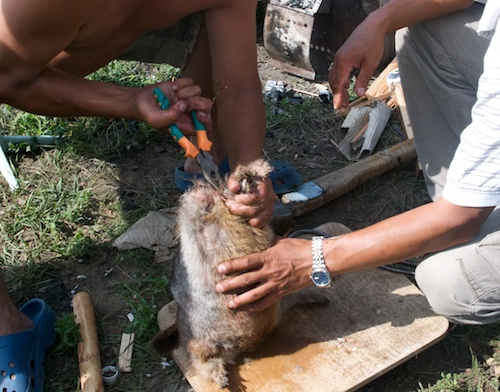
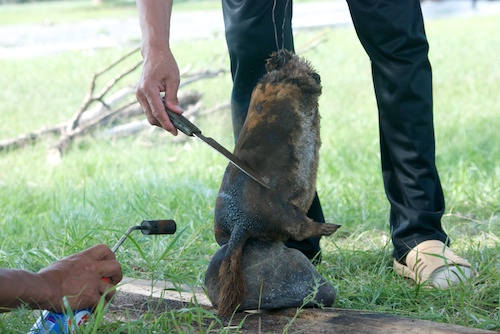
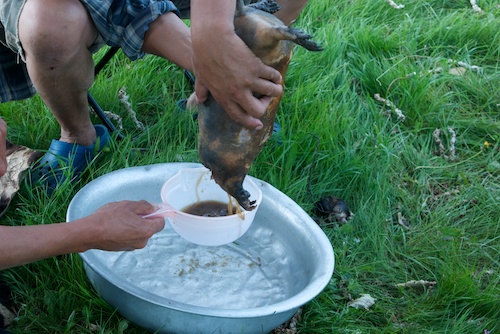
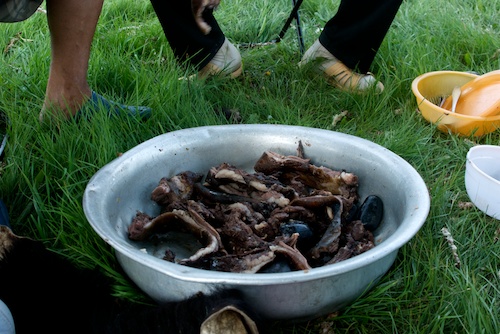
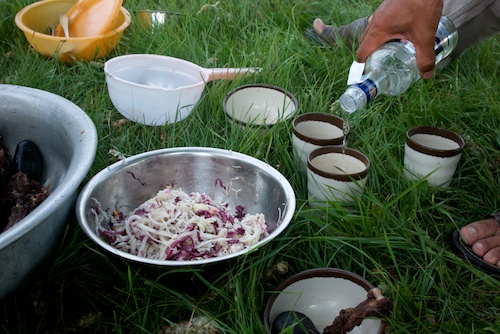
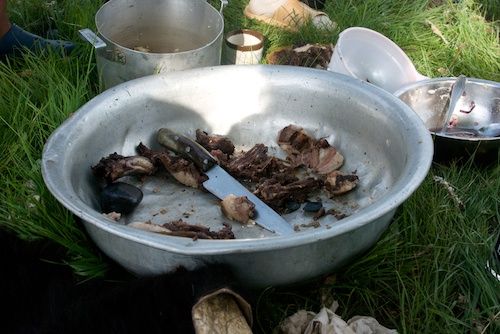
Stove heating up rocks and marmot carcass ready to stuffThe meat is stuffed back into the carcass, along with the hot rocks, which will cook the meat from the inside; the cook made sure that the carcass was stuffed with rocks all the way down into the hind legsPounding the meat and rocks down into the carcassClosing the neck opening with wireThen we all adjourned to this beautful spot by the river for picnic dinnerNow for the famous part: removing the fur with a portable torchA helper scrapped the singed fur off and also the fat as it came to the surfaceThe next step was to wipe down the carcass with bunches of grass and then rinse and scrub it with waterThe neck wire was removed and the juice poured into a cup, which was then handed to me. I drank it right down and it was quite goodThen the carcass was split open to get at the chunks of meat; I was also given the tongue and it was good, tooDinner is servedAs is traditional, the hot rocks were passed around for health and good luckWe also had cabbage salad, everything washed down with Mongolian vodka. We had been drinking airag, but my guide said that airag and boodog don't mix, so we switched to the vodka. Did I say I was having a great time?Not much left. I ate my share. Yes, it was good. Really goodNotice the back paw has four toes and the front paw has five; why this is true will be the subject of my next Mongolia Monday post
One of the fun things about exploring and learning about other cultures is seeing how familiar things like rock music are taken up and reinterpreted.
I’ve found a number of gems on YouTube:
A Sound, a particular favorite of mine who I would love to see live sometime, takes on “While My Guitar Gently Weeps” by George Harrison and pulls it off very nicely:
Another group, Signal, created this dramatic video cover of Daughtry’s “Over You”:
A Sound seems to have gotten their start on the Mongol version of American Idol, “The Universe’s Best Songs”. Fun to see them in the beginning and how polished they’ve become in the first video above. Here’s their performance of Maroon 5’s “This Love” from the tv broadcast:
Finally, this young Mongol guy kept it simple. Nice voice, a guitar, the Mongolian flag in the background and Dylan’s “Knockin’ On Heaven’s Door”:
Hard to believe it, but I have reached 400 posts. I started my blog on December 10, 2007. It doesn’t seem like it has been that long. It’s become part of my weekly routine and a fun way to share my art and my travels.
I also really appreciate the support and comments that I get from my readers. Thank you!
Now, on to Mongolia Monday! Today I’m going to post links to 10 of my favorite sites, ones that I would recommend to anyone who is interested in learning about Mongolia or who is planning to go there.
Procession of the horse tail standards, Naadam, 2009
1. News.mn: http://english.news.mn/home.shtml– News.mn has consistently been the best place I’ve found for keeping up with what is going on in Mongolia. There is also the UB Post, which is better known, but the load time on the site is glacial.
Peace Avenue, Ulaanbaatar, September 2009
2. Asian Gypsy: http://asiangypsy.blogspot.com/– He doesn’t post nearly enough, but this is definitely my favorite blog written by a Mongol. I get the email feed so that I don’t miss a post.
Lightning storm at Arburd Sands ger camp, July 2009
4. Altan Urag: http://www.altanurag.mn/en.html– One of the best known groups to come out of Mongolia, Altan Urag (which means “Golden Lineage”, a reference to the family and descendents of Chinggis Khan), describes themselves as a “folk rock band”, which means an amazing synthesis of modern western and traditional Mongolian music, including morin khuur and khoomii (horsehead fiddle and throat singing). Their music can also be heard in movies like “Khadak” and “Mongol”. And their website is waaay cool.
Morin khuur, Union of Mongolian Artists gallery, Ulaanbaatar
5. Ganbold: http://www.ganbold.com/– Ganbold, who currently lives in the USA, is a graphic designer and artist with a very impressive client list. I had clicked on a banner ad he had placed on a Mongol site and really liked what I saw. Then, sometime later, a “Ganbold” left a comment on this blog. I clicked the url in the commenter info. and. low and behold, it was the same person! We’ve stayed in touch on and off since then. The home page of his website is, literally, a work of art. Click “Enter”. Highly recommended for bird lovers.
6. Budbayar Boldbaatar: http://www.budartist.com/– I absolutely adore his work, but Budbayar is also standing in for the many, many excellent artists that Mongolia produces and who deserve to be known to the world.
Palace of Culture, Ulaanbaatar; home to the Mongolian Modern Art Gallery
7. Circle of Tengerism- http://www.tengerism.org/– One thing that many westerners do know about Mongolia is what we call “shamanism” and the Mongols call “Tengerism”. “Tenger” is Mongolian for “sky”, also known as The Eternal Blue Sky or Eternal Heaven. This ancient belief system has survived centuries of persecution and suppression and today is an active part of the culture of the country.
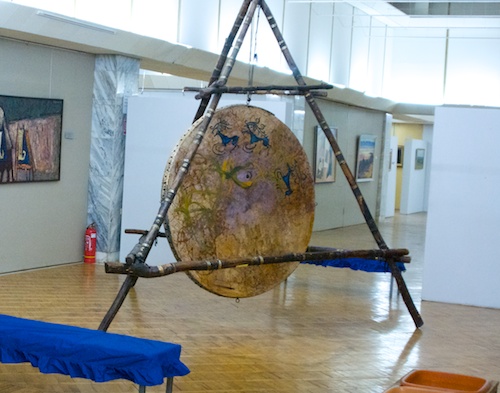
Shaman's drum- Mongolian Modern Art Gallery, Ulaanbaatar
8. Ikh Nartiin Chuluu Nature Reserve- http://www.ikhnart.com/home.html– My entry point into Mongolia in 2005, Ikh Nart is where I’ve been able to become actively involved in conservation and working with local herders. The reserve is home to the world’s only argali research project.
Argali ram- Ikh Nartiin Chuluu
9. Gun-Galuut Nature Reserve- http://www.argalipark.com/– Very different habitat from Ikh Nart, but also home to a population of argali sheep. This reserve was set up by the local government and is administered by a community association. Visitors can ride a horse or in a yak cart, try Mongol archery, take a boat out on the river and hike the surrounding area.
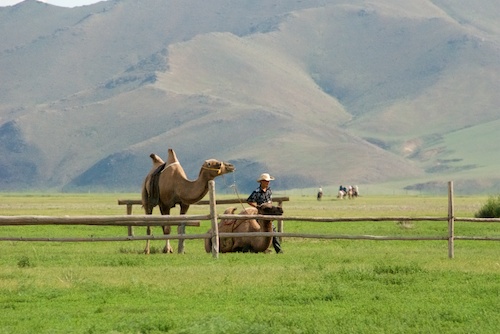
Camel ride?- Gun-Galuut Nature Reserve
10. Nomadic Journeys- http://nomadicjourneys.com/– Finally, a tip of the hat to the tour company that I have relied on to get me around Mongolia since 2006. The website not only describes their trip offerings, but is a wealth of information about Mongolia, the country, land, people and wildlife.
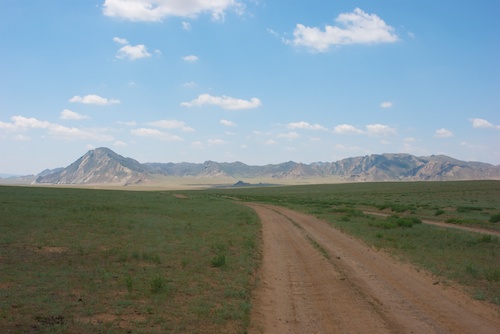
Tahilgat Hairhan (a sacred mountain), Tsenkher Tenger (blue sky) and Gazar Zam (earth road); Minii Mongol (my Mongolia)
I’m proud to announce that “Mongol Horse #5-Evening Run” has been accepted into the Society of Animal Artists 51st Annual Exhibition of “Art and the Animal”. The subjects are part of a herd of horses which wandered past the Red Rocks ger camp at Ikh Nartiin Chuluu Nature Reserve when my husband and I were staying there in 2008.
Currently I’m down on the Delaware Coast. My artist friends, Guy Combes and Andrew Denman, and I are planning to spend tomorrow exploring Assateague and, if we have time, Chincoteague islands.
I’m in New York for both the jurying of the Society of Animal Artists’ annual show “Art and the Animal”, which will be tomorrow and then, the following day, the board of director’s meeting and review of applications for membership and “promotion” of current members from Associate to Signature Status.
Afterwards, I’ll be hitting the road with two artists friends and colleagues, Guy Combes and Andrew Denman, heading south to the Delaware shore where we will visit Assateague and Chincoteague Islands and then up to the Philadelphia area for a couple of art museums and other sights.
I’ll try to post a few photos as we go, depending on internet availability.
Mongolia Monday’s regularly scheduled programming will resume on May 16. In the meantime, here’s one of my favorite music videos, which is one answer to a question I sometimes get: “Why Mongolia?”
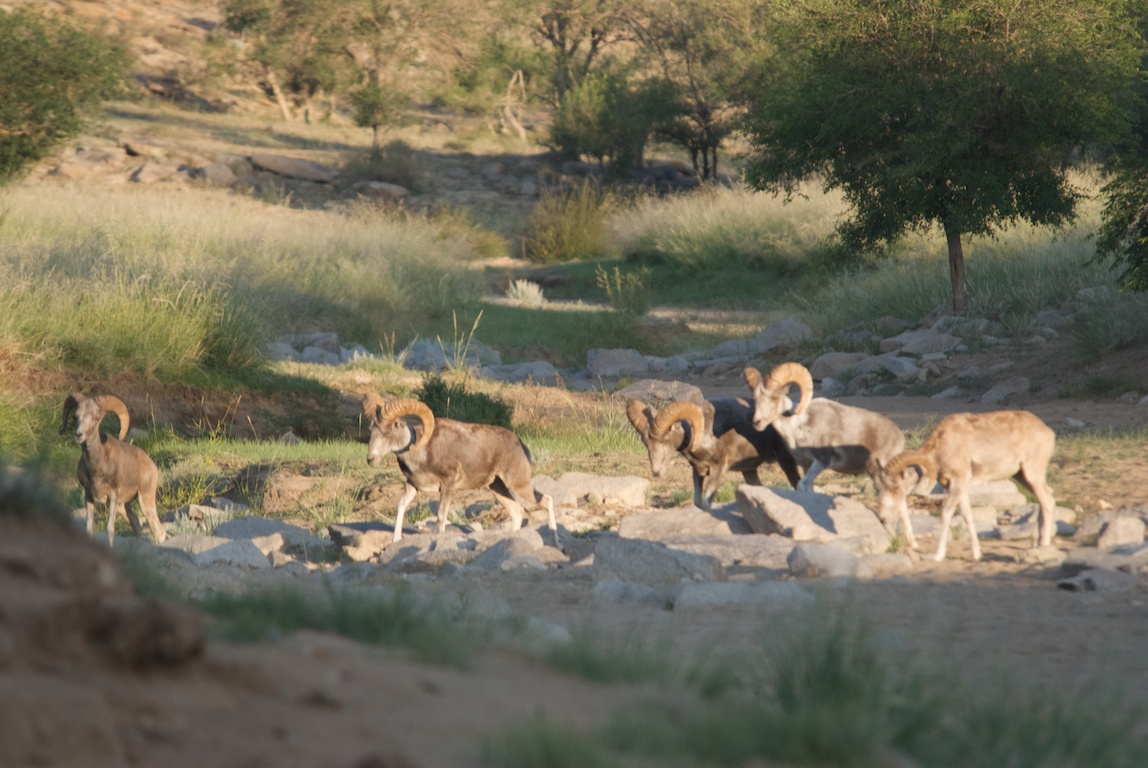
Continuing on from last week, I knew that I was going to do a big painting (big for me, at this point) when the five rams walked across the stream bed in the beautiful morning light.
I also knew that it would be a complex piece that would take more planning than I’d done in the past. I’ve started a couple of big paintings, only to have them bog down and fail because, while I did do preliminary sketches and drawings, I found that I hadn’t really solved some critical problems and then was faced with figuring them out on the canvas. A recipe for frustration and failure.
Not this time. First, I thought about what it was that made me want to paint this scene. It was not only the argali, but the interesting alternating pattern of light and shadow, which started in the foreground and went all the way back. And it was important that it be about my emotional response to this very special experience.
Here’s one of the reference shots. I create Albums in Aperture where I can put all the images I’m using on a painting. In this case, thirteen. Here’s the lead ram.
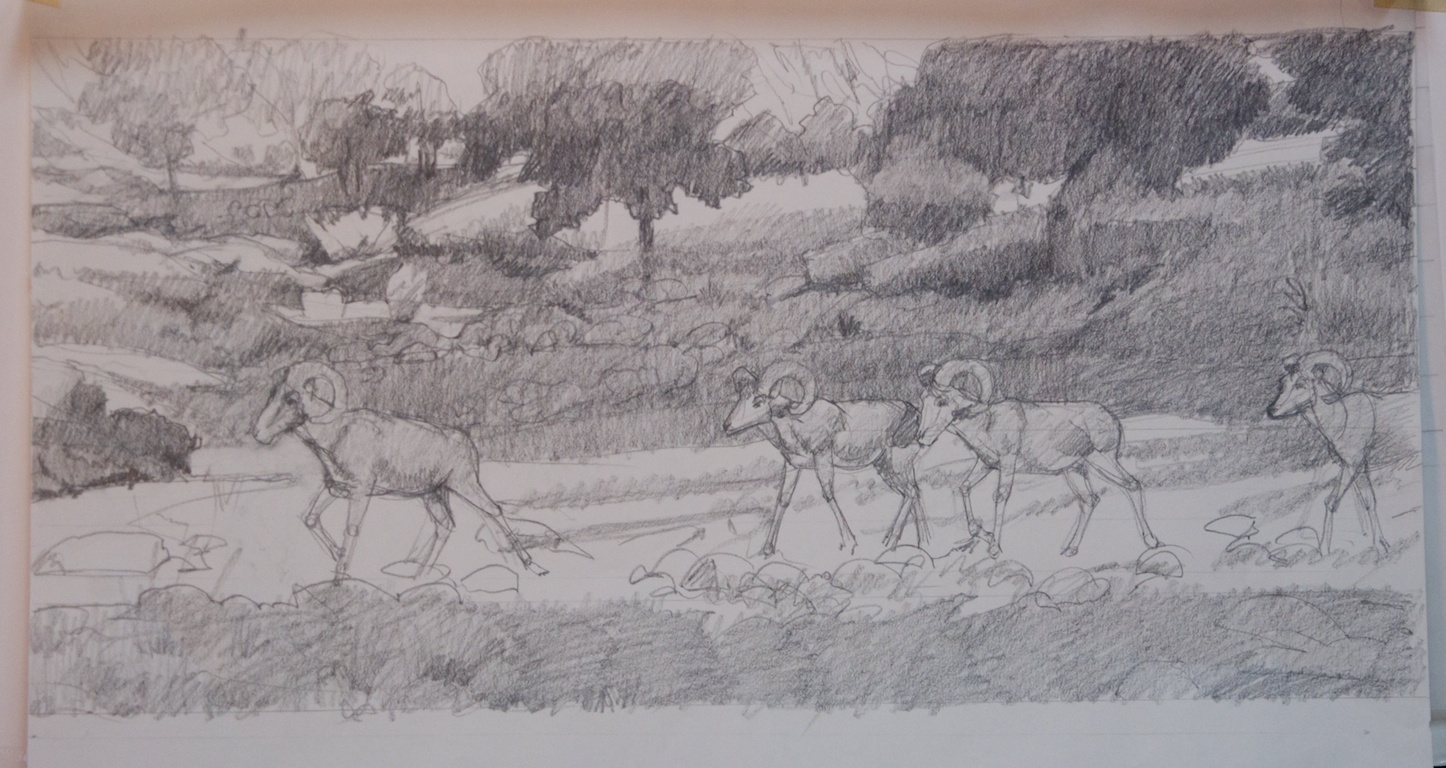
Since I had a pretty clear image in my head of where I wanted to end up, I didn’t do thumbnails this time. And, having struggled with understanding how to work larger, I decided to start larger right away. This is the first layout, done on 19×24″ Canson Calque tracing paper.
As you can see, I adjusted the proportions as needed. I wanted the emphasis to be on the rams, but still show enough of the background to place them in a specific setting and show that alternating light and shadow pattern.
You will also notice that I have an even number of animals, which breaks a “rule”. But they are in an uneven number of “groups”. This doesn’t happen by accident. Or if it does, then there is a conscious decision to keep it.
I had also done a finished drawing of the two rams, which some of you saw a few months ago on Facebook (you can “Like” my public page here).
The next step was to do a small color rough to figure out how I would achieve the visual effect I was looking for. This is on a 6×8″ canvasboard. I blocked out the part that didn’t fit the proportion.
What was critical was to play up the golden light on the ram’s horns and to make sure the argali were the objects of highest contrast by placing them against the central shadow shape. Notice that I’m just painting blobs of color to get the relationships down.
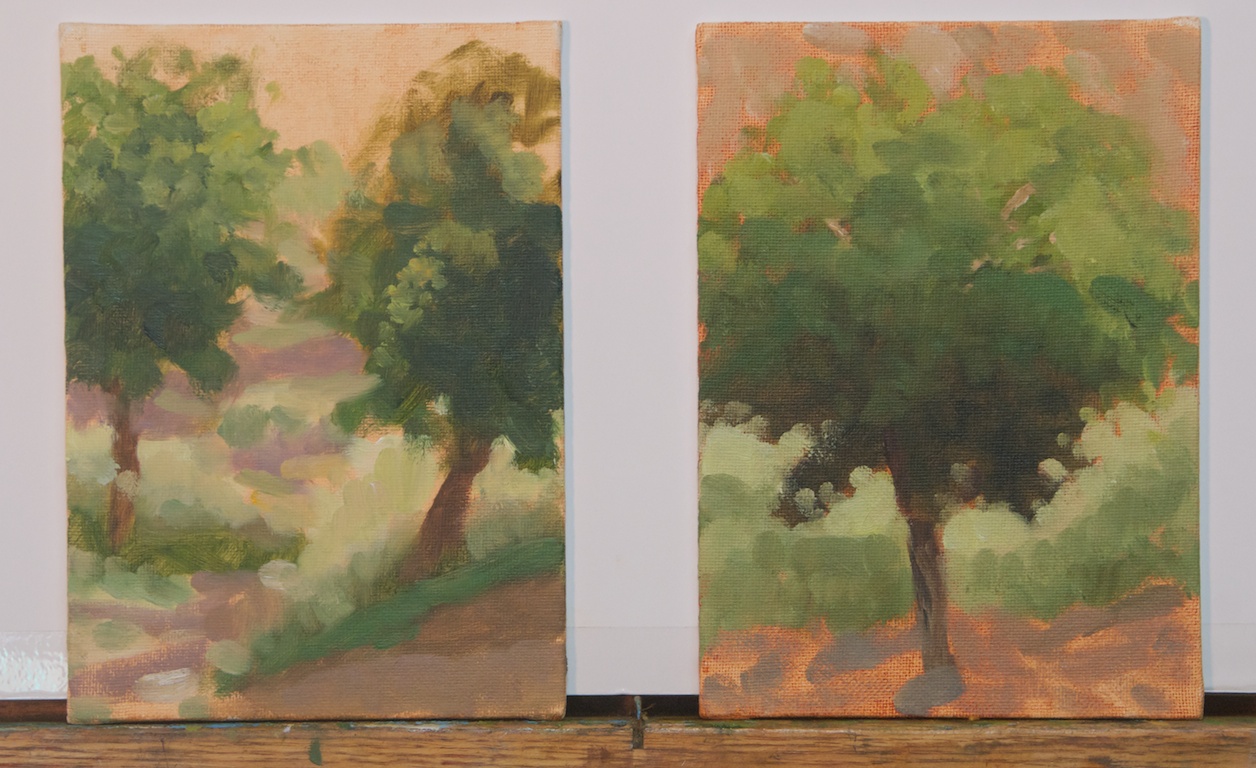
The central tree has a cast shadow. This is something that has given me trouble in the past. The shapes, edges and value relationships have to be just right. So I did a couple of studies of just that tree, along with another to figure out some of the same things where the stream bed goes back into space.
Now it was time to do a large value study, 12×24″. I adjusted the relative position of the rams, moving the pair forward a little.
I had to know if what I had come up with would work at the final size I had decided upon- 24×48″. This is where I’d gotten into trouble before. I asked an artist colleague for advice and he said to take my finished drawing to a copy place and have it blown up to the final size, which I think is a really good idea.
But I chose to try something else. I have found great value in the re-drawing process. It allows me to refine, correct, simplify and really learn to know my subjects in a way that would not be possible if I simply did a drawing, transferred it and started to paint, or worse, heaven forbid, projected them. The depth of understanding and flexibility I get is critical to the quality of my finished product.
First I put a sheet of tracing paper over the drawing above and drew a one inch grid on it.
Then I placed my untoned canvasboard on the easel and ruled a grid on it in pencil. I taped tracing paper to it. It took three sheets to cover it. I lightly sketched a transfer drawing so that every element was in the right spot.
Once the background was laid in, I taped on three more pieces of tracing paper and did the final pencil drawings of each argali. Now I had this:
Because the argali were all on their own pieces of paper, I could do a final check on position and easily move them if needed. I also now had the whole composition at the final size and could see that it did, in fact, work. Whew!
I removed the tracing paper, toned the canvas, re-attached it and, using a No. 7 pencil and a sheet of homemade graphite transfer paper, transferred the drawing.
Using the tracing paper drawings as a guide and referring back to the photo reference if necessary, I carefully re-drew the argali with a brush, figuring I’d get the most important elements down first. Here’s a close-up which also shows the loose lay-on of the background. Notice that you can see three of the four hooves. They vanish later as I decide to add additional and larger rocks to create more of a visual separation between the sheep and the viewer.
Here’s the finished drawing, with basic values starting to be indicated. Notice that the rocks in the foreground and middle ground are just roughed in. No need to spend a lot of time on them at this point.
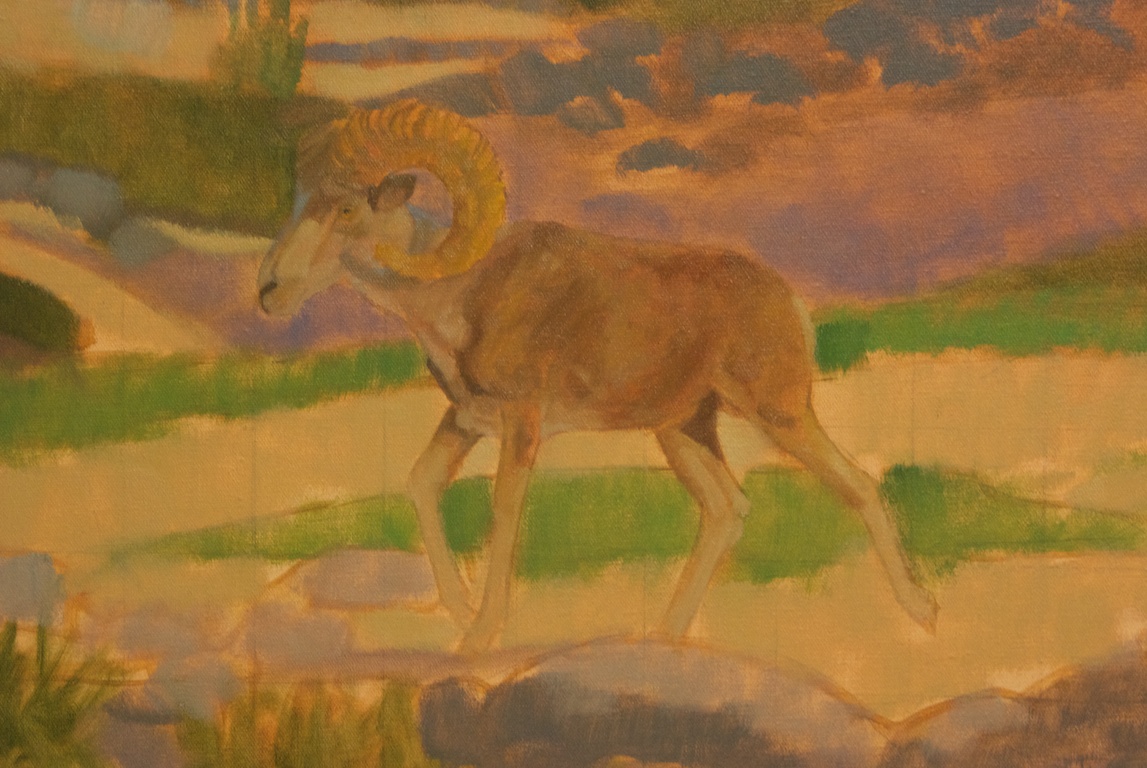
Finally it was time to start adding color! I work all over a canvas in a sitting, keeping the edges soft and letting colors “bleed” into each other. This lets me control where the harder edges will be later on. I’ll also “lose” the drawing, knowing that, having drawn the animals multiple times, I can “find them” again with no problem. First I established the shadow shapes, letting the undertone be the light.
Here’s a close-up of the lead ram in progress. Still keeping it loose, but working on light and shadow and correct structure.
I started to see a problem in the forequarters and it nagged at me for a couple of sittings until I realized that the leg closest to the viewer was too far forward. Moving it and the shoulder back about a quarter of an inch solved the problem. His head was also a little too small. That’s a big advantage of working this way. I can make changes at any point in the process, which turned out to be really important when I was trying to keep track of so many pictorial elements and their relationships to each other.
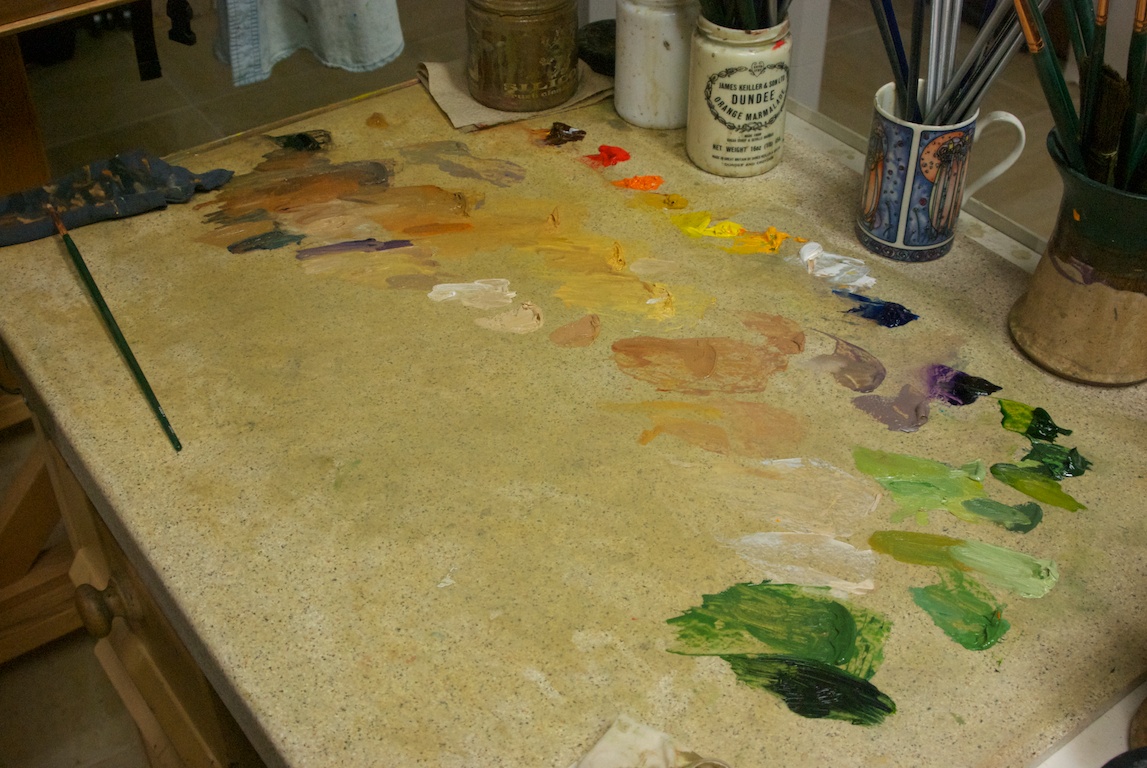
Let’s take a quick break. Here’s my palette. For this painting, I used my standard color range: transparent oxide red, cadmium red medium, cadmium orange, yellow ochre light, cadmium yellow pale, cadmium yellow, titanium white, ultramarine blue, Winsor violet (dioxine), sap green, terra verte, chromium oxide green.
Missing this time around is cobalt blue and magnesium blue hue. I mix my own earth colors and greys. My black is a mix of transparent oxide red and ultramarine blue. I can easily shift the color temperature by changing the proportions.
The palette itself is a scrap of Swanstone solid surface countertop. I got the idea from another art blog and I like it much better than the glass one I’d been using.
Ok, back to the painting. I’m probably about mid-way through at this point. All the value relationships are set (at least I thought so) and basic colors are on.
Oh, darn. I realized that having all the rams in the same light wasn’t very interesting. I went back to my reference images and found a nice shot of the very first one coming out of the shadows. Now I needed to put the fourth ram in that light. Aperture is great for this since it lets you show multiple images at once.
Much better. Having solved that final, somewhat major problem, it was now a matter of simply pushing on, solving all the problems, making decisions, tweaking and tweaking (what Scott Christensen more elegantly calls “orchestration”).
Until, finally, after far longer than I have ever spent on a single painting, it was done.
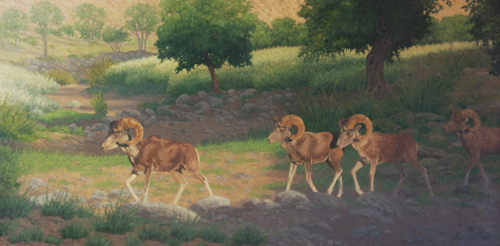
Then They Walked Out Into The Morning Light 24x48" oil
I completed a major painting last week. It’s one I’ve been anxious to take on since I spent a hour with a group of five argali rams this past July at Ikh Nartiin Chuluu Nature Reserve. I was there for six days, staying in one of the gers and taking meals with the scientists and an Earthwatch team.
I’d gotten up at 5:30am, thrown on the clothes that I’d laid out the night before, hoisted my camera pack onto my shoulder, slipped out of the ger and began a slow, careful walk down the valley.
I had learned that the only water in the area was coming from a spring just a few dozen yards from camp and that argali were coming to the valley regularly in the morning and evening. Which was quite convenient, saving me a lot of walking around and clambering over rocks trying to find them.
I picked a spot and sat down in plain view, having been told that makes them less nervous than if you try to hide behind a rock. Took a look around through my binoculars and, within a few minutes, up on the cliffs to my right…
Morning "scouts".
As I watched them, wondering if anyone was going to come down, I had a feeling…and looked back over my shoulder to my left.
Less than 100 feet away.
How long they had been standing there watching me, I have no idea. Then they started to move towards the stream bed.
Oh, look, there's three!Coming down the hill.
As I watched, the sun started to hit the tops of the cliffs. Would I get to see these guys in morning light before activity in the camp behind me spooked them?
Out into the valley as the sun comes up.
The first three crossed the stream bed to a small clump of trees. Two more rams had come down from the cliffs on the right. The Sunrise Boy’s Club was now in session.
Five rams hanging out.
There were three older adults with massive horns and two younger rams. The big guys were almost grey, their juniors a reddish-brown.
They browsed in the trees, did a little pre-rut testing (a future painting). And then….
Noise from camp. Oh, no.
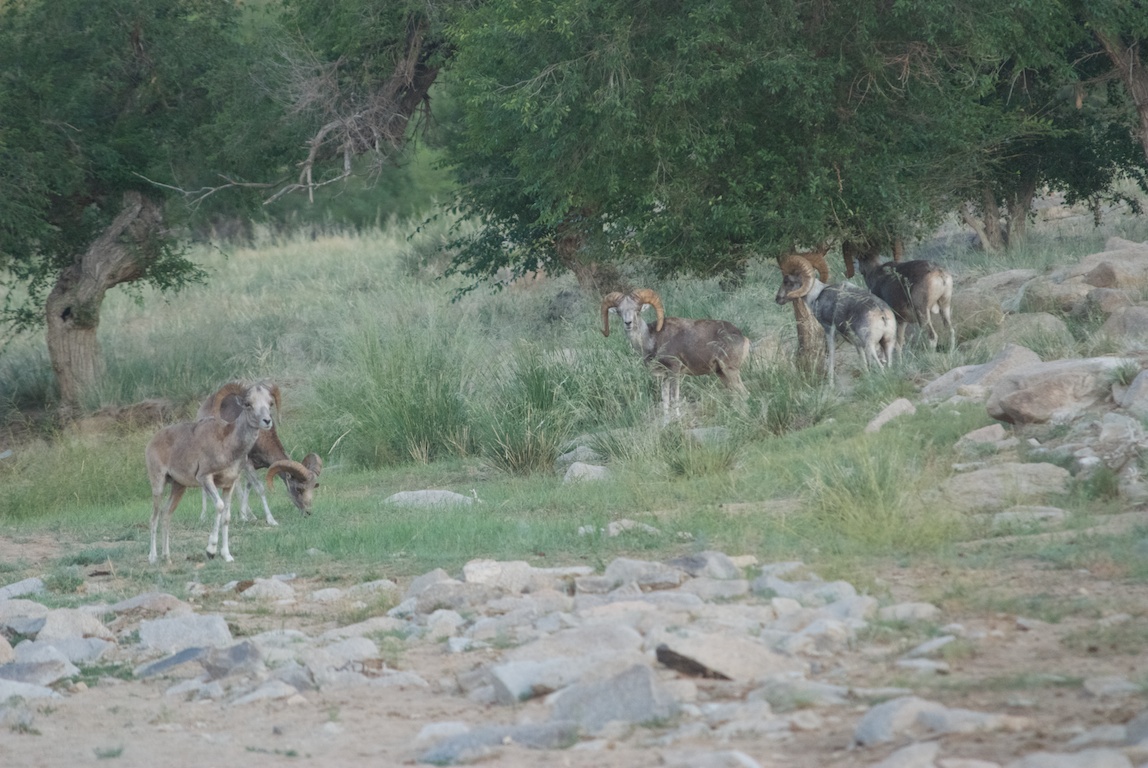
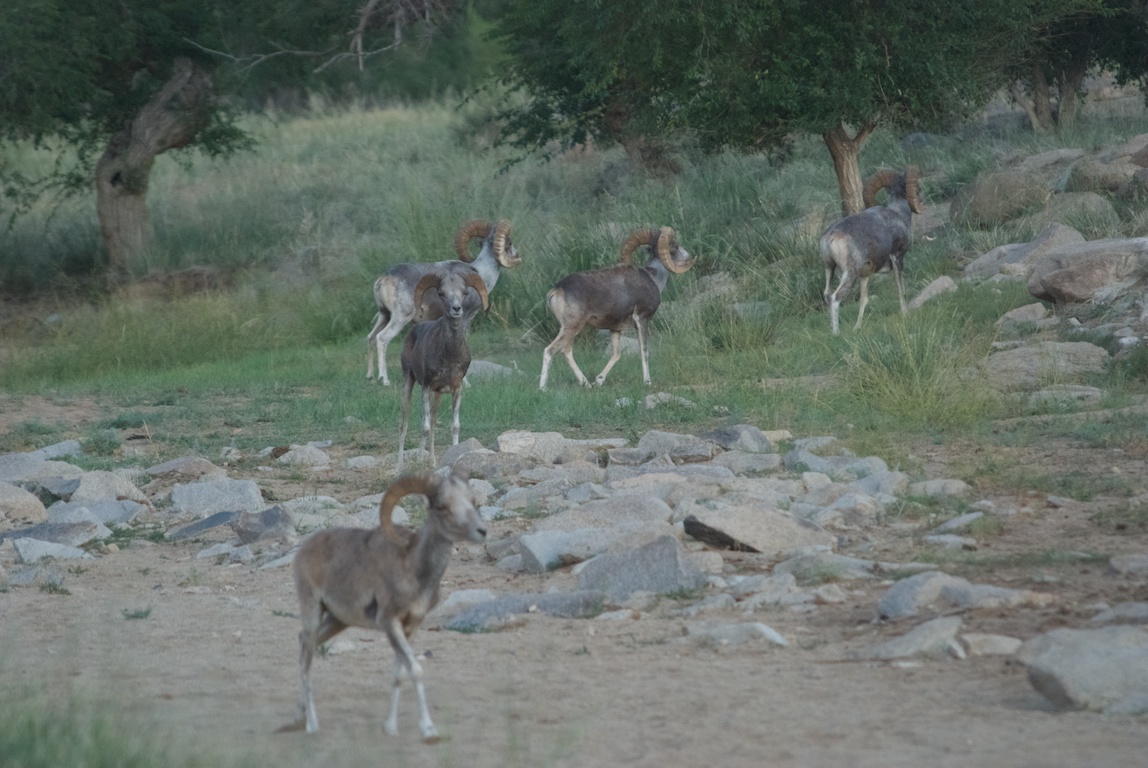
But everyone settled back down. Except for this young one who decided to check me out, walking almost straight towards me. It made the others nervous at first, but they didn’t run.
It was a bit much for the three older rams.
I sat there in disbelief. For me, this is the grail of wildlife fieldwork: sitting out in plain view and having a wild creature choose to approach you.
He finally stopped and looked straight at me from about 30 feet away.
But I wasn’t so paralyzed with delight that I forgot to take pictures, getting the best argali head reference I’ve shot so far.
Returning to the group.
He finally turned and walked back to the others who, as you can see, are standing there, watching. I found myself running this little thought thread: “We didn’t get this old and big by being stupid. Let the young guy check her out.” And then imagining the adventurous ram, kind of like a young British officer, reporting back to his superiors. “No problem, sir. None at all. Piece of cake.”
I guess I was just part of the furniture by now.
But he wasn’t done yet. For a second time, he walked down the stream bed towards me.
Comfortable enough to put his head down and graze.
He finally rejoined the group. Suddenly they were up on their feet just as the light was starting to reach the valley floor. Oh, no! They’re facing the wrong way. Are they going to run up the hill?
Up on their feet.
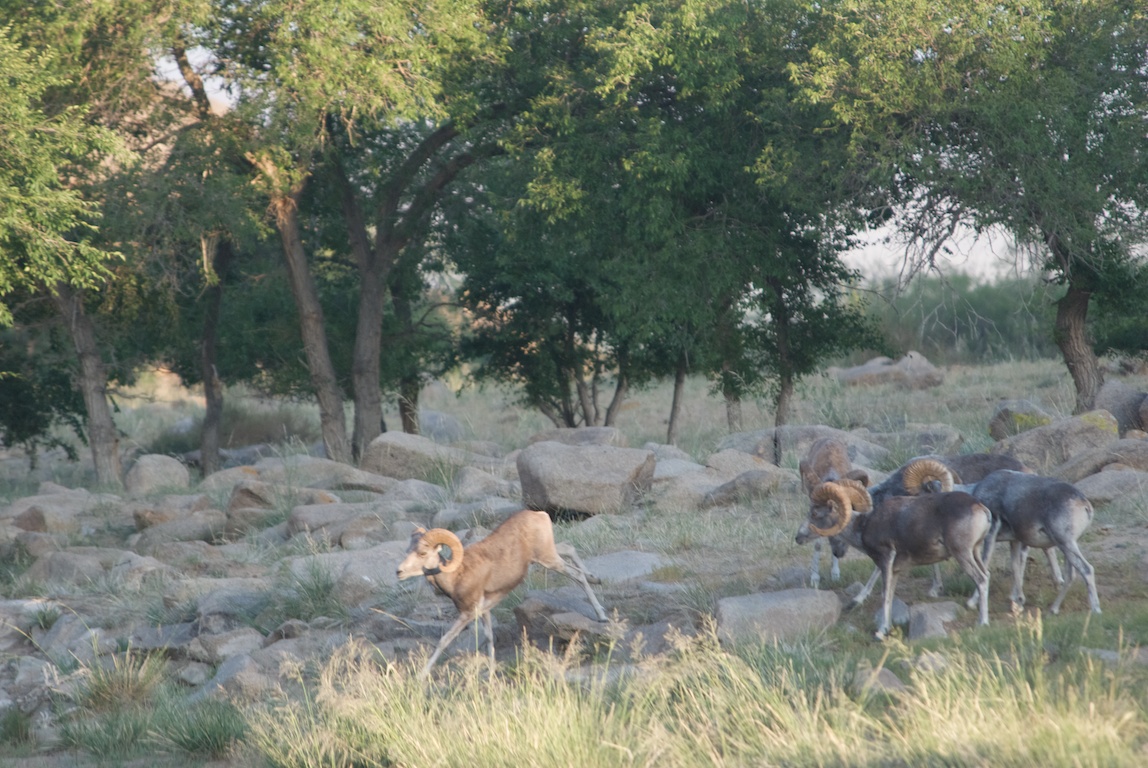
Suddenly one of the young rams turned and bounded into the light. Yes!
Into the light. At last!
And everyone else followed, crossing right in front of me and occasionally stopping for a nibble.
A short pause.
But now I could hear movement in the camp. The group split up, two of the rams going up into the rocks.
One went right up the cliff face.
Three of them walked on down the valley in the bright sunshine.
Time to move on.
I looked behind me and saw one of the scientists from the camp. He walked past me. The rams kept moving, but never ran. It’s good they’ve learned that in this place they don’t have to fear people.
Last look.
The three finally made a right turn up into the cliffs, stopping, as argali often do, to take one last look.
On Friday, Part 2 will present a step-by-step post on the painting that came out of this wonderful experience.
It’s clear that one lesson we, as a species MUST learn, is to share. All of these animals have just as much right to be here as we do. As they go, in the end, so shall we.
I’ve never made a point, for the most part, of specifically seeking out endangered or threatened species to photograph for my paintings. But, as it’s happened, in less than ten years I’ve seen two dozen, plus one, all in the wild. Quite a surprise, really.
Sometimes they’ve been pretty far away, but that in no way diminished the thrill of seeing them. Close-ups in a zoo or other captive animal facility can be useful, within certain limits, but seeing a wild animal in its own habitat, even at a distance, is much more satisfying and gives me ideas and information for my work that I couldn’t get any other way.
In no particular order, because they are all trying to survive on this planet:
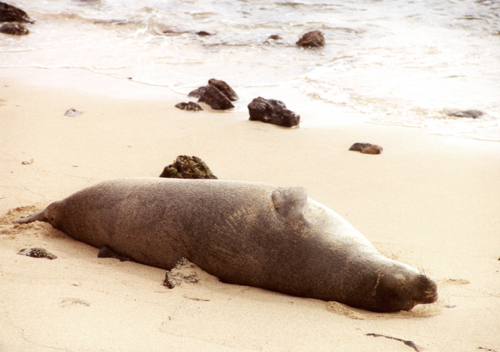
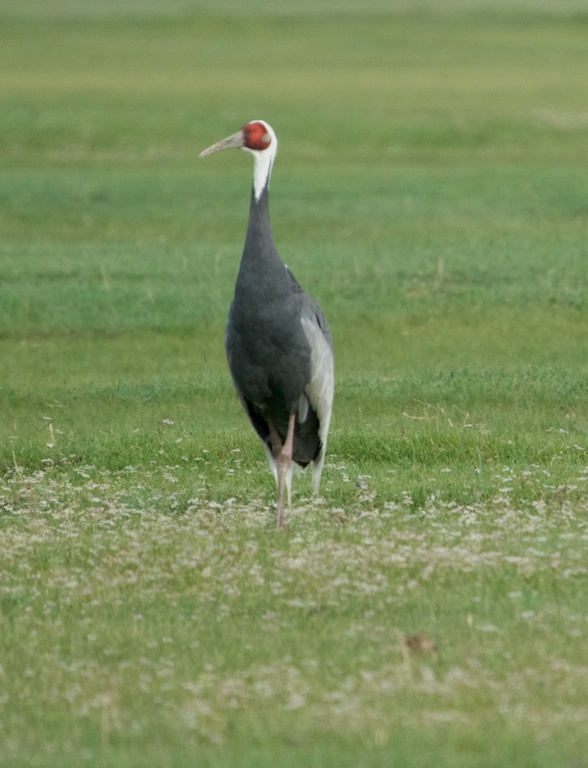
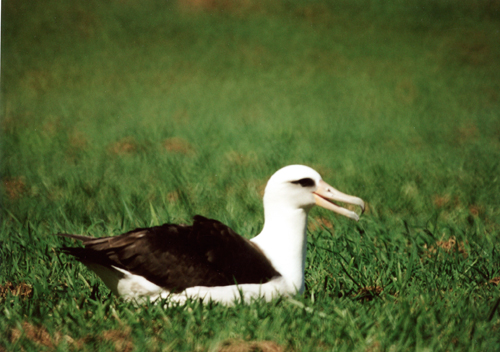
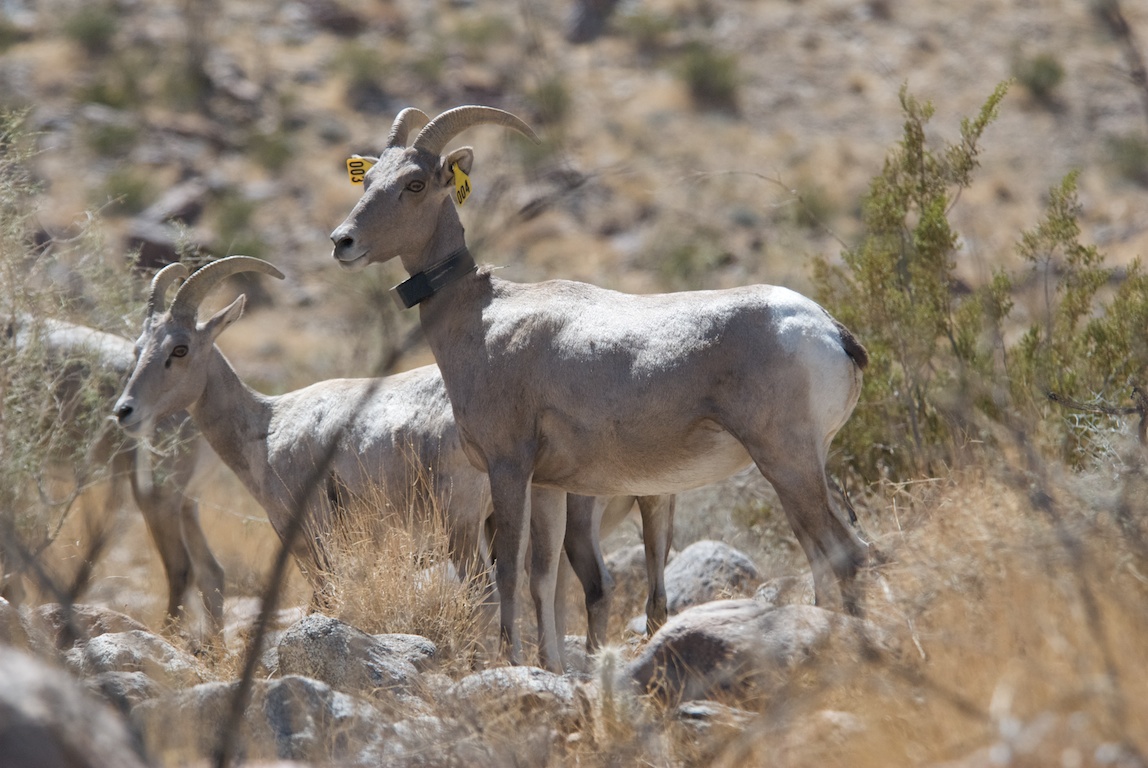
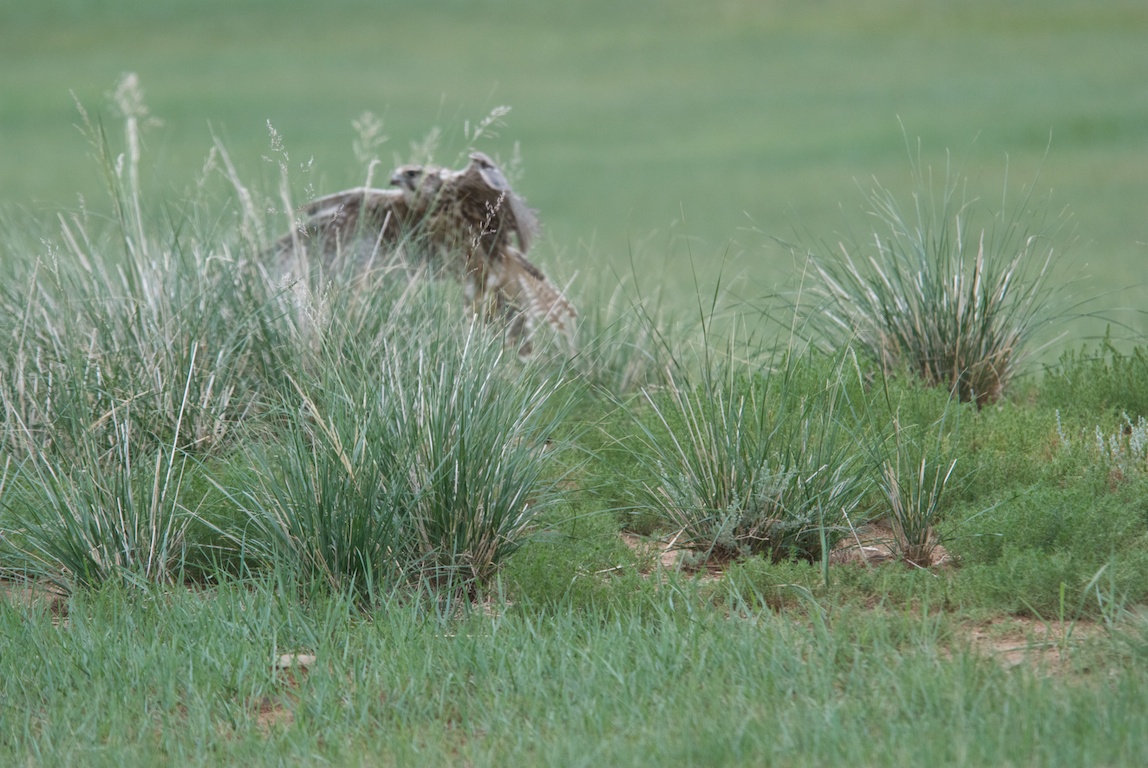
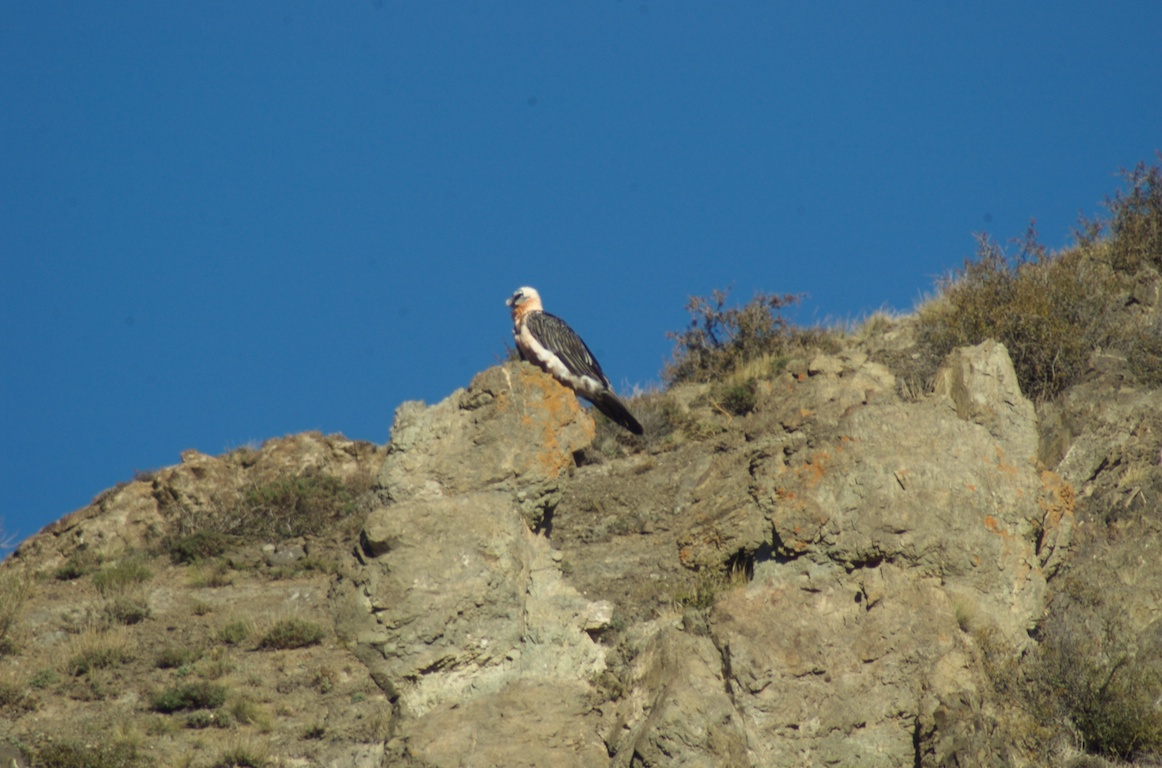
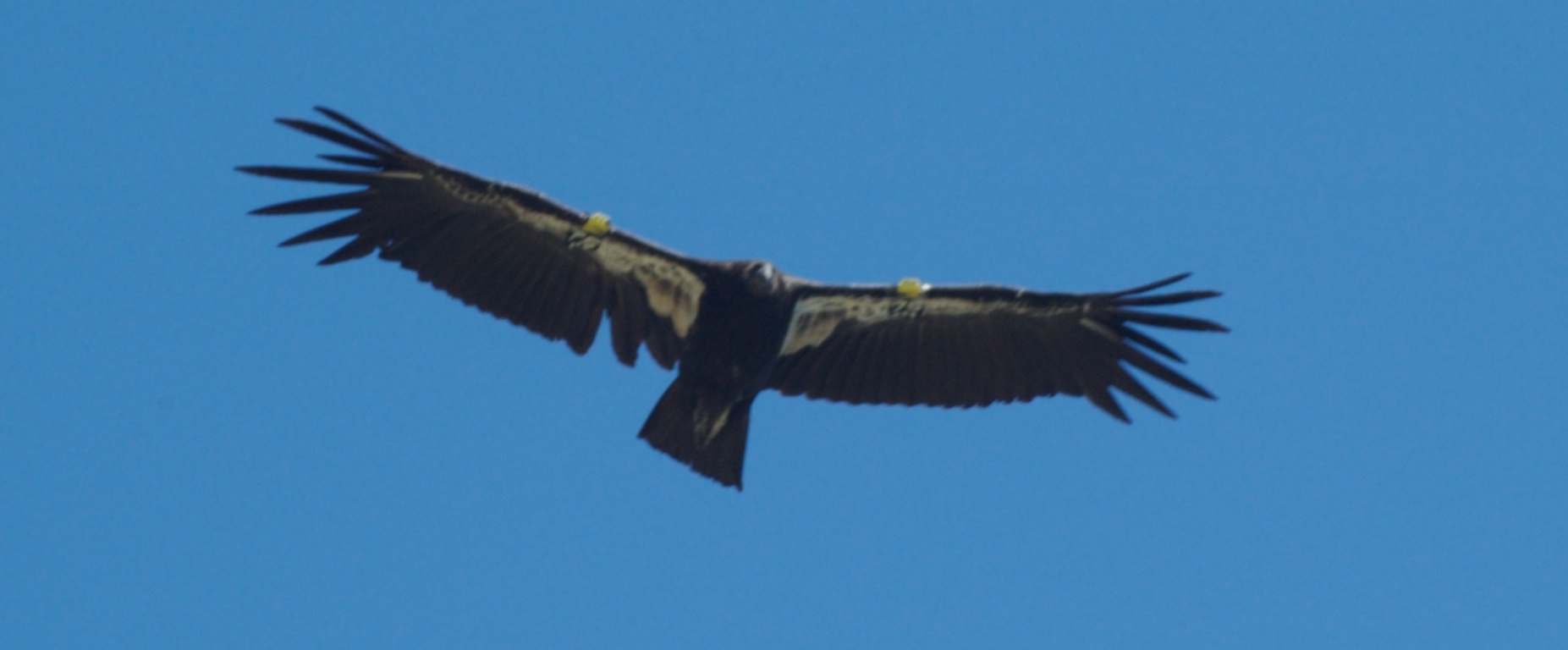
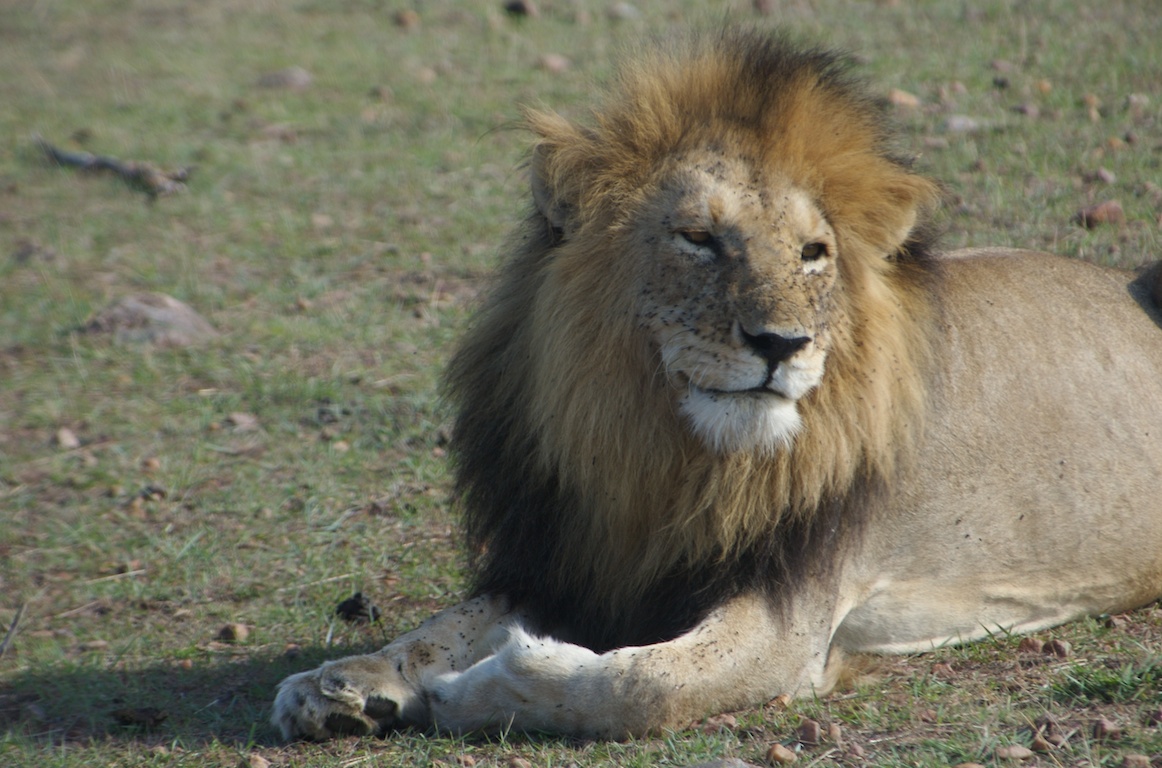
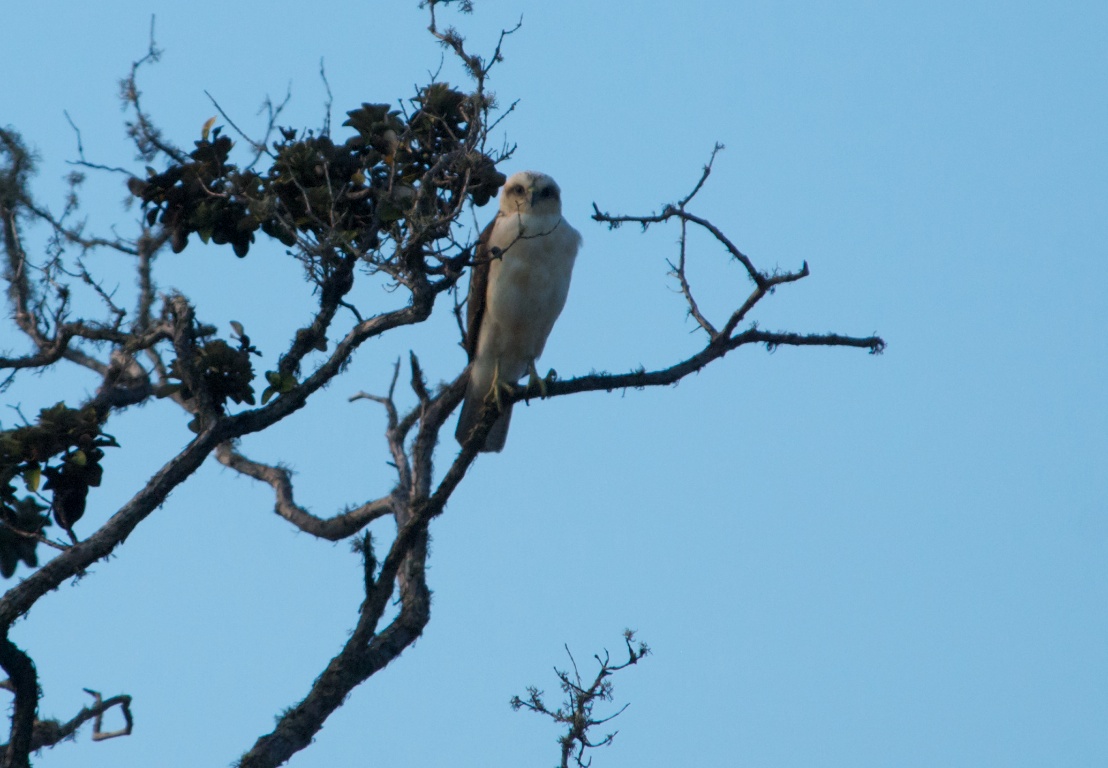
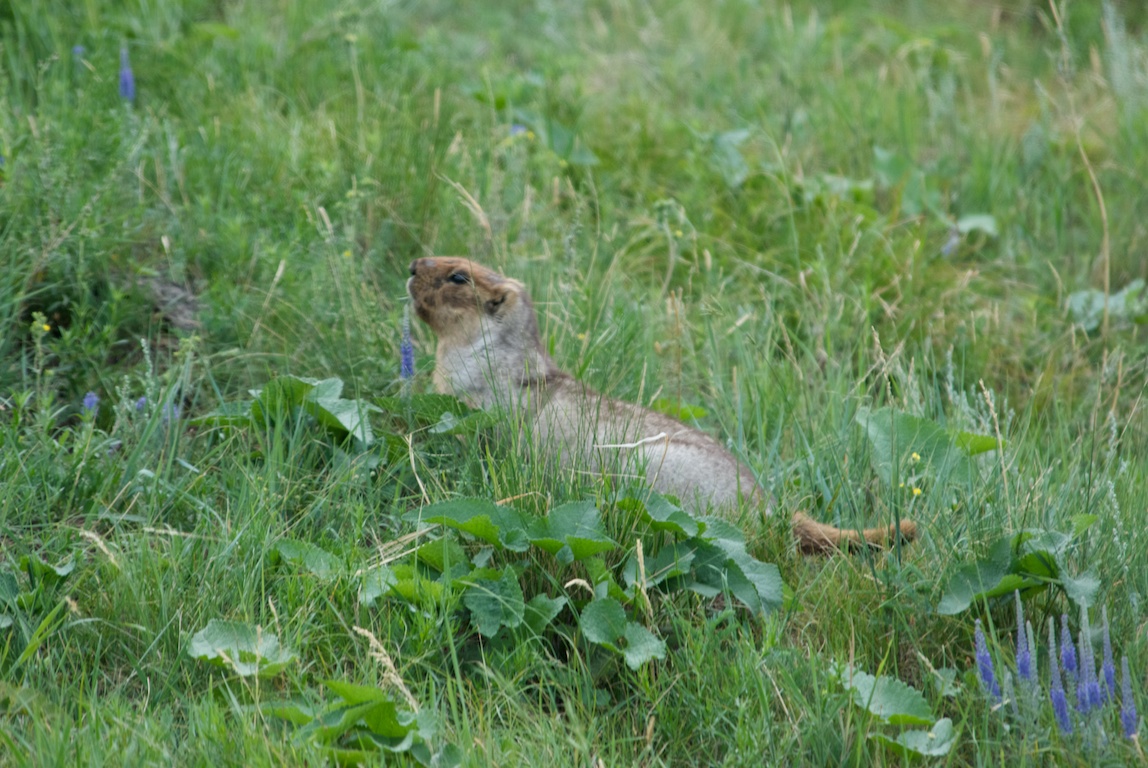
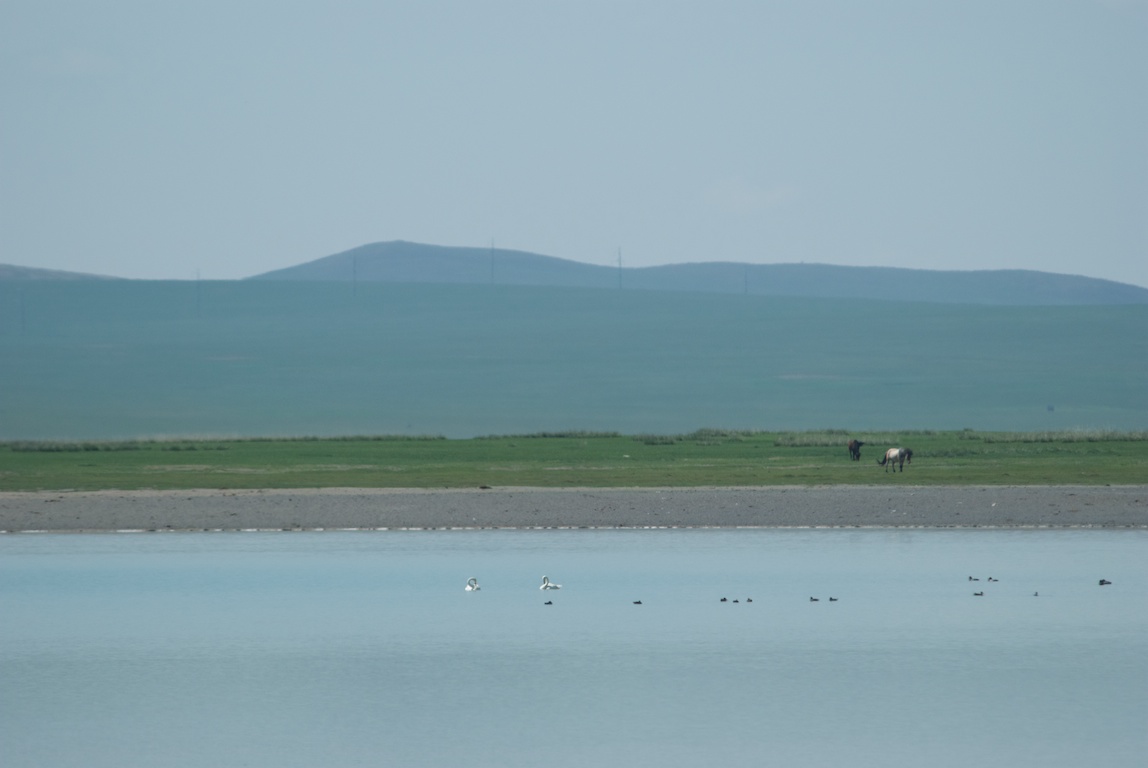
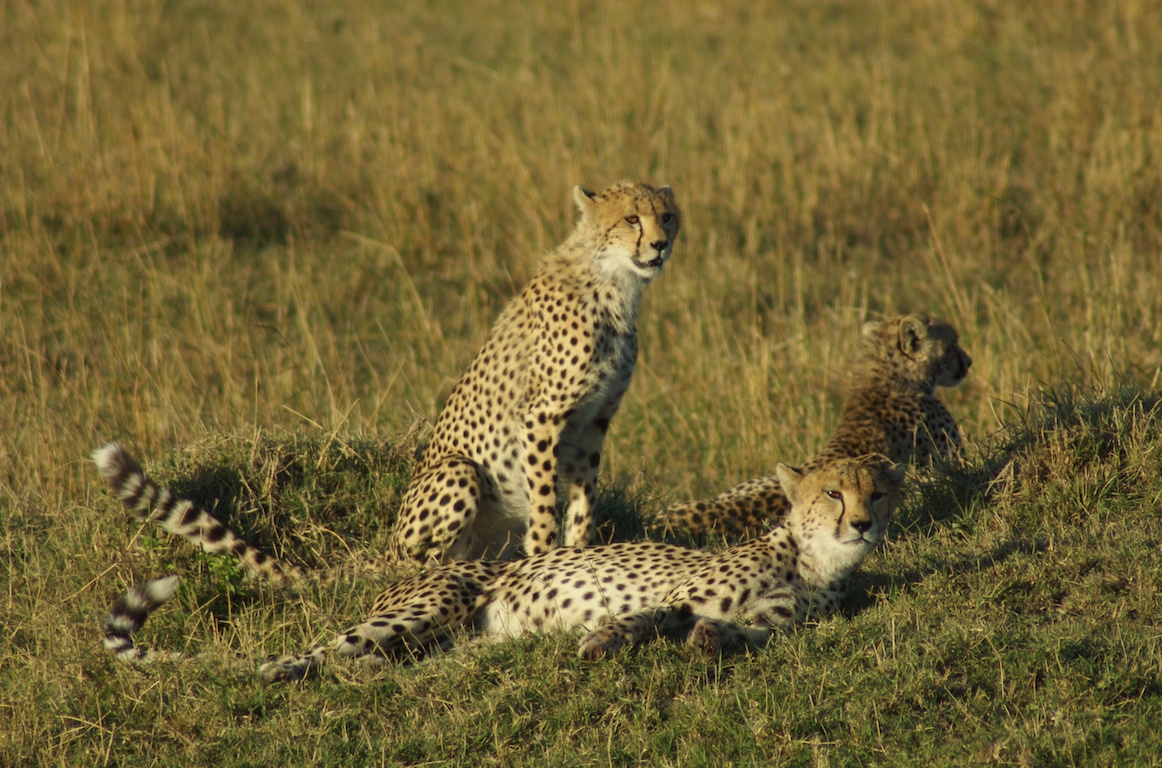
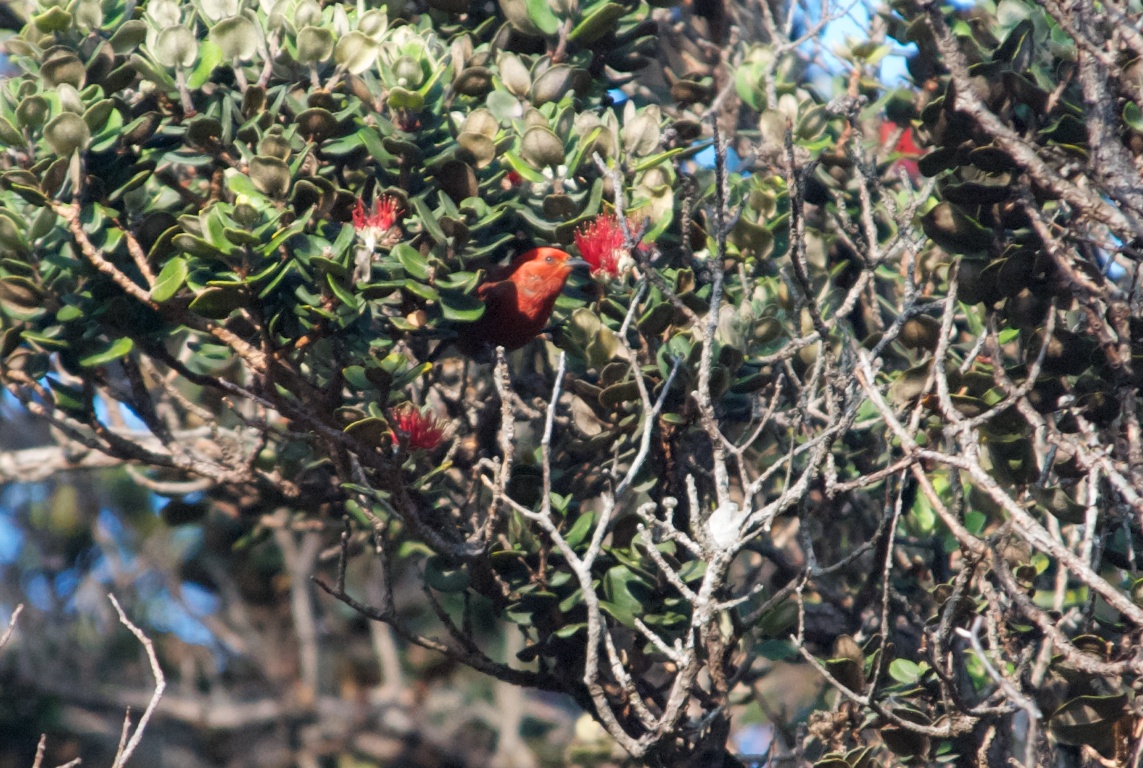
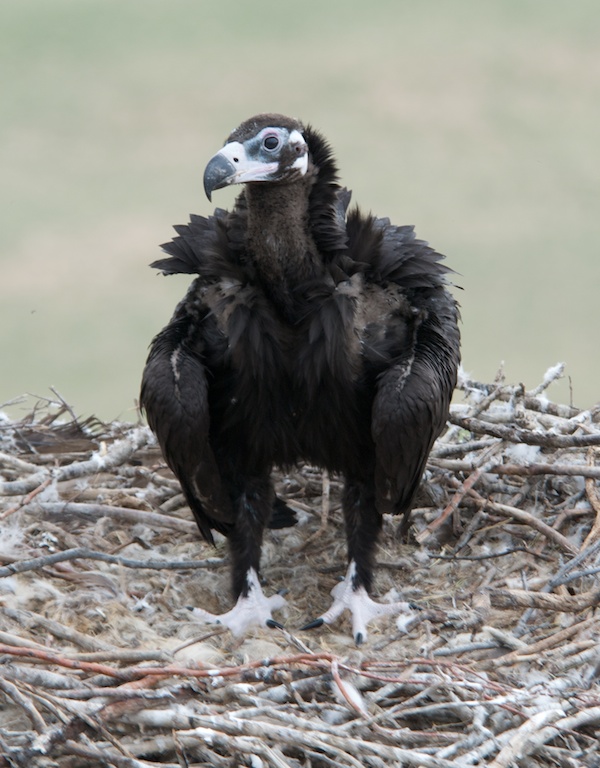
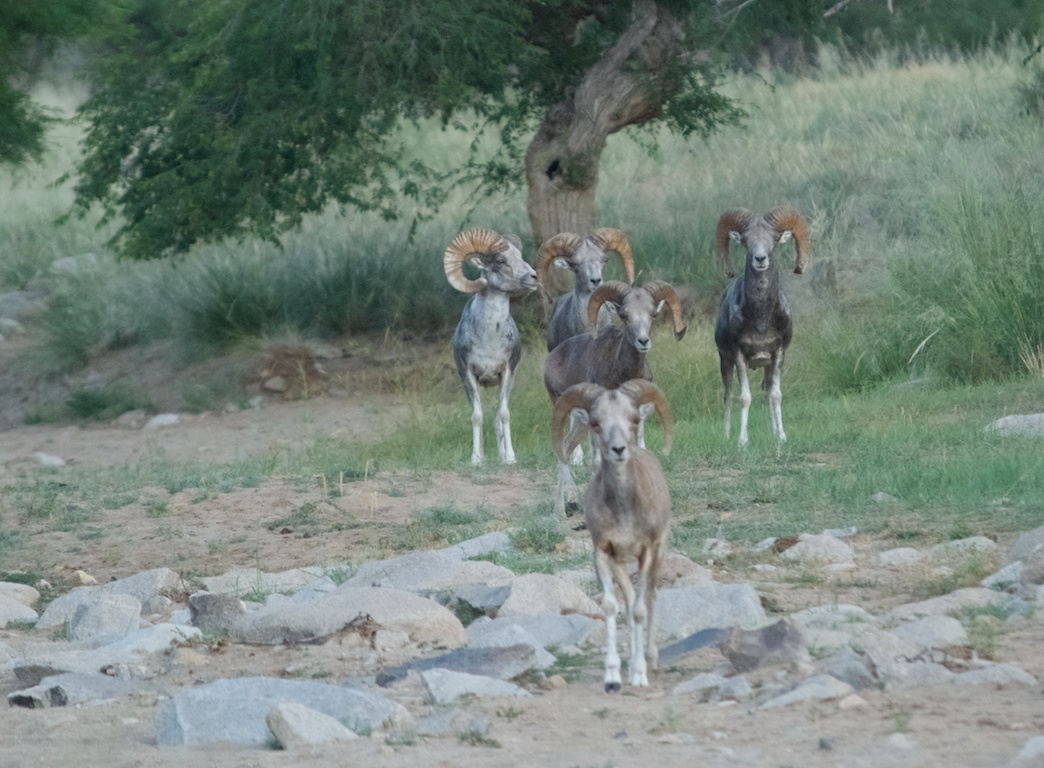
Takhi, Hustai National Park, MongoliaMonk Seal, Kauai, Hawaii, United StatesWolf, Lamar Valley, Yellowstone National Park, Wyoming, United StatesWhite-napped crane, Gun-Galuut Nature Reserve, MongoliaWhite Rhino, Lewa Downs Conservancy, KenyaLaysan Albatross, Kauai, Hawaii, United StatesTule Elk, Point Reyes National Seashore, California, United StatesRothschild's Giraffe, Soysambu Conservancy, KenyaNene, Hawaii Big Island, Hawaii, United StatesDesert Bighorn, Anza-Borrego State Park, California, United StatesGrizzly Bear, Yellowstone National Park, Wyoming, United States (Bear 264)Saker Falcon, near Hangai Mountains, MongoliaGreen Sea Turtle, Hawaii Big Island, Hawaii, United StatesGrevy's Zebra, Lewa Downs Conservancy, KenyaLammergeier, Gobi Gurvansaikhan National Park, MongoliaCalifornia Condor, Central Coast, California, United StatesAfrican Lion, Masai Mara, KenyaHawaiian Hawk (Juvenile), Volcano National Park, Hawaii Big Island, Hawaii, United StatesSiberian Marmot, Hustai National Park, MongoliaWhooper Swans, Gun-Galuut Nature Reserve, MongoliaCheetahs, Masai Mara, KenyaApapane, Hawaii Big Island, Hawaii, United StatesTrumpeter Swans, Yellowstone National Park, Wyoming, United StatesCinereous Vulture (Juvenile), Baga Gazriin Chuluu Nature Reserve, MongoliaArgali, Ikh Nartiin Chuluu Nature Reserve, Mongolia
































 Susan Fox, American Artist
