Friday Thoughts And Bon Mots On Being An Artist

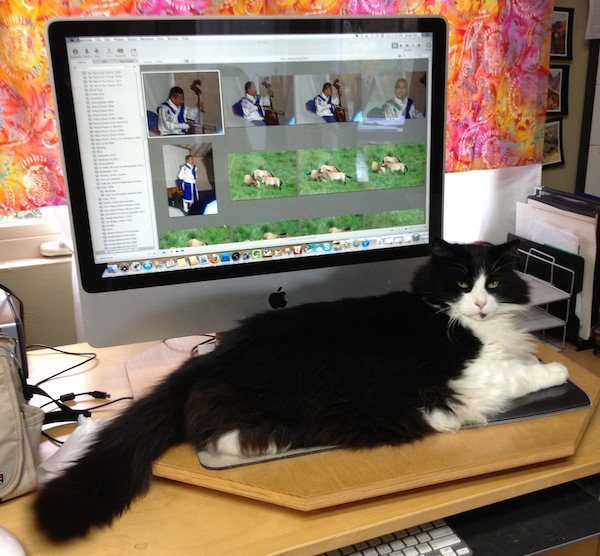
Alexander is a regular "helper" in my studio
Alexander is a regular “helper” in my studio

This is my 600th post!

There have been a couple of interesting posts and comment threads by fellow artists this week on my Facebook newsfeed. I thought I’d share some of the comments and see what you think. And I also found some appropriate quotes to offer.

1. Using photo reference- A professional artist posted this question yesterday and it led to a lively discussion. “What do you think about the difference between doing a realistic painting/drawing from another persons photo reference versus doing one from a photo you took yourself?” By far the other professional artists, including me, came down on the side of only using reference that the artist takes themselves with very few exceptions. Why?

My comment: “One might be stuck if doing pet portraits, but that’s only a tiny corner of the animal art world. Context, emotion and the knowledge of what went on before and after a particular photo was taken are always going to be missing when an artist uses someone else’s image. Superior work comes from using one’s own reference.”

A nationally known wildlife artist;”You miss out on the having had the EXPERIENCE. Artists shouldn’t be rote machines that copy someone else’s 2 dimensional photographs. We should feel, smell, hear, absorb everything about the animal and it’s habitat. That will come out at the end of your brush, or pencil, or scratch tool 🙂 or whatever and give that heart and soul to your work…”

Another nationally known animal artist: “if you faithfully copy someone else’s photo it is not an original composition. The design of that photo is the creation of the person who framed it through their viewfinder. Making the effort to see and experience your subjects for yourself is part of being an artist. As a professional artist…I chose to live where I do because of the opportunities that this region offers for viewing wildlife. It does not matter whether someone else will “know” you copied another’s art/photo (and photos ARE art)…what matters is your own integrity. NOTHING replaces the experience of viewing your subject for yourself…and it is those personal experiences and encounters that we should draw upon.”

From our “host”, in conclusion: “I love taking my own photos and feel the best investment I made was in my SLR digital camera and all of the lenses. The second best thing was my first trip to Africa. Some wise artist told me that too much time in the studio was not good. You have to get out there and experience what you will paint/draw. Yes, it costs time, but improves results 100 fold. You just will have to figure out how to raise prices to compensate!”

Unfortunately there were a number of comments from some other artists, some self-described as professionals (unlike the artists quoted above I don’t personally known them), who defended using or buying photographs from others. What came across to me were lots of excuses about why they couldn’t or didn’t feel the need to shoot their own reference or why it shouldn’t matter. But, as anyone who does shoot their own photos knows, it makes a huge difference as demonstrated above.

3. Insurance for artists- One colleague posted that she thought it was really time to seriously look at getting insurance for both her work and studio equipment, plus when she’s on the road. I’ve had a general business insurance policy for many years. It not only covers my studio equipment, but when I take art and things like camera equipment off-premises. There is also general liability coverage.

However, most of the other commenters noted that the premiums they have been quoted are far higher than what I pay and most have chosen to do without. Here was one comment from an artist who does have insurance:

“I am NOT covered for anything while my work is at a show or in transit, and I am not covered for “customer” visits if I had a gallery or open studio here (which I don’t…no room!). I’m also not zoned for a commercial business here, so if anyone wants to see my stuff, it’ll have to be at a show or gallery.

As far as theft, if your art is stolen and all efforts to recover it or get paid have failed, talk to your tax person. That’s a “loss” to your business and as long as you can document it (as with all things taxes), it’s likely to be a deduction for you.”

Another artist, whose work was recently threatened by a fire in the gallery where he was showing, chooses not be insured because he believes the resilience of artists and their ability to create more and perhaps better work if the worst happens more than compensates for the value received from paying insurance premiums.

Do you carry insurance on your art business? Have you ever had to file a clam and was the settlement satisfactory?

3. Quotes about the business of being an artist-

I paint for myself. I don’t know how to do anything else, anyway. Also, I have to earn my living, and occupy myself. Francis Bacon

The most common money-related mistake artists make is a reluctance to invest in their own careers. Caroll Michels

Artists often make emotional decisions. They can be so eager to be represented by a gallery that they neglect paying due diligence to the terms and conditions of the contract. Chris Tyrell

An artist is not paid for his labor, but for his vision. James McNeill Whistler
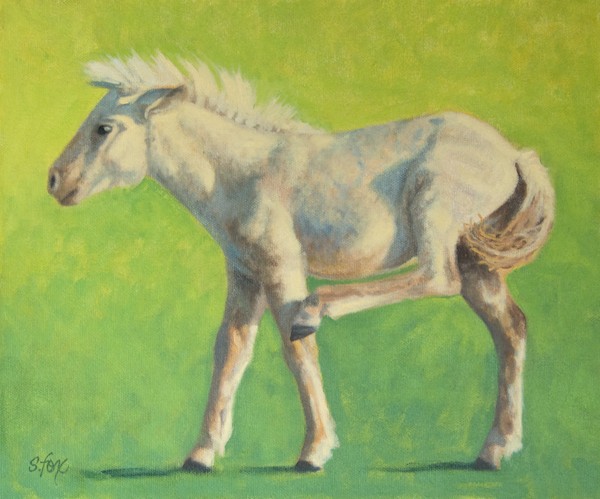
Mongolia Monday- New Painting Debuts! “Scratch That Itch” And “Mongol Goat”

"Scratch That Itch"  10x12"  oil
“Scratch That Itch” 10×12″ oil

I’ve been working on some smaller pieces of domestic Mongol animals, just focusing on my subject and not worrying about a background other than colors. I loved the gesture of this Mongol horse foal who is finally gaining the coordination needed to raise one leg to scratch an itch.

"Mongol Goat"  12x12"  oil
“Mongol Goat” 12×12″ oil

The best cashmere in the world comes from the goats of Mongolia. They come in a riot of colors, shapes, sizes and horn style, but the undercoat is pretty much the same on all of them. I was particularly taken with the bold black and white pattern of this fellow.

Mongolia Monday- It’s National Naadam Time In Mongolia!

Procession into the naadam stadium with the official State horsetail standards
Procession into the Naadam Stadium with the official State horsetail standards

Serious preparation and packing for my next trip to Mongolia has officially begun. I’ll be doing my pre-trip gear review Very Soon Now.

In the meantime, coming up this weekend is one of the biggest holidays in Mongolia, the annual Naadam. I got to attend it in 2009 and hope to again sometime, maybe next year. It’s when the very best competitors, both horse and human, are featured in The Three Manly Sports- horse racing, wrestling and archery. Ulaanbaatar pretty much closes down on Friday afternoon. Some head to the countryside to get away from the crowds and craziness, but thousands join in the celebration.

Here’s the post I did about my Naadam experience a couple of years ago: https://foxstudio.biz/2011/07/08/its-naadam-weekend-in-mongolia/. Enjoy!

Guest Artist: David Rankin, Watercolorist and iPad Artist

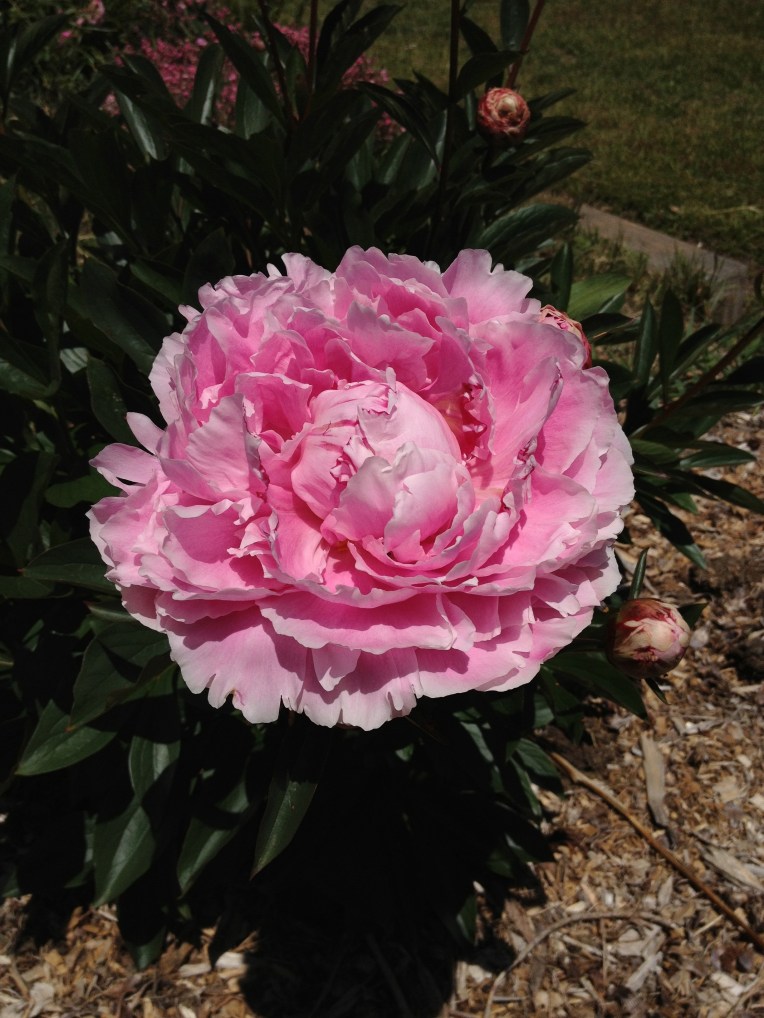
Sarah Bernhardt peony

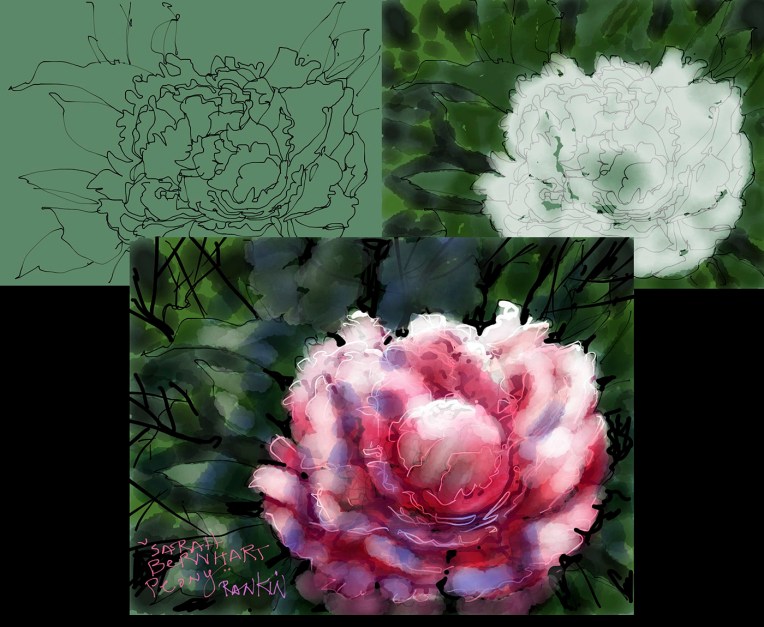
My artist friend and colleague, nationally known watercolorist David Rankin, has gotten into iPad drawing in a big way. His app of choice is Paper 53 and he really knows how to get the most out of it. He’s now teaching workshops about iPad drawing in and around his home city of Cleveland, Ohio.

I sent him this photo I took of the first bloom of the year on my herbaceous peony “Sarah Bernhardt”, saying that I’d love to see how he’d draw it on his iPad.

The very next day he sent me this great little step-by-step. Here’s what he has to say about it: “The image shows 3 stages in the production of this Peony image… using Paper by 53 on an iPad 2 with a Pogo Sketch Pro Stylus. Presently I’m doing a Bird a Day throughout 2013, but I’m considering next year to do a “Flower a Day”. The first stage…the Drawing Stage…is most important…and actually a rather hard stage as you have to pay close attention as I work my way around the entire structure of the flower. I’ve sketched flowers like this for years. But now…with this app…I can add full color and much more comprehensive lighting.”

r peony 2Of course the same procedure could be used with “real” watercolors. David likes using his iPad for fast studies like this before he does the finish in watercolor, too.

You can see more of David’s work at:

•    David Rankin Daily Birds on Facebook…  https://www.facebook.com/media/set/?set=a.10151318758709303.489738.773694302&type=3

•    David Rankin Official Website: http://www.davidrankinwatercolors.com

Mongolia Monday- Mongol Photographer Joins The WildArt Mongolia Expedition! Meet Odna Idevkhten

Odna profileOdna Idevkhten is a native Mongolian who has been working in the New York area for the past 10+ years  for various financial companies.  She received her BS in business from Brigham Young University and her MBA in finance from the University of Chicago.  She loves traveling with her camera to interesting places around the world and to keepsake the memories of unique sights and scenes through her camera.  She is also an avid art enthusiast and supporter of visual and performing arts.  She has attended numerous art galleries and museums, classical music concerts, opera, ballet, and theatrical plays and musicals at leading venues around the world.

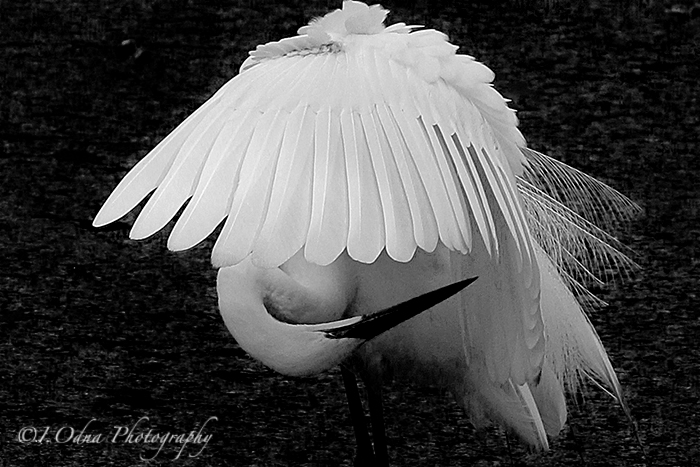
IMG_8411_webBetween her love for traveling and arts, she has found a happy medium to express her artistic side – photography, especially of nature and wild animals.  She is a passionate photographer and shares her photos of wildlife and nature through her Facebook photography page, “I.Odna Photography” (www.facebook.com/i.odnaphotography).

IMG_8209_ed_webShe has photographed wildlife and nature in North America, South America, Antarctica, Asia, Australia, and Europe.  According to Odna, “one can be very original, creative and artistic when dealing with nature and wildlife”.

IMG_4754_web

IMG_8612_ed_web

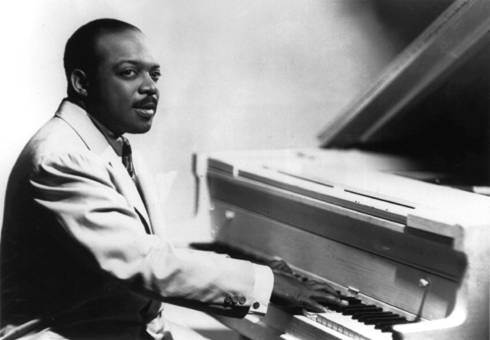
3 Reasons Why Painters Should Listen To Count Basie

count-basie1

I “got into” jazz some years ago and quickly found that Count Basie was my favorite, particularly from his Kansas City days before he had a big orchestra. I’ve had this post in mind for quite awhile, but had to find the right video of him and then formulate why I believe his music is of value to visual artists.

Here’s what I think painters, or any artist really, can learn from listening to pieces like the one in the video:

1. Simplicity– Compared to everything going on in the orchestra, Basie plays very few notes in this version of “Good Time Blues”. It takes years of experience to be able to strip away all the “details” and play with such elegant simplicity. If you watch his older performances, he plays more conventionally. As he went along, he simplified his playing to an extremely sophisticated level. And, as one of my art teachers once said “The simpler statement is the stronger statement.” One could explore this idea with brushwork. Instead of ten strokes to define an area, can you do it in five? How much information can you convey in one? Can you say “grass” in 3 strokes instead of 300?

2. The spaces between the notes– artists call it “positive” and “negative” space. Both are equally important and a painting can be approached from either direction. In the Basie video, the spaces between the notes are every bit as important at the notes themselves. Watch the video for the notes, then watch it again for the spaces. When you do a drawing for a painting, do you check the negative spaces between the objects? If not, try it and see what happens to your visual perception. Try designing a painting by thinking about the negative shapes first.

3. Timing– Every one of those relatively few notes is played at EXACTLY the right instant. By this time in his career, his timing instincts were unerring and seemingly effortless. One can not imagine any note being the slightest bit earlier or later. How long is your brush actually in contact with the canvas? How does varying that change the appearance of the mark? How could you change the look of your painting by using this idea consciously?

Mongolia Monday- New Painting Debut! “Morning At Hustai”

Morning at Hustai  16x24"  oil
Morning at Hustai 16×24″ oil

These two takhi/Przewalski’s horses were part of a harem of eight that I watched and photographed for quite awhile at Hustai National Park last September. This “grooming” behavior is as much about social connection and relationship reinforcement as it is about any actual grooming. The harem stallion is on the right and one of his mares is on the left. I loved being able to paint them in such beautiful morning light.

Guest Artist: Alison Nicholls

Alison Nicholls sketching in Botswana

Susan here: I have a very special guest artist today, my friend and colleague Alison Nicholls. She is has found her passion and inspiration in Africa, but not in Kenya, where so many artists justifiably go, but Botswana, Zimbabwe and Tanzania. One of her favorite subjects has been the endangered African wild dog. She is a Signature Member of both the Society of Animal Artists and Artists for Conservation.

Hello! I’d like to thank Susan for including my work in her great blog and I’d like to share my inspiration and art with you.

Africa inspires my art in ways unmatched by any other place and sketching in the bush is a vital part of my work:  like a life-drawing class but with unpredictable subjects who never hold a pose and often walk away at the critical moment! Infuriating as this may be, it also makes field sketching a great learning experience and a real test of artistic skills. I lived in Africa for a number of years and return annually to lead Art Safaris and sketch in the bush. Over the years I have reduced my sketching supplies to the bare minimum and now I can fit everything I need, except my sketchbook, in a large pencil case. This includes pencils, pens and a field watercolor kit – my essential supplies.

Serengeti  Cheetahs Field Sketch, 11x14” by Alison Nicholls
Serengeti Cheetahs Field Sketch, 11×14” by Alison Nicholls

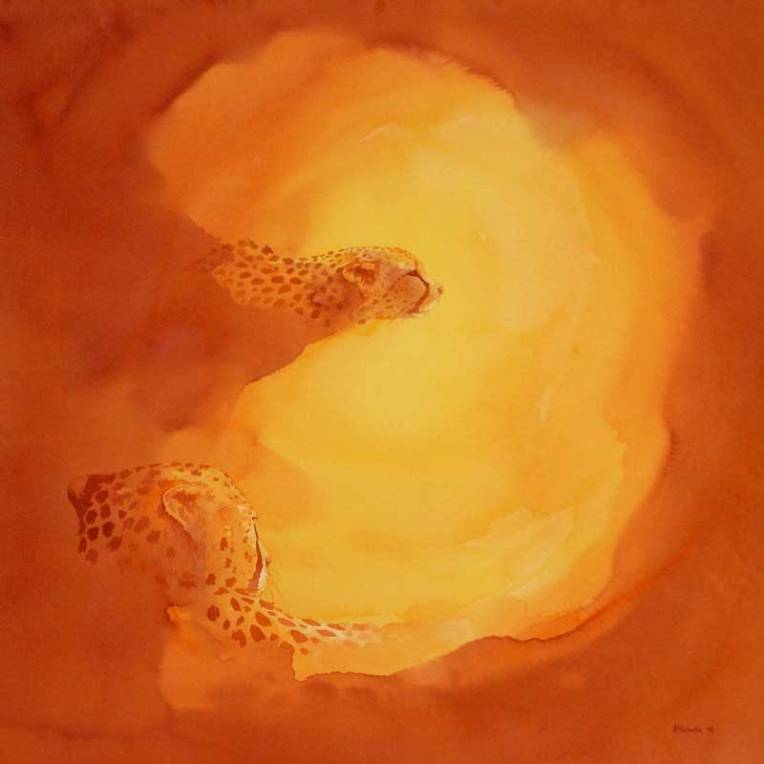
When I return home my sketchbooks give rise to many of my studio painting ideas, which are ‘designed’ in my mind’s eye, usually while I’m out walking my dog. I prefer to eliminate all unnecessary detail in my studio paintings, using space to allow room for the viewer’s imagination and interpretation. Animals spend most of their day feeding and resting and that is how I like to paint them, behaving naturally, undisturbed and unaware of the viewer. I enhance the tranquil atmosphere of my work by using a limited palette of colors, reflecting the relaxed nature of the animals. Color is also immediately evident in my art but I use it to convey a mood or a time of day, not to mimic the colors of nature. The reds and oranges in Sun Spots create effect of intense midday heat and I often use cooler blues and purples for dusky evening scenes.

Sun Spots (Cheetahs), acrylic 29x29” by Alison Nicholls
Sun Spots (Cheetahs), acrylic 29×29” by Alison Nicholls

I work closely with several African conservation projects, visiting the projects to learn about their work then, on my return home, creating a traveling exhibition and lecture series to raise funds for the project and awareness of their work. My 1st Conservation Sketching Expedition was the result of a Fellowship Grant from Artists For Conservation and I visited the Painted Dog Conservation project in Zimbabwe, where I spent time tracking and sketching highly endangered African Wild Dogs. I recently completed my 2nd Conservation Sketching Expedition, visiting the African People & Wildlife Fund in Tanzania who work with rural communities to help them manage natural resources for the mutual benefit of people & wildlife. Artwork resulting from these visits will be on display in Rye, New York in July & August 2013 in an exhibition titled Lions, Livestock & Living Walls. My time at APW gave me wonderful opportunities to meet the people of the Maasai Steppe and resulted in my first sketches and paintings of people and livestock. The conservation of Africa’s wildlife and wild places will depend on decisions taken by the people of Africa, so I feel it is fitting that I have now begun to incorporate them into my work.

Trotting (African wild dogs), acrylic 12x16” by Alison Nicholls
Trotting (African wild dogs), acrylic 12×16” by Alison Nicholls

Africa provides me with endless sketching and painting opportunities. My work is inspired not only by the colors and images of Africa, but by sandy roads traveled in a hot vehicle, by the abrupt shriek of a francolin, by long hot hours sketching elephants, the haunting cry of a black-backed jackal and the smoke of the campfire. These are some of the sounds, sights and experiences which inspire me to pick up my pencil and brush.

To see more of my work and receive my monthly newsletters please visit my website – www.nichollswildlifeart.com/
Thank you!
Alison

Mongolia Monday- Explorers and Travelers: Henning Haslund on Mongol Horses

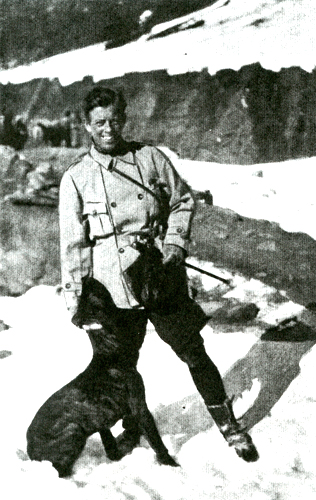
Haslund-500If all Henning Haslund had ever accomplished was to survive an expedition with Sven Hedin, that would have made him notable (Hedin’s expeditions are remarkable for the body count of both men and animals). But he is also one of the “must read” writers for anyone interested in Mongolia.

I’ve only read one so far, “In Secret Mongolia”, but the second one “Men and Gods in Mongolia” is sitting on the shelf waiting for me. I’ll be getting a copy of “Tents in Mongolia”, the third of what is really a series, also.

“In Secret Mongolia” (published in 1934) is the story of Haslund’s participation in a Danish project to establish a farm in northern Mongolia (which lasted from 1923 to 1926). Along the way he meets most of the major characters who were also in Mongolia at the time or hears tales of others, like the Bloody White Baron, Roman von Ungern-Sternberg.

He also wrote eloquently and with affection about the Mongols. Absent is the thinly veiled attitude of inherent white superiority present in many other accounts.

Here is Haslund writing about the Mongols and their horses (Note: when Haslund refers to “wild” horses, he is talking about the domestic Mongol horses, which run “wild” when not in use, not the genetically wild takhi/Przewalski’s horse):

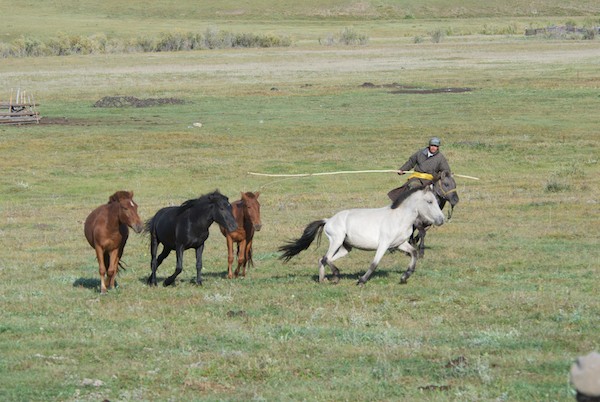
herder JM“It is a pleasure to see the Mongols in association with their horses, and to see them on horseback is a joy. If one of the wild or half-wild horses of the herd is to be caught, the Mongol rides on a specially trained catching-horse, holding in his hands an urga, a very long pole with a noose at the end. The catching-horse soon understands which horse his rider wants to get hold of, and follows it until it is cut out of the herd. Then the pursuit goes at a flying gallop over the steppe, until the Mongol gets his lasso over the pursued horse’s neck, when the catching-horse slowly but surely holds back till the wild horse is tired out, and the Mongols hurry up to saddle it. The wild horse is not let go until is has a rider in the saddle, and then it gallops, buckjumps and throws itself on the ground in the attempt to get rid of its rider. But the Mongol sits fast and the horse is soon broken.

herder 4 JM

herder 2 JMSuch horse-breaking is admirable, and the strength, swiftness and elegance of the Mongol surpass those of any ballet dancer. I once saw a Mongol ungirth and throw off the saddle from under him and continue to ride the horse bareback, bucking wildly all the time, till it was broken.

herder 6 JMHorses are the Mongol’s chief investment. He knows nothing of banks and silver does not interest him beyond the quantity that he and his women can use for ornament. But if he has many horses on the steppe, then he is a well-to-do man. Then he sits on a hillock looking out over his wealth, and counts up the many-coloured multitude of splendid animals grazing on the steppe with slim necks and flowing manes, just as a man in the west counts his notes, and when the neighing of the stallions rings bell-like over the grass lands, his eyes shine with greater pride than the ring of minted silver can call forth in us.”

Note: the horse photos in this post were taken by me last year near the Jalman Meadows eco-ger camp run by Nomadic Journeys, who does all my in-country travel arrangements. It is located in the Strictly Protected Area of the Han Hentii Mountains a few hours northeast of Ulaanbaatar. The local family who helps run the camp lives nearby and demonstrates Mongol practices and horsemanship for visitors, including riding a couple of two-year olds for the first time when I was there. They also provide horses for trekking trips.