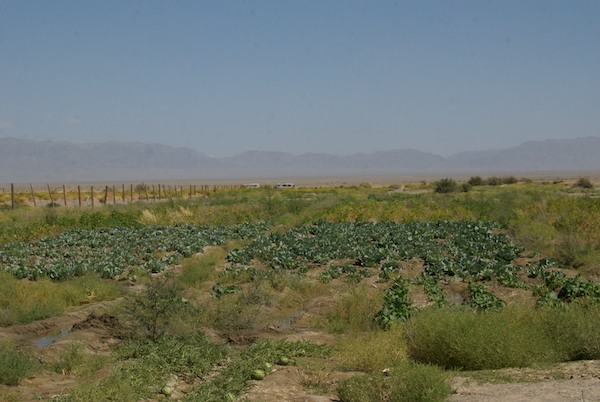
Batmaa, one of our drivers, who grew up in Gobi Altai Aimag, asked if we were interested in visiting a vegetable garden. I had heard on a previous trip that it was well-known that the sweetest vegetables grown in Mongolia came from from the Gobi. This might be my only chance to see something that, to say the least, is not associated with one of the world’s most famous deserts, so the answer was absolutely “Yes!”.
We turned back to the west and drove through an area where there were no gers, no people. Until this line of trees came into view.
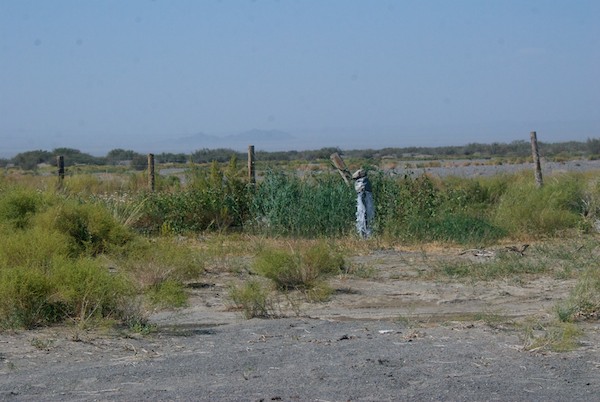
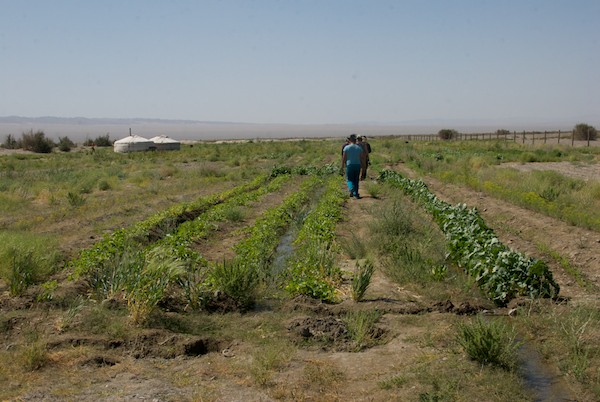
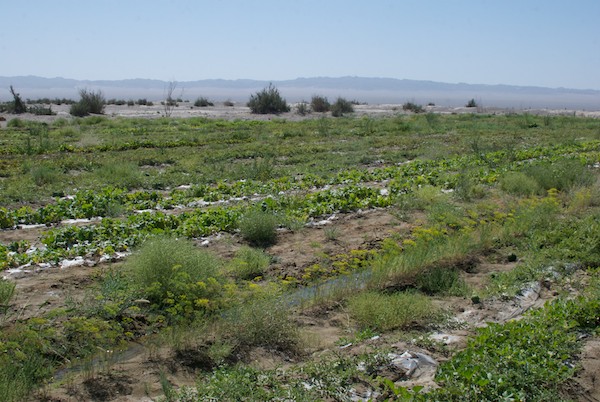
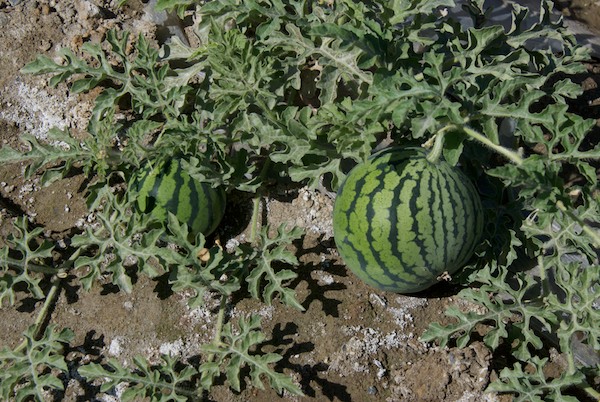
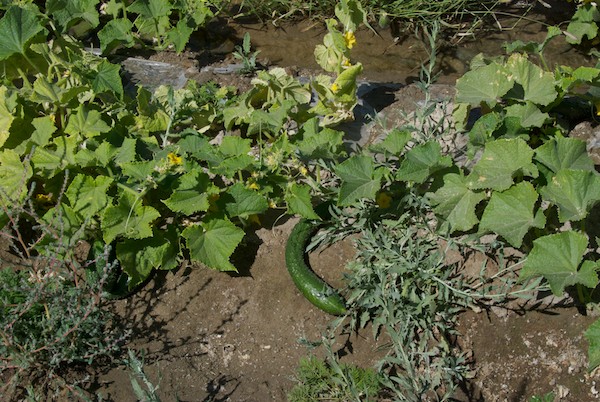
A windbreak. (I was shooting through the windshield of the van, hence the reflections)Then we saw this odd thing…and realized it had water pouring out of it.An amazing sight in the deep Gobi….water. It turns out that there is a lot of water not far below the surface in many areas like this one. This was one of three spots where water was being brought to the surface to form ponds. We all grabbed scarves or handkerchiefs, soaked them and wrung them out on our faces and heads. It was so refreshing!The vegetable garden covered a LOT of ground.As a nice touch, a small flock of demoiselle cranes flew over.Not sure what these are, but I think they’re cabbages.It was hard to get a shot that really showed how big this garden is. It goes all the way to the light-colored areas in the distance and extends to my right and behind me.But this was the big treat…watermelons! We bought some to take with us and they were the best I’ve ever had.There were also many rows of cucumbers. So the owners were successfully growing at least two very water intensive crops in one of the driest places in the world.Our gracious hostess.Between all the rows were these small irrigation ditches. Herbs like this dill were also being grown.A last look back towards the vans with the Gobi Altai Mountains in the distance.The owners live on-site in this ger.
Now it was on to the farthest point we would go in the west…Takhiin Tal.
We now drove on to one of the most famous and sacred mountains in Mongolia, Eej Hairhan Uul. I didn’t know until after we left that this mountain may be as close to Mecca as there is in Mongolia. I was told that all Mongols want to go there once in their life. I’m so glad we did, even though it was not on the original itinerary since I thought it was too far out of our way for the time we had. But our drivers knew the distances and the area and said we could do it, so I was more than happy to go there.
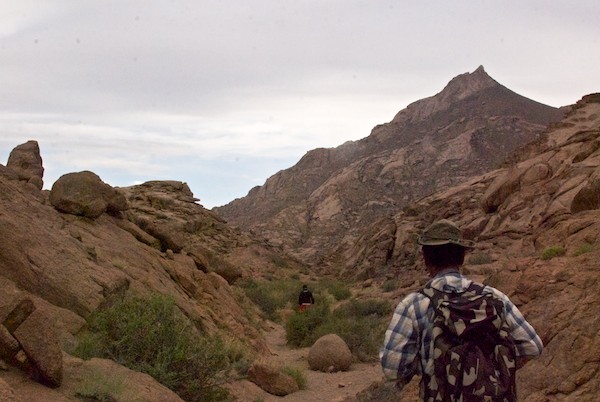
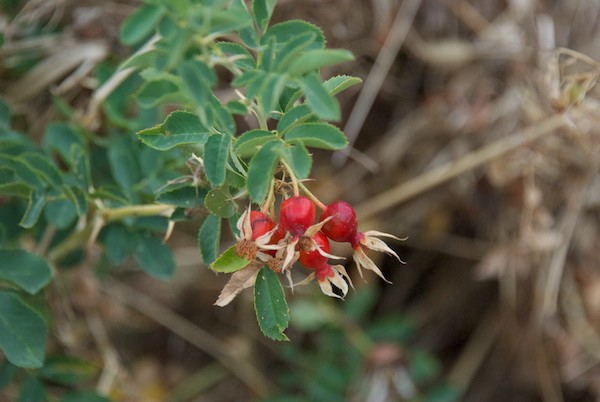
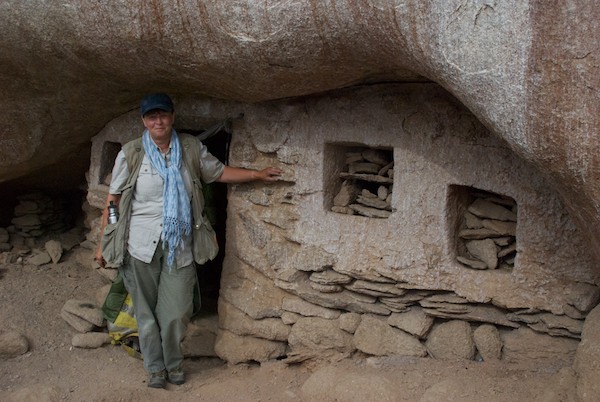
The view of the main summit from our campsite.I crawled out of my tent the next morning and was greeted with this incredible sunrise.It turned out that Batmaa, one of our drivers, knew a hiking trail that he could lead us on. So after breakfast off we went.Rosehips. We saw just a few rose bushes in one area. They were done blooming but the hips were lovely spots of color.Soon we were among fantastic rock formations.A famous lama’s retreat from the destruction of the monasteries by Stalinist Mongols in the late 1930s. It is still visited and kept in repair. It was a tight fit and the ceiling was very low, but we all managed to fit inside and sit quietly for awhile.Altar in the lama’s house.The lama’s bed.View of the exterior.A short break before the next “interesting” bit.
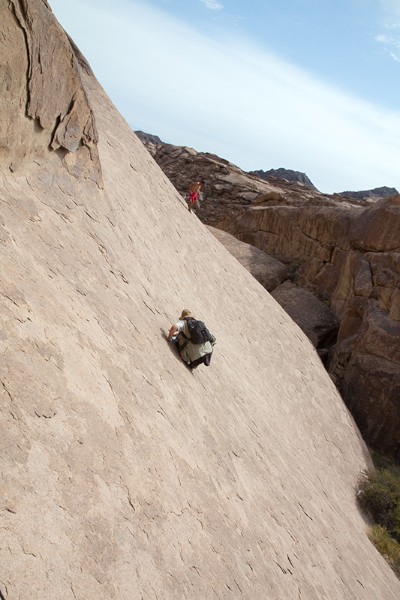
There was a long steep slope we seemed to have to go up. Batmaa, our guide/driver walked right up it. I’d done enough clambering around on rocks at Ikh Nart I thought I could do it, but…
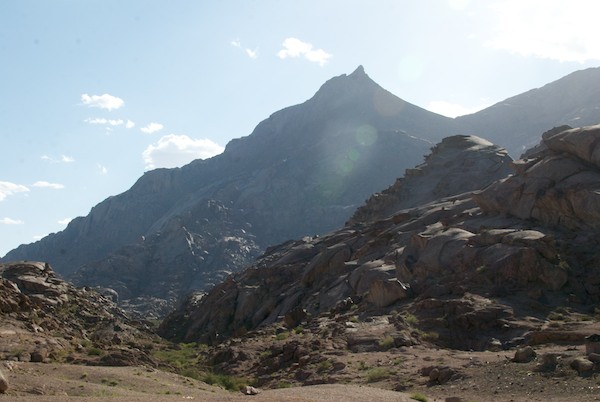
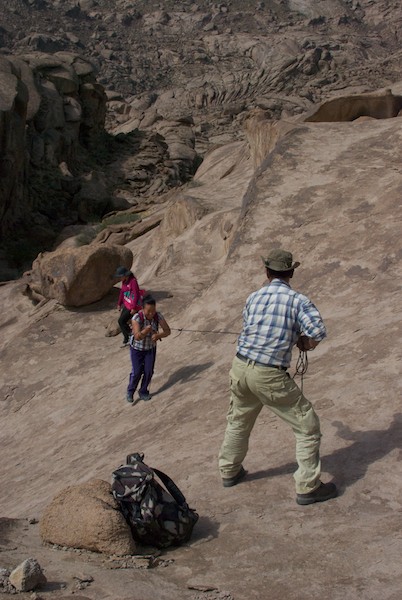
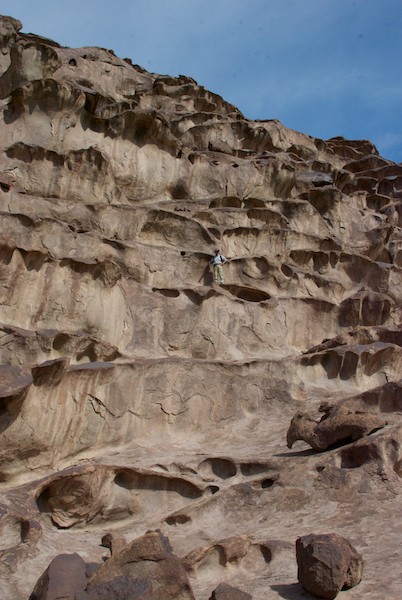
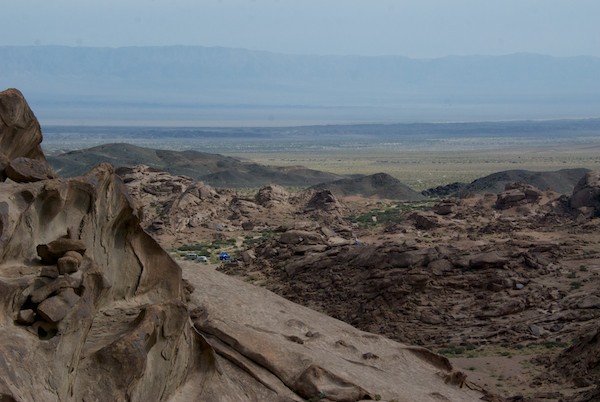
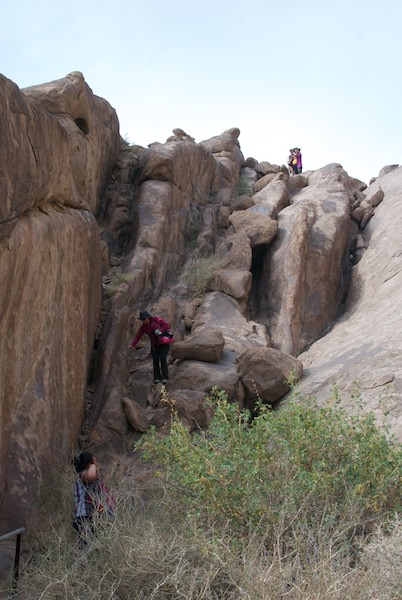
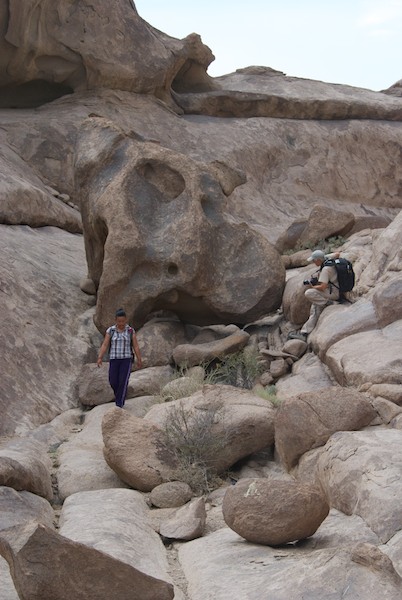
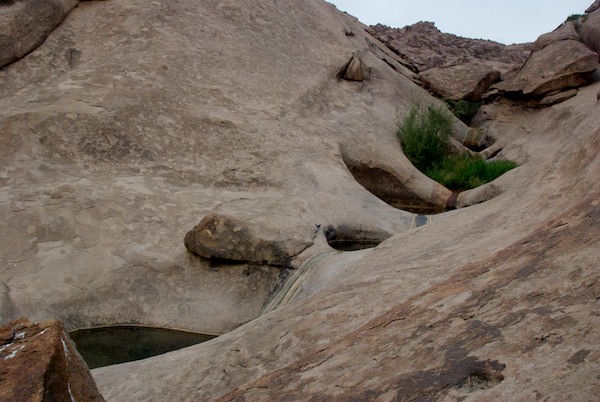
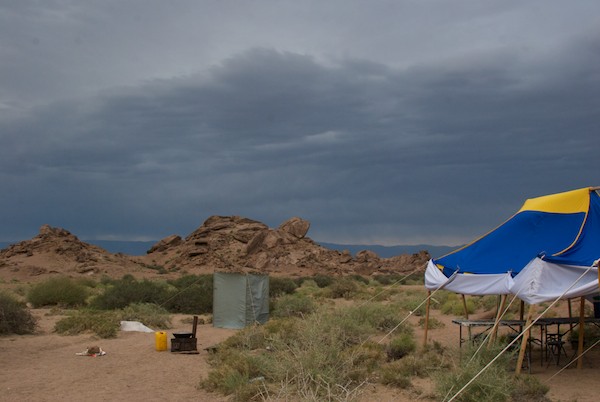
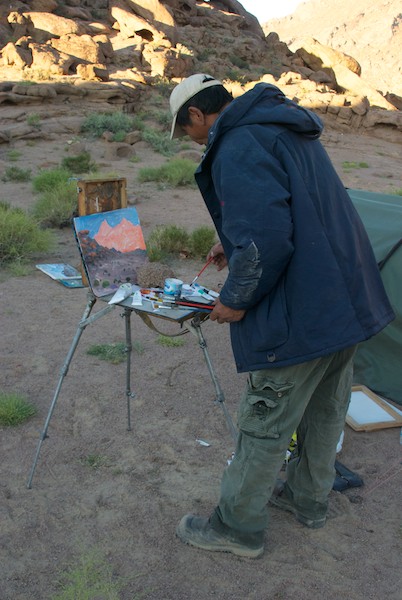
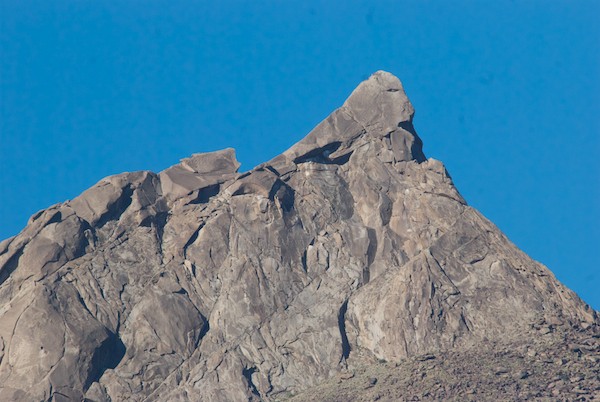
I got a little over halfway up the slope, which consists of defoliating granite, and suddenly couldn’t move. I thought about it and realized that I didn’t trust my boots and that if I moved and lost traction it was a long slide down to possible serious injury. I’d read about freezes like this happening, but it was the first time I’d gotten into a situation where it happened to me. Everyone else was still at or near the bottom except Batmaa, who you can see in the distance just standing there easily, and Magvandorj, who must have known what might happen and was ready with a sturdy cable, which he was able to toss to me. Once I had that I was fine and made to the top in less than a minute. A big thank you to Odna who got this photo and sent it to me! I was hoping someone had.Magvandorj gives Tseegii, our guide, a pull up the slope. Only part of it was really, really steep and of course that’s where I got stuck.I loved these fluted rock formations and wish I’d been able to photograph them in more interesting light.We arrived at one of the famous sites on the hiking trail, the Nine Pots, which are a series of descending pools in depressions in the rocks. It must be something after a rain to see all the waterfalls, which have left colorful mineral deposits.That’s our camp down there. You can just make out our blue dining tent and the two grey Russian vans.Some of the type of rock terrain we hiked over, across and up and down. From bottom to top: Tseegii, Odna, TugsooTseegii and Sharon Schafer and A Big Interesting RockAbove the first pool we found more of the series of nine.Wildlfe at last! A Mongolian agama lizard (Laudakia stoliczkana)Mineral deposit “falls”More of the Nine PotsOvoo“Tonsil Rock”. We descended through an area with rock formations that were reminiscent of a variety of things….an elephant and body parts among them. They are the focus of prayers and worship, so are festooned with khadag (the offering scarves), tea bricks, candy, empty vodka bottles, medicine bottles and more.“Horse Hoof” rock, so called because the depressions resemble those that would be made by horses passing through.Almost back to camp.Oncoming weather front. The wind was coming up fast and hard. On the right is our dining tent. The green enclosure was our shower. I was one of the lucky ones who got clean before the wind became too strong for it to stay up.The wind kept blowing but it didn’t stop Magvandorj from painting.Sunset at Eej Hairhan Uul.Sunrise. Odna was up capturing it, too.Magvandorj got his set up done the previous evening, so he was ready to catch the short-lived intense morning light.We were starting to pack when Tseegii came out of the kitchen tent holding a tablecloth asking what this was. She’s never seen a scorpion before and, although I knew instantly what it was, I had never seen a wild one either. After the photo op it was set down and allowed to go about its business.During a short stop as we drove on to visit an area in the Gobi with vegetable gardens and orchards, I got a shot of the very top of the main summit of this very special mountain.
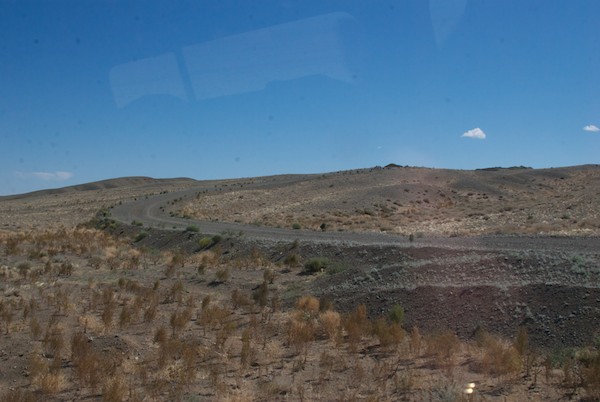
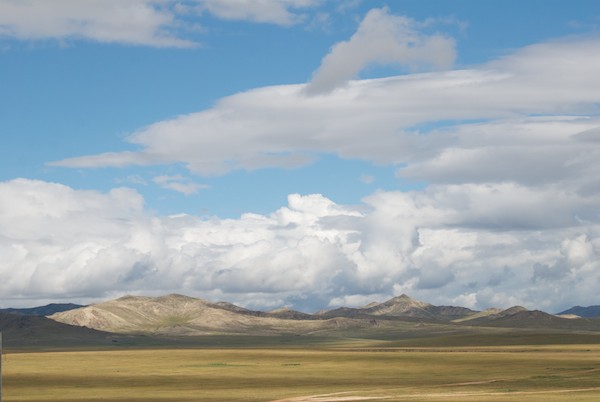
Now the long run to Takhiin Tal in the west began. We traveled through the deep Gobi with the Gobi Altai Mountains to the south. No paved roads, but mostly good earth roads, a lot of it graded and well-maintained.
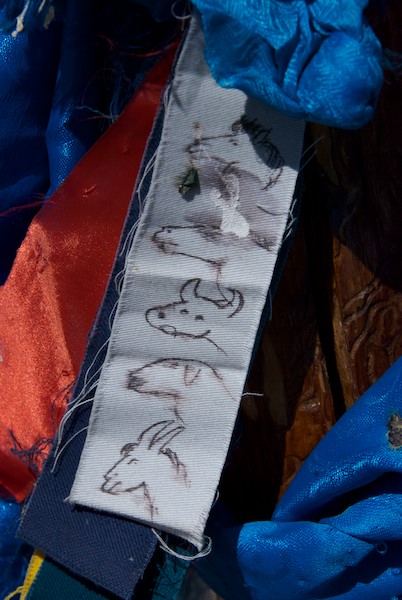
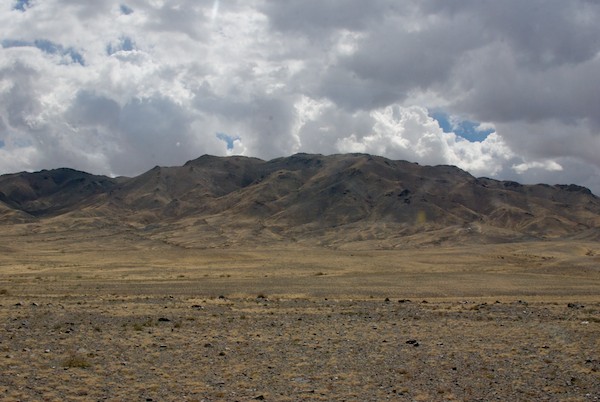
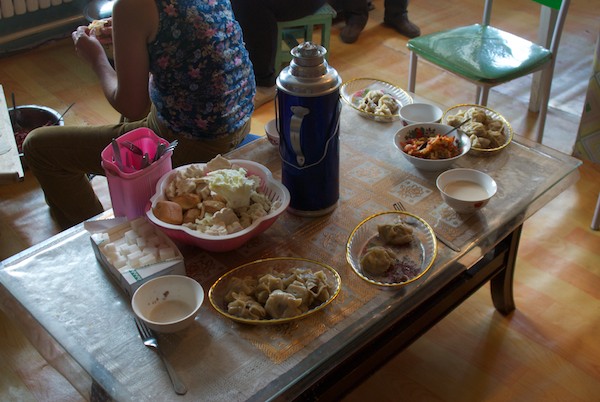
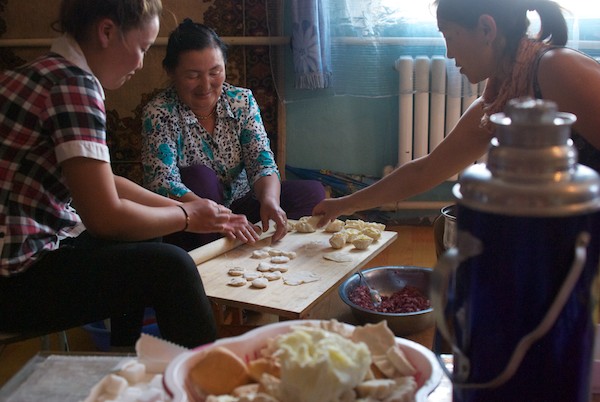
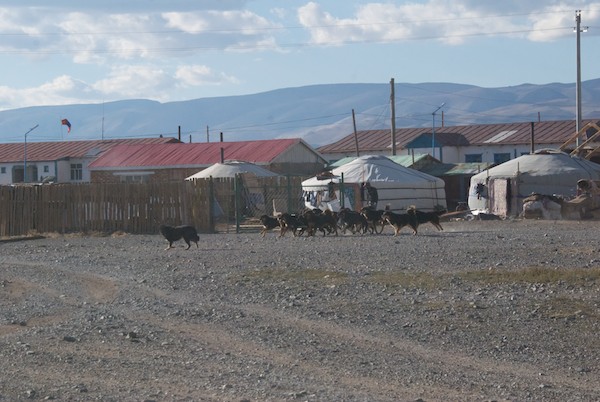
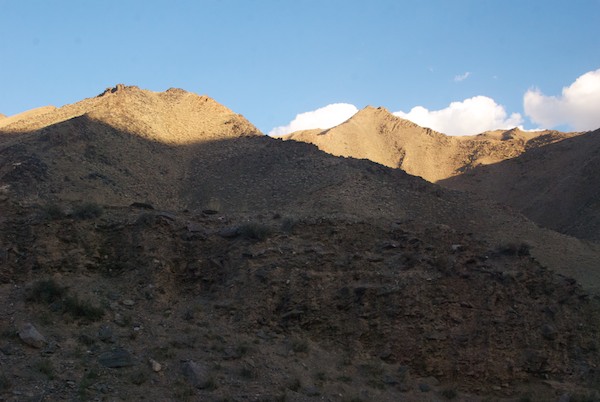
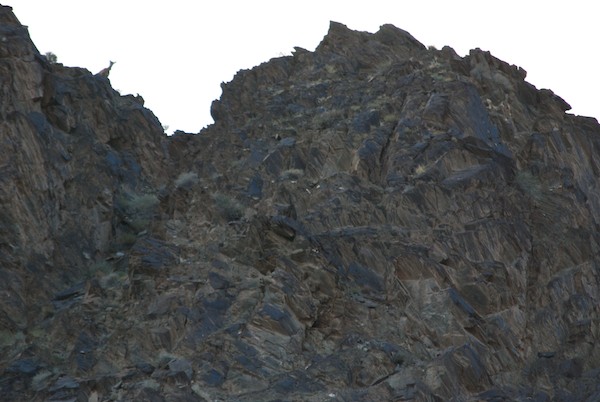
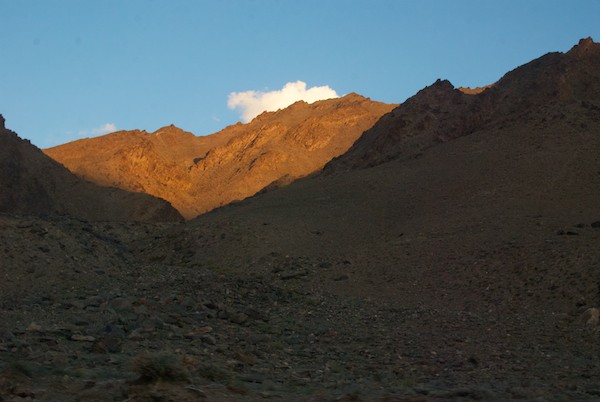
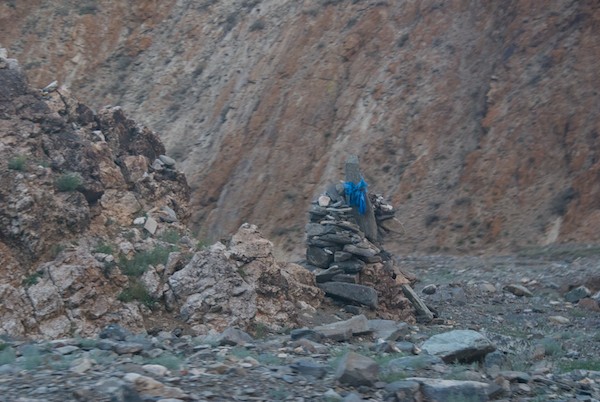
Memorial ovoo, well-known in Mongolia. It was built by a son in memory of his father, a very famous wrestler who died in a tragic accident.The Five Snouts. This little ribbon with hand-drawn heads of the five species of livestock the Mongols herd was unlike anything I had seen at any other ovoo.Good earth road.Gobi Altai mountains.We turned south in the late morning and stopped for lunch here.The boundary of Chandmani soum and a photo op!We dropped down into a very large valley set between the mountainsOur next stop was the soum center of Erdene. One of the drivers need a part for his van. It turned out that our other driver had relatives in town and we were invited to lunch! Which included all my favorites: buuz, aruul, urum, suutaitsai (steamed mutton dumplings, dried curds, clotted cream and milk tea). It was a feast.Not only did we get an amazing lunch, but the women made buuz for us to take with us.Finally, it was time to go. On the left is Batmaa, who relatives these are.A shot of Erdene with the typical mix of gers and permanent buildings. The Mongol dogs, called bankhar, are gathered around a female in heat. I got quite a few photos of this canine domestic drama.On the road south again, we passed this very large herd of sheep and goats. Sustainable land use in a big issue in Mongolia. People can now have all animals they want, which was not true in socialist times. In many places the land is badly beaten up and overgrazed now.Into the mountains again. At this point I was wondering what we would see. Would there be snow leopard habitat to photograph? These hills went on for miles and were definitely not what I have seen images of snow leopards in.But rather suddenly, the landscape became much more rugged.Now I knew. This had to be snow leopard country. I had our guide ask Batmaa, the driver who grew up in the area. He confirmed that the big cats are found here.We stopped for a pee break and so Batmaa could look for a knife he’d lost three years ago. I had my camera with the 28-300 lens with me as I went off to find a large rock. Suddenly people called me back. I came running to them, looked up and, wow. there was a Siberian ibex nanny looking down at us.I ran to the van, got the camera with the 80-400 and got some pretty good shots like this one, considering they were way, way up on the ridgetop.A last look before they vanished.As we continued down the canyon, it was magic light time on the mountaintops.We passed a small ovoo.There was a road of sorts, but with lots of rocks. The vans got us through just fine.As we came out of the canyon, this gorgeous sight met our eyes. Our destination for the next day….Eej Hairhan Uul, the sacred mother mountain.
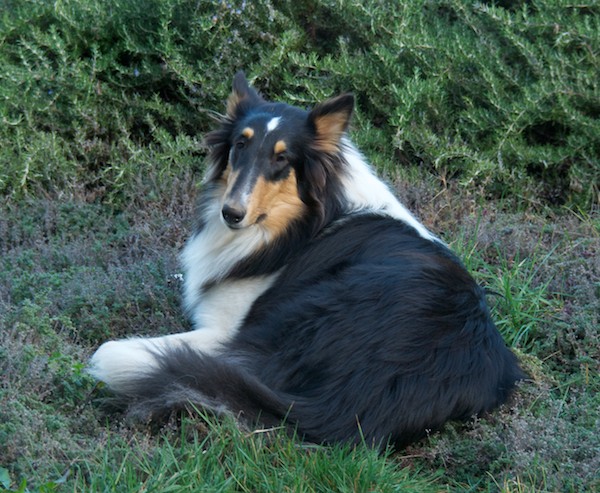
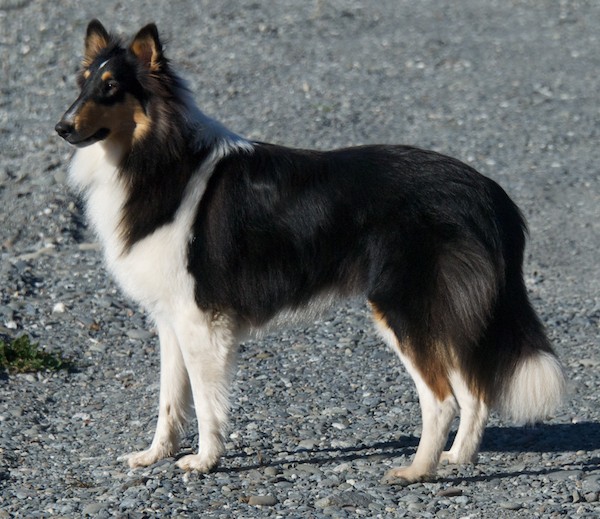
Hailey, our new 10 month old collie girl from Romany Collies
We haven’t had winter yet here on the north coast of California. The storm door has never opened and there’s been, until today, only one round of rain in our rainy season. It was really cold for a few weeks, but recently we’ve had warm, record-setting days when it’s gotten up over 70F.
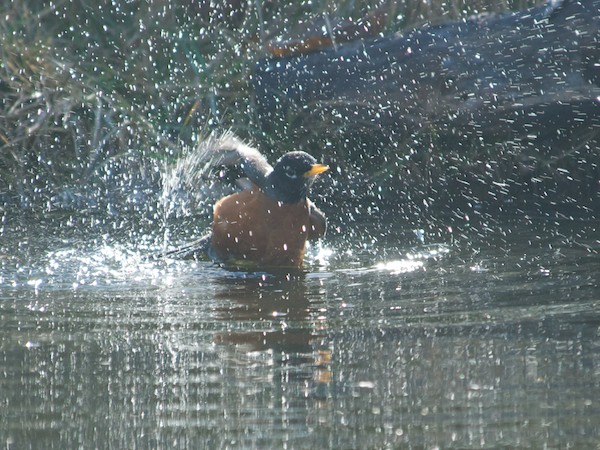
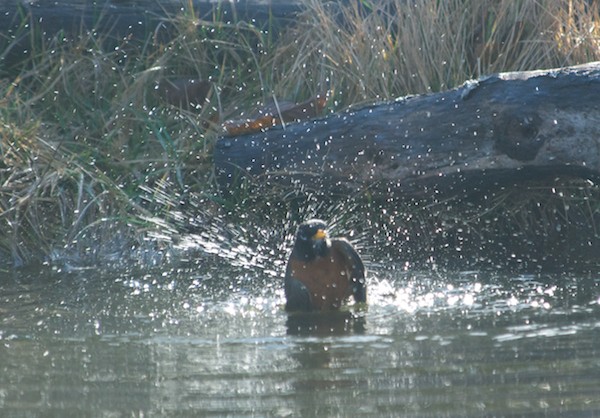
But our winter birds are around and I got some nice photos of them bathing in our pond a few weeks ago. I’ve posted some of my favorites.
The big news is that we have a new collie! Our dear old collie boy died unexpectedly back in October and it was a hard loss for us. Being without a collie in the house left a big hole in our hearts. After searching around for a responsible breeder we found Romany Collies, located up near Portland, Oregon. I contacted them and it turned out that they had exactly what I was looking for….a older rough collie puppy. We brought her home on Janauary 13. Hailey is 10 months old, which is perfect. She’s a good girl with a fun personality, a solid temperament and is as sweet as can be. We love her lots.
Hailey on her first outing to Redwood Creek. Her recall is already reliable enough that we could let her off-lead.She also is pretty entertaining. This is known as “Collie Pose” (although I know other dogs do it too).
We like to sit down by our pond in the afternoons after work and during the day on the weekends. A variety of birds are often around including, in the winter, a black phoebe, flickers, juncos, sparrows, robins and chestnut-backed chickadees. I recently caught the last two at bathtime. The robin was really enthusiastic!
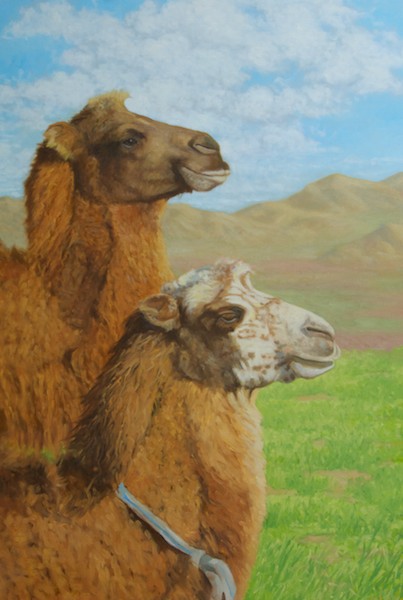
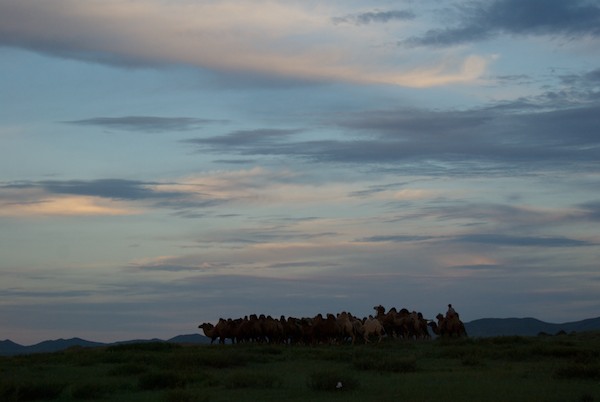
I’ve seen these camels a number of times now at a ger camp that I stay at, Arburd Sands. Nowhere else in my travels in Mongolia since 2005 have I ever seen one with a white face like this. He’s big, too. His legs have the same kind of spotted markings. These two were part of a large group belonging to a local herder. They were grazing and hanging around quite near to the camp. I sat and sketched them one morning along with taking a lot of photos.
Here’s one of the pages of sketches I did in 2012 which includes the white-faced camel in the upper right.
And here’s the step by step of the painting:
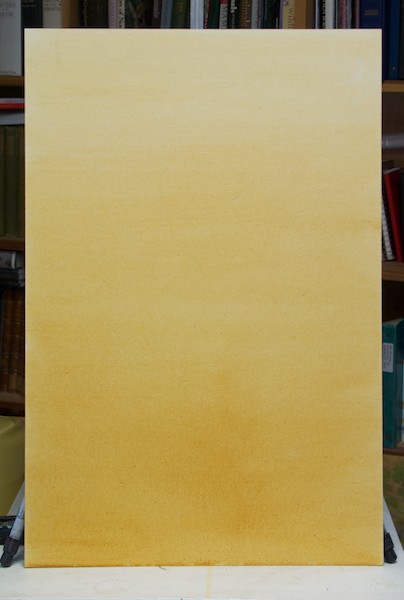
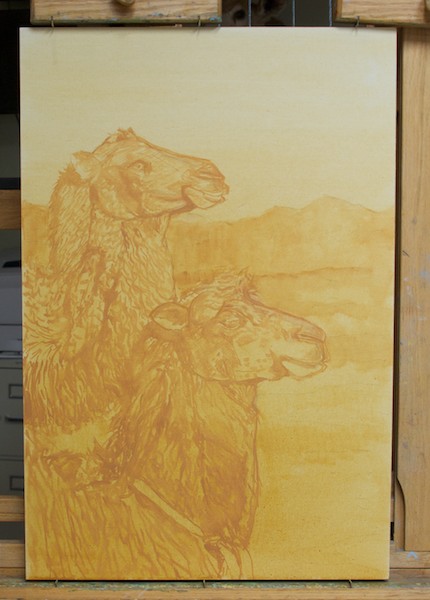
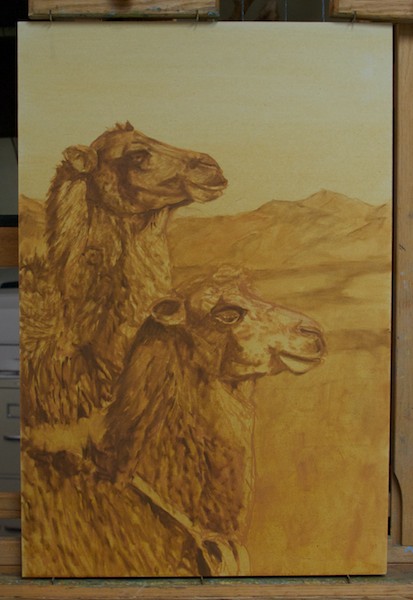
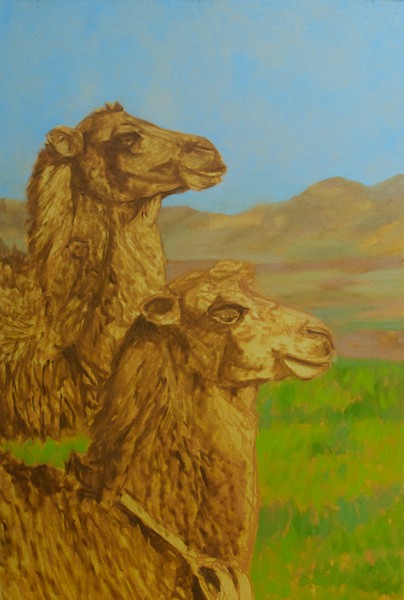
The drawing and value study; 14×11″ graphite on drawing paperI drew a one by one inch grid on a piece of tracing paper to do a traditional graphite transfer to the canvas panelHere is the enlargement grid and drawing transfer. It doesn’t have to be exact, just close enough so that the elements are the right size and in the right place. I use a transfer sheet that I made myself by covering the back of a piece of tracing paper with lead from a soft pencil. I use a 7H pencil to do the actual transfer tracing.The Raymar canvasboard panel tinted with raw sienna. You can barely see the lines of the transfer if you look closely.The initial brush drawing of the camels.Now the background has been added.The next step is to bring up the dark values of the camels, referring to my drawing as needed. I’m already indicating the wooly texture of their coats.Initial color lay-in of the background.First color pass on the camels. I correct the drawing as I go, if necessary. I decided that I really didn’t like the eye of the brown camel, so I went back to my reference and found another camel whose eye shape looked better.I mostly finished the camels in one long sitting, but still went back and tweaked the heads a couple of times. I’ve now added clouds to the sky. I had originally planned to leave the sky just blue, but it didn’t feel right. I’ve also modeled the mountains in the background and started to work on the grass.Once again: Bactrian Camels, Bayan-Onjuul Soum, Mongolia oil 30×20″
Our campsite near the shore of Boon Tsagaan Nuur; the dark square to the left is our toilet enclosure
My last post about the Expedition, which you can read here was about the leg of our journey that took us to the Gobi lake, Boon Tsagaan Nuur. Today’s post is an album of the birds we saw and that I photographed. We also had time to get our paints out and do some location work.
There isn’t a good standard bird guide yet for Mongolia, although one is being prepared, so I sent a batch of photos to Axel Braunlich, who is probably the leading expert on birds in Mongolia. He was kind enough to take the time to identify them for me. If you are interested in birds, and Mongolia is one of the world’s hotspots for birding with 427 species (you can find a list here), I highly recommend Axel’s blog “Birding Mongolia”.
All of these species, except the bar-headed geese, which I had seen on the Tuul Gol (river) near Hustai National Park in early May of 2005 on my very first trip, and ruddy shelducks, were new to me.
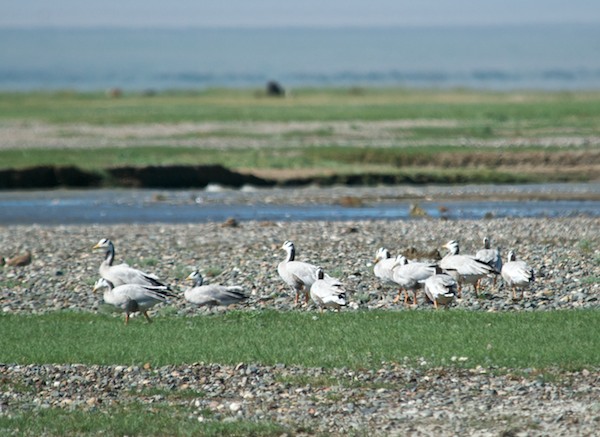
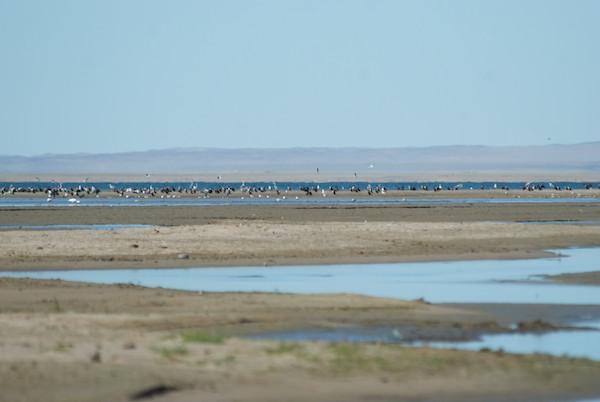
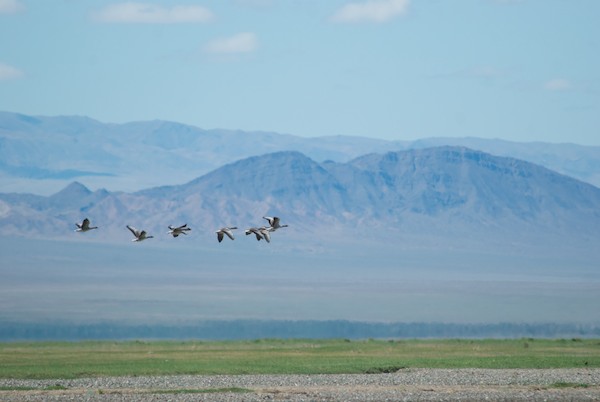
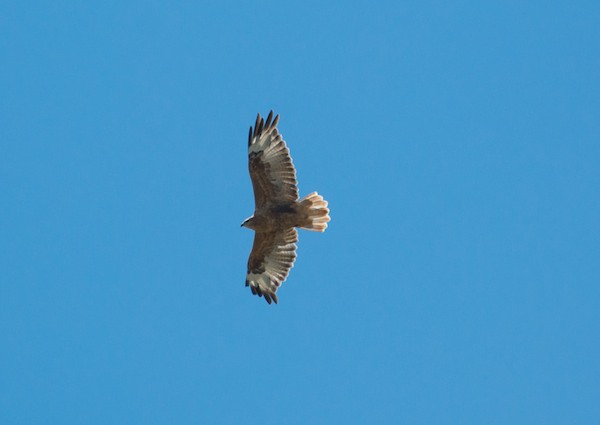
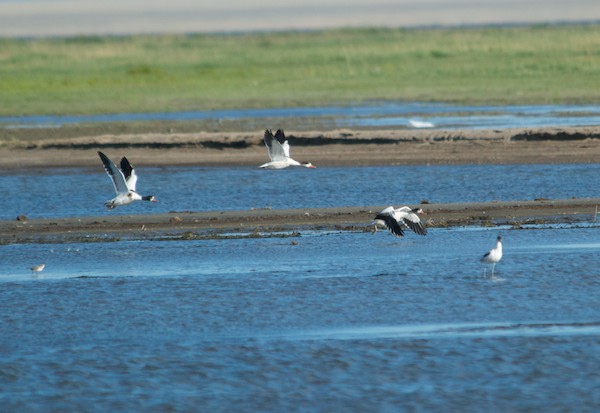
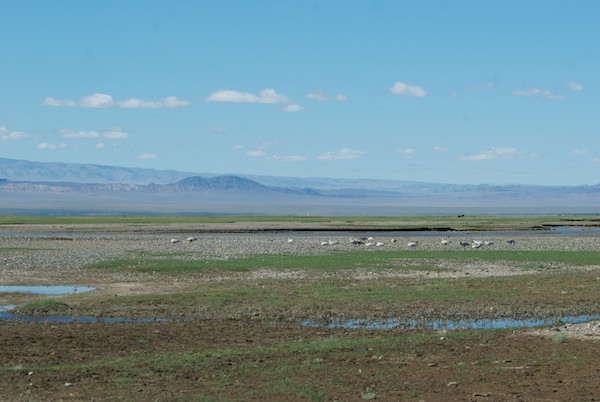
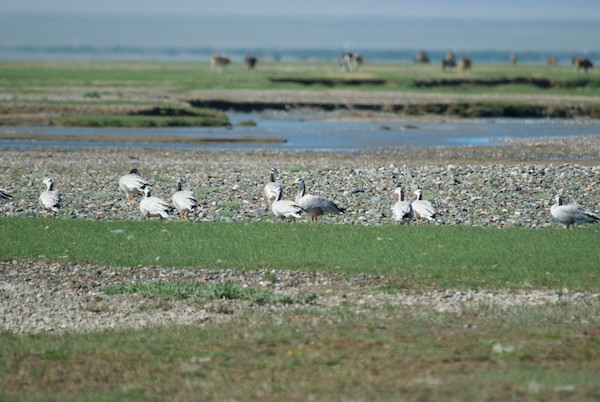
As we arrived within sight of the lakeshore, we spotted bar-headed geeseThese geese are famous for their migration route…over the Himalayas at altitudes approaching 30,000 ft, the same as an airliner. One can imagine them landing on Mt. Everest (28,000+ feet) and waving as a plane flies over.Once down on the lakeshore we saw, at a tantalizing distance, this large group of birds on a sand bar. Unfortunately the ground between them and us was ultimately too soft and there were also flood-fed streams. Sharon and Odna did their best, but finally had to turn back. I was able to make out great cormorants, eurasian spoonbills, gulls and terns, plus some ruddy shelducks in the water. Yesterday, as I looked over my photos to make my choices for this post, I saw that there were at least sixteen grey herons out there also.Wild greylag geese flew by at one point.There was also a long-legged buzzard.
It was interesting and a little odd, since I live on the north coast of California, to see shorebirds in the middle of the Gobi.
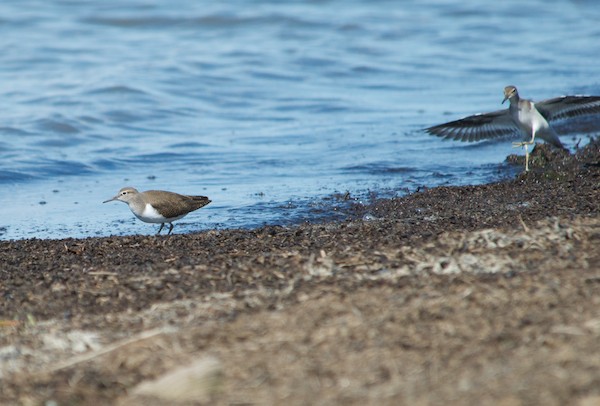
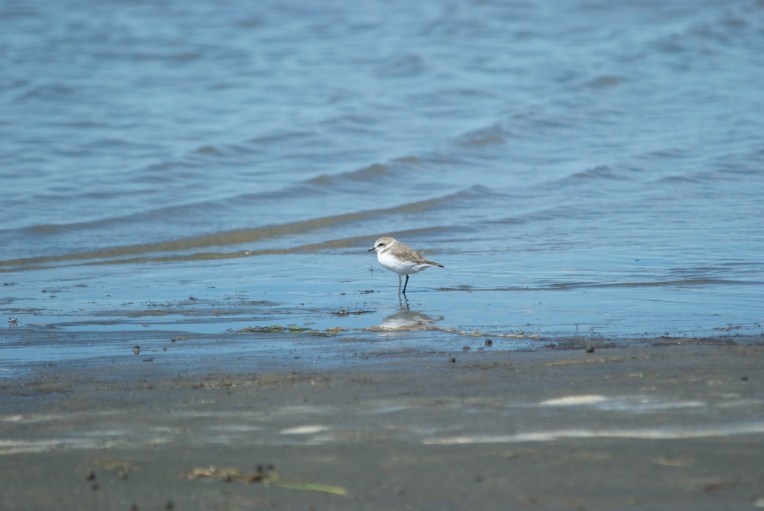
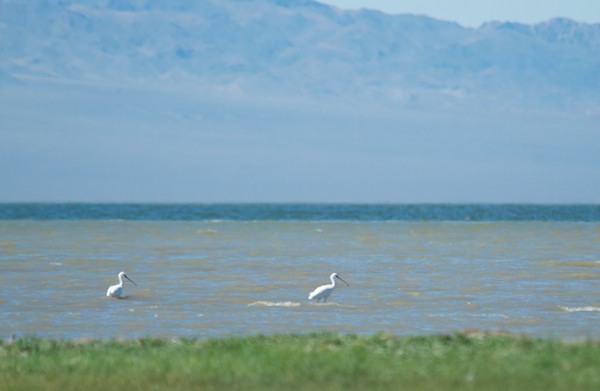
Long-toed stintCommon sandpiperLittle-ringed ploverKentish ploverCurlew sandpipers, juvenilesMongolian gullBlack-headed gull, juvenileCommon tern; adult and juvenile (who was begging for food to no avail)White or eurasian spoonbillsPied avocetsRuddy shelducksCommon shelducks
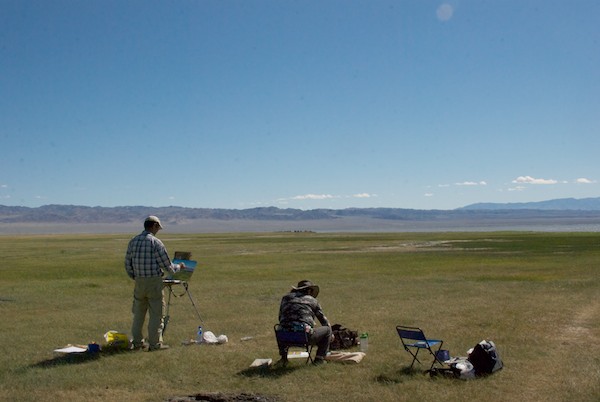
We didn’t just birdwatch, but got out our painting and camera gear.
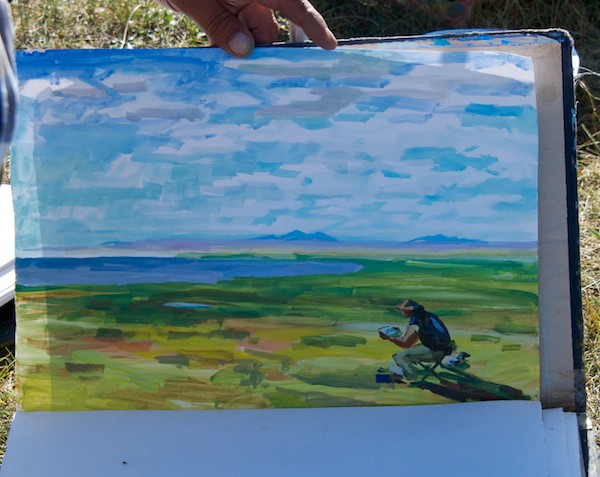
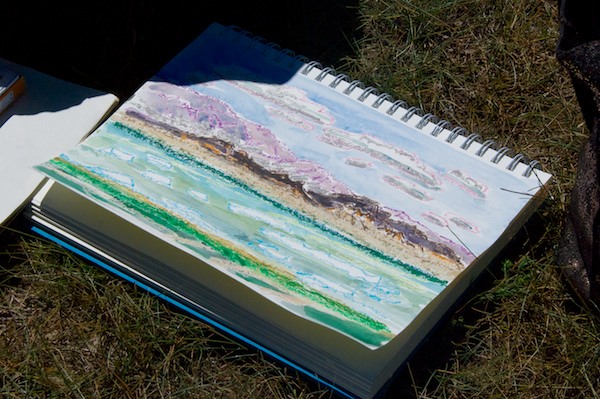
Magvadorj and Tugsoyun taking advantage of the afternoon lightLittle did I know until he was done that Magvandorj was doing a painting of me painting.Tugsouyn’s expressive interpretation of the sceneSharon and Odna took a stroll down to the lake to enjoy the sunsetThe next morning, which was, shall we say, a bit brisk, found Magvandorj up catching the morning light.Sunrise at Boon Tsagaan NuurA local dog showed up as we broke camp, hoping to find some food that had dropped to the ground. He’s the traditional herder’s dog, called a “bankhar” and is in his short summer coat.Last photos of the lake before departure.
It wasn’t easy to leave this wonderful place. But, by golly, through flooded rivers and streams and a long detour, we got there and were able to have the best parts of the day, afternoon, evening and morning, when the light was the best for painting and photography and the birds were active. Now it was time to head west and farther west with the Gobi Altai Mountains paralleling us to the south. At some point we would turn south and cross over them through….snow leopard territory!
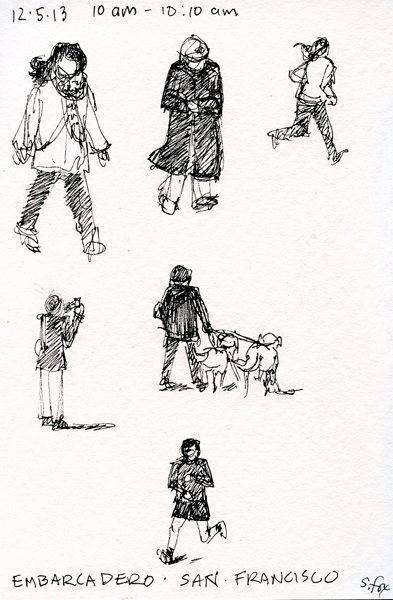
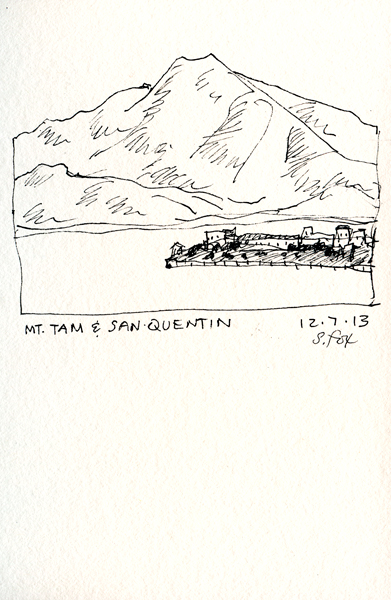
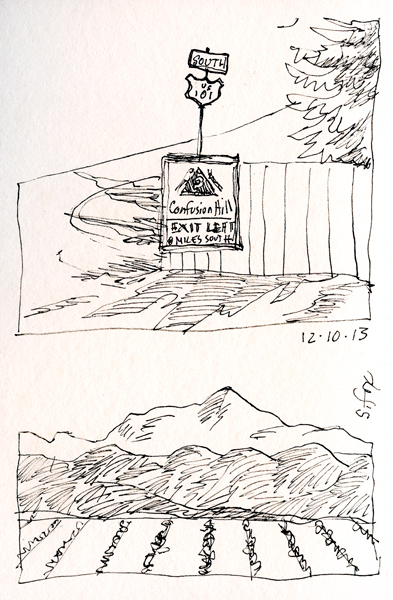
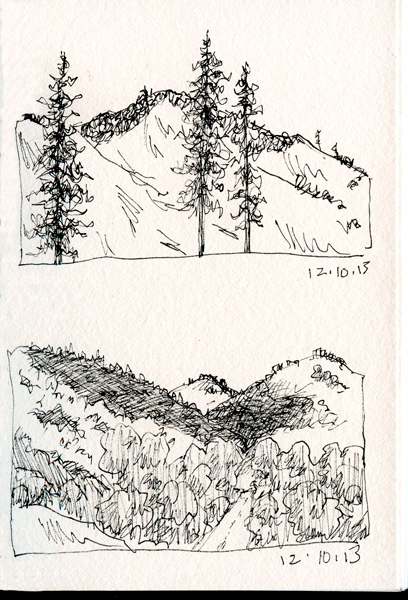
We recently took a trip down to the San Francisco Bay Area. Inspired by Dinotopia author James Gurney’s great location work, I decided to try something new for me….quick sketching people while sitting in the van for the 40 minutes that my husband was in a business meeting and also sometimes even quicker sketching as we traveled on Highway 101.
It was fun! And I found that it’s a great way to work on developing one’s visual memory.
Here are two of James Gurney’s posts that particularly caught my eye and got me thinking about trying it myself: “Tiny Landscapes” and “While waiting for lunch…”, which demonstrates that anything can be an interesting subject if you just look at it in a fresh way.
As you can see, I didn’t try to add any color to these first attempts. I kept it simple: a 7×5″ Pentalic Nature Sketch sketchbook, which I chose because the paper is heavy enough to take a watercolor wash and a .03 Micron Sakura pen. None of these took more than a couple of minutes, other than some of the landscapes in which I got the shapes drawn as fast as I could and then filled in foliage and did a little tweaking as we traveled on. The Confusion Hill sign sketch was done while we filled the car with gas. My self-assignment was to find something, anything, to draw within my field of vision.
As you can see, it wasn’t exactly a warm day by the Bay.
After a wonderful stay at Arburd Sands and Bayan-Onjuul Soum, it was time for the Expedition to start in earnest. Our first destination was Boon Tsagaan Nuur, a lake deep in the Gobi that is known for the excellence of its birdwatching opportunities, both in the number of birds and variety of species.
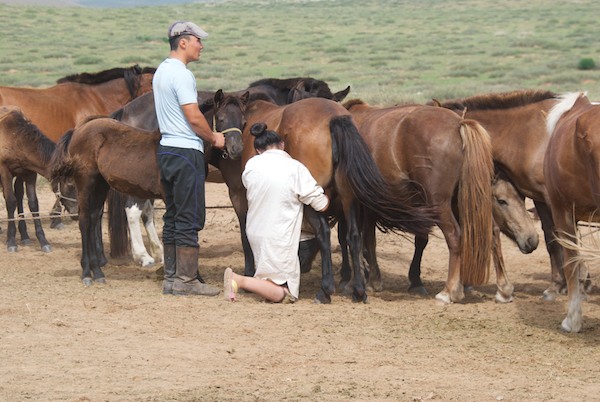
We headed west across country to join up with the main southern east-west road, parts of which are now tarmac. We hadn’t traveled for long when we came upon a herder’s ger just in time to see them milking their mares.
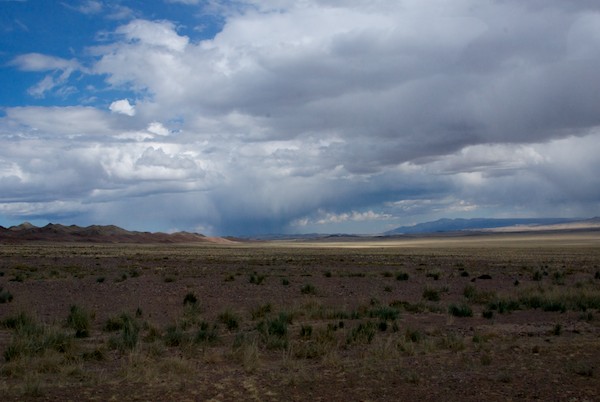
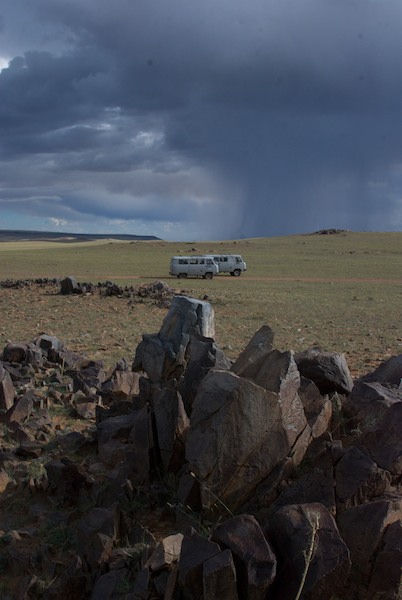
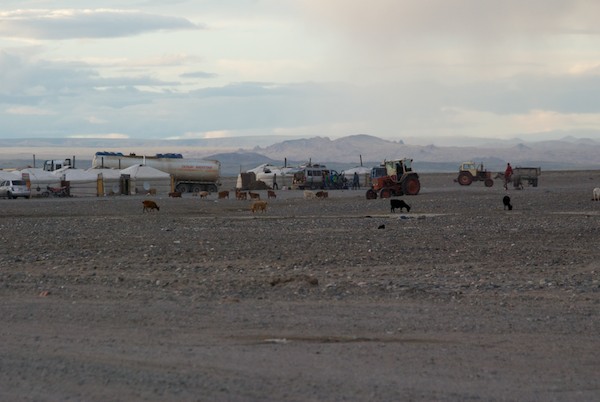
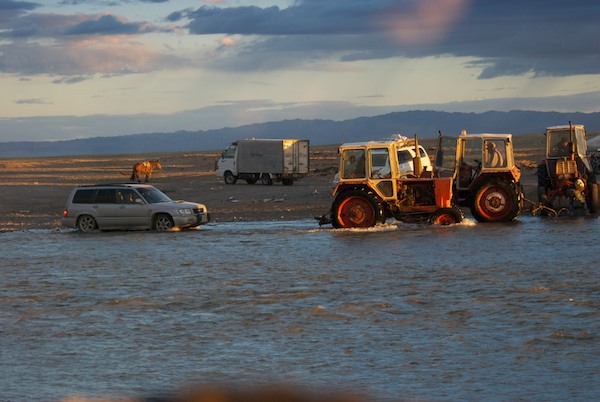
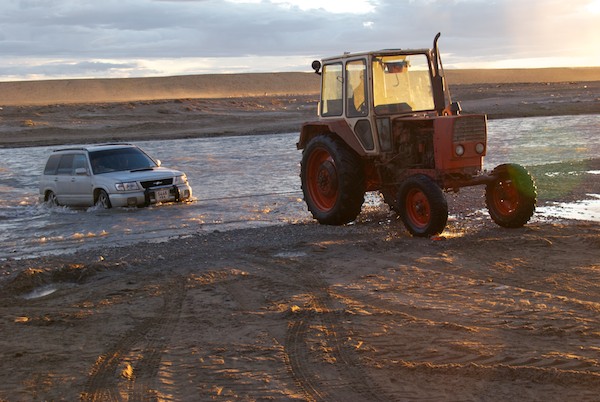
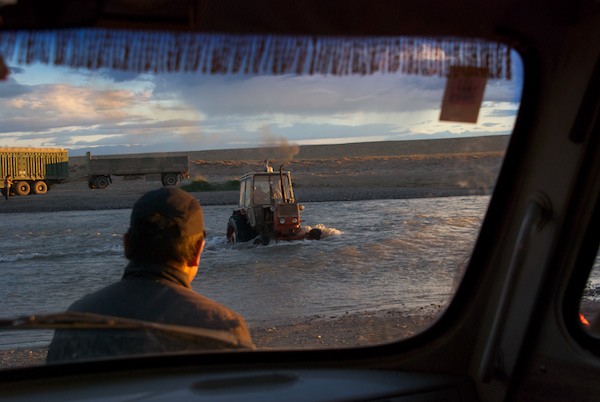
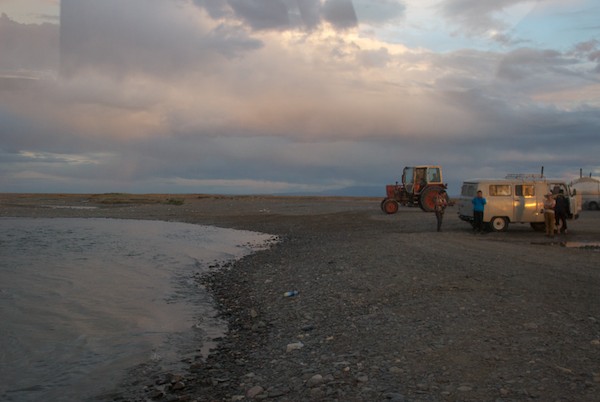
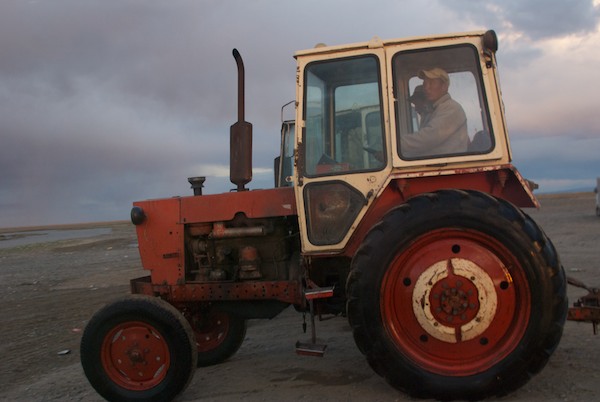
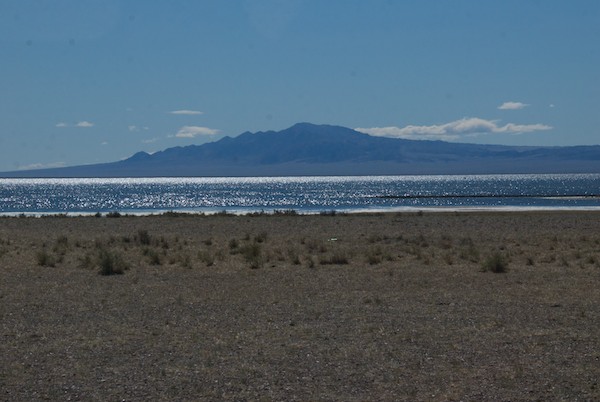
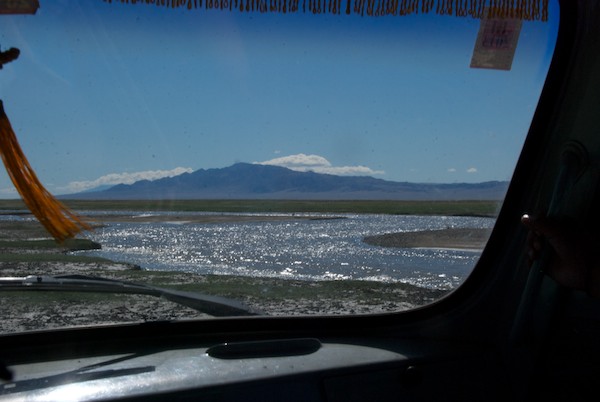
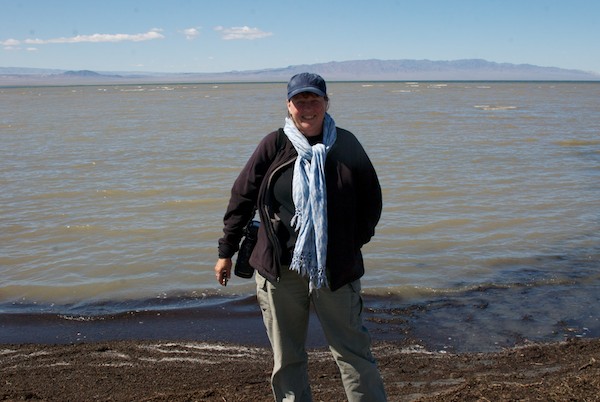
Milking the mares. The foals are tied to a picket line so that their mothers won’t go far and held near the mare so that she will release her milk. Enough is left for the foal to get a good meal. This process is repeated every two hours, 24 hours a day for weeks or months. One result is the famous fermented mare’s milk “airag”, which to me tastes like fizzy yogurt. I like it a lot.Sharon takes a photo of Tugs-Oyun, who is riding in the other van. We all loved her spiffy yellow glasses.Getting water from a local well with the assistance of a young local. An adult had entrusted the keys and the job to him, which he carried off in style.Camping near ArvayheerSharon shows Magvandorj how she photographs flowers close-upEn route to BayanhongorOvoo en route to BayanhongorWhen we arrived at the place to get our water barrel refilled in Bayanhongor, we found that this young boy and his horse-drawn water cart was there ahead of us. A small gift of candy and he was happy to pose for photos. Many of the residential areas of the city are ger districts with no running water. People fetch it themselves, pushing or pulling a wheeled metal frame that holds a water barrel. Or they can have someone with a horse cart deliver it to them.Driving south out of Bayanhongor, which is located at the base of the Hangai Mountains, we traveled through a long stretch of uplands, passing a lot of interesting rock formations, but no gers and relatively few livestock.Reaching the Gobi, we saw the occasional ger. There was rain across a wide swath of the horizon. As you can see, the Gobi is gravel, not sand, although there are isolated dune complexes.We came to the soum center of Baatsagaan, located not far from Boon Tsagaan Nuur. No petrol available and I think at this point the drivers found out what was ahead of us…A lot of rain in the Hangai Mountains had poured down into the Gobi creating temporary rivers and streams. This was between us and the lake. So close, yet so far, since neither of our drivers could find a spot they felt confident taking the vans across. Now what?Batmaa, the driver of the van I was in, grew up in this part of Mongolia and knows it well. He led the way north for quite a distance and then west. We passed really narrow spots like this and I wondered why we didn’t just zip across. But I learned many trips ago that things are often not as they appear to a non-Mongol and that we were going far out of our way for a reason. I had my suspicions though….So benign looking and so tempting….And then we came to this, clearly an established and well-organized operation of some kind.And of course the answer was that Batmaa had brought us to the ford. I would guess the only one for many, many miles around, judging from the number of tractors, gers, and vehicles waiting to cross.We got a preview of what was in store for us.Uh. Oh.Through the deepest part.Piece of cake, right?Now it was our turn. Here’s comes “our” tractor.Last minute directions/instructions. Sharon and I made sure all our gear was up off the floor, just in case.Here we go.Mid-stream.On the other side. Whew.Our hero.On to the south and then east in the setting sun.We drove on and on, hoping to get back to the lake, but finally gave it up and set up camp in the dark with a stiff cold wind blowing. Here we are the next morning. Not too bad for just picking a spot at random. That is part of the Gobi Altai Mountain range to the south of us.Catching up on my journal. Did I say it had been windy?Packing up. The pump sprayer was for both washing our hands and, with an enclosure set up around it, our shower. It worked great and one could get hair and body washed with only a half liter of water, important now that we were going to be traveling through countryside where places to get water were at least a day apart.At last! Boon Tsagaan Nuur!A final stop so that our drivers could consult with local herders. Solar panels and satellite dishes are very common sights now at herder’s gers, along with motorbikes, mobile phones and small flat panel tvs. But this is still a tough environment to live in and only the knowledgeable and smart thrive.We drove along the north side of the lake back to the east end, where the birds would be.The classic landscape of Mongolia….We hadn’t even gotten to the lake yet, having come to a series of interlaced streams we needed to cross, when we spotted bar-headed geese!This species is famous for its ability to migrate from Central Asia to India. Over the Himalayas. At close to 30,000 ft. Which is the height an airliner can fly. Got some great photos from which there will be paintings.One more river to cross. Our van stalled out in the middle, but Batmaa got it started again and we made it across.Our cook, Soyoloo, and guide, Tseegii, walking down to the lake.We had only meant to stop this close to the lake for lunch, but decided to camp overnight. The mosquitos weren’t bad at all, just annoying for a relatively short time.The “I was here” photo. And was I ever glad to be. You’ll find out why in the next installment.









































































 Susan Fox, American Artist