I arrived home from my seven week trip to Mongolia last Tuesday. I’ve been alternating catching up and doing….nothing or at least nothing more strenuous than watching a baseball game. The first order of business was to download and start categorizing the over 8000 images I shot on the trip. I always feel better when everything is safely on the hard drive, backed up to the remote Vault and visible in Aperture.
My final days in Ulaanbaatar were a bit of a whirlwind. The art event at ArtiCour Gallery was great! There was a steady stream of people all day, some of whom I knew. There was a lot of interest in the WildArt Mongolia Expedition and at least three artists expressed an interest in going next year. Many art students came by. The director of a Mongolian magazine which publishes articles on artists stopped in and said that they want to do an article on my and my work! Even more special to me personally, a number of very prominent Mongol artists attended, all of them members of the venerable Union of Mongolian Artists, which was founded in 1944. Two of them invited me to visit their studios. But that will be a tale for another post.
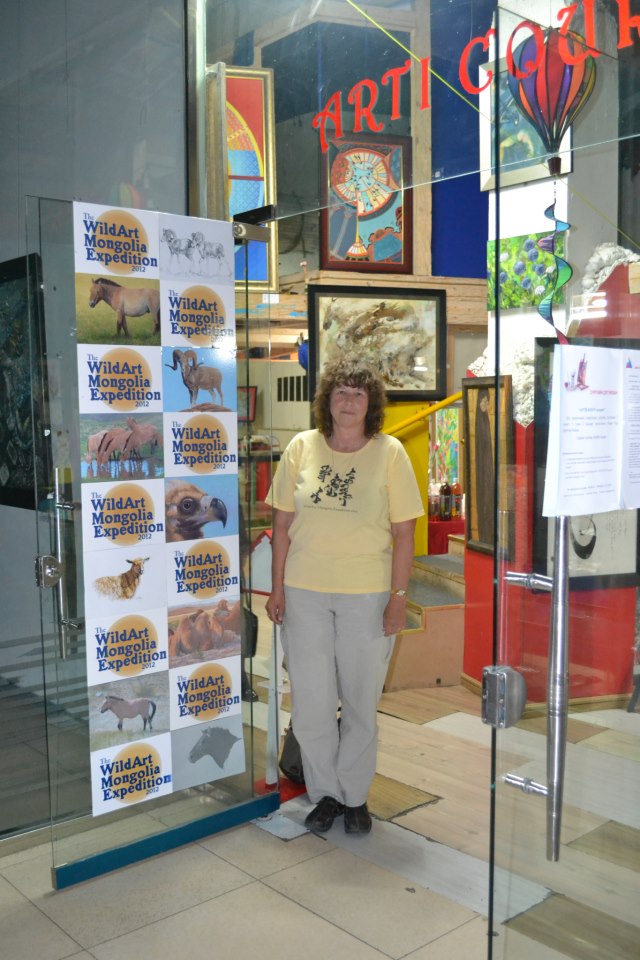
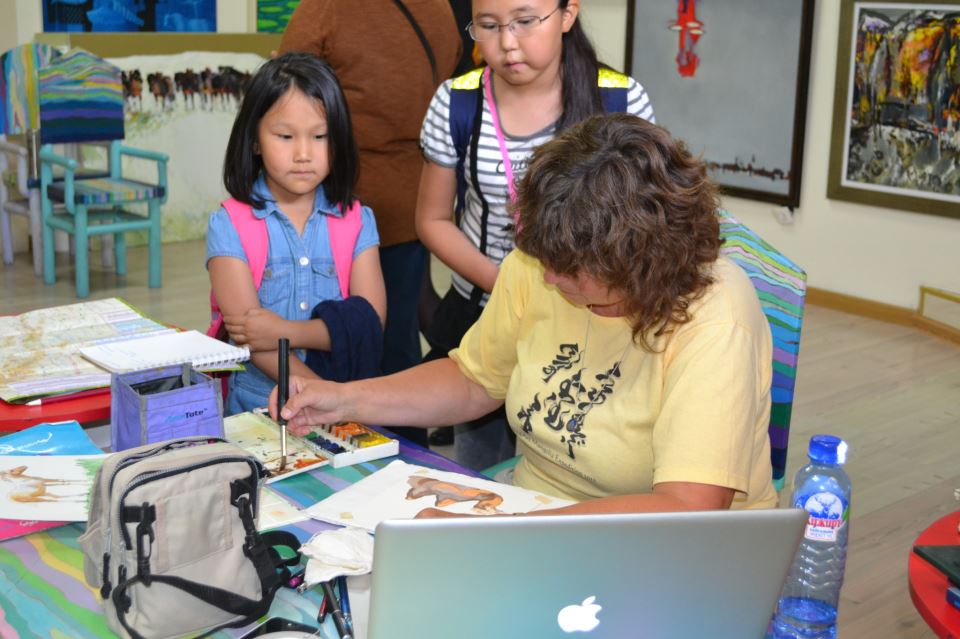
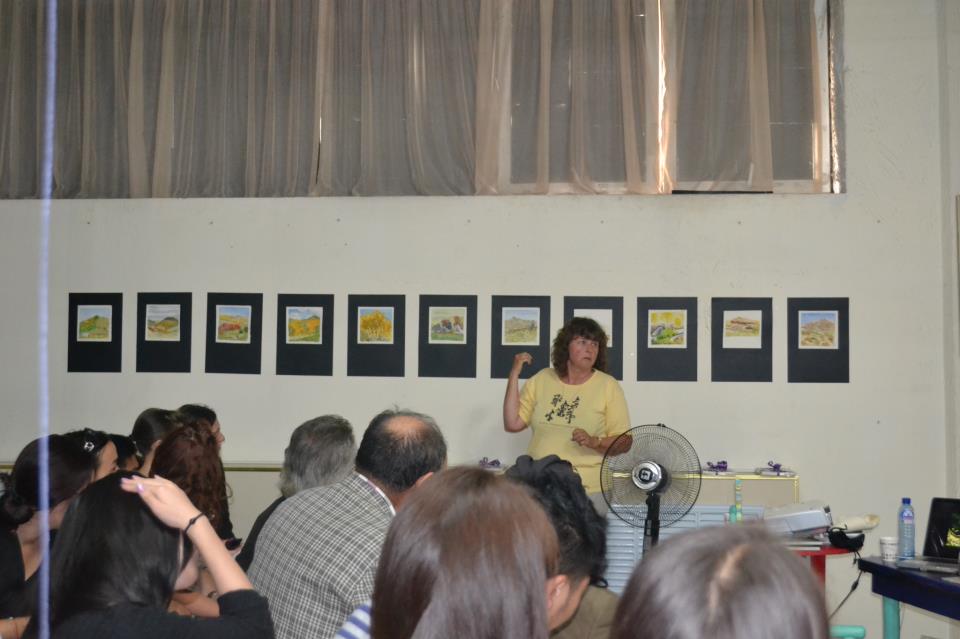
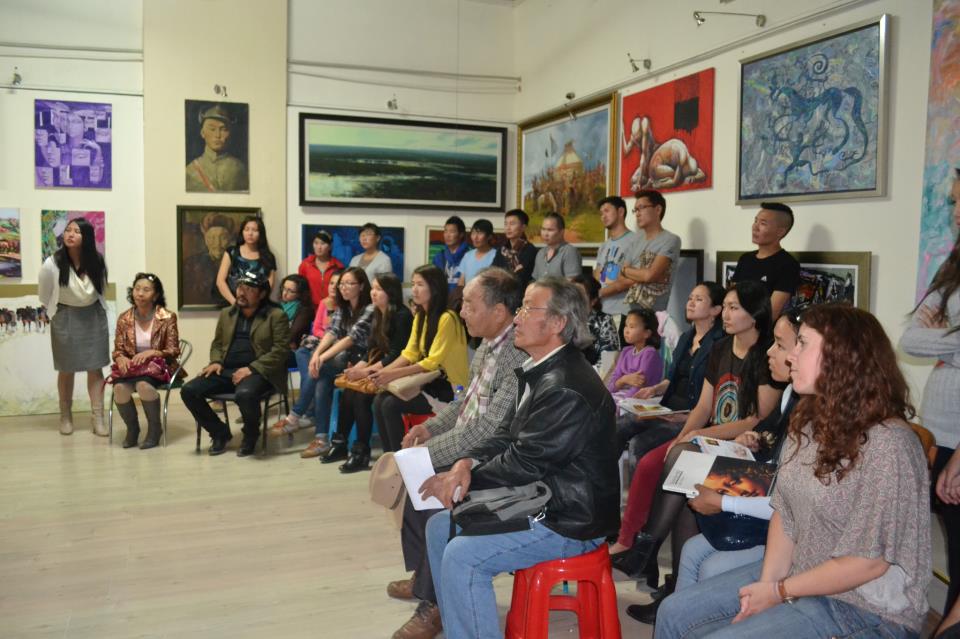
Here’s a selection of photos taken at “American Artist Susan Fox-The WildArt Mongolia Expedition”, which was the first in ArtiCour’s new Visiting International Artists series.
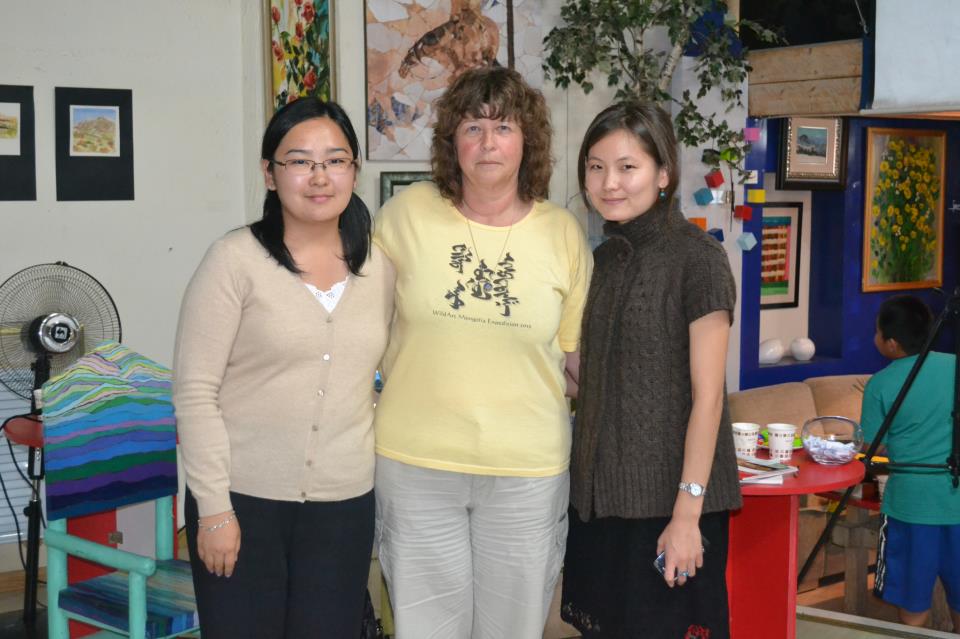
Entrance to ArtiCour GalleryMeeting E. Sukhee, one of Mongolia’s most famous artistsWatercolor demonstrationBactrian camel. watercolor demoDisplay of watercolors I did on location over two afternoons while I was visiting Hustai National Park, one of the three places in Mongolia where takhi (Przewalski’s horse) have been reintroducedMeeting Dunburee, also a very prominent Mongol artistDoing a fast sketching demo during my evening presentationI couldn’t have had a better, more attentive group and they asked some great questions later on.Meeting with Ekhbat Lantuu, President of the New Century Art Association, which promotes environmental issues through the arts.My interpreters, Khailiunaa and Buyandelger, without whom I wouldn’t have been able to talk to anyoneJanna Kamimila, the Director of ArtiCour Gallery and my host
As I mentioned in my last post, I’m going to be publicizing the WildArt Mongolia Expedition while I’m here. On September 22, I will be at ArtiCour Gallery, just off Sukhbaatar Square, from 11am to 7pm, meeting Mongolian artists and friends, talking about the Expedition, sharing images of my work and doing demonstrations of sketching, watercolor and iPad drawing. I’ve created a Facebook Event here.
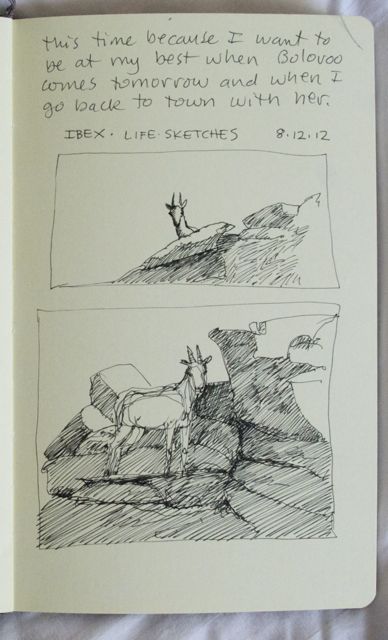
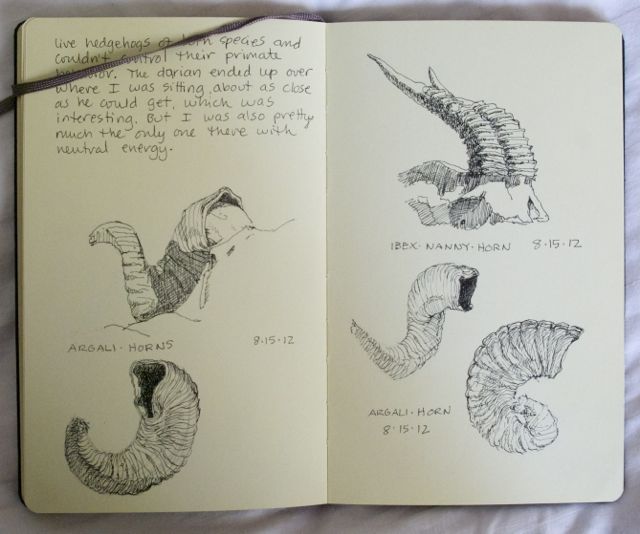
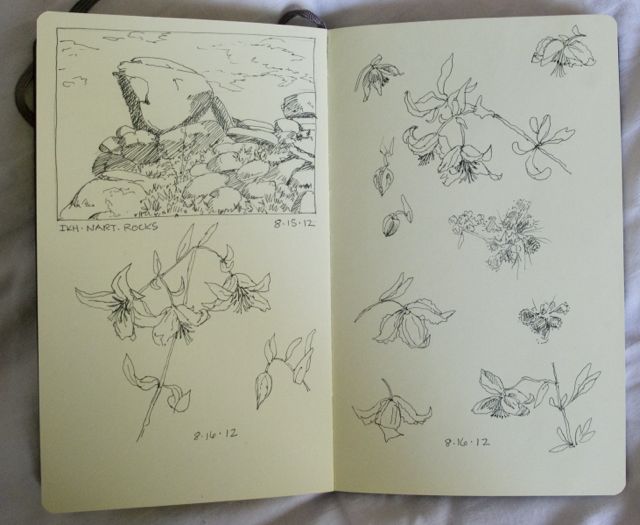
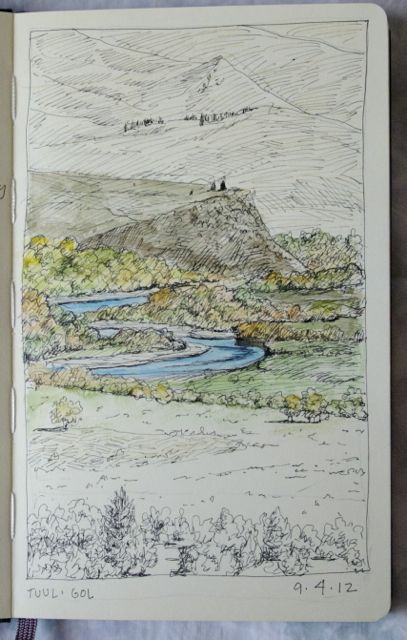
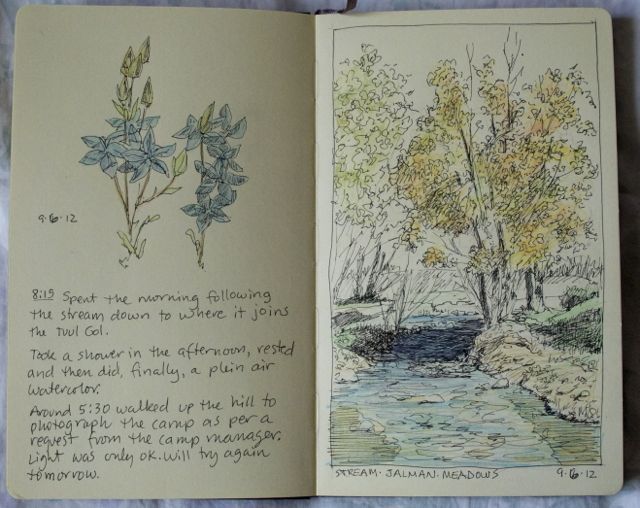
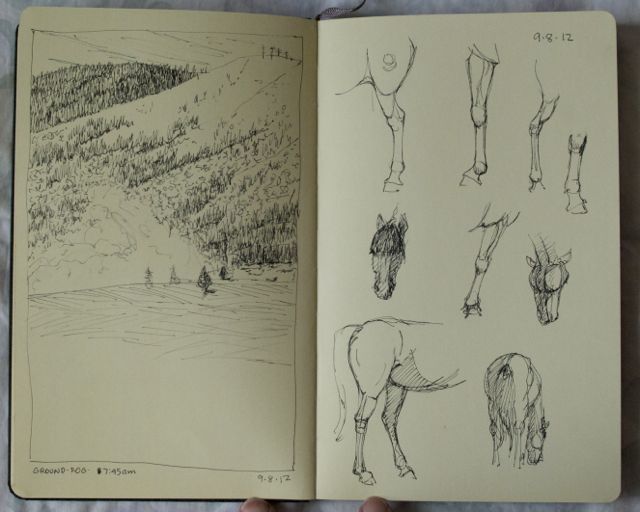
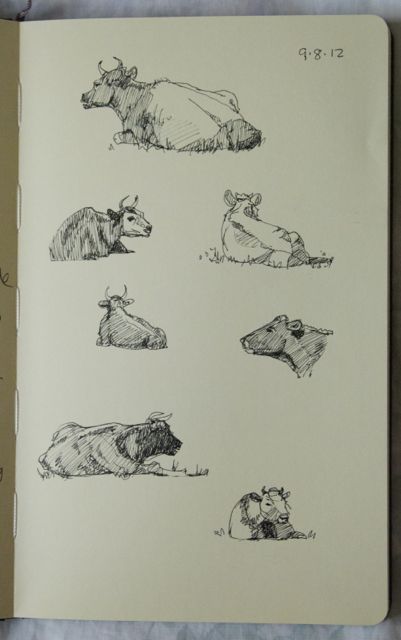
I’ve been able to get in some good field sketching time this trip and thought I’d share a selection of what I’ve done so far. In August I went to Ikh Nartiin Chuluu and Arburd Sands. Once the Expedition in September was postponed, I needed to make other plans. I’ve spent six days at Jalman Meadows ger camp in the Khan Khentii Mountains and got back yesterday from four days back at Ikh Nartiin Chuluu, this time staying at Nomadic Journeys’ Red Rock ger camp. Tomorrow morning I go to Hustai National Park for four days to observe, photograph and, with luck, sketch takhi.
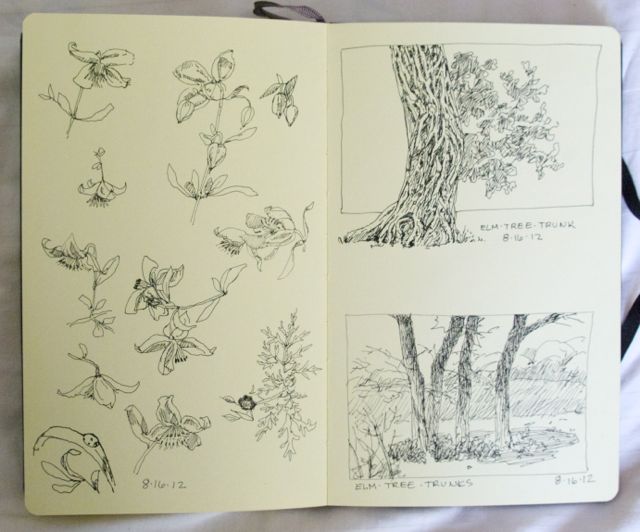
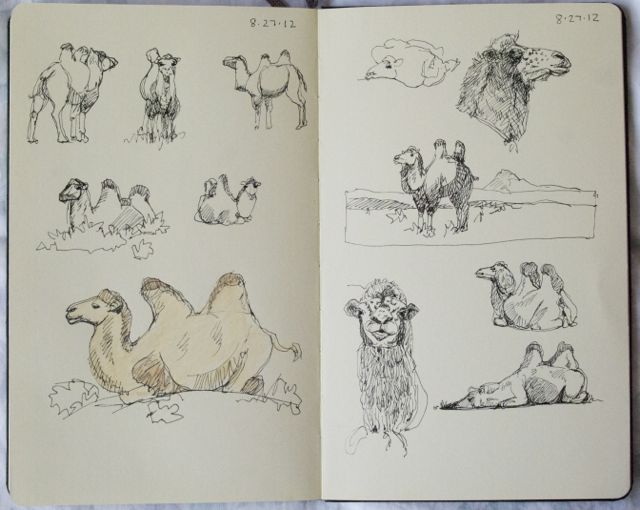
I’m using a Moleskin Sketch journal with Sakura Micron .01 and .02 pens and water- soluble colored pencils.
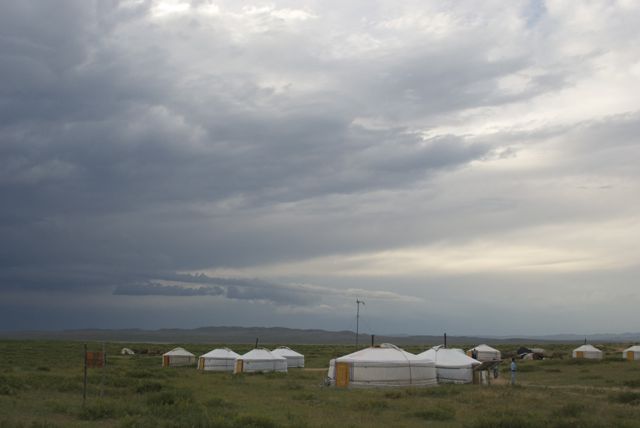
Arburd Sands ger camp with a summer storm coming in
As I noted in my previous post, in Mongolia flexibility is important. So when I got back from my weekend at Arburd Sands ger camp and found that the other artist had cancelled due to a family emergency, I had to get flexible and fast.
The WildArt Mongolia Expedition is now postponed until September of 2013. I will be traveling in the countryside to other locations between now and when I head for home. I’ll post about them when I can.
The great news is that I am working with a young Mongolian man, Byambakhuu Darinchuluun, who lives in New York and who has contacts all over the United States with the various Mongol-American communities and also here in Mongolia. We will be publicizing the Expedition while I’m here in the country, explaining this special, first-time collaboration between Mongol and American artists I’ve planned that will also support conservation. And we’ll have time to extend and refine this important initiative.
To that end I will be the focus of a special event, “American Artist Susan Fox- the WildArt Mongolia Expedition”, on September 22 at ArtiCore Gallery Company, which is right in the middle of Ulaanbaatar, across from Sukhbaatar Square. I’ll be meeting local Mongol artists, talking about the Expedition, giving a presentation on my work and demonstrating my fast sketching technique.
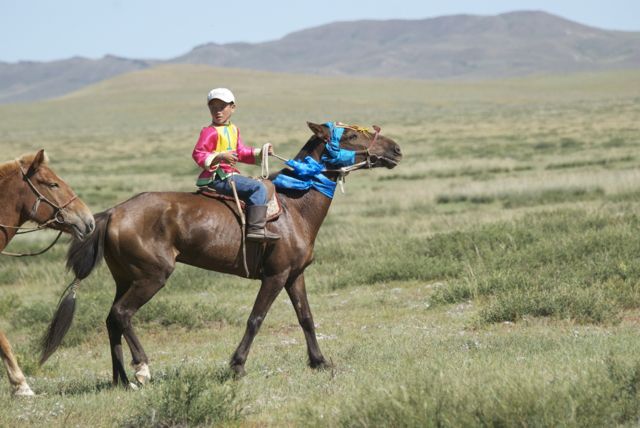
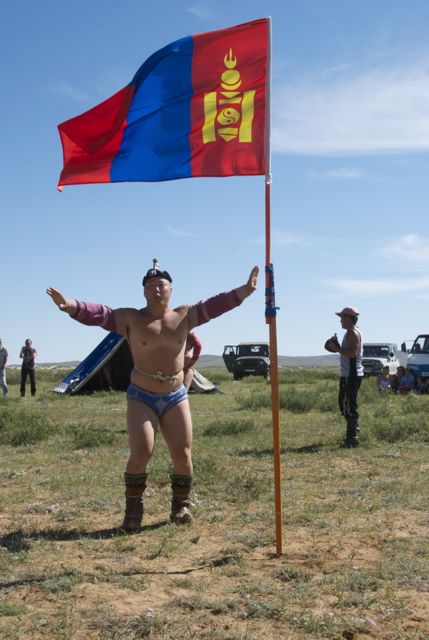
I had a wonderful time at Arburd Sands ger camp last weekend, which was hosting their first naadam for visitors. I got to see the horse race from the beginning through the middle and end and took around 700 photos plus video. There will be more on that later, but here’s a few photos that I particularly liked, including a couple of Mongol bokh, or wrestling.
I got to ride in the car which paralleled the horses.The ones taken through the windshield communicate the excitement quite well.This is the winning horse, quite a beauty and he won by quite a bit.Some of the wrestlers are big guys.Doing the Eagle Dance before a bout.
Mongolia country map with destination areaExpedition destinations by species
I leave for Mongolia a week from tomorrow!
I posted about one of the three WildArt Mongolia Expedition destinations here. Today I’m going to cover the other two- the Altai Mountains and Sharga. The difficulty is that I have never been to any of them, so I don’t have any images to share. For Takhiin Tal, I used a photo from Khomiin Tal, the newest takhi release site, which is to the north. So I’ll post a couple of my own images that show similar terrain, based on what I’ve seen for both on Google Images.
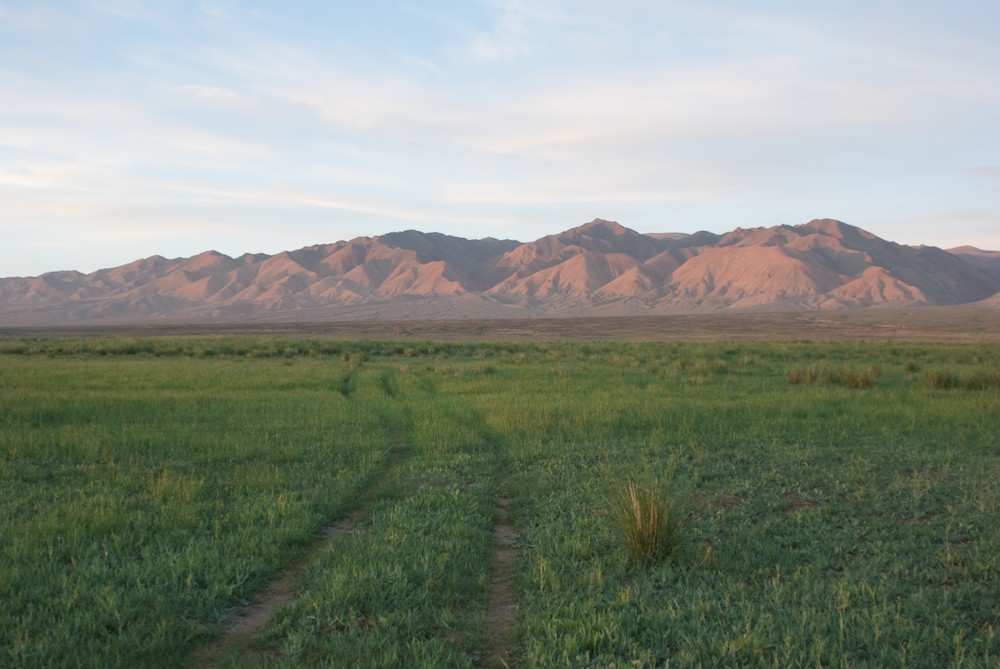
The Mongolian Altai Mountains in Mongolia are the extension of a range that extends east from Kazakhstan. I saw the Gobi Altai Mountains during my 2010 two-week camping trip when we went to Orog Nuur, a remote lake. Farther west they are much higher and more rugged. The Expedition is going in September to be there between the summer heat of the Gobi and snow beginning in the mountains. We will go to the Altai Mountains first, in early September, but snow is still a possibility, so I’ll have a down bag and thermals, just in case.
Gobi Altai mountains at sunrise, Orog Nuur, July 2010
The reason we’re going is to see snow leopard habitat. These elusive cats are essentially impossible to spot. Researchers who have trapped and collared them have walked away and looked back to where they know they left the cat and have been utterly unable to see it. But we’ll keep an eye out anyway.
Sharga was an area of Mongolia that I had not heard of until I added saiga antelope to the list of the Expedition’s featured species. They are critically endangered. Less than twenty years ago there were over a million. The population crashed to under 50,000 in ten years, the most extreme drop ever seen in a large mammal species. Poaching and lax law enforcement after the fall of the communist government in the 1990s were the cause. Intense conservation efforts are under way to save them and build up the population, something we plan to learn more about.
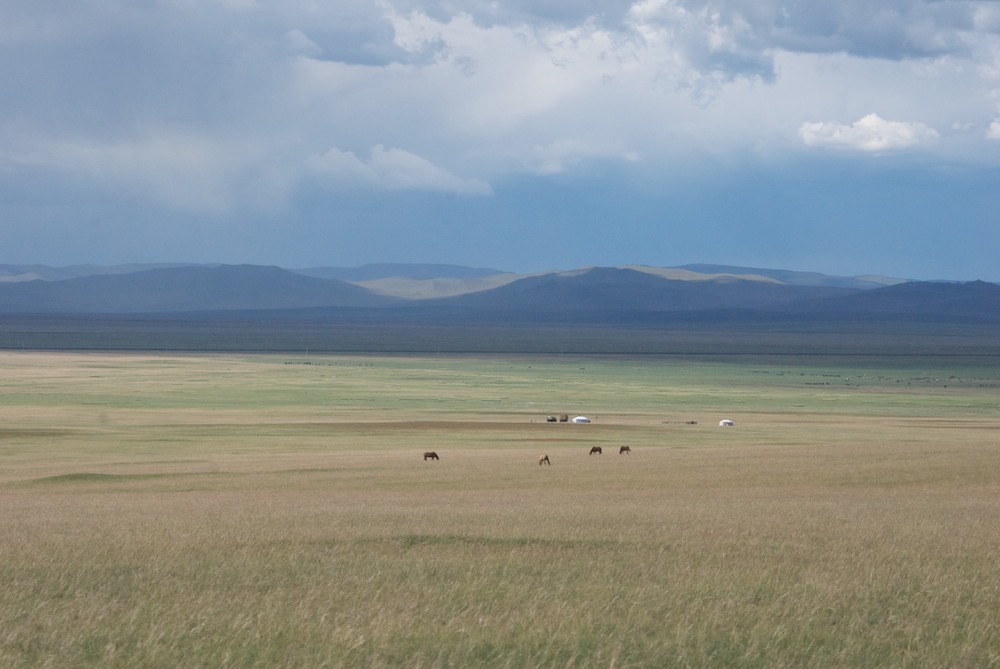
Steppe grasslands, July 2011, traveling north from Ikh Nartiin Chuluu to Gun-Galuut
Sharga has some of the last stretches of the vast steppe grasslands that once extended from almost the Pacific west into Hungary. It is an area also known for producing what are considered by many to be the best horses, called Sharga Azarga, in a country that seriously knows horses.
Arrangements are being made for a local reserve ranger to accompany us to help spot the saiga since they apparently now run at the slightest sight of humans and understandably so.
One of the missions of the WildArt Mongolia Expedition is, by traveling to these remote, beautiful places, to use the art that we will create to draw attention to them and the wildlife that lives there.
This is the first of an on-going series in which I get to introduce you to some of my colleagues in the animal art world.
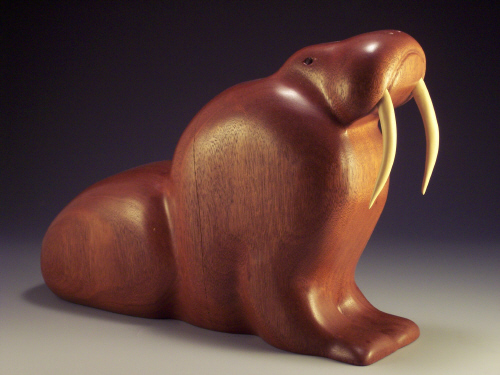
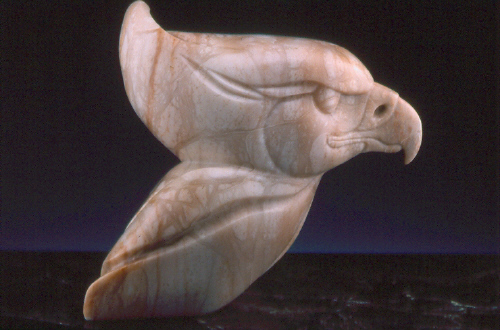
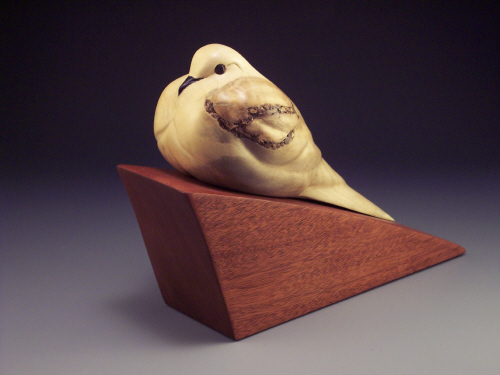
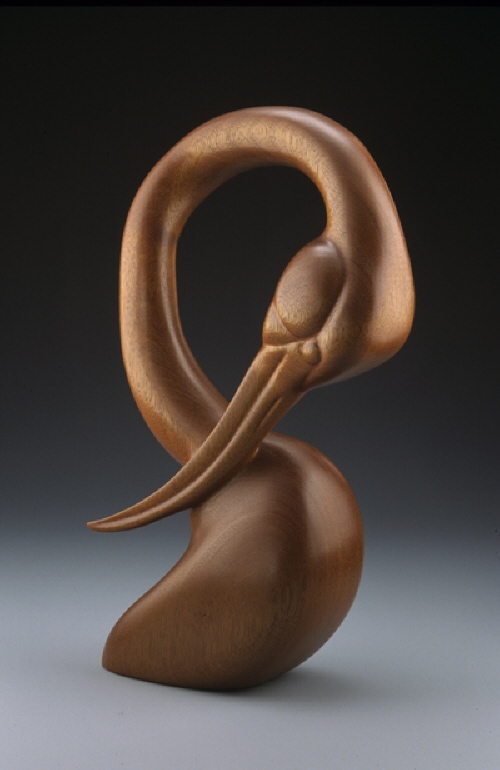
Hap Hagood and I, although we are both Signature Members of the Society of Animal Artists, “met” and have become friends via Facebook. I really admire his work and asked if he would tell me a little about his approach and share some images of his work:
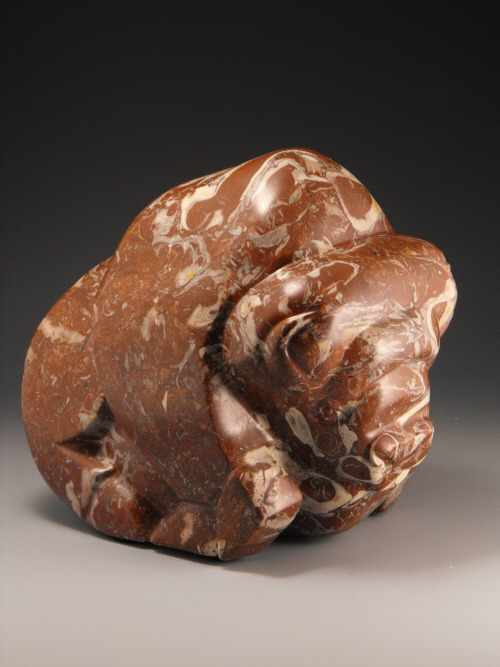
“Because it has always been my desire to capture and express the essence of the animals I portray, I abandoned the strict, realistic style in which I once worked for a more contemporary one. By leaving out what I consider unnecessary detail, I feel I am better able to capture this inner spirit, in much the same manner as the ancient indigenous carver…whose work today would be considered contemporary rather than primitive. Carving in this fashion, I feel my art is not modern, but is simply a continuation of an ancient art form, giving me the feeling of kinship with the storytellers of old.”
“Within every block of wood and stone, there dwells a spirit, waiting to be released.”
Takhiin Tal is part of the Great Gobi B Strictly Protected Area. It is to the west of Great Gobi A, which is larger and even more remote from people and towns.
It is also part of the Dzungarian Gobi, where the last takhi/Przewalski’s horse was seen in the wild in 1969, a lone stallion at a waterhole. And it is one of the three destinations that the WildArt Mongolia Expedition will be exploring.
Great Gobi B encompasses 9000 sq. kilometers, almost 3500 sq. miles. As has been true for centuries, local herders, around 100 families with about 60,000 head of livestock, use the area to graze their animals, mostly in the winter and during their spring and fall migrations.
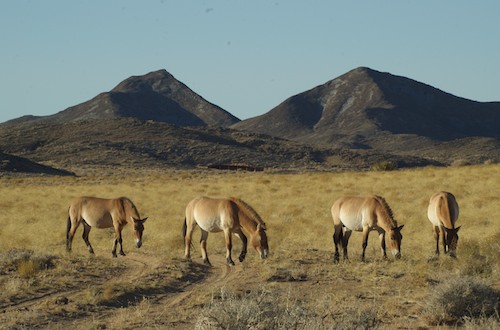
Khomiin Tal takhi, September 2006; These horses were photographed at the third release site, which is some distance to the north.
Takiin Tal was also the first of the three takhi release sites in Mongolia. The first horses arrived from Germany in 1992 through the efforts of Christian Oswald, a German businessman, and the Mongolian government. The organization he founded, ITG or the International Takhi Group, is involved there to this day, working to conserve and increase the population of the world’s only surviving species of true wild horse.
Besides takhi, the Expedition also hopes to see another endangered equid, the khulan/Mongolian wild ass, along with a variety of birds and smaller mammals.
























 Susan Fox, American Artist