New Equipment For The 2012 Mongolia Trip

Panasonic HDC-HS80 video camera

It’s time to cover the new stuff I’m taking with me to Mongolia this year, some of it pretty significant. As in years past, I’ll report back once I’m back home. Onward!

Panasonic HDC-HS 80 video recorder- I finally decided to get my feet wet with video a couple of years ago and bought a FlipHD. I found that I liked having the option, but it’s now defunct and the image quality wasn’t all that good. However, I did get footage of takhi at a waterhole at Hustai that sold me on video. My problem is that I already carry two camera bodies and the video cameras that looked like good enough quality to bother with were 1) over $600 and 2) at least the size of my Nikon D80 bodies, so that was a non-starter. But then I found these smaller HD units. I went with this little Panasonic (4 1/4″ x 2 3/8″) from B&H Photo and Video because it got really good reviews, I can carry it in my pocket and it only cost $299 (price seems to have gone up). It seamlessly downloads into iMovie, too. The zoom isn’t very good at the maxiumum, but short of that, image quality is very good. So now we’ll see how it does in the field conditions of Mongolia…
Moleskin sketchbook journals

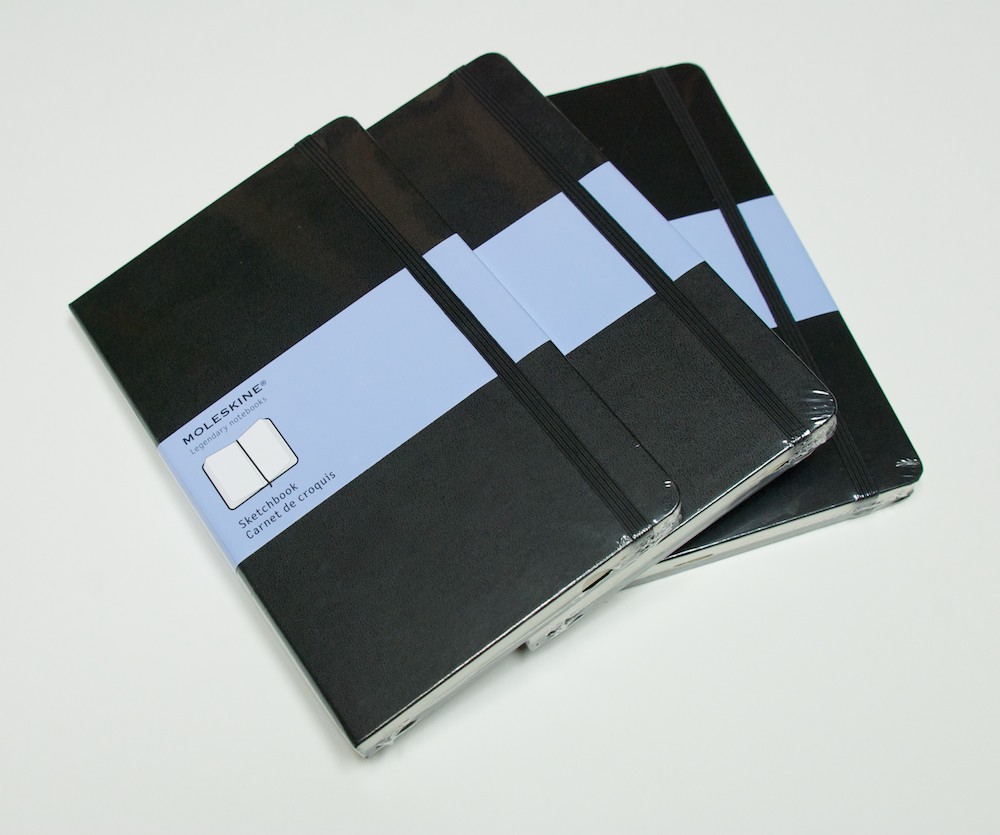
Moleskin Sketchbook JournalsThis will be the third year I’ve used them and I’m sold on them for their sturdiness and the quality of the paper that will take ink, colored pencil and watercolor equally well. The pocket in the back cover is really handy for those scraps of paper that seem to accumulate on a long trip. I’m taking three this time because I plan to do at least one drawing a day if I possibly can. They will also constitute the official journals of the WildArt Mongolia Expedition in September and I don’t want to run out of pages for what I think will be one of those trips of a lifetime.

iPhone 3G

iPhone 3G- Apple’s phones are “locked” which means you can’t swap the sim cards if you are in another country or, well, you’re not supposed to. I’ll have my 4GS for everything but phone calls. For the past three trips I took my old Motorola Razr, getting sim card for it and using it for my mobile phone in Mongolia. It was the latest thing when I got it, but now it drives me nuts. Lots of Mongols text and texting on the Razr was a colossal pain. So now I will take my old iPhone, have it unlocked, pop in a new sim card and finally have a smartphone for when I’m over there.

GearTie rubber twist ties

GearTie reuseable rubber twist ties bought these on a whim at REI. Two for $6.75. The only thing I have in mind at the moment is to use one of them for my rolled up Thermarest pad and when I tried it I found that it’s great for that. My suspicion is that these will be more useful than the cloth straps with quick release clasps because they are flexible, but not soft. I’ll try suspending one between a couple of ger roof poles to see if it’s useful for drying something like a pair of socks or forming a hanging hook.
Smartwool socks

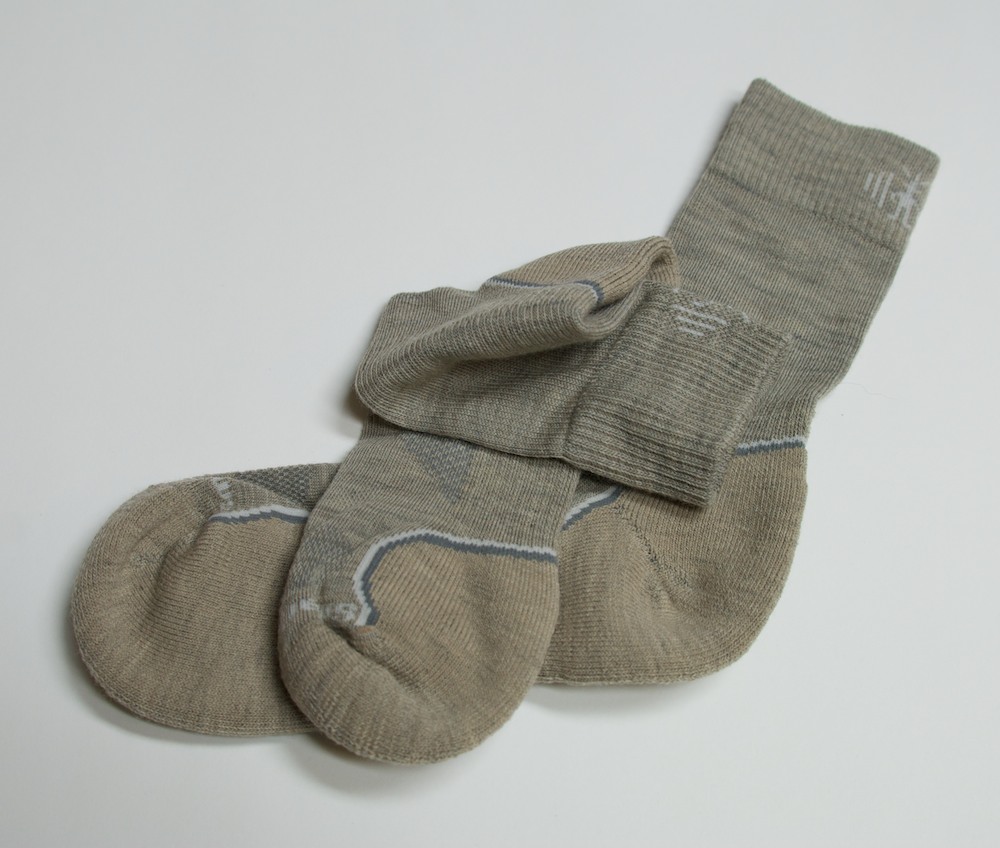
Smartwool socksI’ve been using Thorlos for years for my go-to hiking socks. They’ve gotten pretty expensive and REI had these on sale for $9.48 a pair, so I bought four pairs. Wool has been rediscovered in the outdoor activity world for its sustainability, warmth and comfort. And these are certainly comfy.

Nikon Nikkor AF-S VR 28-300 mm lens

Nikon Nikkor AF-S VR 28-300 lens It was nip and tuck whether or not I’d get this in time. For a couple of months there were none to be had in the country, probably due to the great reviews it’s gotten. But B&H came through and I’ve had it long enough to see what it can do. Wow. This is a major upgrade from the Promaster that I let my local camera guy talk me into, which was a big mistake and a story for another day. Before that I’d had a Tamron, which is really the only other option. But you can’t beat Nikon optics. This lens is bigger and heavier than either of the others, but it has Vibration Reduction and the motor is essentially silent. It focuses fast and accurately. So now both D80 bodies have Nikon lenses (an 80-400mm on the other) and life is good.
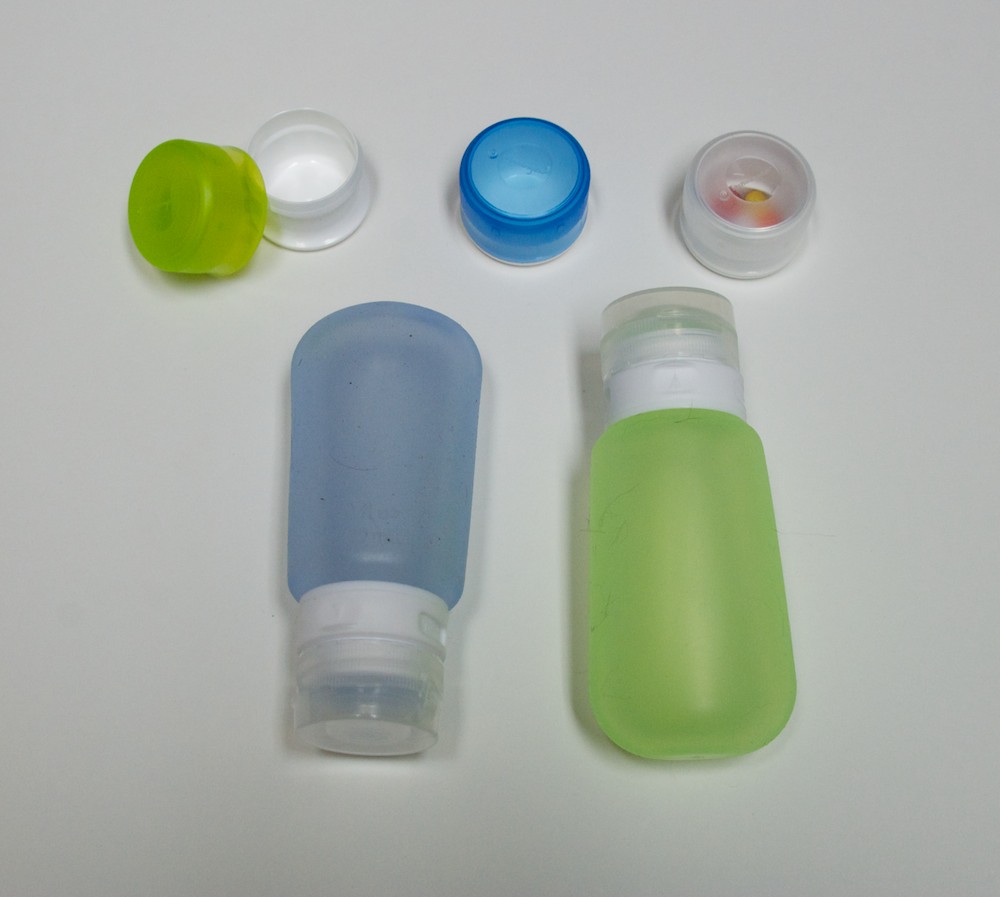
GoToobs and GoTubbs

GoToobs and GoTubbs- another REI find from a company called humangear. Ok, I’m an artist and am attracted by color and bright shiny objects. But these looked really practical for my needs. The tubes carry 3 oz. and have a nifty ring around the neck with a variety of contents listed that one can choose by moving a outer ring. I’ve chosen “shampoo” and “conditioner”. There’s even a blank one. So no more labels coming off or fading out. The “tubs” are a new solution. Instead of twist tops, the lid comes all the way down the sides. You pinch it on either side to release it. The idea is that you can open them one-handed, which might be handy at night. Both are food safe and recyclable (No. 5).
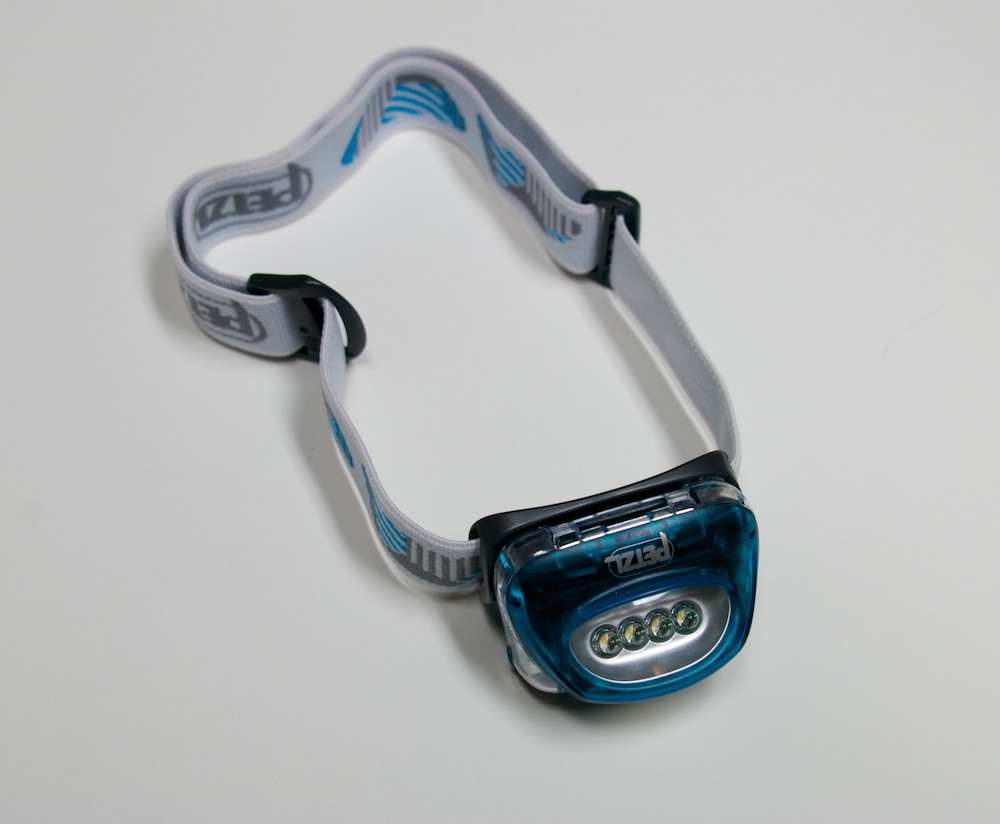
Petzl Tikka 2 headlamp

Petzl Tikka 2 headlamp there wasn’t actually anything broken with the last one, except that it was a pain to get open when I wanted to open it and had a talent for falling open and dumping one or more batteries at really inconvenient times, like in a tent at night on the slopes of Bogd Khan. That one really did it, because I had to use the light from my iPhone to find the batteries and get them back where they belonged in the right orientation. Once again at REI, I searched the headlamp rack for something under $50 that didn’t have the same stupid closure method. And would you believe that not a one of them did, of what they had in stock, except this one, which has a simple sensible plastic tab that snaps open and closed. What is so hard about that?

Close up of interior showing opening and closing tab

And finally, the piece de resistance, in a way….
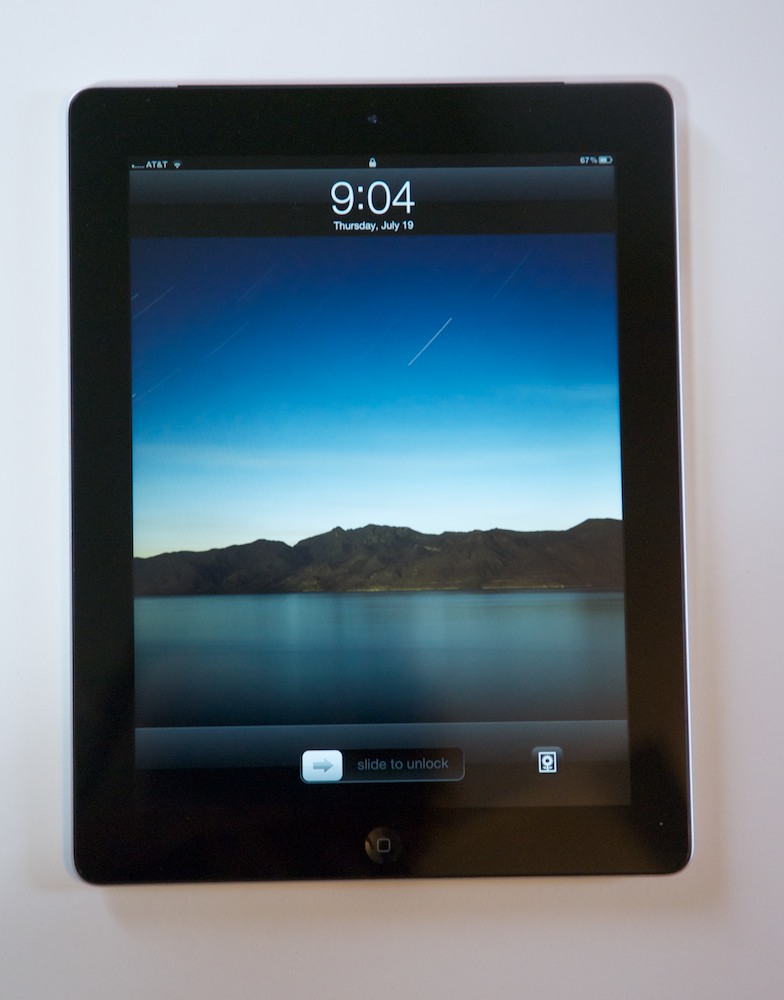
Ipad with Retina display

New iPad with Retina display– my first gen iPad has more than proved its worth in a variety of ways. We decided that my husband would “adopt” that one and we would get me the new one, which has the stunning new display and enough more power that it will run apps like iMovie. It’s much faster for web browsing, too. I’m waiting for the case and shield to arrive and will do a short post about them before I leave.

So, there you have it, this year’s gear. If you like to see the previous posts, they are in reverse chronological order here, here, here, here, here, here and here. I’m still using the jacket, down bag, messenger bag and some other items that have stood the test of the Mongolian countryside, including the Gobi.

Mongolia Monday- New Painting Debut! “Calm Appraisal (Mongol Herder)”

Calm Appraisal (Mongol Herder) 20×16″ oil

It was the second morning out on my one-week camping trip last August.We had stayed the previous night at the ger of my driver and his family, who lavished on me piles of white foods…aruul, airag, urum (dried yogurt, fermented mare’s milk, clotted cream) and more.

As we were heading west towards what I had been told was a beautiful lake, I spotted a large herd of yaks not too far from the road. Puugii, who turned out to be a great driver, pulled over and stopped. I got out to take pictures and almost immediately saw three herders coming our way at a gallop. They pulled up, all dressed in del and boots, looking very dashing, and stopped. What a photo op! I asked Puugii to ask them if I could take some pictures. There was a little hesitation, but then they nodded and I got to work, knowing already that I would be getting multiple paintings from this encounter.

I didn’t realize until I got home and took a closer look that this mal chin (herder) was checking me out with a look of calm appraisal.

You can see the other two paintings I’ve done so far here (the portrait at the bottom) and here.

Mongolia Monday- Expedition Destination: Takhin Tal

Expedition destinations by species

Takhiin Tal is part of the Great Gobi B Strictly Protected Area. It is to the west of Great Gobi A, which is larger and even more remote from people and towns.

It is also part of the Dzungarian Gobi, where the last takhi/Przewalski’s horse was seen in the wild in 1969, a lone stallion at a waterhole. And it is one of the three destinations that the WildArt Mongolia Expedition will be exploring.

Great Gobi B encompasses 9000 sq. kilometers, almost 3500 sq. miles. As has been true for centuries, local herders, around 100 families with about 60,000 head of livestock, use the area to graze their animals, mostly in the winter and during their spring and fall migrations.

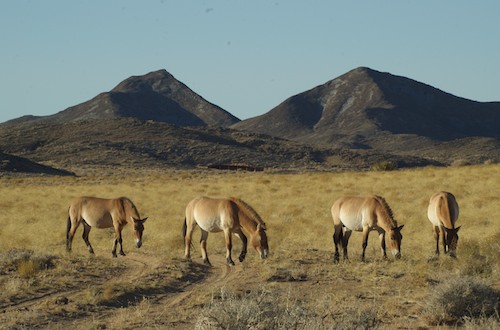
Khomiin Tal takhi, September 2006;  These horses were photographed at the third release site, which is some distance to the north.

Takiin Tal was also the first of the three takhi release sites in Mongolia. The first horses arrived from Germany in 1992 through the efforts of Christian Oswald, a German businessman, and the Mongolian government. The organization he founded, ITG or the International Takhi Group, is involved there to this day, working to conserve and increase the population of the world’s only surviving species of true wild horse.

Besides takhi, the Expedition also hopes to see another endangered equid, the khulan/Mongolian wild ass, along with a variety of birds and smaller mammals.

Mongolia Monday- New Painting Debut! “Loose Horse Ahead”

Loose Horse Ahead 18×24″ oil

Yes, even with the craziness of preparing my WildArt Mongolia Expedition Kickstarter project, I continue to work at my easel. And I just finished this one late last week.

Pokey Park and I and our guide/driver were exploring the wetland area of Gun-Galuut Nature Reserve, when we saw a local herder coming past us. One of the impressive things about Mongol riders is that, even at a very young age, they can ride a horse going pretty much at any gait or speed standing up and utterly still.

He rode on past us and we continued birdwatching and picture taking. Not too much later though, back he came, catching up with a brown horse, saddled and bridled, which had clearly gotten loose. In the meantime, a good-sized group of horses were heading for some open water. The brown horse dodged behind them with the rider right after him. Up came his urga (the long pole with a loop that is used instead of a rope lasso) and in short order the brown horse was captured.

Got him.

For the painting, I wanted to show Mongol horsemanship, which most people haven’t seen. The bonus, of course, was the great morning light and the setting. And…you may have noticed that the rider in the photo is wearing backwards baseball cap, but not in the painting. I’m interested in painting the Mongolia of today, but the baseball caps just don’t do it for me, however practical they are for the wearers, so I leave them off. But everything else is as I saw it that beautiful morning in August 2011.

Mongolia Monday: 5 Photos Of Favorite Places- The Gobi

The legendary Gobi….what images it conjures up, some true and some not, as it turns out. A land of contradictions. A desert, but mostly without sand. A byword for dryness and lack of water, but rivers flow through it, there are lakes and it’s known as the source of the sweetest and best vegetables grown in the country.

I grew up in Redwood Country….forests. I’ve always loved forests. My mom loved the desert. Me. Not so much. Until I met this desert.

A view I love…a Mongolian earth road stretching out ahead as far as one can see, Juiy 2010
Time to milk the camels at the only herder’s ger for many miles. Got my first taste of camel’s milk airag, July 2010
It does rain in the Gobi and everything can turn green in a matter of hours, July 2010
My tent on Orog Nuur, a remote Gobi lake, just myself, my guide, the cook, hundreds of birds and gazillions of mosquitos. When camping in Mongolia, you can stop and pitch your tent pretty much wherever you want to, July 2010
Last glow of evening light on The Flaming Cliffs, made famous by Roy Chapman Andrews’ Central Asiatic Expeditions of the 1920s, Sept. 2006

“Enchanted Evening” Has Been Accepted Into “Art and the Animal”!

Enchanted Evening   36×40″ oil

I’m very proud to announce that my latest takhi painting “Enchanted Evening”,
has been accepted into the Society of Animal Artists’ 52nd Annual Exhibition of “Art and the Animal”. This is the fourth year in a row that I have had work in the show and they have all been Mongolia subjects, which pleases me a lot.

The exhibition will be held at the Hiram Blauvelt Art Museum, which is located in Oradell, New Jersey, and officially opens on the weekend of October 5-7. I plan to be there for all the festivities. More details later on as the opening approaches, but consider yourself invited!

The story behind the painting: Last August, nationally-known sculptor Pokey Park and I were on a two-week tour of the best wildlife watching locations. We were leaving Hustai National Park, one of the three places in Mongolia where takhi have been reintroduced, after a last horse-watching drive, which had already been very successful. Then, less than 50 feet from the road we spotted this small group of takhi coming down to a pool of water. We stopped and got our cameras ready. Would they come or not…

Trying to decide…
We’re thirsty!

And here’s a short video that I shot on my Flip HD. Unfortunately we ended up with a lot of cars stacked up behind us, just like a bear or bison jam in Yellowstone. One woman came up next to me out in plain view (I was behind the open door of the car, using it for kind of a blind) and spooked them, but at least they’d all been able to drink. Enjoy!

Mongolia Monday: 5 Photos Of Favorite Places- Hangai Mountains

I visited two very different parts of Mongolia in 2010 on my two week camping trip: the Gobi and, directly to the north, the Hangai Mountains. Today I’d like to share five of my favorite photos from the mountains, which I hope very much to explore more in the future. I think you’ll see why…

Gachen Lama Khiid, Erdensogt Soum- this has to be one of the great undiscovered places in Mongolia, an old monastery located north of Bayanhongor in Bayanhongor Aimag. I could spend days sketching and painting this beautiful temple and the stupas overlooking the river valley. There are more photos and the story of our visit here.
We had spent the night camped out on a hillside with a lovely view. The next morning I crawled out of my tent to the sight of local herders moving their yaks out to graze. Being in plain view, we soon had visitors, including this older gentleman. He perfectly sums up the dignity and presence of the Mongol country people. He also knew I was taking pictures of him...
We had to come down out of the mountains proper to circle around to get back in to our next destination. There was a small temple just outside a small soum center. I peeked inside and was treated to this riot of color, all kinds of candy and other food left as offerings. I don't know the story of the statue, but wish I did. More on the day I took this photo and the one above here.
Our destination that day was Khuisiin Naiman Nuur National Park, a series of nine ("naim" in Mongolian) mountain lakes, only accessible by car by driving up the length of this incredibly beautiful valley, which is where we camped for one night. I could have stayed there two weeks. More photos here.
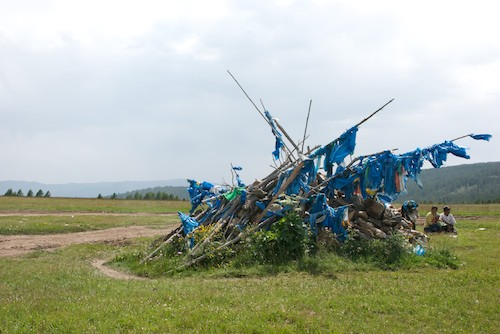
We wended our way higher into the mountains reaching a pass where we found this fantastic ovoo made of wood and festooned with dozens of blue khadag (offering scarves). The tradition is to walk three times around it clockwise and leave some kind of offering or token, even if it's only a stone that one has picked up from the ground. Ovoos are always on high places and passes. The creation of them dates back far beyond the arrival of Buddhism to the ancient beliefs of Tengerism (or what westerners call "Shamanism"). More photos of the beautiful, wildflower-filled mountains here.

Mongolia Monday- Explorers and Travelers: Friar Giovanni DiPlano Carpini

Mongol warriors escorting Chinggis Khan's mother, Hoelun: National Naadam opening ceremonies, Ulaanbaatar, July 2009

Mongolia has always been considered an incredibly remote and exotic destination by most westerners. The shorthand expression for the farthest a person could be from any place has been to say that they’ve gone all the way to “Outer Mongolia”.

The reality today is that it is quite simple to get there from the United States and Europe. I fly to San Francisco (one hour) to Seoul, South Korea (11+hours) to Ulaanbaatar, the capital of Mongolia (three hours). There are non-stop flights to Ulaanbaatar from Berlin and Moscow. But before air travel, before trains, before the country was essentially closed to foreigners by the communist government from 1921 to 1990 (other than the Russians who were stationed there), Mongolia was a challenging place to get to and travel in.

This will be an occasional series about westerners who have traveled to Mongolia in times past and left written accounts of their experience.

Epic. Journey.

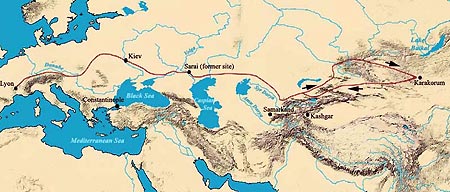
First up is a man known in English as John of Plano Carpini, sent to Mongolia by Pope Innocent IV in April of 1245 to find out all he could about the “Tartars” who had beaten every army of European knights sent against them, but had then mysteriously vanished as quickly as they had appeared.

He and his party were stopped for a time in Russia at the camp of Batu, one of the most important Mongol princes, who finally ordered them to travel on to the court of Guyuk, who was the grandson of Chinggis Khan through his father, Ogedei Khan. 106 days and 3,000 miles later, in July of 1246, they arrived at the Mongol imperial capital of Kharkhorin. Carpini was in time to witness the Great Khural during which Guyuk was elected Great Khan.

Guyuk declined their invitation to become a Christian, although there had been Nestorian Christians present and living in the empire for some time. He did, however, give Carpini a letter to take back to the Pope demanding that he travel to Kharkhorin and submit to Mongol authority.

One page of the letter from Guyuk to the Pope

Guyuk allowed them to begin their journey home in November. They re-traced their route across the length of the Central Asian steppes through the winter and on into spring, then summer, finally arriving at Kiev in June of 1247. Traveling on, they delivered the Khan’s letter to the Pope in Lyon, France, who was not inclined to obey.

This epic journey was really a spy mission. The Mongols had withdrawn from Europe, it turned out, due to the death of Ogedei Khan (the cause is presumed to have been acute alcoholism) and the requirement to return to Mongolia to choose his successor, but the westerners, not knowing any of this, had no choice but to assume that they might return at any time and pick up where they left off, on the verge of entering central Europe. Carpini’s mission, which he courageously carried out, was to gather all the information he could, not only about the Mongols themselves, about whom nothing was known, but everything he could find out about their military: numbers of men, armor, weapons, tactics. Of course, if this had become known to the Mongols, it would have been a one-way trip for all of them.

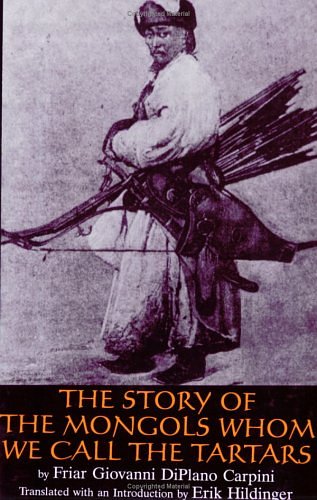
The edition I have.

Once home, he wrote it all down in a report for the Pope, which has become the book, “The Story of the Mongols Whom We Call The Tartars”, the first account of the Mongols by a westerner. It has been translated into English and is a fascinating read for anyone interested in history, Central Asia, the military, travel and the Mongols themselves. You can get a hardcopy translation by Erik Hildinger at Amazon or read a free online version, translated by Richard Hakluyt here, which also has various download options.

Mongolia Monday- 20 Questions for Mongolphiles Quiz: Results!

Chinggis Khan statue east of Ulaanbaatar

Here are the answers:

Part 1:

1. Who demonstrated the strength in working together using arrows?- Hoelun, the mother of Chinggis Khan

2. What form does the tea used for milk tea traditionally come in?- Bricks or blocks

3. What side of a Mongol horse does one always mount from?- Left

4. Mongolia became independent in the early 20th century from what other country?- China

5. What two animals do the Mongols claim descent from?- Wolf and deer

6. What was the real name of the “mad monk of the Gobi”-  who wrote the famous poem “Perfect Qualities”?- Danzanravjaa

7. What is the traditional greeting when approaching a herder’s ger?- Hold the dogs!

8. From what people did the Mongols get their classical vertical script?- Uighers

9. Why did the Mongol army leave Europe and return to Mongolia?- To elect a new Khan

10. Who created and bestowed the title “Dalai Lama”? For bonus points, what does the world “Dalai” mean?- Altan Khan; “ocean”

Large ovoo along main road south out of Ulaanbaatar

Part 2:

1. What is a “morin khuur”?- Horse-head fiddle

2. From what people did the Mongols get their classical vertical script?- Uighers (my apologies for missing that I’d used this one in the first 10)

3. What are each of the four sides of a sheep’s anklebone called?- Sheep, goat, horse, camel

4. Name the Five Snouts.- Horse, cattle, sheep, goat, camel

5. Which ikh khan founded Kharkhorin?- Ogedei

6. Which direction do gers always face?- South

7. Who is the lead singer of Hurd? For bonus points, what does his name mean?- Chono: wolf

8. What is the name of the mountain where Temujin took refuge?- Burkhan Khaldun

9. What are The Three Manly Sports?- horse racing, wrestling, archery

10. Name the two main political parties in Mongolia.- Democratic party and Mongolian People’s Party (I was a little flexible on this one since there have been fairly recent name changes. The MPRP changed its name last year. The other party is referred to in the media as the Democrats. But I knew what you meant)

And the winner is…..Carole Hollrigel! But it was close. Only two points separated her from the next closest entrant.

Thank you to those who entered!