I started to write a reply to the (partially quoted) comment below and realized that the topic was worthy of its own post since, as you will see, I have strong opinions about the subject (Who, me?).
“I found your process very interesting…especially because I tend to ‘jump right in ass-first’ and not do any studies to figure out composition etc. I have no idea why I hate doing that…perhaps I am just impatient to get to the fun. of course this does cause problems!!…..Does Photoshop help you a lot in planning paintings? I have never once used it, I must admit…..You can re-position items in your photo using Photoshop? Man, Maybe I need to get a Photoshop For Dummies book!”
My response, which is intended to address the general issue, and not in any way the individual commenter who I quote above, is as follows:
I never use Photoshop for planning paintings in the way you describe. IMHO, it’s a pernicious trend that’s been used by way too many artists as an excuse to avoid the hard work of actually learning to DRAW.
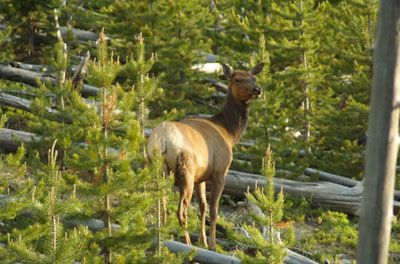
It’s also very obvious a lot of the time when that’s how a picture has been put together. It looks like a bunch of bits with no cohesion. Animals that look pasted onto the background. Animals the wrong scale. Animals in a position that is impossible given the perspective of the setting. Light sources that don’t match. Uncorrected distortion from shooting the subject with a wide angle lens in which you end up with a back end view of something like an elk with a tiny butt that has an overly large head sticking out of it. Slavish adherence to the reference. Lack of variety of edges,with every edge same from front to back. No emotional punch or a point of view that’s unique. No exercise of the craft of painting. Just tedious rendering of Every Single Thing In The Photograph.
I’ve been in workshops watching artists beaver away at moving an animal around in a landscape on their computer and then transferring it directly to their canvas. Kind of pathetic, really. There’s a power and a mastery that comes from entering your subject directly into your brain by drawing it over and over. It’s how you learn what something looks like. Photoshopping short-circuits that. Look at who the top wildlife artists are and have been. They can all draw like crazy. Some stay with highly detailed work, like Carl Brenders, or push the limit of looseness, like Julie Chapman, but being able to draw lets them make the choice.
Copying a Photoshopped composition without having solid drawing skills cheats the artist out of all that is most important in the creative process, i.e. the creativity.
A painting is really just a series of judgments and choices. The better an artist gets at those, the better the paintings. Photoshopping images into a montage short-circuits this part of the painting process, too.
I realize that the struggle is a drag, but there isn’t any easy way to do good work that I’m aware of. The best work comes out of the struggle. I long ago lost count of the times I hit the wall on a painting, slid down to the floor, picked myself up and soldiered on until I broke through. It doesn’t happen as often now, but I know it could happen at any time.
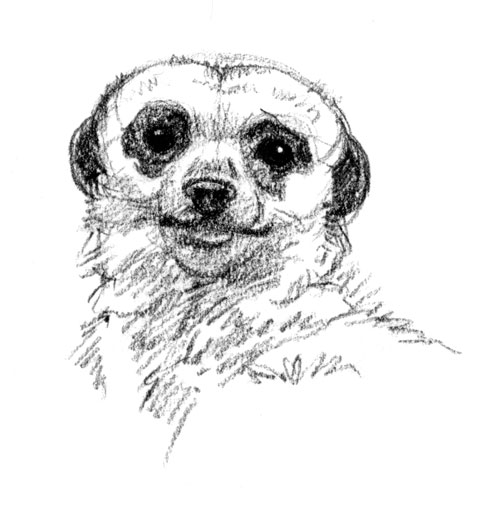
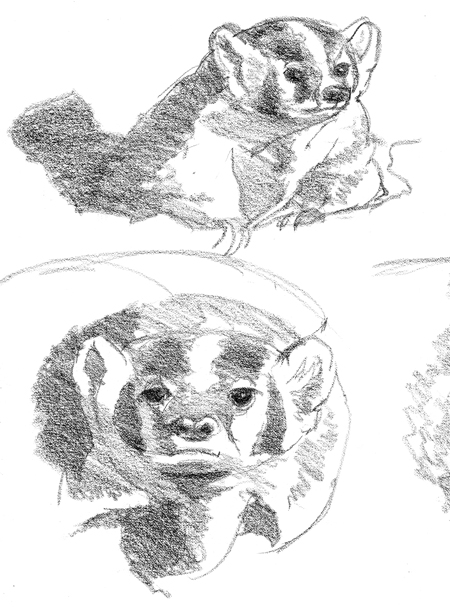
What I do is go through a lot of paper. What you see in my posts are just a small sample. Since one of the reasons I’m an artist to begin with is that I always loved to draw from the time I was a little kid, it would defeat a main purpose of the exercise for me to eliminate that step. I also use a mirror to check my drawing for accuracy. It’s almost magical how errors jump out at you. Can’t use Photoshopped photographs for that.
I’ll just flatly say it- If you want to be any good, much less excel, as a painter of animals (or any other representational subject, for that matter), learn to draw. And draw live animals whenever possible. Period. No excuses.
Mongolia Photo of the Week
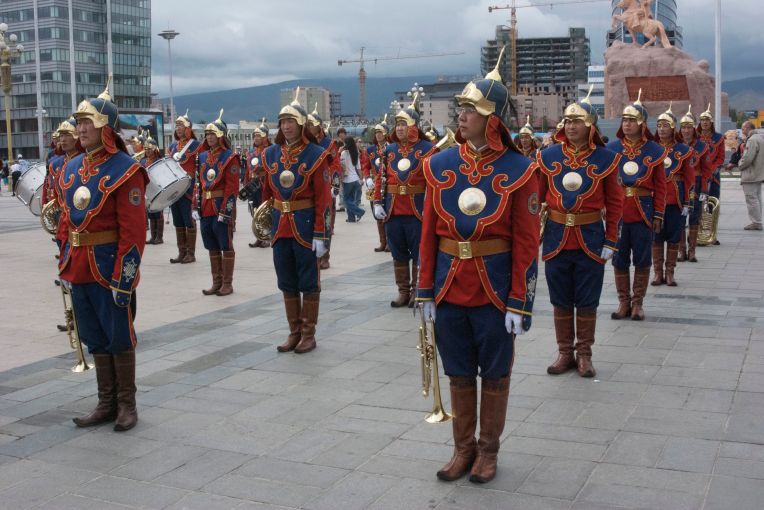
Best Band Uniforms Ever.
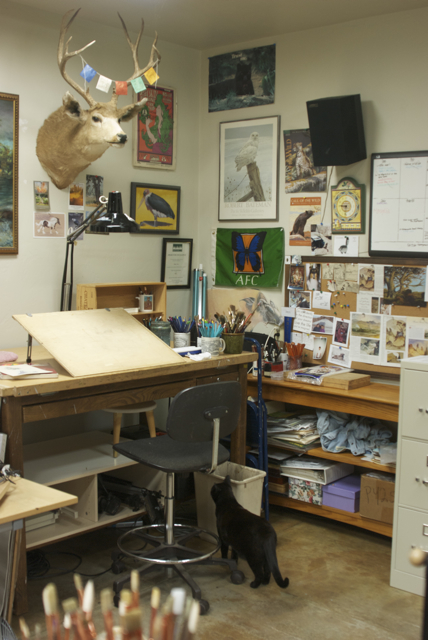

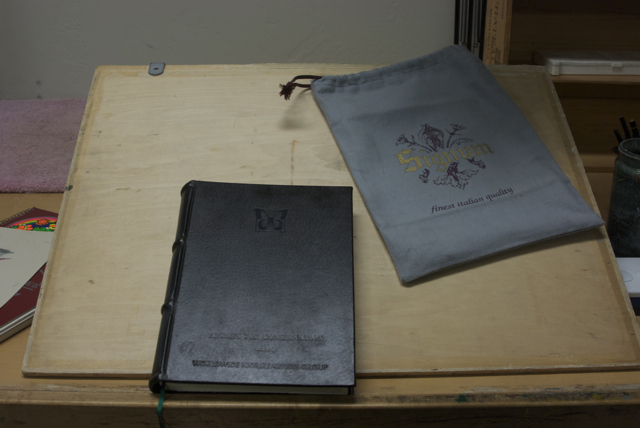 Yup, I’ll be hauling this puppy all over central Mongolia for three weeks. I need to do a title page and a map Real Soon Now, but how to face the terror of the blank page? The thought of making a mess is paralyzing, but it must be overcome. I know, I’ll start at the very back-
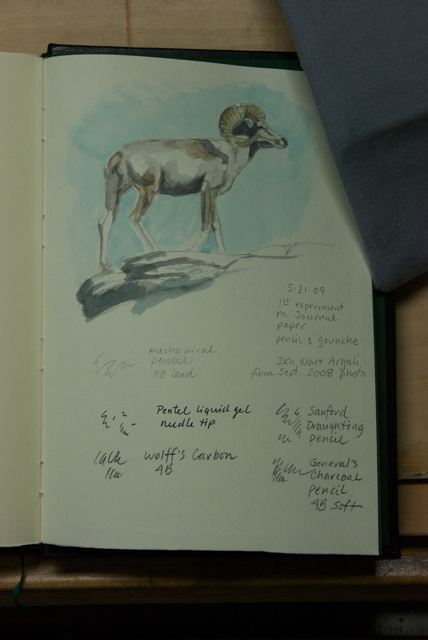 So I used an argali image from the trip last year that is representative of what I hope to see and sketch. I’m experimenting with ways to add color. This is Pelikan pan gouache used as a watercolor wash. The paper has a nice tooth and isn’t too soft, but I wanted to see how different drawing options worked, so that’s what’s on the bottom. The Wolff’s carbon pencil didn’t flow and the General’s charcoal pencil was too soft (for my purposes). A mechanical pencil with an HB lead and the Sanford draughting pencil worked well, as did the Pentel pen. I’ve got two kinds of Derwent watercolor pencils that I’ll experiment with next, along with a couple of other things.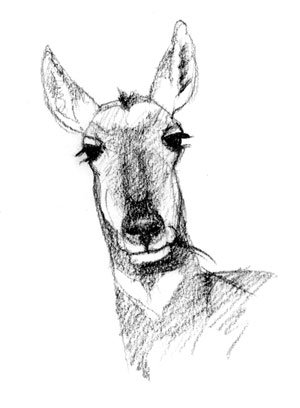




 Susan Fox, American Artist