Mongolia Monday- 6 Great Places To See Wildlife

The travel season is almost upon us. I’ve got my plane tickets for my July departure to Mongolia. For anyone else thinking about or planning to go there, I thought I’d offer one list a week for six weeks, of six “themes” for things to see, with six suggestions.  I’ll start with the one that’s probably nearest and dearest to my heart – wildlife viewing destinations. I’ve been to all of them at least once.

Takhi grazing, Hustai National Park

1. For horse-lovers, Hustai National Park is a must if you are going to Mongolia. It is one of three places where tahki (Przewalski’s horse) have been reintroduced and is only about two hours west of Ulaanbaatar, mostly on tarmac road. You may also see marel (a species of elk), Mongolian gazelle, marmots and a variety of birds, such as demoiselle cranes, golden eagles, saker falcon, and black storks. There is a permanent ger camp that is open year around. The main building has a pleasant dining hall. There are three large concrete “gers”. One houses a gift shop, one has displays about the park and another is where presentations about the park are given by staff scientists. You can explore the park by vehicle, on foot or horseback. When I was last there in the fall of 2008, there were 15 harems of over 200 horses.

Reedbeds, Khar Us Nuur National Park

2. Bird-watchers should consider traveling out to western Mongolia to go to Khar Us Nuur (Black Water Lake) National Park. Khar Us Nuur is the second largest freshwater lake (15,800 sq km) in Mongolia . The Khovd river flows into it, creating a large marsh/wetland that is home to the largest remaining reed beds in Central Asia. The lake provides habitat for wild ducks, cormorants, egrets, geese, wood grouse, partridges, the rare relict gull and also the herring gull.  May and late August are the best birding times.  Another freshwater lake, Khar Nuur (Black Lake), which is connected to Khar Us Nuur via a short river called Chono Kharaikh, hosts the migratory and globally threatened dalamatian pelican. Direct access to the lakeshore is limited due to the reedbeds, but there is open shoreline near the soum center (county seat) on the north shore and an observation tower on the east side. As far as lodging, I can’t make any recommendations since I was rough camping when I was there, but I’m sure there’s something in or near Hovd, the main town. From Ulaanbaatar, flying to Hovd is the only practical way to get there since it’s about a thousand miles west of the capital.
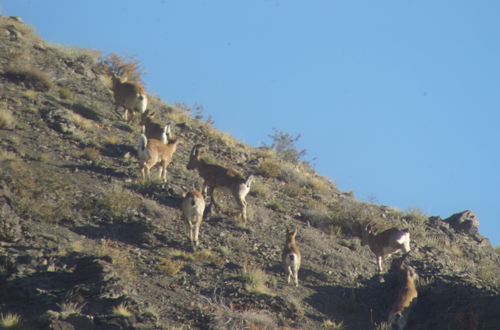
Siberian ibex, Gobi Gurvansaikhan National Park

3. The legendary Gobi is home to Gobi Gurvansaikhan National Park, created partly as a refuge for an endangered population of wild bactrian camels. They are in a remote and inaccessible (except for researchers) part of the park, however. There are also snow leopards and argali, which visitors should not expect to spot. What there is a good chance of seeing are Siberian ibex, pika, two species of gazelle, steppe eagles, golden eagles, lammergier or bearded vultures, black vultures and a variety of smaller birds. I stayed at Nomadic Journeys’ Dungenee eco-ger camp, which is taken down at the end of each season, leaving almost no trace. The kitchen and dining “room” are in connected gers. The setting is terrific, on an upland that has the park’s mountains in one direction and the Gobi stretching out in the other. To get there from Ulaanbaatar one either drives south on the main road, which is an earth road and takes, I think, two days, or flies into Dalanzadgad, which takes about two hours.

View of Steppe Nomads Ger Camp overlooking Kherlen River; the wetland is off to the right with the base of Mt. Baits behind it, Gun-Galuut Nature Reserve

4. A relatively new park, Gun-Galuut Nature Reserve is only a couple of hours east of Ulaanbaatar, mostly on tarmac road. There are two main wildlife attractions here: around 100 argali mountain sheep, which live on Mt. Baits and a wetland area with endangered white-napped cranes, along with a variety of other birds like cinereous vultures, demoiselle cranes, black storks, whooper swans, ducks and terns. The permanent ger camp has a lodge which houses a dining hall and bathroom facilities. There are many activities to choose from besides wildlife watching, including boating, archery, yak cart and horse riding, hiking and homestays with herder families, all of which provide employment for local people. This was the first stop on my Artists for Conservation Flag Expedition in July of 2009.
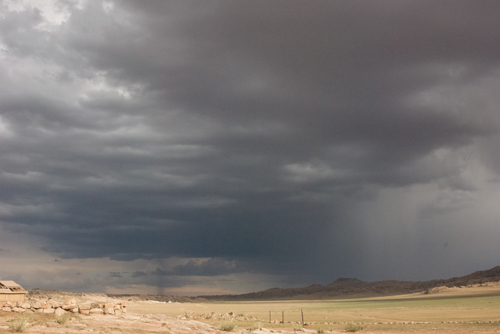
View from my ger, with passing summer rain storm, Baga Gazriin Chuluu Nature Reserve

5. I knew nothing about Baga Gazriin Chuluu Nature Reserve when I arranged to go there as part of my July 2009 Artists for Conservation Flag Expedition other than it had argali. I was only there for two days, but they were two of the most memorable days I’ve had in four trips to Mongolia. The reserve is home to about 60 argali, which are more tolerant of people and vehicles than the ones I’ve seen elsewhere, along with Siberian ibex, cinereous vultures, columbia rock doves and other birds.  The rocky uplands cover a smaller area than Ikh Nart (no.6 below), and are easy to get around in on foot or by vehicle. There is a ger camp tucked up against one of the rock formations with an amazing view down the valley. A concrete “ger” serves as the dining hall and has a covered patio area. There is a toilet/shower block, for which the water is heated by solar power. Baga Gazriin Chuluu is about a six hour drive on an earth road southwest of Ulaanbaatar.

Argali ewe with two lambs; one with radio collar, Ikh Nartiin Chuluu Nature Reserve

6. And last, but certainly not least, Ikh Nartiin Chuluu Nature Reserve, my destination when I first went to Mongolia on an Earthwatch project in spring of 2005. Ikh Nart may be the best all-around place to see wildlife in the country. There are argali mountain sheep, Siberian ibex, corsac fox, red fox, tolai hare, cinereous vultures, golden eagles, black kites, kestrels and many other birds. Nomadic Journeys also has an eco-ger camp here, Red Rocks, and offers guided and unguided trips. It is a great place to hike. There are fabulous rock formations, some of which have Tibetan inscriptions carved on them. You will need a GPS since, while there are some dirt tracks, there are no marked trails. This was the third stop on my Artists for Conservation Flag Expedition in July of 2009. Ikh Nart is a seven hour train ride or a five to six hour drive south and slightly east, mostly on tarmac, from Ulaanbaatar.

There are more photos in other posts on this blog. Look under “Mongolia” on the blog roll at the right or do a name search.

This Will Probably Get Me In Trouble, But The Problem Isn’t Just At SeaWorld…..

OPINION ALERTI don’t think that you will be left in any doubt as to my opinions in the following piece. Civil, thought-out comments are welcome. All others will go in the virtual round file. And the protestations of those whose income relies in any way on the use of captive wild animals for profit will be taken with Upton Sinclair’s quote in mind: “It is difficult to get a man to understand something when his job depends on his not understanding it.I’m not out to necessarily change anyone’s mind or behavior, but if I make you uncomfortable about some assumptions you’ve had, well, I’ve done my job.

So, SeaWorld is in the news again with another “attack” by a killer whale/orca, resulting in a human death. SeaWorld is one of the public faces of Animals As Entertainment. Do not be deceived by their blather about science. They wouldn’t spend a dime on it if they didn’t need to to reassure the public that they are doing “good things” that benefit the animals. The trainers are simply enablers.

Heather Houlahan, over at her blog Raised By Wolves, has a dynamite post on the issues involved in “training” wild animals like orcas, how the so-called positive methods used have bled over into the training of domestic dogs and what really goes on in getting a five ton marine mammal to do what you want, say, to let you collect its urine.

At the intersection of humans, animals and profit, the interests of our species almost always triumph. But there’s some level of at least sub-conscious discomfort because the people involved seem to consistently insist that they love animals. But their income and the care of their families is dependent on the orca/wolf/lion etc. performing as needed. There is an inherent conflict here that the parties involved need to, no, must, ignore.

A partly hidden world of using animals to perform for profit are the game ranches that provide genetically wild animals for photographers, movies, tv and, increasingly, animal artists. When visiting them you hear the same thing as from places like SeaWorld: “Oh, they’re wild. They could hurt you. Can’t be trained by anything but positive methods.” Which means, I guess, that they aren’t actually beaten. But they live in a sensory-deprived environment, unable to express their normal behaviors and instincts and are totally dependent on humans for food…..just like the marine mammals at SeaWorld.

I’ve seen an adult snow leopard kept in a cage maybe equal to its full length (barely including the tail), only taken out for “training” and to perform. A baby bear who was allowed to shock itself on an electric wire to “teach” it to stay with in the enclosed area. A badger who could not be handled, so her claws had grown to around twice the normal length. She was kept in a cage and only brought out for photo opps at a pre-dug hole, never getting to dig herself. But, hey, she lived to over twenty, so she must have had a good life, right?

These places breed animals too. Want a cherry-red fox, a particularly desirable color variant? If you’re in that world, you know who to call. Need a white wolf/black jaguar/bobcat/lynx/grizzly cub/cougar/snow leopard/Siberian tiger/Barbary lion? They’re all out there, for a price, just waiting to become stars who make their owners (with luck, lots of) money.

And what happens to the ones who don’t want to socialize to humans or simply refuse to perform and pay their way? I have no personal knowledge, but the economics of running such a business and the fact that zoos and sanctuaries, as far as I know, won’t take these “surplus” animals is suggestive.

The animals at both the ranches that I’ve gone to are kept in enclosures that are, from what I’ve seen, the same size or smaller than the worst, crappy old-time zoo cages that you can imagine. But since the ranches are “regulated” by the Agriculture Department, they come under the heading of livestock, just like cows and pigs, so official zoo standards of care don’t apply. Sweet, uh?

If the accredited zoo standard of care for game ranch wild animals was required, these places would be out of business tomorrow. And lax state regulation and oversight is probably one reason why the ranches are located in the states they are. But I actually did hear the owner of one place complaining about the owner of another because his violations were so constant and egregious that it had brought the Feds down on him and now all the others were facing increased scrutiny. Life is SO unfair.

The motive is the same as with places like SeaWorld- using captive, genetically wild animals for profit by making them perform certain behaviors for humans as and when required. The ranches, so far, fly under the public and animal welfare radar. But pretty much every calendar and a lot of magazine articles that you see and read, with photos of snow leopards, wolves, cougars and the like, are almost certainly captive animals from these ranches. I’ve even recognized some. Oh, there’s Jimmy the cougar and Princess the snow leopard (made-up names).

I must admit to some frustration with artists who profess to care about wild animals enough to spend their professional lives painting them, but have let their desire to be physically close to them and get reference images blind them to what is going on from an animal welfare standpoint. (See above quote by Upton Sinclair) And of course the people who own the ranches are nice folks. I don’t doubt it. I’ve met some of them. I’m sure they believe it when they say that their animals are treated well. But there’s that pesky inherent conflict again.

(I’m ambivalent about zoos, too. But, as another artist put it, she sees the animals in them as the individual sacrifices necessary to save entire species. And real conservation and science goes on at most of them. So, to me, they can justify their existence, more or less. However, I’ve talked to more than one keeper who seemed very certain that they knew what a given animal in their care needed to be “happy”. But is any kind of human introduced “enrichment” or fiddling with the enclosure really enough? And how can the humans really know? See above quote by Upton Sinclair. I’ve seen a depressing amount of stereotyped behavior like pacing and paw-licking at all the “good” zoos.)

The question, to my mind, isn’t how genetically wild animals are treated in captivity when used for human entertainment and profit, but whether should they be kept at all.

(A final note: I have no use for PETA or any other animal rights organization of their ilk. PETA kills 97% of the animals that are unfortunate enough to fall into their clutches. Their agenda is to end the keeping of all animals by humans. They are batshit crazy extremists. See this post on Pet Connection for more information. My concern is animal welfare. And if you are unclear on the difference, use teh googles.)

An Olympic Drawing Opportunity

If you’re watching the Olympics you know that it sometimes seems more like ads interspersed with some sporting events than the other way around. I’ve also realized that I don’t know how argali sheep are put together as well as I need to, especially the legs, and I’ve got a major takhi painting coming up

Put the two together and I’m getting some good sketching time in. I’ve got all my images from my last two trips to Mongolia on my MacBook Pro, sitting in iPhoto, which happens to have a great enlargement function. I’ve set the laptop on a small folding table (are they still called “tv trays”?) and am using a 9×12″ sketchbook.

These are drawn with a fine felt tip pen with no preliminary pencil work. I either get it or I don’t. None take more than about five minutes, so there isn’t a lot of time invested. The purpose is to hone in on areas that I don’t understand as well as I should. Purely process, not result. Plus, I keep in mind that photos flatten objects, so I need to compensate for that when drawing three dimensional animals.

I started with a page of takhi, plus a cow I saw at Hustai.

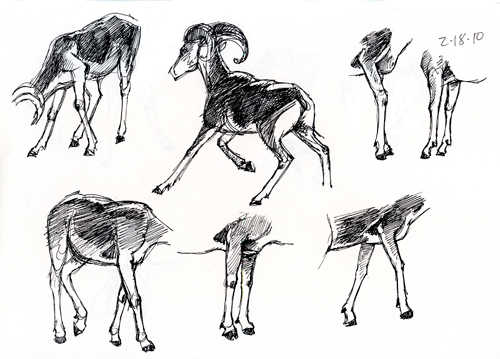
Then I moved on to argali. One of the challenges is to keep the legs and body in proper proportion since the legs are really skinny and long. There isn’t a lot of muscle definition to play with, like with horses, so one has to nail the overall shape.

I’m struggling with the horns, too. They move back and around in space and I’m suspicious of how the camera might distort them. What I really need is to draw from the live animals. But there are none in zoos that I know of and in the wild you’re lucky to watch them from 600 meters (over 600 yds.)

Ideally, I’d have my Leica Televid spotting scope, which would solve the problem, except that it is entirely impractical to haul it around in the terrain where the argali are, at least for me. So it’s photographs and a pair of domestic ram’s horns that I brought back from England some years ago. I don’t have access to taxidermy mounted argali, but the problems there would whether or not the horns are typical, how good the quality of the mount is and is it a Mongolian argali.  Notice that I started on the left with only basic shapes and didn’t worry about modeling or “color”.

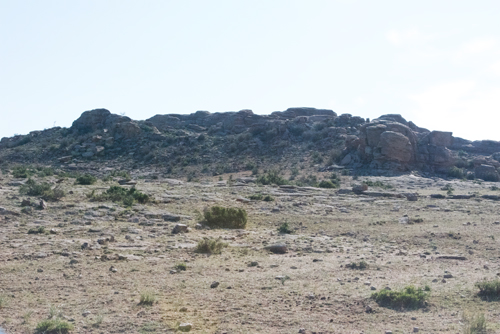
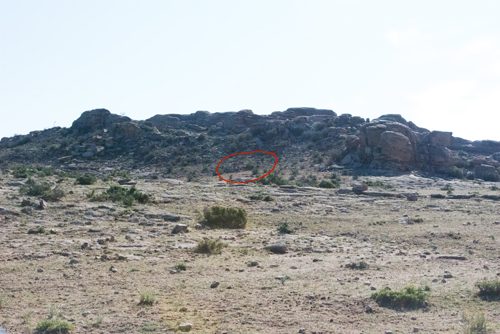
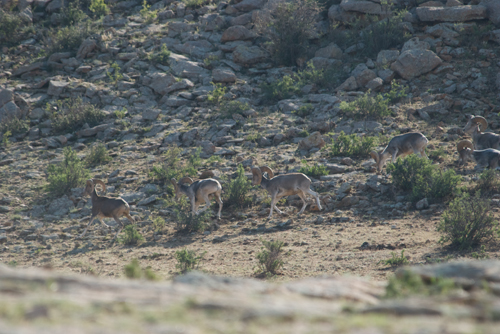
The best images I have of argali so far are a group of six rams at Baga Gazriin Chuluu Nature Reserve. They were considerate enough to have parked themselves in the open within sight of the main road through the reserve in great morning light. I would have been lucky to have spotted them, but the local man living in the reserve who my guide hired to go out with us both mornings that I was there saw them right away. Here’s a long shot from where we stopped. They’re right back against the rocks, in the middle.

I’ve circled them in red.

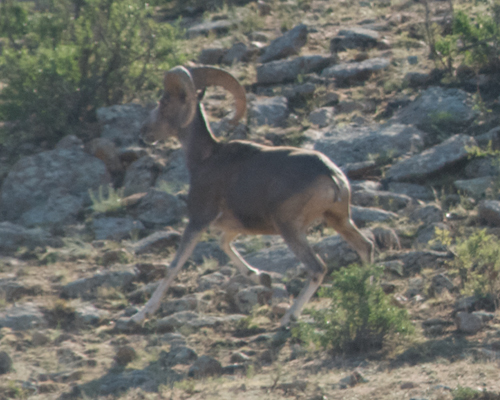
Piece of cake, right? Here’s what I got when I zoomed in with my Nikon Nikkor VR 80-400 lens. These are 10mg files, so they can take quite a bit of enlargement and stay sharp. I’ve got about 84 images total to work with. There’s something useful in all of them. Love these guys.

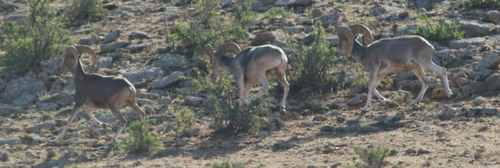
Here’s a close-up of the three rams in front. A perfect Exhibit A of the subject of a previous post about why you have to get out there and do the fieldwork. There’s no other way to get this kind of reference (Buying it from someone else doesn’t count). Game ranch animals won’t do it either. They’re out of context and, unless you’ve observed the species in the wild, you have no idea whether or not any behavior that you see is “real”.

And closer yet of one I drew last night. Everyone was fat and sassy and in great condition. Notice that the younger ram is much browner than the older ones. His behavior was different, too. He was a little more skittish, kept more space between himself and the others than they did between each other and was last in line when they all finally moved up into the rocks.

Great stuff! Action, a terrific pose, rim light. Here’s the page of sketches that include this ram.

Give it a try! It’s a great way to keep training your eye.

Mongolia Monday- This Week’s EBay Listing 1-4-10; A Takhi From Khomiin Tal SOLD

I thought I’d get a two-fer this week and combine my eBay listing with Mongolia Monday since the painting up for auction is a 8×6″ oil of a takhi (Przewalski’s horse). It’s from a photo that I took at Khomiin Tal, the westernmost of the three takhi reintroduction sites in Mongolia. I visited there in September of 2006. What an adventure that was for me! I flew out to Hovd, met my guide and then went by Russian Fergon van (those of you who have been to Mongolia know what that means…) east over 100 miles on what the Mongols call “earth roads” to the river valley where the horses were. I got to see them in late afternoon and morning light and got a lot of good reference. Here’s a photo of some of the horses grazing-

Takhi grazing at Khomiin Tal, western Mongolia

And here the painting that is currently available at auction here

Takhi 8x6" oil on canvasboard

11 Recommended Drawing Books For Animal Artists

by Bob Kuhn

Obviously, drawing skills are fundamental for the creation of visual art, whether it’s representational or not. By “drawing” I mean having the hand/eye motor coordination to make the marks you want, where you want them and the way you want them with your tool of choice, whether or not you approach your work using lines or shapes.

For the purposes of this post, however, I am talking about the use of “dry media”- pencils, charcoal and the like on supports such as paper and canvas. Plus the ability to represent an animal realistically and accurately. It goes hand-in-hand with the development of what I’ll call “visual judgment”, which is how you learn when you’ve made a mistake and what you have to do to fix it.

Part of the inspiration for the following comes from a comment thread I recently saw on Facebook in which an artist flatly stated that “passion” was the most important component of a painting. I would submit that passion uninformed by technical skill in areas such as drawing, design, form, structure, light, value, color and the handling of edges creates work that might have a certain initial level of visual excitement, but won’t stand the test of time or even close scrutiny. To my mind, lack of skill creates visual distractions that get in the way of the artist’s ability to express their passion. I also think that it can be used as a convenient excuse to get out of the hard work (it is HARD and it is WORK) of creating art.

by Walter J. Wilwerding

I recently was a member of the jury which evaluated applications for membership in the Society of Animal Artists. Five votes were required for acceptance. The  jurors were all artists with very keen eyes who were also uncompromising in their standards. I enjoyed the experience very much, both for the chance to see a lot of animal art and to learn from the other jurors. It was an objective process. The judging was not based on “like” vs. “not like” or “passion” or other vague emotional responses. The drawing of the animal was the first thing we looked at, whether it was a painting or a sculpture. Accuracy and an understanding of the structure of a species, plus a firm grasp of basic anatomy (“A leg can’t bend that way.”) were key. If the drawing of the animal was faulty, the application was rejected. It was one of the most consistent problems I saw in the work we viewed.

If, after taking a long, objective look at your work, you can see that there is room for improvement in your drawing skills, consider these books, which are from my own library and that I have found useful over the years. In no particular order:

-Drawing and Painting Animals by Edward Aldrich

-Animal Drawing, Anatomy and Action for Artists by Charles R. Knight

-Animal Drawing and Painting by Walter J. Wilwerding

-The Art of Animal Drawing by Ken Hultgren

-Drawing Animals by Victor Ambrus

-The Animal Art of Bob Kuhn…A Lifetime of Drawing and Painting by Bob Kuhn

-Drawing With An Open Mind by Ted Seth Jacobs

-The Pencil by Paul Calle

-Fast Sketching Techniques by David Rankin

by Charles R. Knight

And, for animal anatomy, you need both of these:

An Atlas of Animal Anatomy for Artists by W. Ellenberger, H. Dittrich and H. Baum

Animal Anatomy for Artists, The Elements of Form by Eliot Goldfinger

by Ken Hultgren

I’m sure that there are other good and useful books about animal drawing and anatomy and I invite you to share them via the comments section.

New Painting, New Drawings And An Interesting Call For Entries

Sort of an odds and ends Friday as the year winds down. The deep freeze is over here in coastal Humboldt County and it’s back to nice normal rainy weather with nighttime lows in the 40s. I’ve been getting in some good easel time of the past few weeks. Here’s a new argali painting from reference that I shot in July at Gun-Galuut Nature Reserve. I watched this group of rams work their way across the rocky slope for almost an hour. “Uul” is Mongolian for “mountain”.

On The Slopes of Baits Uul, Gun-Galuut 18x24" oil on canvasboard (price on request)

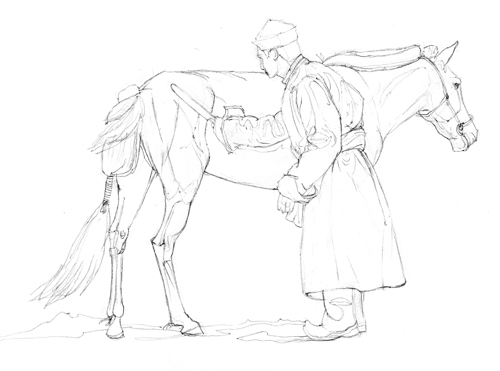
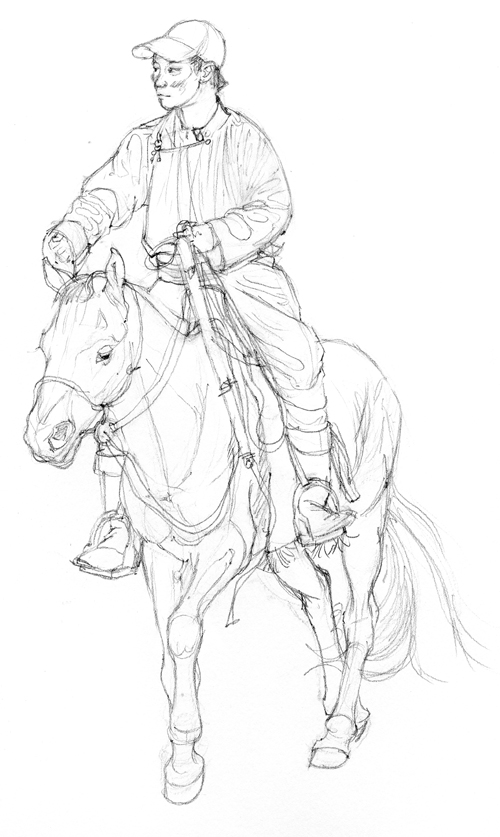
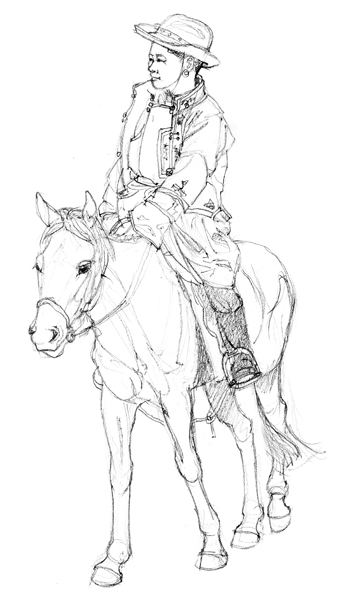
I’ve also decided that I want to paint not just the domestic Mongol horses, but the people who ride them. Which brings me back to wrestling with human figures, as described in an earlier post. I get a better result if I can scan the drawings rather than photograph them and also wanted to really hone in on accuracy, so these are smaller and done with a Sanford Draughting pencil, but on the same vellum bristol (which erases very nicely). The heads ended up being only 3/4″ high, which is pretty small, but it reminded me of a story from art school that I thought I might pass along.

One of my teachers was Randy Berrett, a very good illustrator who chose to work in oils. This was kind of masochistic, in a way, because it added a layer of complexity when he had to ship out a wet painting to meet a deadline. In any case, he was showing some examples of his work in class and one was a really large painting of the signers of the either the Declaration of Independence or the Constitution, I can’t remember which. Someone asked why he painted it so large. Randy’s answer really struck me at the time and has stayed with me. It’s something worth remembering when planning a painting. He said that he wanted the heads to be at least an inch high and that requirement controlled the final size of the painting. I’ve sized more than one painting on the basis of that criteria since then.
The first drawing combined two pieces of reference. One of the horse and one of the man. In the latter, he was in front of the horse’s head. In the former, I didn’t like the pose of the horse. Moving the man back works much better. The sweat from a winning horse is considered to be good luck. There are special scrapers made to remove it.

Scraping the sweat after the race, Baga Gazriin Chuluu
Local herder, Erdene Naadam
Boy on horse, Erdene Naadam

Part of the reason I did the previous two was to see if the images “drew well” and to work on horses coming forward at a 3/4 angle. The final two are head studies, in which the heads are 1 1/2″ from forehead to chin.

Local herder, Erdene Naadam

Local herder, Erdene Naadam

Finally, the folks at Eureka Books in Old Town, Eureka have decided to hold a special art show. Here’s the Call for Entries.

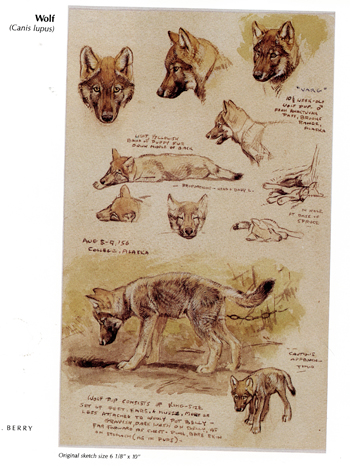
Inspirations: Fieldwork Drawings of William D. Berry

I had never heard of William D. Berry until I read a post about him over at James Gurney’s blog, GurneyJourney. Holy Cow, was he an incredible field artist! There is a book that covers three years of his field “sketches”, which you can buy here for the princely sum of…$8.50. This really is a book that should be in every animal artist’s library.  One of the nice things he did was note whether or not a drawing was done from memory. If not so noted, they were done from live animals. To say that he thoroughly knew his subjects would be a serious understatement. Here’s a quote from the book on how he did it. Simple, really….

What this meant was that I devoted a tremendous amount of time and energy to simply recording the facts of animal life – hundreds of hours and thousands of drawings in the zoos or in the forests, on mountains, in deserts, or plains. A caribou, for example, is never going to hold still for you, and a photograph of him, though useful for many reasons, is never going to show him doing exactly what you want him to be doing for a particular illustration (Berry also illustrated a number of field guides and other animal books) . You have to learn the beast inside-out and upside-down, so that you can put him together on the page from scratch and still have him look like he would if you did see him doing just that. So – instead of learning to paint, I was learning a hell of a lot of animals, birds, plants, whatever. I don’t feel I ever did master any mediums, except pencil –  the medium I used to make field sketches.”

He used an Eagle pencil on Cameo paper (anyone know what that is or if it is still available?) which was supported by a clipboard, then sprayed the finished drawings with fixative. Here are a few pages that I particularly liked. Remember, these are all drawn from life (Sigh.):

And, finally, one page of color studies.

A Trip To The California Academy of Sciences, San Francisco

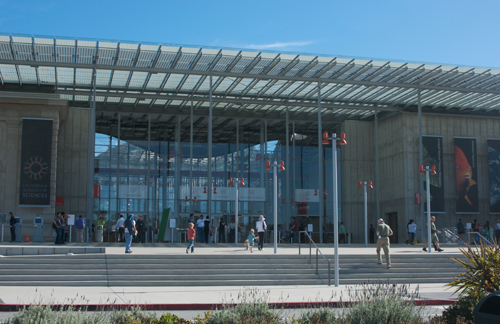
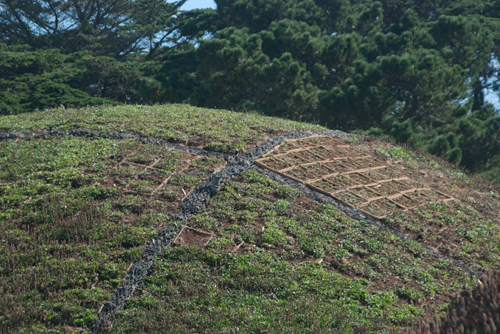
It took a little while to get there after it opened, but we finally visited the California Academy of Sciences in Golden Gate Park this past Sunday. I, like many people, was sorry to see the old building go, but the new one is fantastic. The living roof is worth the price of admission. The Planetarium now is now state of the art with three digital projectors. The original African Hall was preserved, along with this long-time resident….

The albino alligator

Here’s some of my favorite images from the day-

The entrance
The entrance
Looking past the "swamp" to the enclosed food court
Dinosaur
Looking down to the west end of the building
Roof-1
The living roof, covered with California native plants
Roof-2
How the roof started; cocoa fiber planting trays laid out side-by-side

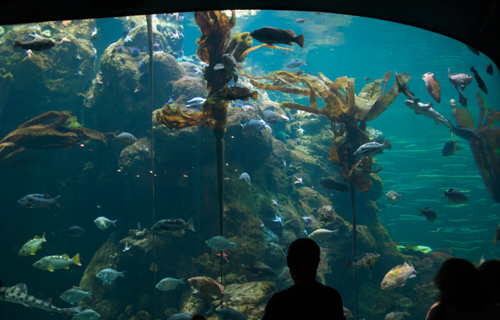
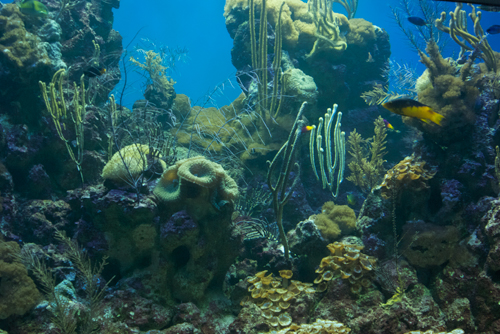
The downstairs is a large and very well-done aquarium.

Calif.-tank
California coast kelp forest fish tank

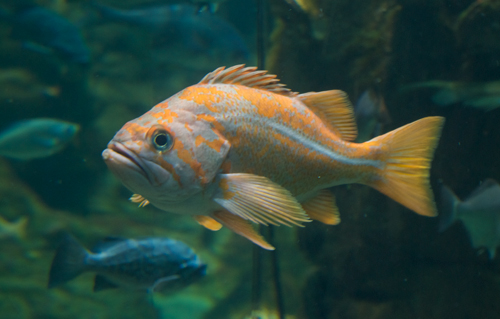
I’m a mammal person and don’t really know my fish that well. I’ve identified the ones I know. You’ll have to use teh googles for the others.

Calif.-fish

Blue-fish
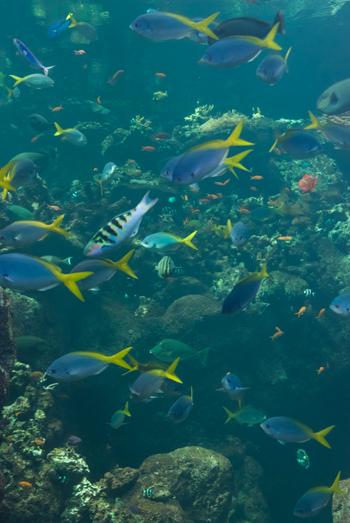
The big salt water tank
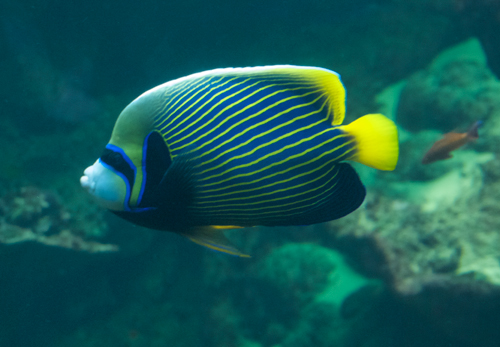
Butterfly-fish
Butterfly fish species
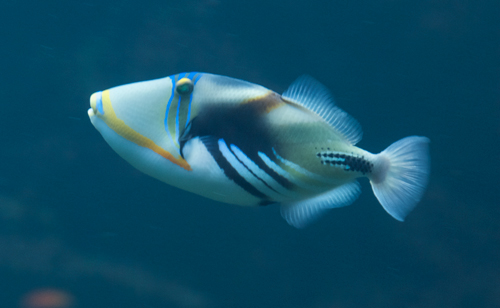
Trigger-fish
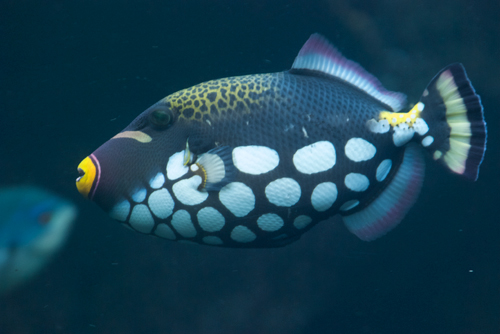
Triggerfish species
Lagoon-trigger-fish
Lagoon triggerfish
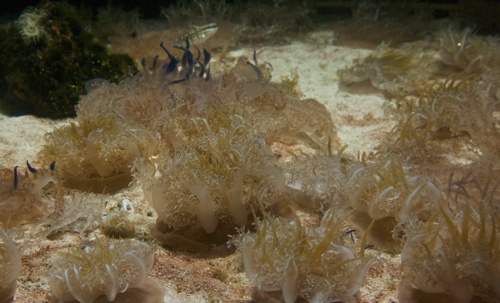
jelly-fish
Upside down jellyfish (no, really, that's their common name)
Small-tank
Small saltwater tank
Moray-eel
Moray eel and fairy shrimp; symbiosis in action

There’s an old Dean Martin song that someone wrote some new words for. It goes like this: “When the eel in the reef has your heel in its teeth, that’s a moray.”

And finally, we walked through the botanical garden across the street before we went to the Academy and “met” this guy:

Squirrel

Become a fan by visiting my public page on Facebook!

New Painting Debut; and the Big Argali Painting, Part 4

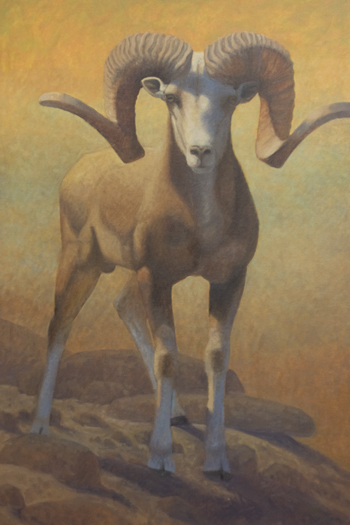
Writers of fiction say that they will have a story all plotted out, but sometimes the characters take control and things go off in unexpected directions. That’s more or less what I feel happened with the painting below. I wanted to do a big argali, because, well, I just needed to do it. About halfway through, though, I could see it starting to diverge from where I thought it was going. By the time I had the background mostly done and had started on the rocks and ground, it had become clear that the painting was going to be what it wanted to be and I was along for the ride. Interesting sensation. Without further ado, “Gun-Galuut Argali”:

Baga Gazriin Chuluu Argali  36x24" oil on canvasboard (price on request)
Gun-Galuut Argali 36x24" oil on canvasboard (price on request)

I’ve gotten in a couple more good sessions on the big argali painting.  The right side background still needed something, so I went back to my reference and found some rocky slope images that I liked. So far this one is behaving itself, but you never know.

3-argali

This one shows how I start to block in the light side and some of the dark areas. The drawing is still kind of lost, but I’m not worried about that at the moment. I’m working on shapes and value/temperature relationships.

head detail
head detail

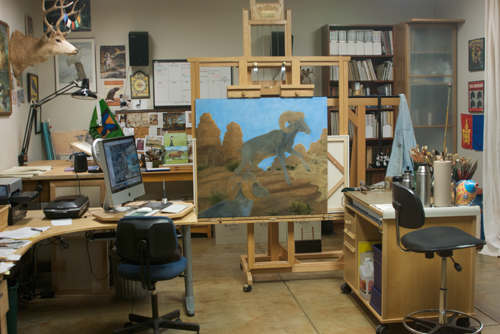
Here’s the studio set-up with my iMac on the left. And, yes, I love my Hughes easel, especially when I’m working on a larger painting since I work my way over most of it during a session.

Studio