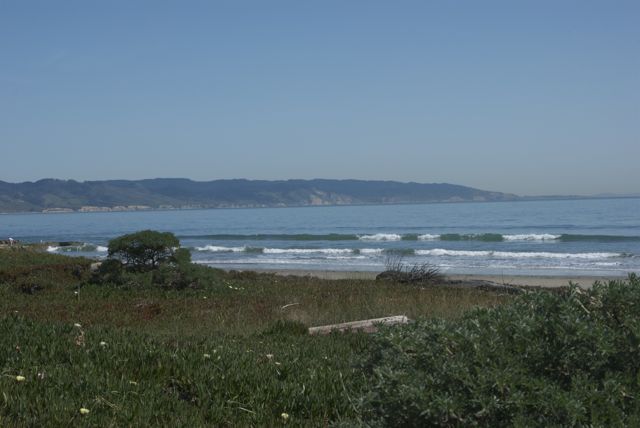
Mongolia Monday: The Best Camping Trip Ever, Part 2 – Baga Gazriin Chuluu Nature Reserve, Delgeriin Choiriin Khid

Even though I only spent two days there last year, Baga Gazriin Chuluu was a place that I really looked forward to visiting again.

A harem of local horses near our camp

One of the best experiences was visiting the ger of Yanjmaa, who had made boortz soup from scratch for us and served me a bowl of the best yogurt I’d ever had. Would she still be around? Although she had relocated her ger, the answer was “yes” and we had another lovely visit, but also learned something disturbing about the wildlife of the reserve.

There was a zud in Mongolia this past winter, which is a combination of a dry summer and a very severe winter. It was a national disaster that was occurring the same time as the quake in Haiti, so there was very little media coverage until early in 2010. The last estimate I read said that around 10 million head of livestock died.

Yanjmaa told us that no argali or ibex had been seen in Baga Gazriin Chuluu since February.  Before then, she had gone out one morning, and to her surprise, found a large ibex billy in with her domestic goats. He was very weak, so she managed to get him into her ger and onto her bed, hobbling him when he started to thrash around.

Having been a vet before she retired, she tried to treat him by offering him cold water and a medicinal plant, shavag, which contains lots of vitamins. Finally, she moved him back out to the goat enclosure, where he died.

Our first thought was that the argali and ibex had all died, like the ibex, but later on that day, it occurred to me that wild animals sense what is going on in their world and that it was more likely they had all simply left as the weather became extremely severe. In some parts of Mongolia, the temperatures dropped to -50F.

Talking with the reserve ranger, Batsaikhan, the next day, we confirmed that the ibex and argali were gone, around 160 animals total. Khatnaa had told me that he had seen 10+ argali about 20 km east of Arburd Sands, which is about a four hour drive north of Baga Gazriin Chuluu, on July 5, a week earlier. This was outside their normal, known range and preferred habitat.

That evening, Batsaikhan came by our camp to give us really good news. A group of visitors had reported seeing a group of argali just within the reserve! Perhaps they and the ibex will all, or mostly, come back to Baga Gazriin Chuluu now that the weather is good. I hope so.

On our way to find Yanjmaa, we had passed through an area that had a number of vulture nests, one of which was on a cliff near the road with a fledgling cinereous vulture in it. I got some good photos from down below, but Khatnaa climbed up behind the nest and came back with some amazing images. We went back the next day and this time I climbed up with him and found myself just slightly above the nest, about 8 meters away. What a photo op!
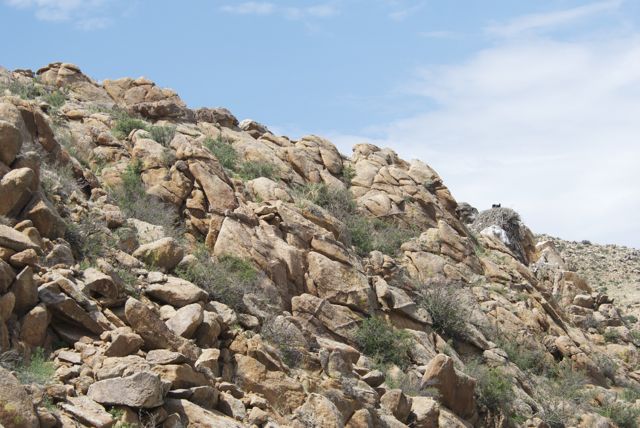
Cinereous vulture nest from below

He/she knew we were there, but never showed any stress. The adult had taken off as soon as we got out of the car, so I felt comfortable staying for awhile and taking almost 100 photos.
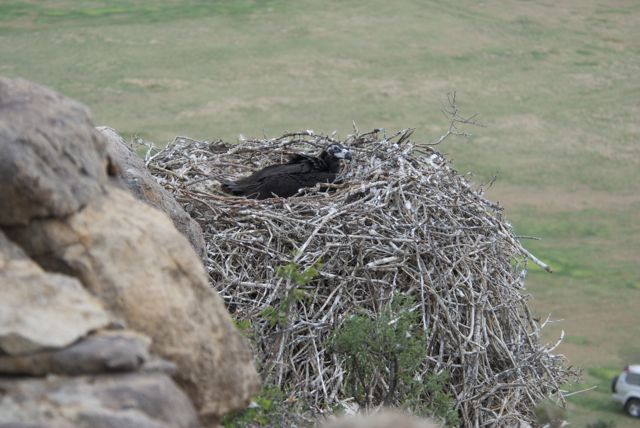
The young occupant

Later that afternoon, we took a side trip out of the reserve to visit a local monastery, Delgeriin Choiriin Khiid. It was one of the many, many monasteries destroyed in the late 1930s, but is now being rebuilt. There are 15 lamas in residence. I was allowed to take photos in the interior of one temple, which is in a large ger.
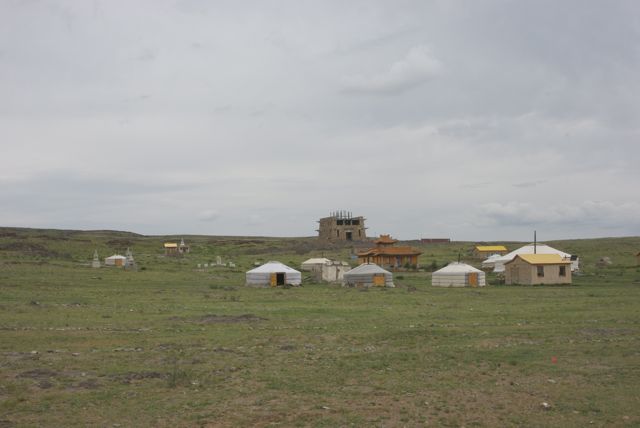
Monastery grounds
Interior of ger temple

The next morning we departed for the fabled Gobi.

Please Share This Link! It Shows What The BP Catastrophe Is Doing To Our Fellow Creatures

These are horrific images, but people need to see them. We must get off our dependence to oil or it will ultimately kill us and the planet. For a preview, here’s what it’s doing to the birds of the Gulf Coast-

http://www.boston.com/bigpicture/2010/06/caught_in_the_oil.html

An pelican covered with oil

Three New Small Works

Coming up soon is North Coast Open Studios the weekend of June 12-13 and, the following weekend, June 19-20, the Marin Art Festival. I’ll have framed paintings, prints and cards at both events, plus a variety of small, unframed affordable original oil paintings. I’ve been doing new ones in between working on larger paintings and it’s a nice way to take a break from the more complex pieces.

I generally do these in two sittings, plus maybe one more short one for final tweaking and try to keep them fairly loose and simple.

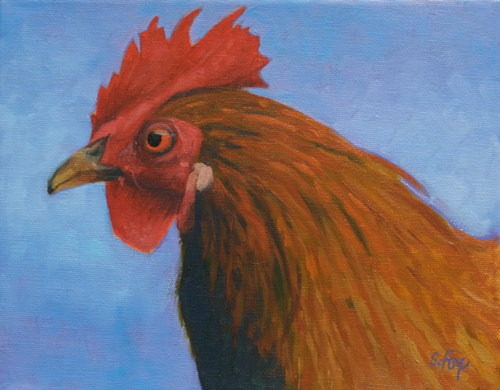
Rooster 8x10" oil
Chipmunk 5x7" oil
Three Tule Elk, Point Reyes 8x10" oil

Coming up: a new on-going series on how to improve your paintings, based on all the mistakes and false starts I’ve made over the fifteen years I’ve been painting in oil. So it will be a looong series. ;0)

Friday This and That

The Society of Animal Artists, of which I am a Signature member, has recently started a blog. On it you will find news about the Society, workshop and event listings by the members and a calendar of Society events. Check it out and let me know what you think!

We also now have a fan page on Facebook. You don’t have to join Facebook to visit us. And I invite you to visit our new website, too! It has information about our organization, exhibitions and how to become a member of the premier animal art organization.

Why Did The Elk Cross The Road Dept.

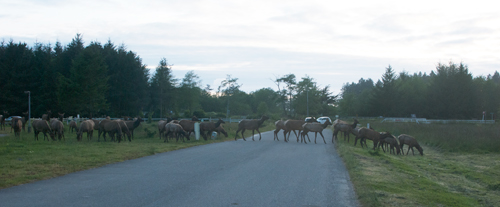
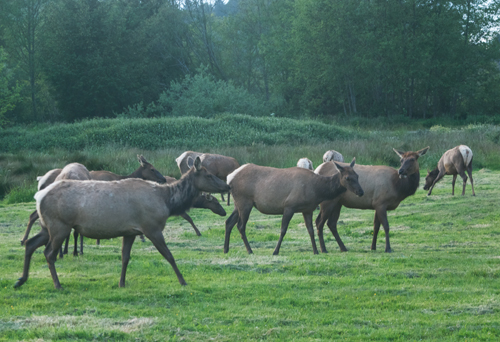
We went for a drive last weekend to find a spot from which to watch the sun set. The clouds rolled in, so that was kind of a bust, but at the Stone Lagoon Schoolhouse campground, which is right off the highway, a large herd of Roosevelt elk were working their way through the almost-empty RV section. We circled around on the campground road and ended up perfectly positioned for me to get some nice elk reference.

Over 30 elk cross the road; looking west towards the ocean
Female Roosevelt elk

This is about twenty minutes north of our house. There are often elk hanging around the campground, sometimes picturesquely situated in front of the old schoolhouse.

Oh, Honey, Look What The Cat Brought In Dept.

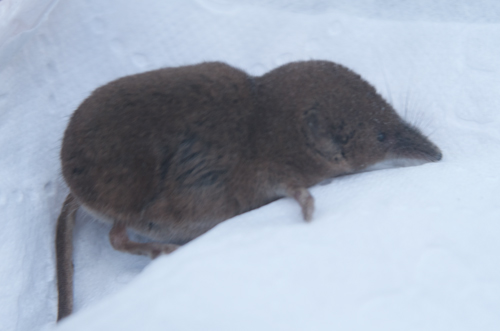
We think of it as semi-regular episodes of Animal Planet. This time, a very alive little shrew was left on an area rug in the living room where we couldn’t miss it. I picked it up in a paper towel and got a couple quick pics before turning it loose outside. Their metabolism runs really fast, so they can’t go long without food and don’t do well under stress.

Shrew, species unknown

I’m Featured In Wildlife Art Journal! Plus Here’s My Latest Painting.

I’m please to announce that the Letter from Mongolia which I recently wrote for Wildlife Art Journal was posted on their website this morning! It’s illustrated with lots of paintings, drawings and photos, many from my Artists for Conservation Flag Expedition last July. Thank you to Todd Wilkinson and the rest of the staff for providing the only publication (it’s online only, no print version) dedicated to wildlife art!

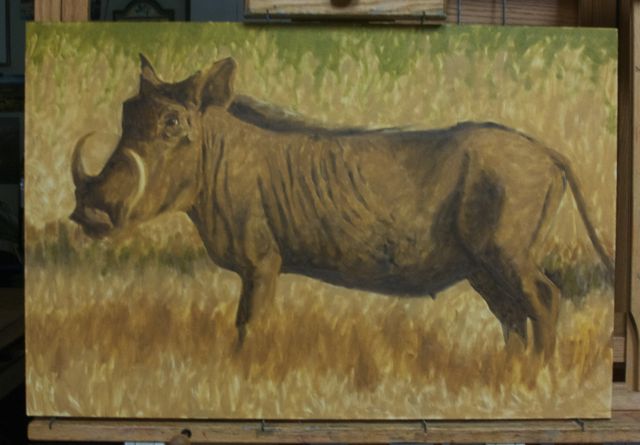
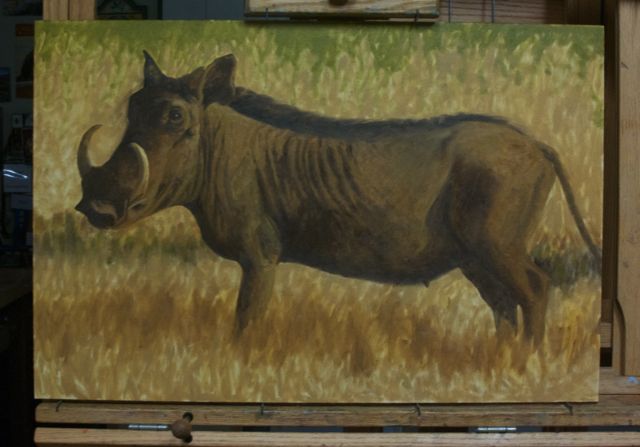
And yesterday I finished the warthog painting. Here’s the  step-by-step from last week. I’m calling it “Gonna Run In 3…2…1”

Gonna Run In 3...2...1 20x30" oil on canvasboard

Sometimes The Art Fairy….

Sometimes the Art Fairy floats down on gossamer wings and whispers something in your ear like….warthogs. And one must answer the call. So, I’m taking a break from my beloved Mongolian subjects and doing a painting of a warthog.

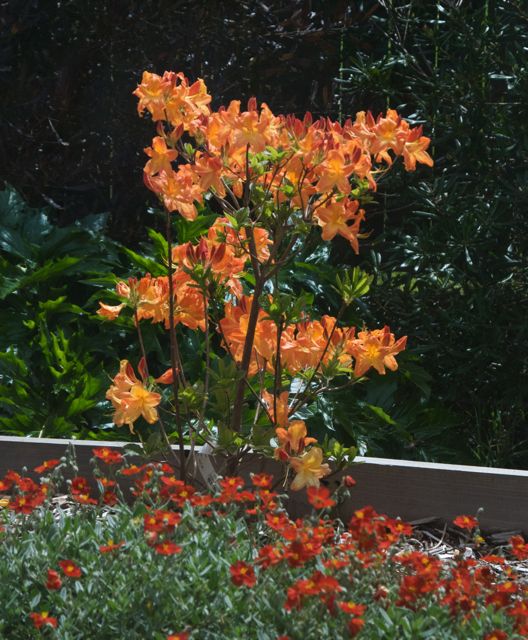
But first, here’s the azalea in full bloom that I can see outside one of my studio windows. It really brightens up a grey day.

On to the warthog. It’s from a reference shot I took during the October 2004 art workshop/safari in Kenya that I and ten other artists went on with the late Simon Combes. You can see pictures of the whole, wonderful trip here. The painting is 20×30″, a size that I use quite often.

Starting with the brush drawing done directly on the canvas
Laying in the shapes of the shadows
First pass of all over color
Second pass of color on the piggy

To be continued….

Having A Lovely Time

But first….this is post number 300! Thank you to everyone who has visited, left comments and has otherwise been supportive. I really appreciate it!

Hard to believe that my trip back east is almost over. Wednesday was the Society of Animal Artists board meeting, which was very productive and worthwhile. There were fifty applicants for membership. Eleven were accepted.

The next day, my host, Guy Combes, needed to get some work done, so I got to see one of his paintings in progress and just kick back. Around lunch time he took me over to the headquarters of Greenwich Workshops, who publishes Guy’s giclees and also handles his originals. They’re located in a lovely old brick building in the small town of Seymour. But once you’re inside in the production rooms, it’s state-of-the-art.

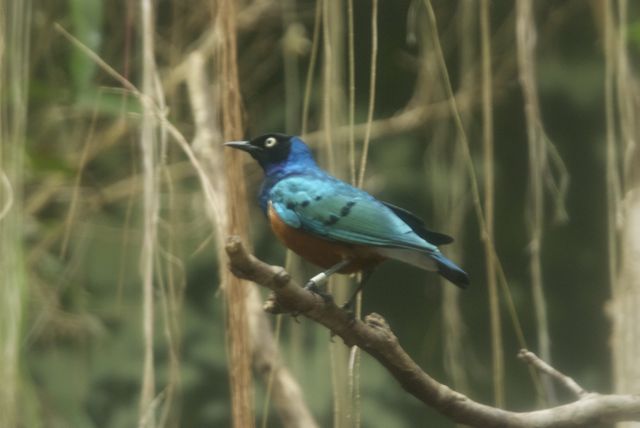
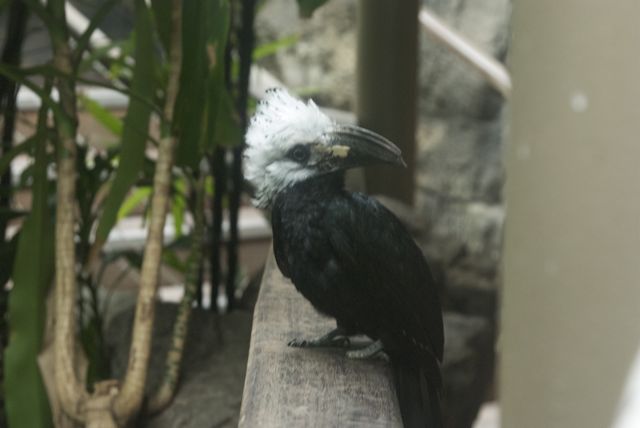
The following morning, we drove down to the home of Alison Nicholls, a fellow Flag Expedition grant recipient. Her trip was to study African wild dogs. The three of us starting talking art and animal shop immediately, continuing on into the next day as we took the train into New York to go to the Central Park Zoo. It’s a small facility, owned and operated by the Wildlife Conservation Society, but it plays an important role in introducing city children to wildlife and conservation. The highlight was the tropical bird aviary. Here’s a few images:

Superb Starling (East Africa)
Long-tailed hornbill (East Africa, but not Kenya)
Victoria crowned pigeon (Indonesia and New Guinea)

Back at Allison’s, we went out for a great seafood dinner, still talking shop. It’s been a real treat for me since Allison and Guy have been to many interesting places that are different from where I’ve been.

Today we’re going to drive up to New Haven to hit a couple of museums, probably the British Collection and the Peabody, both based at Yale University.

New Painting Debut! “Hustai Takhi Stallion”

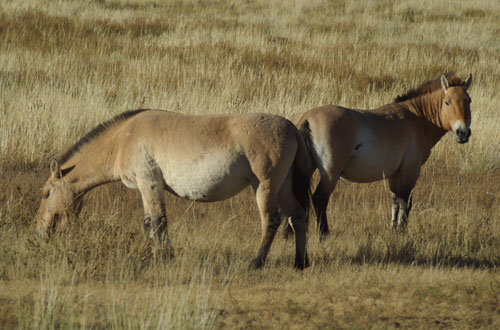
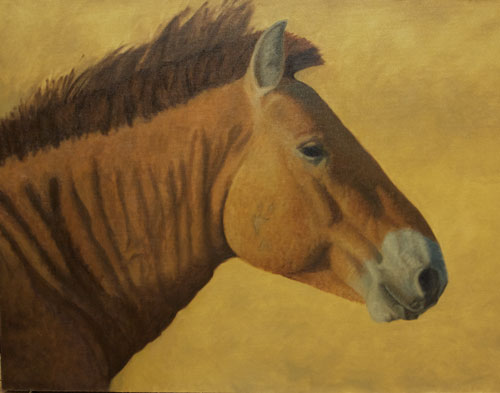
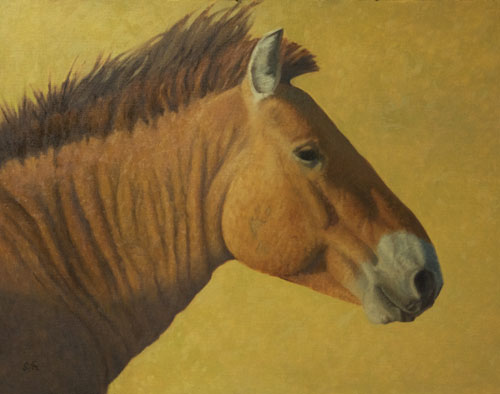
I’m currently working on a large painting that is the most complex one I’ve done yet. I’ll post it when it’s finished. But, in the meantime, I’ve kind of taken a break from it on and off to do something simpler and more straightforward, a head study of a takhi stallion I saw at Hustai National Park in 2006. I had a reference shot that I liked because of the shadow pattern, but as you’ll see there were adjustments that had to be made for it to work as a painting. I hope this step-by-step illustrates how important it is to not, as they told us in art school, get “married to your reference”.

My subject is on the right. A stallion keeping an eye on his mares on a sunny fall day.
The reference photo. It's a little out of focus, but, hey, I'm an artist. 🙂
When it's a simple subject like a head study, I dive right in with a brush drawing. Notice that I'm looking for basic shapes, not detail.
First pass with color, laying in shadow areas.
All-over basic color lay-in. Composition, drawing, value pattern set.
About mid-way through. The stage is set for the fun part. Head is almost done and it's time to do the neck, ear and mane. I worked those folds for most of yesterday afternoon. They had to read correctly, but not stand out too much. Notice that by this point I've ditched the hard cast shadow because it was too visually distracting. I want viewers to look at his head, not his neck. I worked the boundary of the shadow until I got what I wanted, keeping the edge soft.
The horse is done. Now I've started to put in a second color on the background. Not sure where I was going to go with it, but ended up liking it enough that I made it the final color. I liked the complementary color relationship between the reddish horse and the greenish background.
Hustai Takhi Stallion 22x28" oil on canvasboard

Rewarding Day At Point Reyes National Seashore

As promised, here’s a look at Point Reyes National Seashore on a fabulously beautiful day.

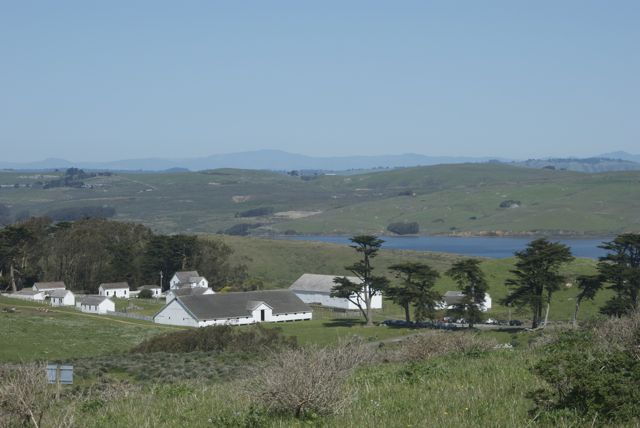
Pierce Ranch buildings at the northern tip of the park

Unlike most national parks, people still live and work within its boundaries. There are over a dozen dairy and cattle ranches dating back to 1852 still in operation, plus an oyster farm. Back in the mid-20th century, developers wanted to turn the whole area into a new city. After a long battle, that was defeated and now this incredible part of west Marin County is preserved for everyone to enjoy. Including around 450 tule elk, which is what brought us to the park yesterday. They had been extirpated from the area by 1860. Nearly a century later, they were re-introduced. They are smaller than the better-known Roosevelt elk, whose southern-most range stops about 300 miles north in Humboldt County.

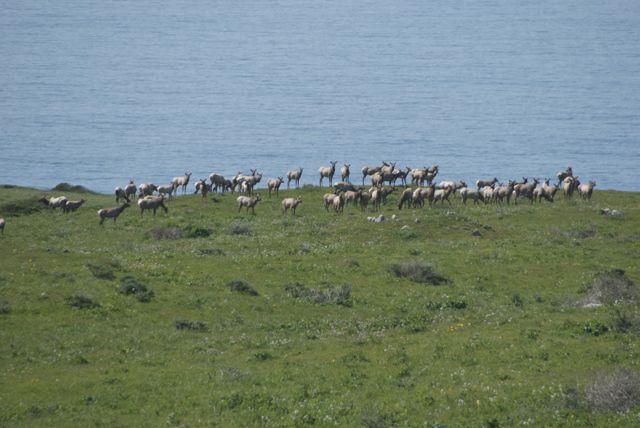
tule elk grazing
Tule elk; what a backdrop! The Pacific Ocean
Tule elk; part of a herd of about sixty

When it comes to wildlife, one never knows what to expect. We had great luck and saw four different herds, all from the road. I didn’t have my long lens, so these images were taken with the 28-300. You can see that the elk weren’t very far away. Below are more images of other parts of the park.

Looking north; elk are to the left
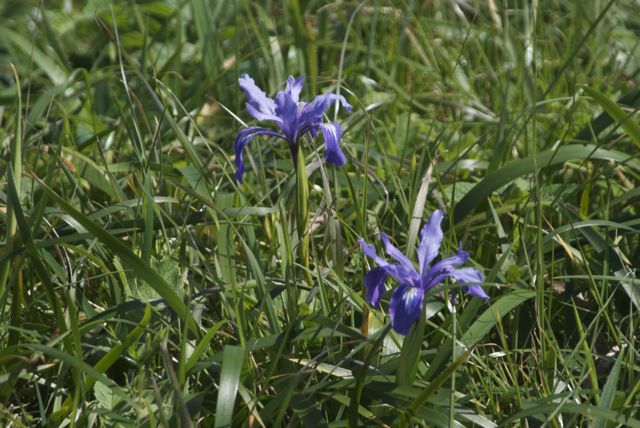
Native Douglas iris; it was blooming in big clumps all through the park
Near the lighthouse at the southern-most point, looking north along beach
Drake's Bay, to the east of previous image, looking south towards San Francisco

Yes, THAT Drake. Sir Francis Drake made a landfall here in 1579. He stayed here about five weeks, hauling the Golden Hinde onto the beach to careen her, which means pulling her out of the water and leaning her on her side to clean the hull of barnacles and seaweed. He and his crew encountered local Miwok indians who supplied them with boiled fish and meal ground from wild roots.

Another of the old ranches; on our way out of the park

Point Reyes, as you can imagine, is a magnet for local and visiting plein air painters. Now that I’ve been able to reconnoiter, we’ll plan a future trip so we can stay in the area and have time for me to paint, too. There are a lot of small resort motels, a private campground in Olema and vintage hotels, B&Bs and good restaurants in Point Reyes Station. We had lunch at the Pine Diner. Cobb Salad to die for.

More on Point Reyes on the official site here