Coming Up Saturday Night….

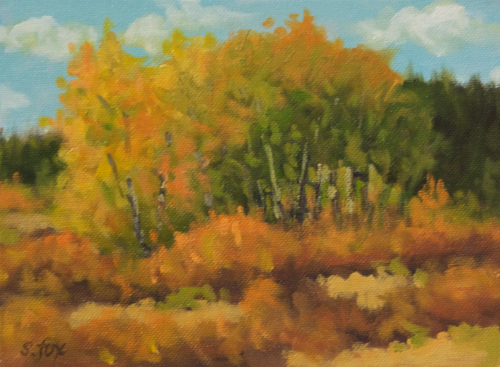
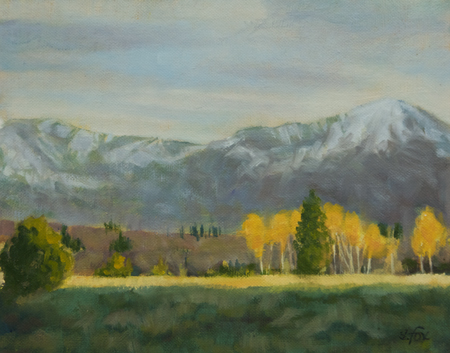
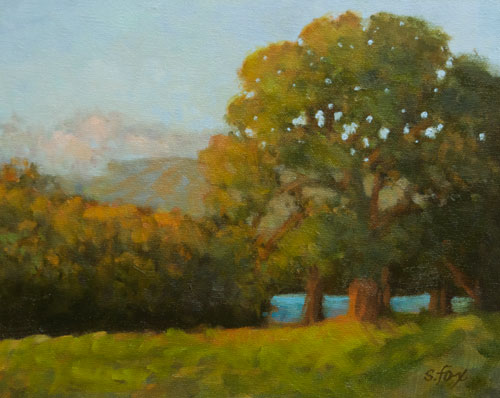
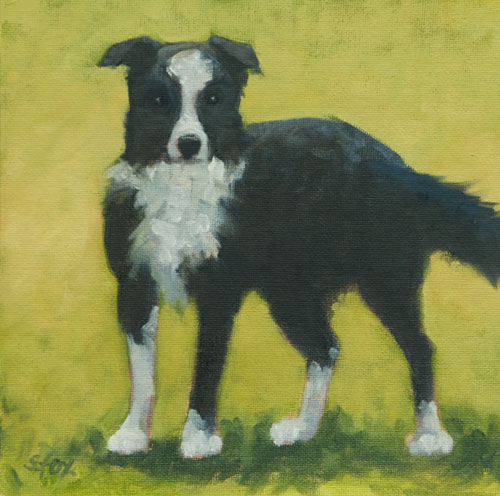
Lost Coast Daily Painters in having a big, Big, BIG holiday sale this Saturday night during Arts Alive in Old Town, Eureka, California. This may be your last chance to get one of our paintings listed in the Buy It Now section of the blog. I’ll be there with the other artists at Kathy O’Leary’s studio upstairs at 208 C St. from 5-9pm. We’re even offering free gift wrapping and can handle shipping if you find that special gift of art for someone who lives out of the area.

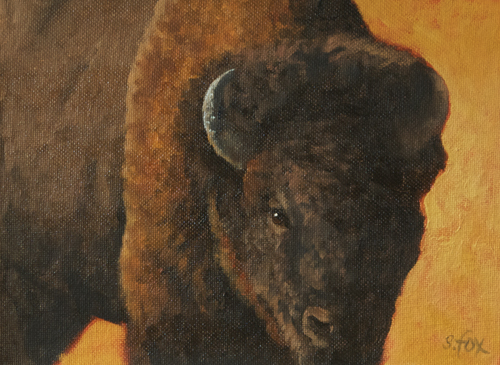
Here’s a selection of what I’ll have available. Almost everything will be $50-$95. They are all original oil paintings.

Meet Shawn Gould A New Book Of His Art); And Great Show News!

I received a delightful surprise in the mail a few days ago. My friend and colleague Shawn Gould sent me a sweet little self-published book of some of his recent paintings. I’m writing about this for two reasons. One, because I thought that you would enjoy seeing his work, which is quite different than mine, and two, to look at what he has done from a marketing standpoint.

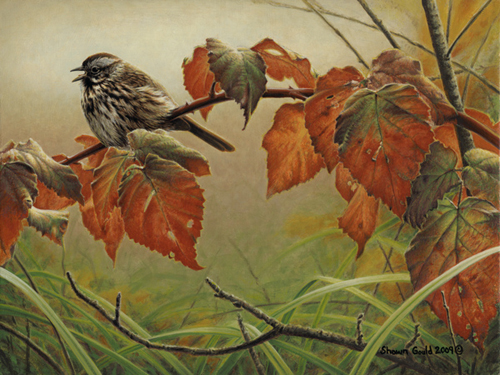
Sparrow Song 12x16 acrylic on masonite

Shawn grew up in Iowa, but now lives about twenty minutes from me in Eureka, California. He started out as an illustrator, creating award-winning work for clients like National Geographic, the Smithsonian and the Audubon Society. For the last ten years, however, he has been creating beautiful paintings like the ones you see here. He’s a Signature Member of the Society of Animal Artists and his work has been accepted into a variety of national juried shows like Birds in Art, Art and the Animal Kingdom and Arts for the Parks.

Good Dog 18x15" acylic on masonite

Now, for the book, “Wild Sanctuaries”. I asked Shawn via email to tell me more about it. He said that “I have a lot of new work that hasn’t been seen by very many people, and the book seemed like a nice format to get it out to a targeted audience for a reasonable price. We sent out 100 books for less than the price of a one page magazine ad.”

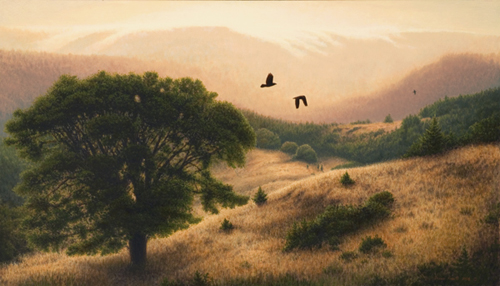
Summit 24x42" acrylic on masonite

The publisher is a company called Blurb.com, who I had never heard of. I wondered what they were like to work with. “Blurb was great. Kristen (Shawn’s wife) did the layout of the book, and deserves all the credit for how it looks. If like me, you don’t know InDesign very well, blurb does offer software you can download from their site. I don’t think you have as much freedom with the layout, but it’s easier to use and does still look good.

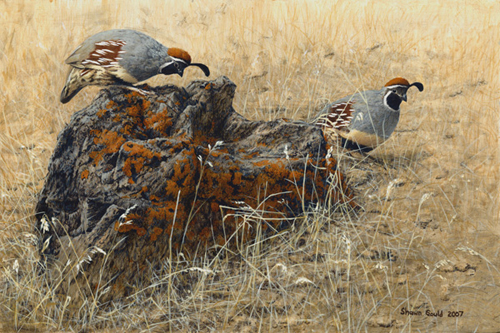
Gambel's Quail 12x18" acrylic on masonite

“Wild Sanctuaries” is available through Blurb on a print-on-demand basis, so Shawn hasn’t had to tie up any money in inventory. If you would like your own copy, for yourself or for a gift, it’s $30 plus shipping and handling and can be ordered here

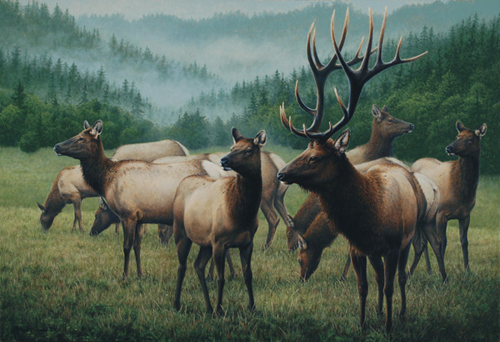
Challenger's Bugle 26x38" acrylic on masonite

Given the down (down, down) economy, creating and producing “Wild Sanctuaries” took some courage and a leap of faith. But Shawn now has a powerful marketing tool that should prove increasingly valuable as conditions improve. Food for thought.

You can see more of Shawn’s work at www.shawngould.com

SHOW NEWS!

I recently received one of two Janie Walsh Memorial Awards from the Redwood Association for a painting that was in their 51st Annual Fall show. It even included $100 check! Here’s an image from the show. The painting of bighorn sheep, “Heavy Lies the Head” is mine. The show ended yesterday afternoon.

Three Drawings of Mongol Horses and Riders

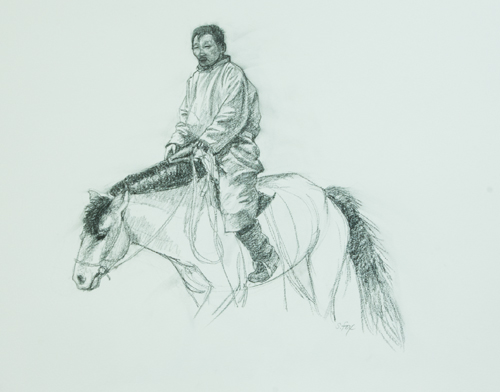
Drawing and painting animals has always come more easily to me than humans. No idea why, that’s just been how it is. But now, I’ve gotten really interested in the Mongol horses and the lives of the herders who breed, train, ride and race them. And I want to paint all of that, so now I really do have to get up to speed with people. These drawings are part of that process. They each took a few hours and I enjoyed doing them a lot.

Erdene-naadam-rider
Horse and Rider at Erdene Naadam, 2009; compressed charcoal on vellum bristol
BGC-boy-on-horse
Horse and jockey, mountain blessing day horse race at Baga Gazriin Chuluu, 2009; charcoal pencil on vellum bristol
Choi's-father
Herder and horse, Ikh Nartiin Chuluu, 2005; charcoal pencil on vellum bristol

Memories of Germany A Year After The Wall Came Down

A few people are posting on Facebook about the fall of the Berlin Wall, which happened twenty years ago, so I wrote the following at a Note to post there, but also thought I’d share my memories here of that amazing point in history and our trip to Germany the following year.
——–
I and my husband, who arrived in Berlin (courtesy of the Air Force) six months after The Wall went up, watched it come down on TV 20 years ago. It was something we never thought we’d see in our lifetime. I’ll always regret that I didn’t hop on a plane and get over there to join the party.

We did visit Germany in December of 2000, three months after unification. We flew into Frankfurt, picked up a rental car and headed towards Berlin. I remember crossing the old border between West and East on a country road and coming to an autobahn Kreutz (intersection “cross”) with abandoned guard towers looming over the road in the half-light of a late winter afternoon. It was snowing and very quiet. We took an exit, drove into a village as night was coming on and suddenly found ourselves in the 17th century. Old, old houses and muddy dirt roads. I half-expected to see a horse-drawn cart amble by. The only gasthouse was closed and had obviously been so for many, many years. So we had to scoot back across “the border” to a “west” German town to find a place to stay.

The next morning we crossed the old border again. There were fence posts, but the wire was gone. Tacked to one of the posts was a campaign poster for Helmut Kohl, who had rammed through reunification, knowing it was the right thing to do. I thought the symbolism was very powerful and neatly summed up the dramatic change which had happened the previous year.

We drove on to Berlin through Erfurt. I have ancestors who came from around there and I wanted to see the medieval Cathedral, which has some statues (of Count Erhard and Countess Uta) that I had been struck by when I had seen them in a costume book. As we walked around the city, we drew some stony-faced looks, especially when people saw my camera. We were probably the first western “tourists” they had seen in a long time, if ever. I remember walking past a building that was completely collapsed on the inside and realized that it had probably been bombed during WWII and had never been repaired or replaced.

We found the Kristkindlemarkt in the main square and bought Nuremburger bratwurst and glugwein for lunch. Someone was doing a brisk business selling small, unassuming Christmas trees. There were no merchant booths like we saw in the west German cities. People seemed cautiously happy.

When we got to Berlin, we went down to the Brandenburger Tor or Brandenburg Gate. It was blocked off, but on either side were rows of tables and blankets laid on the ground. Covering both was the flotsam of the end of a country. For sale were East German military coats and hats, ID books, medals, various other documents, East German currency and pieces of the Wall. We bought one big chunk for ourselves and some smaller ones for gifts. I remember that the sellers weren’t speaking German, but a variety of other Eastern European languages.

We then walked all the way around the nearby Reichstag. The walls on all sides had obviously patched bullet holes from the final battle for Berlin.

It’s no longer there, but we also visited the Checkpoint Charlie Museum and saw all the desperately creative ways that people used to try to get from the East to the West, including a small convertible car whose doors had been filled with concrete to stop bullets. It was a convertible because the plan (which worked) was to duck down with the doors for cover and drive right past the guards and under the horizontal gate bars at the border.

Outside we found that Checkpoint Charlie itself, the gates and guard booths, were already gone. As we drove past where it had been, there, on the right hand corner of the first block, was a United Colors of Benneton store. I’ve always wondered how in the world they were able to negotiate a lease and get a store up and running in three months. It was the only western store we saw on that side. I’ve joked over the years that, yes, we got to the old East Germany ahead of McDonald’s. But not Benneton.

We drove around for awhile and then back to the west side of the city past enormous apartment buildings that were the personification of East “bloc” housing.

We went to Templehof airfield (where my husband worked for part of his tour), the sole remaining example of Nazi meglomaniacal architecture, courtesy Albert Speer. The scale of it, even though it was never finished, is almost obscene. But outside is the Berlin Airlift Memorial, which commemorates one of our country’s finest hours and that of the Allies who also participated.

My husband also did part of his tour at a location south of the city. We drove out that way one afternoon and he saw the Berlin skyline from the south for the first time, looking back across what had been no-man’s-land. The farmer’s fields were covered with sparkling frost and a few burned out lime-green Trabant cars lined the road. These quintessential communist-era cars were the subject of many jokes back then, such as “How do you double the value of a Trabant? Fill it with gas.”

Our stay in Berlin at an end, we drove back to Frankfurt via the east-west autobahn that was one of the only ways in and out of Berlin during the Cold War. The East Germans timed travelers. They knew how long it took to get to Berlin and you were asking for serious trouble if you stopped along the way. For us, it was a beautiful drive through the green forests of a Germany that was whole again.
Sketching In New York

I just got back last night from a two-day trip to New York. One day was taken up with the Society of Animal Artists board meeting (of which, more later) and the second day with wandering around Greenwich Village sketching and then hitting some jazz clubs in the evening with fellow artist Guy Combes, who lives across the river in New Jersey as the artist-in-residence at the Hiram Blauvelt Museum of Art.

I hadn’t done any “urban” sketching for quite a long time, but the area of New York that I was in could keep an artist busy for a lifetime. As it was I did the four following sketches in a  5.5×8.5″ Strathmore Series 400 recycled paper sketchbook with a Pentel “Energel” .5 pen.

Nothing fancy here. These are about the process and just having fun.

11-05-NY-1

Notice that I didn’t get into rendering a bunch of leaves on the big shrub. It’s just a shape.

11-05-NY-2

11-05-NY-3

All the little dark marks are what is left of old pier pilings.

11-05-NY-4

I stood on the opposite corner to draw this festive restaurant exterior with the piggy sign.

None of these took more than about twenty minutes.

New Painting Debut; and the Big Argali Painting, Part 4

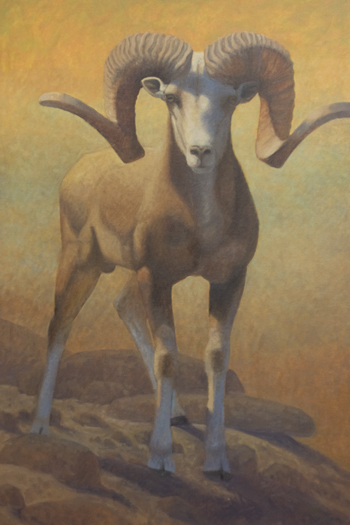
Writers of fiction say that they will have a story all plotted out, but sometimes the characters take control and things go off in unexpected directions. That’s more or less what I feel happened with the painting below. I wanted to do a big argali, because, well, I just needed to do it. About halfway through, though, I could see it starting to diverge from where I thought it was going. By the time I had the background mostly done and had started on the rocks and ground, it had become clear that the painting was going to be what it wanted to be and I was along for the ride. Interesting sensation. Without further ado, “Gun-Galuut Argali”:

Baga Gazriin Chuluu Argali  36x24" oil on canvasboard (price on request)
Gun-Galuut Argali 36x24" oil on canvasboard (price on request)

I’ve gotten in a couple more good sessions on the big argali painting.  The right side background still needed something, so I went back to my reference and found some rocky slope images that I liked. So far this one is behaving itself, but you never know.

3-argali

This one shows how I start to block in the light side and some of the dark areas. The drawing is still kind of lost, but I’m not worried about that at the moment. I’m working on shapes and value/temperature relationships.

head detail
head detail

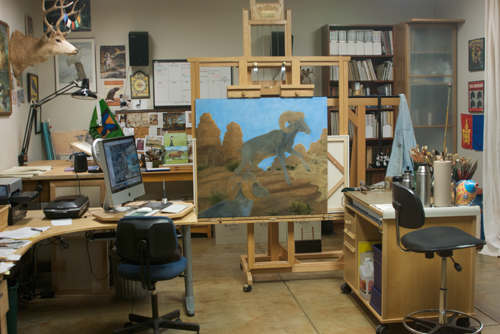
Here’s the studio set-up with my iMac on the left. And, yes, I love my Hughes easel, especially when I’m working on a larger painting since I work my way over most of it during a session.

Studio

Come Visit My Facebook Fan Page!

Having hit the 100 fan threshold (the count is 137 as of this morning), I was able to register a unique URL for my fan page. It’s at www.facebook.com/SusanFoxArt

The Big Argali Painting, Part 3

When we last left the big argali painting (36×40″), I had worked through the composition and drawing. You can read that post here.

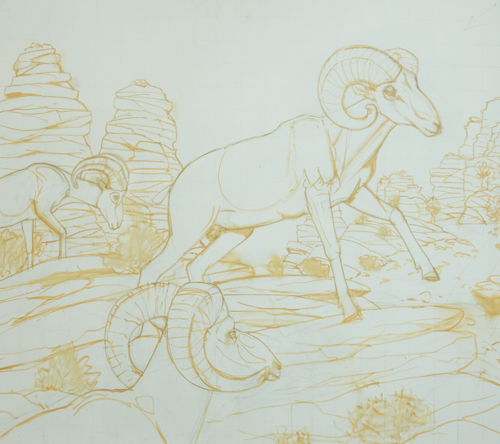
I finally got back to it this week. The first step was to use the good old grid system to transfer the drawing in pencil. Then I restated and refined it with a filbert (a flat brush with a rounded end) and a light tan tone. Scale does make a difference and the ram at the bottom, which looked ok in the smaller drawing, didn’t cut it when the head was around 13″ from the back of the horn to the nose. Back to the reference. And a much better head position. I taped a piece of tracing paper onto the bottom of the canvas and drew the new head. Once it was done, I moved the paper around until I had him where I wanted him. Then I did a transfer with graphite paper and a #7 pencil. The tricky part was where he overlapped the hind legs of the ram above him.

Brush drawing
Brush drawing

Now that I could see the painting at the final size, it was time to do the color rough. I have good reference and a pretty clear picture in my head of where I want to end up, so I decided to combine thinking value with working out the color scheme. All I’m after is the overall pattern of relationships, so it’s just blobs of color, but it has the information I need to get started.

Color rough, approx. 8x11"  on canvas paper
Color rough, approx. 8x11" on canvas paper

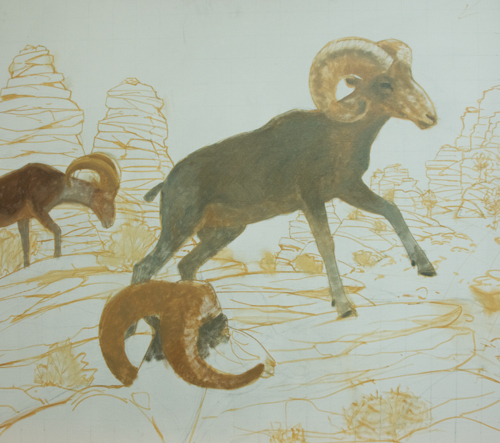
I set the rough down where I could see it and then started painting. The first step, for me, is to cover the entire canvas with a medium dark tone that is somewhat opposite the color temperature I’ll eventually end up with. This is all scumbled in with a fairly dry brush. The fun really begins when I start to add the lights in over the darks. Whoohoo!

Initial color lay in

The main ram is present. There’s someone home in there, even though the eye is only indicated with a rough shape. I’ve added the first layer for the sky. It will go one step darker and cooler and then I’ll paint lighter, warmer tones over it, but still letting a little of the original color show through.

First tone for the sky

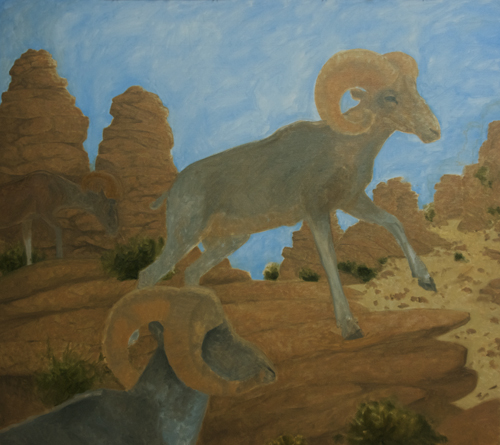
Next, it was time to “rock”, as in scumble in the first tones of the rocks. The light is coming from the right, so I want to establish my light side and shadow side right away and also introduce some visual variety and form. I’ve also added the darkest darks for the shrubs. I stood back at that point to see if they made a good pattern in and of themselves. Ok so far. May need a couple more on the right and left edges.

I’m looking in the mirror a lot at this point as I define the shapes of the rocks. If you look on the right, you can see where I’ve eliminated some pinnacles. The ram’s head felt too confined. He needed more air in front of him.

Initial background tones

I spent the afternoon working my way across the canvas. The drawing is mostly lost at this point, but that’s ok because I have it stored in my head, hand and on the tracing paper. The next step is to find it again. I’ve redone the grazing ram (again) and lengthened the front leg of the main ram. Before continuing, I’ll do a proportion check. Argali have big bodies with very thin legs, so they sort of look “wrong” on the hoof.

Initial lay in done
Initial lay in done

I’m kind at the point, which many artists hit, when I hate the painting. The drawing was so nice and now things are a dull, undefined mess. All I can see at the moment are the things that are “wrong”. Now is when it’s important to hold onto the vision in my head of the painting I want to do. Here’s the one part I still like. It’s the top of the far left side pinnacle.

Rock pinnacle detail

Field Sketches/I’ll Be At Pastels On The Plaza Tomorrow

I’m going back to my two-a-week posts. Mongolia Monday will start up again on, um, Monday, along with my eBay auction listing. Fridays and whenever the spirits moves me will be everything else: paintings in progress, etc.

Here are some recent pages from my sketchbook. They are done with whatever fine point liquid gel pen Staples had last time I needed some new ones. No preliminary pencil work, I just dive in with the pen and hope for the best. These were done at the Rolling Hills Wildlife Adventure’s zoo:

RHWA2009-1

RHWA-2

RHWA-3

RHWA-4

I finally sucked it up and sketched people for the first time in years on my way to the AFC “Art of Conservation” show opening weekend. Got to practice my furtive glance at San Francisco International Airport Gate 74. (ignore the date).

SFO-Gate-74

————–

I’ll be at PASTELS ON THE PLAZA in Arcata, California tomorrow morning from between 8 and 9am until probably around 11am. This now-traditional October event is a benefit for Northcoast Children’s Services and brings out well over one hundred Humboldt County artists who will fill the sidewalks around the Arcata Plaza with creative, fun and amazing pastel drawings, all for a great cause. Each artist has either found a sponsor or has been assigned one by NCS. The sponsor “buys” a single or double space and the artists donate their time. The Saturday Farmer’s Market happens at the same time, so it’s a big day-long street party. The pastels usually are visible for a couple of weeks or until the first winter rains hit.