We've had a friend from New Zealand visiting for the past couple of days, which is why this post is a little late. He wanted to see redwoods, but he also got an eyeful of our local Roosevelt elk, including this big bull who was grazing right next to the road in Prairie Creek State Park.
It’s live! My new website is up and running! I built it on a newish application called Sandvox, which I highly recommend. Nice choices for templates, WYSIWYG interface, fast publishing of updates and good communication from the company, which is based in San Francisco. I think that artists who are looking for something beyond the cookie-cutter fine art template sites ought to check out this product. It also looks like they are very receptive to suggestions for improvements and features, so there may be an opportunity to nudge them in the direction of doing things that would make their product even more attractive to artists.
I love the control I now have and, while I do pay for web-hosting, the existence of my site is not dependent on anyone else, a lesson I’ve just learned from my experience with GoDaddy after they cut off my access for 24 hours, which just coincidentally happened to coincide with the Strike Against SOPA. The fine art template sites all seem to charge for their services and besides really disliking their pedestrian template choices, who needs a monthly fee just to have a website?
Sandvox costs $79.99, ok, 80 bucks. I just downloaded the latest upgrade, which was free. You can also download a free trial version to test drive it.
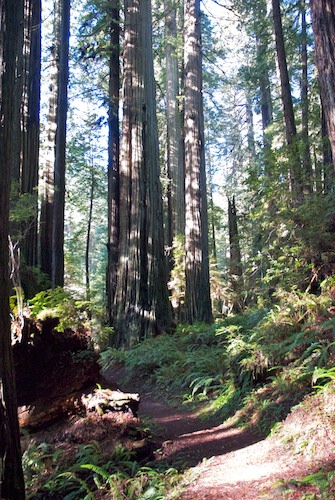
Redwoods in Prairie Creek State Park. When I was a kid I though everyone got to go camping in places like this.
In other news, I recently received this endorsement from Todd Wilkinson, the Editor of Wildlife Art Journal:
“What catches my eye with Susan Fox’s work, inspired by her travels to Mongolia, is her aesthetic, her craving for adventure, her way of naturalistic interpretation that reads, visually, like a beautifully-illustrated field journal. Susan’s paintings in oil speak of exotic people, animals and outposts set in a distant mythical corner of the world—an ancient kingdom synonymous with Genghis Khan, yet today a modern country surprisingly still unexplored by Western artists. Fox may be the only American animal artist who has devoted so much to Mongolia’s mountains, deserts and steppes. And that’s precisely why her work is more than decoration; it sparks conversations.
I salute art that tells stories—that upon each encounter with a painting or sculpture you realize there’s another narrative layer waiting to be explored. This involves something that goes beyond the technical virtuosity of an artist or the way light falls upon a piece; it gets, instead, to the reason why some art possesses soul. Whether she is interpreting traditional Mongolian horse culture, celebrating Argali (bighorn) sheep, or taking us off to the East African savannah (yet another destination on Fox’s map of travel), we know we’ve been on a journey to someplace special. Susan Fox endeavors to set herself apart and it shows.”
It’s clear that one lesson we, as a species MUST learn, is to share. All of these animals have just as much right to be here as we do. As they go, in the end, so shall we.
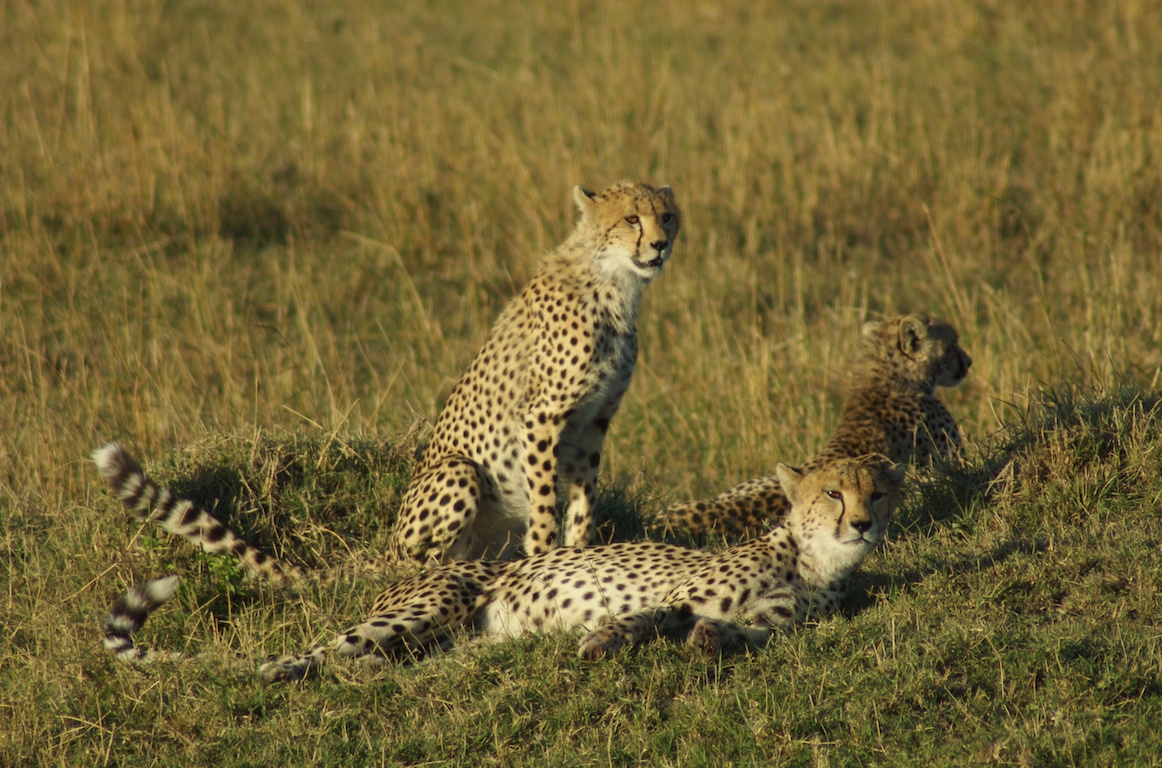
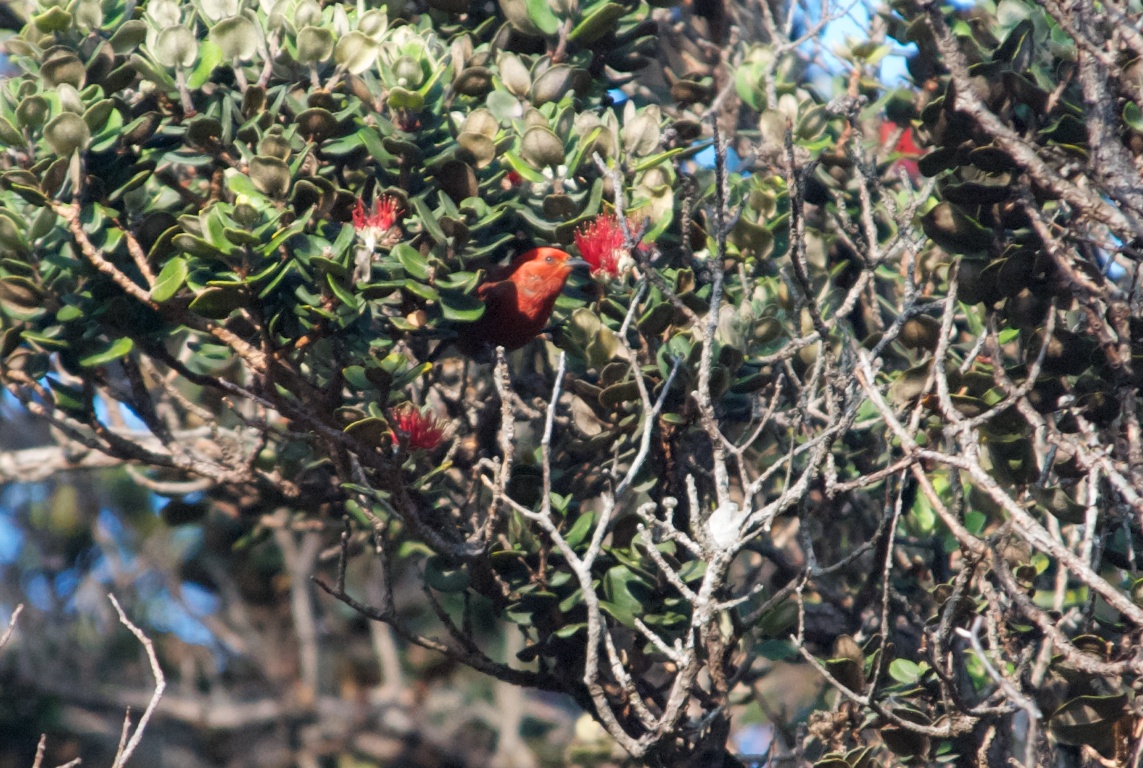
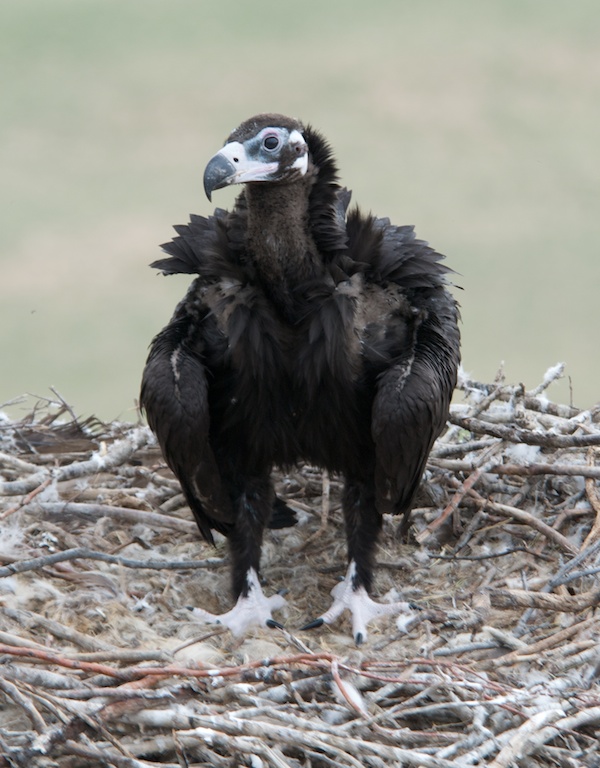
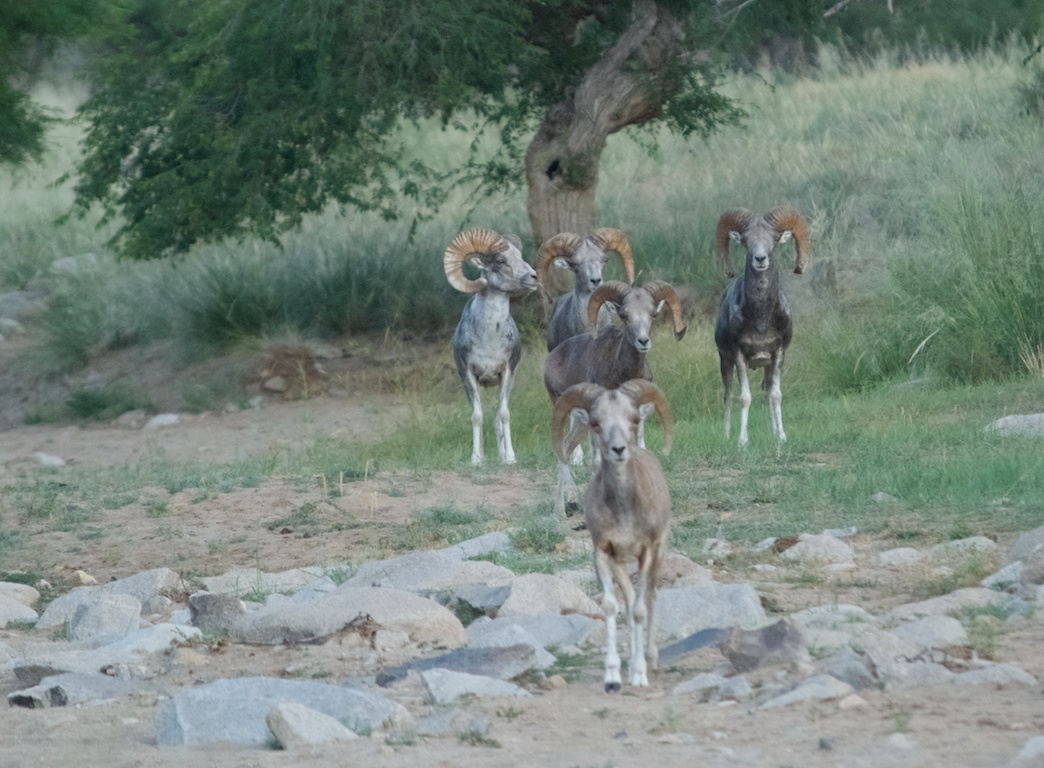
I’ve never made a point, for the most part, of specifically seeking out endangered or threatened species to photograph for my paintings. But, as it’s happened, in less than ten years I’ve seen two dozen, plus one, all in the wild. Quite a surprise, really.
Sometimes they’ve been pretty far away, but that in no way diminished the thrill of seeing them. Close-ups in a zoo or other captive animal facility can be useful, within certain limits, but seeing a wild animal in its own habitat, even at a distance, is much more satisfying and gives me ideas and information for my work that I couldn’t get any other way.
In no particular order, because they are all trying to survive on this planet:
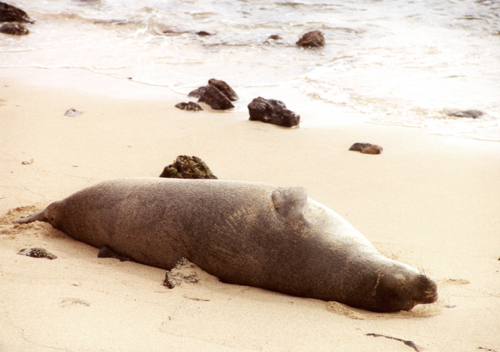
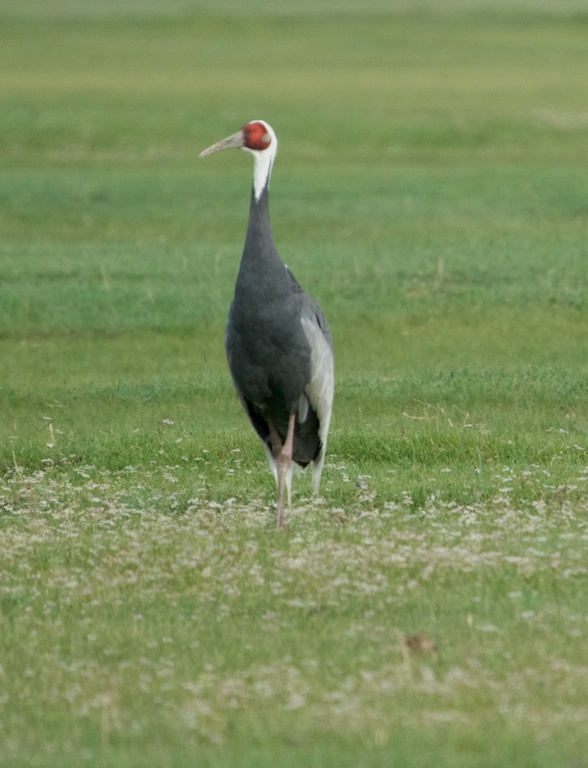
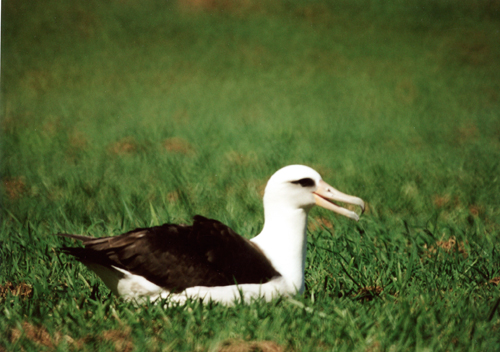
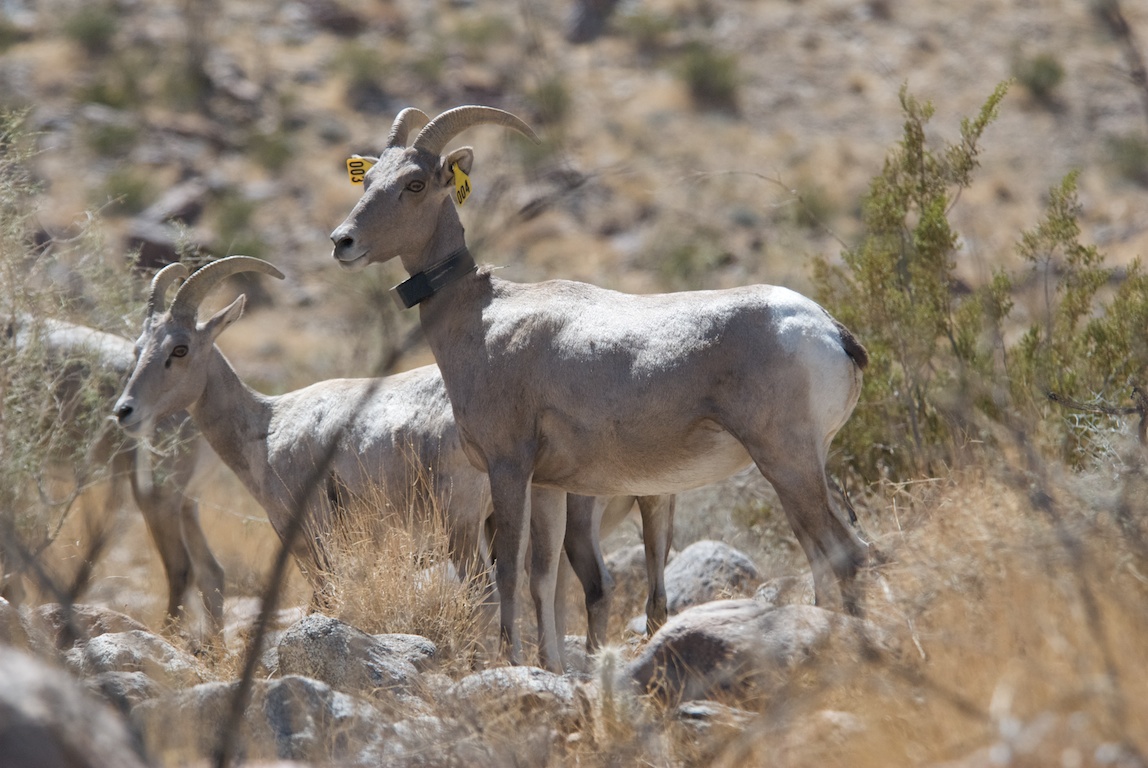
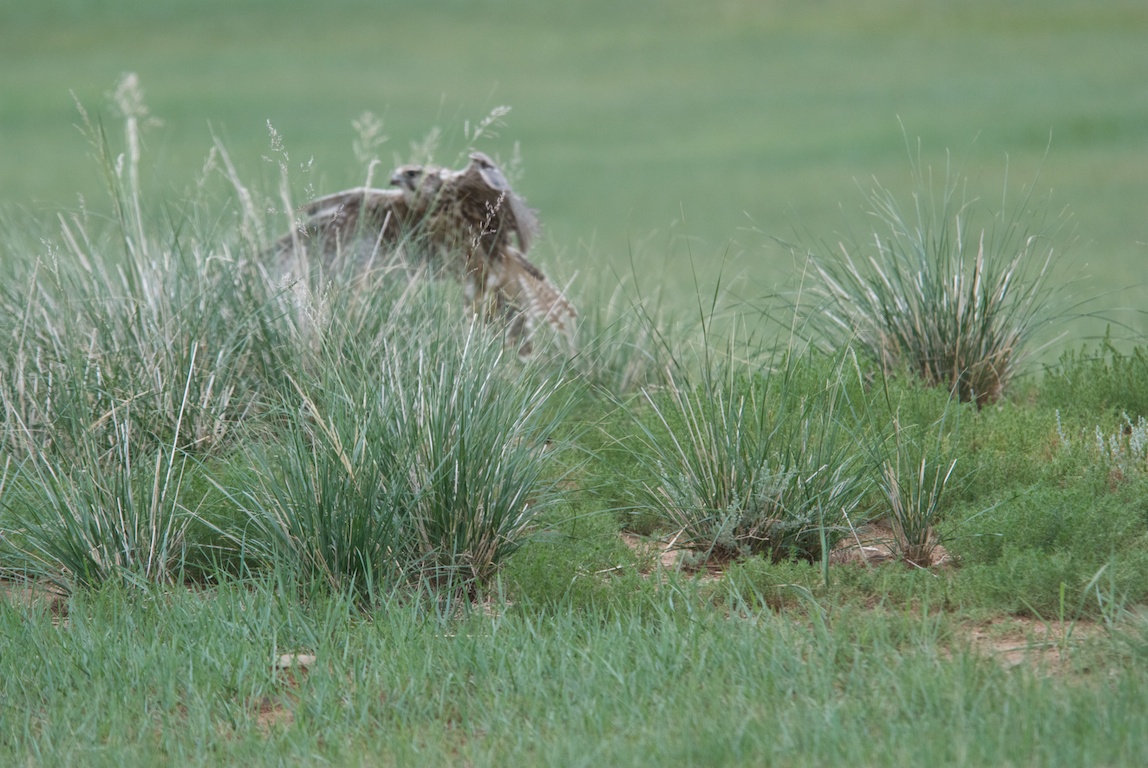
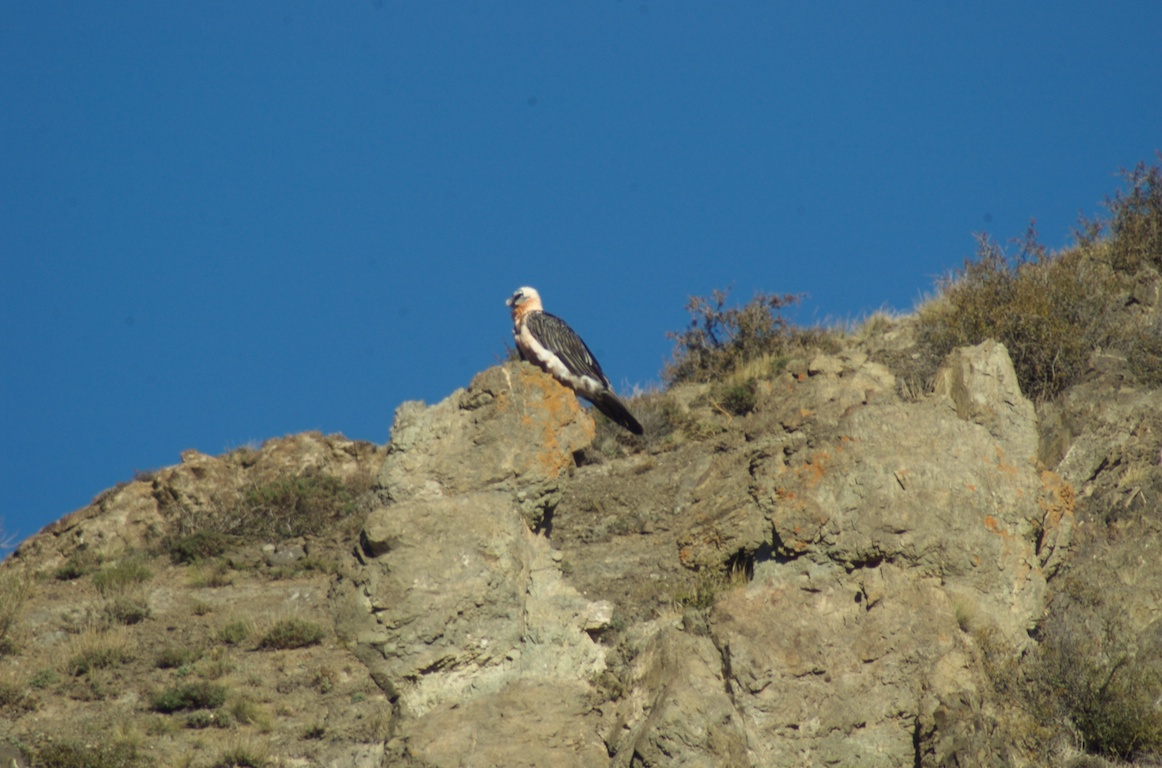
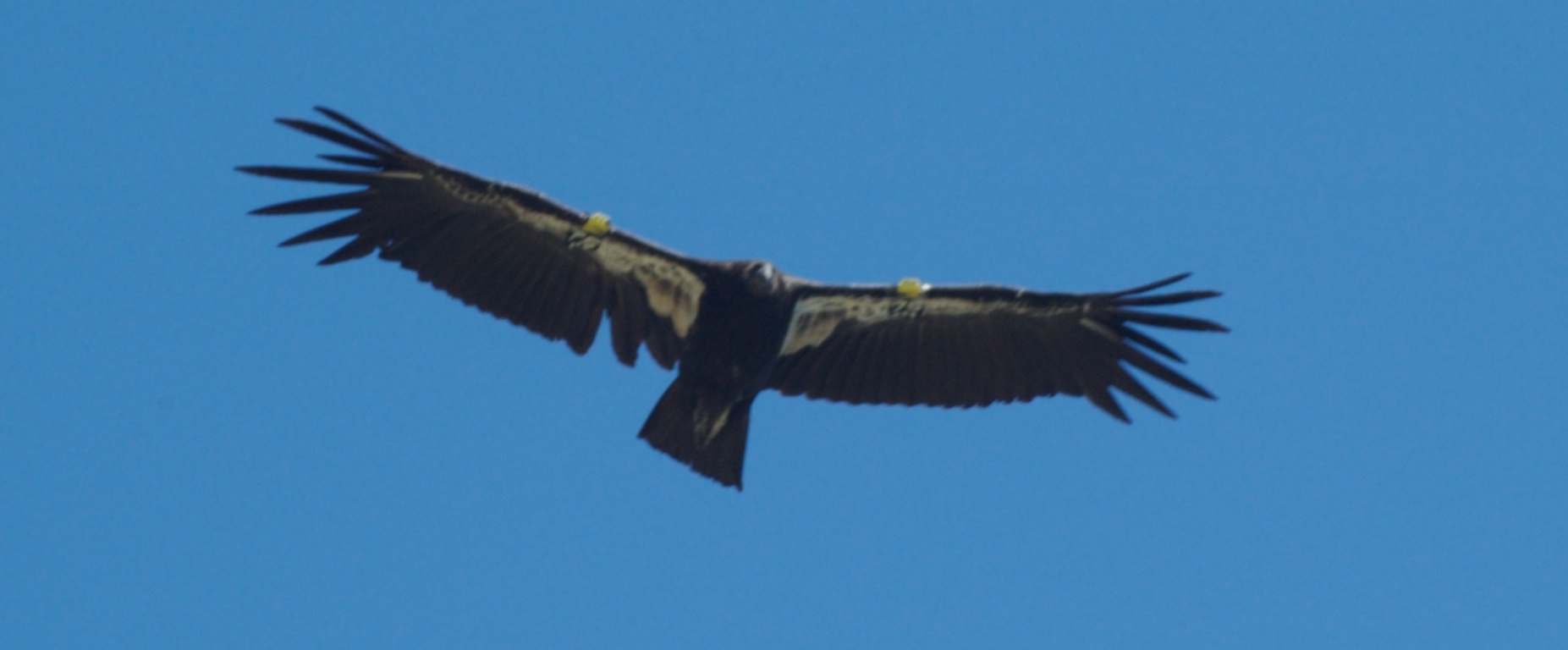
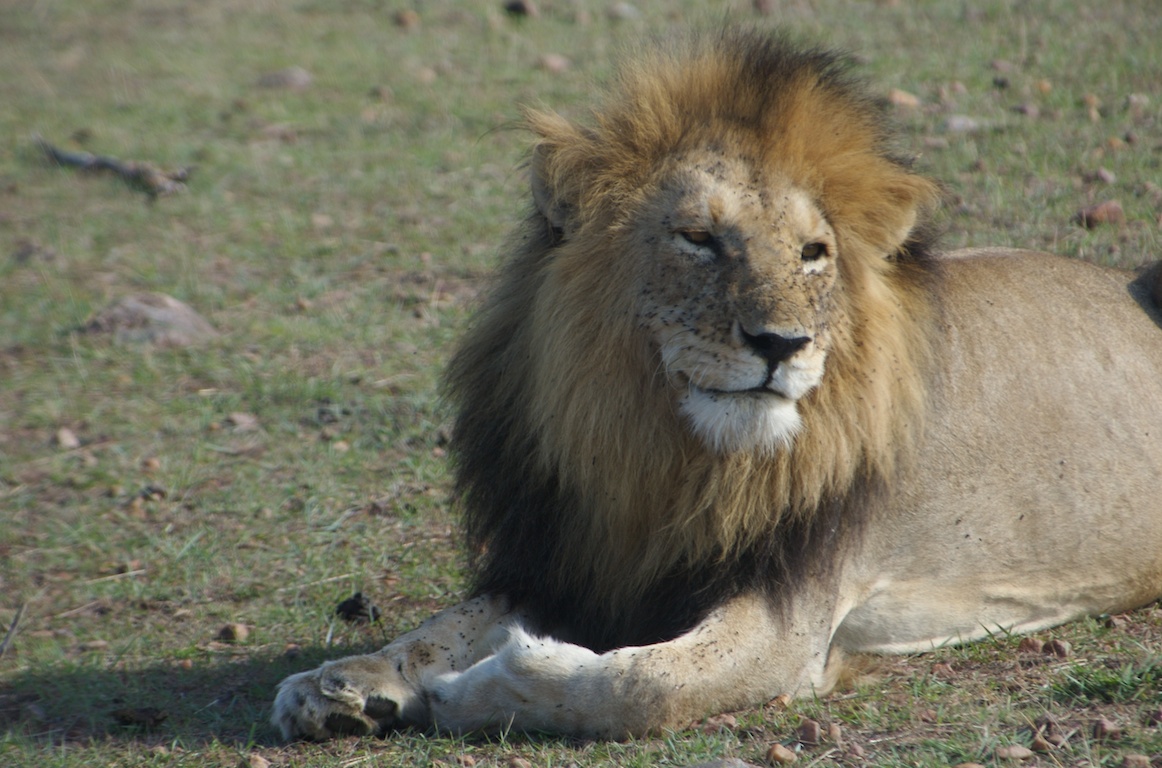
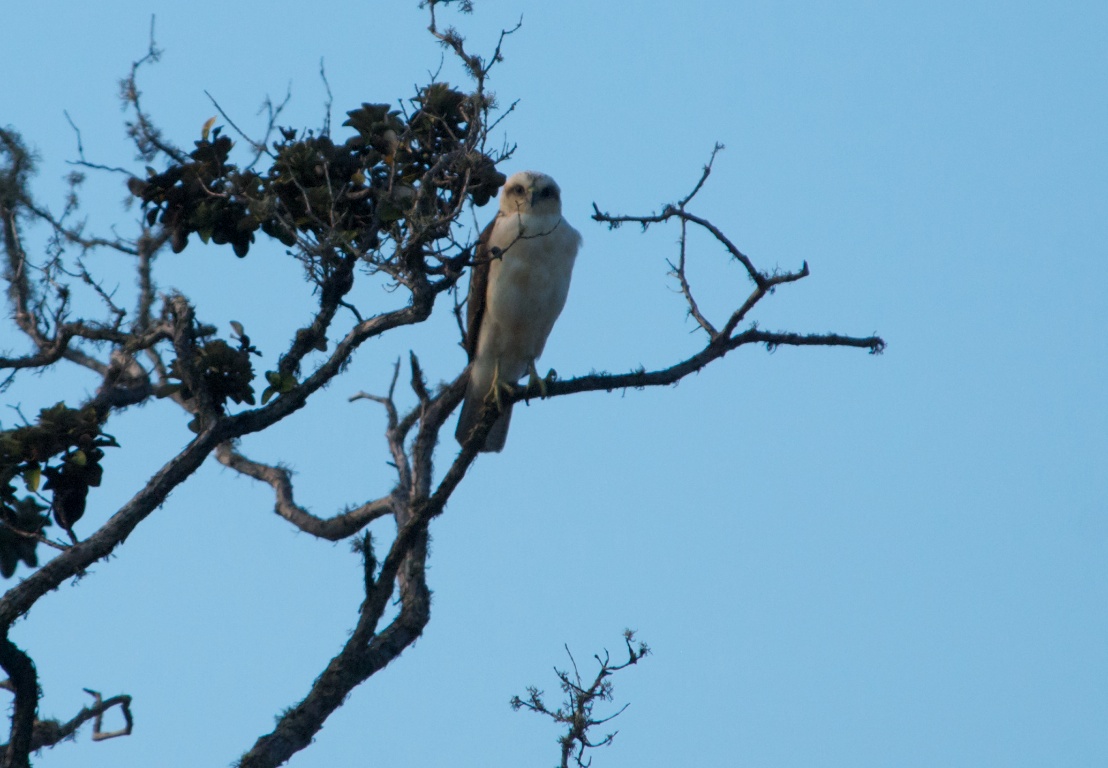
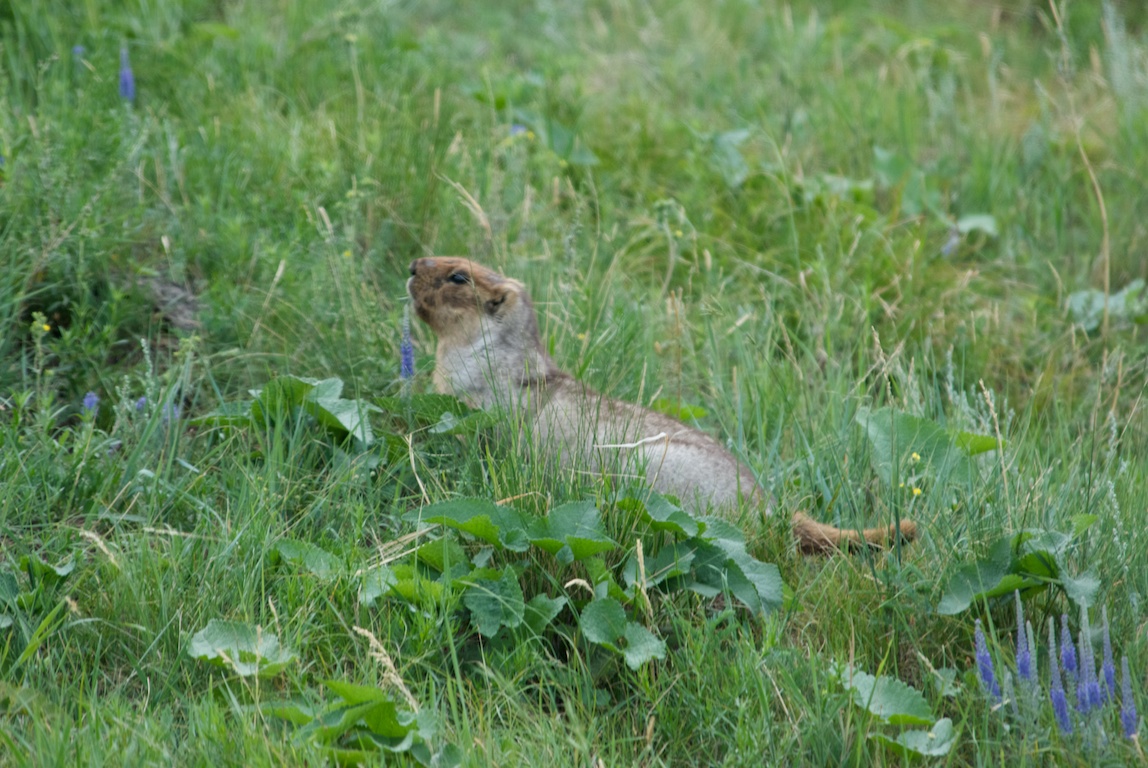
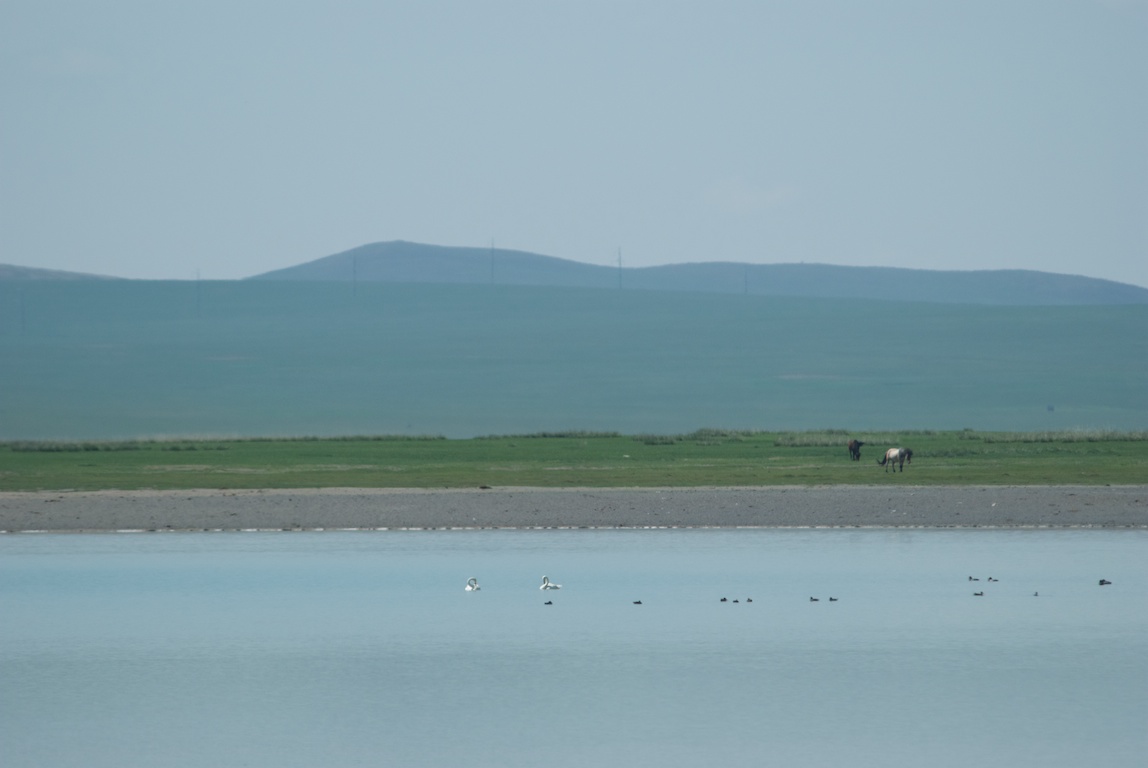
Takhi, Hustai National Park, MongoliaMonk Seal, Kauai, Hawaii, United StatesWolf, Lamar Valley, Yellowstone National Park, Wyoming, United StatesWhite-napped crane, Gun-Galuut Nature Reserve, MongoliaWhite Rhino, Lewa Downs Conservancy, KenyaLaysan Albatross, Kauai, Hawaii, United StatesTule Elk, Point Reyes National Seashore, California, United StatesRothschild's Giraffe, Soysambu Conservancy, KenyaNene, Hawaii Big Island, Hawaii, United StatesDesert Bighorn, Anza-Borrego State Park, California, United StatesGrizzly Bear, Yellowstone National Park, Wyoming, United States (Bear 264)Saker Falcon, near Hangai Mountains, MongoliaGreen Sea Turtle, Hawaii Big Island, Hawaii, United StatesGrevy's Zebra, Lewa Downs Conservancy, KenyaLammergeier, Gobi Gurvansaikhan National Park, MongoliaCalifornia Condor, Central Coast, California, United StatesAfrican Lion, Masai Mara, KenyaHawaiian Hawk (Juvenile), Volcano National Park, Hawaii Big Island, Hawaii, United StatesSiberian Marmot, Hustai National Park, MongoliaWhooper Swans, Gun-Galuut Nature Reserve, MongoliaCheetahs, Masai Mara, KenyaApapane, Hawaii Big Island, Hawaii, United StatesTrumpeter Swans, Yellowstone National Park, Wyoming, United StatesCinereous Vulture (Juvenile), Baga Gazriin Chuluu Nature Reserve, MongoliaArgali, Ikh Nartiin Chuluu Nature Reserve, Mongolia
It was a jam-packed four days of activities at the Society of Animal Artists 50th Anniversary celebration. Along with whale-watching, we spent a day at the San Diego Wild Animal Park and the San Diego Zoo.
On the last day, we went over to the San Diego Natural History Museum for the official opening of “Art and the Animal”. Our work is beautifully displayed on three levels of the central atrium. Along with the artists and their guests, many members of the public were also in attendance. The show will be in San Diego until October 31.
Hippopotamus, San Diego Zoo
That evening, it was time for the annual banquet, which included the presentation of the Society’s first Lifetime Achievement Award to Robert Bateman, which he richly deserves for both his distinguished career as an artist and his commitment to conservation and environmental issues.
Our campsite at Anza-Borrego State Park; I slept on the cot under the stars
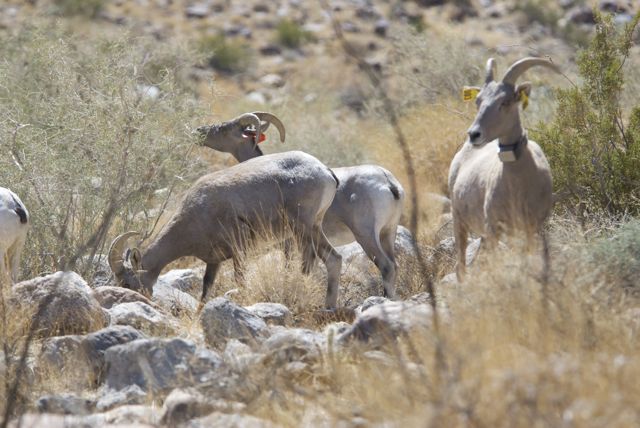
The next morning I and fellow artists and SAA members Guy Combes and Andrew Denman departed for Anza-Borrego State Park in hopes of seeing and photographing desert bighorn sheep. As you can see below, we succeeded, toughing out unseasonably hot daytime temperatures which reached 112F.
Desert bighorn ewes, Anza-Borrego State Park
Our next stop was the cooler clime of the Sierra Nevada foothills, home to the Sierra Endangered Cat Haven. As many of you know, I refuse to patronize for-profit game ranches. It has been a pleasure to discover Cat Haven, a non-profit operation which not only has the fittest and healthiest captive genetically wild cats that I have ever seen, but is heavily involved in a variety of conservation efforts on an on-going basis. I would encourage my fellow animal artists to consider a visit here to support an organization which puts the welfare of the animals first instead of using them for personal gain.
Tango the cheetah
Yesterday we took an afternoon trip up into Kings Canyon National Park, which I had never been to. We were awed by the jaw-dropping magnificence of the canyon and took a LOT of photos.
Kings Canyon
I’ll be home soon from my travels and am looking forward to getting back to my easel!
Over time, I think most painters end up with preferences for size, ranging from true miniatures that may only be an inch by an inch to, well, big, really big. Like ten feet high.
I’ve tended to stay in a middle range, which happens to be what has NOT been selling during the recession. But before the meltdown, I had decided to start doing art festivals and I needed a large body of work. Most of the paintings are 12×16″ to 18×24″.
Then I joined the Lost Coast Daily Painters and found myself needing to have a small (5×7″ to 8×10″) painting to post every week. It was hard at first to work that small, but I got used to it and started to see some definite advantages:
One, they are more affordable for people.
Two, many buyers and collectors don’t have room anymore for work that is much bigger and it encourages them to take a chance on a new artist. That would be me.
Three, small works seem to be considered appropriate for gift-giving, so that expands the market a little.
Four, for me as an artist, I’ve found that it’s a good way to study various painting problems, like capturing light effects, without investing time and materials in a larger piece that might not pan out.
Five, they force me to focus on one idea and to keep it simple.
Here are three recent small works:
Arcata Bottoms Stormlight oil on canvasboard 8x8"
I wanted to capture the light effect of dark clouds and sunny areas. Working in a square format was fun, too.
Black Bear, Grand Tetons oil on canvasboard 16x8"
I’ve struggled with how to paint this kind of light effect- foreground shade and background sun. It’s a push and pull process. I think this works pretty well.
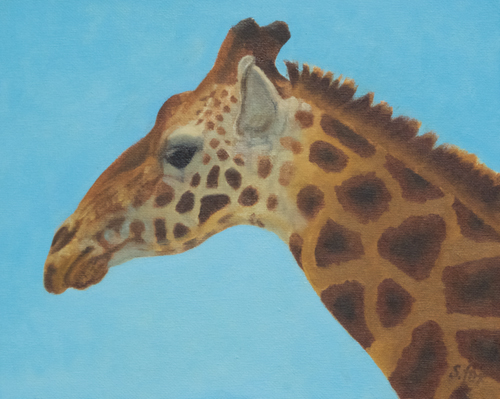
Reticulated Giraffe, Samburu oil on canvasboard 8x10"
Once again, I’m studying how to do a light effect- the high key shadows and reflected light on the head of the giraffe. I also ended up with a postive/negative shape relationship that I like. The color of the giraffe and the sky form a complementary color relationship, too.
What has evolved over the past year is an interesting split that is working well for me. I’m doing a lot of smaller pieces like the ones above (I plan to have 30 or so available at the Marin Art Festival). And then I’m painting larger, major pieces that can require a lot of preliminary work. With luck, you’ll see the latest one next week.
As promised, here’s a look at Point Reyes National Seashore on a fabulously beautiful day.
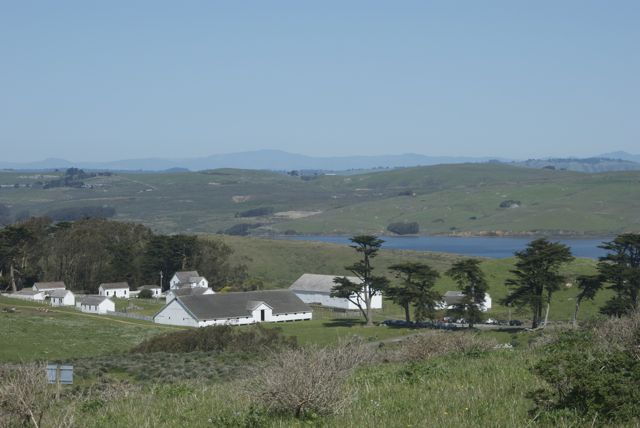
Pierce Ranch buildings at the northern tip of the park
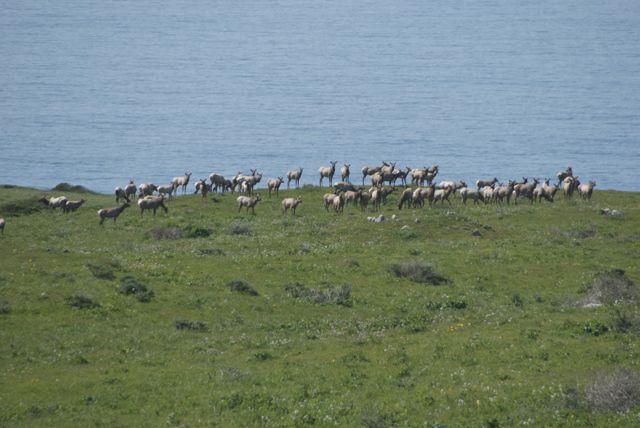
Unlike most national parks, people still live and work within its boundaries. There are over a dozen dairy and cattle ranches dating back to 1852 still in operation, plus an oyster farm. Back in the mid-20th century, developers wanted to turn the whole area into a new city. After a long battle, that was defeated and now this incredible part of west Marin County is preserved for everyone to enjoy. Including around 450 tule elk, which is what brought us to the park yesterday. They had been extirpated from the area by 1860. Nearly a century later, they were re-introduced. They are smaller than the better-known Roosevelt elk, whose southern-most range stops about 300 miles north in Humboldt County.
tule elk grazingTule elk; what a backdrop! The Pacific OceanTule elk; part of a herd of about sixty
When it comes to wildlife, one never knows what to expect. We had great luck and saw four different herds, all from the road. I didn’t have my long lens, so these images were taken with the 28-300. You can see that the elk weren’t very far away. Below are more images of other parts of the park.
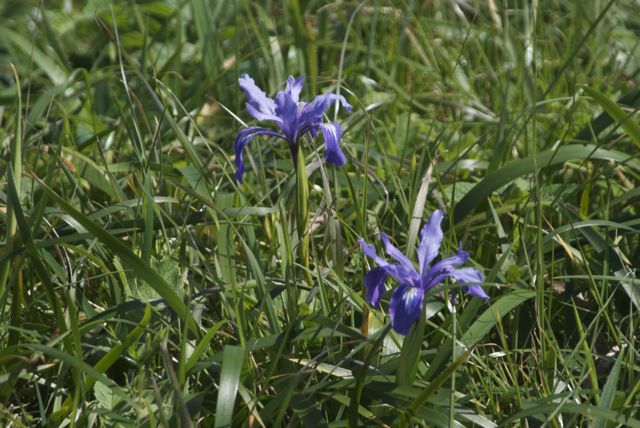
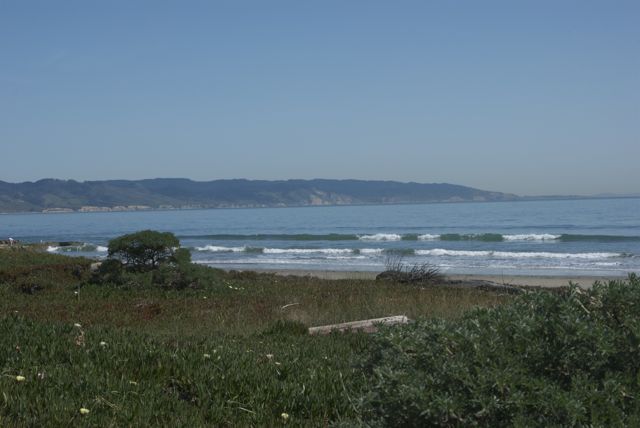
Looking north; elk are to the leftNative Douglas iris; it was blooming in big clumps all through the parkNear the lighthouse at the southern-most point, looking north along beachDrake's Bay, to the east of previous image, looking south towards San Francisco
Yes, THAT Drake. Sir Francis Drake made a landfall here in 1579. He stayed here about five weeks, hauling the Golden Hinde onto the beach to careen her, which means pulling her out of the water and leaning her on her side to clean the hull of barnacles and seaweed. He and his crew encountered local Miwok indians who supplied them with boiled fish and meal ground from wild roots.
Another of the old ranches; on our way out of the park
Point Reyes, as you can imagine, is a magnet for local and visiting plein air painters. Now that I’ve been able to reconnoiter, we’ll plan a future trip so we can stay in the area and have time for me to paint, too. There are a lot of small resort motels, a private campground in Olema and vintage hotels, B&Bs and good restaurants in Point Reyes Station. We had lunch at the Pine Diner. Cobb Salad to die for.
I was one of a large group of artists in attendance this past weekend at the opening of the Artists for Conservation juried show “The Art of Conservation”, which is at the Hiram Blauvelt Art Museum in Oradell, New Jersey. There were two full days of activities planned for us and we made the most of them.
Considering my lifelong interest in animals and nature, I’m almost embarrassed to admit that while I have been to New York a few times, until this past Friday I had never been to the American Museum of Natural History (AMNH). On the other hand, the amazing tour we were taken on by Stephen C. Quinn, Senior Project Manager in the Exhibition Department, who is also a member of Artists for Conservation, along with being on the Executive Board of the Society of Animal Artists, more than made up for it. (We also had a day at the Bronx Zoo, courtesy of the Wildlife Conservation Society, but you’ll have to wait for the paintings to see what I found there.)
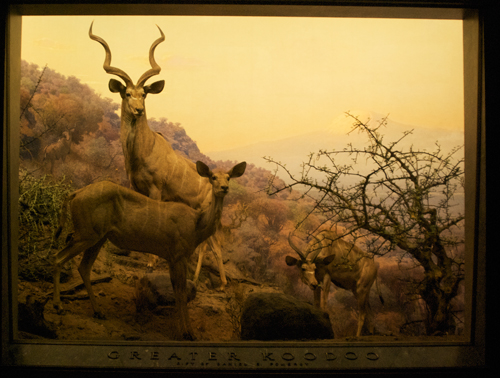
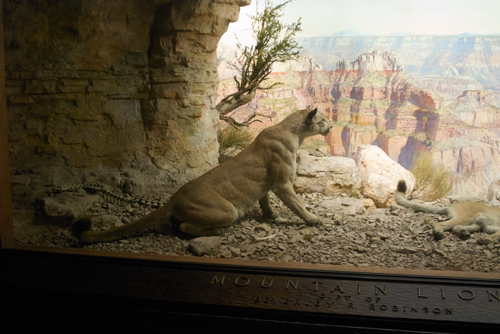
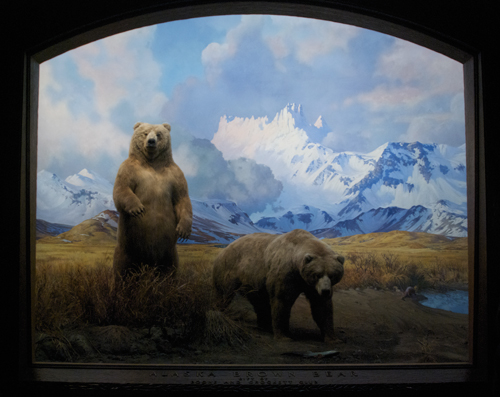
Stephen first treated us to a presentation on the legendary AMNH dioramas that fill the Akeley Hall of African Mammals, the hall of North American Mammals, Sanford Hall of North American Birds and other parts of the museum. The research, skill and art that went into their creation is also pretty legendary.
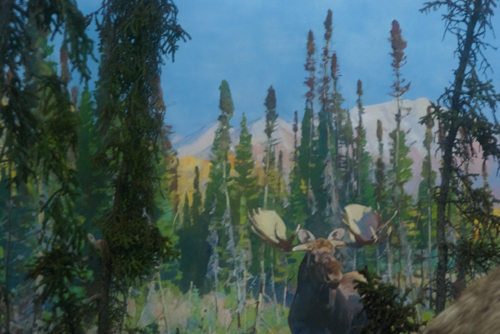
(Animal artists take note:) Nothing in them is generic. The background settings are all real places. Museum artists were sent out into the field and did wonderful studies en plein air. The animals themselves are all individuals, which lifts them far beyond any other taxidermy animals I’ve ever seen. Each specimen was carefully measured in the field and that data was used to create exact forms on which the skins were mounted. Attention was paid to each muscle so that it accurately reflects whether it was tensed or relaxed. These are the only mounts that I feel that I could confidently draw from and know that they are accurate.
African lionsGreater kuduCougarAlaskan brown bearsAlaskan brown bears, background detailAlaskan brown bear, background detailBighorn sheepBighorn sheep, background detail from around the curve on the leftMoose, background by Carl RungiusMoose, background detail; yup, it's a RungiusBackground; I forgot to photograph the rest of it
The backgrounds are like little master classes in landscape painting. Absolutely stunning. The above images just hit the highlights of some of the details that caught my eye.
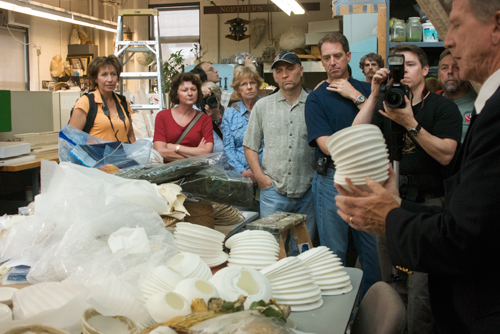
As it turns out, a very special exhibition on the Silk Road, “Traveling the Silk Road: Pathway to the Modern World”, opens on November 14 and Stephen took us behind the scenes into the studios and workshops where all the preparations are being done. We also got to see the space where it will all be installed Real Soon Now. A major feature is a partial reconstruction of the sunken dhow (a type of Middle Eastern ship which is “sewn” together, not nailed) that was recently featured in National Geographic magazine. It was found packed with thousands of bowls and other merchandise being exported from China to the Middle East. Until it sank.
The dhow section under construction with four of the pottery jars. A mold was taken from one of the real ones. Some of the bowls, ready to be paintedStephen tells us about how the bactrian camels are being madeA board with some of the reference the artists are usingThe mold for casting the camels' bodiesA few of the camel heads
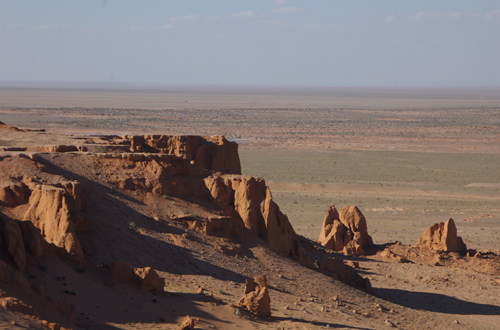
Eventually we were turned loose to explore the museum on our own for a couple of hours. I knew exactly what I wanted to find – some of the fossils that Roy Chapman Andrews’ Central Asiatic Expeditions of the 1920s brought back from The Flaming Cliffs (which are located in the Gobi, Mongolia; you knew I’d work Mongolia into this somehow, right?). Andrews was there as part of his work for the museum, so that’s where all the goodies ended up. I visited the cliffs myself in September of 2006 and was able to sit a short distance away to watch them as the sun went down. Flame they did, as you will see below.
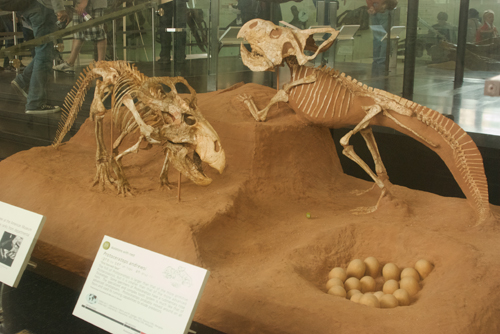
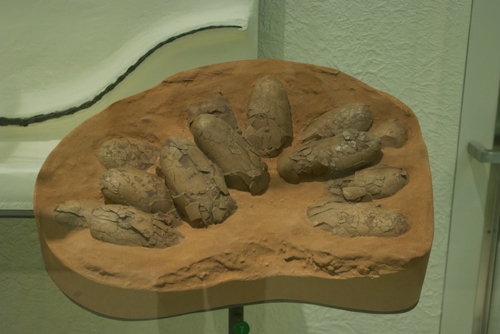
It took a little searching, but I found a most of an entire wall in the Ornithischian Hall dedicated to those finds, including a clutch of fossilized protoceratops eggs. The first dinosaur eggs ever found came from Andrews’ Expeditions work at The Flaming Cliffs or, as the Mongols call the area, Bayazag, which approximately means “Place of the saxaul trees”.
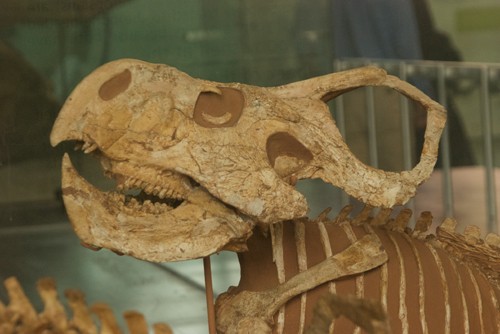
Protoceratops pairHead detailFossil dinosaur eggs; they had one that you could touch, too!The Flaming Cliffs with the saxaul "forest" in the background
Saxaul trees grow very, very, very slowly, so the wood is extremely dense. So dense, in fact, that if a piece of it is thrown in water it will sink. Most of the trees that I saw were ten feet high or less, so this isn’t “forest” as most Westerners think of it. And, not surprisingly, given the state of the planet, they are slowly disappearing due to being cut for fuel. Not quite endangered yet, but getting there.
Sunset, The Flaming CliffsDetail of the incredible color; Amusingly, the Mongols I was with found the moonrise happening behind me to be of much more interest
Lining the walls of the fossil rooms above the displays were some of the paintings that Charles R. Knight did during the time he worked at the museum. One of the first animal drawing books I got as a child was “Animal Drawing, Anatomy and Action for Artists”. I wasn’t really old enough to read it, but I copied and looked at the pictures for hours. As far as I know, it’s still available from Dover Books, but probably for more than the princely sum of $2.00 that my parents paid for it in the early 1960s. I really ought to go back and read it now. Might as well learn from the best.
Painting by Charles R. Knight
As a final bonus, there was this lovely drawing by J. B. Shackleford, who participated in the Central Asiatic Expeditions as the official photographer. His place in paleontological history is assured, as you will see from this quote from Michael Novacek’s terrific book “Dinosaurs of the Flaming Cliffs”:
“The expedition photographer, J.B. Shackelford, hung back with the caravan of spindly-wheeled Dodge motorcars. To pass the time, Shackleford took a brief walk. Far to the north on the horizon he could see some volcanic hills that looked like islands floating in a sea of pink sands. As he walked in this direction, he saw an abrupt edge to the burnished grass, and a thin orange line beyond. He walked to the edge of the plateau. There below him extended a fantasy land of orange-red cliffs and spires. As Andrews later wrote, “Almost as though led by an invisible hand, he (Shackleford) walked straight to a small pinnacle of rock on top of which rested a white fossil bone.” This was the skull of a parrot-beaked, frill-headed dinosaur, a year later named Protoceratops andrewsi.”
Drawing by J.B. Shackleford
I probably didn’t even manage to see half of the museum, so I have ample excuse to go back again. Which I shall.
Saving the eyes for last, I’m going to skip “down” to noses. This is a case where access to zoo animals is really handy. Even though you will still want to compare them to the wild version, being able to learn how a given animal’s nose structure works by seeing it really close up is very valuable.
Something that one of my art school teachers emphasized again and again was to not be “evasive” in our drawings, but to make a decision, put it down and then either make corrections, realize what needs to be changed for next time, or celebrate that you got it right. What was not ok was aimless noodling around trying to find the form. It shows.
I spent 4-5 hours on these six drawings of noses. This time I used a Sanford Draughting pencil, but on the same vellum bristol as last time. I kept erasures to a minimum and draw as directly as possible.
So here’s the deal: the first person who emails me with the correct identification (common name) of all six species gets a packet of six of my notecards (with images from original drawings). The deadline is midnight PST Wednesday, March 25. Your hint- they are all from North America.
I’ve personally found the 3/4 view difficult, at least partly because I know that the camera flattens and distorts the form. This is a case where I draw what I know rather than what I see in the image.
Face-on is a good way to start. Look for reference with a good light side and shadow side, which will show more detail and structure.
Profile is good, also. Then you can see how the nose fits into the rest of the head without worrying about perspective. Pick what you want to emphasize and downplay the rest.
Bird’s beaks are really hard to see close up in the field, generally because they’re small and the owners don’t tend to hold still for long. A captive bird may be your best bet because you don’t want to get caught faking it. But beware captive raptors whose beak tips won’t show the wear that the wild ones will.
Cat noses are fairly similar in form. Variations on a theme, more or less. So drawing your house cat’s nose can be good practice for the big, wild guys.
It’s always great to get good reference of unusual angles, like this one looking up. It helps to see how the lower jaw fits with the upper jaw. Note how I have created a sense of three dimensional form by “wrapping” the right hand upper lip around the lower jaw.
I tend to start a number of paintings in succession and then finish them in batches. Is it that way for any of you? Or do you have a more even work flow? How do you decide what to do next?
Here’s a new one from reference that I shot in Kenya in 2004. It was after the conclusion of the Simon Combes safari and I had flown back down to the Mara for a few days at Rekero Camp, which is on the Talek River. Fabulous camp, great staff, wonderful food, terrific drivers. I’d love to go there again. It’s apparently one of the places the Big Cat Diary people stay when they are filming and I can see why. It’s a tented camp right in the bush. Buffalo wander through and you can hear the hippos grunting and roaring at night since the tents are mostly right above the river. A real storybook African place.
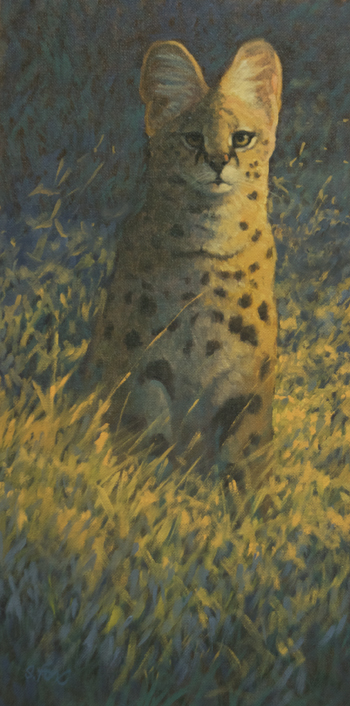
A couple from Ireland were kind enough to invite me along on their game drives. My first morning with them we saw a serval walking down the road as the sun came up. I loved the color of the first light of the day hitting his or her coat, but most of the shots weren’t particularly paintable. We were so close that my point of view was from above ( I know, I know- boo hoo) or the gesture was awkward, etc. But…..I got some great reference at the Denver Zoo this last May. Nothing special in the Light Department, but wonderful eye-level alert poses. So I put the two together and came up with this. I kept the grass loose and impressionistic so that the focus would be on the cat, who is Up At Dawn.
Up At Dawn oil 16"x 8" (price on request)
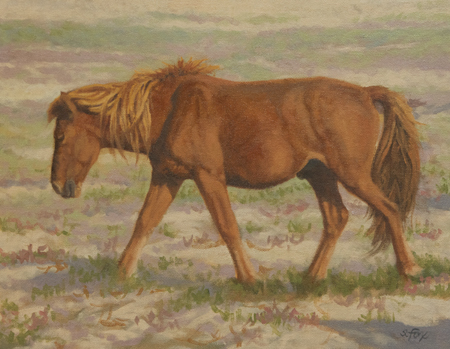
I’ve also just finished my first in a planned series of paintings of Mongolian horses, the ones the Mongolians ride, not the takhi. I got a lot really good shots in great light, but picked this one to start with because I loved the color of his coat.
I’m going to be in a group show with a flower theme at my gallery, starting next week. It’s not something I’ve done a lot of, well, any, but I have some great hummingbird reference that I shot right outside my studio windows so….for something completely different…
Hummin' Along in the Leopard Lilies oil 12"x 9" (price on request)
I went back to an Art Nouveau/Arts and Crafts inspiration from my previous incarnation as an illustrator and used a decorative approach. Flatter light with a plain background. It was fun and I’ll probably do more flower subjects in the future. This one sure got me using my reds more than usual. The bird is a male Rufous hummingbird, just another little rottweiler in a bird costume. Thank goodness they aren’t the size of ravens or none us would be able to go outdoors when they’re around.
STUDIO MUSIC
What do you listen to when you’re working? I can’t write this blog with music going, but otherwise I always have something on. I’ve acquired a taste for celtic-inspired world music and really like listening to Kila, Peatbog Fairies and Shooglenifty (No, really.). When I want to up the energy level, it’s time for some Afro Celt Sound System. I’ve been know to listen to Baka Beyond and Kenyan benga music when working on African subjects and Mongolian music when I’m…. you get the idea. Favorite rock includes anything by John Mayer, Mark Knopfler and Sting. Also still Stuck in the Sixties with Quicksilver Messenger Service (love, love, love John Cippolina, my guitar hero), Jefferson Airplane and of course The Beatles and Rolling Stones. When I come into the studio in the morning and need to ease in slowly, it’s Enya, Clannad or Nightnoise.
ART THOUGHT FOR THE DAY
If anyone, in the beginning of study, will set himself to study the various compositional forms, then experiment and practice with the variations of them, he will find that his instinctive taste is developed; and subjects will in time lend themselves easily to his feeling for unity, and soon he may be able to forget all about them.
It must never be forgotten and let this be most strongly emphasized – that the dominant aim of the student should be to train and equip himself to the point where he can judge unity and all of its contributing factors by “feeling”.
Like many artists, I’m trying to figure out what my sales options are given the current economic climate. I’m also interested in seeing if I can sell art directly on the internet. And, a few months ago, I was showing some friends some of the small studies I do to work on various aspects of painting and one encouraged me to try selling them. Taking this all together, I have decided to offer a “new line” of small oils that I am calling “Studio Studies”, because, well, that’s what they are.
As anyone who paints most days a week knows, they do stack up after awhile and I have a few dozen that I’ve decided I’m willing to find new homes for.
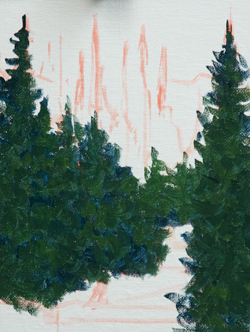
I plan to start offering them a few at a time on EBay, starting next week. Here’s a small preview, starting with one that I photographed in progress, so it’s a short step-by-step demo of how I do these mostly 6″x8″ studies that usually take less than two hours. The idea is to quickly capture a light effect, so detail isn’t relevant. This should look familiar to anyone who has taken Scott Christensen’s Ten Day Plein Air Intensive, because that’s who I learned this approach from and I really like it.
STEP-BY-STEP 8″X 6″ STUDY (from last Friday’s post)-
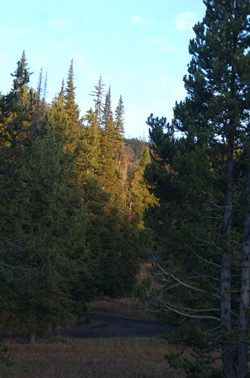
An image I shot up on Dunraven Pass in Yellowstone National Park at first light. What I was working on the was the color temperature shifts from shadow to light.
Photo referenceInitial lay-inStarting with darkest darks and basic shapesAdding light and medium tones; notice brushwork to create treesDawn on Dunraven Pass; 8"x 6"
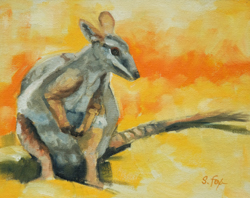
Here’s a couple more. First a demo that I did in about an hour at the Marin Art Festival of a small kangaroo which I photographed at a zoo.
Little Kangaroo- 8"x10"
And a landscape a few minutes from our house looking east from Clam Beach to the bluff. It was summer and the foxgloves were blooming. They’re not a native, but they look like they belong here in Humboldt County.
Clam Beach Bluff; 6"x8"
Finally, since I strongly believe that artists should help and support each other, here, from Alison Stanfield, who runs ArtBizCoach, is some solid advice on “Community”. Thanks, Alison! (Hope it’s readable. Let me know if it’s not.)
ART THOUGHT FOR THE DAY
The artistic mind is one that takes years to develop. Painting never gets easier. Struggle is not something that one goes looking for. It will find you. Just give it time.




























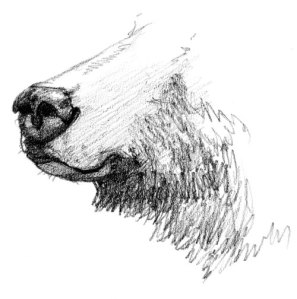 I’ve personally found the 3/4 view difficult, at least partly because I know that the camera flattens and distorts the form. This is a case where I draw what I know rather than what I see in the image.
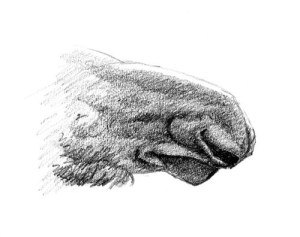 Profile is good, also. Then you can see how the nose fits into the rest of the head without worrying about perspective. Pick what you want to emphasize and downplay the rest.
 Bird’s beaks are really hard to see close up in the field, generally because they’re small and the owners don’t tend to hold still for long. A captive bird may be your best bet because you don’t want to get caught faking it. But beware captive raptors whose beak tips won’t show the wear that the wild ones will.
 Cat noses are fairly similar in form. Variations on a theme, more or less. So drawing your house cat’s nose can be good practice for the big, wild guys.
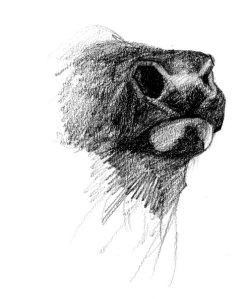 It’s always great to get good reference of unusual angles, like this one looking up. It helps to see how the lower jaw fits with the upper jaw. Note how I have created a sense of three dimensional form by “wrapping” the right hand upper lip around the lower jaw.






 Susan Fox, American Artist