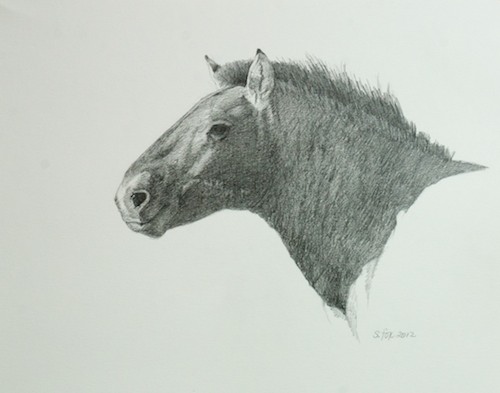
It’s been awhile since I’ve done some finished graphite drawings and that’s what I’ve been doing this week. I’ve always loved to draw, so it was fun to just sit with a pencil (a General’s Draughting Pencil) and paper (Strathmore 300 vellum bristol) and work from some of the takhi photos I’ve shot during my trips to Mongolia.
Tahki StallionTakhi foalTakhi Stallion Head StudyTakhi Stallion "Snaking"
A French equid researcher I know told me that this body position is known as “snaking”. It’s purpose is to get the stallion’s harem moving quickly. His low body position is suggestive of a stalking predator and triggers the response he wants from his mares. I’ll probably be doing a painting of the whole scene at some point, so this is a useful study.
All of these horses were photographed at Hustai National Park, which is an easy two-hour drive west of Ulaanbaatar.
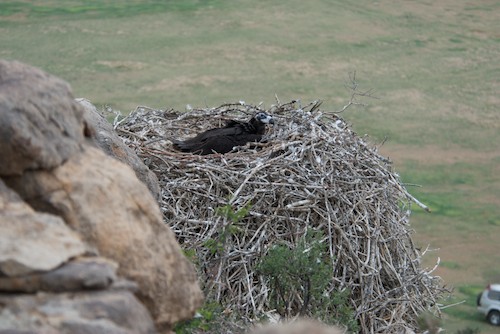
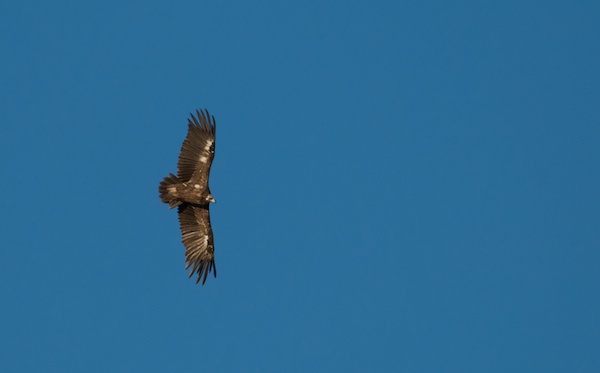
Weight, length: Cinereous vultures are the largest eurasian bird of prey and one of the largest flying birds. They are 98–120 cm (39–47 in) long with a 2.5–3.1 m (8.2–10 ft) wingspan and weigh 7–14 kg (15–31 lb)
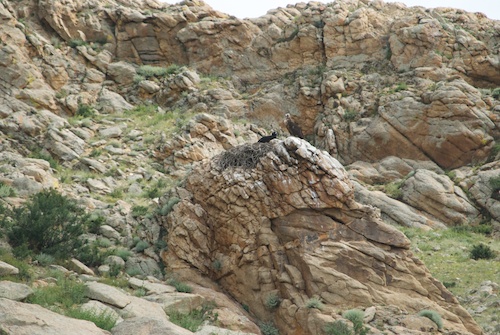
Adult and juvenile on nest, near Baga Hairhan Uul, July 2010
Best places to see cinereous vultures: Ikh Nartiin Chuluu Nature Reserve, Baga Gazriin Chuluu Nature Reserve, but common in many parts of the country.
Vulture at Baga Gazriin Chuluu, July 2009
Interesting facts:
-They are also known as the European black vulture due to the very dark color of the juveniles. The adult’s head plumage gets lighter as the bird ages.
– It has recently been established through the identification of wing-tagged birds, that a number of juvenile birds from Ikh Nart are migrating to South Korea during the winter. They are showing up at feeding stations.
– It is more common for the species to nest in trees in western parts of its range, but in Mongolia nests on cliffs are more often seen. At Ikh Nart the birds nest in some of the elm trees and a bird was recently photographed on a nest built in a larch tree in the northern mountains.
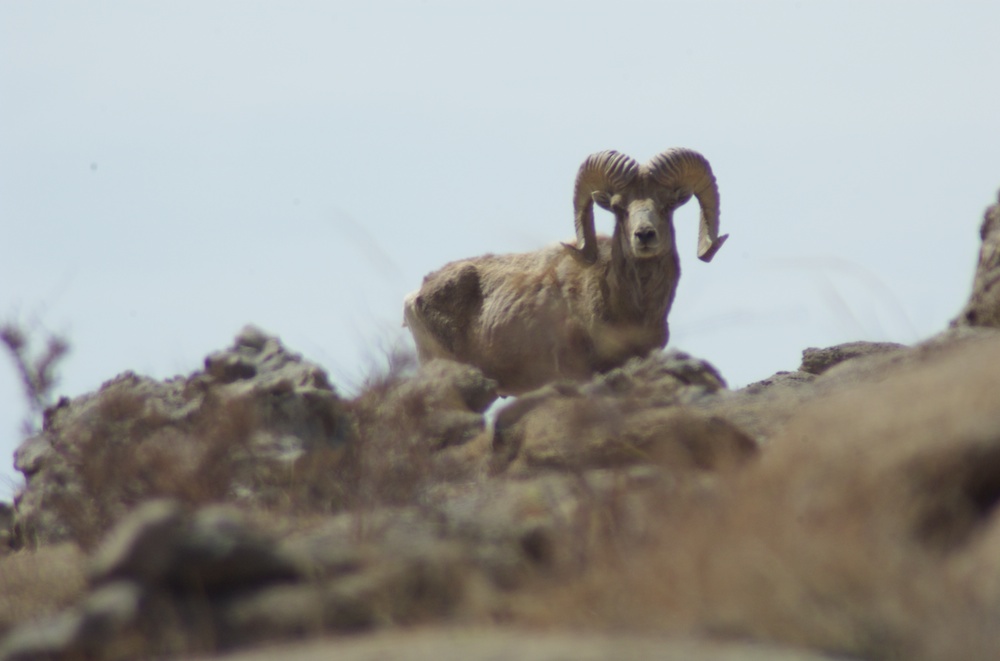
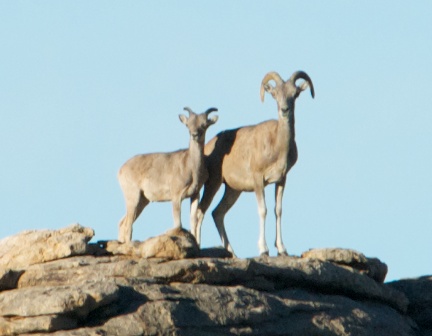
Ikh Nartiin Chuluu argali ram, April 2005: This big old ram let me follow him around for about half an hour.
I’m starting the New Year with a new series on Mongolian wildlife. These will be short profiles with essential information and interesting links. First up is the animal which brought me to Mongolia in the first place, the argali, now one of my favorite subjects.
Species: Argali (Ovis ammon)
Weight, height and horn length: Argali are the world’s largest mountain sheep. A large ram can weigh as much as 375 lbs (65-170km). They stand from 3-4″ (90-120cm) at the shoulder. The horns can measure up to 65″ (165cm).
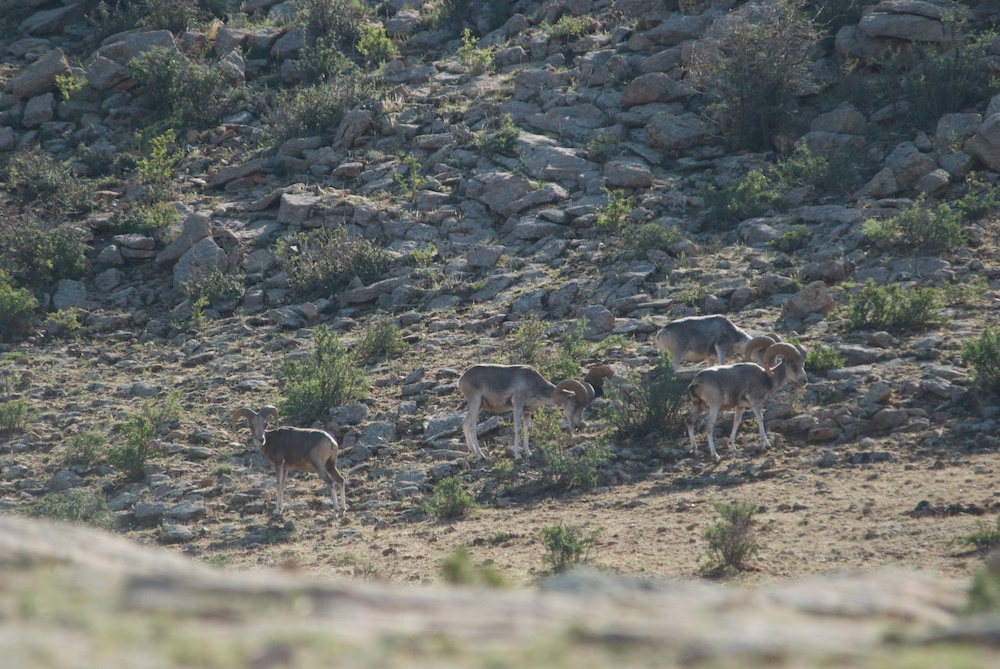
Argali rams, Gun-Galuut Nature Reserve, July 2009; I peeked over the ridge (after dragging my oxygen-starved body up a steep slope following my guide) and what should I see...a big group of argali rams, twelve in all.
Argali rams, Baga Gazriin Chuluu, July 2009; Same trip as above, but this time the sheep were within sight of the road. I simply stood by the car and took lots of photos of these six beautiful boys
Habitat preference: mountains or large areas of rocky outcroppings in the desert steppe, some open desert; more recently found in mountain steppe (Gun-Galuut Nature Reserve)
Argali rams, Ikh Nartiin Chuluu, August 2010; In all my six trips to Mongolia, going out to see argali every time, this sighting was the jackpot....five rams less than 50 yards away and I had them to myself for at least an hour.
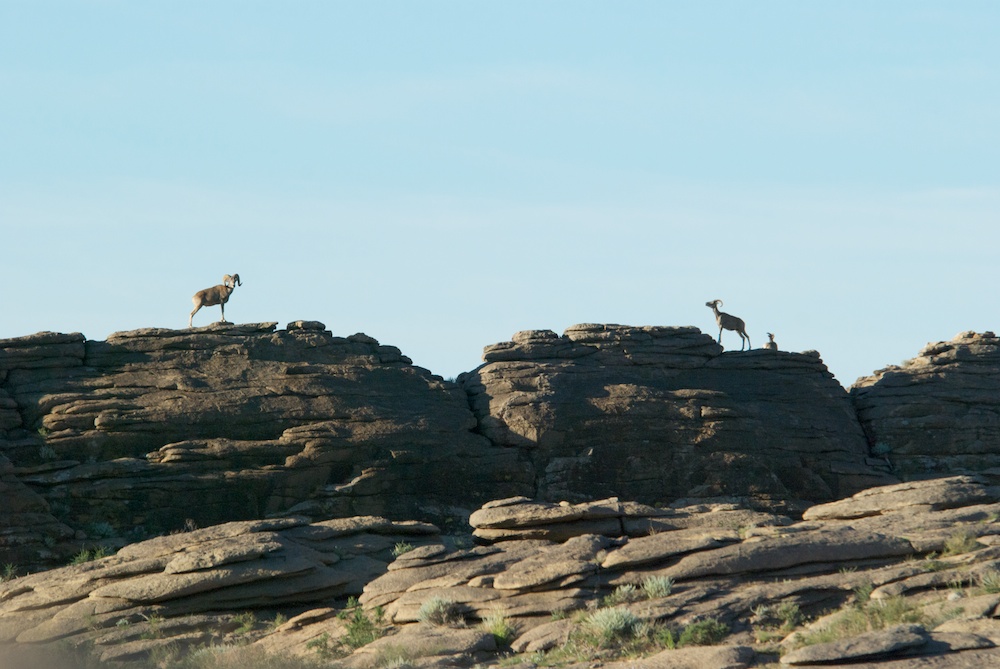
Argali ram, ewe and lamb, Ikh Nartiin Chuluu, July 2011; Typical sighting of argali up on the rocks.
Interesting facts:
-There are no argali in captivity, neither zoos or reserves. The only place to see them is in their native habitats.
– While the rams do fight it out during the annual rut for mating privileges, otherwise argali don’t have set herds or harems. Who is with who can change through the day. Rams mingle freely with ewes and lambs, form bachelor groups or wander around on their own.
– In July of 2009, I was in the right place and the right time to be the first person to ever photograph an argali swimming a river…the Kherlen Gol, which flows through Gun-Galuut Nature Reserve. It was known that they do it, but since almost all the research on them is done at Ikh Nartiin Chuluu, where there are no rivers, no one had ever actually seen, much less photographed, it.
I’m going to start a short series for the holidays of “albums” with images I’ve shot of various types of animals and species that I’ve seen on my travels to Mongolia.
First up are the birds I saw on this latest trip in August 2011. If you see a mis-identified bird, please let me know. The field guide situation for Mongolian birds is still not what it needs to be.
Finally, we didn’t go hunting for any of these birds. They are what I saw as we drove around or walked in the reserves and parks. Mongolia is an extraordinary birding destination that deserves to be better known.
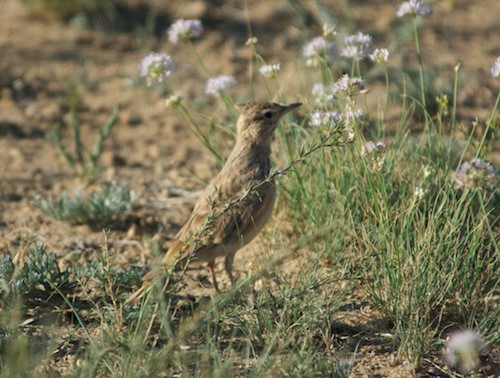
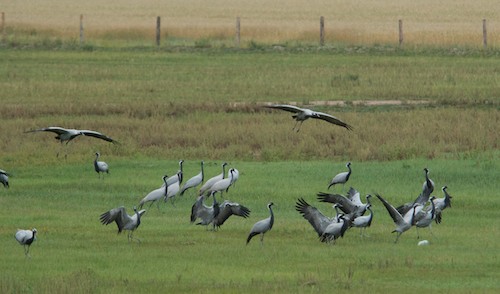
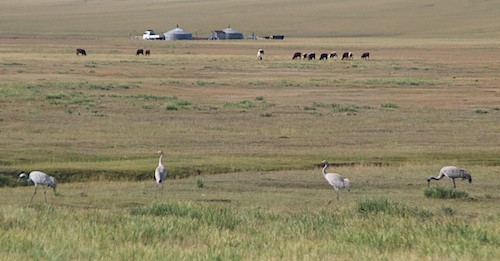
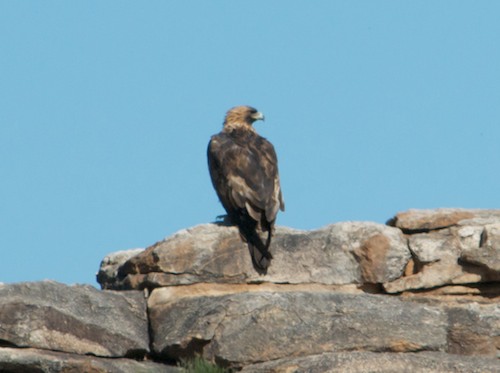
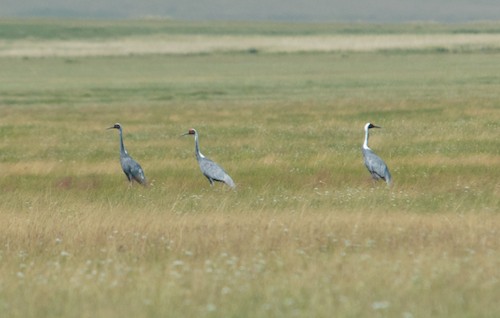
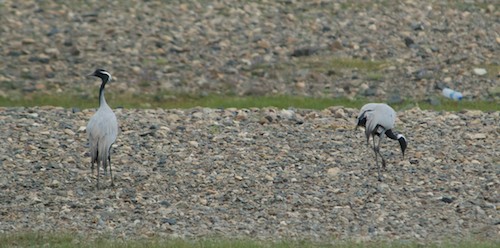
Daurian partridges, Hustai National ParkCrested lark, Ikh Nartiin Chuluu Nature ReserveHoubara bustard, just outside the northern boundary of Ikh Nartiin Chuluu Nature Reserve (this may have been a rare sighting)Whooper swan, Gun-Galuut Nature ReserveDemoiselle cranes, coming into Erdenet soum; part of a large flockEurasian (or Common) cranes, somewhere near Hayrhan, Arkhangai AimagWhite-napped cranes, Gun-Galuut Nature Reserve (endangered)Grey wagtail, Tuul Gol, Jalman Meadows, Khan Khentii MountainsJapanese quail chick (?), Gun-Galuut Nature ReserveCommon magpie, east of Horgo Terhiyn Tsagaan Nuur National ParkDaurian jackdaw, Amarbayasgalant KhiidCinereous vultures, Ikh Nartiin Chuluu Nature ReserveSteppe eagle, Jalman Meadows, Khan Khentii MountainsGolden eagle, Ikh Nartiin Chuluu Nature Reserve
And now we come to the last leg of a wonderful two-week tour and a look at one last ecosytem, the mountain forest, which is the southermost extension of the boreal forest that circles the northern part of the Earth.
The Jalman Meadows ger camp, run on a seasonal basis by Nomadic Journeys, was set up high on a bluff overlooking the Tuul Gol.
While there is wildlife around, it’s the activities one can do here that are the main attraction and we took advantage of all of them!
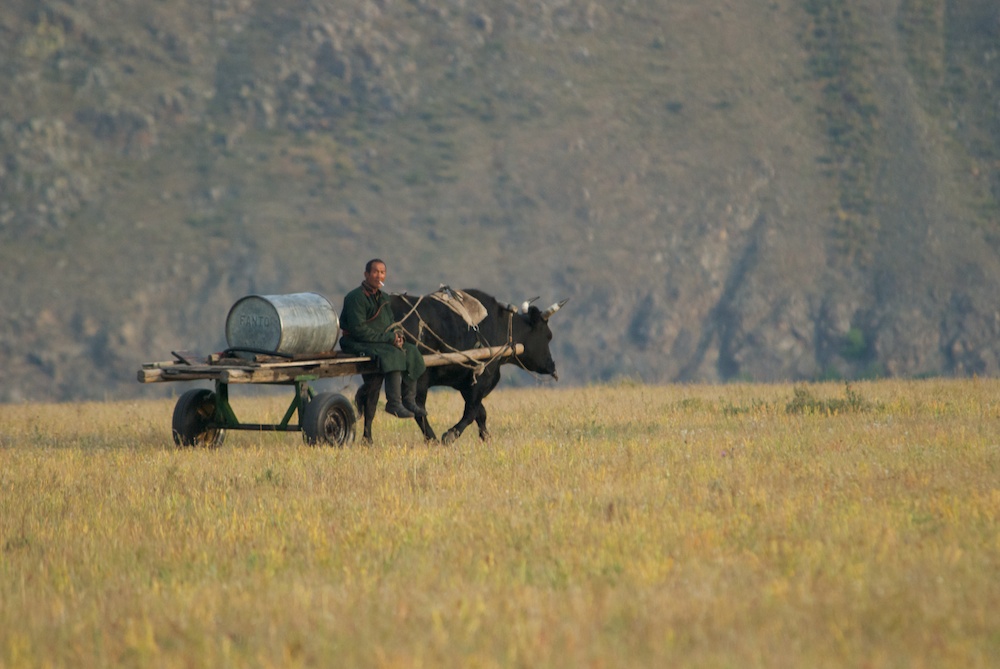
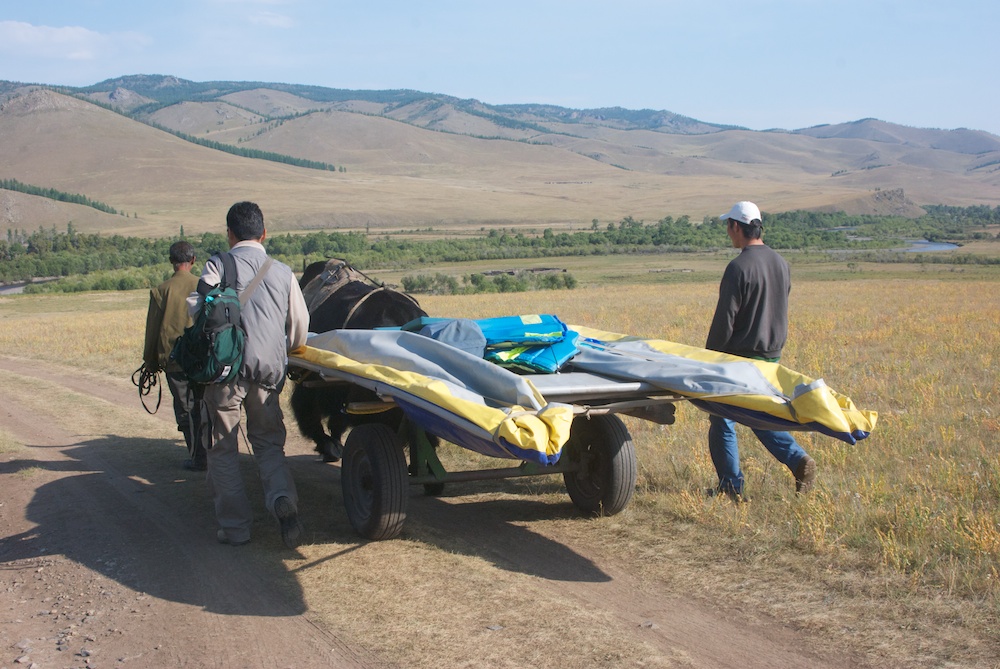
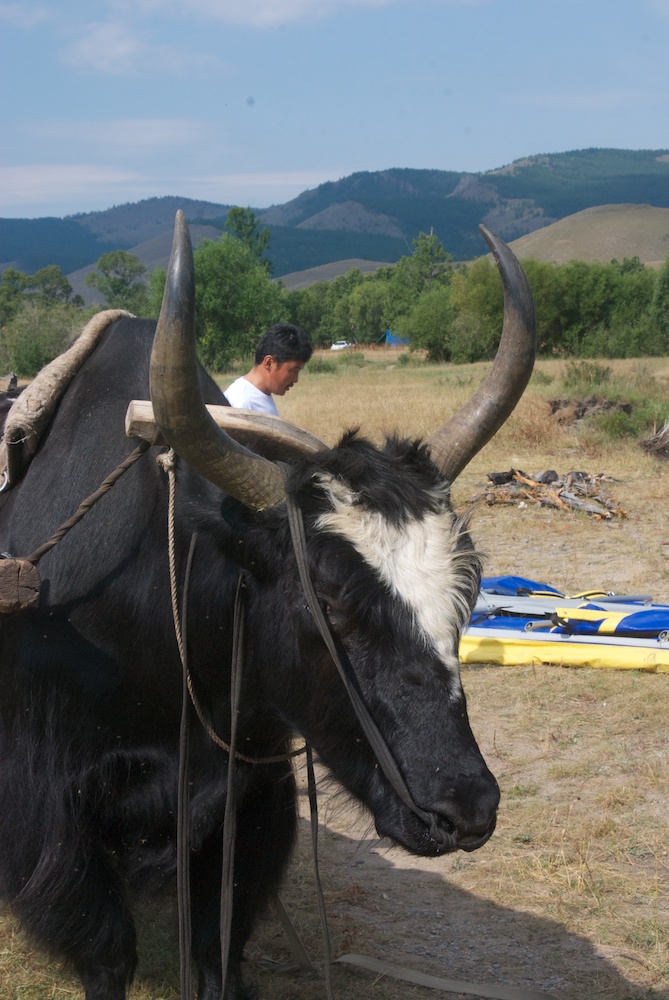
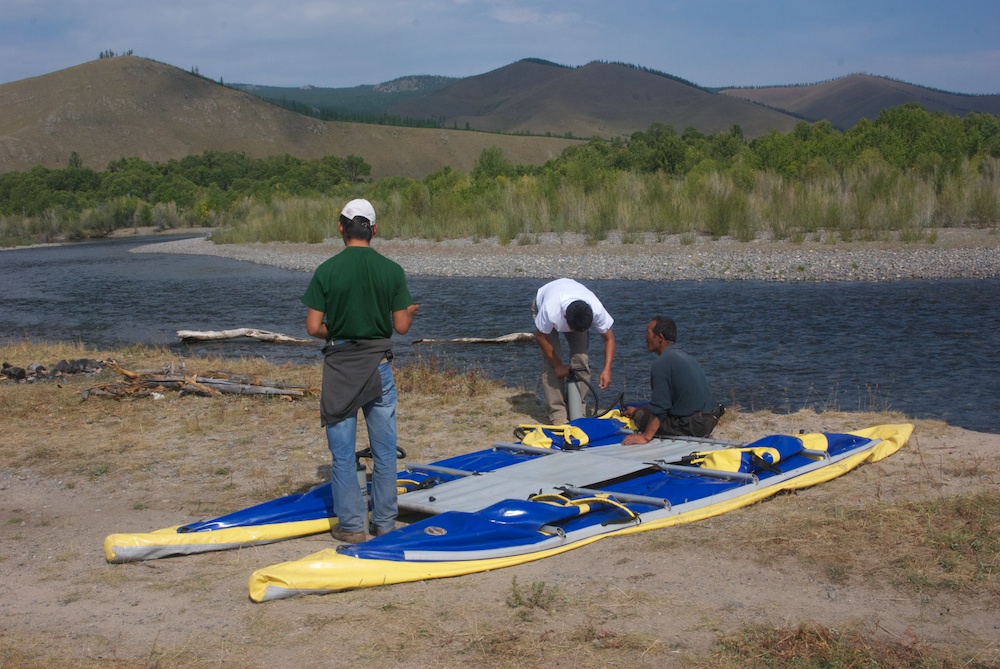
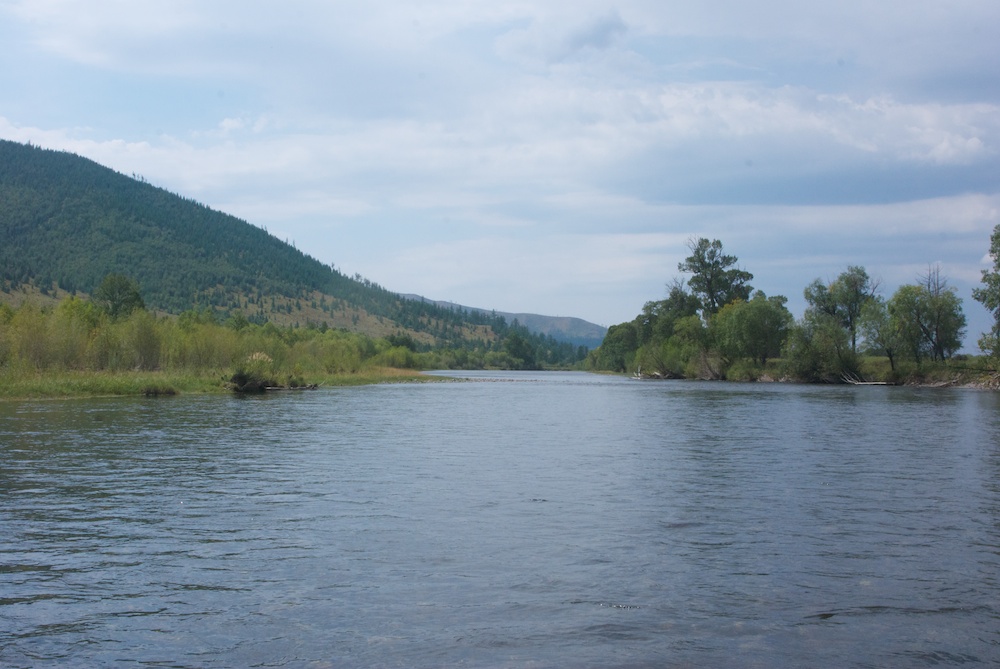
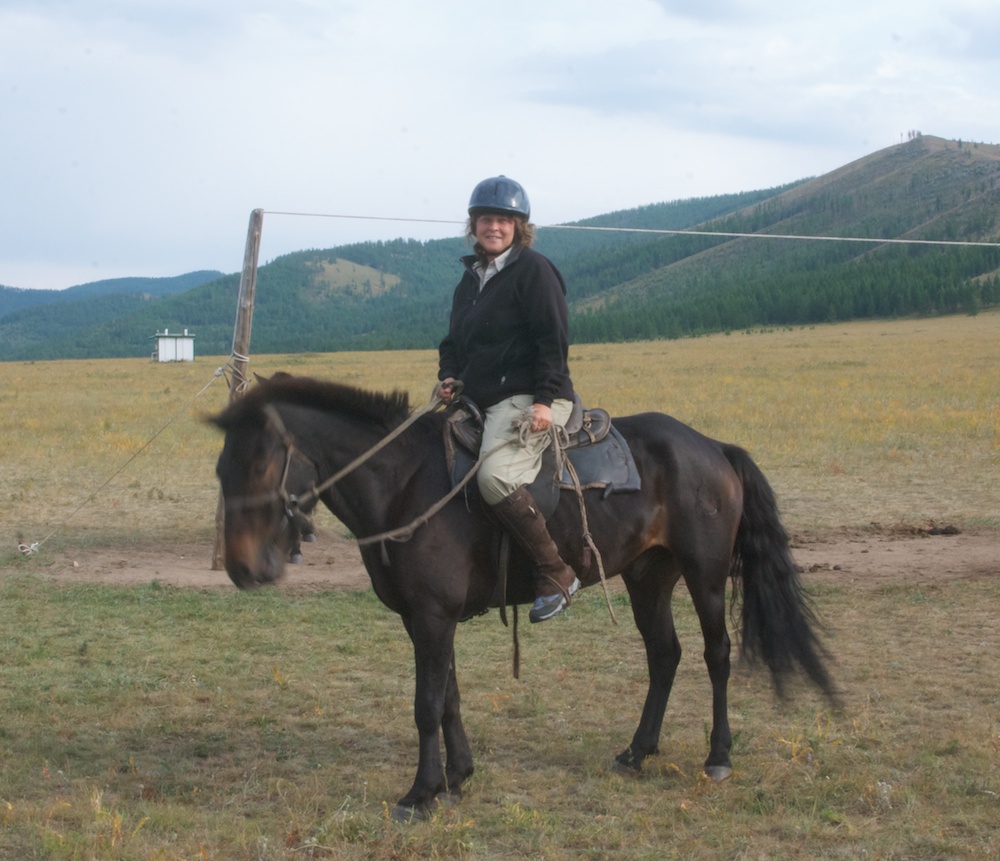
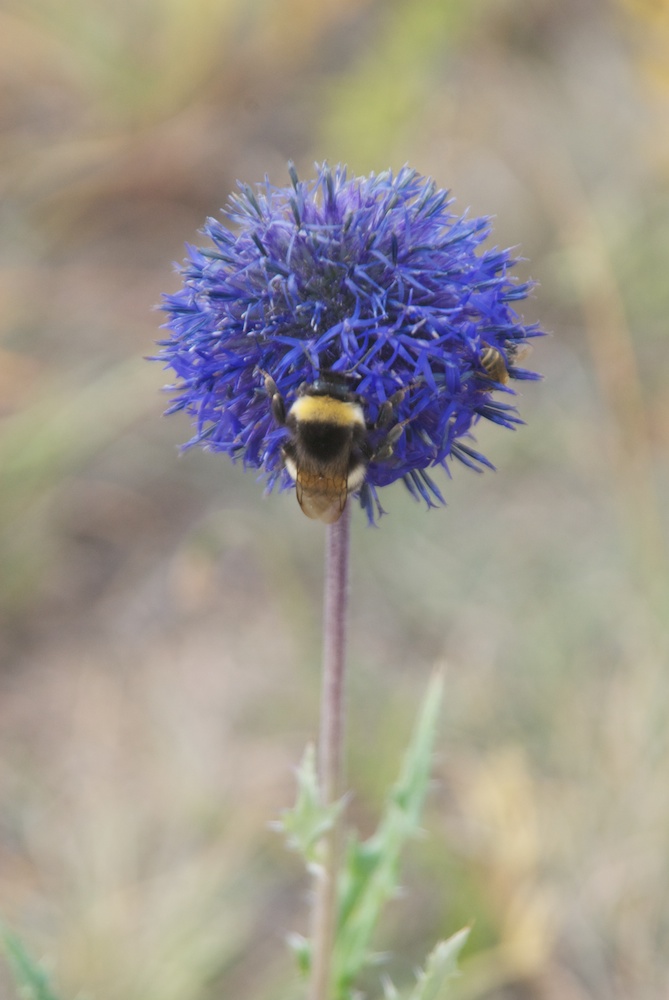
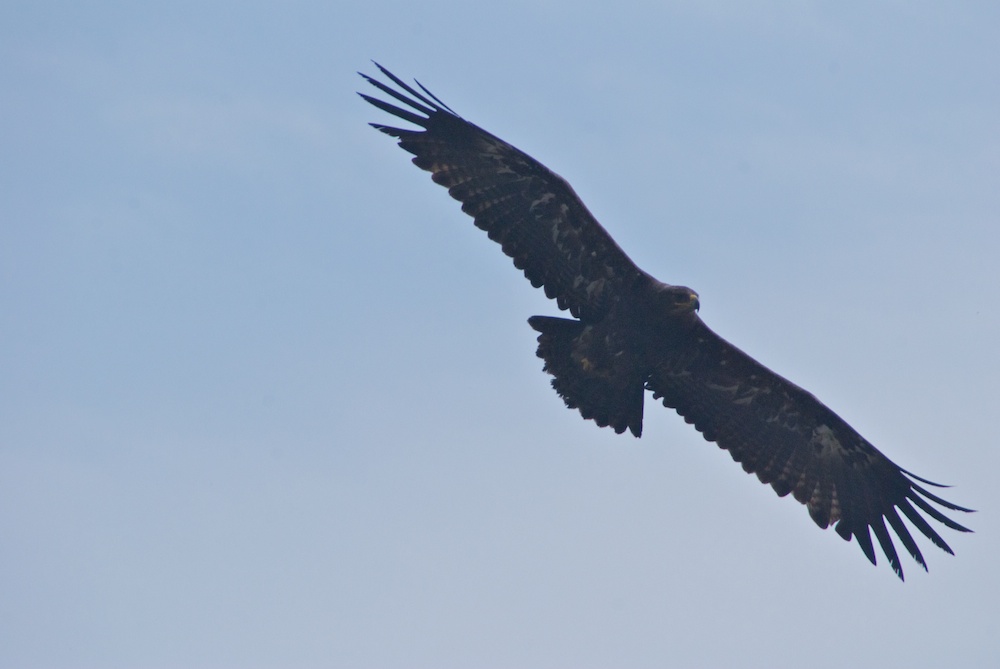
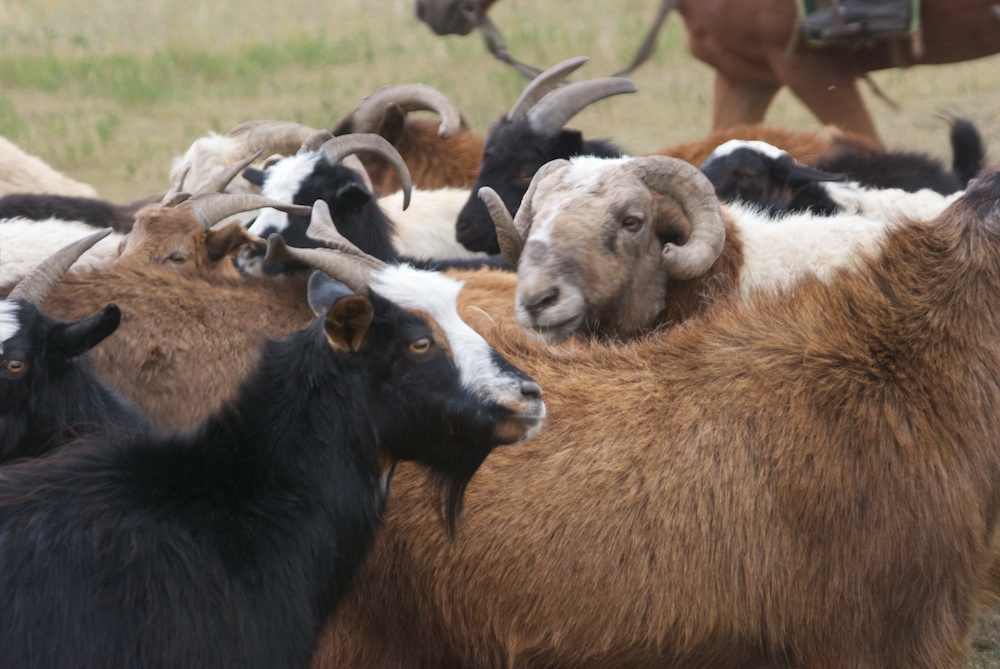
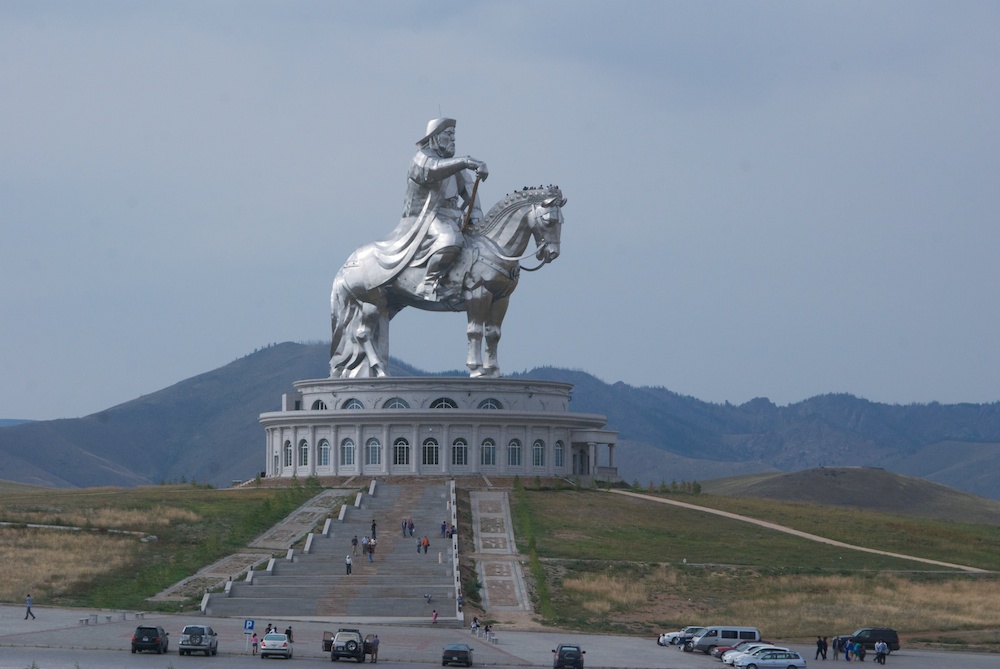
As I came out of our ger after getting settled in, this memorable scene met my eye.Jalman Meadows ger camp with the Tuul Gol in the background.A local herder with his ox-drawn cart fetched water for the camp every day from the river.He also provided the means by which the inflatable boat on which we would take a river trip was transported. We walked about six kilometers to the launch site.This time our "helper" was a yak/cattle hybrid called a hainag.Inflating the boat.And then we were floating down this beautful river.The scenery wasn't flashy, but had a calm peacefulness.We saw a number of birds, including this grey wagtail.There were quite a few riffles to paddle through, which added a little excitement.Finally, the ger camp came into view and our half-day river trip was over.In the afternoon, it was time to go riding.There is nothing like riding through the Mongolian countryside on a Mongol horse.The next morning there was time for a hike up onto one of the hills near the camp. We walked up through the larch trees until we got to this view.The mountain wildflowers were still blooming. The white flowers are edelweiss.And the bees were still busy.We were packing to leave after lunch when Khatnaa stuck his head inside our ger and told us to come quickly, there was an eagle close by. We got some great photos of this big steppe eagle.He finally took off and circled once over our heads.It had started to rain on and off and we needed to get down out of the mountains, but when we saw this big herd of billy goats and rams, it was photo op time.They were all sizes, shapes, colors and horn designs. The young herder walked them back and forth past the car a couple of times, so we got lots of great pictures.Another herder we saw, tending his animals, rain or shine. It was raining.At last we approached the tarmac road, passing the spectacular statue of Chinggis Khan, facing east towards the Mongol homeland.One more wildlife sighting...golden eagles belonging to local a local Kazakh. They go up into the mountains and capture the young birds, using them to hunt with for a couple years and then releasing them.And then it was back into the wilds of Ulaanbaatar, now a city with over a million people. The noise was a shock after the quiet of the countryside.
We arrived at the Steppe Nomads ger camp at Gun-Galuut Nature Reserve with a broken rear spring on the Land Cruiser, not sure what this meant for the remainder of the trip. While Pokey and I settled in, Khatnaa got on his mobile phone and called the Nomadic Journeys’ office to sort things out. We got laundry done and took welcome hot showers.
That night, at dinner, Khatnaa explained the situation. He would need to take the car out to the tarmac road (13km on earth road each way to get to and from the reserve) the next afternoon to meet up with someone from UB who would bring the new spring out. Then it would have to be installed. How long? Half a day. Did we want the office to also send out a new guide and driver to finish the trip or would we wait for the repair? That decision took about two seconds….we’d wait and finish the trip together. In any case, Pokey and I weren’t sorry to have a break to simply hang around camp and relax.
Khatnaa then said that the car was drivable, with care, and we would go out the next morning at 6am, which is exactly what we did. I was impressed by what he considered staying on “easy” roads. We parked and took a good, long hike down to where he thought we might see argali, which we spotted off in the distance almost as soon as we stopped to glass the mountain.
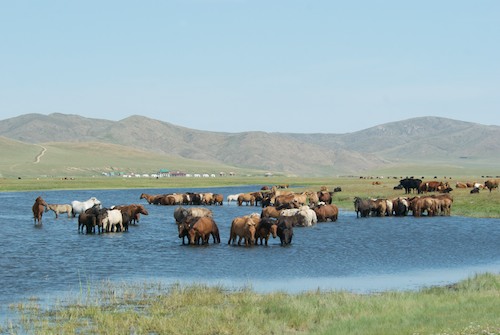
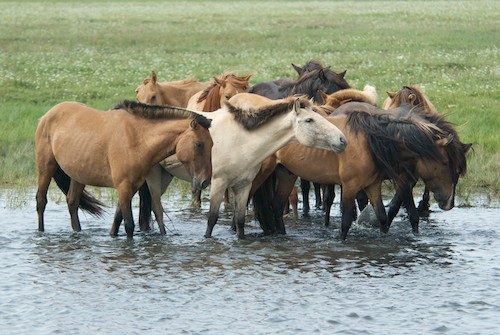
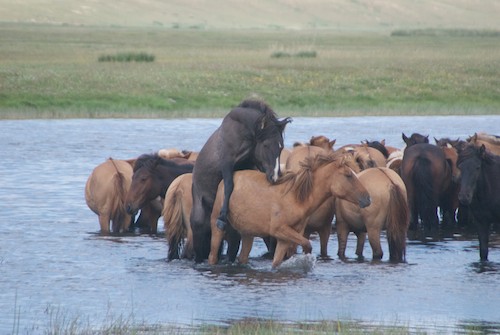
We also got great photos of a big herd of Mongol horses and cranes, but really had to dodge the mosquitos. Back at the ger camp around 1pm, Khatnaa grabbed a quick lunch and took off. To our surprise and pleasure he was back at 5:15, after having to replace BOTH back springs because the replacement was longer than the original one. Dinner was quite festive with beers all around.
We only had one day at Gun-Galuut, but it was a full one, packed with great scenery and animals.
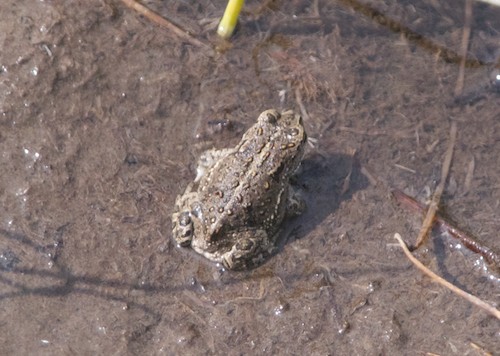
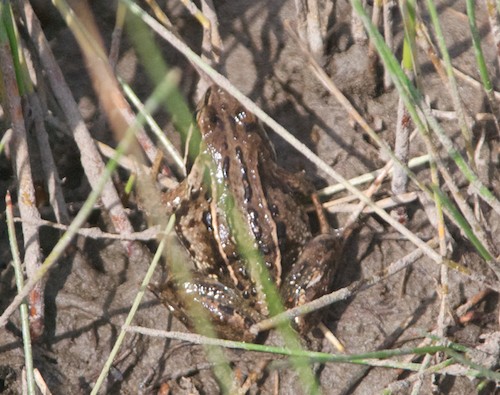
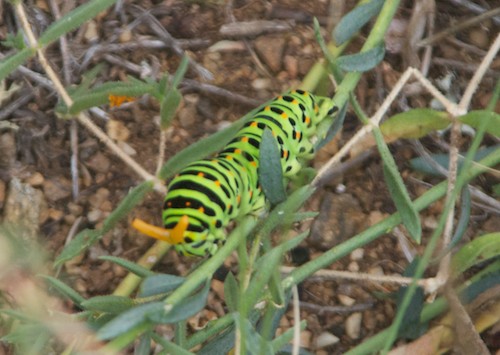
Steppe Nomads Tourist CampMorning coffee in front of my ger in my comfy Mongol del and felt slippersEarly morning light along the Kherlen Gol with Baits Uul ahead on the right12-13 argali grazing; look in the middle among the shrubs for the white dots which are their rumps; why good binoculars are a mustRiverside viewLocal herder's gers with a line of grey herons in frontI believe this is a Japanese quail chickThe horses we got great photos of, with the ger camp in the background; they were in the water to get away from the mosquitosEndangered white-napped cranesSmall toadFrogWetland and mountain, with cranesMore of the horses; in the afternoon a breeze had come up which kept the mosquitos away, from us at leastSometimes the action got pretty hot and heavyFirst time I ever saw a caterpiller in Mongolia
That evening Khatnaa told us that the next day’s drive wouldn’t be a long one, so we would go out into the reserve in the morning and leave after lunch. We went around the “backside” of the mountain, the side away from the river, parked in a draw, got out and almost immediately spotted four big rams running over a ridge to our right. I only was able to get a couple of butt shots before they were gone. But, within minutes, we spotted an argali ewe and lamb to our left. And then a large group moving up the draw directly in front of us, but a pretty long ways off. It’s estimated that there are less than 100 argali in Gun-Galuut, so we saw a fairly good percentage of the population in two tries.
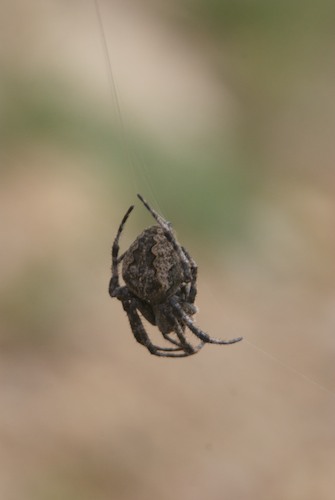
Argali Ewe and lambGood-sized spider
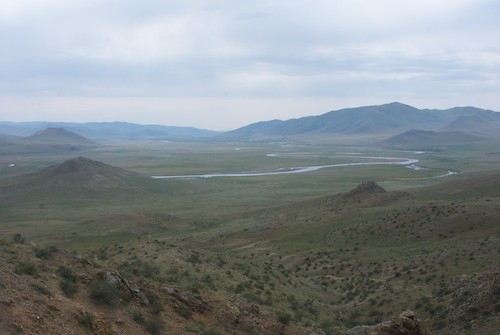
We drove to the next draw over where we hoped the argali rams had gone, but saw no one. Pokey wanted to do some sketching, so she stayed with the car while Khatnaa and I hiked up onto the mountain again. Coming around a ridge, the view opened up to the entire river valley. We found a couple of rocks to sit on and simply enjoyed the scenery for a half hour. It was so quiet, except for the occasional animal. No cars, no planes, no radios, no voices. Just. Quiet. One of the things I treasure about being in the Mongolian countryside.
View of the Kherlen Gol valley, looking eastOf course I had to have my picture takenBack down on the wetland, we spotted a whooper swanA beautiful butterflyAnd on the other side of the river, a pair of demoiselle cranesOn our way out of the reserve that afternoon, we stopped by this small lake to photograph another whooper swanThis enormous coal mine at Baikhanuur is visible from the road to and from the reserve
Next week: Onward to Jalman Meadows in the Hentii Mountains
The next leg of the artist’s tour was from Ikh Nart to Gun-Galuut Nature Reserve. I had only been there once, in 2009, driving east from Ulaanbaatar. This time we were going to go almost straight north…we hoped.
Great bustard we spotted not long after we left the reserve. It was the first time I had ever seen one.
We got back to the main tarmac road between Ulaanbaatar and China and traveled on it for awhile. Then we passed a spot where a dirt road went off to the right at an angle. Khatnaa started to drive on, spotted a white van coming toward the tarmac, stopped, backed up, got out and walked over to them as they slowed down and then stopped. After a short conversation, he came back to the car, backed us up and off we went onto the earth road. He had been able to get enough information about weather and road conditions that he felt ok about taking the “local road”. As usual, this made me very happy.
Why you don't just pick up a rental car at the airport and head out into the countryside in Mongolia on your own. You can now get a good road atlas, but it's deceiving because this is what the roads are like all over the country except for a very few wide gravel roads and a slowly increasing amount of tarmac on main routes.We drove through a small soum center.As we headed north, there was a dark storm front to our left and fluffy white clouds and sunshine to our right. The road going north was running right along the front. We were out in steppe countryside with no one else around...not a single other car, not even a ger.After some spatters, we found ourselves traveling in pretty heavy rain for about 15-20 minutes and then came to a stream that we had to cross. Now I started to wonder what the road conditions would be up ahead of us.The light was really spectacular, though, as we went up some in elevation and started to see gers again. It had stopped raining where we were, but was still stormy to the west and north of us.Dropping down into a valley and, crossing it, we encountered something I'd seen before....really hard greyish dried mud combined with many very deep potholes. Khatnaa, with extreme care, had almost picked our way through it when we felt the rear end on the passenger side drop down hard, accompanied by a noise that didn't sound good at all. He pulled over on a level spot and crawled under the car. The verdict? The spring (new and Chinese-made) was broken. What to do? We drove on very carefully. VERY carefully.What Khatnaa knew, that I didn't, was that over the rise that you can see almost in the middle in the above photo was our destination, the Steppe Nomads ger camp at Gun-Galuut. With much creaking and care, we made it over the pass and across the valley to the camp.
Those of you who have followed this blog for awhile know that I’ve been going to Ikh Nart since my first trip in 2005. This time I had the pleasure of sharing the reserve with a fellow artist, Pokey Park.
Wildlife being what it is, one never knows what one will see on a given trip, or even if. But this visit exceeded our every reasonable expectation. For two of the four days, it seemed like we could hardly go an hour as we drove around the reserve without seeing argali, ibex, argali and ibex in the same place or cinereous vultures, a golden eagle or other birds. And we had sightings both other days, but not nearly as often.
The universe being what it is, on our way out of the reserve we drove through one of the areas where we had had multiple sightings of argali and ibex the previous morning and saw not a single animal.
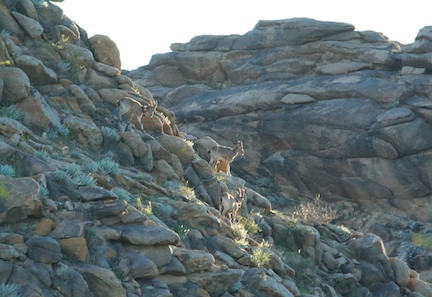
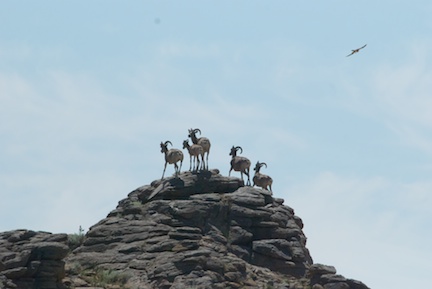
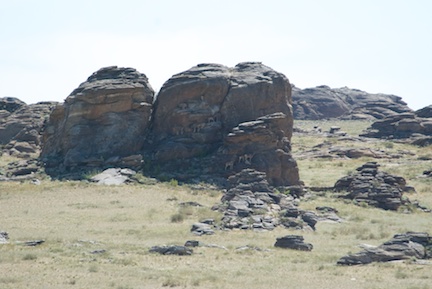
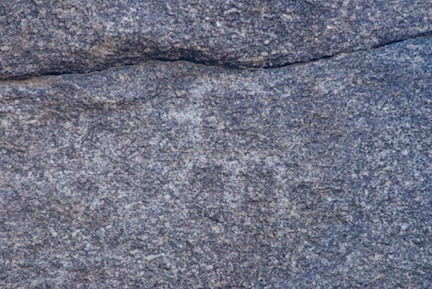
We stayed at Nomadic Journey's Red Rock Ger CampIkh Nart landscapeScanning for argali and ibexBut I was the lucky one who first spotted a single ram, who then joined up with a big group making ten all together. What a sight they were!We maneuvered through the rocks, caught up and re-sighted them three timesThey've seen something, we had no idea whatGolden eagleA herder's winter shelter for his livestockOne of the pictographs on the rock cliffWe went to the valley where the research camp is located and got great sightings of a large group of ibexAnd for a bonus, a beautiful sunsetWe also were able to follow this group of ewes and lambsHow many sheep can you see?They are totally at home in these rocky uplandsBlack kiteWe drove south to see the pictographs and Tibetan inscriptions on the cliff in the backgroundPokey helped fill the troughs; it's a Mongol tradition that passersby will fill them if they are emptyIbex pictograph; researchers have just started to catalog and study the cultural resources of the reserve, of which there are manyArgali ewe and lambArgali ram
The next stop on the “artist’s tour” was Arburd Sands ger camp. This was more a “cultural” stop, than for wildlife viewing, but we got some of that, too.
This was the third time I had stayed at the camp and it was great to see owners Batbadrakh and his wife, Densmaa, again.
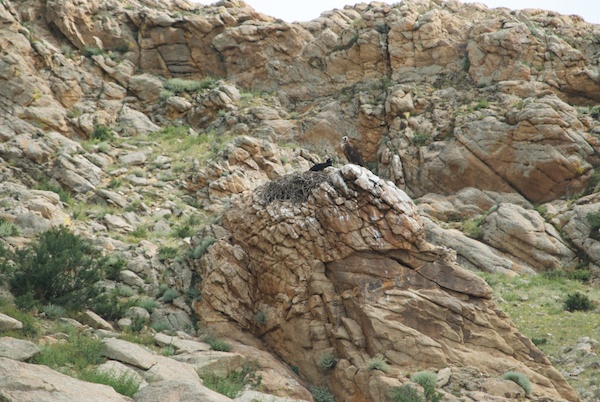
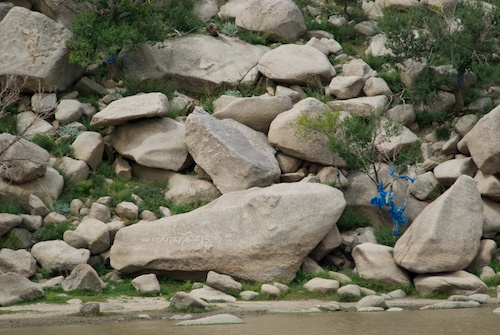
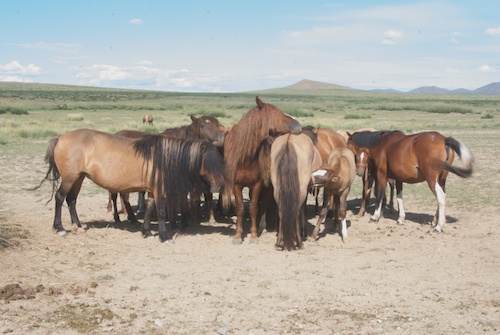
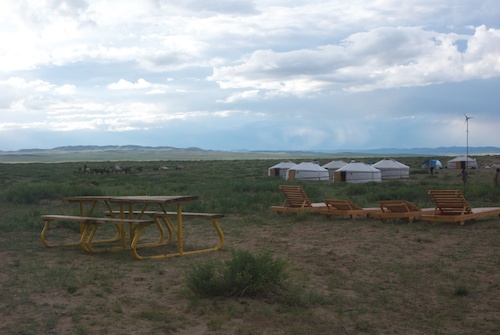
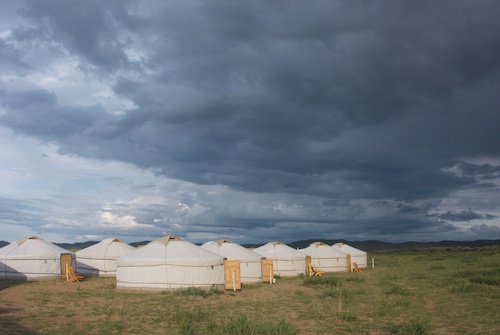
Arburd Sands ger camp; the dune complex behind the camp is about 20km long and is one of the northernmost extensions of the Gobi.Exercising a young Mongol race horse; the owners of the camp are members of a prominent horse racing family.We took a day trip to two local sacred mountains; this is Baga Hairhan Uul (Small Sacred Mountain).Scanning the mountain paid off with this sighting a few female Siberian ibex; you can just see one on the lower right side of the second pointed rocks from the left, the head and half the body are visible.Nearby, to the left of where we were sitting, was a cinereous vulture nest with an adult and fledgling.Our second destination...Zorgol Uul, one of my favorite mountains.On the south side is this lovely stupa; the fence is festooned with khadag, blue offering scarves.On the "front" facing the main road south was a cinereous vulture nest that I don't remember seeing on previous trips.At the base of the mountain is a small seasonal lake; to the left of the khadag is a large rock with a Tibetan inscription and if you look up to the top you can see a black kite perched on another big rock; quite a composition.The family that runs the ger camp is known for its horses. One came in third in the State Naadam race this year, which is a big deal since the first five are considered almost equally winners in a 35km race that may have over 400 entries; I asked if the horses were nearby and could we take pictures of them and, yes, they were only a kilometer or so away. The stallion's manes are allowed to grow and grow and grow....because that is believed to give them strength. We got some great shots!While we were there, three men, probably relatives or friends of the owner, came by to check out the horses.One of the highlights of the entire trip was seeing Sodnam again; I "met" her when my husband and I were at Arburd Sands in 2008 and we took to each other immediately even though we couldn't speak each other's language. She's 92 now and I'll bet she's caused some mischief in her time. She's Batbadrakh's brother's wife's mother. The lady on the right is the mother of Batbadrakh and the widow of Choidog, his father.Then it was our turn to ride; I really liked this sarel (grey) gelding and asked Densmaa if they could box him up and send him to California; a joke since I don't think Mongol horses would do well at all in our higher humidity sea level climate.The Arburd Sands ger camp is set up in a new spot every year or so to protect the land; this year Densmaa grinned at me, pointed to the table and lounges and said "How do you like our beach?" We liked it a lot even though it's a bit far from the ocean.And one of the reasons is that it was a great place to watch spectacular sunsets like this one.There really is nothing quite like storm light over Mongol gers.














































 Susan Fox, American Artist