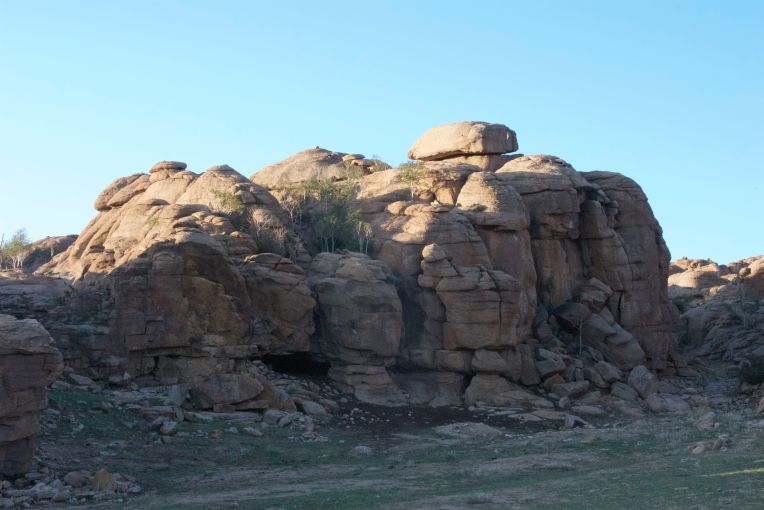
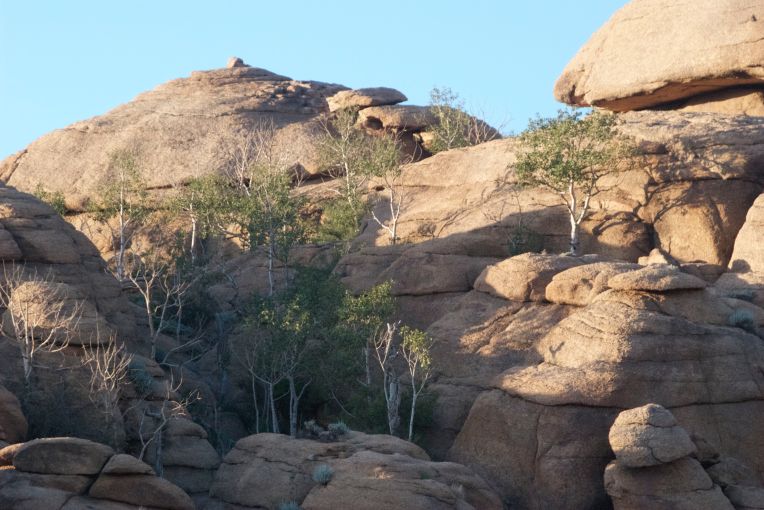
In the evening after the mountain ceremony, we went for one last drive and ended up poking around the ruins of an old monastery that is tucked up into a narrow canyon. The entry point and the site itself has many aspen trees growing in and around it, some with blue scarves (khadak) tied around them. It was a very peaceful place. After all the normal, but sometimes noisy activity that had been going on around the ger camp, we chose to just sit up on some flat rocks in the quiet, watching the sun go down. It was a very nice way to end my stay at Baga Gazriin Chuluu, knowing that the next day was a long road trip ending up back in very noisy UB.
Left side of canyon entranceRight side of canyon entranceInterior of monastery building with aspen trees
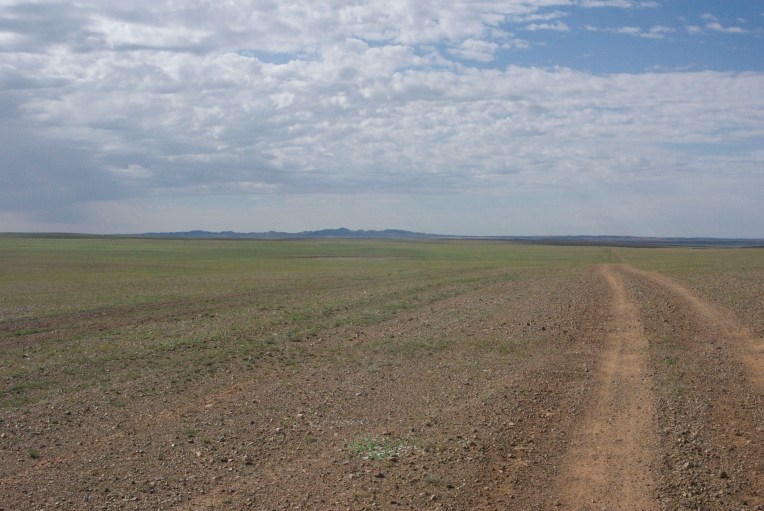
We left for UB around 9am the next morning. Back across the steppe.
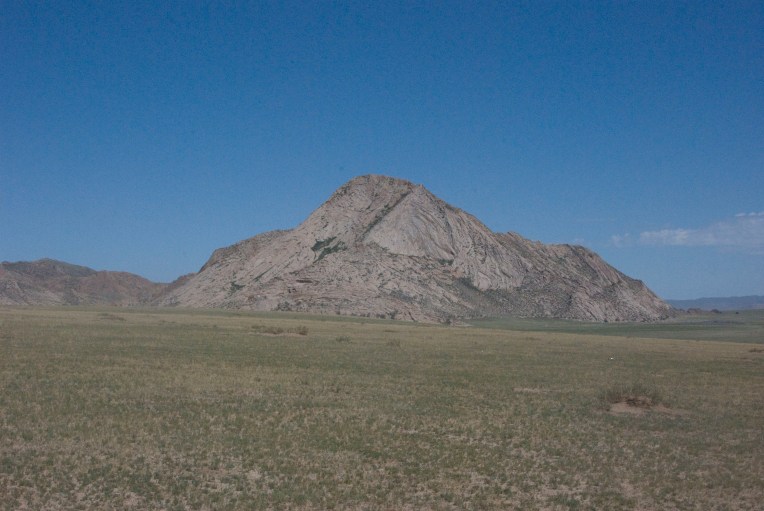
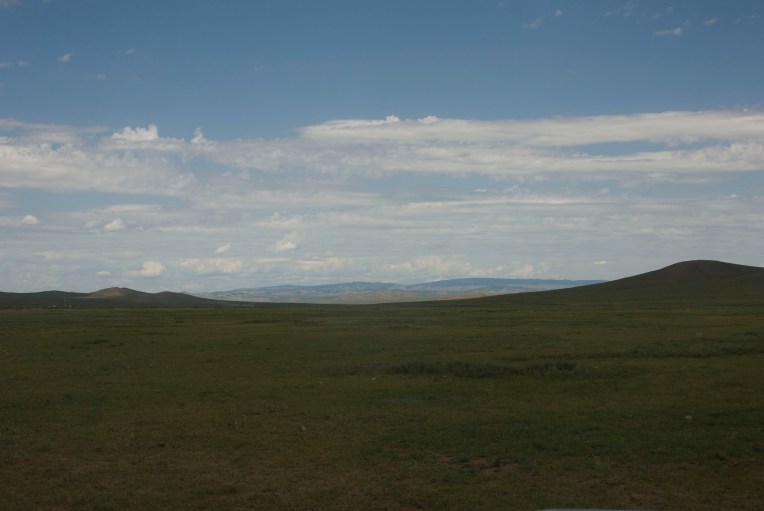
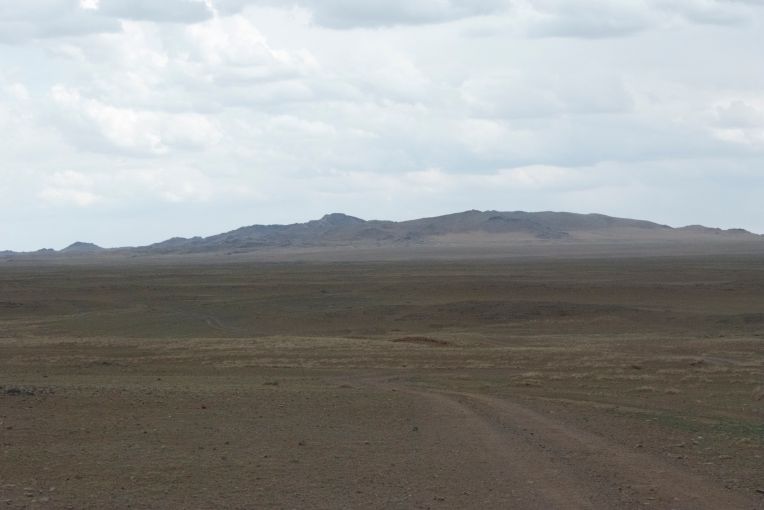
Earth road on the steppe looking south towards Baga Gazriin ChuluuTahilgat Hairhan, the mountain we saw on the way south
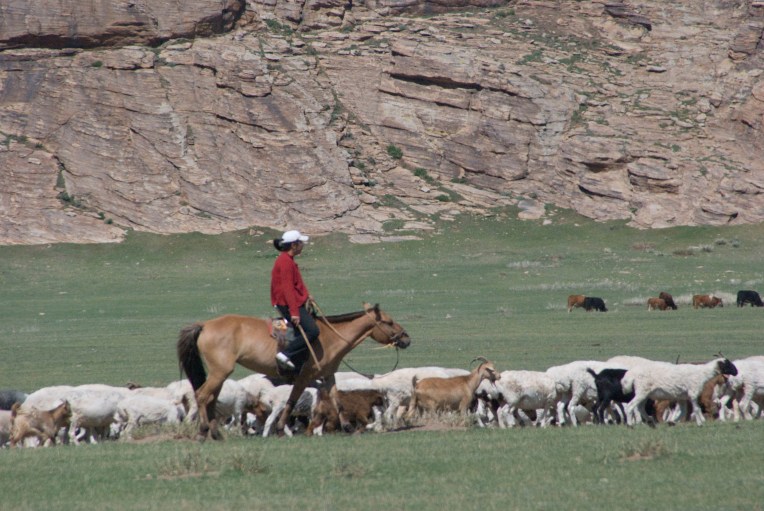
Among the many things I learned from Hatnaa about Mongol culture is that, out of respect for the spirits who dwell there and the fact that the top of a mountain is the closest one can get to Tenger, the sky, you never say the name of a mountain while you are within sight of it. One refers to it as “Hairhan”, which is a term of formal respect. So I asked him what the guides say to the tourists who inevitably ask what the name of this or that is. They parse the issue by saying that the mountain’s name is Hairhan. Which is absolutely true, in a sense, but allows them to honor an important custom. Near the mountain there were a couple of people herding their animals.
Traditional herding of goats and sheepA somewhat more contemporary method of herding camels
Finally, we came in sight of Bogd Khan, the sacred mountain which lies to the north of Ulaanbaatar and is also the world’s first nature reserve, having been set aside in 1778. Still on my list of places to visit. On the other side was the end of this wonderful road trip and a long, hot shower.
My guide/driver, Khatnaa, picked me up at the hotel at 9am and off to the countryside we went. I’m just going to hit the highlights here due to time constraints. I’ll cover each location more in separate posts after I get home.
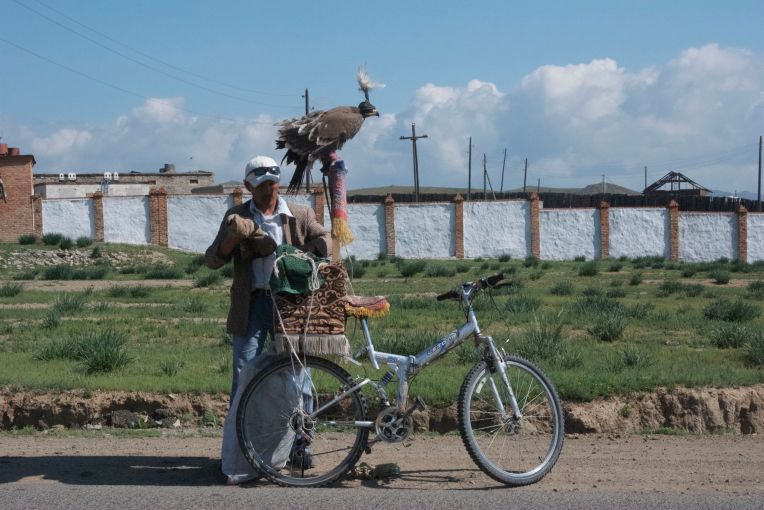
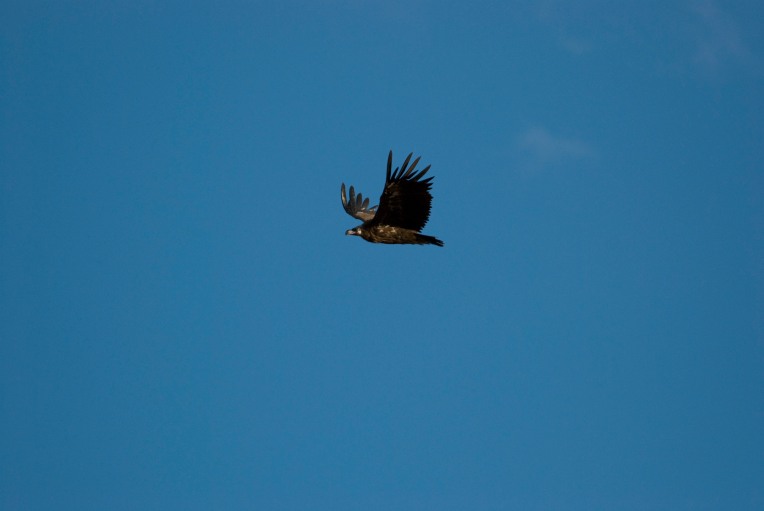
We were about 40 minutes out of UB when we came upon a Kazakh man on a bicycle with his two year old golden eagle perched on the top of stack of parcels. What a way to start the trip!
Kazakh Man and his eagle
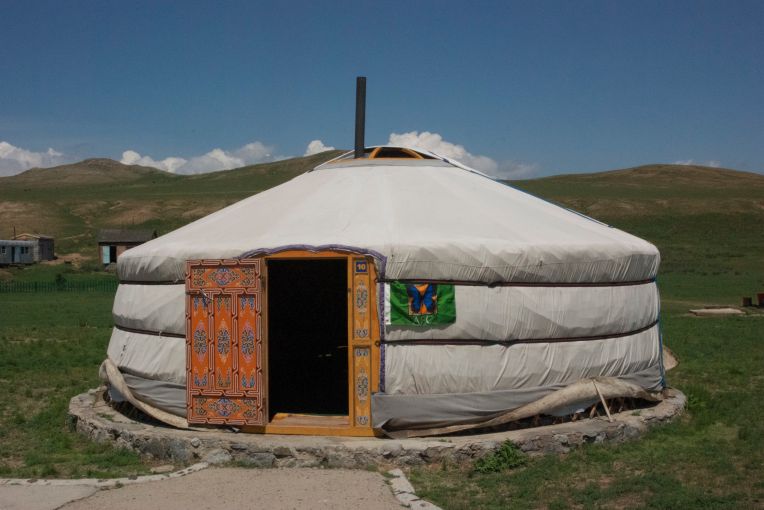
We arrived at the Gun-Galuut (pronounced “goon-galote”) after a pleasant two-hour drive. Lovely tourist ger camp overlooking the valley of the Kherlen River. Here’s my ger-
My ger at Gun-Galuut with AFC flag
We got settled in. I walked down to the river and sat by it for awhile, caught up on the Journal and got organized for the upcoming fieldwork.
View from my ger
The next four days took on a basic pattern of getting up at 6am, out the door by 6:30, game drive until about 9, back for breakfast, do what needed doing, back out after early dinner by 6:30, drive until light gone between 8:30 and 9. Fall over. Repeat.
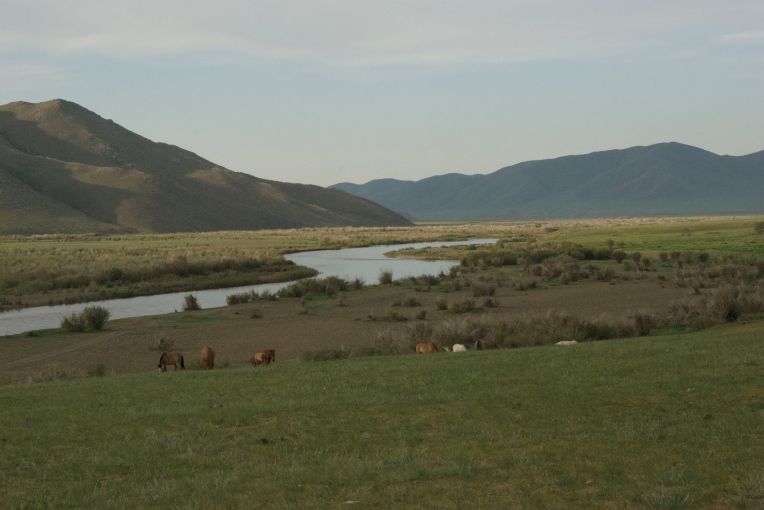
The first morning, while Khatnaa was scanning the hills, I took a look along the river and, halfway through the first sweep from left to right spotted four young argali rams on the other side of the river. We were off to a good start. Here’s a selection of other images. I’m saving all the best stuff for the paintings, but these will give you an idea of what I saw.
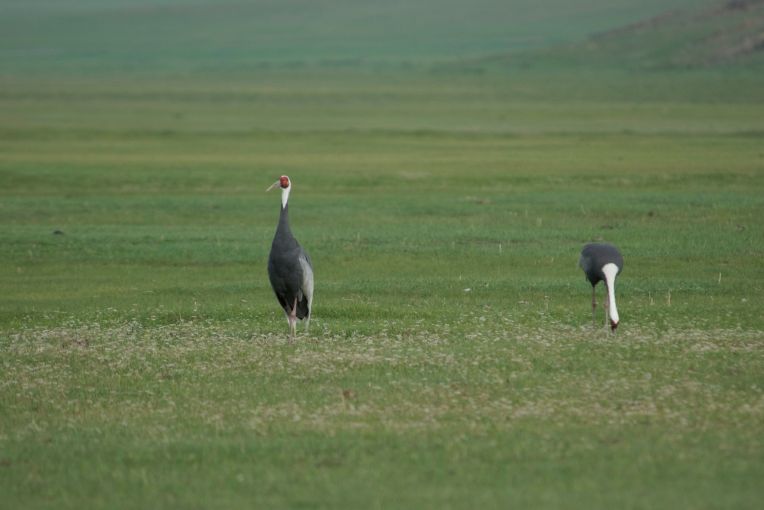
Kherlen Gul valleyEndangered white-napped cranes; one of three pair in the reserve White-napped crane and domestic yaks
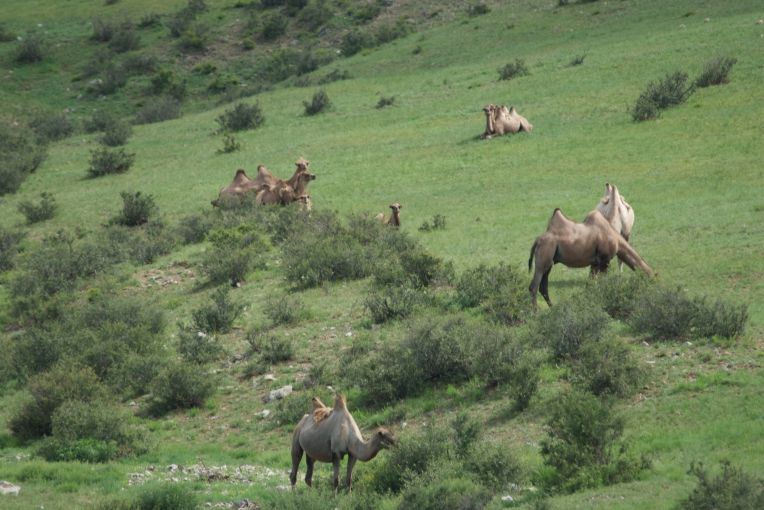
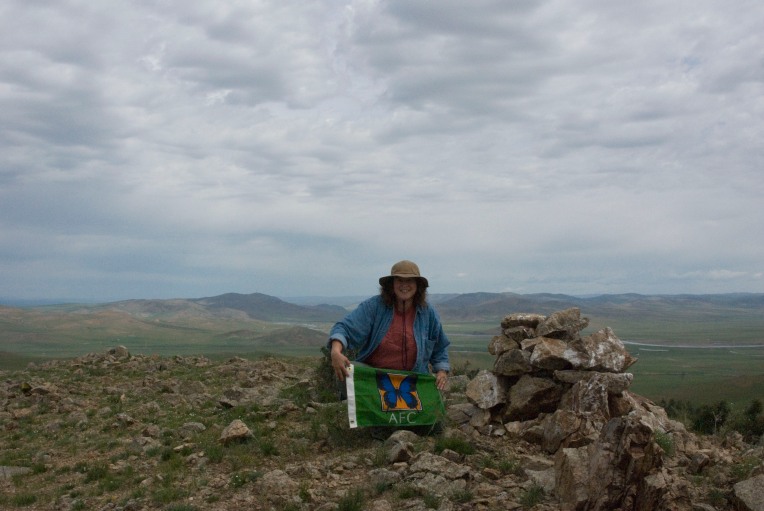
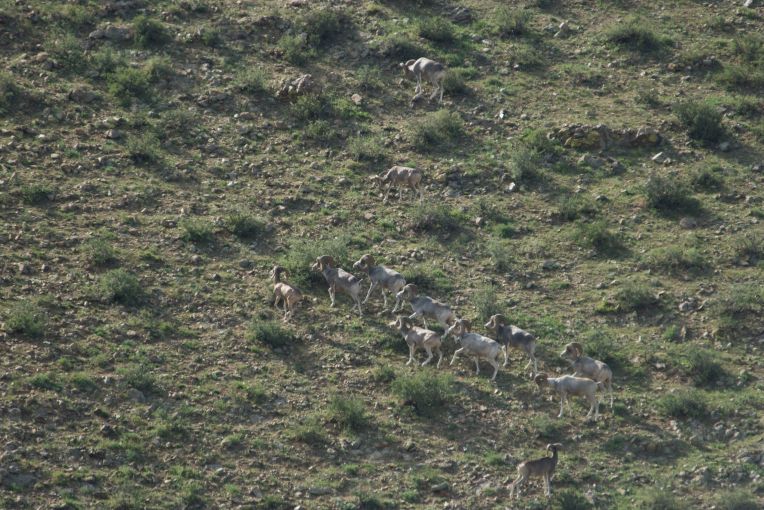
Domestic bactrian camelsPosing with the flagArgali; the big group of 14 we saw
After four fabulous days at Gun-Galuut, we drove back through UB, where I picked up a copy of a bird guide and we ran a couple of other errands. Then it was south to Baga Gazriin Chuluu, with a one night stay at Arburd Sands. It was windy and there were dark clouds around. We stopped for lunch and could hear thunder in the distance. Then it got interesting.
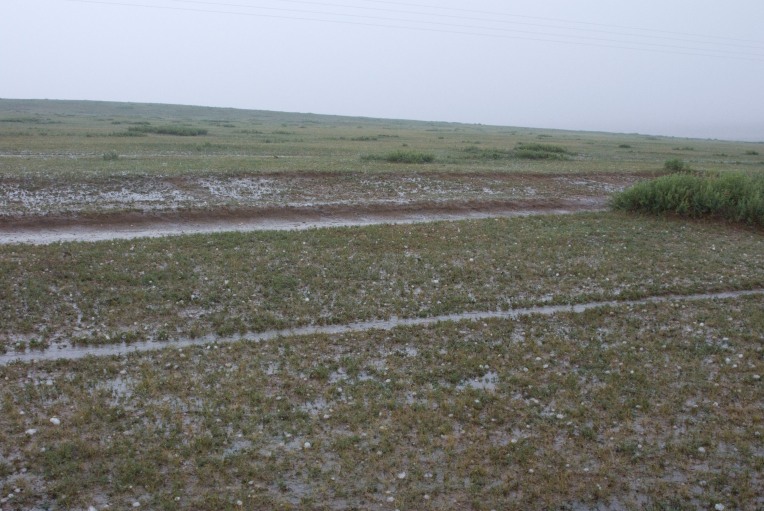
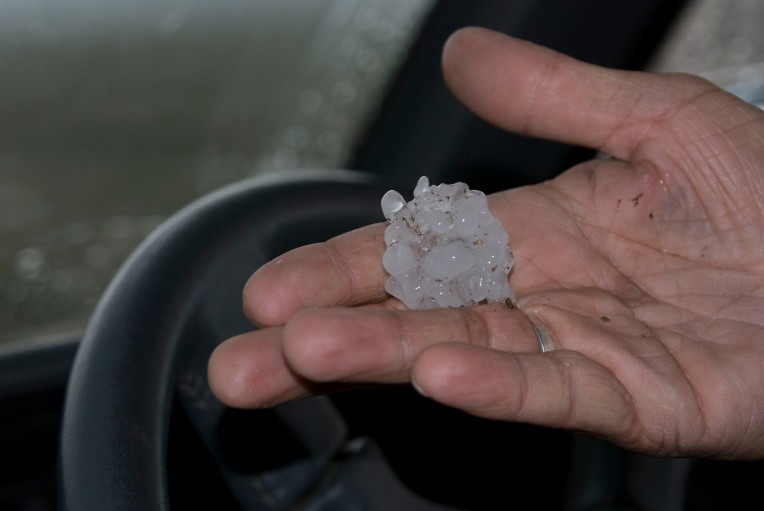
Hail; looking out car window
We found ourselves out in the open on the steppe in a violent rain and then hail storm. It was so bad that Khatnaa turned the car so that the back was to the wind to protect the windshield. The sound of the hail hitting the top of the car was really loud and left dents. All we could do was sit tight and wait it out.
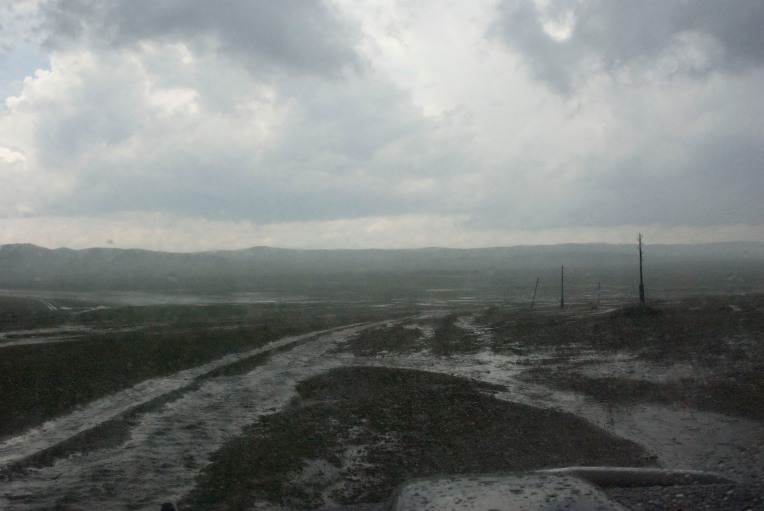
Hailstone that Khatnaa picked up off the groundRoad after hailstorm; the direction we were heading
All the dirt track, or as Khatnaa called them, earth roads had become rushing rivers of water. Amazingly, he was able to pick our way across this safely and without getting stuck in his Mitsubishi Pajaro diesel SUV.
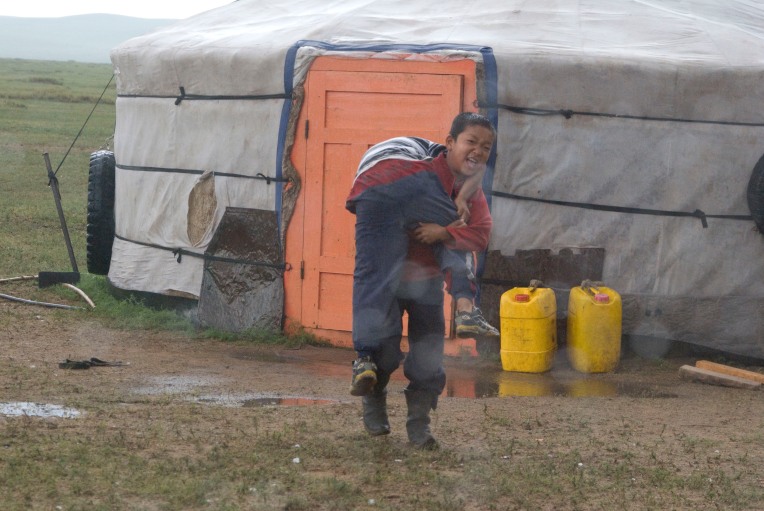
Kids wrestling in the rain
Finally, the hail stopped and we were able to go on. Khatnaa had only been to Arburd Sands once a number of years ago and when he became unsure of the route, he stopped a couple of times and asked for directions. These kids put on a wrestling demo for me while I waited in the car. They were really showing off their moves.
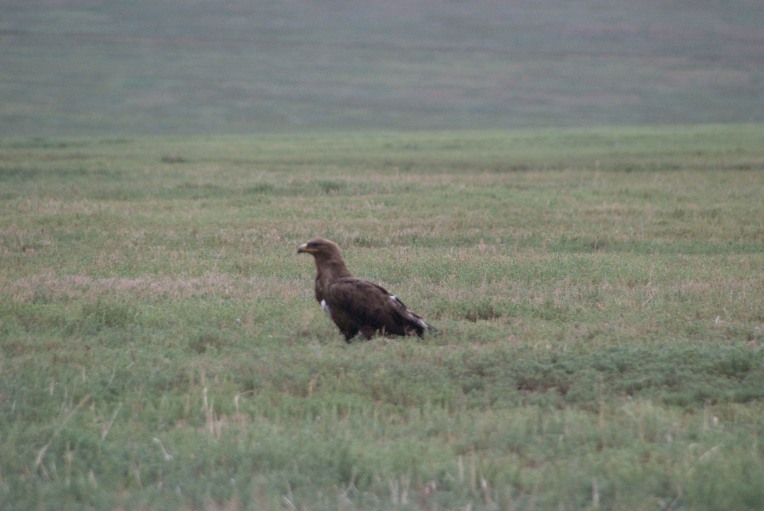
Young golden eagle by side of road
We started to see raptors by the side of the road once we got out past the storm front.
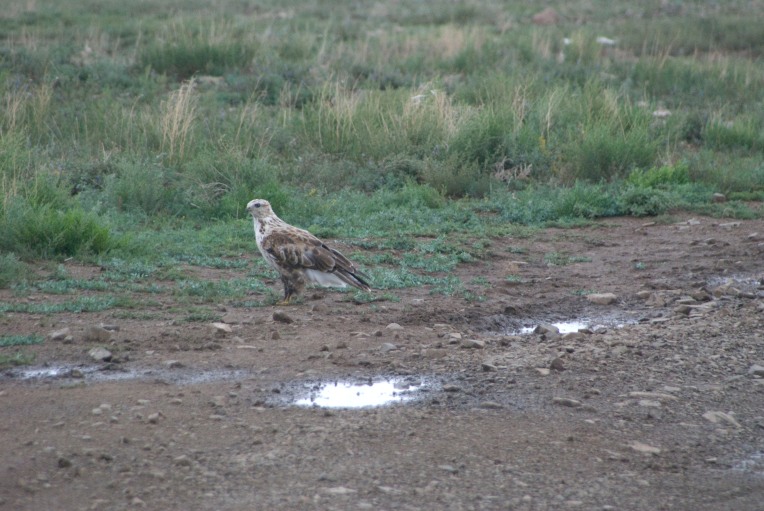
Upland buzzard
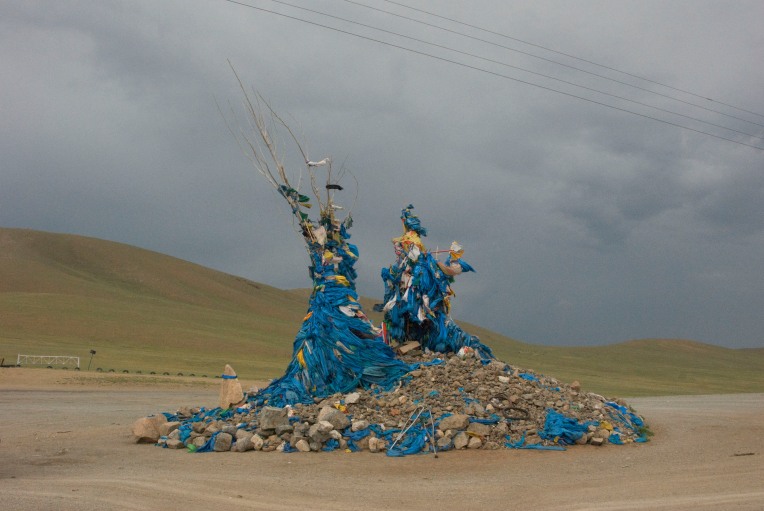
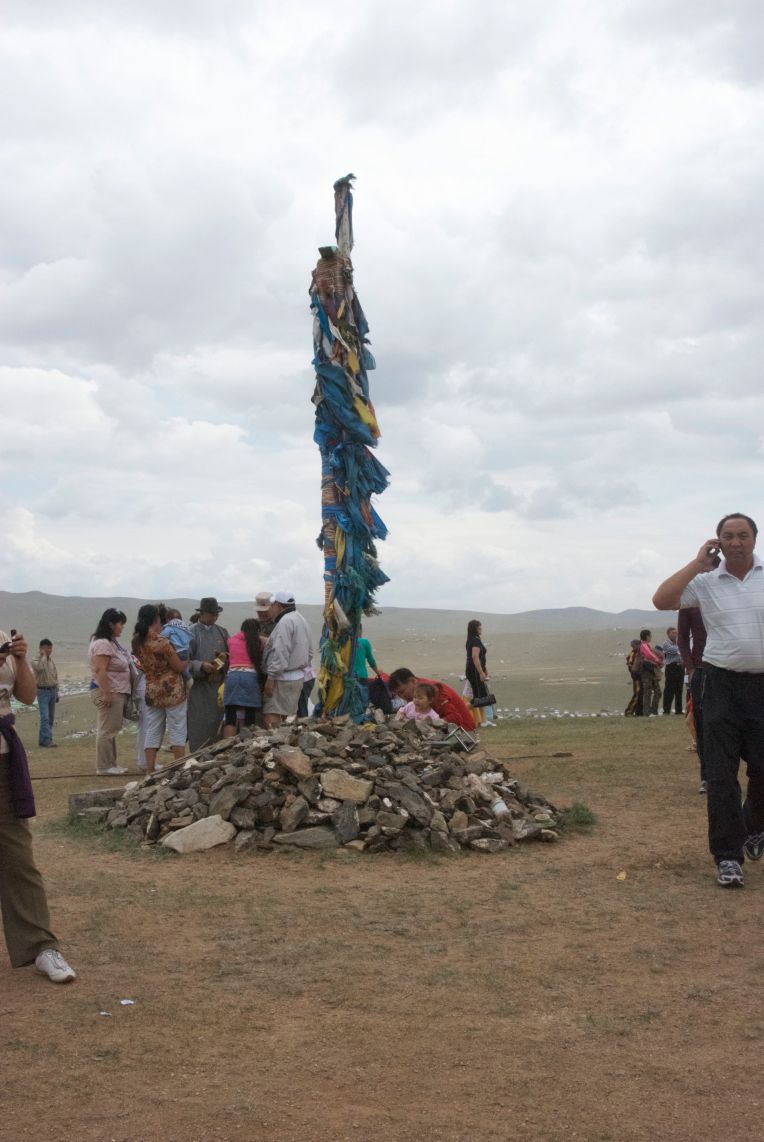
We also passed a number of ovoo. If it was a major one, we stopped, got out and circled it, adding a stone or small tugrik bills. Khatnaa honked at smaller ones as we went by them. More on ovoos in a future post.
Large ovoo
We arrived at Arburd Sands and found out that the storm we had sat through had hit UB, causing the worst flooding in many years. At least 21 people died. If we had not gotten out of UB when we did, we might not have made it out of town at all.
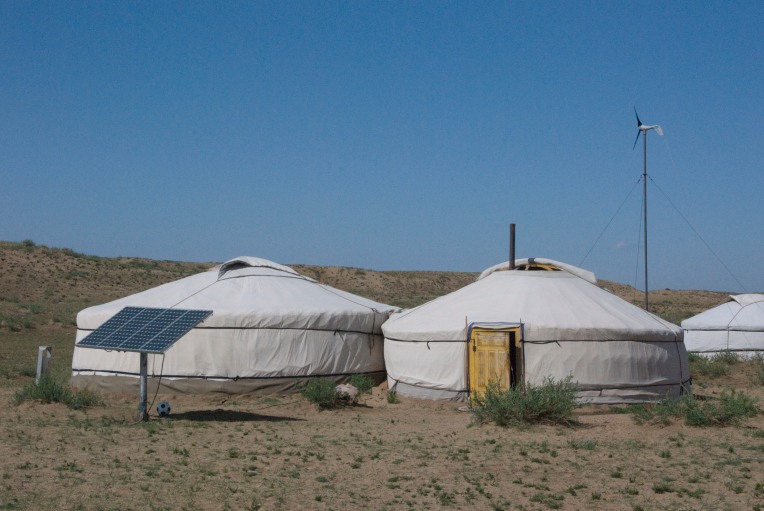
Arburd Sands ger camp is a seasonable sustainable operation which is planned so that it leaves as little a mark on the land as possible. They use solar and wind for power.
Sustainable energy at Arburd Sands
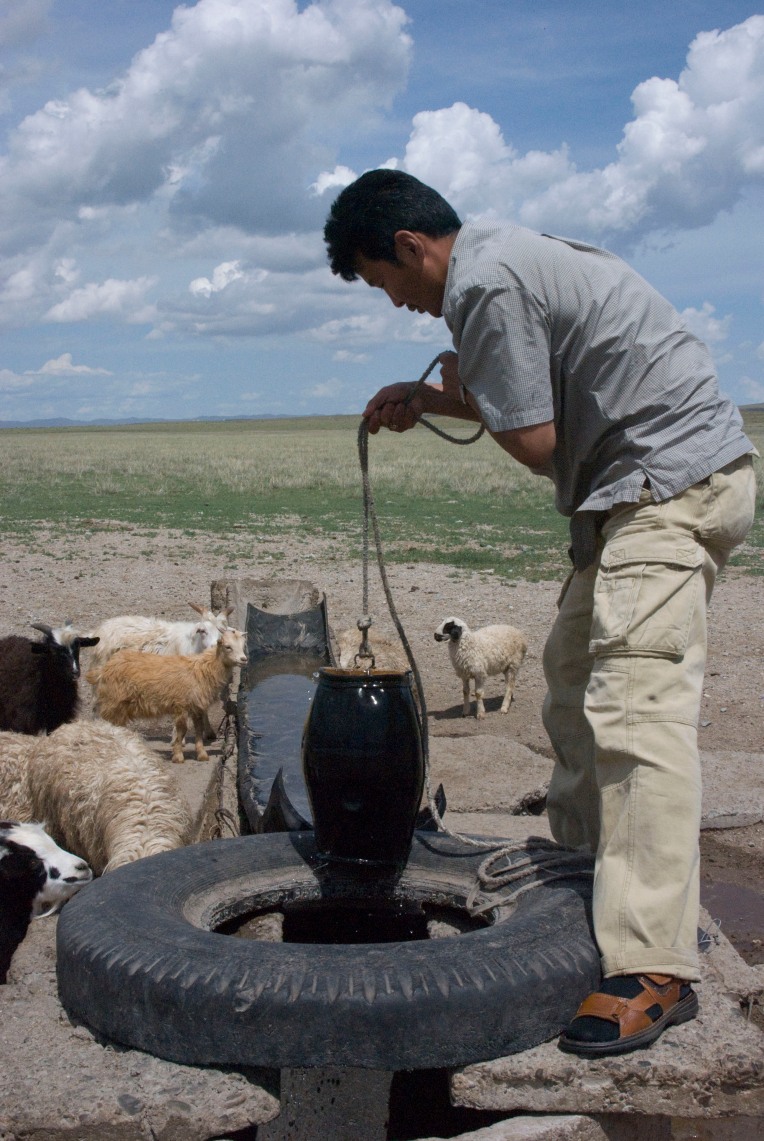
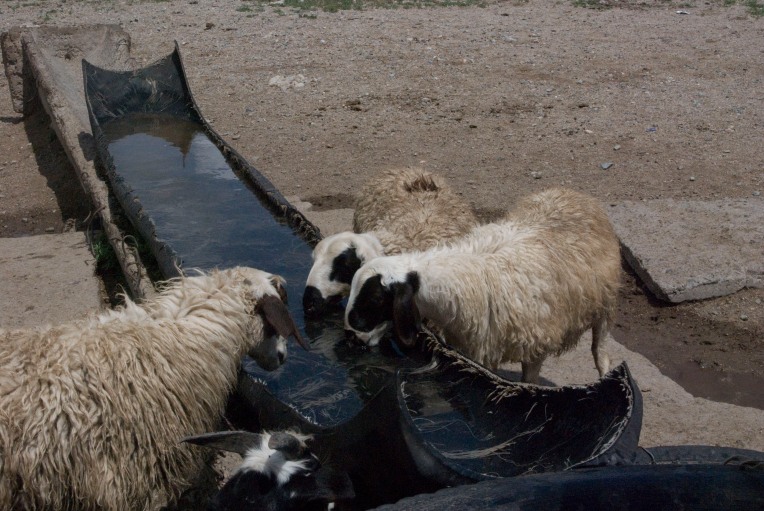
There was an amazing display of thunder and lightning that evening, stretching from east to west. But it only rained during the night. No hail. The next morning we continued on to Baga Gazriin Chuluu Nature Reserve. But, as I am coming to realize is routine when one travels in Mongolia, there were interesting things along the way. Like when Khatnaa stopped at this well and, following the ancient Mongol tradition, drew a couple of buckets of cool water for the animals.
Khatnaa pulls water from the wellSheep drinking the cool well water
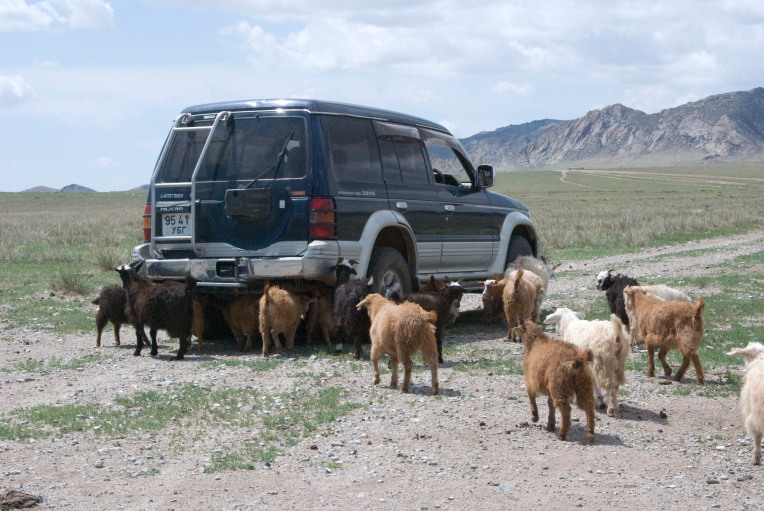
Meanwhile, the goats were seizing another, albeit temporary, opportunity to take advantage of the shade under the car.
Goats going for the shade
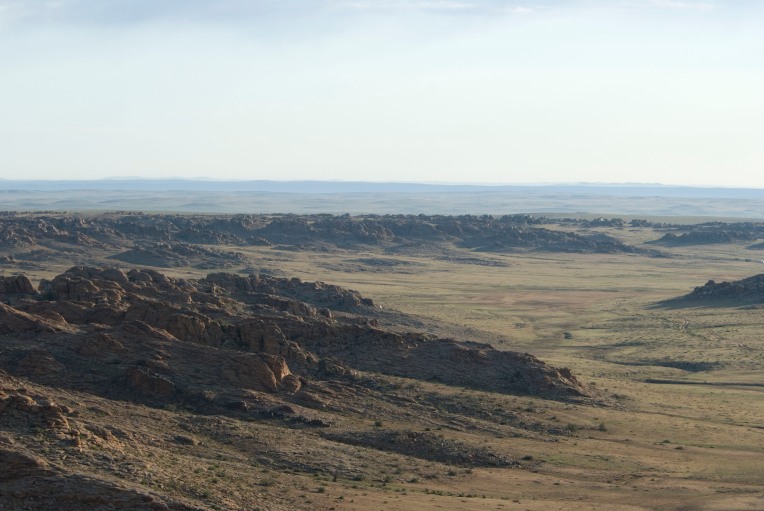
We traveled across the rolling steppe, passing an enormous and impressive mountain, a small lake and many country people and their flocks of animals. Finally, in the distance, we could see our destination, Baga Gazriin Chuluu.
Baga Gazriin Chuluu rises out of the steppe
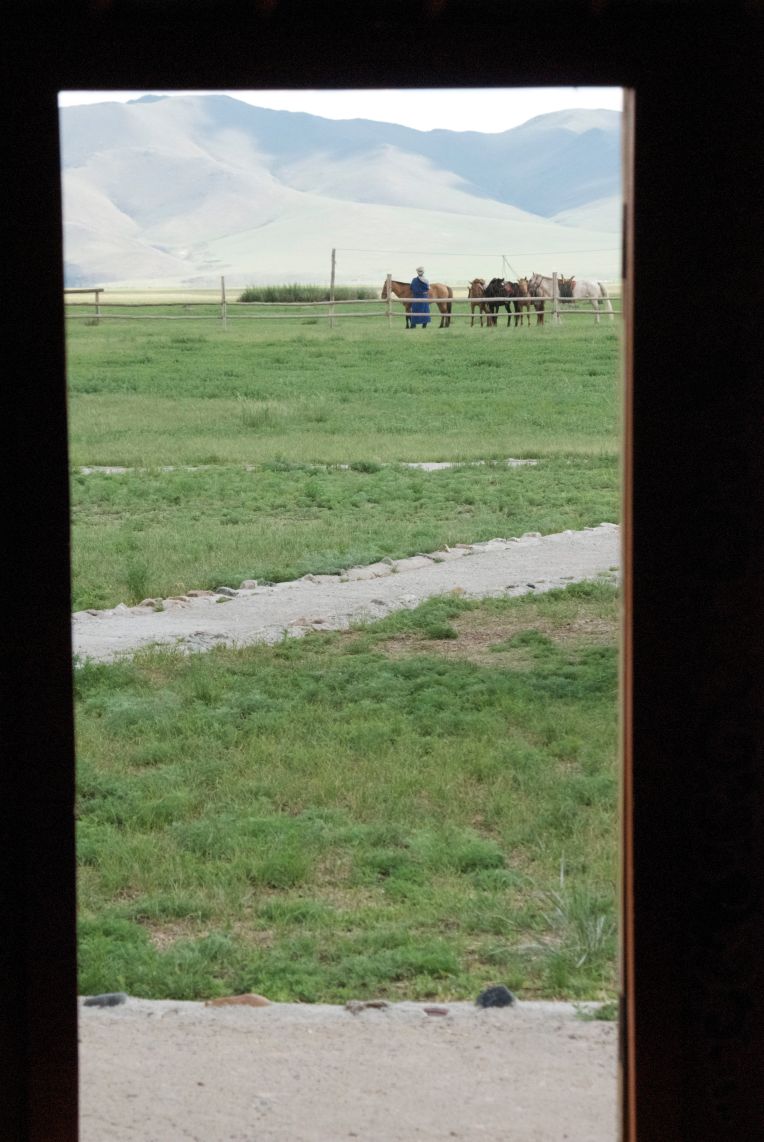
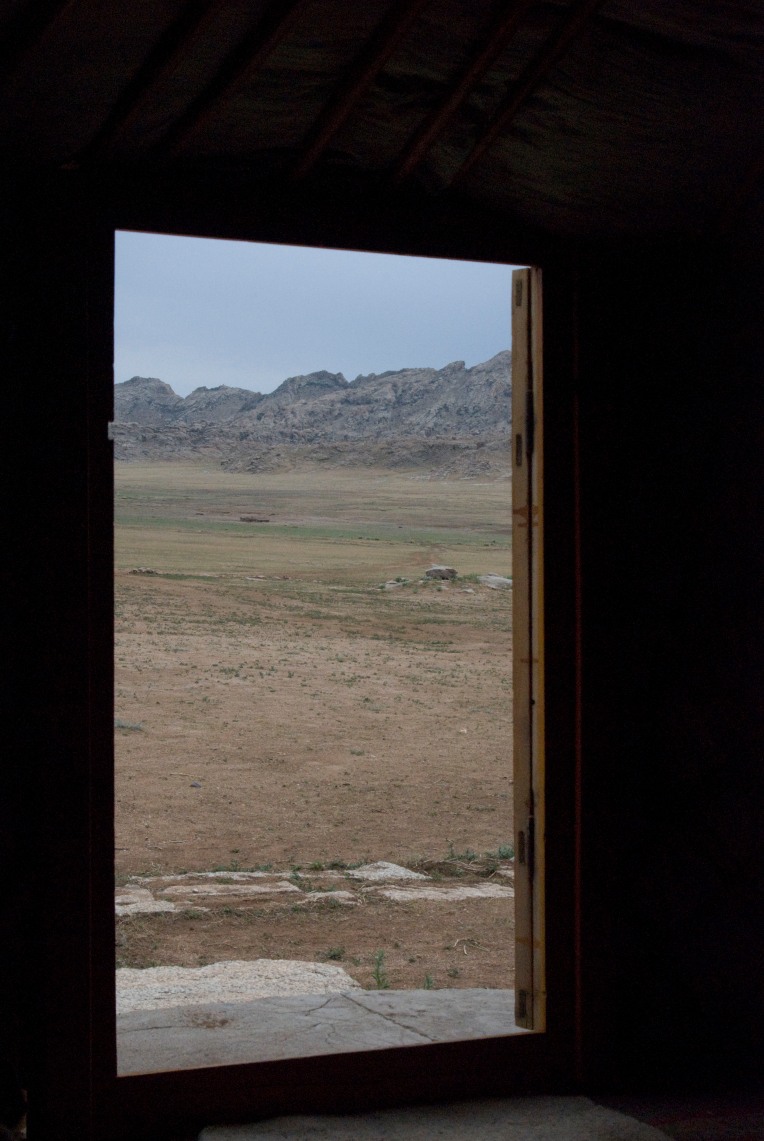
We arrived at the ger camp and went through the usual routine of settling in. Here’s my view through the door of my small, but comfortable ger.
View through the door of my ger
Khatnaa, as the guides usually do, started to chat up the camp staff. He found that one man, Onroo, had lived full-time at the reserve for three years and had a pretty good idea of where the animals were to be found. He went with us both mornings and proved to be indispensable.
The setting
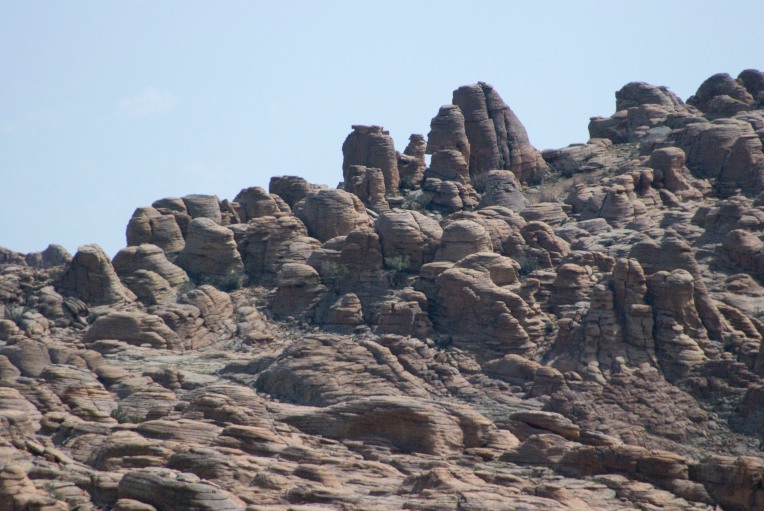
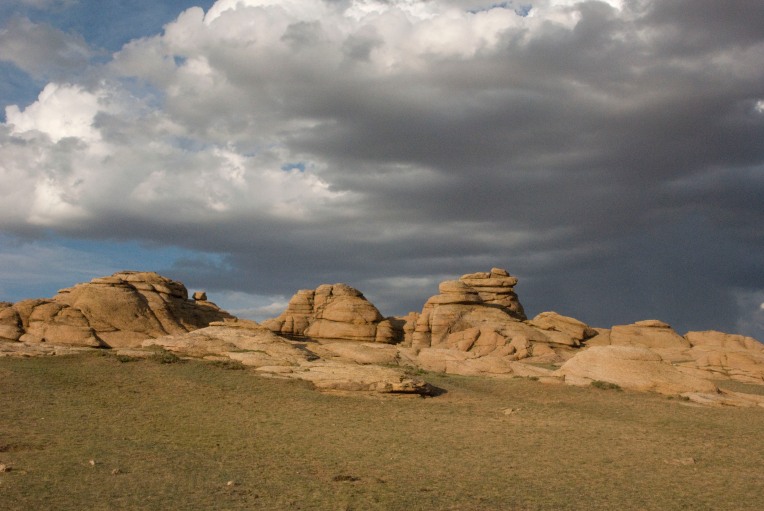
Some of the fantastic rock formations.
Rock formationsRocks, late afternoon
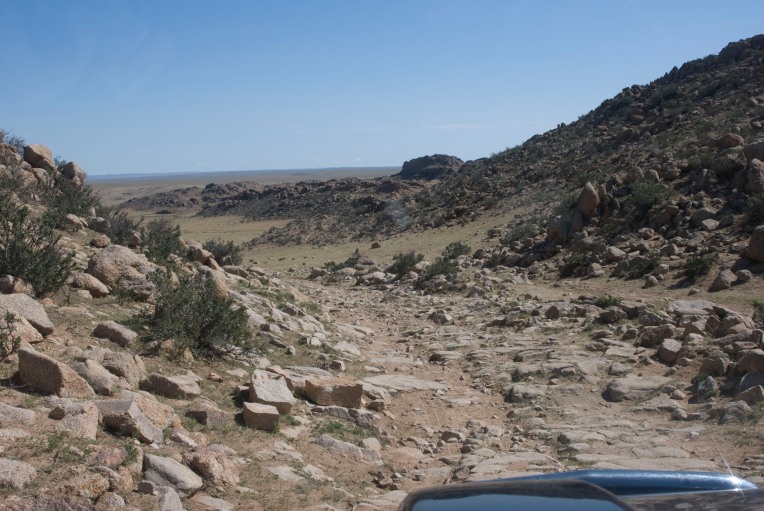
Sometimes the going got interesting as we worked our way around the reserve.
Rocky road
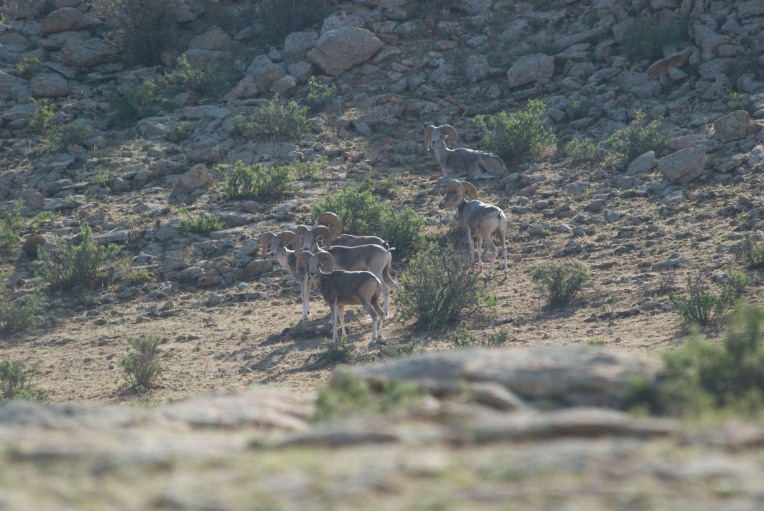
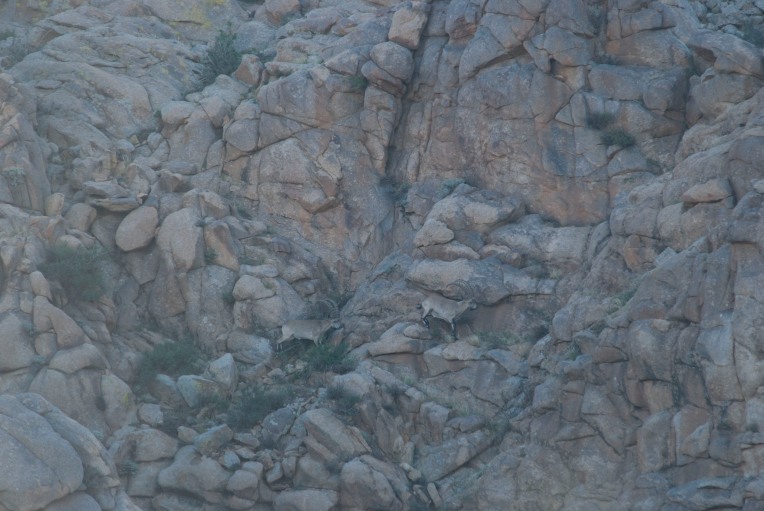
The main species of interest here are argali, ibex and the cinereous vultures.
Six argali
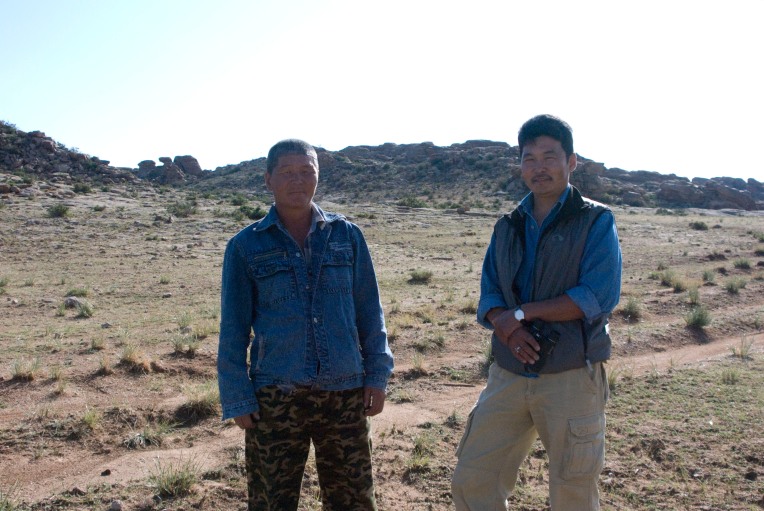
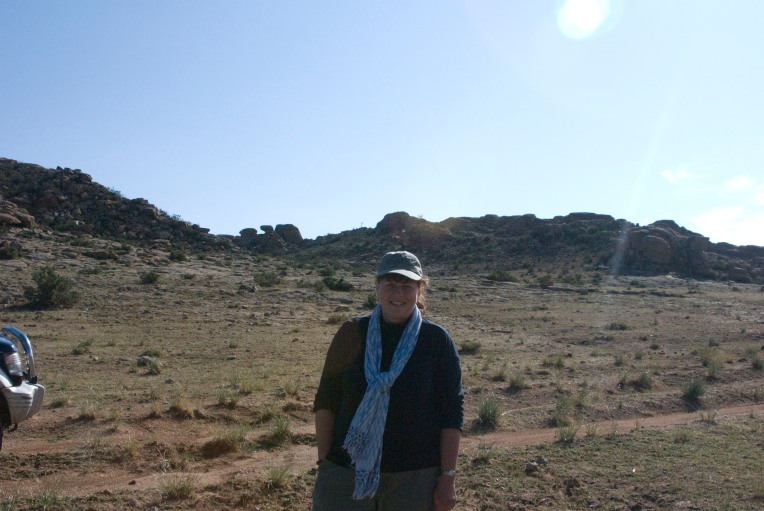
These animals were so tolerant of our presence that we were able to get out of the car and take pictures of each other with the sheep in the (somewhat distant, about 800 meters) background.
Onroo and Khatnaa in front of argaliMe in front of argali
They’re at the base of the rocky hill to my right on a line with my cap.
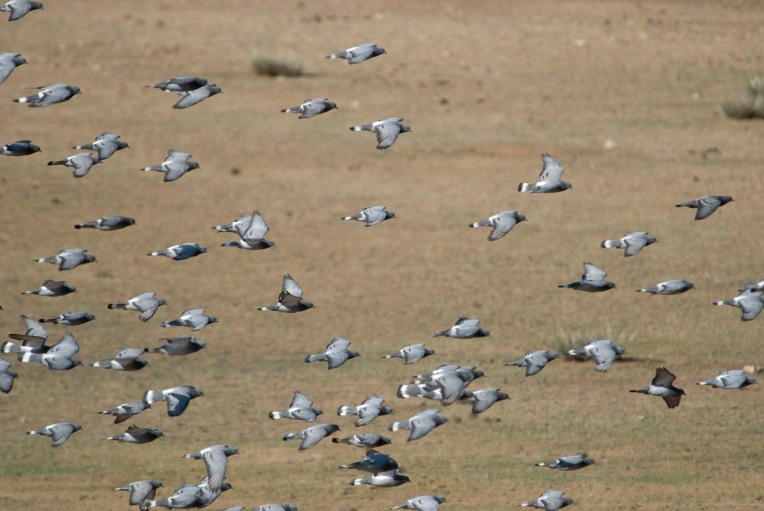
Ibex; two large billies of a group of fiveCinereous vultureHill pigeons (Columba rupestris); a relative of our "beloved"urban rock pigeon
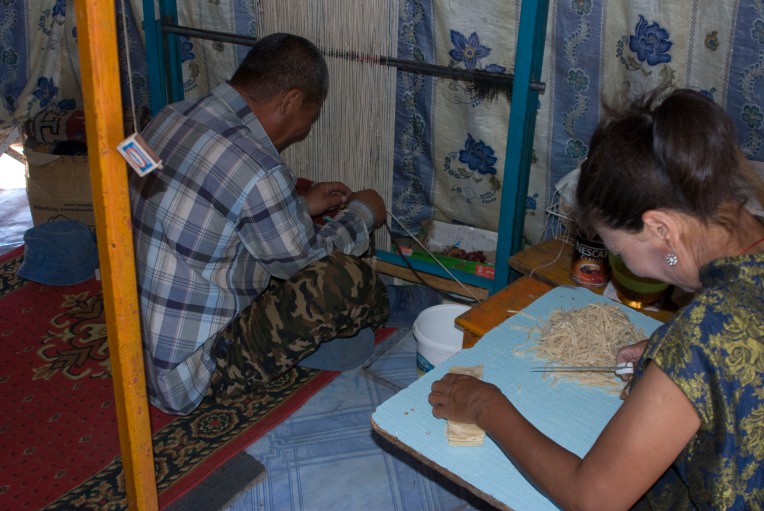
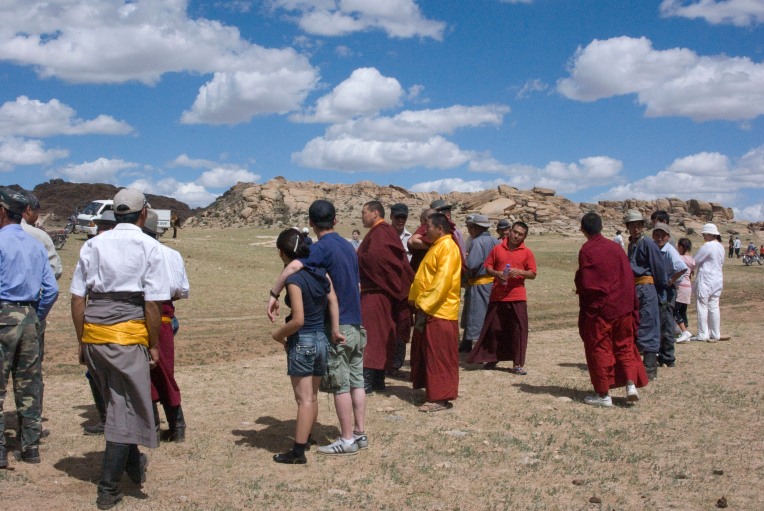
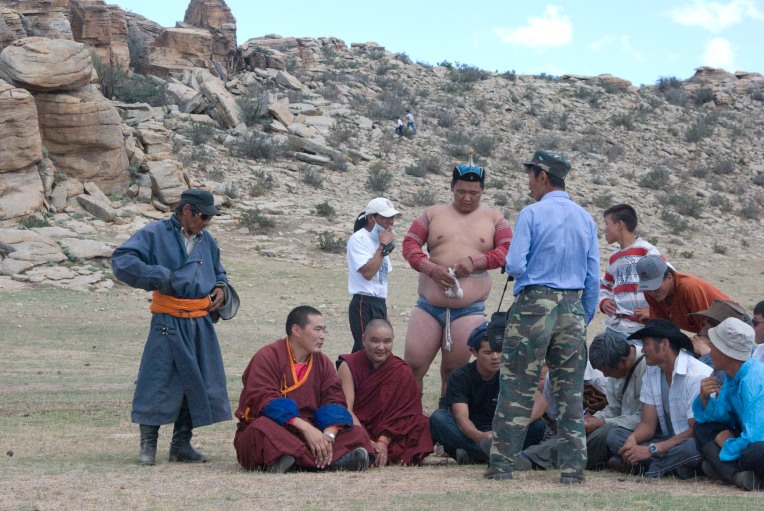
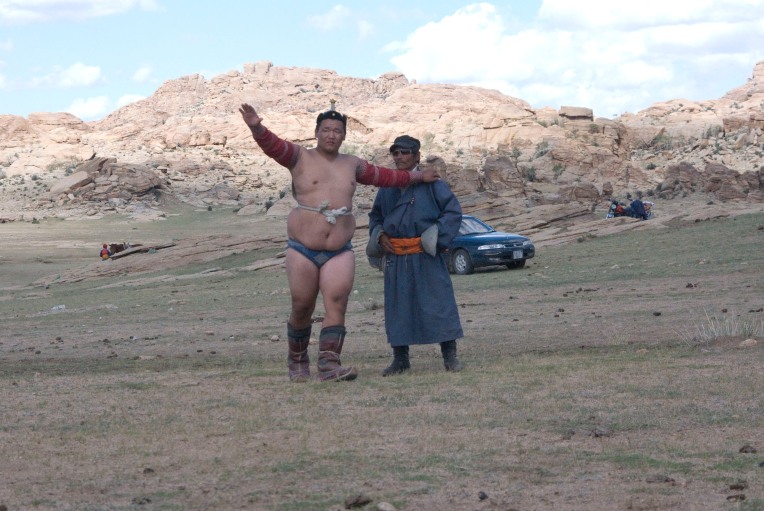
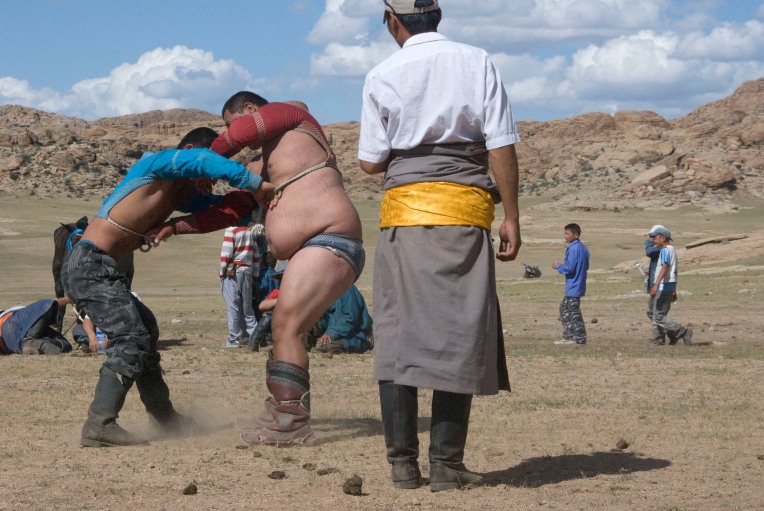
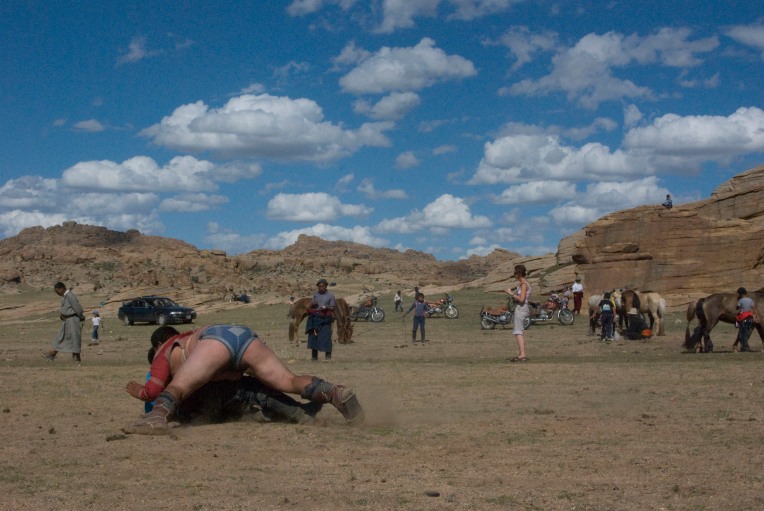
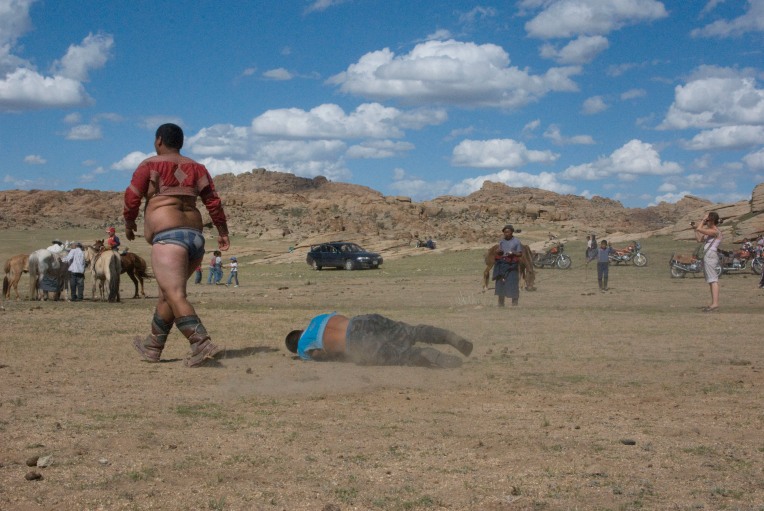
I ended up having a couple of wonderful cultural experiences also, which included a ger visit where I got to watch soup made with boortz, dried meat, and where we were served that and cream, aruul, yogurt and milk tea and also getting to attend a “mountain washing” ceremony that included chanting Buddhist monks, a horse race, wrestling and anklebone shooting.
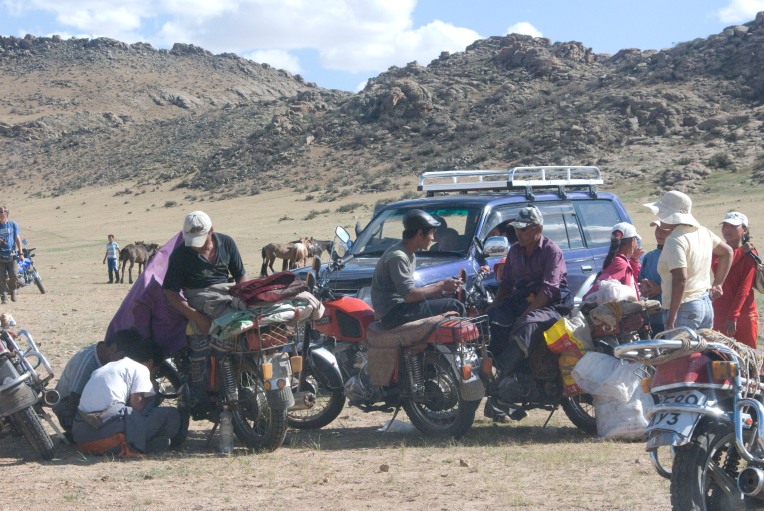
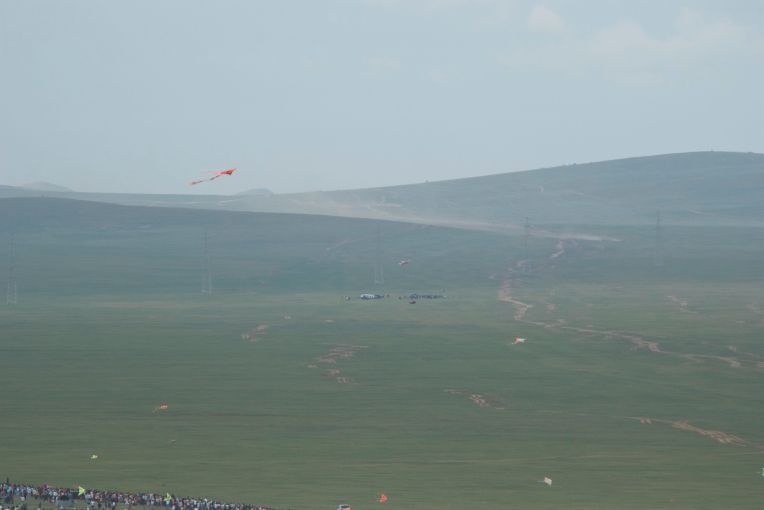
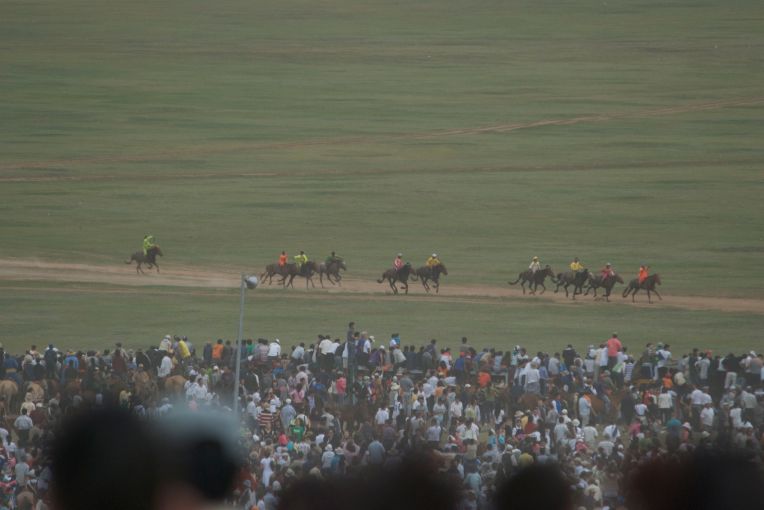
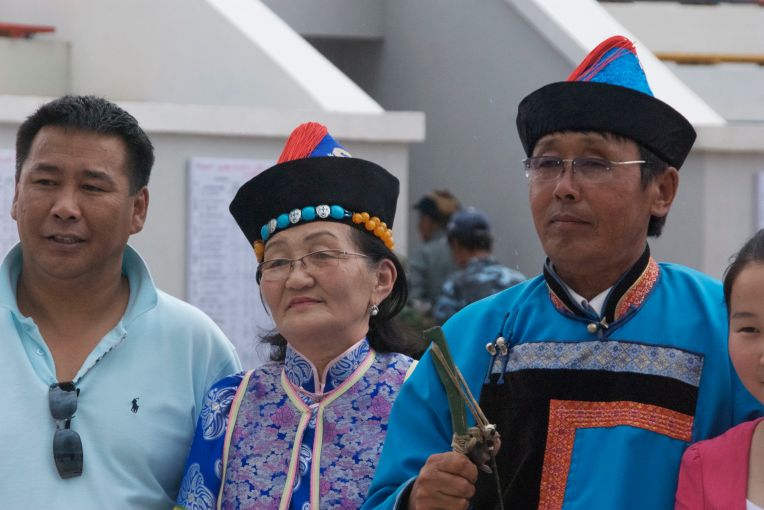
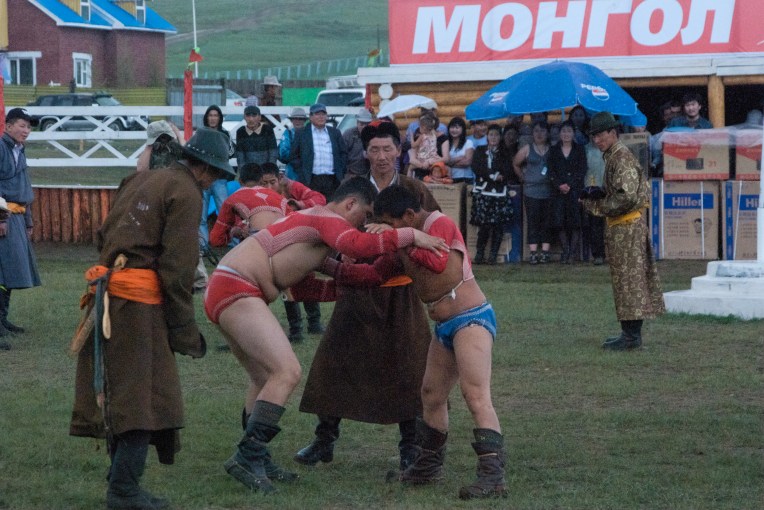
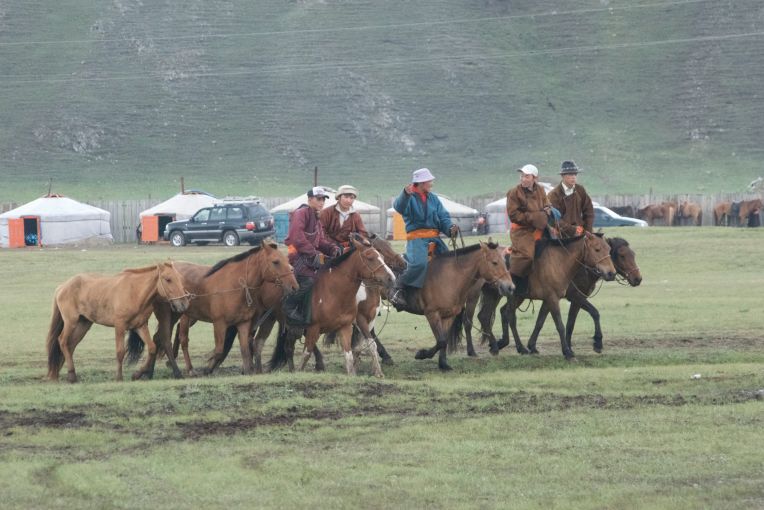
In Yanjmaa's ger; she's making noodles for soup and Onroo is doing some weaving on her loomHorse race spectatorsHorse raceHorse raceMountain ceremony attendeesMen in del and sashes; they look good and they know itWrestling; almost ready to start The Falcon of the Aimag doing the traditional Eagle Dance before a boutGrappling for advantageHe fell on every opponent like this The guy on the ground was up in a moment and ok; the Falcon won the competitionEnd of the event; last chance to chat
I got back to UB a few hours ago. It was the road trip of a lifetime, wildlife wise. At both Gun-Galuut and Baga Gazriin Chuluu, I saw and photographed argali almost every time we went out on a “game drive”.
Some sightings yielded over 100 images in 20 or so minutes. I got argali in morning light, argali in evening light, argali at dusk, argali in shadow but doing interesting things.
There were large groups of rams, small groups of rams, nursery groups of ewes and lambs and mixed groups of both sexes.
I photographed one group of rams at Baga Gazriin Chuluu that was out in the open at the base of a rocky hill about 800 meters from the road. They were a little nervous, but didn’t run away. In fact, they ended up being so tolerant of our presence that we were able to get out of the car and take turns taking pictures of each other with them in the background.
A lion’s share of the credit for this has to go to one of the Best Guides Ever, Khatnaa, who seemed to have an uncanny feel for where the animals might be, even though he hadn’t really done this kind of thing before. He runs his own tour company, but took me on via Nomadic Journeys. His English is very good, so I learned a lot about Mongol history and culture and he helped me on my pronunciation since I am determined to learn at least conversational Mongolian.
Besides argali, I’ve photographed ibex, cinereous vultures, golden eagles, upland buzzards, black kites, demoiselle cranes, endangered Siberian white-napped cranes and even a lady bug. Plus Mongol horses and bactrian camels.
I’ve also been able to visit gers, eat Mongolian summer “white food” like aruul, cheese, yogurt, cream and airag and yesterday went to a local “mountain washing” ceremony, complete with chanting Buddhist monks, tons of mutton and gallons of airag, plus a 7km horse race, anklebone shooting contest and a wrestling competition.
I’m in UB tomorrow and then off to Ikh Nart, I hope. The weather has been, shall we say, unusual. About two hours out of UB last week, we got clobbered by a hail storm so serious that Khatnaa turned the car around to protect the windshield. Some of the hailstones were an inch across. He has dents in the roof of his Mitsubishi SUV. That fast-moving front caused serious flooding in UB in which 21 people died.
As we approached the hotel this afternoon, it started to rain here in UB. By the time Khatnaa had pulled into the parking lot, it had started to hail. We sat in the car for almost 20 minutes until it was just raining hard. Once again he turned the car so that its back was to the storm. He commented that he could never remember two storms like this in one month.
The scientist who I am to travel to Ikh Nart with is due in at 10:40 tonight. Whether the flight will come in is anybody’s guess with this weather. Stay tuned.
And photos to come as soon as I do the jpeg conversions.
The day was cloudy and cool, really rather nice. It could have been 90F in the shade. We left for the horse race site and spent two hours in traffic that was almost indescribable. A cross between Mr. Toad’s Wild Ride, bumper cars without anyone actually making contact and a free-for-all race to get to the valley. Over here we would describe it as “a solid line of cars”, but the word “line” doesn’t remotely apply. The road had been blocked so that both lanes ran in one direction, but people were on the shoulder and off on parallel dirt tracks, all weaving in and out to gain advantage. It was kind of like….a wacked-out horse race.
Our guide, Osoo, estimated that around one third of the population (2.7 million) of the country was present at the race. There were literally thousands of cars on a two lane road all trying to get to the same place.
We arrived and some of us took up station on the top of the hill. Others braved the packed flat area adjacent to the track. With the long lens, I got some pretty good pictures. It was a festive day and the vibe was great. It was like a convival country fair with about 900,000 fairgoers spread out over a large valley.
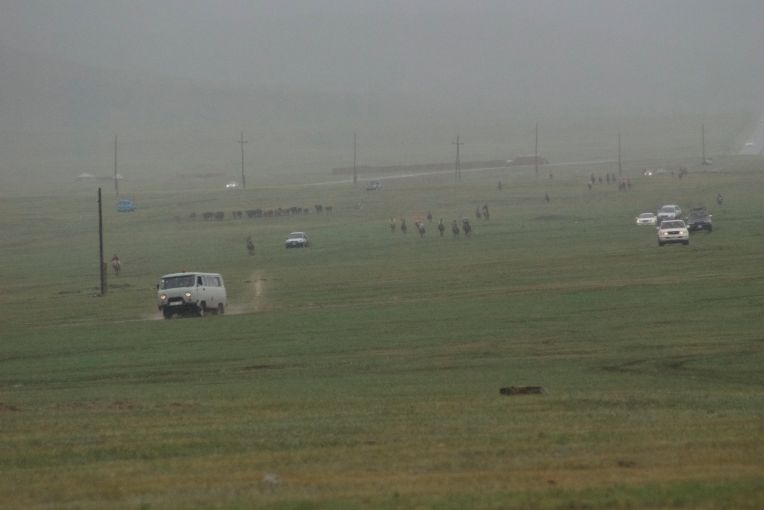
This was the second to the last race. It was for five year stallions, 25 km. The jockeys ranged in age from 5-12. The horses had already trotted or cantered the 25km to the starting line before the race and then they galloped the whole 25km back to the finish line. There were a lot of support vehicles, including an ambulance. There were also vets ready if needed.
Without further ado:
Crazy trafficHorse race crowdThe dust cloud shows the horses almost to the valleyThe lead horses approach the finishRunning for the finishOrange passes white and red near the finish lineSecond large group coming in
We never found out who won, but it was an exciting finish and the crowd was roaring. The fastest horses finished in 30-40 minutes, the slowest took about an hour.
Horse race crowd with racers gers in backgroundOvoo; on highest point; a old animistic custom
Time to go back. Traffic not quite as frantic, but still pretty wild. Lots of herders with their animals along side the road.
Sheep and dust
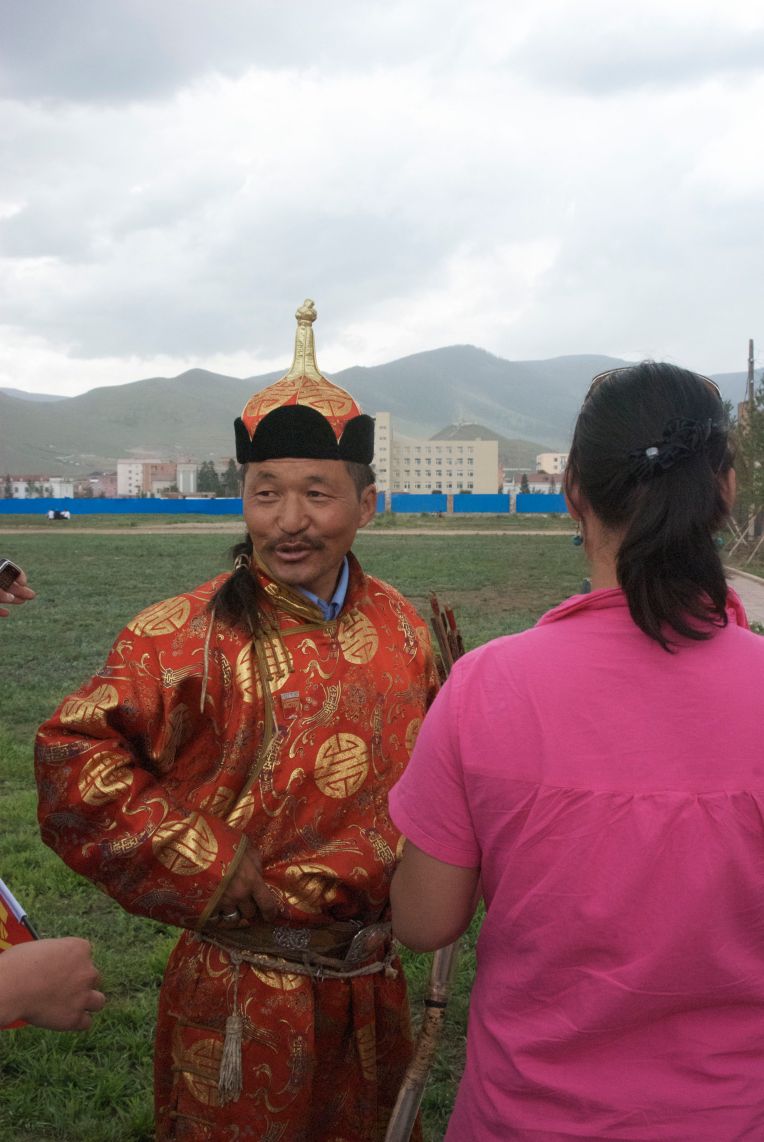
We had picnic lunch in the van and then went back to the stadium. Unfortunately, the archery and ankebone competitions were over. But a couple of the archers were still at the archery field, including the winner.
Winning archer, his wife and a fan
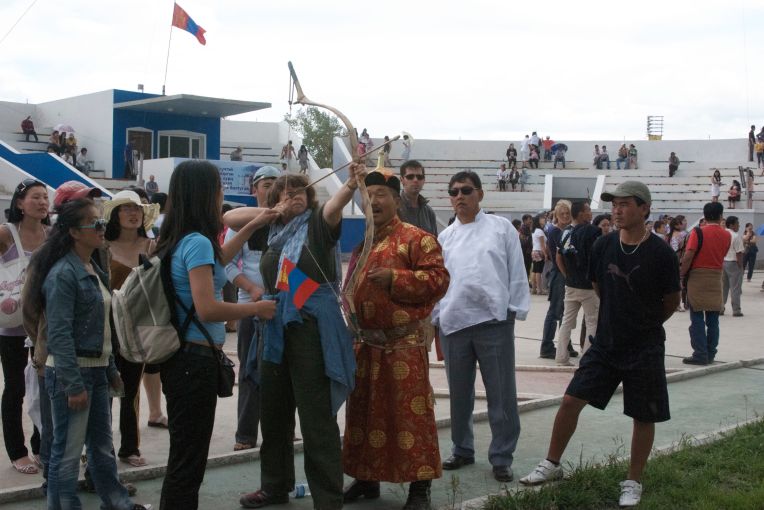
Another archer was giving a demonstration and, for 1000 tugrik, about 80 cents, you could shoot an arrow. Couldn’t resist the chance to try that, of course.
Archer doing demonstrationI got to shoot the bow and arrow; about 40lb. pull
Then it was back to the wrestling in the national stadium. It was packed and then it started to rain. Hard. For over an hour. So there were rain delays and still eight wrestlers competing when we had to go.
Wrestling; the average height of a Mongolian may be 5'2", but there are plenty of big guys, tooWrestlingWrestling
On our way out, we passed someone who was allowing people to pose on his horse for pictures.
They really do start them young in Mongolia
It was back to the hotel to rest for an hour or so, then dinner at …..BD’s Mongolian BBQ, which suited me just fine. Then off to the Naadam concert, performed by the Mongolian State Grand National Orchestra. And grand it was. They are definitely ready for their first world tour. There are 65 members, playing mostly Mongolian instruments like the morin khur, or horse-headed fiddle, but also some western instruments like trumpets. Almost all the music was by Mongolian composers, but they also did an enthusiastic version of “The Barber of Seville” and, for the encore…..”We Are The Champions” by Queen!
Off to Gun Galuut. Need to pack and get breakfast. Next post will be the 21st or 22nd. Bayartai!
Breakfast at 7:30am. Everyone met in the lobby at 8:30 and then it was off to Sukhbaatar Square for the beginning of the day’s Naadam activities.
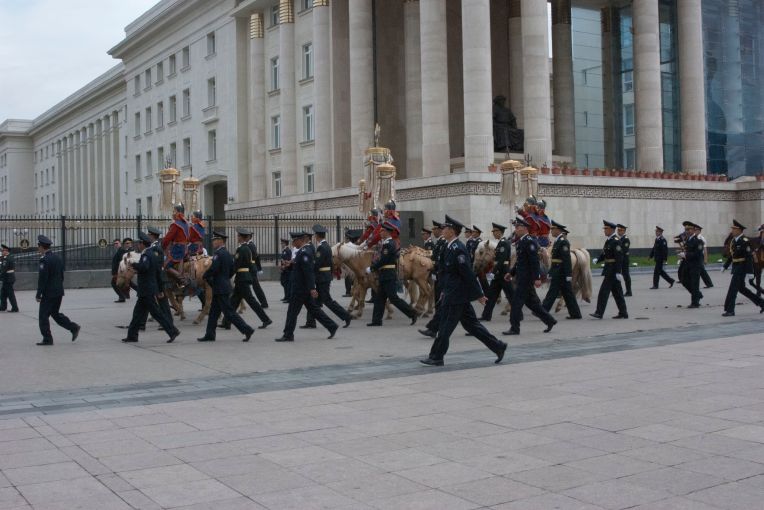
Costumed horsemen escorted the horse tail banners around the Parliament building and then on to the National Stadium, as did we.
Got there early enough to pick and choose our seats.
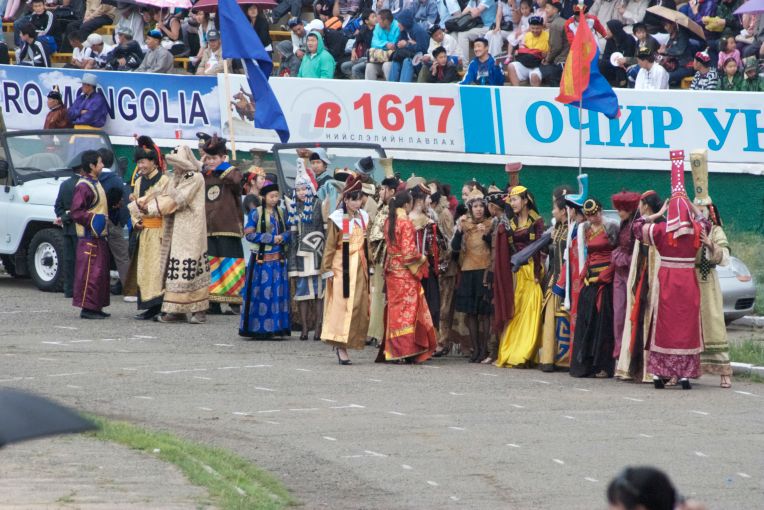
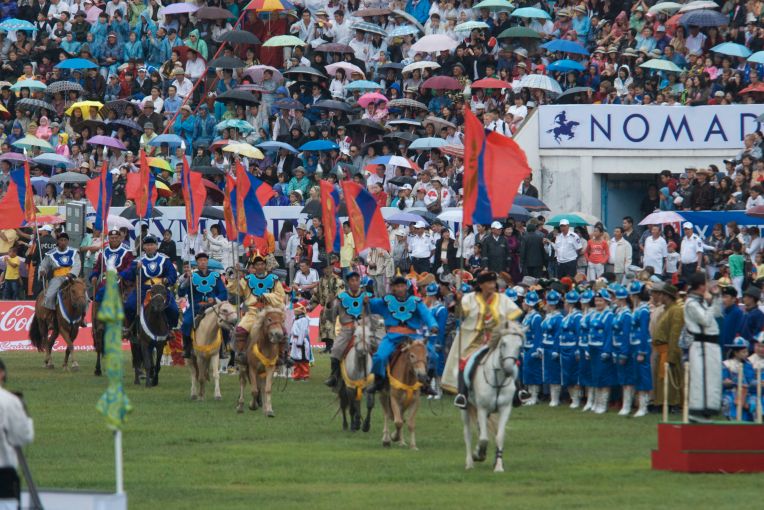
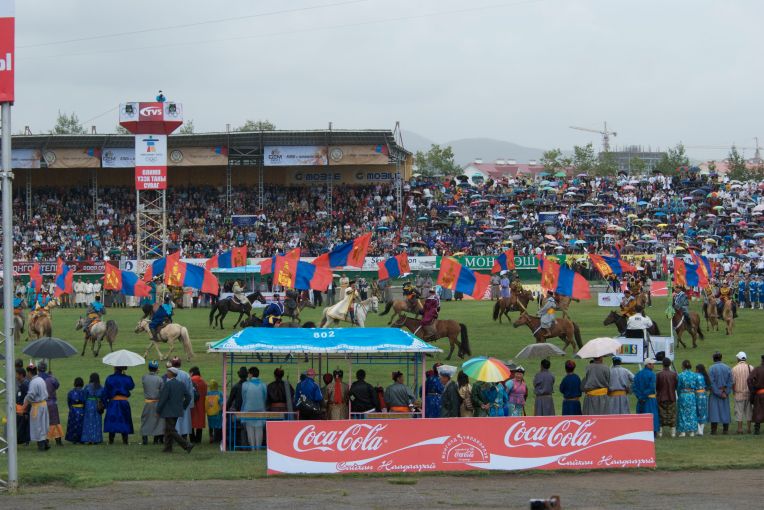
Opening ceremonies got underway at 11am. The whole stadium was a riot of color, both because of the costumes of the participants and also the umbrellas of the spectators since it decided to rain for a short while.
The horsemen came in with the horse tail banners and placed them in a stand. The President of Mongolia gave a short address. Then there were displays of horsemanship, children doing a ribbon dance and wonderful music by the orchestra.
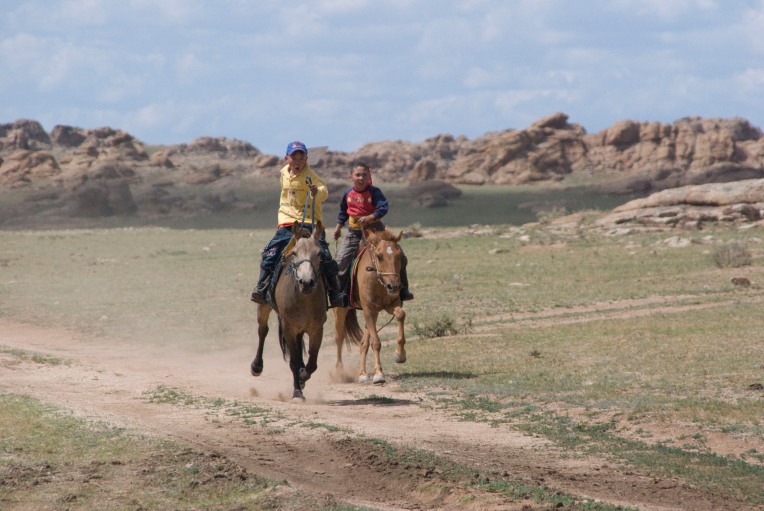
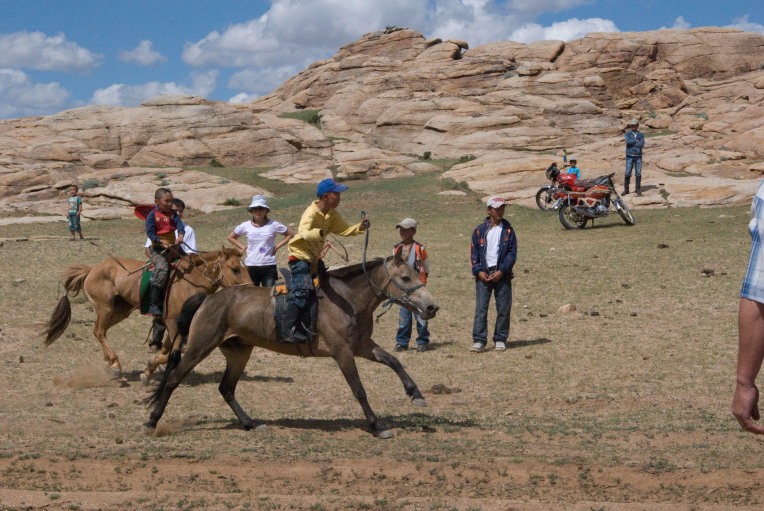
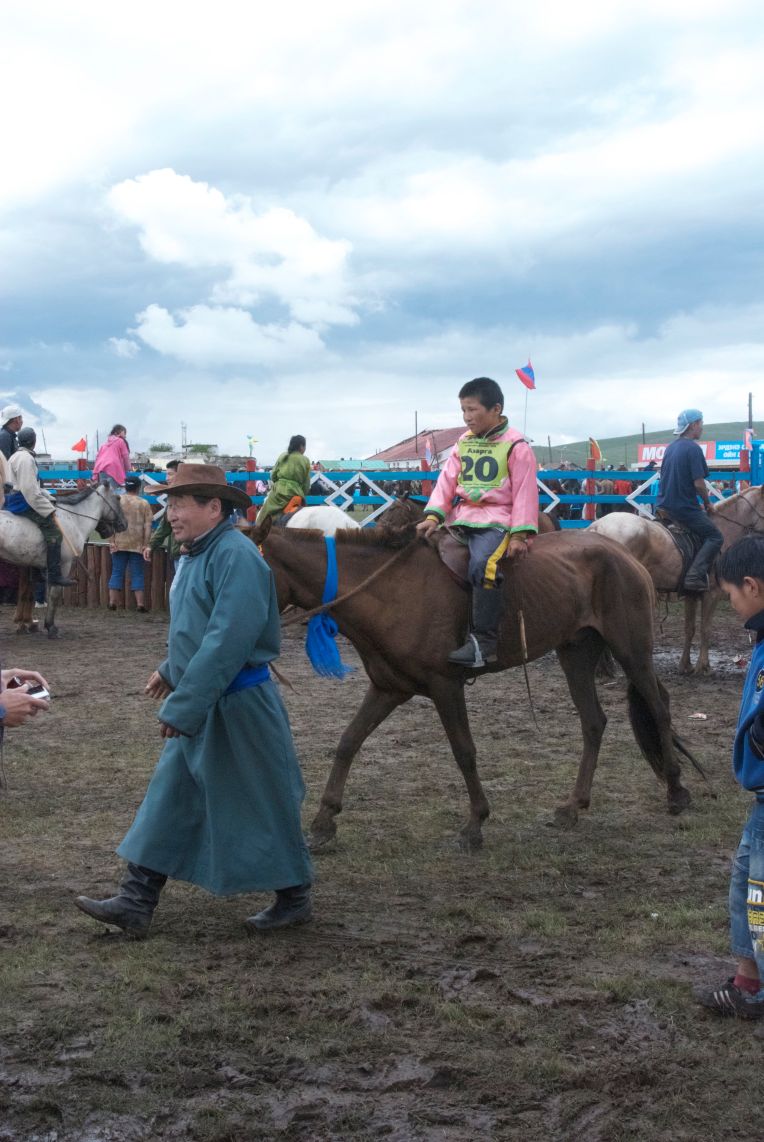
When it was over we piled back into our bright yellow Nomadic Journeys van and drove about 90 minutes east to experience a local Naadam. It was raining pretty good when we got there, but stopped just as the horses came into view. We had gotten there in time to see the end of the horse race. Had some airag and watched the wrestling finals. Took many photos of horses and their riders. The jockeys are boys and girls under ten. The horses in this race were two year olds. Prizes go the the first five to finish and the last.
We went to a ger in the village and were treated to airag, vodka, aruul, cheese and khuusuur, fried mutton turnovers.
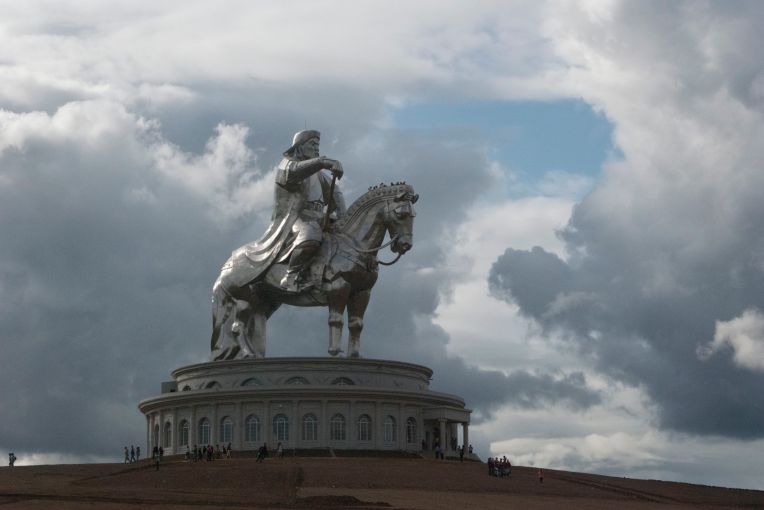
Stopped at the new giant statue of Chinggis Khan on the way back.
Got back to the hotel at ten till eight. A long, but interesting and worthwhile day.
And here are pictures of it all:
Note- due to time limitations, these are as I took them, no cropping or adjustments except for a couple which were on the dark side.
First, the national Naadam-
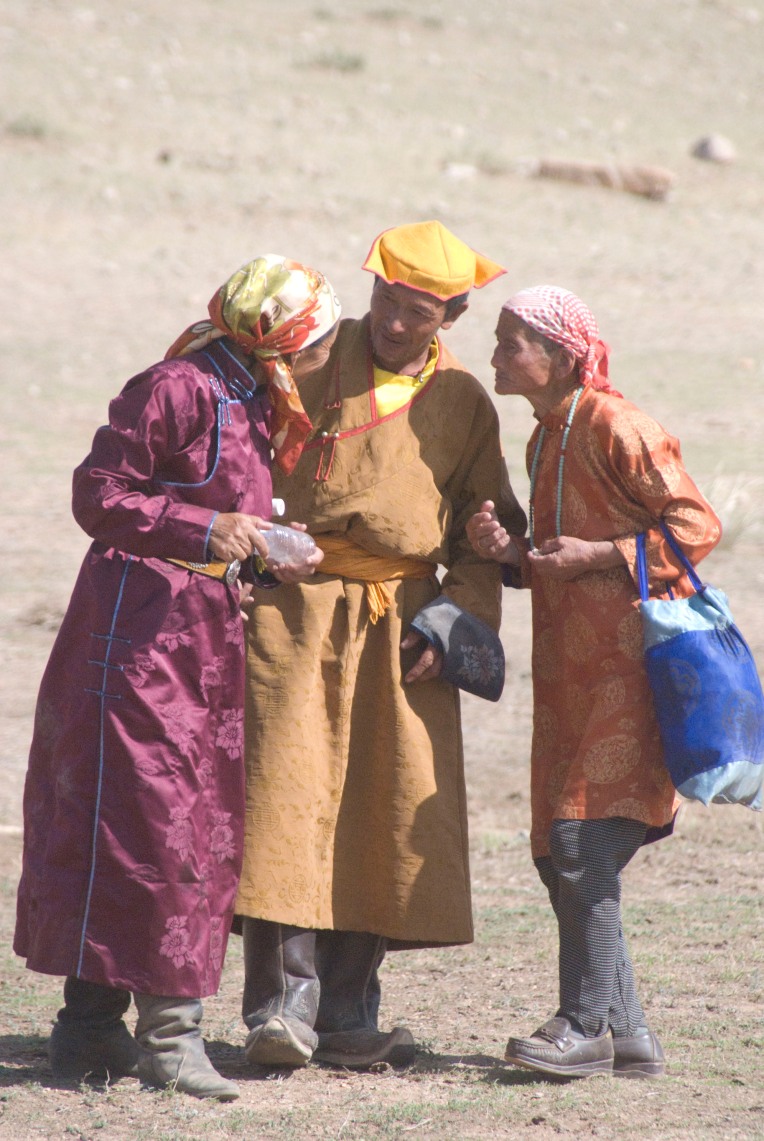
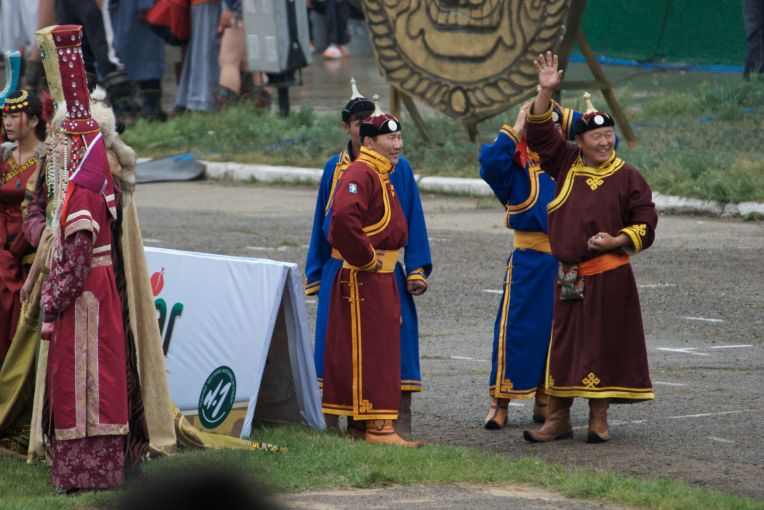
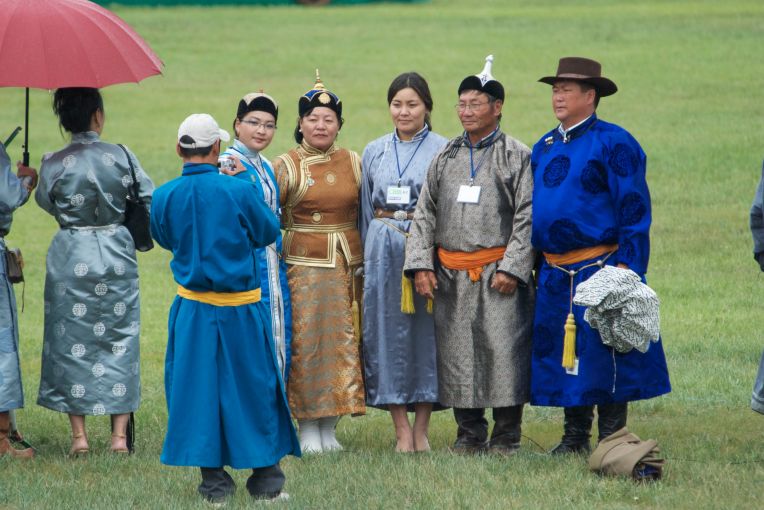
Horse tail standards being brought out of Parliament buildingHorse tail standards proceeding around Suhkbaatar SquareTwo ladies wearing del at Suhkbaatar SquareNational Stadium before the crowds arriveHorse tail standards entering stadiumFabulous costumesNaadam officialsOrchestra and conductorPresident of Mongolia addresses crowd; had to take photo through a supportListening to the PresidentRibbon danceHorsemanshipProcession of Mongolian national flagsDisplay of Mongolian flagsMaking Naadam memoriesBalloons for sale outside National StadiumMongol man kneeling outside of National Stadium
Then it was on to the 90 minute drive to the local Naadam-
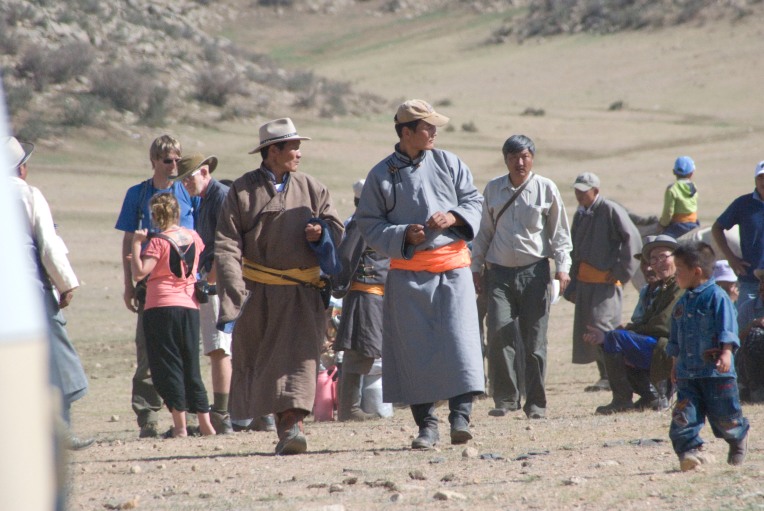
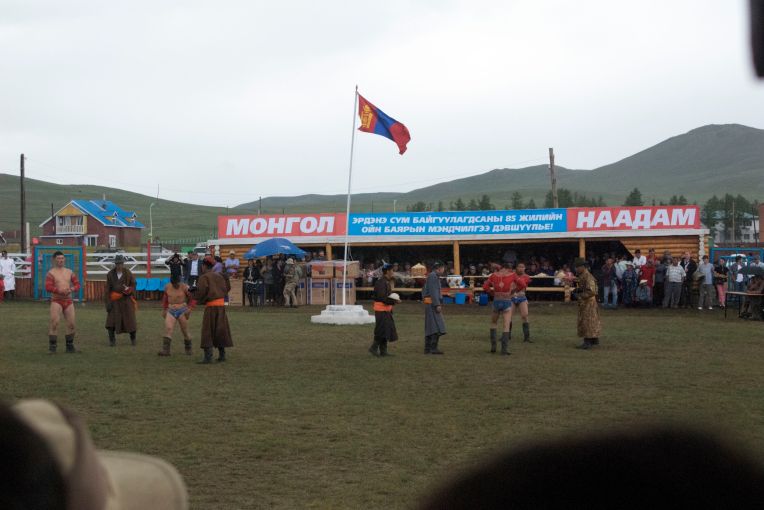
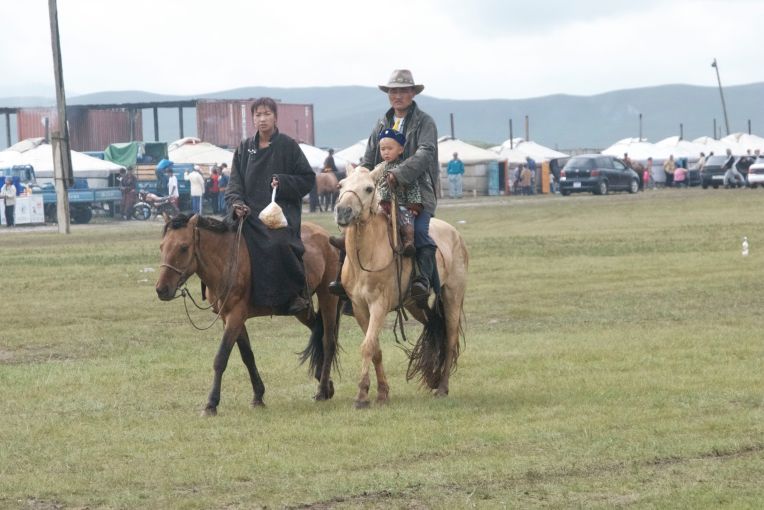
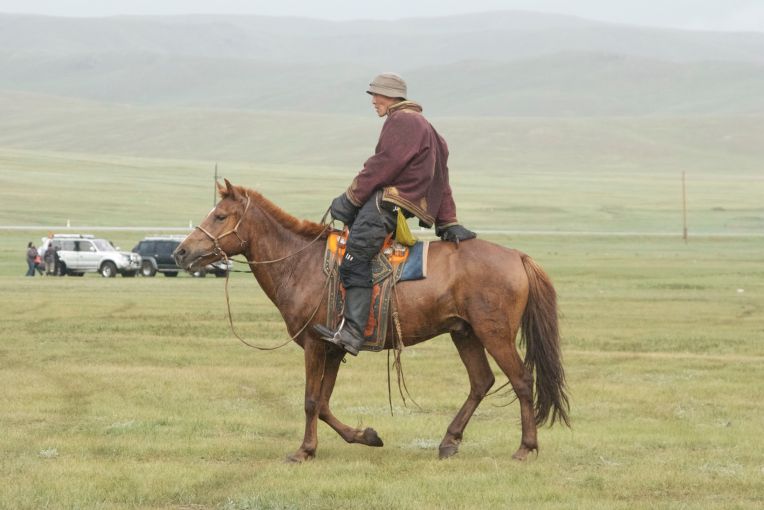
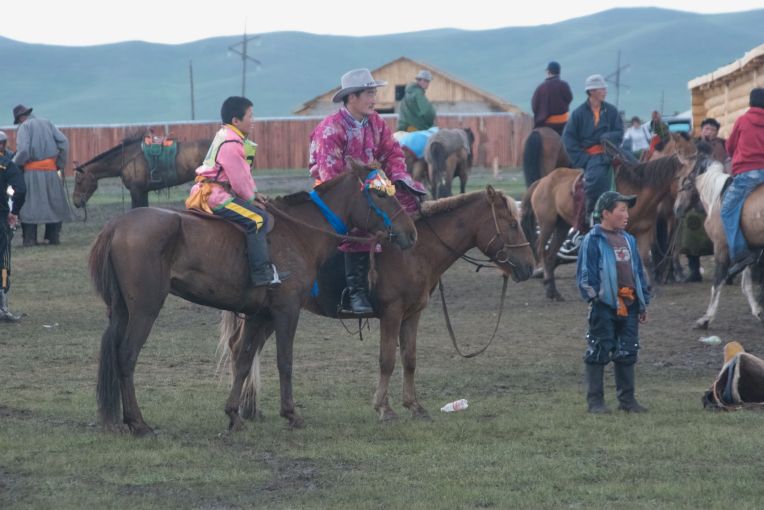
Racers coming in; rain stopped shortly after I took this pictureAlmost to the finishGirls race right along with the boysA group coming to the finishHeading for the finish, but then it was time for wrestling....Local Naadam stadium with wrestlingMongol wrestlingEagle dance after wrestlingGroup of riders; took a lot of horse and rider pics while waiting for race resultsLocal familyLocal riderWaiting for the horse race results; then the winners started to appearA race winnerJockey won a rug for momOne of the racersThe winner of the raceLocal Naadam horses going homeTour group in ger for "snacks"Mongol snacks: mutton with fat; aruul stacked on bread
We stopped at this incredible statue on the way back to Ulaanbaatar-
Giant Chinggis Khan statue facing towards his birthplace to the eastChinggis statue detailChinggis' view
Kind of a quiet day today before the next phase of the trip starts. Spent the morning getting the last post with all the images up and then bringing The Journal up to date.
Spent part of the afternoon getting rained on while I hunted down an art gallery I wanted to visit.
Ulaanbaatar doesn’t use western style street numbers and addresses, so finding a place can be challenging. For instance, the directions in the What’s Up guide for the Xanadu Art Gallery are “on Juulchin Street, north of the State Department Store, beside the TEDY center.”
I knew the first two parts and had a vague recollection of the third part, but still wandered around some. In the end, I spotted the gallery’s sign around the corner off Juulchin Street proper. Not a lot of work on the walls, but most of it quite good. The space doubles as a coffee lounge with free wireless, which is worth remembering. They used to be in the same building as Millie’s, but that space has been taken over by the Valiant Art Gallery, owned by the wife of the president of Khan Bank, I believe. She buys the work outright from the artists and then re-sells it. I checked it out yesterday after lunch. Lots of good to excellent work. No wildlife art at either place, though.
Of course it had pretty much stopped raining by the time I got back to the hotel. I kicked back with a book until it was time to go to dinner, which was back to BD’s Mongolian BBQ. Went to a grocery store and finally scored a bag of Coffee King, which are three in one coffee packets. Peet’s it’s not, but I’ve acquired a taste for it, at least when I’m in Mongolia because it was all that was available for coffee when I was on the Earthwatch project in spring of 2005.
Most of the stores only have what is clearly the big, dominant brand, which is called MaxCoffee, which might be as good as or better, but I’ve developed a perverse loyalty to Coffee King, partly because it seems so much harder to find.
Went to BD’s Mongolian BBQ for dinner night before last. It’s quite popular with the Mongols even though there’s nothing authentically Mongolian about it. Apparently it’s a Chinese invention. BD’s does the same kind of stir fry on a big hot surface that you see in the USA. Mongols don’t do stir fry.
Real Mongolian BBQ involves killing a goat, slitting the body cavity open, cleaning it out, stuffing it full of hot rocks, putting the whole thing in a metal container and setting that on hot coals to cook. When it’s done, the meat is pulled out, along with the rocks, which are then passed around, hand to hand, for good health. And yes, I’ve had it, hot rocks and all, and it was good.
I don’t envision a real Mongolian BBQ place coming to your neighborhood anytime soon.
I’ll probably go back there again since for 6900 tugrigs I can get a heaping bowl of veggies, noodles and meat with Mongolian ginger sauce. A small Chinggis Khan beer is 2100 tugrigs. 9000 tugrigs at the moment is less than $8.
Plus the cooks show off by doing things like lining up four or five pieces of broccoli on the long sword-like turner and then flipping them all up into the air and catching them all on the plate. So it’s dinner and a show.
———-
This morning I had breakfast in the hotel, which is included in the price of the room. They’ve gone from a menu to a breakfast buffet with an egg cook, like you see at many hotels now in the states. It’s really sped up getting breakfast and one can skip the slices of mystery meat that I think they put out for the Germans.
The weather was nice and cool when I left the hotel around 9 am. I walked about twenty minutes to the Mongolian Modern Art Gallery, which is actually a museum since nothing there is for sale. There was a show that I had read about on one of the Mongolian news sites and today was the last day.
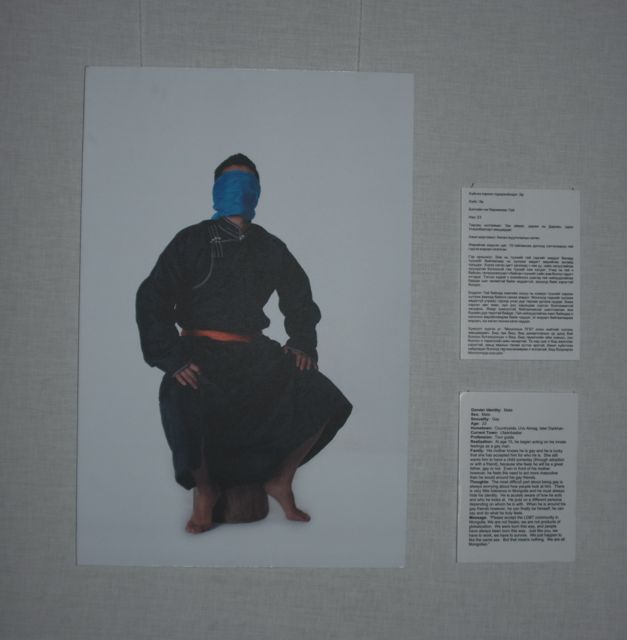
With all the Prop. 8 stuff in California and the civil rights issues concerning LGBT citizens that remain to be addressed, I wanted very much to see “Beyond the Blue Sky”, a “multi-media art exhibit for, and in collaboration with, Mongolia’s lesbian, gay, bisexual and transgendered community.
The people in the photographs have their faces covered by khadags, blue scarves, which are given as gifts, but are also used to cover the faces of the dead. It symbolizes the position LGBT people find themselves in in Mongolia since currently they cannot live their lives fully, but must conceal their gender identity or otherwise be vulnerable to prejudice, discrimination and violence.
It was a very powerful show.
Here’s the image that really struck me the most:
Image of man in del, face covered by khadag, “Beyond the Blue Sky”
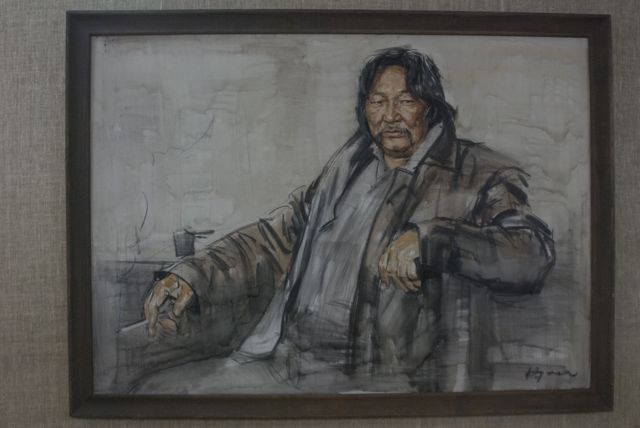
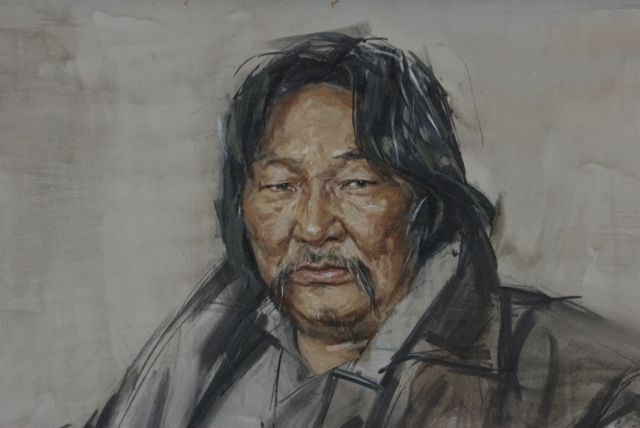
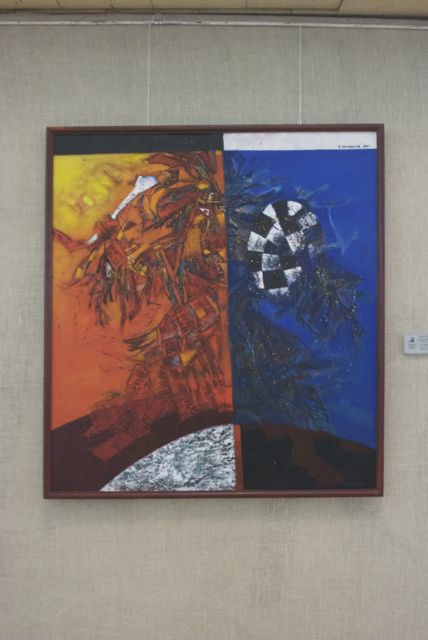
I then went upstairs to see the main galleries, which house original Mongolian paintings, sculpture and fine craft dating from the early/mid-20th century. As a socialist state with close ties to the Soviet Union, aspiring Mongol artists often studied art in Moscow. This gave them a grounding in classical realism that allowed them to create paintings of great quality. And they’ve built on it ever since, adding their own unique interpretations of the world they live in.
Here are some examples:
Portrait- Orkhon, N. 2006 oilPortrait, detailThe Red Portrait- Nasantsengal Bayanjargal 2001 oilThe Own Portrait- Ulziikhutag, Yondon 1991 oilLord of Great Land- Ichinnorov, Choij 1981 oilIn Art Studio- Bold, Dolgorjav 1981 oilHorses Hoof- Tsegmid, P. 1986 oilPost Man- Tsembeldorj, Myatov 1997 oilThe Bullet of the Sky- Tumurbaatar, Badarch 2004 oilThe Guardian Spirits- Advabazar, Nyam 2001 oilThe Light of the Steppe- Sanchir, N. 2002 oil
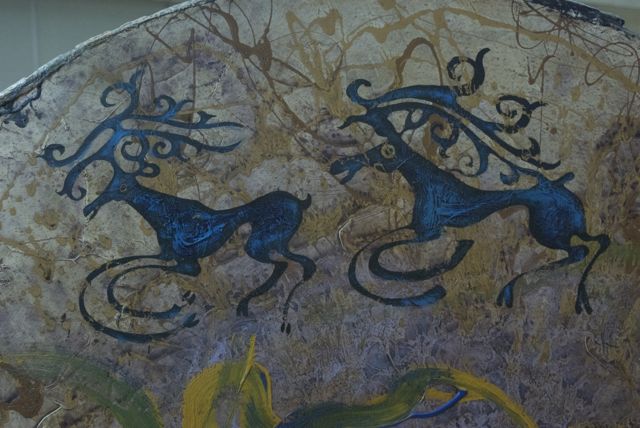
There was also this wonderful ceremonial drum with deer painted on it..
“Deer Drum” leather on wood frame“Deer Drum”, detail
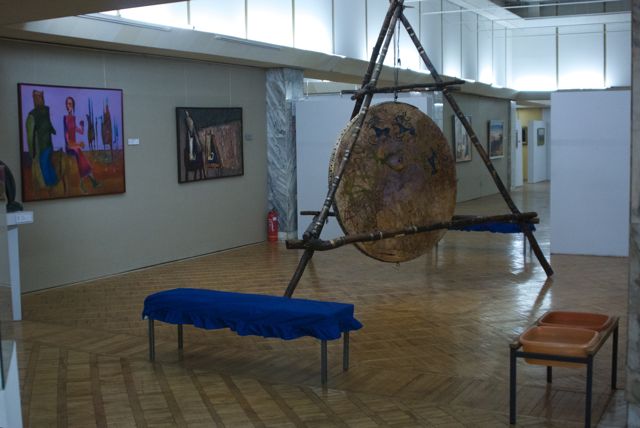
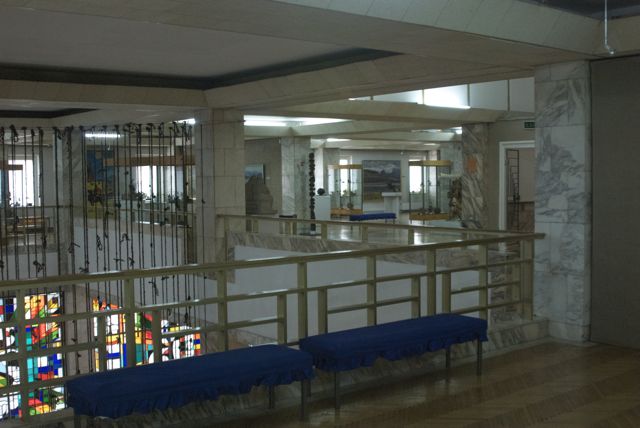
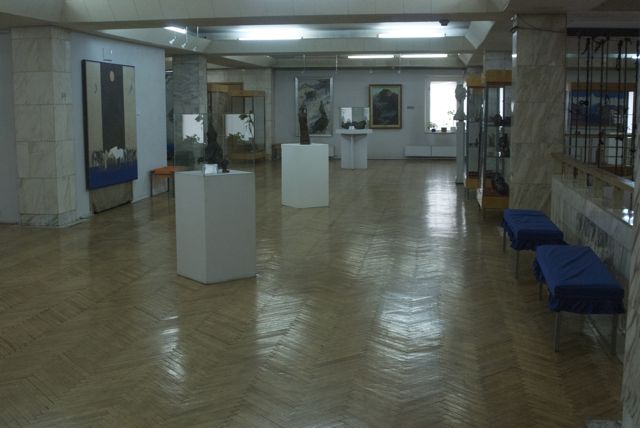
Finally, here are some views of the gallery spaces:
I had lunch at Millie’s, which serves good solid American food like burgers and sandwiches and is popular with the expat community of consultants and aid workers, along with visitors like me.
The next stop was the Hi Fi store, to see if I could get some of the music CDs for groups I’ve found on YouTube and Imeem. And I had some success. By the time I left, it was getting seriously hot, so I hiked it back, about 30 minutes, to the hotel to hide out until it cools down.
———
An addendum to my comments about all the livestock I saw when I was coming into town. Looks like it’s not as charming and picturesque to the authorities as it was to me. This is from a Mongol news website, http://www.en.news.mn:
“Herders asked to move livestock away from Ulaanbaatar
Tue, 7 Jul 2009 17:07:49
The Metropolitan Professional Monitoring Agency has reminded herders that there is a ban on livestock entering Ulaanbaatar green areas, and another on trading of any form in certain areas. With demand for sheep rising in Ulaanbaatar just before and during Naadam, some herders come to the city with their livestock at this time and the reminders are aimed at stopping the move.
Some 200 herder families have brought 30,000 animals into prohibited areas. The law calls for confiscation of all income earned from trading in such restricted areas. Further violation of the law can lead to imprisonment.”
I came downstairs to check out after the previous post. I walk up to the counter. The nice woman says that she is to call the manager, who wishes to speak with me. In the meantime, I finish settling my bill. He comes out and asks if breakfast was ok. I say fine and then tell him that everyone makes mistakes, but it’s how they respond that counts and that he and the hotel had out-done themselves and I was very pleased. He smiled and made a little bow. I then asked where to go to wait for the shuttle bus. And he says……we have a special shuttle for you, a car. And darned if there wasn’t a spiffy black sedan waiting at the curb for me. Can you believe that?
I walk out to the car and get in while they load my luggage. Just before we pull away, I look to my right and there is the manager and one other man, in attendance is the only way to put it. I smiled and waved and they smiled and bowed. And then the fairy princess was wisked away to her MIAT flight to Ulaanbaatar, where she is now ensconced in a tenth floor room with a view of Peace Ave. at the Narantuul Hotel and happily connected to the internet, a great relief.
——-
On the way in from the airport, besides the gers and gas stations, buildings and billboards, there were sheep. And goats. And cattle. Lots of them. And Mongol guys riding around on horseback. I must have seen 20 small to largish herds of animals. Their owners were hanging out in whatever shade they could find. The billboards seemed particularly handy. One family group had set up a low table with a white cloth on it and appeared to be about to have tea.
I’ve never seen this between the airport and town before, but then I realized – Nadaam. The herders have come in from all over and they can’t leave their animals, so everybody is here. I also think I saw some townspeople “shopping” for that perfect main course for their holiday dinner. On the hoof at the moment.
I had no idea and the cameras were buried in the suitcase, so no photos at the moment. But it was a great sight. And is exactly the kind of thing I love about Mongolia.
———
If Chinggis Khan had had a car it probably would have been a huge black Hummer trimmed out in lots of chrome, like the one I saw coming into town. Over here those stupid things almost make sense.
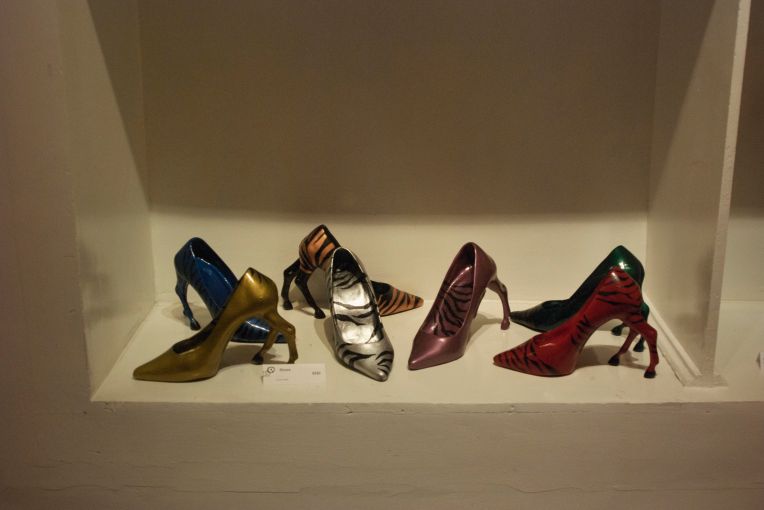
This art piece was at the Zanabazar Museum of Fine Art in Ulaanbaatar when we were there last year. Honestly, if it’s still there in July, it’s coming home with me. A perfect example of the humor and creativity of the world’s original horse culture-
Horse Shoes- I didn't get the name of the artist, more's the pity


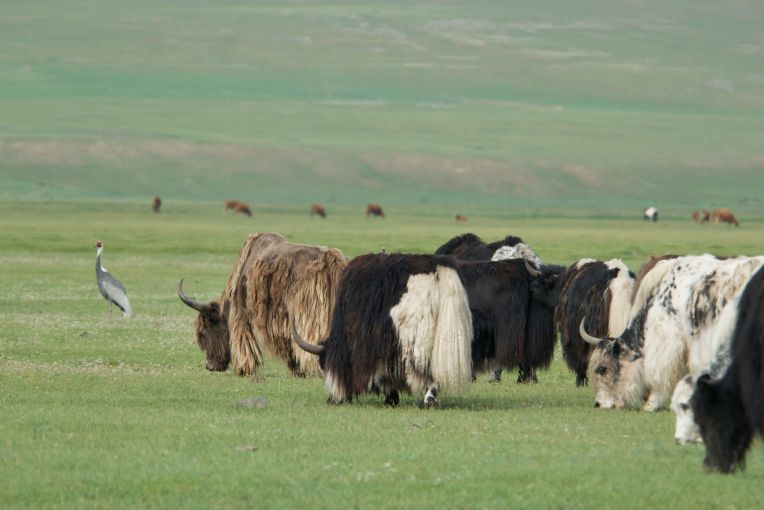 White-napped crane and domestic yaks




























 Susan Fox, American Artist