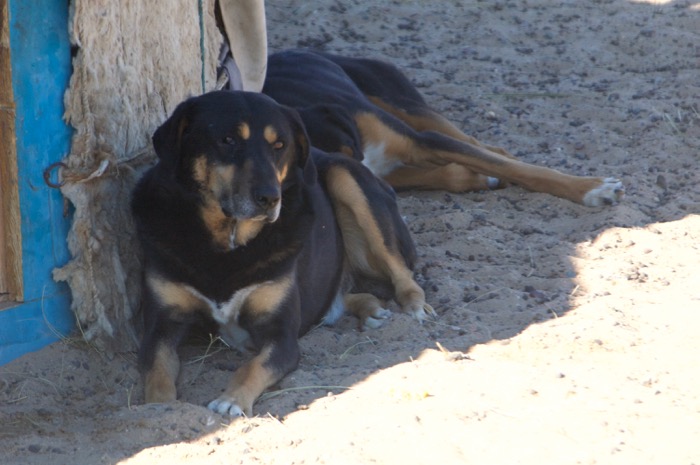
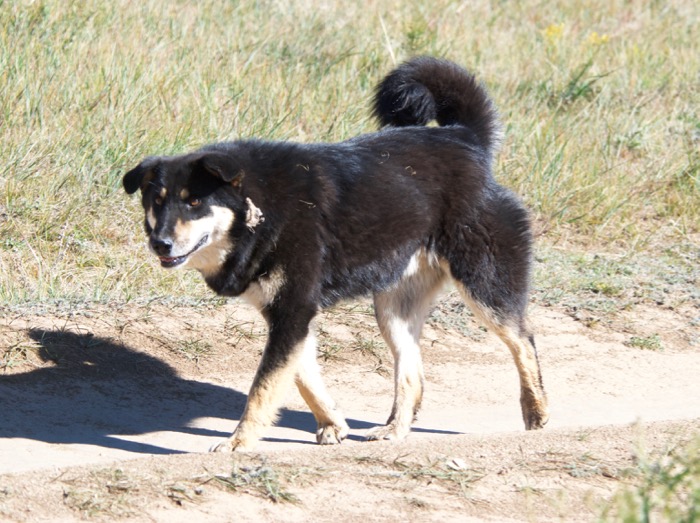
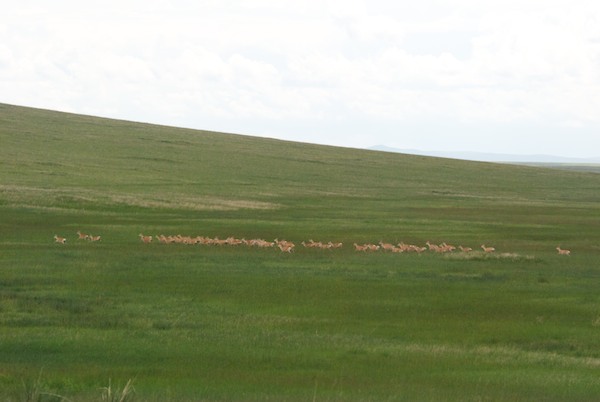
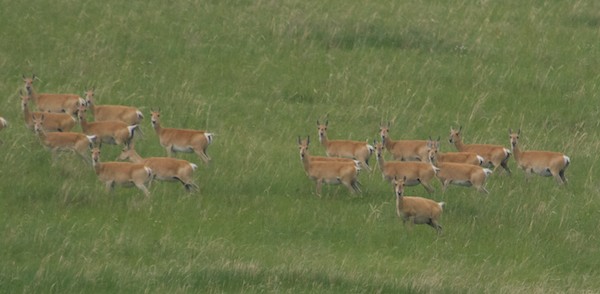
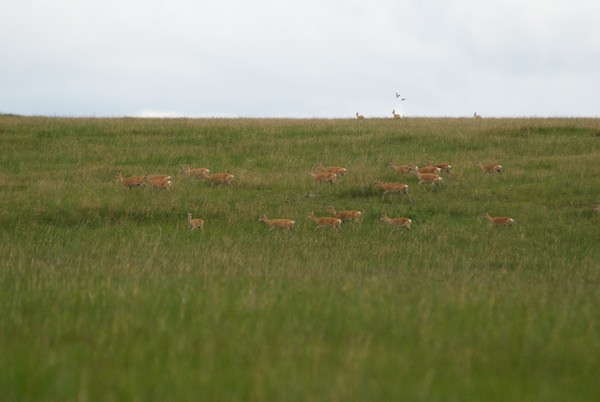
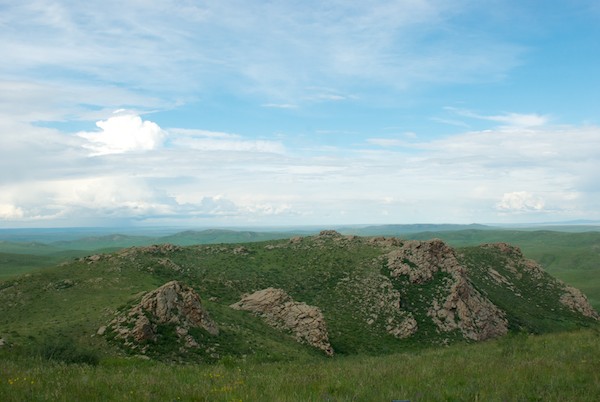
I am truly honored and excited to announce that the Mongolian Bankhar Dog Project will now be a featured conservation organization for this year’s WildArt Mongolia Expedition! Accompanying the announcement are photos I’ve taken of bankhar over the years.
To quote from their mission statement: “The Mongolian Bankhar Dog Project is a 501(c)3 nonprofit organization whose mission is to help slow down and reverse the desertification of the Mongolian Grassland Steppes, and to preserve and protect traditional Mongolian culture. We strive toward these goals by resuscitating the traditional use of the livestock guardian dog known as the ‘Bankhar dog’.”
“Lethal predator control (shooting, trapping, poison) and retribution killings of predators are major threats to predator populations in Mongolia. The use of the Livestock Protection Dog has been shown to reduce predation on domestic livestock by 80-100%, eliminating the need for lethal predator control and allowing predators to target natural prey species instead of domestic ones.”
The predators in question are snow leopards and wolves. Desertification means the the herders must move their animals to higher elevations, into snow leopard territory, with the risk that entails. Wolves have always preyed on domestic animals, but environmental degradation has contributed to decreasing populations of wild prey species such as the gazelles, which has in turn increased their predation on livestock. Add climate change, which is resulting in unstable and more severe weather, and the struggle for herder families to survive, much less thrive, has become increasingly difficult. Yet the Mongols have always felt themselves to be a part of nature and believe that wildlife, including predators, has as much right to live as they do, a dramatic contrast with attitudes one often encounters in the US.
The Mongolian Bankhar Dog Project addresses all these issues, but of particular interest to me is how the program reduces the killing of the endangered snow leopard and also wolves, who seem to be holding their own and who play an important role in Mongol culture since the Mongols believe that they are descended from a blue wolf and a doe.
The herders have always had general-purpose guardian dogs. The difference is that, as is done in a number of other countries, the program’s puppies are bonded with the livestock from the earliest age and, once placed, stay with the sheep and goats 24/7. Even though the project is still relatively new, it has already been proven to work. The herders don’t lose animals and the predators, a critical part of a healthy ecosystem, survive.
Our last stop on the Expedition will be near Hustai National Park (one of the three takhi/Przewalski’s horse reintroduction sites in the country), where local herder families have “adopted” puppies bred by the project. We will meet with them, learn about their lives, experiences and the place of wolves in Mongol culture, reporting back what they have to say. We’ll also meet with project staff and learn first-hand about what I believe to be a very important conservation initiative, one that I’ve had the pleasure of being in contact with from the beginning.
You can learn more about the Mongolian Bankhar Dog Project here.
It gives me great pleasure to announce the 2016 WildArt Mongolia Expedition!
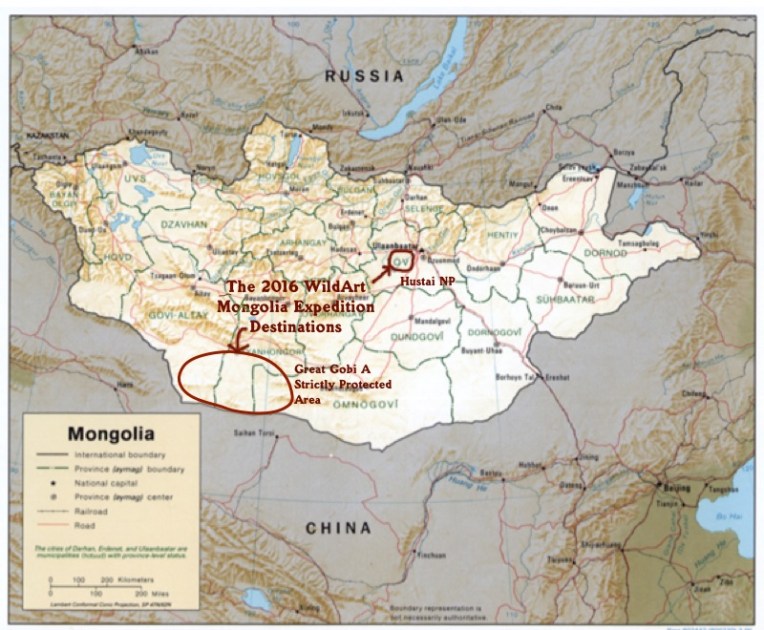
The fourth Expedition will travel to the Great Gobi A Strictly Protected Area (see map below) to try to see critically endangered Gobi bear and, if possible, meet with the researchers. The current estimate is that there are around 40 bears. That’s all. They are a brown bear (Ursus arctos gobiensis). There are also wild bactrian camels (including a breeding facility that I’m going to try to arrange for us to visit), khulan/Mongolian wild ass, Gobi argali, Siberian ibex and Pallas’ cat, along with a variety of birds and small mammals. Wolves are present, but it’s unlikely we’ll see them. This is a remote place that tourists never go to. I am also arranging for us to visit with staff and local herder families who are involved with the Mongolian Bankhar Dog Project, which is breeding the traditional mastiff-type guard dogs, bonding the puppies with livestock and placing them with families who live where their animals are exposed to predation. The dogs will stay with the sheep and goats 24/7. One goal of the project is to reduce the killing of predators like snow leopards and wolves. Another is to address desertification, an increasing problem in Mongolia.
If you have never tried field sketching, I will be happy to provide instruction. It’s a very special way of recording what one has seen and quite different than “just” taking photos (although I take thousands of those, too).
EXPEDITION INFORMATION:
I have limited space this time. I can take three more participants. There are currently three, including myself. That is three people per Land Cruiser so that everyone has a window seat.
Dates: May 22-June 10, 2016 (these dates give us the best chance to see the bears and avoids the worst of the summer heat)
Cost: $3900 per person double occupancy, excluding airfare to Mongolia, alcoholic beverages, lodging before and after the Expedition (people will probably have different plans; there are nice guesthouses that charge $25/$35 a night for a private room, including breakfast and also the Bayangol Hotel (which was a little over $100 a night in 2015 if booked through Nomadic Journeys).
Nomadic Journeys, who have made all my in-country travel arrangements for nine of my ten trips to Mongolia (the first was an Earthwatch project in 2005), will be handling, as usual, all the arrangements and logistics. We will be tent camping (in stand-up tipitents, possibly with cots) and traveling in Land Cruisers with drivers, guide and cook. All meals are included (vegetarians can be accommodated with advance notice; vegans regretfully cannot). A three season sleeping bag is necessary. As mentioned above we’ll be going to a place that is remote even for Mongolia, so I’ll be renting a satellite phone in case of emergencies.
It is necessary to plan for two nights in Ulaanbaatar before your international flight home, just in case we’re delayed in the field.
To reserve your place on the Expedition, please pay a $300 deposit on the Nomadic Journeys website here. For “Trip Name”, write WildArt Mongolia Expedition. While you’re on their site you can explore their options for before or after the Expedition, including self-guided ger camp stays.
If you have any questions, please don’t hesitate to write to me via the contact form on my website. Further information will be sent on expected weather conditions and equipment/clothing suggestions to those who are participating.
Obviously, everyone knows what has happened in Paris and my thoughts are with the Parisians and French people. I’ve only been to Paris once, in December 1996. My husband had business-related meetings so I had the better part of a week to wander the city. Paris is one of those places that will exceed your every expection and then some, even on wintry cold days. One of the highlights was the location of the group dinner that the people who were hosting the meeting arranged. A once-in-a-lifetime experience since it was in the entry atrium of the Louvre. Under the Pyramid. Followed by an after-hours tour of highlights like the Mona Lisa, Venus de Milo and Winged Victory. I’d been in the museum all that day and certainly didn’t mind see those iconic works of art in the quiet and lack of crowds.
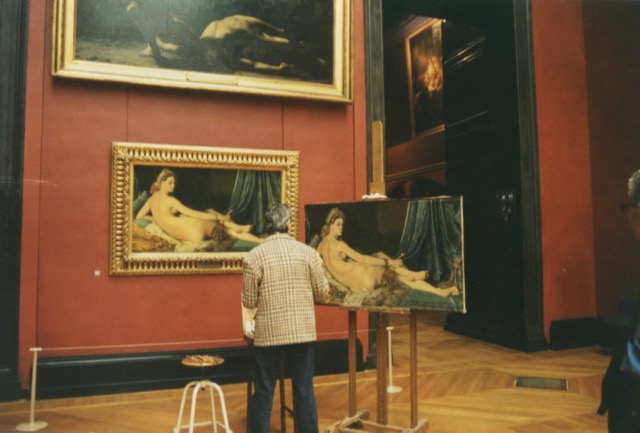
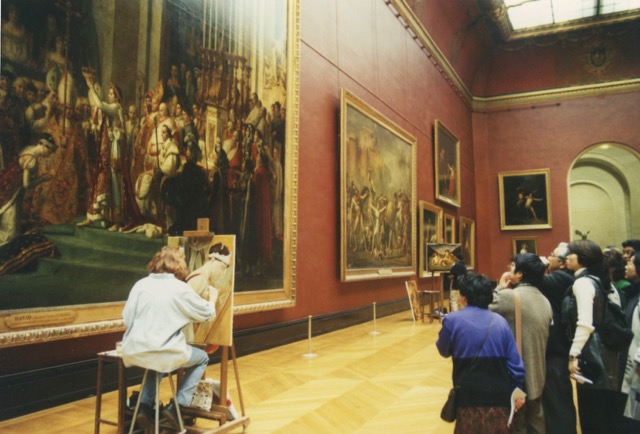
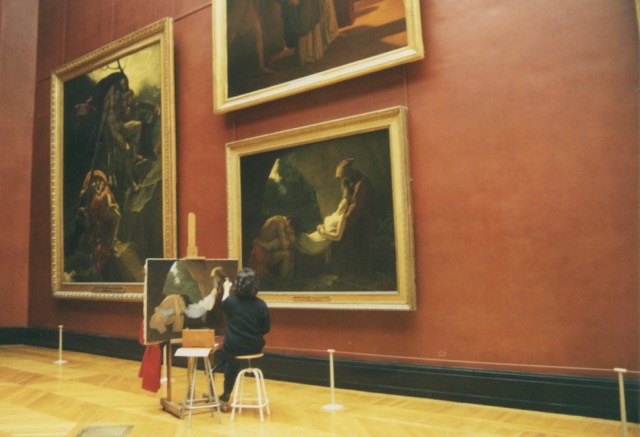
It had turned out that at some interval, once a week or once a month, I don’t recall at this point, artists were allowed in to set up their easels and make copies of the master works. This is a traditional way of learning to paint in oil and one that I did with a private instructor for two years albeit from prints, not originals. I took photos of a number of the artists at work.
This artist is starting on a copy of one of my all-time favorite paintings: “Madame Recamier” by Jacques-Louis David. She was a most remarkable woman. You can read more about her here.
“La Grand Odalisque” is one of Ingres most famous paintings, done during a time when the Orientalist part of the Romantic Movement was in full swing. Exotic eastern locales and paintings with harem themes were very popular. More about it here.
This enormous painting, “The Coronation of the Emperor Napoleon I and the Crowning of Empress Josephone in Notre-Dame Cathedral on December 2, 1804” is also by Jacques-Louis David. The artist has wisely chosen to focus only on Josephine as she kneels before Napoleon to receive her crown. In a time when there was no television or film, this is how major events, including battles, would be visually recorded for posterity. David was there, having been commissioned to create this epic work. Here is what the Louvre has to say.
I’m sorry to say that I can’t identify this painting or the artist.
Long shot of one of the galleries where artists were working. If I ever get back to Paris I will try my best to be there when I can do this.
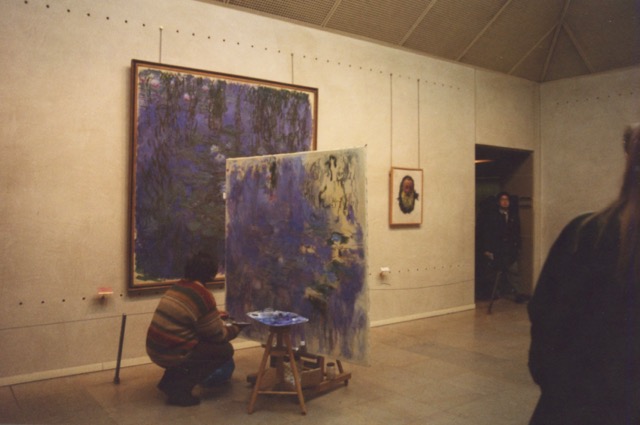
On another day I worked my way from the top floor to the ground floor at the Musee de Orsay and came upon an artist painting a copy of one of Monet’s water lilies works.
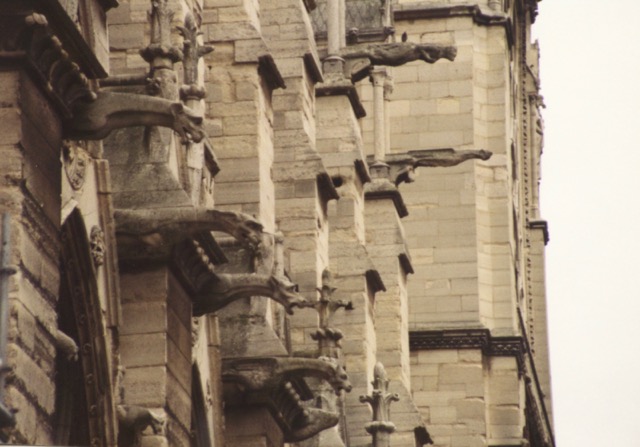
When not in one of the art museums I wandered about the city, photographing whatever caught my fancy, like these water spouts on the side of Notre-Dame Cathedral.
Across the river from Notre-Dame were vendors selling everything from newspapers to books to stamps to art.
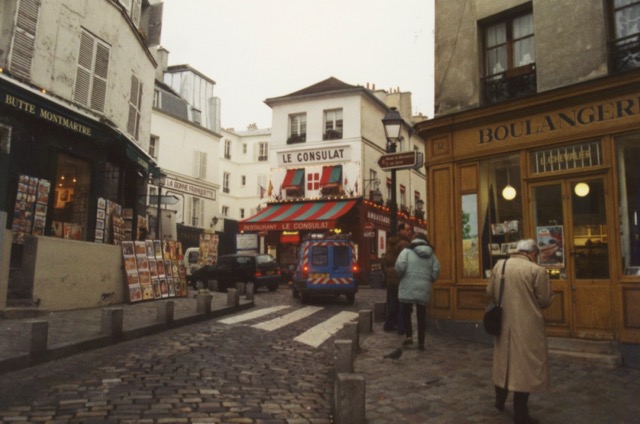
On my last day, a very cold and drizzly one, I took the Metro to the famous Montmartre district, home of Henri de Toulouse Lautrec, whose originals I had finally gotten to see at the Musee de Orsay, having adored his work since high school. It’s one of the few districts in Paris that still has the original and fabulous Art Nouveau entrances.
And even on a day like that the artists were out painting and selling their work.
I loved ambling about these old narrow, windy streets.
A close-up of the panel of art prints that can be seen on the right in the photo above.
I even got to see a Montmartre cat.
Since it was December, one saw holiday decorations everywhere and, look!, there’s Pere Noel. Three of “him”!
So, while it is a sad time in Paris right now and I’ve only spent a little time in France, I know that the French are indomitable and will not let what happened change who they are. Joyeux Noel!
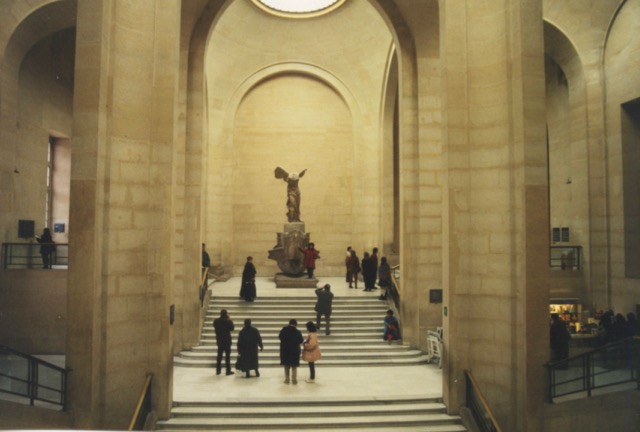
The Winged Victory in the Louvre
(All the photos were shot with a Nikon N2000 film camera and scanned from 4×6″ prints, then adjusted in Photos.)
Like many artists, I listen to music when I’m working in my studio. What I choose depends on my mood, the time of day and the day of the week…I tend to crank up the rock and roll on Friday afternoons (Terry and the Pirates is a favorite or anything else with my Guitar God John Cippolina). My default, however, is a playlist I call Chill Music, set to Shuffle. Here’s most of who’s on it, in no particular order:
Karunesh (New Age)
The Rippingtons (Smooth jazz)
Craig Chaquico (Smooth jazz)
Peter White (Smooth jazz)
Sting (well, you know…)
John Adorney (Smooth jazz)
Darshan Ambiant (New Age)
Vickie Logan (New Age)
David Arkenstone (New Age)
Brad Jacobsen (Smooth jazz)
Davol (New Age)
Degi (Mongolian violin traditional songs)
Nightnoise (Celtic)
Minstrel Streams (New Age)
Marc Antoine (Jazz)
Kenny G (Jazz)
Yanni (New Age)
Shastro (New Age)
Nils (Jazz)
I went through iTunes, listening to the samples and picked individual songs that fit the theme. Some artists, like The Rippingtons, Karunesh and Sting, I’ve got whole albums. I also sometimes hear something on our cable Soundscapes channel and jot down the artist and song.
If I want to liven things up I have playlists for mellow rock, the 1960s, road music and individual musicians like Mark Knopfler, John Mayer and Fleetwood Mac. There’s also one for “new” Celtic, which includes Peatbog Fairies, Kila and Shooglenifty. I also like Celtic music from singers such as Enya and traditional groups like Clannad and Nightnoise.
I have LOTS of music from Mongolia, brought back on CDs and downloaded into iTunes. That ranges from traditional music like khoomii (throat singing) and morin khuur (horsehead fiddle) to neo-folk (Altan Urag, Altan Orgil, Khishigten), pop music (A Sound, A Capella, Camerton, Nomin Talst, Bold), rock (The Lemons, Madness), classical composers like Jantsannarov and the man who, if anyone, is the heart and voice of Mongolia, Javkhlan.
What kind of music do you listen to while you work? Let me know in the comments!
I arrived in Ulaanbaatar, Mongolia late at night on June 28, was in town for a day and then took the train down to Ikh Nartiin Chuluu Nature Reserve. I saw quite a few argali and got some great reference photos.
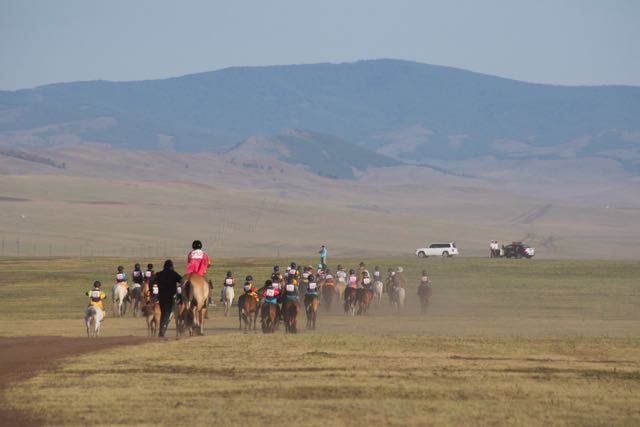
I returned to Ulaanbaatar (UB) after four days, had one day in town again, then joined a Mongolian friend of mine and her family for the annual Naadam celebration in Erdenet, which is a city to the northwest of UB. I got to see four horse races and learn quite a lot about horse racing culture in Mongolia since my friend’s brother is a race horse owner. It was a terrific look behind the scenes.
Once ready to go, the horses are ridden out to the starting point, so they will have done the course twice, out at a walk/trot/canter and back at a run. The feature race for adult Mongol horses was a little over 20km. It had been shortened this year since the rains have been slow in coming and the wasn’t as much grass as was wanted and needed.
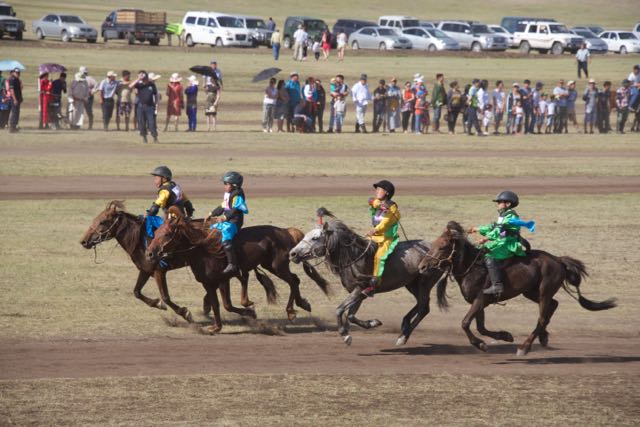
A recent development is crossing Mongol horses with Arabians or American or British thoroughbreds, trying for more speed. These “hybrids” run in their own separate race. Above are four of them approaching the finish line.
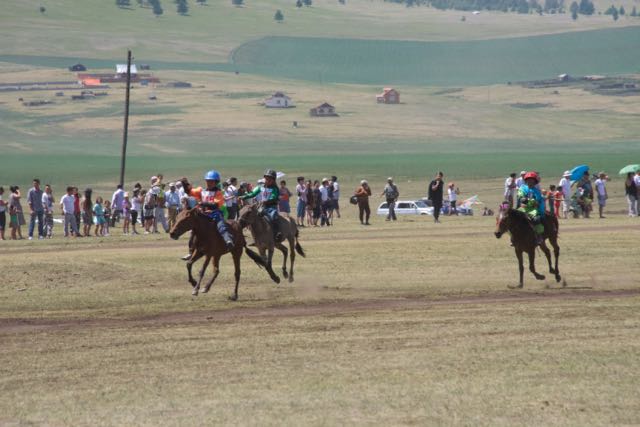
There is also a race for two-years olds, which will be their first. The above two photos show the finish of that race. It’s a test to see how they do in a real race. Horses who show promise might be purchased from the breeder on the spot.
The rules governing the jockeys changed a couple of years ago to increase safety. The lower age limit was raised to seven years from five. The boys and girls (not many but there’s usually one or more) are required to wear helmets, knee and elbow pads and to wear shoes. They can still ride bareback, on a pad or in a saddle. Insurance is also required.
They really do start them early in learning to ride. I saw fathers putting two year olds up on a horse and holding them in place for a minute or two and riding with a bit older child seated in front of them. The young boy in the above photo was perfectly confident, sitting very calmly as he guided his mount.
Unlike American and European racing, the default for Mongol horse racing is geldings. There is one race just for stallions. Mares are not raced since they bear foals and provide milk. This stallion made sure he was between me and his harem. The racing horses are watched much more closely and aren’t allowed the same free range as the working horses. Their training for the naadam begins six weeks before the festival with a carefully calibrated diet and a conditioning routine. The ones picked for racing love, love, love to run and holding them back can be a challenge.
Here are two horses in the final stage of training. They were finally allowed to run and took off like a shot. The trainer and maybe the owner are in the car carefully observing them. The night before the race the men stay up all night with the horses who will race the next day, feeling the state of their stomach and feeding them at the appropriate time.
This is the jockey who rode my host’s horses. He’s eight years old and was all business. Never saw him crack a smile.
We stayed at this camp set up by my host just for the naadam races. It was a wonderful site with an almost 360 degree view of the surrounding countryside.
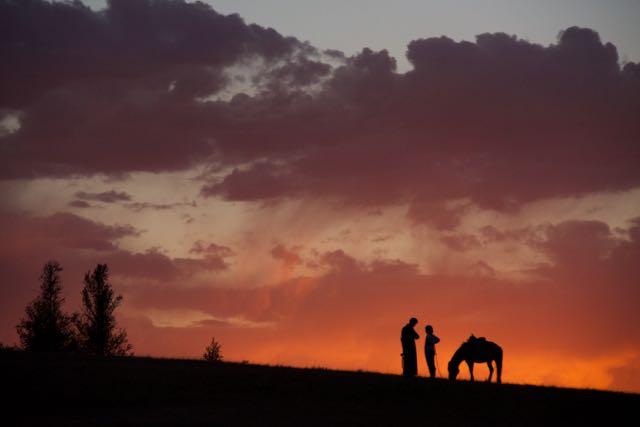
Two of the cousins of the family watching the sun set.
It wouldn’t be a naadam without horse racing and wrestling and we also got to watch the latter. The rules are simple: if any part of your body other than the soles of your feet or the palms of your hands touch the ground, you lose.
The competition begins with all the wrestlers doing the Eagle Dance in front of a national standard.
It’s all very colorful, from the maikhan (the tents) to the officials to the wrestlers themselves. It’s single elimination all the way through. One loss and done.
I also got a tour of the city, known for its enormous copper mine which was established by the Russians back in the 1970s. Everything produced, which also includes molybdenum, goes to Russia.
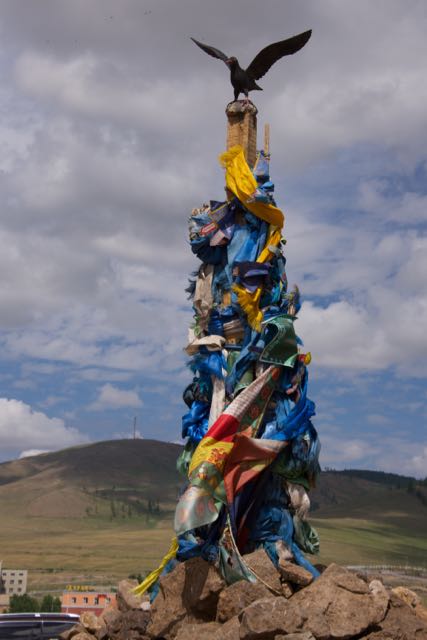
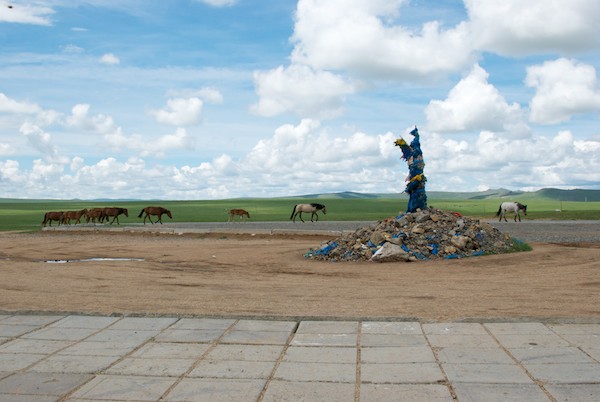
There is a new Buddha statue which will form the center of a planned development. It’s one of the biggest in Mongolia and is directly across from the copper mine. There was also an ovoo with an unusual wooden bird on the top. I’ve never seen that before.
After four fun and rewarding days we took the overnight train back to Ulaanbaatar. I’m resting up and seeing friends, plus doing a little last-minute shopping because on July 16 I depart for western Mongolia for my third WildArt Mongolia Expedition which has been awarded a Flag from The Explorers Club! Stay tuned!
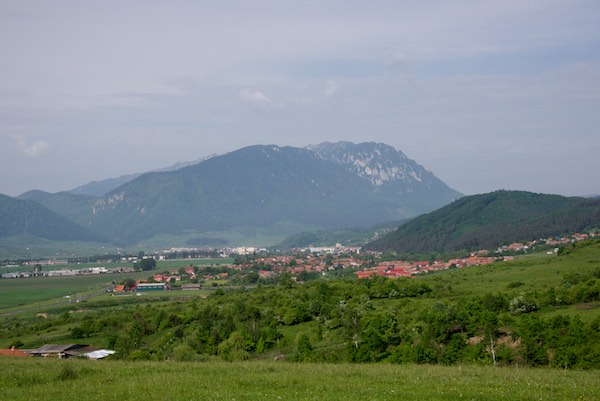
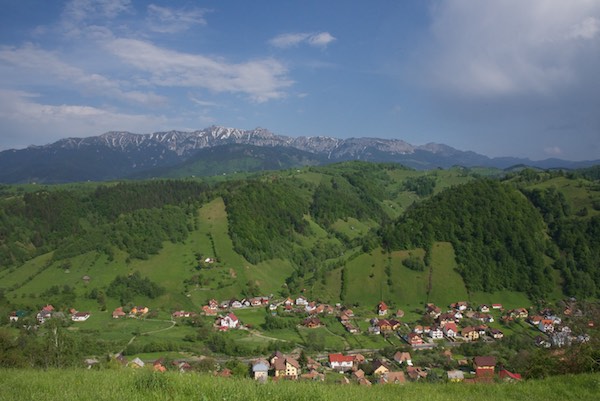
My main destination – Piatra Craiului National Park and the small town of Zarnesti
I already know that I want to go back to Romania. One week barely scratched the surface of a country, like Mongolia, that really deserves to be better known, especially by nature-lovers. My goal was to visit the Carpathian Mountains of Transylvania to see part of the largest remaining areas of the ancient European forest and, if possible, see and photograph European brown bear (Ursus arctos arctos). I got all that and much more!
Romania is a modern European country and is a member of both the European Union and NATO. Above is the bread section of a large grocery store in a shopping mall in Bucharest, the capital. I love visiting grocery stores in different countries and seeing what’s familiar and what is new. Also, in the bigger stores, how things are designed and laid out. This store was very well done.
One of many colorful flower stands we passed on our way north out of Bucharest. I booked a custom trip with a British travel company, Wildlife Worldwide. In Romania my trip was handled by Atu Travel. I had a wonderful driver/guide named Laurentiu who was knowledgeable about all facets of the country.
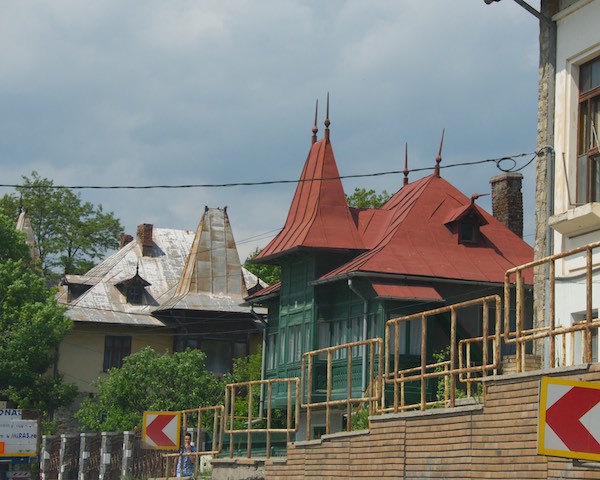
My first happy surprise was discovering the storybook traditional architecture as we passed through this town. I’d love to go back there for a few days of sketching and painting.
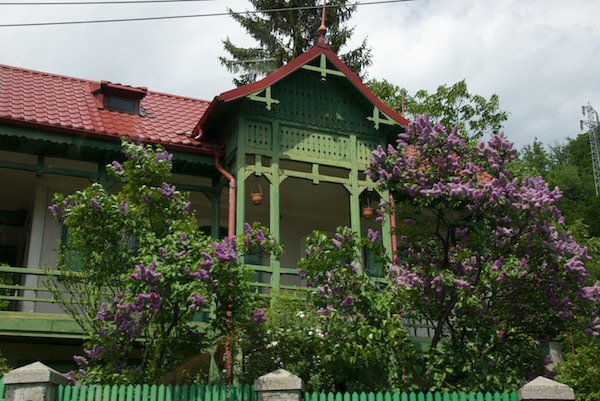
Lilacs were in bloom everywhere we went. These were all grab shots from the car since we didn’t have time to stop.
The first morning Laurentiu took me to this “castle”, Peles Castle, which is really a palace that King Carol I had built in the late 19th century. It has over 170 rooms decorated a variety of historical styles. Unfortunately it wasn’t open when we were there, but i did get to see the grounds.
Rasov Castle, perched on a hilltop, is visible for miles around. We didn’t go there, but I did get some photos. It dates back to the 14th century.
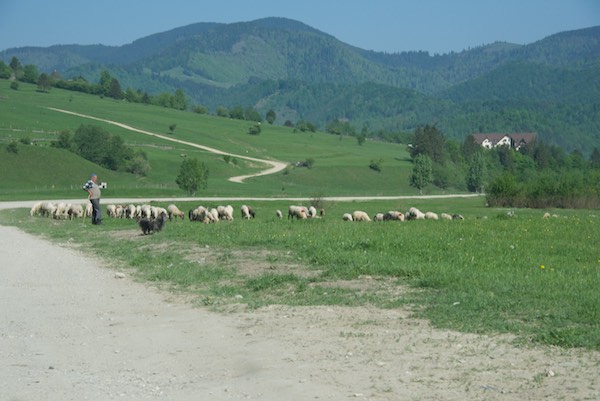
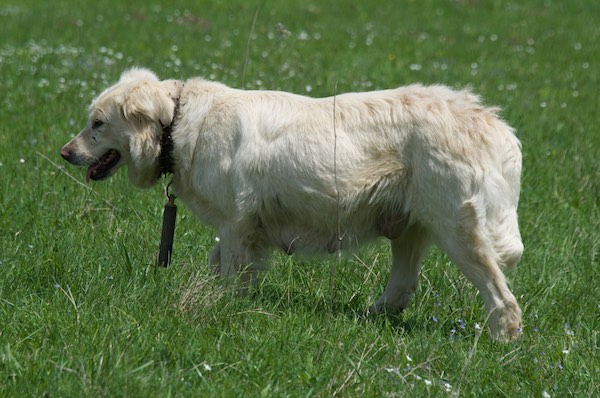
Like Mongolia, livestock herding is still how many people make their living. The Romanian shepherds use two kinds of dogs: large strong ones who guard the flock from predators like wolves and smaller quicker dogs who move the flock. Here’s an example of each.
Our next stop was a trail is that leads up to a monastery, the Colti Chiliei Hermitage. It was a lovely wildflower-filled walk.
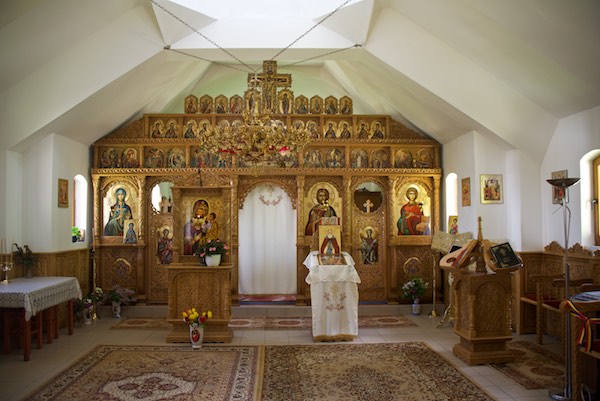
The interior of the chapel.
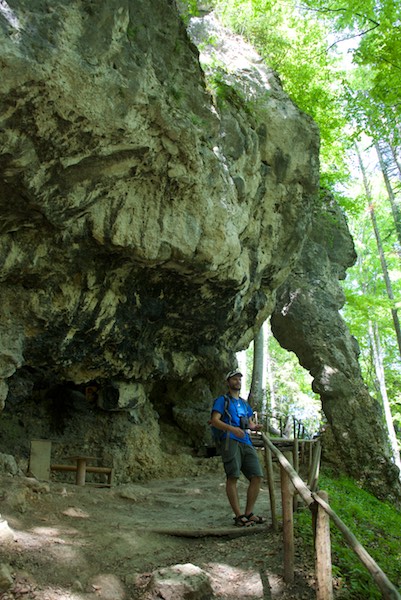
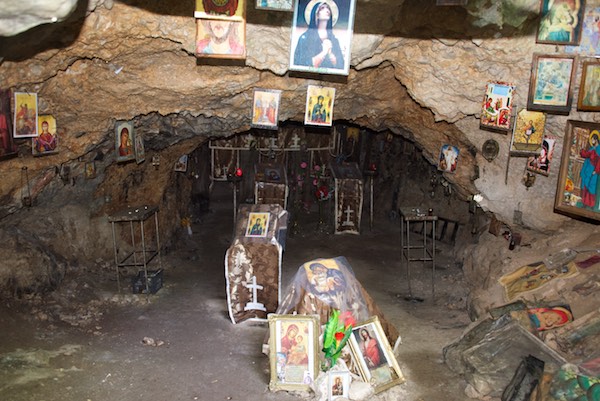
The site dates back to the 15th century, when local people took refuge in the mountains to escape the Ottoman Turks. The next two photos are of a cave up in the woods above the hermitage.
It is still a place of pilgrimage and worship today.
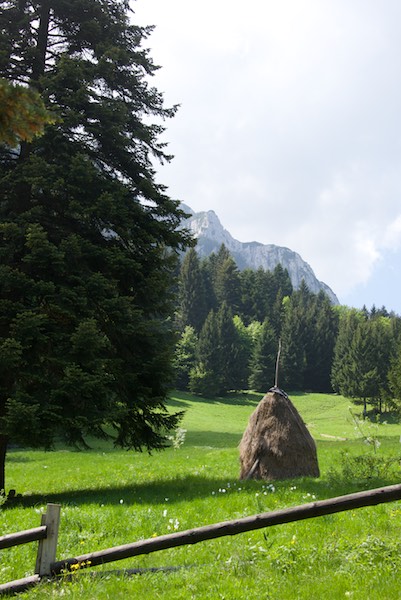
The surroundings are very beautiful. In the foreground is a Romanian-style haystack.
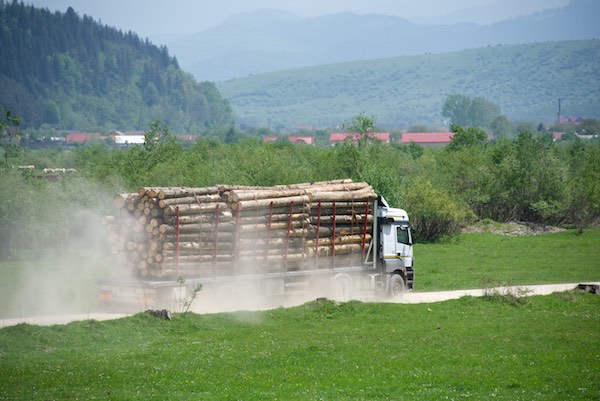
Logging of the ancient forests has become an issue in Romania in recent years. The government is cracking down on the corruption that feeds the illegal logging. Laurentiu told me that every truck is tracked and that legal logs all have a red dot on them, like the ones in the photo below.
That evening we went to the first of two bear hides (“Hides” are small raised up huts with a large area of glass on one wall). We arrived along the road early and went for a walk. It started to rain. By the time we met up with ranger it was really raining. We were also down in the trees where it was pretty dark. All to say that while I got quite an eyeful of not just a bear, but wild boar, I didn’t get very good photos. But I knew I’d have one more chance.
First up was a family group of European wild boar, which was great since they keep to themselves and are not often seen.
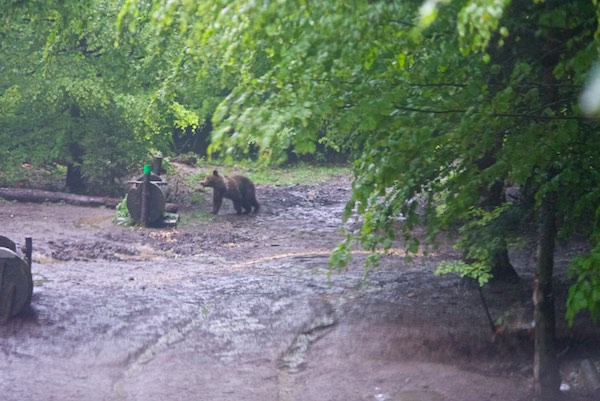
They grazed and poked around, then startled and moved back into the trees. A few moments later a small brown bear showed up. There’s “bait’ in the can, chocolate and grain. I wasn’t thrilled about this, but it’s the only way visitors have a chance of seeing the bears, which are a major tourist draw.
After going head down into the can, the bear suddenly alerted.
A little more time passed. It got darker and the rain came down harder. It was finally too dark for photos. But….the boars back at the edge of the trees seemed to collectively decide “what the heck?” and came charging out, chasing the bear away! Laurentiu said that he had only seen this once or twice before in all the times he’s taken visitors to the hides. I may have to do a painting of it sometime…
The next day was what turned out in my mind to be The Hike. Laurentiu described it to me and I wondered if I was up for it since I hadn’t done any hiking since last year in Mongolia, we were at around 2000 ft. and I live more or less at sea level. But this was my chance to really get out and up into the forest and mountains, so off we went.
We started by walking through the Zarnesti Gorges, quite well-known to serious birders.
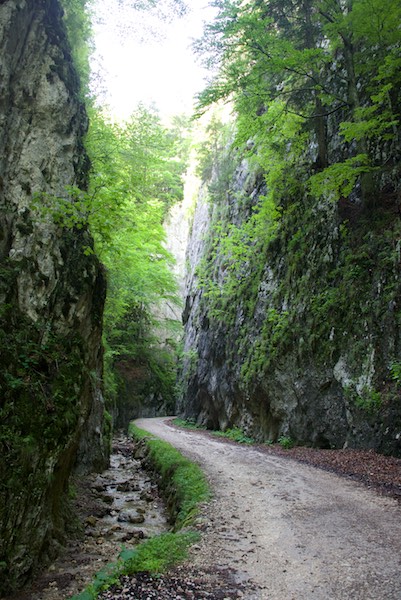
It was lovely and cool trekking between the limestone cliffs, although I don’t recall that we saw a single bird. Soon enough, we reached the trail up into the mountains and for the next 3-4 hours I was thoroughly tested, going up slopes that were sometimes 30 degrees. With my camera pack. The photo below is the one that shows part of a section I’d just come up.
As we got higher up where it was flatter and more light could get in, an understory appeared with a variety of wildflowers like these forget-me-nots.
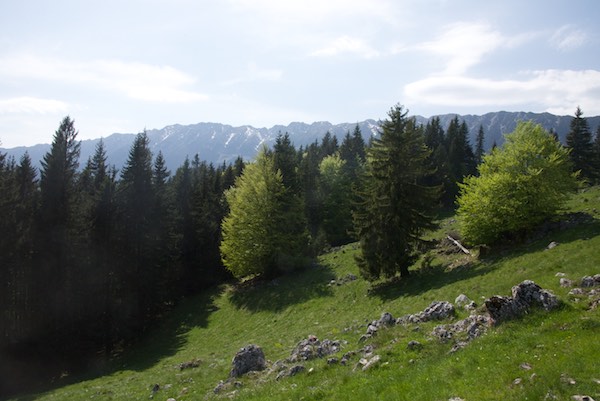
We finally came out of the trees into the sub-alpine zone. The small building is where the shepherds live in the summer. More below.
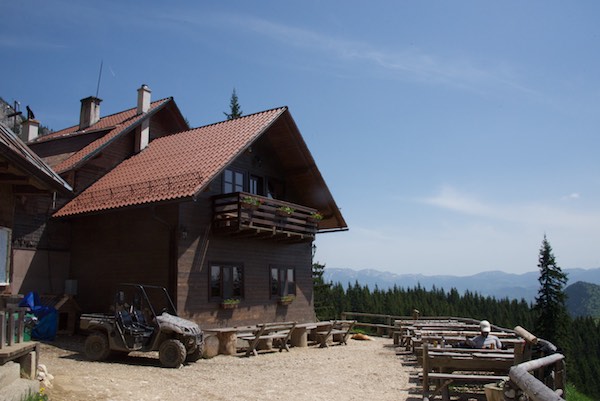
And here’s our goal, the Alpine Hut. Which had a spectacular view. And cold beer. We were able to refill our water bottles from a spring before we started down.
There were even dogs to pet!
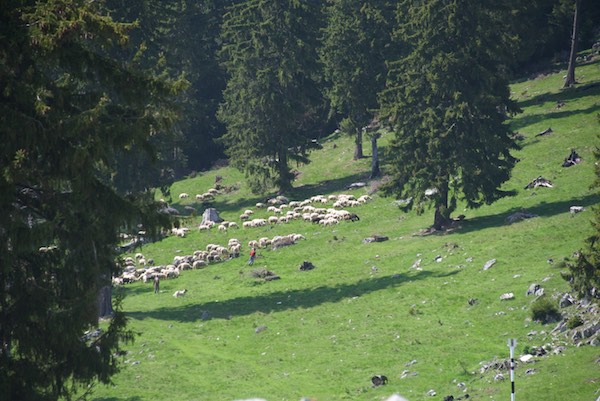
As we headed across the meadows we started to hear the sound of sheep and bells. I saw them down in the trees a fair ways below us, but there wasn’t time to stop. They came up quickly, though, and I got a few photos. The shepherds are moving up onto the mountain for the summer, staying in huts.
We still had 2 1/2 to 3 hours to go. This was a last look before we descended back into the forest.
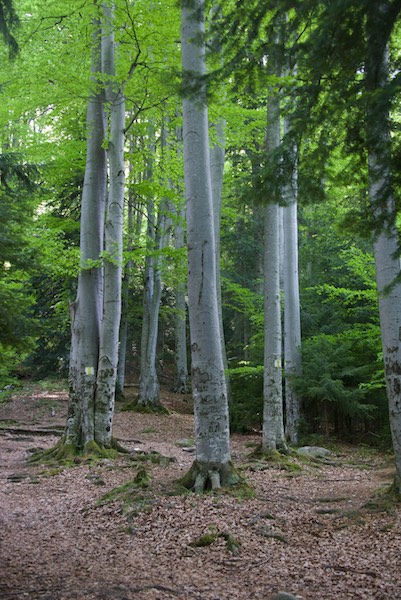
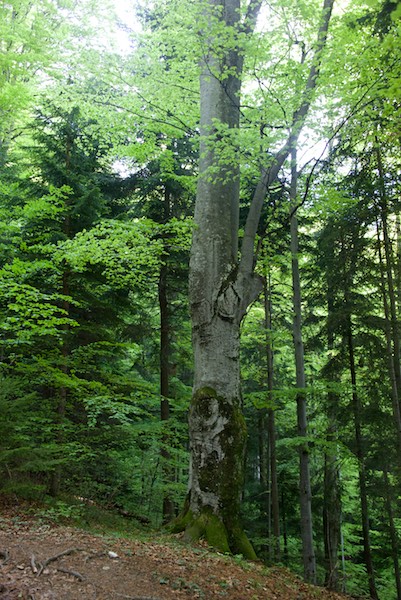
I had to put the cameras in the pack since the trail was slippery from the previous night’s rain and we had to very carefully pick our way through a lot of rocks on the trail. My hips and then my knees started to hurt but there was nothing to do but stop when I had to rest a bit, otherwise just keep going. When we came into an area with ancient old growth beech trees I had to stop and have Laurentiu get a camera out for me. It had a magical feeling of ancient beauty. This was one of my favorite parts of the whole hike and made it all worthwhile.
But that wasn’t the end of the day! After resting and getting dinner at Guesthouse Elena, where I was staying and being treated to their excellent hospitality, it was off to the second bear hide. This time we went through a small village and into the Stramba Valley, another birding destination. It was late afternoon and the cows were going home.
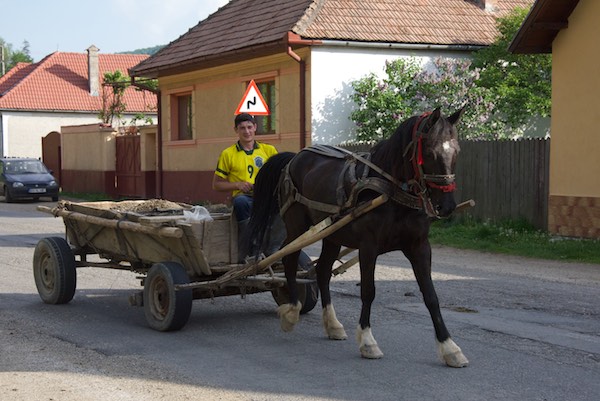
So were the people, some in a very old form of transport…
I asked Laurentiu why horses and wooden carts were still used. He told me that they were less expensive and more reliable than trucks and that the horses could also be used for other tasks.
I saw nesting storks in a number of locations as we traveled around.
Once again we met up with a ranger, drove up a valley and parked. The hide wasn’t far from the road.
He’s carrying grain and biscuits for the bears. As we crossed the stream and walked up the trail I spotted this…
You can see the hide through the trees. The clearing where the bears come into view is on the other side of it.
We were getting close and the ranger stopped, saying something to Laurentiu, who told me in a very low voice that there was already a bear in the clearing! So we walked quickly and quietly to the hide and up the stairs. I got my cameras out (two Nikon D750 bodies; one with a Nikon 28-300 mm lens and one with a Nikon 80-400 mm lens). There was a bear there, a 3-4 year old female. She never saw us, just kept digging around in what looked to be a wild boar wallow.
After a bit the ranger said he wanted to go put out the bait. I was torn over whether or not to say something. A bear in the hand, who would certainly run off, or the chance to have one come in much closer. I didn’t say anything, having learned long ago in Mongolia not to second-guess the locals. And not only did Bear No. 1 come back and stay, but Bear No. 2, also a female, showed up and came right in close to the hide.
About an hour had gone by and then Bear No. 3 came in to join the party, although the females backed way off since this was a 7-8 year old male.
I was able to get a shot with all three bears.
Finally, after about 90 minutes it was getting too dark to really get anything, even at a very high ASA. Then the ranger said something. Laurentiu translated saying that the ranger had just said that we had to leave right away because there was a fourth bear! I looked out the side window of the hide and could see another smallish bear in the trees only 15-20 feet away from the hide. I packed everything up as fast as I could, thinking that, no, we weren’t really going to leave the hide with a bear right out there, were we? Yes we were and yes we did. The bear moved farther away when she heard us, so all we had to do was walk quickly and carefully, because it was still quite muddy from the rain, down the trail, back across the bridge and onto the road. The ranger asked Laurentiu if I was happy. Are you kidding? Any bear close enough for good photos would have been great, amazing, super lucky, but THREE? An excess of riches. What an evening.
The next day was for cultural sights and since I’ve been interested in medieval history for many years, I love getting to visit places from that era. Plus, having done a little research, I knew that the Mongols had come through Transylvania, including the part I was in, when they invaded eastern Europe in 1240-1241. In fact, they pretty much depopulated Transylvania on their way to Hungary. They are remembered, but not with any hostiity that I could tell. And, since it was close by, I figured I ought to visit Bran Castle, famous for it’s (completely untrue) connection to Dracula and Bram Stoker.
First we went into the medieval city of Brasov, a bustling architecturally handsome city in the older part which is backed up into a horseshoe-shaped valley. There’s still a short section of the wall left. The mouth of the valley used to have a moat. It was one of four fortresses built to defend the area, the others being Bran Castle, Rasov Castle and our next stop, Prejmer Fortified Church, a fortified monastery which belonged to the Teutonic Knights.
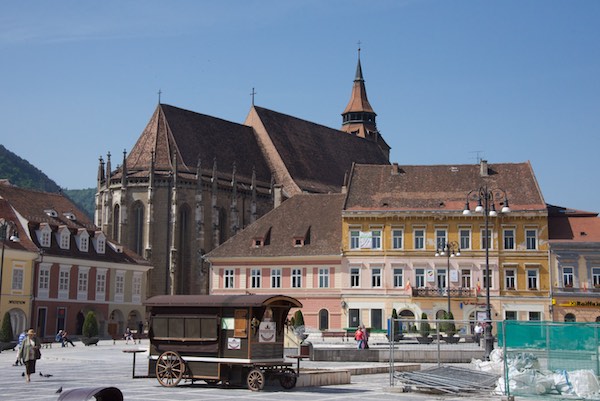
The town square in Brasov, showing the back of the Black Church.
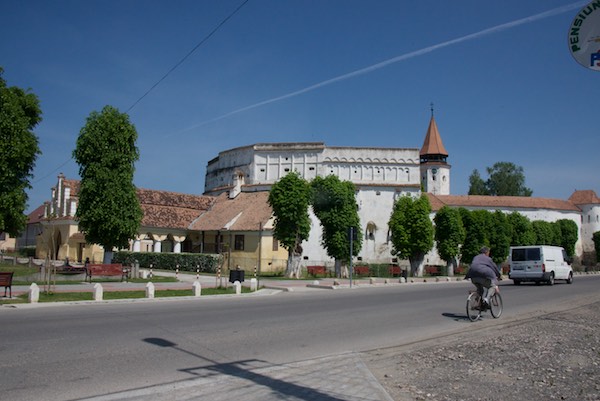
Prejmer Fortified Church. A UNESCO World Heritage site.
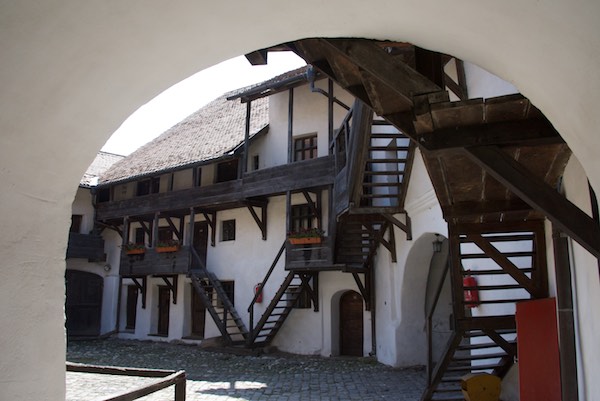
Inside the citadel
Inside the church
Then it was on to Bran Castle. Anyone who loves castles will love this one. Forget the Dracula stuff. There are no vampires. Bram Stoker’s story was set elsewhere. And Vlad the Impaler wasn’t here either. It’s actually a reasonably comfy and elegant family home that was used by members of the Romanian royal family and is still owned by a Hapsburg Archduke. Many articles, objects, images and family momentos are there, along with real medieval armor and weapons.
The main sitting room. Notice how the old fireplace was altered to create a cozy nook.
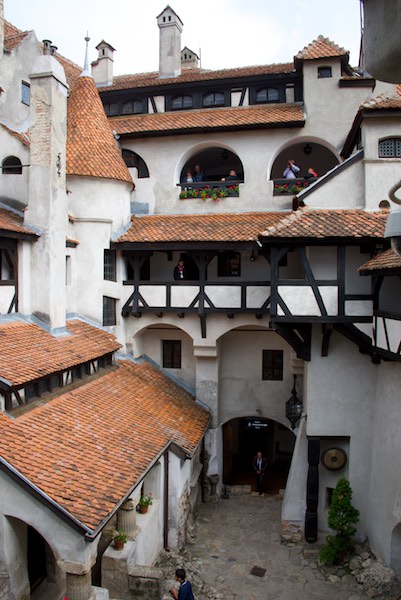
The interior courtyard. It’s quite something to wander around through all those different levels and rooms.
Once we’d finished with the castle Laurentiu took me to a justifiably famous viewpoint. Two, in fact. One on each side of the road.
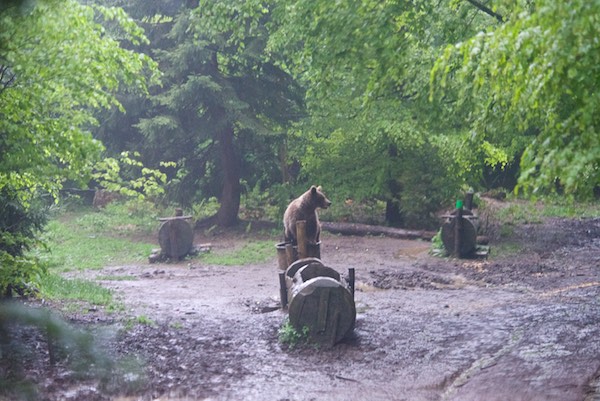
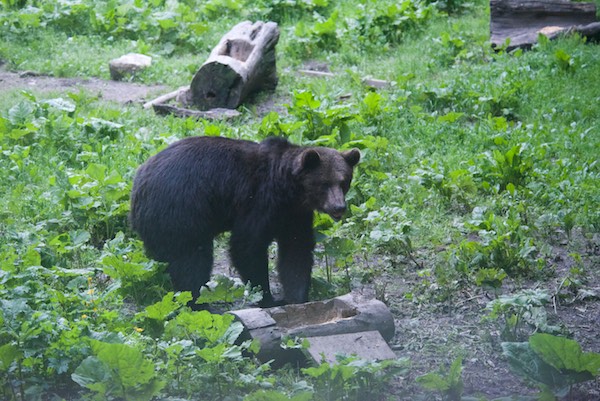
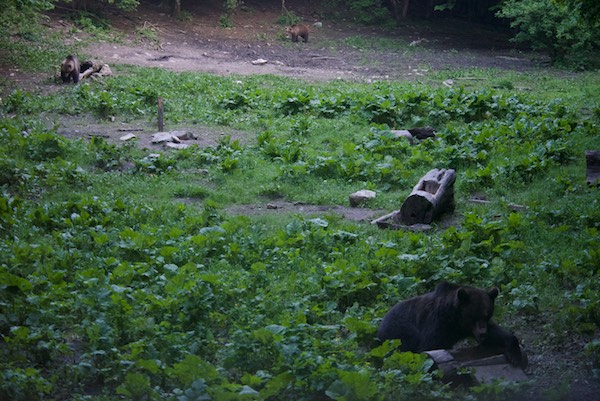
The next morning there was one last stop, the Libearty Bear Sanctuary. They have 80 bears who have been rescued from cruel and inhumane conditions and who will now live out their lives in comfort and safety, getting to be simply bears. Click on the name to go to their website. There’s also a book about them and other European bear sanctuaries that can be accessed from the site and purchased through Amazon. Here’s one of their bears, enjoying the morning sun.
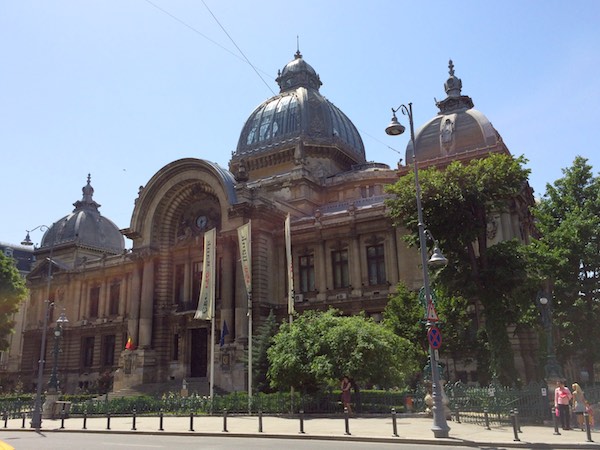
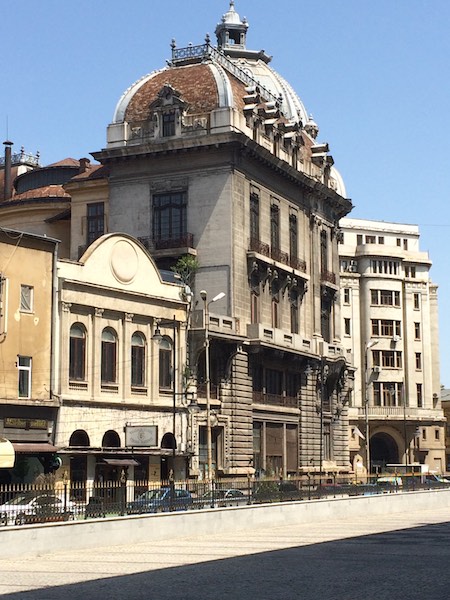
And that concluded my trip to Transylvania. I arrived back at the hotel in Bucharest in the afternoon. My husband (he’d had business meetings all week) and I spent our last day in Romania checking out Bucharest’s Old City, which turned out to have drop-dead gorgeous Second Empire French architecture.
And then there was Nicolai Ceausecu’s monument to meglomania which was left unfinished when he and his wife were run to ground and shot after the fall of communism. Since it turned out to cost more to demolish it, the new government went ahead and finished it. Over 300 rooms worth. It is now called the “Palace of Parliament”. I was expecting a classic “East Bloc” ugly slabby thing, but other than the inhuman scale, it’s not architecturally too awful. Except that the site used to have the core of the Old City on it. See above…
But what’s really important is that the Romanian people have survived and are largely thriving, living normal lives, welcoming and friendly towards visitors. They have a beautiful country that I hope to visit again.
I’m very pleased to announce that “A Good Stretch”, 20×24″ oil on canvas, has been accepted into the 55th Annual “Art and the Animal”, the prestigious international juried exhibition of the Society of Animal Artists (I’ve been a member and Signature Member since 2002). The venue for this year is the Roger Tory Peterson Institute of Natural History from August 28-October 25. There were 395 submissions from 237 members (the Society has almost 500). One could submit two works, but only would be accepted. It’s extremely competitive and a real honor to have made the cut. (This is my fifth time in the show since I first got in in 2009.)
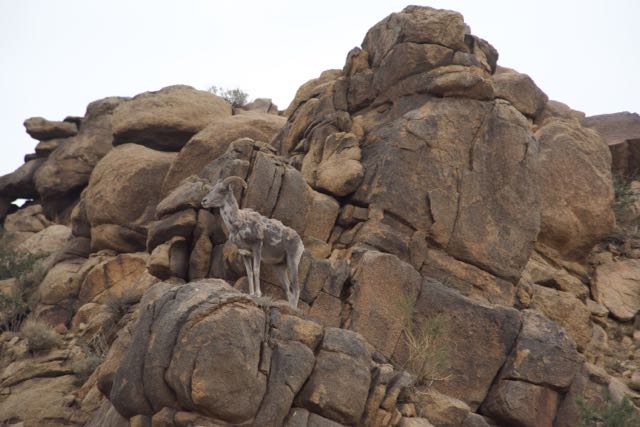
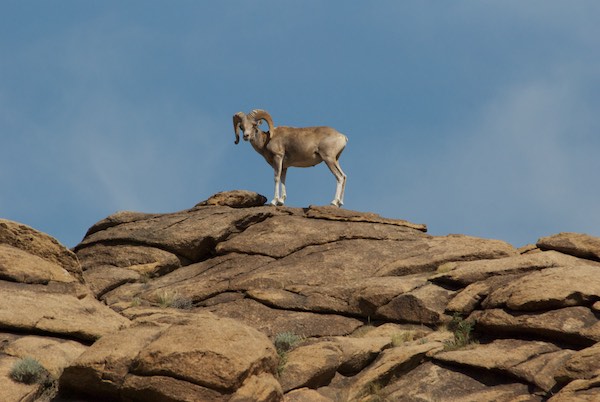
My subject is a Gobi argali ram, seen above, who I spent a hour with at Ikh Nartiin Chuluu Nature Reserve last year. I climbed up and sat on a rocky slope overlooking the valley where the research camp is located, across a draw from him and in full view. Even did a few sketches. When I got home and went through my photos I realized that he was in three of my argali encounters over the four days I was at the camp. The white area on one horn where the surface layer has broken off (almost certainly from a fight during the rut) makes him easy to recognize. Nice for me because I always want to paint individuals.
I haven’t posted any Mongolian poetry in quite a while, too long, actually. I remedy that today with a favorite of mine by Mongolia’s preeminent living poet, Mend-Ooyo. I came across “The Cranes” for the first time in his poetic and magical account of growing up on the steppes of Daringanga in southeastern Mongolia “Altan Ovoo” or “Golden Hill”. I have the good fortune to be one of his friends on Facebook. When he posted the poem a few days ago I asked if I could share it with my friends and he was kind enough to give me permission.
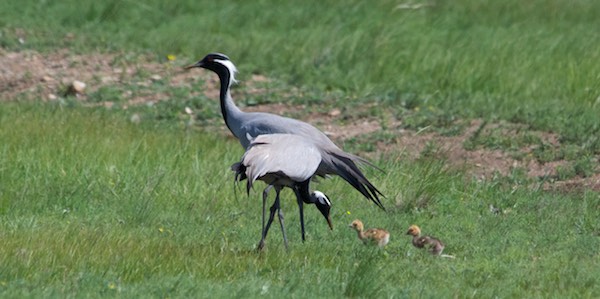
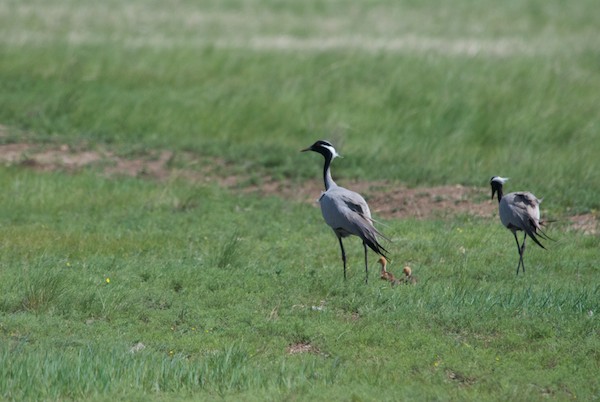
The black-faced cranes referred to in the poem are demoiselle cranes, as shown above in a photo I took last year, which can be seen in many parts of Mongolia.
The black-faced cranes excitingly
Flapped their wings and flew in Mongolia every spring.
They landed by fluttering their blue beards
Where they wished to do.
They joined in pairs
In this spacious in steppe
They exhausted in long flight
To come to their habitual place.
Birds habituated to the local people
Year by year.
They laid two spotted eggs near the animal farmers.
And hid their eggs in this place
As they deified the human beings.
Who knows it.
They venerated the virgin steppe
Which was habitable and safe for them.
They did not suspect
When they laid their eggs
There is a maxim.
If you cast your shadow
Over newly laid eggs.
It spoiled eggs.
But someone overlooked
The custom of his own place.
And pocketed these eggs.
And came to his home without a hitch
Two poor cranes trod on the pool of rain-water
And plumed their feathers as if without wings
And summered there alone.
When autumnal wind rumpled their plumes
Two cranes approached a farmer
Who took their eggs.
There was a toddler with bells in his shoes
Who was toying in a long distance from his home.
No adults heeded it.
The toddler crowed to catch these cranes.
The cranes gradually kept their distance
From the farmer’s home.
The toddler chased them,
And did not fathom it.
As his mother’s breast felt a rush of milk
She called her toddler thrice.
There was no sight of the toddler.
Nobody knew it.
All the members of the farmer family and his neighbours
Raked through the vast steppe.
They did not find their toddler
Even a fellow of his small boots.
They did nor fathom that
There was a deal of toddler
With the eggs.
Nobody knew it.
There was a flight of cranes
Were honking over the farmer’s gher*
Was it a shadow or tear?
There was a stain on the boiling milk
In the pot over a fire.
Translation by
Nymjavyn Dorjgotov
*gher –the Mongolian nomad’s tent; or house – yurt
The legendary grassland steppe, Toson Hulstay Nature Reserve, Dornod Aimag
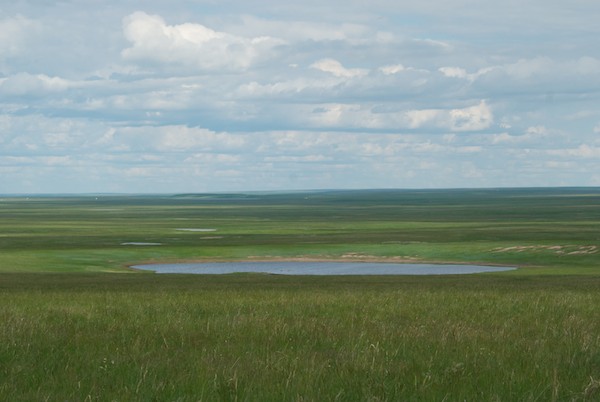
At last I was going to see a part of Mongolia that I’d been wanting to for years….the eastern steppe grasslands. Even though Toson Hulstay Nature Reserve covers almost 1.2 million acres, an area larger than the state of Rhode Island, it’s a remnant of an ecosystem that once spread from the Pacific Ocean to the plains of Hungary.
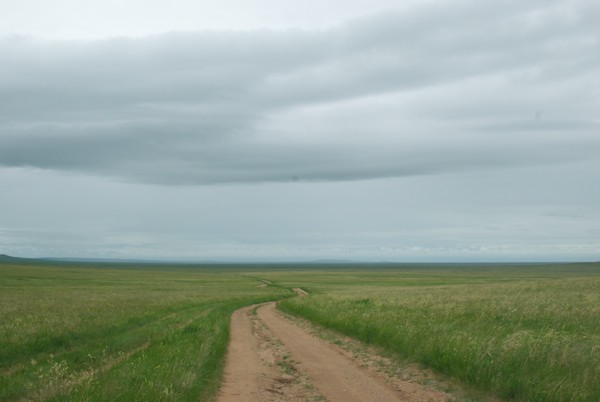
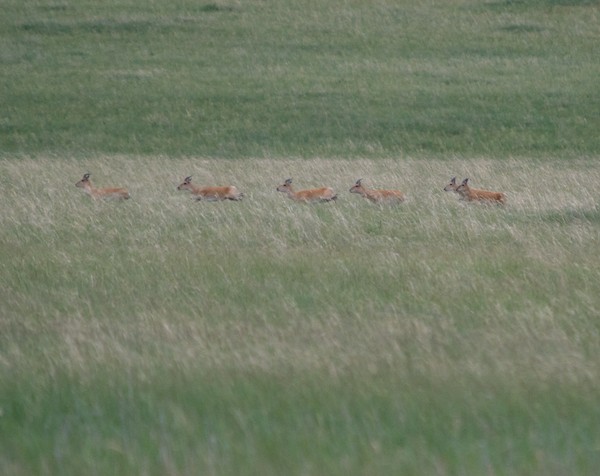
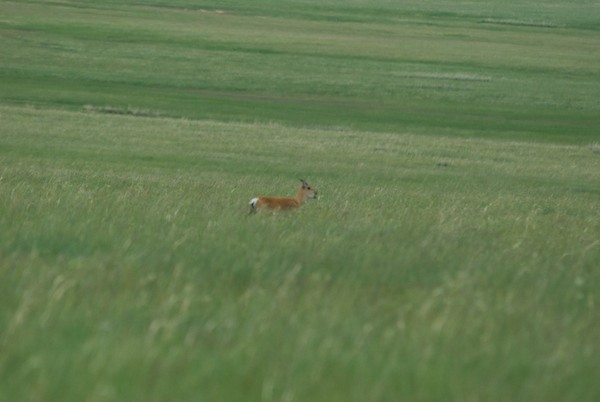
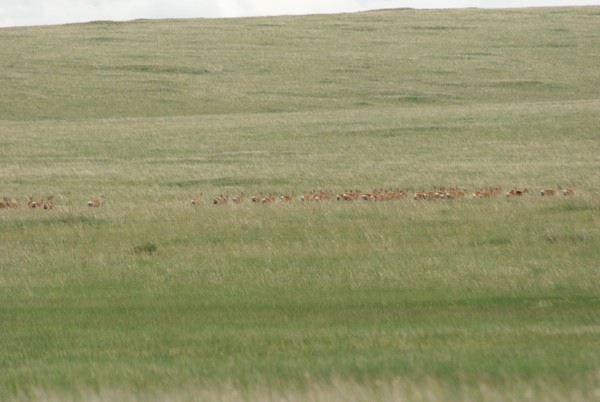
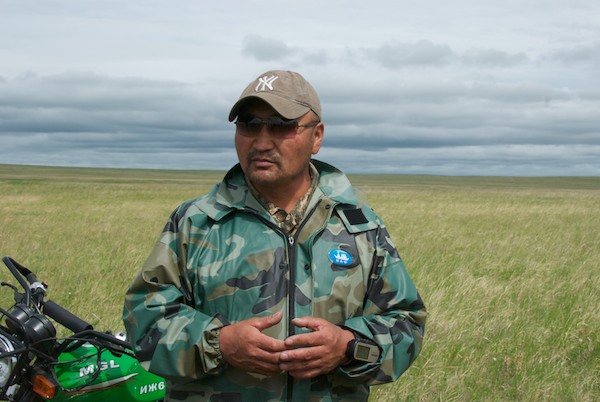
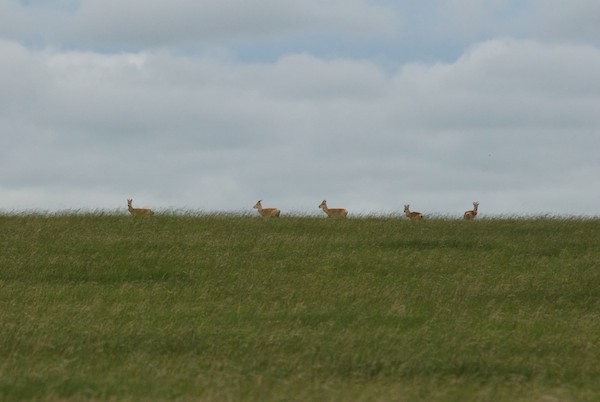
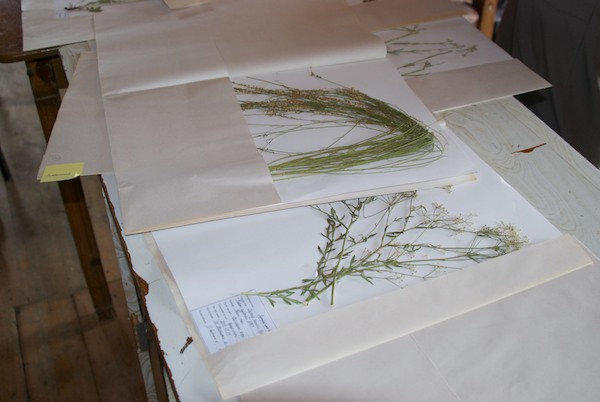
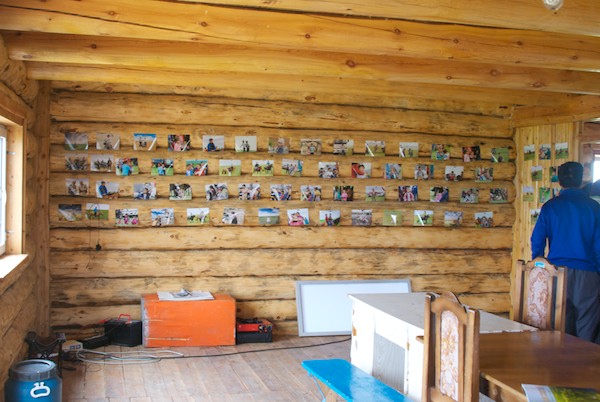
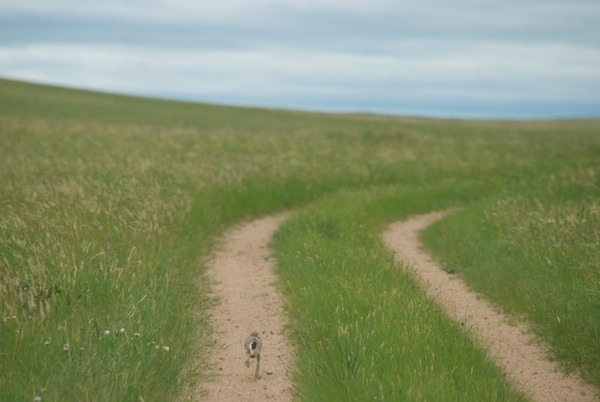
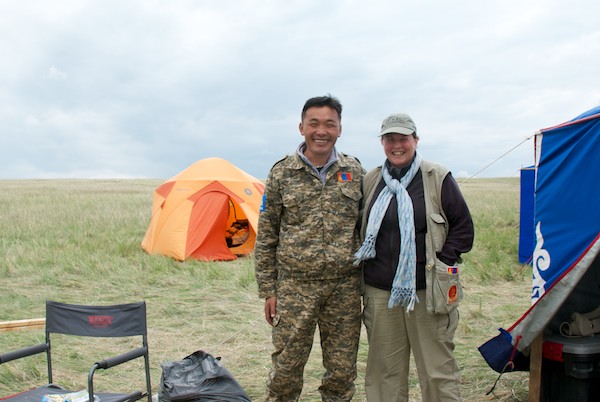
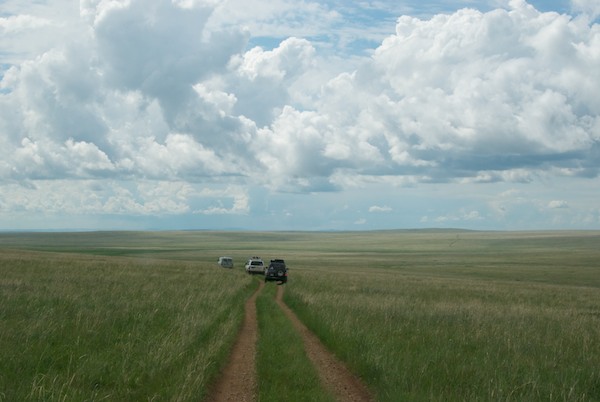
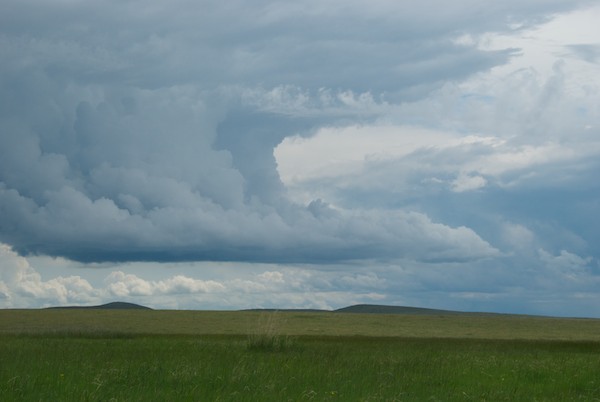
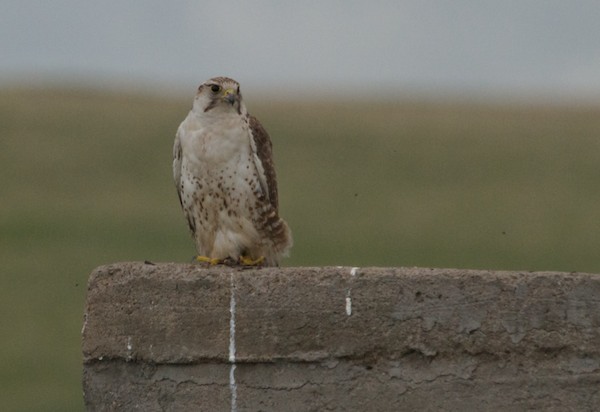
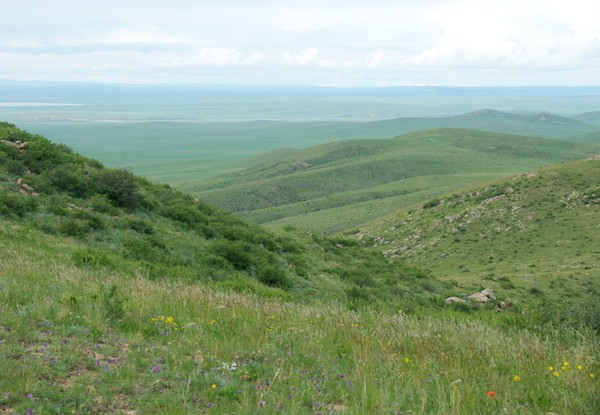
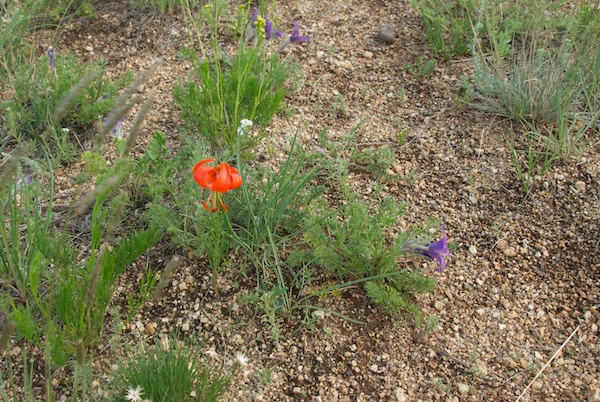
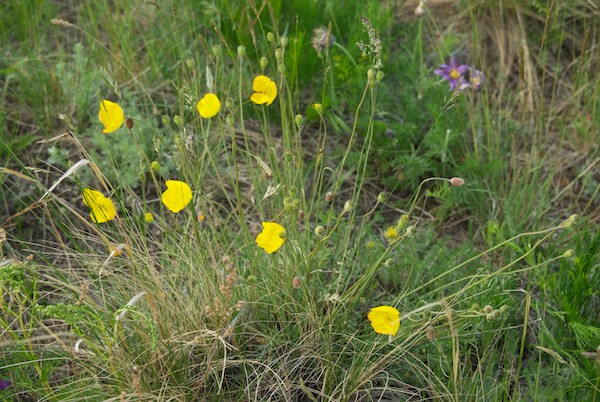
Within minutes of our first drive around the reserve we spotted Mongolian gazelles, the wildlife for which the reserve is best known and the main species it was created to protect.Then we saw this single male gazelle.Not long after, we spotted this good-sized herd.This is Batmunkh, one of the six rangers who patrol the reserve.The next day, on our way to the new visitor’s center, we saw an even larger herd! As you can see, we had cloudy weather and the gazelles were usually quite a distance away, so not the best conditions for getting good photos, but still wanted to share one of this big group. They are known to gather in mege-herds of tens of thousands. There are 40,000-60,000 gazelles in the reserve.This group was nice enough to stop on the ridge.The new visitor’s center near the soum center of Holonbuyr. It is also used for community events and children’s activities, along with education about the reserve, its wildlife and plant life.One of the banners that adorned the walls. The Nature Conservancy has been involved in supporting the reserve for many years.Batmunkh showed us part of a large collection of botanical specimens.Photos of local people.On the way back a young tolai hare ran down the road in front of our car for quite a distance.This group of gazelles paralleled us for awhile and were fairly close. Taken through the driver’s side window while we were rolling. I actually got pretty good at it.Our campsite, not far from a spring. Chosen to provide some shelter from the wind. It was stormy the whole time we were there.My tour company person set up a meeting for me with Ganbold, one of the rangers. Through my driver, Erdenebat, who speaks good English, I got a great briefing on the reserve and the gazelles. I’ll be writing it up as a future blog post. I was very impressed by both rangers’ love and enthusiasm for the reserve and their jobs dedicated to protecting it.One of the dozen or so lakes in the reserve.Off across the steppe on an earth road…We saw some truly spectacular clouds. Summer is the rainy season in Mongolia and this year most of the country got thoroughly drenched, which was great for the herders and their livestock.Saker falcon, an endangered species, perched right near the road.Another big herd, the largest yet. What a send-off for our departure!A close-up. They all cut across the road in front of us, flowing like a stream.One last herd.An individual female. And with, her the gazelle “show” was over.Crossing the Kherlen Gol on our way to our next stop.Rainstorm on the steppe.Our final destination for this year’s Expedition off in the distance….Har Yamaat Nature Reserve. The weather was looking pretty good, compared to where we had been.Rock Formations at Har Yamaat.We drove up to this high point where we could see the Kherlen Gol in the distance. But what captured our attention was the riot of wildflowers.Wild lily and Pasque flower.Wild poppies.
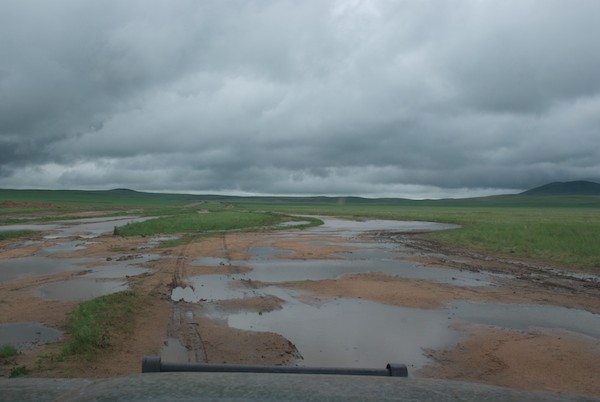
We went back down the slope to a sheltered spot and set up camp. It was a pleasant evening, perfect for our outdoor dining. About 10pm it started to rain…and rain….and rain. It was raining hard in the morning. We had to eat breakfast sitting in the cars. Everyone pitched in to get the tents packed up. I think we set a record for the trip breaking camp. I was wondering what it would be like getting back down the mountain to the road, even though we were in Land Cruisers with a go-anywhere Russian van as our support vehicle. As it turned out the “earth” road was grassy enough that that part was no problem. However, once we arrived at the main road west…
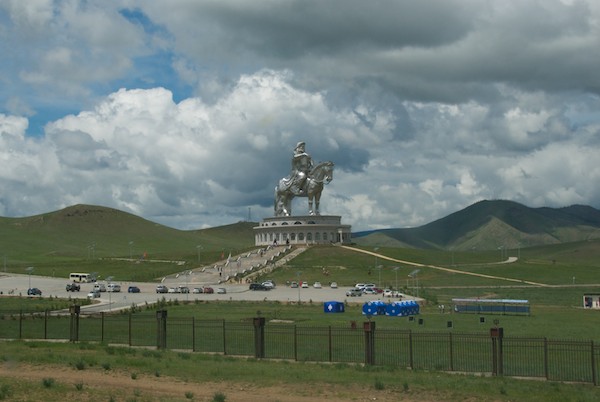
The drivers had to deal with quite a few kilometers of this. Each made his own choices on how and where to pick his way through it.But we just kept moving on and no one got stuck. By this time Ogii’s white Land Cruiser was thoroughly beige.We finally out-ran the muddy roads and made good time to Ondorhaan, recently renamed Chinggis Khan Hot (City). I got a kick out of seeing the zebra tire cover in the middle of Mongolia.The city entrance if you’re coming from the east.We stopped for a break and were treated to one more crane sighting! A pair of demoiselles with two chicks.Scenery heading east. With horses.For the last night out, we stayed at a tourist ger camp near Avarga, the first center of Imperial Mongolia. Very comfortable gers to stay in and a huge elaborately decorated dining ger.I had a little visitor who was plucking loose pile from the carpet for its nest. Species unknown.One last look at the quintessential Mongolian landscape I’ve grown to love so much.We stopped for lunch by this ovoo and a herd of horses wandered by.Full-circle back past the Chinggis Khan statue and on to Ulaanbaatar.
And that concludes the story of the 2013 WildArt Mongolia Expedition.
I’m leaving on Saturday for a road trip to Wyoming. I plan to spend four days in Yellowstone National Park, a day in Jackson for the annual Fall Art Festival and then on east to Dubois for the Susan K. Black Foundation Workshop. Five days, 175 artists, nationally-known instructors…it’s going to be very special week. I hope to post on the blog a couple of times, but will largely cover the goings-on via Twitter and posts to my Facebook fan page.




 You can learn more about the Mongolian Bankhar Dog Project here.















































 Susan Fox, American Artist