Mongolia Monday- “Required” Reading, Part 3

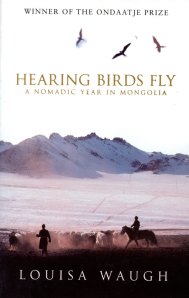
For the final installment of my list of “must” reads for anyone interested in Mongolia, I offer three books: One about a place and two about people.
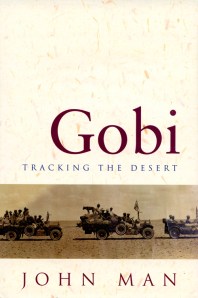
gobi-john-manThe word “Gobi” is a byword for dry/arid/trackless/endless desert. In fact, there is a saying, “Dry as the Gobi”, to describe an extreme lack of moisture. Would it surprise you to know that the best, sweetest vegetables grown in Mongolia come from the Gobi? Or that snow leopards live there? Or that there is a forest with trees that have wood so dense that a piece of it sinks when thrown in water? Author John Man realized his dream of traveling to the Gobi (which is the word for “desert” in Mongolian) and then wrote this excellent book, Gobi, published in 1997, about his journey there, along with lots of excellent information on the human history, natural history, geology and paleontology of this remote and fascinating part of the world.

“We stopped to confer, and I unfolded the map on the bonnet. The Flaming Cliffs were definitely west, they had to be…..In the distance, a ger appeared, standing out of the desert as clear as a mushroom on the moon….Inside, the woman of the ger was distilling camel’s milk, boiling it in an immense pot, capturing the essence as it condensed, drop by drop. We received tokens of hospitality: camel’s curd, hard and sharp as parmesan, and a dish of distilled camel’s milk. It was a nectar of transparent purity, like vodka to look at, but with its alcohol content disguised bya smooth and subtle texture.”

This was one of the first books I read after my first trip to Mongolia in 2005 and it was, in part, the inspiration for my own trip to the Gobi in 2006. Re-acquainting myself with it for this review, I saw in the Acknowledgements two familiar names: wildlife artist Simon Combes, who Man encountered in the Altai Mountains when Combes was there gathering snow leopard information for his Great Cats series of paintings and Dr. Richard Reading, who was the scientist in charge of the Earthwatch project, Mongolian Argali, that was my means of getting to Mongolia the first time in spring of 2005. You’ll be hearing more about Dr. Reading in the not-to-distant future.

Gobi by John Man, Weidenfeld & Nicolson 1997

dragon-hunterEvery Westerner who goes to the Gobi is, to some extent, traveling in the footsteps of Roy Chapman Andrews, who organized and carried out his series of five Central Asiatic Expeditions from 1922 to 1930. Andrews was about as close to a real life Indiana Jones as one is likely to find. Dragon Hunter, by Charles Gallenkamp, tells the story of Andrews’ life and his amazing adventures. He made his reputation at The Flaming Cliffs in the Gobi, where he and his fellow scientists found some of the most important fossils in the history of paleontology. Which was ironic, because Andrews was in Mongolia on a mission laid out by his boss at the American Museum of Natural History in New York to find evidence that man had originated in Asia, not Africa; a goal tinged with more than a bit of racism.

“It was agreed by everyone that the primary objective of the 1923 expedition should be The Flaming Cliffs. Shackelford’s unidentified dinosaur skull, the egg-like fragment found by Granger, and prolific array of bleached bones littering the ground and eroding out of the sculptured formations offered an irresistable lure.”

You can see my photo of The Flaming Cliffs at sunset and Mongolian dinosaur fossils on my website under “Mongolia/Mongolia 2006 photos/items 4 and 1

Dragon Hunter by Charles Gallenkamp, Viking 2001
women-of-mongolia

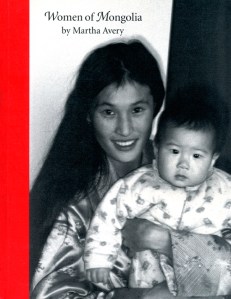
Women of Mongolia is a truly wonderful collection of first person narratives that introduce us to women from every part of Mongolian society: city and countryside, professionals and laborers. I was struck by their strength, practicality and resourcefulness, all of which were necessary for them and their families to survive the transition from socialism to a market economy. The photos in the book may make them seem distant and exotic, but once you start reading, you realize how much we have in common even though the details of their lives are very different from the average American.

A herder woman: “What do I do all day? There’s plenty to do! First I get up at around six o’clock in the morning to milk the cows. My daughter helps me. We have nineteen cows to milk, so it takes around one hour. After that I do various other jobs. I go to bed around ten or eleven in evening. We make everything here. Yes, the wheels of the carts outside are an example. My husband makes them, out of wood. We use the carts to move the ger and our belongings. They are pulled by oxen. I make all the ropes out of horsehair – you can see them on the outside of the ger, holding down the felt.”

An anthropologist: “I recently founded a new Department at the University, so right now I am rather busy. I’m head of the Department of Anthropology and Archaeology at the Academy of Sciences, and also head of the new Department of Anthropology at the National University…The focus of my own work has been craniological study…..How did I get started in this work? I graduated from the Moscow State University in anthropology because that is what the government told me to study.”

Women of Mongolia by Martha Avery, Asian Art and Archaeology/University of Washington Press 1996

——-

And, on a different note: join Lonely Planet Mongolia author Michael Kohn as he takes the train from Ulaanbaatar to Beijing and beyond.

Mongolia Monday- “Required” Reading, Part 2

Last week, we started with personal accounts by people who had lived in Mongolia as journalists or as a teacher. This week, it’s three selections from one of my favorite genres- travel writing. I’ve had some fun and “interesting” times on my travels and folks back home here in northern California think I’m very brave and adventurous. That’s as may be, but let me tell you, these books will put my travels into perspective in a hurry.

The first two, written about ten years apart, are the result of actually doing what a fair number of adventure travelers have probably considered or wish they had done: follow in the “hoofsteps” of Chinggis Khan’s Horde and travel across Mongolia by horse.

First up. Tim Severin:

severinTim Severin has made a name for himself re-creating famous journeys of the past and then writing compelling, informative and sometimes humorous  books about what happened. I first found some of them on a remainder table in an English bookstore and have since read as many as I can get my hands on. A few examples: his first foray was to cross the Atlantic in the same kind of small leather boat that St. Brendan used when he supposedly made the same trip (The Brendan Voyage). Another was to have a traditional wooden Arabic ship called a “dhow” constructed so he could retrace the voyages of Sinbad (The Sinbad Voyage). He has also traced the route of the Crusaders from Bouillon in France to Jerusalem. In 1987-88. On horseback. By which time there were somewhat different obstacles to overcome than the ones the original Crusaders faced.

Severin’s journey across Mongolia took place in 1991, when the country was in dire economic straits from the withdrawal of the Soviets and was beginning to create a new government and civil society from ground zero after 70 years of socialism. He had been asked to help a group of Mongols travel the route of the Mongol Empire’s amazing overland communication system that made it possible for messages to cross 2/3s of the known world, from Mongolia to the Danube in about two weeks. The grand plan for this journey involved riding, in stages, a distance equivalent to that between Hong Kong and London, around 6,000 miles. He jumped at the chance because “Here was the most wonderful opportunity for me to travel freely inside Mongolia, not just as an outsider following his own program, but in the company of Mongols who were committed to rediscovering their own history. It was an opening no Westerner had ever been offered before.”

After trip preparations that became a small saga in themselves, the expedition was on its way. “At first the ride was exciting and spectacular. There was the constant rumble of 100 sets of hooves, the shouts of the herdsmen, the mob of horses surging forward….and the sheer exhilaration of riding at a fast pace across unspoiled countryside…..Sure enough, after three or four hours, the well-remembered riding aches and pains set in…The hammering, jarring flat run of the Mongol horses was as excruciating as ever….I understood why the Mongol dispatch riders had found it necessary to strap up their bodies in tight bandages…..”

The account of the trip then moves forward, interspersed with lots of information about Mongolian history and culture. Obviously, highly recommended, as are the next two.

In Search of Genghis Khan, Cooper Square Press, 2003

in-the-empire

Stanley Stewart caught the Mongolia bug and nurtured the idea of going there for 25 years. In his 2002 book, In the Empire of Genghis Khan, Stewart, having made his way from Istanbul through Kazakhstan, finally finds himself being served dinner in a ger near the town of Bayan-Olgii in far western Mongolia. “Sated with sheep guts, we settled into after-dinner chat. Bold explained that I intended to ride across Mongolia to Qaraqorum, the ancient capital, then beyond to Dadal, the birthplace of Genghis Khan. Batur looked for me a long time without speaking. The plan was obviously too outlandish to merit comment…Batur saw no reason to try to dissuade me. Events would soon take care of that.”

As you might imagine, I really liked this description of the horses: “The relationship of Mongolian horses to the wild Przhevalsky’s horse of these regions has yet to be conclusively established (it has since been demonstrated that the domestic and wild horses diverged about 500,000 years ago) but presumably they share the same parole officer. They looked like the outlaws of the equine world….What they lacked in stature they made up for with attitude. They had carried the hordes of Genghis Khan to the gates of Vienna….Now they milled about on the slope below the ger, snorting and pawing the ground, a rabble looking for excitement and hostages. ”

Interestingly, both Severin and Stewart describe the morning process of saddling the horses as “a rodeo”.

Aided by a succession of patient interpreters, who changed out at each stage of the trip, Stewart makes his way across the vast empty interior of Mongolia. Well, not quite. “In Outer Mongolia, my social calendar was packed. Lunch invitations, drinks parties and dinner engagements came thick and fast. There were times when crossing the Mongolian steppe felt like a royal tour of which I was the unlikely focus.” All to say that, after a thousand years, the traditional customs of Mongolian hospitality are alive and well. I can personally vouch for that.

In The Empire of Genghis Khan, The Lyons Press, 2002, 2000

long-way-round

In their 2004 book, Long Way Round, Ewan McGregor (yes, that Ewan McGregor) and his good friend Charley Boorman decide that their lives will not be complete unless they ride their motorcyles from London to New York – by way of Europe and Central Asia. A four month jaunt of 20,000 miles, as it turned out. The reason I include their book on this list is that not only did they travel through Mongolia, but that out of all the countries they visited it was the one that grabbed McGregor and hung on.

Having finally made it to and through a border crossing in the far west that was normally only open to Russian and Mongolian goods vehicles “we rode into Mongolia, turned a corner and ran straight into a herd of yaks….” And a few minutes later, “We pulled into a clearing, where our local fixer, Karina, had been waiting for four days. She was very excited to see us and tied blue ribbons (actually blue scarves called “khadak”) to our bikes, a Mongolian shaman tradition used to bestow good luck on babies and vehicles”.

The book is largely excerpts from the diaries they both kept and, as many of you know, they were also accompanied by a small film crew. Ewan and Charley quickly find out that in most of Mongolia the word “road” doesn’t mean the same thing as it does in the west. Mongolia is not a country where you fly in, grab a rental car and head off into the countryside. Unless you have a GPS and are willing to spend a lot of time trying to puzzle out which of the endless braid of dirt tracks is the one you want, because there are no road signs. None. Not that you are all alone out there on the steppe. “At the top of the first pass, we came across a nomad on horseback with three camels and a couple of dogs. He was a stunning man, fine-featured and handsome, proudly sitting bolt upright on his horse. In the traditional garb of pointed leather herdsman’s boots, a Mongolian hat and several layers of heavy woolen clothing, he was grazing his camels at the top of the mountain. He looked so perfect and so at home in his surroundings that it could have been a hallucination.”

They do, of course, make their way to Ulaanbaatar, where they had made arrangements with UNICEF to visit some of the street children and also a center that has been set up to help them. “The conditions in which these children lived, even in a proper centre, hit me like a sledgehammer. A four-year-old girl was lying on the floor with her head against the wall. Her legs were withered and weak and she was trembling. It broke my heart to see her in such distress, so in need of love and attention, but so alone. I spent quite a lot of time with her, stroking her hair, touching her face and playing peek-a-boo with her. And then we had to leave. I hugged as many of them as I could, said goodbye and got into a car”. (Spoiler alert: I believe that after the trip, McGregor went back to Mongolia, adopted the girl and took her home to England with him, may great blessings be upon him.)

Finally, their journey took them north out of Mongolia and into Russia and Charley observed, “…I’d come to love Mongolia. It had been hell at times (Did I say that this isn’t the easiest place to travel?), but some part of me had actually relished the misery. I’d enjoyed meeting people along the road and I’d been blown away by the helpfulness of complete strangers. We couldn’t have done it without them.”

McGregor noted that “Riding across Mongolia had been incredibly demanding, but it had offered everything I’d been looking for on the trip, a pastoral paradise full of curious, open-hearted people who welcomed me into their homes because I was a passing traveler, not because I was Obi-Wan Kenobi on a bike…It had been like riding through the pages of National Geographic.”

Long Way Round, Atria Books, 2004

———-

If you are interested in learning more about the street children and how they are being helped, visit the website of the Christina Noble Children’s Foundation at www.cncf.org.

——

Next week: More books about the land and people of Mongolia.

Mongolia Monday- Tsagaan Sar=great food

We hosted our Mongolian friend, her husband and two other couples for a Tsagaan Sar party this past Saturday night. Tsagaan Sar is the Mongolian New Year and the name means “White Moon”. In Mongolia, it’s about three days of visiting, gift-giving and lots of food and drink. As I was thinking about what to post today, I realized that I haven’t written about the food and, when I poked around my photos, found that I’ve ended up with quite a few images (I take pictures of everything). So, here’s an “album” of Mongolian food, with commentary. My apologies in advance for any homesickness this may cause my Mongolian readers.

Salt deposit, western Mongolia

One of our stops when I was in western Mongolia in 2006 was this huge salt deposit. And, yes, we drove right out over that “bridge”. If you’ve ever played the game “Civilization”, then you can understand how this resonated with me. For how many thousands of years have people been coming here to get salt?

Harvesting salt, western Mongolia

There happened to be two men doing exactly that. Some of our party had to give it a try. At the end of the handle is a scoop with holes in it to let the liquid run out. It seemed to be trickier to do than it looked, so the local guys were pretty amused.

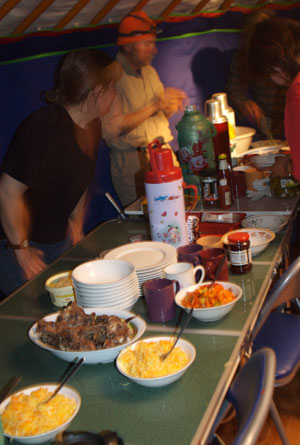
Mongolian BBQ during the Earthwatch project, 2005

The brown meat in the bowl is goat. The “Mongolian BBQ” that we get in the US is a Chinese invention and has nothing to do with how real Mongols eat. Their diet has traditionally been meat and dairy, diary and meat. Sheep and goats are slaughtered by cutting a slit in the stomach area, inserting a finger, hooking and pulling a vein (Thank you, Narantsogt, for the correction from what I had previously written. He has more info in the comments section) . Pretty humane and it keeps blood from going all over in a country where there isn’t extra water for cleanup.

Real Mongolian BBQ, Arburd Sands

Here’s the meat in the pot after the foal branding at Arburd Sands. We were invited, but it was getting dark and it looked like the guys were settling in for a very convivial evening that was going to run very late.

Goat meat, Khomiin Tal

Sometimes the goat is simply butchered and hung up in the ger for use. I was told that this much goat meat would feed 3-4 Mongols for about two weeks. The humidity in Mongolia hovers around 10% max., so meat will keep in the dry air. On the other hand, the Mongols have been eating this way for centuries and have defenses against whatever might get into the meat. Westerners don’t, so we have to be careful what we eat. The head will be on the menu too. Nothing is wasted.

Meat for sale
Meat for sale

We stopped in a soum center (county seat) in western Mongolia for lunch. While we were waiting for our food, I saw these three ladies with meat to sell. They saw me take the picture and I went over and managed to tell them that I was from California. More smiles. Hope they sold out.

Buuz
Buuz

Maybe the most beloved item of Mongolian cuisine. Families make thousands of them for Tsaagan Sar. Generally the filling is mutton. I asked if I could take pictures and, from their expressions, their reaction was along the lines of, “Well, if you want to photograph something sooo ordinary, be our guest….What will those visitors think of next?” I guess the equivalent here would be taking pictures of a McDonald’s. I ate four. I practically had mutton fat running down my arm. They were one of the best things I’ve ever had when traveling. I can’t possibly miss them as much of the Mongols, but I’m really looking forward to my next trip.

There’s a recipe for buuz here. We’ve done them now with lamb and on Saturday we used ground beef. We are going to try to find mutton later this year.

On to dairy:

Aruul
Aruul

Aruul is essentially dried milk. Mare’s milk is heated up on the ger stove and separated. The solids (which Narantsogt says he remembers as cheese and yogurt) are mixed with water and flour and formed into a variety of shapes and put out in the sun to dry, usually on the top of the ger. It tastes kind of like an slightly acidic yogurt and is an acquired taste, I would think, for most westerners. It took me about three bites. Careful bites, with my molars, because this stuff is hard. But it’s the perfect snack food in the field. Pure protein.

Mongolian "clotted cream"

We were visiting a ger adjacent to Hustai National Park and, instead of aruul, I was offered this: pure cream to spread on the bread. Oh my goodness. I really had to get a grip on my manners, because I could easily have eaten all of it. But one has to remember that the Mongols will give you the last of what they have and do without in order to meet their obligations as hosts and many live pretty close to the edge.

Then they handed me a glass, which I assumed at first was the usual milk tea. After a few sips it dawned on me that it had to be the legendary airag (or kumiss, fermented mare’s milk). This was in September, so it was very late in the airag season. It can be “problematical” for western digestive systems and the feedback loop is very, very short. I decided to throw caution to the winds and drank about 4-5 oz. No problem. Whew.

Airag, vodka, cheese, Arburd Sands

Last year, at Arburd Sands, we were hosted by a local horse trainer and his family, who have 300+ horses. So there was LOTS of airag. This vessel was full to the brim. Fortunately, we weren’t expected to drink the entire contents of those rather large bowls. I think the idea was more for the host to be able to demonstrate the household’s generosity by offering brimming cups. The vodka was Chinggis Khan Gold, I think, which was excellent. The little cubes behind it were a soft cheese. Also delicious.

Finally, a menu item that I have not had the opportunity to try yet, but which is probably as near and dear to as many Mongol’s hearts as buuz. That would be….marmot.

Siberian marmot, Hustai National Park

The Mongols who like marmot, REALLY like marmot. When speaking of it, they get this kind of far away look as if remembering every bite they’ve ever had and are savoring it all over again. I’ll leave the hunting details to another time. If any Mongols reading this want to send me an accurate description and/or account, I’ll gladly post it. The traditional preparation involves gutting the animal and removing the fur with a, wait for it, blowtorch. Then it’s cooked over a  fire. On a cultural note, it turns out marmots living in Mongolia are the original disease vector for the bubonic plague (Black Death) that hit Europe in the late 1340s.

When you’ve come in from the countryside, there are lots of good restaurants in UB, including…a Chinese-style Mongolian BBQ, which has proved to be very popular with the actual Mongolians.

BD's Mongolian BBQ, Ulaanbaatar
BD's Mongolian Barbeque, Ulaanbaatar

If you are going to Mongolia, get the Lonely Planet guide.

For more on Tsagaan Sar and things Mongolian, I HIGHLY recommend the Asian Gypsy blog.

Mongolia Monday- Excerpt from My 2006 Trip Journal- Ikh Nartiin Chuluu Nature Reserve

Travelers get attached to a particular place for a variety of reasons. Maybe it was stunningly beautiful or irresistibly peculiar. Maybe it was somewhere they’d wanted to go to since childhood, finally made it and it was everything they’d dreamed of and more. Maybe something special happened while they were there. Maybe they went for one reason and discovered something unanticipated but compelling. The latter probably most applies to why Ikh Nartiin Chuluu Nature Reserve has become one of my most favorite places on the planet.

This seems unlikely to me since I’ve never been a “desert” person. That would have been my mom, who found the area around Hemet, California (the landscape, not the trashy sprawl) quite to her taste. I like my landscapes green. With trees. Preferably redwoods. Like these at Prairie Creek Redwoods State Park, about 30 minutes from our house. I spent my childhood getting to camp out at places like this. Pretty darn lucky, I’d say.

prairie-creek

But Mongolia got to me. Except for the northern part of the country, which is the southern edge of the boreal forest, trees are not what Mongolia is about. It’s the ultimate wide-open-spaces destination. I went to Ikh Nartiin Chuluu for an Earthwatch project and found a place so special that I plan to go back until I can’t travel anymore. I returned in 2006 for a short visit, just a couple of days. Here’s what happened the first day.


October 6, 2006

Woke up and 6:30, out the door in less than 10 minutes to walk down the valley. Too early for good light, but saw a couple of argali dash up the hill from the stream over 100 yds. away so no photos.

ikh-nartiin-chuluu-valley

Valley where research camp is located

ikh-nartiin-chuluu-sunrise-rocks

First sun on the rocks

Came back for 7:30 am breakfast. Baaska (my guide), driver and master’s student still asleep, so headed out on my own about 8:30 am. Found my favorite huge rock! Windy but not cold. No argali or ibex. Stopped to rest and have a snack and realized that not only was the wind getting much stronger, but that the distant rocks were getting hazy with dust, just like when I was out with Rich (Dr. Richard Reading, the Earthwatch project’s Principal Investigator, and I walked back to camp in an on-coming dust storm in 2005 after the team had walked a 4km argali survey). Decided it was time to go directly back to camp since no one knew where I was, just that I would be back at 1pm for lunch. Got out the GPS, punched “Go To” POI #1 (camp) and got back just fine.

ikh-nartiin-chuluu-fav-rock

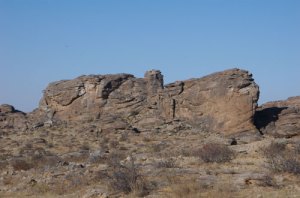
This rock turned out, from another angle, to be three formations that were overlapping, but I still like it! It’s about the size of an aircraft carrier.

ikh-nartiin-chuluu-nestCinereous vulture nest

Since I’ve never been here at this time of year and there really isn’t anyone to ask until Amgaa gets here or maybe Jed (two of the other scientists), it seemed sensible to play it safe. Maybe after lunch will be a good time to go out in the van and check out the Tibetan writings and see if we can spot any argali. The Mongolians, Baaska, student, driver, ranger are all yakking away in the kitchen ger. I’ve never known people who could sit down together, never having met before and just roll along talking like the Mongolians. It feels from the outside like the continuation of an ageless oral culture which hasn’t been undermined by tv. Yet.

ikh-nartiin-chuluu-skull2Argali skull

I hope this wind dies down. Being out in Ikh Nart again, just me and the rocks was really great.

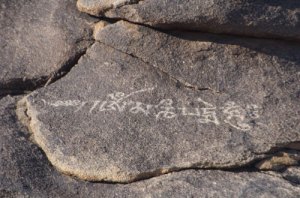
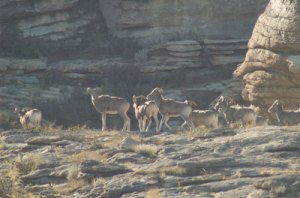
5:15 pm- Went out in our van with the ranger at 1:30. He needed to do some telemetry and was willing to find inscriptions. We found five, but no luck at all finding the one Rich took me to last time. Saw and photographed a large herd of  ewes with, it looked like, one ram and a smaller group a few minutes later. It has really stayed windy and cold. I’m in the ger with the stove going.

ikh-nartiin-chuluu-inscription

Tibetan inscription

ikh-nartiin-chuluu-argali

Herd of argali sheep

Mongolia Monday- Excerpt From My 2006 Trip Journal; Takhi Watching at Hustai National Park

On my first trip to Mongolia in spring of 2005, I managed to get a couple days at Hustai National Park, enough to know that I wanted to go back when the daytime high was more than 32F with howling wind (ah, early May in Mongolia!). Hustai is the most accessible place to see reintroduced takhi, or Przewalski’s horse. For 2006, I arranged to have the use of a car, driver and guide so that I wasn’t dependent on driving around with other, non-artist visitors.

I needed to be in the park at dawn and at the end of the day in order to get what I’d missed before because of cloud cover- takhi in great light. This excerpt is from my first day.

9-27 10:15 am Wed.

Just got back from the morning “game drive”. Left a little after 7:30 am and got to the valley just in time to catch the light about 8 am. Hit the jackpot, Two takhi just on the shadow side and then coming into the sun.

Takhi Mare and Stallion at sunrise, Hustai National Park

Went back up to (the) pass, seeing more takhi and the 2 eco-volunteers from France who I sat with last night. Missed a great shot of a bull marel (a species of elk) because the driver didn’t stop in time. Continued over and down around the backside of what my guide says is called “God Mountain” because all the spire-like piles of rock look like flames of fire. There were takhi at the base of a particularly picturesque part of it and the guide asked me to take her picture. She pointed out another mountain where she said lynx live.

Guide with takhi in front of "God Mountain", Hustai National Park

We continued on into what she says is called “Happy Valley” and it sure was for me. Came upon 2 groups of takhi, one waterhole. I think the issues were who got to drink first and can I steal some of the other guy’s mares. (There are 3 largish songbirds pitty-pattying around on the top of the ger as I write this entry)

Takhi harems at waterhole, Hustai National Park

We entered a part of the valley with trees along one side and it turns out they are saxaul, which I didn’t expect to see until I went south (and it turns out that I hadn’t. Something must have gotten lost in translation, because I found out this last trip that they for sure weren’t saxaul trees). There were also some domestic horses, which the driver got out to shoo away. We circled around out on the grasslands and saw 2 small and 1 large group of gazelle. Final stop was the research center, which was looking pretty sad and almost derelict last time. It’s humming now. Offices for the ec-volunteers, the managers, biologists, ecologists and a kitchen. There’s even curtains on the windows.

So, I’ve gotten my evening light and early morning light. Now it’s just seeing what kind of behavior I can record.

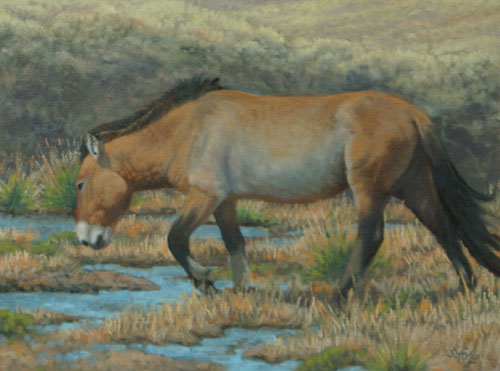
I liked the waterhole setting and plan to eventually do a big painting with both harems that tries to show what I saw that morning. In the meantime, I had this reference from elsewhere in the park of a mare with a beautiful gesture.

Morning Drink oil  12"x16"
Morning Drink oil 12"x16" (price on request)

Mongolia Monday- Excerpt from my 2006 Trip Journal; to Khomiin Tal to see the Takhi

I had found out that a third takhi reintroduction was taking place in western Mongolia and, somewhat blithly as it turned out, decided that I HAD to go there. Jan at Nomadic Journeys set it up and on the morning of September 21, I flew 1,000 miles west to the town of Hovd. My guide, Octyabr, met me at the airport and after paying 67,500 tugrigs for overweight bags (around $70), off we went. That evening, I caught up on the day:

September 21, 7:30 pm- Stopped for the night by the (a) river. What a day. didn’t get out of town until 2:50. Two German students, October (English spelling), driver, cook (who actually turned out to be a local guy who knew the route to the place: the German students did the cooking to “pay” their way) and me, in the end. Typical Mongolian expedition. Students needed 20 min., so went to October’s home for tea and bread. Then it was: hire a driver, go to the bank, top off the tank, stop at store, drop off father, let driver pick up gear. There may have been more, but I forget. (There was- lunch at a local cafe) Then I find out that it’s 300km to Khomiin Tal and we won’t get there today. Stopped to climb a rock overlook. Fabulous view of river valley with Kazak (sic) gers. Next stop was a brick factory. Oh, I forgot they packed an inflatable raft and fishing gear. But sailing down the road through spectacular scenery with the Mongols singing away was terrific!

Here’s a couple of photos. There’s more on my website.

Kazakh women outside of Hovd
Camping by a river; my tent is the red one

Mongolia Monday- Sain Bain Uu!

Which is Mongolian for “Hi!” or “Greetings”. It’s pronounced, roughly, “sain” as in sandwich, “ban” as in bandaid, “uu” as in oval.

I’ve just downloaded what looks to be a very useful Mongolian language program from Transparent Language. The next trip is coming up in July and I want to be able to communicate better. Before my 2006 trip, I was able to  find a local Mongolian woman who tutored me in basic pronunciation and vocabulary, along with some simple sentences. It’s amazing how far you can get with: please, thank you, excuse me, yes, no, hello, goodbye, I like….., and knowing the numbers from one to ten. But it didn’t help when I heard a cool song on the driver’s MP3 player and had no way of asking who the artist was. I have a Lonely Planet Phrasebook and a “cheat sheet” from my tutor, but that’s not enough.

I have some familiarity with learning a new language. Spanish (see below), some basic Japanese (I can still count to ten!) when I was 14, two years of German in high school (wish I’d taken one year of German and one of French) and some Middle English and Anglo-Saxon in college. At one point I’d decided to teach myself Welsh. It was a short point.

Like many languages, Mongolian has sounds that don’t exist in English, so that’s a challenge. One travel writer describes spoken Mongolian as sounding like two cats fighting, but I’ve found that to be somewhat of an exaggeration. The guys seem to play up the gutteral sounds more than the women, especially in the countryside. There are rolled “r”s, which means that after 40 years, my stupid junior high Spanish class has finally turned out to be good for something. And there is a sound that is similar to the double “L” in Welsh. Vowels that are “doubled”, like in the sign below or in “Ulaanbaatar”, are audibly extended, as in Khan vs. Khaaan.  One of the sounds that I have found most challenging so far is “g”. It seems to be something like “uudo”, with a slightly rolled “d”, but I’m sure I’m mangling it into something hilarious. The Mongols are blessedly tolerant of anyone who takes a swing at their language and seem to appreciate the attempt.

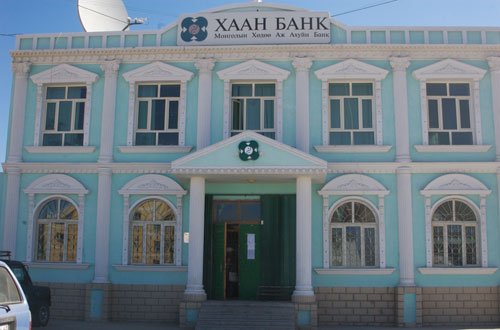
Their alphabet is a close adaptation of  Russian Cyrillic and I’ll be learning that, too. It will be nice to be able to read at least some of the signs in Ulaanbaatar. Like these (I used to be a sign painter and still can’t resist taking pictures of signs that catch my eye). There’s just enough overlap with the Roman alphabet to be slightly maddening. You feel like you can almost read it, but no.

Khaan Bank, Hovd, western Mongolia
Khan Bank, Hovd, western Mongolia

Although, in this case, it was more the beautiful building that I wanted a picture of. But good to know that this is a bank, if one is running low of cash. One of the first signs I was able to read.

Gers and tents for sale at the Narantuul Market, UB

I took this photo partly because I had no time to inquire about details like prices and didn’t want to lose track of them since I would really like to get a tent like the one on the right.

Pet shop sign, Ulaanbaatar

Since my dog is a tri-color rough collie, the same breed as the dog on the sign, I had to get a picture. I’ve wondered since then if there are actually any collies in Mongolia. They certainly have a coat that would be handy in the cold weather. Lassie Forever!

Street sign, central Ulaanbaatar

Now, how could anyone resist a drink that will give them the energy of the Mongol Horde?

Mongolia Monday- Camel Drawings

Here’s a few bactrian camel drawings I did in about an hour this morning. They were done on vellum bristol with a Wolff’s carbon pencil. The head drawing is a little more finished. The full body study was really just to capture the pose and lay in the shadow areas. You can see how I corrected one of the hind legs. The small hind leg study was to learn more about the structure. So, one subject, three different goals. As usual, do try this at home.

Bactrian camel head study
Bactrian camel studies