I’ve been having a lot of fun with the Sketchbook Pro app for my iPad. It works well for fast location sketching, but I’ve been wanting to see how I could use it for more finished work.
I keep the iPad with me in the living room and I have a lot of photos from my latest Mongolia trip on my MacBook Pro. So it’s easy to sit and work while a football game is on.
I’ve settled on just a couple of the drawing tools to keep it simple for now as I learn how to use other features like the size of the line and how opaque or transparent it is.
The one thing I have found is that it is difficult to do animal heads that are small because the size of the stylus end makes it hard to do small strokes for features like eyes. But I managed. I’ll definitely be taking the iPad to Mongolia again next year for location work.
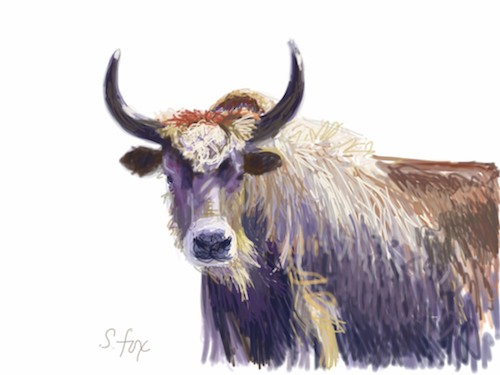
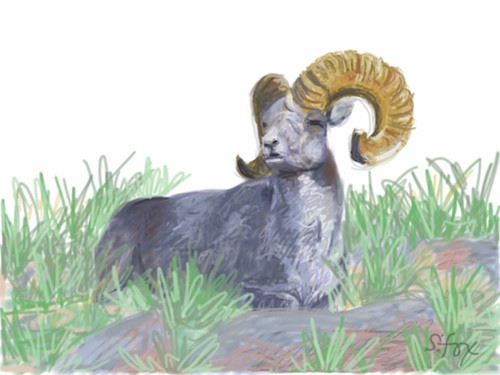
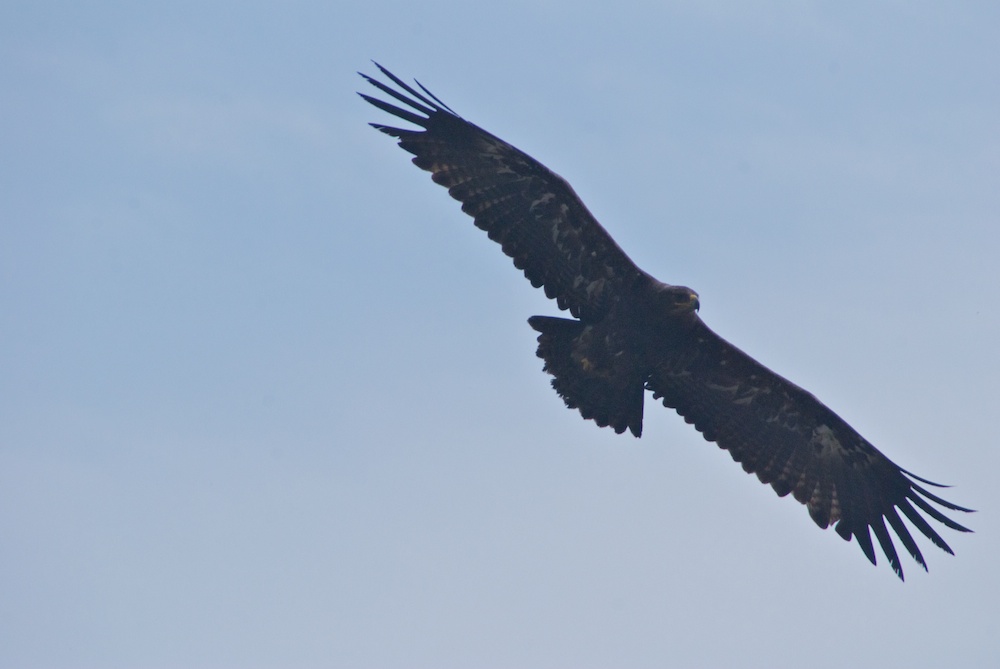
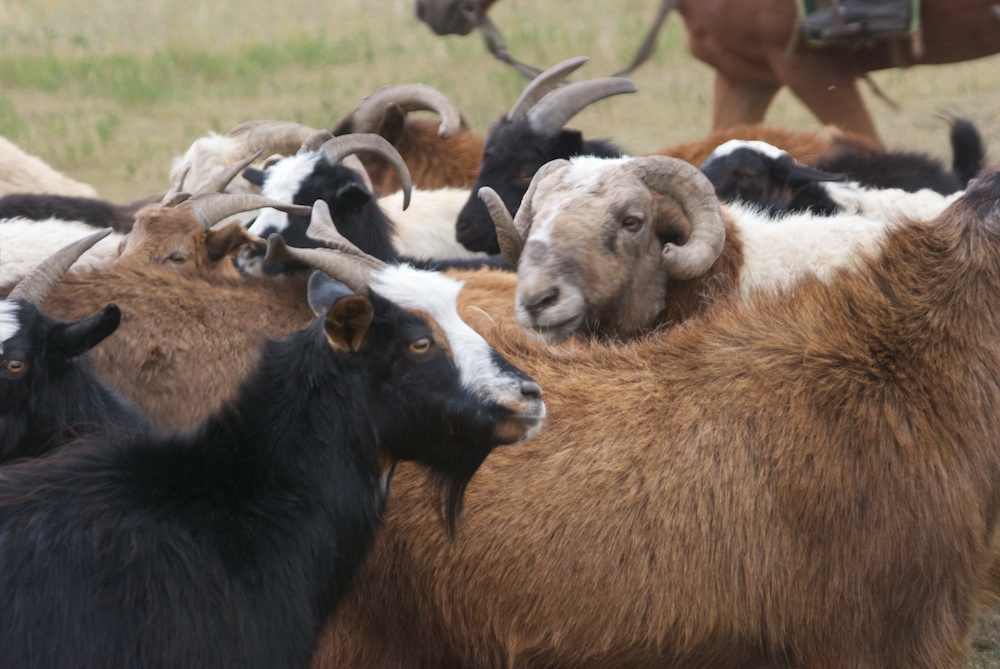
Juvenile cinereous vulture, Ikh Nartiin Chuluu, August 2011Cashmere goat, Khan Khentii Mountains, August 2011Yak, Burget Uul, August 2011Argali ram, Ikh Nartiin Chuluu Nature Reserve, August 2010
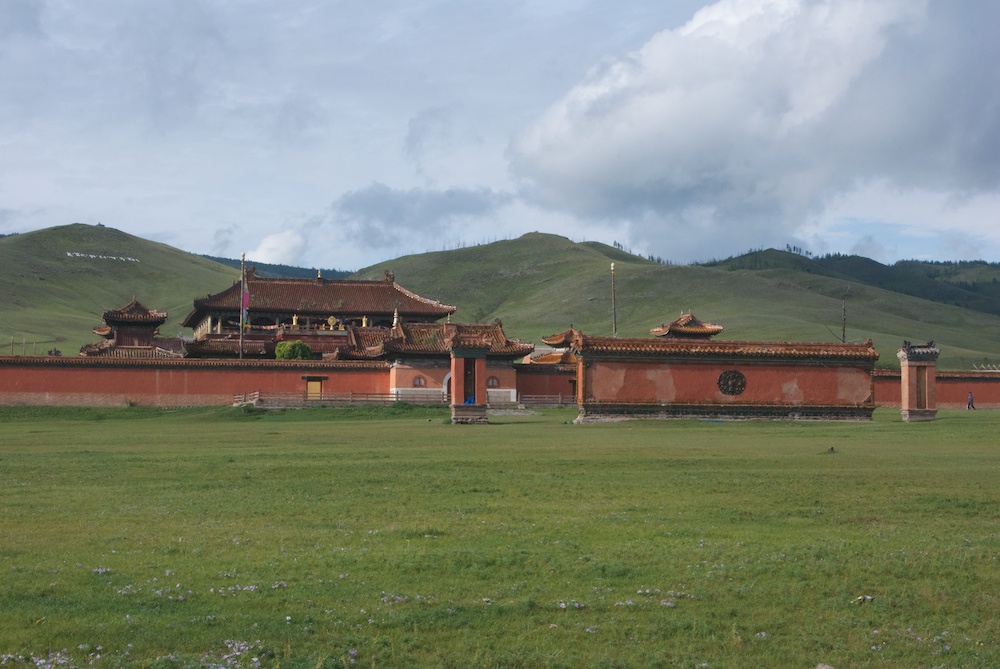
I’d heard about this large monastery to the north west of Ulaanbaatar and decided that I wanted to see it, along with the northern mountains. It is one of the three most important khiids in Mongolia, along with Gandan in Ulaanbaatar and Erdene Zuu, which is adjacent to the site of the old Mongol imperial capital Kharkhorin and built partly with stones from it. I’d already visited them.
Nomadic Journeys put together a one week camping trip for me on short notice and Amarbayasgalant Khiid (“khiid” means “monastery” in Mongolian) was the first stop. And was it ever worth the drive, even though there’s a somewhat tacky ger camp very close to the complex that needs to be moved.
The monastery was built between 1727 and 1737 by a Manchu emperor, so the architectural style is Manchu. It survived the destruction of most of the monasteries in Mongolia in 1937, but now there are around 60 monks in residence instead of over 2000.
Unfortunately, there are no guide books, or at least I haven’t been able to find anything, so I can’t offer a lot of information on what is in the photos. But I hope you’ll enjoy a look at a very special place.
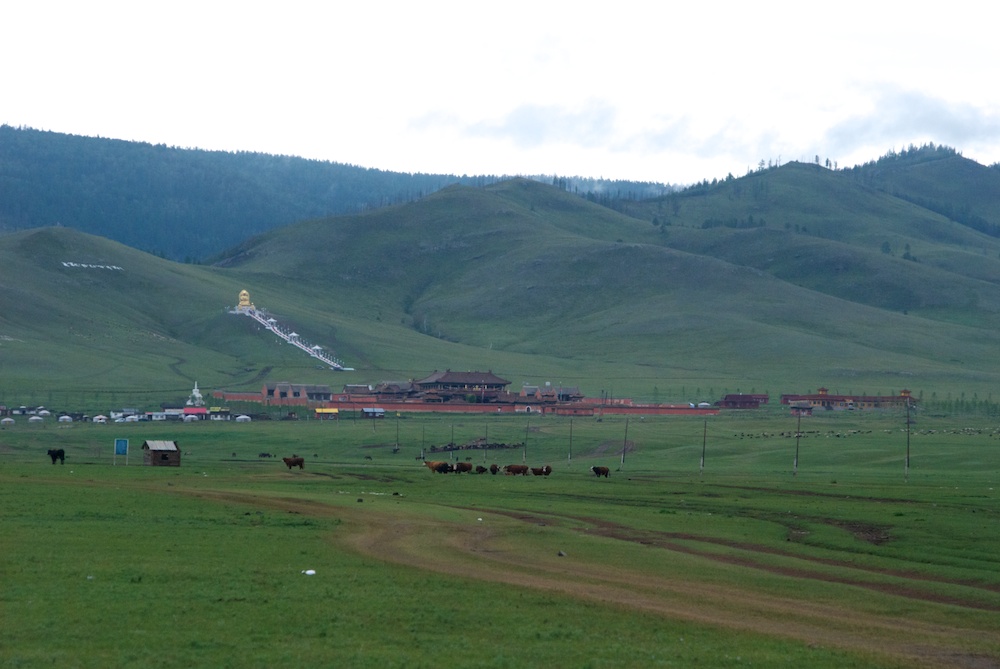
First view of Amarbayasgalant Khiid, situated at the head of a lovely valleyThe main entry gate
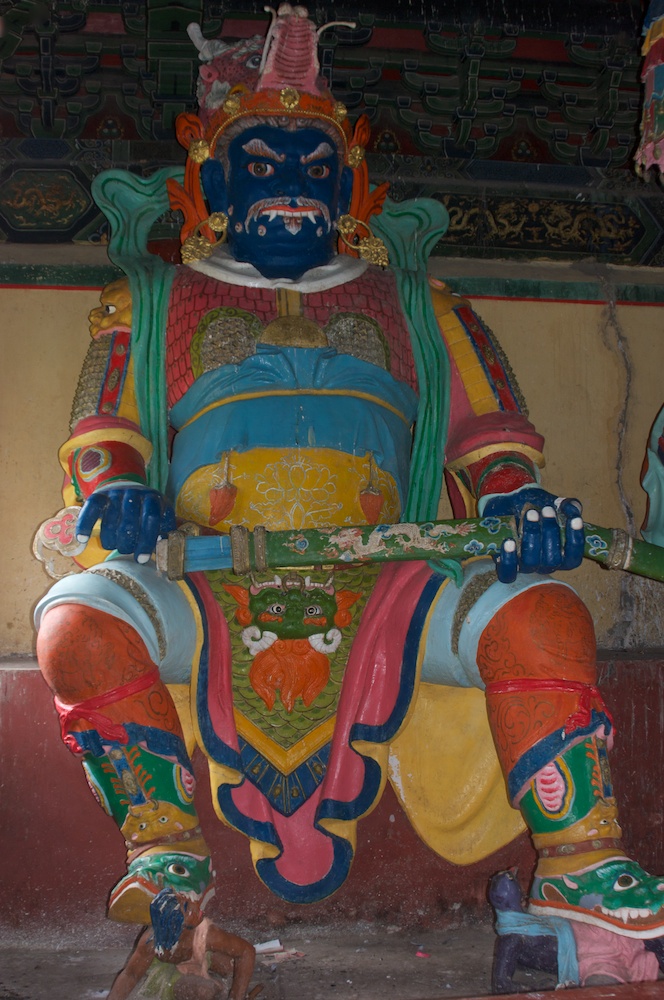
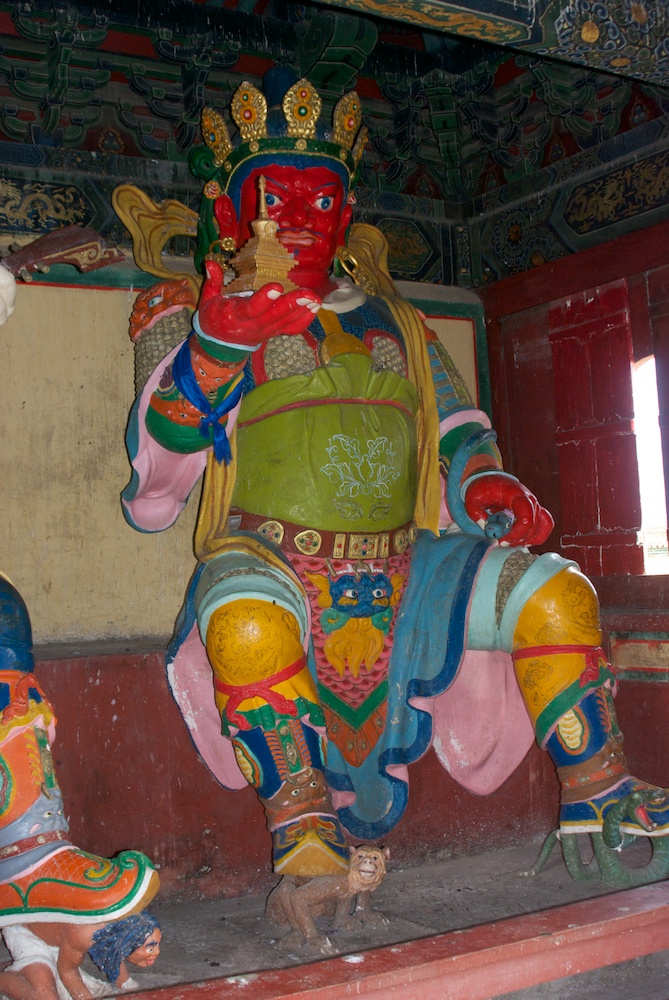
Unfortunately, my guide’s English was only ok and I didn’t have a way to take notes, so I don’t know who these statues are of and what they symbolize.
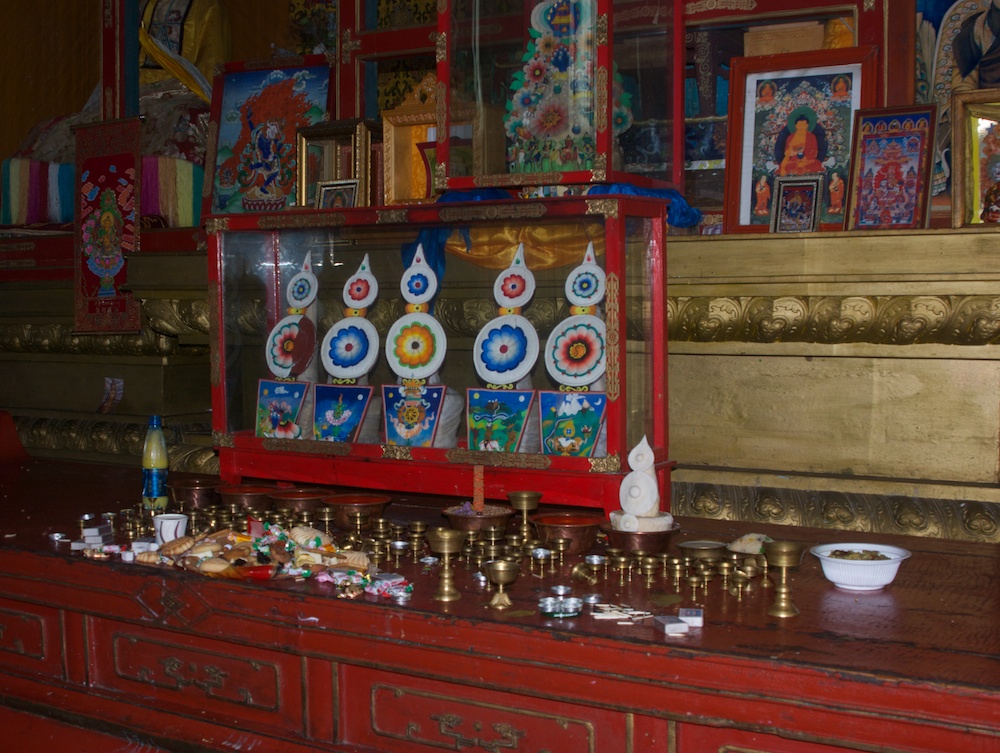
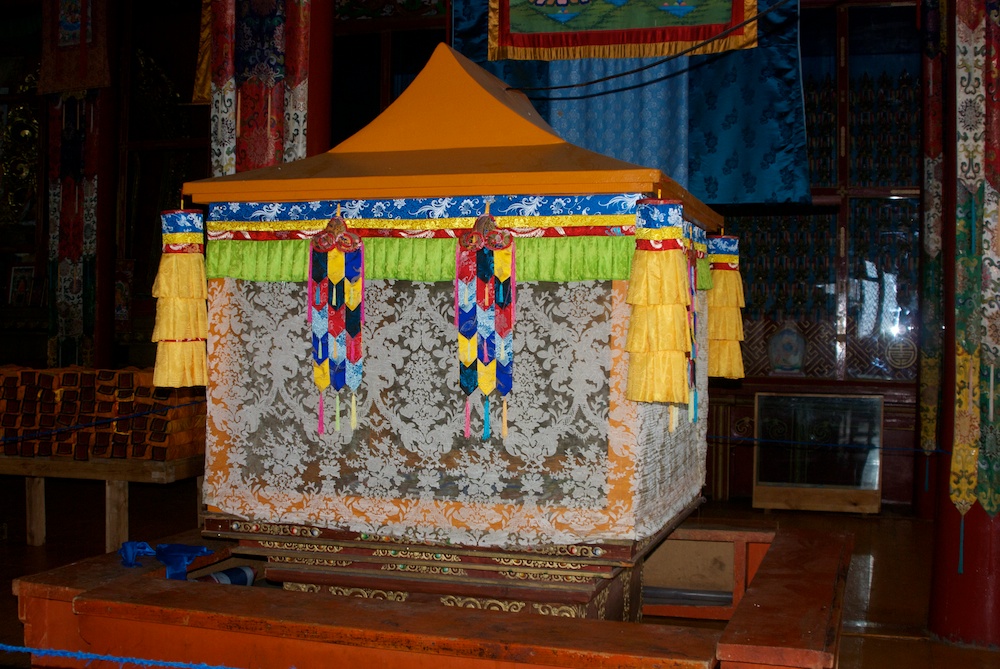
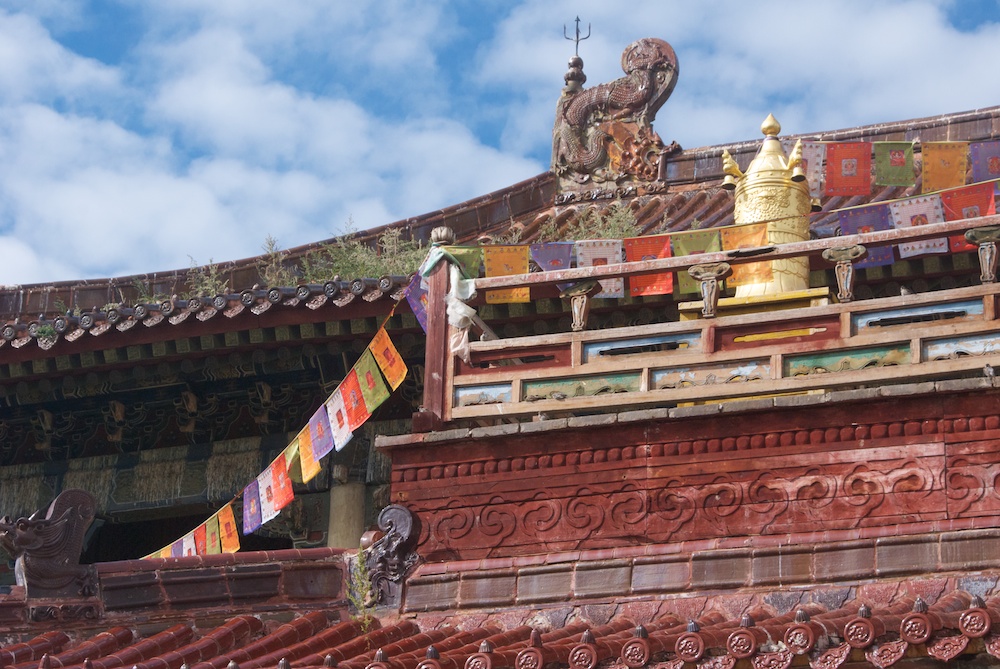
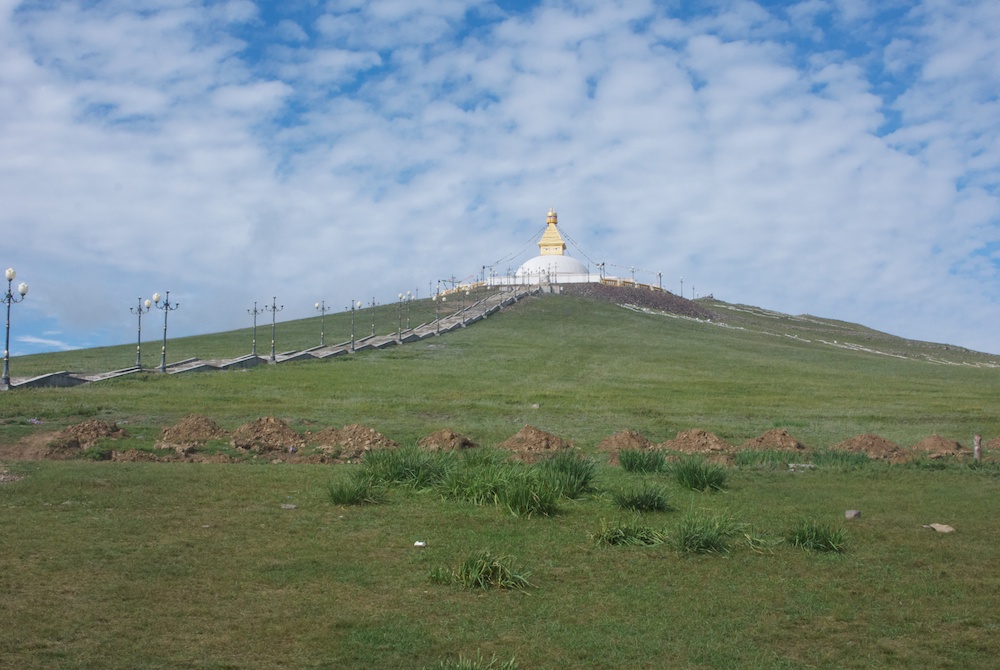
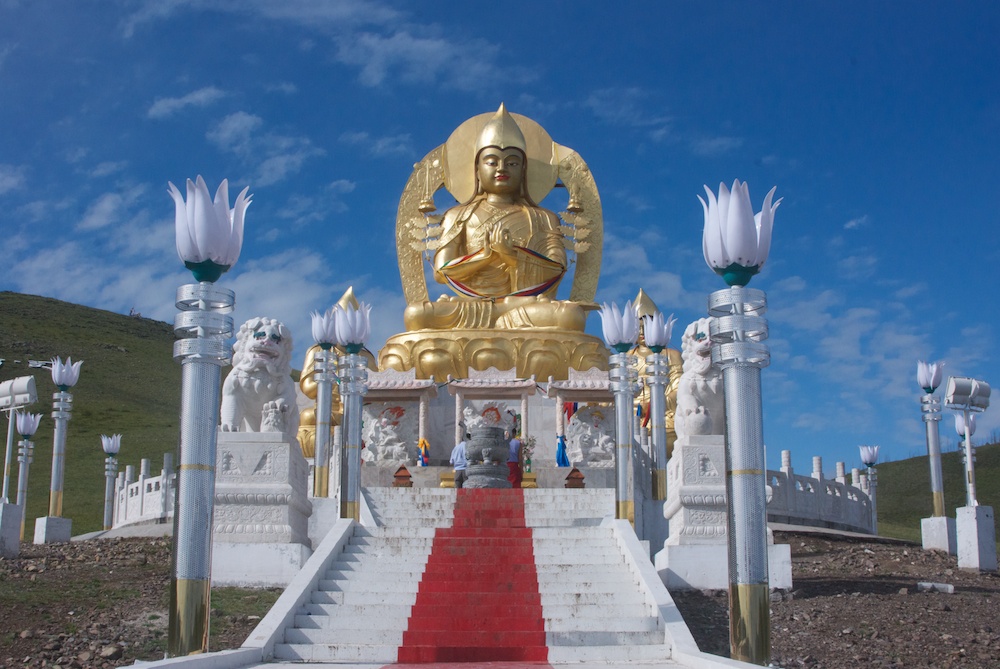
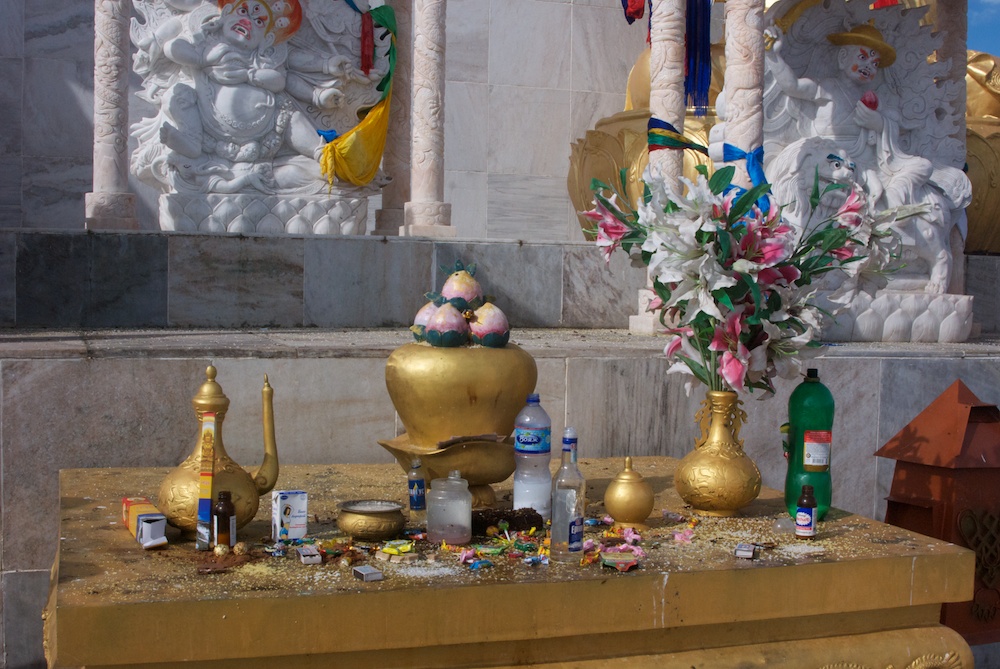
Statue inside gatehouseStatue inside gatehouseStatue inside gatehouseStatue inside gatehouseThe main templeOne of the altarsI was told there was a model of Shambala withinCeremonial drumAn example of the beautiful decorative paintworkLayers of decorationWheel symbol over temple entranceStudent monks passing byNew stupa; yes, we went all the way to the topThe view from the stupaThis Buddha was on an adjacent hill; I definitely got some exercise while I was thereOffering tablea charming decorative touchI was told that a Lama had spent four years in the building meditating and that it was now a schoolLast look at we headed off to our campsite about a kilometer away
And now we come to the last leg of a wonderful two-week tour and a look at one last ecosytem, the mountain forest, which is the southermost extension of the boreal forest that circles the northern part of the Earth.
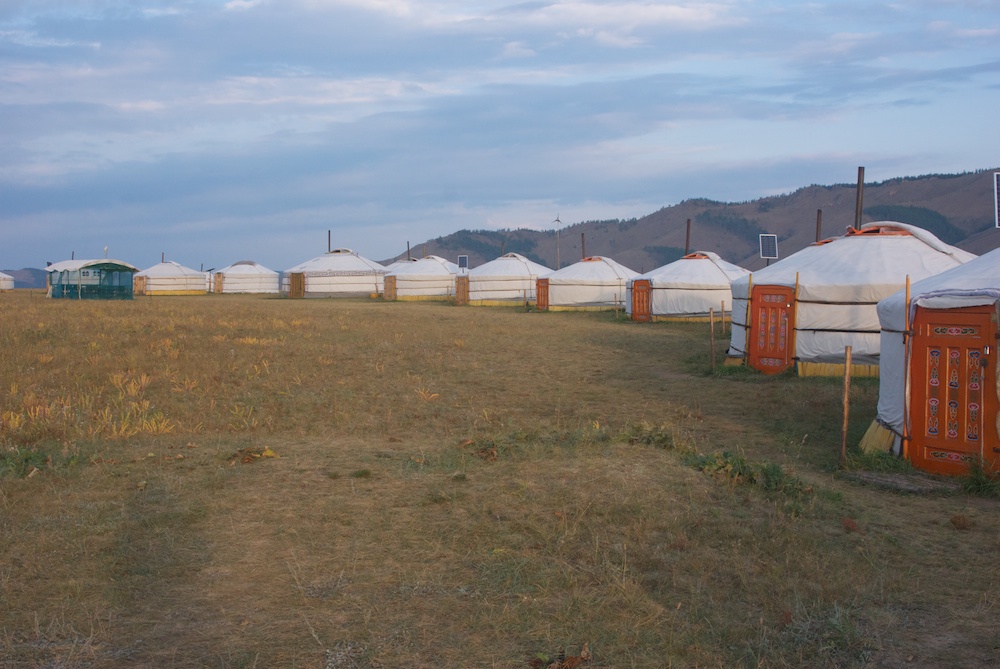
The Jalman Meadows ger camp, run on a seasonal basis by Nomadic Journeys, was set up high on a bluff overlooking the Tuul Gol.
While there is wildlife around, it’s the activities one can do here that are the main attraction and we took advantage of all of them!
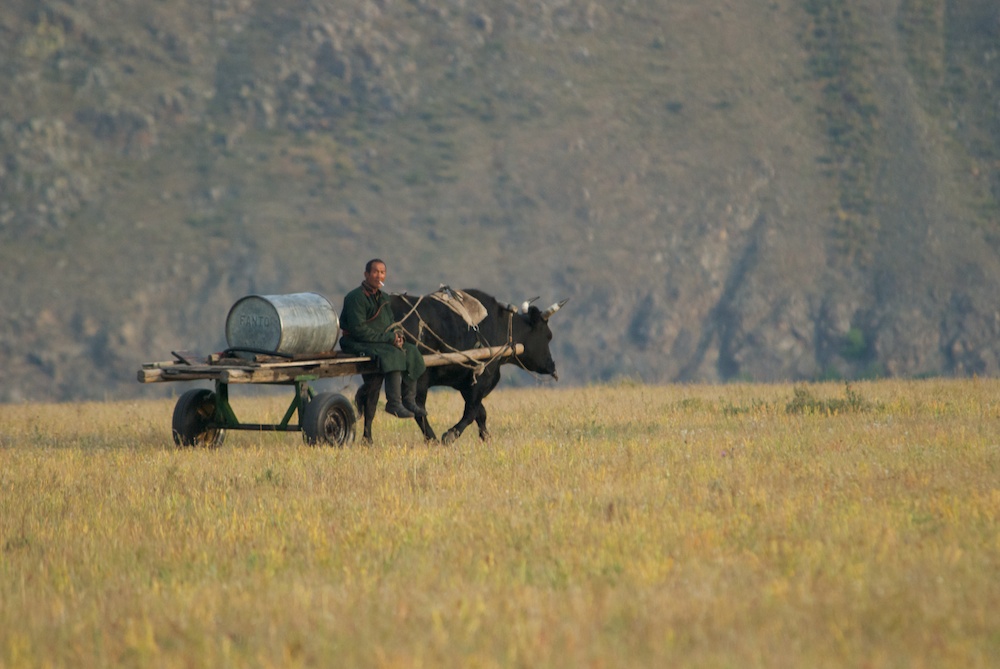
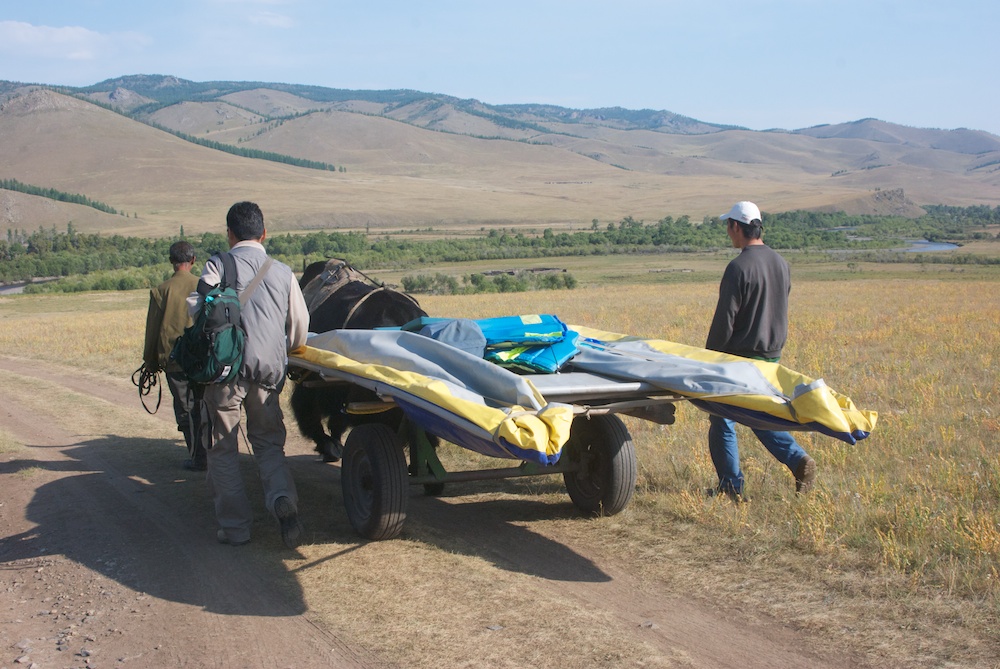
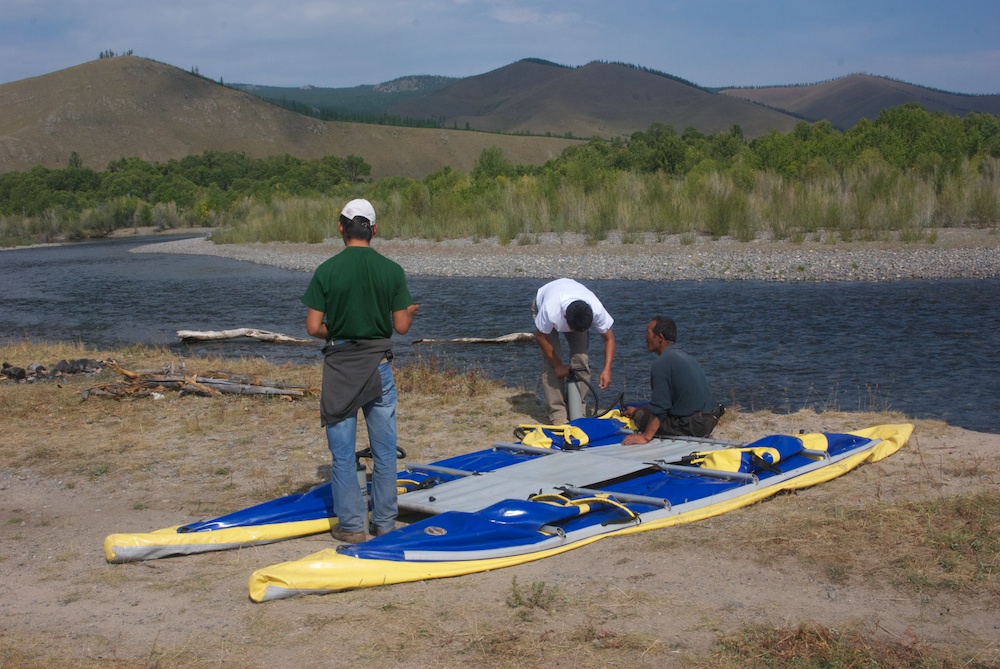
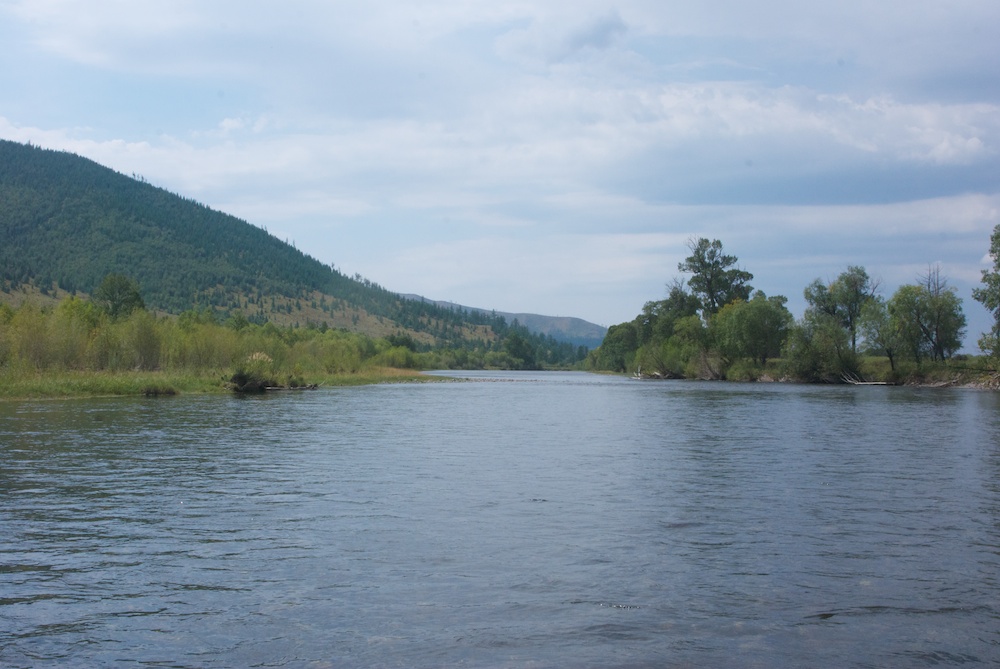
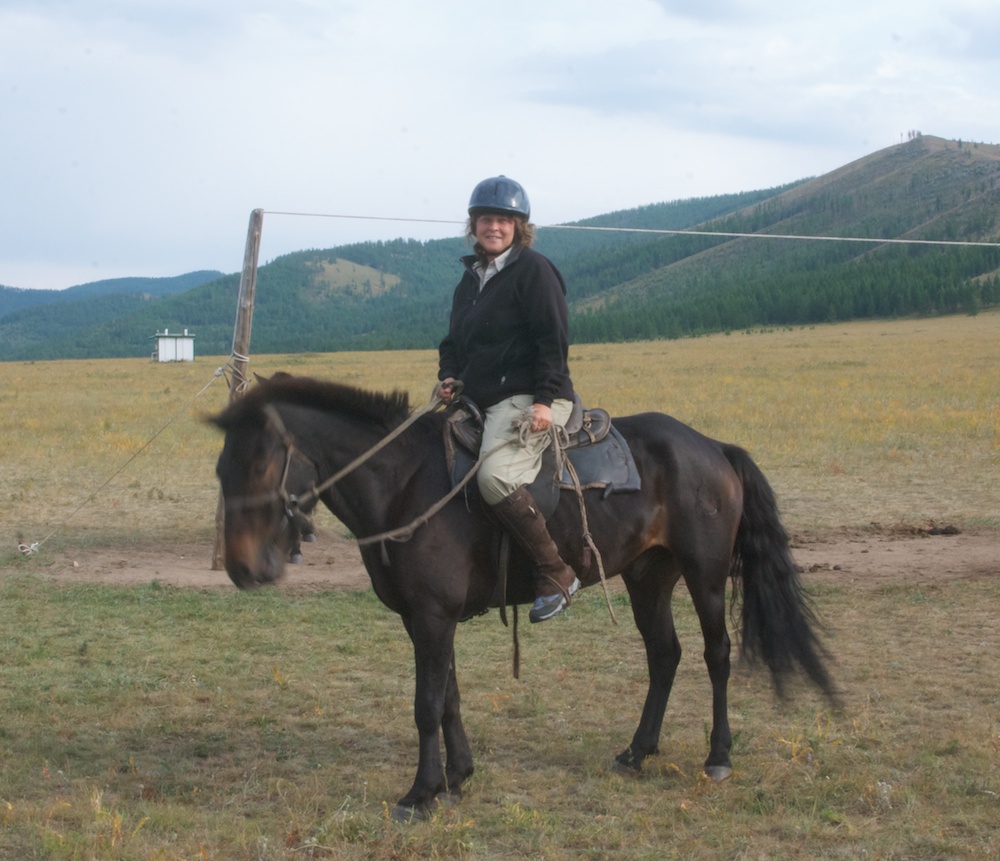
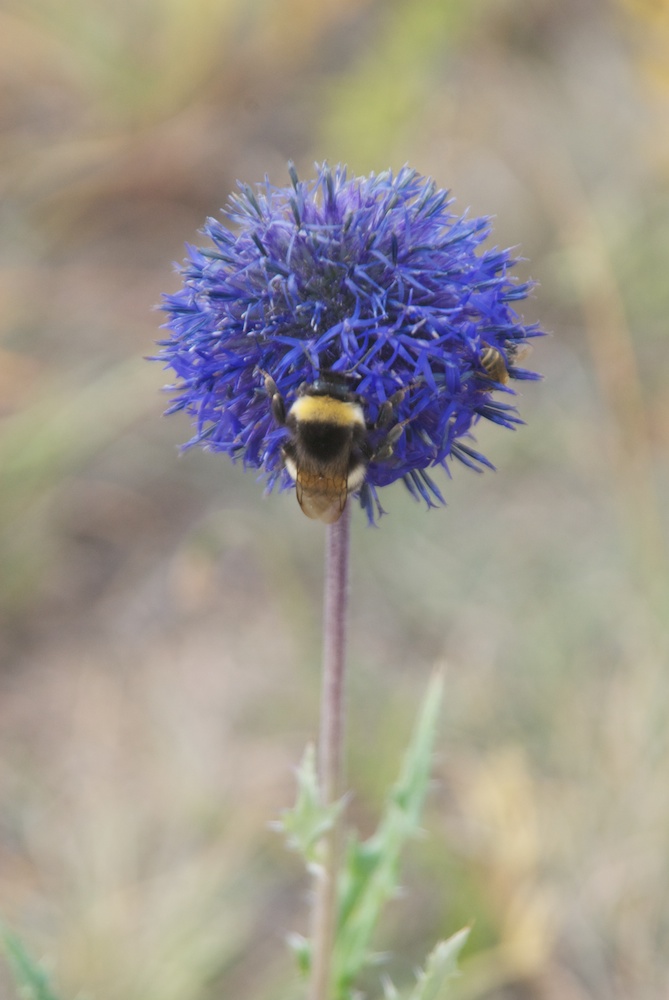
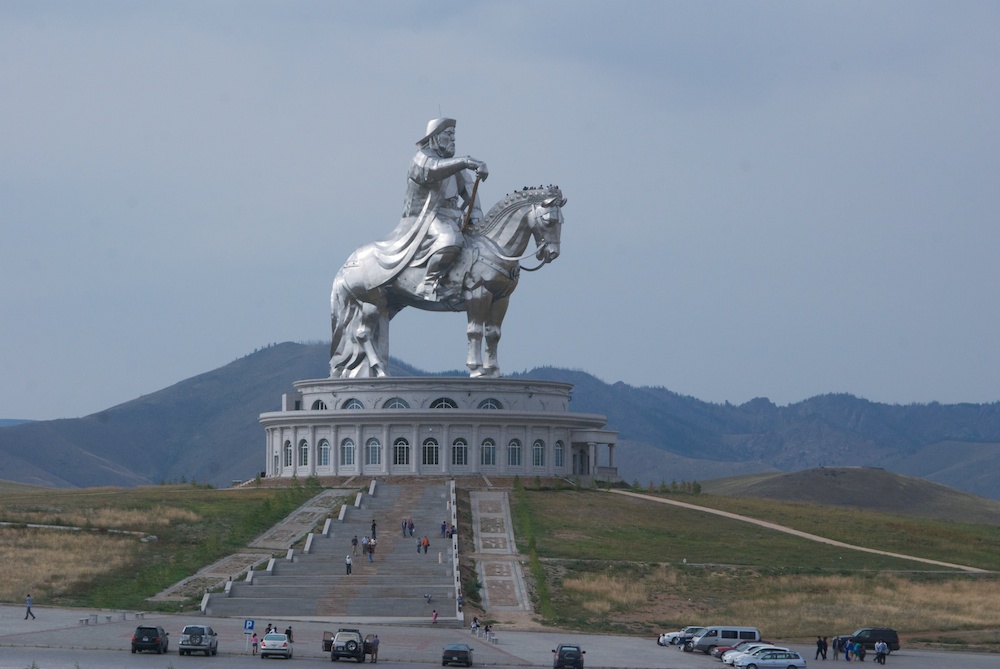
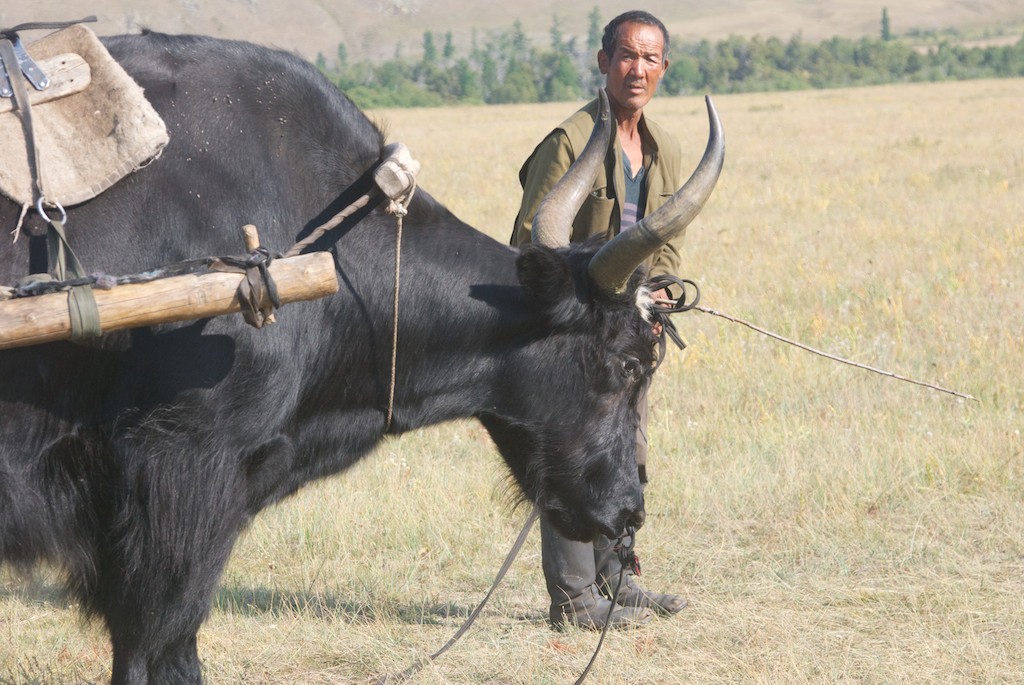
As I came out of our ger after getting settled in, this memorable scene met my eye.Jalman Meadows ger camp with the Tuul Gol in the background.A local herder with his ox-drawn cart fetched water for the camp every day from the river.He also provided the means by which the inflatable boat on which we would take a river trip was transported. We walked about six kilometers to the launch site.This time our "helper" was a yak/cattle hybrid called a hainag.Inflating the boat.And then we were floating down this beautful river.The scenery wasn't flashy, but had a calm peacefulness.We saw a number of birds, including this grey wagtail.There were quite a few riffles to paddle through, which added a little excitement.Finally, the ger camp came into view and our half-day river trip was over.In the afternoon, it was time to go riding.There is nothing like riding through the Mongolian countryside on a Mongol horse.The next morning there was time for a hike up onto one of the hills near the camp. We walked up through the larch trees until we got to this view.The mountain wildflowers were still blooming. The white flowers are edelweiss.And the bees were still busy.We were packing to leave after lunch when Khatnaa stuck his head inside our ger and told us to come quickly, there was an eagle close by. We got some great photos of this big steppe eagle.He finally took off and circled once over our heads.It had started to rain on and off and we needed to get down out of the mountains, but when we saw this big herd of billy goats and rams, it was photo op time.They were all sizes, shapes, colors and horn designs. The young herder walked them back and forth past the car a couple of times, so we got lots of great pictures.Another herder we saw, tending his animals, rain or shine. It was raining.At last we approached the tarmac road, passing the spectacular statue of Chinggis Khan, facing east towards the Mongol homeland.One more wildlife sighting...golden eagles belonging to local a local Kazakh. They go up into the mountains and capture the young birds, using them to hunt with for a couple years and then releasing them.And then it was back into the wilds of Ulaanbaatar, now a city with over a million people. The noise was a shock after the quiet of the countryside.
We didn’t have long on tarmac road before we turned north into the Han Hentii Mountains, most of which is included in one of Mongolia’s Strictly Protected Areas.
This would be my first visit to Nomadic Journeys’ “signature camp”, Jalman Meadows. I hadn’t gone there before because, while there is plenty of interesting wildlife in the mountains, it’s not easy to see. The good news is that it would be an opportunity for both me and Pokey to see the southernmost point of the vast taiga, or boreal forest, that encircles the earth.
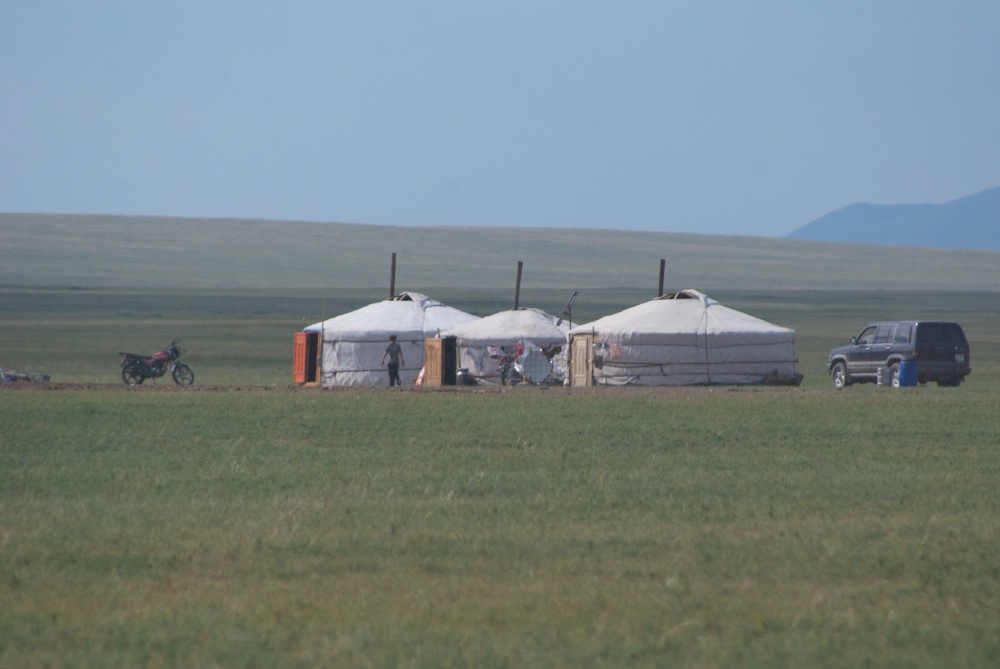
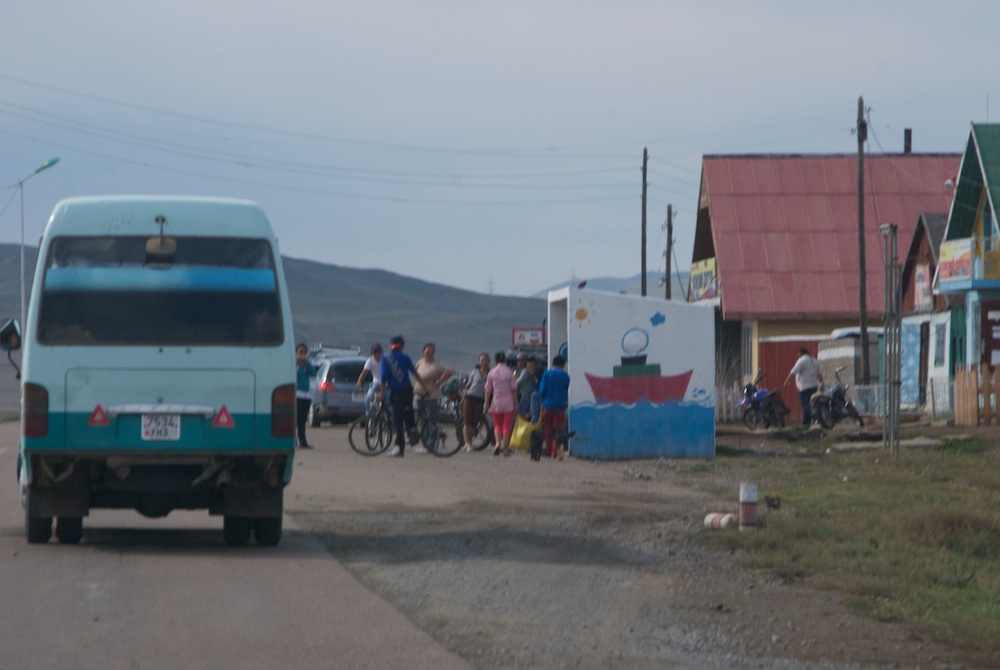
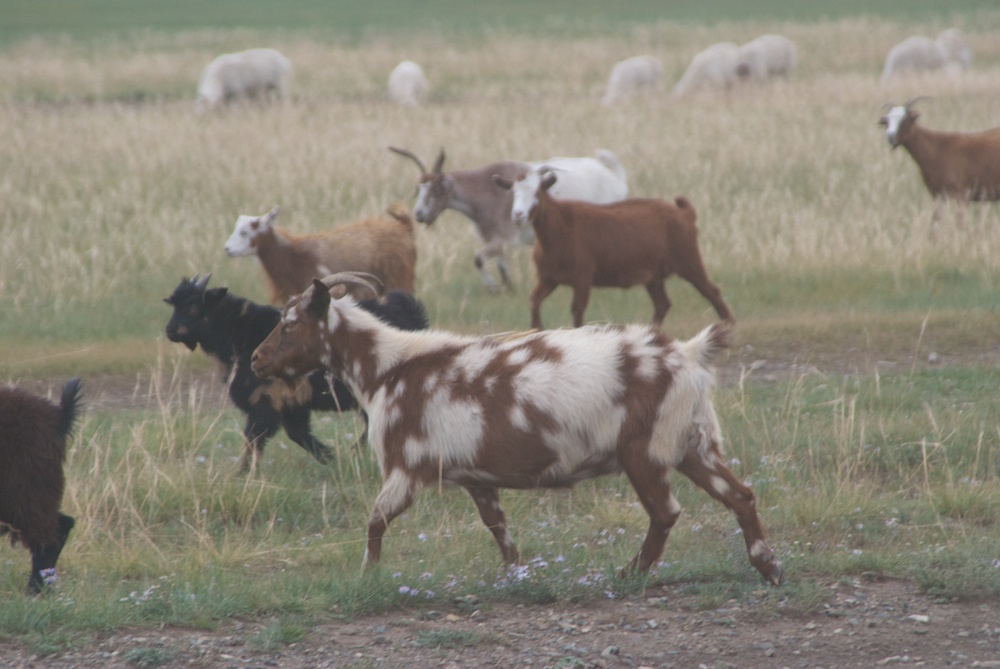
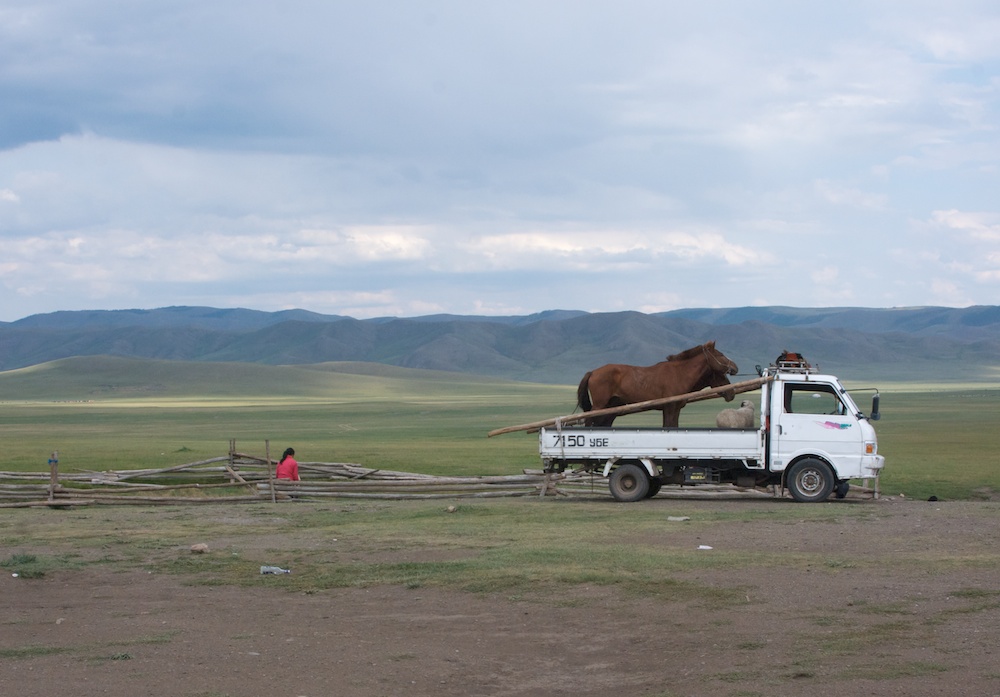
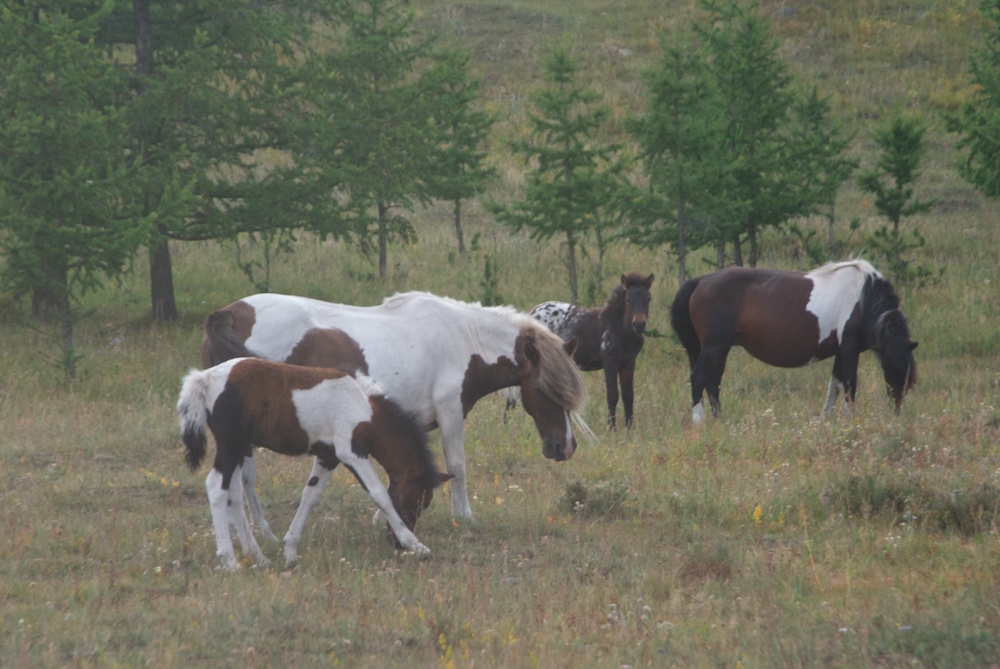
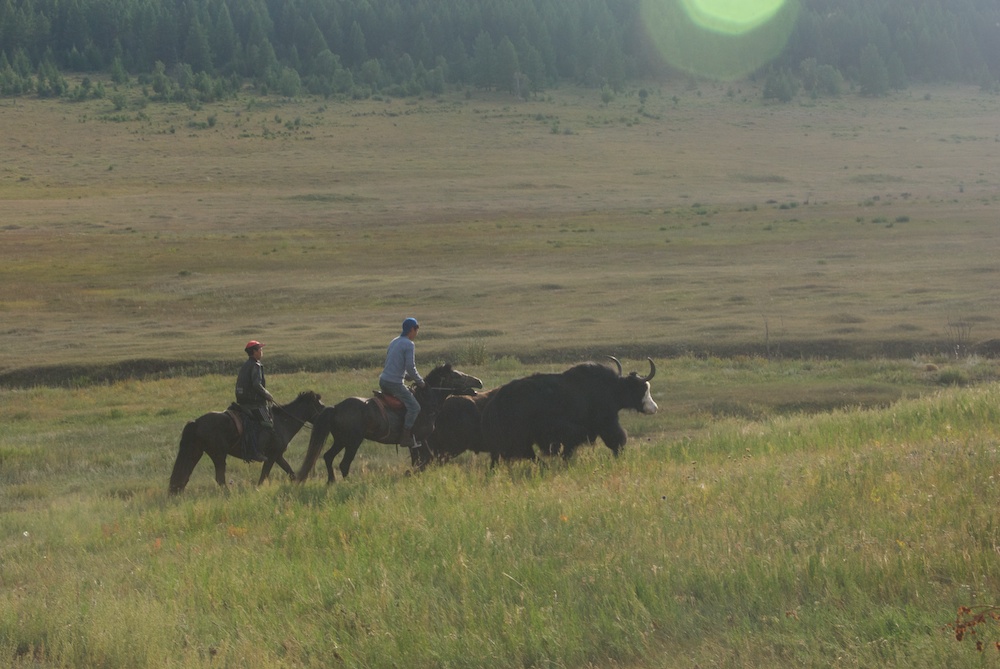
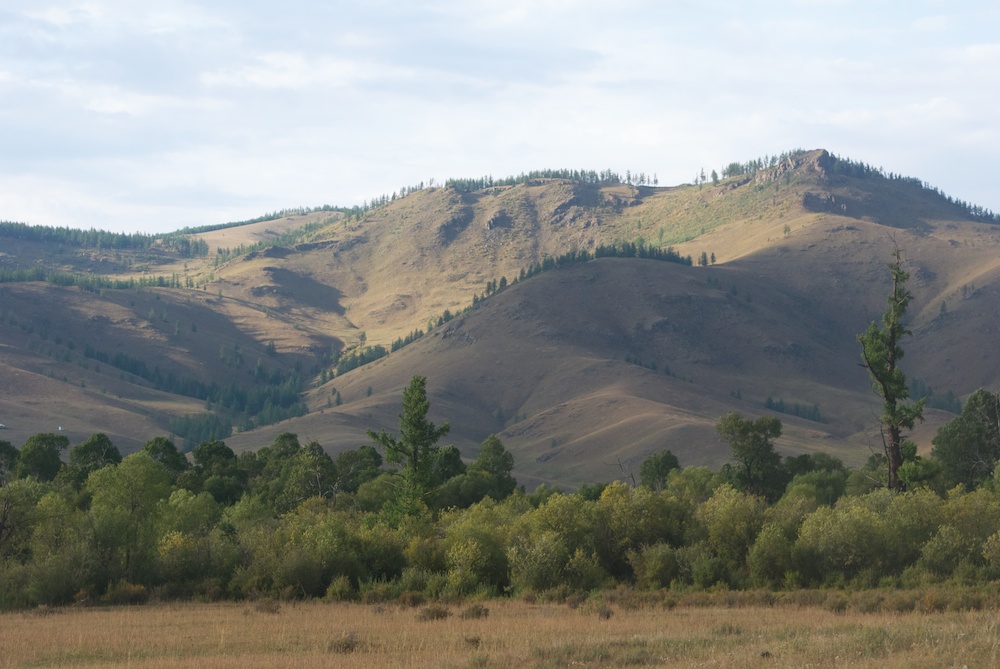
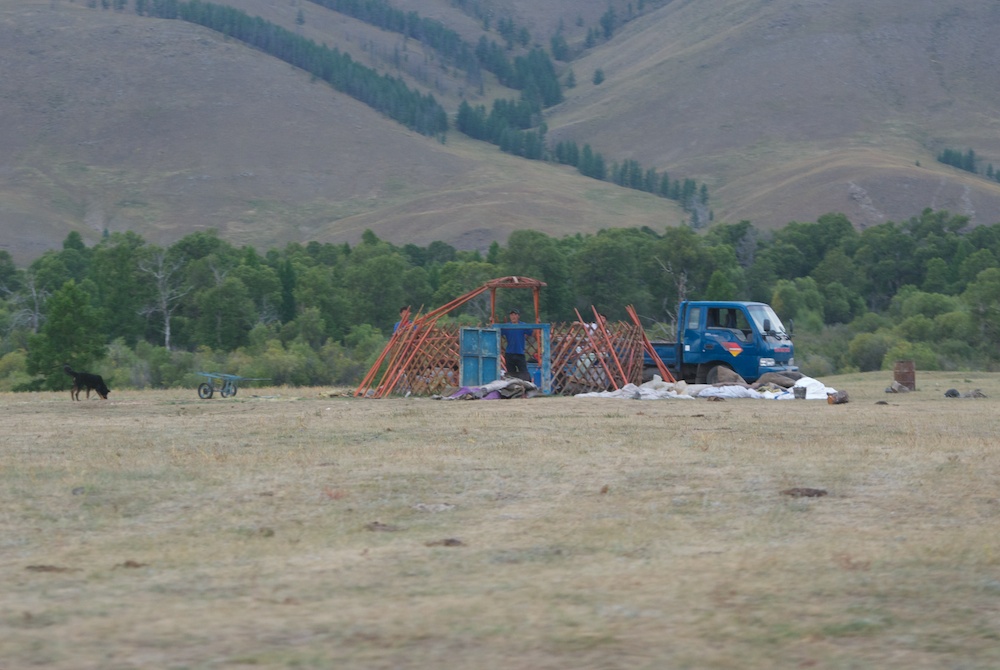
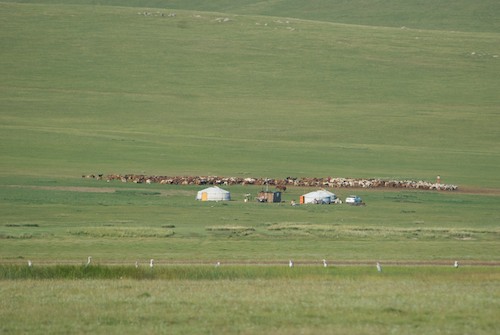
On our way from Gun-Galuut we passed this typical herder encampment, complete with car, motorbike, solar panel and satellite dishAnother not-uncommon scene when one is on the road in Mongolia...a truckload of the ever-patient Mongol horsesWe passed through a small soum center, the last town we saw on this leg of the tripThen it was back out into the glorious countryside on the earth roads, heading northPokey had become very interested in the cashmere goats as possible sculpture subjects, so we stopped any time there were some near the road. The markings on this one were definitely a bonus!The afternoon light was really beautiful.This family had stopped to get water from the spring, which is enclosed with a fence to keep livestock out. I've rarely seen a western style livestock or horse trailer in my travels. The animals ride in the back of trucks, sometimes with very simple barriers to keep them onboard.Did I say we wanted to see goats? We came up over a rise and....As we went higher up into the mountains, we found ourselves in forested areas and came across this herd of really stunning horses.Ovoo up on the pass.Traveling along one side of a valley, we saw these two boys herding a couple of yak/cattle hybrids.We were happily taking photos when one of them abruptly turned and started towards the car. His "minder" suddenly wasn't smiling and it got a little tense as we wondered if we needed to get ready to brace for impact.But within a few yards, the boy got him turned and we all exhaled.Our last view of them riding off into the early evening light.Onward...We finally had mountains on either side of us and saw a variety of deciduous and evergreen trees.A local herder family setting up their gerAt last we arrived at the ger camp, which was situated on a bluff above the Tuul Gol.
Next week: boating and hiking and back to Ulaanbaatar
I’m on my way to New York for a Society of Animal Artists board meeting, so I’m taking a break from the story of my 2011 trip to Mongolia.
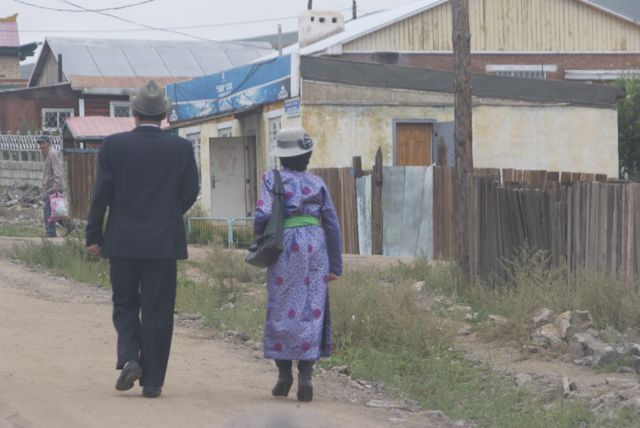
Mongol couple, Erdenet, August 2011: the city
Instead, I thought I would share a few proverbs from a book that I found in Ulaanbaatar called, appropriately enough, Mongolian Proverbs. They were collected by Janice Raymond and the book published in 2010 by Alethinos Books, San Diego.
You will have four nights Taking a short cut
That’s one we all know….the short cut that ends up taking much longer than the original route.
Fox will starve to death
While waiting under an ox
This one describes trying to do something impossible since the fox will never be able to eat the ox
Calf is not grown But he thinks he can make bull’s dung
A good description of someone who talks big, but can’t deliver
One finger short
Of being crazy
This one doesn’t really require an explanation, but is interesting because of how it resembles similar American sayings
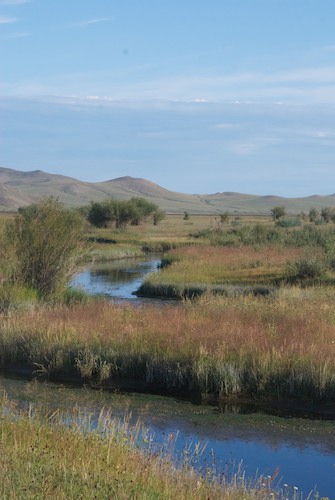
Mongol kids, south of Bulgan, August 2011: the countryside
We arrived at the Steppe Nomads ger camp at Gun-Galuut Nature Reserve with a broken rear spring on the Land Cruiser, not sure what this meant for the remainder of the trip. While Pokey and I settled in, Khatnaa got on his mobile phone and called the Nomadic Journeys’ office to sort things out. We got laundry done and took welcome hot showers.
That night, at dinner, Khatnaa explained the situation. He would need to take the car out to the tarmac road (13km on earth road each way to get to and from the reserve) the next afternoon to meet up with someone from UB who would bring the new spring out. Then it would have to be installed. How long? Half a day. Did we want the office to also send out a new guide and driver to finish the trip or would we wait for the repair? That decision took about two seconds….we’d wait and finish the trip together. In any case, Pokey and I weren’t sorry to have a break to simply hang around camp and relax.
Khatnaa then said that the car was drivable, with care, and we would go out the next morning at 6am, which is exactly what we did. I was impressed by what he considered staying on “easy” roads. We parked and took a good, long hike down to where he thought we might see argali, which we spotted off in the distance almost as soon as we stopped to glass the mountain.
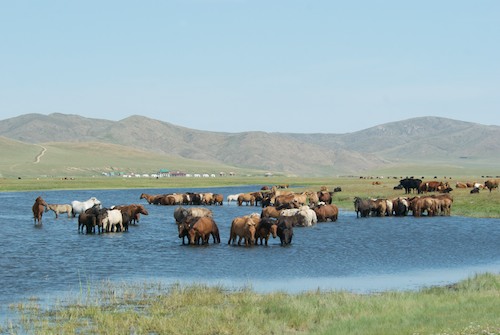
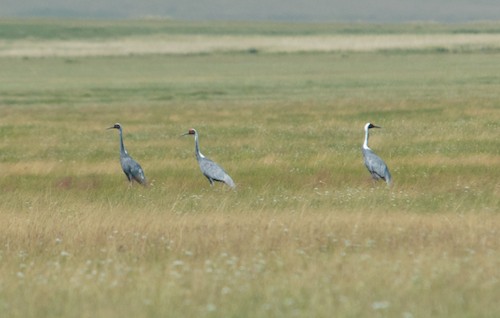
We also got great photos of a big herd of Mongol horses and cranes, but really had to dodge the mosquitos. Back at the ger camp around 1pm, Khatnaa grabbed a quick lunch and took off. To our surprise and pleasure he was back at 5:15, after having to replace BOTH back springs because the replacement was longer than the original one. Dinner was quite festive with beers all around.
We only had one day at Gun-Galuut, but it was a full one, packed with great scenery and animals.
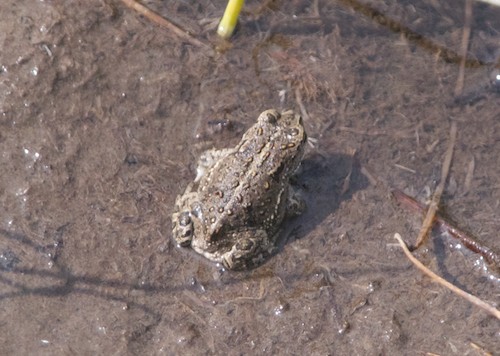
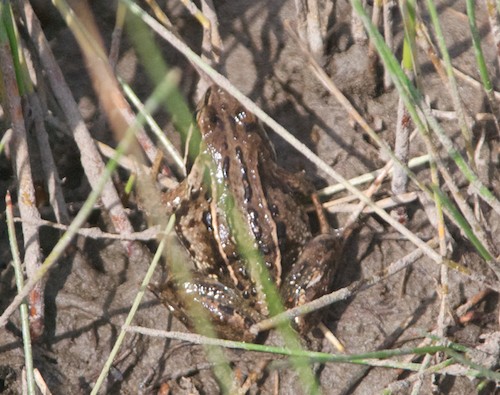
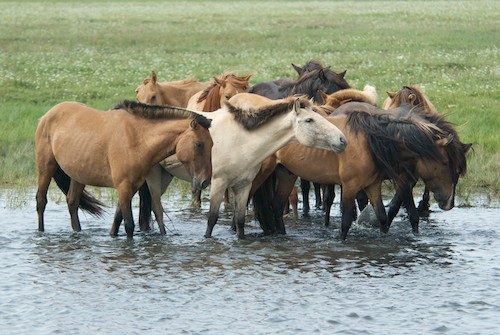
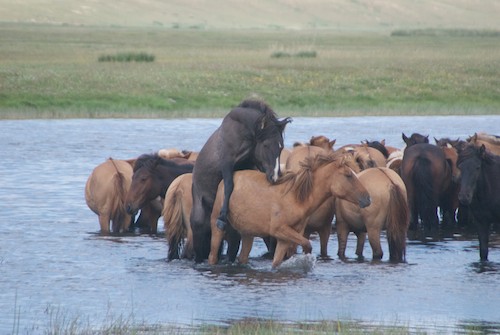
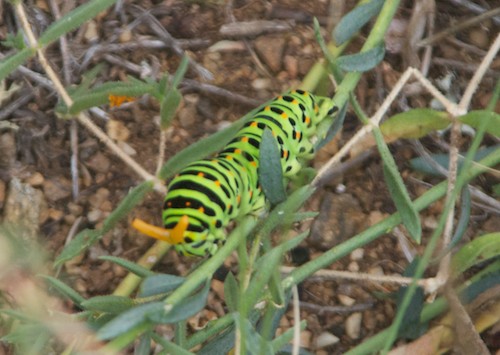
Steppe Nomads Tourist CampMorning coffee in front of my ger in my comfy Mongol del and felt slippersEarly morning light along the Kherlen Gol with Baits Uul ahead on the right12-13 argali grazing; look in the middle among the shrubs for the white dots which are their rumps; why good binoculars are a mustRiverside viewLocal herder's gers with a line of grey herons in frontI believe this is a Japanese quail chickThe horses we got great photos of, with the ger camp in the background; they were in the water to get away from the mosquitosEndangered white-napped cranesSmall toadFrogWetland and mountain, with cranesMore of the horses; in the afternoon a breeze had come up which kept the mosquitos away, from us at leastSometimes the action got pretty hot and heavyFirst time I ever saw a caterpiller in Mongolia
That evening Khatnaa told us that the next day’s drive wouldn’t be a long one, so we would go out into the reserve in the morning and leave after lunch. We went around the “backside” of the mountain, the side away from the river, parked in a draw, got out and almost immediately spotted four big rams running over a ridge to our right. I only was able to get a couple of butt shots before they were gone. But, within minutes, we spotted an argali ewe and lamb to our left. And then a large group moving up the draw directly in front of us, but a pretty long ways off. It’s estimated that there are less than 100 argali in Gun-Galuut, so we saw a fairly good percentage of the population in two tries.
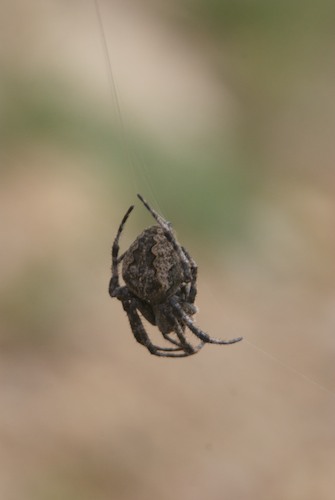
Argali Ewe and lambGood-sized spider
We drove to the next draw over where we hoped the argali rams had gone, but saw no one. Pokey wanted to do some sketching, so she stayed with the car while Khatnaa and I hiked up onto the mountain again. Coming around a ridge, the view opened up to the entire river valley. We found a couple of rocks to sit on and simply enjoyed the scenery for a half hour. It was so quiet, except for the occasional animal. No cars, no planes, no radios, no voices. Just. Quiet. One of the things I treasure about being in the Mongolian countryside.
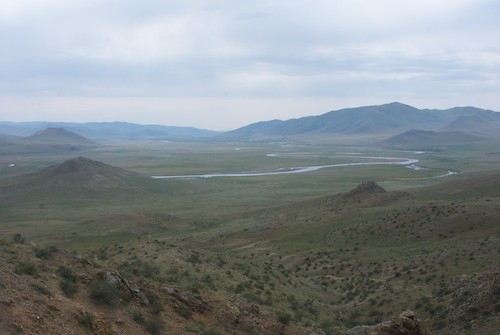
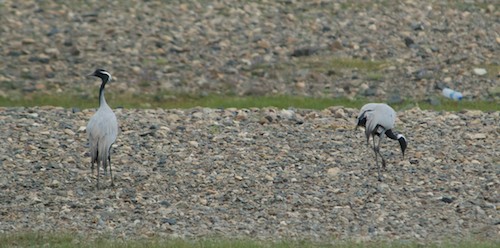
View of the Kherlen Gol valley, looking eastOf course I had to have my picture takenBack down on the wetland, we spotted a whooper swanA beautiful butterflyAnd on the other side of the river, a pair of demoiselle cranesOn our way out of the reserve that afternoon, we stopped by this small lake to photograph another whooper swanThis enormous coal mine at Baikhanuur is visible from the road to and from the reserve
Next week: Onward to Jalman Meadows in the Hentii Mountains
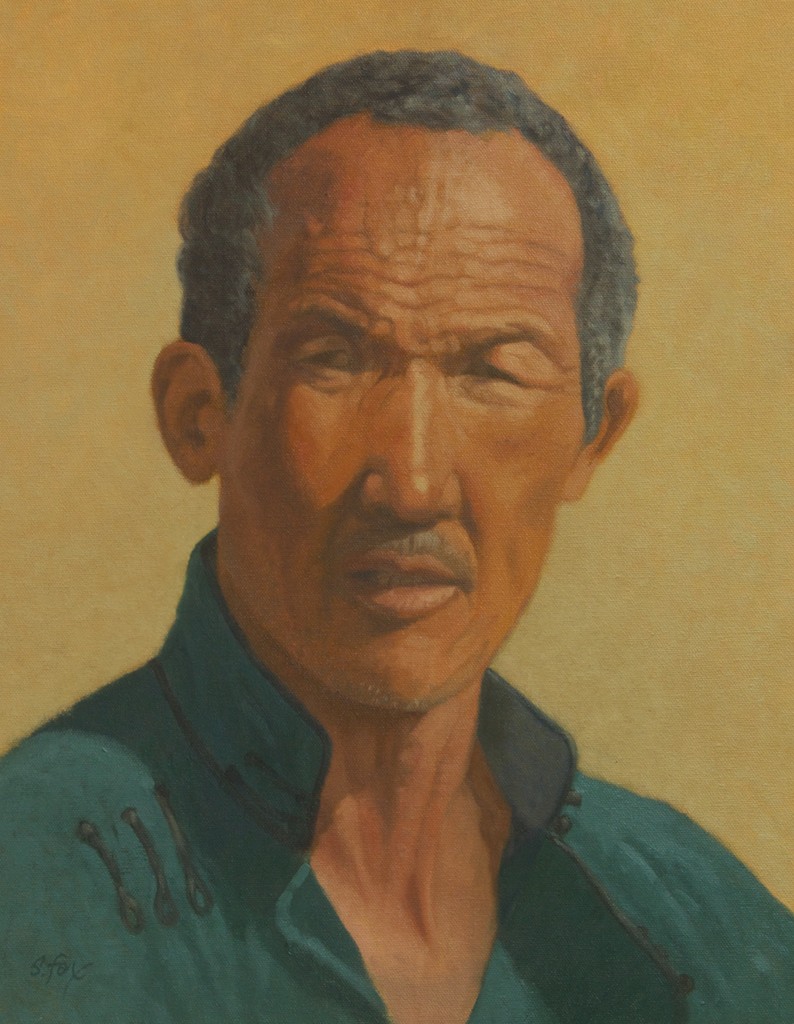
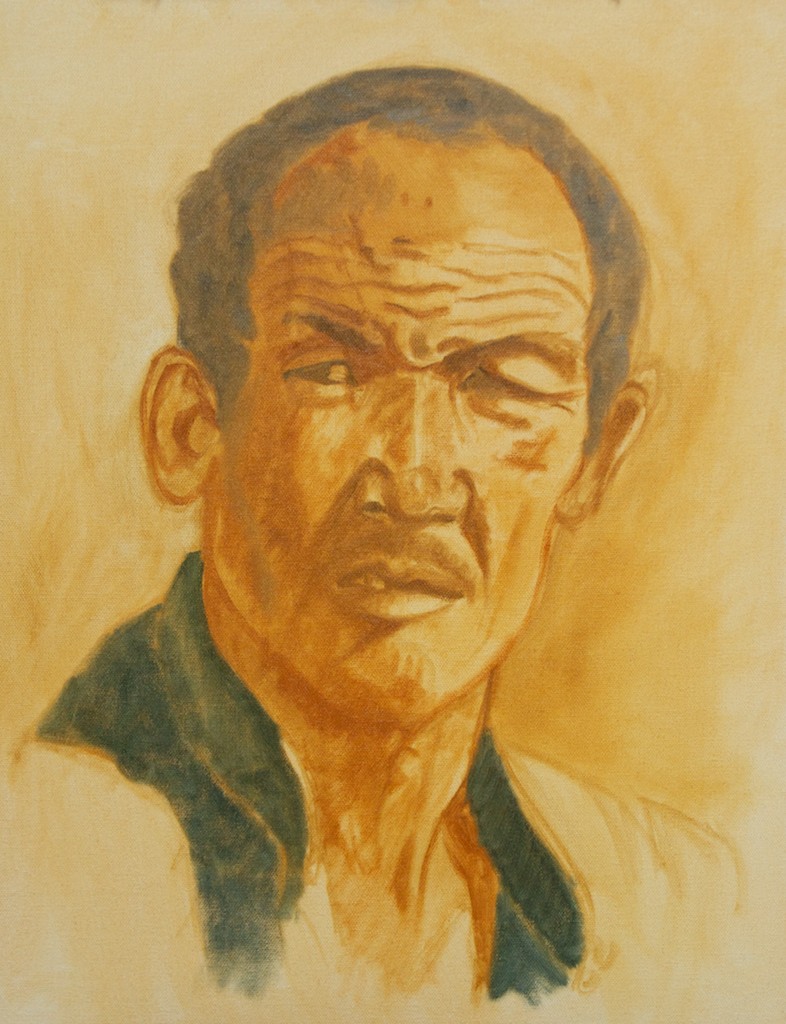
Yak Herder-Hentiii Mountains, Mongolia 18x14" oil (price on request)
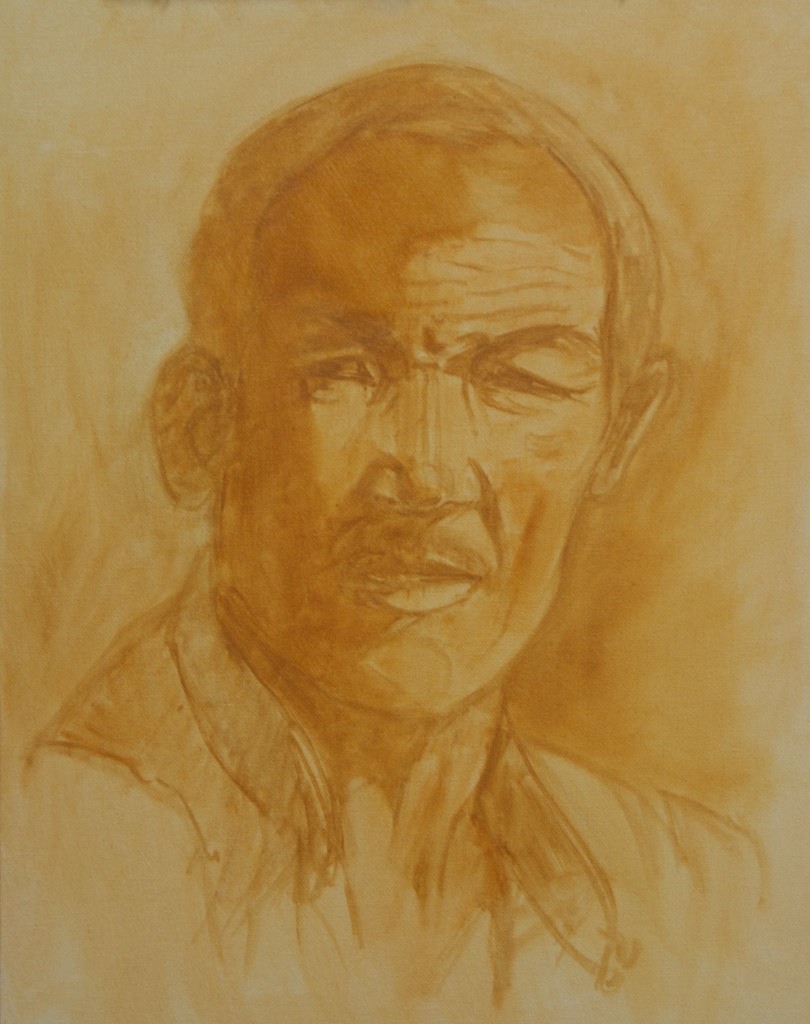
And here’s the step by step process by which I created this painting:
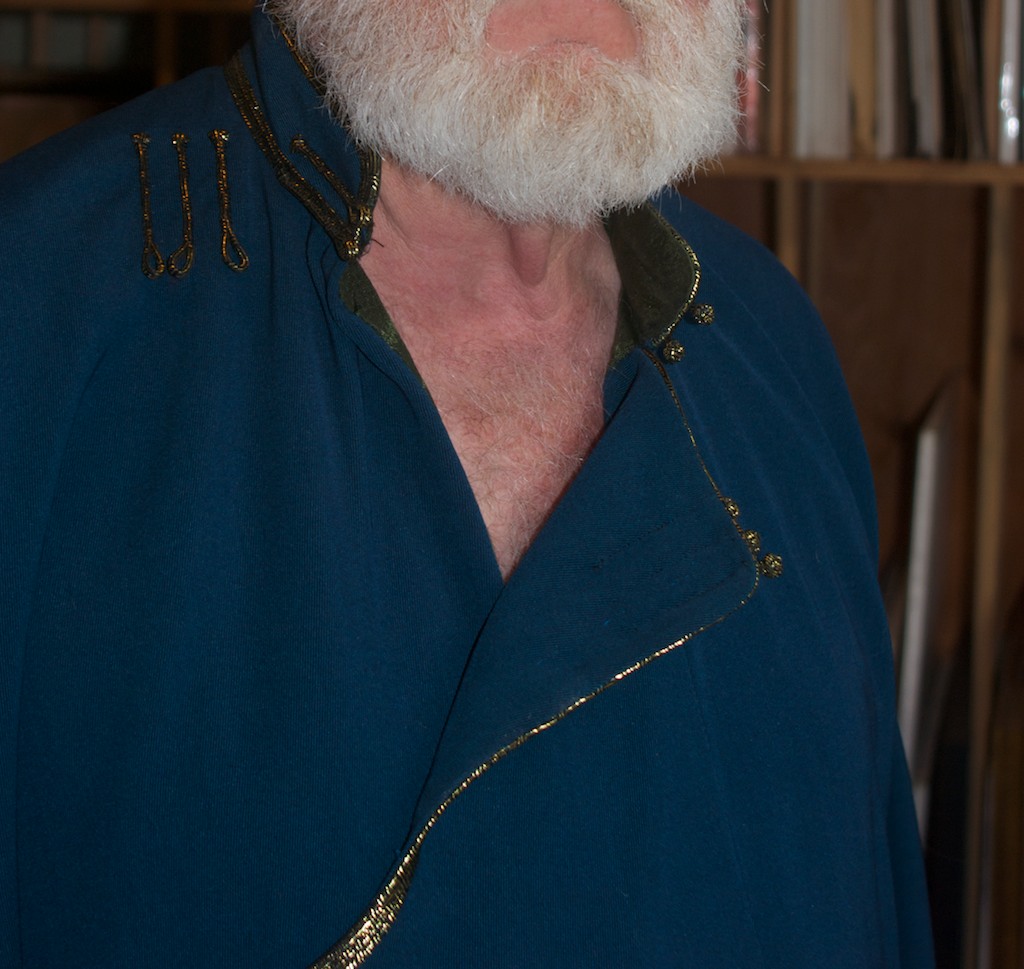
The reference photo I used of a local man who hauled water to the Jalman Meadows ger camp where I was staying with another artist this past August.I started out with a raw sienna toned RayMar canvasboard and began with a loose brush drawing for placement and position of the head and features. I've already changed him into a del instead of western clothes.Next I established the light and shadow areas.I re-drew the features and started to add some color.I went darker with the background and launched into modeling his head.I was using two or three other photos for the del and continued to model his head, paying particular attention to the features, value relationships and the various colors in the shadows.At this point I realized that the del was opening the wrong way due to the other photos i was using and that I needed much better reference for itI'd had del made for myself and my husband in 2009. He was kind enough to model for me in his.I decided to finish the bottom to the edge of the canvas and I also lightened up the background. So, once more, "Yak Herder-Hentii Mountains, Mongolia"
(This is a re-post since for some unknown reason it was posted as a Page, not a post when I originally did it last Friday)
While I first went to Mongolia for the wildlife, after a trip or two I started to notice the domestic animals, what the Mongols call The Five Snouts: horses, sheep, goats, camels, and cattle, which include “real” cattle and also yaks.
Mongol yaks are found in the northern part of the country, up in the mountains. Like the other “snouts”, they provide a number of products and functions, including being trained for riding. There will be a painting of that at some point, which I saw in the Hangai Mountains in 2010.
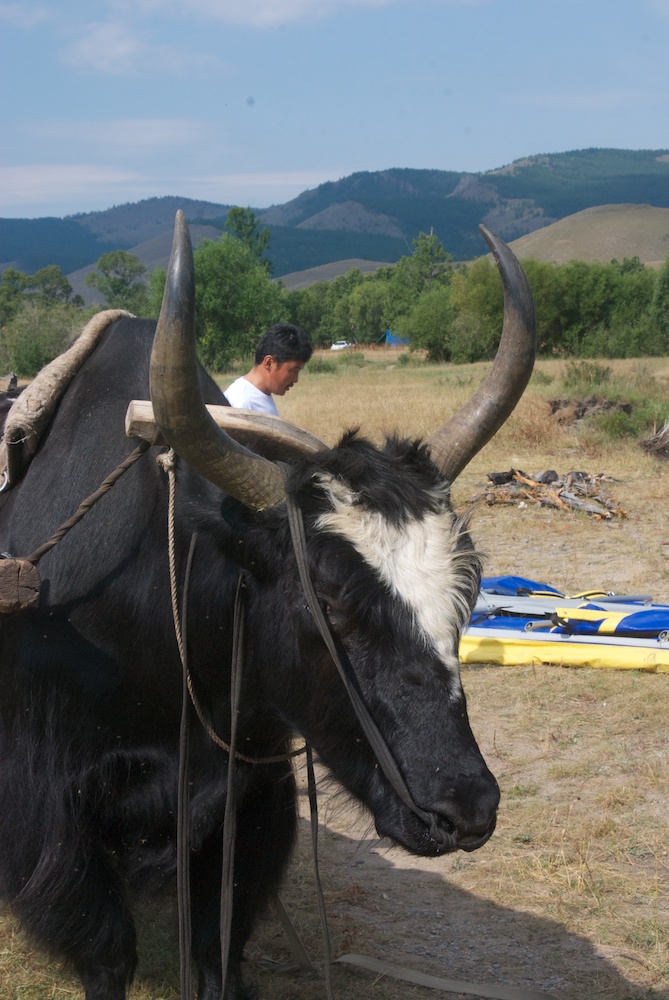
Sometimes they are crossed with cattle to create a hybrid called a “khainag”, which are stronger than the pure yaks and more easily trained to pull carts. But they don’t really look the same. The heads are a somewhat different shape and the coat can be much shorter.
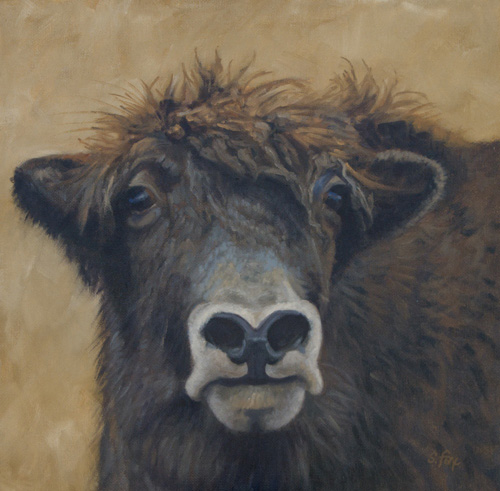
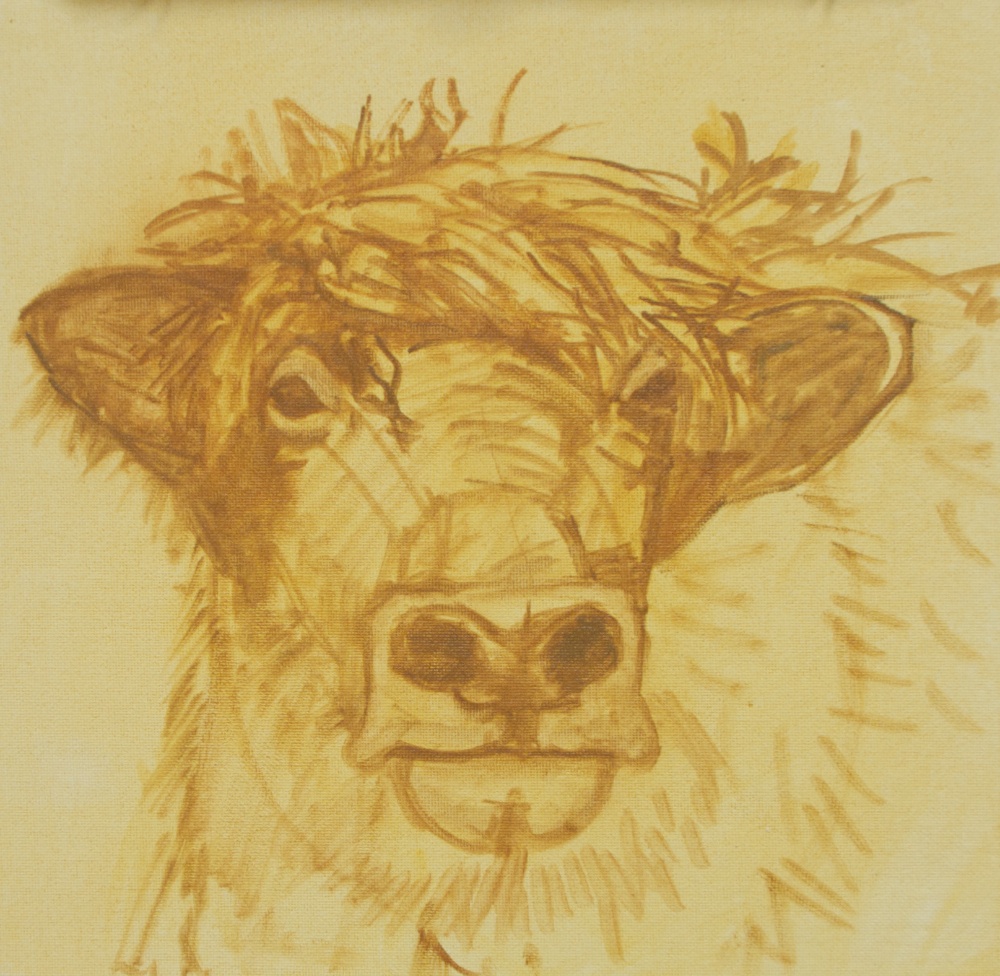
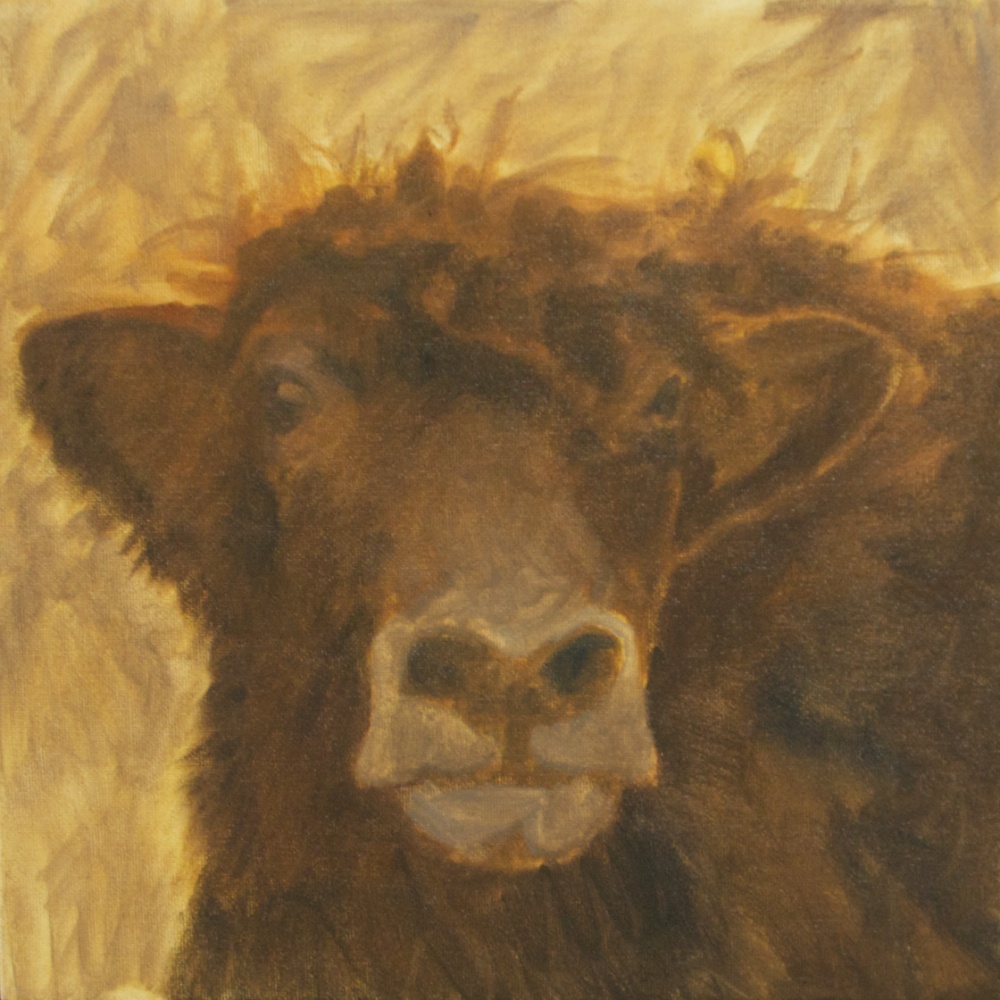
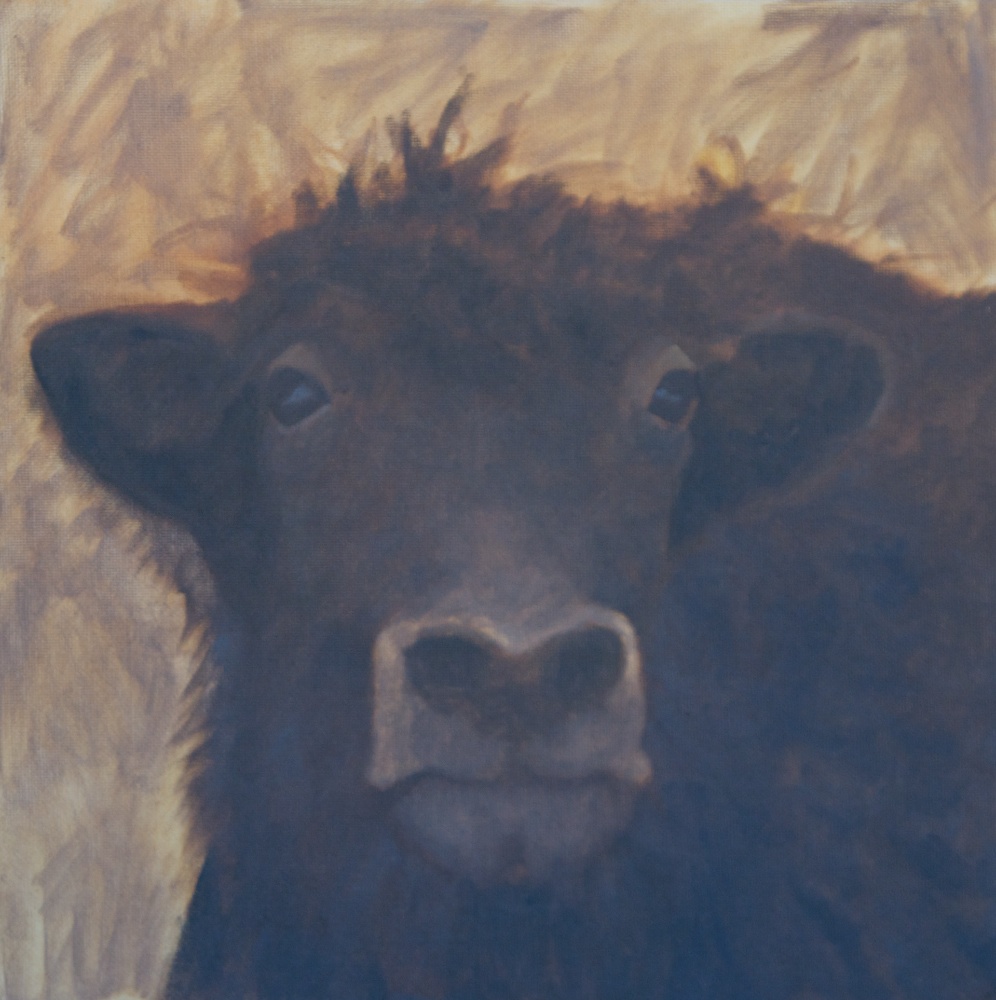
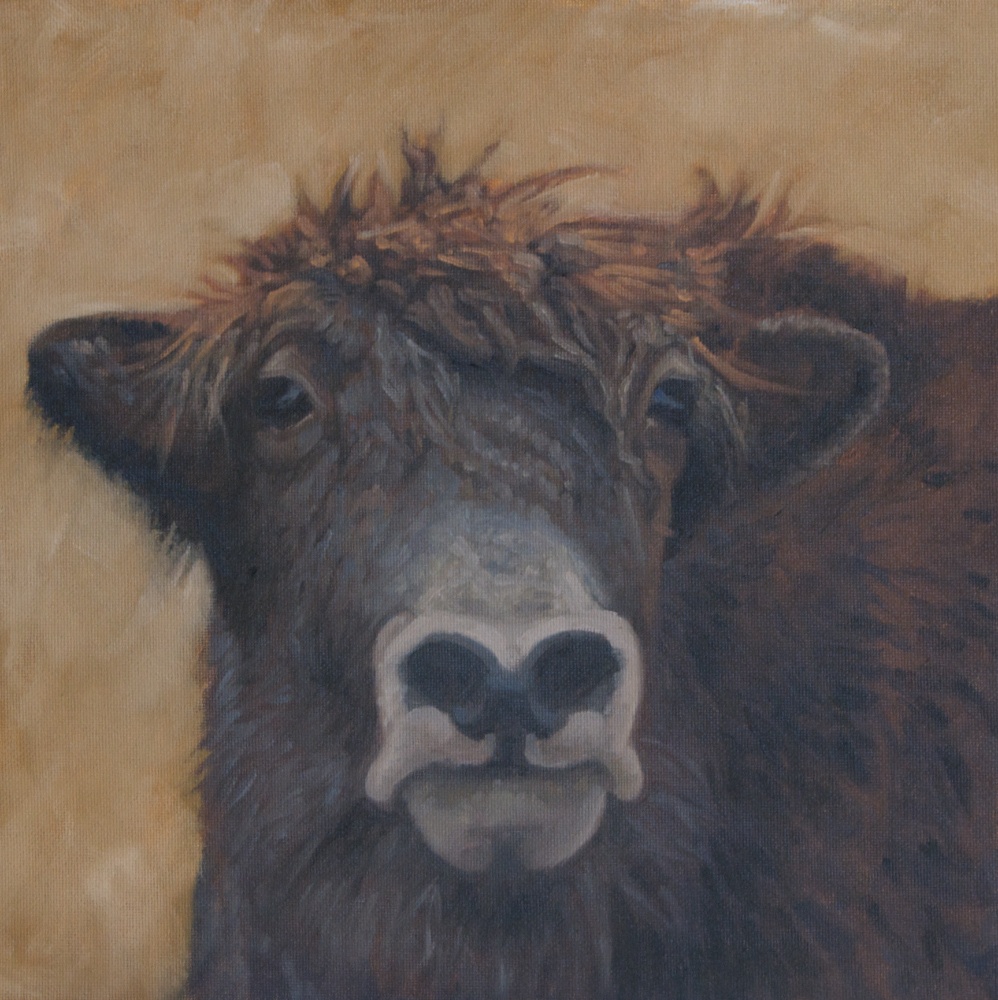
The pure yaks make me smile whenever I see them. The cow yak in the painting is one that I saw this past August at Gun-Galuut Nature Reserve.
Here’s a step-by step of “Checking You Out”:
The reference photo. Not great light, but I liked her head with its fuzzy topknot and white muzzle; I also wanted to work on doing a 3/4 view.I decided that a square format would work well and started on a tinted canvas with a brush drawing, both in raw siennaThe next step is to get color all over the canvas and establish the relative values of her head, going darker; I'm always correcting the drawing as needed as I paintI now have my darkest dark areas in a cool tone and will come in lighter and warmer over it. The muzzle's been moved a little and the eyes re-stated also.Everything is now set up for the final push as I will refine shapes, tweak edges and work on value contrastOnce again....Checking You Out 12x12" oil (price on request)
The next leg of the artist’s tour was from Ikh Nart to Gun-Galuut Nature Reserve. I had only been there once, in 2009, driving east from Ulaanbaatar. This time we were going to go almost straight north…we hoped.
Great bustard we spotted not long after we left the reserve. It was the first time I had ever seen one.
We got back to the main tarmac road between Ulaanbaatar and China and traveled on it for awhile. Then we passed a spot where a dirt road went off to the right at an angle. Khatnaa started to drive on, spotted a white van coming toward the tarmac, stopped, backed up, got out and walked over to them as they slowed down and then stopped. After a short conversation, he came back to the car, backed us up and off we went onto the earth road. He had been able to get enough information about weather and road conditions that he felt ok about taking the “local road”. As usual, this made me very happy.
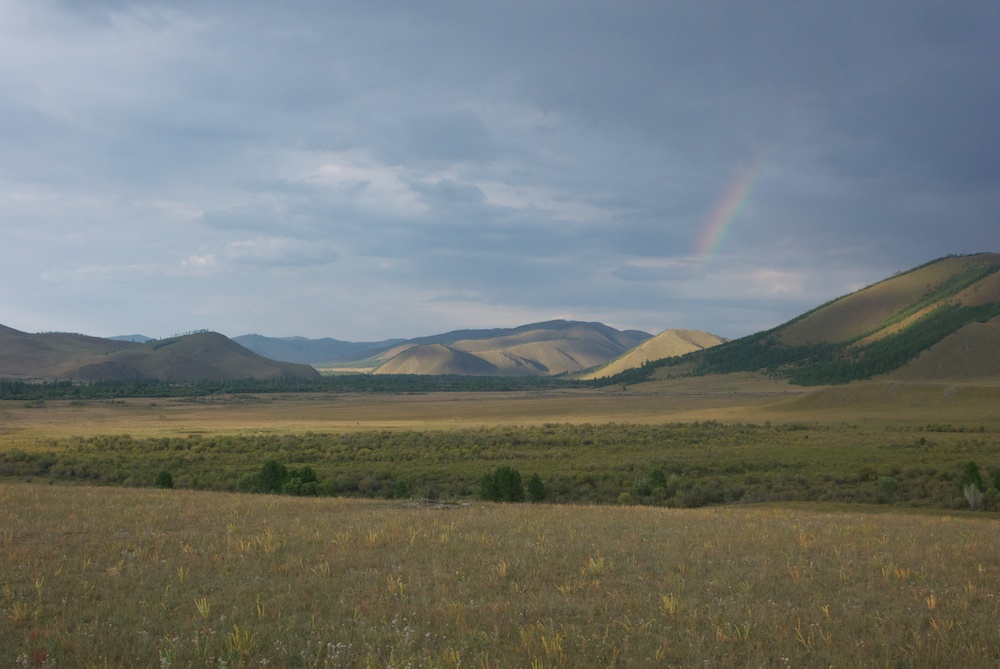
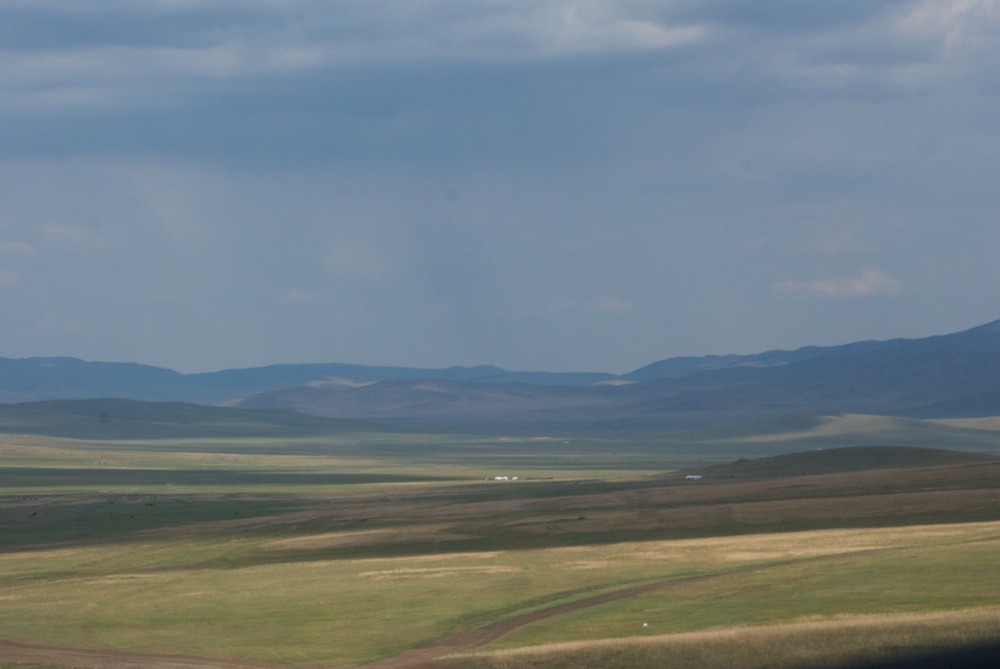
Why you don't just pick up a rental car at the airport and head out into the countryside in Mongolia on your own. You can now get a good road atlas, but it's deceiving because this is what the roads are like all over the country except for a very few wide gravel roads and a slowly increasing amount of tarmac on main routes.We drove through a small soum center.As we headed north, there was a dark storm front to our left and fluffy white clouds and sunshine to our right. The road going north was running right along the front. We were out in steppe countryside with no one else around...not a single other car, not even a ger.After some spatters, we found ourselves traveling in pretty heavy rain for about 15-20 minutes and then came to a stream that we had to cross. Now I started to wonder what the road conditions would be up ahead of us.The light was really spectacular, though, as we went up some in elevation and started to see gers again. It had stopped raining where we were, but was still stormy to the west and north of us.Dropping down into a valley and, crossing it, we encountered something I'd seen before....really hard greyish dried mud combined with many very deep potholes. Khatnaa, with extreme care, had almost picked our way through it when we felt the rear end on the passenger side drop down hard, accompanied by a noise that didn't sound good at all. He pulled over on a level spot and crawled under the car. The verdict? The spring (new and Chinese-made) was broken. What to do? We drove on very carefully. VERY carefully.What Khatnaa knew, that I didn't, was that over the rise that you can see almost in the middle in the above photo was our destination, the Steppe Nomads ger camp at Gun-Galuut. With much creaking and care, we made it over the pass and across the valley to the camp.














































 Susan Fox, American Artist