Gallimauphry Friday: Foiling The Gophers


gopher
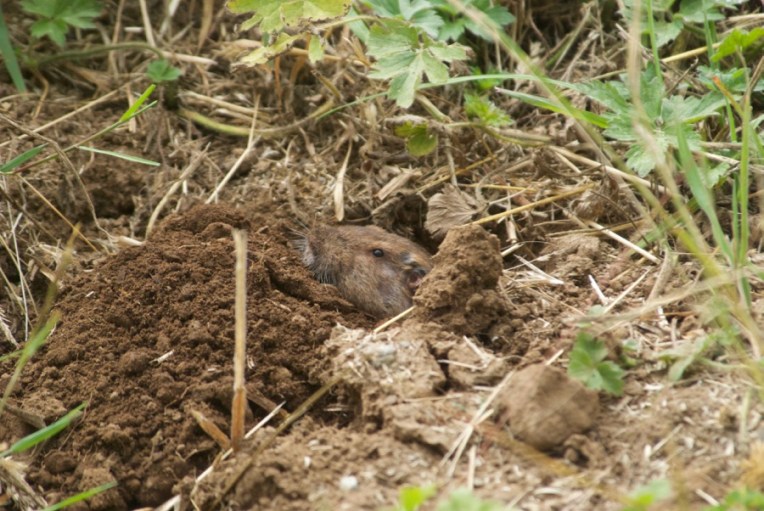
Botta’s Pocket Gopher (Thomomys bottae), back when I thought is was cool to see a wild mammal on the property. I got over it because of the destruction.

I like to garden and we have an acre to do it on. It’s great exercise, especially for easel artists like me who are either sitting or standing most work days. Lots of range of motion…reaching, kneeling, carrying yard waste to the compost pile etc. so it’s a good workout in the fresh air. And results in flowers, vegetables, herbs, fruit and berries. But, like many people who live in rural areas, we have gophers. The cats account for some (Alexander a Really Great Cat got a big one last month), we set traps in live holes, but of course they’re never gone for long. Nature finds a niche and fills it. I’ve lost a lot of bulbs and even some roses over the years. So when I wanted to replace a couple I decided that I wasn’t going to just plop them into the ground and cross my fingers We had some leftover gopher cloth from what we had put under the raised bed and there was enough to line a couple of planting holes. My goal is to give the roots enough safe growing space that they will stay alive and thrive. We’ll see.

The Black Hole gopher trap is the most humane solution that we’ve found. When triggered it crushes the thorax and they die pretty much instantly. Plus it doesn’t endanger our pets or other wildlife. A few years ago while I was on my annual seven week trip to Mongolia my husband trapped nine and the cats got eight. That stopped the worst of the damage, but we have to be eternally vigilant, especially now when they’re getting active again and hungry.

I thought I’d post a few photos of what we did in case you might find it useful. If you have found any non-toxic gopher controls that work, let me know in the comments.

The roses are “Graham Thomas” a beautiful golden yellow David Austin rose that can be grown as a climber.

gopher-1
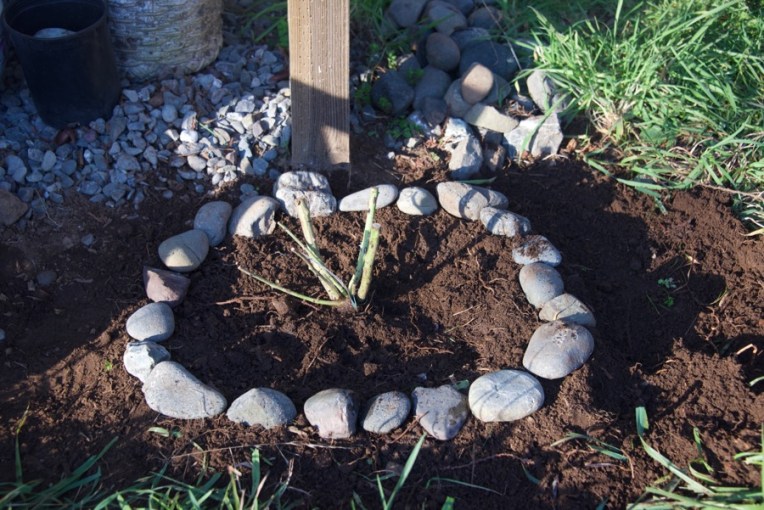
The first try. I dug the planting hole and we folded the mesh into it, dug out some more, tried it again, repeated until it fit the hole just below soil level.
gopher-2
And this is what it looks like with the rose planted with the addition of a river rock edge. It’s at the base of one of the vertical posts on the potting shed.
gopher-3
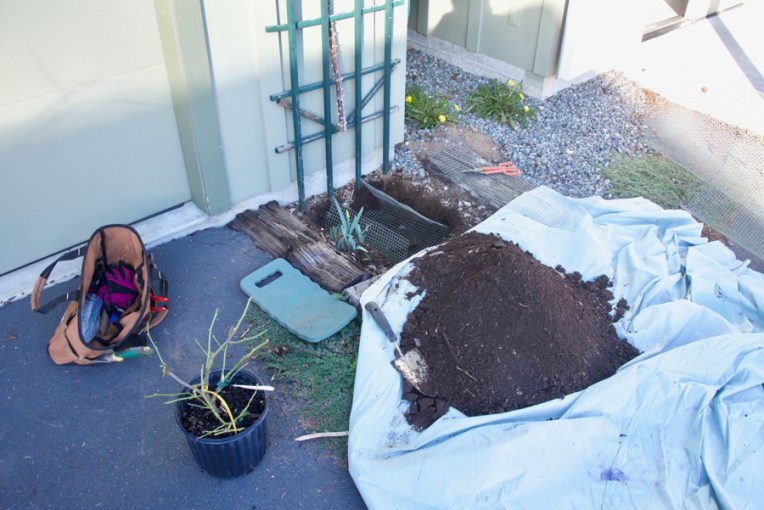
Out front planting space was tighter in the bed next to the garage door. I scooped the dirt out onto an old tarp.
gopher-4
Fitting the mesh into the hole
gopher-5
Then we formed the “basket”, folding the corners securely together.
gopher-6
The rose and its root ball in place. Next step was to refill the bed. Managed to not disturb the daffodils.

We’ve had a series of those “atmospheric river” storms, heavy rain and wind, so haven’t gotten much done other than to start pruning the roses. But in the next week or so I think the 2017 gardening season will be on!


Around The Garden….

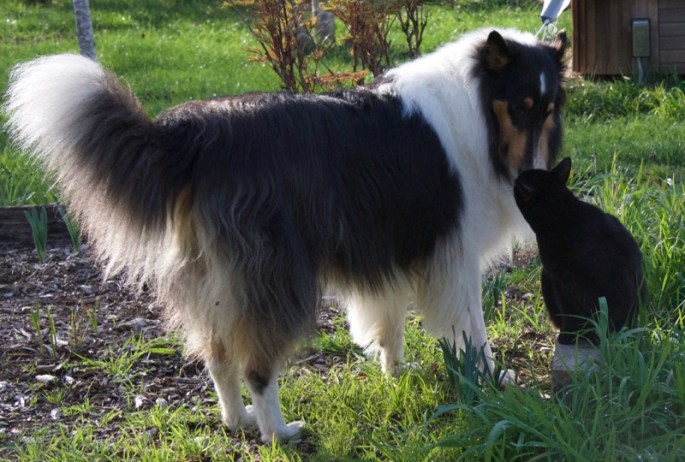
Hailey, our three year old rough collie girl and thirteen year old Eowyn...buddies
Hailey, our three year old rough collie girl and thirteen year old Eowyn…buddies

Spring is here and the bulbs are blooming. I’ve been posting quite a bit about the upcoming group exhibition “Wildlife Art: Field to Studio”. Well, the paintings are all done and framed. The packing crates are out.

Paintings and crates in my studio

I’m taking a break from the easel and getting some other tasks done. So I thought I’d share some of what’s been going on in the garden…

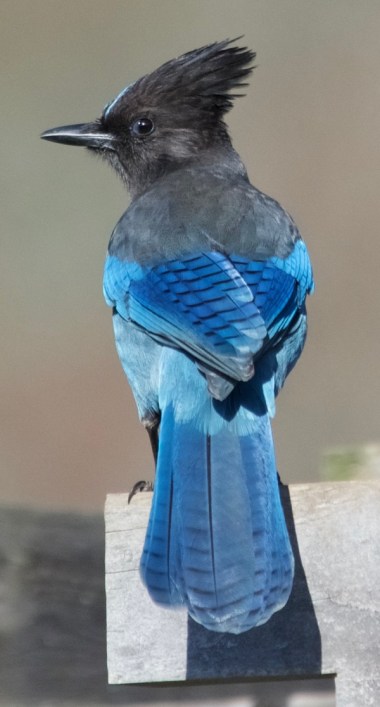
Steller's Jay
Steller’s Jay
Primroses
Primroses
More primroses
More primroses
Evening light and red alders
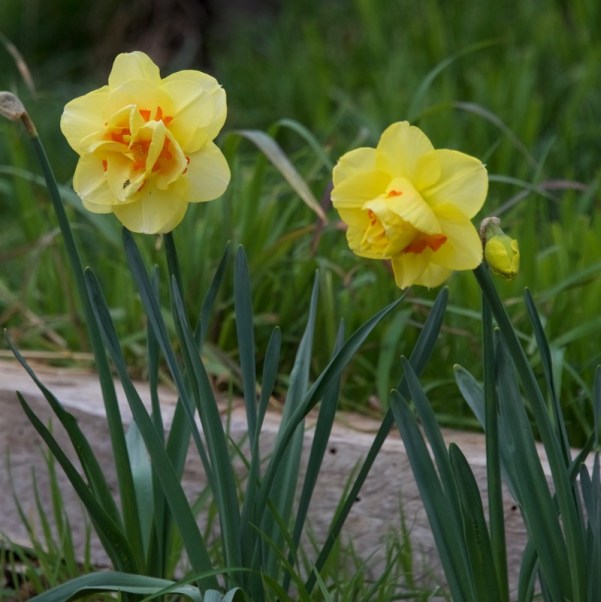
"Tahiti" daffodils
“Tahiti” daffodils
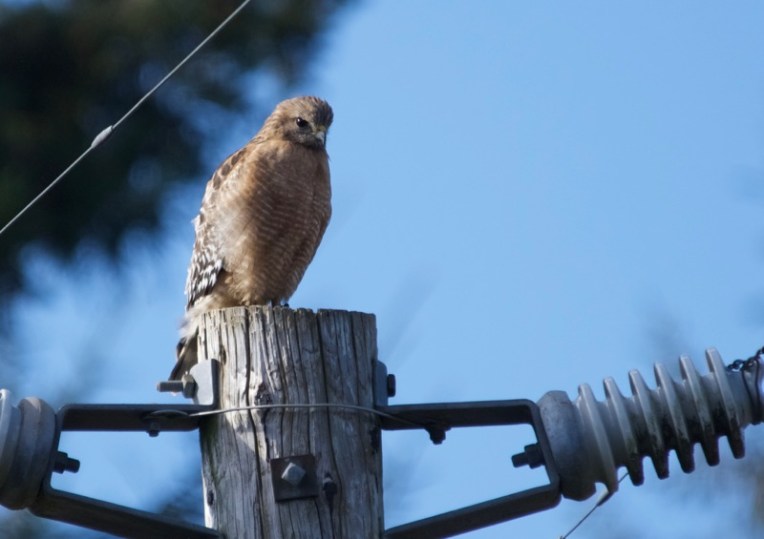
Red-shouldered hawk
Red-shouldered hawk up on a power line next to our property
"Apricot Impression" tulips, looking a little blowsy
“Apricot Impression” tulips, looking a little blowsy, but still pretty
Daffodils
Daffodils
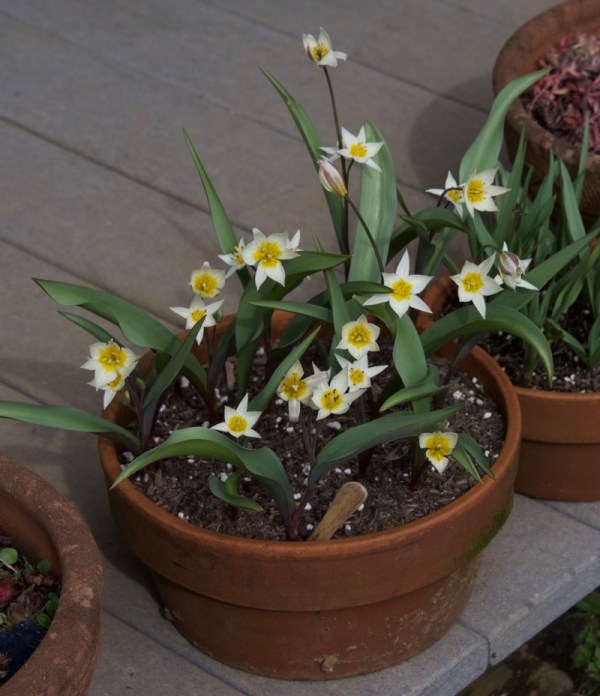
Species tulip "Turkestanica"
Species tulip “Turkestanica”
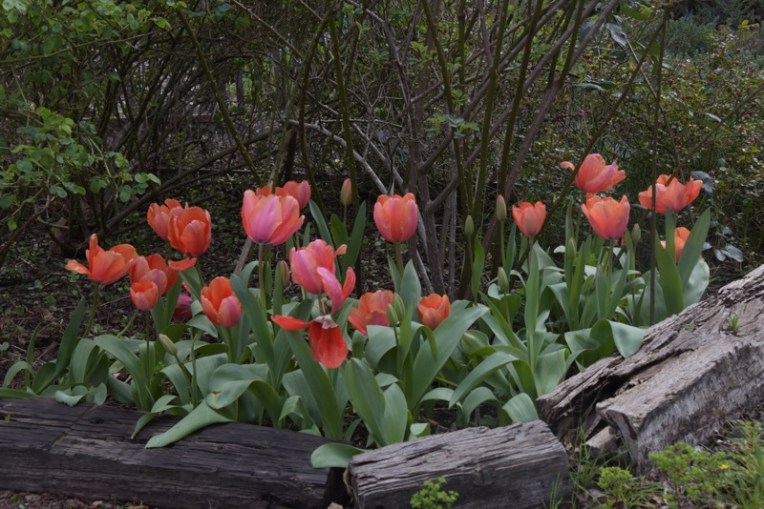
"Red Impression" and "Coleur Cardinale" tulips
“Red Impression” and “Coleur Cardinale” tulips

February Flowers In The Garden And A Hummer With Attitude

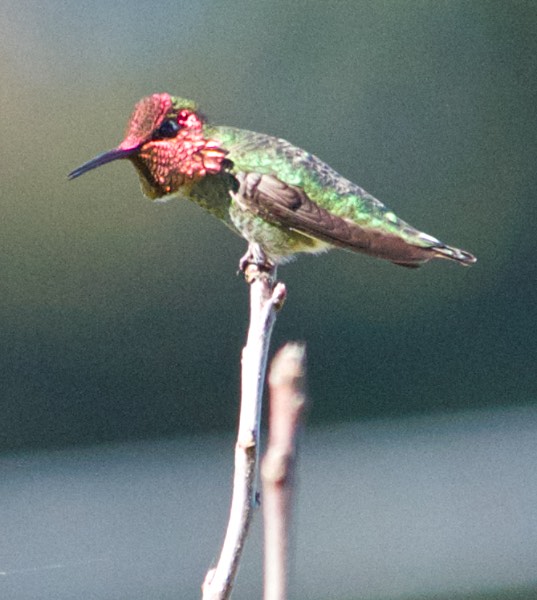
Male Anna's Hummingbird telling me who owns the place
Male Anna’s Hummingbird telling me who owns the place, 1-25-15

Unlike much of the country we’ve turned the seasonal corner out here in northern California. Unfortunately the day after day of nice warm sunny weather means that we’re not getting any rain, so we’re going into a fourth year of drought. At the moment, though, the garden is starting up again with the first bulbs blooming, plus a few other “early risers”. The Anna’s Hummingbird in the photo was in the yard at the end of last month. There’s usually hummers around in the winter and spring, dog-fighting for, well, just about anything it sometimes seems. This guy landed in one of the apple trees. I couldn’t get very close, so even with my long lens (Nikon 80-400mm) he was pretty tiny in the photos. But I thought it would be fun to share one of him in his full “don’t mess with me” display.

Here are some photos of what’s blooming today (all photos taken with a Nikon D750 and a Nikon 28-300mm lens):

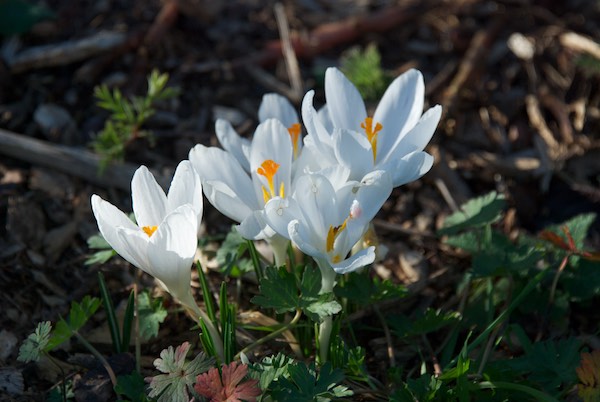
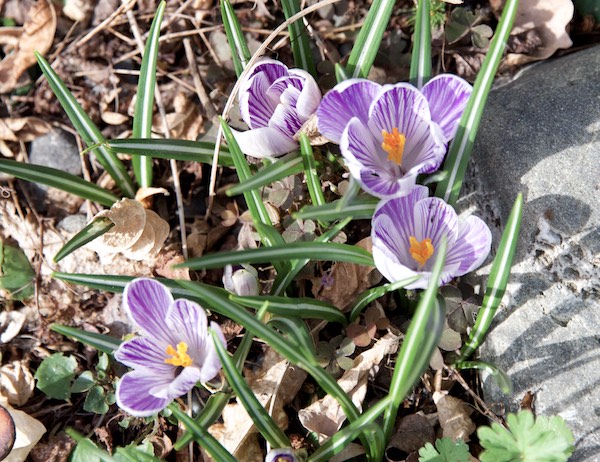
White crocus
White crocus
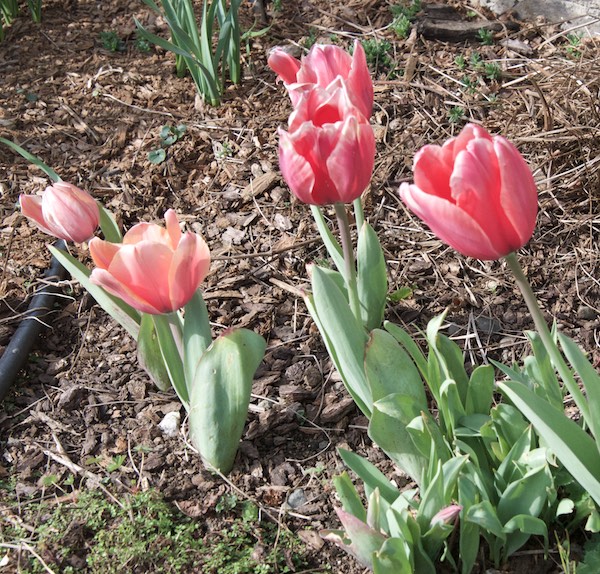
Pink tulips
Pink tulips
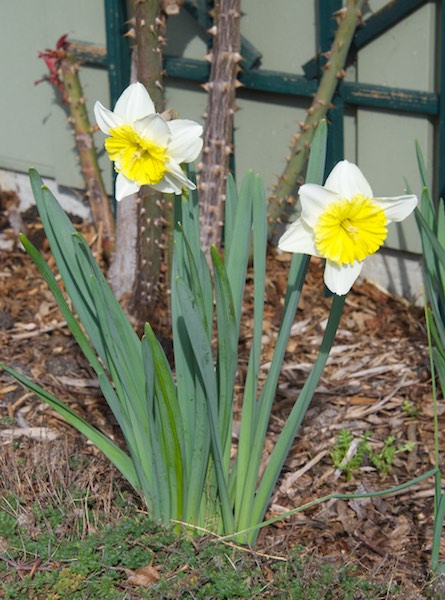
Daffodils
Daffodils
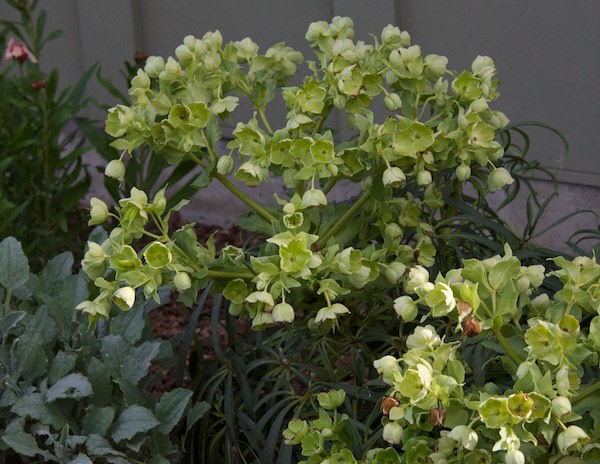
Corsican hellebore
Corsican hellebore
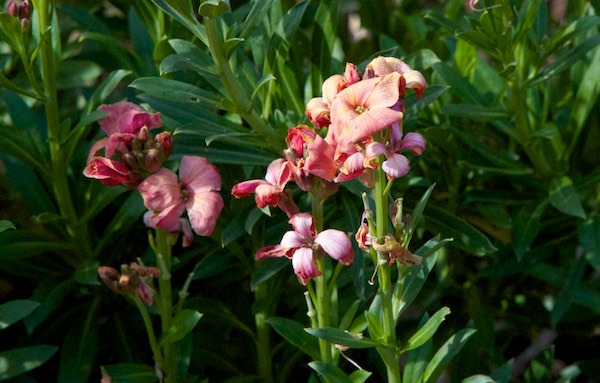
Wallflowers I grew from seed brought back from England
Crocus "Pickwick" my favorite
Crocus “Pickwick” my favorite
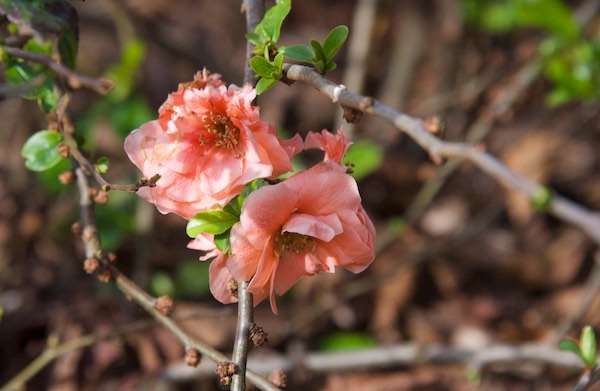
Flowering quince
Flowering quince
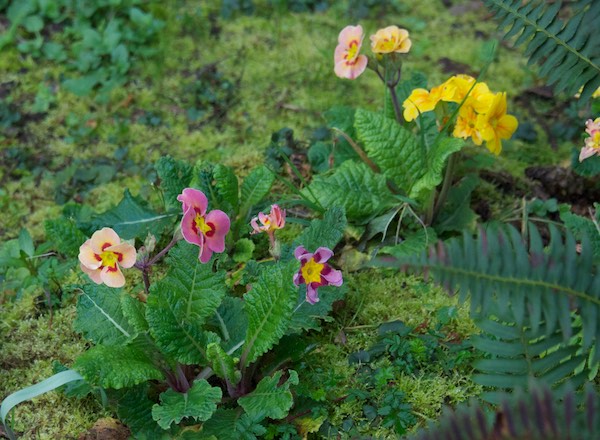
Primroses
Primroses


A Visit To Our Garden

It rained all through April, so most plants got a late start. But everything is going great now. Vegies are in, but not much to see yet.

I thought I’d share an “album” of photos that I’ve taken over the past month or so to give you look at one thing I do when I’m not at the easel, which is garden. Great exercise and very rewarding, especially this time of year.

I have a special fondness for old roses, hardy geraniums and *most* of the critters who show up. Enjoy.

View of the front garden facing east
Rough-skinned newts doing what newts do in the spring, being checked out by a couple of mosquito fish. What was interesting is that they were doing it out in the middle of the pond in broad daylight. It turns out that they are so toxic that nothing messes with them.
Unidentified species of caterpillar that has colonized some Himalayan honeysuckle volunteers. And only those.
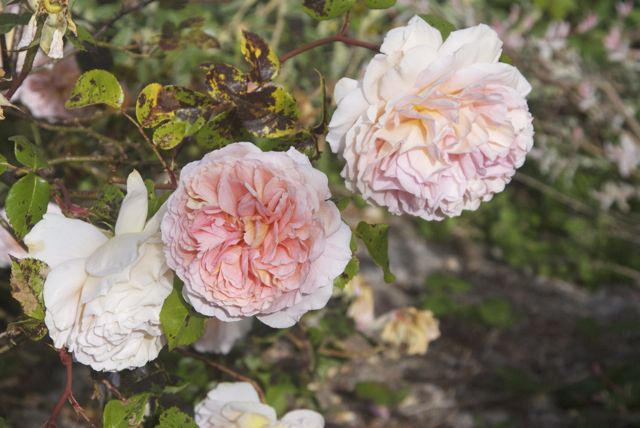
David Austin English Rose “Abraham Darby”
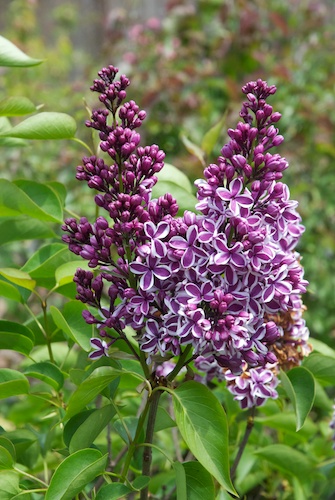
Lilac “Sensation”
Unidentified caterpillar. Might turn into a sphinx moth, but don’t know for sure.
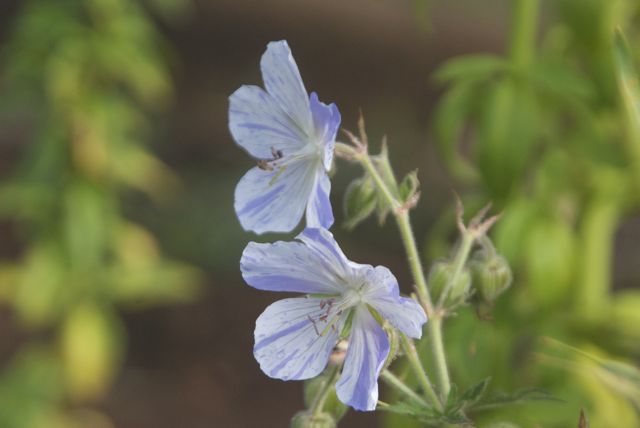
Hardy geranium “Splish Splash:, which is merrily seeding itself around the garden and also hybridizing with Johnson’s Blue.
The Supervisors: Niki, our tri-color rough collie boy and Eowyn, the black kitteh
The reward: a nice big vase of fragrant old roses

And don’t forget to check out my WildArt Mongolia Expedition Kickstarter project. It ends July 15 and it’s all or nothing. If I don’t raise the amount I’m asking for then I receive no funding through them. I’d really appreciate your support!
An Album From My Garden (Lots of Old Roses)

My main hobby when I’m not in the studio is gardening. I love old roses and English style borders. It’s also really good exercise.

And it’s an art form, too, interesting partly because it adds the dimension of time. And also impermanence.

The orchestration of bloom through the seasons is fun and an on-going challenge.

I started this garden almost five years ago and there have already been a lot of changes.

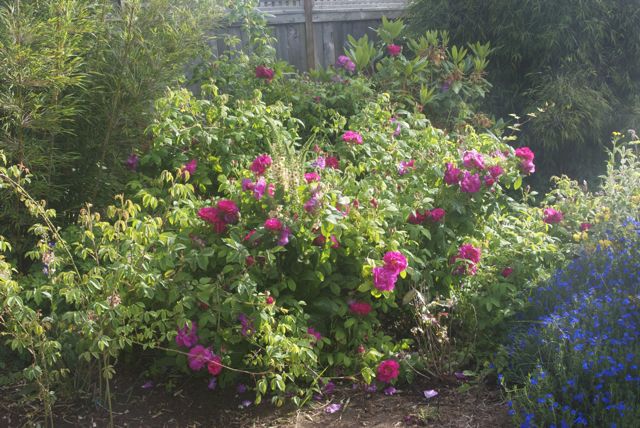
What you’ll see here, with the exception of ‘Ispahan’, is the front “yard”, where most of the roses are. We killed off the grass in the middle a couple of years ago and put our vegetable garden there instead. The rose borders are coming along, but some plants are going to be moved this fall having already gotten too big for their allotted space. It’s hard to tell how a plant will do. Some never do well and some totally overdo it. The David Austin English roses are known to sometimes become vigorous climbers in California, but stay sedate shrubs elsewhere.

So here is an album of the front garden with photos I took day before yesterday, mostly the roses, but also a few other favorites.

Rosa mundi- a sport of Rosa gallica, ancient
Rosa gallica- The Apothecary Rose and the Red Rose of Lancaster, ancient
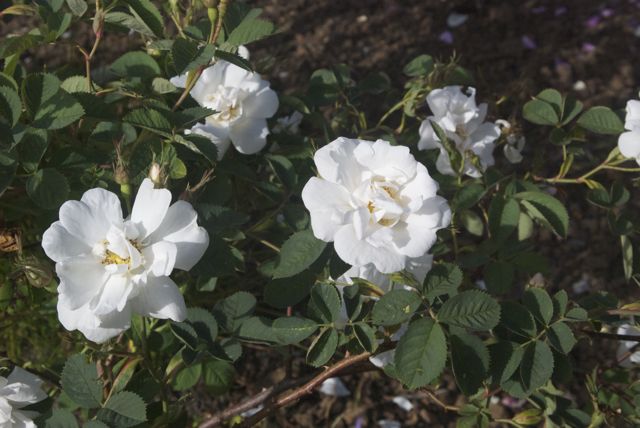
Rosa alba semi-plena- the White Rose of York, very old
Lilac 'Sensation'
"Leaping Salmon', large-flowered climber, 1960s; the closest to a hybrid tea rose you'll find in my garden
'Ispahan'-which has formed a HUGE bush; damask rose from Iran
'Golden Celebration'- David Austin English Rose
Hardy geranium 'Splish Splash', which is happily self-seeding around the garden
Duchesse de Montebello- gallica from France, pre-1826
'Crown Princess Margareta'- David Austin English Rose
'Citrus Splash'- Jackson and Perkins
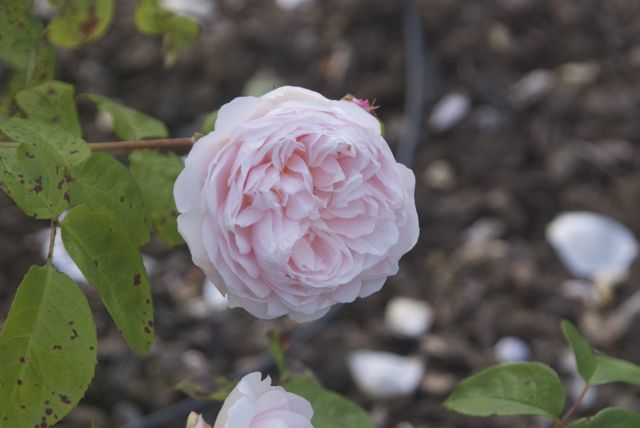
'Abraham Darby'- David Austin English Rose
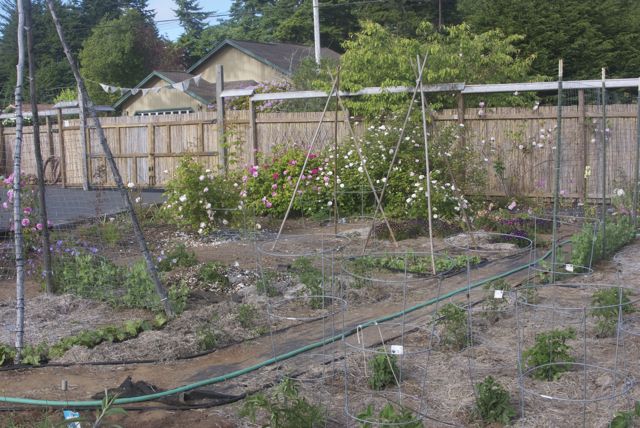
The vegetable beds- peas, beans, radishes, tomatoes, scallions, shallots so far
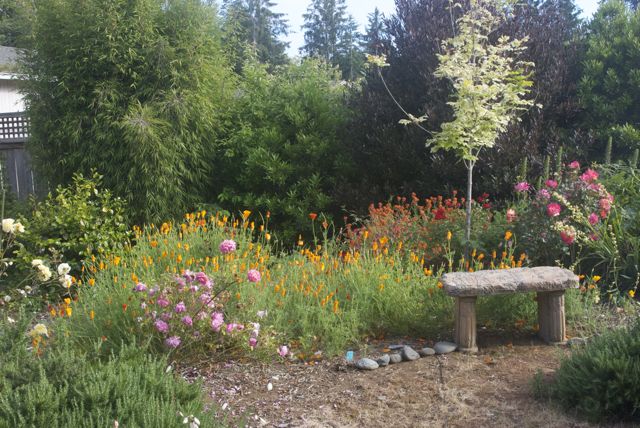
Bed with Charles Austin (David Austin English Rose) California poppies, orange wallflower, varigated maple, Citrus Splash rose, sisyrinchium striatum, backed by acanthus mollis

Mongolia Monday: Wildflowers, Part 3

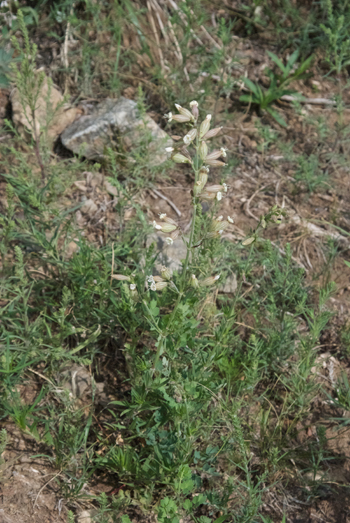
This is the final installment of images that I took of wildflowers during my AFC Flag Expedition to Mongolia this past July. As before corrections and identifications of flowers I couldn’t find in the guidebook I used, “Flowers of Hustai National Park”woulo be greatly appreciated.

Sawwort, Saussurea amara
Snow-in-Summer, Cerasttium arvense
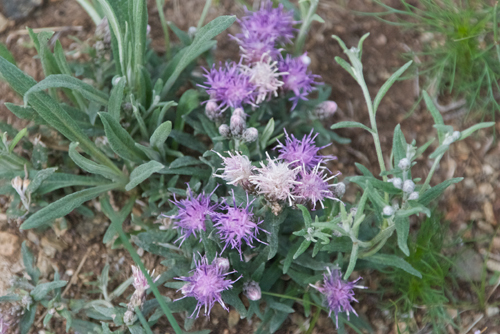
Thistle species
Thistle species
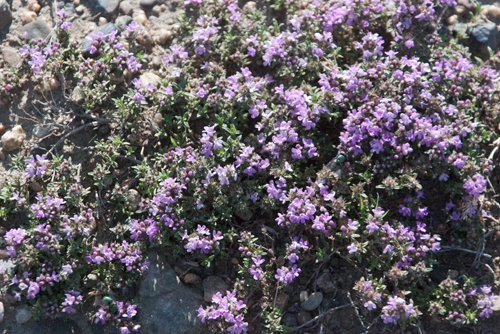
Thyme, Thymus globicus
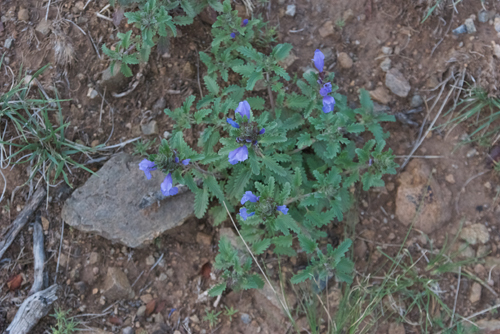
Unknown; guide said it was not a pasque flower since bloom season for that is earlier
Valerian, Valeriana officinalis
Goniolimon, Goniolimon speciosum
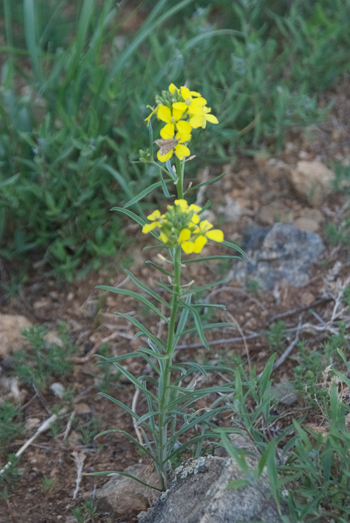
Wallflower, Erysimum flavum
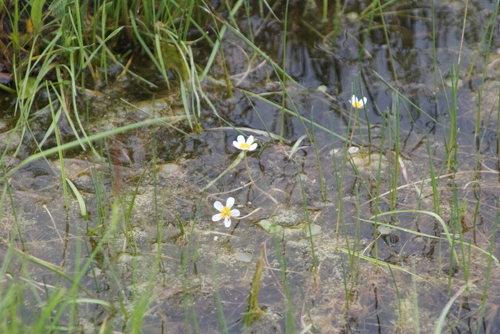
Unknown aquatic flower
Unknown white flower
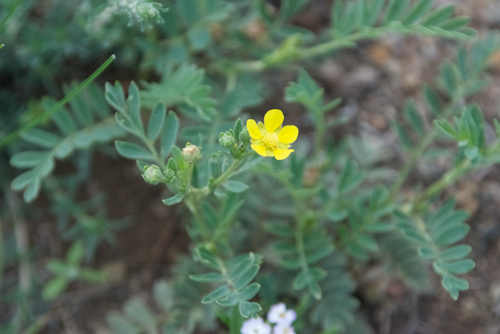
Unknown yellow flower

Mongolia Monday- Wildflowers, Part 2

Continuing on from last week:

Once again, the identifications are my best guess based on the field guide “Flowers of Hustai National Park”. Corrections more than welcome.

Except where noted all plants photographed at the Gun-Galuut Nature Reserve.

Caraway, carum carvi?
Eyebright, Euphrasia tatarica
Goniolimon, Goniolimon speciosum ?
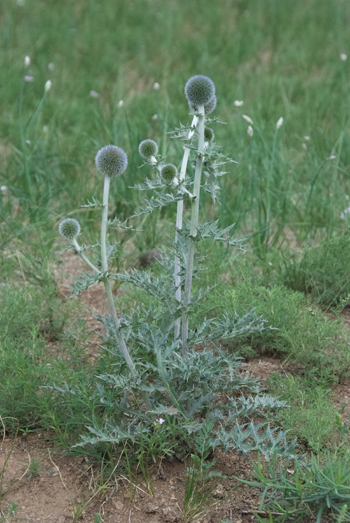
Globe thistle, Echinops latifolius
?
?
Haplophyllum, Haplophyllum dauricum
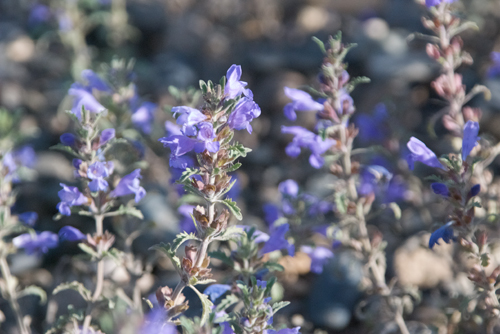
Hyssop, Lophanthus chinensis
Hyssop growing near Kherlen River
Milk vetch, Astragalus galactites
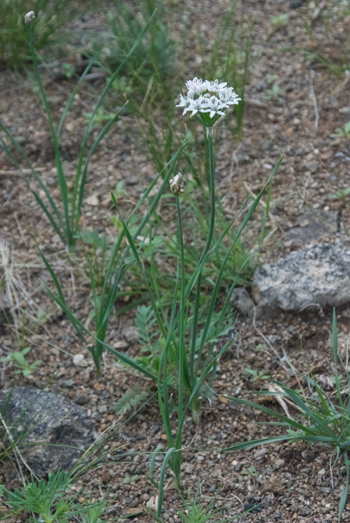
Onion, Allium odorum
Orostacys species
Orostacys species
Persicaria species
Persicaria species
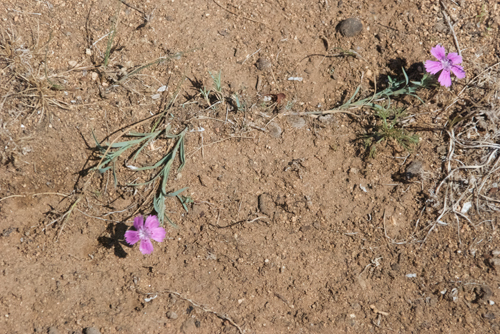
Pink, Dianthus versicolor
Pink, Dianthus versicolor, Baga Gazriin Chuluu Nature Reserve
Ptilotrichum, Ptilotrichum canescens
Ptilotrichum, Ptilotrichum canescens (yellow flower)

Mongolia Monday- Wildflowers, Part 1 (Identification help wanted)

On my previous trips to Mongolia it was either spring or fall, too early or too late to really see much in the way of wildflowers. There were some at Ikh Nartiin Chuluu last year, but I had no way to identify them. Then I found the field guide “Flowers of Hustai National Park” back in Ulaanbaatar, which appears to include most of the common flowers one is likely to encounter.

For the next three weeks I’ll post my flower images with my best guess at what they are since I’m not a botanist. I do garden, however, and many of them look suspiciously familiar.

I would love to have assistance in confirming or correcting my identifications.

The following images are all from Gun-Galuut Nature Reserve, which is about two hours southeast of Ulaanbaatar. Some are from the rocky hillsides of Mt. Baits and some from the wetland on the north side of the mountain. None have been retouched in any way.

Artemesia
Wormwood sp.
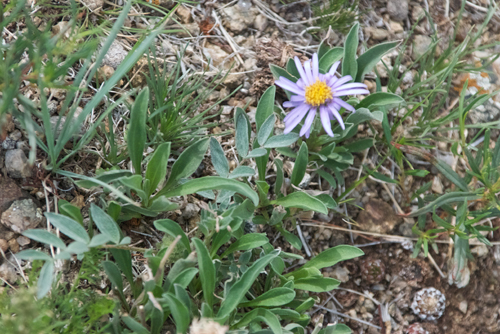
Aster
Aster sp.
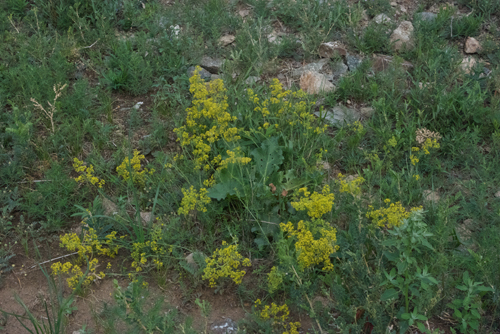
Bedstraw, Galium verum
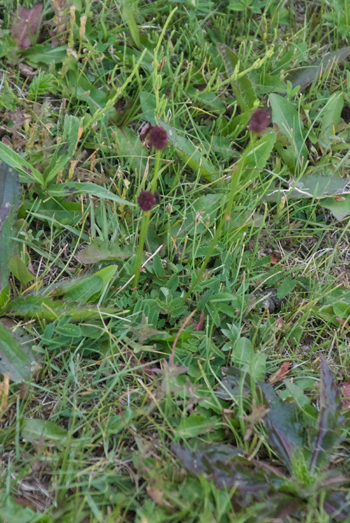
Unknown
Unknown
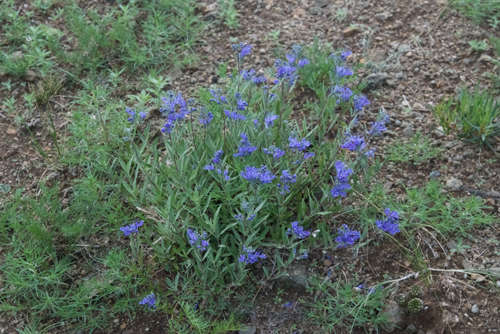
Bluebeard, Caryopteris mongolica
Bluebeard, Caryopteris mongolica (a personal favorite)
Bluebeard plant
Bluebeard plant
Unknown
Unknown
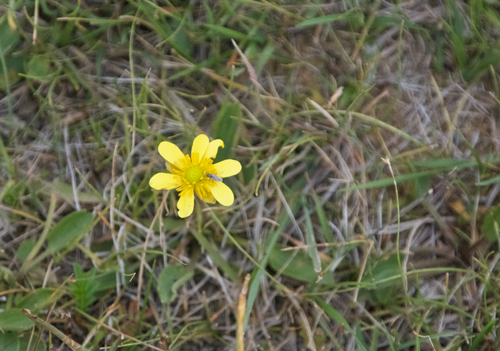
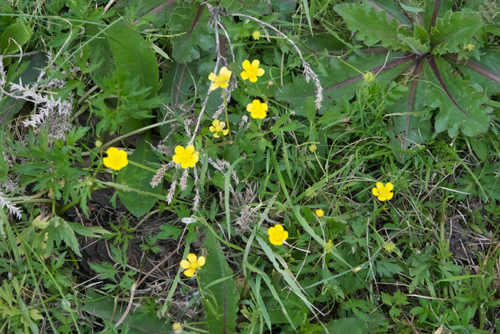
Buttercup?
Buttercup sp.?
Catchfly, Silene jenisseensis
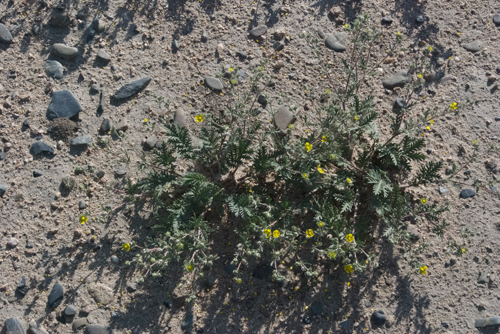
Cinquefoil sp.?
Cinquefoil sp.?
Clover, Trifolium lupinaster
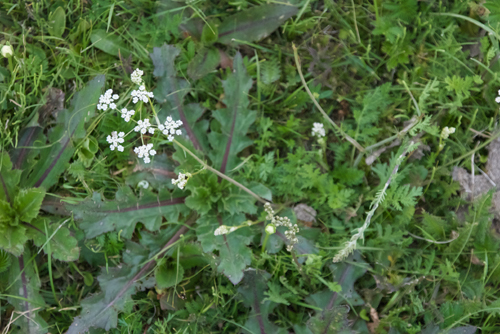
Caraway, carum carvi?
Elecampane, Inula britanica

Animal Expression, Part 3- Noses And….A Contest!

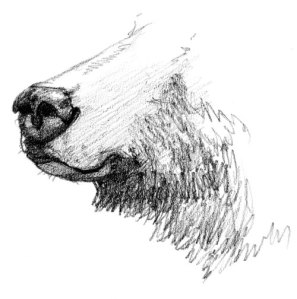
Saving the eyes for last, I’m going to skip “down” to noses. This is a case where access to zoo animals is really handy. Even though you will still want to compare them to the wild version, being able to learn how a given animal’s nose structure works by seeing it really close up is very valuable.

Something that one of my art school teachers emphasized again and again was to not be “evasive” in our drawings, but to make a decision, put it down and then either make corrections, realize what needs to be changed for next time, or celebrate that you got it right. What was not ok was aimless noodling around trying to find the form. It shows.

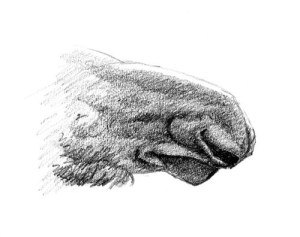
I spent 4-5 hours on these six drawings of noses. This time I used a Sanford Draughting pencil, but on the same vellum bristol as last time. I kept erasures to a minimum and draw as directly as possible.

So here’s the deal: the first person who emails me with the correct identification (common name) of all six species gets a packet of six of my notecards (with images from original drawings). The deadline is midnight PST Wednesday, March 25. Your hint- they are all from North America.

grizzly-noseI’ve personally found the 3/4 view difficult, at least partly because I know that the camera flattens and distorts the form. This is a case where I draw what I know rather than what I see in the image.
bison-nose

Face-on is a good way to start. Look for reference with a good light side and shadow side, which will show more detail and structure.

moose-nose1Profile is good, also. Then you can see how the nose fits into the rest of the head without worrying about perspective. Pick what you want to emphasize and downplay the rest.

vulture-noseBird’s beaks are really hard to see close up in the field, generally because they’re small and the owners don’t tend to hold still for long. A captive bird may be your best bet because you don’t want to get caught faking it. But beware captive raptors whose beak tips won’t show the wear that the wild ones will.

cougar-nose1Cat noses are fairly similar in form. Variations on a theme, more or less. So drawing your house cat’s nose can be good practice for the big, wild guys.
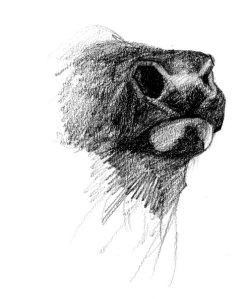
elk-noseIt’s always great to get good reference of unusual angles, like this one looking up. It helps to see how the lower jaw fits with the upper jaw. Note how I have created a sense of three dimensional form by “wrapping” the right hand upper lip around the lower jaw.
AND A VERY HAPPY FIRST DAY OF SPRING!

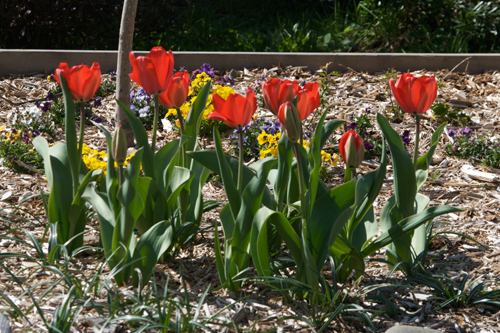
Here’s a photo from the garden:

tulips2009-03-191