Every Artist Starts Somewhere- Art School

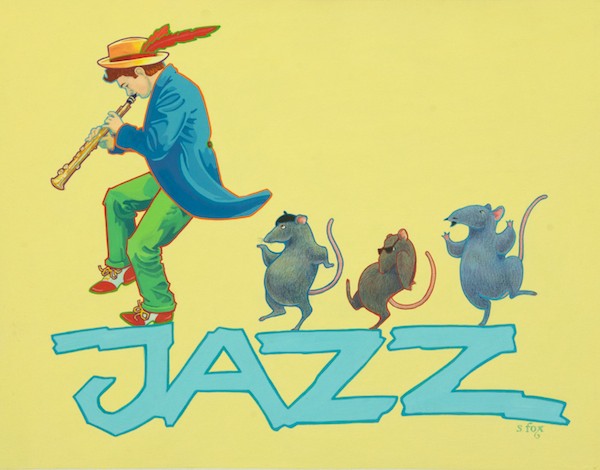
"Jazz"- Gouache on illustration board
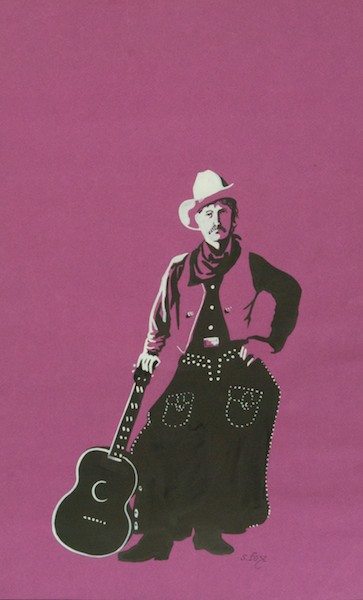
“Jazz”- A classmate modeled for me in a tuxedo coat from the prop room, I went to a local music store and shot reference of one of the employees playing the clarinet to make sure I had the hand and finger positions correct and invented the mice and the lettering. This was for Illustration III. Gouache on illustration board.


This is the third installment of a series I started last year, my beginnings as an artist. You can find the previous posts here and here.

In the early 1980s I was living in Berkeley working as a freelance graphic designer. I hit a very rough patch, rough enough that I had to sit back and figure out what to do career-wise. I saw my choices as getting a job, re-dedicating myself to my freelance design business and really digging in on marketing or “taking some classes” to increase and improve my skill level. What ended up happening is that in 1987 at age 35 I went back to school full-time at what was then the Academy of Art College (now “University”) in San Francisco for three years and earned a BFA Illustration in 1989. While I had intended to focus on graphic design and also take some illustration classes (a relative and a friend had both trained as illustrators there so I knew it was a good program), within a few weeks I knew Illustration was what I wanted since I had FINALLY found the art field where traditional drawing skills were still highly valued.

I had up to nine hours of drawing a week. It was a struggle to undo all the tics and faulty perceptions I’d built up trying to teach myself and, in fact, had become so frustrated that I didn’t draw at all, other than for work-related jobs, for close to ten years. But class after class I just kept going, drawing after drawing. I never won any awards, but at the end I had the knowledge and skills to keep improving. Within a few years I felt that I could finally say that I knew how to draw.

In the Illustration Department we had to do an illustration a week, every week. The first semester required us to use first pen and ink and also gouache. Below you’ll see some of the initial exercises we did. I was one of the very few who liked gouache and I was interested in greeting card work, much of which was painted in that media at the time, so I stayed with it all through school. The second semester was watercolor and dyes like Dr. Martin’s. From the third semester on we could use the media of our choice.

Among my favorite classes was one taught by Stan Fleming, who did storyboarding for quite a few LucasFilms, including at least of of the Indiana Jones movies. He would come to class in his leather Indie jacket, to our delight. Our assignments were movie-based, like doing a storyboard for Ghostbusters or object designs for a fantasy movie, and a lot of fun. Another favorite instructor was Dennis Ziemienski, who is now a nationally-known fine artist, but became a well-known illustrator for, among other things, his Elmore Leonard book covers. All his assignments were based on actual jobs that he’d done. He also brought in guest critiquers. For me the memorable one was Neil Shakery from the legendary design firm Pentagram. I’ve posted three images below, for a children’s magazine, from the assignment he critiqued. I encountered him downstairs afterwords and he took a minute to tell me how much he liked what I’d done. That meant a lot to me, as you can imagine. We also had guest speakers who included Robert Heindel and Drew Struzan.

So here’s a trip down my illustration memory lane:
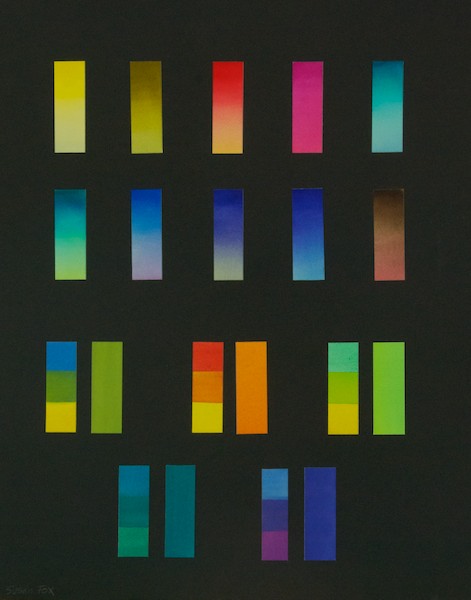
Color strips
Color strips, Yeah, I know, exciting stuff. But it’s how we learned to control the media we were going to be using.
Exercises using watercolors or dyes.
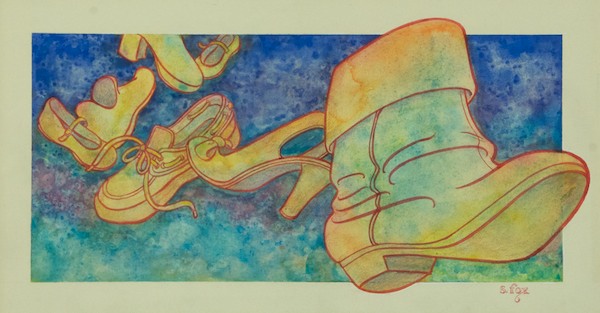
Exercises using dyes. Anyone who has followed this blog for any length of time won’t be surprised by my choice of subject matter. Dr. Martin’s dyes on vellum bristol.
Learning to see the largest shapes in two values plus the paper color.
Learning to see the largest shapes in two values plus the paper color. Gouache on construction paper.
Illustration II watercolor.
Illustration II watercolor. I remember vividly the lesson from this one….”Acknowledge the third dimension.” Critical and without which an artist cannot create the illusion of three dimensions on a two-dimensional surface. Watercolor on illustration board.
Watercolor assignment for Illustration II.
Watercolor assignment for Illustration II. The texture was created by sprinkling salt on the wet paint. Watercolor on illustration board.
The assignment was something like "dessert".
The assignment was something like “dessert”.  I bought the dessert (which was consumed after shooting it for reference, of course). Everything else were things I had and the rose was from the garden. Getting the perspective and ellipses correct was a challenge and I pretty much pulled it off, but not quite. I think the purple shadow is a bit much now, even though we were constantly encouraged to “plus” everything. Gouache on illustration board.
Assignment from Dennis Ziemienski's class.
Assignment from Dennis Ziemienski’s class for a children’s magazine. This one was one right up my alley.
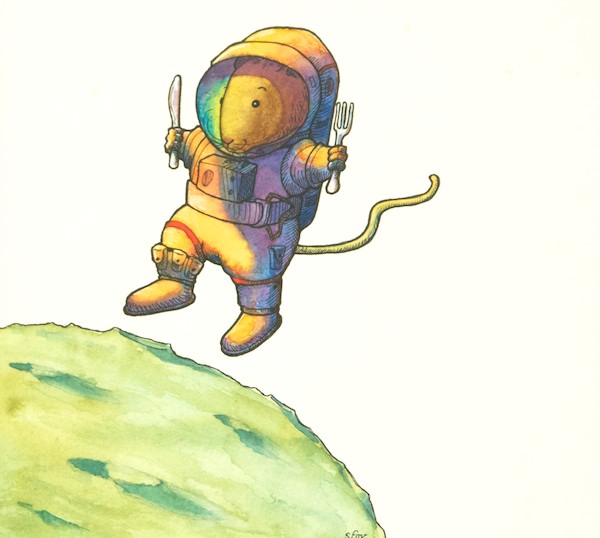
The mouse and the moon.
What is the moon made of? Green cheese, of course. I did my research for the astronaut’s suit. It’s simplified, but accurate, Watercolor/pen and ink on hot press watercolor paper.
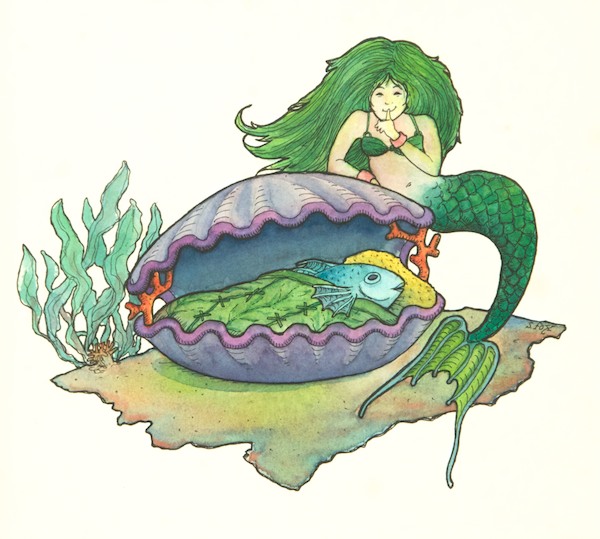
Do fish sleep? The mermaid thinks so.
Do fish sleep? The mermaid thinks so. Watercolor/pen and ink on hot press watercolor paper.
The assignment was to do an album cover.
This assignment for Illustration III was to do an album cover. I’d recently discovered Kitaro’s “Silk Road”. Gouache and watercolor on illustration board.
This was for Illustration IV, I think. And the assignment may have been an open one, the hardest to do.
This was for Illustration IV, I think. And the assignment may have been an open one, the hardest to do. I’d been doing medieval illumination for years as a member of the Society of Creative Anachronism, so it was fun to use that skill in art school. Gouache on illustration board.
One of my classmates posed
One of my classmates posed for me wrapped in a bed sheet. I’ve always loved Alphonse Mucha’s work and it was fun to try to capture the spirit of his wonderful work. Watercolor on cold-press watercolor paper.
For my final semester, I did an independent study one on one with an instructor. He assigned me a movie poster.
For my final semester, I did an independent study one on one with an instructor. He assigned me a movie poster and I chose “Camelot”. I really had to battle to get the likenesses in gouache, but I loved coming up with the design.

As you can see, I took advantage of the opportunity to try all kinds of styles and approaches. Next time I’ll share some of the work I did after graduation for my professional portfolio.

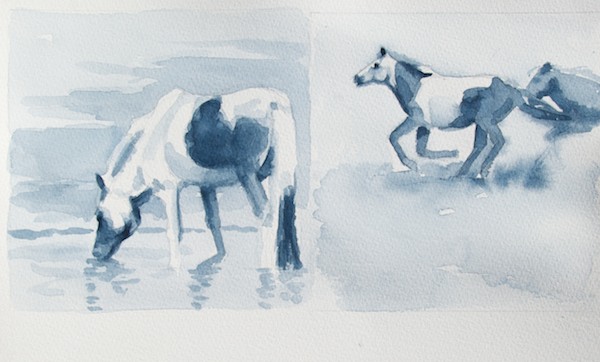


The *Value* of Value Studies & Some Examples

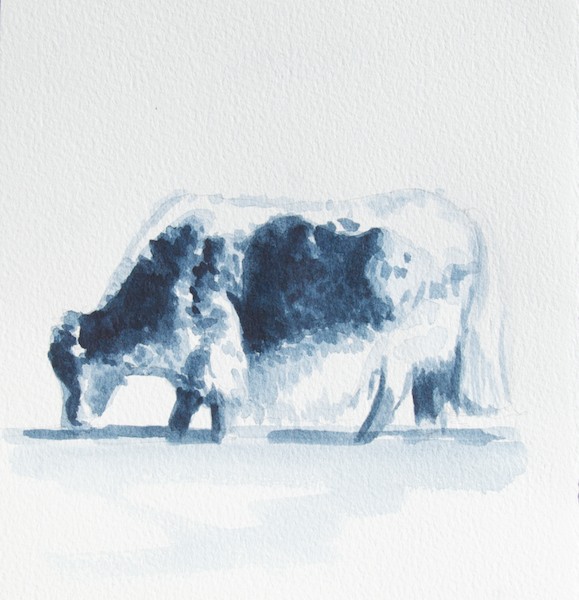
6x6" Horse studies
6×6″ Horse studies

I’m getting ready to begin my Fall Painting Season and decided to start by tweaking my working process. Every successful representational painting has two things: solid composition and a strong, well-thought out value pattern. Of course drawing, color and edges are important also, but one can make the case that the design and values are critical. So I’ve spent the last few days doing small value studies of reference photos that I’m thinking about painting. I’m working on the drawing part at the same time, too. None of them took more than an hour or so.
They are all done on various types of watercolor paper I already have on hand, experimenting to see which one serves my purpose best, and with one color…Winsor Newton Payne’s Gray. The brush is a Round No. 10 Prolene by ProArts. The study sizes run from 6×6″ to 7×10″, so not very big.
I got the idea to use watercolor for preliminary value studies (instead of, for instance, pencils or oils) from my friend and colleague, nationally-known watercolorist David Rankin. You can read his information about what he calls “Gray Studies” here.

I like it because it’s fast, effective, fun and let’s me practice with the media I use on location when I’m in Mongolia.

So, if your paintings are looking kind of flat or you’re finding that using color is confusing your values, I highly recommend that you get the simple set of materials listed below and try this. It may be a bit of a struggle at first to truly grasp the difference between color and value (the relative light and dark of something separate from its color) and to move away from your reference in order to get the right amount of contrast in the right places (a viewer’s eye is going to go first to the area of highest contrast, so you need to make a conscious decision about where your focal point is), but hang in there, just keep adjusting and experimenting and you’ll be rewarded by a visible improvement in your work.

Materials list:

1 tube Winsor Newton Payne’s Gray transparent watercolor

1 small dish or whatever you think will work for a palette.

Watercolor paper (I’m using “stock on hand”….small blocks of Art Lana Lanaquarelle hot press, Arches cold press and Saunders Waterford cold press; or you can get sheets of 300 lb, which doesn’t have to be stretched). If you buy sheets then you will need something to mount them to. I use a rectangular scrap of foamcore taped around the edges with clear packing tape and then use 1/2″ drafting tape to hold the corners of the paper to the board.

1 brush- Use at least a no. 10 round or 1/2” flat; your choice of brand (I like the Robert Simmons Sapphire synthetics, but also have a couple of the Prolene and Dick Blick rounds)

Reference photos with strong light and shadow patterns.

Here’s some more of what I’ve been doing:

Horses
Horses; I deliberately chose to put the darker wash along the contour of the left horse’s head, mane and back to make the white, lightest area pop out. Notice that it stops at the eye where the shadow area begins, so that part of the background was left lighter.
Short-tailed weasel or stoat
Short-tailed weasel or stoat; I learned from this one that my reference photo doesn’t have as much value contrast as it seemed when I picked it, so for this study I pushed the contrast between the weasel and the background. Still not happy with the shadow areas around the animal, so I’ll probably do another quick study just using shapes to get the values where I want them.
Mongolian yak
Mongolian yak
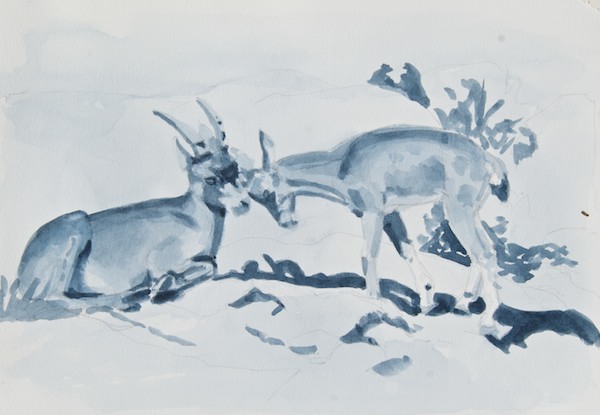
A more finished study of Siberian ibex
A more finished study of two Siberian ibex


Fun Times At The Susan K. Black Foundation Workshop! A Personal Album

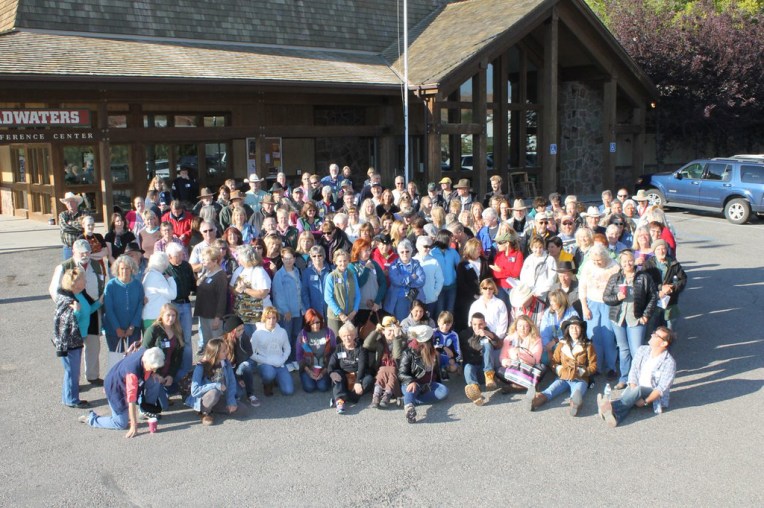
The annual exercise in cat-herding....the official SKB group photo
The annual exercise in cat-herding….the official SKB group photo. I’m somewhere towards the back on the right. (Photo by Anthony Cannata)

The main reason for my road trip to Wyoming at the beginning of last month was to attend the Susan K. Black Foundation Workshop for the first time in too many years. My travels to Mongolia have often gone into September and the workshop is always the second week so that it will be right after the Jackson Hole Fall Arts Festival. But this year I was home by the end of July.

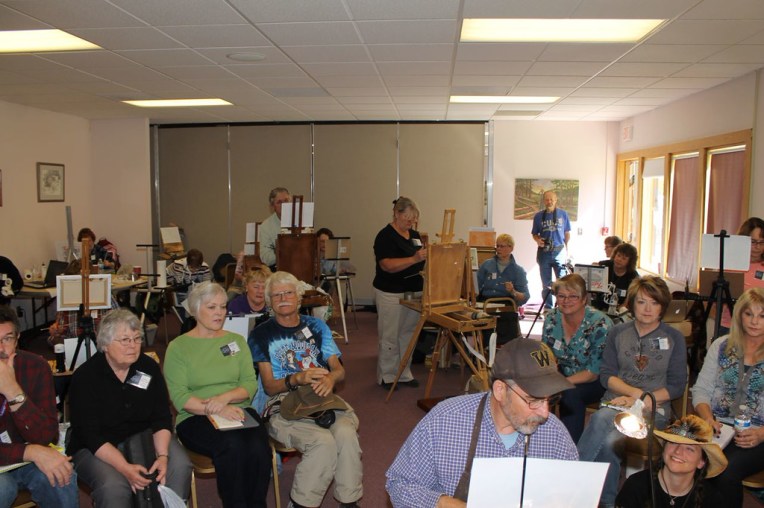
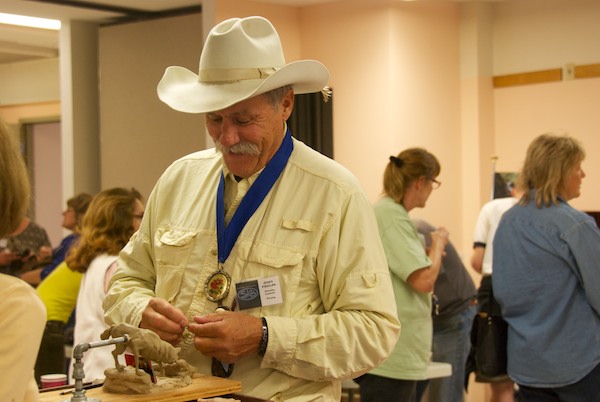
In every good way, nothing had really changed and the welcome I got was touchingly warm. What sets this workshop apart is that there are always a number of instructors and one can bounce around between them as one wishes. You can learn from painters in oil, acrylic and watercolor. Plus, this year, sculptors. Even better, anyone who has been an instructor is permanently invited to come back every year and many do, so it’s equal parts workshop, a reunion of artist friends and colleagues and a gathering of the animal art and landscape clans. All in an informal environment with great food and terrific scenery at the Headwaters Arts and Conference Center in Dubois, Wyoming, which is about 90 minutes from Jackson.

There’s always a Special Guest Instructor and this year it was none other than James Gurney of Dinotopia fame. He also presides over one of the most popular art blogs in the internet, Gurney Journey, and has written what has become a standard book on the subject “Color and Light”. His endlessly inventive ways to work on location have been a real inspiration for me personally. So I wasn’t going to pass up the chance to watch him in action.

The  first day
The first day James explained his basic location painting set-up.
We got to see it in action right at the conference center.
He was painting a scene from the kitchen as the staff prepared our meals.
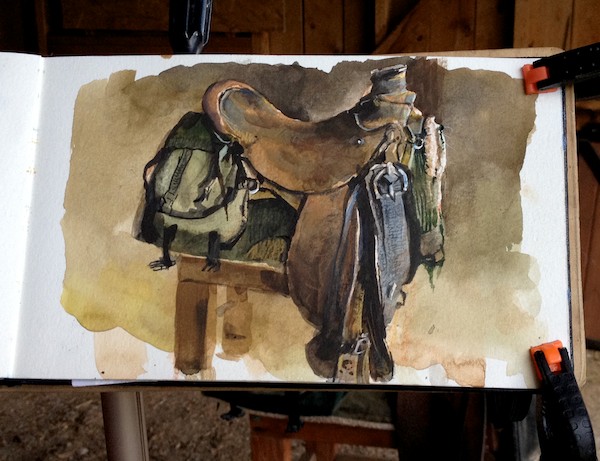
Saddle study by James Gurney

There were plenty of opportunities to work on location, including a couple of local ranches.

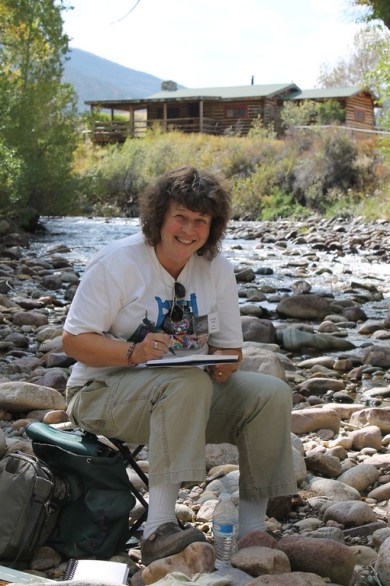
I found a nice spot down by the creek at CM Ranch.
I found a nice spot down by the creek at CM Ranch. (Photo by Anthony Cannata. Thanks!)
Picnic lunch at the Finley ranch.
Lee Kromschroeder getting ready to paint.
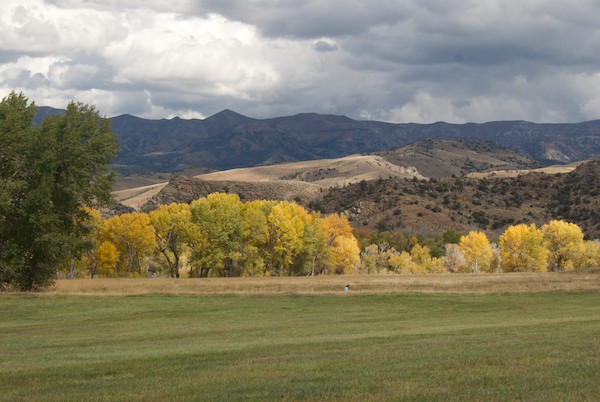
Some of the great scenery...
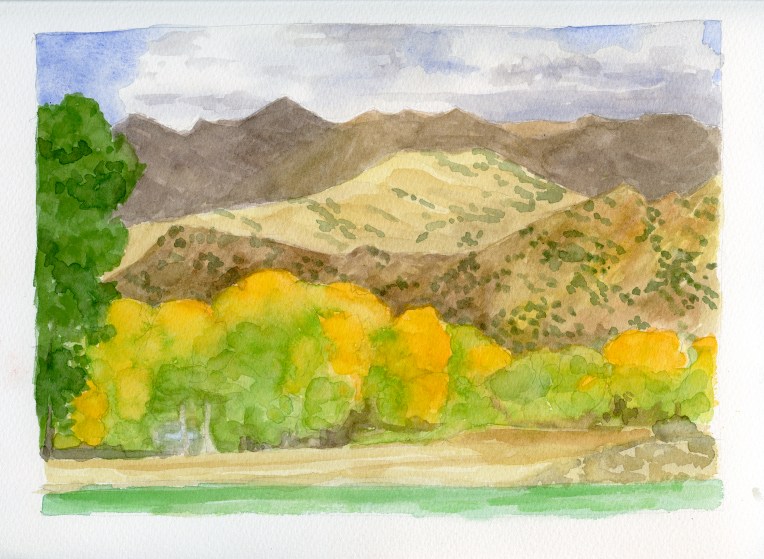
Some of the great scenery with the cottonwoods coming into their fall colors…
James Gurney and his wife, Jeanette, painting on location
James Gurney and his wife, Jeanette, painting on location at the Finley ranch.
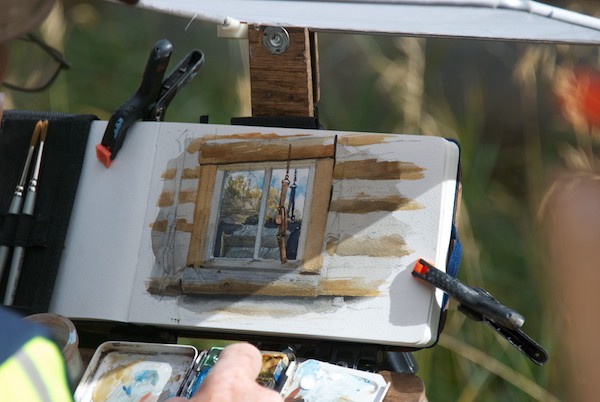
In-progress photo
In-progress casein painting of old traps hanging on the wall of the log cabin.
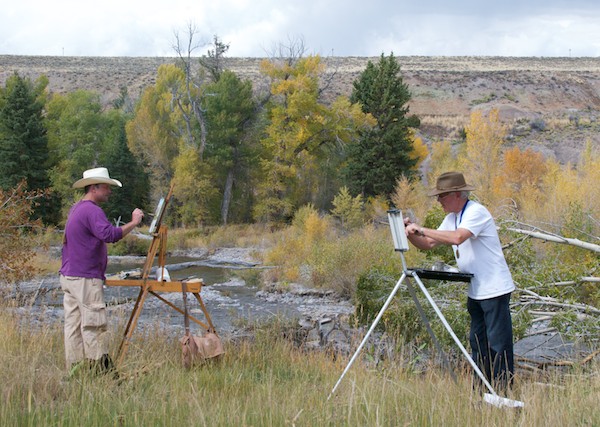
Bob Bahr and Heiner Hertling getting serious.
Bob Bahr and Heiner Hertling getting serious with the scenery.
Our host, John Finley. His ranch has been in his family for over 100 years.

One of the best parts of the workshop is the good times with artist friends and colleagues, often in the evening at the local saloon, the Rustic Pine Tavern.

Guy Combes discovered a flyer for the workshop in a local newsletter so of course there had to be a photo. And since we're all animal artists I had to take one of him and his partner Andrew Denman posed under this imposing moose head.
Guy Combes discovered a flyer for the workshop in a local newsletter so of course there had to be a photo. And since we’re all animal artists I had to take one of him and his partner Andrew Denman under this imposing moose head.

Besides working out on location, attendees could also do studio painting.

I spent a day in Greg Beecham's class, getting great tips and advice on wildlife painting.
I spent a day in Greg Beecham’s class, getting useful tips and advice on wildlife painting. I’m in the back on the right. (Photo by, I think, Anthony Cannata)

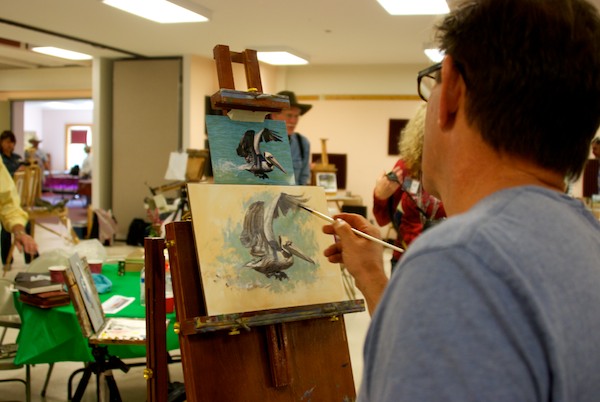
One of the highlights of the week is the “Quick Draw”, which is actually a “Pretty Quick Paint”. It’s a great chance to watch a lot of very accomplished artists in action at once, creating auction and raffle-worthy work in front of a large crowd, including fellow artists.

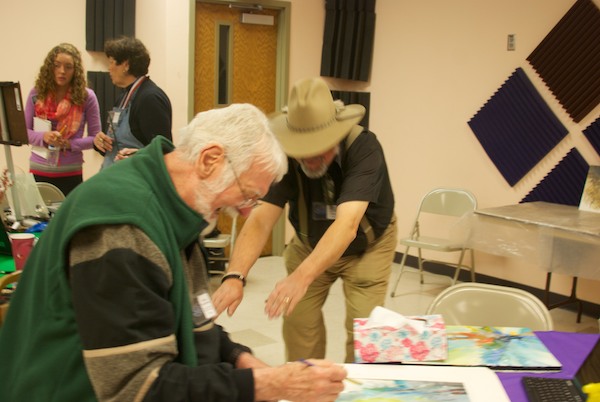
John Seerey-Lester bows before Mort Solberg
John Seerey-Lester bows before Mort Solberg, just to make Mort crack up while he’s trying to paint. It worked.
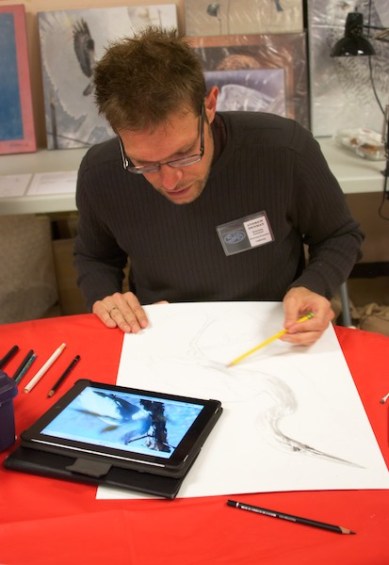
Andrew Denman working on a graphite drawing of an egret.
David Rankin getting ready to paint.
Matthew Hillier hard at work. This was his first Quick Draw.
But he obviously wasn't fazed.
But he obviously wasn’t fazed.
Christine Knapp worked on a fairly large sculpture.
John Phelps created a small wolf.
Lee Cable painted a portrait of a horse.
Guy Combes did a lion.
Greg Beecham harassed David Rankinl
Greg Beecham harassed David Rankin.

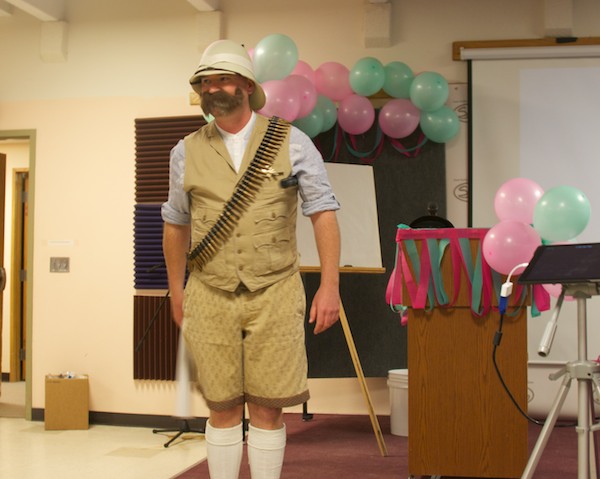
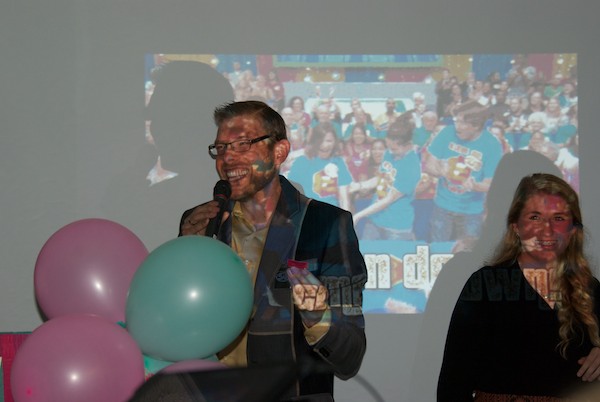
The final evening was an entertainment-packed extravaganza, starting with two suspiciously familiar faces who introduced themselves as Sir Charles Willoughby, who somehow had to keep order (good luck with that), and Chip Chippington (all the sleazy game show hosts you’ve ever seen rolled into one hilarious package).

Sir Charles Willoughby
Sir Charles Willoughby (aka Guy Combes)
Chip Chippington and his lovely assistant, Suzie Sparkle.
Chip Chippington (aka Andrew Denman) and his lovely assistant, Suzie Sparkle.

The fun started with a quiz to identify which instructor various species of dinosaurs were named after…

instrucasaurasesAnd I’m sorry to say that by this time I was laughing too much to get any pics of the rest of the show.

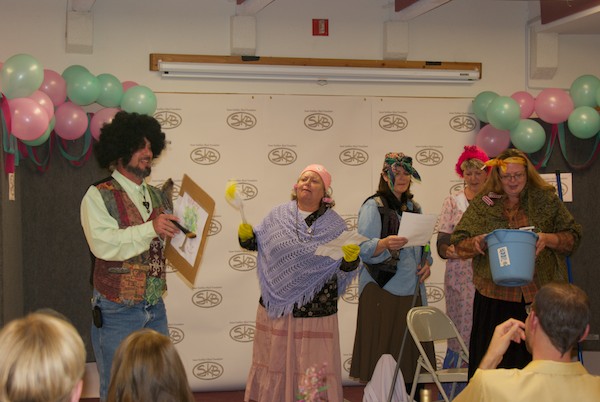
The night was capped by open mic performances, including one by the awesome kitchen staff.

A certain instructor came in for some ribbing.
A certain instructor (who painted the horse’s portrait for the Quick Draw) came in for some ribbing.
As did a certain well-known tv artist who painted "happy trees".
As did a certain well-known tv artist who painted “happy trees”.

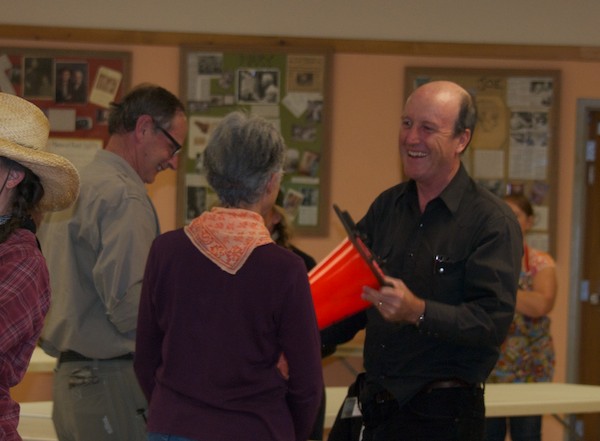
There was a point during the early part of the evening when a slide show was shown of various attendees and instructors sporting a really impressive variety of hats. Getting into the spirit after the lights came up, James Gurney popped one of his Dept. of Art traffic cones (used to create space around where he is working on location in urban areas) on his head…

gurney coneAnd a good time was had by all….

gurney 4


Sketches And Watercolors From My Trip To Wyoming


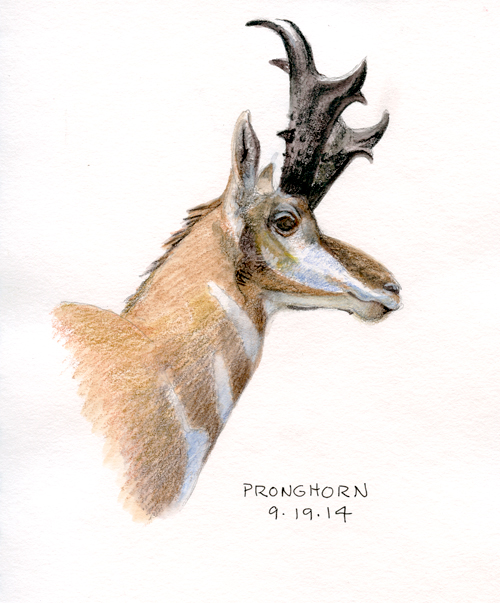
Pronghorn from taxidermy mount
Pronghorn; water soluble colored pencils from taxidermy mount

I’m back home now from my two week trip to Wyoming, where I spent three great days in Yellowstone National Park, a day and a half in Jackson Hole and five days at the Susan K. Black Foundation Workshop (SKB).

I painted and sketched along the way and at the workshop, trying out a variety of combinations of paper and water media. Here’s an album of some of my pieces, all done on location:

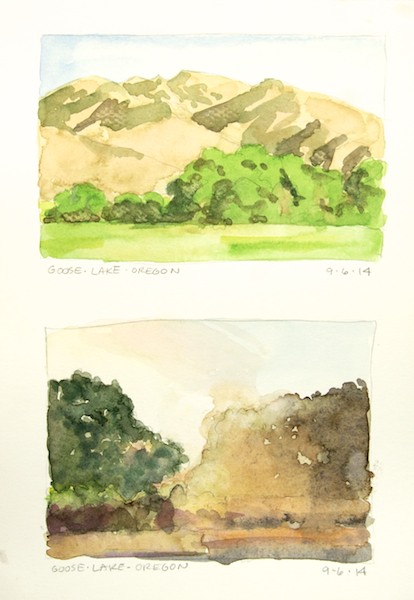
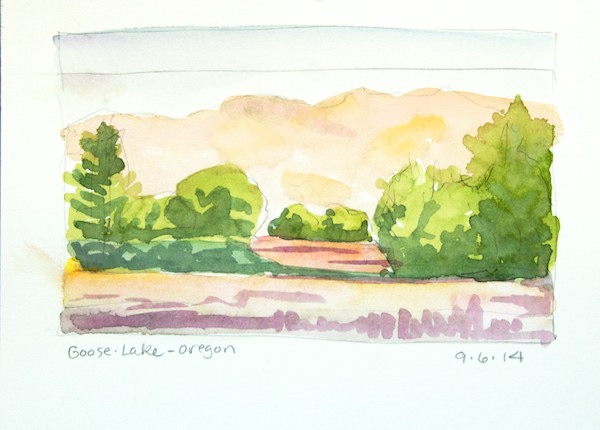
Goose Lake sunset
Goose Lake sunset, done is about 15 minutes; watercolor
Goose Lake
Goose Lake mountain and sunset; watercolor
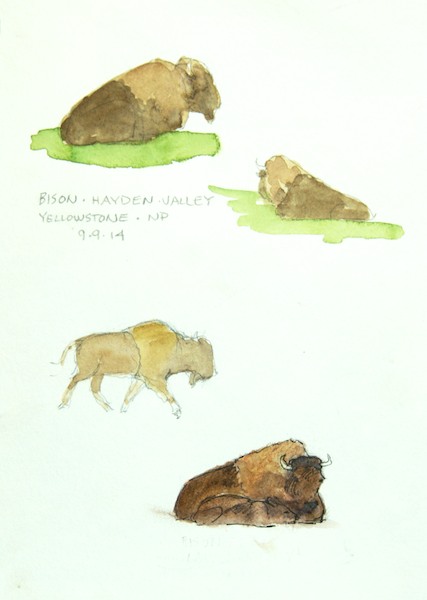
Bison
Bison; pencil and watercolor
Bison in the Lamar Valley, Yellowstone
Bison in the Lamar Valley, Yellowstone; watercolor
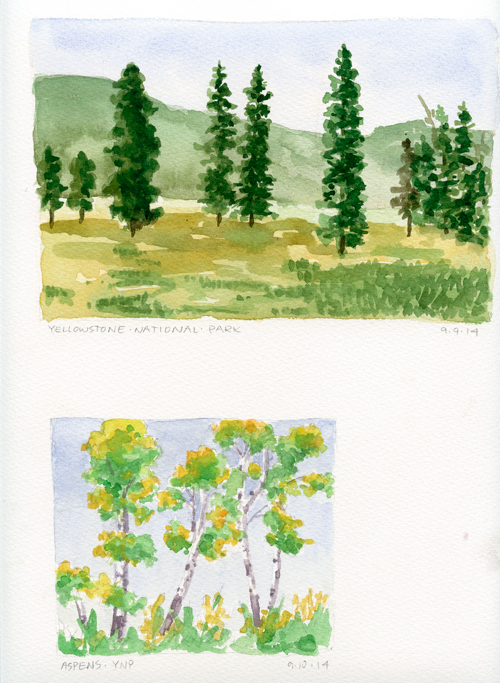
Yellowstone trees; watercolor

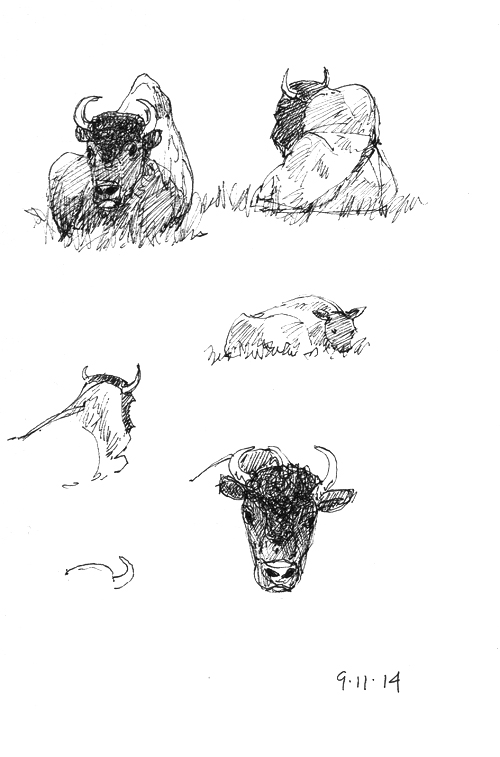
Since I don’t really paint North American wildlife anymore, I found it liberating to not worry about getting “the shot”, although I ended up with lots of great photos, but instead to focus on sketching the live bison.

Bison sketches; Sakura Micron .01 pen
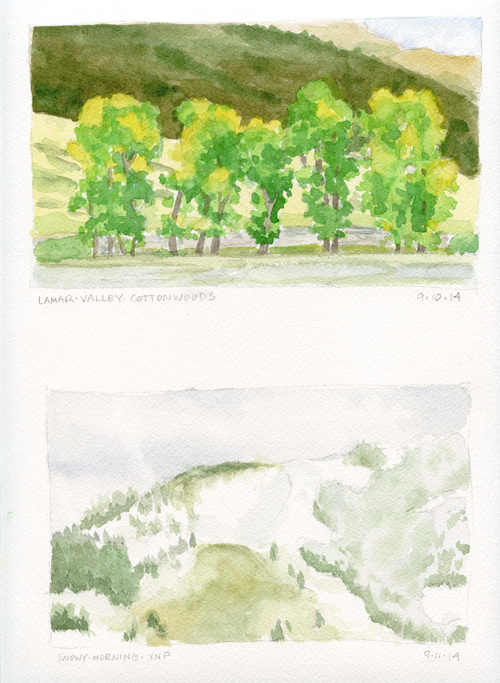
Cottonwoods and a snowy morning, the Lamar Valley, Yellowstone
Cottonwoods and a snowy morning, the Lamar Valley, Yellowstone; watercolor

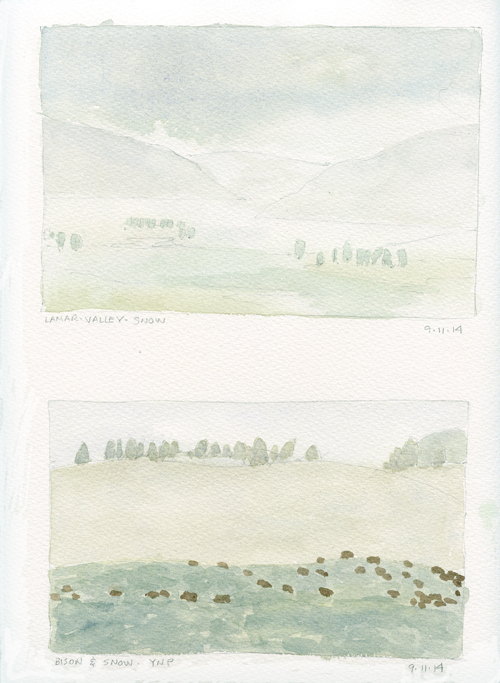
The third day I was in Yellowstone it snowed in the morning. I drove out to the Lamar Valley and set up my watercolors on the passenger seat of our VW Eurovan camper, then just looked out the windows to do these three studies.

Lamar Valley snow and bison; watercolor

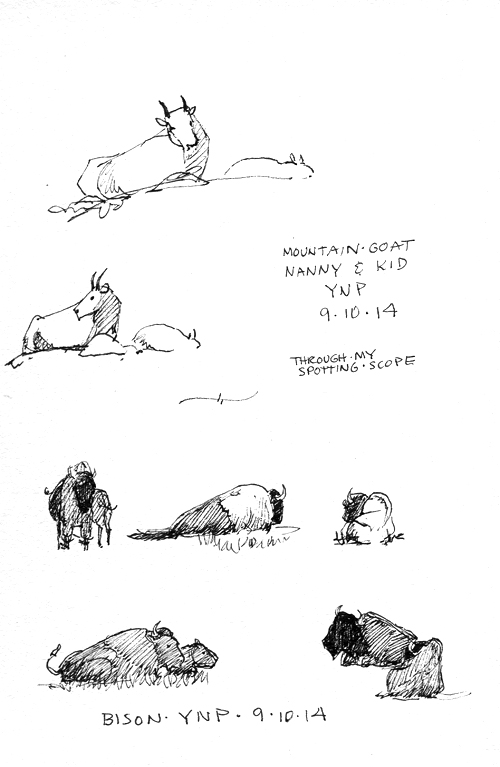
There’s a huge mountainous cliff on the east side of the park that is known as a place to spot mountain goats. And, sure enough, I spotted this nanny and kid with my binoculars. I got out my spotting scope (a Leica Televid) and managed these two quick pen sketches before she and the youngster got up and moved off out of sight.  Then it was back to bison.

Mountain goat nanny and kid; bison; Sakura Micron .01 pen

One of the locations at the SKB workshop was a ranch that has been in the same family for over 100 years. Hope to be able to go there again next year.

Cottonwoods, Finley Ranch; watercolor
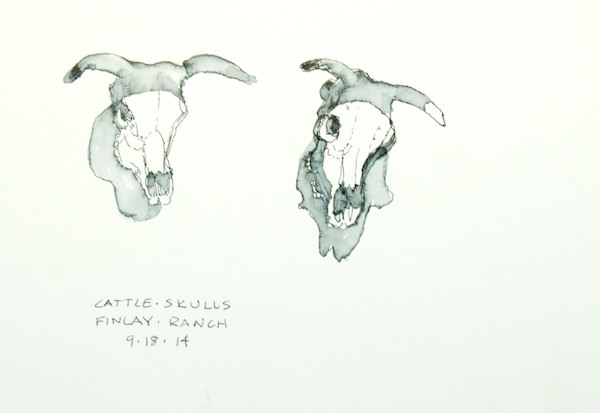
Cattle skulls
Cattle skulls, Finley Ranch; Precise V5 pen and Koi water brush

Next week I’ll share photos and stories from the workshop.

3 Great Days at Yellowstone National Park Last Week

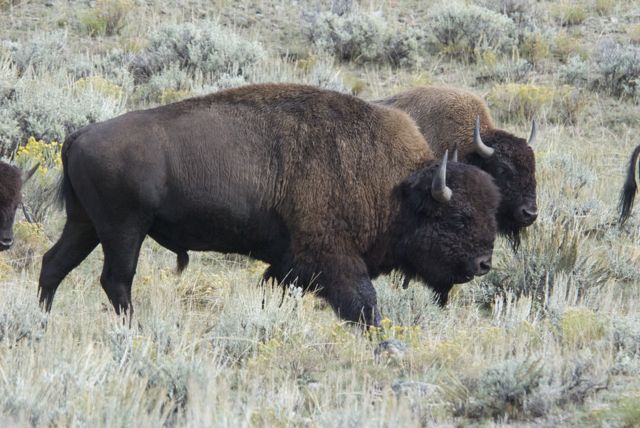
Saw a lot of these huge bull bison in the park
Saw a lot of these huge bull bison in the park.

I’m now in Dubois, Wyoming at the Susan K. Black Foundation Workshop and having a inspiring time, chatting, networking and painting with old and new friends and colleagues. I’ll be posting more about that next week, but this time I’d thought I’d share some of the photos I took at Yellowstone National Park last week, starting with the big guy at the top. I never get tired of seeing these huge bulls.

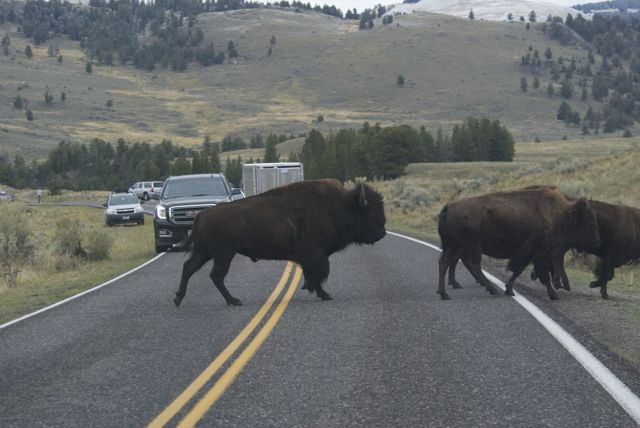
One of the famous Yellowstone "bison jams".
One of the famous Yellowstone “bison jams”. Back-ups can be very long, but the animals have the right of way.
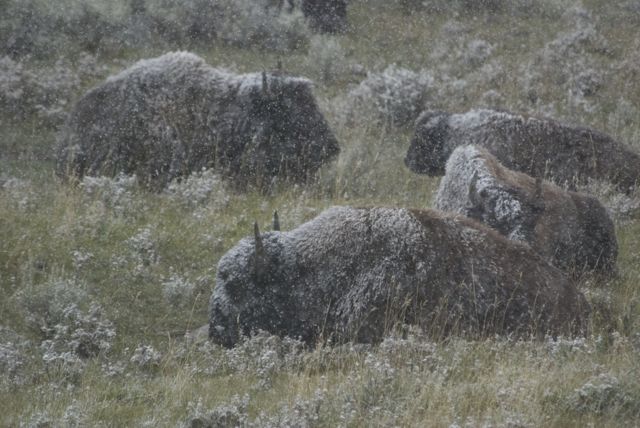
The third day I was there a snowstorm came through I was in the area known at "Little America", just to the west of the Lamar Valley, when, right next to a pullout in a hollow was this small group of bison, hunkered down and waiting it out.
The third day I was there a snowstorm came through I was in the area known at “Little America”, just to the west of the Lamar Valley, when, right next to a pullout in a hollow was this small group of bison, hunkered down and waiting it out.
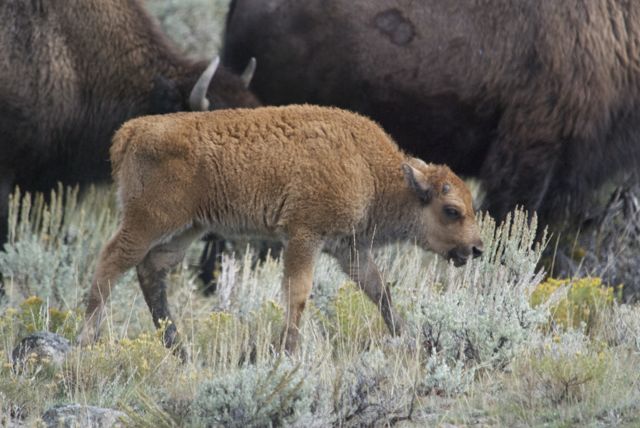
Young bison calf born very late, but I've been told even these little ones are tough enough to survive the winters.
Young bison calf born very late, but I’ve been told even these little ones are tough enough to survive the winters.
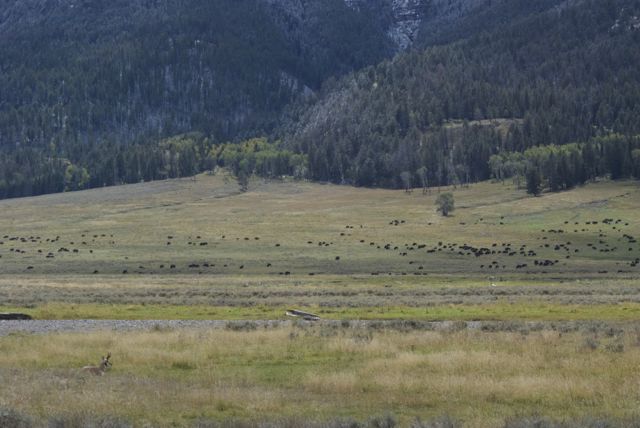
The Lamar Valley is known as the "Serengeti of North America" because it's where you can see scenes like this....a very big herd of bison moving through
The Lamar Valley is known as the “Serengeti of North America” because it’s where you can see scenes like this….a very big herd of bison moving through with pronghorn antelope closer to where I was. And a single male pronghorn closer yet.
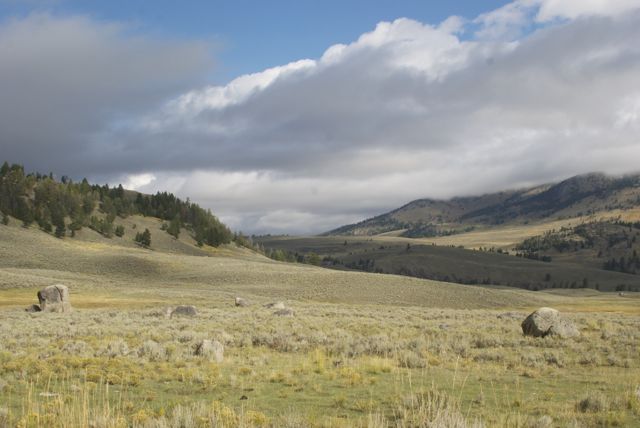
Yellowstone scenery.
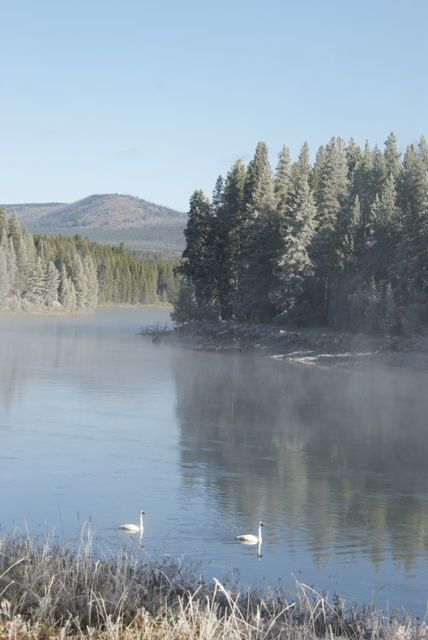
On my way out of the park, I spotted this pair of trumpeter swans floating on the misty river.


The WildArt Mongolia Expedition 2014, Part 5: Toson Hulstay Nature Reserve (Gazelles!), Har Yamaat Nature Reserve And Back To Ulaanbaatar

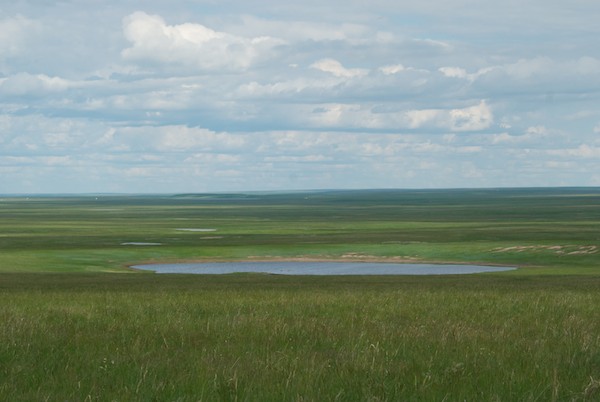
The legendary grassland steppe,
The legendary grassland steppe, Toson Hulstay Nature Reserve, Dornod Aimag

At last I was going to see a part of Mongolia that I’d been wanting to for years….the eastern steppe grasslands. Even though Toson Hulstay Nature Reserve covers almost 1.2 million acres, an area larger than the state of Rhode Island, it’s a remnant of an ecosystem that once spread from the Pacific Ocean to the plains of Hungary.

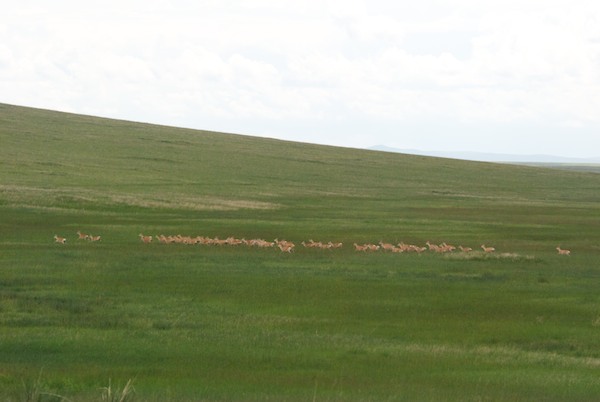
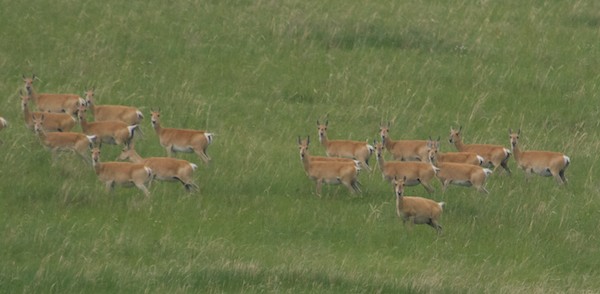
Within minutes of our first drive around the reserve we spotted the Mongolian gazelles, the wildlife for which the reserve is best known and the main species it was created to protect.
Within minutes of our first drive around the reserve we spotted Mongolian gazelles, the wildlife for which the reserve is best known and the main species it was created to protect.
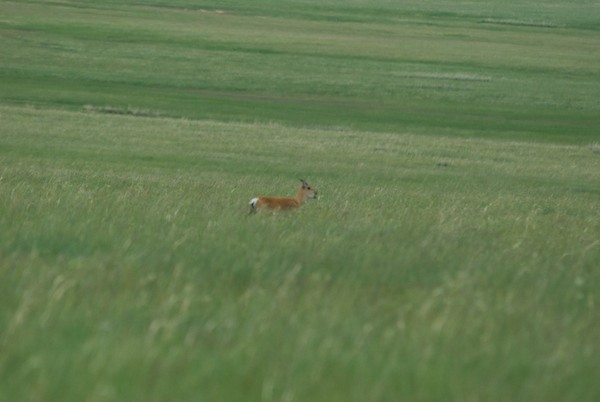
Then we saw this single gazelle
Then we saw this single male gazelle.
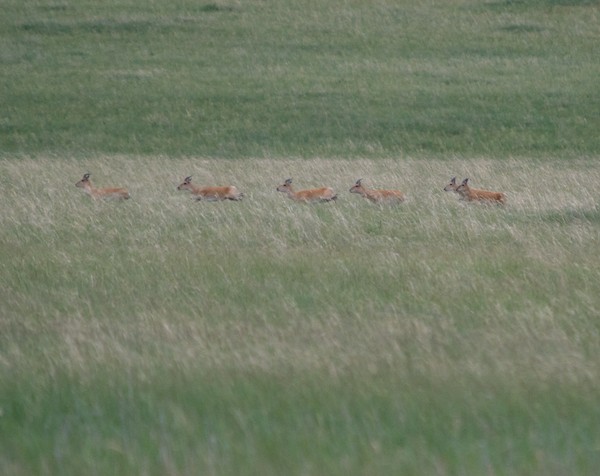
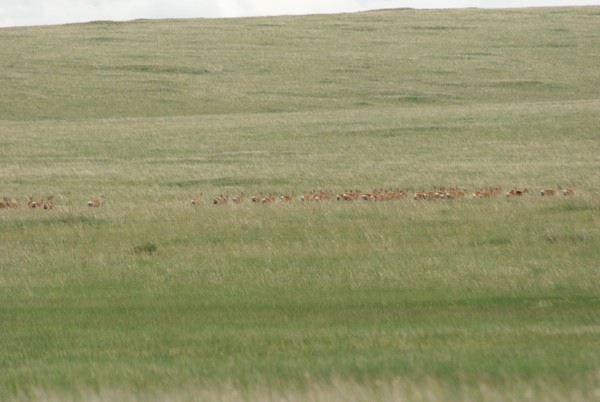
Not long after, we spotted this good-sized herd.
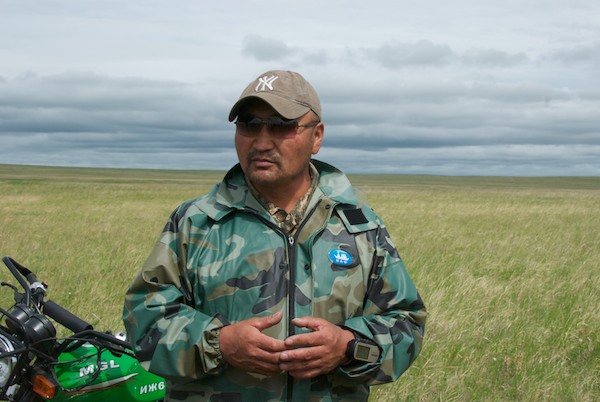
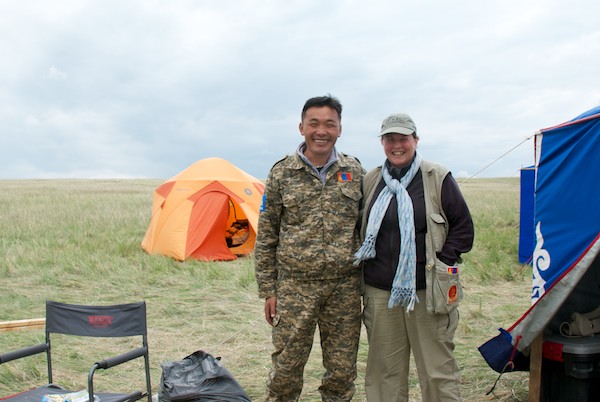
This is Batmunkh, one of the six rangers who patrol the reserve.
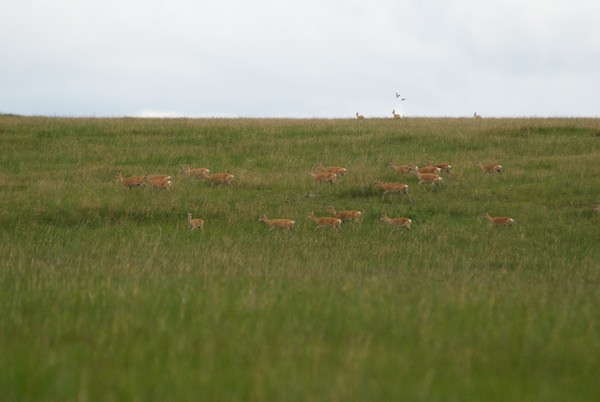
The next day we saw an ever larger herd.
The next day, on our way to the new visitor’s center, we saw an even larger herd! As you can see, we had cloudy weather and the gazelles were usually quite a distance away, so not the best conditions for getting good photos, but still wanted to share one of this big group. They are known to gather in mege-herds of tens of thousands. There are 40,000-60,000 gazelles in the reserve.
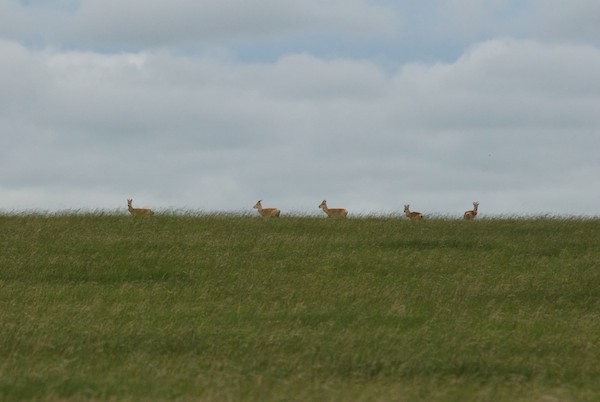
This group was nice enough to stop on the ridge.
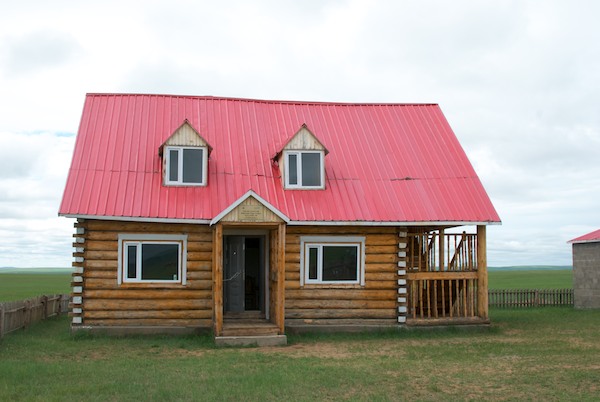
The new visitor's center near the soum center of Holonbuyr
The new visitor’s center near the soum center of Holonbuyr. It is also used for community events and children’s activities, along with education about the reserve, its wildlife and plant life.
One of the banners that adorned the walls.
One of the banners that adorned the walls. The Nature Conservancy has been involved in supporting the reserve for many years.
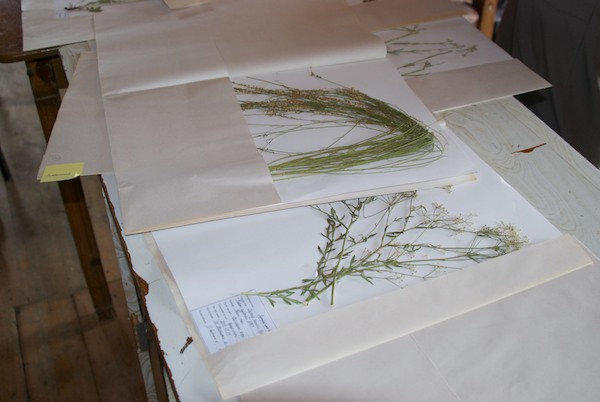
Batmunkh showed us part of a large collection of botanical specimens.
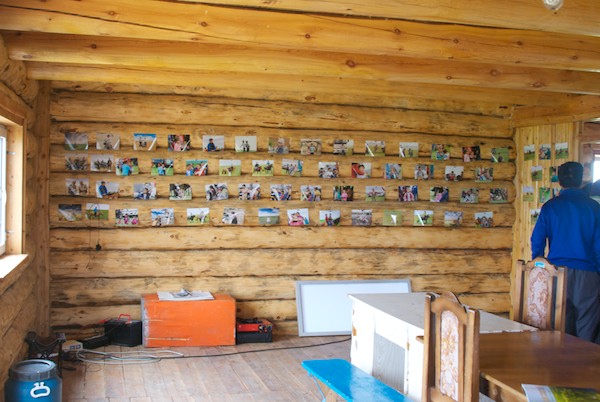
Photos of local people.
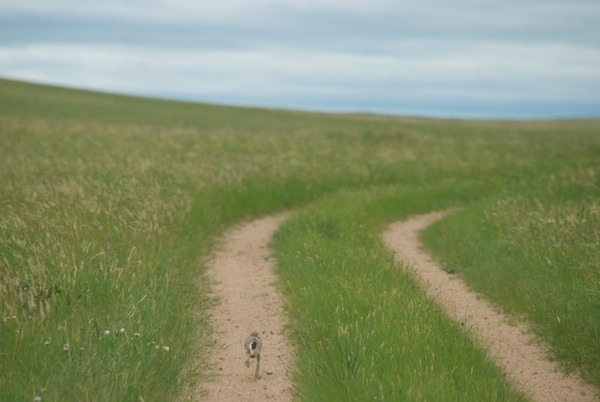
On the way back this young tolai hare ran down the road in front of our car for quite a distance.
On the way back a young tolai hare ran down the road in front of our car for quite a distance.
This group of gazelles paralleled us for awhile and were fairly close. Taken through the driver's side window while we were rolling. I actually got pretty good at it.
This group of gazelles paralleled us for awhile and were fairly close. Taken through the driver’s side window while we were rolling. I actually got pretty good at it.
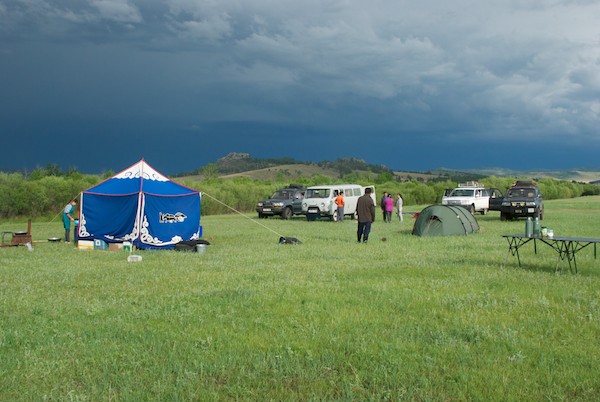
Our campsite, not far from a spring. Chosen to provide some shelter from the wind. It was stormy the whole time we were there.
My tour company person set up a meeting for me with Ganbold, one of the rangers. Through my driver, Erdenebat, who speaks good English, I got a great briefing on the reserve and the gazelles. I'll be writing it up as a future blog post. I loved both rangers love and enthusiasm for the reserve and their jobs protecting it.
My tour company person set up a meeting for me with Ganbold, one of the rangers. Through my driver, Erdenebat, who speaks good English, I got a great briefing on the reserve and the gazelles. I’ll be writing it up as a future blog post. I was very impressed by both rangers’ love and enthusiasm for the reserve and their jobs dedicated to protecting it.
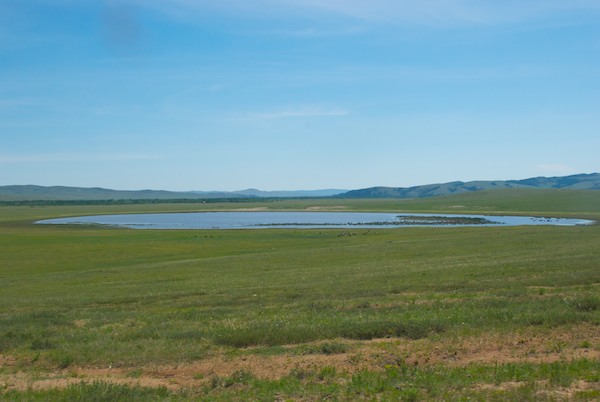
One of the dozen or so lakes in the reserve.
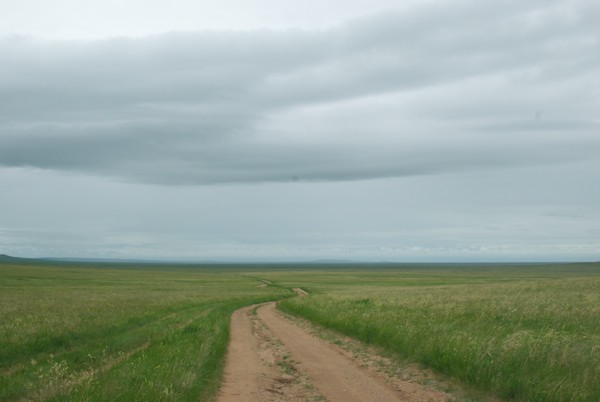
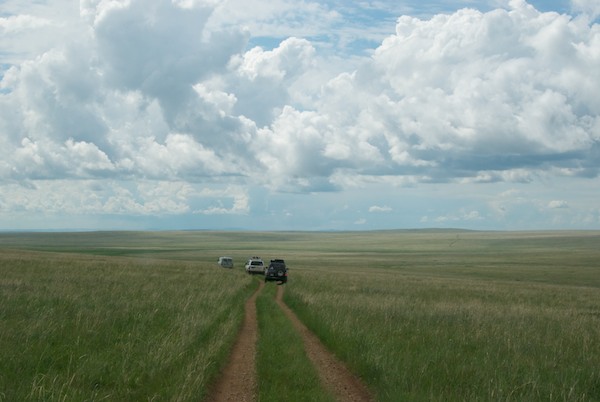
Off across the steppe...
Off across the steppe on an earth road…
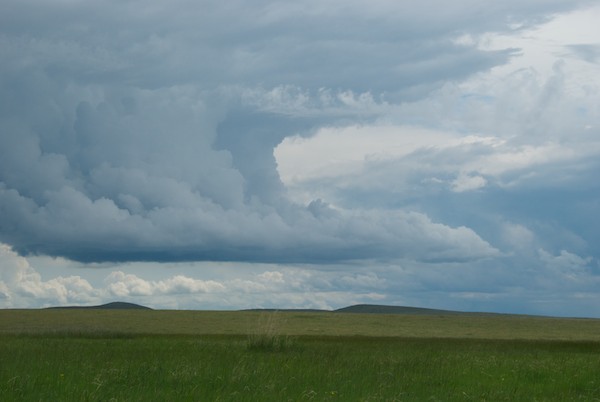
We saw some truly spectacular clouds.
We saw some truly spectacular clouds. Summer is the rainy season in Mongolia and this year most of the country got thoroughly drenched, which was great for the herders and their livestock.
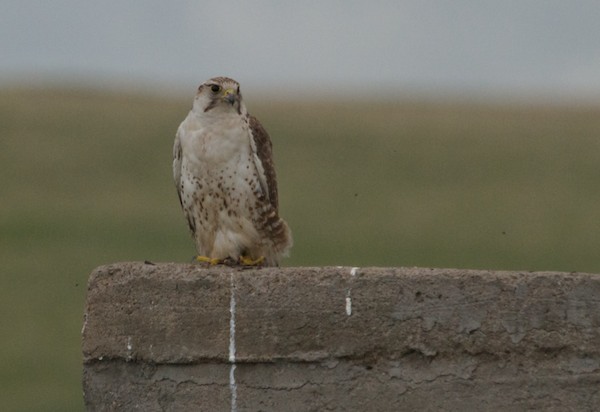
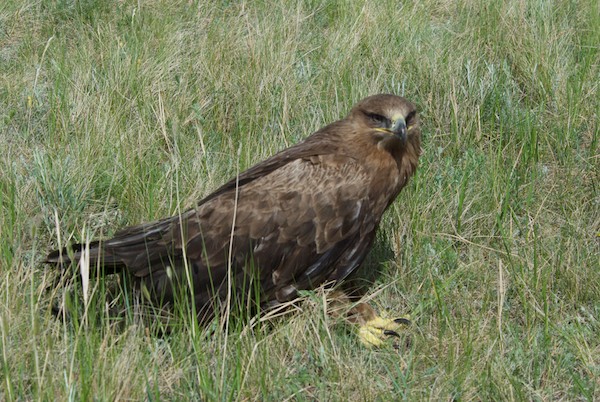
Saker falcon, an endangered species, perched right near the road.
Another big herd, the largest yet. What a send-off for our departure!
Another close-up.
A close-up. They all cut across the road in front of us, flowing like a stream.
One last herd.
One last herd.
And an individual female in nice light.
An individual female.  And with, her the gazelle “show” was over.
Crossing the Kherlen Gol on our way to our next stop.
Rainstorm on the steppe.
Our final destination for this year's Expedition off in the distance....Har Yamaat Nature Reserve.
Our final destination for this year’s Expedition off in the distance….Har Yamaat Nature Reserve. The weather was looking pretty good, compared to where we had been.
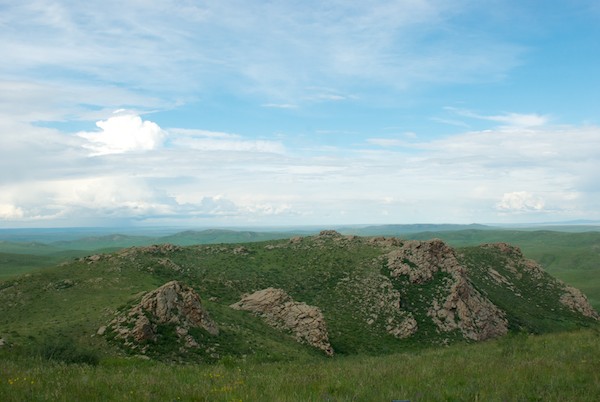
Rock Formations at Har Yamaat.
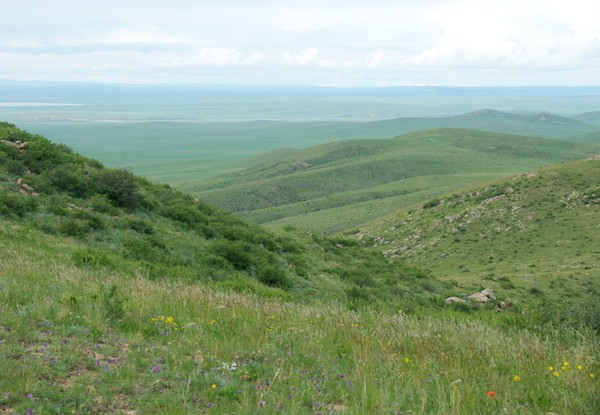
We drove up to this high point where we could see the Kherlen Gol in the distance. But what captured our attention was the riot of wildflowers.
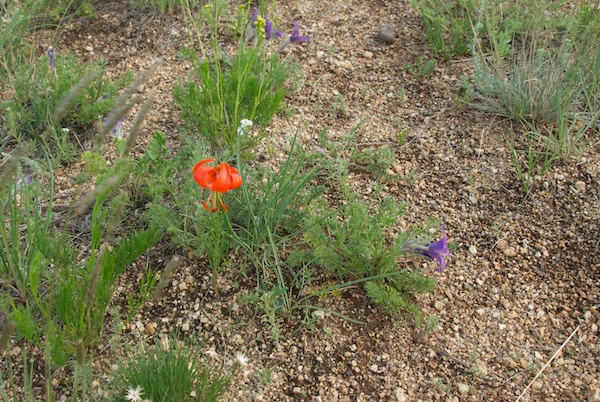
Wild lily and Pasque flower.
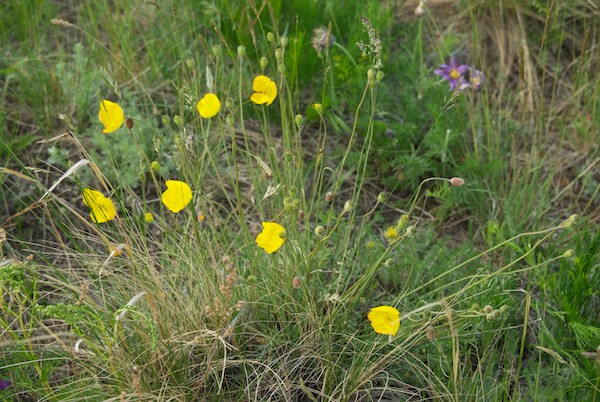
Wild poppies.
Wild poppies.

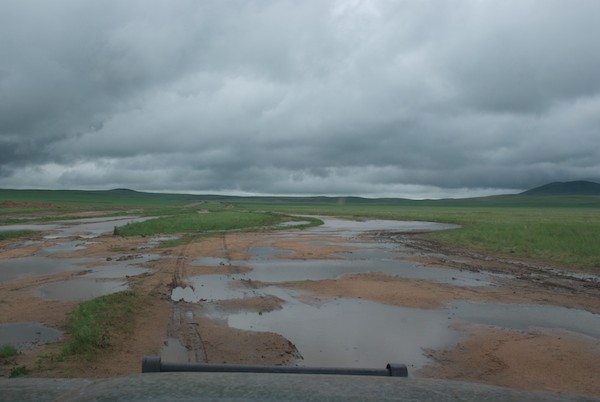
We went back down the slope to a sheltered spot and set up camp. It was a pleasant evening, perfect for our outdoor dining. About 10pm it started to rain…and rain….and rain. It was raining hard in the morning. We had to eat breakfast sitting in the cars. Everyone pitched in to get the tents packed up. I think we set a record for the trip breaking camp. I was wondering what it would be like getting back down the mountain to the road, even though we were in Land Cruisers with a go-anywhere Russian van as our support vehicle. As it turned out the “earth” road was grassy enough that that part was no problem. However, once we arrived at the main road west…

The drivers had to deal with quite a few kilometers of this.
The drivers had to deal with quite a few kilometers of this. Each made his own choices on how and where to pick his way through it.
But we just kept moving on.
But we just kept moving on and no one got stuck. By this time Ogii’s white Land Cruiser was thoroughly beige.
We finally out ran the muddy roads and made good time to Ondorhaan, recently renamed Chinggis Khan Hot (City.
We finally out-ran the muddy roads and made good time to Ondorhaan, recently renamed Chinggis Khan Hot (City). I got a kick out of seeing the zebra tire cover in the middle of Mongolia.
The city entrance if you're coming from the east.
The city entrance if you’re coming from the east.
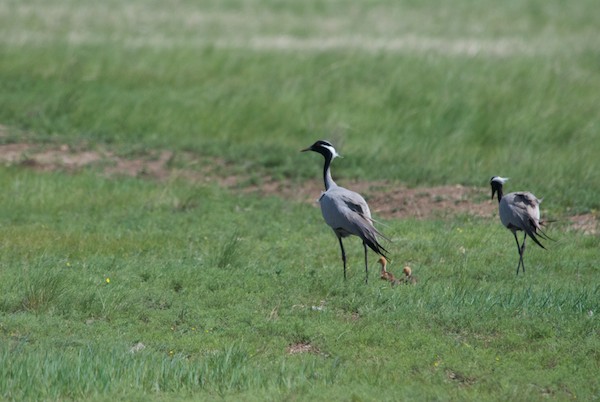
We stopped for a break and were treated to one more crane sighting! A pair of demoiselles with two chicks.
Scenery heading east.
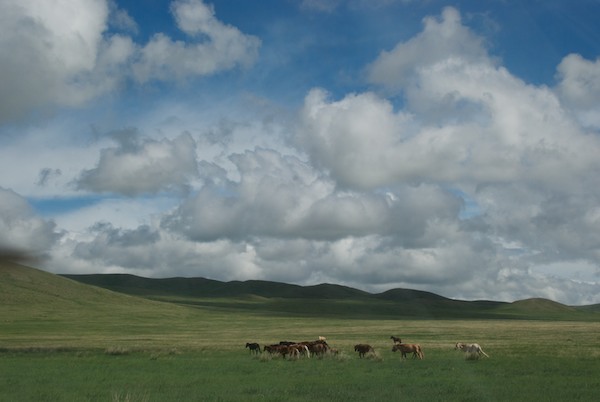
Scenery heading east. With horses.
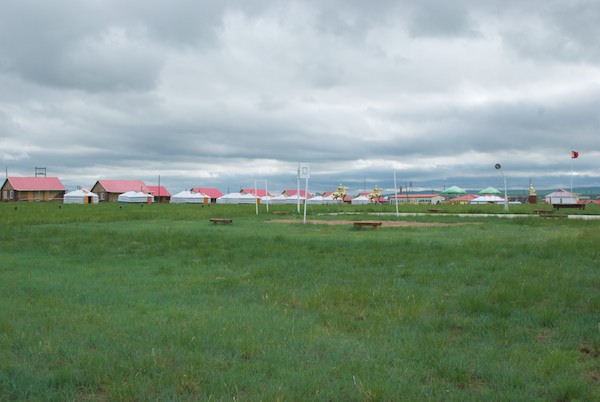
For the last night out, we stayed at a tourist ger camp near Avarga, the first center of Imperial Mongolia. Very comfortable gers to stay in and a huge elaborately decorated dining ger.
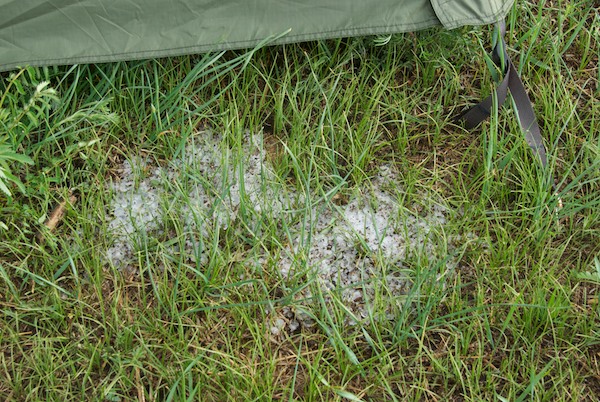
I had a little visitor who was plucking loose pile from the carpet for its nest. Species unknown.
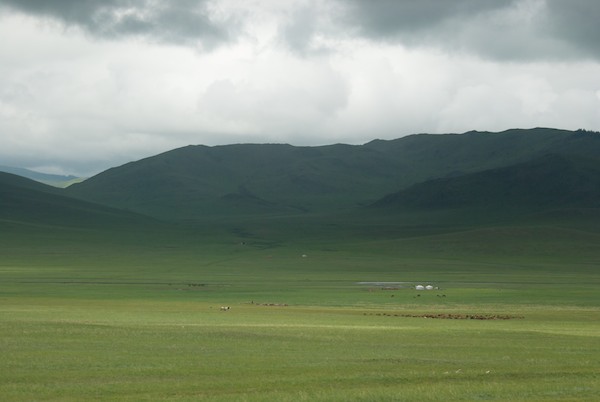
One last look at the quintessential Mongolian landscape that I've grown to love so much.
One last look at the quintessential Mongolian landscape I’ve grown to love so much.
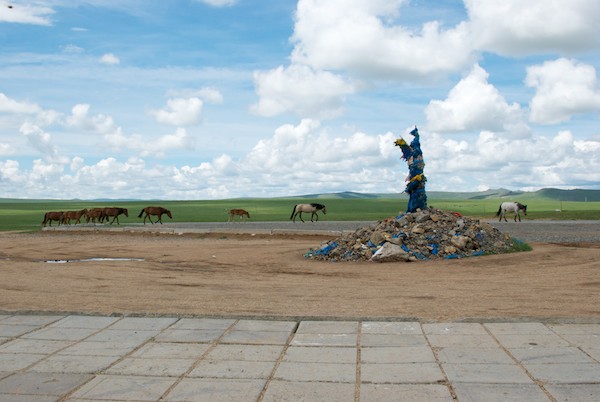
We stopped for lunch by this ovoo and a herd of horses wandered by.
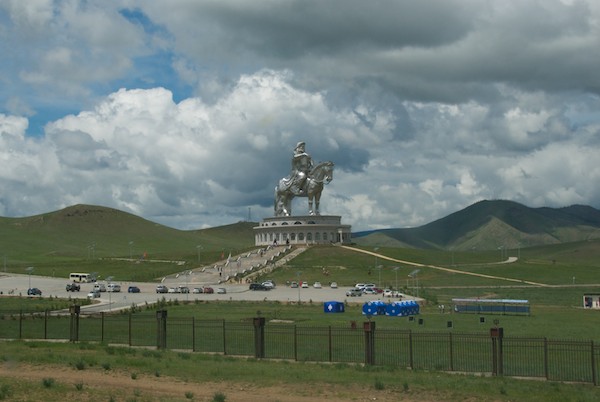
Full-circle back past the Chinggis Khan statue and on to Ulaanbaatar.

And that concludes the story of the 2013 WildArt Mongolia Expedition.

I’m leaving on Saturday for a road trip to Wyoming. I plan to spend four days in Yellowstone National Park, a day in Jackson for the annual Fall Art Festival and then on east to Dubois for the Susan K. Black Foundation Workshop. Five days, 175 artists, nationally-known instructors…it’s going to be very special week. I hope to post on the blog a couple of times, but will largely cover the goings-on via Twitter and posts to my Facebook fan page.


The WildArt Mongolia Expedition 2014, Part 4: Binder Soum to Toson Hulstay Nature Reserve

Binder Nuur
Binder Nuur

Our stay in Binder was at an end and I got one last shot of the lake as we drove away. We were now heading northeast towards Dadal and, after that, south to Toson Hulstay Nature Reserve. But since the journey always is the destination in Mongolia, there was plenty to see and experience in between…

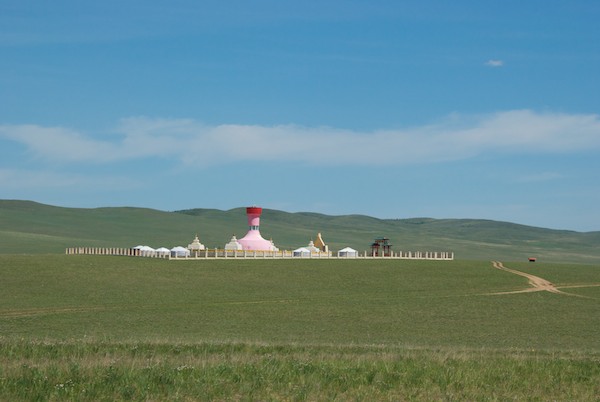
My lead driver, Erdenebat, who seems to have been everywhere in Mongolia during his 14 years as a professional driver, brought us to this recently built memorial to the Queens of Mongolia. I gather that the local people are hoping it will draw visitors. Unfortunately I wasn’t able to get the name of the Soum where it’s located, but will update this post when I do. It may have been Bayan-Adarga. As you’ll see, if you’re in the area, it’s definitely worth a stop!

Memorial to the Queens of Mongolia
Entry gate
Entry gate with the hat-shaped memorial building within the enclosure.
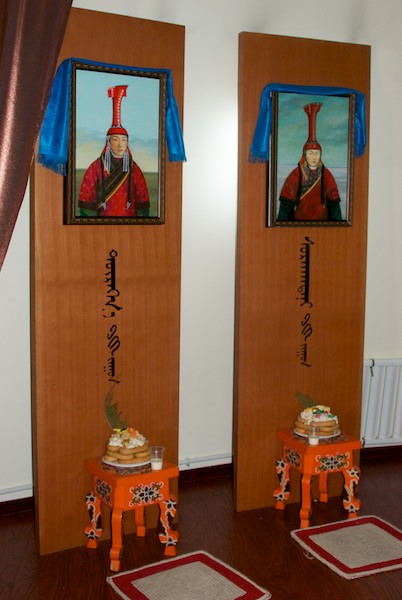
Each queen is represented by a portrait
Each queen is represented by a portrait.
The extensions on their headgear was intended to bring them close to Tenger. The higher your rank, the higher the extension.
The extensions on their hats were intended to bring them close to Tenger, the Eternal Blue Sky. The higher your rank, the higher the extension you were allowed.
In the center were the traditional white horsetail standards. White ones for peace, black ones for war.
In the center were traditional white horsetail standards. White ones stand for peace, black ones for war.
Decoration on the back of a throne.
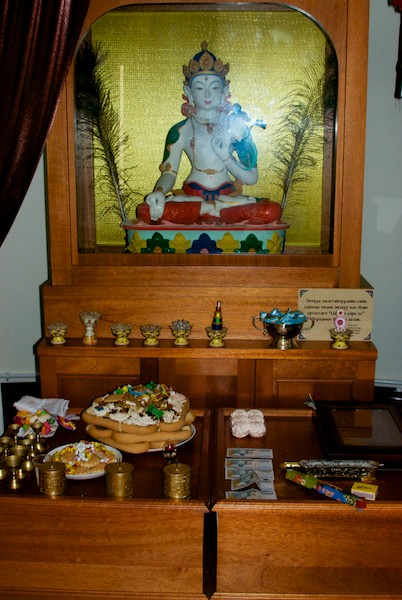
The main altar.
The main altar.
Close-up of the offerings.
En route through the Han Hentii Mountains
En route through the Han Hentii Mountains.
Wild lilies
Wild lilies
Scenery....
Scenery. The white-trunked trees are birches.
Golden eagle.
Golden eagle. The bird was right by the road and barely able to fly, with what looked like an injury to one wing.  Erdenebat got this great photo.
Our car had gotten out quite a bit ahead
Our car had gotten quite a bit ahead and Erdenebat realized that we couldn’t see the others, so we back-tracked and found that Puugii’s car had a problem with the brake on one side, which involved a fluid leak. We were a LONG way from any town and there is no “roadside assistance” service. But the drivers are also, by necessity, excellent mechanics and they know their cars inside and out. In less than an hour the problem was fixed and we were on our way.
We finally reached our goal for the day...the legendary Onon Gol, the center of the Mongol heartland
We finally reached our goal for the day…the legendary Onon Gol, the center of the Mongol heartland.
We camped on the river, using dung fires in the evening to hold the mosquitoes at bay
We camped on the river, using dung fires in the evening to hold the mosquitoes at bay. We stayed here for three nights, two full days. One morning a few horses came down to the river, adding a picturesque touch.
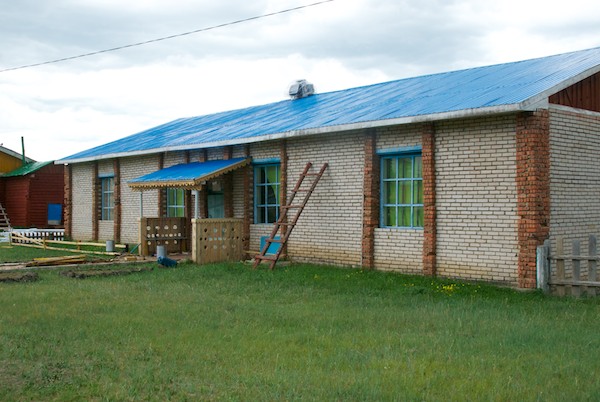
We took a day trip into Dadal, well-known for the nearby sites connected with Chinggis Khan. Perhaps less known is the local museum. Don't be fooled by the modest exterior. Wait till you see what's inside.
We took a day trip into Dadal, well-known for the nearby sites connected with Chinggis Khan. Perhaps less known is the local museum. Don’t be fooled by the modest exterior. Wait till you see what’s inside.
But first, one of the statues of animals nearby.
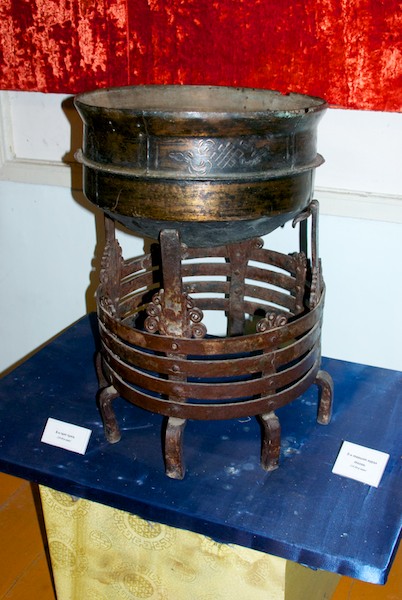
Before they had enclosed stoves, this is how a ger was heated and food prepared.
As a contrast....this old mechanical adding machine.
As a contrast….this old mechanical adding machine.
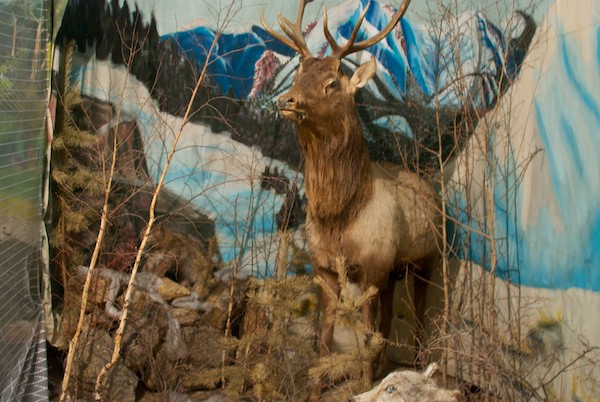
There was also a small natural history section with taxidermy-mounted animals.
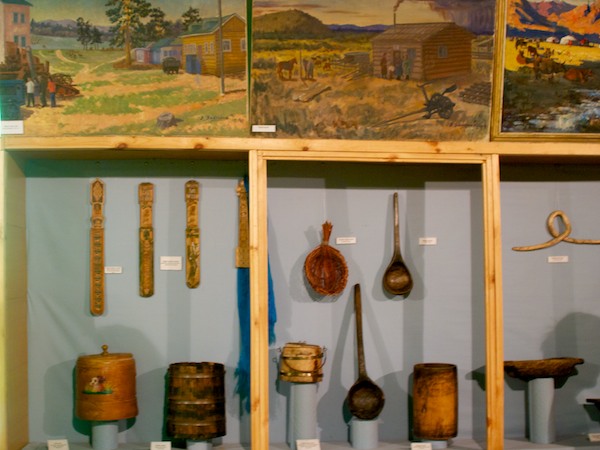
It was hard to get back far enough to get everything in, but here is one of the display cases with everyday utensils. There was art all around the room, too.
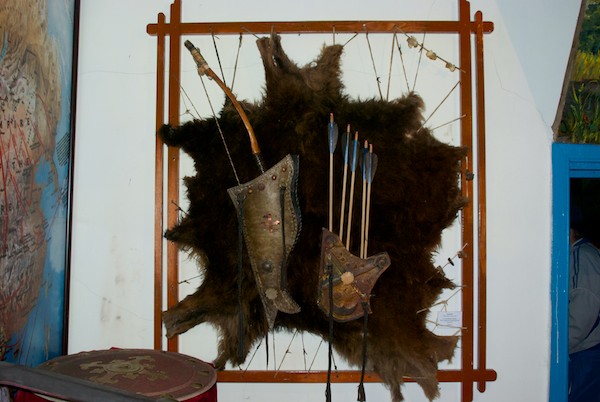
Traditional archery equipment mounted on a bearskin rug.
Traditional archery equipment mounted on a bearskin rug. The museum staff is trying to raise money to renovate the building and I was happy to contribute.

Our next two stops form part of the standard tour route in this area of the country. I generally avoid these places, but wasn’t going to miss anything connected with Chinggis Khan.

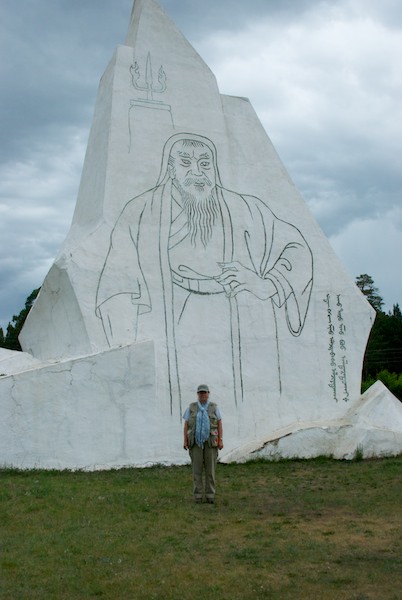
Posing in front of the Chinggis Khan monument.
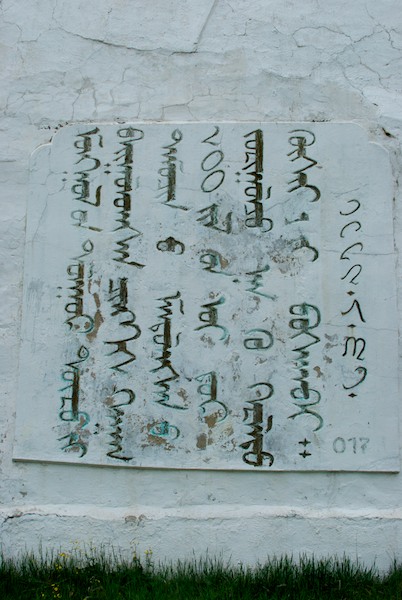
Inscription on the monument in Mongol vertical script, the alphabet that Chinggis Khan chose when the Mongols had acquired an empire that  now had to be administered.
Inscription on the monument in Mongol vertical script, the UIgher alphabet that Chinggis Khan chose when the Mongols had acquired an empire that now had to be administered. It is taught in the schools today and has also become an important calligraphic art form. (I don’t know what it says, so would welcome a translation)
The Expedition drivers: Erdenebat, Ogii and Puugii. And our guide, Tseegii. A great crew!
The Expedition drivers: Erdenebat, Ogii and Puugii. And our guide, Tseegii. A great crew! They are standing in front of the ovoo that marks the area where Chinggis Khan was born.
Chinggis Khan's nutag (the place where he was born).
Chinggis Khan’s nutag (the place where he was born).
We returned to camp and found that a violent storm had come through while we were gone.
Including hail.
Including hail.
After breaking camp we went into the soum center to go to the store. I stayed in the car and got some great photos of this local horseman.
After breaking camp the  next morning we went into the soum center to go to the store. I stayed in the car and got some great photos of this local horseman.
We stopped to visit this family. It started to seriously rain and they were kind enough to invite us into their summer cabin to have our lunch.
We stopped to visit this family on our way south. It started to seriously rain and they were kind enough to invite us into their summer cabin to have our lunch. The woman on the left is Khalkh Mongol. The woman on the right is Buryat Mongol. The man is the son of one of them.
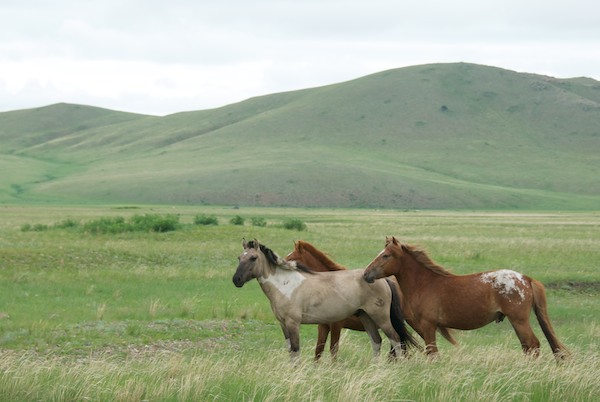
Gratuitous photo of Mongol horses.
Gratuitous photo of Mongol horses. At this point we were coming down out of the mountains onto the steppe.
We stopped at this ovoo and I learned
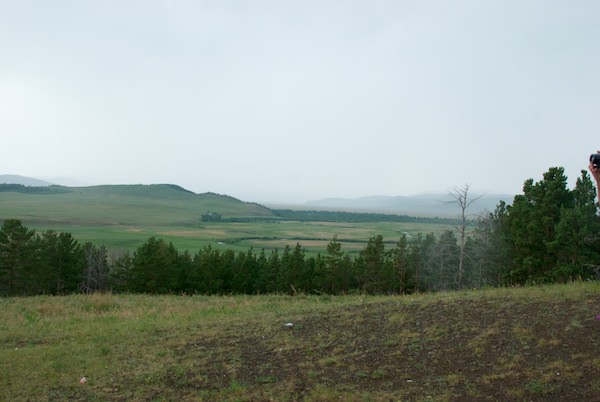
We stopped at this ovoo and I learned that we had arrived in Toson Hulstay Nature Reserve, the largest steppe grassland reserve in the country.

The steppe and Mongolian gazelles next week!


The WildArt Mongolia Expedition 2014 Part 3: The First-ever International Crane Festival, Binder Soum, Han Hentii Aimag

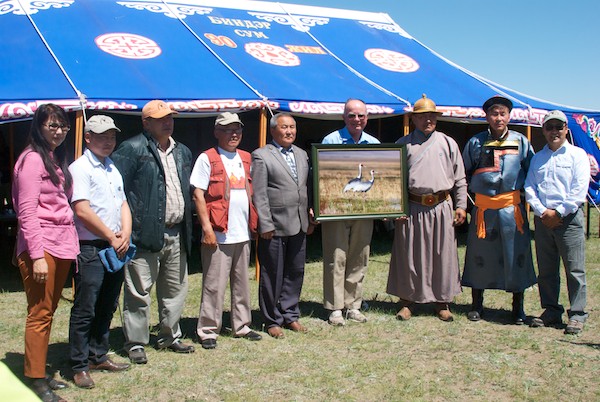
Dr. George Archibold. Founder of the International Crane Foundation, was honored at the opening ceremony.
Dr. George Archibold. Founder of the International Crane Foundation (holding the photograph), was honored at the opening ceremony. On the far right is Nyambayar Batbayar, the Mongol researcher in charge of the crane study. (If anyone reading this can identify any of the other people in the photo, please do so in the comments and I’ll add them)

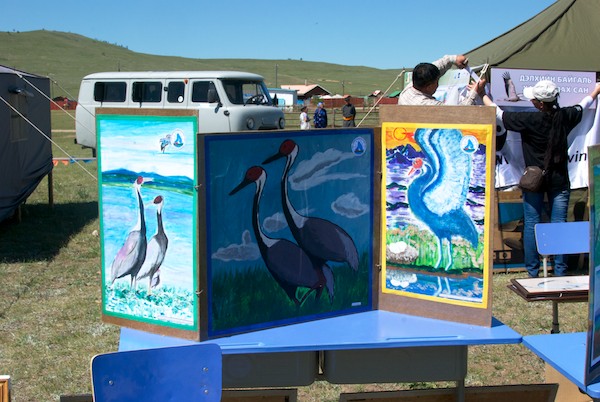
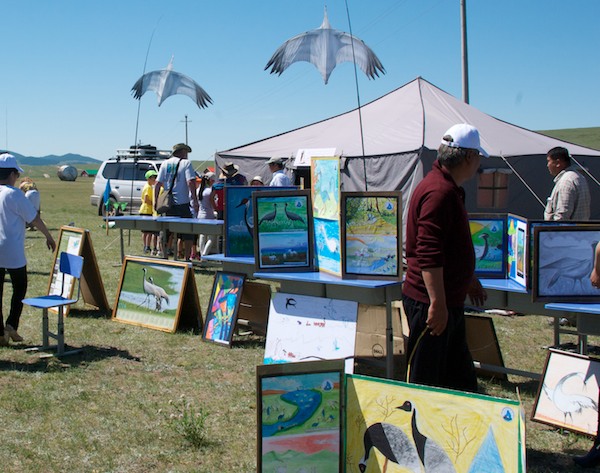
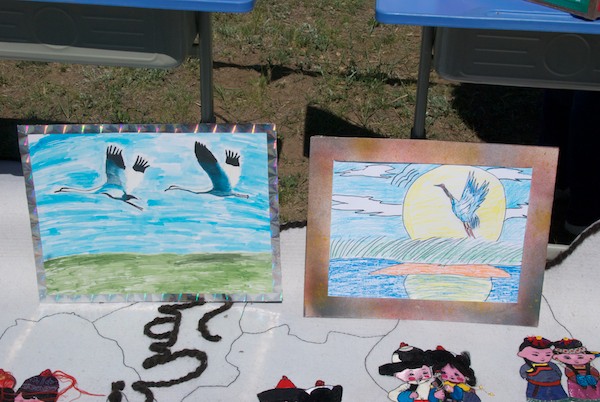
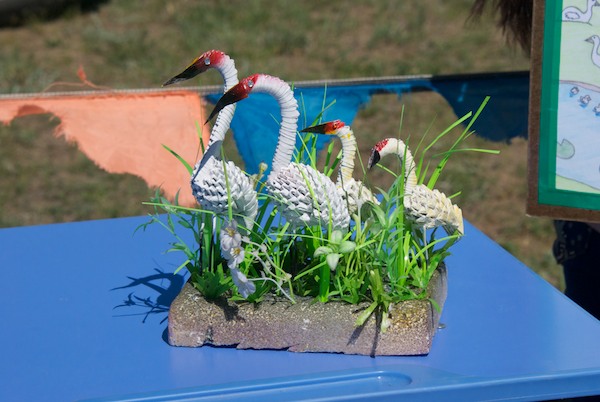
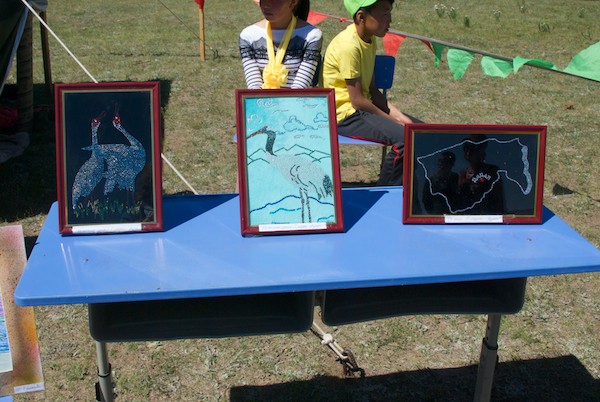
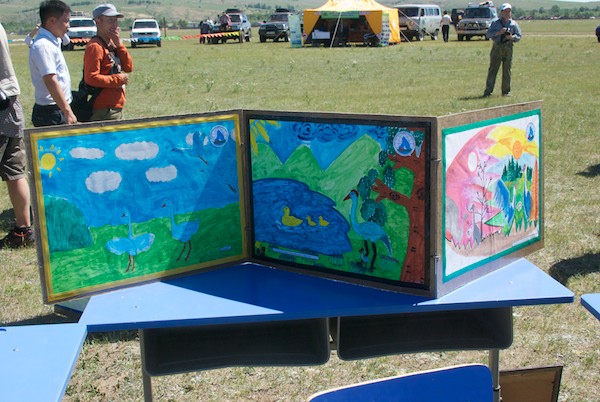
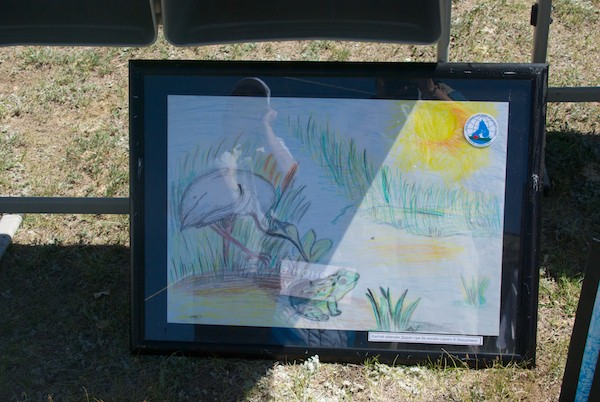
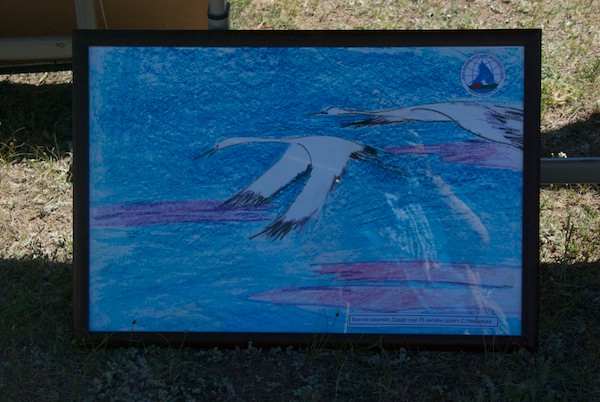
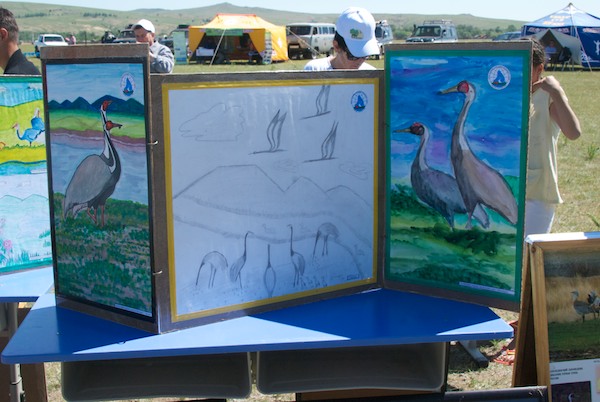
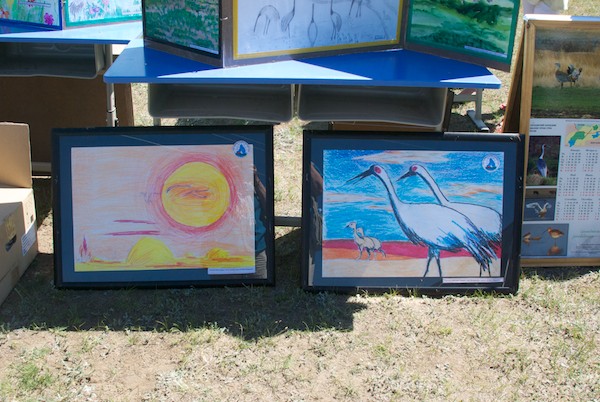
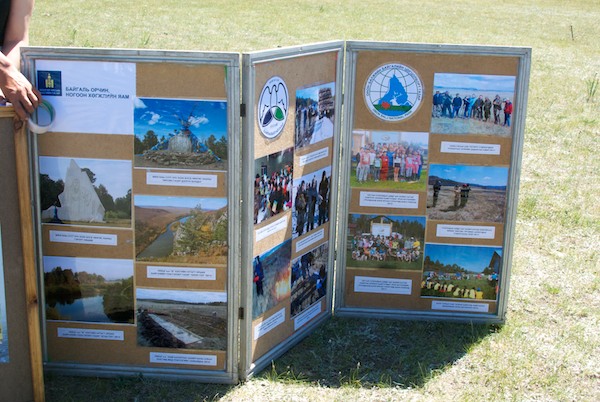
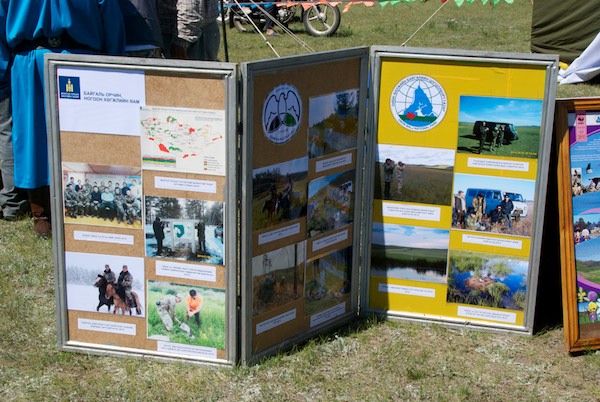
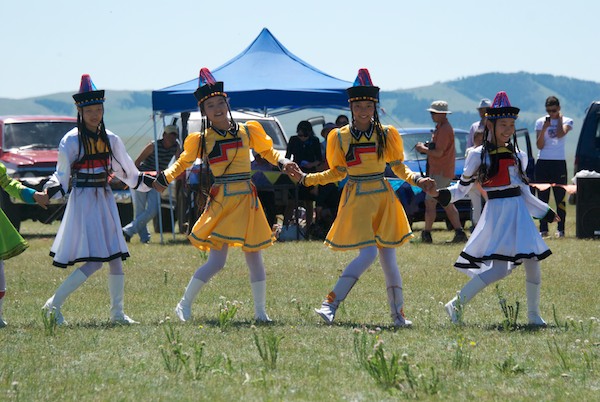
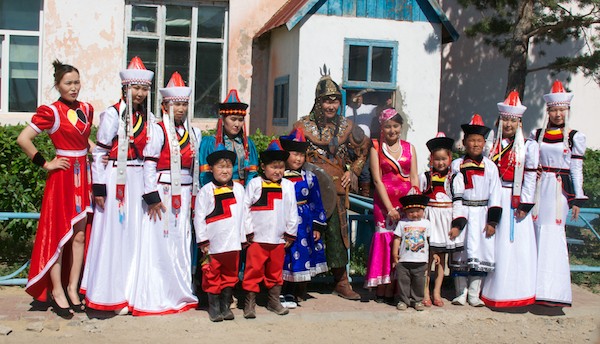
On June 13, as planned, we attended the first International Crane Festival, which was held in the soum center of Binder, Han Hentii Aimag. It was a wonderful day and great to be able to, by our attendance, support the local community and the researchers. The first thing I noticed was a very large display of art created by local children. Since the main mission of the WildArt Mongolia Expeditions is to find ways to use art to support conservation, I could not have been happier to see this. I tried to photograph every piece and I’ve posted all those images, plus the opening ceremony and other activities. You may notice that the traditional clothes look different than what you usually see in my posts and that is because we were in Buryat Mongol country, which extends from northeastern Mongolia north into southern Siberia. Buryat dels have a distinctive front design and their boots and hats are different than the Khalkh Mongol versions. The feeling of being welcomed, however, was the same as everywhere else I’ve been in Mongolia.

Informational map
Informational map
Informational poster
Dr. Archibald doing a filmed interview
The art display area

ICF 4ICF 5ICF 6ICF 7ICF 8ICF 9ICF 10ICF 11ICF 12ICF 13ICF 14ICF 15ICF 16ICF 17ICF 18ICF 19ICF 20ICF 21ICF 22ICF 23ICF 24ICF 25ICF 26ICF 27

Printed materials
Printed materials
Photos
Photos
Photos
Photos
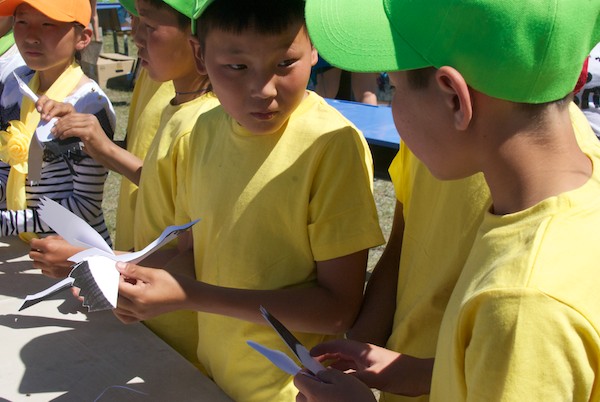
Activity table for local kids. They're making paper cranes.
Activity table for local kids. They’re making paper cranes.
I thought this was a great idea.

Then it was time for the opening ceremony!

Buryat dancers
Buryat Mongol dancers
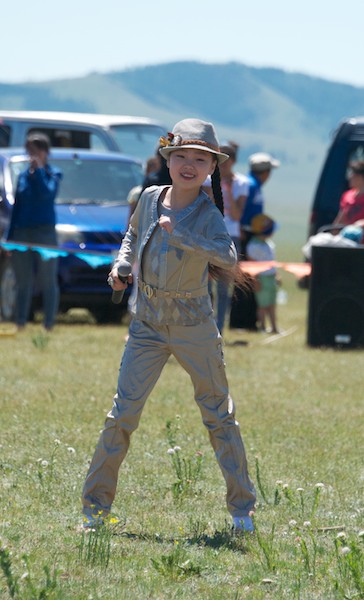
Solo performer. She really rocked it!
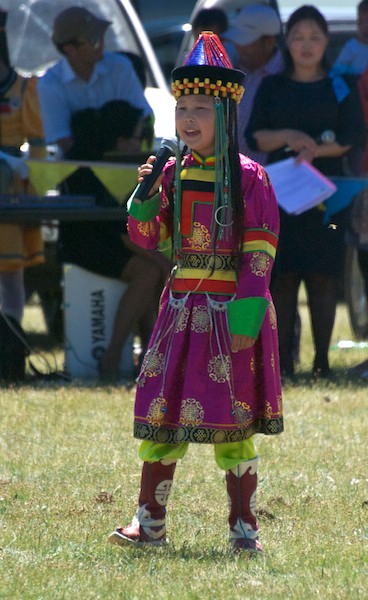
Young singer in Buryat clothes.
Young singer in Buryat clothes. I liked the contrast with the girl in the photo above.


She did a dance about fetching water that I'd like to learn more about.
She did a dance about fetching water that I’d like to learn more about.

The festival had all the usual events..horse race, wrestling, anklebone shooting and more…

The anklebone shooting competition.
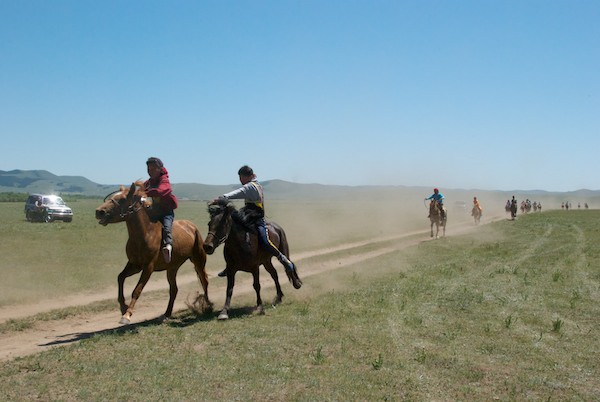
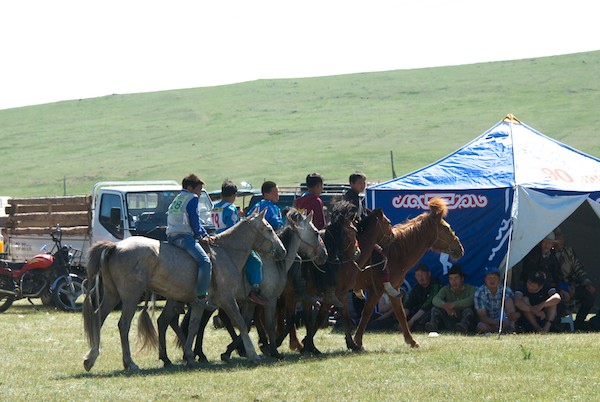
The finish of the horse race.
Cooling down her mount. The race horses always have the binding on the tail, so easy to tell which ones they are.
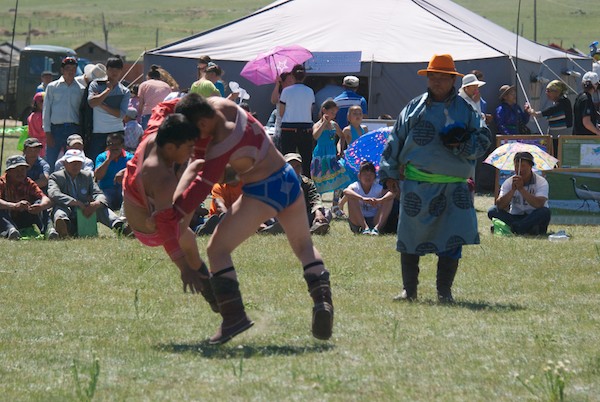
Mongol bukh (wrestling).
I got some great action shots!
During the break between rounds, these kids came out into the arena and picked flowers.
The five winners of the horse race riding in formation. They did a couple of full-circle wheels in unison. I was quite impressed.
The five winners of the horse race riding in formation. They did a couple of full-circle wheels in unison. I was quite impressed since, as far as I know, the horses are not trained for this kind of thing at all.
We went to the shop in town and came upon this group who gave a concert that evening.
We went to the shop in town and came upon this group who gave a concert that evening. A colorful ending to a great day!

The WildArt Mongolia Expedition 2014, Part 2: Gun-Galuut Nature Reserve to Binder Soum

Ovoo with prayer wheels

We left Gun-Galuut Nature Reserve after breakfast and drove northeast into the Han Hentii Mountains. It was good to get off the tarmac and onto earth roads again.

Khokh Nuur
We stopped for lunch at Khokh Nuur, a VERY important historical site since it’s where Temujin called the khural (council or meeting) that declared him Chinggis Khan, leader of all the Mongols.
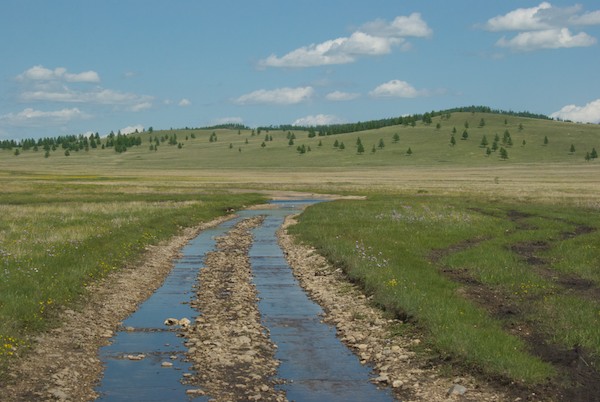
Sometimes the roads were more water than earth...
Sometimes the roads were more water than earth. Summer is the rainy season in Mongolia and it had been raining a lot just about everywhere in the country, so a great year for the herders and their animals since it meant lots of good grass.
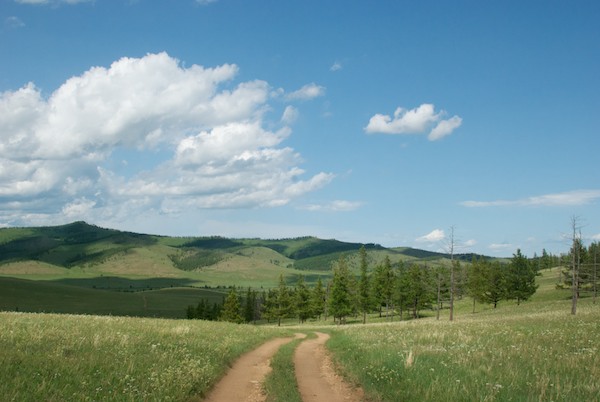
It was a glorious drive deep into the Mongolian countryside on a perfect summer day.
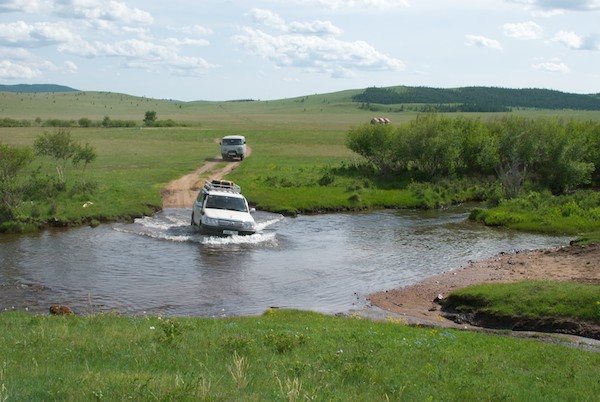
It had been raining a lot so there were streams to ford.
Since it had been raining a lot there were streams to ford.
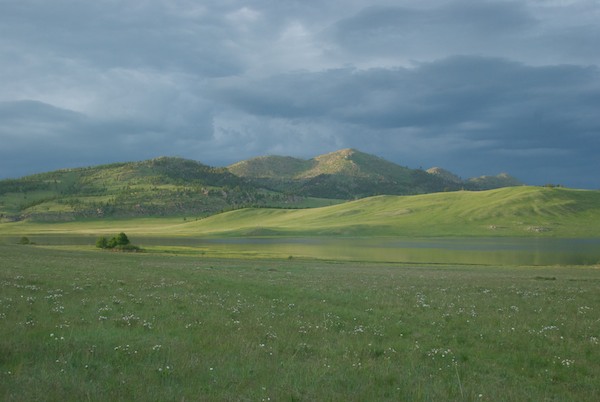
We camped by this lake.
We camped by this lovely lake the driver of my Land Cruiser, Erdenebat, knew about.
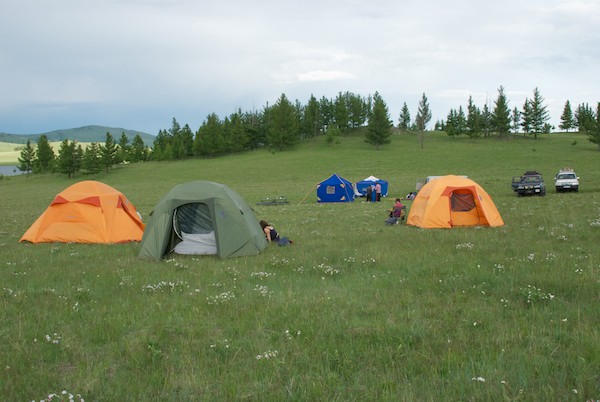
All set up and relaxing in camp.
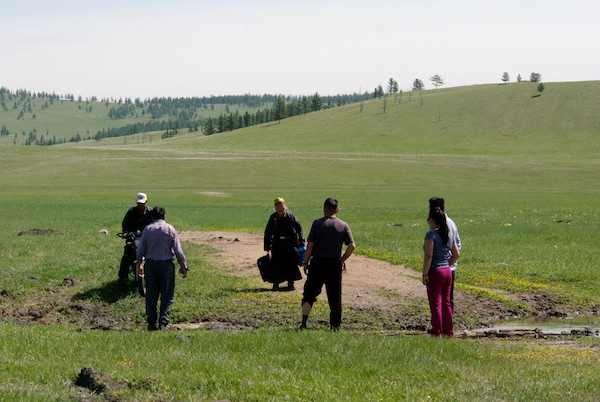
At one of them, which was more mud than water, a man and woman on a motorbike came along
The next day at one small crossing, which was more mud than water, a man and woman on a motorbike came along right after us. They were kind of stuck because she could have gotten very dirty or injured if the motorbike fell over in the mud and it was too wide to safely step across.
One of our drivers, Puugii, solved the problem.
A helping hand and she made it across just fine.
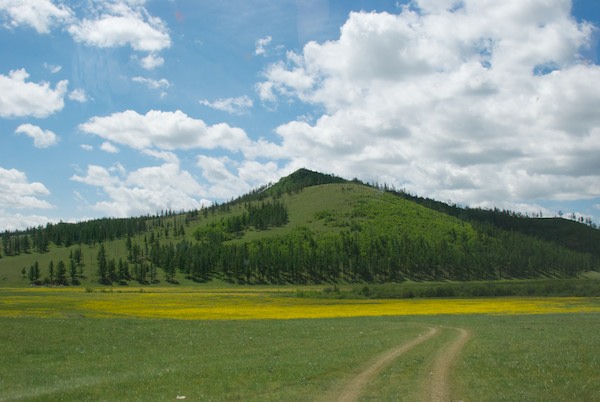
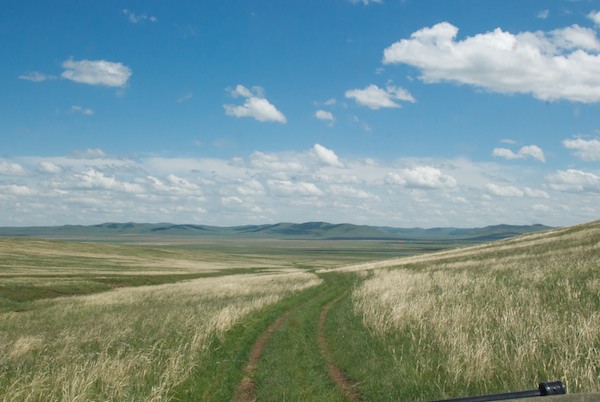
Scenery.
Scenery.
More scenery. I'd never been to the Han Hentii Mountains before and now I understood why they are such a popular destination for the Mongols. So beautiful.
More scenery. I’d never been to the Han Hentii Mountains before and now I understood why they are such a popular destination for the Mongols. So beautiful.
One of the drivers got a little to close to this yak and had to run for it. The other drivers loved it.
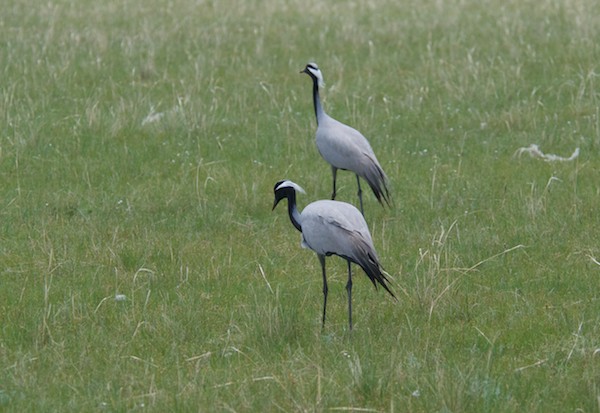
We stopped for lunch and almost immediately spotted this pair of demoiselle cranes!
Local dogs often show up out of apparently nowhere when one stops to eat. They wait patiently until you leave most of the time.
Local dogs often show up out of apparently nowhere when one stops to eat. They wait patiently until you leave, most of the time. They often seem friendly, but have not been vaccinated against rabies and are not used to being petted or touched, so it’s best to keep one’s distance.
As we drove on, we saw this large flock of demoiselle cranes.
We were heading towards the site of a major new crane study. My driver had directions, but couldn't follow them
We were heading towards the site of a major new crane study. My driver, Erdenebat, had directions, but couldn’t follow them because the valley floor was too wet from the rains. So he picked his way along the mountain slopes, using a compass to keep our heading correct. It was quite a feat of navigation that I didn’t appreciate until he explained to me what he had been doing and why.
Along the way we saw the pair of endangered white-napped cranes.
Along the way we saw this pair of endangered white-napped cranes.
The crane research station
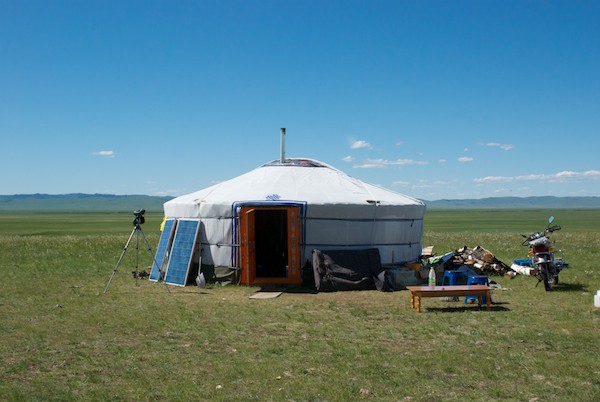
The crane research station is new, so there is only one ger so far. From this vantage point they can scan the surrounding countryside for miles for up to six species of cranes.
The research project is a collaboration between Mongol, Russian and Chinese scientists. The Mongol scientist in charge is Nyambayar Batbayar
The research project is a collaboration between Mongol, Russian and Chinese scientists. The Mongol scientist in charge is Nyambayar Batbayar who took the time to give us a great briefing and answer all our questions. He is also the Director of his own NGO, the Wildlife Science and Conservation Center of Mongolia.
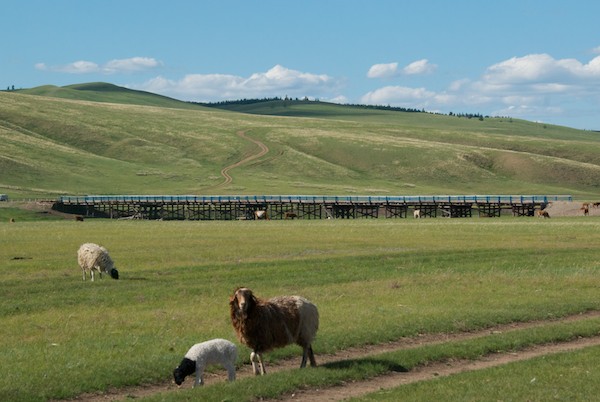
We left the research station and headed towards our next destination, Binder, crossing this old-fashioned timber bridge.
It is a bit of an adrenaline rush to drive out onto something like this...
It’s a bit of an adrenaline rush to drive out onto these bridges if you’re not used to them.
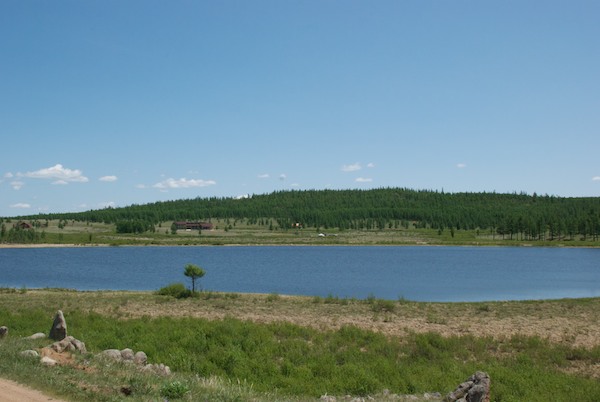
Binder Nuur (Binder Lake). We were able to camp on the lakeshore.
Binder Nuur (Binder Lake), which was a short distance from the soum center town of Binder. We camped on the lakeshore.
We immediately saw many white shapes, which proved to be over 60 whooper swans.
Full moon sunset over Binder Nuur.

We came to Binder for the first-ever International Crane Festival. And that will be the subject of my next post.