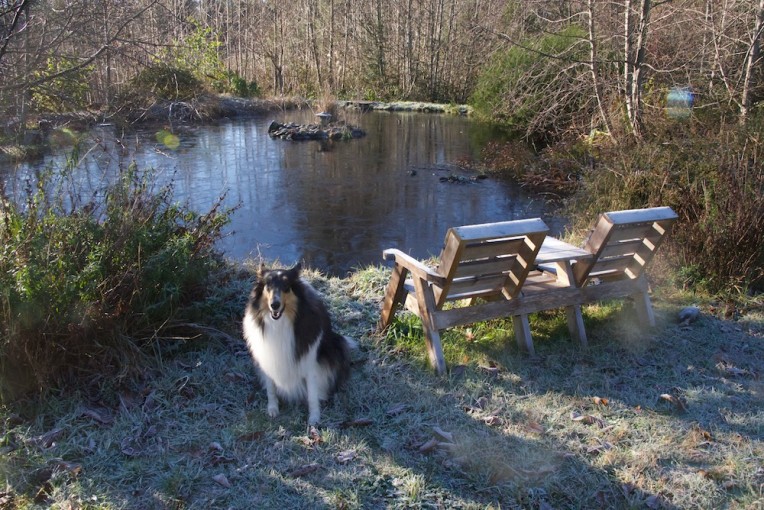
Thank you to everyone who reads my blog for your support and kind words. I wish you all the best in 2016! That’s Hailey, our tricolor rough collie girl, posing in front of our pond which froze over last night here in sunny California.
Lots coming up this year, including the next WildArt Mongolia Expedition in May/June, a major group exhibition, “Wildlife Art: Field to Studio” , featuring myself and six of my animal art friends and colleagues, at the Flinn Gallery in Greenwich, Connecticut, March/May; attending the Explorers Club Annual Dinner in New York, with maybe a short trip to Florida for some warm weather fieldwork in March; and plans to attend the Susan K. Black Foundation art conference and workshop this September in Wyoming.
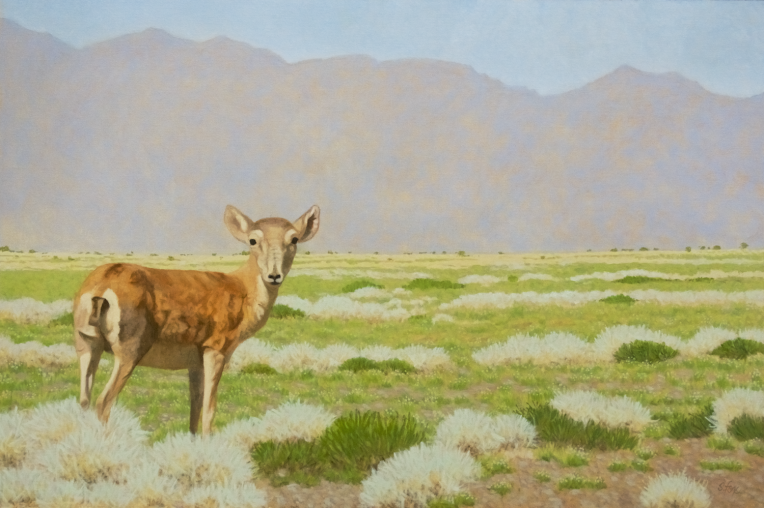
Here’s one of the new paintings that will be in the Flinn Gallery exhibition. The subject is a young saiga antelope who I saw on this past year’s WildArt Mongolia Expedition when we were at Khar Us Nuur National Park in western Mongolia. That’s Jargalant Hairkhan Uul in the background, where I got to camp in two different locations. I’ll be posting work-in-progress for a number of the paintings I’m doing for the show over the next couple of months.
Lots coming up in 2016, but right now we’re kicking back for our year-end downtime. Unstructured time is our luxury, so we alternate between doing some things around the house and just kicking back with a good book (I’m currently reading the first volume in the second Foundation Trilogy).
There’s a corker of a storm coming through northern California today. Snow levels dropping to below 2000′ in places, but we got a tiny flurry of snow a couple of hours ago and we’re 60 ft. above sea level and a mile inland from the beach! Here’s what it was looking like when we took the dog for a walk a short time ago.
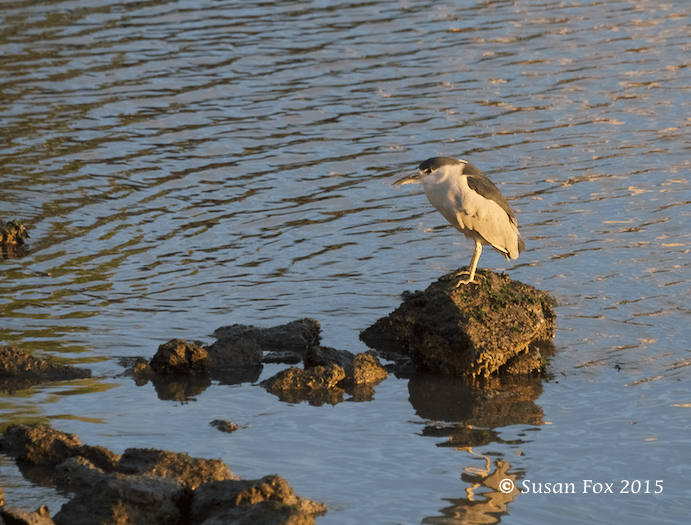
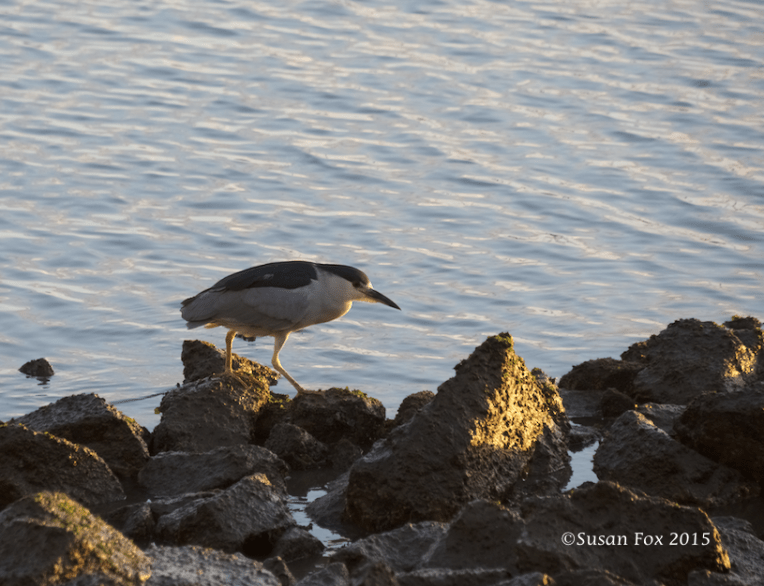
Black-crowned night heron. Minding its own business.
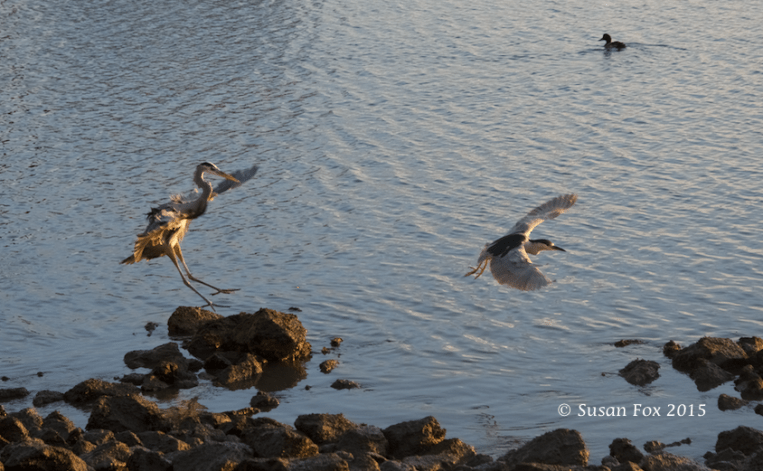
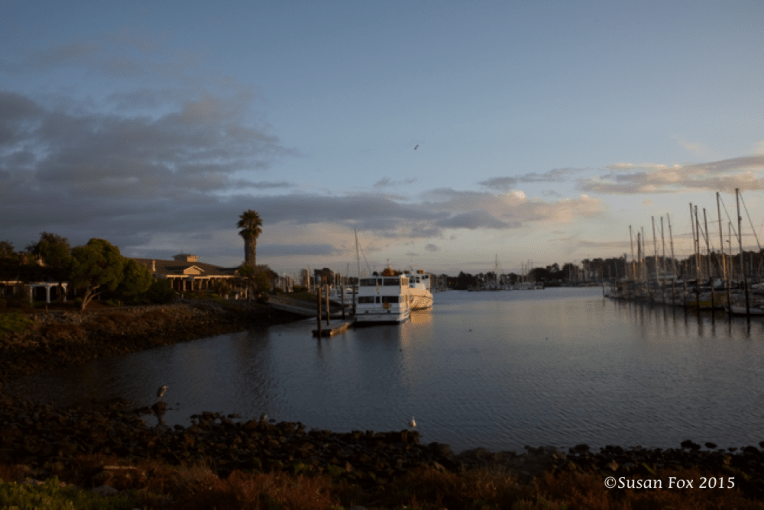
We just spent a couple of days in Berkeley, staying at the Berkeley Marina Doubletree. Our room was on the first floor overlooking the marina, so all I had to do was open the sliding glass door and walk ten feet to see and photograph the various birds that were hanging about, including this black-crowned night heron. As you can see, it was late afternoon and the light was really nice. I’d taken three shots when…
Incoming!
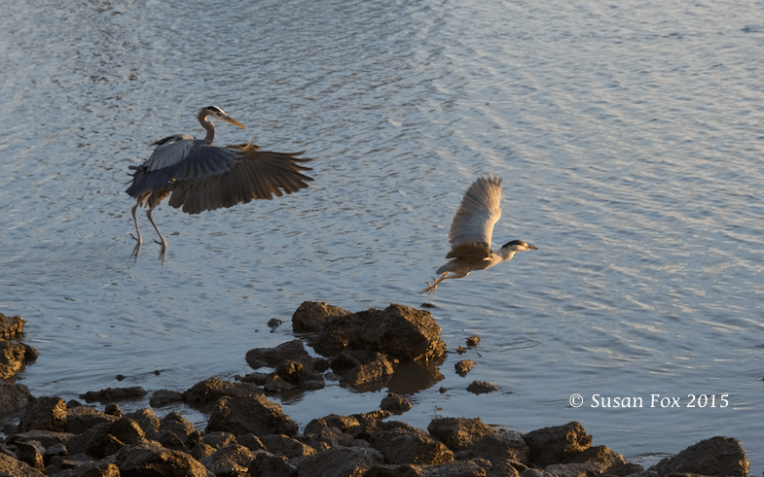
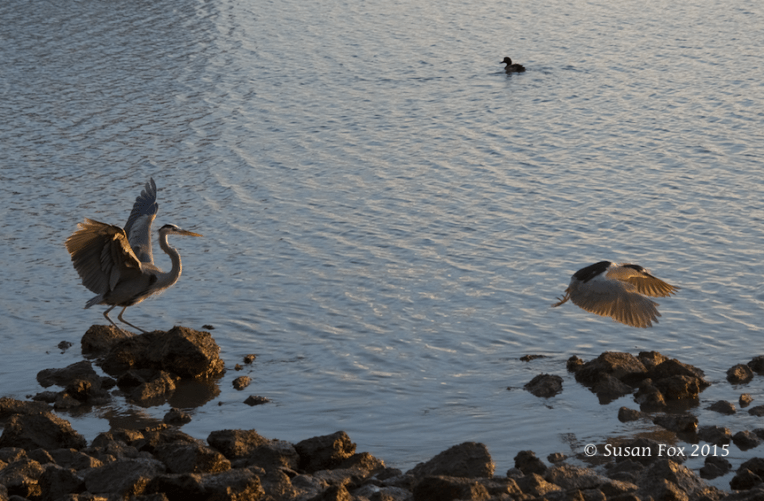
a great blue heron flew into the frame from stage left. I just stood there and kept shooting. The smaller heron sprang into the air.
I want THIS rock.
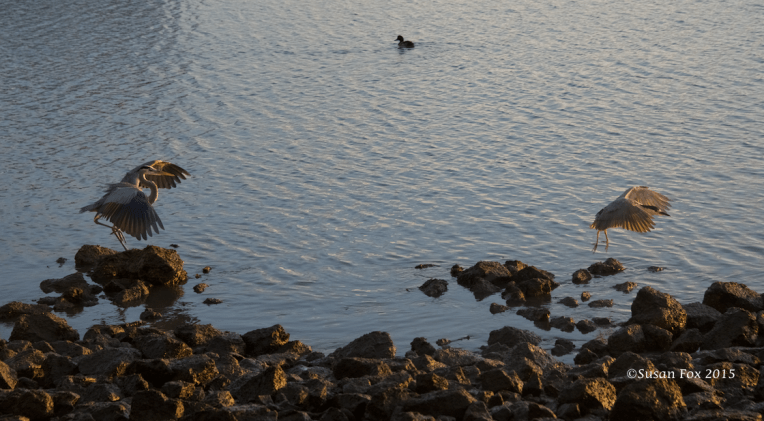
And got out of the way as fast as it could.
My rock.
Not only was this a great little slice of life sequence, but…wow….the light.
I am happy now.
It was all over in less than 30 seconds.
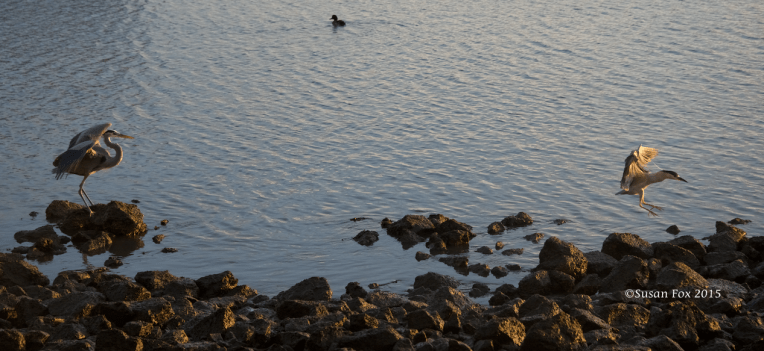
There.
The night heron, having moved not really any farther than it had to, continued on about its evening routine.
“Learn the rules like a pro, so you can break them like an artist.”
― Pablo Picasso
“Creativity requires the courage to let go of certainties.”
― Erich Fromm
“For art to exist, for any sort of aesthetic activity or perception to exist, a certain physiological precondition is indispensable: intoxication.”
― Friedrich Nietzsche
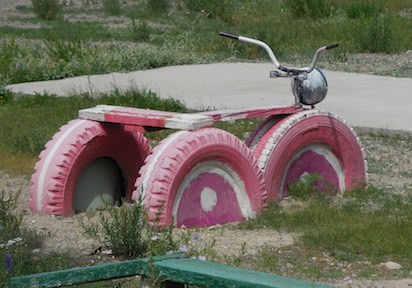
Playground tricycle made from old tires; Bayan-Ulgii, western Mongolia, 2015
“But unless we are creators we are not fully alive. What do I mean by creators? Not only artists, whose acts of creation are the obvious ones of working with paint of clay or words. Creativity is a way of living life, no matter our vocation or how we earn our living. Creativity is not limited to the arts, or having some kind of important career.”
― Madeleine L’Engle, Walking on Water
“In order to be open to creativity, one must have the capacity for constructive use of solitude. One must overcome the fear of being alone.”
― Rollo May
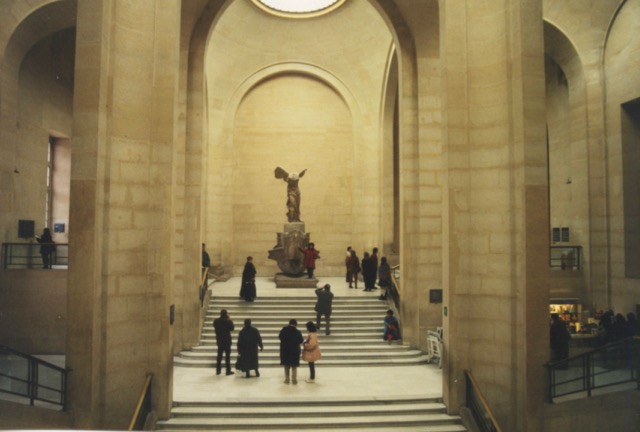
Obviously, everyone knows what has happened in Paris and my thoughts are with the Parisians and French people. I’ve only been to Paris once, in December 1996. My husband had business-related meetings so I had the better part of a week to wander the city. Paris is one of those places that will exceed your every expection and then some, even on wintry cold days. One of the highlights was the location of the group dinner that the people who were hosting the meeting arranged. A once-in-a-lifetime experience since it was in the entry atrium of the Louvre. Under the Pyramid. Followed by an after-hours tour of highlights like the Mona Lisa, Venus de Milo and Winged Victory. I’d been in the museum all that day and certainly didn’t mind see those iconic works of art in the quiet and lack of crowds.
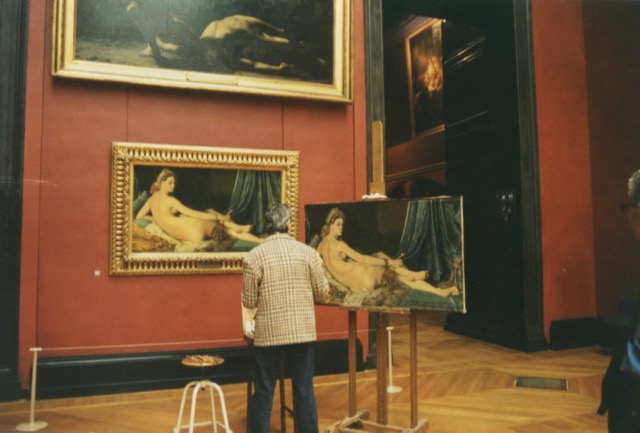
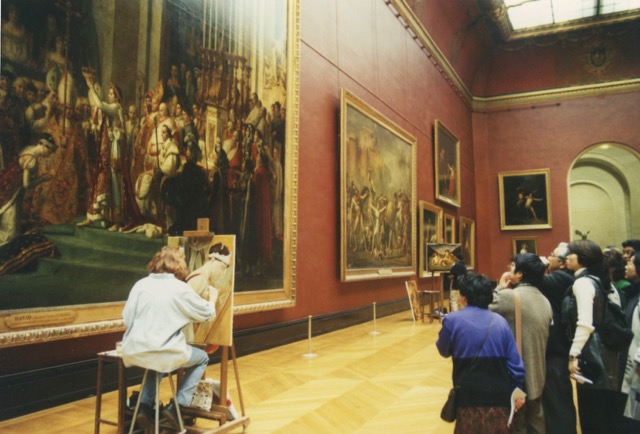
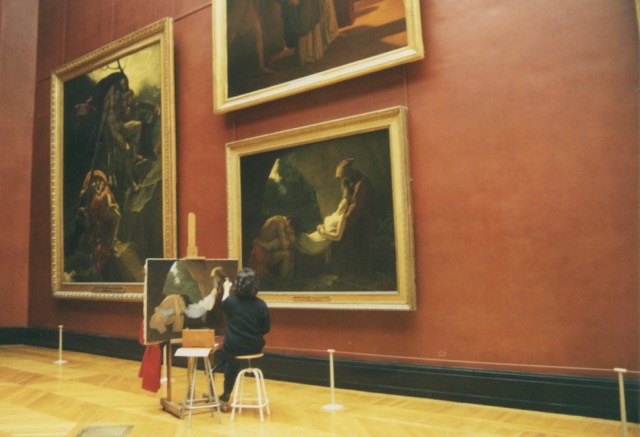
It had turned out that at some interval, once a week or once a month, I don’t recall at this point, artists were allowed in to set up their easels and make copies of the master works. This is a traditional way of learning to paint in oil and one that I did with a private instructor for two years albeit from prints, not originals. I took photos of a number of the artists at work.
This artist is starting on a copy of one of my all-time favorite paintings: “Madame Recamier” by Jacques-Louis David. She was a most remarkable woman. You can read more about her here.
“La Grand Odalisque” is one of Ingres most famous paintings, done during a time when the Orientalist part of the Romantic Movement was in full swing. Exotic eastern locales and paintings with harem themes were very popular. More about it here.
This enormous painting, “The Coronation of the Emperor Napoleon I and the Crowning of Empress Josephone in Notre-Dame Cathedral on December 2, 1804” is also by Jacques-Louis David. The artist has wisely chosen to focus only on Josephine as she kneels before Napoleon to receive her crown. In a time when there was no television or film, this is how major events, including battles, would be visually recorded for posterity. David was there, having been commissioned to create this epic work. Here is what the Louvre has to say.
I’m sorry to say that I can’t identify this painting or the artist.
Long shot of one of the galleries where artists were working. If I ever get back to Paris I will try my best to be there when I can do this.
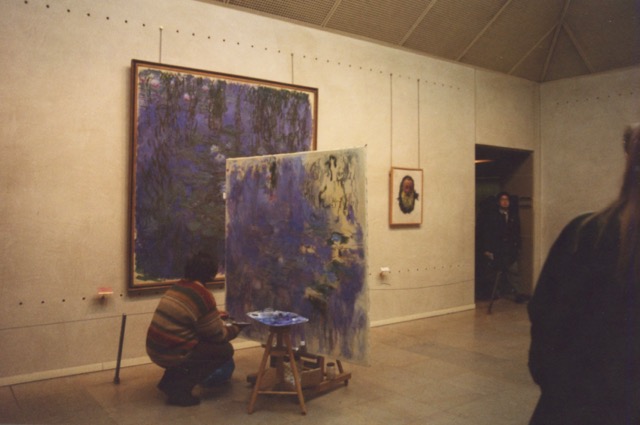
On another day I worked my way from the top floor to the ground floor at the Musee de Orsay and came upon an artist painting a copy of one of Monet’s water lilies works.
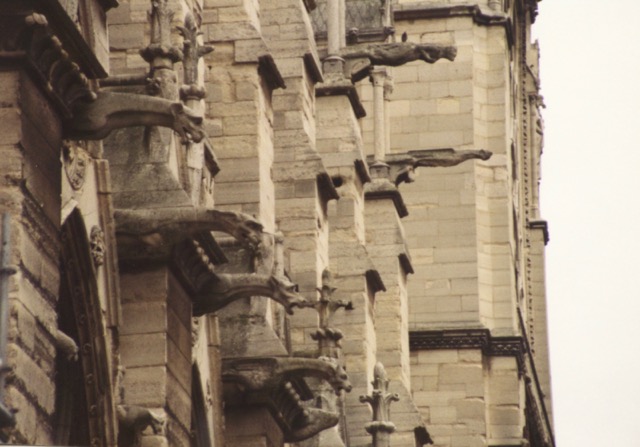
When not in one of the art museums I wandered about the city, photographing whatever caught my fancy, like these water spouts on the side of Notre-Dame Cathedral.
Across the river from Notre-Dame were vendors selling everything from newspapers to books to stamps to art.
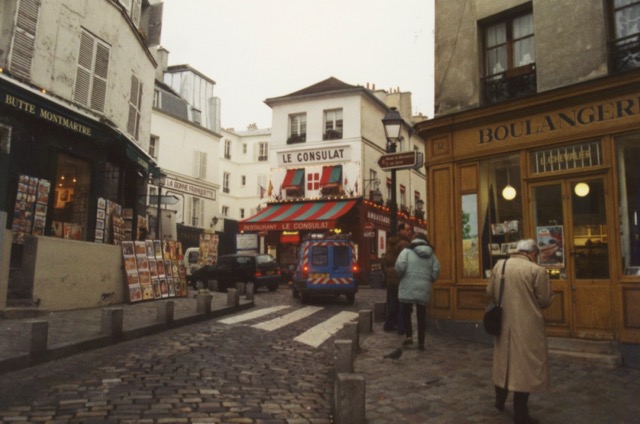
On my last day, a very cold and drizzly one, I took the Metro to the famous Montmartre district, home of Henri de Toulouse Lautrec, whose originals I had finally gotten to see at the Musee de Orsay, having adored his work since high school. It’s one of the few districts in Paris that still has the original and fabulous Art Nouveau entrances.
And even on a day like that the artists were out painting and selling their work.
I loved ambling about these old narrow, windy streets.
A close-up of the panel of art prints that can be seen on the right in the photo above.
I even got to see a Montmartre cat.
Since it was December, one saw holiday decorations everywhere and, look!, there’s Pere Noel. Three of “him”!
So, while it is a sad time in Paris right now and I’ve only spent a little time in France, I know that the French are indomitable and will not let what happened change who they are. Joyeux Noel!
The Winged Victory in the Louvre
(All the photos were shot with a Nikon N2000 film camera and scanned from 4×6″ prints, then adjusted in Photos.)
Like many artists, I listen to music when I’m working in my studio. What I choose depends on my mood, the time of day and the day of the week…I tend to crank up the rock and roll on Friday afternoons (Terry and the Pirates is a favorite or anything else with my Guitar God John Cippolina). My default, however, is a playlist I call Chill Music, set to Shuffle. Here’s most of who’s on it, in no particular order:
Karunesh (New Age)
The Rippingtons (Smooth jazz)
Craig Chaquico (Smooth jazz)
Peter White (Smooth jazz)
Sting (well, you know…)
John Adorney (Smooth jazz)
Darshan Ambiant (New Age)
Vickie Logan (New Age)
David Arkenstone (New Age)
Brad Jacobsen (Smooth jazz)
Davol (New Age)
Degi (Mongolian violin traditional songs)
Nightnoise (Celtic)
Minstrel Streams (New Age)
Marc Antoine (Jazz)
Kenny G (Jazz)
Yanni (New Age)
Shastro (New Age)
Nils (Jazz)
I went through iTunes, listening to the samples and picked individual songs that fit the theme. Some artists, like The Rippingtons, Karunesh and Sting, I’ve got whole albums. I also sometimes hear something on our cable Soundscapes channel and jot down the artist and song.
If I want to liven things up I have playlists for mellow rock, the 1960s, road music and individual musicians like Mark Knopfler, John Mayer and Fleetwood Mac. There’s also one for “new” Celtic, which includes Peatbog Fairies, Kila and Shooglenifty. I also like Celtic music from singers such as Enya and traditional groups like Clannad and Nightnoise.
I have LOTS of music from Mongolia, brought back on CDs and downloaded into iTunes. That ranges from traditional music like khoomii (throat singing) and morin khuur (horsehead fiddle) to neo-folk (Altan Urag, Altan Orgil, Khishigten), pop music (A Sound, A Capella, Camerton, Nomin Talst, Bold), rock (The Lemons, Madness), classical composers like Jantsannarov and the man who, if anyone, is the heart and voice of Mongolia, Javkhlan.
What kind of music do you listen to while you work? Let me know in the comments!
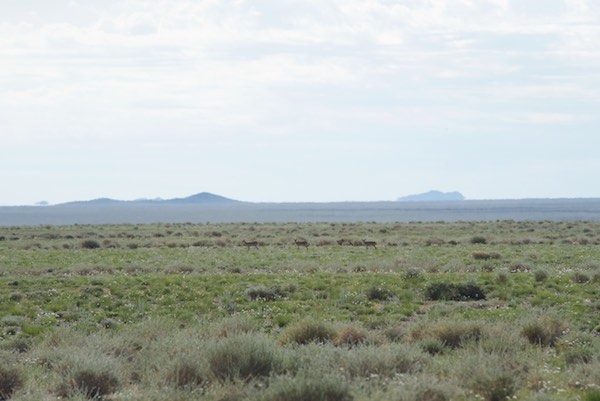
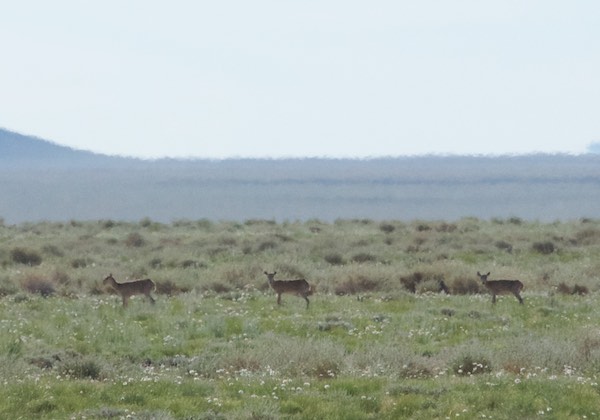
We finished our shopping in Chandmani, had lunch and headed east back to Dorgon Nuur. On the way, the “saiga show” started again, with at least three groups crossing our path as they headed north. As always they were too far away for good photos but some of this group of twelve are reasonably ok. Here’s the uncropped version.
More saiga…
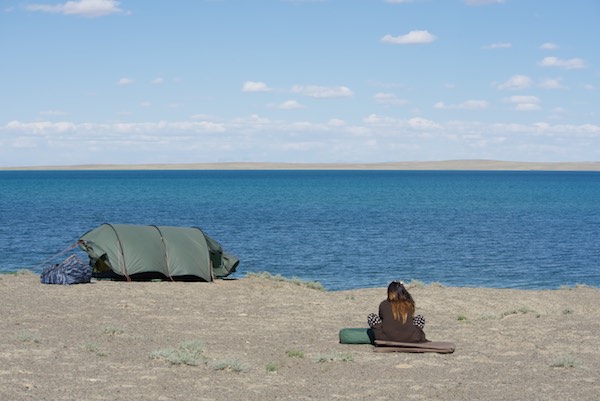
The driver drove along the lake edge for a bit and finally stopped on a bluff.
Campsite overlooking lake with whooper swansView to the southI found a nice spot for my tent. My guide is resting a bit before setting up the kitchen tent
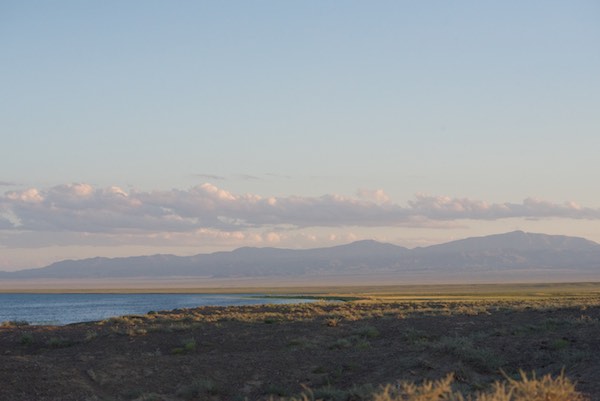
Once set up I got out my watercolors and sketchbooks and started to work. It was breezy, but not cold. Also no mosquitos. The late light started to get really interesting.
ReedbedsEarly evening lightView from my tent looking north
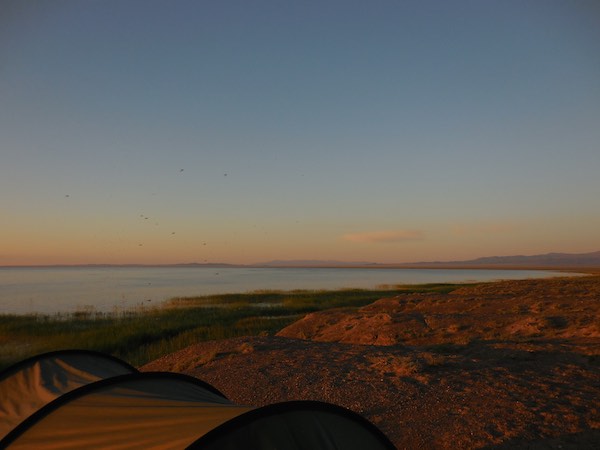
As the sun set, the wind died down and…the mosquitos arrived. Since we were the only living things of interest in the area. apparently every single one within a hundred miles showed up. I didn’t leave my tent unless it was absolutely necessary and turned in early. At some point, probably near dawn, I was awakened by a very odd sound. I couldn’t tell if it was natural or man-made and had never heard anything remotely like it before. But I wasn’t about to poke my head out in the dark, so I rolled over and went back to sleep, probably for an hour or so. When I woke up again it was just barely getting light and that sound was still going on. It was really mystifying. I finally had to look. I zipped open the vestibule just enough to see out and there, at standing head height, just in front of and above the tent was a ball of mosquitos close to the size of a soccer ball. And that was the source of the weird sound. I ducked back into the tent and quickly zipped the vestibule closed. No way was I going out that end. I seriously needed to pee and I wanted coffee so I slathered on the repellent and crawled out of the other end of the tent into a cloud of them that was only “better” ‘compared the packed mass a few feet away . Everything was covered with them…the tents, the Land Cruiser, the cooler. I did what I needed to do and retreated back my sanctuary.
Sunrise. I’m amazed that it can be seen through the cloud of mosquitos in front of the lens.
My guide and driver got up a little later and, I think, were equally appalled by the situation. So in a rerun of our last stay on the shores of Dorgon Nuur, we ate, packed up and left. We made a short stop in Chandmani and then drove south around the end of Jargalant Hairkhan Uul.
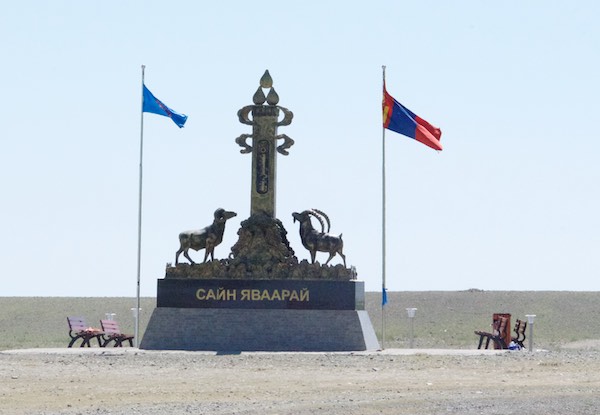
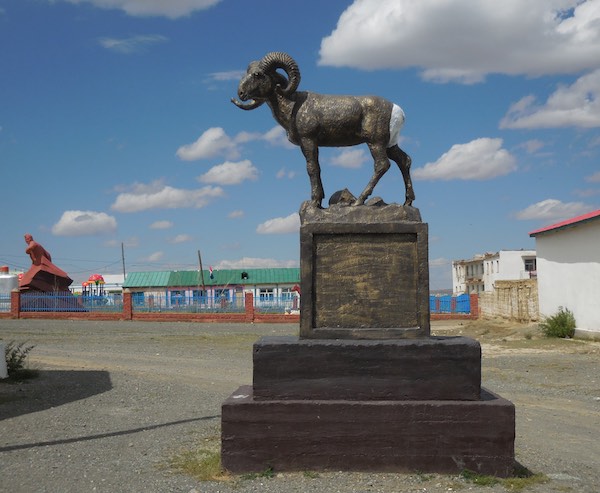
Chandmani with Jargalant Hairkhan Uul in the background.On the way out of town we passed this monument with an argali and ibex
It took a couple of hours to get to the end of the mountain. It was very arid and overgrazed land. The highlight was a “camel jam”.
Bactrian camels
We dropped down to the plain and could see the reedbeds of Khar Us Nuur in the distance. Finally we turned northwest and paralleled the mountain. The two sides are very different. The mountain creates its own weather. Rain falls on the southwest face. A rain shadow keeps much, if any, rain from falling on the northeast side. No one lives or grazes their animals on the mountain, even though Chandmani and quite a few herder families live at the base. The entire mountain is contained in Khar Us Nuur National Park’s boundary, but there are herders on the side we were now driving along.
There were sights of interest along our route, including this communications tower. What got my attention was the contrast between this modern high tech installation and the ger at its base.
Tower and ger
We drove for awhile along a small river and then through a lush green area with a variety of wildflowers.
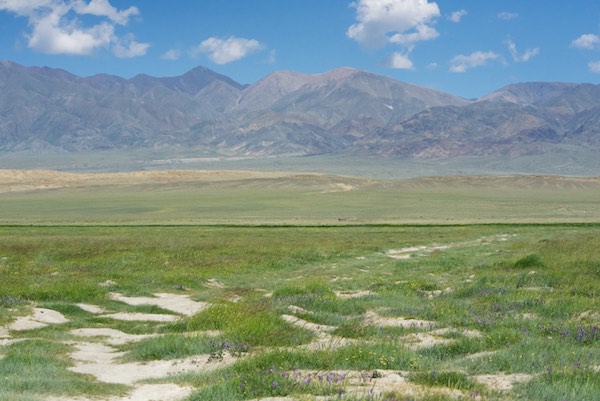
Green grass and wildflowersJargalant Hairkhan Uul
I’d been wanting to go to the mountain, which is really a freestanding range with many peaks, since I saw it from a distance in 2006. Between the previous trip a week or so earlier, which you can read about here, and this one, I will have almost completely circumnavigated it. This side was so much more interesting. I was awed by the colors and patterns of some of the slopes we drove past.
Jargalant Hairkhan UulJargalant Hairkhan Uul
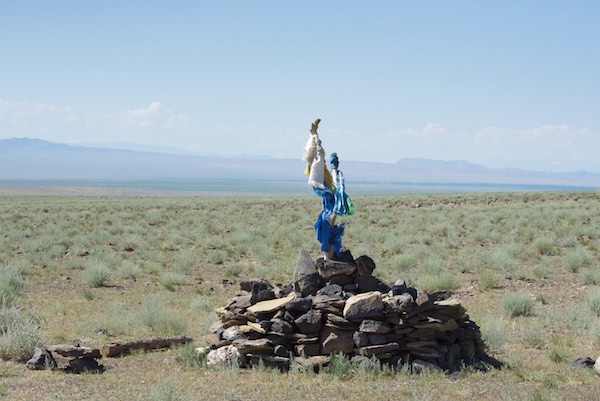
As we headed onto the upland slopes to the valley where we would camp for two nights, we passed this ovoo.
Ovoo
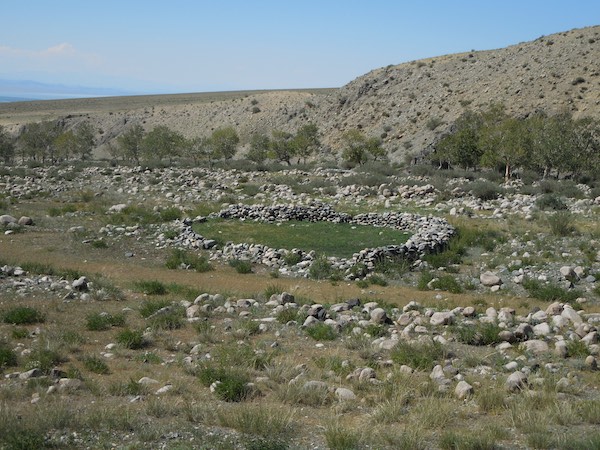
The ground became rockier the farther up we went and I grabbed a shot of this local herder’s winter livestock shelter.
Winter shelter
We entered the valley and I could tell that I was going to like this place a lot.
Valley entrance
We were finally driving on the barest hint of a “road” over rocks that covered the whole valley floor, some pretty big. There were groves of aspen trees, more than I’d seen anyplace else.
Aspen trees
We finally came to the end of the road and stopped at a ger. We were fed boortz soup and aaruul and our driver got the latest news from them, which included being told that a snow leopard had killed a another herders’s goat two days earlier not too far from where we were. So now I was in the middle of snow leopard territory, also home to ibex and argali!
The herder’s dogs. They were very aggressive. I took this photo from the car.
We drove back down the valley and set up camp at this spot, right next to a stunning, fast-flowing stream. Idyllic doesn’t begin to describe it.
Our campsite
The next afternoon my guide took me on a hike up the valley into a part that was separated from the main one. We clambered over rocks, moving steadily higher in elevation until the trail narrowed and continued as a track that led deep into the mountain.
At the end point of our hike with snow leopard habitat behind me
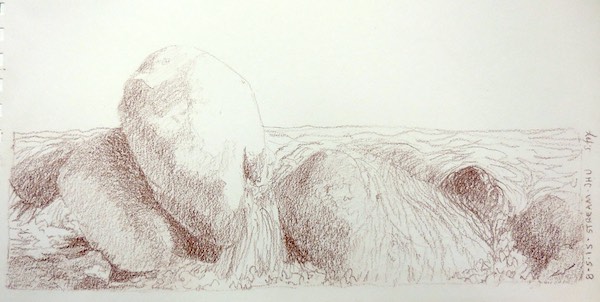
We hiked back down to camp, where I spent the rest of the day drawing the rocks and flowing water of the stream.
Rocks and stream- Derwent drawing pencil on paper
The next day I worked until lunch, doing a double study of two of the aspen trees.
Aspen trees, Jargalant Hairkhan Uul, Khar Us Nuur National Park- pencil and watercolor on paper
While I was drawing, two camels showed up! They crossed the stream not far from where I was sitting. For a minute or two I wasn’t sure how close they’d get, but it turned out all they wanted was to get past our camp so they could move on down the valley.
Bactrian camels
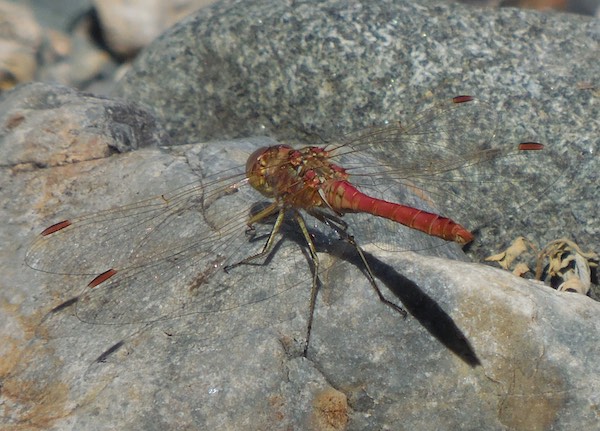
There weren’t a lot of insects and even the mosquitos weren’t too bad, especially compared to the lake. I did manage to get a good photo of this flashy dragonfly.
Dragonfly
My guide took some pics of me working.
On location
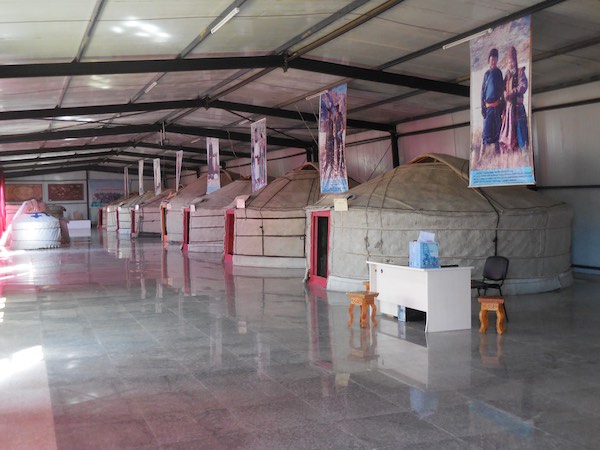
Finally, it was time to leave. This was the last stop on this year’s WildArt Mongolia Expedition and it was one of the best. I thought the trip was over when we got back to Hovd, but my guide and driver weren’t done yet. The next day was my flight back to Ulaanbaatar, but it wasn’t until late afternoon. So they picked me up in the morning and took me on a tour that included the local cultural center, which has gers, artifacts, objects and clothing from all the ethnic Mongol groups who live in Hovd, plus the Kazakhs.
The cultural center
It really is a must see.
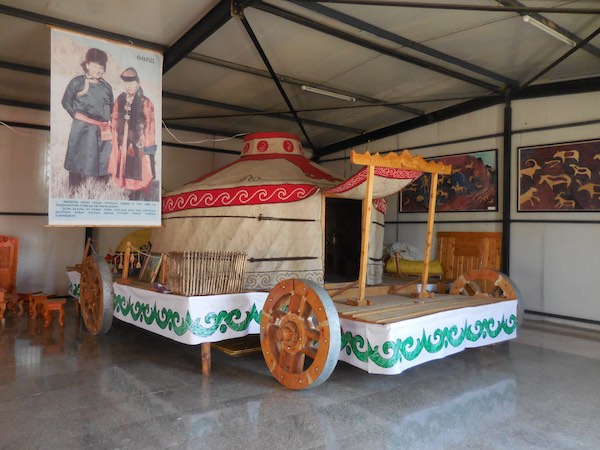
The kind of ger and wheeled platform that a wealthy aristocratic Mongol might have had.
The final stop in town was a monastery that had just started to be re-built five years earlier. The original was one of the hundreds destroyed by the communist government in the late 1930s. I was told that the whole community came together to raise the money.
Temple in new monastery complex in Hovd
They took me back to the hotel to rest for a couple of hours and then it was off to the airport. The flight was delayed, so we looked at some of the photos and video I’d shot. Finally, it was time to do in to the boarding area, onto the plane and back to Ulaanbaatar. I was in town for a couple of days, then went “on vacation” to Delger Camp for four relaxing days, just hanging out, doing watercolors and hiking down to the dunes and back. A few more days in UB and I was homeward bound, my tenth journey to Mongolia at an end.
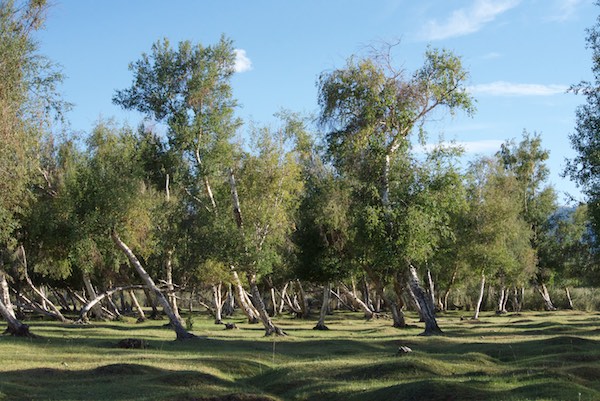
I loved our hidden campsite in the birch grove. I did as many sketches and watercolors as I could since I have no idea if I’ll ever be at that place again. Here’s a two-page set of drawings from my journal.
Birch trees at campsite near Chandmani
And here’s one of the watercolors I did.
Birch trees at campsite near Chandmani
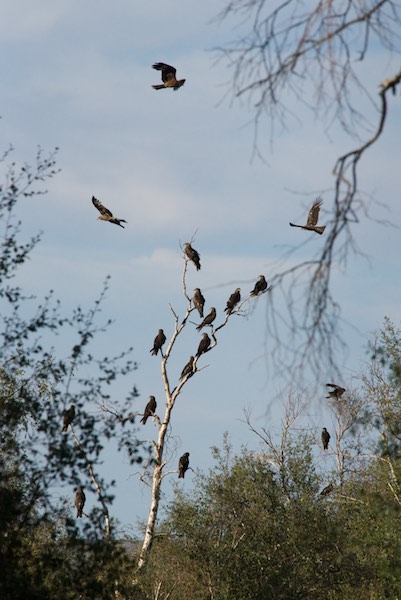
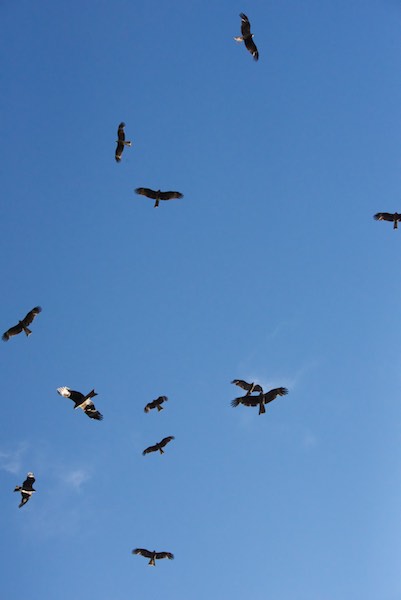
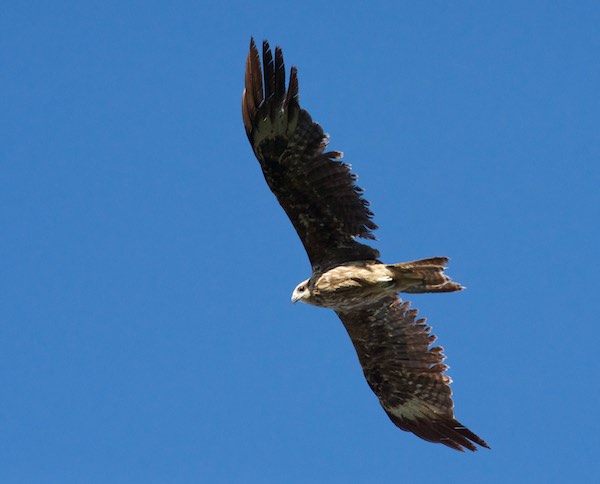
We weren’t, however, alone. The grove seems to be headquarters for a large number of black-eared kites, a very common bird that one doesn’t pay much attention to after awhile while traveling around. Well, you sure couldn’t ignore this crowd, which carried on enthusiastic “conversations” until nightfall.
The “kite tree”Just a fraction of the number that were in the air at this pointGetting checked out
They also nest here.
Black-eared kite nest
It was such a lovely spot.
Birch tree grove
And it wasn’t easy to leave.
Stream
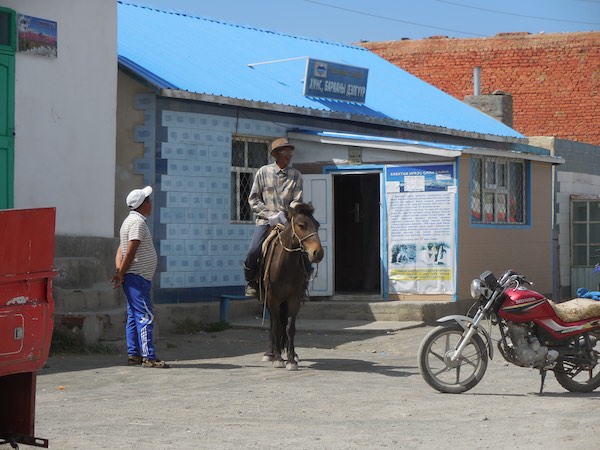
But we needed to get food and supplies for the last leg of the Expedition, so we packed up by late morning and drove the short distance into Chandmani, the soum center. There is also a Chandmani in Gobi Altai Aimag, which we drove through on the first Expedition in 2013, so now I’ve been to both of them. The guide had to get some money, which gave me a little time to wander around and find quite a few things of interest.
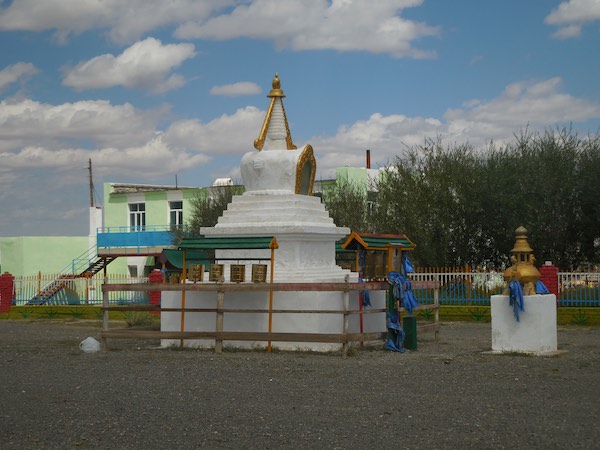
A Stupa
Heroes from socialist times, along with WWII, are honored with statues in various towns. This one says “Khodolmoriin Baatar R. Chadrabal”.
Memorial statue
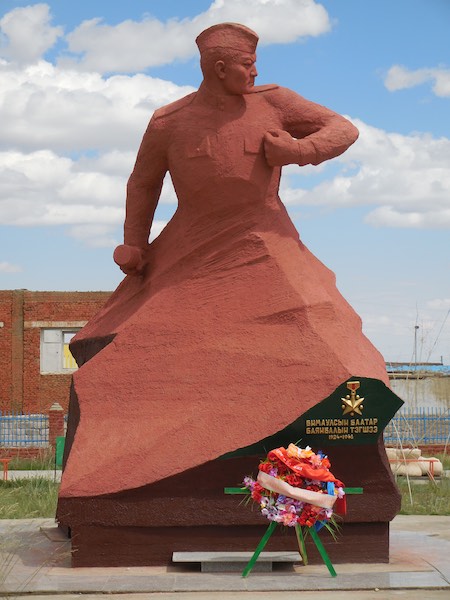
I thought this next one was awesome. So perfectly an expression of its time and a good work of art. The plaque says, I think, “Bimaulsin Baatar/Bayaibalin Tegshee”.
Memorial statue
And, providing a contrast nearby, was this very cute playground.
Playground
On the ground near the red hero statue was a wonderful sculpture of oversized anklebones (shagai). The real ones are used for an apparently endless number of games, many of them involving alcohol consumption. Each of the four sides represents a specific domestic animal: horse, sheep, goat or camel.
Shagai
I was not surprised, this being Mongolia, that there would be a statue of a horse.
Horse statue
I was, however, quite surprised to see a statue of an argali.
Argali statue
It seemed a sleepy town, like most soum centers I’ve been to, not many people out and about.
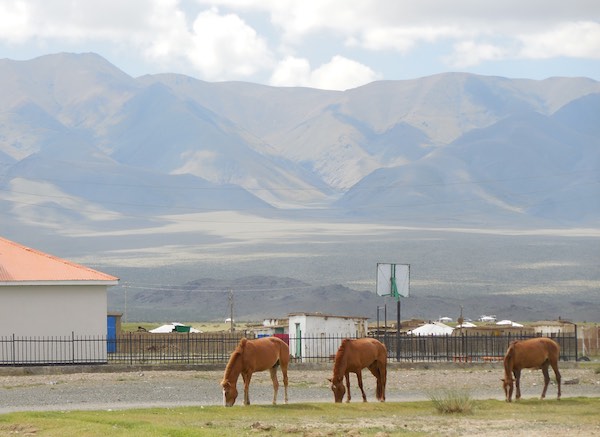
Chandmani scene with horses and Jargalant Hairhan Uul in the background
The town’s setting, with the northeast side of Jargalant Hairkhan Uul as a backdrop, was very nice. We went into the town center and, wow, it was hopping! The local naadam festival had just ended and people had come into town to do their shopping.
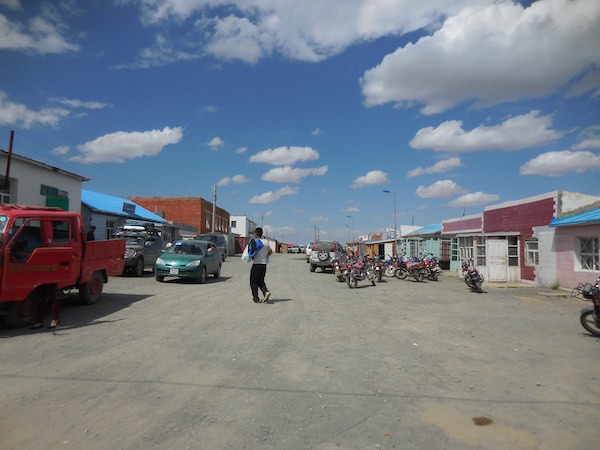
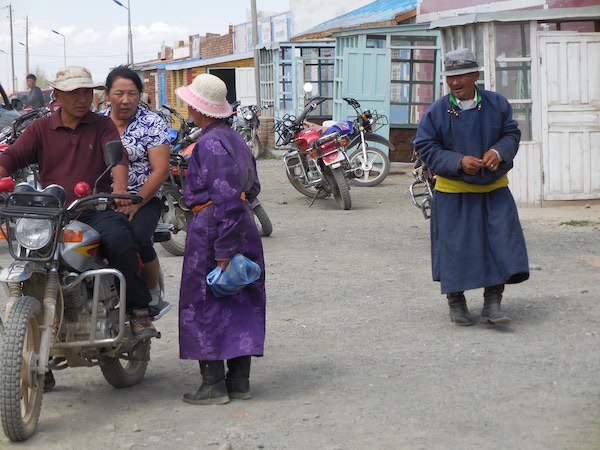
The main shopping street in ChandmaniLocal people who have come to town
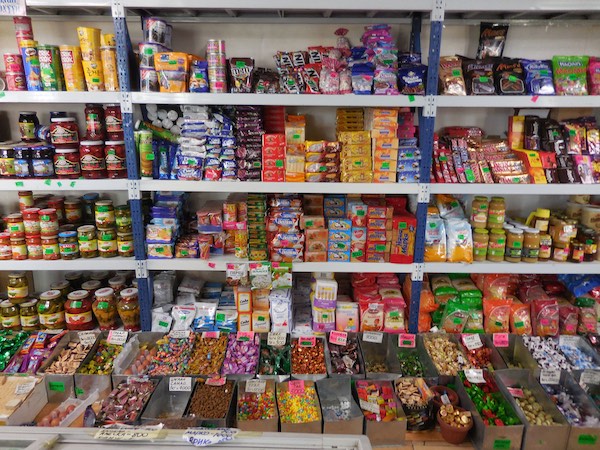
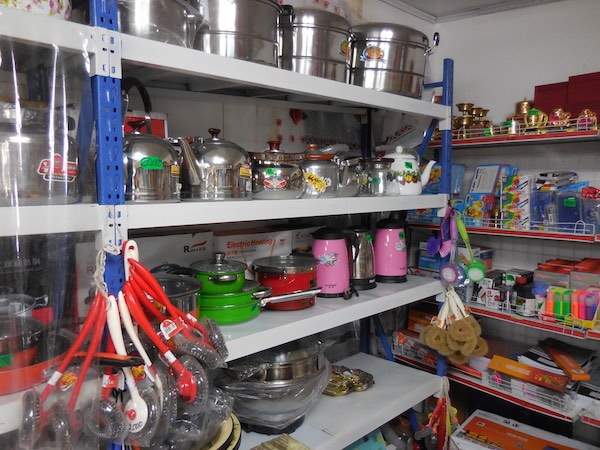
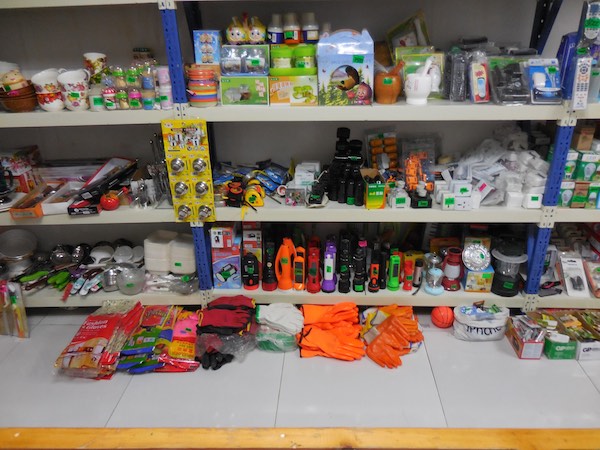
This was one of the few soum centers I’ve been in (not a huge number) that really had a main shopping street. Our first stop was this shop. I was dazzled by the riot of color and the variety of goods. I’m posting a lot of photos of it for two reasons. One is that I just want to share the experience, which is not one that visitors often get. I had the best time poking around and taking photos with my phone camera. The second is that I am so tired of uninformed, to put it diplomatically, Americans seeing the herder’s gers and how country people live, and going on and on about “those poor people” living in poverty as if it was some kind of degraded life that they need to be rescued from by the noble westerners. It’s true that most herders don’t have a lot of cash money. They also don’t accumulate a lot of stuff because everything they have is going to have to be packed up and moved at least a couple of times a year. But they have what they need and if they want something they have access to shops like these.
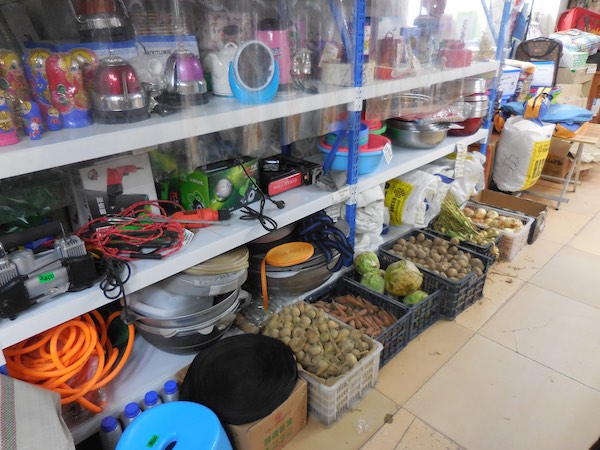
Behind the counterCandy is dandy and every shop I’ve ever been in has an excellent selectionVegetables and sundry other things like Russian nesting dolls and heavy electrical cords.Children’s shoesChildren’s clothing
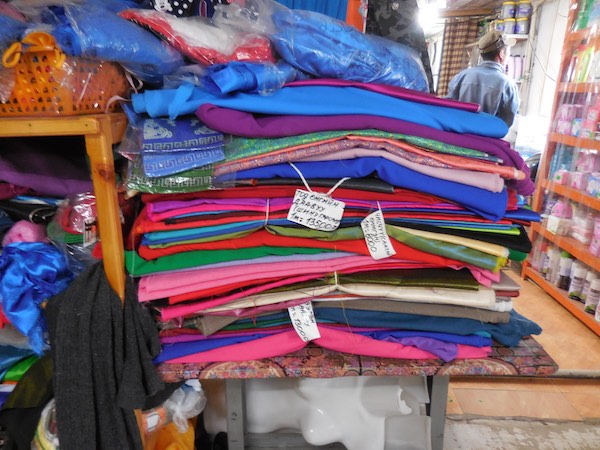
As you have probably guessed by now, the Mongols are not a people who are afraid of color. Westerners have commented on that for as long as any have made the journey to the Land of Blue Skies.
Fabric temptations, but I managed to resistCookies and biscuitsthe stationary and school supply department, plus some Buddhist offering cups and such on the top shelfNailsThe toy departmentPaint, tape, locks…hardware stuffPots and pansNuts and bolts and washersMobile phonesFlashlights and other things one might need around the gerThe auto/motorbike parts departmentBeverages, including fruit juices and beer; breads are on the left; oh, look, more candy on the right at the bottom
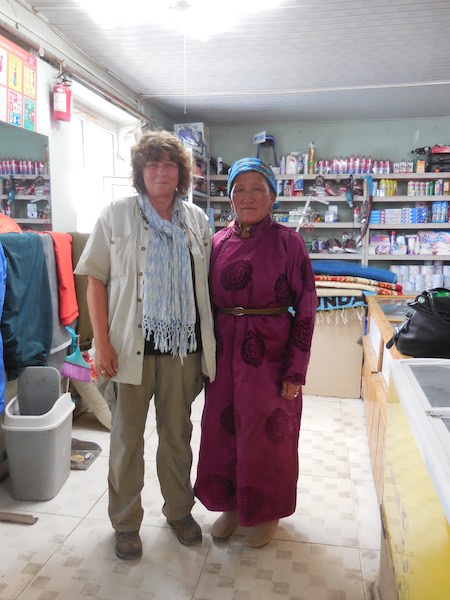
We were almost ready to leave when a woman came in wearing a del the same color as one I have. Our eyes met and I got up the courage to have my guide ask if she’d have her picture taken with me. I got a smile and a nod. Mongols almost never smile for photos, having been taught to keep a serious face since childhood. I’ve learned to keep a neutral friendly expression for these photo opps.
Love this photo; one of my favorites from the trip
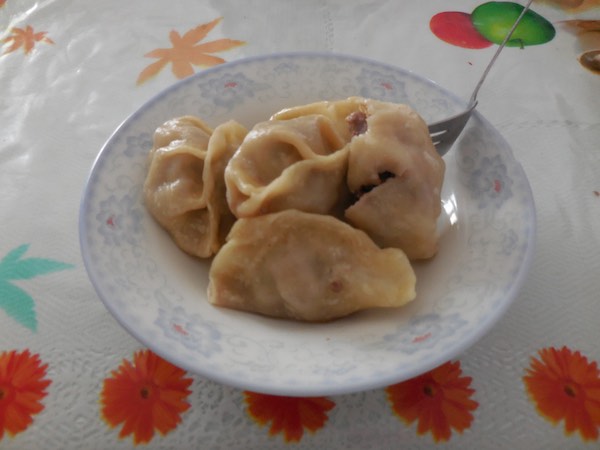
We left the first shop and went to have lunch, which turned out two of my favorites! Buuz and khuushuur. I have yet to get tired of either.
Buuz, which are steamed mutton dumplingsKhuushuur, which are fried mutton turnovers
We needed to go to one more shop to get meat.
The second shop
There was a huge poster attached to the wall. It was information about snow leopards. It says that there are 37 living on Jargalant Hairkhan Uul. The photo shows camera trap images of two leopards who have lost a paw in a trap, so other information on the poster is about not setting traps.
Snow leopard information poster
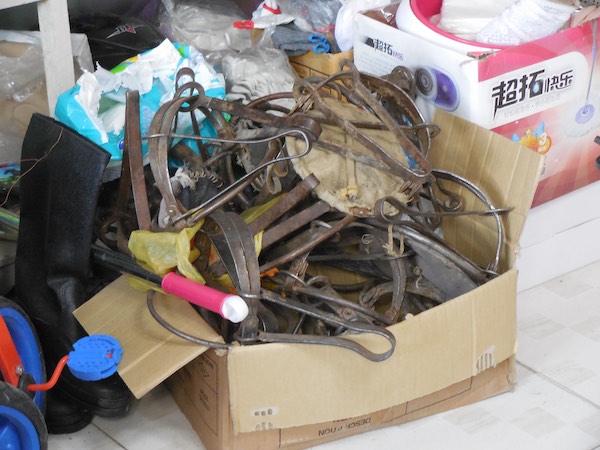
But we go into the shop and I see this. I was not able to find out the whole story behind either the poster or the traps. When I do I’ll be writing a post about it.
Traps
It turned out that there was no meat on site. The proprietor made a phone call and about 20 minutes later a local herder came in with a small bag of fresh mutton. In the meantime I took some more photos, including this stack of ger felts.
Felt ger coverings
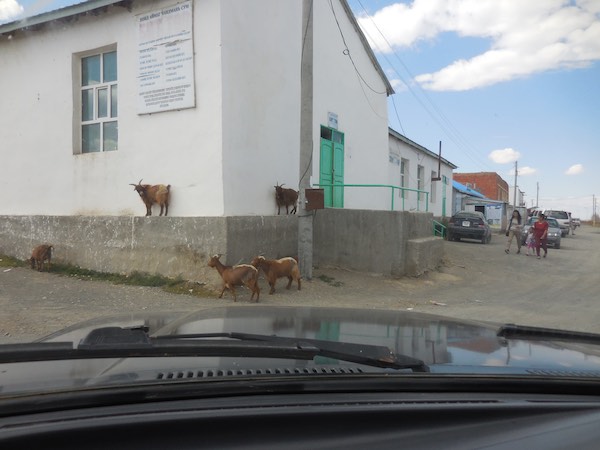
We went back to the car and got in. In the meantime, some of the local goats started to put on a show.
Goats finding a raised vantage point on a building
As we were leaving I spotted this horse tied to a fence and had to get some photos.
Good-looking grey horse with very nice saddle
Now we really did need to get going. Our destination? Back east to Dorgon Nuur to camp in a different location than before. Will there be mosquitos? Find out next week.
It was time for the Expedition to try to see critically endangered saiga antelope (Saiga tartarica mongolica). I had been told that they could be found in an area in Khar Us Nuur National Park between Khar Us Nuur and Dorgon Nuur and also to the south. That’s the way we headed in the morning at about 9am trailed by a cloud of mosquitos that we thankfully and quickly left behind. The sightings began at 9:40 am (I kept notes of time, number of saiga, plus a GPS reading of the first sighting).
Three saiga antelope; they really blend into the landscapeCloseup of saiga
Almost all the sightings that followed were initially made by the driver who, typically, had incredible the visual acuity I’ve kind of been spoiled by over the years. I’m always scanning with my eyes and binoculars for whatever we’re looking for but rarely spot an animal before the driver. (The exception is argali at Ikh Nart because I’ve spent so much time there and know exactly what to look for.) And were there ever sightings! Between 10:45am and 12:49pm, we saw a total of 35 saiga in groups of 2-5, except for a single calf, every five to ten minutes and I got some kind of “I saw them” shot of almost all of them. Part way through my guide remarked that she’d brought a group of tourists to the same area not long before and they’d seen exactly….five.
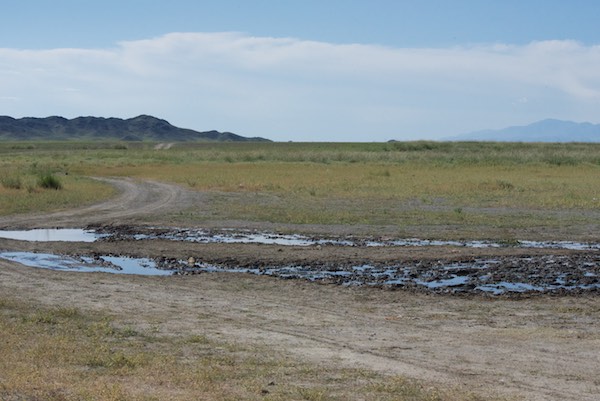
We came to this place where there was a spring that saiga came to drink at. The driver said that we wouldn’t likely see any farther south, so we turned back and the sightings, as described above, continued as we retraced our route.
Watering place
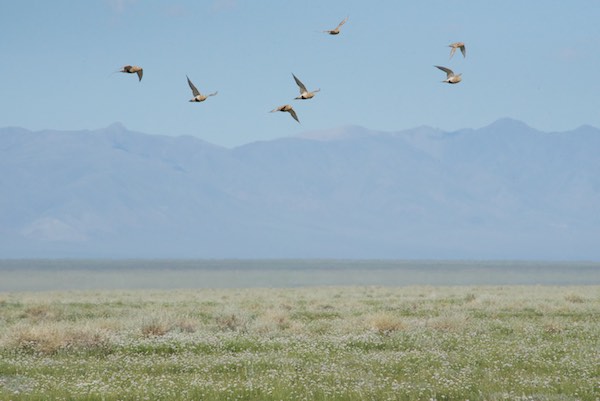
On one stretch the car flushed lots of Pallas’ sand grouse. It was a challenge to photograph them from the moving car, but I got some good shots.
Pallas’ sand grouse
We came within sight of Dorgon Nuur again and…more saiga! The dunes are the same ones we had to work our way past the day before.
Saiga antelope with Dorgon Nuur in the background
It had gotten hot and mirages appeared in the distance.
Mirage
Finally, around 1pm, we stopped for lunch at an observation tower that was in the middle of the plain between the lakes. We parked near the base of it. The only shade was on one side of the car. The driver, who was also the cook, had made, believe it or not, sushi for lunch. No fish, just rice, a little vegetable and an interesting sauce, but it really hit the spot.
Observation tower
I did some sketching while we rested and watched a herd of camels wandering past.
Bactrian camels
I had been looking at my map and noticed that there were some small lakes at the north end of the park. I asked the driver if it was possible, with the time we had for the day, to go there. And that’s the direction we headed after lunch.
In a lot, if not most, of Mongolia there aren’t any trees, so the raptors just stand on the ground, like this upland buzzard, when they aren’t flying.
Upland buzzard
As we drove red rock formations came into view. Past them in the distance are some of the reedbeds of Khar Us Nuur.
Red rocks
We came to a raised area to the left of the rock formations and, wow, what a view!
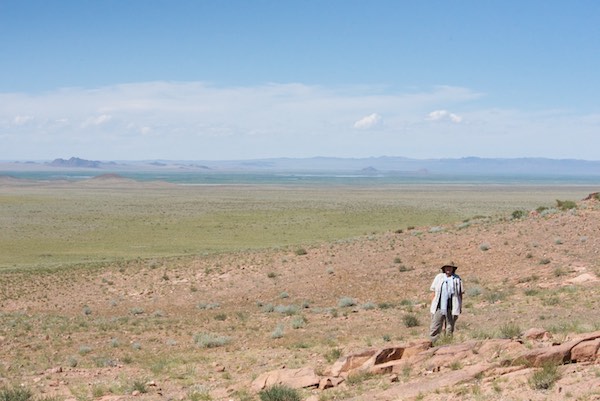
Posing with the view
I could see that we were still a long way from those small lakes, if they were even there, but my guide more than made up for that by telling me that from where we were standing there were three sacred mountains to be seen. That was completely unexpected. She pointed them out to me from left to right. The first, to the west was…Hokh Serkhiin Nuruu, which was where I had been for the argali capture just a couple of weeks ago!
Hokh Serkhiin Nuruu (3776m)
To the right and north was Altan Hokhii, one of the four State Sacred Mountains of Mongolia. The president of Mongolia had visited it for a ceremony not long before. It still had quite a bit of snow on the top even though it was August. The green in the middle ground are reedbeds.
Altan Hokhii (3351m)
And finally, almost straight north was Tsambagarav (4165m) the tallest of the three. It and the surrounding area form one of Mongolia’s national parks. It also still had snow on its peak.
Tsambagarav
This is one of the things I love about traveling in Mongolia. One can have a plan or idea of what one wants to see or do, but something else equally good or better often happens instead. Having reached the northmost point of this drive for this trip, we turned south. We now had Jargalant Hairkhan Uul on our right and another line of hills to our left, forming a very wide, shallow valley that started out arid and absent any gers or livestock, but gradually became greener and populated.
Heading back south
We started to pass gers quite regularly, some right next to the road.
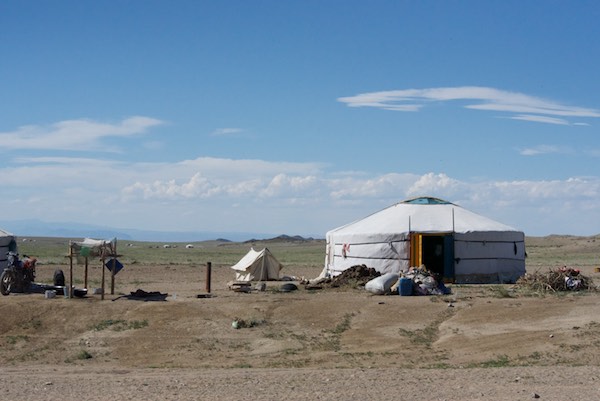
Herder’s ger
There were more and more goats and sheep and we found ourselves momentarily in a “sheep jam”.
A sheep jam
The landscape became quite green, trees appeared and then I saw a good-sized wandering stream.
Green valley with Jargalant Hairkhan Uul as a backdrop
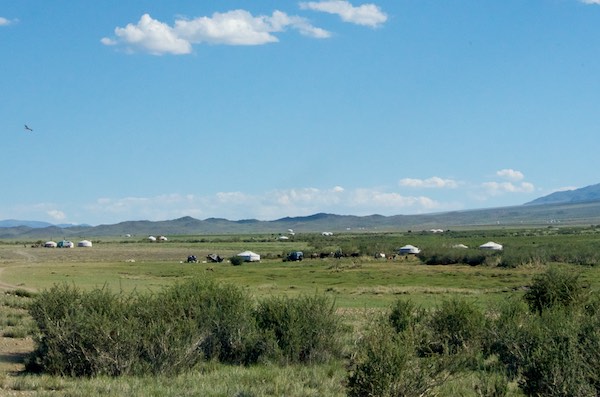
It was quite beautiful and very appealing with a storybook quality. All I could think was what a great place this would be to spend the summer. And apparently that’s what a lot of the local people do. They live in or near, Chandmani, the soum center, most of the year, but in the summer set up gers in this valley and stay in them on the weekends and for vacation. At the end of the season they pack them up and store them away.
Gers
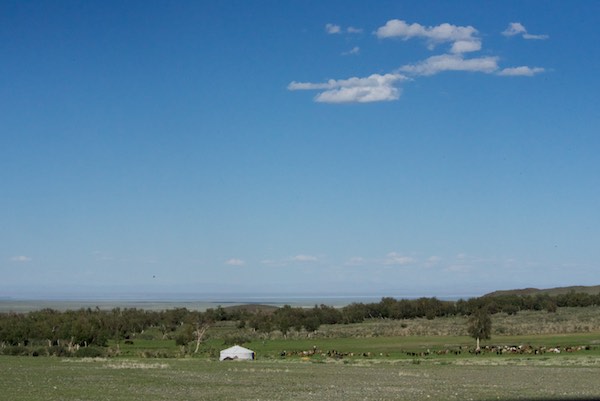
We came to the end of the valley, which had a lot of trees, and were at a high enough elevation that we could see Dorgon Nuur in the distance.
Ger, trees and lake
It was getting late in the afternoon and I knew we’d be stopping soon to camp for the night. I gazed longingly at the trees, which lined the streams. But I leave the choice of campsite to the driver unless specifically asked. So on we went, past the trees, up a slope, around and over a rise, the road becoming more of a rutted track. There were signs of previous campers and, unfortunately, quite a bit of trash strewn about. Yuk. But then we dropped down the hill and pulled up at this:
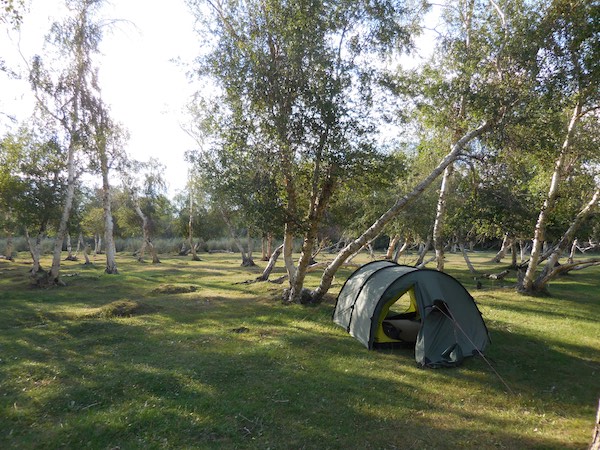
The birch glade
Oh, my. The driver asked, through the guide, if this would be ok. All I could do was grin and nod “yes”. To get to it we had to carry our gear across this.
“Our” stream
I know. Bummer. But I soldiered on and picked this spot for my tent. Then I took my shoes and socks off and went wading in the stream and just sat on the bank with my feet in it, listening to the water and the black kites wheeling around overhead (more on them next time).
One of the Best Camping Spots Ever
And then it was magic light time.
Magic light among the birches
I wandered about the area, did a little sketching and wished we could stay here for a week instead of just one night. More on this special place and some of the art I created here next week.























































 Susan Fox, American Artist