One Open Studio Weekend Down and One To Go + Photos!

I’m doing both weekends of North Coast Open Studios this year. People were very interested both in my upcoming trip to Mongolia and hearing about what the country is like. I had my computer going and was able to show people pictures of the takhi, domestic horses, gers, camels, Sukhbaatar Square in Ulaanbaatar with the new government building and the statue of Chinggis Khan that graces the front of it.

Towards the end of the day, a young woman came in who was riding by on her bicycle, saw the signs and came in to check it out. By the time she left, she had decided that she wants to throw in with me on my art/conservation initiative, Art Partnerships for Mongolian Conservation. She has experience and skills that will be extremely helpful. Plus, having traveled widely, she has an excellent grasp of the issues involved in coming into someone else’s country and working with people in a constructive, culturally sensitive way.

I also sold two originals, some cards and signed up almost everyone for my email newsletter. If you’d like to get Fox Tales, just go to the contact page on my website, fill it in and let me know that you want the newsletter. You can one-click unsubscribe at any time if you change your mind.

All in all it was a fun, successful weekend and I’m looking forward to this next one. If you’re in Humboldt County or heading this way, you’re invited to stop by between 11 am and 5 pm this Saturday and Sunday. Here’s some photos I took Saturday morning.

Roses from my garden
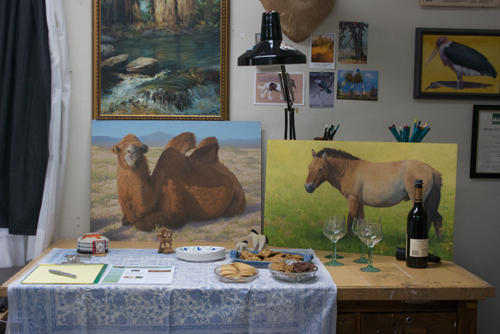
The refreshment table with a couple of recent paintings
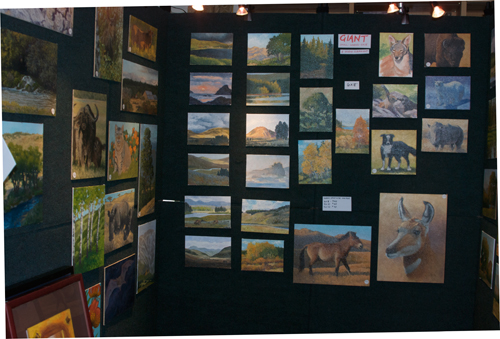
The "gallery" with price lists
The "Giant Small Works Sale"
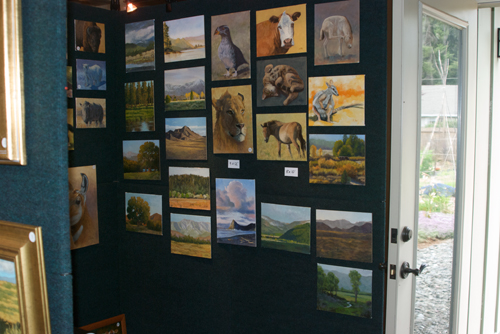
More "Small Works"
More "Small Works"
Recent larger, framed works (I happily do layaway)
Looking from east to west with print bins and card rack
Looking from east to west with print bin and card rack
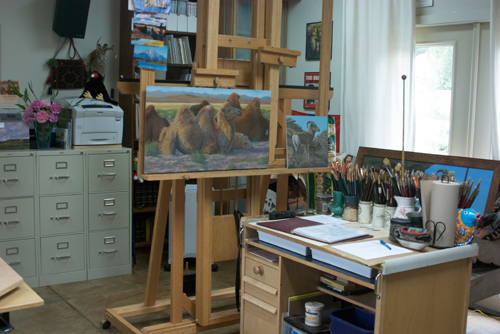
Easel and painting table

Good Advice for Wildlife Artists

Personally, I have found that learning from good teachers is a great time-saver. What could take years of trial and error can maybe be addressed in an hour and then you get to move on to the next challenge.

In that spirit of benefiting from those who have gone before, here’s some thoughts about the making of wildlife art that I find worthwhile, illustrated with a few of the reference photos I’ve shot through the years.

KEN CARLSON:

“One of the challenges of painting a number of animals, particularly pronghorns, is to design an interesting grouping. What I try to achieve is an appealing overall shape; an uncontrived, natural look to the grouping…”

National Bison Reserve pronghorns; this one has possibilities
National Bison Reserve pronghorns; this has possibilities, but the "grouping" needs a lot of work

BOB KUHN:

“…the need to convey those gestures, poses and attitudes that spell out the character unique to the animal.”

Lake Nakuru cape buffalo; typical "I dare you"
Lake Nakuru cape buffalo; typical "I dare you". The painting I used this reference for will be on my website by the end of November

GUY COHOLEACH:

“You look into the eyes of a leopard in a zoo, and sure, you can get a lot out of them. But look into the eyes of a lion 30 feet away from you, when you’re standing right in front of him with no rifle, and let me tell you, they look a lot different. They do.”

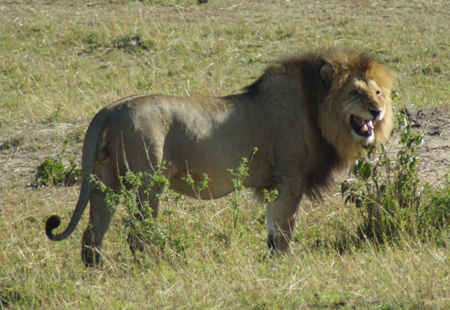
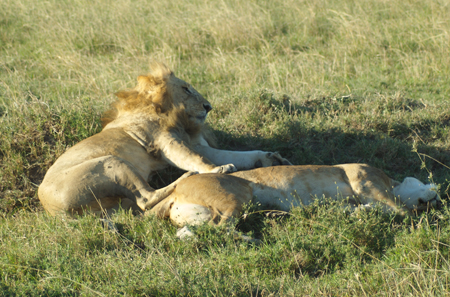
Masai Mara lion; I was in a car, but still...
Masai Mara lion; I was in a car, but still...(Actually, he's flamen. There was a more dominant lion nearby who was with a lioness.)

NICHOLAS HAMMOND author of Modern Wildlife Painting:

“The best of modern wildlife painters show us the mystery and death, memory and beauty and what is to be learned, or lamented, loved or wept for.”

And it helps to have an assistant

Happy Hallowe’en!

And Samhain, too!
And Samhain, too!

Fieldwork for Wildlife Artists

When I made the decision to specialize in animal subjects, I also took a deep breath and made a personal commitment to reach the highest level of excellence that I was capable of (still chugging away). Then I researched the approach and working methods of the best current and past wildlife artists, figuring the odds were that they knew a few things that would be useful to me.

And guess what, not a single one of them, (including Bob Kuhn, Carl Rungius, Wilhelm Kuhnert, all unfortunately deceased) like Robert Bateman, Guy Coholeach, Ken Carlson, Dino Paravano, Lindsay Scott, Julie Chapman or Laney, to name some of my favorites, rely on other people’s photos except to supplement their own for specific elements, only go to zoos or game ranches or work exclusively from photos to the exclusion of anything else. They GET OFF THEIR BUTTS, pick up their sketchbooks along with their cameras and hit the road to where the animals are.

This is not a field for the lazy. Even if your passion is the songbirds and squirrels that you can see in your own backyard, you still need to do fieldwork. Believe me, it shows in the work to those who know.
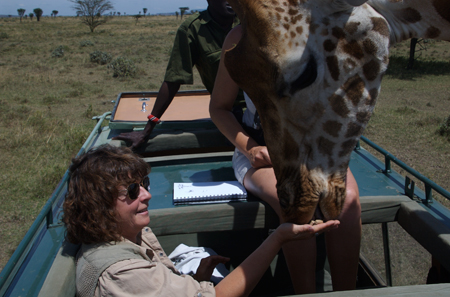
(Endangered Rothschild’s Giraffe and I at the Kigio Nature Conservancy, Kenya or Why I Like Fieldwork.)

There is no substitute for seeing an animal in its own habitat. This was brought home to me when I went to Kenya and saw lions, elephants and warthogs “in context” for the first time. The warthogs in the Masai Mara were the same color as a lot of the rocks. Thirty elephants emerged from trees lining a river bank. They had been invisible. The only evidence of their presence was that the tops of the trees were moving. We were at most 50′ away. The lions are very similar in color to the dried grass.

The prey species like wildebeest and zebra had a vibe that is totally lacking in the ones I’ve seen in zoos. In the wild they have to Pay Attention and work to survive. The zoo animals don’t have to do either and it shows in their body language.

You need:

A good digital SLR: Point and shoot won’t do it. Too slow to catch movement and you can’t change out lenses if necessary

The sketchbook of your choice: you may have to try some different ones to find a combination of paper and pen/pencil that works for you

Pens/pencils: So many possibilities. I use fine point gel pens for the most part because they don’t smear and I can’t fuzt around and erase.

Patience: In ten years, I have found that, on average, a given animal will do something at least mildly interesting or worth recording within about twenty minutes, but you have to be willing to sit and watch and watch and watch and……., even in zoos

Curiosity: Which translates into a willingness to learn about your subjects, not just settle for superficial appearance

Imagination: I’ve been in the field with other artists who seemed to be trying to capture “The Pose” that they would then faithfully reproduce on canvas. I often seemed to be the only one whose shutter was firing. Why? Because I’ve learned that you can never know in advance what you will find useful and when you’ve spent hundreds or thousands of dollars to get to a place, it’s crazy to stint on reference collection, especially with digital cameras and the ever dropping price of memory cards.

The Payoff? Great, unique reference (how many cougar paintings have you seen recently that were obviously from the same captive animal shot in the same locations? Yawn.), your memories of what it was like to be there which will somehow seep into your work, stories to accompany the paintings that will interest collectors and the possibility of seeing things very few people are privileged to.

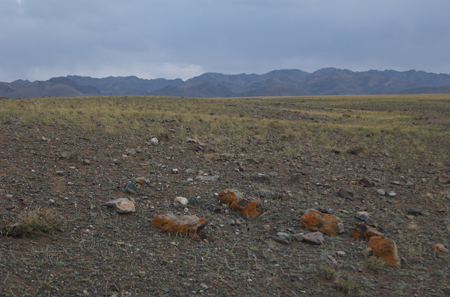
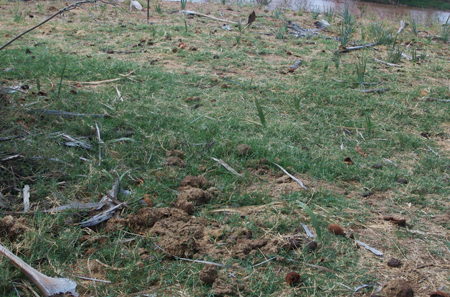
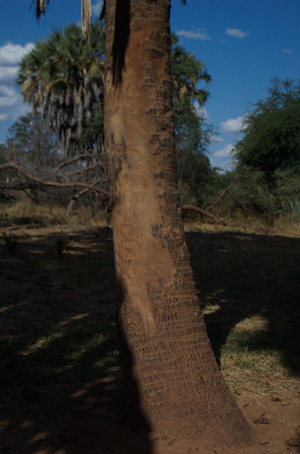
Here’s a few examples of shots taken on the off-chance they might come in handy sometime. Not necessarily interesting to anyone but me.

The Gobi Desert near my ger camp. Useful elements: cloudy sky, distant mountains, September grass, lay of the land, gravely surface, rocks with red lichen.
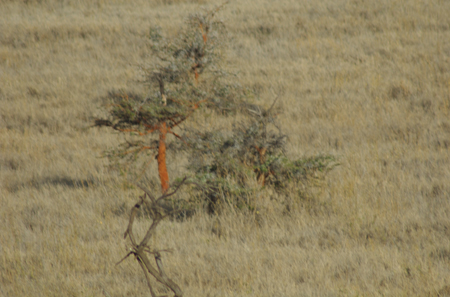
Grab shot from Lewa Downs Conservancy, Kenya. It’s a little blurry, but turns out to be the only tree that I’ve seen with that trunk color. It will be the perfect element for something, sometime.
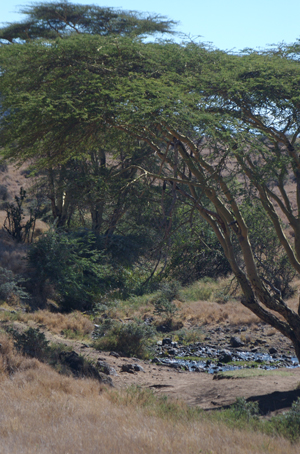
Photographing the animals is a no-brainer, but don’t forget their habitat. I know what animals live in the Conservancy where I took this picture, so I know who could be found in this neat waterhole setting.

On the banks of the Ewaso Ngiro river in the Samburu, northern Kenya. We have: a little of the water for context (where did I take that picture?), grass, some kind of spiky leaved plant just coming up (needs to be identified), doum palm nuts and frond droppings and…..elephant dung. This was taken right in camp.

And, nearby, is a doum palm that has been partly rubbed smooth by elephants.

And here are some elephants. Nothing spectacular by itself (well, other than the fact that I’m seeing them in Kenya, of course!). But the preceeding photos provide context and additional elements that could be used with the photo below to create something more interesting and memorable.

I realize that these are exotic locations that many artists can’t get to or aren’t interested in, but the principle applies no matter where you are. Get out into the field and see as much as you can of everything around you. Filter that through your interests and passions as an artist and it will shine through in your work.

ART THOUGHT FOR THE DAY

“Now the light was fading fast. We had to hurry to reach the gate before 7 pm, but just as we were leaving the plains, Dave said urgently, ‘Stop! Stop!’ Thirty yards from the road, a lion and lioness stood silhouetted by the setting sun. She moved against him, rubbing her body on his great shaggy main, and twitched her tail high in the air. Then, blatantly sensual, she crouched on the ground and the big male mounted her. The coupling was brief and ended with a climax of impressive snarls before she rolled onto her back in evident satisfaction.”

Simon Combes, from Great Cats: Stories and Art from a World Traveler

Thanks, Simon. (Photo from Oct. 2004 art workshop/safari led by Simon Combes two months before he was tragically killed by a cape buffalo. More images from the safari and a memorial page to Simon on my website)

Bobcat and Bighorns

The bobcat painting is done. I’ve called it “Stepping Lightly”. It will make it’s debut at Wild Visions2, the group show with five other Humboldt County artists next month. The opening reception will be August 9 from 6-9pm. More later about the show and the other artists.

“Stepping Lightly”                   oil                               18″x24″

Now, a cautionary tale about reference and using captive animals as models.

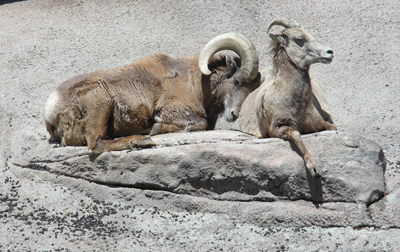
I’m doing a painting that is a first for me, three panels. Here’s the reference I’m using. The animals were photographed at the Denver Zoo and the landscape is from up on Logan Pass in Glacier National Park.

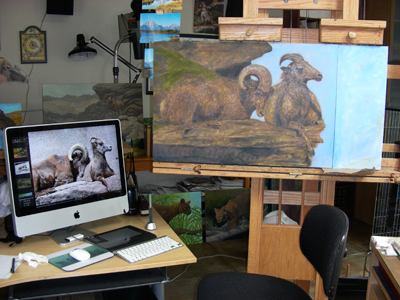
Is that a great pose or what? It was morning, warm and sunny, and the ram was getting sleepier and sleepier and finally his head gently dropped onto the ewe’s back. She never even twitched. Click. Gotta paint it. But where to put them? I chose this rocky outcropping in Glacier because I liked the shapes and knew that bighorns were often seen in the area. I did a preliminary drawing of the animals with the idea of showing them on a shelf of rocks. I wanted to communicate how comfortable bighorns are in an environment that we would find “challenging”. Here’s an in-progress shot that shows my setup with my iMac.

It’s great because Aperture lets me zoom in and out as needed very easily.

Another in-progress shot with the side panels propped on either side. At this point, I sent a jpeg to wildlife artist Laney, who has said nice things about my work the couple of times I have met her. She specializes in bighorns and I wanted her to eyeball the animals for drawing or any other problems. She replied very promptly and said that overall it looked good, but that the ewe’s hoof was in the wrong position compared to the rest of the leg and that the ram’s muzzle was too thin.

I went back to my reference and compared what I had with an absolutely wonderful book, Mountain Royalty, by famous Alaska artist Doug Lindstrand. As you can see from my photo, the ram in particular is shedding out, so it was a little hard to see the structure. Doug’s photos solved that problem and there was even a picture of a ram in a similiar position.

What I ultimately found was that while I had accurately drawn what was in my reference, it wasn’t “right”. The ewe’s hoof was at that funny angle, but that didn’t mean I should paint it that way, so I fixed it. When I compared my reference ram’s head with the ones in the book, I found that his head was really quite odd. Longer, thinner and with a roman nose that was much more exaggerated than the wild sheep. So I fixed his muzzle and re-proportioned his head as needed.

The other question I had for Laney was whether or not this behavior might be observed in the wild. She replied that the rams were only with the ewes in winter, so maybe I’d like to add some snow. Ah, well. In the zoo, of course, the animals are pretty much together all year around. In the wild when I shot my reference at the beginning of May, it was unlikely. Cue the snow reference. And, what I found was that it was the frosting on the cake since it brought the cool of the sky into the rock area and helped pull the whole thing together. Thanks Laney!

The moral of this story is that you can’t have too much reference, don’t assume that zoo or captive animals look the same as wild ones, do your fieldwork and learn about your subjects and finally, it is tremendously helpful to have a knowledgeable eye like Laney’s to look over what you’ve done and to it keep on track.

I finish the painting today and it goes in for framing tomorrow. I’ll post an image of it once it’s on the wall at the show.

ART THOUGHT FOR THE DAY

Experience enables you to recognize a mistake when you make it again.

Franklin P. Jones

Happy Fourth of July!

Hope everyone has a fun and safe holiday weekend!

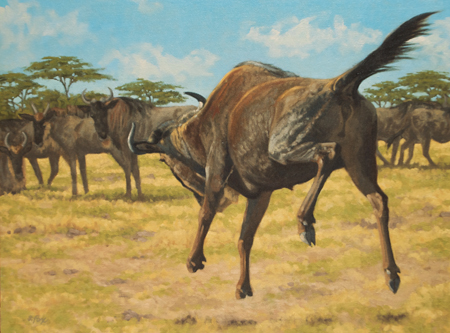
“Wildebeest Whoop-de-doo”    oil     18″x24″

from reference shot in the Masai Mara, October 2004

ART THOUGHT FOR THE DAY

To paraphrase a famous advertising guy- Creating art is the most fun you can have with your clothes on.