
We finished our shopping in Chandmani, had lunch and headed east back to Dorgon Nuur. On the way, the “saiga show” started again, with at least three groups crossing our path as they headed north. As always they were too far away for good photos but some of this group of twelve are reasonably ok. Here’s the uncropped version.

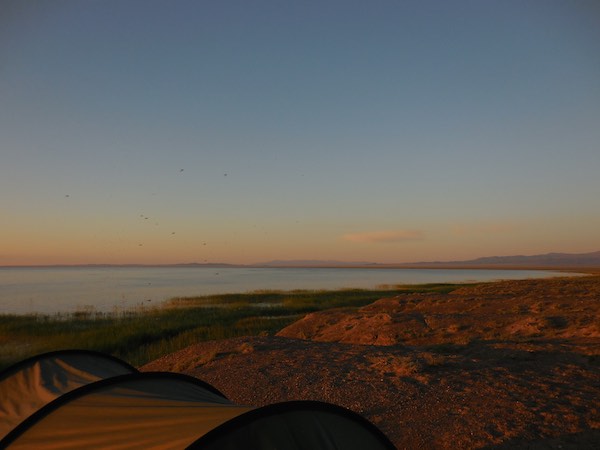
The driver drove along the lake edge for a bit and finally stopped on a bluff.
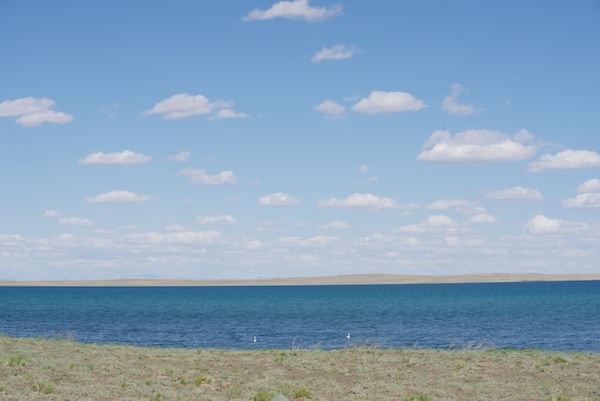
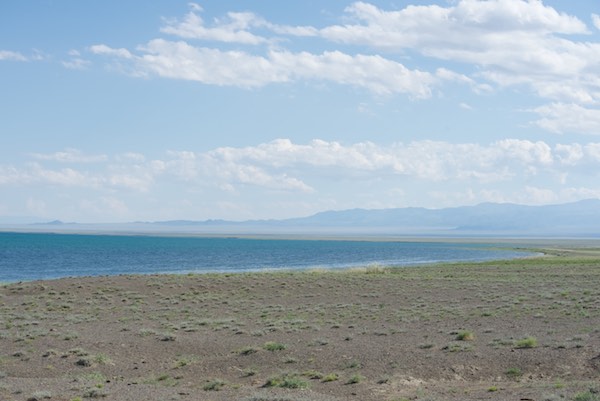
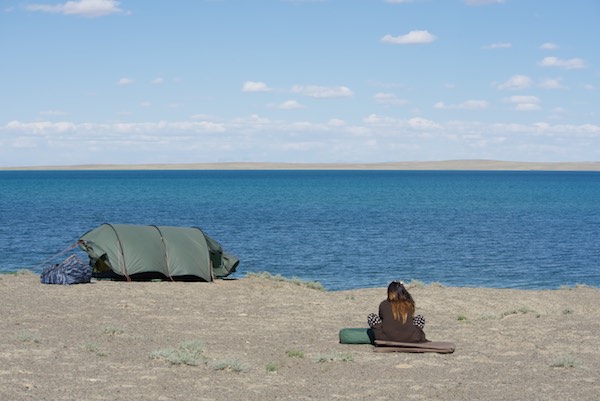
Once set up I got out my watercolors and sketchbooks and started to work. It was breezy, but not cold. Also no mosquitos. The late light started to get really interesting.

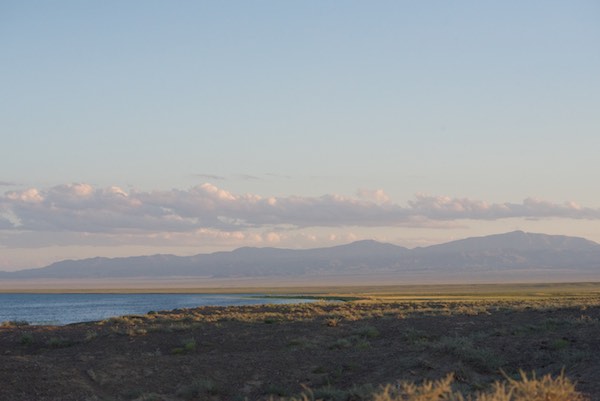

As the sun set, the wind died down and…the mosquitos arrived. Since we were the only living things of interest in the area. apparently every single one within a hundred miles showed up. I didn’t leave my tent unless it was absolutely necessary and turned in early. At some point, probably near dawn, I was awakened by a very odd sound. I couldn’t tell if it was natural or man-made and had never heard anything remotely like it before. But I wasn’t about to poke my head out in the dark, so I rolled over and went back to sleep, probably for an hour or so. When I woke up again it was just barely getting light and that sound was still going on. It was really mystifying. I finally had to look. I zipped open the vestibule just enough to see out and there, at standing head height, just in front of and above the tent was a ball of mosquitos close to the size of a soccer ball. And that was the source of the weird sound. I ducked back into the tent and quickly zipped the vestibule closed. No way was I going out that end. I seriously needed to pee and I wanted coffee so I slathered on the repellent and crawled out of the other end of the tent into a cloud of them that was only “better” ‘compared the packed mass a few feet away . Everything was covered with them…the tents, the Land Cruiser, the cooler. I did what I needed to do and retreated back my sanctuary.
My guide and driver got up a little later and, I think, were equally appalled by the situation. So in a rerun of our last stay on the shores of Dorgon Nuur, we ate, packed up and left. We made a short stop in Chandmani and then drove south around the end of Jargalant Hairkhan Uul.

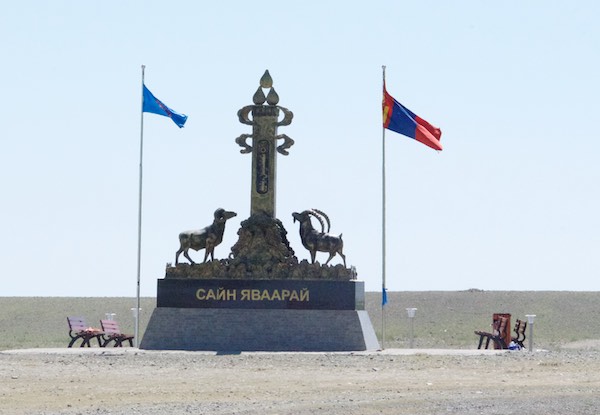
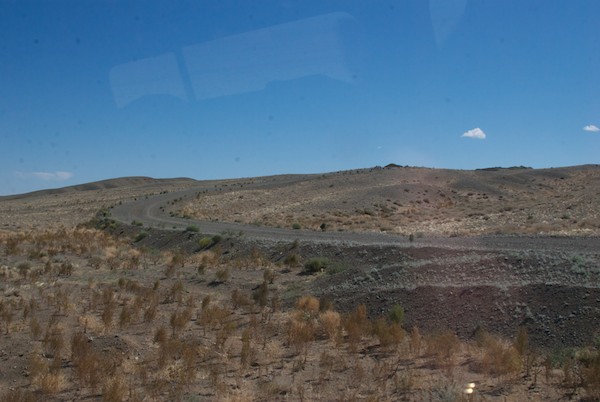
It took a couple of hours to get to the end of the mountain. It was very arid and overgrazed land. The highlight was a “camel jam”.

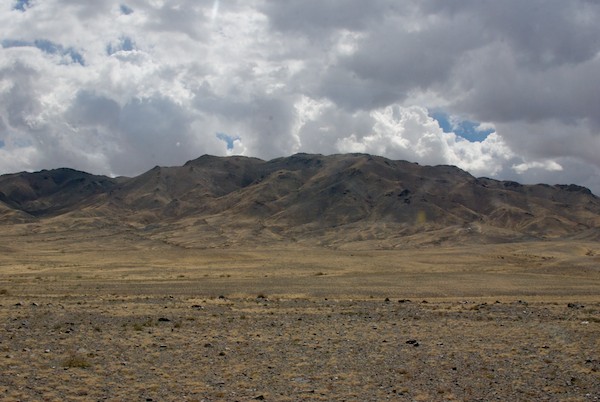
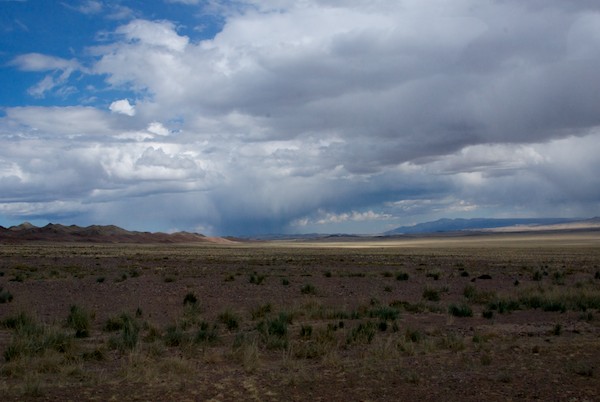
We dropped down to the plain and could see the reedbeds of Khar Us Nuur in the distance. Finally we turned northwest and paralleled the mountain. The two sides are very different. The mountain creates its own weather. Rain falls on the southwest face. A rain shadow keeps much, if any, rain from falling on the northeast side. No one lives or grazes their animals on the mountain, even though Chandmani and quite a few herder families live at the base. The entire mountain is contained in Khar Us Nuur National Park’s boundary, but there are herders on the side we were now driving along.
There were sights of interest along our route, including this communications tower. What got my attention was the contrast between this modern high tech installation and the ger at its base.

We drove for awhile along a small river and then through a lush green area with a variety of wildflowers.
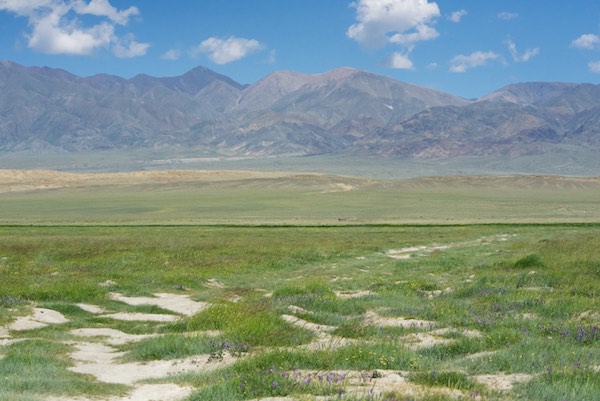

I’d been wanting to go to the mountain, which is really a freestanding range with many peaks, since I saw it from a distance in 2006. Between the previous trip a week or so earlier, which you can read about here, and this one, I will have almost completely circumnavigated it. This side was so much more interesting. I was awed by the colors and patterns of some of the slopes we drove past.


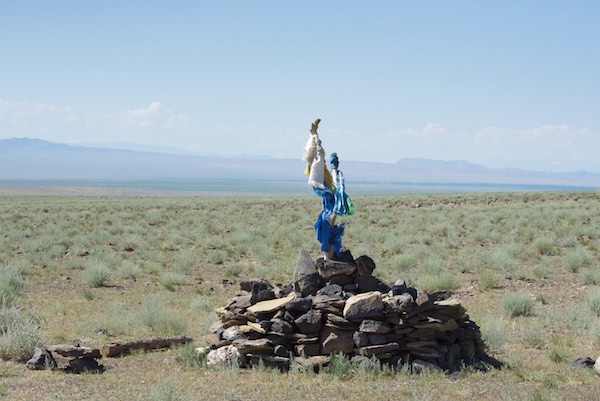
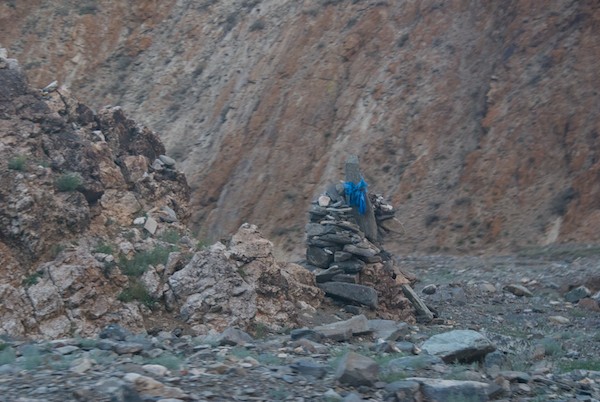
As we headed onto the upland slopes to the valley where we would camp for two nights, we passed this ovoo.
The ground became rockier the farther up we went and I grabbed a shot of this local herder’s winter livestock shelter.
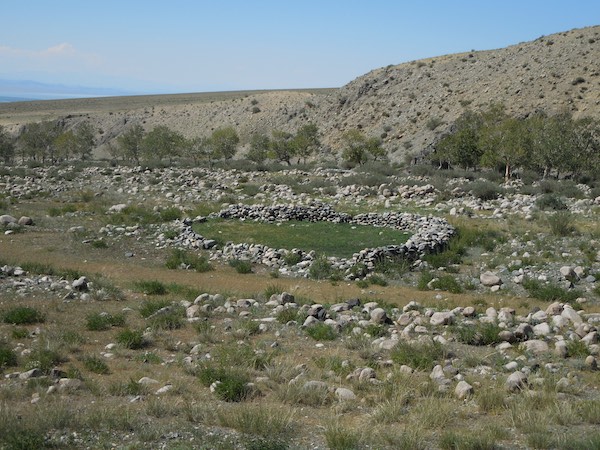
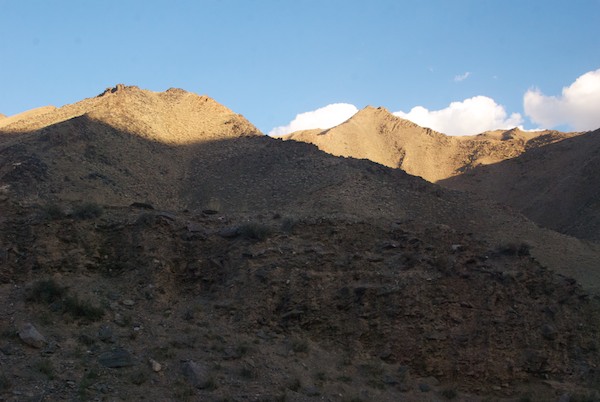
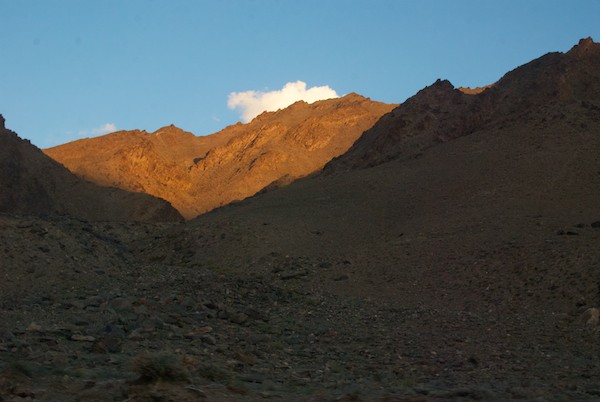
We entered the valley and I could tell that I was going to like this place a lot.

We were finally driving on the barest hint of a “road” over rocks that covered the whole valley floor, some pretty big. There were groves of aspen trees, more than I’d seen anyplace else.

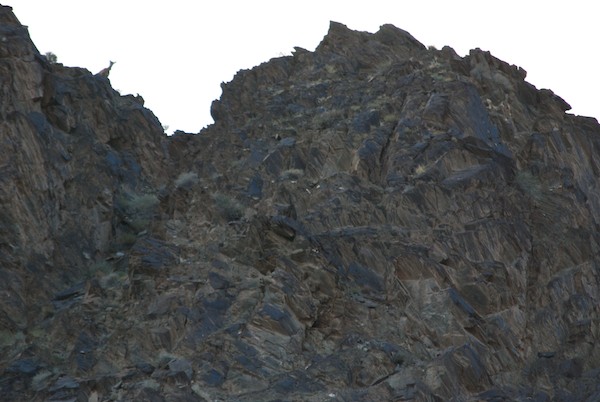
We finally came to the end of the road and stopped at a ger. We were fed boortz soup and aaruul and our driver got the latest news from them, which included being told that a snow leopard had killed a another herders’s goat two days earlier not too far from where we were. So now I was in the middle of snow leopard territory, also home to ibex and argali!

We drove back down the valley and set up camp at this spot, right next to a stunning, fast-flowing stream. Idyllic doesn’t begin to describe it.

The next afternoon my guide took me on a hike up the valley into a part that was separated from the main one. We clambered over rocks, moving steadily higher in elevation until the trail narrowed and continued as a track that led deep into the mountain.

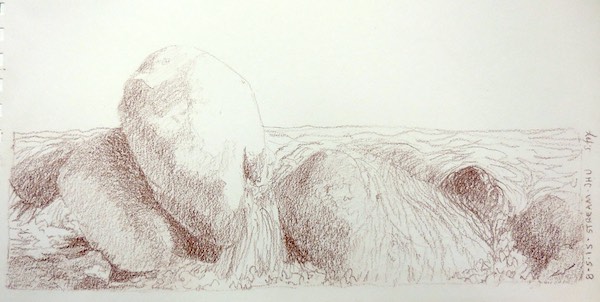
We hiked back down to camp, where I spent the rest of the day drawing the rocks and flowing water of the stream.
The next day I worked until lunch, doing a double study of two of the aspen trees.

While I was drawing, two camels showed up! They crossed the stream not far from where I was sitting. For a minute or two I wasn’t sure how close they’d get, but it turned out all they wanted was to get past our camp so they could move on down the valley.

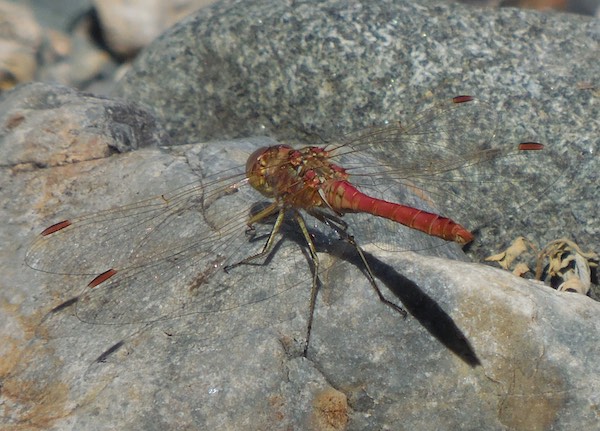
There weren’t a lot of insects and even the mosquitos weren’t too bad, especially compared to the lake. I did manage to get a good photo of this flashy dragonfly.
My guide took some pics of me working.

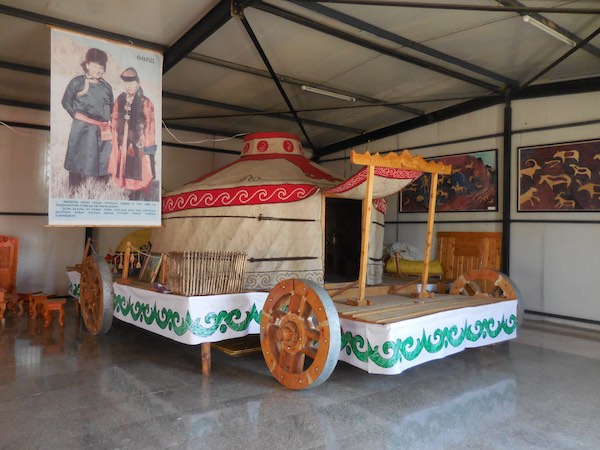
Finally, it was time to leave. This was the last stop on this year’s WildArt Mongolia Expedition and it was one of the best. I thought the trip was over when we got back to Hovd, but my guide and driver weren’t done yet. The next day was my flight back to Ulaanbaatar, but it wasn’t until late afternoon. So they picked me up in the morning and took me on a tour that included the local cultural center, which has gers, artifacts, objects and clothing from all the ethnic Mongol groups who live in Hovd, plus the Kazakhs.
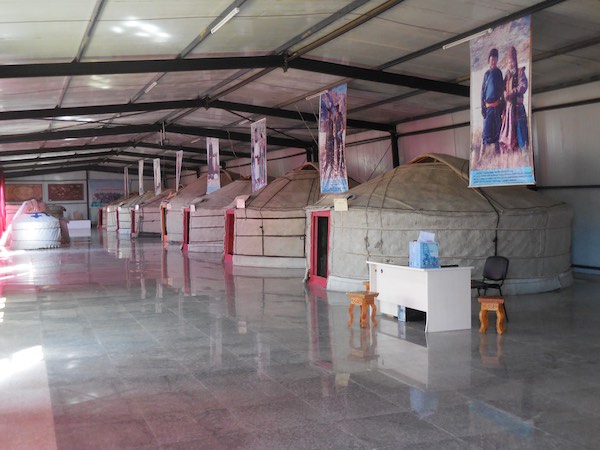
It really is a must see.
The final stop in town was a monastery that had just started to be re-built five years earlier. The original was one of the hundreds destroyed by the communist government in the late 1930s. I was told that the whole community came together to raise the money.

They took me back to the hotel to rest for a couple of hours and then it was off to the airport. The flight was delayed, so we looked at some of the photos and video I’d shot. Finally, it was time to do in to the boarding area, onto the plane and back to Ulaanbaatar. I was in town for a couple of days, then went “on vacation” to Delger Camp for four relaxing days, just hanging out, doing watercolors and hiking down to the dunes and back. A few more days in UB and I was homeward bound, my tenth journey to Mongolia at an end.











 Susan Fox, American Artist