Mongolia Monday: 5 Photos Of Favorite Places- Hustai National Park

This installment of my occasional series “Five Photos of Favorite Places” features Hustai National Park, one of the three places in Mongolia where takhi/Przewalski’s horse has been reintroduced and by far the easiest to get to, since it’s only a two hour drive from Ulaanbaatar, the capital, and most of that is on tarmac road. You can view the other parts by scrolling down the Categories drop down menu in the right hand column to “5 Photos….

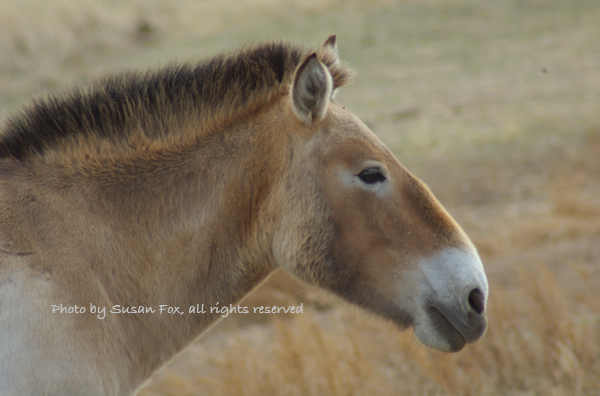
TTakhi stallion, April 2005- This was from my first trip to Mongolia in spring of 2005. It was freezing cold, literally, and it was very windy. But I was enchanted with my first look at the world's only true wild horse running free (I'd seen them for the very first time at the Berlin Zoo in October 2004). To me, this head shot sums up what they are about...a very special horse that looks like it just stepped out of a cave painting.
Takhi stallion, April 2005- This was from my first trip to Mongolia in spring of 2005. It was freezing cold, literally, and it was very windy. But I was enchanted with my first look at the world’s only true wild horse running free (I’d seen them for the very first time at the Berlin Zoo in October 2004). To me, this head shot sums up what they are about…a very special horse that looks like it just stepped out of a cave painting.
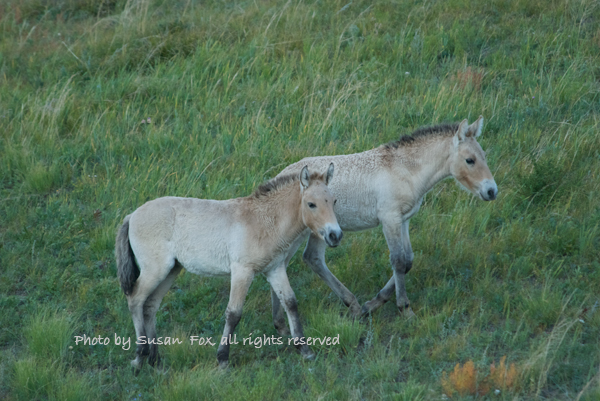
Takhi foals, September 2008. I always look forward to seeing the new generation when I visit Hustai and of course the foals are fun to watch as they romp around and play. There are now around 300 takhi in Hustai and they are doing well.
Takhi foals, September 2008. I always look forward to seeing the new generation when I visit Hustai and of course the foals are fun to watch as they romp around and play. There are now around 300 takhi in Hustai and they are doing well. The world population, counting both captive and reintroduced horses is around 2000. A studbook established in 1978 keeps track of every one of them.
Siberian marmot
Siberian marmot, July 2010. Hustai is one of the few places left where one can see marmots in any number. Their population crashed by close to 90% due to demand for their pelts by the Chinese. Now they are an endangered species where once there were millions. I’d gone to Hustai for the weekend with I driver I’d had before, but no guide, and Onroo didn’t speak English. But we got along fine with my little bit of Mongolian and a phrase book. It is a running joke between us that we will always stop for “taravak”….marmots, so I can try to get a good photo like this one.
Hustai landscape
Hustai landscape, August 2011. “Hustai” means “birch” in Mongolian. There are birch woods like these above a certain elevation on the mountains in the park. You can see two grazing takhi in the middle. From this point on up to the bare rocks like you can see in the background “bokh”, or elk, are to be found, the same genus as the Rocky Mountain and Roosevelt elk of the United States, but a different species.
Birches
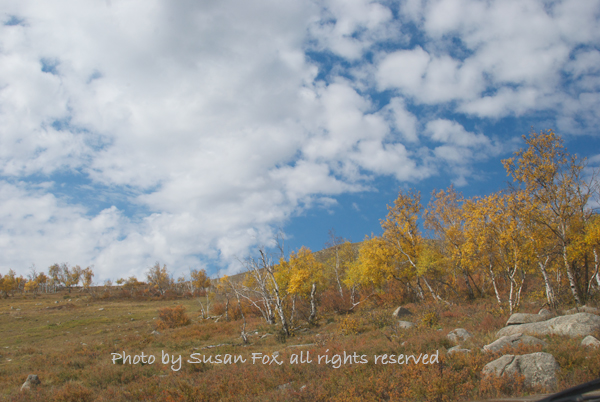
Birches and blue sky, September 2012. Last year was the latest that I had visited the park and so I saw the fall colors for the first time. And they were spectacular!

New Painting Debut! “Ikh Nart Argali-Cautious And Curious”

Ikh Nart Argali: Cautious and Curious
Ikh Nart Argali: Cautious and Curious  oil  20×30″

This is the second, and largest, of the three argali paintings I’ve just finished. You can see the first one here. I’ll post the third one next Friday.

I spent over an hour watching these rams at Ikh Nartiin Chuluu Nature Reserve in 2010. And sometimes they watched me. But mostly they grazed, scratched, rested and did a little pre-rut testing.

One of the things I wanted to capture in this painting is how individual they all are, being different colors depending on their ages and having horns of various sizes and condition. It was a group of five and these were the three big boys, fully mature males, who probably weigh over 300 pounds each. Behind two of them is one of the younger rams,

Mongolia Monday- Fun With My Mongolia Photos

Chinggis Khan, Parliament building, Ulaanbaatar, Mongolia

I’ve been having fun using a variety of photo effects on some of my iPad drawings using the Camera Awesome app on my iPad. I thought it would be interesting to do the same with a selection of my Mongolia photos. Here’s five I did this morning to see what I could come up with. I like it. So much of what one sees in Mongolia has an iconic, storybook quality that the images really lend themselves to “special effects”.

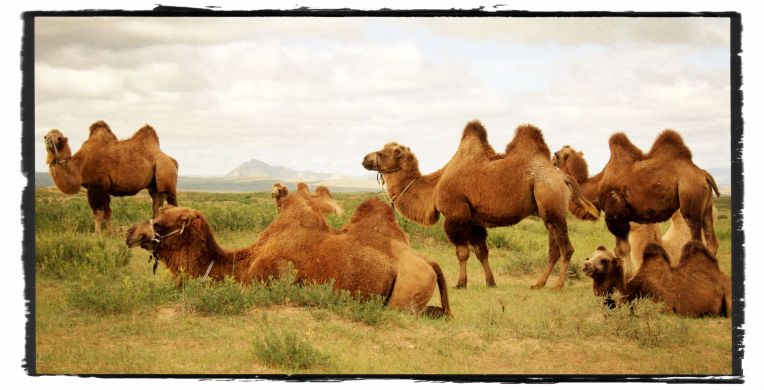
Bactrian camels with Zurgul Uul in the background, Bayan Onguul soum
Horse trainer, Dalanjargalan
Gers on a stormy day, en route from Ikh Nart to Gun-Galuut, 2011
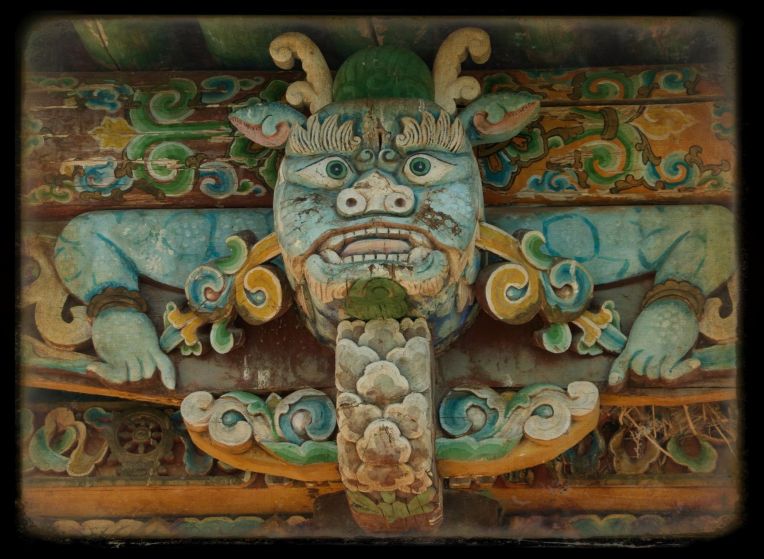
Decorative carving on old temple, Gachen Lama Khiid, Erdenesogt, Khangai Mountains, 2010

New Painting Debut! “Ikh Nart Argali: Heading To Water”

Ikh Nart Argali: Heading for Water  oil 16x20"
Ikh Nart Argali: Heading for Water oil 16×20″

It’s been an intense two weeks since I decided to do a series of three argali paintings at the same time. My idea was to enter all three in a particular juried show, with the hope that maybe all three will get in because they will look good together on the wall. Will it work? Who knows? It was a good experience and something I haven’t tried before. It made sense to work back and forth on all of them since it was the same group of rams in the same light and location, so I was using the same colors.

I think I’m a little “argalied” out at the moment, so I’ll be moving on to some other pieces that I already have in progress, but I feel like I’m off to a good start for 2013.

Mongolia Monday- Explorers and Travelers: Owen Lattimore On How To Ride A Camel

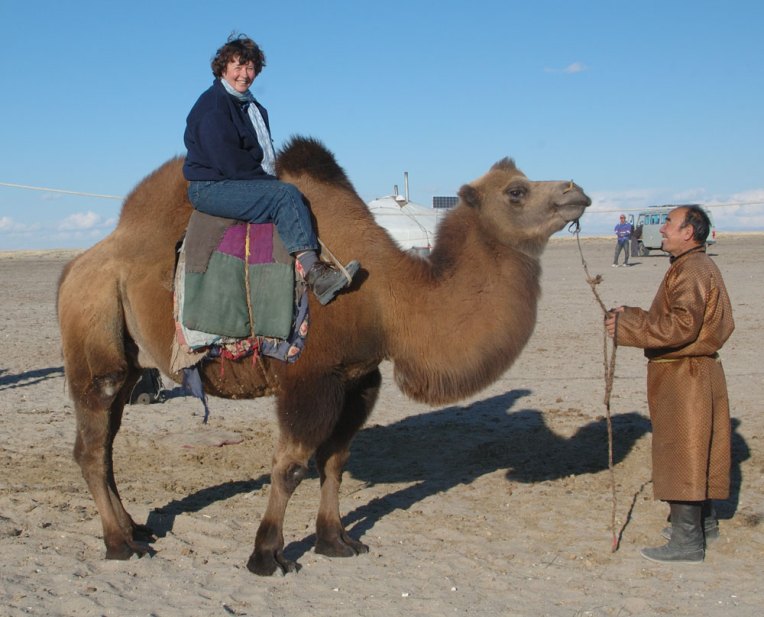
My first camel ride in Mongolia, September 2006. No, I didn't fall off.
My first camel ride in Mongolia, September 2006. No, I didn’t fall off.

Owen Lattimore’s books are filled with information and lore about all kinds of things that one would encounter traveling with Mongols back in the 1920s, including the fine art of riding a bactrian (two-humped) camel.

“I have never been thrown by a camel when I was really trying to stick on unless the girth gave. Camels are too awkwardly built to do any fancy bucking, but when they do their best they can almost always burst the girth, because it is a healthy principle of camel-riding that the girth should always be weak. If the rider should be caught with a foot jammed in the stirrup when thrown or when the camel has managed to sling the saddle around under its belly it would be very serious. It is better to have the girth part and to be thrown clear, even though the fall is much higher than from a horse. As a matter of fact, the greater fall seems to let you hit the ground with muscles relaxed. I do not remember feeling badly shaken when falling from a camel, and the Mongols say: “Fall from a camel-nothing to worry about; fall from a donkey-break your leg.”

From Mongol Journeys

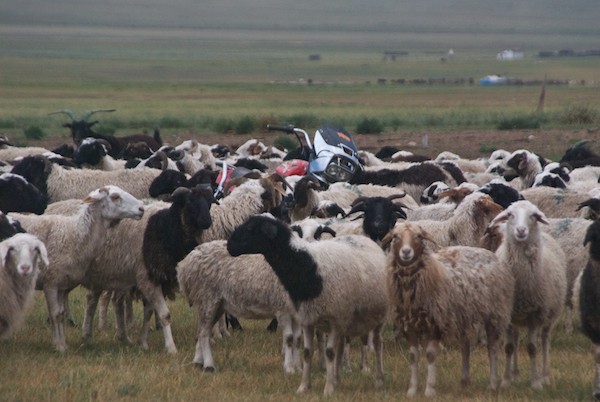
Mongolia Monday- Owen Lattimore On Mongolian Sheep

sheep 3Taken from “Nomads and Commissars-Mongolia Revisited” by Owen Lattimore, Oxford University Press New York, 1962. I’ll be writing more about him in a future post, but suffice to say for now that Owen Lattimore was one of my inspirations for “getting involved” in Mongolia because of the affection he is held in by the Mongols for representing them and their culture accurately to the West, even to the point of being given a medal by the government.
sheep 4

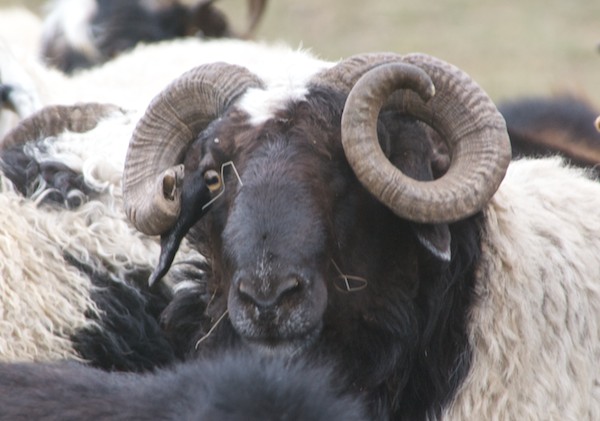
This post, however, has a somewhat more prosaic theme….sheep, one of what the Mongols refer to as The Five Snouts, the others being horses, goats, camels and cattle/yaks.
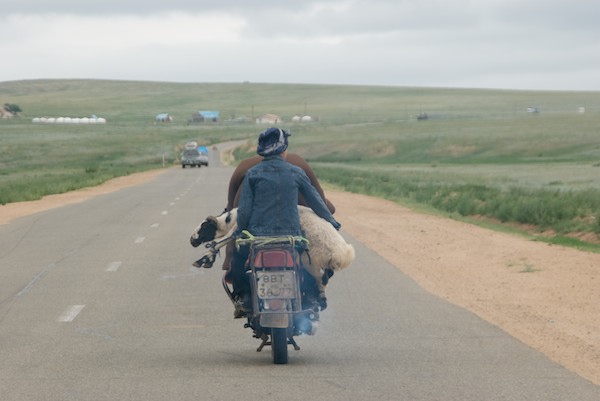
sheep 1“There are several breeds of Mongolian sheep, adapted to all kinds of pasture-from the high and cold to the low and sandy. While the horse has always been the noble animal, the sheep is economically indispensible to the old nomadic life. It is the only animal that supplies all the basic needs: food, clothing, housing, fuel. Besides meat, it provides milk for drinking and for making cheese. The hide with the fleece on makes the best heavy winter gown. The wool, matted into felt, covers the ger, the round, domed Mongol tent. (Nowadays, although the inner covering of the tent is still felt, which is the best insulator, the outer covering is normally of heavy white canvas, which sheds water well and absorbs less dust than felt.) When sheep are penned at night, they trample the dung that they drop. It gradually builds up in thickness, until it can be spaded out in rectangular bricks and burned as fuel. It makes a very hot fire, but its smoke is irritating to the eyes. The best dung-fuel is cow dung; the next best is camel dung. The most obvious mark of the different breeds or strains of the Mongolian sheep is the size of the tail, which varies from a small, goat-sized tail to a huge mass of fat weighing forty pounds or more.

sheep 5One of the great successes of experimental cross-breeding in Mongolia has been the establishment of a new breed of sheep, the “Orkhon”. It has almost all the hardiness of the native breeds and a finer, longer staple of wool. good for modern machine-made textiles. It also produces a good mutton. ”
sheep 2

Mongolia Monday- shine jiliin mend hurgeye (Happy New Year!)

Sunrise, Orog Nuur, the Gobi
Sunrise, Orog Nuur, the Gobi; the new year and my next trip will take me and the WildArt Mongolia Expedition on new roads, but we might get back to this place again

Thanks to my Mongol friends on Facebook, I’m picking up some Mongolian here and there, like the phrase in the title. I see written Mongolian in both the Latin alphabet and Mongolian cyrillic every day and sometimes I can read all or most of a sentence now, which is fun.

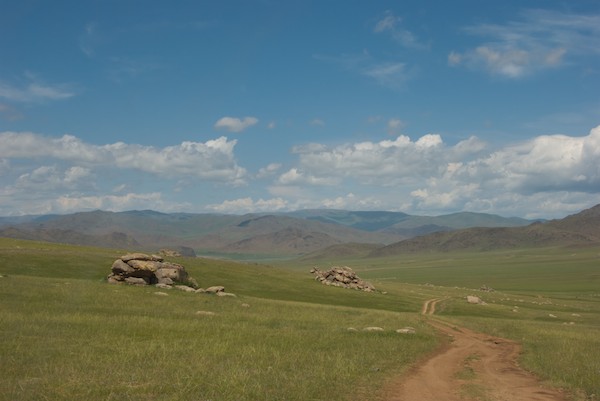
Earth road into the Hangai Mountains
Earth road into the Hangai Mountains; happiness is a Mongolian earth road leading out into the deep countryside, knowing that something wonderful might be just over the next rise or around a bend

There’s plenty coming up for me in 2013. I’ll be entering a number of juried shows, including a few new ones. All my entries will be of Mongolian subjects. In March, I’ll be flying down to Tucson for the opening weekend of the Sea of Cortez exhibition at the Arizona-Sonora Desert Museum. In April I will be going to the 2nd Annual Plein Air Convention and Expo in Monterey, California and shortly thereafter flying back to the east coast for the spring board meeting of the Society of Animal Artists. I’ll also be doing an event in New York to promote the upcoming WildArt Mongolia Expedition, but the exact date hasn’t been set yet. In June there will be a WildArt Mongolia event in the San Francisco Bay Area, final date also to be determined. And, as currently planned, I will leave for my annual trip to Mongolia around the beginning of August. The Expedition is scheduled for late August/early September. I’ll have a couple of weeks at home and then it’s back to the east coast again in early October for the opening weekend of Art and the Animal at the Bennington Center for the Arts and the fall board meeting. I’ll be posting more on all of these events as the dates approach.

Mongolia Monday- Mongol Artist Tod Otgonbayar

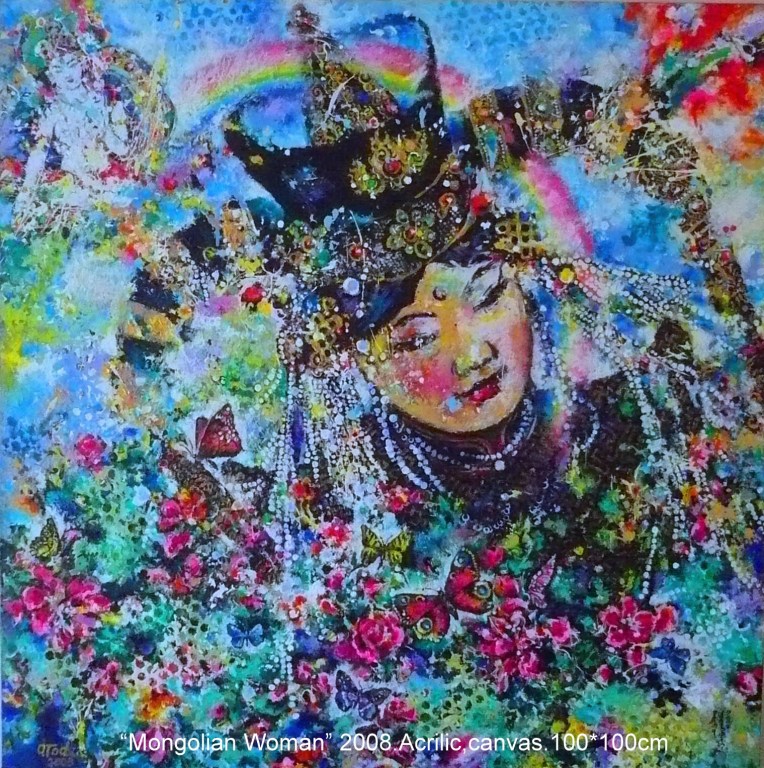
Mongolian Woman
Mongolian Woman (Tod was nice enough to send me this jpg of one of his paintings that I particularly like)

I got an email recently from a Mongol artist asking me to introduce his website. I checked it out and found that I was more than happy to do so. And that’s not all. It seems that I had already “met” Mr. Otgonbayar through the art he created for Mongol postage stamps, which I blogged about in January of 2011. Small world.

He left Mongolia in 2004. The country was still in transition from communism and his politically inspired art was a problem, so he went to Russia and then on to England, which is where he and his family now live.

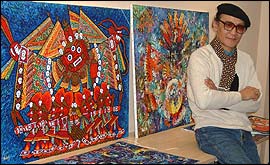
T. Otgonbayar
T. Otgonbayar

He paints as he pleases now, in a number of styles and themes, including surrealism, dada, tantra and maybe my favorite, tachism. His work is highly colorful and full of symbolism. There is a good selection on his website, including more of the postage stamps that he created. I encourage you to take a look!

http://www.tod-otgonbayar.com/

New Painting Debut! “Mongol Horse Foals”

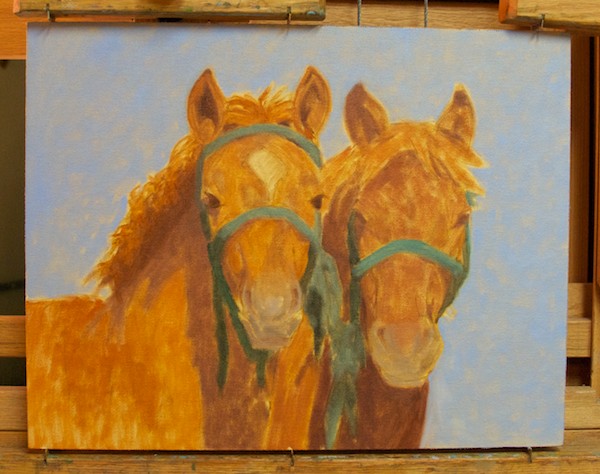
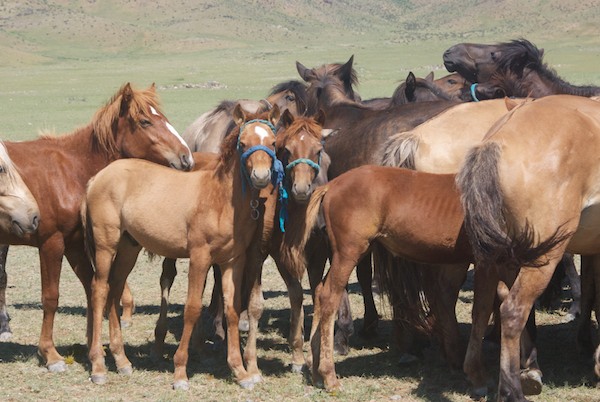
I saw these lovely foals in the same group of horses that this painting came from. They were very unsure of a strange person and stayed close to the adults, but were still curious about me.

I started this painting with my new step of doing a pencil drawing at the final size first, tracing it and then doing a graphite transfer to the RayMar canvas board. My purpose was to solve any drawing problems, get the correct placement in the space and indicate the basic value pattern.

Foals 1

Once the drawing was transferred to the board, which had been previously toned with a wash of raw sienna to knock back the white, I re-stated the drawing with a brush, refining and correcting as I worked. This step was also done with raw sienna.

Foals 2

The next step was to indicate the shapes of the shadows in a dark value. I mixed a warm brownish-purple for this.

Foals 3

Then I started to lay in color, bringing up the shadows to a higher key since the foals were in really nice morning light.

Foals 4

The finished painting “Mongol Horse Foals” 14×18″  oil

Foals 5

Here’s the reference photo. I punched up the intensity of the color, as you can see, and left out all the other horses since the painting was about these two and their connection with each other.

Hustai to Arburd Sands