Mongolia Monday- Explorers and Travelers: Henning Haslund on Mongol Horses

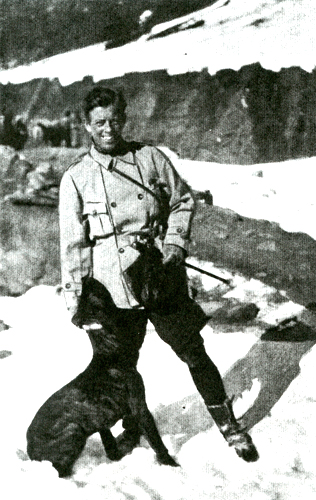
Haslund-500If all Henning Haslund had ever accomplished was to survive an expedition with Sven Hedin, that would have made him notable (Hedin’s expeditions are remarkable for the body count of both men and animals). But he is also one of the “must read” writers for anyone interested in Mongolia.

I’ve only read one so far, “In Secret Mongolia”, but the second one “Men and Gods in Mongolia” is sitting on the shelf waiting for me. I’ll be getting a copy of “Tents in Mongolia”, the third of what is really a series, also.

“In Secret Mongolia” (published in 1934) is the story of Haslund’s participation in a Danish project to establish a farm in northern Mongolia (which lasted from 1923 to 1926). Along the way he meets most of the major characters who were also in Mongolia at the time or hears tales of others, like the Bloody White Baron, Roman von Ungern-Sternberg.

He also wrote eloquently and with affection about the Mongols. Absent is the thinly veiled attitude of inherent white superiority present in many other accounts.

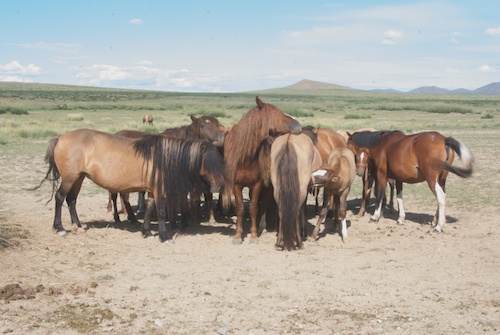
Here is Haslund writing about the Mongols and their horses (Note: when Haslund refers to “wild” horses, he is talking about the domestic Mongol horses, which run “wild” when not in use, not the genetically wild takhi/Przewalski’s horse):
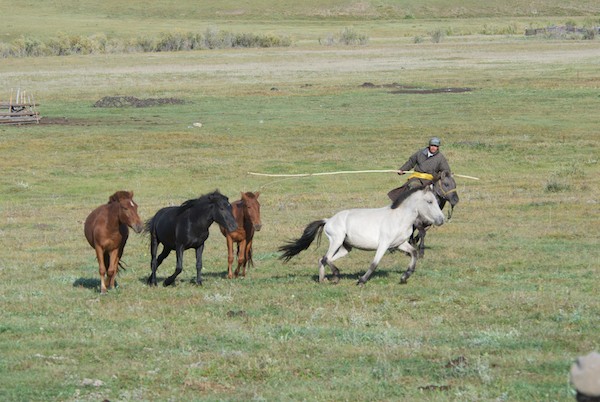
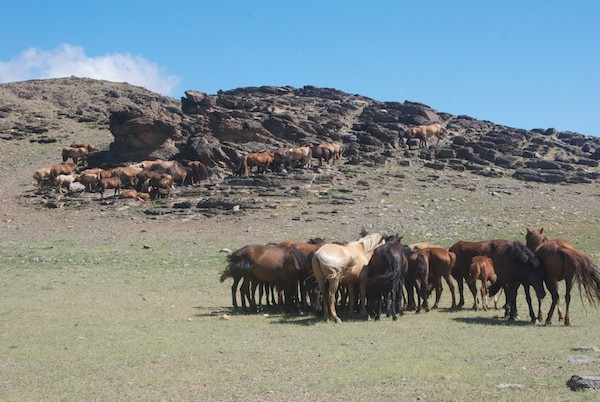
herder JM“It is a pleasure to see the Mongols in association with their horses, and to see them on horseback is a joy. If one of the wild or half-wild horses of the herd is to be caught, the Mongol rides on a specially trained catching-horse, holding in his hands an urga, a very long pole with a noose at the end. The catching-horse soon understands which horse his rider wants to get hold of, and follows it until it is cut out of the herd. Then the pursuit goes at a flying gallop over the steppe, until the Mongol gets his lasso over the pursued horse’s neck, when the catching-horse slowly but surely holds back till the wild horse is tired out, and the Mongols hurry up to saddle it. The wild horse is not let go until is has a rider in the saddle, and then it gallops, buckjumps and throws itself on the ground in the attempt to get rid of its rider. But the Mongol sits fast and the horse is soon broken.

herder 4 JM

herder 2 JMSuch horse-breaking is admirable, and the strength, swiftness and elegance of the Mongol surpass those of any ballet dancer. I once saw a Mongol ungirth and throw off the saddle from under him and continue to ride the horse bareback, bucking wildly all the time, till it was broken.

herder 6 JMHorses are the Mongol’s chief investment. He knows nothing of banks and silver does not interest him beyond the quantity that he and his women can use for ornament. But if he has many horses on the steppe, then he is a well-to-do man. Then he sits on a hillock looking out over his wealth, and counts up the many-coloured multitude of splendid animals grazing on the steppe with slim necks and flowing manes, just as a man in the west counts his notes, and when the neighing of the stallions rings bell-like over the grass lands, his eyes shine with greater pride than the ring of minted silver can call forth in us.”

Note: the horse photos in this post were taken by me last year near the Jalman Meadows eco-ger camp run by Nomadic Journeys, who does all my in-country travel arrangements. It is located in the Strictly Protected Area of the Han Hentii Mountains a few hours northeast of Ulaanbaatar. The local family who helps run the camp lives nearby and demonstrates Mongol practices and horsemanship for visitors, including riding a couple of two-year olds for the first time when I was there. They also provide horses for trekking trips.
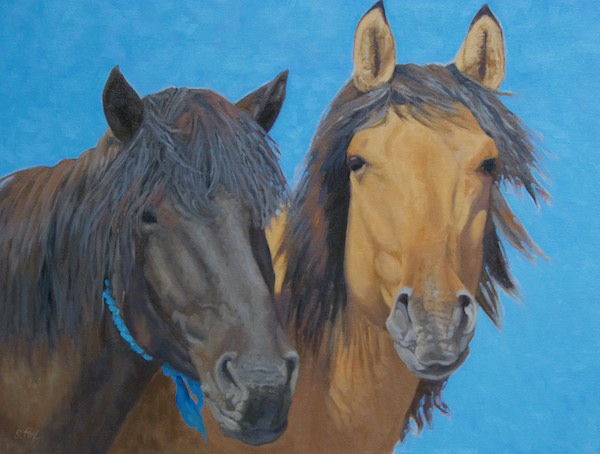
New Painting Debut! “Mongol Horse #9- Friends”

Mongol Horse #9- Friends
Mongol Horse #9- Friends  18×24″  oil

I’ve been having fun painting Mongol horses. This and the previous one, which you can see here, were started  before my latest trip to Mongolia.

The reference photo was shot at the beginning of my 2011 trip with fellow artist Pokey Park. We had spent a few days in Hustai National Park photographing and observing takhi. Now we were on our way south. We had left the park and were driving to the only bridge for many miles that crosses the Tuul Gol, traveling along an upland area that overlooked the river valley.

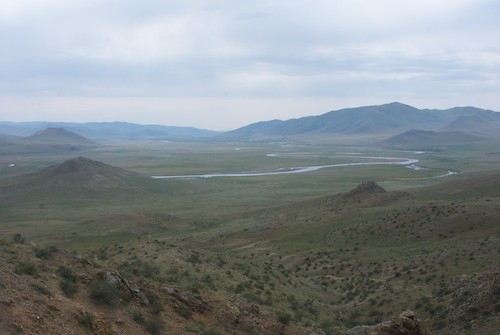
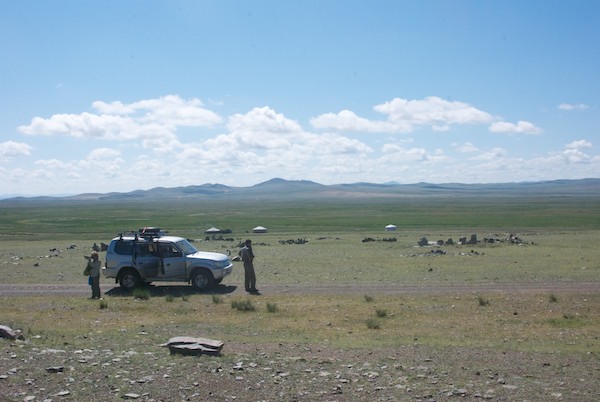
Hustai to Arburd Sands The rocks on the right are part of a complex of Turkic graves, which are quite interesting. But not nearly as interesting to me as the herd of horses that were behind me when I took the above photo.

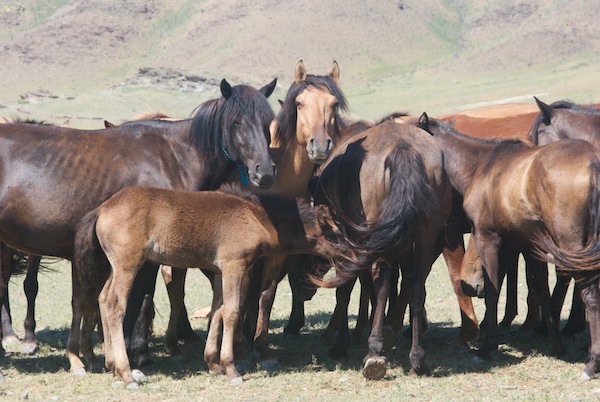
Hustai to Arburd SandsIt was August and there were a lot of flies. The horses were constantly circling, trying to get their heads as far into the middle of the group as possible. But they knew I was there and every once and awhile some would stop and look at me, which is when I got the reference photo I used for the painting.

Hustai to Arburd SandsI liked the contrast of color and head position of these two, so I cut out everyone else. The twisted blue khadag around the neck of the brown horse was a nice extra.

New Painting Debut! “Mongol Horse #8-Watching You”

Mongol Horse #8-Watching You  oil  12×24″

We were driving on an upland area overlooking the Tuul Gol one morning in 2011 and saw a herd of horses right by the road. Photo time. They were circling and circling, all trying to get their heads into the middle of the group to keep the flies off, but sometimes for a very short time some would stop and see what I was doing. That’s when I snapped this photo. I simplified it by removing some parts of other horses so that the center of interest would that line of heads. I really liked the pattern and rhythm of their overlapping forms. And then there was the foal as a bonus.


Mongolia Monday- New Painting Debut! “Loose Horse Ahead”

Loose Horse Ahead 18×24″ oil

Yes, even with the craziness of preparing my WildArt Mongolia Expedition Kickstarter project, I continue to work at my easel. And I just finished this one late last week.

Pokey Park and I and our guide/driver were exploring the wetland area of Gun-Galuut Nature Reserve, when we saw a local herder coming past us. One of the impressive things about Mongol riders is that, even at a very young age, they can ride a horse going pretty much at any gait or speed standing up and utterly still.

He rode on past us and we continued birdwatching and picture taking. Not too much later though, back he came, catching up with a brown horse, saddled and bridled, which had clearly gotten loose. In the meantime, a good-sized group of horses were heading for some open water. The brown horse dodged behind them with the rider right after him. Up came his urga (the long pole with a loop that is used instead of a rope lasso) and in short order the brown horse was captured.

Got him.

For the painting, I wanted to show Mongol horsemanship, which most people haven’t seen. The bonus, of course, was the great morning light and the setting. And…you may have noticed that the rider in the photo is wearing backwards baseball cap, but not in the painting. I’m interested in painting the Mongolia of today, but the baseball caps just don’t do it for me, however practical they are for the wearers, so I leave them off. But everything else is as I saw it that beautiful morning in August 2011.

Mongolia Monday: 5 Photos of Favorite Places- Baga Gazriin Chuluu Nature Reserve

This will be a occasional, on-going series of images of my favorite places in Mongolia. Baga Gazriin Chuluu means “Small Earth/Land Rocks”. There is also an Ikh Gazriin Chuluu (Great Earth Rocks), but I haven’t gotten there yet.

In July of 2009, my driver/guide and I pulled into the ger camp, which is located in the reserve and got settled in. I came out of my ger and was greeted with this amazing light and a woman riding down the valley. I had a feeling I was going to like this place.
It was my good luck to be there on the day of a local mountain blessing ceremony or local naadam. There was a horse race, wrestling, anklebone shooting and lots of people just riding around on their horses.
Seeing argali was my purpose for going there and within a couple of hours the first morning, my driver spotted this group of rams within sight of the car.
The following year, 2010, I got to go back as the first stop on a two-week camping trip. Here's the spot my driver/guide (same one as in 2009) picked.
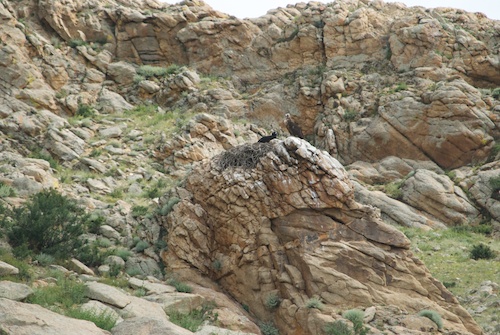
Driving around, we came upon a short valley which had a number of cinereous vulture nests, including this one with a juvenile who was almost ready to fly. We climbed up on the rocks to get above him and I got some great photos.

There are more photos of Baga Gazriin Chuluu, including the story of my first trip there in 2009 here.

Mongolia Monday- The Journey Is The Destination, Part 3: Gun-Galuut Nature Reserve To Jalman Meadows Ger Camp

We didn’t have long on tarmac road before we turned north into the Han Hentii Mountains, most of which is included in one of Mongolia’s Strictly Protected Areas.

This would be my first visit to Nomadic Journeys’ “signature camp”, Jalman Meadows. I hadn’t gone there before because, while there is plenty of interesting wildlife in the mountains, it’s not easy to see. The good news is that it would be an opportunity for both me and Pokey to see the southernmost point of the vast taiga, or boreal forest, that encircles the earth.

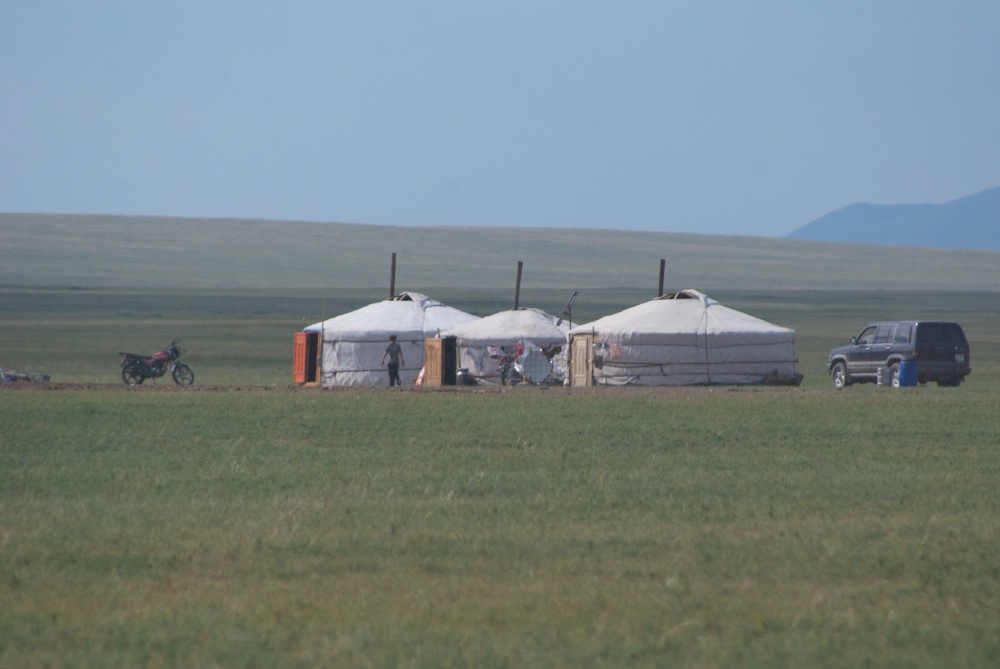
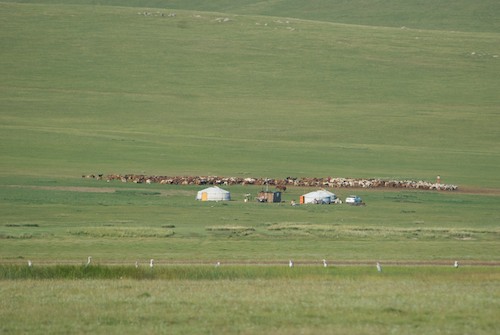
On our way from Gun-Galuut we passed this typical herder encampment, complete with car, motorbike, solar panel and satellite dish
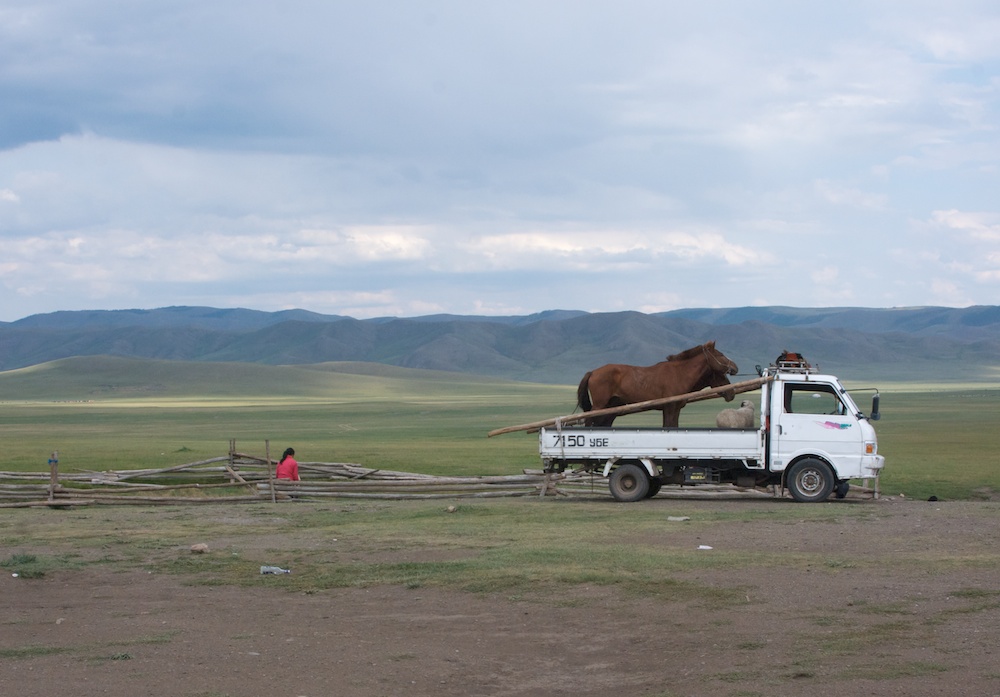
Another not-uncommon scene when one is on the road in Mongolia...a truckload of the ever-patient Mongol horses
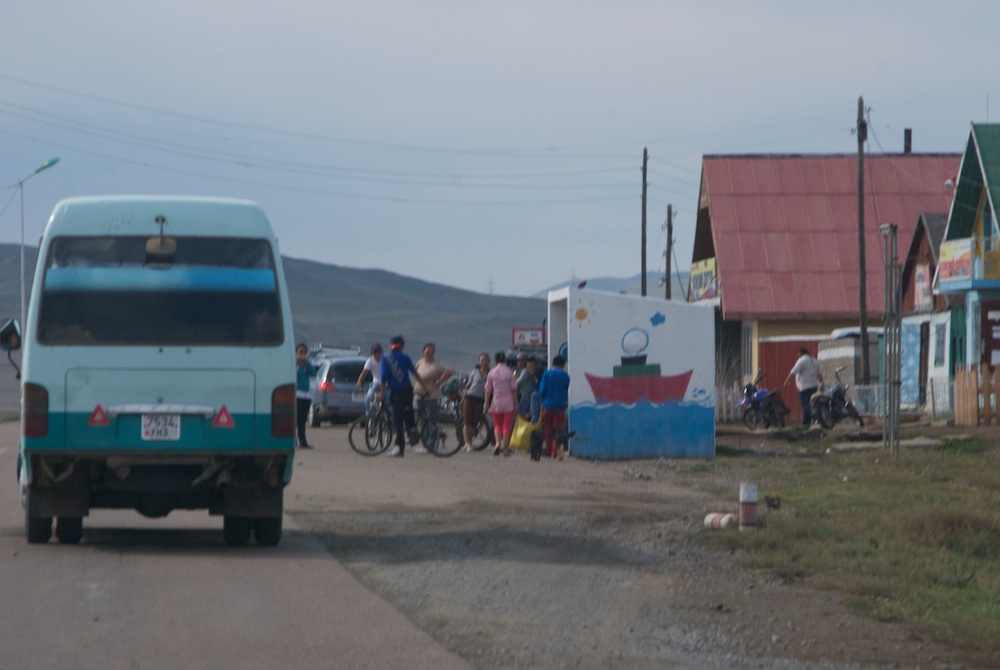
We passed through a small soum center, the last town we saw on this leg of the trip
Then it was back out into the glorious countryside on the earth roads, heading north
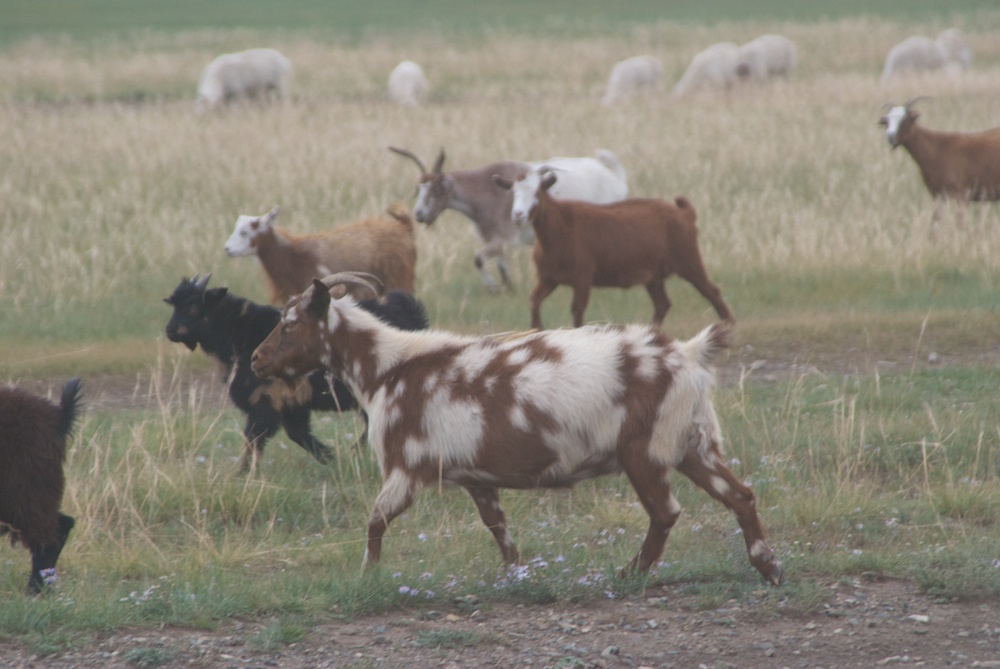
Pokey had become very interested in the cashmere goats as possible sculpture subjects, so we stopped any time there were some near the road. The markings on this one were definitely a bonus!
The afternoon light was really beautiful.
This family had stopped to get water from the spring, which is enclosed with a fence to keep livestock out. I've rarely seen a western style livestock or horse trailer in my travels. The animals ride in the back of trucks, sometimes with very simple barriers to keep them onboard.
Did I say we wanted to see goats? We came up over a rise and....
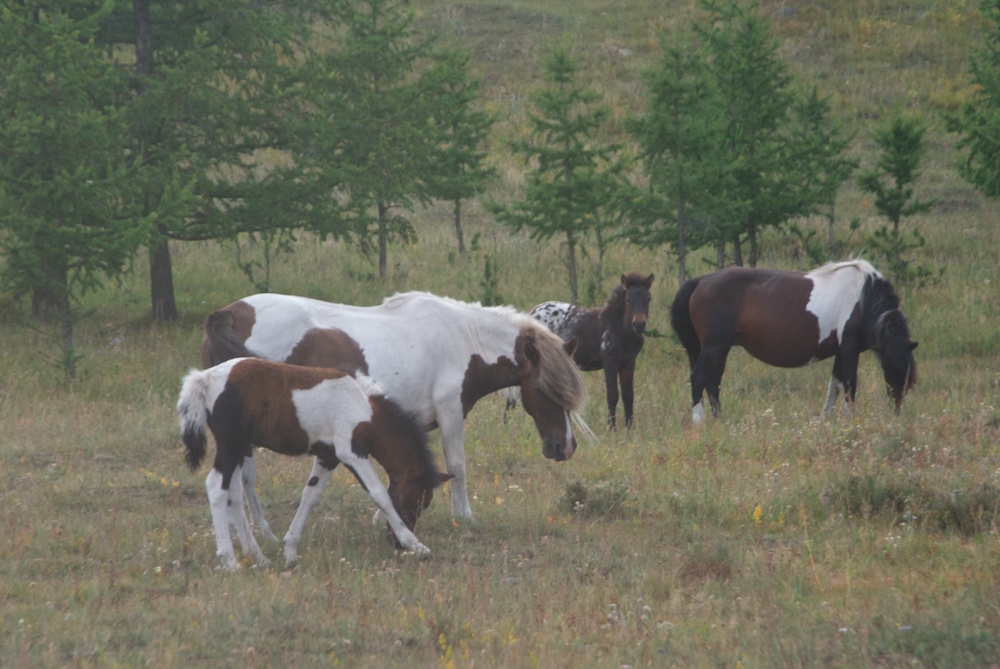
As we went higher up into the mountains, we found ourselves in forested areas and came across this herd of really stunning horses.
Ovoo up on the pass.
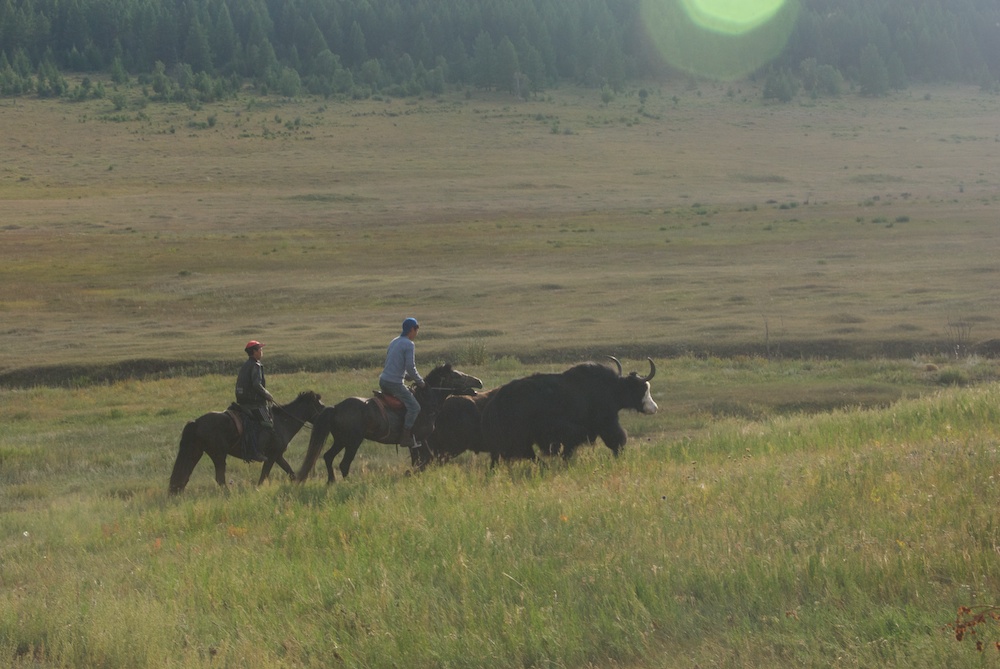
Traveling along one side of a valley, we saw these two boys herding a couple of yak/cattle hybrids.
We were happily taking photos when one of them abruptly turned and started towards the car. His "minder" suddenly wasn't smiling and it got a little tense as we wondered if we needed to get ready to brace for impact.
But within a few yards, the boy got him turned and we all exhaled.
Our last view of them riding off into the early evening light.
Onward...
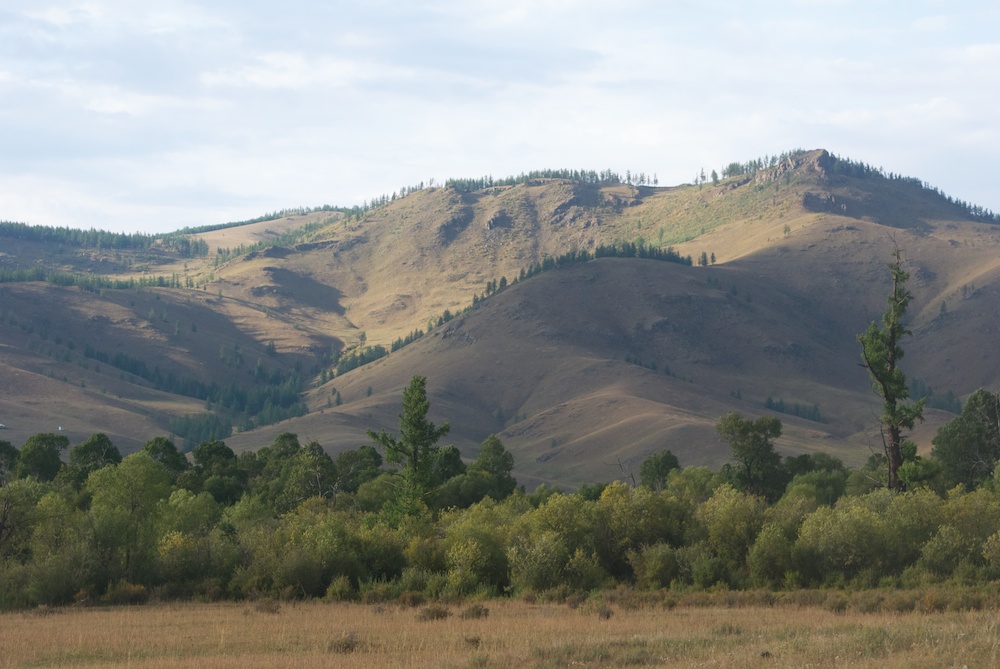
We finally had mountains on either side of us and saw a variety of deciduous and evergreen trees.
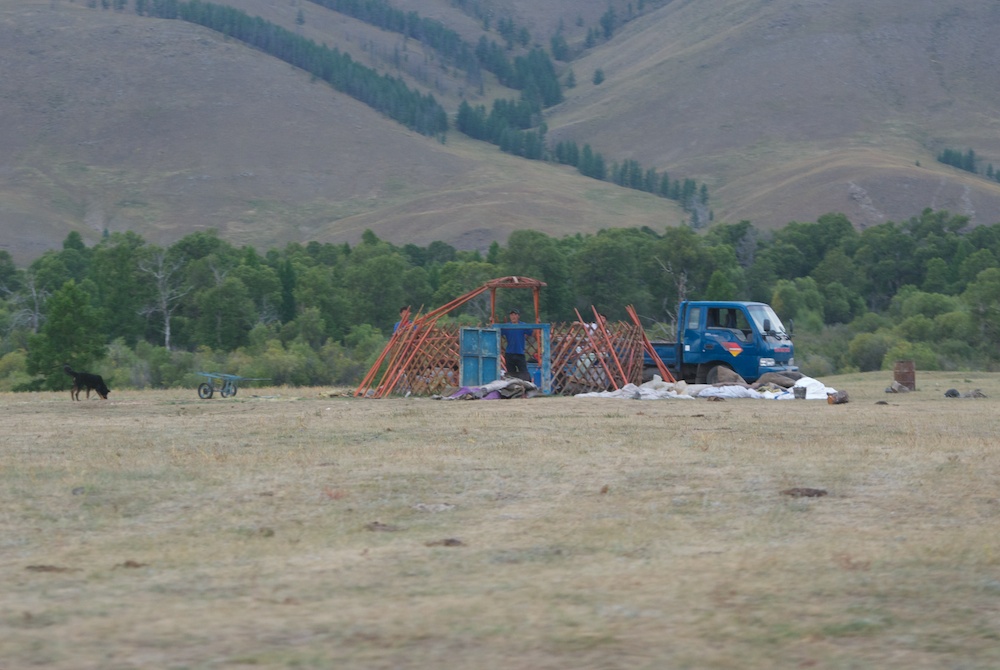
A local herder family setting up their ger
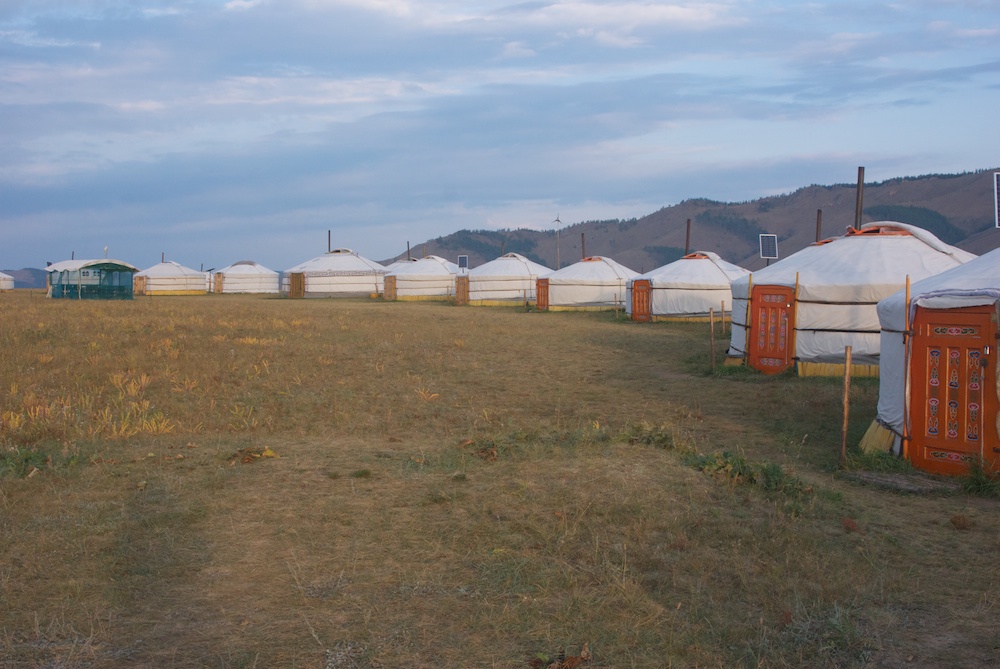
At last we arrived at the ger camp, which was situated on a bluff above the Tuul Gol.

Next week: boating and hiking and back to Ulaanbaatar

Mongolia Monday- Gun-Galuut Nature Reserve

We arrived at the Steppe Nomads ger camp at Gun-Galuut Nature Reserve with a broken rear spring on the Land Cruiser, not sure what this meant for the remainder of the trip. While Pokey and I settled in, Khatnaa got on his mobile phone and called the Nomadic Journeys’ office to sort things out. We got laundry done and took welcome hot showers.

That night, at dinner, Khatnaa explained the situation. He would need to take the car out to the tarmac road (13km on earth road each way to get to and from the reserve) the next afternoon to meet up with someone from UB who would bring the new spring out. Then it would have to be installed. How long? Half a day. Did we want the office to also send out a new guide and driver to finish the trip or would we wait for the repair? That decision took about two seconds….we’d wait and finish the trip together. In any case, Pokey and I weren’t sorry to have a break to simply hang around camp and relax.

Khatnaa then said that the car was drivable, with care, and we would go out the next morning at 6am, which is exactly what we did. I was impressed by what he considered staying on “easy” roads. We parked and took a good, long hike down to where he thought we might see argali, which we spotted off in the distance almost as soon as we stopped to glass the mountain.

We also got great photos of a big herd of Mongol horses and cranes, but really had to dodge the mosquitos. Back at the ger camp around 1pm, Khatnaa grabbed a quick lunch and took off. To our surprise and pleasure he was back at 5:15, after having to replace BOTH back springs because the replacement was longer than the original one. Dinner was quite festive with beers all around.

We only had one day at Gun-Galuut, but it was a full one, packed with great scenery and animals.

Steppe Nomads Tourist Camp
Morning coffee in front of my ger in my comfy Mongol del and felt slippers
Early morning light along the Kherlen Gol with Baits Uul ahead on the right
12-13 argali grazing; look in the middle among the shrubs for the white dots which are their rumps; why good binoculars are a must
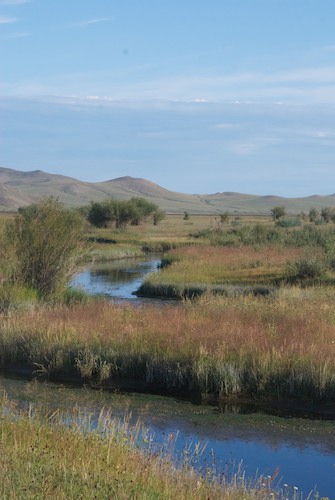
Riverside view
Local herder's gers with a line of grey herons in front
I believe this is a Japanese quail chick
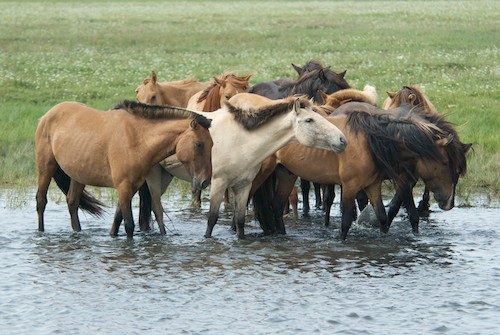
The horses we got great photos of, with the ger camp in the background; they were in the water to get away from the mosquitos
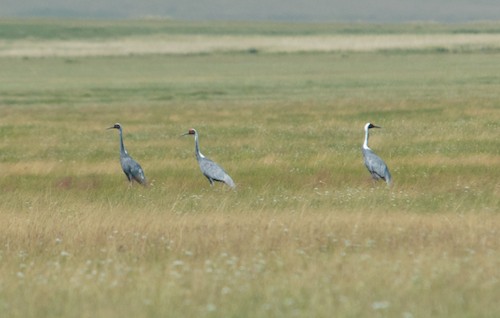
Endangered white-napped cranes
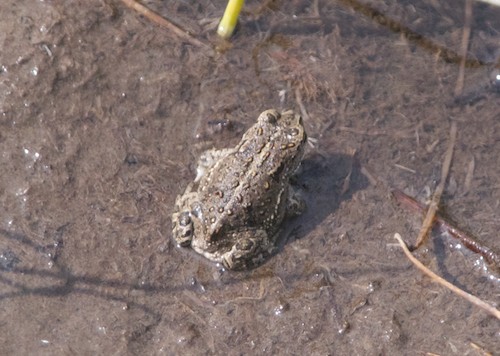
Small toad
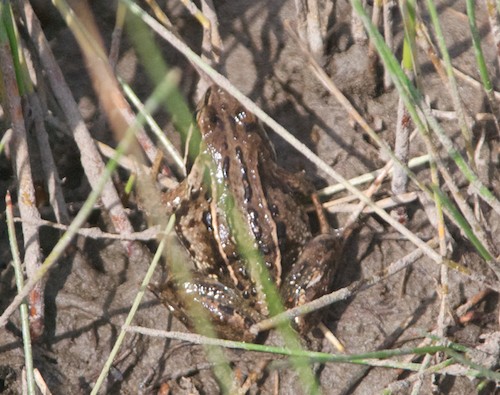
Frog
Wetland and mountain, with cranes
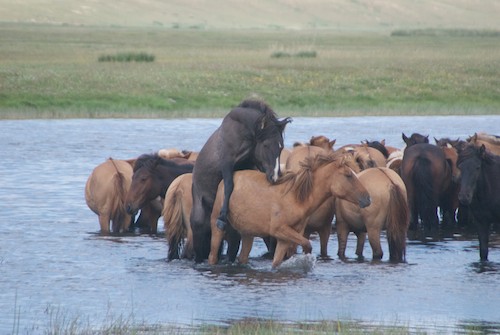
More of the horses; in the afternoon a breeze had come up which kept the mosquitos away, from us at least
Sometimes the action got pretty hot and heavy
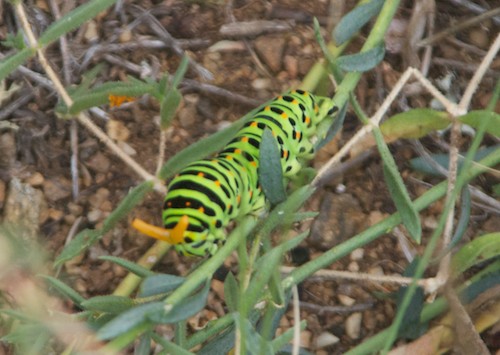
First time I ever saw a caterpiller in Mongolia

That evening Khatnaa told us that the next day’s drive wouldn’t be a long one, so we would go out into the reserve in the morning and leave after lunch. We went around the “backside” of the mountain, the side away from the river, parked in a draw, got out and almost immediately spotted four big rams running over a ridge to our right. I only was able to get a couple of butt shots before they were gone. But, within minutes, we spotted an argali ewe and lamb to our left. And then a large group moving up the draw directly in front of us, but a pretty long ways off. It’s estimated that there are less than 100 argali in Gun-Galuut, so we saw a fairly good percentage of the population in two tries.

Argali Ewe and lamb
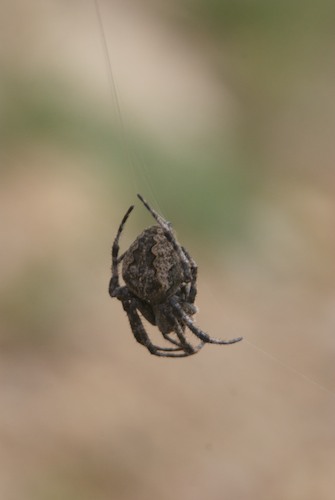
Good-sized spider

We drove to the next draw over where we hoped the argali rams had gone, but saw no one. Pokey wanted to do some sketching, so she stayed with the car while Khatnaa and I hiked up onto the mountain again. Coming around a ridge, the view opened up to the entire river valley. We found a couple of rocks to sit on and simply enjoyed the scenery for a half hour. It was so quiet, except for the occasional animal. No cars, no planes, no radios, no voices. Just. Quiet. One of the things I treasure about being in the Mongolian countryside.

View of the Kherlen Gol valley, looking east
Of course I had to have my picture taken
Back down on the wetland, we spotted a whooper swan
A beautiful butterfly
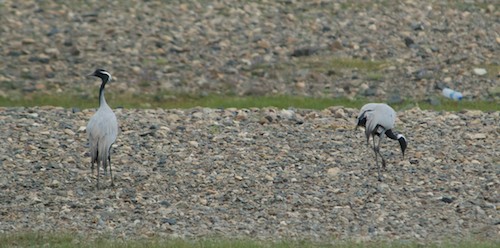
And on the other side of the river, a pair of demoiselle cranes
On our way out of the reserve that afternoon, we stopped by this small lake to photograph another whooper swan
This enormous coal mine at Baikhanuur is visible from the road to and from the reserve

Next week: Onward to Jalman Meadows in the Hentii Mountains

Mongolia Monday- The Journey Is The Destination, Part 1

While I had planned an itinerary to go to specific locations to see wildlife, I knew from experience that over any hill or around any corner one can encounter sights in Mongolia that will take one’s breath away and result in many requests for the driver to stop or at least slow down.

This trip was no exception. We left Arburd Sands for Ikh Nart, heading, I believed based on previous conversations and planning, almost due east across an area that I had not seen before.

We weren’t on the road for long when the “Stop!” requests started. Here’s what we saw:

Typical mid-morning light on the steppe
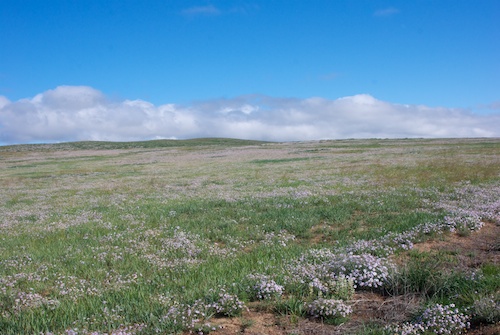
The fields were covered with asters almost as far as we could see along both sides of the road
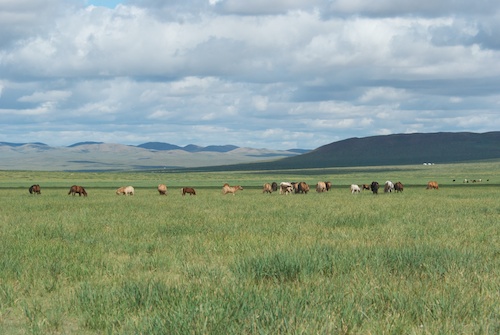
We started to come down into a valley and spotted a herd of Mongol horses
Then we came upon more, in beautiful morning light
A young herder in a very nice dark red del carrying a very long urga rode over to have a chat with our driver
We drove over the ger where he lived and I got a few quick shots of what was clearly quite a horse operation in a spectacular setting
Driving on, we quickly came upon even MORE horses, including these two young stallions mock-fighting
By now we'd dubbed this area the Valley of the Horses. They were everywhere we looked! And they were in great condition due to good rains creating excellent graze.
It was absolutely idyllic. We could have stayed there all day. But Ikh Nart beckoned.

A few hours later I saw a largish-looking city up ahead and couldn’t square it with what I had seen on the map. We drove around the edge of it.

Zuunmod

When we came to the railway line and I saw the tarmac road, I realized what route we had taken. As it turned out, Khatnaa was not able to get reliable information on road conditions or weather on the route we were going to take and Jan had pointed out when we were discussing it back in UB that along the way was a type of mud that, if it rained (and it had been raining quite a lot) was very easy to get stuck in.

So Khatnaa did the sensible thing, which was to take the longer, but certain route north back towards Ulaanbaatar. The mountain behind Zunnmod in the photograph is Bogd Khan. On the other side of it is Ulaanbaatar.

We crossed the railroad tracks and picked up the main paved road south, which literally leads to China, and that I have traveled on quite a few times now.

Even though it at least tripled the distance we drove, it actually took less time to get to Ikh Nart because we could travel at 50-60 mph instead of 15-30mph that is all one can safely do on large stretches of the earth roads. Such is travel in Mongolia. If we had followed the original plan, we would have missed the Valley of the Horses. But I do want to check out that other route some day ’cause I know there will be something good there, too.

Mongolia Monday – Arburd Sands Ger Camp And An Interesting Side Trip

The next stop on the “artist’s tour” was Arburd Sands ger camp. This was more a “cultural” stop, than for wildlife viewing, but we got some of that, too.

This was the third time I had stayed at the camp and it was great to see owners Batbadrakh and his wife, Densmaa, again.

Arburd Sands ger camp; the dune complex behind the camp is about 20km long and is one of the northernmost extensions of the Gobi.
Exercising a young Mongol race horse; the owners of the camp are members of a prominent horse racing family.
We took a day trip to two local sacred mountains; this is Baga Hairhan Uul (Small Sacred Mountain).
Scanning the mountain paid off with this sighting a few female Siberian ibex; you can just see one on the lower right side of the second pointed rocks from the left, the head and half the body are visible.
Nearby, to the left of where we were sitting, was a cinereous vulture nest with an adult and fledgling.
Our second destination...Zorgol Uul, one of my favorite mountains.
On the south side is this lovely stupa; the fence is festooned with khadag, blue offering scarves.
On the "front" facing the main road south was a cinereous vulture nest that I don't remember seeing on previous trips.
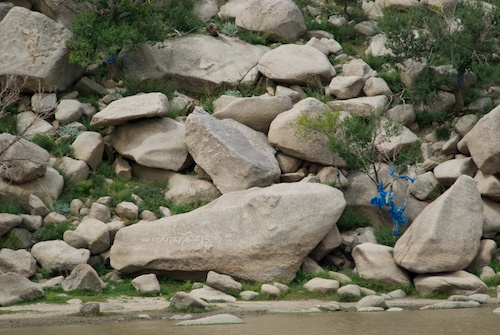
At the base of the mountain is a small seasonal lake; to the left of the khadag is a large rock with a Tibetan inscription and if you look up to the top you can see a black kite perched on another big rock; quite a composition.
The family that runs the ger camp is known for its horses. One came in third in the State Naadam race this year, which is a big deal since the first five are considered almost equally winners in a 35km race that may have over 400 entries; I asked if the horses were nearby and could we take pictures of them and, yes, they were only a kilometer or so away. The stallion's manes are allowed to grow and grow and grow....because that is believed to give them strength. We got some great shots!
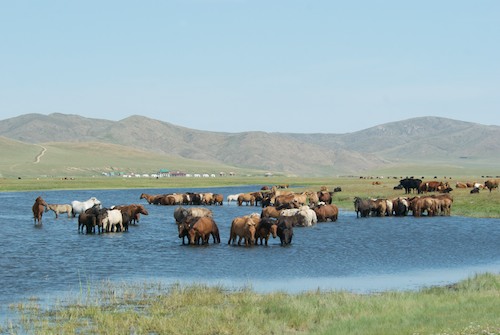
While we were there, three men, probably relatives or friends of the owner, came by to check out the horses.
One of the highlights of the entire trip was seeing Sodnam again; I "met" her when my husband and I were at Arburd Sands in 2008 and we took to each other immediately even though we couldn't speak each other's language. She's 92 now and I'll bet she's caused some mischief in her time. She's Batbadrakh's brother's wife's mother. The lady on the right is the mother of Batbadrakh and the widow of Choidog, his father.
Then it was our turn to ride; I really liked this sarel (grey) gelding and asked Densmaa if they could box him up and send him to California; a joke since I don't think Mongol horses would do well at all in our higher humidity sea level climate.
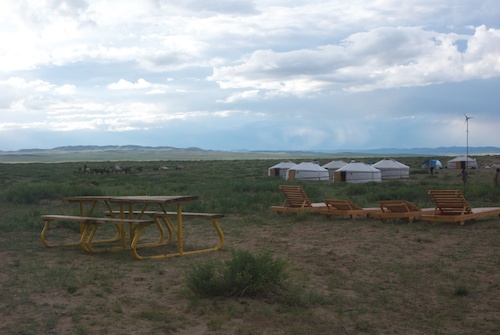
The Arburd Sands ger camp is set up in a new spot every year or so to protect the land; this year Densmaa grinned at me, pointed to the table and lounges and said "How do you like our beach?" We liked it a lot even though it's a bit far from the ocean.
And one of the reasons is that it was a great place to watch spectacular sunsets like this one.
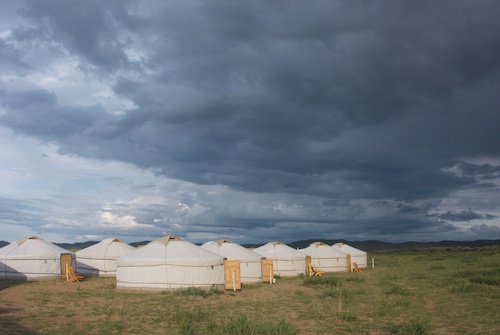
There really is nothing quite like storm light over Mongol gers.