I think we’ve all had the experience of looking at art that is really, really good. It’s both an inspiration and sometimes a cause of despair. But one of the traditional ways to train one’s eye is to look at good art. Lots of it. In the original.
Then there are the days in the studio when we wonder why we ever thought we could do this. We know (I hope) what our goal is for a particular painting, but we Just Can’t Quite Get There.
It can be easy to lose perspective. Sometimes it’s helpful to remember that the artists we so admire didn’t begin at the high level we associate with their work.
I happen to have accumulated over the years some examples in print of early work by some very well-known artists, along with their mature work. I thought I’d offer three examples today.
I want to make it clear that I don’t believe that any of the early examples are “bad” or inferior in any way. The purpose of showing them is simply to demonstrate that everyone’s art evolves over time (or should). They are illustrations, not easel paintings, so they were done as jobs for an art director, with whom the artist didn’t always see eye to eye. The limitations of commercial work are what led them to become what we think of as Fine Artists, who paint or painted only for themselves.
Keeping that in mind:
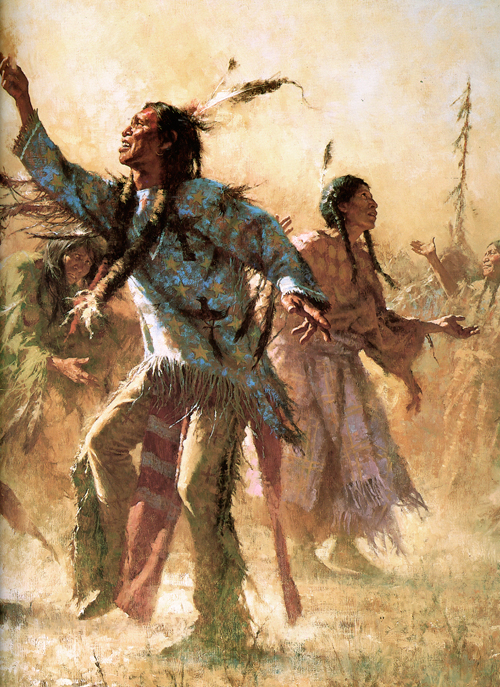
Howard Terpning is one of the most prominent American painters working today. I knew his name as an illustrator and it wasn’t until I became a painter that I encountered him as a fine artist. His work didn’t attract me much since I’m not that interested in Native Americans, his specialty. But I was at a workshop with John Banovich, who is known for his African wildlife paintings, particularly lions and elephants, and there in his studio, kept near his easel, was a book of Terpning’s work. John picked up the book and explained that it was worth studying for the quality of the painting, separate from the subject matter. I took my turn paging through it and saw immediately what John meant, so I bought my own copy as soon as I got home. I learned a valuable lesson that day: don’t let subject matter get in the way of learning from a great artist.

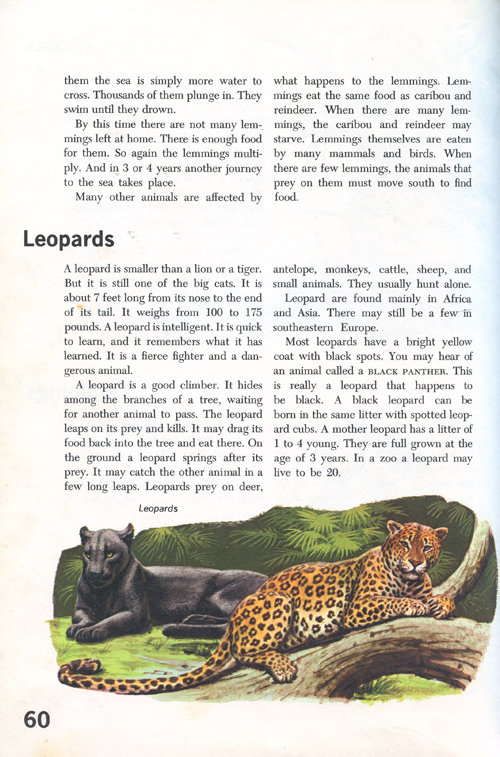
Guy Coholeach, as far as I know, has always been an animal artist, although when he was an illustrator I suspect he took the jobs as they came, regardless of subject matter. I do remember knowing and admiring his work from long before I went back to art school and got a degree in illustration. When I became an animal artist myself, there he was, one of the most prominent wildlife painters in the field. He’s probably best known for his paintings of the Big Cats. One of the things I find inspiring about his work is that he doesn’t arbitrarily limit himself to one “style”, but does what’s needed to express his vision of a subject. So his work can range from very tight and beautifully rendered to juicy and painterly. In either case, his drawing, composition and paint handling is impeccable.

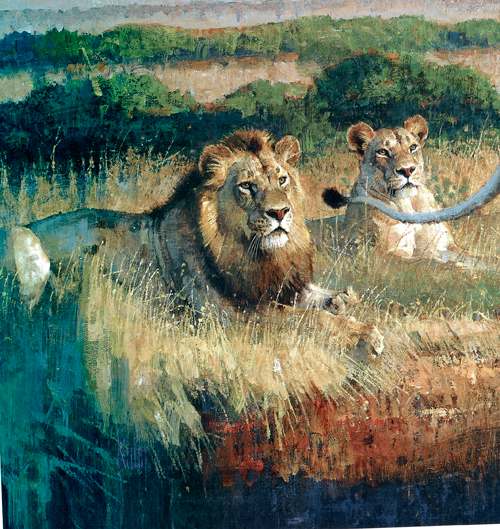
Bob Kuhn is my idol. Simple as that. Especially when I was struggling on all fronts trying to do a decent painting, I’d get stuck on some aspect and ask myself “What would Bob do?”. I’d get down my Bob Kuhn books (I have all of them) and go through them until I found his solution. I’d bounce off it to come up with what worked for me, knowing that ultimately I had to find my own way and not rely on someone else. Not to knock other artists at all, but I personally don’t have, and have never had, any interest as a painter in detail per se. In an art genre where highly detailed work has been the standard, Bob Kuhn was a beacon of light and hope that I could find a place in the animal art world while working in a painterly manner. I also learned from him not to compromise on getting the best reference possible, to draw from live animals as often as possible and to be knowledgeable and accurate in how I portray a species in their anatomy, behavior and habitat. Can’t ask for more than that from your hero.




 Susan Fox, American Artist