Mongolia Monday- 6 Great Places To See Wildlife

The travel season is almost upon us. I’ve got my plane tickets for my July departure to Mongolia. For anyone else thinking about or planning to go there, I thought I’d offer one list a week for six weeks, of six “themes” for things to see, with six suggestions.  I’ll start with the one that’s probably nearest and dearest to my heart – wildlife viewing destinations. I’ve been to all of them at least once.

Takhi grazing, Hustai National Park

1. For horse-lovers, Hustai National Park is a must if you are going to Mongolia. It is one of three places where tahki (Przewalski’s horse) have been reintroduced and is only about two hours west of Ulaanbaatar, mostly on tarmac road. You may also see marel (a species of elk), Mongolian gazelle, marmots and a variety of birds, such as demoiselle cranes, golden eagles, saker falcon, and black storks. There is a permanent ger camp that is open year around. The main building has a pleasant dining hall. There are three large concrete “gers”. One houses a gift shop, one has displays about the park and another is where presentations about the park are given by staff scientists. You can explore the park by vehicle, on foot or horseback. When I was last there in the fall of 2008, there were 15 harems of over 200 horses.

Reedbeds, Khar Us Nuur National Park

2. Bird-watchers should consider traveling out to western Mongolia to go to Khar Us Nuur (Black Water Lake) National Park. Khar Us Nuur is the second largest freshwater lake (15,800 sq km) in Mongolia . The Khovd river flows into it, creating a large marsh/wetland that is home to the largest remaining reed beds in Central Asia. The lake provides habitat for wild ducks, cormorants, egrets, geese, wood grouse, partridges, the rare relict gull and also the herring gull.  May and late August are the best birding times.  Another freshwater lake, Khar Nuur (Black Lake), which is connected to Khar Us Nuur via a short river called Chono Kharaikh, hosts the migratory and globally threatened dalamatian pelican. Direct access to the lakeshore is limited due to the reedbeds, but there is open shoreline near the soum center (county seat) on the north shore and an observation tower on the east side. As far as lodging, I can’t make any recommendations since I was rough camping when I was there, but I’m sure there’s something in or near Hovd, the main town. From Ulaanbaatar, flying to Hovd is the only practical way to get there since it’s about a thousand miles west of the capital.
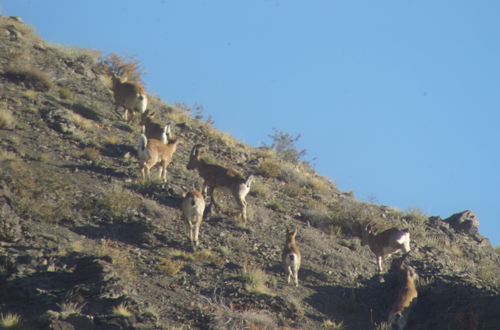
Siberian ibex, Gobi Gurvansaikhan National Park

3. The legendary Gobi is home to Gobi Gurvansaikhan National Park, created partly as a refuge for an endangered population of wild bactrian camels. They are in a remote and inaccessible (except for researchers) part of the park, however. There are also snow leopards and argali, which visitors should not expect to spot. What there is a good chance of seeing are Siberian ibex, pika, two species of gazelle, steppe eagles, golden eagles, lammergier or bearded vultures, black vultures and a variety of smaller birds. I stayed at Nomadic Journeys’ Dungenee eco-ger camp, which is taken down at the end of each season, leaving almost no trace. The kitchen and dining “room” are in connected gers. The setting is terrific, on an upland that has the park’s mountains in one direction and the Gobi stretching out in the other. To get there from Ulaanbaatar one either drives south on the main road, which is an earth road and takes, I think, two days, or flies into Dalanzadgad, which takes about two hours.

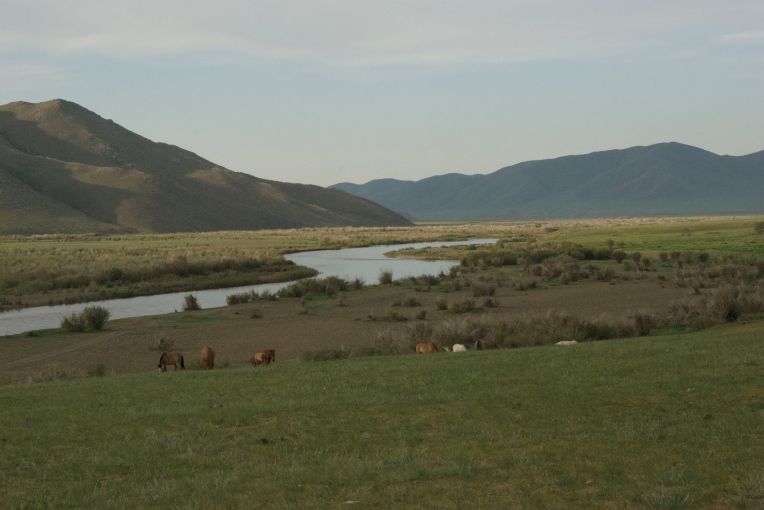
View of Steppe Nomads Ger Camp overlooking Kherlen River; the wetland is off to the right with the base of Mt. Baits behind it, Gun-Galuut Nature Reserve

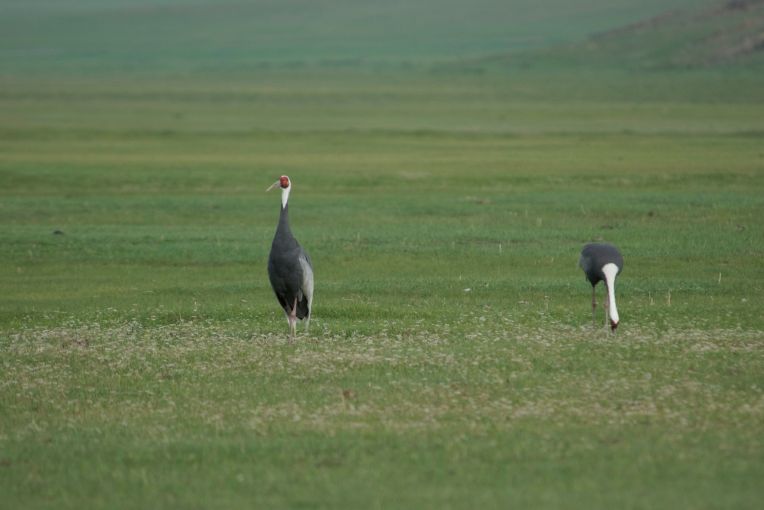
4. A relatively new park, Gun-Galuut Nature Reserve is only a couple of hours east of Ulaanbaatar, mostly on tarmac road. There are two main wildlife attractions here: around 100 argali mountain sheep, which live on Mt. Baits and a wetland area with endangered white-napped cranes, along with a variety of other birds like cinereous vultures, demoiselle cranes, black storks, whooper swans, ducks and terns. The permanent ger camp has a lodge which houses a dining hall and bathroom facilities. There are many activities to choose from besides wildlife watching, including boating, archery, yak cart and horse riding, hiking and homestays with herder families, all of which provide employment for local people. This was the first stop on my Artists for Conservation Flag Expedition in July of 2009.
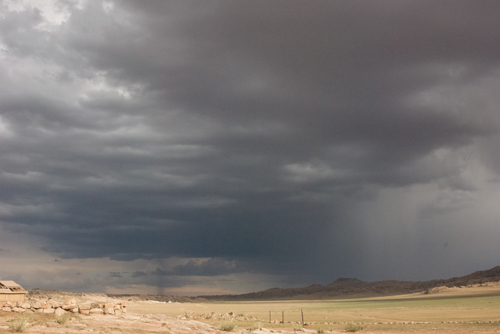
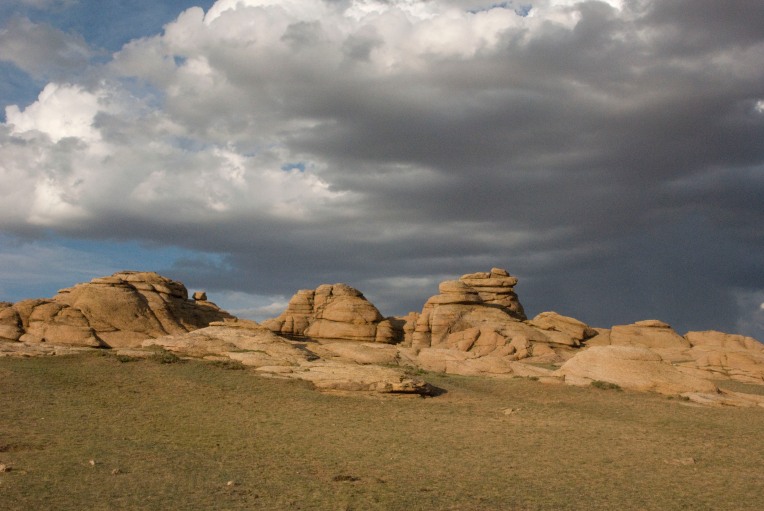
View from my ger, with passing summer rain storm, Baga Gazriin Chuluu Nature Reserve

5. I knew nothing about Baga Gazriin Chuluu Nature Reserve when I arranged to go there as part of my July 2009 Artists for Conservation Flag Expedition other than it had argali. I was only there for two days, but they were two of the most memorable days I’ve had in four trips to Mongolia. The reserve is home to about 60 argali, which are more tolerant of people and vehicles than the ones I’ve seen elsewhere, along with Siberian ibex, cinereous vultures, columbia rock doves and other birds.  The rocky uplands cover a smaller area than Ikh Nart (no.6 below), and are easy to get around in on foot or by vehicle. There is a ger camp tucked up against one of the rock formations with an amazing view down the valley. A concrete “ger” serves as the dining hall and has a covered patio area. There is a toilet/shower block, for which the water is heated by solar power. Baga Gazriin Chuluu is about a six hour drive on an earth road southwest of Ulaanbaatar.

Argali ewe with two lambs; one with radio collar, Ikh Nartiin Chuluu Nature Reserve

6. And last, but certainly not least, Ikh Nartiin Chuluu Nature Reserve, my destination when I first went to Mongolia on an Earthwatch project in spring of 2005. Ikh Nart may be the best all-around place to see wildlife in the country. There are argali mountain sheep, Siberian ibex, corsac fox, red fox, tolai hare, cinereous vultures, golden eagles, black kites, kestrels and many other birds. Nomadic Journeys also has an eco-ger camp here, Red Rocks, and offers guided and unguided trips. It is a great place to hike. There are fabulous rock formations, some of which have Tibetan inscriptions carved on them. You will need a GPS since, while there are some dirt tracks, there are no marked trails. This was the third stop on my Artists for Conservation Flag Expedition in July of 2009. Ikh Nart is a seven hour train ride or a five to six hour drive south and slightly east, mostly on tarmac, from Ulaanbaatar.

There are more photos in other posts on this blog. Look under “Mongolia” on the blog roll at the right or do a name search.

Mongolia Monday- Favorite Ger Photos

Two of the things I like best about traveling to Mongolia are staying in a ger and visiting people in their gers (“ger” means “home” in Mongolian).

Actress Julia Roberts was hosted by a family of horse trainers during the filming of an episode of the PBS series “Nature” called “The Wild Horses of Mongolia” (which isn’t what it was about, although there was a little takhi footage from Hustai National Park included). At the end, she’s sitting in a ger filled with Mongolians, looking into the camera with this big grin, saying something to the effect of “I’m sitting here in this ger and I don’t understand a word of what these people are saying, but I’m as happy and content as I’ve ever been in my life.”

Yup, she nailed it. I feel the same way. There’s something about the quality of space created by a ger that is very special. I’ve been in clean ones, dirty ones, sat on stools, beds and the floor, seen beautifully furnished ones and ones with next to nothing in them and I get the same content feeling in all of them. Hand me a bowl of suutei tsai (milk tea) or airag (fermented mare’s milk) and some aruul (dried yogurt) or tsotsgii (cream) and I’m a happy camper (and a cheap date too, I guess, although my husband would probably beg to differ). Anyway, here are some of my favorite images of gers from my four trips to Mongolia.

First, ger camps:

My ger at Gun-Galuut Nature Reserve (AFC Flag Expedition), July 2009
Dungenee Ger Camp (Nomadic Journeys), Gobi Gurvansaikhan National Park, Sept. 2006
Dungenee ger interior; notice large rock to help hold it down in high winds, Sept. 2006
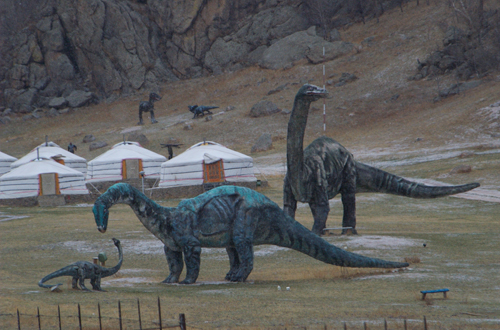
Dinosaur Ger Camp, Gorkhi-Terelj National Park, May 2005 (haven't stayed here; yet)
Arburd Sands Ger Camp (Nomadic Journeys) with lightening storm, July 2009
Red Rocks Ger Camp (Nomadic Journeys) with oncoming storm, July 2009; two hours of heavy rain soon followed
Dining ger door, Red Rocks Ger Camp, Ikh Nartiin Chuluu Nature Reserve, Sept. 2008

In 2005, I got to visit a ger factory and see how they are made:

Ger factory, Ulaanbaatar, May 2005

Then we went to the Black Market where you can buy anything ger; from individual parts to the whole thing.

Everything ger at the Black (or Narantuul) Market

The research camp at Khomiin Tal (takhi reintroduction site) in western Mongolia is spectacularly sited in a river valley:

The research camp at Khomiin Tal, western Mongolia, Sept. 2006
Ger interior with goat meat, Khomiin Tal, western Mongolia, Sept. 2006

My first experience of staying in a ger was during my first trip to Mongolia on an Earthwatch project “Mongolian Argali” (now called “Wildlife of the Mongolian Steppe”; highly recommended) in the spring of 2005. The camp is much bigger now; seven gers, two containers and a volleyball court:

The research camp at Ikh Nartiin Chuluu Nature Reserve, Earthwatch project, April 2005
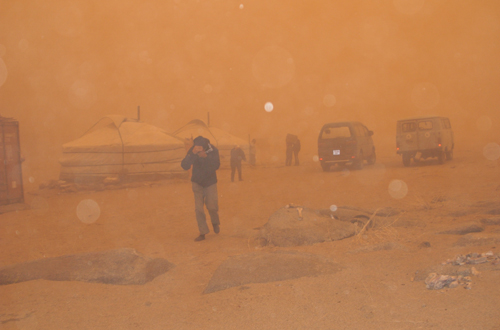
Typical spring dust storm, Ikh Nartiin Chuluu Nature Reserve research camp, April 2005; photo taken out the door of the ger; circles are the flash bouncing off dust particles; the wind was howling, too

And, private homes:

Small ger with aruul drying on the roof; en route from Baga Gazriin Chuluu Nature Reserve to Ulaanbaatar, July 2009; my guide helped me buy some aruul from the family
Prosperous establishment in the Gobi, Sept. 2006; they breed racing camels
Dung fuel with traditional gathering basket, western Mongolia, Sept. 2006; the owner manages a nearby salt deposit
Ger in western Mongolia, Sept. 2006; we bought fresh cow's milk from her
Gers above the Tuul River, near Hustai National Park, Sept. 2006; they have great view!
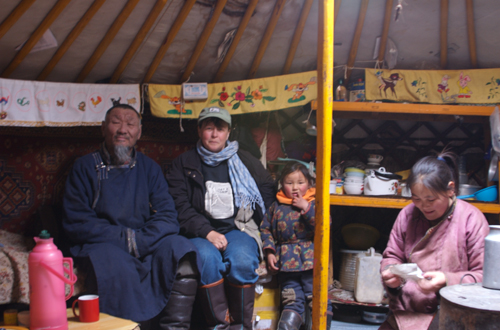
Ger visit, near Hustai National Park, May 2005; my first encounter with Mongolian hospitality, but not the last!

Mongolia Monday: Wildflowers, Part 3

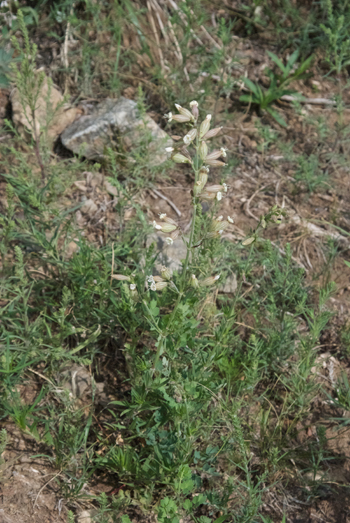
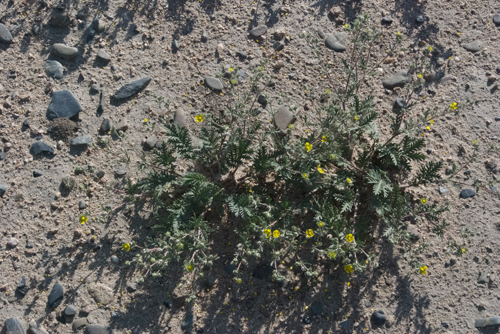
This is the final installment of images that I took of wildflowers during my AFC Flag Expedition to Mongolia this past July. As before corrections and identifications of flowers I couldn’t find in the guidebook I used, “Flowers of Hustai National Park”woulo be greatly appreciated.

Sawwort, Saussurea amara
Snow-in-Summer, Cerasttium arvense
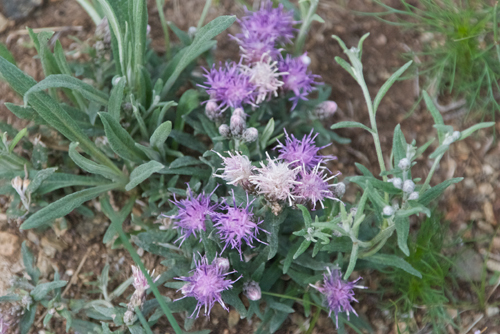
Thistle species
Thistle species
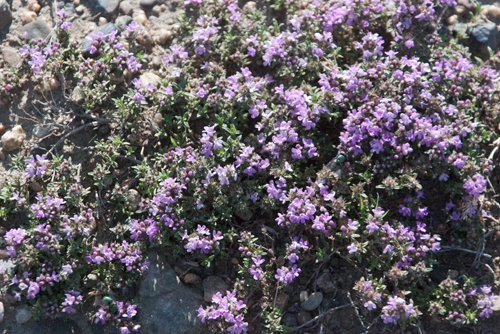
Thyme, Thymus globicus
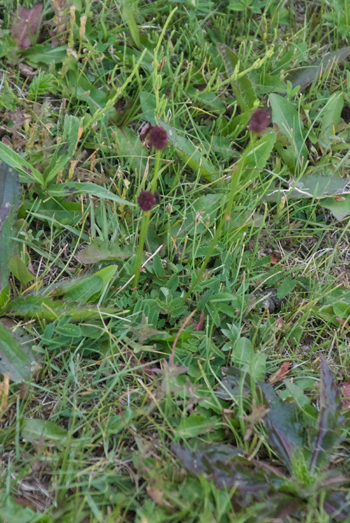
Unknown; guide said it was not a pasque flower since bloom season for that is earlier
Valerian, Valeriana officinalis
Goniolimon, Goniolimon speciosum
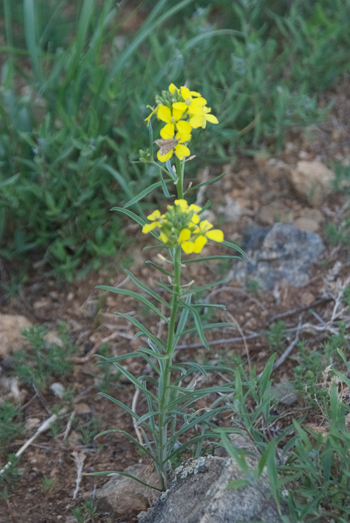
Wallflower, Erysimum flavum
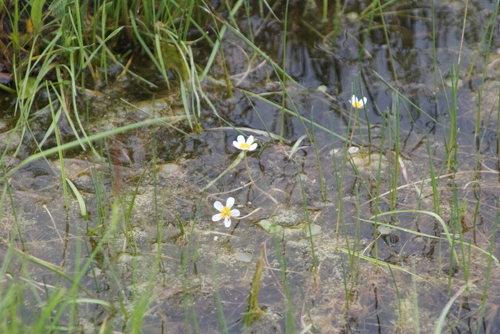
Unknown aquatic flower
Unknown white flower
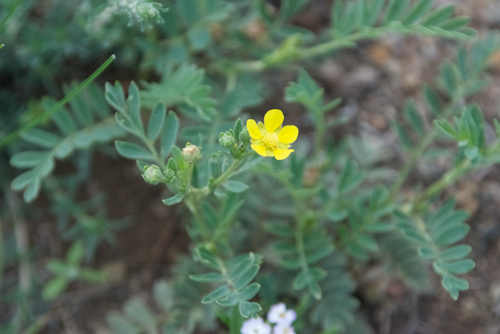
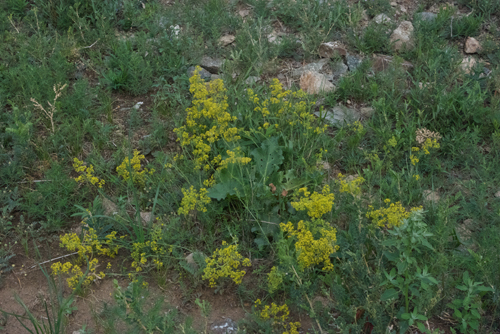
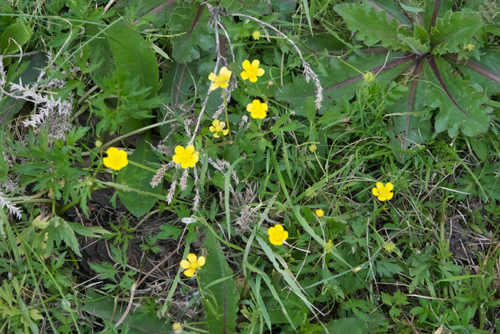
Unknown yellow flower

Mongolia Monday- Wildflowers, Part 2

Continuing on from last week:

Once again, the identifications are my best guess based on the field guide “Flowers of Hustai National Park”. Corrections more than welcome.

Except where noted all plants photographed at the Gun-Galuut Nature Reserve.

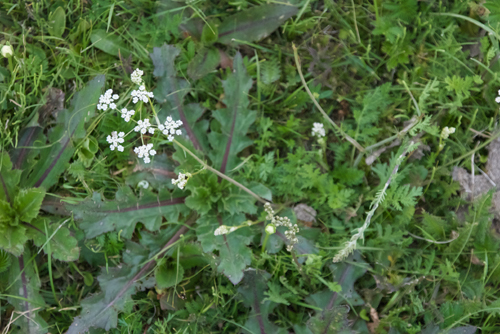
Caraway, carum carvi?
Eyebright, Euphrasia tatarica
Goniolimon, Goniolimon speciosum ?
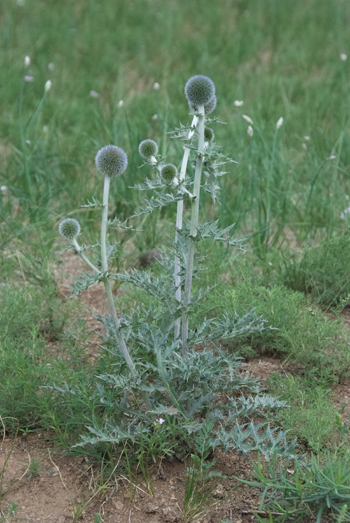
Globe thistle, Echinops latifolius
?
?
Haplophyllum, Haplophyllum dauricum
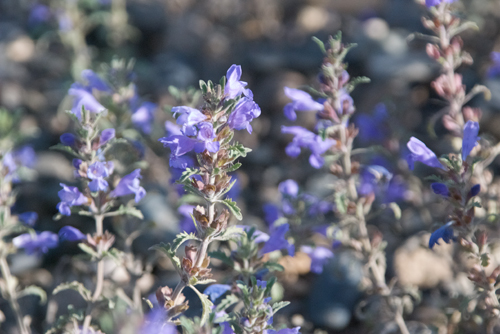
Hyssop, Lophanthus chinensis
Hyssop growing near Kherlen River
Milk vetch, Astragalus galactites
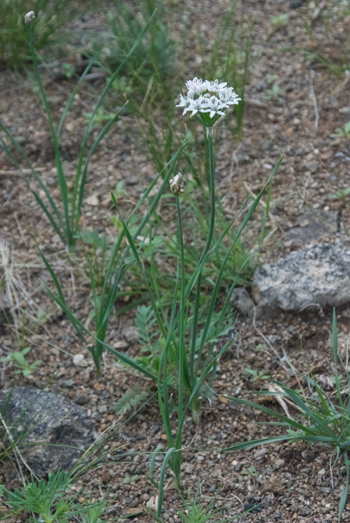
Onion, Allium odorum
Orostacys species
Orostacys species
Persicaria species
Persicaria species
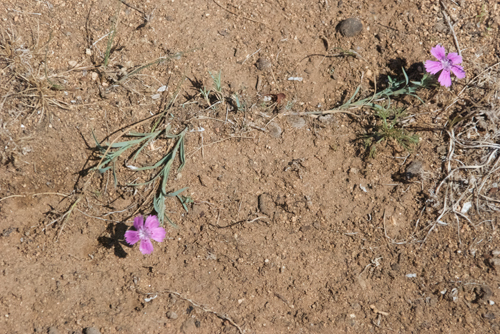
Pink, Dianthus versicolor
Pink, Dianthus versicolor, Baga Gazriin Chuluu Nature Reserve
Ptilotrichum, Ptilotrichum canescens
Ptilotrichum, Ptilotrichum canescens (yellow flower)

Mongolia Monday- Wildflowers, Part 1 (Identification help wanted)

On my previous trips to Mongolia it was either spring or fall, too early or too late to really see much in the way of wildflowers. There were some at Ikh Nartiin Chuluu last year, but I had no way to identify them. Then I found the field guide “Flowers of Hustai National Park” back in Ulaanbaatar, which appears to include most of the common flowers one is likely to encounter.

For the next three weeks I’ll post my flower images with my best guess at what they are since I’m not a botanist. I do garden, however, and many of them look suspiciously familiar.

I would love to have assistance in confirming or correcting my identifications.

The following images are all from Gun-Galuut Nature Reserve, which is about two hours southeast of Ulaanbaatar. Some are from the rocky hillsides of Mt. Baits and some from the wetland on the north side of the mountain. None have been retouched in any way.

Artemesia
Wormwood sp.
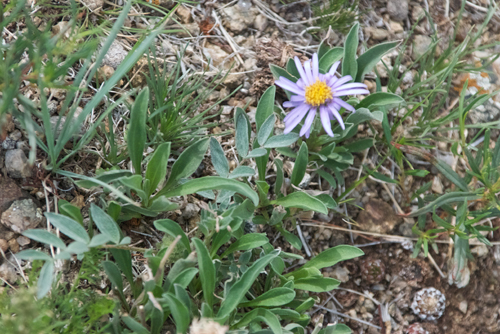
Aster
Aster sp.
Bedstraw, Galium verum
Unknown
Unknown
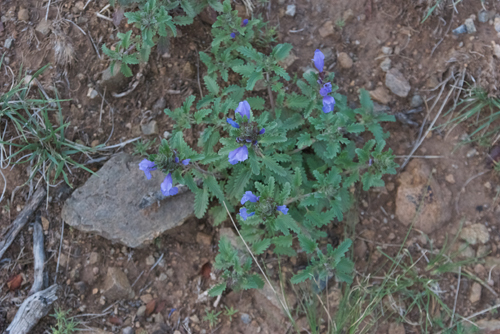
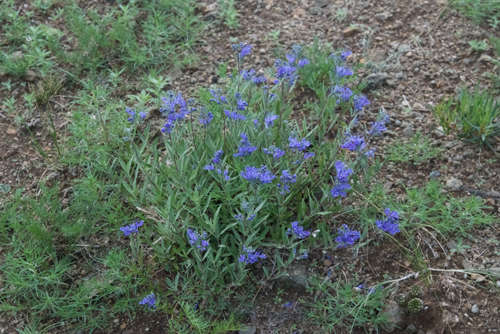
Bluebeard, Caryopteris mongolica
Bluebeard, Caryopteris mongolica (a personal favorite)
Bluebeard plant
Bluebeard plant
Unknown
Unknown
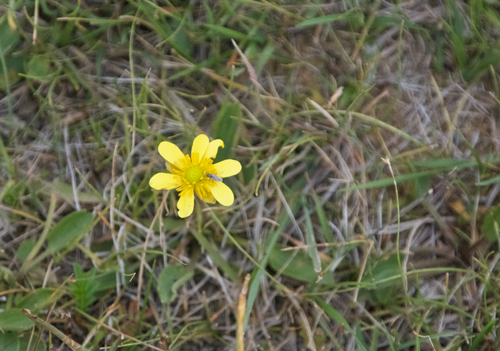
Buttercup?
Buttercup sp.?
Catchfly, Silene jenisseensis
Cinquefoil sp.?
Cinquefoil sp.?
Clover, Trifolium lupinaster
Caraway, carum carvi?
Elecampane, Inula britanica

First Known Photos of an Argali Sheep Crossing a River

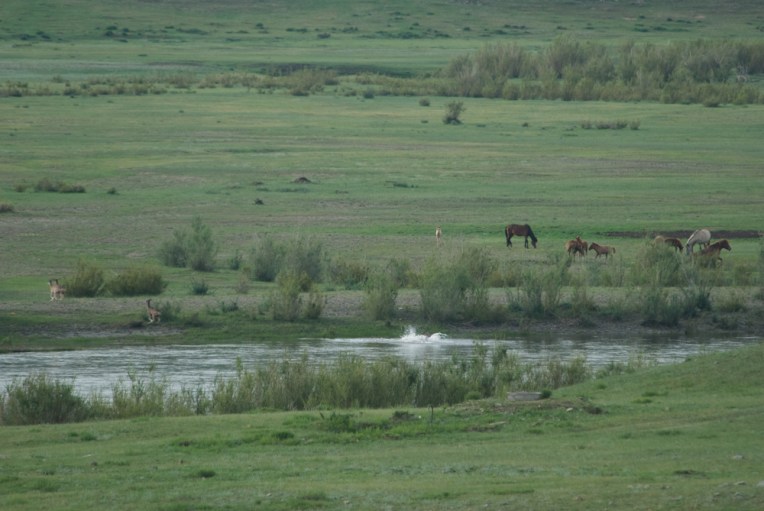
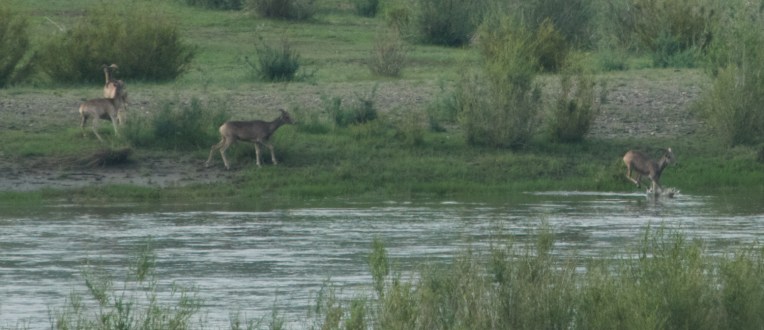
I have just received confirmation that I have taken the only known photographs of a Mongolian argali sheep crossing a river. This occurred at the Gun-Galuut Nature Reserve during my Flag Expedition on the very first morning of observations. In fact, he (Dr. Reading believes it was a yearling ram) was one of four of the first argali I saw on the trip.

Dr. Reading also noted in his reply to my query that “Well, I don’t think anyone ever doubted that argali cross these relatively shallow, relatively slow rivers (at least I never did).  All ungulates (and most mammals) swim pretty well and you need something a LOT more substantial that the Kherlen River to stop them.”

The main reason, I believe, that no one has gotten photographs is that the only place where argali have been studied in any depth is at the Ikh Nartiin Chuluu Nature Reserve, which has a few small streams, but no rivers. Research has begun at Gun-Galuut and, in fact, an Earthwatch team is scheduled to be there for part of their time in September, but the emphasis has been on capturing and putting radio collars on the argali, not behavioral observations.

The four sheep that I watched were on the opposite side of the river from their home range, Mt. Baits. Their behavior appeared anxious and finally one bolted back across the river. He climbed up on a high point and looked back. The young ram finally turned and ran back up onto the mountain. The other three argali seemed indecisive and ultimately did not cross, but moved up onto a smaller mountain where I finally lost sight of them.

The group of argali down at the Kherlen River
Suddenly one jumped in
And made quite a splash
And then swam directly towards us
Where's everyone else?

Here are detail shots of the main three photos:

Detail: jumping in the river
Detail: the splash
Detail: the splash
Detail: swimming across the Kherlen River

Visit my official Artists for Conservation Flag Expedition page

Images from the Field; Gun-Galuut and Baga Gazriin Chuluu

My guide/driver, Khatnaa, picked me up at the hotel at 9am and off to the countryside we went. I’m just going to hit the highlights here due to time constraints. I’ll cover each location more in separate posts after I get home.

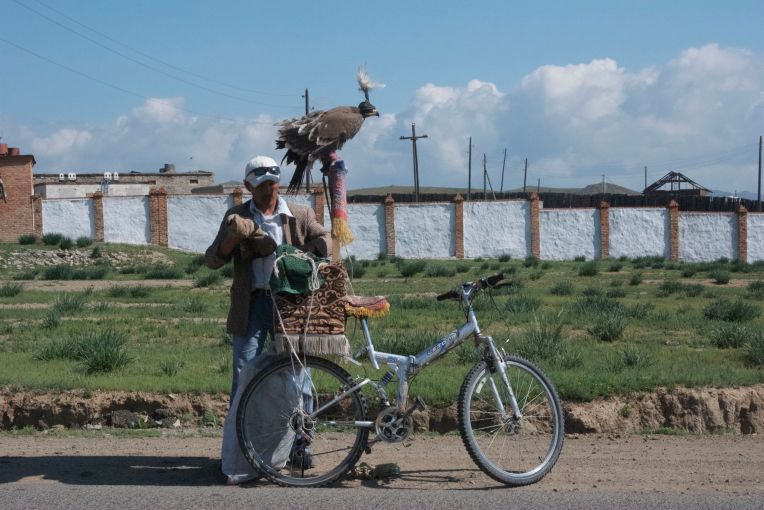
We were about 40 minutes out of UB when we came upon a Kazakh man on a bicycle with his two year old golden eagle perched on the top of stack of parcels. What a way to start the trip!

Kazakh
Kazakh Man and his eagle

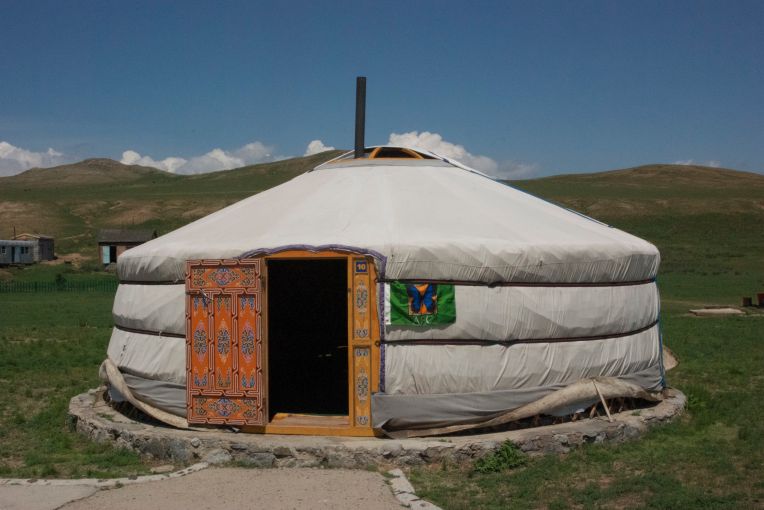
We arrived at the Gun-Galuut (pronounced “goon-galote”) after a pleasant two-hour drive. Lovely tourist ger camp overlooking the valley of the Kherlen River. Here’s my ger-

My ger at Gun-Galuut with AFC flag

We got settled in. I walked down to the river and sat by it for awhile, caught up on the Journal and got organized for the upcoming fieldwork.

View from my ger
View from my ger

The next four days took on a basic pattern of getting up at 6am, out the door by 6:30, game drive until about 9, back for breakfast, do what needed doing, back out after early dinner by 6:30, drive until light gone between 8:30 and 9. Fall over. Repeat.

The first morning, while Khatnaa was scanning the hills, I took a look along the river and, halfway through the first sweep from left to right spotted four young argali rams on the other side of the river. We were off to a good start. Here’s a selection of other images. I’m saving all the best stuff for the paintings, but these will give you an idea of what I saw.

Kherlen Gul valley
Kherlen Gul valley
Endangered Siberian white-napped cranes; one of three pair in the reserve
Endangered white-napped cranes; one of three pair in the reserve
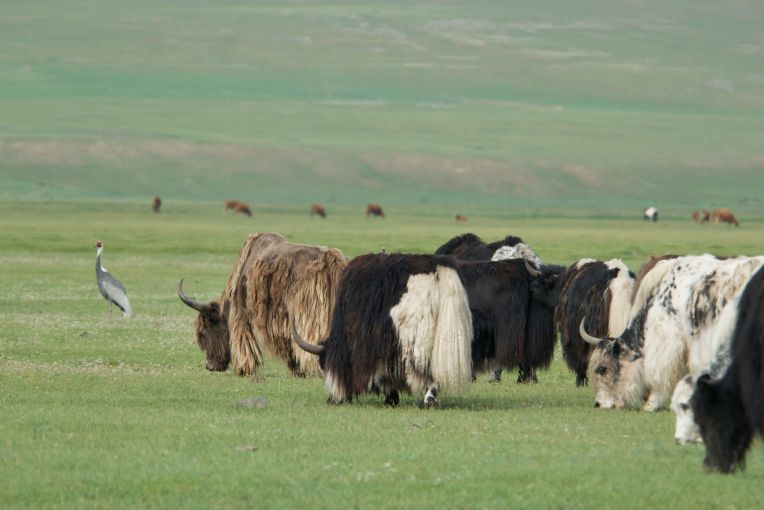
Siberian white-napped crane and domestic yaks White-napped crane and domestic yaks
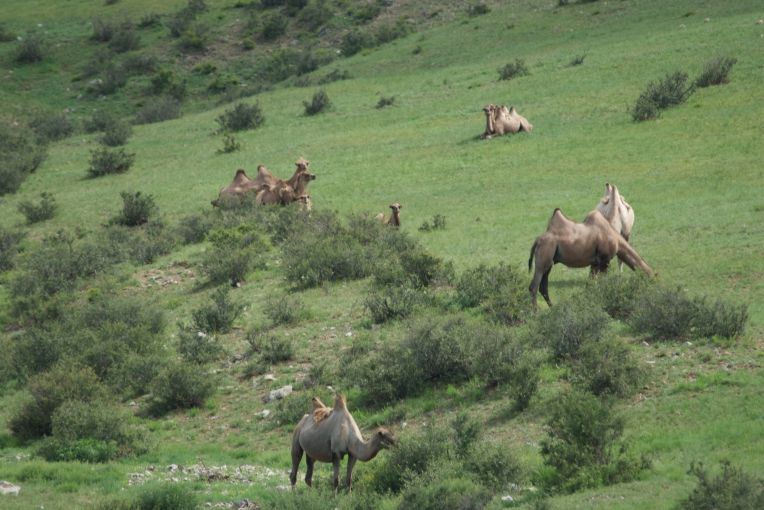
Domestic bactrian camels
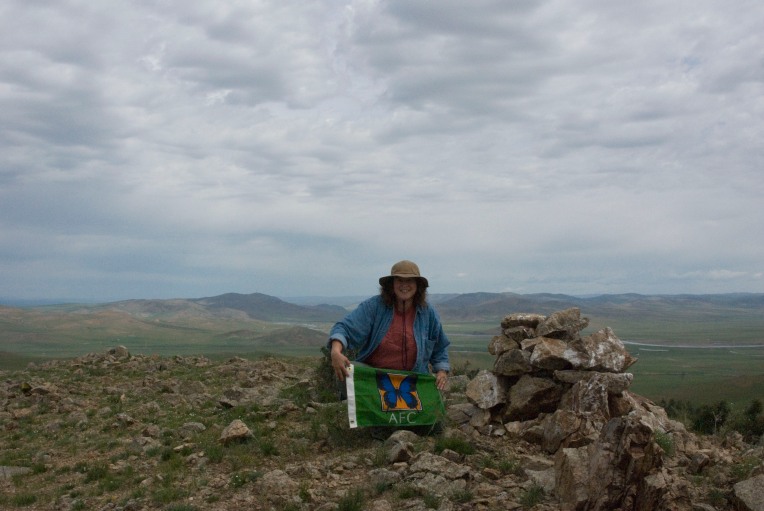
Posing with the flag
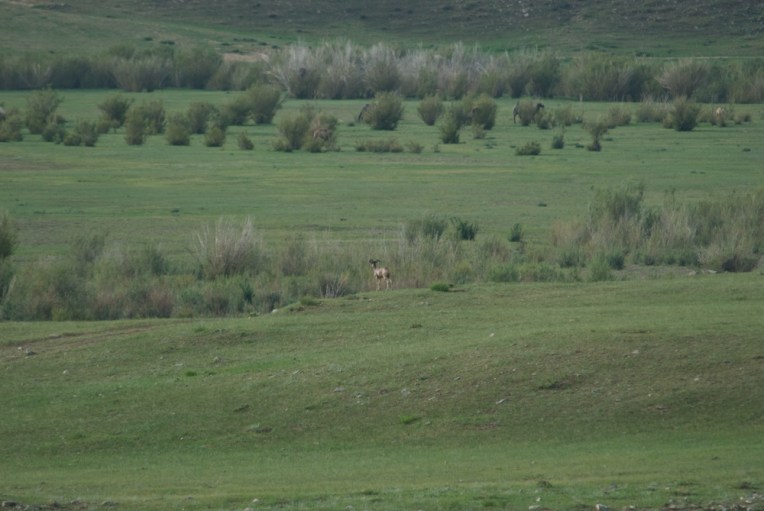
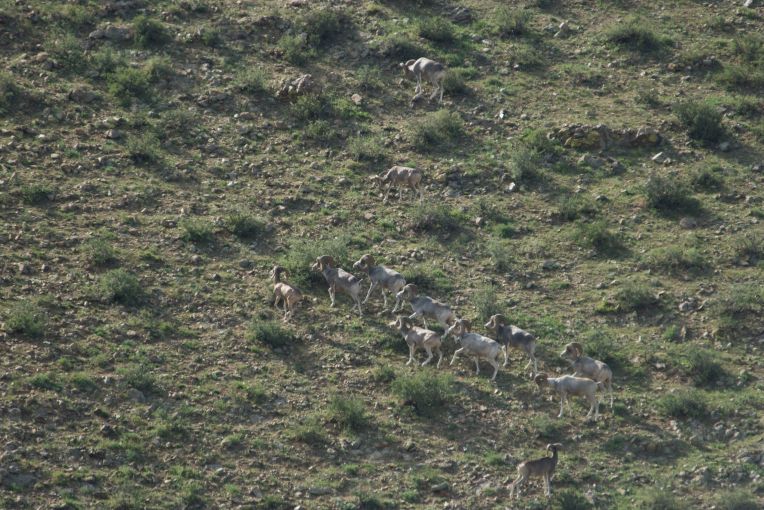
Argali
Argali; the big group of 14 we saw

After four fabulous days at Gun-Galuut, we drove back through UB, where I picked up a copy of a bird guide and we ran a couple of other errands. Then it was south to Baga Gazriin Chuluu,  with a one night stay at Arburd Sands. It was windy and there were dark clouds around. We stopped for lunch and could hear thunder in the distance. Then it got interesting.

Hail; looking out car window

We found ourselves out in the open on the steppe in a violent rain and then hail storm. It was so bad that Khatnaa turned the car so that the back was to the wind to protect the windshield. The sound of the hail hitting the top of the car was really loud and left dents. All we could do was sit tight and wait it out.

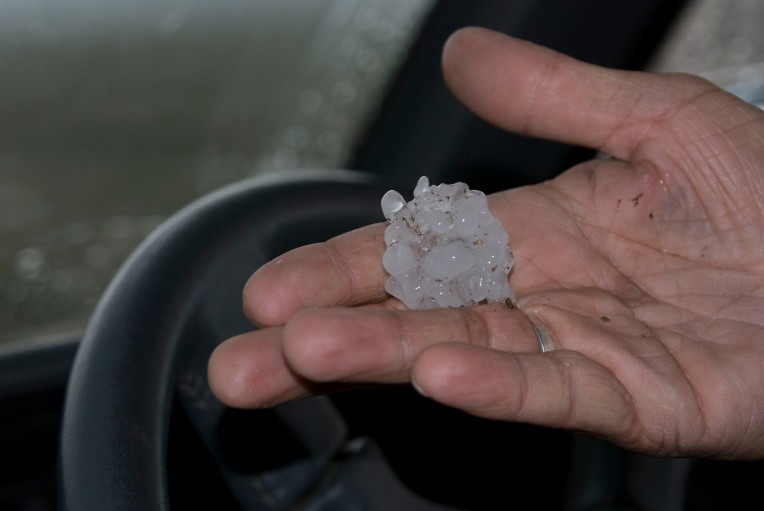
Hailstone Hatnaa picke up off the ground
Hailstone that Khatnaa picked up off the ground
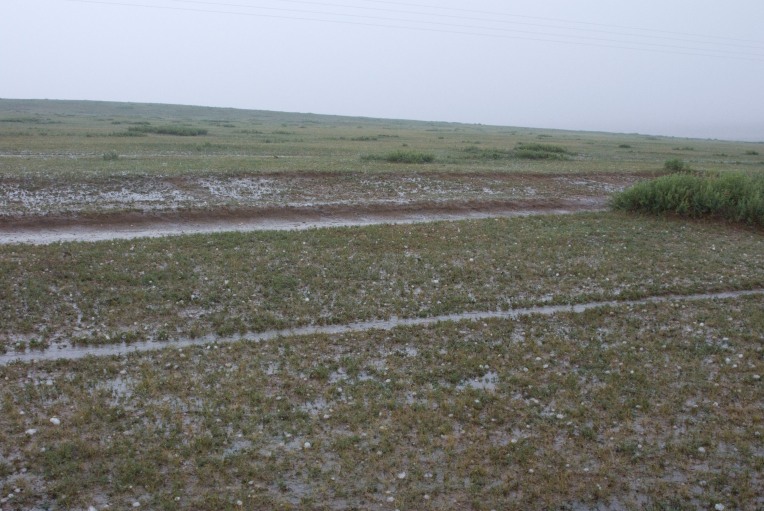
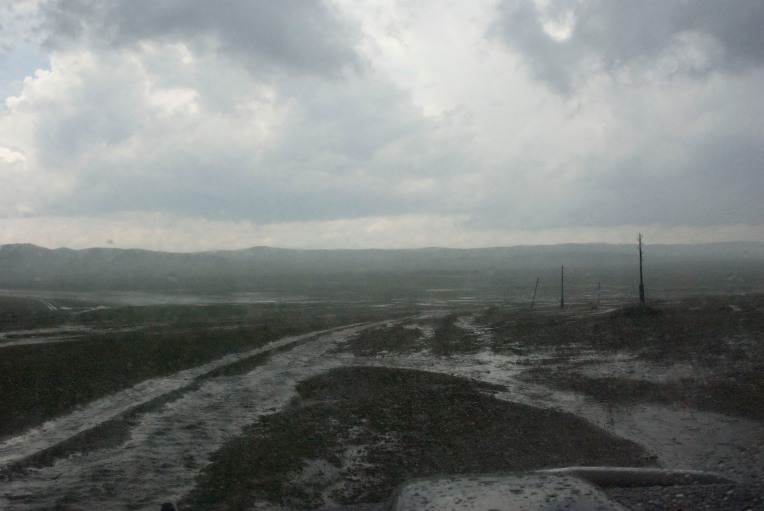
Road after hailstorm; the direction we were heading

All the dirt track, or as Khatnaa called them, earth roads had become rushing rivers of water. Amazingly, he was able to pick our way across this safely and without getting stuck in his Mitsubishi Pajaro diesel SUV.

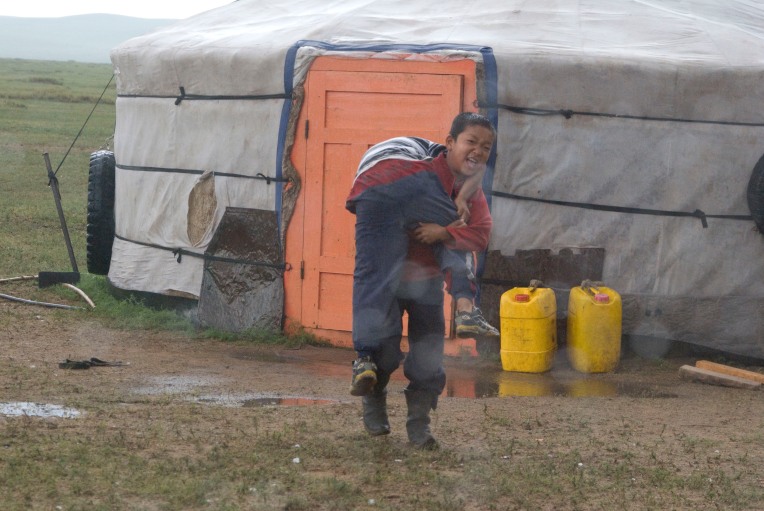
Kids wrestling in the rain

Finally, the hail stopped and we were able to go on. Khatnaa had only been to Arburd Sands once a number of years ago and when he became unsure of the route, he stopped a couple of times and asked for directions. These kids put on a wrestling demo for me while I waited in the car. They were really showing off their moves.

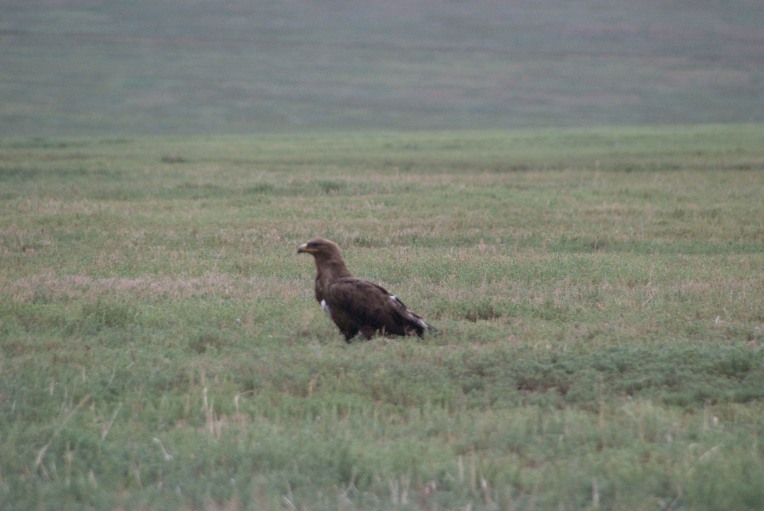
Young golden eagle by side of road

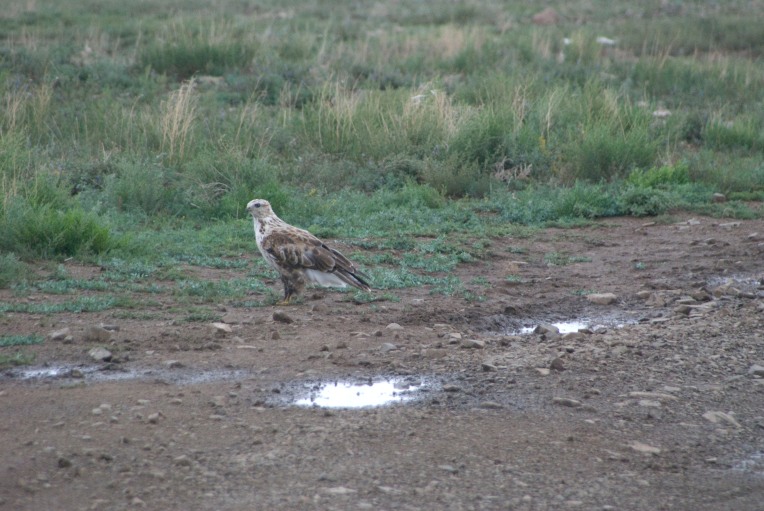
We started to see raptors by the side of the road once we got out past the storm front.

Upland buzzard
Upland buzzard

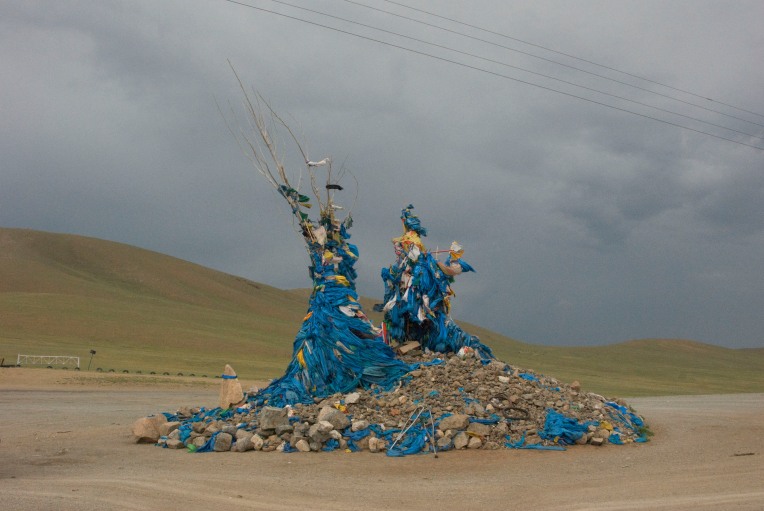
We also passed a number of ovoo. If it was a major one, we stopped, got out and circled it, adding a stone or small tugrik bills. Khatnaa honked at smaller ones as we went by them. More on ovoos in a future post.

Large ovoo
Large ovoo

We arrived at Arburd Sands and found out that the storm we had sat through had hit UB, causing the worst flooding in many years. At least 21 people died. If we had not gotten out of UB when we did, we might not have made it out of town at all.

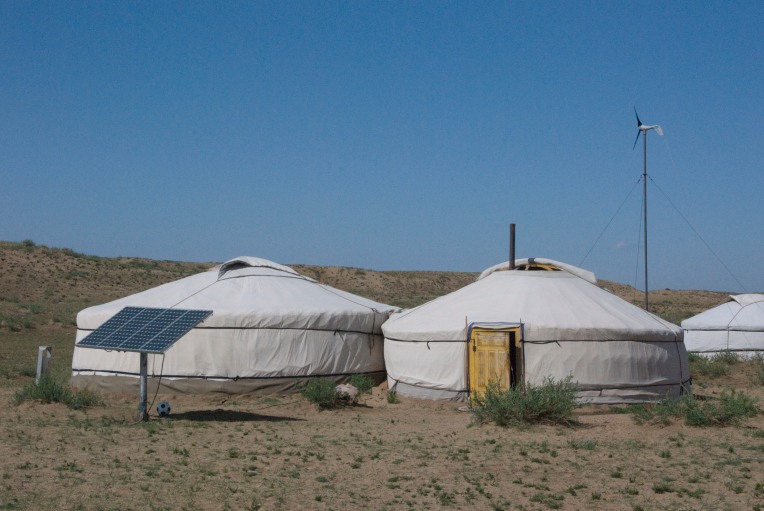
Arburd Sands ger camp is a seasonable sustainable operation which is planned so that it leaves as little a mark on the land as possible. They use solar and wind for power.

Sustainable energy at Arburd Sands

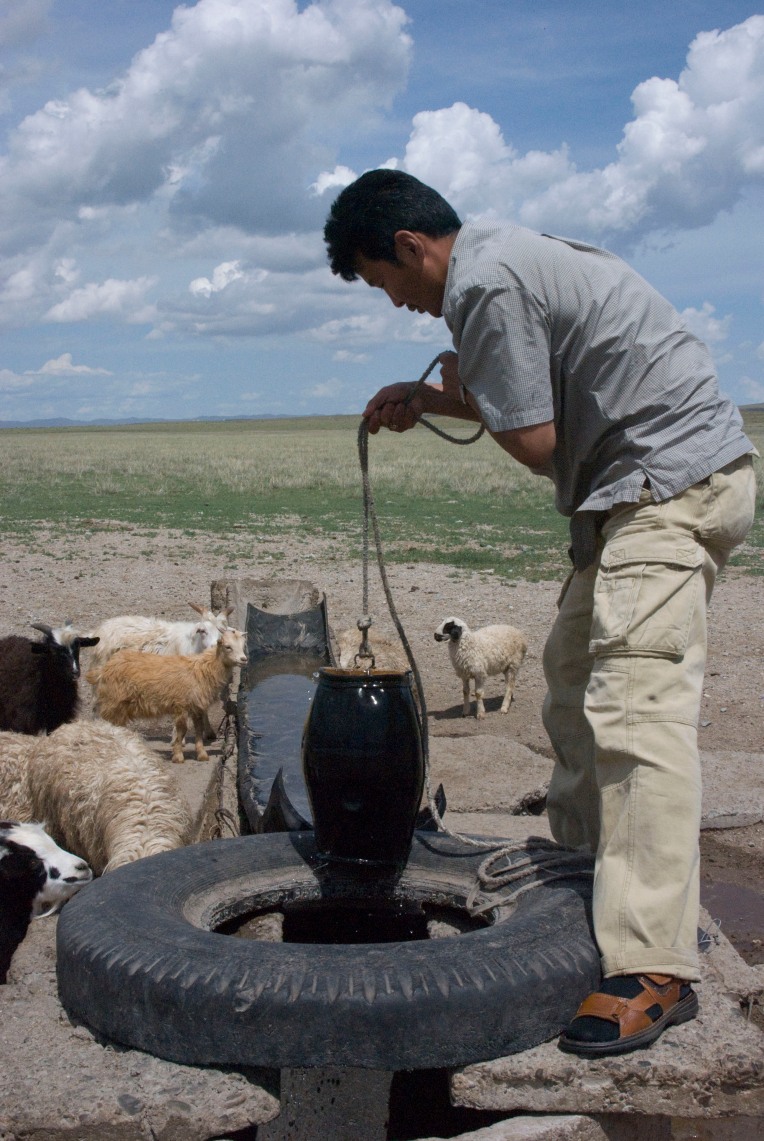
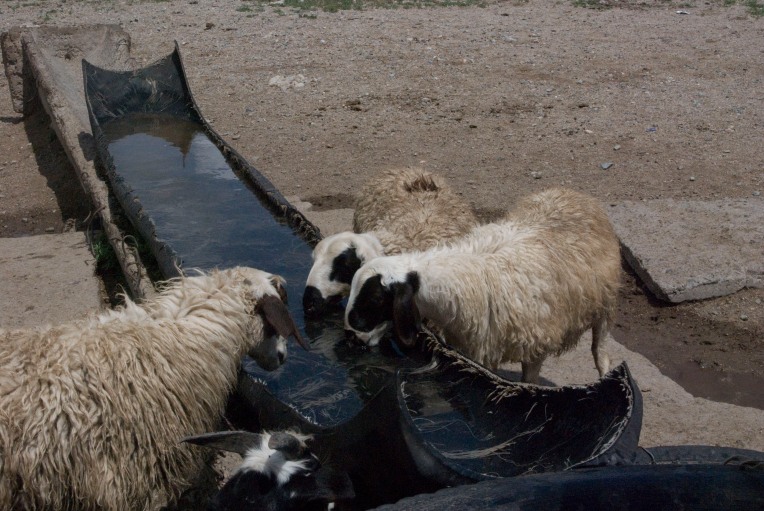
There was an amazing display of thunder and lightning that evening, stretching from east to west. But it only rained during the night. No hail. The next morning we continued on to Baga Gazriin Chuluu Nature Reserve. But, as I am coming to realize is routine when one travels in Mongolia, there were interesting things along the way. Like when Khatnaa stopped at this well and, following the ancient Mongol tradition, drew a couple of buckets of cool water for the animals.

Hatnaa pulls water from the well
Khatnaa pulls water from the well
Sheep drinking the cool well water

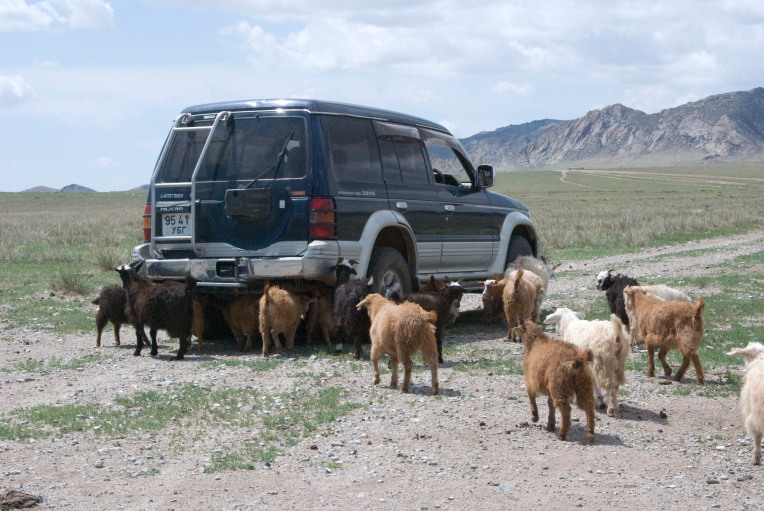
Meanwhile, the goats were seizing another, albeit temporary, opportunity to take advantage of the shade under the car.

Goats going for the shade

We traveled across the rolling steppe, passing an enormous and impressive mountain, a small lake and many country people and their flocks of animals. Finally, in the distance, we could see our destination, Baga Gazriin Chuluu.
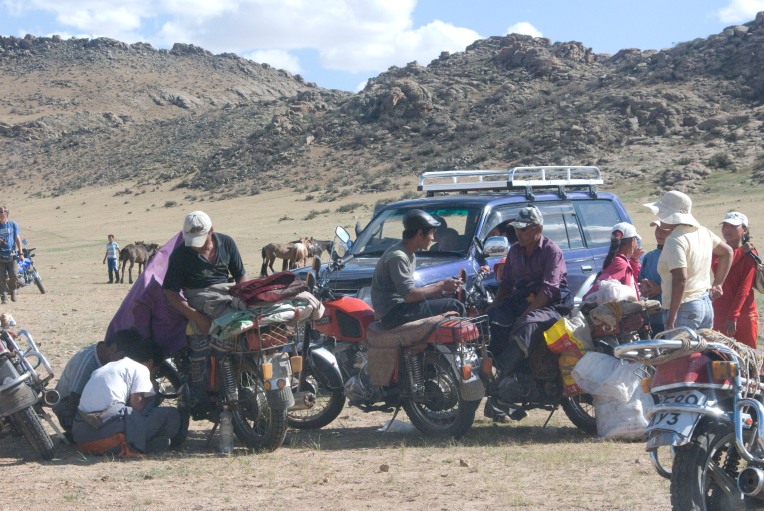
Baga Gazriin Chuluu rises out of the steppe

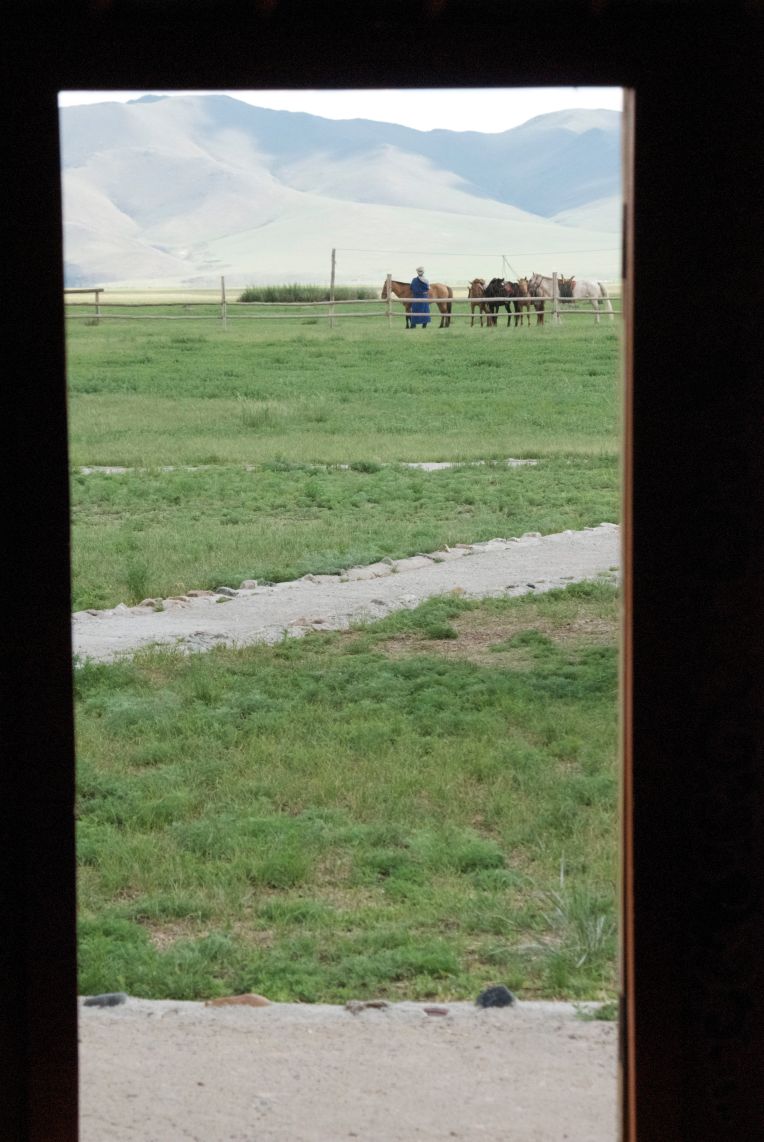
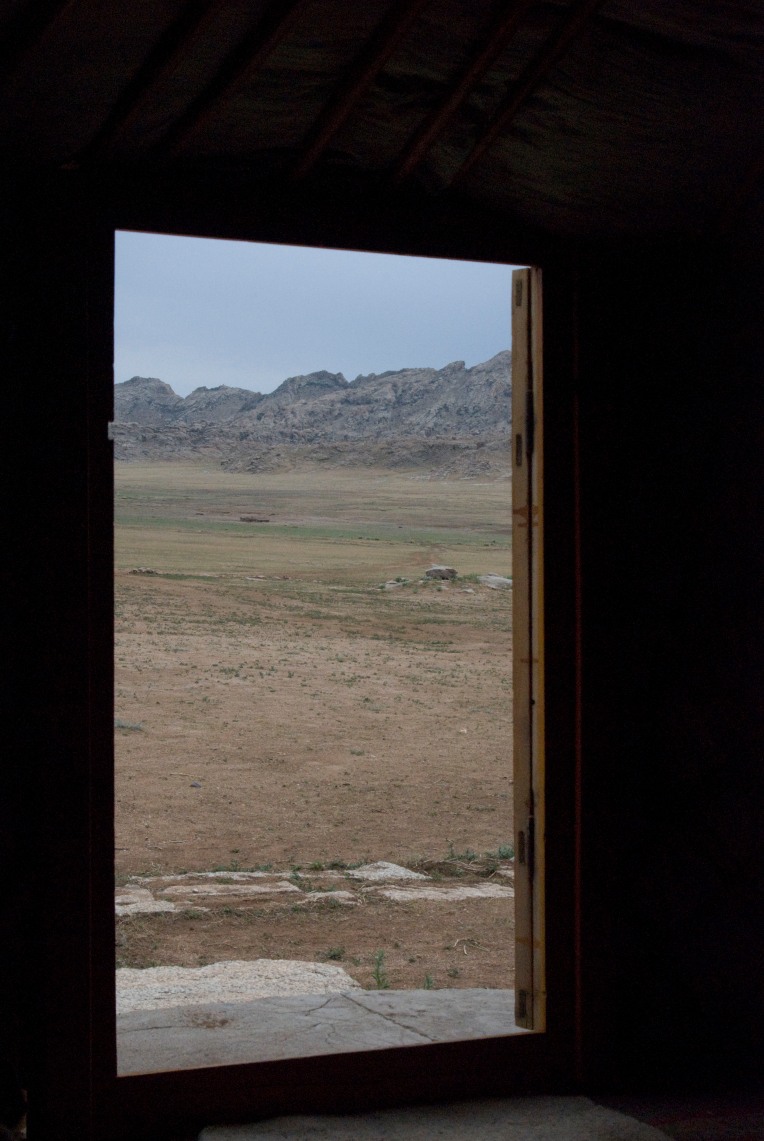
We arrived at the ger camp and went through the usual routine of settling in. Here’s my view through the door of my small, but comfortable ger.

View throught the door of my ger
View through the door of my ger

Khatnaa, as the guides usually do, started to chat up the camp staff. He found that one man, Onroo, had lived full-time at the reserve for three years and had a pretty good idea of where the animals were to be found. He went with us both mornings and proved to be indispensable.

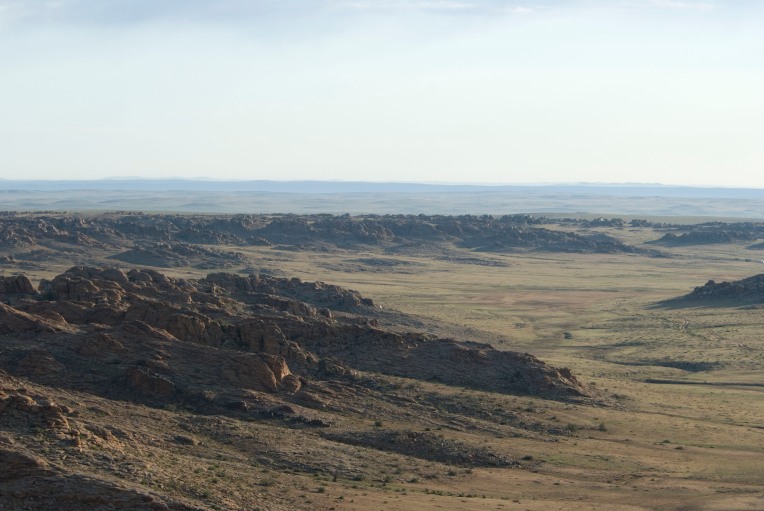
The setting
The setting

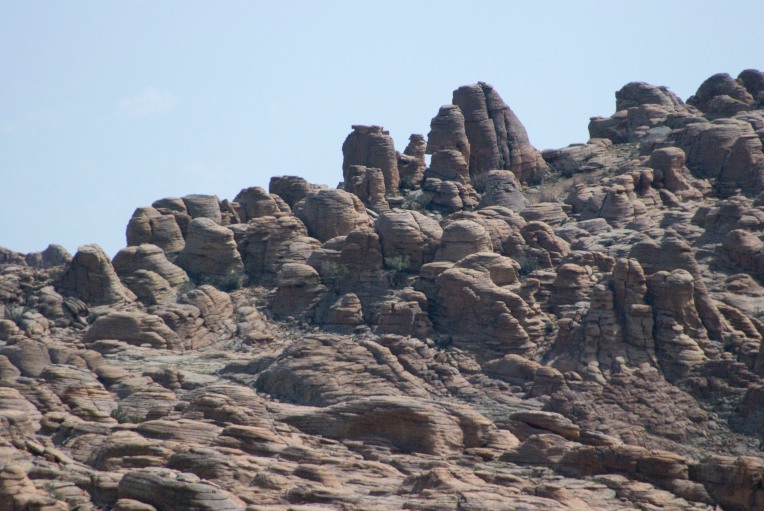
Some of the fantastic rock formations.

Rock formations
Rock formations
Rocks, late afternoon

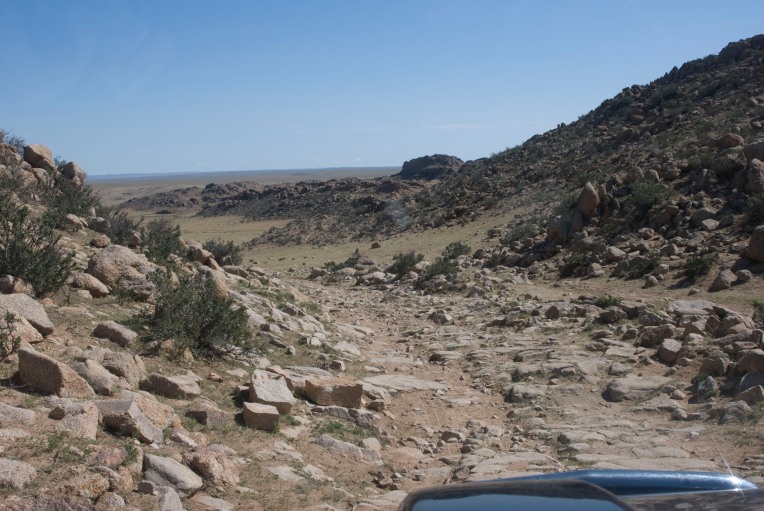
Sometimes the going got interesting as we worked our way around the reserve.

Rocky road
Rocky road

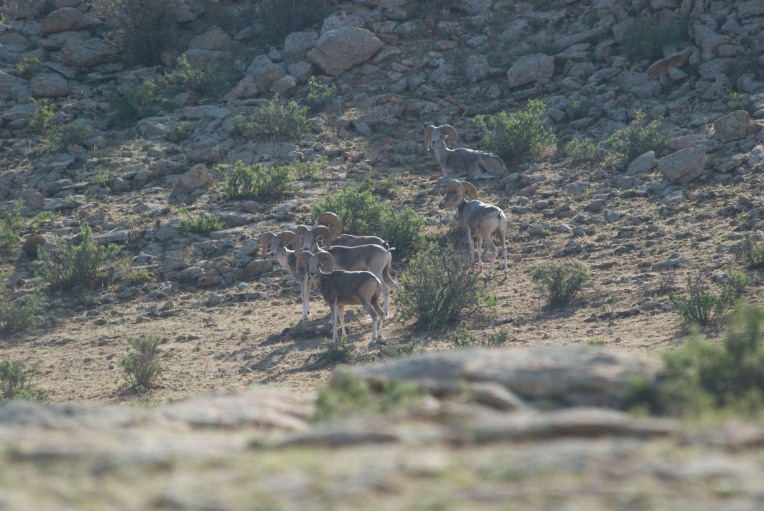
The main species of interest here are argali, ibex and the cinereous vultures.

Six argali
Six argali

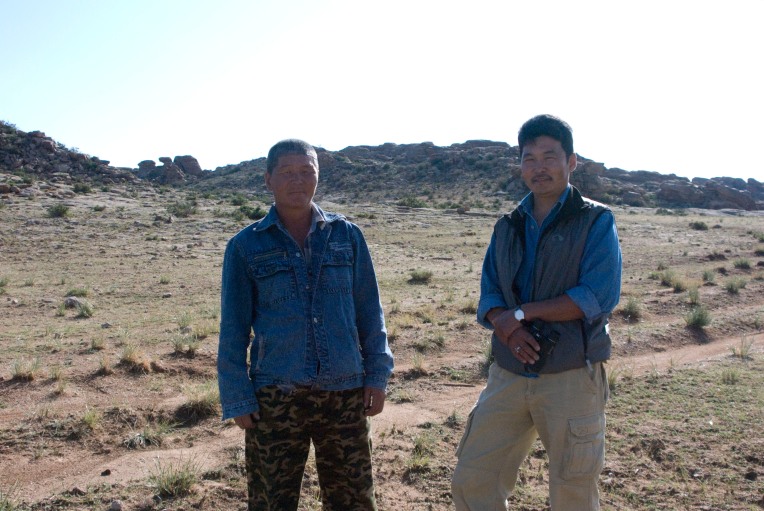
These animals were so tolerant of our presence that we were able to get out of the car and take pictures of each other with the sheep in the (somewhat distant, about 800 meters) background.

Onroo and Hatnaa in front of argali
Onroo and Khatnaa in front of argali
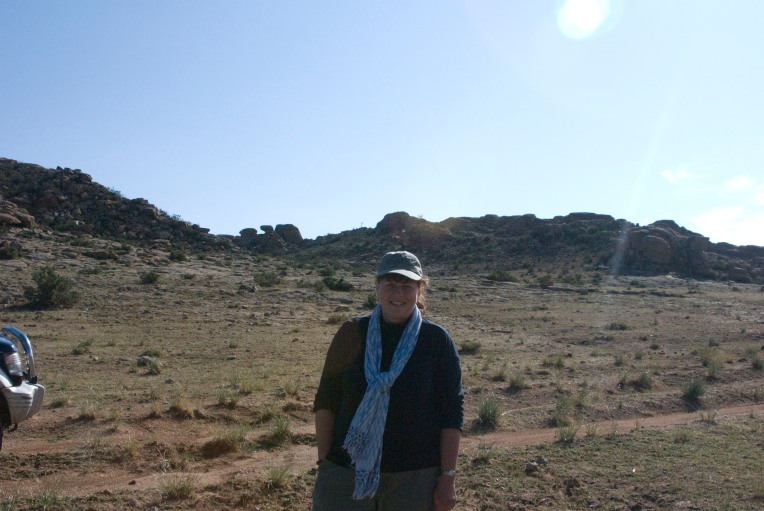
Me in front of argali

They’re at the base of the rocky hill to my right on a line with my cap.

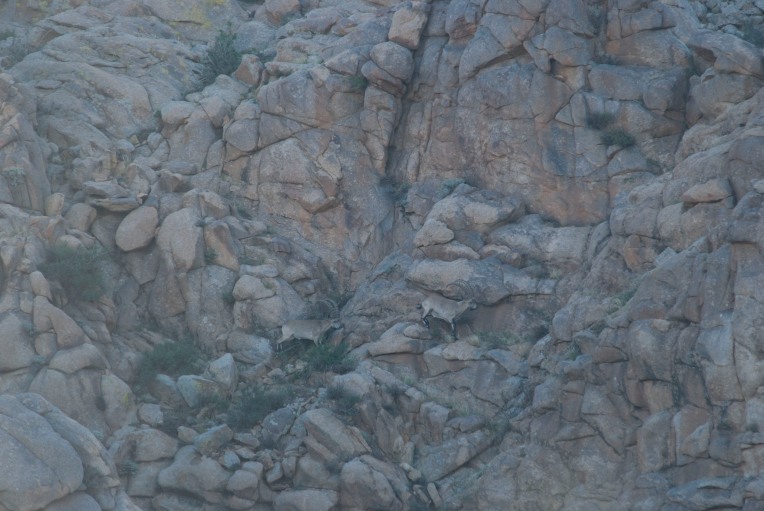
Ibex; two large billies
Ibex; two large billies of a group of five
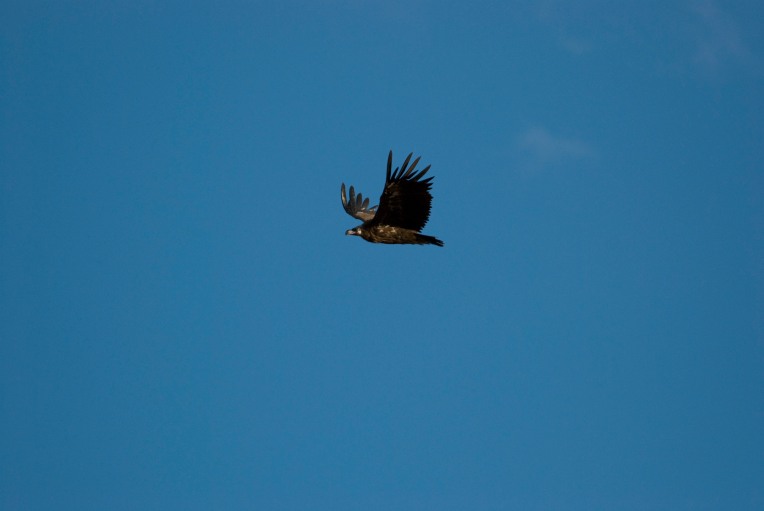
Cinereous vulture
Cinereous vulture
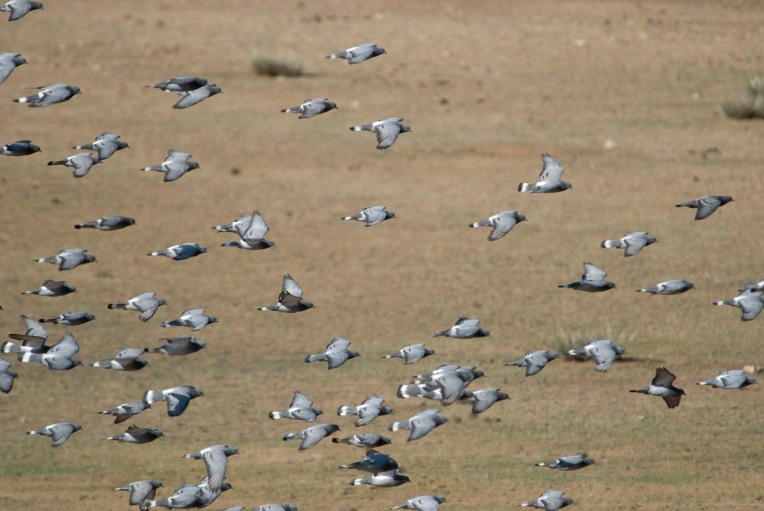
Rock doves  in home habitat
Hill pigeons (Columba rupestris); a relative of our "beloved"urban rock pigeon

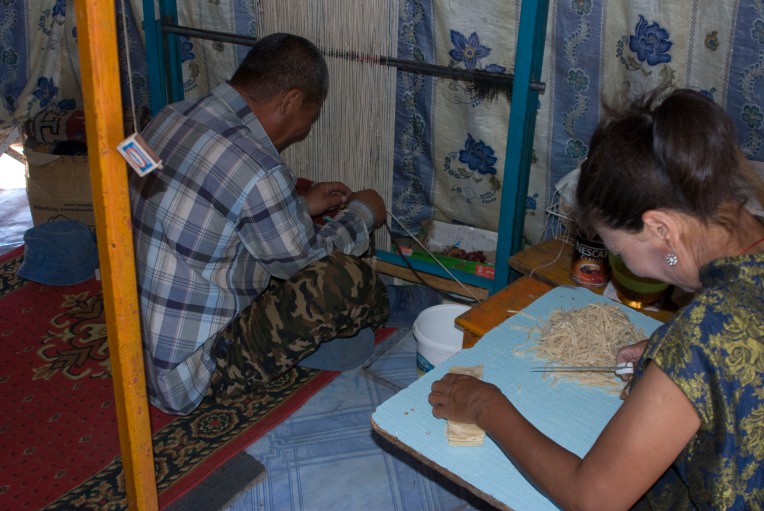
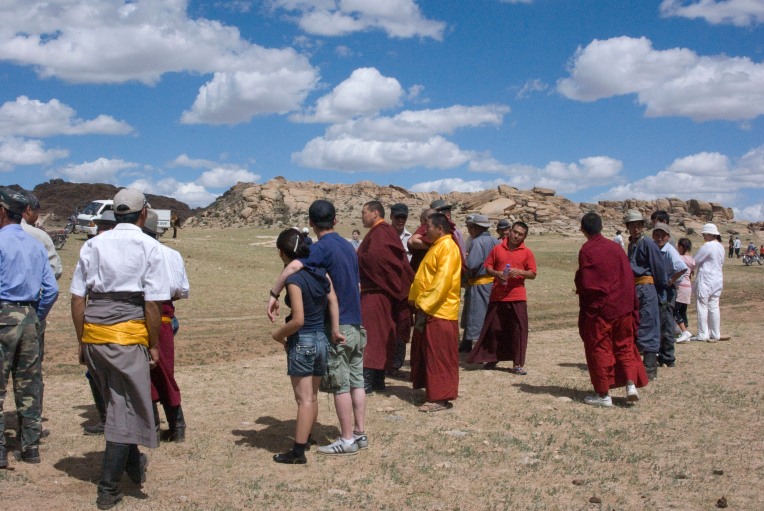
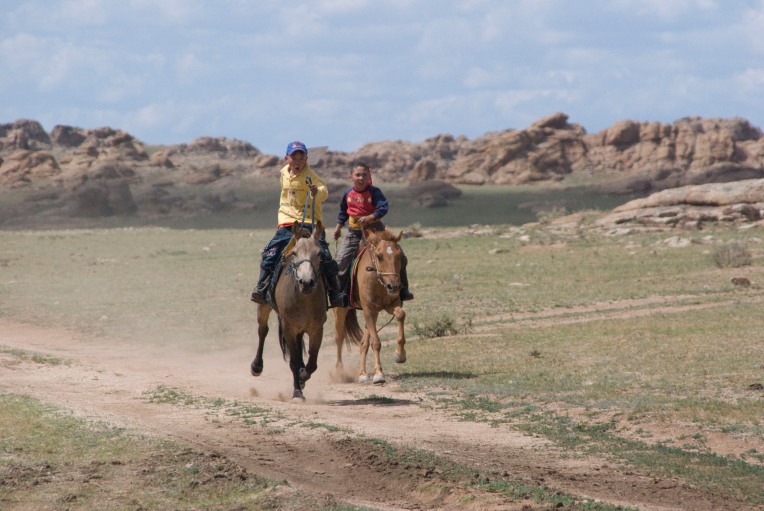
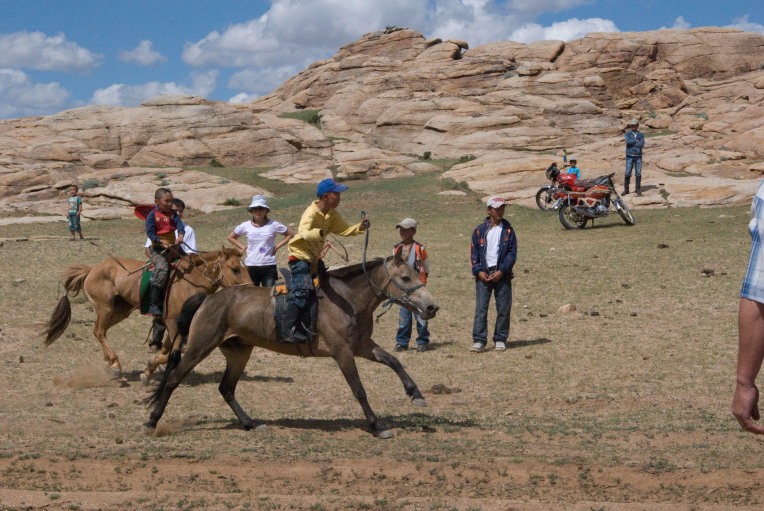
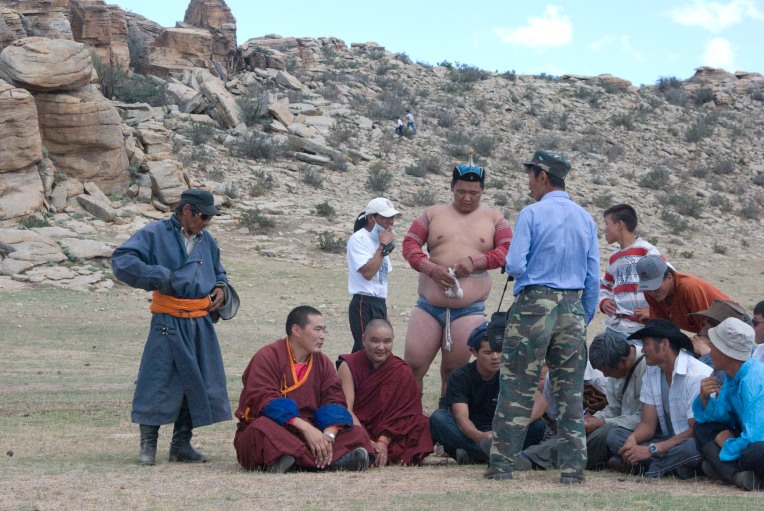
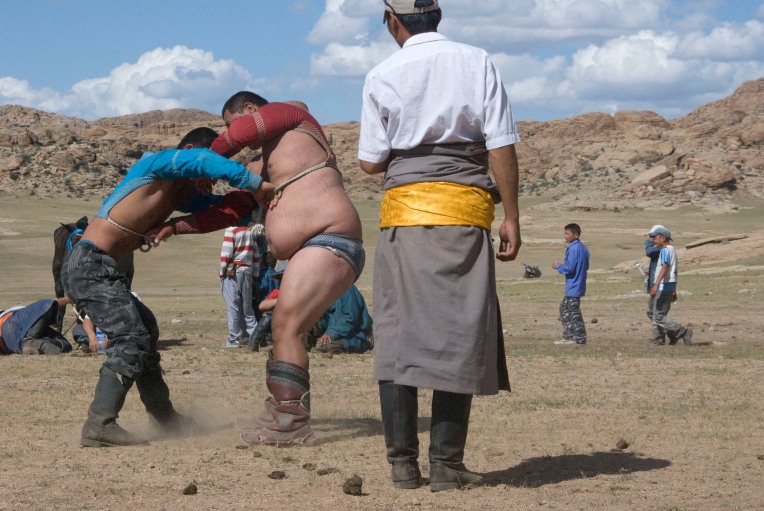
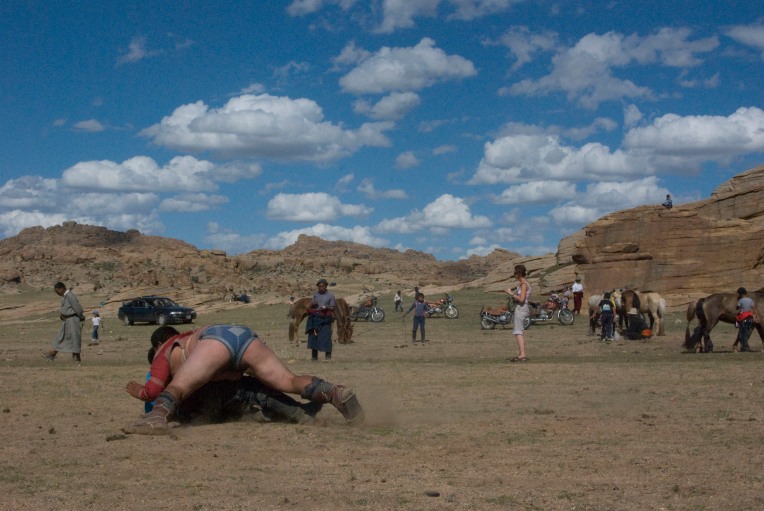
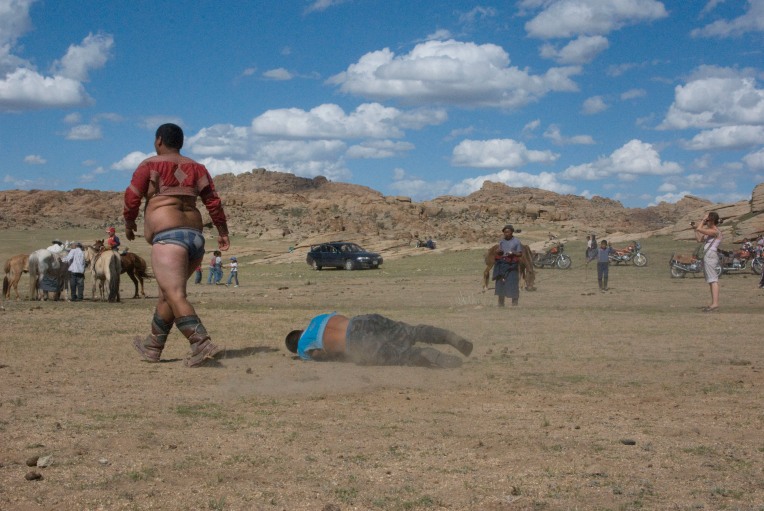
I ended up having a couple of wonderful cultural experiences also, which included a ger visit where I got to watch soup made with boortz, dried meat, and where we were served that and cream, aruul, yogurt and milk tea and also getting to attend a “mountain washing” ceremony that included chanting Buddhist monks, a horse race, wrestling and anklebone shooting.

In Yanjmaa's ger
In Yanjmaa's ger; she's making noodles for soup and Onroo is doing some weaving on her loom
Horse race spectators
Horse race
Horse race
Horse race
Horse race
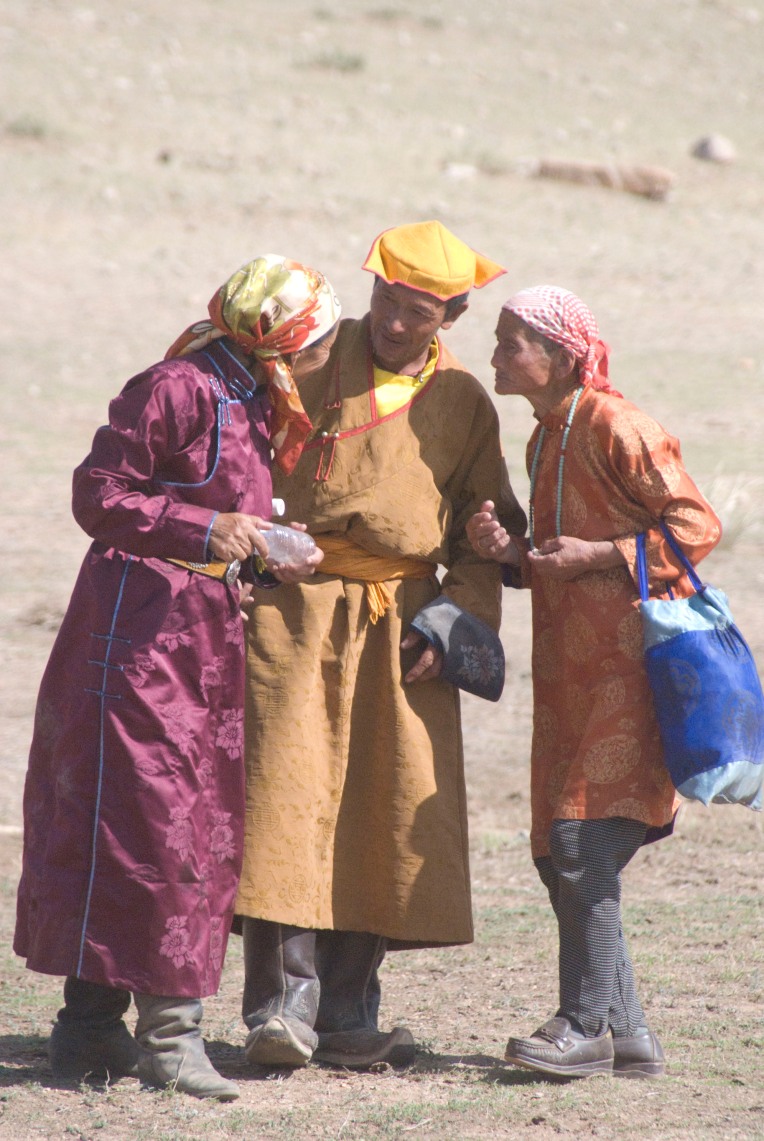
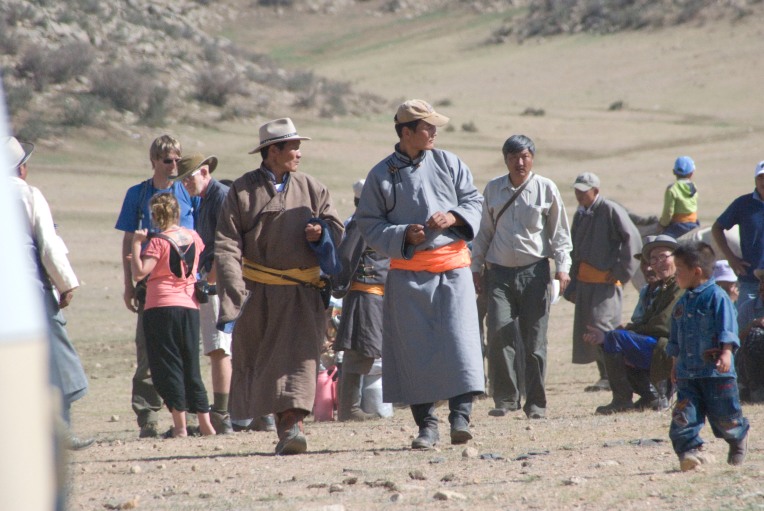
Mountain ceremony attendees
Men in del and sashes; they look good and they know it
Wrestling
Wrestling; almost ready to start
Wrestling
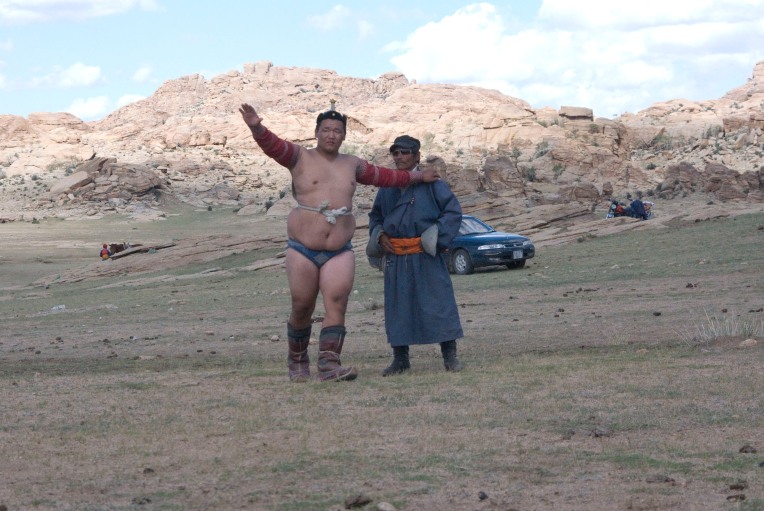
The Falcon of the Aimag doing the traditional Eagle Dance before a bout
Wrestling
Grappling for advantage
Wrestling
He fell on every opponent like this
Wrestling
The guy on the ground was up in a moment and ok; the Falcon won the competition
End of the event; last chance to chat

Visit the AFC site here