I’ve said for many years that in Mongolia, more than in most places, the journey really is the destination. It’s something most visitors miss with the usual emphasis tour companies have of going from sight to sight on paved roads. Eleven trips in twelve years and I’ve never been bored and have never slept while rolling. It takes time, effort and money for me to go to Mongolia every year and I don’t want to miss a minute of the limited time I have in the countryside. So while this week’s post doesn’t have a lot of incident or excitement, it will give you a chance to see a little of what’s “in between” on the road day to day, this time in the Gobi.
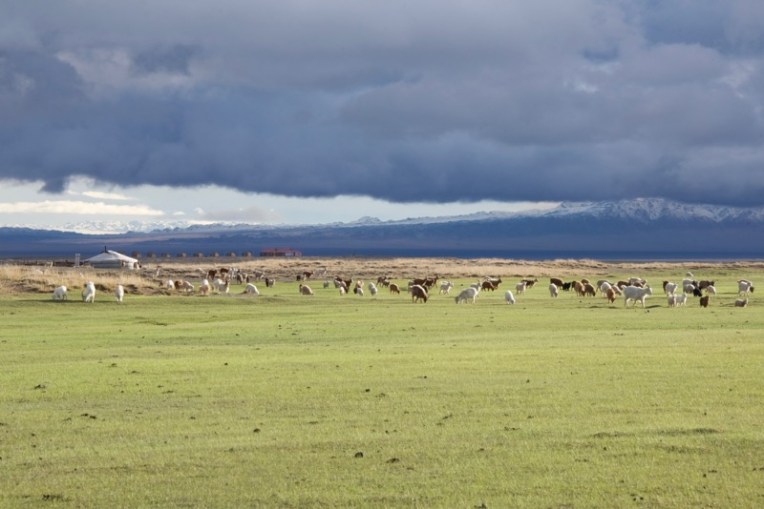
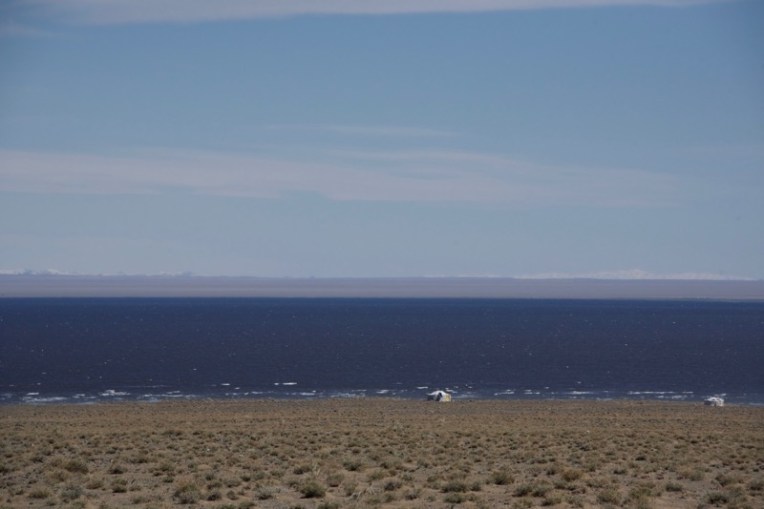
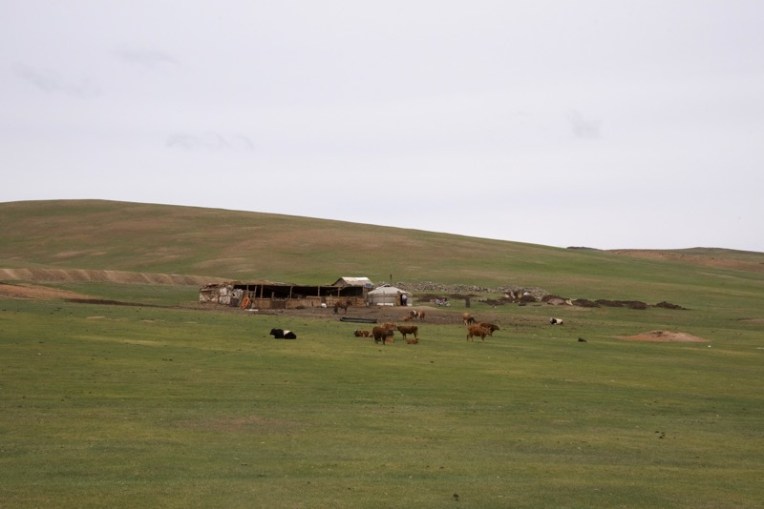
We hadn’t realized it when we set up camp at Boon Tsagaan Nuur, a remote lake in the Gobi, but we were not far from a herder’s ger (see above photo). A short walk towards the lake revealed it settled behind a dune. We found the goats and sheep to be entertaining, but could also see that they had grazed the grass down to the ground in the entire area except for one section that was fenced off, something one sees all too often these days.
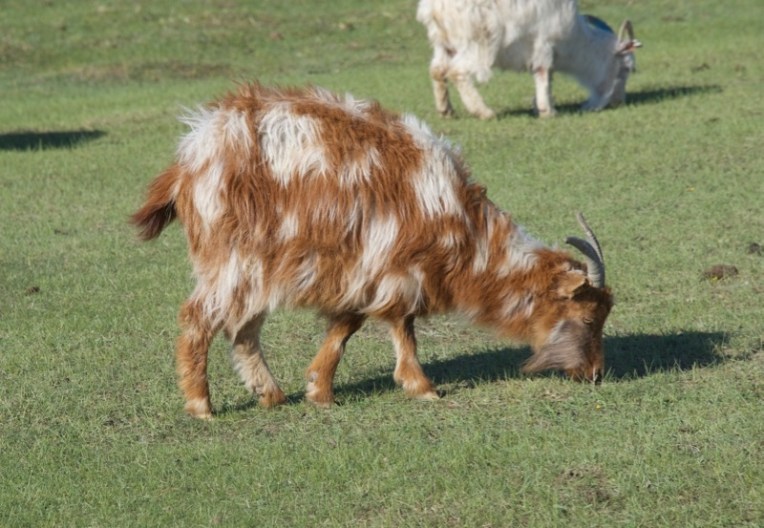
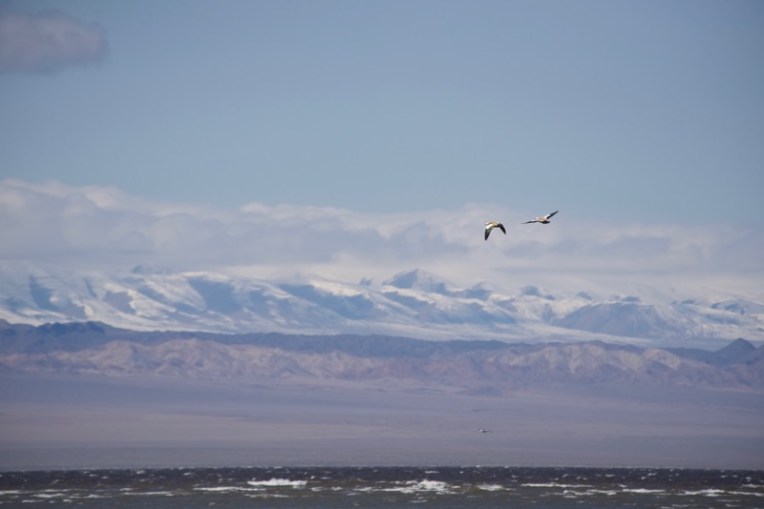
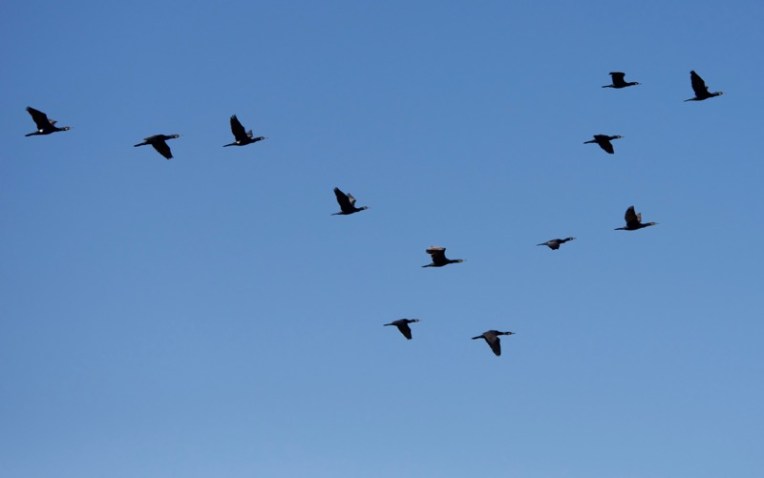
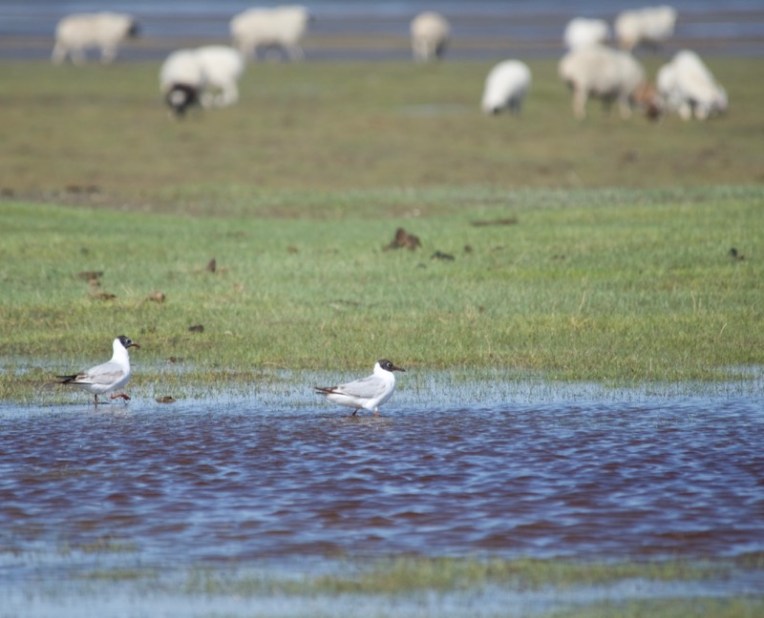
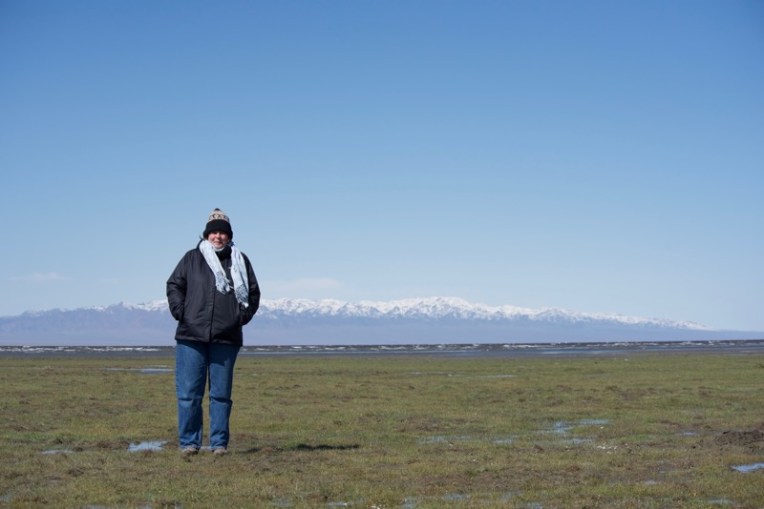
Loved the markings and color of this spotted cashmere goat.After breakfast we picked our way to the lakeshore through wet ground to do some birdwatching. The lake was rough with white caps and backed by a snowy mountain, Dund Argalant Nuruu. It was cold and windy.A pair of ruddy shelducks flew over. That’s the lake at the bottom of the photo.There was also a flock of great cormorants.Black-headed gulls.
There were a number of shorebirds…plovers and a redshanks, but I couldn’t get close enough for decent photos.
Did I say it was cold?
We left the lake driving south around the east shore, a route that I had not been on before, which was great!
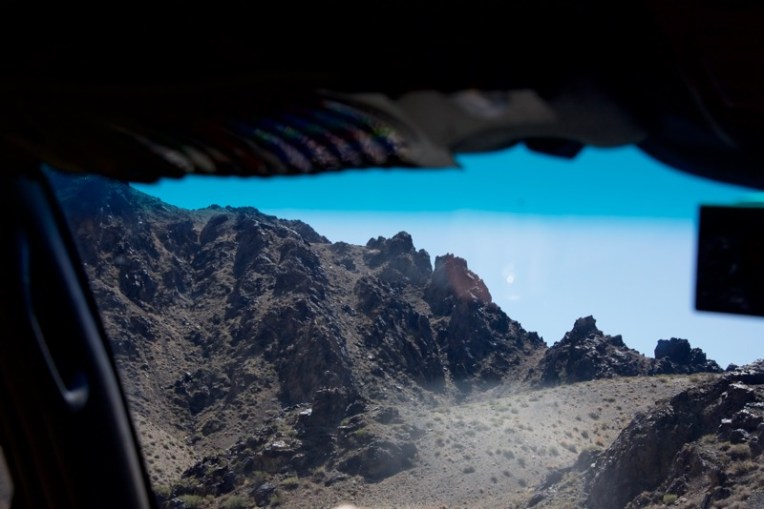
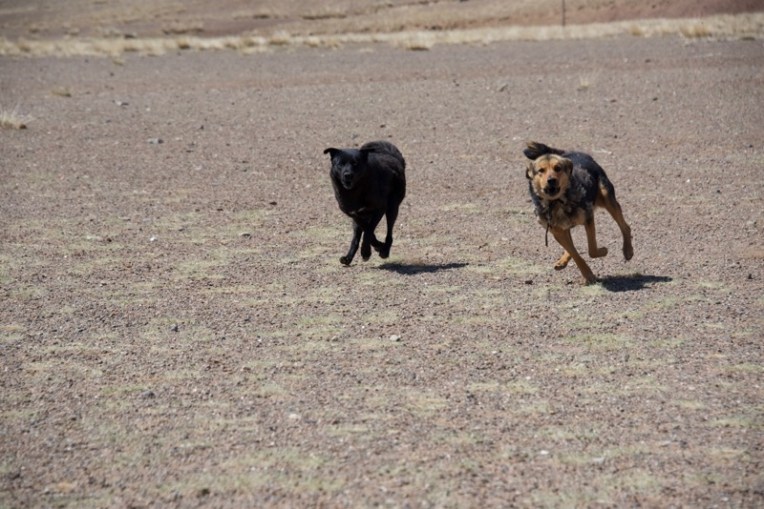
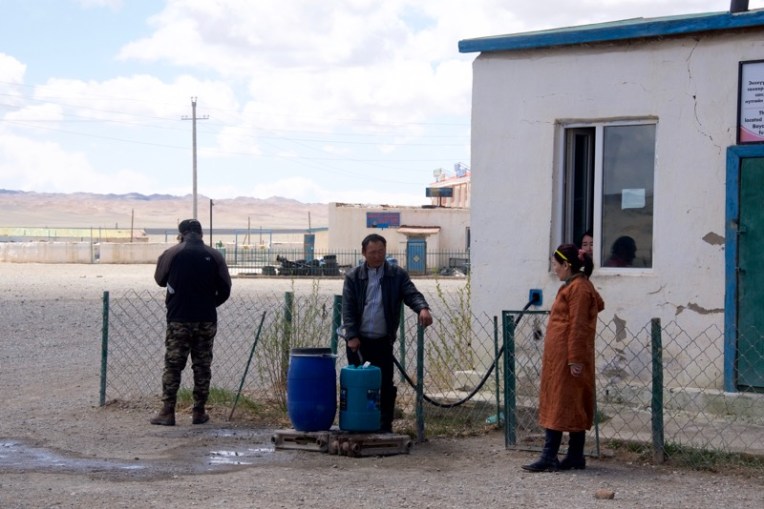
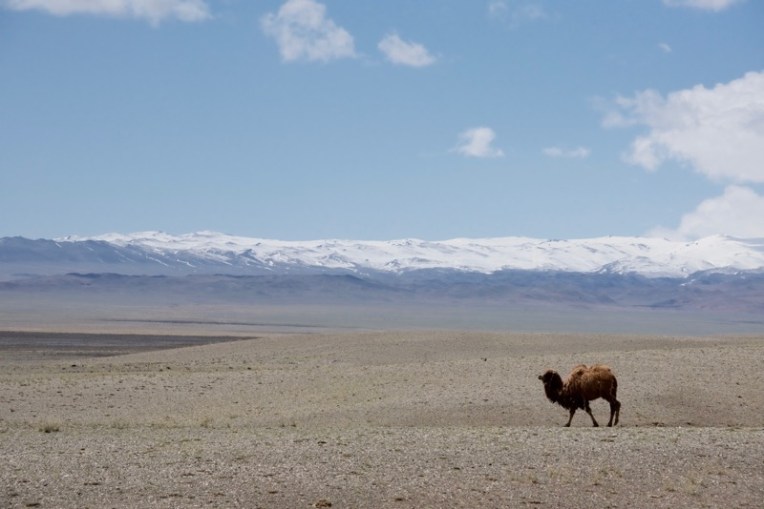
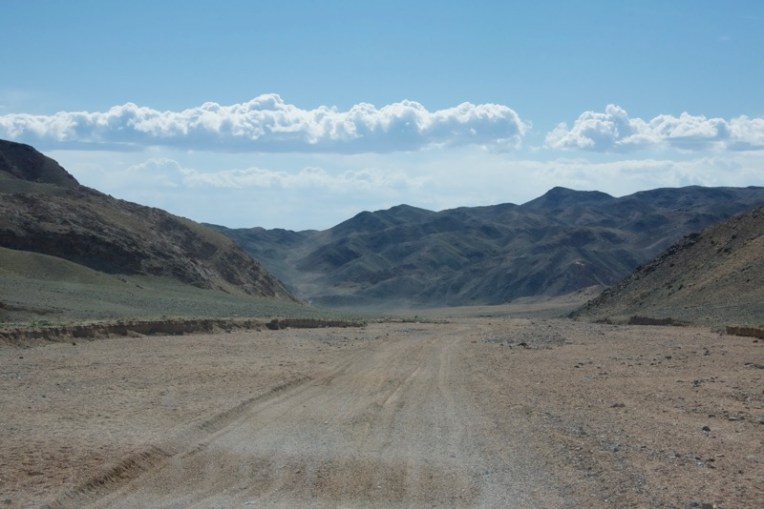
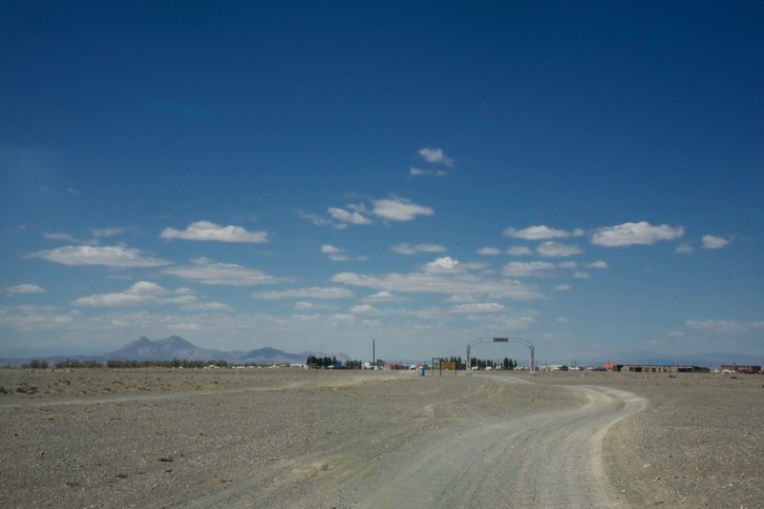
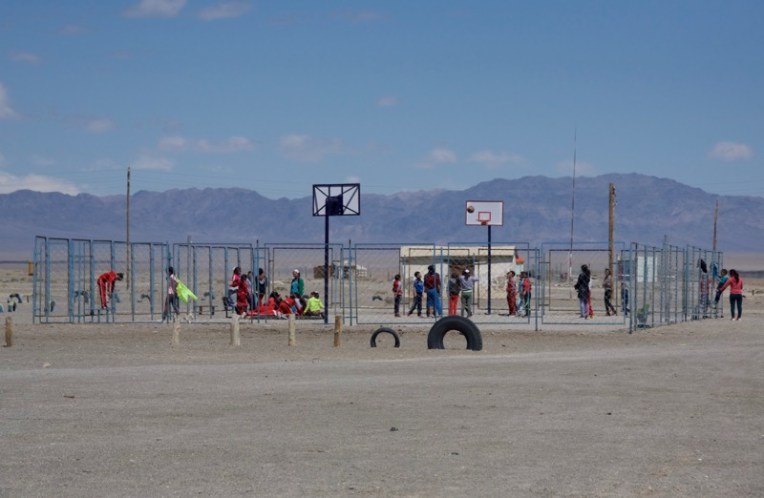
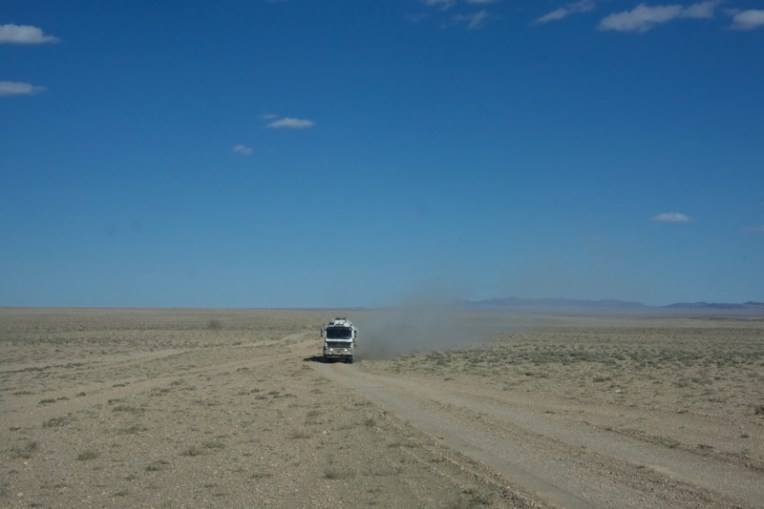
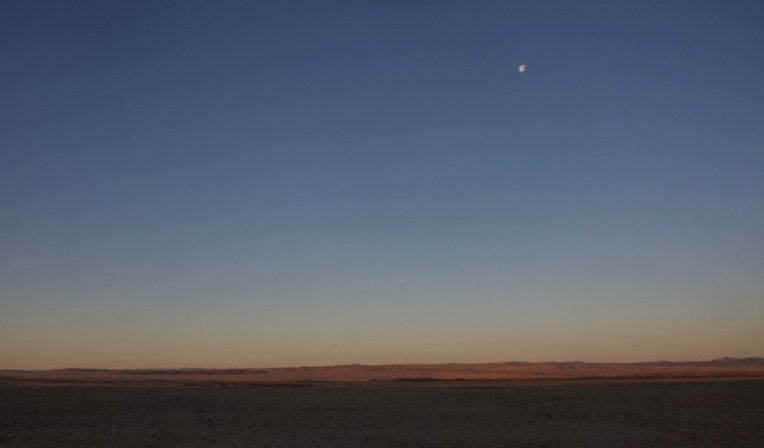
The lake was a deep indigo blue with white caps from the wind. This ger with a solar panel was the last one we saw for awhile.As we headed south it got warmer. There was an minor cognitive disconnect between driving through the warm Gobi and seeing heavy snow on the mountains from the front we’d driven through farther north two days earlier.We started to climb through the first of a number of rugged passes. Grabbed this shot through the windshield of the Land Cruiser.There were some impressive rock formations along the way.And then we entered a stretch with quite a bit of vegetation, including flowering shrubs. I think this is a wild apricot. I’m usually in Mongolia later in the year when the fruits have already formed, so am not sure. But the pink flowers made quite a contrast with the edgy roughness of the rocks.Our Russian fergon support van with our great cook. Soyoloo, waving from the passenger side. Fergons aren’t the most comfortable ride, but they will get you there. No electronics, all mechanical, with the engine between the front seats, which means it can be accessed without getting out of the car, highly desireable when it’s -30F or 90F outside. And they can be fixed by the drivers, who know them inside out and backward, on the road.I always try to get photos of gers in the landscape, maybe THE quintessential Mongolian countryside scene.Also part of the landscape, ger dogs chasing one’s vehicle as a send-off after a visit. The traditional greeting upon approaching a herder’s ger is “nokhoi ga”….”Hold the dog!”. I never, ever, ever get out of the car or van until told to do so by the driver or guide since they can be highly aggressive and are not vaccinated against rabies or anything else.View from one of our lunch stops. Blue sky, fluffy clouds, open space that goes on for hundreds of kilometers.But deserted? Not at all. While Soyoloo and our guide, Batana, got everyone’s lunch boxes out of the cooler, this motorbike rolled up, the family either coming or going from the soum center or maybe visiting family or friends.We spot the first camels! These are domestic bactrian camels. It was great for Kim and Oliver since it was the first time on the trip, but I never tire of seeing camels.Same with the horses, especially with a backdrop like this.We rolled into a small soum center to get water from the local well. This one was quite a set-up with a permanent building and a window through which one paid.More camels. My “ship of the desert” shot. Three days since the snow storm and these higher southern mountains were still blanketed.We had to get south through a range of mountains to our south to reach our next destination, the soum center of Bayantooroi. The driver started to look for a camping spot, but then we noticed possible rain clouds coming up behind us. We needed to get out and down to the plain asap since you can see that the road follows the same path run-off from a rain storm would take.We did make it down to the upland area and out of the mountains. While the rain ended up missing us to the east, it was very, very windy that night. The next day was calm and we found ourselves in an area with saxaul trees.Our lunch stop was at a large out cropping which had a “terrace” that we climbed up to and where we sat to eat. Nice view looking back the way we’d come.The day’s destination, Bayantooroi, where the headquarters of the Great Gobi A Strictly Protected Area is located. We had to go there, quite a bit out of our way, to get a border permit since we were going to be within 50km of the Chinese border. In the background, on the left, is Eej Hairkhan Uul, the sacred mother mountain. On the first WildArt Mongolia Expedition in 2013, we spent two nights camping at the base of the mountain, doing a day hike up onto it. You can read about that wonderful day here.Many westerners have this idea of Mongolia of a somewhat backward, poverty-stricken place and while incomes are low by western standards and there are poor people as is true anywhere, the country is also absolutely up to date in many ways, including an increasing use of alternate energy sources like wind and solar. Bayantooroi is a long way from any major town (I think the aimag center of Altai might be the closest and at least a two day drive, judging from the road atlas I’m consulting) and look at this big solar array that has been installed.Basketball is quite popular in Mongolia. Every soum center seems to have at least one basket set up somewhere. Bayantooroi has a full two-basket court which some local girls and boys were using.Our guide and drivers handled not only getting the border permit, but also arranging for a ranger to take us into the strictly protected area. He lived quite a way out of town, so we had to wait for him to come in to plan the next day’s travel. In the meantime, Batana chatted with another local family getting more information. There’s only so much one can do from Ulaanbaatar. Final contacts and arrangements often have to be made once one is in the field.Everything settled, we now had to backtrack over three hours to where we would turn south into the protected area. The only “traffic” we saw all day.We reached the pre-arranged location and set up camp for the night. The next day the ranger would come to our camp, impossible to miss in its open location on the upland plain, and lead the way to our destination. In the meantime we all enjoyed this gorgeous sunset.
Next week we’ll travel far, far south, deep into the Great Gobi A Strictly Protected Area, one of the most remote locations in Mongolia. No towns, no herder families, no mobile phone service. I could hardly wait!
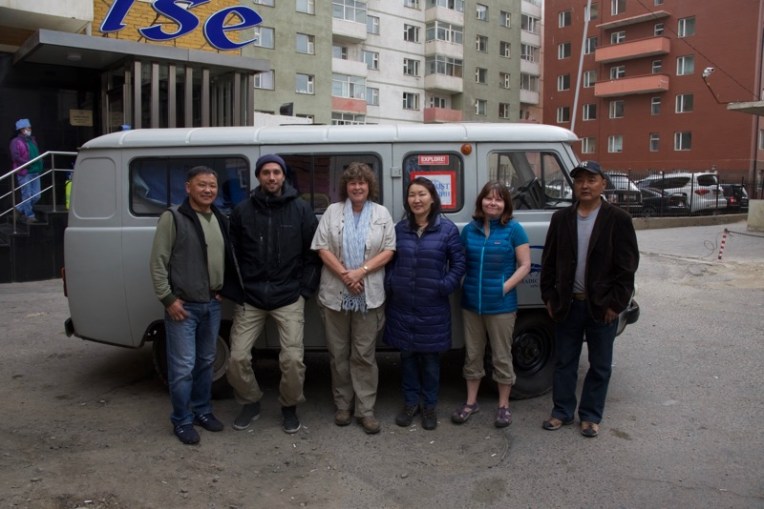
2016 WildArt Mongolia participants and staff, from left to right: Erdenebat (driver), Oliver Hartman (Explorers Club Fellow, filmmaker), Susan Fox (Expedition leader, Explorers Club Fellow), Soyoloo (cook), Kim Campbell Thornton (journalist and author), Puugii (driver). Photo by Batana, our guide. Behind us is our Russian fergon van support vehicle
We left Ulaanbaatar on Sunday, May 15. heading far south to the Great Gobi A Strictly Protected Area, a five day drive. Our main goal was to try to see Gobi bear, a subspecies of brown bear/Ursus arctus gobiensis, which is critically endangered (IUCN Red List). Population estimates range from a low of 28 (the number researchers have counted) to as high as 60 (an estimate based on extrapolation of captured and counted bears. It was highly unlikely that we would succeed, but it was still more than worth the trip to see their habitat and learn about what is being done to conserve them. Wild bactrian camels (Critically endangered, IUCN Red List) also live in that part of Mongolia, along with a variety of other wildlife.
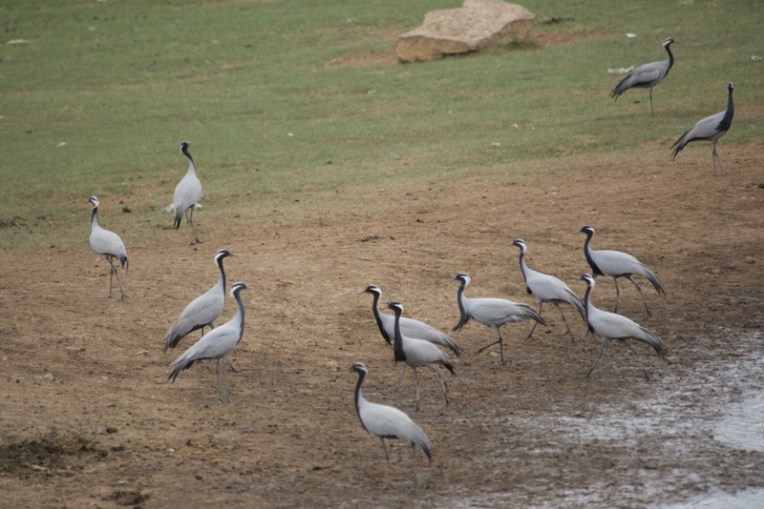
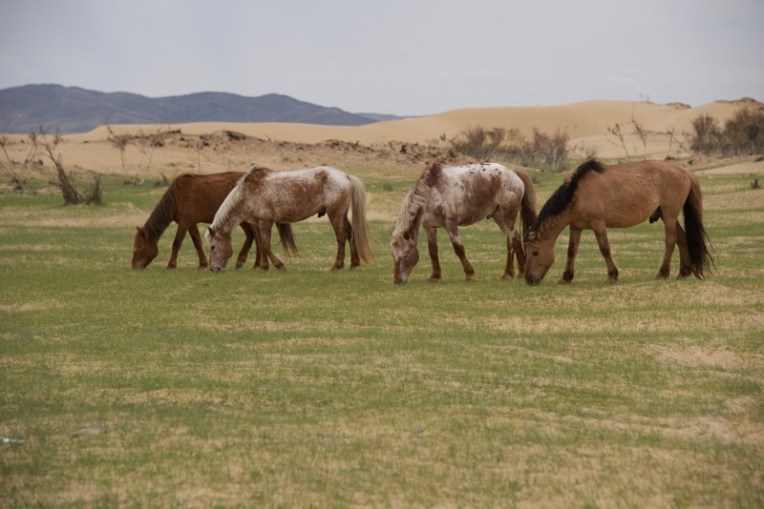
Demoiselle cranesWe stopped at an area with sand dunes for lunch, enjoying watching some of the local horses wander by
Our route took us west and then south. Along the way we saw a large flock of demoiselle cranes, which are quite common in Mongolia and always a delight. Once we were on the road our guide Batana asked if we could stop at his aunt and uncle’s ger to deliver a new ger cover to them. This was great because I knew it would, right away, give Kim and Oliver a chance to visit a herder’s ger and experience Mongolian hospitality.
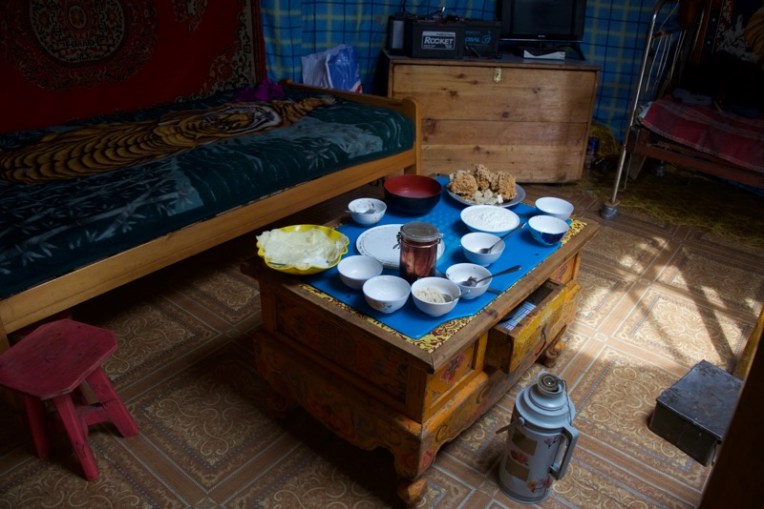
The home of Batana’s aunt and uncle, which was quite near the main roadThey have a lot of sheep and cashmere goatsWe were treated to classic Mongolian dairy foods (tsagaan idee/white food)
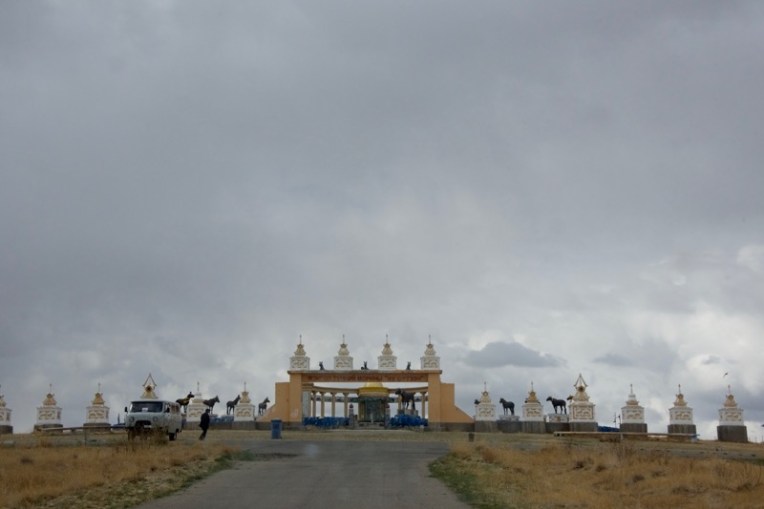
Continuing on we came to the race horse memorial south of Arvaykheer. I’d been to it before, but was more than happy to stop there again. It was late afternoon and was pretty windy.
A must-see if you’re heading south towards Bayanhongor. A quintessential bit of Mongolian culture. Last time I was there, a wedding party showed up to have their photos taken and apparently just relax and visit with friends and family.Bronze portrait statues of famous race horses.
The original plan had been to camp near by, but the location was an open plain and the wind was really starting to pick up. We drove on looking for a more sheltered spot, which took awhile. The idea was to get out of the worst of the wind, but not be so close to a slope that if it rained we’d have to worry about run-off. The problem was finally solved, camp was set up, we had dinner and it was off to bed. On what was one of the coldest nights I’ve experienced in eleven years of travel in Mongolia. Ah, spring in Mongolia….
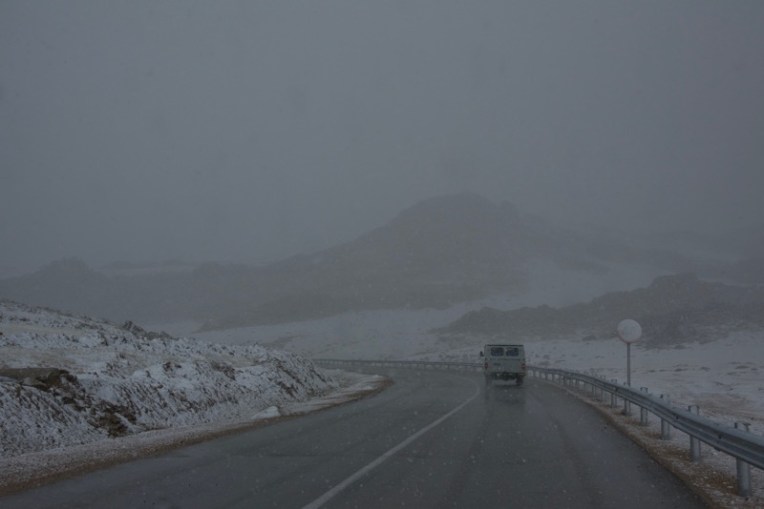
Kim bundled up the next morning, as were we all.Heading right into this storm front, driving southwest. Rain on the windshield.
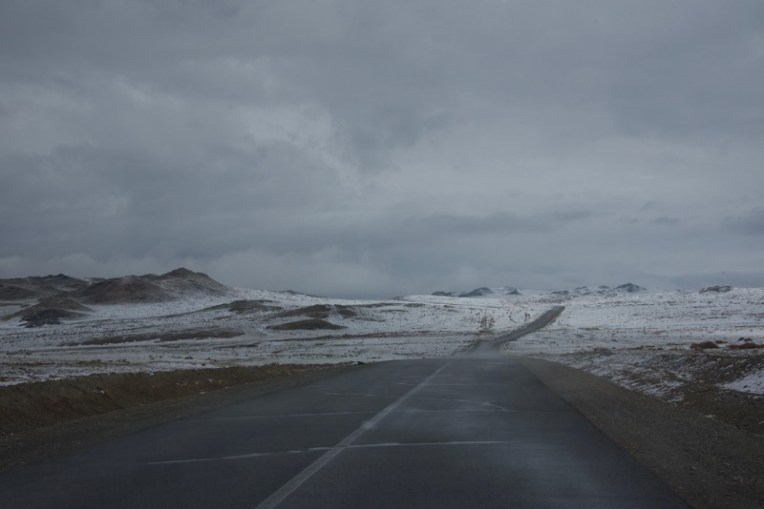
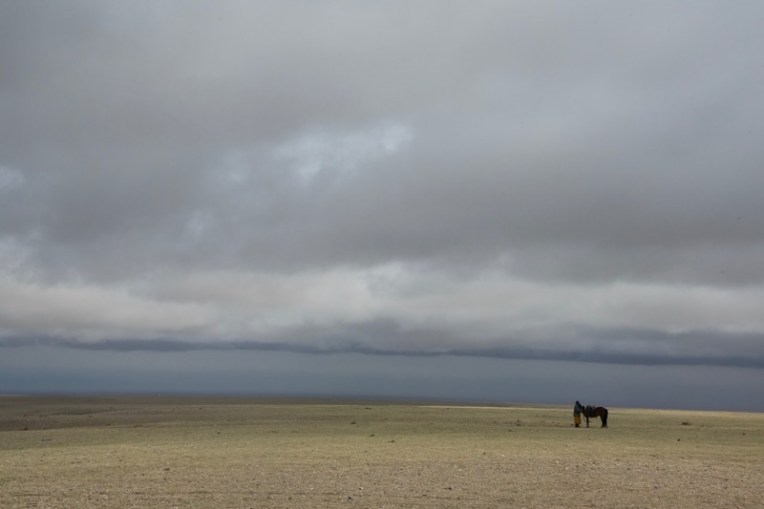
First it was rain, then kilometer by kilometer it turned to snow. And then blowing snow.
Horses walking through a dusting of snow.As we went up in elevation, visibility went down.As we drove on I grabbed this shot of a ger. Believe it nor not, the owners were toasty warm inside. Felt is a good insulator and once the stove is really going it absorbs the heat and releases it back into the space.Finally we came through the other side of the front and it stopped snowing.By the time we could see Bayanhongor, there was no snow on the ground, but the Hangai Mountains behind the city were covered.
We went into the city for gas and groceries. Plan A had been to go north up the river valley to Erdenesogt and spend a night there, visiting Gachen Lama Khiid (monastery) in the morning, but there was no way we would be able to get there in current conditions. We’d go there on our return instead and so turned south towards the Gobi.
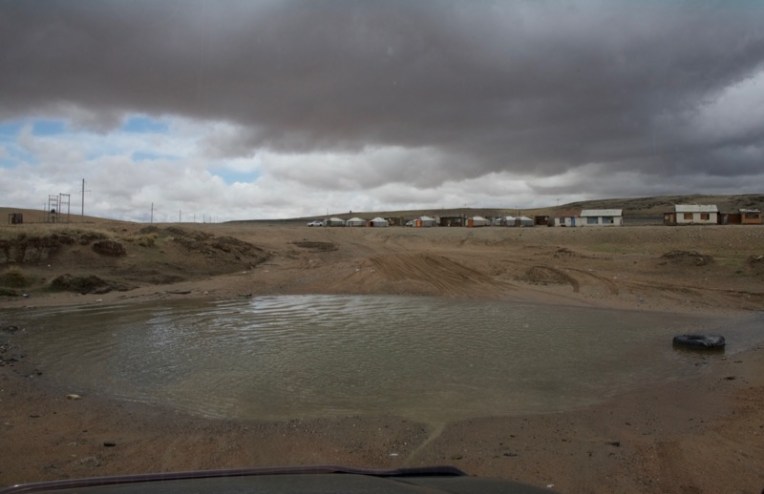
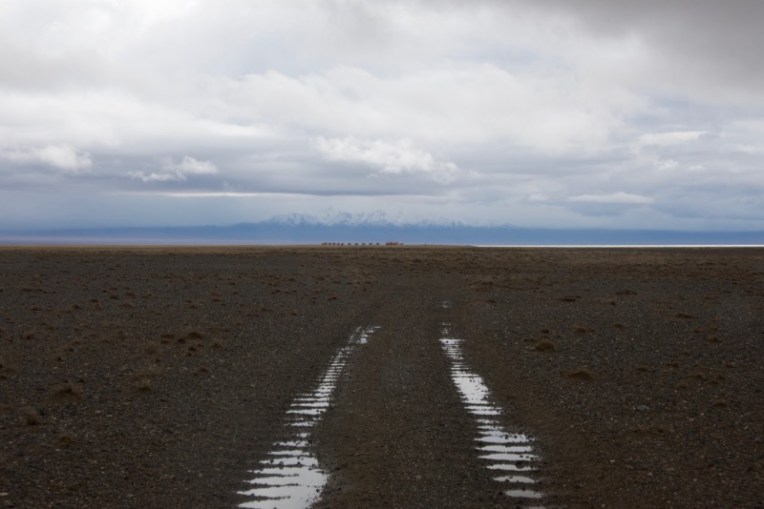
For me, my trips in Mongolia have always begun once we leave the paved roads and are on the earth roads. Here we are, heading south towards Boon Tsagaan Nuur.We got the feeling that it had been raining heavily in this area…Ah, Mongolia.
We drove on through the day, bearing southwest. Snow-covered Dund Argalant Nuruu appeared in the distance and then we got our first glimpse of the lake Boon Tsagaan Nuur.
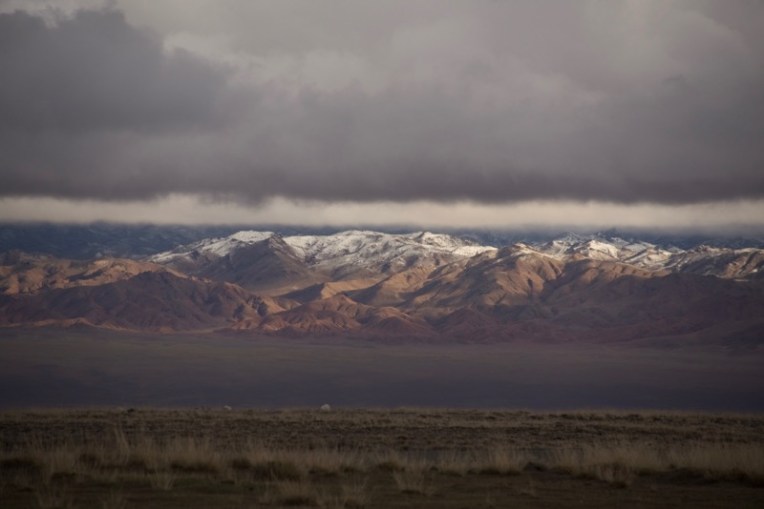
Boon Tsagaan Nuur in the distance with small guest cabins near the shore.The ground was too wet to set up near the lakeshore, but we found a pleasant grassy area farther back. The weather, though overcast, wasn’t cold and there wasn’t much wind, a change from the previous day much appreciated.As the clouds rolled through we were treated to this beautiful shifting light on the mountain.
Next week we’ll explore a bit of the lakeshore, get in some birdwatching and be entertained by local livestock before heading west to get a required permit for our destination.

















 Susan Fox, American Artist