It’s clear that one lesson we, as a species MUST learn, is to share. All of these animals have just as much right to be here as we do. As they go, in the end, so shall we.
I’ve never made a point, for the most part, of specifically seeking out endangered or threatened species to photograph for my paintings. But, as it’s happened, in less than ten years I’ve seen two dozen, plus one, all in the wild. Quite a surprise, really.
Sometimes they’ve been pretty far away, but that in no way diminished the thrill of seeing them. Close-ups in a zoo or other captive animal facility can be useful, within certain limits, but seeing a wild animal in its own habitat, even at a distance, is much more satisfying and gives me ideas and information for my work that I couldn’t get any other way.
In no particular order, because they are all trying to survive on this planet:
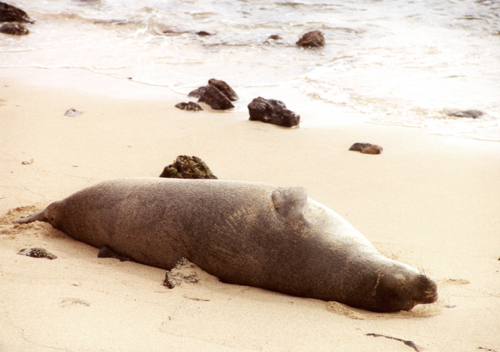
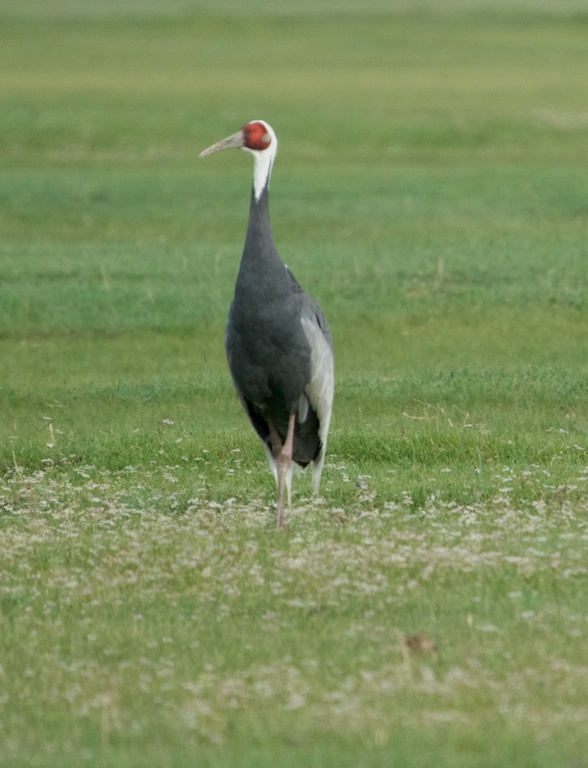
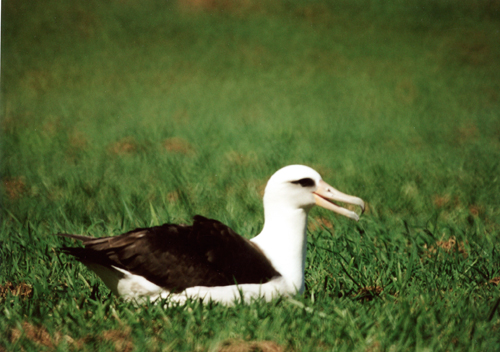
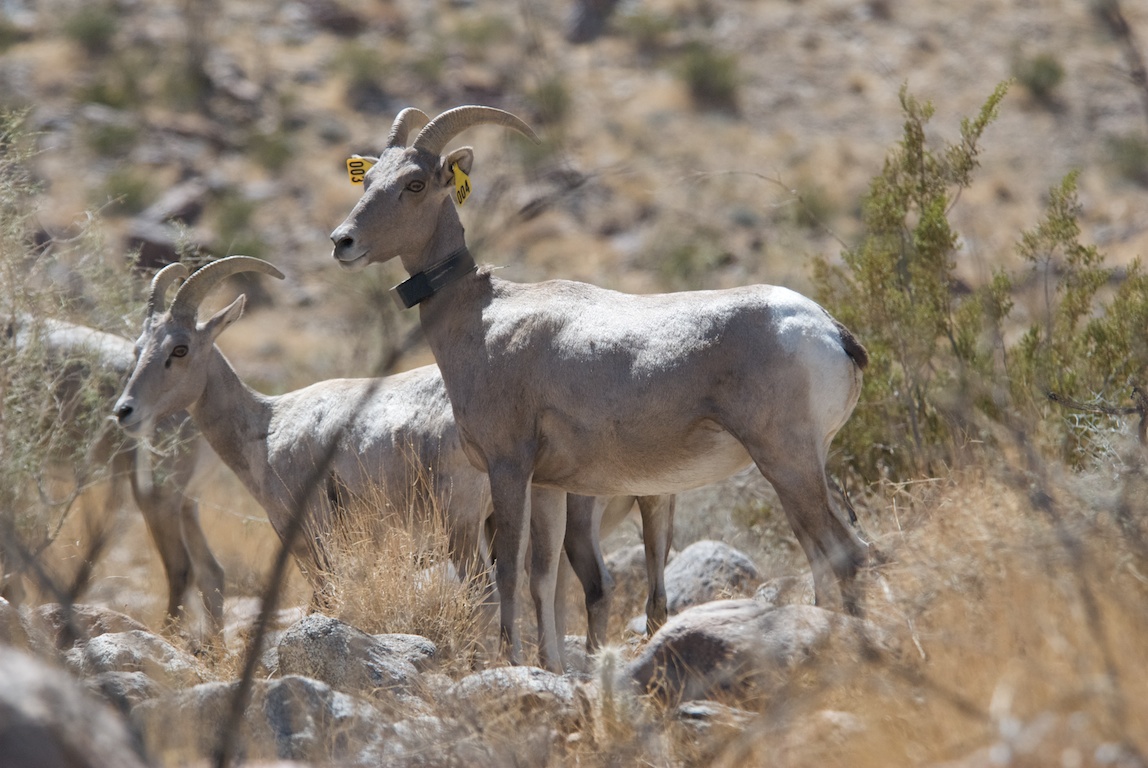
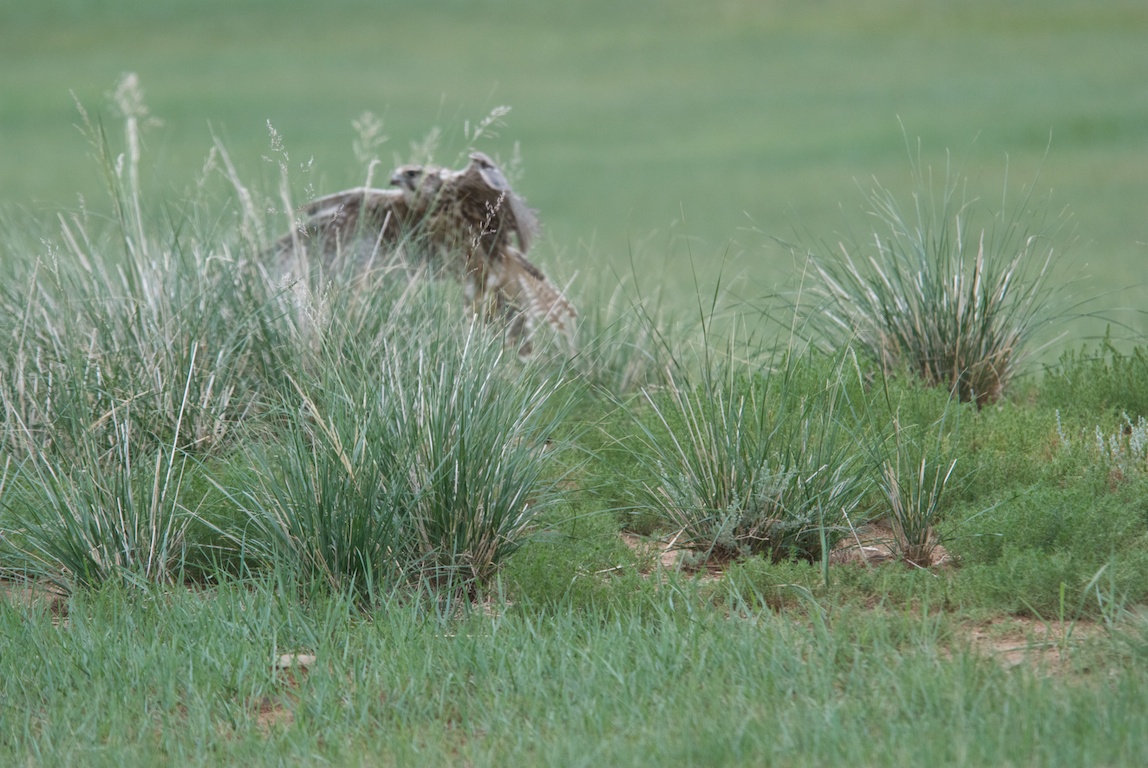
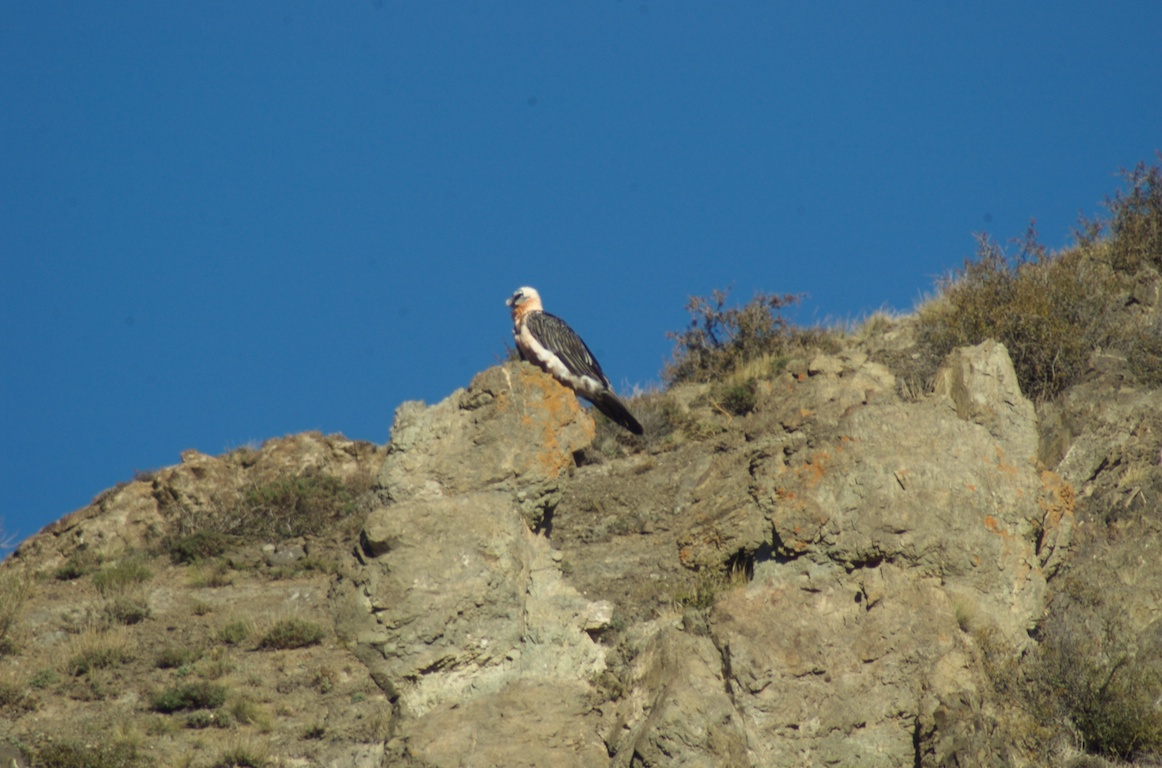
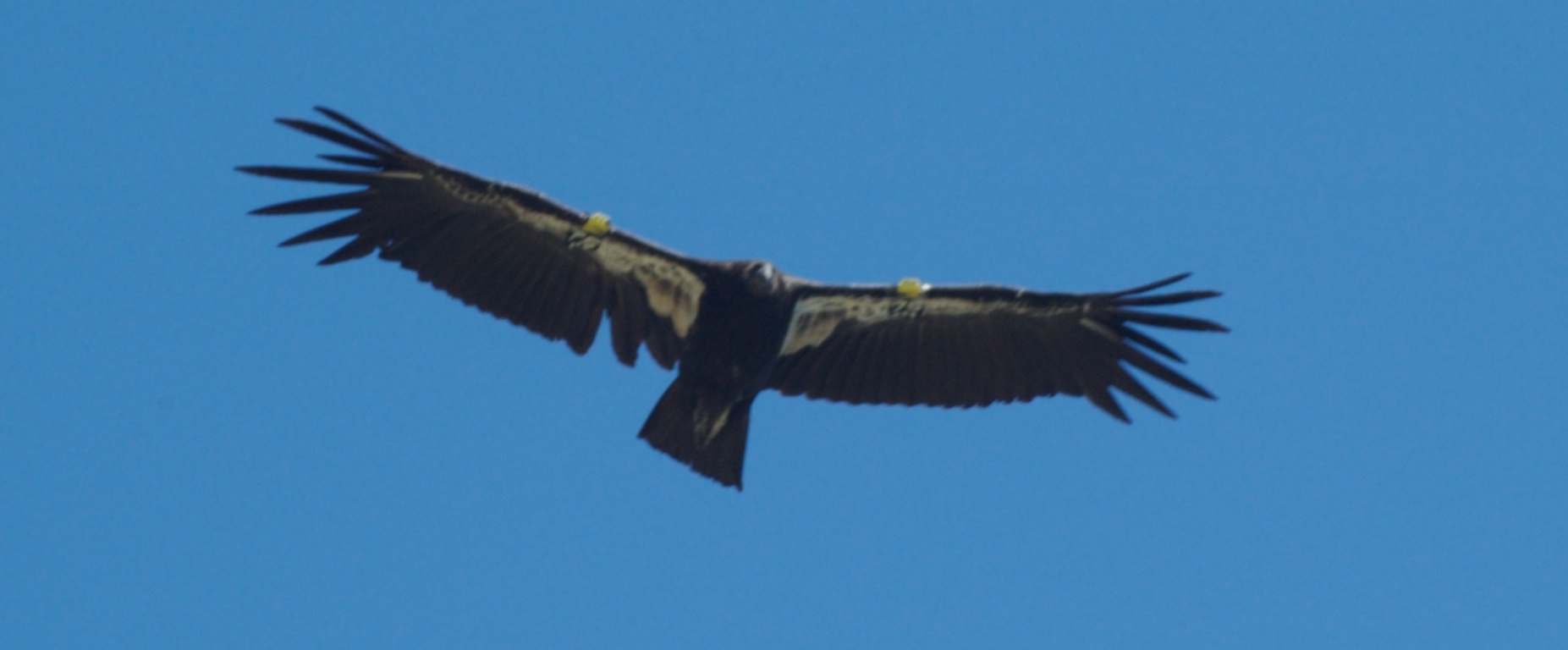
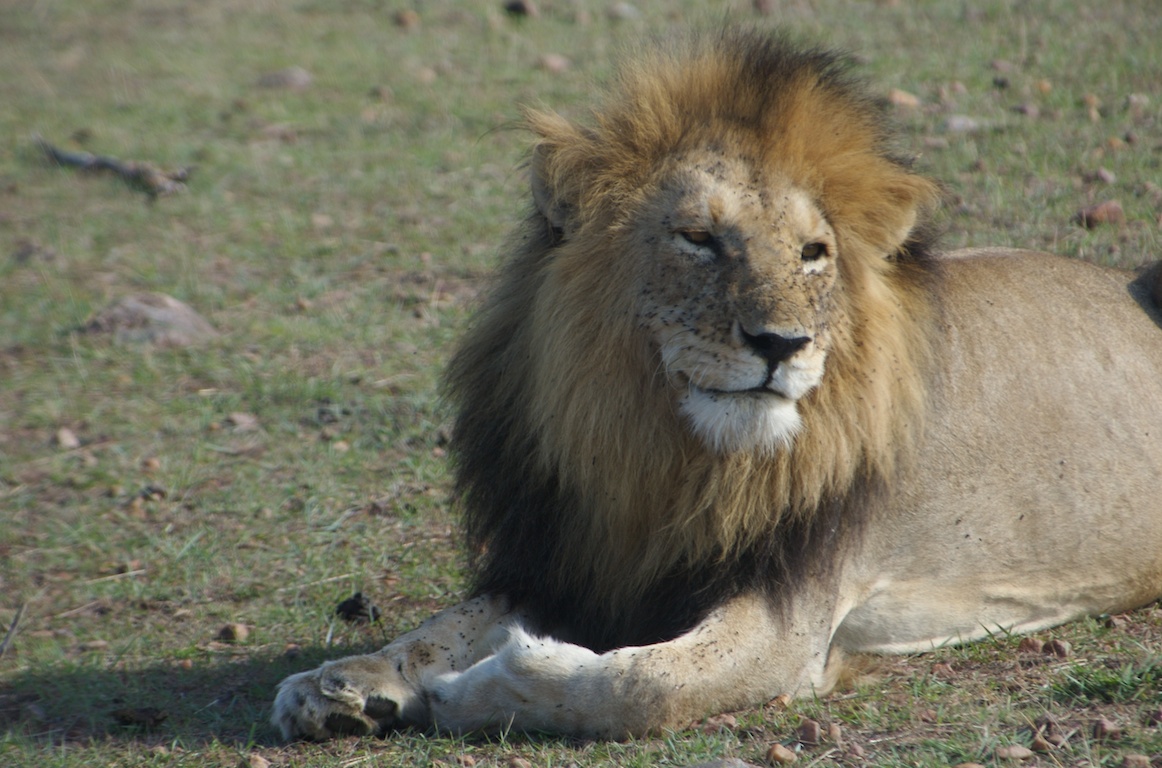
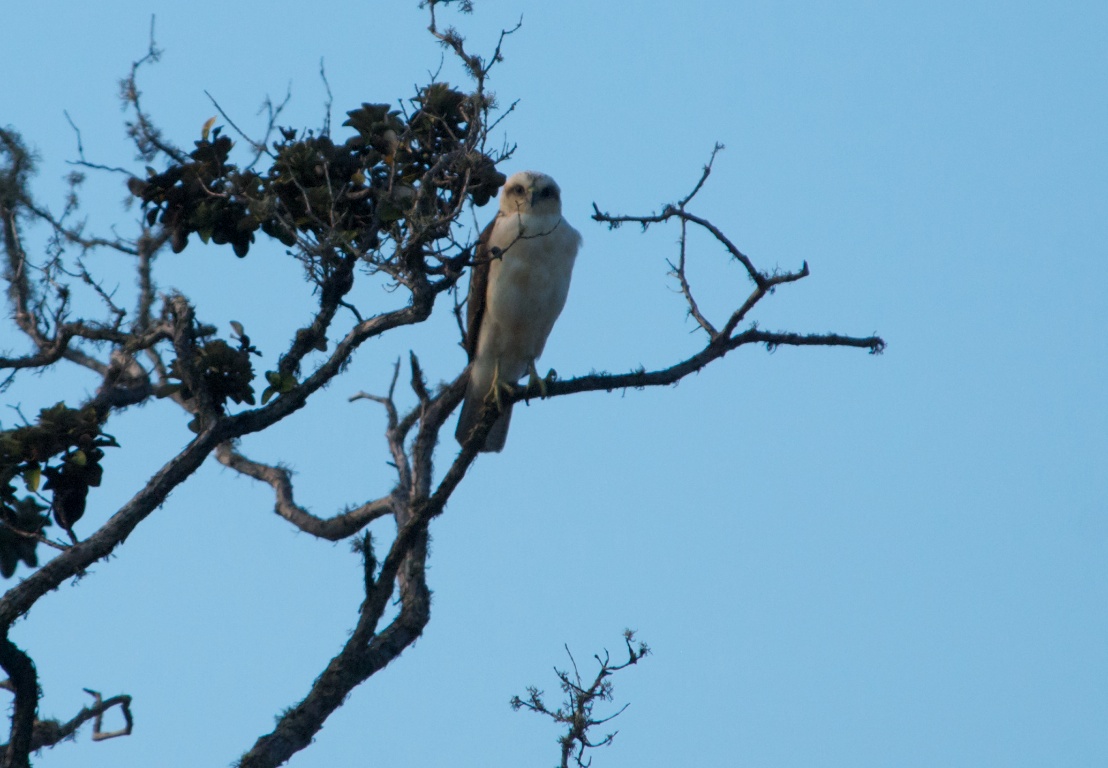
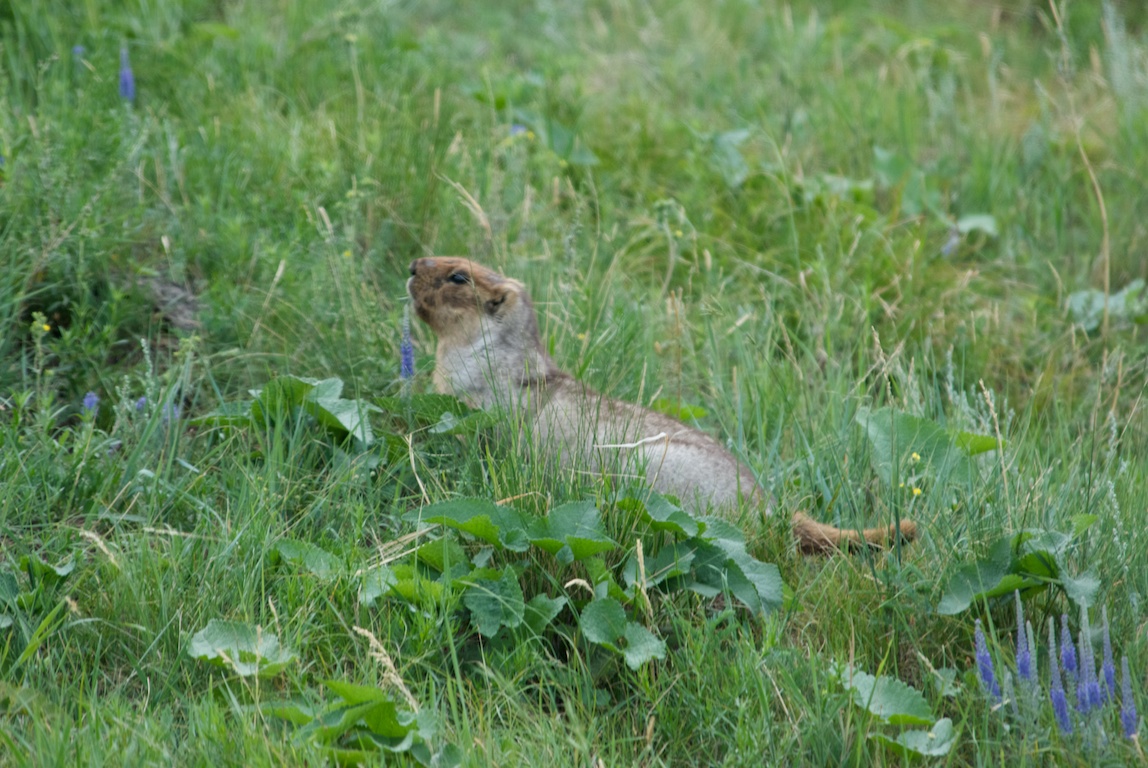
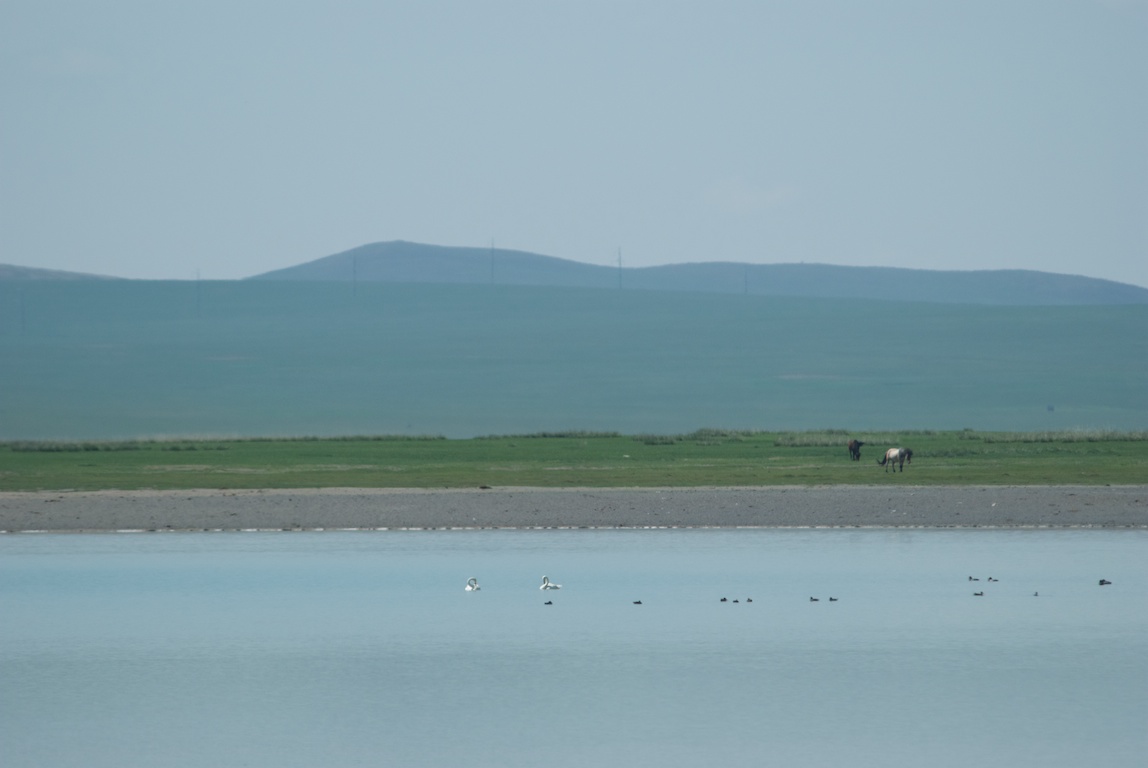
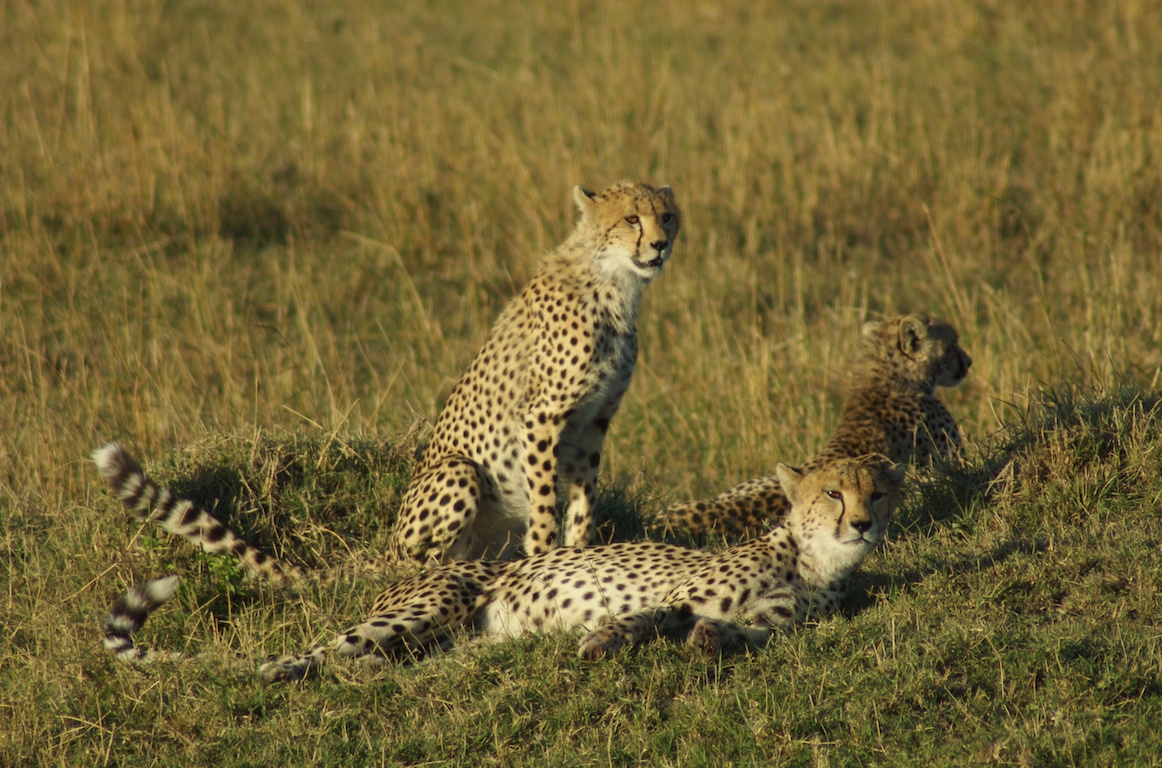
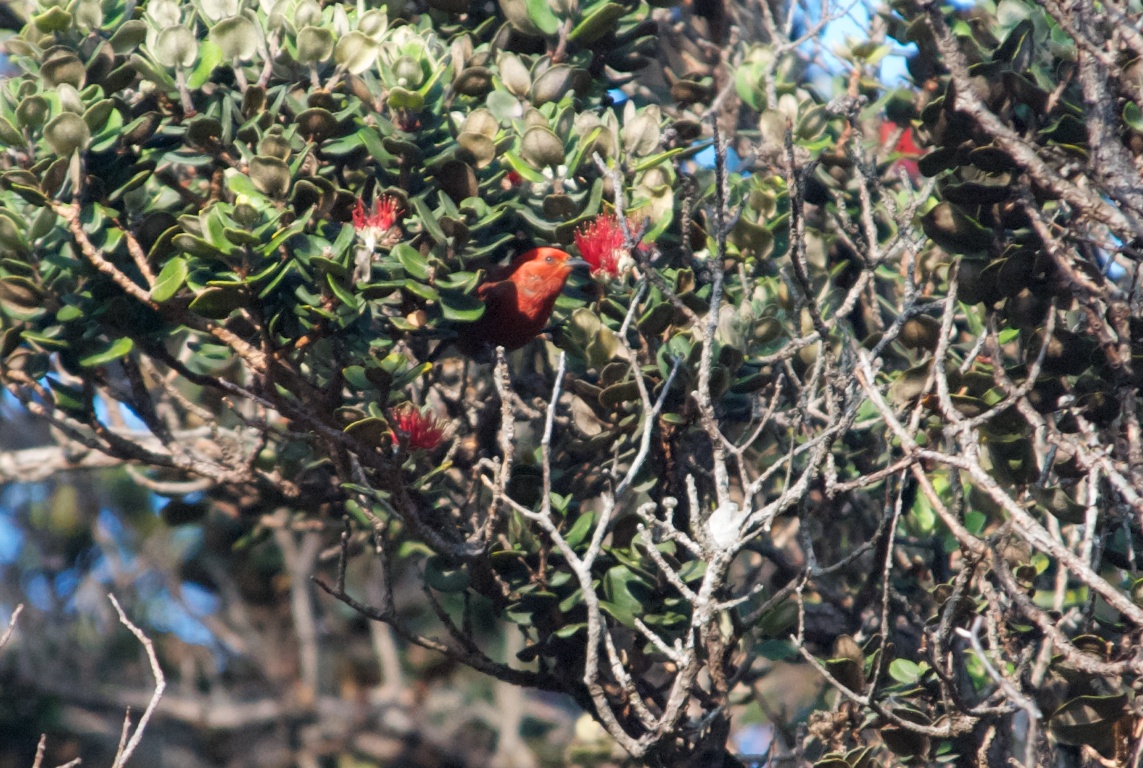
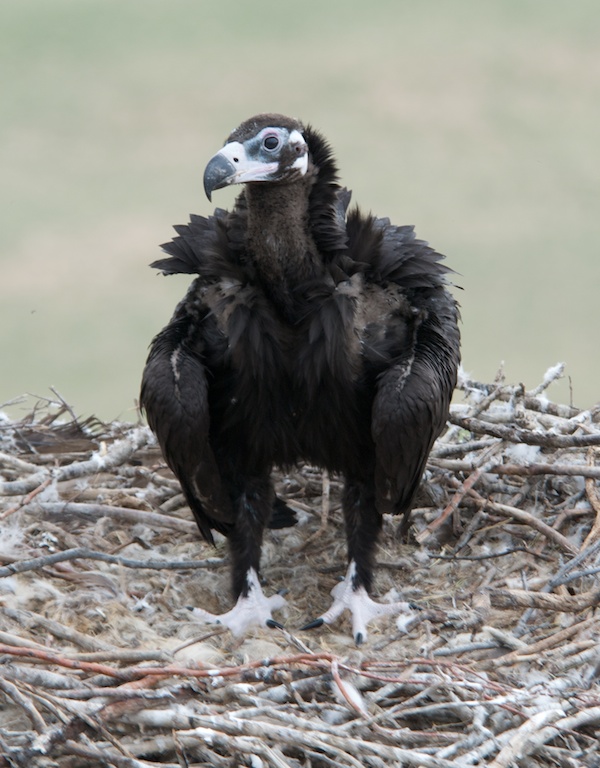
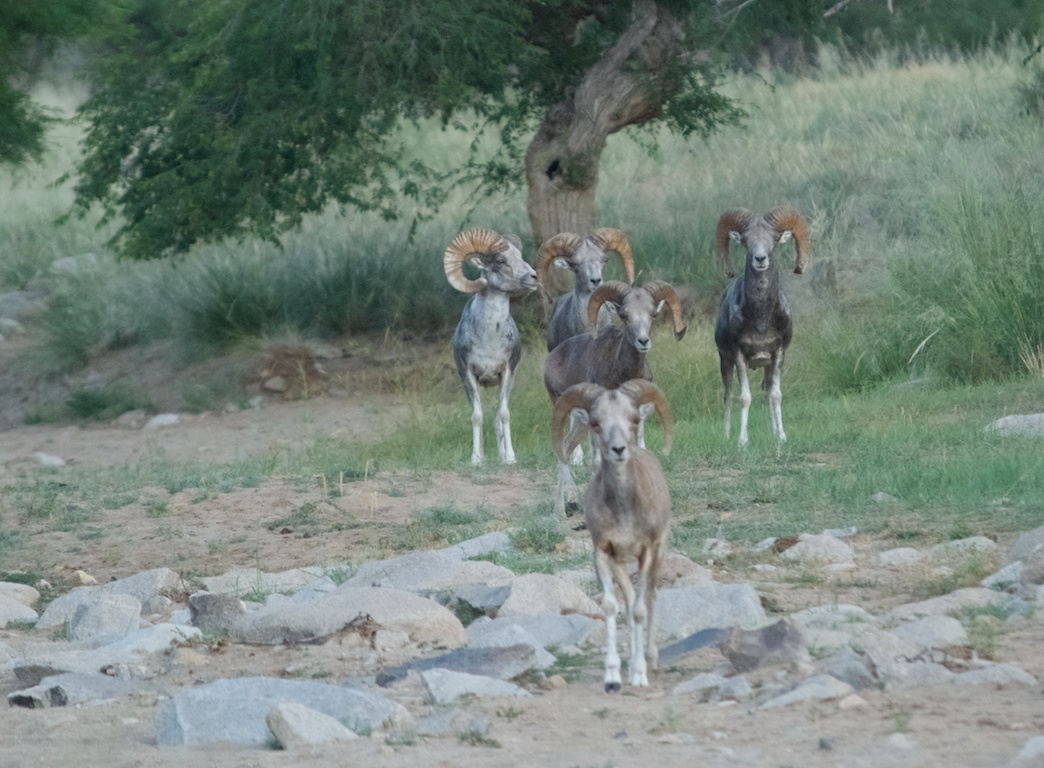
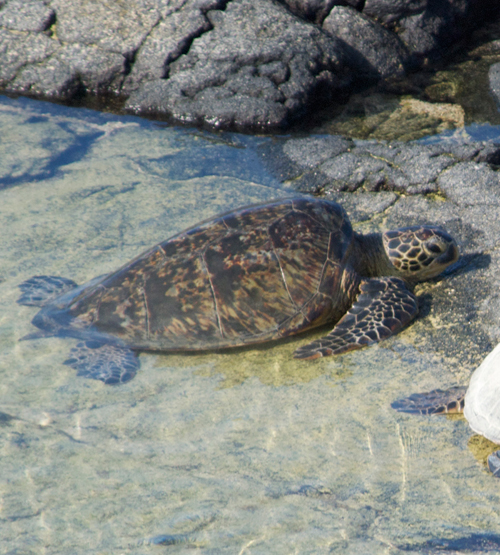
Takhi, Hustai National Park, MongoliaMonk Seal, Kauai, Hawaii, United StatesWolf, Lamar Valley, Yellowstone National Park, Wyoming, United StatesWhite-napped crane, Gun-Galuut Nature Reserve, MongoliaWhite Rhino, Lewa Downs Conservancy, KenyaLaysan Albatross, Kauai, Hawaii, United StatesTule Elk, Point Reyes National Seashore, California, United StatesRothschild's Giraffe, Soysambu Conservancy, KenyaNene, Hawaii Big Island, Hawaii, United StatesDesert Bighorn, Anza-Borrego State Park, California, United StatesGrizzly Bear, Yellowstone National Park, Wyoming, United States (Bear 264)Saker Falcon, near Hangai Mountains, MongoliaGreen Sea Turtle, Hawaii Big Island, Hawaii, United StatesGrevy's Zebra, Lewa Downs Conservancy, KenyaLammergeier, Gobi Gurvansaikhan National Park, MongoliaCalifornia Condor, Central Coast, California, United StatesAfrican Lion, Masai Mara, KenyaHawaiian Hawk (Juvenile), Volcano National Park, Hawaii Big Island, Hawaii, United StatesSiberian Marmot, Hustai National Park, MongoliaWhooper Swans, Gun-Galuut Nature Reserve, MongoliaCheetahs, Masai Mara, KenyaApapane, Hawaii Big Island, Hawaii, United StatesTrumpeter Swans, Yellowstone National Park, Wyoming, United StatesCinereous Vulture (Juvenile), Baga Gazriin Chuluu Nature Reserve, MongoliaArgali, Ikh Nartiin Chuluu Nature Reserve, Mongolia
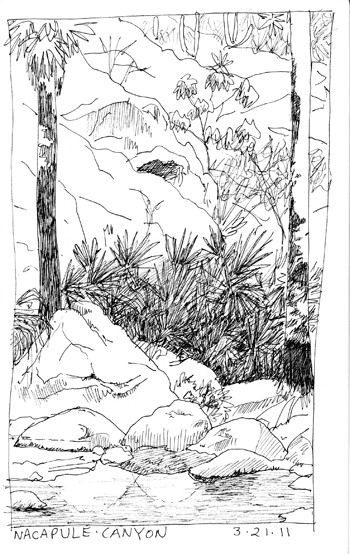
There’s nothing quite like sketching on location to “store” the feeling of a place in one’s mind and hand. It adds an important dimension to the photographs.
Here’s my favorites from the trip and, at the end, a little bonus from one of the hotels I stayed at before departure:
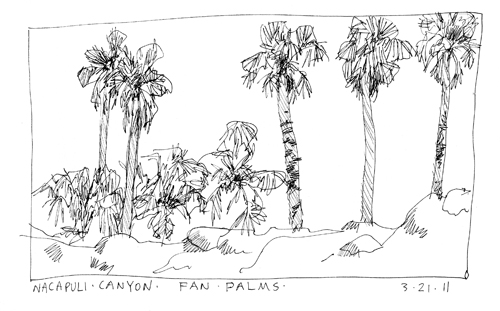
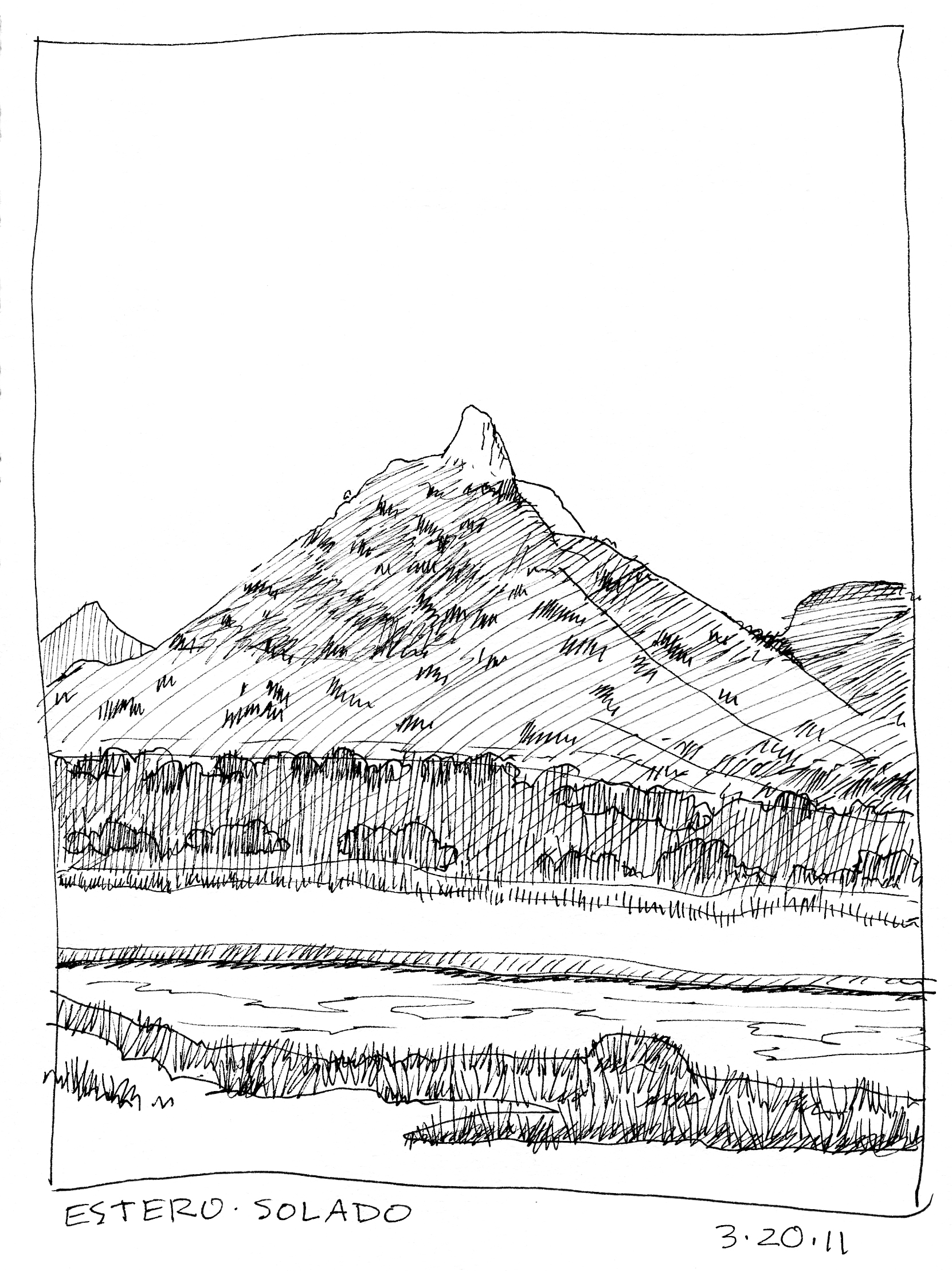
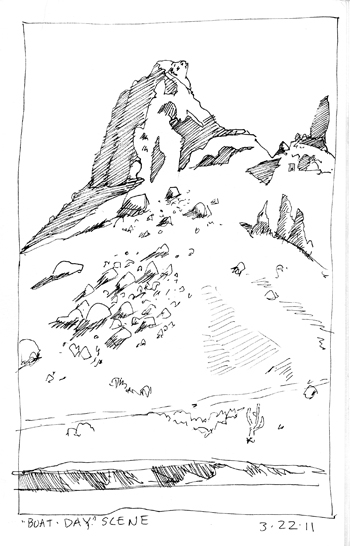
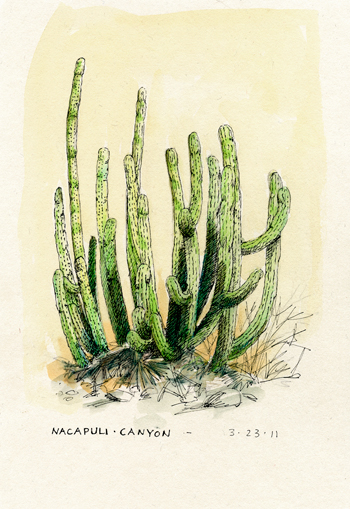
Nacapuli Canyon, at the "waterhole"- pen and inkFan Palms, the iconic tree of the canyon- pen and inkView across the estero, not far from the condos we stayed at- pen and inkPromontory on the coast as seen from the boat- pen and inkOrgan pipe cactus, Nacapuli Canyon- pen, watercolor pencils and gouache
And finally….would you put this in YOUR coffee, given the name of the company?
What a trip it was! The whole package…great scenery, interesting animals, terrific traveling companions who are also great artists and, in 2013, the exhibition at the Arizona-Sonora Desert Museum to top it off.
I’ll be blogging about specific aspects of this experience and the art that I plan to create from it between now and showtime, but today I thought I’d share an overview of some of my favorite images, an album, if you will.
And, for this coming Mongolia Monday, I’ll compare and contrast Mongolia’s Gobi with the part of the Sonora Desert that I have now visited.
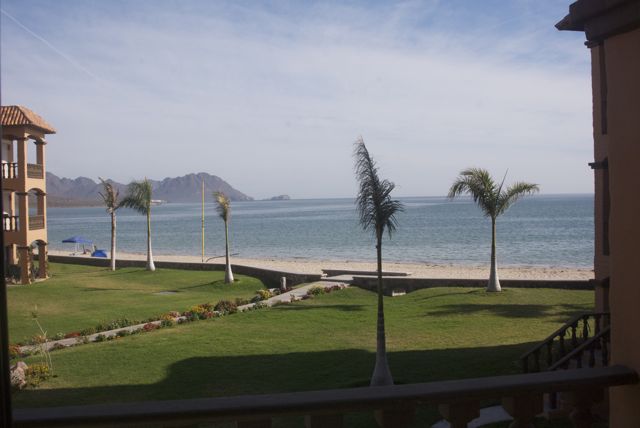
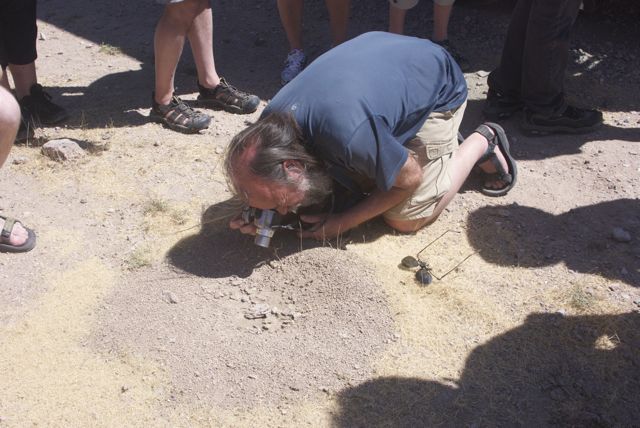
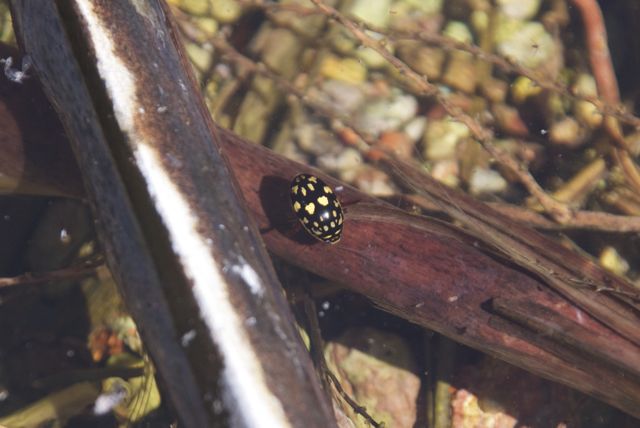
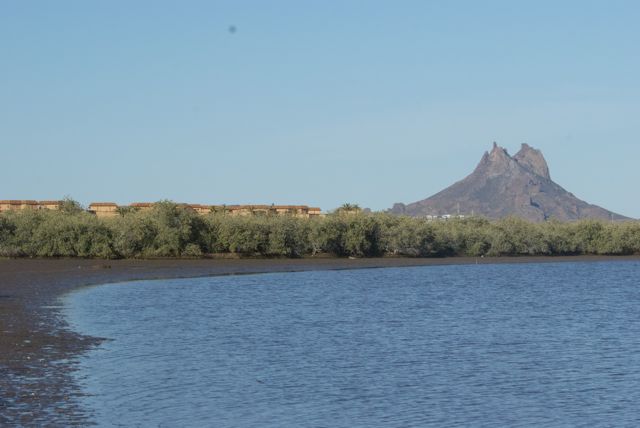
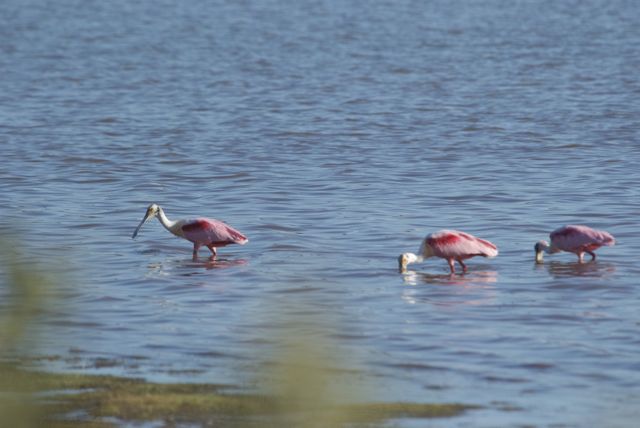
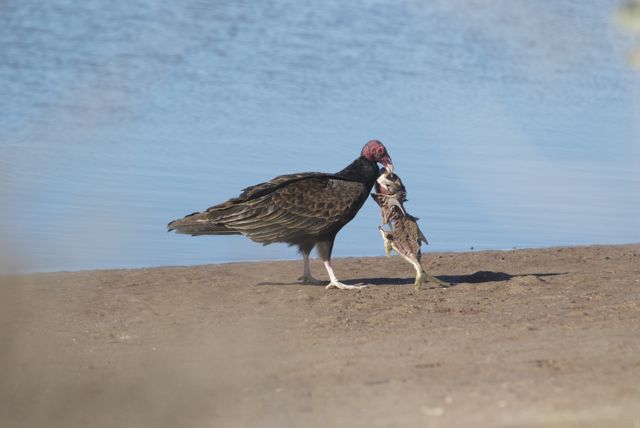
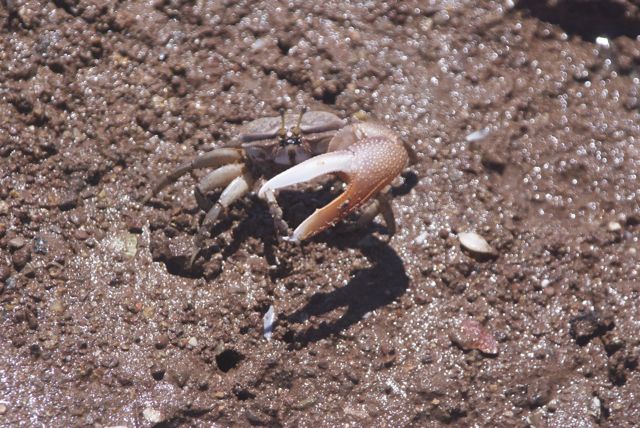
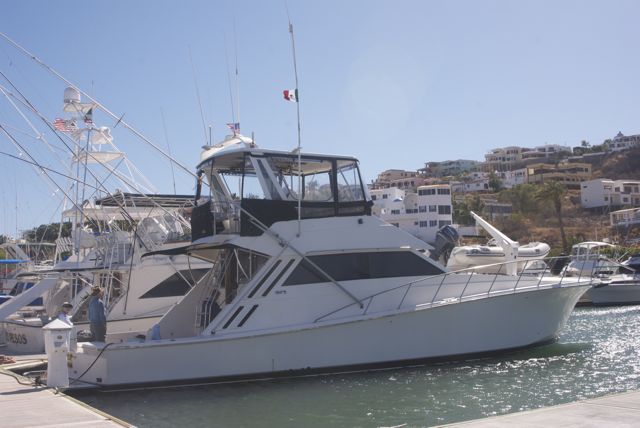
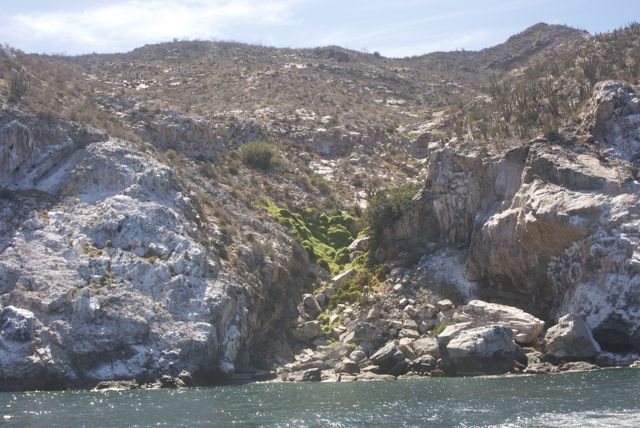
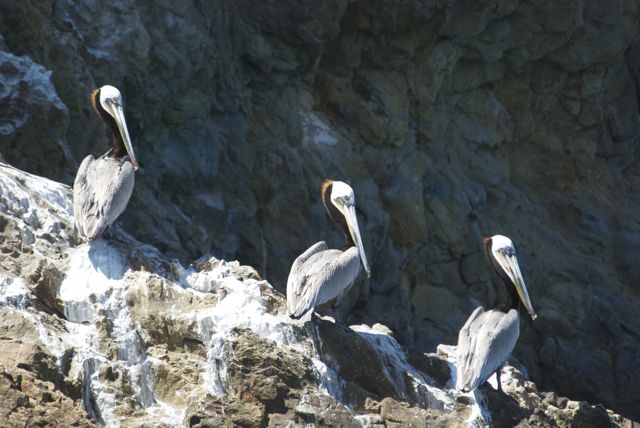
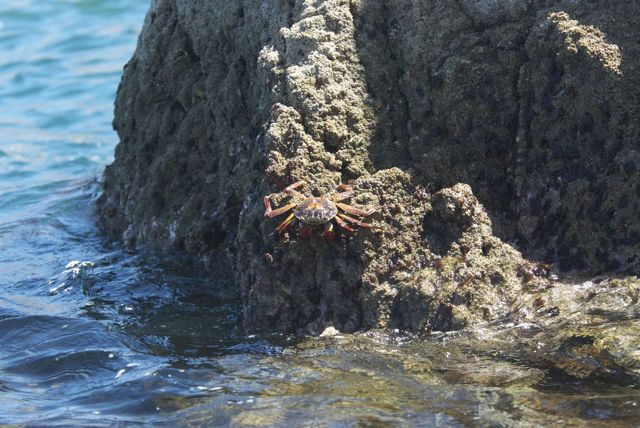
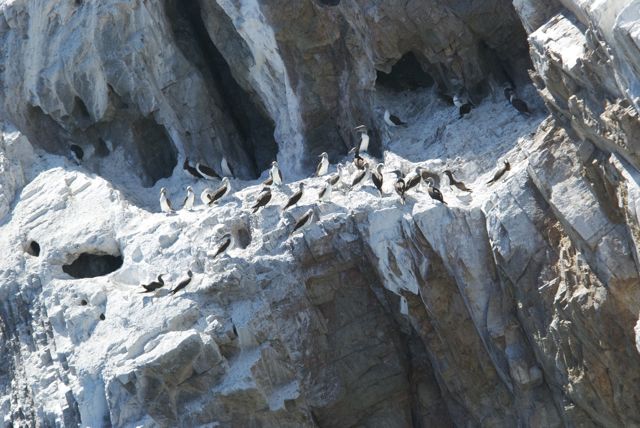
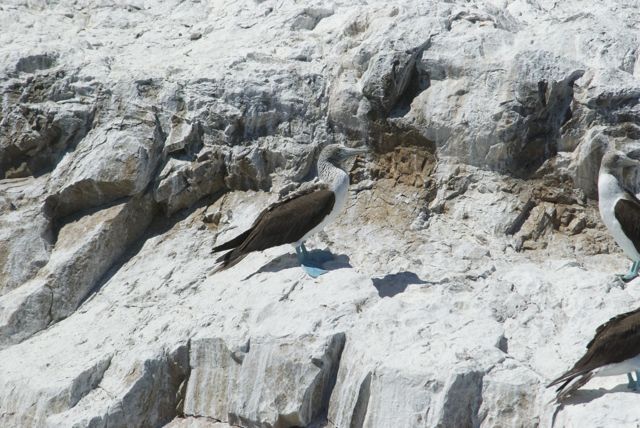
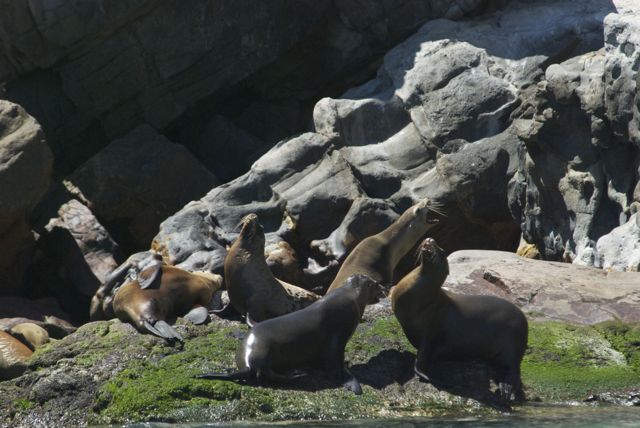
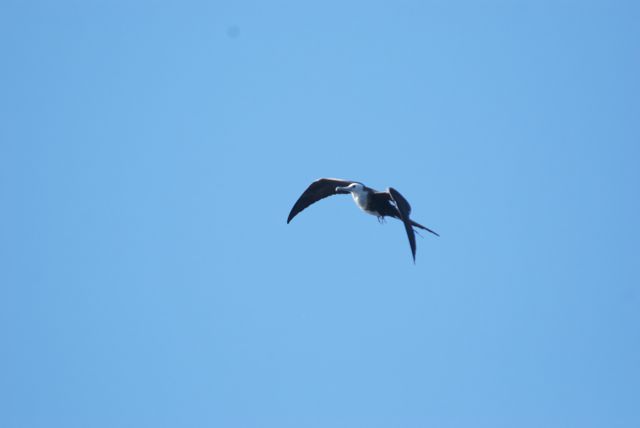
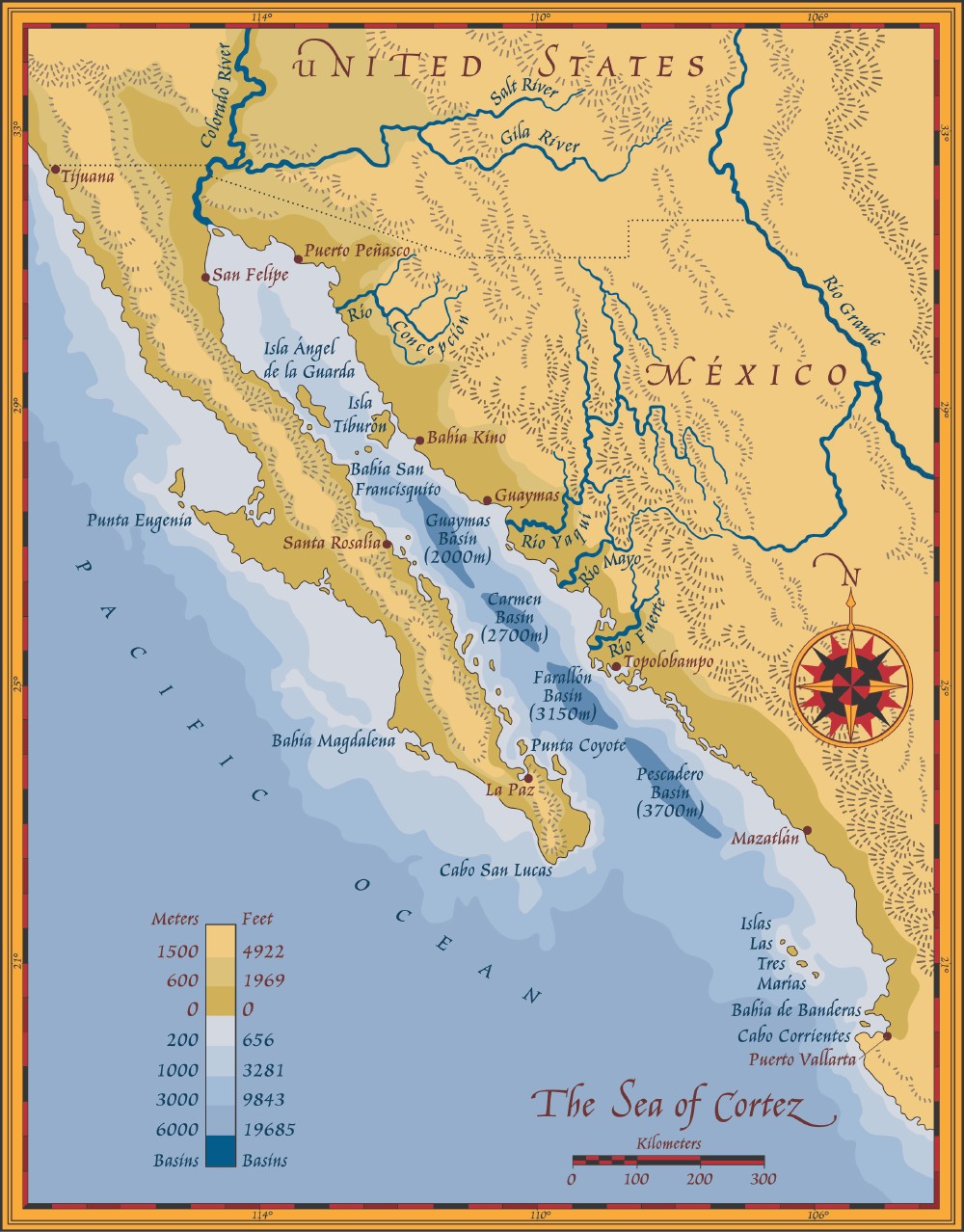
View from the condo I shared with four other artists.Nacapuli CanyonSomeone took pictures of almost everything. Here's Carel Brest van Kempen photographing ants.Predator water beetle; waterhole in Nacapuli CanyonAs yet unidentified lizard; Nacapuli CanyonEstero Solado; an estuary ringed by three species of mangroveRoseate spoonbills feeding in the esteroThe turkey vulture who wouldn't abandon "his" fishOne of about six species of fiddler crabs living on the shores of the esteroWillets on the beach near the condo in nice morning lightPelican feeding frenzy off-shore in San CarlosThe wonderful boat that we went out inThe boat made it possible for the plein air painters to get to great spots like thisHeerman's gull; almost at eye level from the boat's dingySan Pedro Island; we spent a day birdwatching and snorkeling along its three mile lengthBrown pelicansBrandt's cormorantsSally Lightfoot crabBlue-footed booby colony; the white is guanoBlue-footed booby; an artist favoriteCalifornia sea lionsMale California sea lionFemale magnificent frigatebirdThe Sea of CortezGroup shot- photo by Molly Moore- Field Trip to San Carlos, Sonora, Mexico, March 19 - 26, 2011. Pictured are Linda Bittner, Carel Pieter Brest van Kempen, DeVere Burt, Andrew Denman, Kim Diment, Kim Duffek, Cathy Ferrell, Susan Fisher, Susan Fox, Mary Garrish, Ann Geise, Shawn Gould, Mary Helsaple, Heiner Hertling, John Kobald, Deian Moore, John Pitcher, Don Rambadt, Paul Rhymer, Rebecca Richman, Carolyn Thome, Christine Sarazin, Rachelle Siegrist, Wes Siegrist, Martha Thompson, Glenn Thompson, Sue Westin, Ronnie Williford, Debbe Wilson, and Nicholas Wilson. (Not pictured are John Agnew and Molly Moore). Leading the field trip was Richard C. Brusca, Ph.D. The trip was organized by David J. Wagner, Ph.D. for artists to produce a body of artwork for a museum exhibition entitled The Sea of Cortez, produced by David J. Wagner, L.L.C., and scheduled to premiere at The Arizona-Sonora Desert Museum Art Institute from March 16 through June 2, 2013.
If all goes according to plan, I’ll be on my way to Arizona on Wednesday. A few days of gallery visits in Tucson and Scottsdale and then I’ll be joining around two dozen fellow artists on Sunday morning for the nine hour (two hours at customs, they tell us) bus ride to San Carlos, a town of 4,000 which is just to the west of Guaymas on the Sea of Cortez.
We're going to be based in a condo complex right on the beach just west of Guaymas
We’ll spend five days learning about the Sonoran desert ecosystem, hiking, snorkling, going out in a 50′ boat and recording the wildlife and landscape in a variety of media. What is doesn’t look like I’ll have, as near as I can tell right now, is an internet connection, although I may be able to post some photos on Facebook via my iPhone.
The purpose of the trip is to gather the material needed for us to each create work for an exhibition “The Sea of Cortez”, to be held at the Arizona-Sonora Desert Museum in 2013.
One of my personal goals will be to compare the desert ecosystem of this part of Mexico with the Gobi of Mongolia. The biggest difference, which is obvious from looking at maps of both places, is that much of the Sonoran desert has at least some marine influence, whereas the Gobi has none. What this will mean in terms of climate, vegetation and animal life will be interesting to learn.
The Gobi extends from Govi-Altai in the west to Dornogovi in the east, over a third of the land area of Mongolia.
So, if you don’t see a new post here for a week or so, you’ll know that I’m suffering for my art- hanging out with a bunch of great artists, sketching, painting, talking shop and eating great Mexican food.
Safari camp on Paradise Plain, Masai Mara, Kenya, 2004
As those who get my newsletter and read this blog know, I was invited to go on what sounded like one of those trips of a lifetime that many artists dream of….traveling to India to see wild tigers. I had been scheduled to leave this past Tuesday (Jan. 17), but I canceled the trip. Why? Well, the reasons why and what you can learn from my experience are the topic of today’s post. I’ve illustrated it with images of journeys past.
I’m going to keep the identity of who invited me and was sponsoring the event private, since at no time did I feel that there was any malice or ill-intent involved. But, as I think you’ll see, it doesn’t take either to decide not go on, or actually cancel out of, what seems to be a great trip.
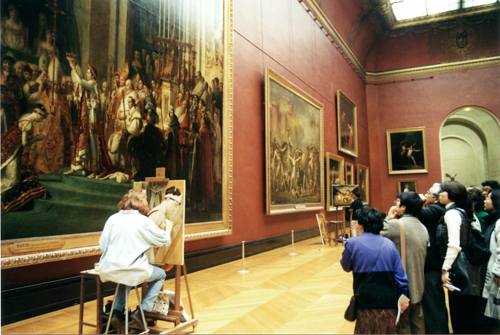
Artists copying masterworks at The Louvre, Paris, France, 1996
To make a longish saga as short as possible: an artist friend asked if I would like to see if he could get me invited to an artist’s event in India. We would be hosted at a fancy lodge adjacent to a national park which is home to tigers and other wildlife. I said “Yes!”. And, after a short time, an invitation was emailed to me by the organizer. I accepted. It seemed like a smart career move, based on what I knew at the time, with the opportunity to have my work seen by an international audience.
Plans were plotted and plane reservations were made. Then all the artists involved (from quite a few countries) got an email from the organizer with an update for the event. And that’s when it started to look iffy. As in, OMG.
What had been represented to me as an Artist’s Week that would result in a donated work being exhibited on a tour in Europe and then auctioned off to support tiger conservation had morphed into an event in India which was to include a fashion show, rock concert and some kind of children’s activities. There were no specifics about international exhibition venues and the auction was now going to be handled by a “company like Christie’s”, whatever THAT was supposed to mean. And, to top it off, the organizer said that a new sponsor had signed on and wanted our paintings at the end of February, that is, one month after our week there had ended. Red flags, flashing red lights, danger, danger, danger.
I was going to travel, literally, half way around the world for….this? I don’t think so.
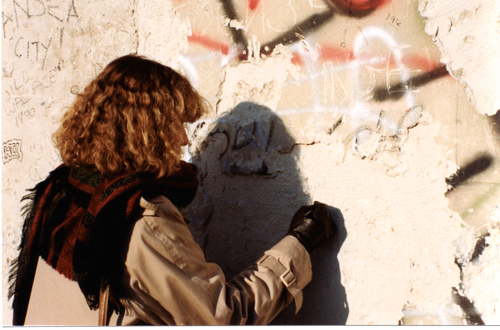
Leaving our names on a remaining section of the Berlin Wall, Germany, 1990
While there were serious problems with the changes themselves, the fact that things had changed so much so close to the event was even more worrisome. It suggested an inexperienced event organizer who was winging it and didn’t really know what they were doing. Things that should have been settled long before the artists were even invited (and remember, I got on the dance card late in the day) still seemed to be in flux. Not to mention the completely unrealistic surprise deadline and, oh by the way, can you all increase the percentage of your contribution because it’s (all together now) For The Tigers.
I (apparently along with a number of the other artists, including the friend who got me into this) replied saying, more or less, you’ve got to be kidding. I wrote to the organizer that, unfortunately, I was going to have to bow out. My previous commitments and my working methods made it impossible to meet the deadline. (I wasn’t going to get into all the other stuff.)
My friend also dropped out.
In the meantime, I had bought plane tickets to Nairobi and back and he had bought our tickets from Nairobi to Mumbai and back (I was going to hang around in Kenya for a couple of weeks after the return from India). I had, the day before, sent via FedEx my visa application to a company that handles such things.
Now I had to unwind it all. I stopped the visa application process before it had started and had them FedEx my passport back to me (total cost: around $50). I canceled my itinerary and banked the tickets (change fee when I re-book: $250. Ouch). Friend canceled the tickets he had booked (cancellation fee: $218. More ouch). So, around $500 to get out of it. Not great, but it was the right thing to do, believe me.
So, what can be learned from all of this? Remember, there are no bad guys. Everyone had good intentions.
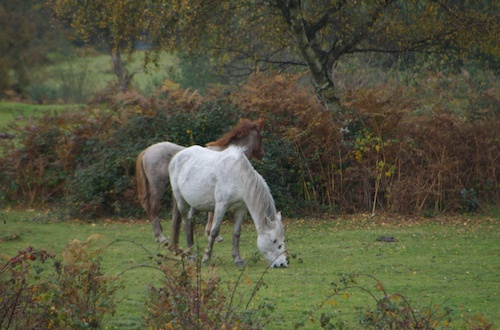
New Forest ponies, Hampshire, England, 2004
Here’s 10 tips, based on the above and other personal experiences:
1. You’ve seen an ad for a workshop or a tour in a place you’ve always dreamed of going to. Ask yourself: Is this the right trip for you or are you going because it’s there? How well does the trip fit your artistic goals?
2. Can you check out the organizer through references from previous “customers”? Make sure that their criteria for a successful or failed trip are in line with yours.
3. Before you sign up, have an exit strategy. This may mean paying more for refundable tickets (which I had not). It may mean having to leave the workshop or group. I ended up moving into a small hotel in town when I was in Portugal in 1996 because the group I was with at an old farmhouse was the very definition of “disfunctional” and I couldn’t even get a reasonable night’s sleep. Make sure you have enough money or at least a high enough limit on your credit card so you aren’t stuck in a bad situation for lack of funds.
Roman temple ruins, Evora, Portugal, 1996
4. I don’t travel with miscellaneous groups of total strangers anymore. See item 3. What’s your tolerance for rude, inconsiderate behavior? What is your tolerance for physical discomfort? Know thyself and do not try to fool yourself or talk yourself into a trip. If you need your own room, suck it up and pay the single supplement.
5. Which brings us to….Don’t force it. Trust your gut. I had to force myself to punch the “Buy” button for the India trip plane tickets. There is a book called “The Gift of Fear”, which I recommend for anyone who is planning to travel to unknown or exotic locations because it explains very clearly WHY you should trust your gut/instincts/intuition. The punch line is that the data you need is there, but, for whatever reason, only your subconscious mind is perceiving it. In hindsight, it’s often quite obvious why it was really dumb to (fill in the blank with the “What was I thinking?” of your choice).
6. Once you’ve signed on for a trip, monitor the responsiveness and helpfulness of the organizer(s). Do they communicate with the participants in a timely and professional fashion? Do they answer emails, voice messages in a timely fashion? No news is bad news and was one of the red flags for the India trip. And, by the way, two days before the event, the schedule for the week was sent out (I’m still on the mailing list, I guess). There will be only one “game drive” a day and the rest of the time will be filled with…other stuff. I would be a seriously unhappy camper at this point.
Outdoor cafe, Milan, Italy, 2000
7. If you start to wonder what’s going on, don’t make excuses for the organizers. For most of us, once we commit to something, it’s natural to want it to all be ok. See item 5.
8. Yes, it’s your dream trip, but don’t get carried away. Be hard-headed. You’re the one writing the checks. The only leverage you have is your willingness to walk away. Do not let yourself be cornered into thinking that you MUST go if it starts to feel wrong. It wasn’t easy to get to the bail-out point on the India trip, especially after announcing it in my newsletter, on my blog, on Facebook….but it was the right thing to do.
9. If you are traveling with a buddy, once again, have an exit strategy. Travel can have a strange effect on some people, who will possibly do things that they would never do at home. You are responsible for your own care and safety. If someone you’re with wants to do something you think is stupid or risky, walk away. I repeat, walk away. You’re a long way from home, may not speak the language and might not have a cell phone that works where you are. Carry the contact information for your embassy with you and register with them before you go. They can’t help you if they don’t know you’re in the country.
10. But if it all feels right and good, GO, GO, GO!!! There’s nothing like getting out there into the world and learning what a big, wonderful, fascinating place it is.
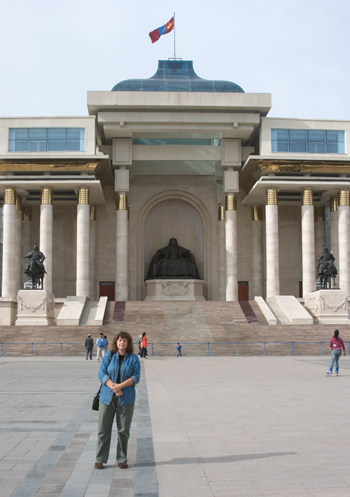
The Parliament Building with statue of Chinggis Khan, Ulaanbaatar, Mongolia, 2008
Unfortunately, most of the birds one will see in Hawaii are not native. It’s a long story, but the introduction of rats, cats and dwarf mongooses, along with habitat loss, have wreaked havoc with the native birds, many of whom are, or were, ground-nesters. Thirty-one species have gone extinct since 1800. The ‘Alala, or Hawaiian crow, went extinct in the wild in 2002. As of July 2010, 78 individuals were in captivity.
Red-billed Leiothrix
Almost every native Hawaiian bird is endangered, some critically. So it is ironic that one can stay at almost any resort and see lots of birds: saffron finches, common mynas, java sparrows, cardinals, house sparrows and others, but all have been introduced from other continents.
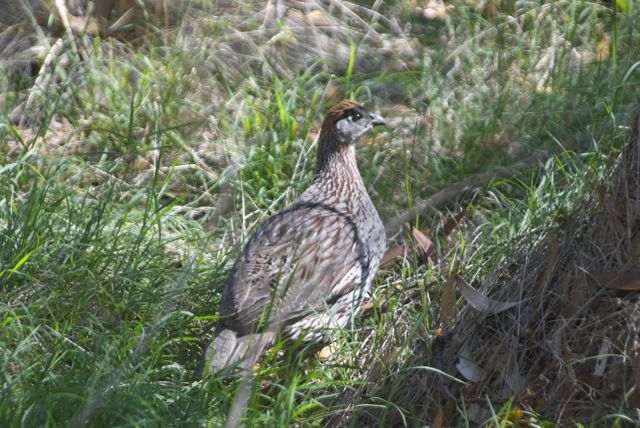
Erckel’s Francolin
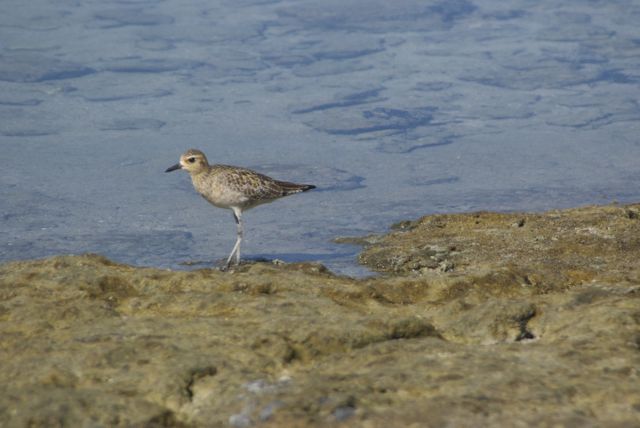
There are also migratory birds that can be easily seen along the coasts and beaches, mostly pelagic and shorebirds. However, they generally nest elsewhere.
I’m on the Big Island and have been able to do some bird watching. In a week, I have yet to see a native bird. But I have gotten good photos of some of the other species that are here.
Chinggis Khaan International Airport, Ulaanbaatar, Mongolia, 2006
As is obvious to anyone who follows this blog, I travel, often by air. I support any and all effective measures that will reasonably (there are no guarantees in life) ensure that I will get safely to and from my destination. So I have been following with interest the news about the new TSA screening methods: the backscatter x-ray scanners and the “enhanced pat downs” people are getting if they refuse to go through the scanners.
Both are an outrageous abuse of authority and, even worse, won’t stop a determined terrorist. But they have created a situation in which every air traveler (around 20 million a day) is guilty until proven innocent, which goes against one of the most fundamental tenets of our legal system.
Our civil rights are being violated and this must be stopped. We need real security in our airports and on our planes, not “security theater”.
The x-ray scanners strip you absolutely naked. The images are not supposed to be recorded and saved, but how can you be sure? Do you trust the TSA that much? I don’t. This isn’t about prudery, I assure you. Are you ok with the image in this great post by James Fallows? I’m not.
And it turns out to be completely unnecessary. Equipment exists that will do the job without the privacy violation. But I suspect their lobbyists didn’t get the fix in with the TSA, which defied the will of Congress and spent $25 million of federal stimulus funds for the current machines. One must ALWAYS follow the money.
The “pat-downs” are actually strip searches which include groping of genital areas. We tell kids to never let anyone touch them without their permission. The new caveat is “unless it’s a government employee”. Think they aren’t messing with kids? Guess again. Women and children in Afghanistan are not subjected to this. And it really crosses the threshold to become a sexual assault. Rape and domestic violence victims have had meltdowns when faced with either screening and who can blame them? How’d you like to start your honeymoon this way?
Apparently the purpose of the intrusive searches is to make everyone choose to go through the machines. Which is problematical for people with implanted medical devices, so they are stuck being molested. Here’s one person’s experience: “These clowns are NOT doing anything to prevent terrorists on our planes. If someone puts an explosive in a peach, TSA will ban all fruit on all flights. That works, huh? BTW, because of my ICD, I can’t go through the new (or old) scanners. Last trip out of ——- I had a very, very invasive and, shall I say, intimate pat down. I insisted on a private room and they made it worth my while!”
I have been told by someone else that they went through the scanner and then got the invasive search, too. WTF?
There are other accounts of how lines split at random and some must go through the back-scatter machines and some go through the old metal detectors. There seems to be no consistency in application, so, as usual, the devil is in the details.
There is no threshold of “Probable cause” being applied here, another violation of our rights.
But if you have enough money for a private plane, you get to skip all of the above.
If you are a pilot, as one pointed out, they can put you through the scanners till the cows come home, but you will still be flying the plane. And, I might point out, secure in a locked cockpit. Hello?
I’ve read snarky comments about how if you don’t want to go through the security, then don’t fly. Or they say, “use an alternative way to get there”. And I will get to Mongolia….how? But these kinds of idiot remarks completely miss the point.
Here is the relevant part of the Constitution:
“The right of the people to be secure in their persons, houses, papers, and effects, against unreasonable searches and seizures, shall not be violated…” – The United States Constitution, Fourth Amendment.
Seems pretty straightforward to me. THIS is the point. The Constitution trumps the TSA. It must.
Here’s what you can do to help. Visit the Fly With Dignity website. Sign the petition. If you are flying on the 24th, consider participating in the national Opt-Out Day. Details on the Fly With Dignity site. Look up the contact information for your Congressional representatives. Call or write to them. I’ve read that their rule-of-thumb is that one constituent communication equals 100 other people who feel the same way. So what you say will count!
“But more alarming than the apparatuses is our willingness to go lowing into the night. Incrementally, we adapt to the stripping of civil liberties until, with the passage of time and the blinkering of generational memory, we no longer remember when things were otherwise”
“…there are far too many reports of T.S.A. agents groping passengers,
using male agents to search female passengers, mocking passengers and
disdaining complaints”
* The Washington Post printed an article on January 1, 2010, calling Chertoff out for using his government credentials to promote a product that benefits his clients. It was revealed that Rapiscan Systems, the manufacturer of the naked body scanner Chertoff was recommending, was a client of Chertoff’s security consulting agency. * Rapiscan has since received over $250 million in scanner orders.
Lead article on the Washington Post site (punchline: the problem of virtually strip-searching people can be solved if the TSA will simply make some easy software changes)-
“Wattenburg said that when news reached Livermore in 2006 that the TSA planned to buy the new generation of “backscatter” full-body scanners, the problem seemed clear. “We knew what was going to happen,” he said. “People are immediately going to scream like hell because they’re taking the clothes off everybody.”
From the New York Times front page (the push-back is working, apparently)-
“John S. Pistole said on the “Today” show on NBC Monday morning that his agency was willing to rethink its policy on the physical screenings that have become a flashpoint of anger among travelers. “We’re going to look at how can we do the most effective screening in the least invasive way, knowing that there’s always a trade-off” between security and privacy, he said.”
I had the opportunity to spend yesterday morning and early afternoon at the Metropolitan Museum of Art in New York City before my evening flight home. (I was there for a Society of Animal Artists board meeting and added a little time for other things). My main purpose was to see the Kublai Khan exhibition. He was the grandson of Chinggis Khan, which I hadn’t realized until I started to learn about Mongol history. That will be a Mongolia Monday post at some point.
Afterwards, I wandered through the 19th Century European painting galleries and was reminded once again that there is no substitute for seeing masterpieces in the original. I also noticed quite a few paintings with animal subjects. I didn’t have my Nikon, just my iPhone. So the following images aren’t great, but they will serve to share my favorites.
I didn’t remember to photograph the labels for all of them, I’m sorry to say, but did track down titles and artist for all except one. But it really doesn’t matter who did them. The takeaway is to see and appreciate the great lineage of animal art that those of us who have chosen our fellow creatures as subjects are part of.
Tiger and Cubs- Gerome
Animal art has a long and honorable history in European painting and was not dismissed with the snobbery so many of us encounter today.
detail of horse painting- Bonheur
It is instructive to see how artists of the period, who had tremendous ability as painters in a variety of subject matter, could also do a specialized subject like animals extremely well. That is often not the case today.
Detail, camel
There was one entire room dedicated to European artists who painted North African subjects. Many also traveled to the Middle East. The collective term for them is Orientalists. I should do a post on them sometime since their approach and reaction to what they saw is interesting for any artist who, like myself, is also fortunate enough to journey to distant places.
Before the Audience- Gerome
What IS that black cat doing there? A spy, perhaps?
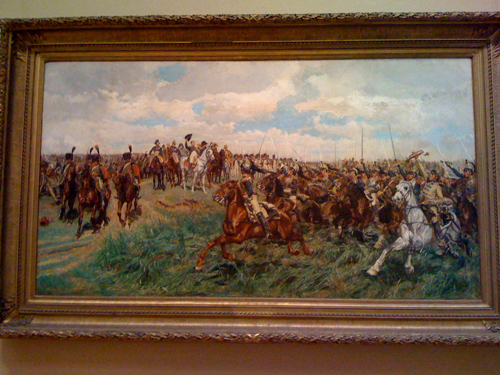
Friedland detail- Messonier
This is a detail from a massive painting of one of Napoleon’s greatest victories, with a cast of dozens. This horse is around 5″ from top of head to bottom of hoof. Stunning description of action and anatomy. Here’s the whole thing:
Friedland- Meissonier
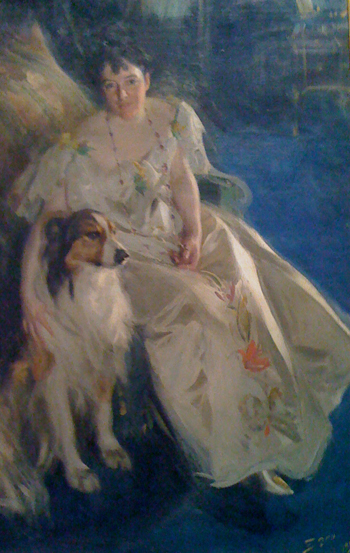
Since we have a rough collie in the family, I naturally had to have a photo of this one, which has a more old-fashioned shape to the head:
Mrs. Walter Rathbone Bacon- Zorn
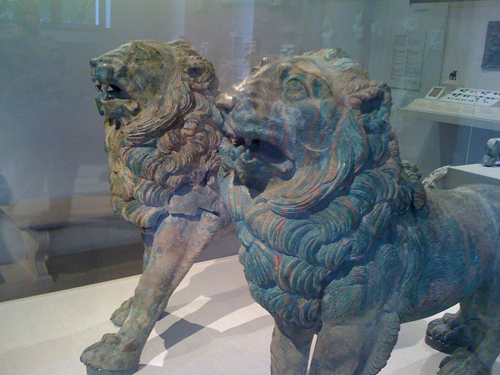
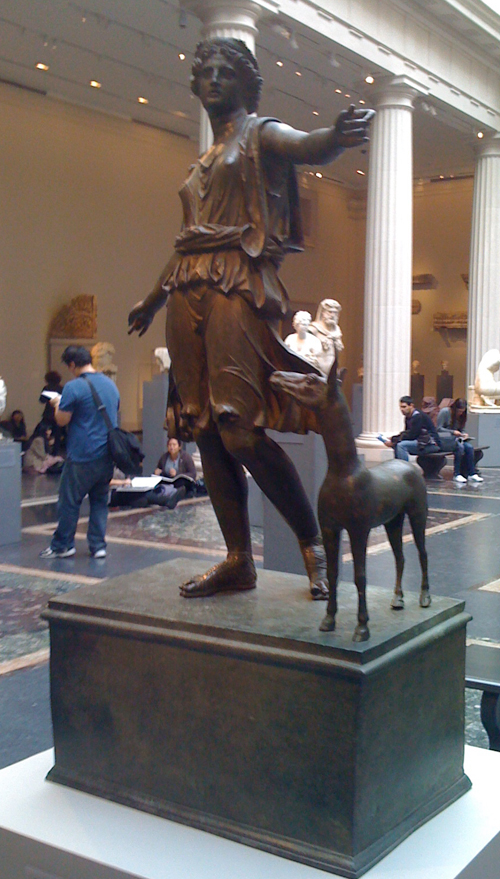
The Met also has a phenomenal collection of Greek and Roman sculpture. The main hall was filled with schoolkids drawing from the marble and bronze figures.
Bronze lions, ancient Greece
If you have access to a museum with animal sculpture, you have a great rainy day opportunity to go sketch animals that will hold still.
Statue of Artemis/Diana
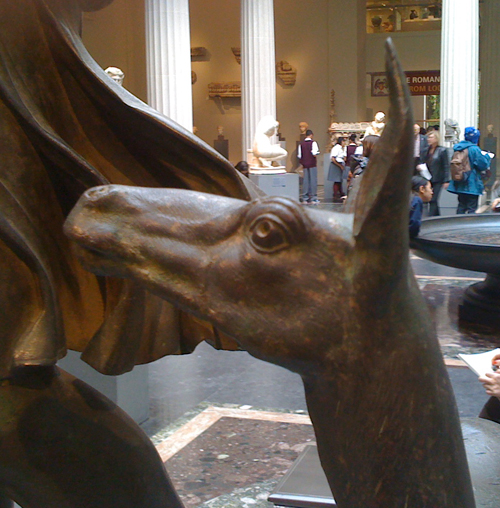
It’s interesting to note how artists interpreted something like the head structure of a deer over 2,000 years ago.
detail of deer's head
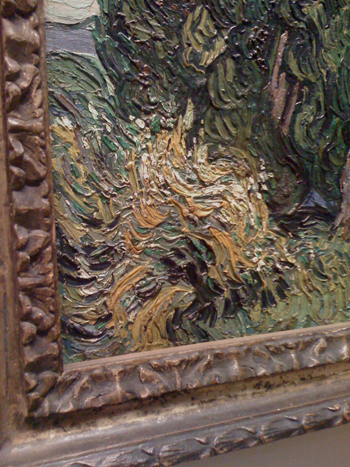
I also want to strongly make the point that there is no substitute for seeing great art “live”. Reproductions in books and posters are, at best, rough approximations. The color is probably not accurate. The size certainly isn’t. And size matters. The visual impact of a painting like “Friedland” is due in no small part to its large dimensions: 53.5″ high and 95.5″ wide.
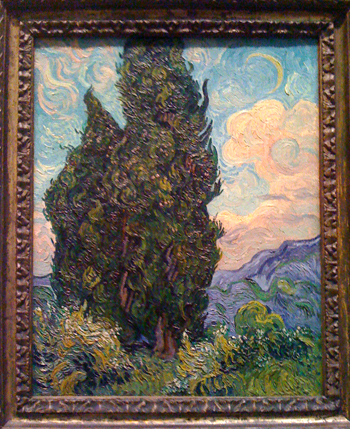
But what I think is missing almost the most is that a painting has a visual texture, sometimes subtle, sometimes not. Printing an image of a painting on a flat piece of paper eliminates that aspect completely. As an admittedly dramatic example, here is a Van Gogh. First the whole work. Then a detail shot at an angle that shows how the paint was applied. When he put it on this thickly, the painting almost becomes a live thing.
van Goghdetail
A painting like this is about more than the image. It’s also about paint as paint.






























 Susan Fox, American Artist