I’ll be back next week with Part 4 of the 2015 WildArt Mongolia Expedition. For the next few days I’ll be attending a great new local event “Plein Air at the Lost Coast” as one of the featured artists and will also be doing a presentation about my travels in Mongolia and a demo of how I work in the field. Cheers!
I’m interrupting my series on the 2015 WildArt Mongolia Expedition to share some special news!
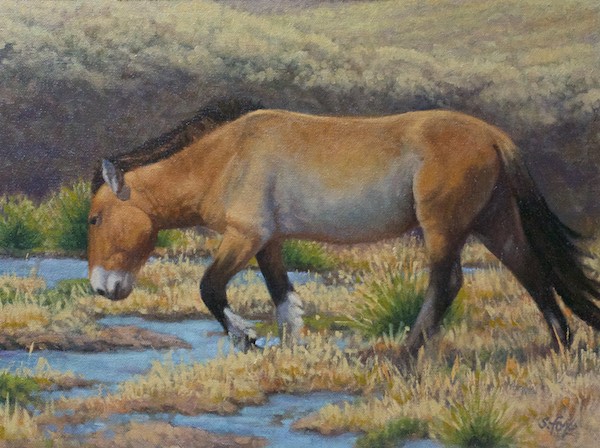
First up, my painting “Morning Drink” of a takhi/Przewalski’s horse mare that I saw at Hustai National Park in Mongolia has been accepted for the Salmagundi Art Club’s Fall Auction! This will be the first appearance of my Mongolia paintings in The Big Apple and I, of course, hope it won’t be the last. You don’t have to be at the auction to bid. More information here.
Next, an excellent writer, Bob Bahr, has posted two articles about me and my travels to Mongolia from phone interviews we did a couple of weeks ago. One, which emphasizes the land, is now on the Outdoor Painters blog. It’s called “Further Afield: Painting Mongolia”. The second is about the wildlife, particularly argali sheep, and is on the News page of the Susan K. Blackman Foundation website. “SKB” as it is affectionately called, holds a terrific art workshop/conference every year in Dubois, Wyoming. I went in the early years, but hadn’t been able to attend again until last year. The warm welcome I got and the support and interest during the years in between have been very gratifying and greatly appreciated. The SKC article is called “Susan Fox and the “Last Great Undiscovered Art Destination”, which is what I told Bob I believe Mongolia to be.
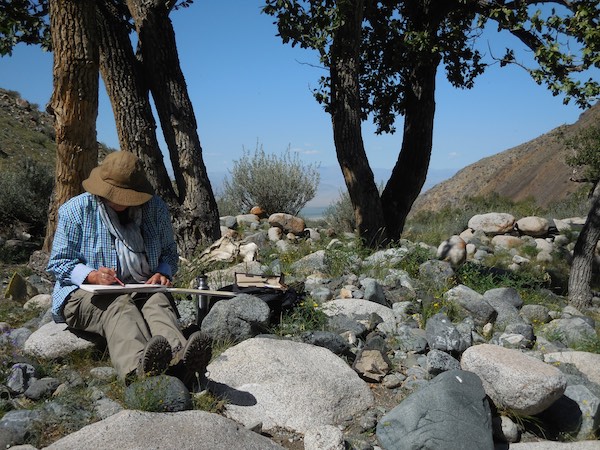
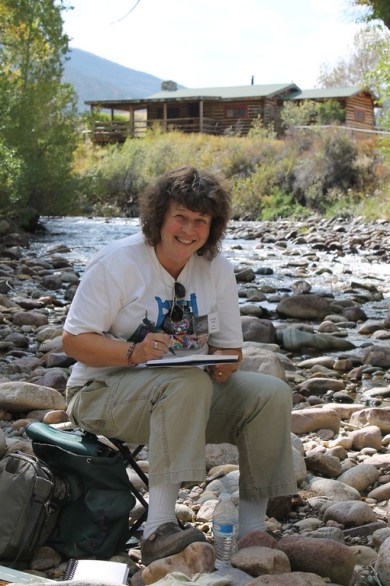
Sketching near our campsite on Jargalant Hairkhan Uul in Khar Us Nuur National Park
Lastly, there’s still time to register and attend Plein Air at the Lost Coast from September 30 to October 4 in Shelter Cove, California. I’m one of the Featured Artists this year! I’ll be giving a presentation about working on location in Mongolia, with some stories about my adventures over the last ten years in the Land of Blue Skies, and doing a demo.
Eowyn is the senior of our three cats at age 12. She’s mellowed over the years, but could probably have killed a Nazgul in her time. Her nicknames have included My Mean Widdle Cat and Mistress Mayhem. We found each other at the local humane society when she was about four months old, having been picked up as a stray on the street. (I was facing the full-length mirror behind where I sit in front of my easel, so that’s how I ended up in the shot.)
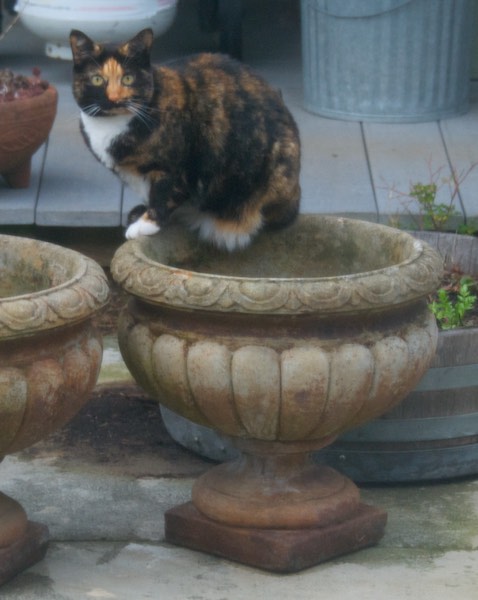
Michiko means “precious” in Japanese. She’s a tamed feral about age ten. We got her from the county shelter, where she was part of a feral litter that had been brought in. It’s been a long road for her to become a house cat and learn to trust. Her behavior was strictly patterned for many years. Recently, and we think it’s because of the calming energy our collie, Hailey, has added to the mix, Michiko has finally started to relax and even have little crazy fits, dashing around the house and batting at a catnip mouse. She’s so pretty I didn’t really care if she ever became a lap cat or wanted to be petted. Just having her around and giving her a safe home was enough. As it happens she sits on my lap and likes pets and skritches now.
This is Alexander A Really Great Cat. He was born at the county shelter and fostered in a home with other cats. He’s the first one we’ve had who actually has social cat skillz. He was a scruffy little thing who needed a bath immediately, which he took without a blink. He’s five now and has grown into this quite handsome guy who weighs around 16 pounds. He goes limp when picked up so our vet figured out that he is part ragdoll. He also has the long body. He’s a big lug of a cuddle bunny who has also killed black rats with a single bite to the spine….
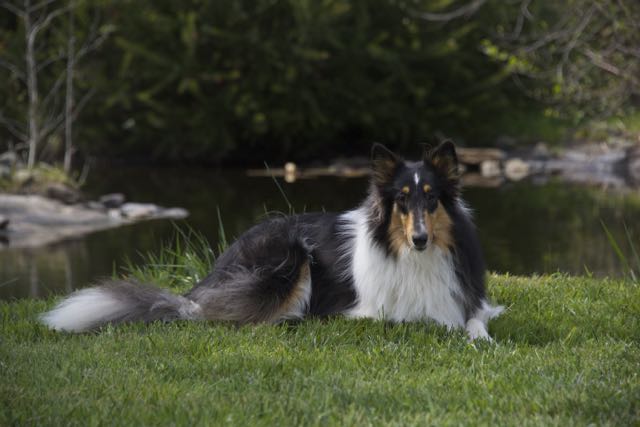
And a BONUS! Here’s our two year old tricolor collie girl, Hailey, looking pretty down by the pond. She watches over everything that goes on on the property, including the kittys, who all trust and like her.
Roy Chapman Andrews’ Flag, which he carried on his Central Asiatic Expeditions to Mongolia in the 1920s
The weekend festivities are over and The Explorers Club Annual Dinner was everything I’d hoped it would be. It was a full schedule, starting with a New Members Reception on Friday afternoon. But first I went to the Club the day before when it wasn’t crowded and explored the building from top to bottom. You can take a virtual tour here. I wanted to find one specific item, shown above- the Flag carried by Roy Chapman Andrews to Mongolia during his Central Asiatic Expeditions in the 1920s.
Roy Chapman Andrews’ photo on the wall of those who have served as President of the Explorers Club or received one of the Club’s honors
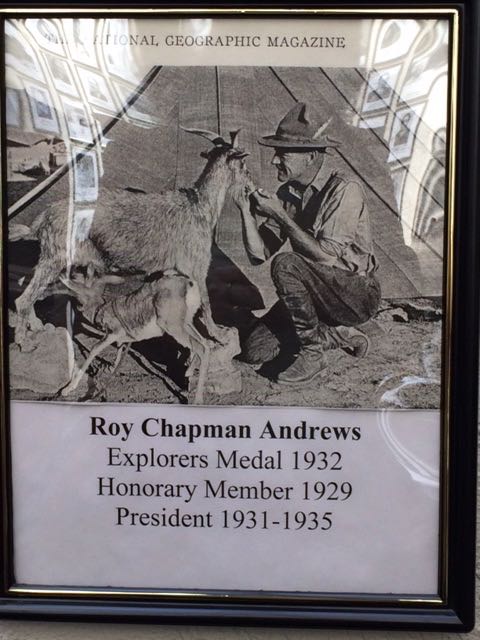
I also found this photo of him. Almost all the others are studio portraits. I love that his shows him in Mongolia out in the field. The domestic nanny goat is nursing what I think is a baby Mongolian gazelle. The Explorers Medal is the highest honor bestowed by the Club. Other recipients have included Admiral Peary, Jane Goodall, Thor Heyerdahl, the crew of Apollo 8- the first men on the moon, Sir Edmund Hillary, Mary Leakey (for the Leakey family), George Schaller, Michael Fay, Edward O. Wilson, Sylvia Earle and James Cameron.
Club headquarters, particularly the staircases, is filled with art, much of it created during expeditions. Unfortunately almost everything was either under glass or there was glare from the lighting, but here are a couple of examples:
The one above was painted on location in Africa by William Robinson Leigh as a study for a diorama painting. The watercolor below is one of a series done on location in Antarctica (I couldn’t read the name of the artist).
There are many rooms, all filled with art, artifacts and objects brought back from over 100 years worth of expeditions. The “Trophy Room” has been the subject of some controversy over the years, given today’s awareness of endangered species. But at one time expeditions were sent out by major museums like the American Museum of Natural History specifically to collect specimens for display. Hunting was viewed differently in those days. The mounts and skins in the room were donated in good faith and will probably stay where they are.
Here’s a corner in one room with a bucketful of spears and a portrait of Teddy Roosevelt, who was a member of the Club.
The weather took a twist on Friday afternoon with quite a snowstorm. New York City got close to 4″ in a fairly short time. It made getting around pretty interesting for this native coastal Californian.
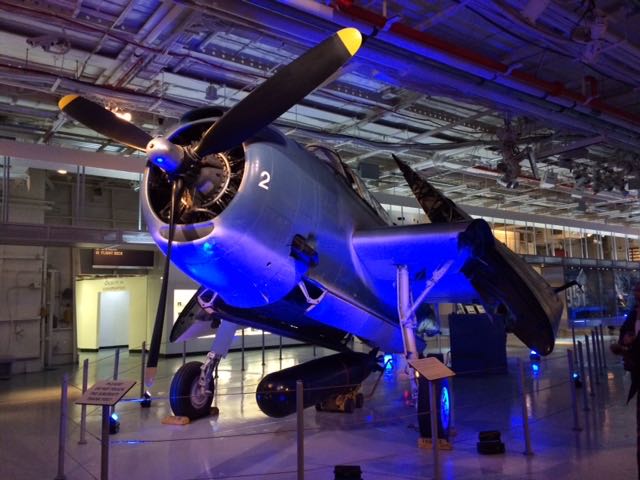
Friday evening the festivities officially kicked off, snow or not, with a cocktail party on the hanger deck of the USS Intrepid, a WWll-era aircraft carrier, which is now a floating museum. I was having too much fun, plus trying to find some people who I knew had been to Mongolia, to take many photos, but here’s one of an Avenger. Its wings fold up so that more would fit on the carrier.
The next day my artist friend and colleague Alison Nicholls and I had time to go visit the Salmagundi Art Club, one of the oldest art clubs in the country, having been founded in 1871. We poked around the Library, checked out the newly and beautifully renovated main gallery space and enjoyed the original art hanging on the walls. There was still plenty of snow on the ground and Central Park was really lovely.
Saturday evening finally arrived and it was time to go to the American Museum of Natural History for the 111st Annual Dinner. It was pretty chilly but we stopped long enough so that Alison could get a photo of me at the museum entrance. I made a dress to go with a vest I brought back from last year’s trip to Mongolia and wore a pair of gold-stamped red leather Buryiat Mongol boots with upturned toes. I also carried a felt purse which was a gift from Ikh Nart Is Our Future, the women’s felt craft collective which I help support. It has an embroidered patch of the Ikh Nartiin Chuluu logo on it.
Inside, an old Explorer Club tradition was being carried on…serving what for westerners is extremely unusual and exotic food. There used to be an entire buffet, but now days it’s one dish. This year it was….tarantula meat in a kind of a casserole. No, I didn’t try it. I didn’t want to wait in line. But I did take a photo.
Also in the entry rotunda were two fossil dinosaur skeletons lit up in glowing purple. Quite a few of the attendees were wearing clothing from other countries, so I fit right in.
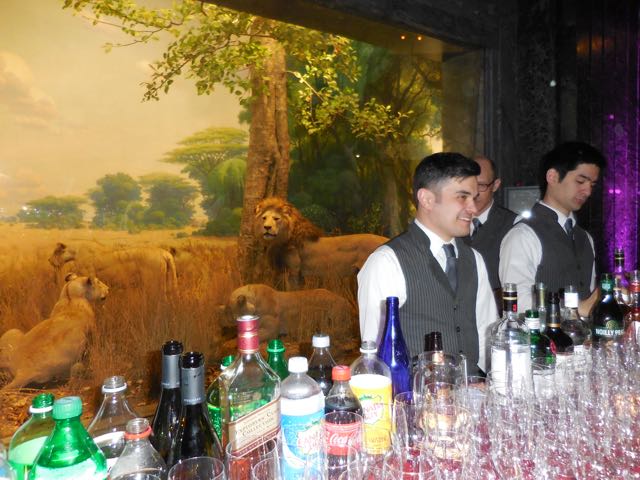
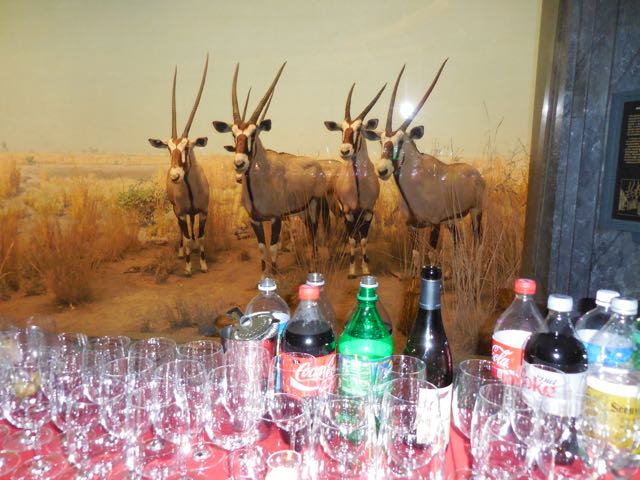
The before dinner gathering was in the famous African Hall. One really had to be there, but these will give you an idea of what it was like to party in one of the world’s great museums:
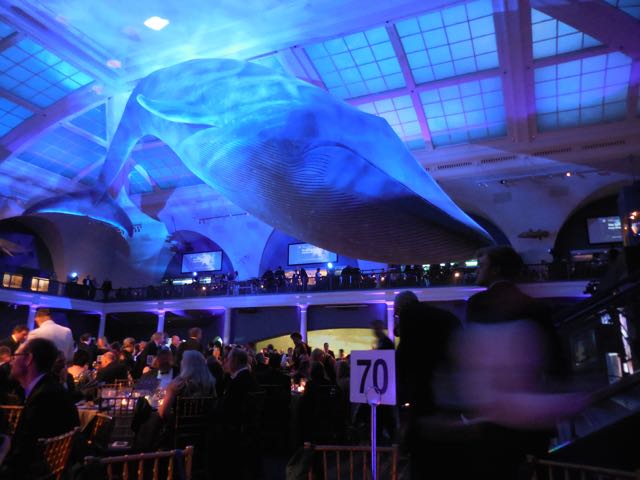
The pre-event announcements had said that we would be “dining under the blue whale” and they weren’t kidding. Here’s the view from our table in the Milstein Hall of Ocean Life. The lighting on the full-size model of the whale was almost unearthly. Appropriate for an ocean creature.
One of the main orders of business for the evening was the giving of awards and honors. Mendip Singh Soin, who is a good friend of Jan Wigsten, one of the partners who owns the tour company I work with, Nomadic Journeys (small world story), received a Citation of Merit. I had chatted with him the previous evening, so it was fun to see someone I’d met on on the podium.
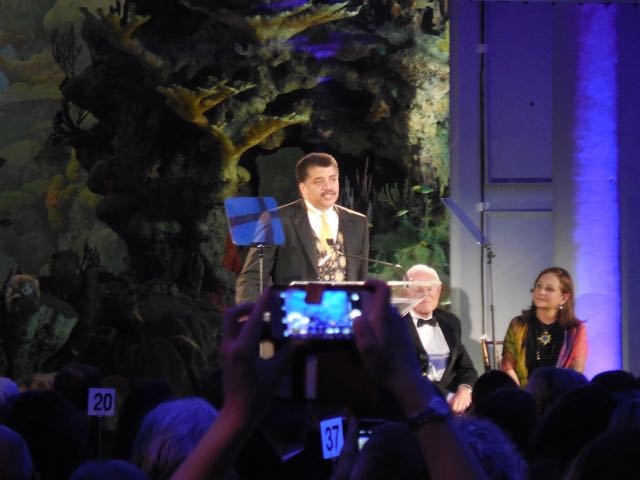
The highest honor that the Explorers Club bestows, as I mentioned above, is the Explorers Medal. You can read the full list of previous recipients here. It is long and it is illustrious. And this year the honoree was *drum roll* Neil deGrasse Tyson.
We were way in the back of the room, but I managed to get a few photos of him giving his acceptance speech. And that concluded the formal program. Everyone, or at least it seemed so, adjourned back to the African hall for more merriment and visiting. We stayed to the very end and made our way out after midnight. And so ended my first-ever Annual Dinner. And I don’t plan for it to be my last!
But first, here’s a photo that I took from the plane as we flew over the Sierra Nevada mountains heading east from San Francisco. There should be nothing but white in this picture from top to bottom. There is no snow pack again this year, which means drought conditions will continue. A third of the state’s water from from winter snowfall in the Sierra Nevadas. There’s more info. here.
I’m now in New York at the Hotel Newton, getting ready to head over to The Explorers Club to poke and around and meet up with my host for the weekend, artist and Society of Animal Artists colleague Alison Nicholls. We’ll be going to the Bruce Museum in Greenwich, Connecticut this afternoon and meeting up with artist and also Society of Animal Artists friend and colleague Sean Murtha, who works at the museum. Check out their websites by clicking on their names. I think you’ll enjoy seeing their work.
And finally, if you’re not familiar with The Explorers Club, of which I became a Fellow last April, you can find out more here. The Saturday night festivities will be live-streamed.
I’m very excited to announce that I’ll be one of the Featured Artists at “Plein Air At The Lost Coast”! This is the second year of this great Humboldt County, California event and I’m looking forward to being a part of it. It will be in Shelter Cove from September 30 to October 4. Registration is open now and you can find out all the details here. I’ll be there all weekend. On Thursday evening I’ll be doing a watercolor demo and giving a presentation on my painting and travel adventures in Mongolia. Readers of this blog know that watercolor is what I take to Mongolia for working on location, as in the example above. The event also has a Facebook page here. Shelter Cove is a small community on the north coast of California, about a five hour drive north of San Francisco. It’s 28 miles west of Garberville off Highway 101. There is spectacular ocean scenery, a black sand beach and hiking trails in the surrounding forest. Come join us!
Getting my paints wetted and ready. I’m using a set of Yarka watercolors.
A few days ago it was the 25th Anniversary of the fall of the Berlin Wall. Like millions of people around the world back then, we were glued to the tv watching something we never thought would happen in our lifetime and then it seemed, in an eyeblink, it was gone, along with the Soviet Union.
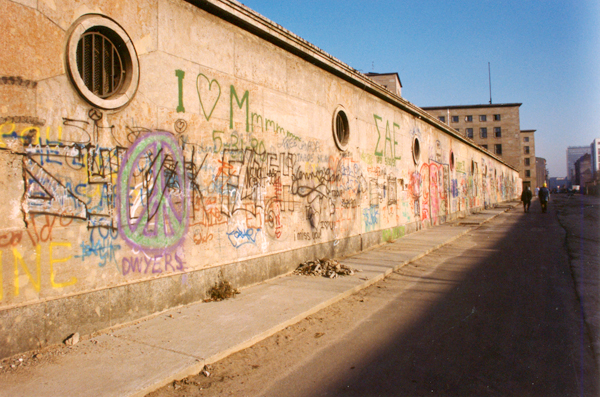
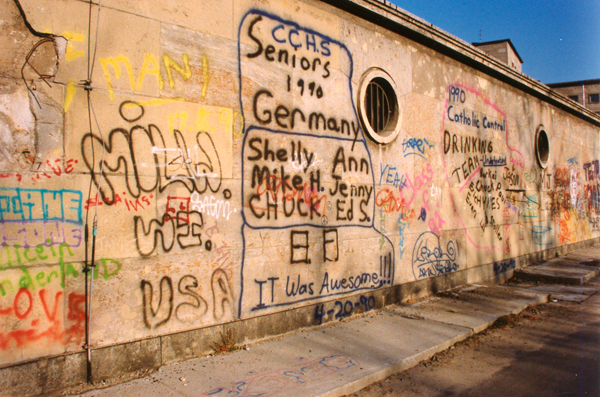
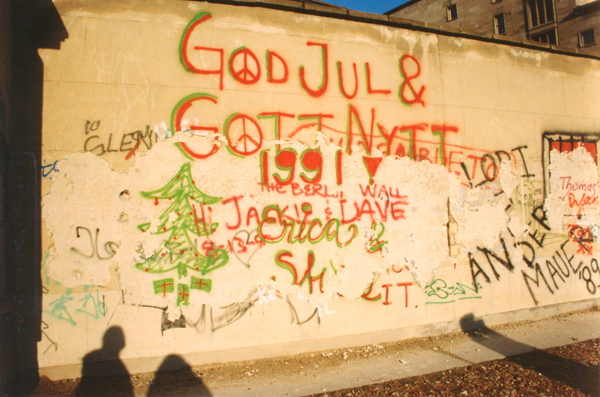
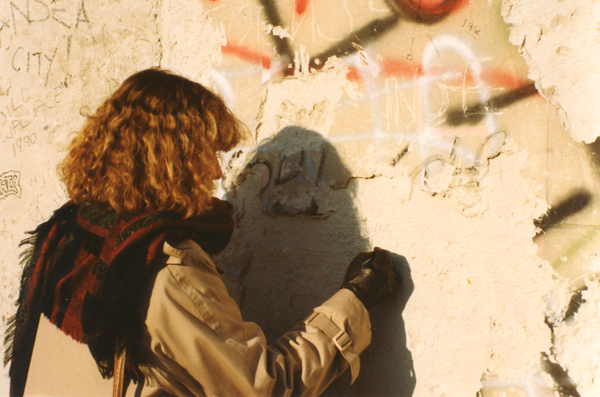
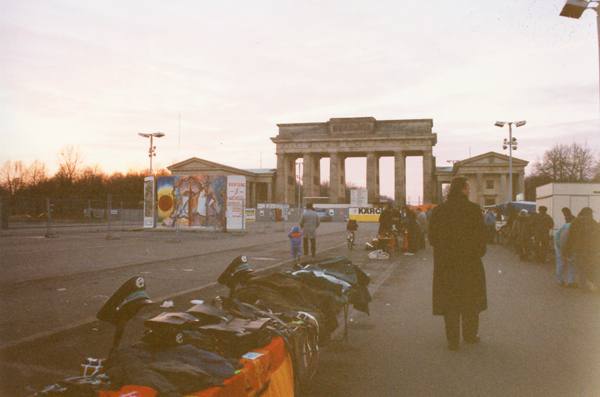
I’ll always be kind of sorry that we didn’t whip out the credit card and hop a plane to go and be part of it. But in December of 1990, two months after Unification, we did travel to Germany for a business trip my husband had in Wiesbaden. Afterwards we got a rental car and headed east. That part of the trip is a story for another post, but we simply crossed the old border via a country road into the now-defunct East Germany and drove to Berlin. What follows is an album of photos I took on the day we explored the area around where the Wall had been. I thought it would be good not to just let these photos of an historic time sit in a photo album, but get them out there as one eyewitness record of a moment in time. They were taken with a Nikon N2000 film camera and the 4×6″ prints scanned on an Epson scanner into Photoshop. I only did a minimum of adjustments, preferring to leave them as I took them as much as possible.
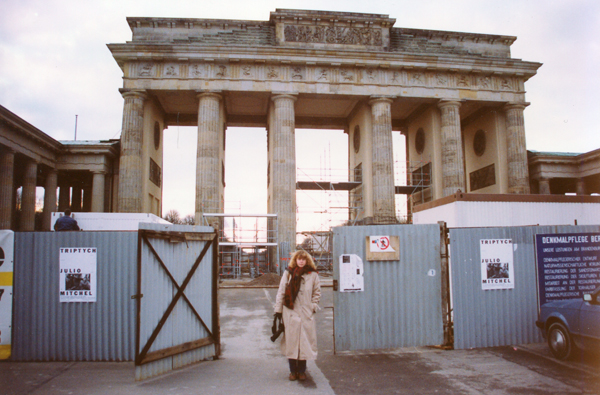
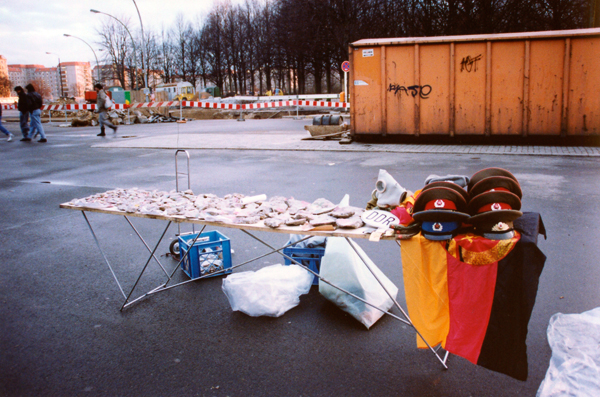
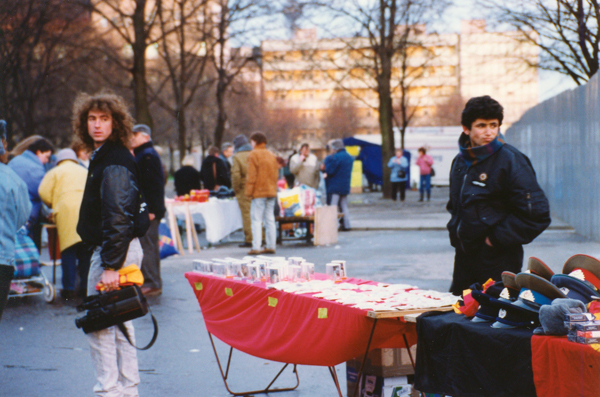
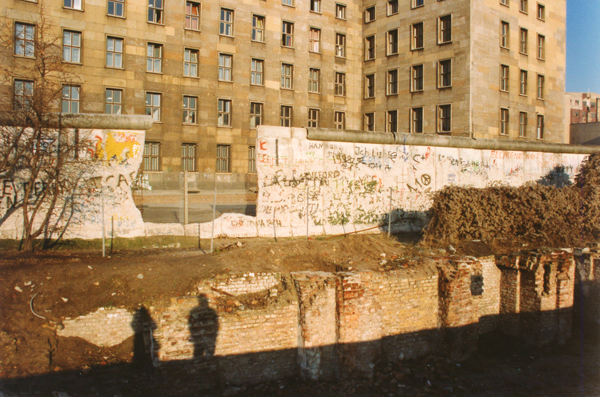
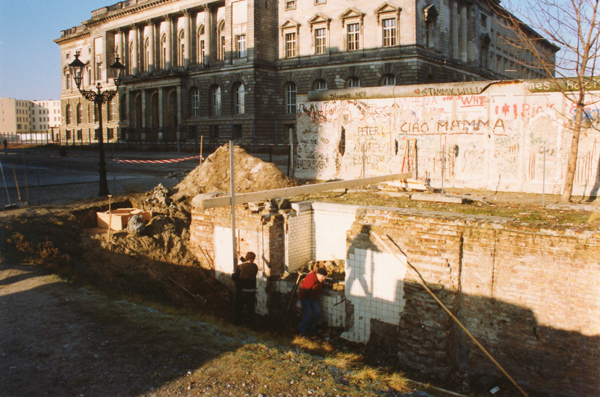
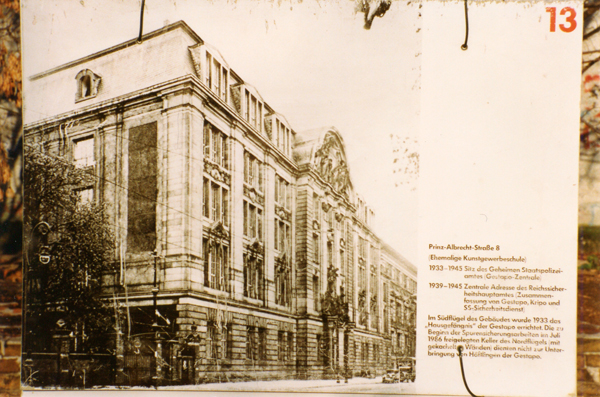
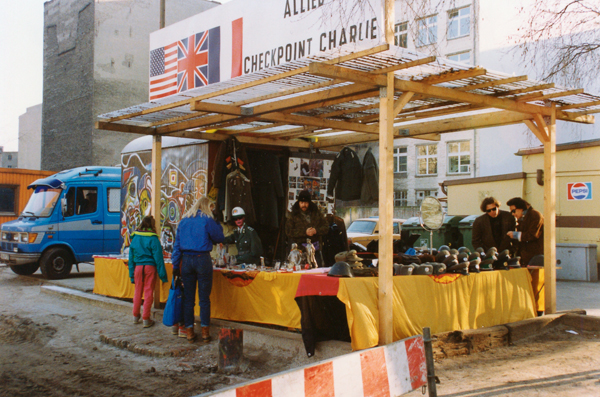
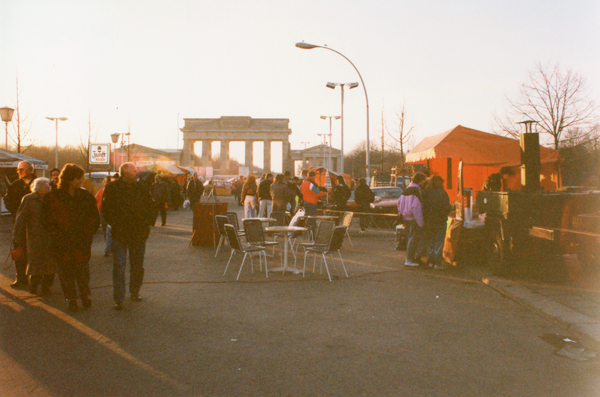
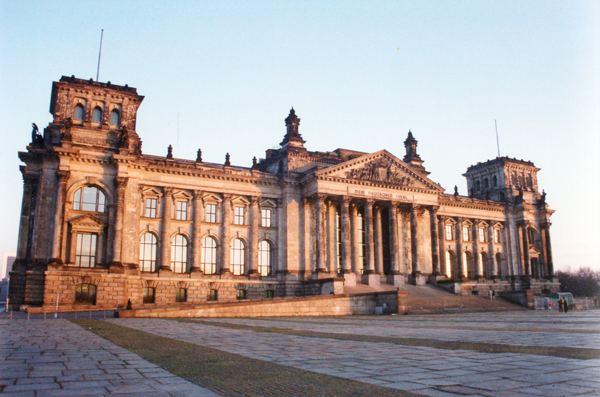
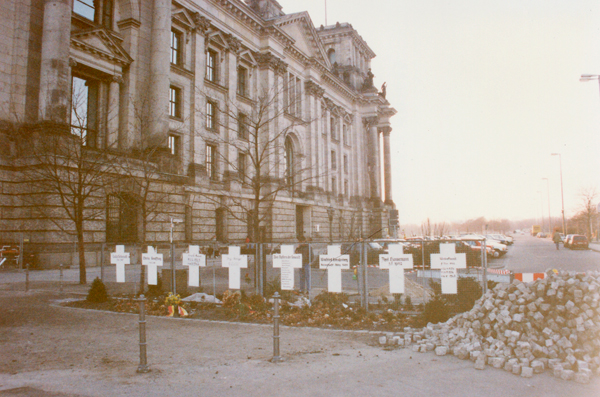
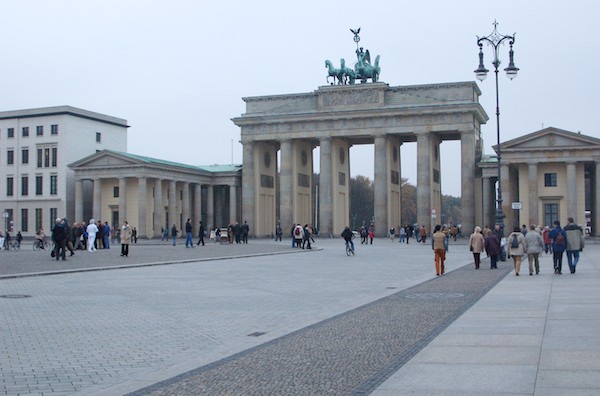
Our first stop was the Brandenburg Gate, which was undergoing repairs and restoration and was blocked off.Nearby was a piece of the Wall and a burned-out Trabant car. There were many of these scattered around the city and alongside the roads, mostly orange or lime green. A popular joke about this much-hated vehicle was “How do you double the value of a Trabbi? Fill it with gas.”One of the first things we noticed were the vendors set up all around the Gate. They were selling well, just about everything moveable that had been connected to East Germany….uniforms, currency, official documents, ID papers, medals. And also pieces of the Wall, some big chunks just piled on the ground and some mounted in little plastic souvenir boxes.The scene around the Brandenburg Gate.One of the vendors. They all seemed to be from Eastern Europe, speaking languages like Bulgarian, not German.Pieces of the Wall in the little plastic display boxes. We have a couple, but they’re packed away somewhere at the moment.A section of the Wall with one of the holes people punched in it with whatever they could find.The site of Gestapo headquarters.Another view of the site of Gestapo headquarters, which had been leveled.A sign at the site showing the building that had been there. So much evil, pain and terror occurred in that place, but it’s gone forever now.Colorful Wall section.A long stretch of the Wall. Walking along it was a somewhat surreal experience.We sure weren’t the first Americans there, not by a long shot.Since it was December, someone left a holiday message.We talked it over and decided, what the heck,, we’d add our names. All we had was a pen, but we managed.Me writing on the Wall.My husband, David, writing on the Wall.Street scene.Street scene.Checkpoint Charlie had been turned into a temporary souvenir shop.Street scene with the Reichstag in the background.Impromptu street cafe with the Brandenburg Gate in the background.The Reichstag (German parliament building)Corner of the Reichstag showing patched bullet and artillary shell holes from WWII.Memorial between the Reichstag and the river for those who died trying to get to freedom over the Wall there.The Reichstag after the end of the War.The Reichstag during a return trip to Berlin in October, 2004.I couldn’t resist grabbing a quick shot of this beautiful woman in her fur coat and hat. I got a stream of quite angry Russian in return, along the lines of “It’s really rude to take photos of people!” (my husband knew enough Russian to translate). Of course in the old Soviet bloc no one was used having their picture taken casually in a public place, so I couldn’t blame her for being upset. I apologized and we went on our way. Quickly. But I’m really glad I got the shot. I hope she has lived a good and happy life.More street vendors.Street vendor with the Brandenburg Gate in the background.Brandenburg Gate, December 1990 with vendors selling East German military uniforms.The Brandenburg Gate on our return trip to Berlin in October 2004.Our piece of the Berlin Wall. It’s about 10″ wide. I had to dig through a few piles to find this colorful piece.
Sorting through old files the other day I came across a bit of computer history.I’m sharing it here because it had a bearing on me even getting interested in computers and also as a public archive since I doubt there’s much left anymore like what I’m posting here.
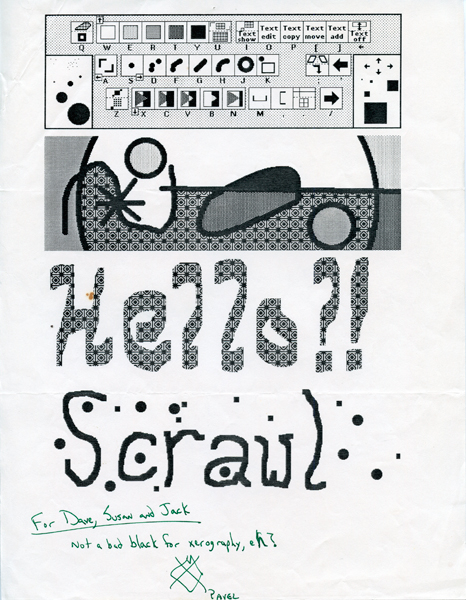
In 1981-82, my husband at the time and I were taken for a visit to Xerox’s Palo Alto Research Center (PARC) by a friend who worked in IT so that I could see this new way of using a computer that let one draw pictures on the screen (I was a freelance graphic designer at the time). We were welcomed by one of the employees, Pavel, who did the demo above and then turned me loose to play with this cool thing called Smalltalk.
At a time when “computer” meant large rooms of very expensive machines or a small black monitor with clunky green type, Smalltalk was a mindblower. DRAW with a computer? Really? Really.
Of course, those of you who are in IT or know the history of Apple are aware of the version of events in which Smalltalk was the precursor to the Mac interface that made computers easy to use “for the rest of us”. If you want to know more about that history and connection, here’s a account. For years, the story has been that Steve Jobs “stole” the concept of Smalltalk (and a lot more) after his own visit to PARC. Whether that’s true or not is outside the purview of this post, but you can read more here and here if you’d like.
Today I have a 3rd Gen iPad with a half dozen or more apps for making images. I use it as a sketchbook, as do some of my artist colleagues. A couple are even teaching classes and workshops on how to use an iPad as an art media. But in another time and place, here’s what one artist spent a happy hour creating on the first computer which had software that let one draw….
Smalltalk art 1
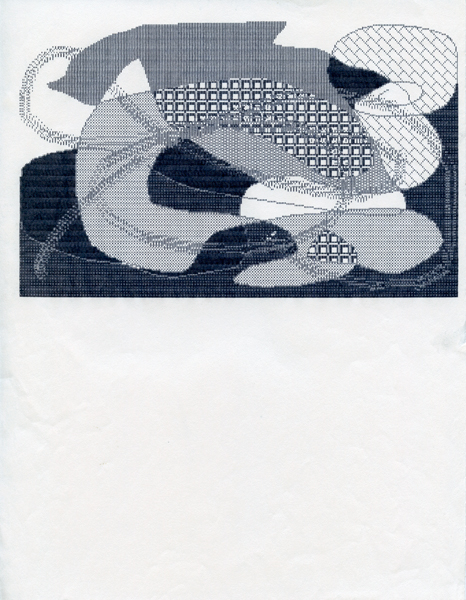
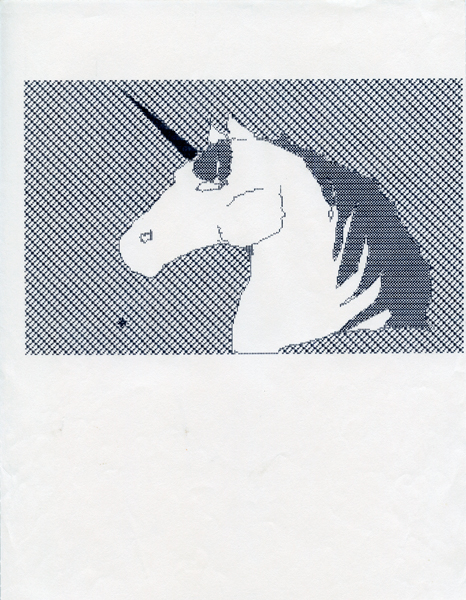
All of these were printed out for me on a small plotter. I can’t remember what I was drawing with, but it must have been a mouse.
Smalltalk art 2Smalltalk art 3Smalltalk art 4
I was a member of the Society of Creative Anachronism at the time and much into unicorns…
Smalltalk art 5Smalltalk art 6Smalltalk art 7
I’ve never forgotten that magical afternoon at PARC when, for me, computers and art came together for the first time.
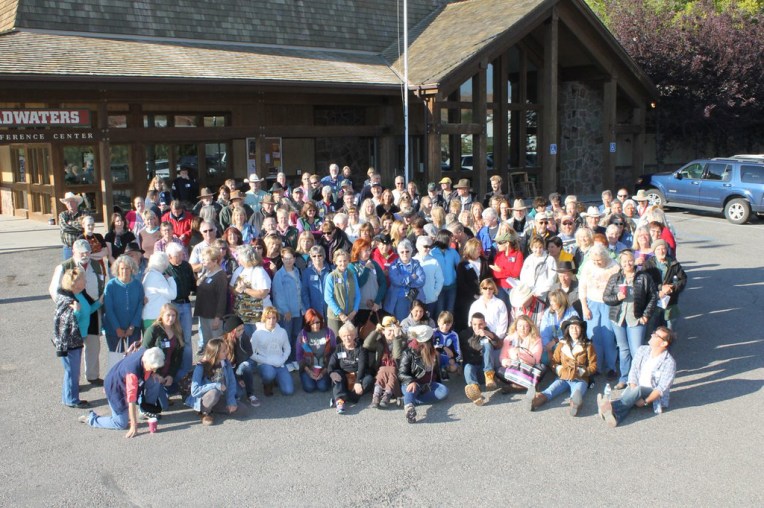
The annual exercise in cat-herding….the official SKB group photo. I’m somewhere towards the back on the right. (Photo by Anthony Cannata)
The main reason for my road trip to Wyoming at the beginning of last month was to attend the Susan K. Black Foundation Workshop for the first time in too many years. My travels to Mongolia have often gone into September and the workshop is always the second week so that it will be right after the Jackson Hole Fall Arts Festival. But this year I was home by the end of July.
In every good way, nothing had really changed and the welcome I got was touchingly warm. What sets this workshop apart is that there are always a number of instructors and one can bounce around between them as one wishes. You can learn from painters in oil, acrylic and watercolor. Plus, this year, sculptors. Even better, anyone who has been an instructor is permanently invited to come back every year and many do, so it’s equal parts workshop, a reunion of artist friends and colleagues and a gathering of the animal art and landscape clans. All in an informal environment with great food and terrific scenery at the Headwaters Arts and Conference Center in Dubois, Wyoming, which is about 90 minutes from Jackson.
There’s always a Special Guest Instructor and this year it was none other than James Gurney of Dinotopia fame. He also presides over one of the most popular art blogs in the internet, Gurney Journey, and has written what has become a standard book on the subject “Color and Light”. His endlessly inventive ways to work on location have been a real inspiration for me personally. So I wasn’t going to pass up the chance to watch him in action.
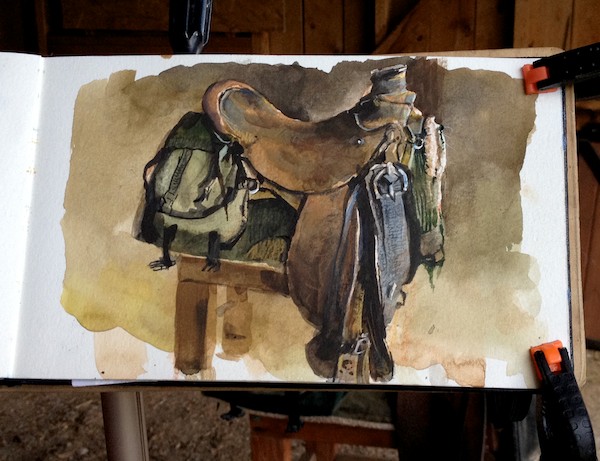
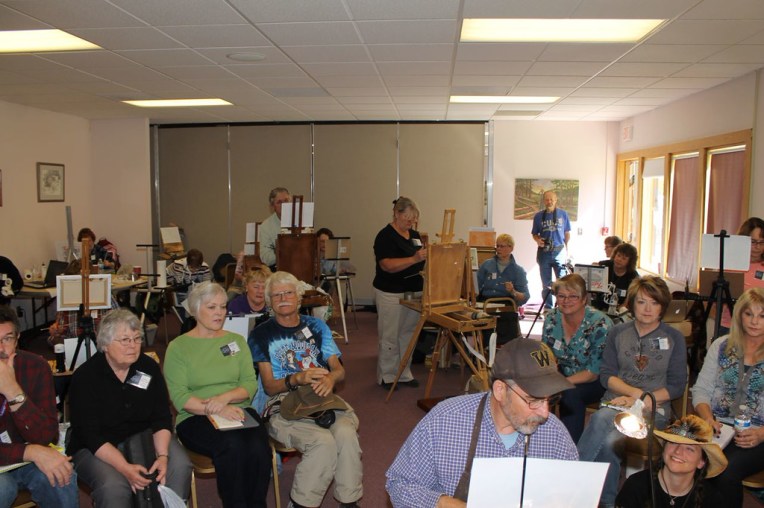
The first day James explained his basic location painting set-up.We got to see it in action right at the conference center.He was painting a scene from the kitchen as the staff prepared our meals.Saddle study by James Gurney
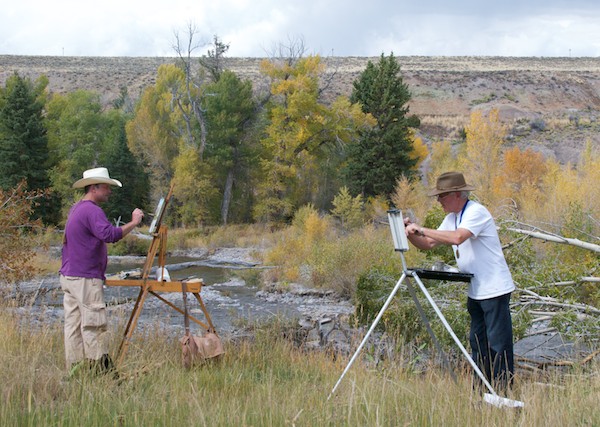
There were plenty of opportunities to work on location, including a couple of local ranches.
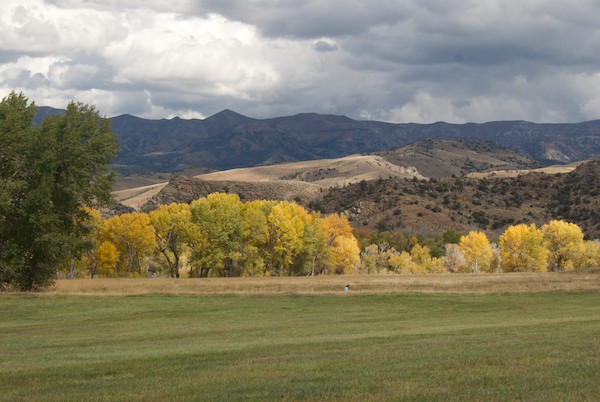
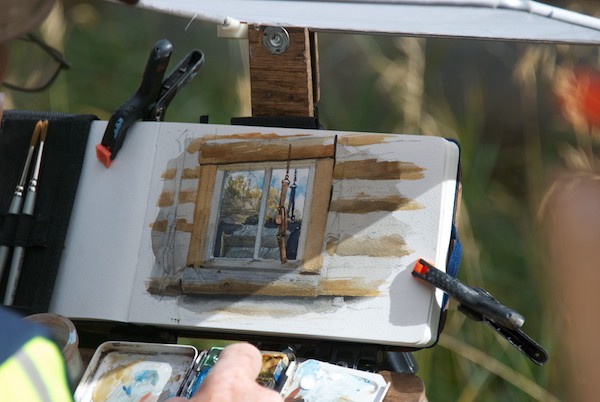
I found a nice spot down by the creek at CM Ranch. (Photo by Anthony Cannata. Thanks!)Picnic lunch at the Finley ranch.Lee Kromschroeder getting ready to paint.Some of the great scenery with the cottonwoods coming into their fall colors…James Gurney and his wife, Jeanette, painting on location at the Finley ranch.In-progress casein painting of old traps hanging on the wall of the log cabin.Bob Bahr and Heiner Hertling getting serious with the scenery.Our host, John Finley. His ranch has been in his family for over 100 years.
One of the best parts of the workshop is the good times with artist friends and colleagues, often in the evening at the local saloon, the Rustic Pine Tavern.
Guy Combes discovered a flyer for the workshop in a local newsletter so of course there had to be a photo. And since we’re all animal artists I had to take one of him and his partner Andrew Denman under this imposing moose head.
Besides working out on location, attendees could also do studio painting.
I spent a day in Greg Beecham’s class, getting useful tips and advice on wildlife painting. I’m in the back on the right. (Photo by, I think, Anthony Cannata)
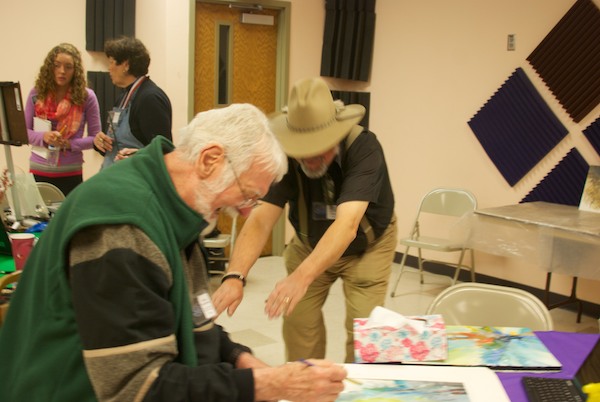
One of the highlights of the week is the “Quick Draw”, which is actually a “Pretty Quick Paint”. It’s a great chance to watch a lot of very accomplished artists in action at once, creating auction and raffle-worthy work in front of a large crowd, including fellow artists.
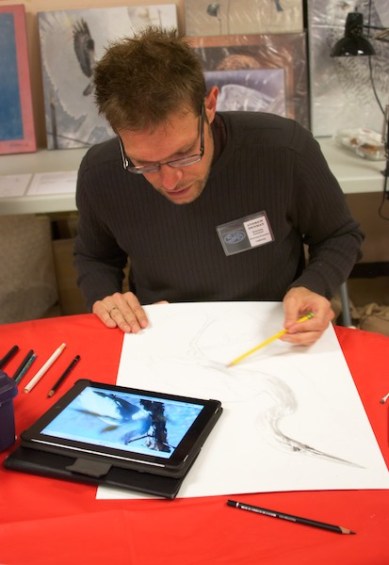
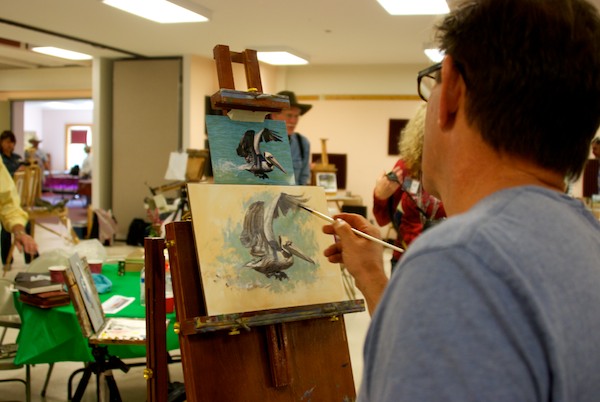
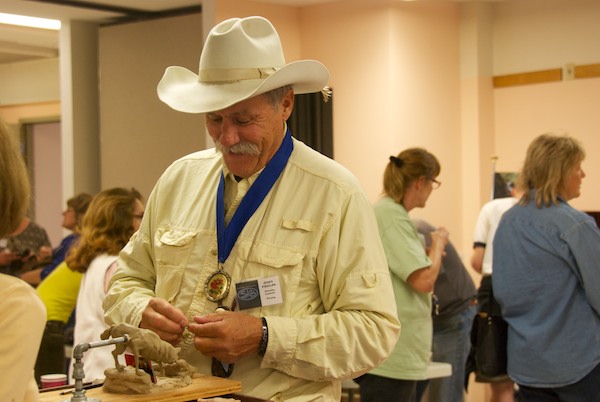
John Seerey-Lester bows before Mort Solberg, just to make Mort crack up while he’s trying to paint. It worked.Andrew Denman working on a graphite drawing of an egret.David Rankin getting ready to paint.Matthew Hillier hard at work. This was his first Quick Draw.But he obviously wasn’t fazed.Christine Knapp worked on a fairly large sculpture.John Phelps created a small wolf.Lee Cable painted a portrait of a horse.Guy Combes did a lion.Greg Beecham harassed David Rankin.
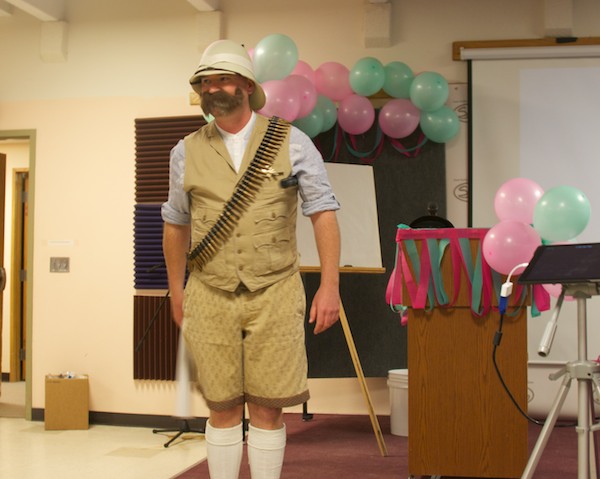
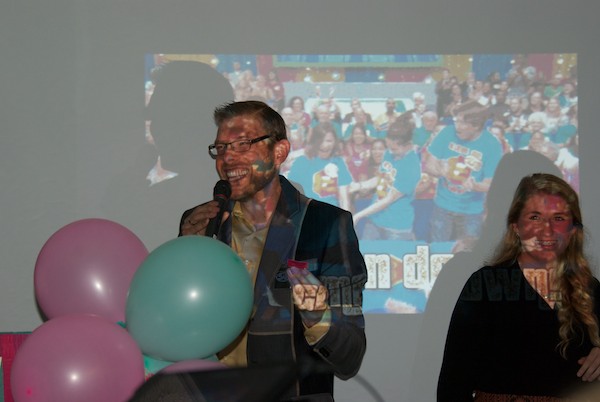
The final evening was an entertainment-packed extravaganza, starting with two suspiciously familiar faces who introduced themselves as Sir Charles Willoughby, who somehow had to keep order (good luck with that), and Chip Chippington (all the sleazy game show hosts you’ve ever seen rolled into one hilarious package).
Sir Charles Willoughby (aka Guy Combes)Chip Chippington (aka Andrew Denman) and his lovely assistant, Suzie Sparkle.
The fun started with a quiz to identify which instructor various species of dinosaurs were named after…
And I’m sorry to say that by this time I was laughing too much to get any pics of the rest of the show.
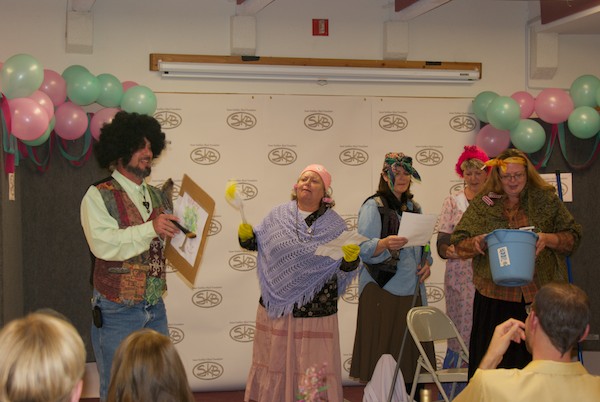
The night was capped by open mic performances, including one by the awesome kitchen staff.
A certain instructor (who painted the horse’s portrait for the Quick Draw) came in for some ribbing.As did a certain well-known tv artist who painted “happy trees”.
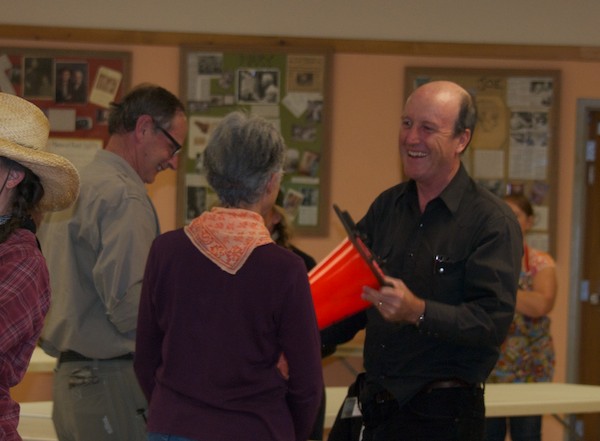
There was a point during the early part of the evening when a slide show was shown of various attendees and instructors sporting a really impressive variety of hats. Getting into the spirit after the lights came up, James Gurney popped one of his Dept. of Art traffic cones (used to create space around where he is working on location in urban areas) on his head…













































 Susan Fox, American Artist