On December 10, 2007 I published the first post on my new blog. Since then, except when I’ve been traveling, and sometimes even then, I’ve posted once a week and, for a year or two, twice a week. In the last few years, however, the way people get their information online has changed. Instead of sitting at a desktop or laptop computer they’re now mobile on smart phones and tablets. And they aren’t reading blogs much, as least as compared to the past. Long form is out, Tweets and Instagrams are in. My stats from the past few years show a steady drop in views. Super popular bloggers like John Scalzi have seen this happen too. So it’s time for a change. But….
One of the valuable things about my blog is the body of information that has accumulated about me, my art, my travels and whatever else has caught my fancy. I link people to various posts for a variety of reasons and for that it’s a resource that I will continue to use.
But it’s time to tweak my choices of the social media platforms I plan to use most in the coming years. My blog is now a “Journal”. I’ll post when I have information to communicate that requires the long form that a blogging platform is so great for. I plan to still post multi-part series on my travels, especially Mongolia, and I have some very interesting things in the works for 2018 that I’ll be announcing and discussing on my Journal.
I’m becoming much more active on Twitter (s_fox), Instagram (foxartist), LinkedIn (Susan Fox), along with my new Facebook group, FoxStudio, which you can find here. I’ll be closing down my public FB page on Dec. 31. You can also stay in touch with me through my quarterly newsletter “Fox Tales”. If you’d like to subscribe, just message me through my Contact page. Look for the announcement of the launch of my Patreon site in January!
Thank you to all my followers who have welcomed me into your inbox all these years! You’ll still hear from me, just not as often. I wish everyone the best in 2018!
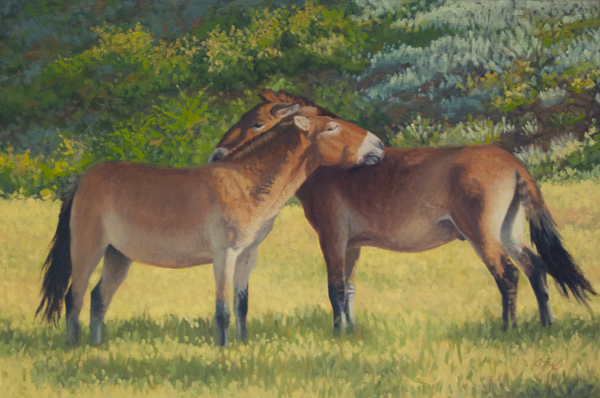
I entered my first juried competition in 1991, an Artist’s Magazine contest for wildlife/animal art. I got an Honorable Mention for a colored pen and ink drawing of a wild boar I’d photographed somewhere. Woohoo! I was out of art school, but had not started to paint in oil yet, a childhood dream. I was able to begin that with two years of private study in 1995. In 1997 I decided to focus on painting wildlife in oil. In 2003 I was accepted into my first national juried exhibition, the Art for the Parks Top 100, with a painting of a Yellowstone bison. Since then there’s rarely been a year that I haven’t had work in at least one juried show or another. But this one is really, really special. “Mongol Horses” will be in the Salmagundi Club Annual Member Exhibition, which has been held every year since the club was founded in 1871. It is open to all media and “is meant to showcase SCNY member’s finest work”. It’s the first time I’ve gotten in. Not only is it for all subjects, but I’m very proud to have one of my Mongolian subjects in this prestigious show!
This piece is part of a “new direction” my work is going. I’m drawing, so to speak, on my background in graphic design, calligraphy and love of historic decorative styles, to move away from animals in a landscape and put the focus directly on them. This makes sense for me because since I was a child I drew animals constantly.
In other news, we’re off to Hawaii next Tuesday for a two week vacation. I’ll be taking my sketching and watercolor supplies with me and will be posting here, on Instagram and on Facebook. Come follow along! Aloha!
Details to come, but I will be having a solo exhibition at the Westhaven Center for the Arts, near Trinidad, California, in November and December. It will be a retrospective to celebrate my 20th year as an oil painter. I’ll be showing work that has been accepted into juried shows and/or won awards, along with a look back at my artistic roots as a kid who loved to draw and then worked for twenty years as a sign painter, graphic designer and freelance illustrator. I studied the craft of oil painting with a local artist for two years from 1994 to 1995. In 1997 I took a wildlife painting workshop (wow, people might PAY me to paint wildlife!) and decided to make the move to painting in oil full time, focusing on what I’ve always loved most as a subject….animals.
I’ll occasionally be posting work that will be in the show between now and when it opens. In the meantime you can see that I would not be able to do the preparations without the enthusiastic assistance of Peregrin, our 18 month old rough collie boy.
2017 will be the nineteenth year of a Humboldt County event that I co-founded with another local artist, Sasha Pepper, who was the one who knew how to put an event like this together. We had 43 artists sign up the first year and it’s just rolled on from there, to my immense satisfaction. This will be my first time participating in a number of years and I’m really excited to be a part of it again. I’ll be open both weekends….June 3-4 and 10-11 from 10am to 5pm. The garden will be in full bloom, too, and I’ll have a selection of choice plants for sale along with my paintings, drawings, cards and prints.
Guidebooks, which include maps, are available at a variety of locations around the county, but you can also find out who’s opening their studio on the event website here. There are over 100 artists and fine craftspeople to choose from. Many people plan their weekend around visiting the artists in specific locations. I’m in Dow’s Prairie, just north of McKinleyville. There are seven of us in the area and three more locations just to the north in Trinidad and Westhaven, so make a day of it and come see us! We’ll all have signs out to direct you to our studios.
If you’d like to preview many of the participating artists’ work, there’s a show up now at Stonesthrow Boutique in downtown Eureka at 423 F St. My painting “Chronos (Khomyn Tal Takhi Stallion)” is there.
“A Fine Fall Morning (Hustai Takhi)”, the painting I have in the guidebook.
Humboldt County has had a vibrant art scene since the 1960s. You will be amazed and excited by the variety of styles and media we work in. If you’re coming in from out of town you can find visitor information here. Coastal Humboldt County is the place to beat the inland heat.
“Foal” I’ve been experimenting with a new style and approach. Come check out my newest work and hear the stories behind the paintings.
You can also always find my work at Strawberry Rock Gallery in Trinidad. My studio is open by appointment throughout the year. Just use the contact form on my website to set one up.
I flew into New York on Wednesday to attend the 113th Annual Explorers Club Annual Dinner (I’ve been a Fellow of the Club since 2014). Tonight is the opening reception at the Club headquarters. Tomorrow night will be the dinner, which will be held on Ellis Island. Noted polar explorer Sir Ranulph Fiennes will be the keynote speaker. The Master of Ceremonies will be joined onstage for the opening of the event by legendary actor Robert de Niro. So it’s going to be quite an evening.
In the meantime, yesterday I went to the Museum of Modern Art and walked around Central Park. It was pretty nippy, but sunny.
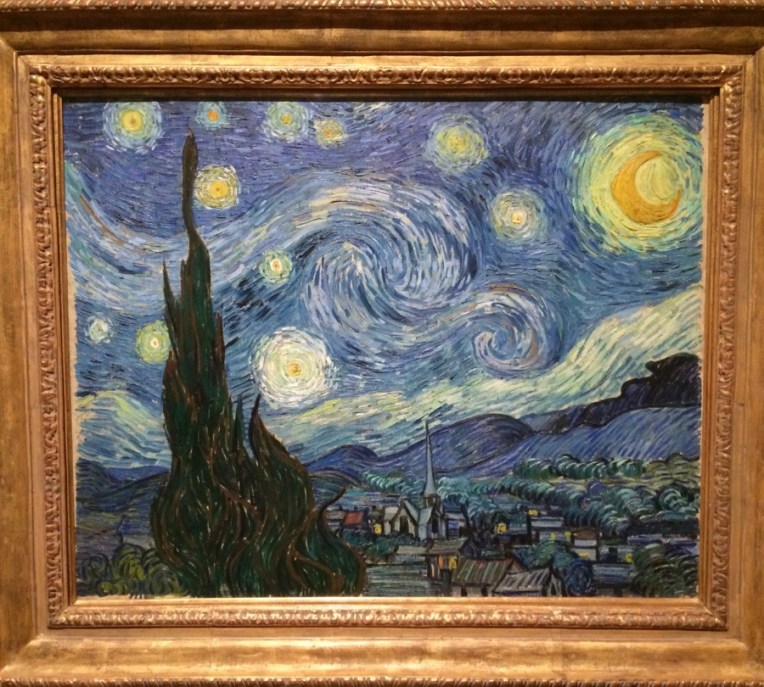
My main mission was to see the original of van Gogh’s “The Starry Night”, which has been one of my favorite works of art since I was a child. It’s smaller than I expected, but absolutely wonderful. I only had my iPhone with me but it did quite well.
Detail: “The Starry Night”
One of the major differences between seeing an original instead of a print is being able to see the dimensionality of the paint as the artist has applied it. You can see some of that in the detail photo above.
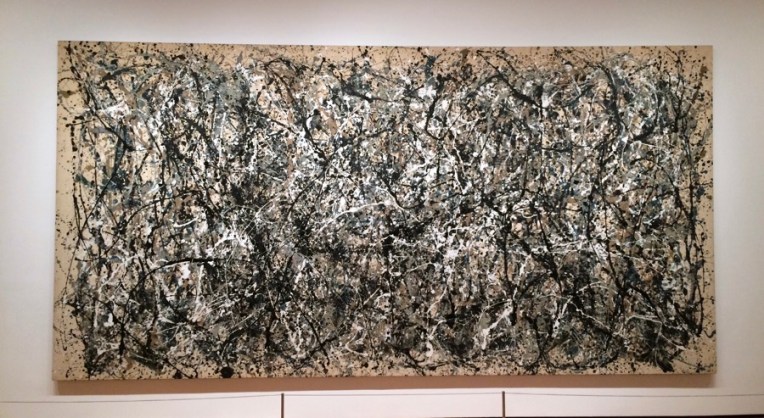
“One: Number 31” Jackson Pollock
Another favorite artist is Jackson Pollock. The museum had one of his large pieces on display, “One: Number 31″ and it also really must be seen in person to appreciate it, if only for the scale. It’s 8’10″x 17′ 5 5/8”. I was able to get pretty close to it, enough to see the layering, and how thin or thick the paint was. Interestingly, it appears that, at least in this one, he mostly followed a very traditional approach of working “lean to fat”….from thin to thick. To many people it just looks like a bunch of random drips so, really, what was the point? But the method is clear when you’re in front of the painting itself. He started with some kind of basic idea and color scheme and then built on it, but also let “happy accidents” occur that he could build on and add to. The result is a tremendous visual rhythm that works whether you’re looking at the whole thing or just a detail. It could be cut (perish the thought) into twelve pieces and every single one would stand alone as a work of art.
Detail- “One: Number 31” Jackson Pollock
I also liked this work by Franz Klein, probably because I did calligraphy with both pen and brush for many years.
“Painting Number 2” Franz Klein
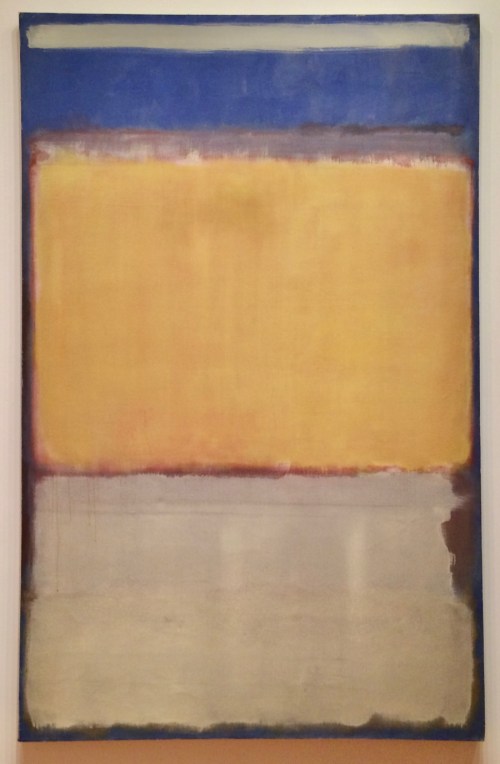
And this one by Mark Rothko. Some of you who know my work might be wondering why I like and am posting abstract work, which is held in contempt by many representational artists. Maybe it’s because I was a graphic designer for many years, so I like and appreciate non-representational work that is pure design in which the subject is the paint on the surface, not a picture “of something”.
“No. 10” Mark Rothko
The usual comment is often along the lines of “What’s the big deal? I could do that.” Well, maybe you could, but you didn’t. Rothko did. There’s also a thread of envy and resentment among some artists because apparently “simple” paintings like this are assumed not to have taken long but have brought fame and fortune to the artist, which somehow doesn’t seem fair. Yet, one of the things I’ve learned over the years is that simpicity is what is hard, not detail. There’s nothing wrong with either, of course, if it’s what the artist needs to do to express their vision. That’s the most important thing.
And then there’s Monet. I’ve seen his water lily paintings in other museums, but this is by far the largest. My biggest painting to this point is 36×48″ and that was a fair amount of real estate to cover. These three panels together measure 6′ 6 3/4″ x 41′ 10 3/4″. Forty-one feet long….
“Water Lilies” Claude Monet
Here are a couple of detail photos:
And moving in a little closer:
Even closer and any sense of a subject would disappear into abstract brushwork. All good paintings have a solid abstract structure underneath to hold them together. The structure is the subject, along with paint color, texture and shape, in non-representational painting.
Abstract shapes and designs can be found in the real world if you learn how to look for them.
There’s still snow on the ground from last week’s storm. South end of Central Park
Vertical trees, sun and shadow on the snow. This could be turned into an interesting abstract design of shapes and colors.
After I left the museum I walked around Central Park a bit and then south towards Times Square. On the way to the park, I stopped in the middle of a crosswalk because I just had to get a shot of this reflection.
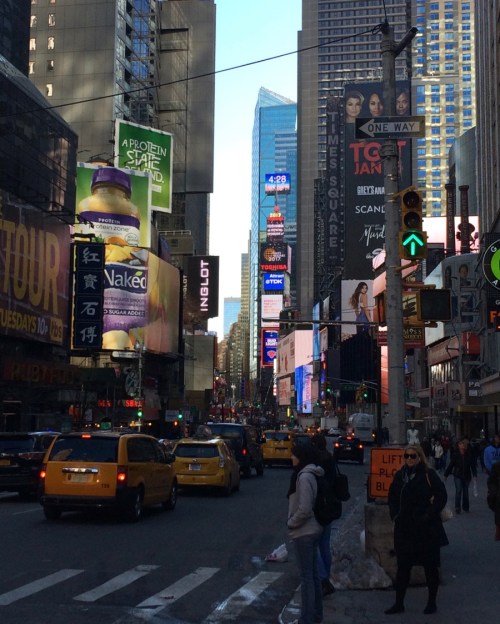
Times Square is just ahead. I’d kind of run out of gas at this point, so stopped here and got a pretty typical New York street scene, complete with taxi cabs, before I headed back to the hotel.
And finally, how could I not like having this view from my window…
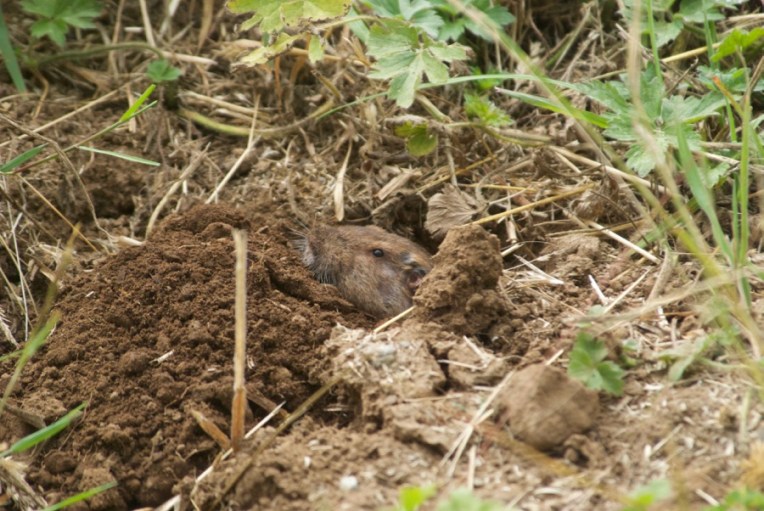
Botta’s Pocket Gopher (Thomomys bottae), back when I thought is was cool to see a wild mammal on the property. I got over it because of the destruction.
I like to garden and we have an acre to do it on. It’s great exercise, especially for easel artists like me who are either sitting or standing most work days. Lots of range of motion…reaching, kneeling, carrying yard waste to the compost pile etc. so it’s a good workout in the fresh air. And results in flowers, vegetables, herbs, fruit and berries. But, like many people who live in rural areas, we have gophers. The cats account for some (Alexander a Really Great Cat got a big one last month), we set traps in live holes, but of course they’re never gone for long. Nature finds a niche and fills it. I’ve lost a lot of bulbs and even some roses over the years. So when I wanted to replace a couple I decided that I wasn’t going to just plop them into the ground and cross my fingers We had some leftover gopher cloth from what we had put under the raised bed and there was enough to line a couple of planting holes. My goal is to give the roots enough safe growing space that they will stay alive and thrive. We’ll see.
The Black Hole gopher trap is the most humane solution that we’ve found. When triggered it crushes the thorax and they die pretty much instantly. Plus it doesn’t endanger our pets or other wildlife. A few years ago while I was on my annual seven week trip to Mongolia my husband trapped nine and the cats got eight. That stopped the worst of the damage, but we have to be eternally vigilant, especially now when they’re getting active again and hungry.
I thought I’d post a few photos of what we did in case you might find it useful. If you have found any non-toxic gopher controls that work, let me know in the comments.
The roses are “Graham Thomas” a beautiful golden yellow David Austin rose that can be grown as a climber.
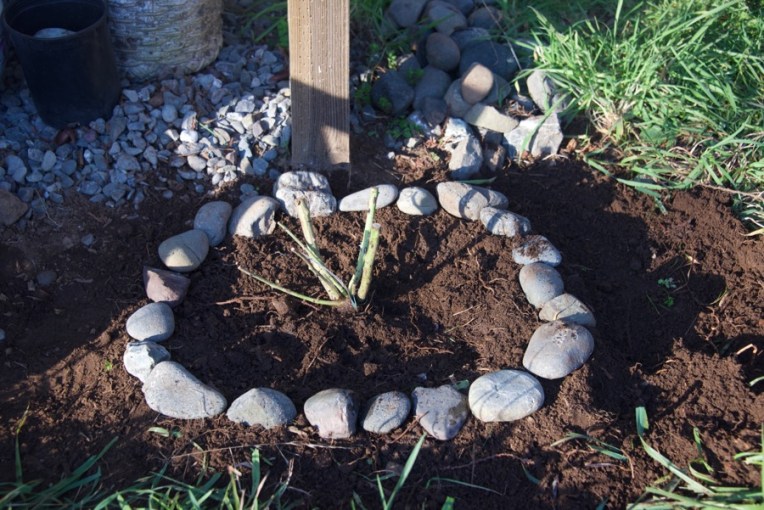
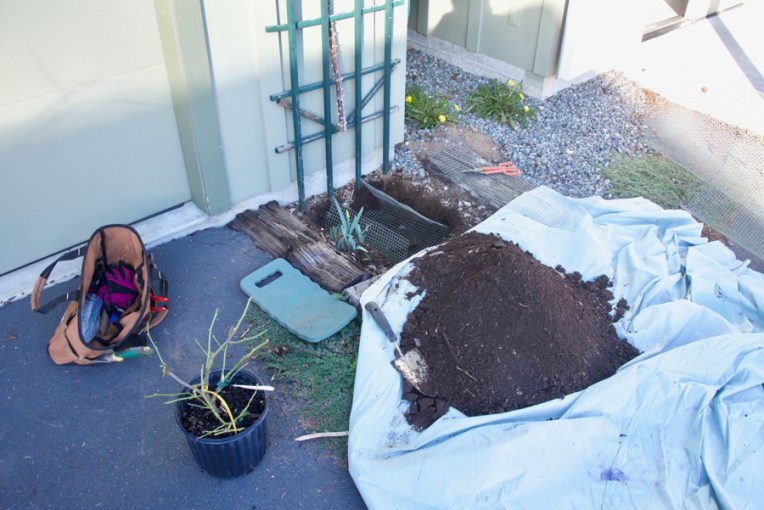
The first try. I dug the planting hole and we folded the mesh into it, dug out some more, tried it again, repeated until it fit the hole just below soil level.And this is what it looks like with the rose planted with the addition of a river rock edge. It’s at the base of one of the vertical posts on the potting shed.Out front planting space was tighter in the bed next to the garage door. I scooped the dirt out onto an old tarp.Fitting the mesh into the holeThen we formed the “basket”, folding the corners securely together.The rose and its root ball in place. Next step was to refill the bed. Managed to not disturb the daffodils.
We’ve had a series of those “atmospheric river” storms, heavy rain and wind, so haven’t gotten much done other than to start pruning the roses. But in the next week or so I think the 2017 gardening season will be on!
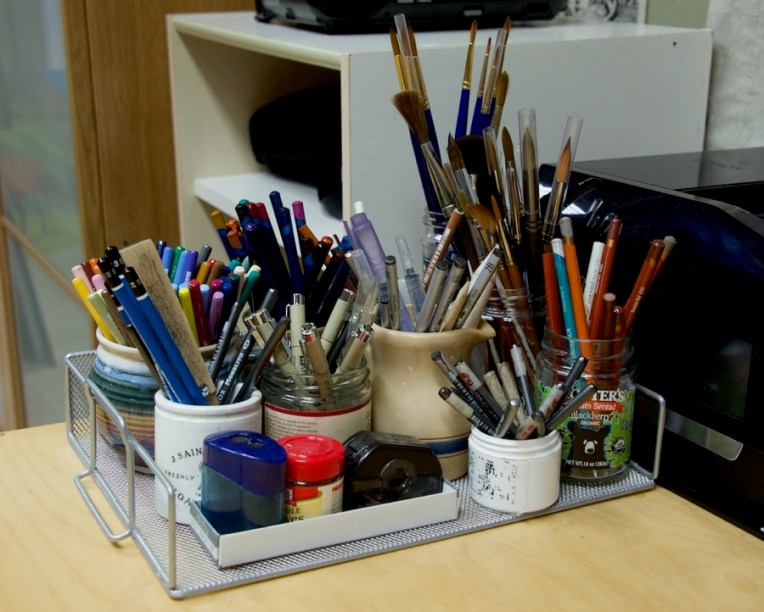
Drawing media and watercolor brushes stored in a variety of containers and organized in one unit of a stackable inbox
I don’t necessarily consider myself a neat and tidy person. But when it comes to my work, I’ve gotten borderline fanatical about having everything sorted and organized. I don’t want an idea to strike or find I need to have “x” right now for whatever I’m working on and have to break concentration and hunt around for it.
I’ve been in my current studio space at our home for over ten years now, using a couple of IKEA cupboards for supplies and some thin plywood boxes with dowel dividers my husband made for me years before that for canvas and painting storage. The IKEA units are doing great, the old canvas “racks” were well past their sell-by date. So a few years ago we were able to hire a contractor who was also a cabinet maker to build new storage units from birch plywood to my specifications. What a luxury! But also practical and financially sensible because properly stored paintings and canvases (I use RayMar geesoed cotton canvas boards almost exclusively) are less likely to get damaged. Plus we live in earthquake country. Every cupboard, cabinet and bookcase is attached to studs in the walls.
Come take a tour of how I store my art supplies and equipment…
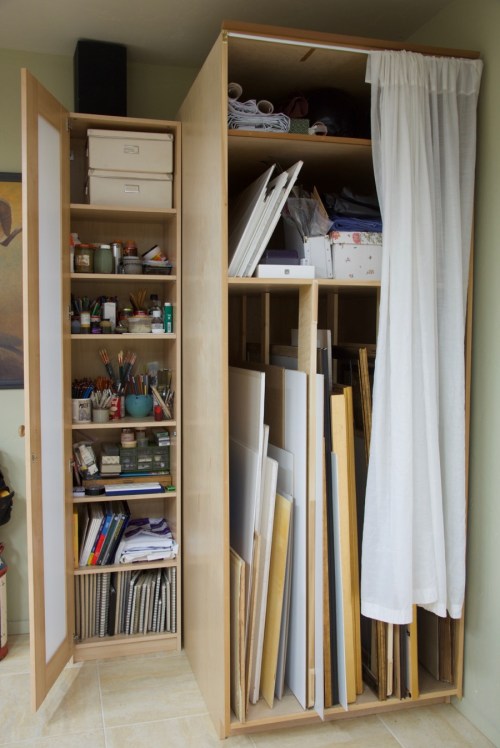
These units are in the northwest corner of the studio. On the left is an IKEA cupboard which contains all my supplies that aren’t in use. The top shelf holds greeting and notecard inventory in, yes, IKEA boxes. Next is a variety of containers. The next three shelves are drawing media, brushes, varnishes, odds and ends. Second from the bottom is paper for printing. And at the bottom are old sketchbooks. All the way on top is a speaker.
On the right is one of the custom storage units, designed to hold paintings up to 5×5′. The top two shelves have miscellaneous things that don’t fit anywhere else. The bottom holds all my oversize paintings and canvasboards. The curtain, just an old one I had around, is to minimize dust.
On the south wall of my studio are four units ranged next to each other:
These are two side-by-side IKEA cupboards. The one on the right, starting at the top, is blank sketchbooks, then small canvasboards and some stretched canvases with a gallery wrap so I don’t have to frame them. Second from the bottom are canvas pads and oil paper pads, a few small toned canvases and my watercolor papers. On the bottom is my plein air carry-all, a plein air panel box and some large size drawing pads.
The left cabinet holds my old paintbox I’ve had since I was a kid, a pochade box from the Sennilier art supply shop in Paris, more plein air carriers, then various paper towels and brush holders, finished small works (see detail below). Next, drawings to be framed or referred to, below them a black plastic file organizer and binders for location watercolors and at the bottom old work framed and unframed. The two stacked boxes hold plein air oils.
This is the middle shelf of the cabinet on the left. I’ve used cardboard drawing pad backing for dividers, labeling them with a Sharpie, to separate and organize old paintings from workshops, projects, preliminary studies, in-progress repaints, available for sale, etc.
And here are the closed cupboards above on the left, next to my frame and painting storage units on the right. Of those, the one on the left mostly has the frames. It was designed to fit over my steel flat files. The one to the right of it is pretty much all paintings except for some big manila folders at the top right which hold working and finished drawings and next to them about a half dozen framed giclees. All the shelves are adjustable.
Finally, here’s my painting table set up and ready to go. I clean the palette off on Friday afternoons and put the paint into one of those paper-lined round storage containers. My current palette is a leftover piece of Swanstone countertop. I got the idea from the Underpaintings online magazine some years ago. I like it because it’s a neutral color, it’s not reflective and once a film builds up on to a certain point, my husband is kind enough to sand it off for me. It’s the same color all the way through. As you can see I have an eclectic collection of containers for brushes, pencils, etc. Some are souvenirs of our travels, like the fish pitcher, which I got at a Debenham’s department store in London, England. I also like interesting coffee mugs with or without broken handles.
So there you have it, how one artist organizes her work life. If you have any ideas or want to share what you do, please leave a comment!
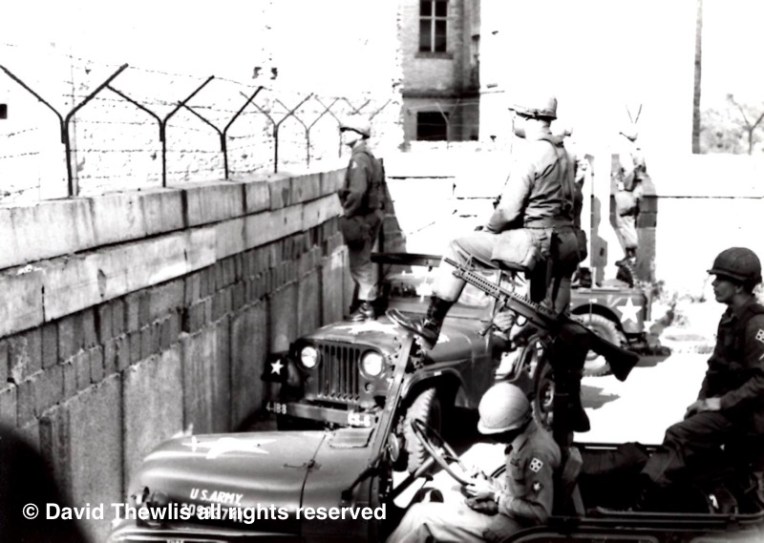
My husband joined the Air Force when he was seventeen. After training he was assigned to the Air Force Security Service and posted to Berlin six months after the Wall went up in 1962 (and if I tell you any more I’ll have to kill you). At first he worked at Templehof, the obscenely-scaled airport designed by Albert Speer. The building was wired with high explosives. If, as the saying went at the time, the flag went up, meaning the Soviets had invaded, then they had less than 30 minutes to destroy what needed to be destroyed and get out. They didn’t actually expect to survive. Later he was at the Marienfelde Operations Site at the southern edge of the city. He served his hitch and came back in one piece.
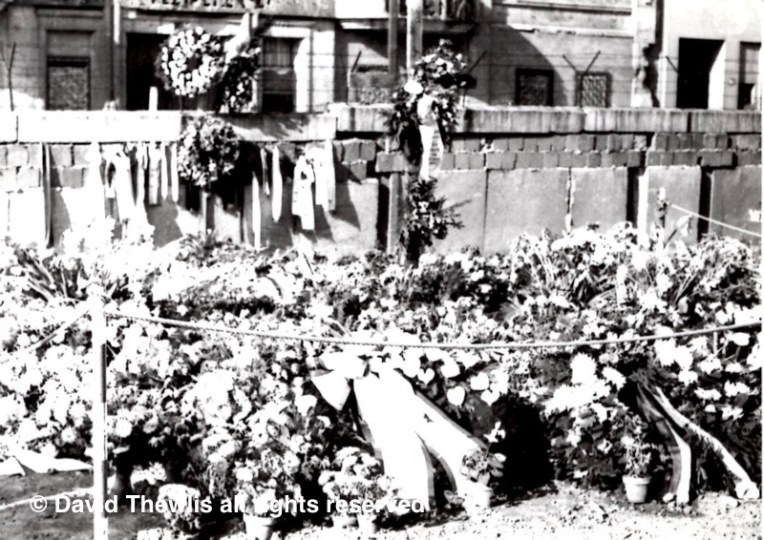
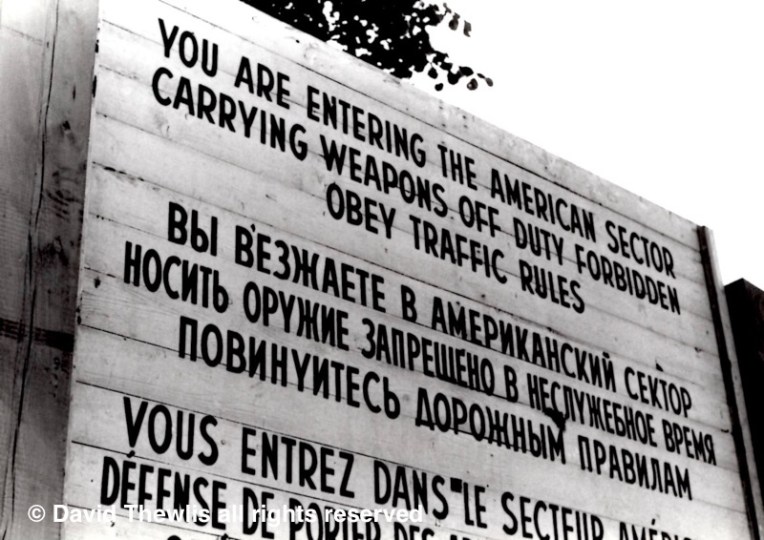
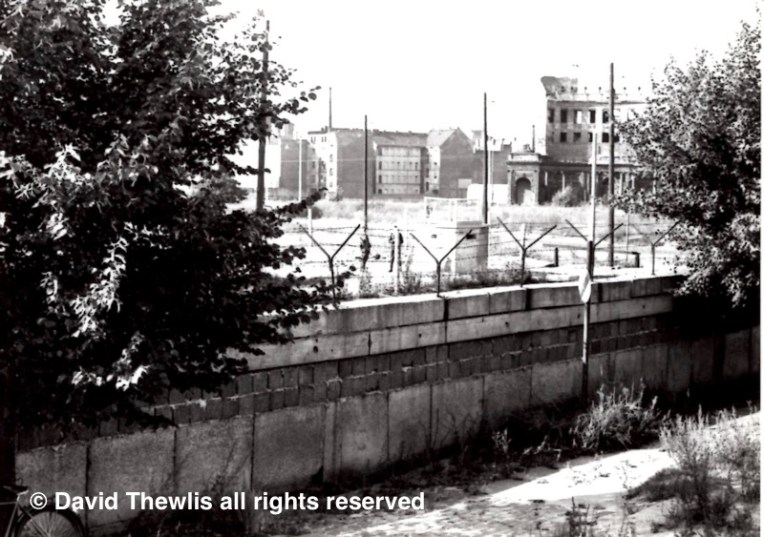
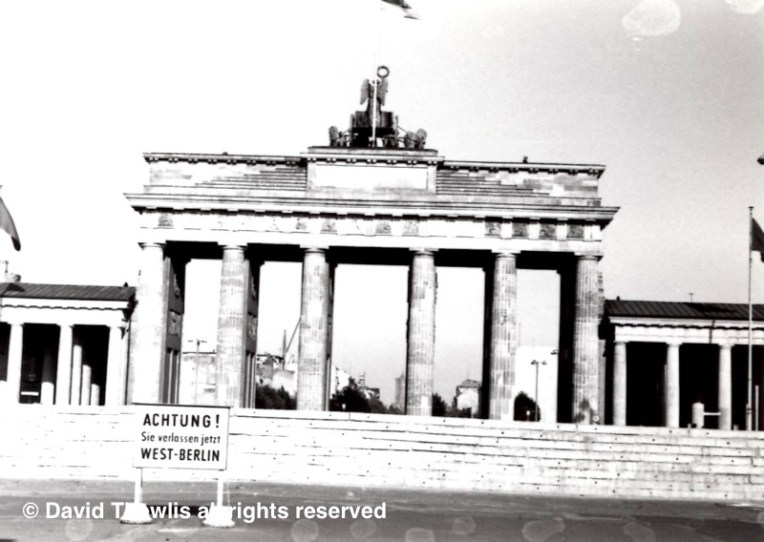
While he was there he had time to wander about West Berlin, sometimes taking photos. He’s given me permission to share some, which I appreciate since it gives me a chance to honor his service to our country. He has an enlargement of the one at the top in his office. I call it “the Life magazine cover shot”.
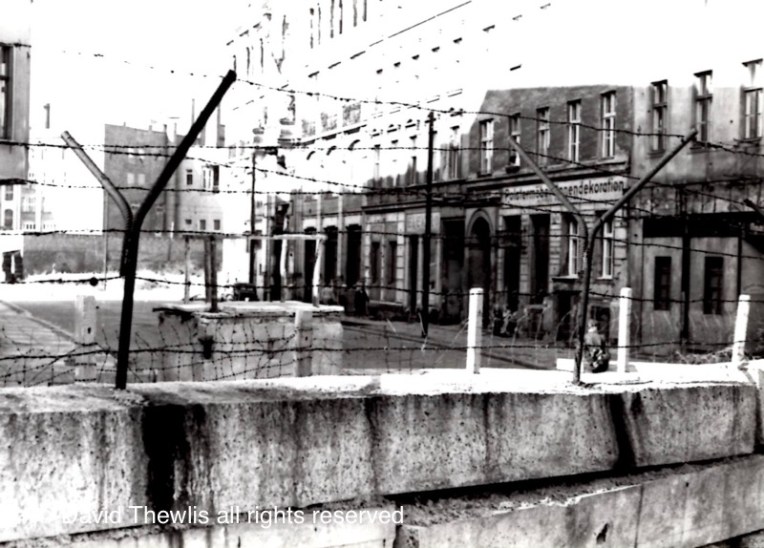
The wall went up very fast and sloppy at first, which is what you see in the photos, and was later replaced with the taller, permanent one (so the Russians thought at the time) that we brought home pieces of when we were in Berlin two months after reunification in 1990 (we got together in 1983). He got to see all the familiar sights fr0m his time there and I saw them for the first time. Checkpoint Charlie was gone and there was already a United Colors of Benneton store on the corner on the east side. We drove south of the city and David saw Berlin from that direction for the first time. I did a blog post about that trip with photos I took. You can read it here.
But here’s what it was like in 1962 (photos were scanned but were not processed or retouched):
The Wall cut right across the cityTributes for those who died trying to cross to freedomBerlin was a divided city. There were American, French and British sectors on the western side. The east was part of the Orwellian-named German Democratic RepublicView into East Berlin. Bombed out building on the right, unrepaired since the end of WWIIThe Brandenburg Gate
I can’t remember a time when I didn’t draw. I’ve had the good fortune to been able to work in art-related fields all my adult life, first as a sign painter and graphic designer starting when I was 22 years old, then as an illustrator and finally, since 1997, a fine artist painting in oil and specializing in animals. I’ve learned a few things over the years, both from experience and from other artists, and would like to pass them on to you.
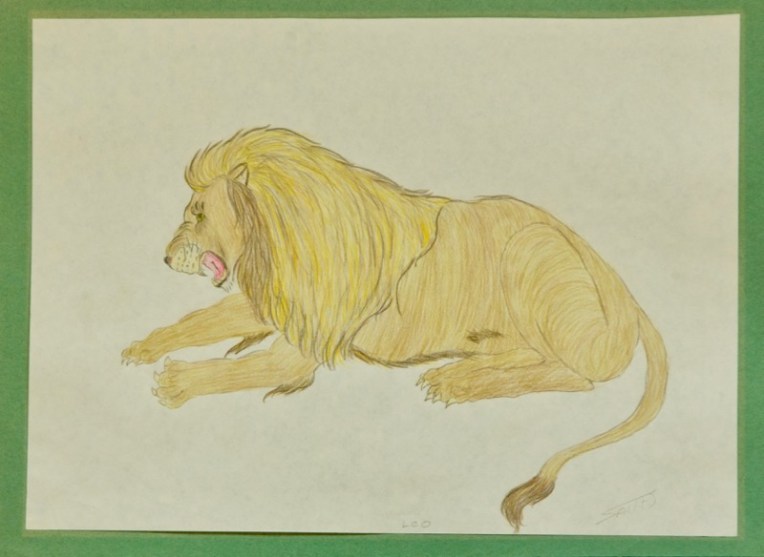
I always drew animals, sometimes copying them from Walter T. Foster art instruction books, which I still have. I think I was around ten when I did this lion.
1. Painting is drawing, in the sense of making marks on a surface with conscious intent, whether you’re a representational or abstract artist. Develop that intentionality.
2. You have to gain competence in: design/composition, drawing, value, color and edges. If you can afford it, buy Richard Schmid’s book “All I Know About Painting” or google each topic.
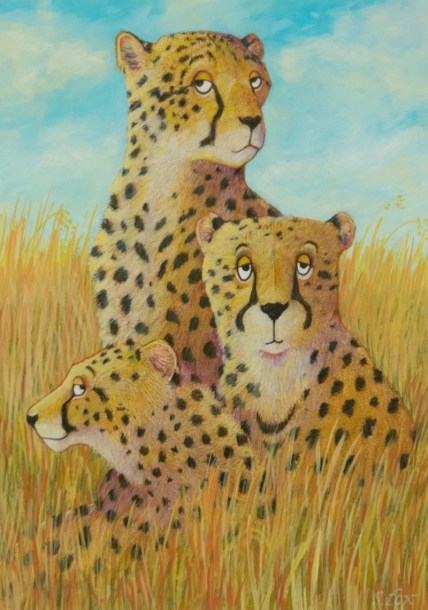
I always seemed to have a knack for whimsical animals. I don’t feel that I was born with any particular artistic gift, just the drive to draw, but somehow animals came easily, including eye expression. It just happens. This is a mixed media piece I did after I went back to art school and got an illustration degree in 1989.
3. It’s not about detail or fidelity to a photograph as the one true criteria for the quality of a work of art. It’s about expressing your personal artistic vision however that manifests. Don’t do detail because you never learned to edit. Learn to simplify. Which is actually pretty hard, but will liberate you in ways you can’t imagine. Don’t use photos unless you know how to compensate for the way they flatten and distort. It’s obvious to an educated eye when an artist has accepted a photo as truth and simply reproduced it, faults and all.
4. Learn from the best, but find your own path. As they told us in art school, be the best you you can be, not a second-rate someone else.
I’ve taken quite a few plein air workshops over the years even though I’m a studio painter. It’s good to get out in the fresh air and paint from life, enjoying the process and not worrying about the result. So it’s a busman’s holiday for me. No pressure.
5. Never be afraid to reevaluate your approach and process, scary as that might be. Some artists cling to how they work like it’s a life preserver without which they’d drown. Find a way to let go of that. The risk isn’t as big as you think it is.
6. There are no mistakes, only “what’s next?” This is from my oil painting teacher who I studied with privately for over two years. It got me off that big “OMG I’m going to RUIN IT!” hook.
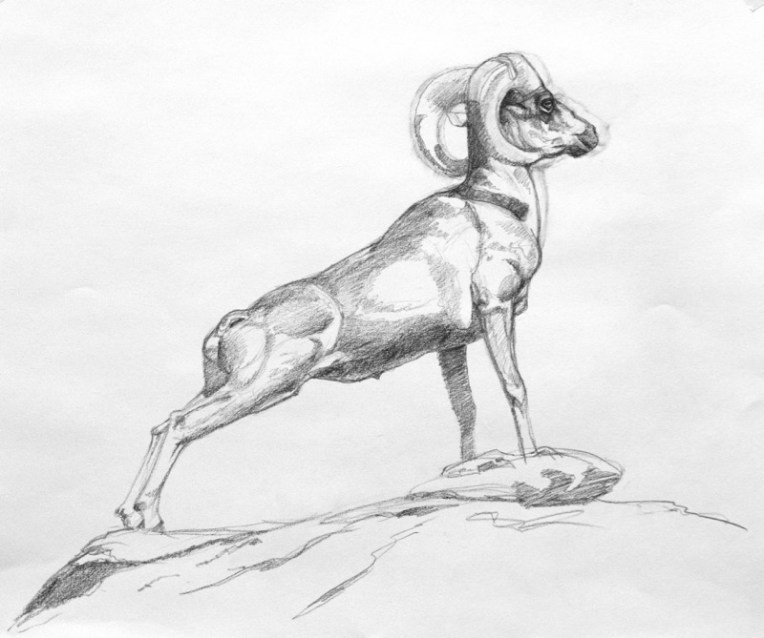
My process has changed over the years and will continue to in the future. I now almost always do a finished drawing of my subject. I used to wing it on the canvas and that got me into a lot of trouble sometimes, with the work suffering from trying to solve problems as I painted, which kept me from focusing on my brushwork and other aspects of the finish. Much better to have made that correction of the head and neck on the drawing than on the painting. The farther in you are when you see a mistake the harder it is to make yourself wipe it off and fix it. But fix it you must.
7.Plan for “downtime” each year to recharge your creative batteries. Don’t do any art or try a new media/paper/style. It’s a chance to grow with no risk.
8. Keep a sketchbook. Use it. Consider doing a drawing a day for a week, a month, a year. Have fun. Try lots of different pencils and pens. Do them fast. Set a timer for a minute, five minutes, etc. Sketch an egg, a glass of water, an egg in a glass of water, your dog or cat, whatever you want. Look into learning contour drawing. A little tricky to get the hang of but lots of fun once you do. Hone those motor skills to keep them fresh and available.
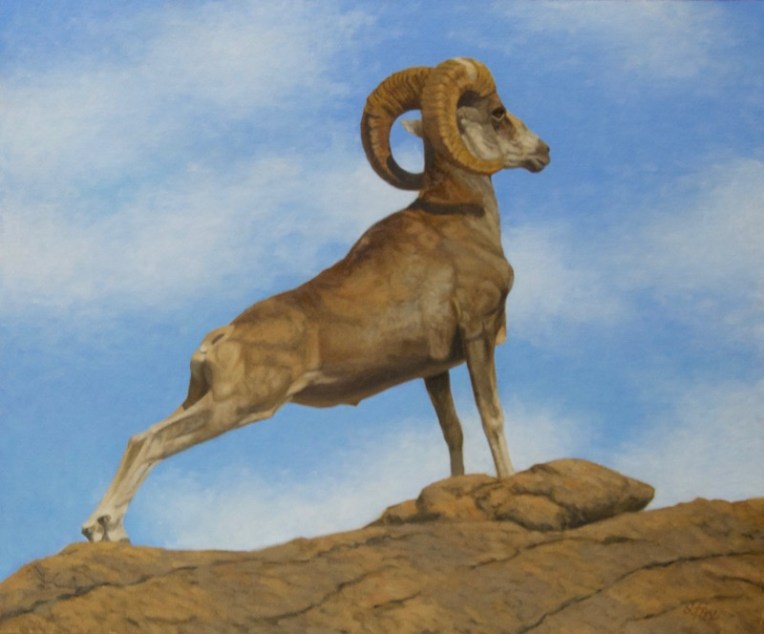
And the preliminary drawings pay off in the finished work . This painting “A Good Stretch” was accepted into the 2015 Society of Animal Artists international juried exhibition “Art and the Animal”.
9. Gain a basic familiarity with the history of art. Who knows what inspiration you may find. I used to pick a new poet a month to check out. Google around and pick a new artist every month to learn about. Go back to the beginning and be humbled by cave paintings.
10. Don’t be too satisfied with your work or too hard on yourself. Find a balance and keep moving forward.
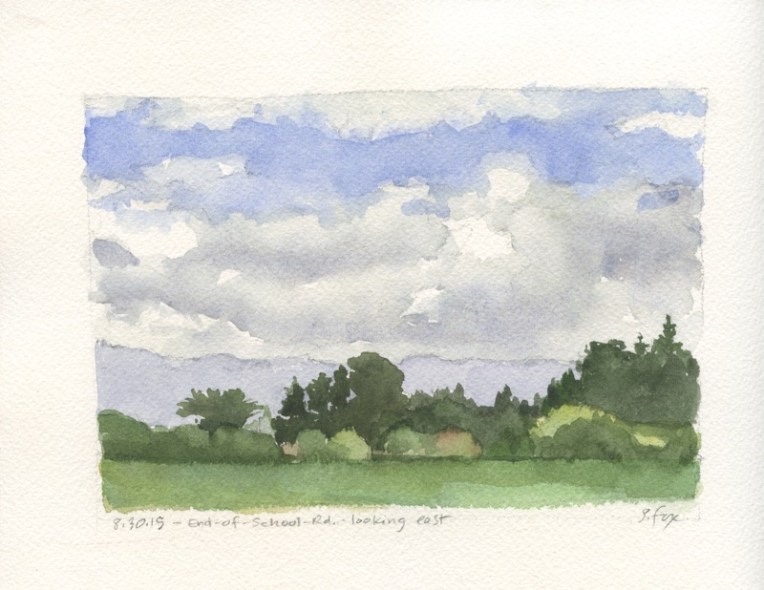
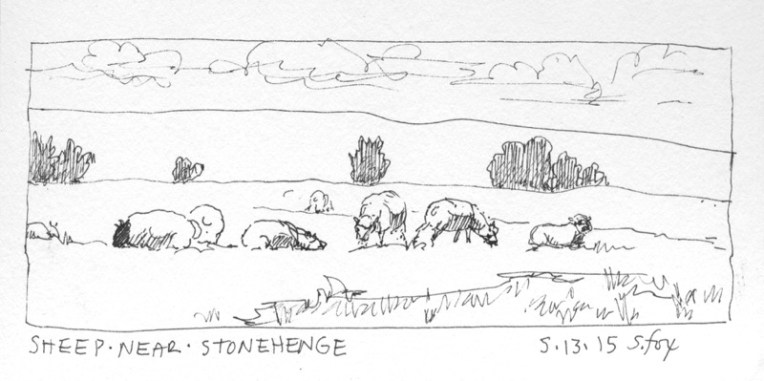
Location sketch done during a trip to England in 2015. It probably took about five minutes.
11. Seek out and listen to competent criticism of your work. Access to another artist’s educated eye and input is invaluable. Damp down that little voice that says “Yes, but…”
12. If the only thing that will make you truly happy in life is to create art, do not let anyone discourage you. Ever.
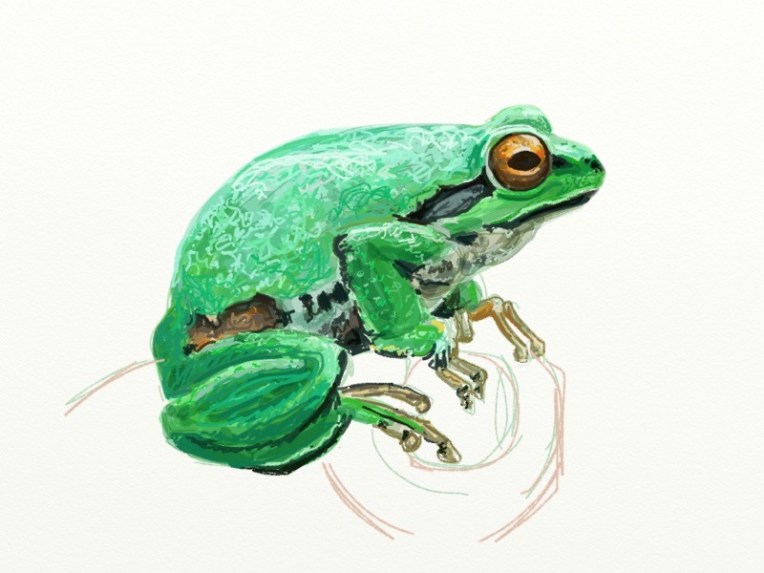
I mess about with a variety of media just for fun. This frog was done on my iPad.














 Susan Fox, American Artist