Mongolia Monday- It’s My 400th Post! 10 Of My Favorite Mongolia-related Websites

Hard to believe it, but I have reached 400 posts. I started my blog on December 10, 2007. It doesn’t seem like it has been that long. It’s become part of my weekly routine and a fun way to share my art and my travels.

I also really appreciate the support and comments that I get from my readers. Thank you!

Now, on to Mongolia Monday! Today I’m going to post links to 10 of my favorite sites, ones that I would recommend to anyone who is interested in learning about Mongolia or who is planning to go there.

Procession of the horse tail standards, Naadam, 2009

1. News.mn: http://english.news.mn/home.shtml– News.mn has consistently been the best place I’ve found for keeping up with what is going on in Mongolia. There is also the UB Post, which is better known, but the load time on the site is glacial.

Peace Avenue, Ulaanbaatar, September 2009

2. Asian Gypsy: http://asiangypsy.blogspot.com/– He doesn’t post nearly enough, but this is definitely my favorite blog written by a Mongol. I get the email feed so that I don’t miss a post.

3. Weather Underground: http://www.wunderground.com/global/stations/44292.html– Want to know what the weather is like in Ulaanbaatar? Here it is.

Lightning storm at Arburd Sands ger camp, July 2009

4. Altan Urag: http://www.altanurag.mn/en.html– One of the best known groups to come out of Mongolia, Altan Urag (which means “Golden Lineage”, a reference to the family and descendents of Chinggis Khan), describes themselves as a “folk rock band”, which means an amazing synthesis of modern western and traditional Mongolian music, including morin khuur and khoomii (horsehead fiddle and throat singing). Their music can also be heard in movies like “Khadak” and “Mongol”. And their website is waaay cool.

Morin khuur, Union of Mongolian Artists gallery, Ulaanbaatar

5. Ganbold: http://www.ganbold.com/– Ganbold, who currently lives in the USA, is a graphic designer and artist with a very impressive client list. I had clicked on a banner ad he had placed on a Mongol site and really liked what I saw. Then, sometime later, a “Ganbold” left a comment on this blog. I clicked the url in the commenter info. and. low and behold, it was the same person! We’ve stayed in touch on and off since then. The home page of his website is, literally, a work of art. Click “Enter”. Highly recommended for bird lovers.

6. Budbayar Boldbaatar: http://www.budartist.com/– I absolutely adore his work, but Budbayar is also standing in for the many, many excellent artists that Mongolia produces and who deserve to be known to the world.

Palace of Culture, Ulaanbaatar; home to the Mongolian Modern Art Gallery

7. Circle of Tengerism- http://www.tengerism.org/– One thing that many westerners do know about Mongolia is what we call “shamanism” and the Mongols call “Tengerism”. “Tenger” is Mongolian for “sky”, also known as The Eternal Blue Sky or Eternal Heaven. This ancient belief system has survived centuries of persecution and suppression and today is an active part of the culture of the country.
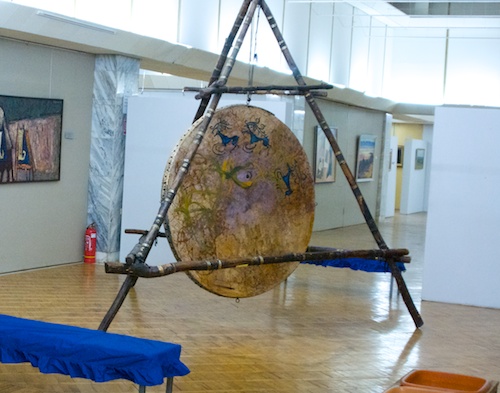
Shaman's drum- Mongolian Modern Art Gallery, Ulaanbaatar

8. Ikh Nartiin Chuluu Nature Reserve- http://www.ikhnart.com/home.html– My entry point into Mongolia in 2005, Ikh Nart is where I’ve been able to become actively involved in conservation and working with local herders. The reserve is home to the world’s only argali research project.

Argali ram- Ikh Nartiin Chuluu

9. Gun-Galuut Nature Reserve- http://www.argalipark.com/– Very different habitat from Ikh Nart, but also home to a population of argali sheep. This reserve was set up by the local government and is administered by a community association. Visitors can ride a horse or in a yak cart, try Mongol archery, take a boat out on the river and hike the surrounding area.
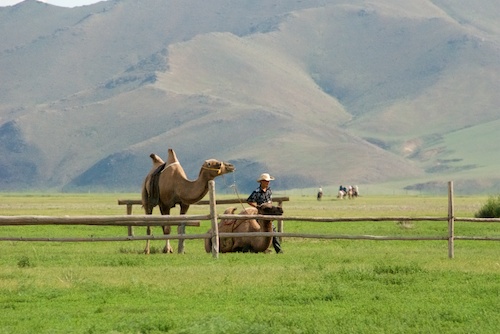
Camel ride?- Gun-Galuut Nature Reserve

10. Nomadic Journeys- http://nomadicjourneys.com/– Finally, a tip of the hat to the tour company that I have relied on to get me around Mongolia since 2006. The website not only describes their trip offerings, but is a wealth of information about Mongolia, the country, land, people and wildlife.
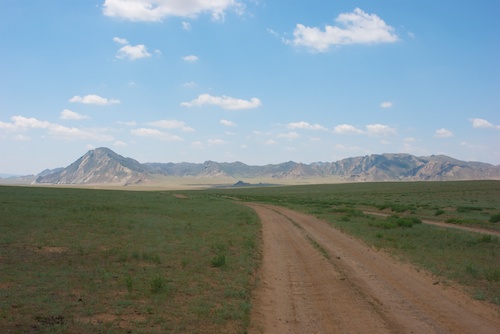
Tahilgat Hairhan (a sacred mountain), Tsenkher Tenger (blue sky) and Gazar Zam (earth road); Minii Mongol (my Mongolia)

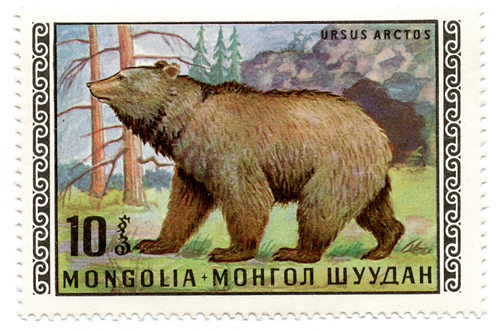
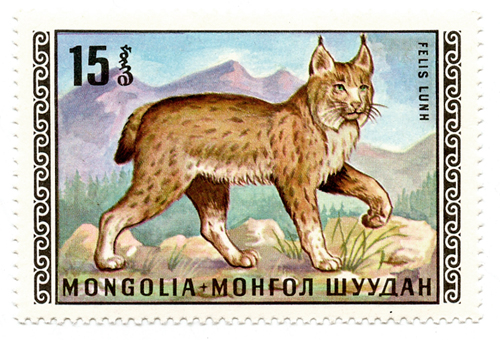
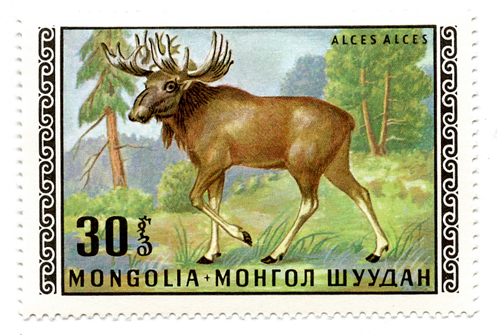
Mongolia Monday- Postage Stamps, Part 3: A Beautiful Set Of Wildlife Images

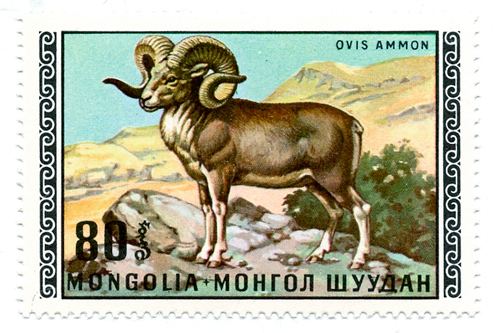
I ordered these to get the first stamp shown, but the whole set, uncanceled and in perfect condition, is so well-done that I wanted to share them all with you. I think that they are of interest not only because of their subjects, but as lovely little works of art. I wish I knew who the artist was.

Argali (Ovis ammon); the legs are a little short, but otherwise this is quite good; found in the high mountain zone and mountainous areas of the Gobi
Brown bear (Ursus arctos) : found in the northern mountains of Mongolia , which is the southernmost part of the taiga or boreal forest
Lynx (Lynx lynx); found in the taiga (forest zone)
Siberian marmot (Marmota sibirica); has undergone a tremendous population crash in recent decades; now exists in localized populations; found in the mountain forest steppe transition zone and the steppe
Moose (Alces alces), called "elk" in Europe: found in the taiga; same species as found in North America
Wild boar (Sus scrofa); found in the mountain forest steppe transition zone; a small population also inhabits the reed beds of Khar Us Nur
Wolf (Canis lupus); found in the taiga, mountain forest steppe and steppe

Next week, I’ll be featuring two Mongolian equids, the takhi and khulan.

Mongolia Monday- Postage Stamps, Part 2; Mongol Warriors

Continuing with a look at some interesting Mongolian postage stamps, this week is a set of what the text at the top of them says (in English, which is convenient) are “The Chinggis Khan’s Militant Soldiers”.

The original art, as credited on the stamps, is by T. Otgonbayar and the date of issue seems to be 1997.

One of the things I like about these as a reference source is that the images were created by a Mongol artist, not a westerner working from whatever sources, probably secondary/tertiary, that they could find.

First is a set of single stamps, three with swordsmen, three with horsemen and two with archers.

The piece d’ resistance is a triptych of the Mongol army in full panoply. What a sight they must have been! It is estimated that at the time the Mongols were conquering city after city, the total number of them was maybe one million. The army probably had 100,000 soldiers. Total. Each one had about five horses. So a half million horses to find graze for. And there was no supply line, no logistics challenges like modern armies face. Being a nomadic people, many soldiers had their gers and families with them, but instead of moving to new pastures, they just kept heading west. No one was longing for home and loved ones, because home was with them wherever they went.
Swordsmen; the one on the left carries a horsehair standard
Horsemen; notice the two cheetahs on the far right stamp; that's something I want to find out more about
Archers; only English longbowmen could approach the ability of the Mongol archers
The Mongol Horde; "horde" is the only Mongolian word that has come unchanged into English; notice, once again, the two cheetahs on the right; and also the black and white horsehair standards; white ones are still used today as important symbols of the Great Mongolian State

Mongolia Monday- Mongol Postage Stamps, Part 1: Clothes And Culture

A week or so ago, I was poking around the listings on EBay that come up when you search “Mongolia” and ended up browsing through the postage stamps. Mongolia is one of those countries that, in the past, released an endless supply of stamps aimed at collectors. It brought in some income to the government during the socialist era and when times were very hard back in the early to mid-1990s during the transition to democracy.

Along with the obligatory Princess Diana commemoratives, it turns out that there is a wealth of stamps with imagery from Mongolia’s history and culture. Some of the stamps showing traditional clothing are so detailed that they to all intents and purposes qualify as primary reference material.

I had purchased some stamps on previous trips just because I liked the images and they are a well-known souvenir choice. I had also been a stamp collector many years ago as a kid. I don’t know that I would take up actual collecting again, but if I did, I would specialize in the historical and cultural subjects, along with animals (no surprise there, I imagine).

This week I’ll share the costume, history and ger-themed stamps I have. Next week will be Mongol warriors and the third part will be some with plants and animals.

Comments, information from my Mongol friends and fellow Mongolphiles welcome, as always.

Traditional dress; the top middle is what a married Kalkh Mongol woman wore
Historical/legendary images, I believe
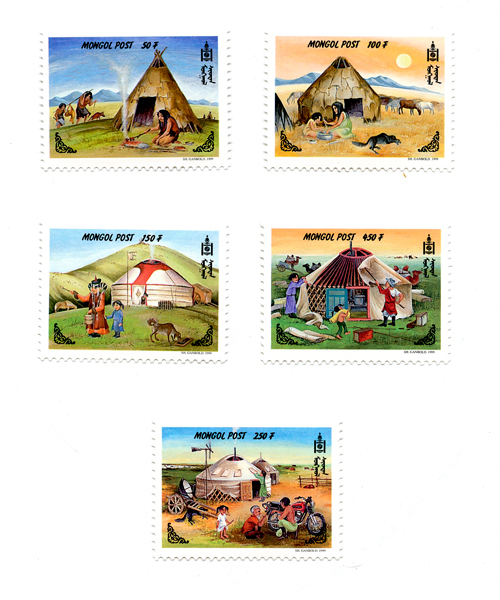
This set appears to be gers (which is simply Mongolian for "home") through Mongol history; ending with one that combines the old and proven with the new and modern; love the aruul drying on the roof
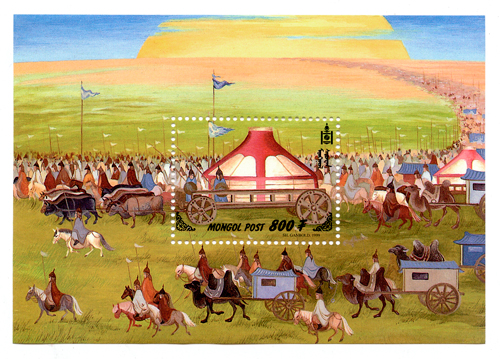
The Khan's ger on the move, literally a "mobile" home
Traditional life in a ger; lightweight metal stoves instead of the open brazier and people tend to wear modern clothes (but not always), but otherwise this is what they are like to this day. Notice the kids on the left playing anklebone games; the floor coverings are sheep's wool felt embroidered with handspun camel wool thread in an traditional design

Mongolia Monday: The Best Camping Trip Ever, Part 5 – North To The Hangai Mountains, Bayanhongor, Gachen Lama Monastery

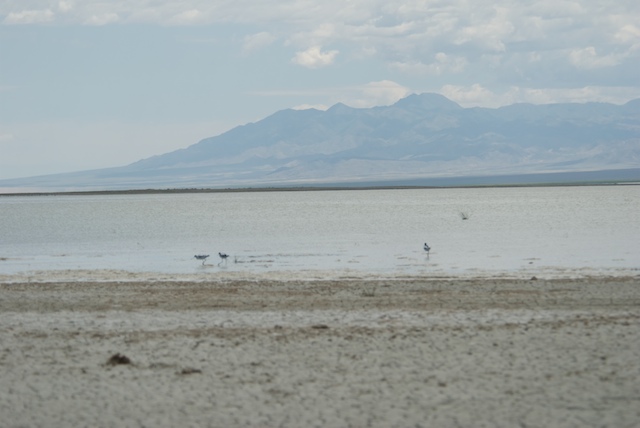
While our original intent had been to spend two nights at Orog Nuur, the combination of heat, mosquitos and there being very few birds around in the morning caused us to decide that we would travel on north instead.

After having lunch on the north side of the lake, where we did see some shorebirds and demoiselle cranes, we worked our way through heavy vegetation on a really rough earth road to get to the main route to Bogd, a soum center, where we re-filled our water containers from the local well.

Shorebirds, Orog Nuur
Demoiselle cranes, Orog Nuur

Then it was up and away from the Gobi toward the Hangai Mountains, another part of Mongolia that I had never seen before.

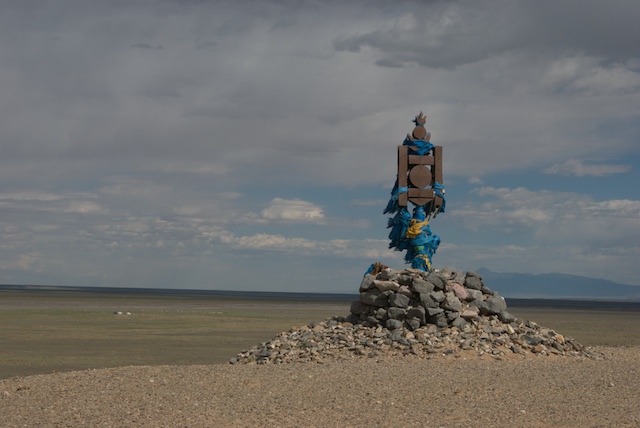
Ovoo with a Soyambu, the National Symbol of Mongolia; very unusual

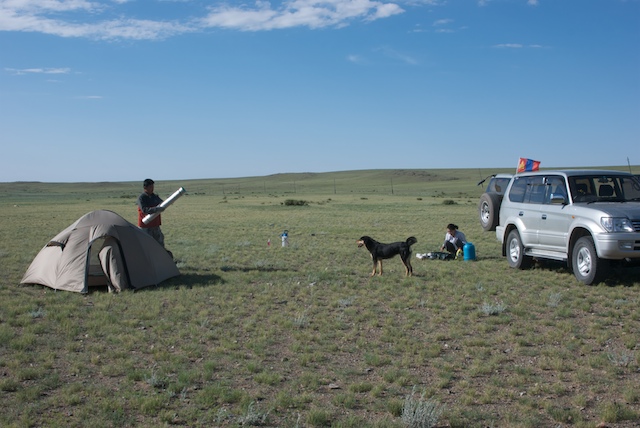
We stopped for the night a short way off the road, after having passed through three changes in vegetation as we went up in elevation. It was cold and windy, quite a change from our previous campsite by the lake, but I slept well.

Upland campsite, with visitor

The next morning we drove into Bayanhongor, an aimag center which was quite a substantial town. We trekked around town buying petrol, eggs, bread and meat. It was an energetic, busy place which had nice tarmac paving in the central area.

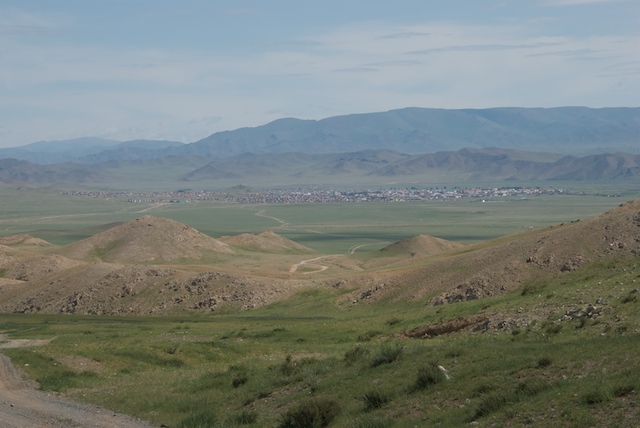
Bayanhongor comes into view, backed by the Hangai Mountains
Horse-drawn water delivery service, Bayanhongor

On the way out of town we found that the road Khatnaa wanted to take was washed out by the recent flooding. Consultations with a number of locals ensued and an alternate route was found. And what a route it was!

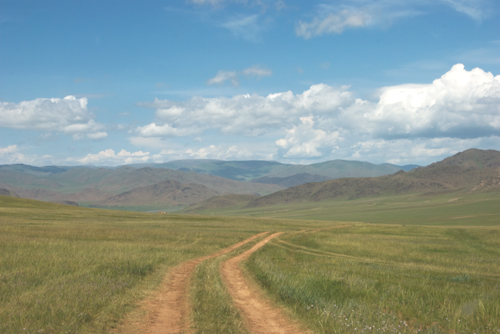
Perfect scene- an earth road leading deep into the Mongolian countryside
Tuy Gol valley
Tuy Gol valley
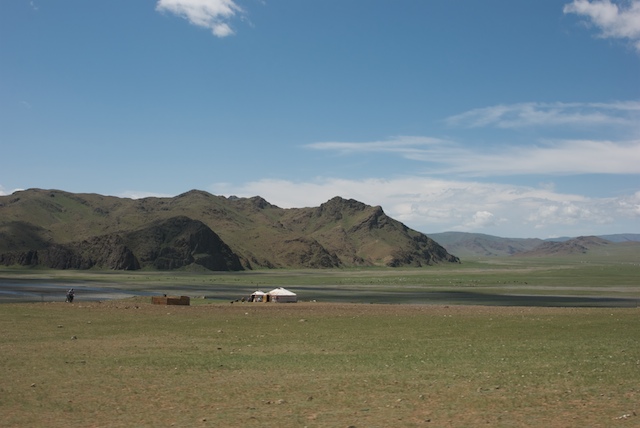
Yaks, horses and gers; it must be Mongolia!

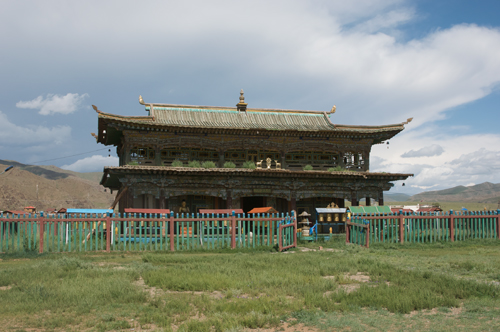
Our destination was the soum center of Erdenetsogt, home to the Gachen Lama Monastery, neither of which I had ever heard of, much less knew anything about.  The soum center was typical, except for the lovely setting above the Tuy Gol. The monastery was anything but, as you will see below.

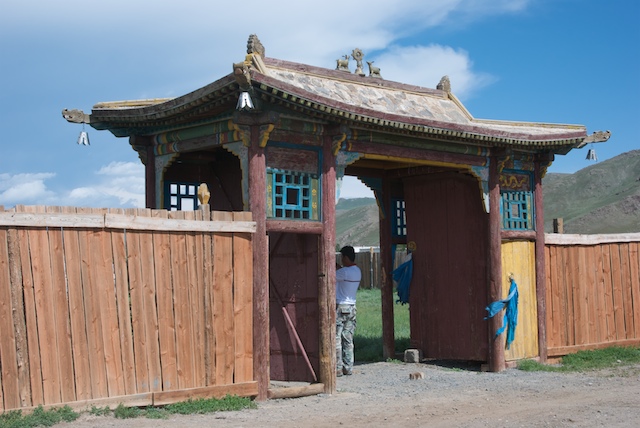
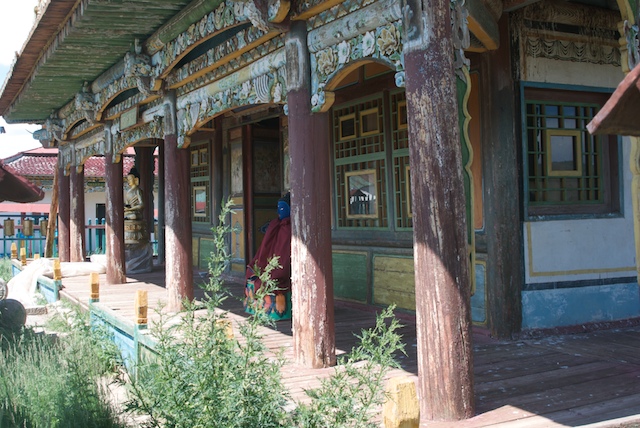
This is one of the most jaw-droppingly beautiful buildings I have ever seen. And what makes it almost unbearably poignant is that it is the sole surviving structure, other than the entry gate, that is left on the site from the destruction of the monasteries that took place in the late 1930s. There were originally ten temples.

The entry gate
Gachen Lama Monastery, old temple

But today the monastery is alive again and it was bustling with activity when we were there in anticipation of a visit the next day by a prominent Tibetan Rimpoche (teacher), who was going to preside over the dedication of two new statues that were to be installed in the new temple next door, which was built in 1990, making it the 20th anniversary celebration.

Temple porch with the two new statues

The old temple was filled with people, many of them elderly women wearing beautiful brocade del. Upon entering, we found that they were preparing hundreds and hundreds of printed Buddhist sutras which were to be placed in the statues. There was a real assembly line going. Some monks were rolling the small strips of paper up very tightly. These were handed to the women who then wrapped them in sewing thread. After a few minutes of watching, Soyoloo reached down, picked up three of the rolled sutras and handed one each to Khatnaa and I, keeping one for herself. Then she got us each of spool of thread. Suddenly we weren’t on-lookers anymore, but participants, truly a gift. We each conscientiously wrapped our sutra and added it to the growing stack. Amazing to think that I’ve left a little bit of me in such a special place.

Preparing for the Rimpoche
One of the two statues
The new temple, just past the row of prayer wheels

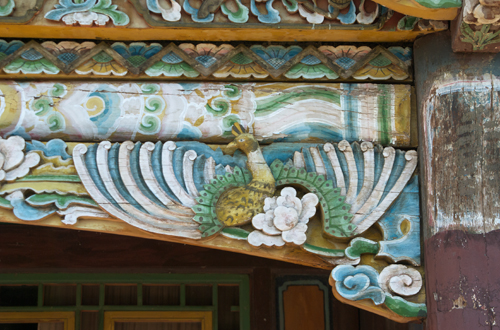
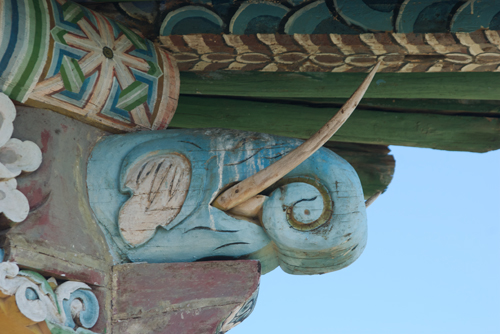
As an artist, the temple was pure eye-candy, being covered with a riot of decorative carvings and paintings on almost every surface. Stylistically it is probably mostly Tibetan, with some Nepalese influence. I’m posting most of the best images I took because when I googled the monastery, I got no hits at all and this place is too special to not share.

Peacock detail,, old temple
Unknown deity or creature, old temple
Elephant at corner; for strength- old temple
One corner of old temple; the fretwork gives this large building a delicate, airy feeling
Gachen Lama Monastery; the old temple

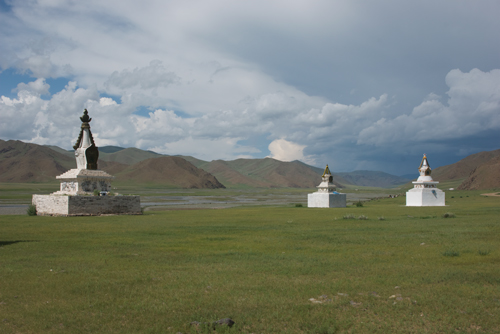
After we left the monastery grounds, we walked toward the river to see the seven stupas which overlook the river valley.

Three of the stupas; cue Jantsannarov’s “White Stupa No. 1”

This seems to be one of the most beloved pieces of music in Mongolia. I love it, too.

We debated whether to stop here for the night in the hope of seeing the Rimpoche the next day. But we really had no idea when he would arrive and were a little uncomfortable being conspicuous as the only non-locals around, so chose to travel on. And that resulted in one of my favorite parts of the entire trip.

Mongolia Monday: The Best Camping Trip Ever, Part 3- The Gobi, Gempilarjaalin and Onglyn Monasteries

Leaving Baga Gazriin Chuluu meant that I was now traveling south into a part of Mongolia that I had never been to and really knew very little about. Perfect.

Our first stop was in the soum center of Erdenedalay, home of the Gempildarjaalin Monastery, which was built in 1910. The main temple survived the destruction of the late 1930s and there are now ten monks in residence.

Gempildarjaalin Monastery
Gempildarjaalin Monastery interior

Our road then continued out across the Gobi. The landscape was rolling and surprisingly green. We could see a storm front with rain off to our right.

Earth road in the Gobi

Our final destination for the day was the river valley of the Onglyn Nuur (River), which is also home to the ruins of Onglyn Monastery.

Onglyn Nuur valley

Khatnaa and I went for a birding walk in the early evening and saw some hoopoes, one of the most elusive birds to get close-up photos of.

Hoopoe

The next morning we walked the short distance to the monastery ruins, which were actually two separate establishments, one founded by a prominent lama in the 1760 and the other by one of his students in 1800.

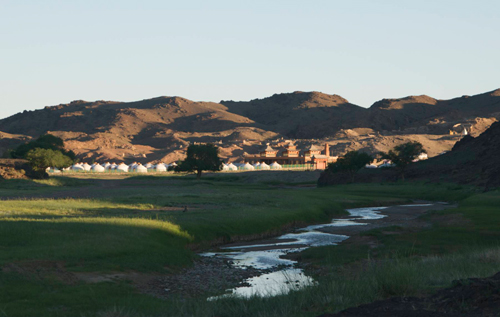
Tourist ger camp with ruins behind it on the hillside

They were two of the largest monasteries in Mongolia, capable of housing up to 1000 monks. All the buildings were destroyed in 1937. Two hundred monks were killed. Many were put to work for the communist government. Some escaped by becoming farmers.

Ruins with sacred spring

A new, small temple has been built and there are now some monks in residence at the site again. There are also ambitious plans to re-build a major temple.

Small temple interior
The main altar

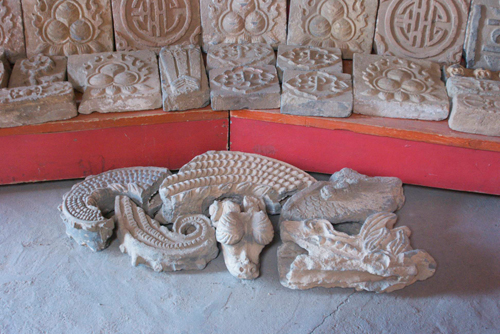
Not far from the temple is a ger which houses a small museum of artifacts that have been recovered from the ruins. I found it very poignant. So much beauty, wantonly destroyed.

Decorative stone work recovered from ruins
Wood beam with raised decoration
Khatnaa speaking with the museum host

On a happier note, we stopped in at the Secret of Onglyn ger camp and Khatnaa arranged for us to take real showers! It being the morning and the water being heated via a solar system, they were going to be cool, not hot, but it really felt good to remove a few layers and get my hair washed.

Back on the road, the green had disappeared and become the almost bare, gravelly ground that the Gobi is known for. We also drove up and over rock formations that reminded me a little of those at Ikh Nartiin Chuluu.

Rocky upland area

In the late afternoon, we stopped at a town called Guichin Us to re-fill our water containers from the well. This became a regular feature of the trip, stopping at a local well for water, which Soyoloo then boiled so that we could use it for drinking.

Water refill from a town well

We drove a few kilometers out of town, onto the open plain and stopped for the night. One of the remarkable things to me was the spots that Khatnaa often chose for campsites. He almost never sought out a sheltered spot of any kind. What seemed to matter was having a slight slope so that if it rained, the water wouldn’t gather under the tents. So here’s my tent out in the “middle of the Gobi”, complete with my drying laundry. It was really, really quiet and we sat after dinner watching a distant thunderstorm, hoping that it was dropping badly needed rain on the land beneath.

My tent (with clean socks)

Next up:  crossing a flooded Gobi river, bactrian camels and “mosquito heaven”.