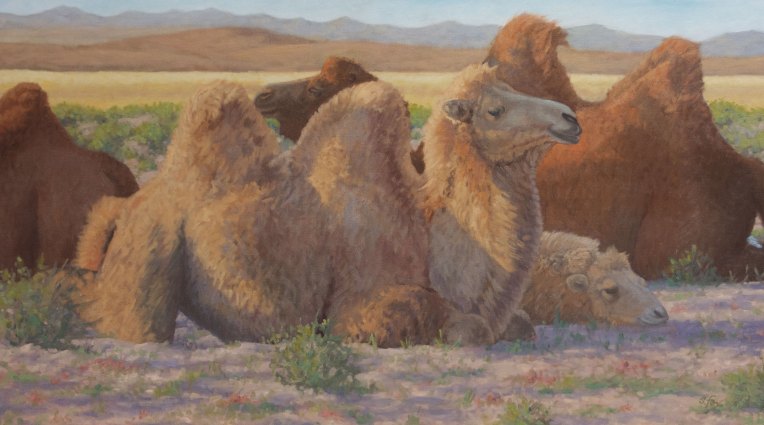
I just found out that “Done for the Day”, a painting of bactrian camels that I photographed in Mongolia at Arburd Sands last September has been accepted into the Society of Animal Artists jured show “Art and the Animal”. In the animal art world, this is the most prestigious show and entries come in from all over the world. I have been entering and not getting in for five or so years, so success is sweet indeed. Here’s the painting:
As I am about two months out from my Mongolia trip, I’ve decided to consolidate my blog posts to Monday and then do quick updates as needed on other days of the week. For the next few months, most posts are going to have Mongolia content as I share my preparations and, with luck, the trip itself.
MONGOLIA MONDAY
I have my plane tickets and will be leaving on July 5, staying overnight in Seoul, Korea and arriving in Ulaanbaatar on the afternoon of the 7th. I’ll be taking the local United Express flight to San Francisco, Asiana to Seoul and MIAT to UB, and doing it in reverse without the overnight for my return on July 30. My current plan is to attend the National Naadam celebration in UB and then, in some order still to be determined, spend a day or two at Hustai seeing the takhi, travel to the Gun-Galuut Nature Reserve and the Baga Gazariin area to explore the argali habitat in those places, with hopes that I will be able to see and photograph them.
The one “appointment” that I have is to be at Ikh Nartiin Chuluu the week of the 20th for three days of meetings with the herder women to discuss their ideas for a crafts cooperative, which I plan to support. For this purpose, and for other projects that might come up in the future, I have established a non-profit association, Art Partnerships for Mongolian Conservation (APMC). Our mission will be to use the arts to promote conservation in Mongolia. My 501(c)3 sponsor is the Denver Zoological Foundation, which has set up an account for me so that donations made to APMC are tax-deductible. For more information, email me at sfox@foxstudio.biz.
SKETCHING VS. DRAWING
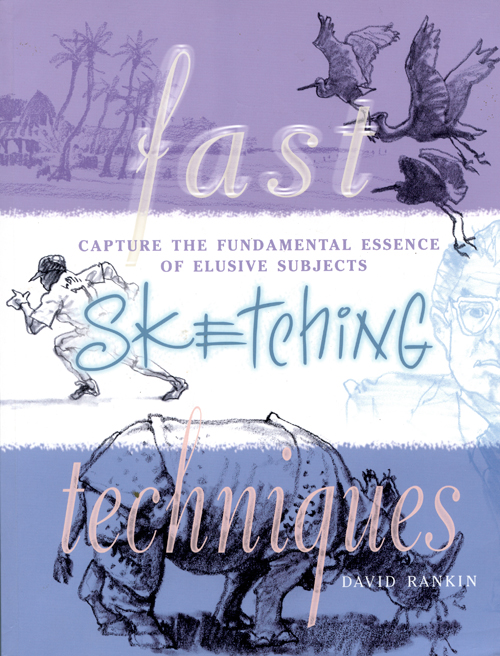
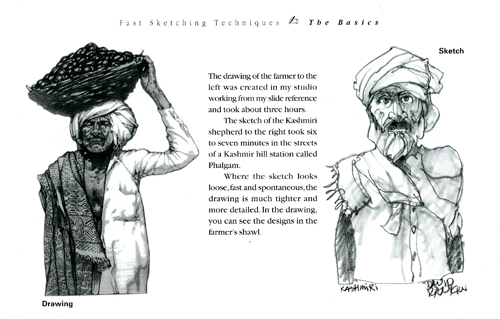
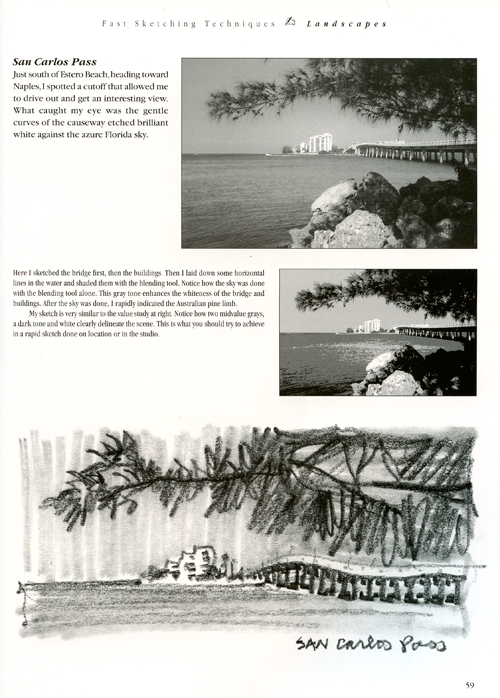
Last week I said that I would do a book review of an excellent “drawing” book. I got it out recently to use as a guide for honing my field sketching techniques for the upcoming Mongolia trip (see how it’s all dovetailing?). It’s called “Fast Sketching Techniques” by David Rankin, who, as it happens, won an AFC Flag Expedition Grant a couple of years ago to travel to the source of the Ganges River in India, one of his most favorite countries. He, dare I say it, draws a very useful distinction between drawing and sketching and does it in a way that I think encourages people to pick up a pencil and paper and give it a go.
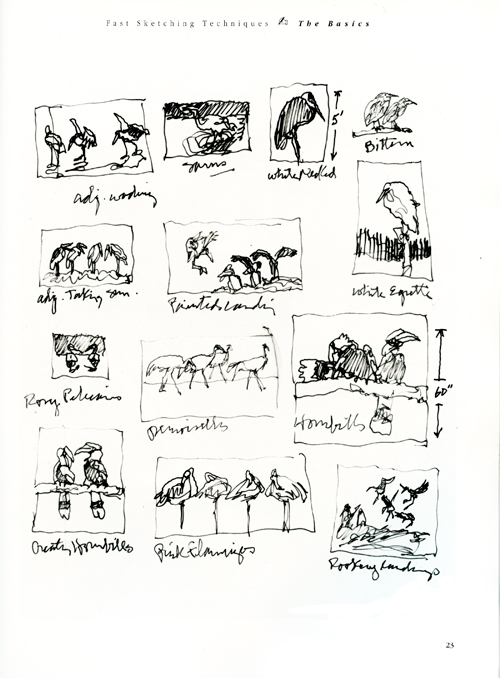
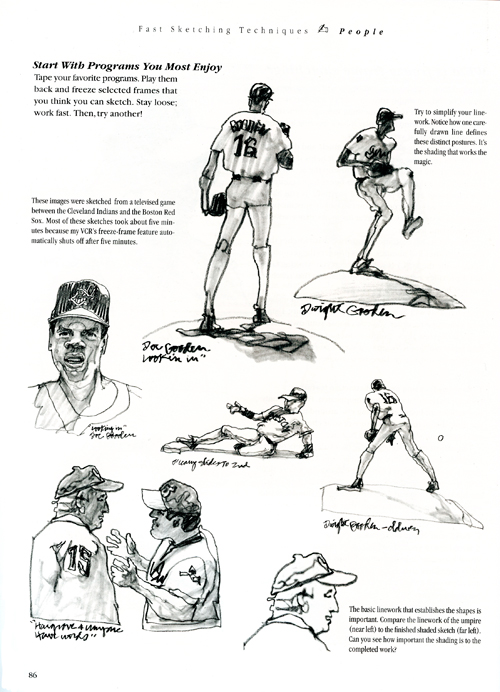
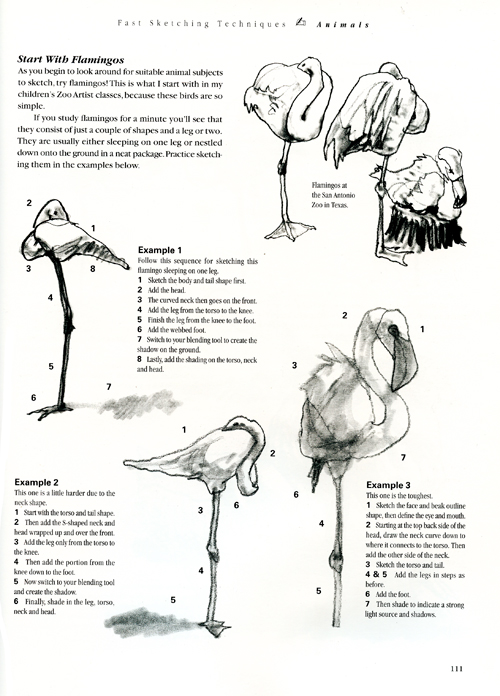
Here’s where you can find it on Amazon, but it looks like it has gone out print, so you might end up with a good used copy. I highly recommend it. Here are a few pages to give you an idea of David’s approach. He is a signature member of the Society of Animal Artists, has been in every major wildlife art show multiple times and is an excellent teacher and “critiquer”. In short, he knows his stuff.
Book coverThe difference between drawing and sketchingQuick, simple sketches that catch the essence of the subject without getting bogged down in detailAn example of how he interprets a scene quicklyUsing pause on a tv recorder to do quick sketchesInstruction on how to work at zoos sketching animals
Next week, I’ll have post some of the sketch work I’ve been doing in order to get up to speed for the real thing.
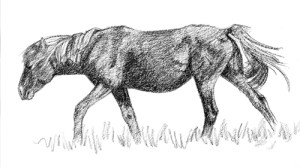
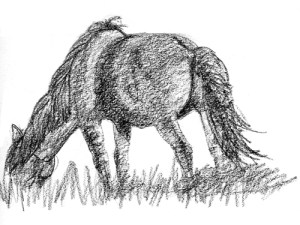
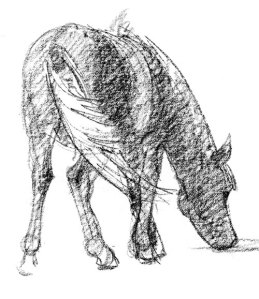
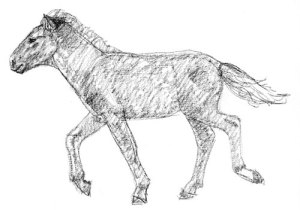
Continuing on from last week, here are some more horse drawings. I’m looking for interesting gestures and angles other than from the side.
Next week I plan to do some sketches of various combinations of horses to see how they look.
——–
Here’s a link to a story that was on CNN last week. It’s about an autistic boy whose father and mother take him to Mongolia, both to be healed by shamans and to spend extensive time on horseback.
And, as it happens, a dear artist friend of mine just sent me an autographed copy of the book that has resulted from the trip, The Horse Boy. I’m only part of the way in, but it’s a facinating book on a number of levels- the treatment of autism, Mongolia, its horses and shamanism. I’ll do a review once I’ve finished it. Suffice to say for the moment that the author experienced the same patience, tolerance and good will that I have during my travels there.
I had an idea for a painting the instant I saw this scene on the way back from the Ikh Nartiin Chuluu Nature Reserve in 2006.
I love the colors, the clouds, the Mongol horses grazing, but compositionally it’s a long way from a painting. My plan is that this will be a major work, as in large, maybe 3’x4′ or more since I want the horses to be big enough that I can really paint each one individually. I learned this approach in art school when one of my teachers showed our class a painting he did of the Founding Fathers signing the Declaration of Independence. Why so big, we asked. Because I didn’t want to paint the heads any smaller than an inch high, he replied. Oh, we said. Taking that as a beginning, he knew how big the painting would end up being. I’m thinking each horse at 3″ to 4″ from the back to the ground. This could change, but it is a starting point.
The process I’m going to demonstrate is the one taught me at art school when I was studying to be an illustrator. I don’t always do all the steps, but this time I probably will, both because it’s a large piece and because other artists might find all or part of it useful in their own work.
The next step was to do a small thumbnail to get my initial vision down.
This took about 30 seconds, but it has the essential information: low horizon line, mountains in the background, clouds stacked up picturesqually, one large and one small group of horses grazing. The proportions aren’t right yet, so I’ll be doing more thumbnails, as many as it takes.
In the meantime, I’m also doing fairly quick drawings of horses grazing and moving to see which ones I think will work in the painting.
Today I thought I’d share my record of the progress of a painting that is currently hanging in the Redwood Art Association juried membership show at the Morris Graves Museum of Art in Eureka, California, which is about 20 minutes from where I live. This sequence should give you a pretty good idea of how I work.
Here’s the reference image that I started with. It was taken in September 2008 at Ikh Nartiin Chuluu Nature Reserve. This group of horses wandered right past the ger camp one evening. I got lots of great pictures. Looking at them when I got home, I was struck by the stallion’s pose as he showed off around the mares. I haven’t done too many domestic horse paintings and I wanted to really focus in on understanding their structure and capturing the sheen of the coat, so I decided to use a fairly large canvas and only paint the horse.
Here’s how I started. The support is gessoed canvas on hardboard and measures 24″x36″. I did an initial lay-in with a brush. All I cared about at this point was getting the horse where I wanted him on the canvas and indicating the proportions correctly. You can see on the front leg that is lifted where I have started to do the actual drawing.
This step shows the finished drawing for the head, shoulder and front legs. At this point, I had dragged out all my books on horse anatomy to double check the structure and confirm that I had understood it correctly. Changes are easy to make at the drawing stage, but I’ll wipe out and re-do at any point if I see something that’s wrong. That’s just the way it goes sometimes and I don’t fight it or make excuses to myself anymore. I also have a full-length mirror behind me and I use it constantly to check the drawing for accuracy. I’ve designed the mane and the tail shapes, some of which are planned to go off the edge of the canvas so the horse isn’t floating and looks more like he just happened to be walking through the frame.
I’ve started to lay in the first layer of color on the body and hindquarters and am already varying the values to pick out anatomical structures like the hind leg tendon and to start suggesting the roundness of the torso. Since I’m working from a digital photograph, which flattens form, I’ve schooled myself to compensate by always looking for ways to get back the three dimensional form I know is there.
I’ve finished the initial color layers and am starting to paint with the knowledge that the strokes I make now will quite possibly be visible in the finished painting. I’m always refining the drawing as I go. One of the things that interested me about doing this particular piece is that you can’t see his eyes at all, so I wanted to capture his attitude and character from his body language and by painting him big on the canvas. I was also thinking of the design of the positive space -the horse- and the negative space -the background.
I’ve developed a procedure in which I go darker and the opposite color temperature than where I want to end up. When I come in at the last with the final value and temperature, the contrast will create the richness and variety that I really like.
Most of the basic lay in is done. All my darkest darks and medium tones are in, except for those patchy looking bits that I haven’t gotten to yet. Now the fun starts….all the juicy highlights, modeling and finishing touches that are a reward for the prep work leading up to it.
Mongol Horse #2-Ikh Nart Stallion oil 24x36 (price on request)
And here is the finished painting! Since all I cared about was the horse, I kept the background simple and just added some shadows to “ground” him. I wanted a neutral tone that related to his color and then added the soft yellow band to give it a little visual punch. I feel like I have a much better grasp of horse anatomy now and I’m pleased with how it came out.
This has been a fun, and instructive, series for me and I’ll definitely be doing more of this kind of thing for my own study work.
Most of the drawings I’ve done for the previous posts were done fairly quickly, generally 30 minutes or less. For today, I’ve done more finished drawings, once again using the Wolff Carbon pencil on vellum bristol.
The idea for these was to use all the features of the subject, including gesture for the full body drawings, to capture its character and essence.
For a Bactrian camel head study, I looked for reference with a 3/4 view, but most of what I have didn’t seem like it would draw well because the position of the features is so odd. Time was limited, so I stayed with a classic profile that shows his calm, unexcitable nature. My husband and I got to sit with a large group of camels at Arburd Sands when we were in Mongolia and I could practically feel my blood pressure drop as I sat and sketched them.
The body of this spotted hyena got too big, so I cropped her at the shoulders, which gives a different look than the camel above, in which the drawing trails off in value, number of lines and amount of detail. I find hyenas interesting and compelling on a number of levels. They live in a matriarchal clan structure, will go to war with lions and move a lot faster than you think they can with their gallumping, awkward gait. The African night wouldn’t be the same without their crazy whooping and insane giggling.
I love the flow of the pose I captured at Yellowstone as this coyote ran parallel to the road in nice morning light. The head demonstrates that you can get a lot of character without a lot of detail if you make your marks carefully, see the shapes correctly and don’t get hung up in drawing individual hairs.
This drawing and the next one ended up too big to scan, so they were photographed and then processed in Photoshop. They were done on white paper, but I kind of like the toned effect. In any case, I’ve rarely done primates, but I got some incredible reference of the gorillas the last time I was at the San Francisco zoo and have been looking forward to seeing what I could do with it. The big silverback male was on morning patrol and he didn’t miss a thing.
Sometimes a subject serves itself up on a silver platter and is so compelling that the artist’s job is to simply not mess it up. I found warthogs to be, pound for pound, THE most entertaining animal I saw in Kenya. This one was at Lewa Downs, grazing near the lodge we stayed at. He’s got it all: great ears, that remarkable face and the solid body carried by relatively delicate-looking legs and feet.
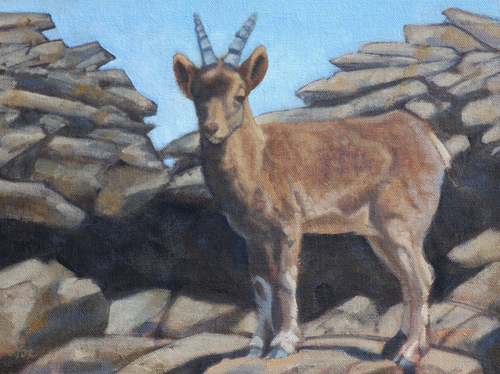
I thought that I would start to share how I put my Mongolia paintings together, starting with a subject from Ikh Nartiin Chuluu Nature Reserve. I had never been to a place anything like it and before I began any finished gallery paintings, I needed to learn to paint the various elements, both the land and the animals. Here are two studies of the rocks, one of a young ibex and a finished 15×30 of two argali-
Since most people are not familiar either with the species or the place, I wanted this first painting to show the kind of landscape that argali like; not just mountains, but upland areas with these rocky outcroppings. You can see the steppe down below and off in the distance. These were two rams who were spending at least part of the day together. It turns out that argali don’t form permanent harems or herds. Animals of all ages and both genders group and re-group throughout the day in numbers, at least from what I saw, from one to twenty or so and everything in between.
I’m going to start posting drawings of various subjects since, after all, I am an artist, not a photographer or book reviewer. Today’s drawing is of two young takhi stallions that I photographed at Khomiin Tal, the third takhi reintroduction site after Gobi B and Hustai Nuruu. It is located in the Zavkhan province or aimag, which is in western Mongolia. I read on one of the Mongolian news websites that the herders out there lost 250,000 livestock over the winter. I haven’t found any info on the takhi, but I know that people stay out at the research camp and feed them if necessary. Twenty-two horses were initially shipped to Khomiin Tal from a semi-reserve in France which is located at high altitude in the French Alps. I would think that there would be over two dozen horses by now.
These two young guys were “feeling their oats” when I saw them in the morning and were pushing, mouthing and generally harassing each other. What made it nice for me is that they were Doing Something instead of just standing around or grazing with their heads down. Getting reference of wild animals actually moving and behaving naturally is kind of a gold standard in wildlife art. More next week!


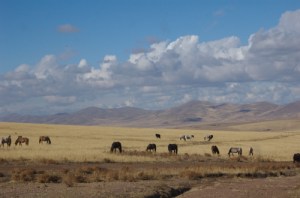 I love the colors, the clouds, the Mongol horses grazing, but compositionally it’s a long way from a painting. My plan is that this will be a major work, as in large, maybe 3’x4′ or more since I want the horses to be big enough that I can really paint each one individually. I learned this approach in art school when one of my teachers showed our class a painting he did of the Founding Fathers signing the Declaration of Independence. Why so big, we asked. Because I didn’t want to paint the heads any smaller than an inch high, he replied. Oh, we said. Taking that as a beginning, he knew how big the painting would end up being. I’m thinking each horse at 3″ to 4″ from the back to the ground. This could change, but it is a starting point.

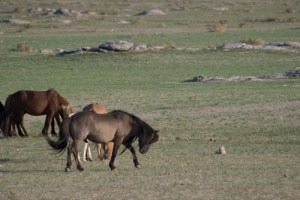 Here’s the reference image that I started with. It was taken in September 2008 at Ikh Nartiin Chuluu Nature Reserve. This group of horses wandered right past the ger camp one evening. I got lots of great pictures. Looking at them when I got home, I was struck by the stallion’s pose as he showed off around the mares. I haven’t done too many domestic horse paintings and I wanted to really focus in on understanding their structure and capturing the sheen of the coat, so I decided to use a fairly large canvas and only paint the horse.
 Here’s how I started. The support is gessoed canvas on hardboard and measures 24″x36″. I did an initial lay-in with a brush. All I cared about at this point was getting the horse where I wanted him on the canvas and indicating the proportions correctly. You can see on the front leg that is lifted where I have started to do the actual drawing.
 This step shows the finished drawing for the head, shoulder and front legs. At this point, I had dragged out all my books on horse anatomy to double check the structure and confirm that I had understood it correctly. Changes are easy to make at the drawing stage, but I’ll wipe out and re-do at any point if I see something that’s wrong. That’s just the way it goes sometimes and I don’t fight it or make excuses to myself anymore. I also have a full-length mirror behind me and I use it constantly to check the drawing for accuracy. I’ve designed the mane and the tail shapes, some of which are planned to go off the edge of the canvas so the horse isn’t floating and looks more like he just happened to be walking through the frame.
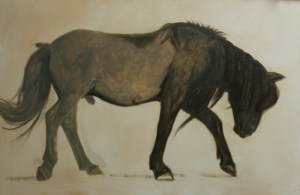 I’ve finished the initial color layers and am starting to paint with the knowledge that the strokes I make now will quite possibly be visible in the finished painting. I’m always refining the drawing as I go. One of the things that interested me about doing this particular piece is that you can’t see his eyes at all, so I wanted to capture his attitude and character from his body language and by painting him big on the canvas. I was also thinking of the design of the positive space -the horse- and the negative space -the background.
 Most of the basic lay in is done. All my darkest darks and medium tones are in, except for those patchy looking bits that I haven’t gotten to yet. Now the fun starts….all the juicy highlights, modeling and finishing touches that are a reward for the prep work leading up to it.
 For a Bactrian camel head study, I looked for reference with a 3/4 view, but most of what I have didn’t seem like it would draw well because the position of the features is so odd. Time was limited, so I stayed with a classic profile that shows his calm, unexcitable nature. My husband and I got to sit with a large group of camels at Arburd Sands when we were in Mongolia and I could practically feel my blood pressure drop as I sat and sketched them.
 The body of this spotted hyena got too big, so I cropped her at the shoulders, which gives a different look than the camel above, in which the drawing trails off in value, number of lines and amount of detail. I find hyenas interesting and compelling on a number of levels. They live in a matriarchal clan structure, will go to war with lions and move a lot faster than you think they can with their gallumping, awkward gait. The African night wouldn’t be the same without their crazy whooping and insane giggling.
 I love the flow of the pose I captured at Yellowstone as this coyote ran parallel to the road in nice morning light. The head demonstrates that you can get a lot of character without a lot of detail if you make your marks carefully, see the shapes correctly and don’t get hung up in drawing individual hairs.
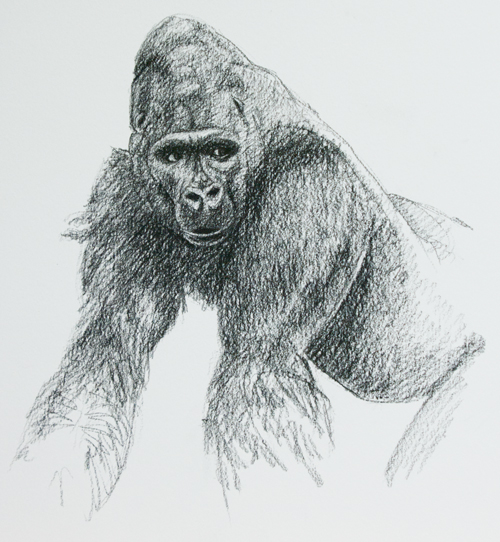 This drawing and the next one ended up too big to scan, so they were photographed and then processed in Photoshop. They were done on white paper, but I kind of like the toned effect. In any case, I’ve rarely done primates, but I got some incredible reference of the gorillas the last time I was at the San Francisco zoo and have been looking forward to seeing what I could do with it. The big silverback male was on morning patrol and he didn’t miss a thing.
 Sometimes a subject serves itself up on a silver platter and is so compelling that the artist’s job is to simply not mess it up. I found warthogs to be, pound for pound, THE most entertaining animal I saw in Kenya. This one was at Lewa Downs, grazing near the lodge we stayed at. He’s got it all: great ears, that remarkable face and the solid body carried by relatively delicate-looking legs and feet.


 I’m going to start posting drawings of various subjects since, after all, I am an artist, not a photographer or book reviewer. Today’s drawing is of two young takhi stallions that I photographed at Khomiin Tal, the third takhi reintroduction site after Gobi B and Hustai Nuruu. It is located in the Zavkhan province or aimag, which is in western Mongolia. I read on one of the Mongolian news websites that the herders out there lost 250,000 livestock over the winter. I haven’t found any info on the takhi, but I know that people stay out at the research camp and feed them if necessary. Twenty-two horses were initially shipped to Khomiin Tal from a semi-reserve in France which is located at high altitude in the French Alps. I would think that there would be over two dozen horses by now.
 Susan Fox, American Artist