California Art Club Winter Symposium Day Two

I want to finish covering the Symposium while the fantastic information I got yesterday is still fresh in my mind. Mongolia Monday will return next week.

Day Two started with an amazing talk on “Creativity and Authenticity” by painter Joseph Paquet, who studied at the School of Visual Arts in New York and was mentored by artist John P. Osborne. Although he considers Osborne as his greatest influence, he also cited George Inness, Winslow Homer, Edward Hopper, George Bellows and Russian painter Isaac Levitan as inspirations.

He then did a demo painting “out of his head” with no reference, observing in answer to a question that “When you paint out of your head, you find out what you don’t know. It’s staring you right in the face.”

I spent a good part of his 90 minute talk frantically taking notes since his topic is an extremely important one…the necessity of finding our own voice as artists. As he pointed out, there is a lot of derivative work out there today, partly due to an almost unprecedented availability of ateliers and teachers for people to study with.

Too many artists think that their goal is to find out how the teacher does the work, believing if they do the same things that that is what will make them successful. In reality, it only makes them a second-rate version of their teacher.

Joseph also spoke about what he sees in the art world today, saying that there has been a shift from what he calls “heart” to ideas and that too many artists aren’t willing to risk expressing what they love, but instead only try to be clever, which is ultimately unsatisfying. He gave the example of Jeff Koons, one of the most financially successful artists in history, whose work is clever, but really nothing more, and who, for himself, collects artists like Bouguereau.

If you have an opportunity to go hear Joseph Paquet speak, I highly recommend that you do so. If you live in the St. Paul, Minnesota area, you can take his classes. He also teaches workshops at various locations around the country.

Joseph made many extremely pithy comments and I would like to share my favorites with you:

-Everyone has a story.

-Don’t drink your own kool-aid.

-Craft is the language of what we do.

-The true master is the perpetual student. (Preceded this by saying that if someone tells you they are a master, they aren’t.)

-Go up against what you don’t know how to do

-Great art is intimate

-The American idea that making money=success is a load of shit. (applause)

-The hardest thing is to say something profound in common language.

-Surround yourself with people who are truthful.

-If you don’t love the damn apple, don’t paint the apple (possibly the most important thing he said all day.)

-Stay sensitive.

-Talking about art students: Student: Teach me how to paint a tree. Joseph: Which tree? They’re all different. (applause)

-The world doesn’t need 300 Richard Schmids.

– There is a crappy period between when you find your skills and when you find your voice. (Boy, did that one resonate with me personally since that period took me almost ten years.)

– Originality and authenticity is a choice.
Mongolia Monday: 5 Proverbs About Life

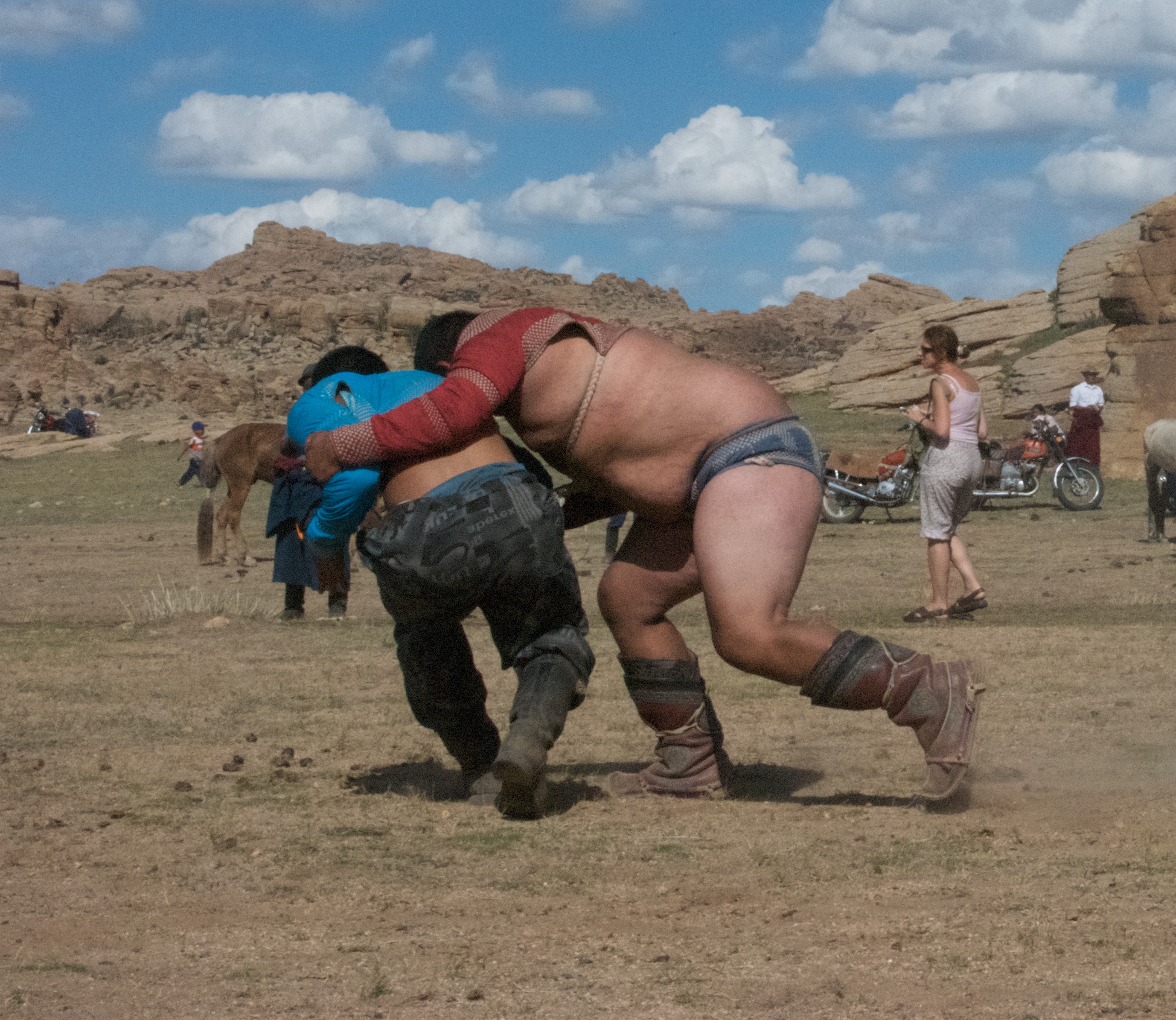
Mongol bokh (wrestling), Baga Gazriin Chuluu, July 2009

By experiencing hardship
You will become experienced
—–

There are thousands of owners for something done right
There is one owner for something done wrong
—-

Chinggis Khan statue, July 2009

If a person tries hard
Destiny will try hard
—-

From a little bit of laziness
Much laziness will come
—-

Young jockeys finish 7km race for 2 year old horses, August 2010

Talk little
Do much

Mongolia Monday- Wildlife Profiles: Cinereous Vulture

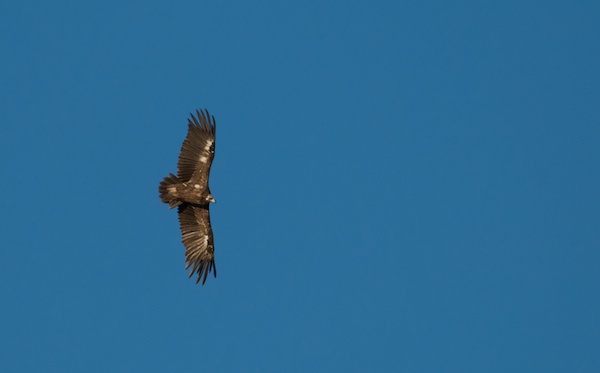
Juvenile vulture, Baga Gazriin Chuluu, July 2010

Species: Cinereous Vulture (Aegypius monachus)

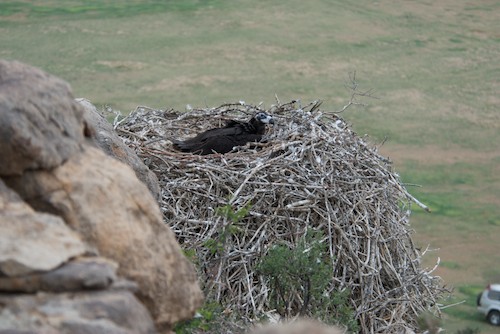
Vulture nest, Ikh Nart, April 2005

Weight, length: Cinereous vultures are the largest eurasian bird of prey and one of the largest flying birds. They are 98–120 cm (39–47 in) long with a 2.5–3.1 m (8.2–10 ft) wingspan and weigh 7–14 kg (15–31 lb)

Adult and juvenile on nest, near Baga Hairhan Uul, July 2010

Conservation Status: Near Threatened (IUCN Red List)

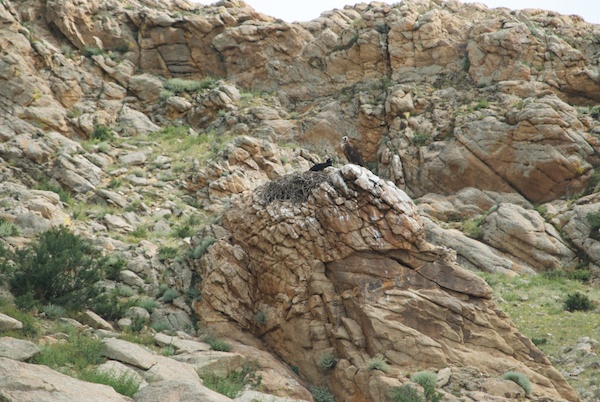
Nest on the face of Zorgol Uul, July 2011

Habitat Preference: Mountains, rocky uplands, forests

Vulture on nest, Ikh Nart, April 2005

Best places to see cinereous vultures: Ikh Nartiin Chuluu Nature Reserve, Baga Gazriin Chuluu Nature Reserve, but common in many parts of the country.

Vulture at Baga Gazriin Chuluu, July 2009

Interesting facts:

-They are also known as the European black vulture due to the very dark color of the juveniles. The adult’s head plumage gets lighter as the bird ages.

– It has recently been established through the identification of wing-tagged birds, that a number of juvenile birds from Ikh Nart are migrating to South Korea during the winter. They are showing up at feeding stations.

– It is more common for the species to nest in trees in western parts of its range, but in Mongolia nests on cliffs are more often seen. At Ikh Nart the birds nest in some of the elm trees and a bird was recently photographed on a nest built in a larch tree in the northern mountains.

Mongolia Monday- Wildlife Profiles: Argali

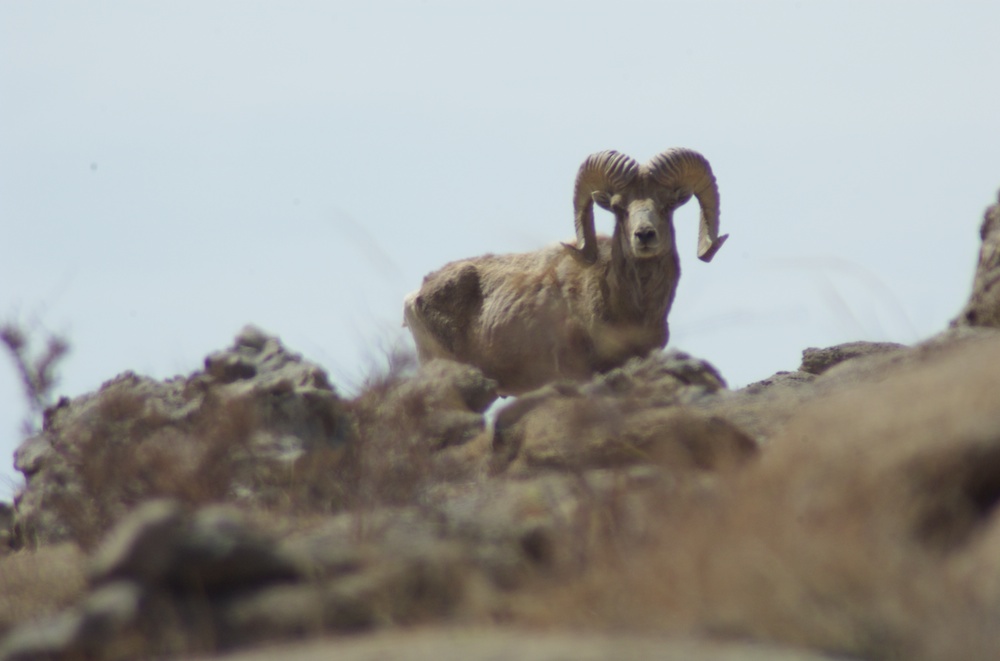
Ikh Nartiin Chuluu argali ram, April 2005: This big old ram let me follow him around for about half an hour.

I’m starting the New Year with a new series on Mongolian wildlife. These will be short profiles with essential information and interesting links. First up is the animal which brought me to Mongolia in the first place, the argali, now one of my favorite subjects.

Species: Argali (Ovis ammon)

Weight, height and horn length: Argali are the world’s largest mountain sheep. A large ram can weigh as much as 375 lbs (65-170km). They stand from  3-4″ (90-120cm) at the shoulder. The horns can measure up to  65″ (165cm).

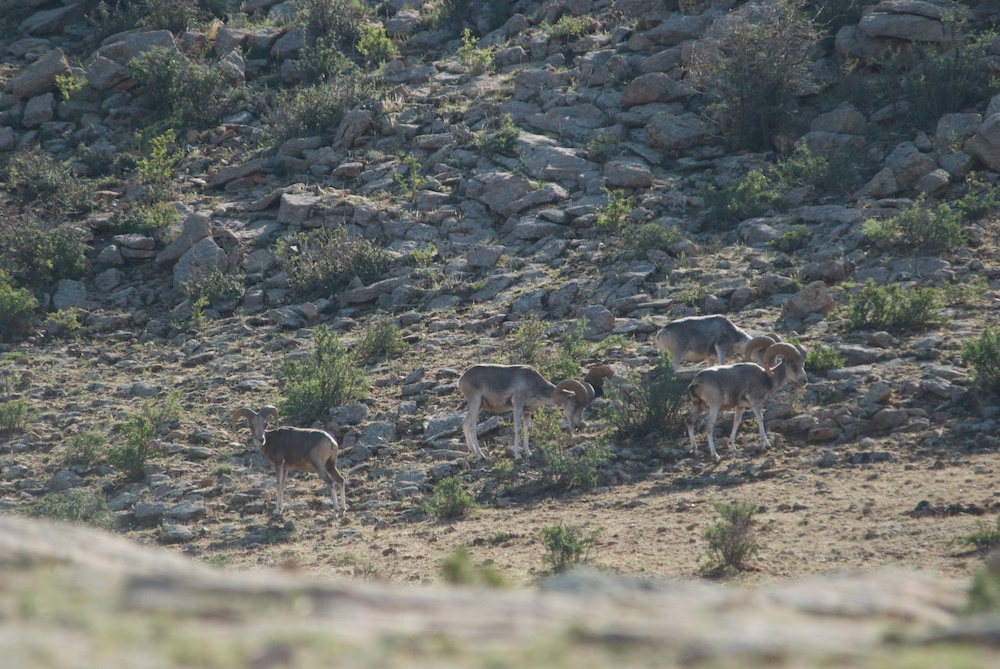
Argali rams, Gun-Galuut Nature Reserve, July 2009; I peeked over the ridge (after dragging my oxygen-starved body up a steep slope following my guide) and what should I see...a big group of argali rams, twelve in all.

Conservation Status: Near-threatened (IUCN Red List)

Argali rams, Baga Gazriin Chuluu, July 2009; Same trip as above, but this time the sheep were within sight of the road. I simply stood by the car and took lots of photos of these six beautiful boys

Habitat preference: mountains or large areas of rocky outcroppings in the desert steppe, some open desert; more recently found in mountain steppe (Gun-Galuut Nature Reserve)

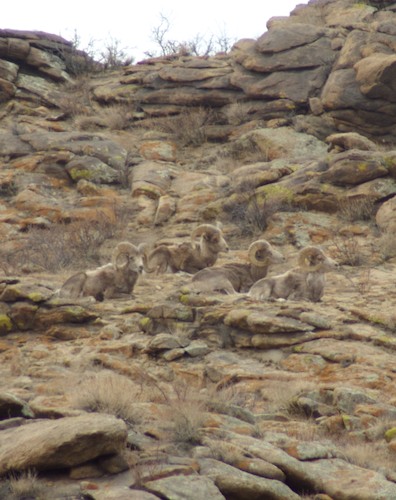
Argali rams, Ikh Nartiin Chuluu, August 2010; In all my six trips to Mongolia, going out to see argali every time, this sighting was the jackpot....five rams less than 50 yards away and I had them to myself for at least an hour.

Best Places to see argali: Ikh Nartiin Chuluu Nature Reserve, Gun-Galuut Nature Reserve; They may also be seen at Baga Gazriin Chuluu and Ikh Gazriin Chuluu, both local reserves (no websites)

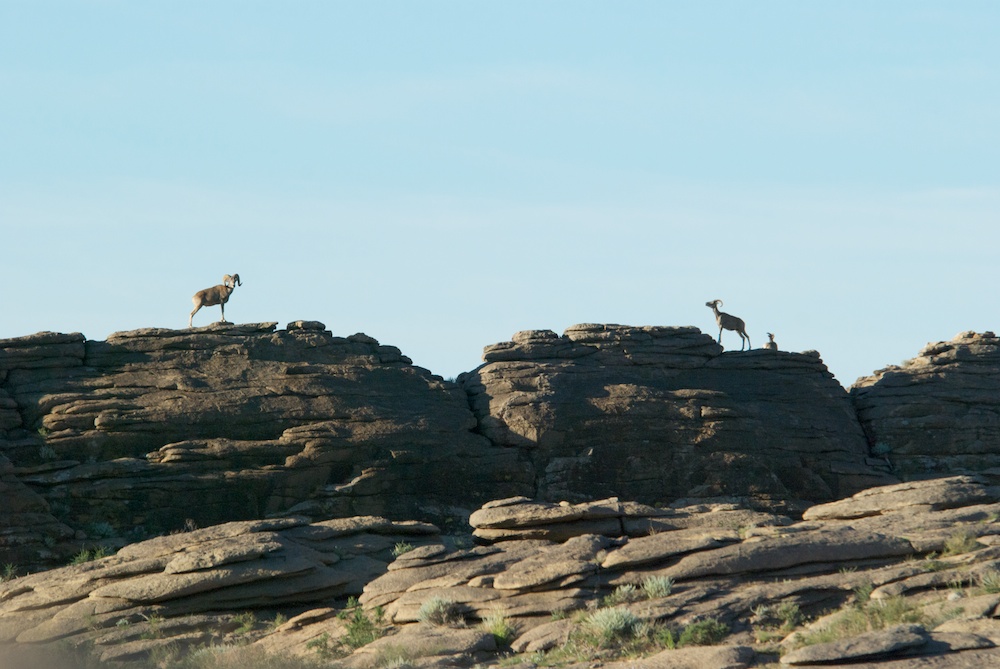
Argali ram, ewe and lamb, Ikh Nartiin Chuluu, July 2011; Typical sighting of argali up on the rocks.

Interesting facts:

-There are no argali in captivity, neither zoos or reserves. The only place to see them is in their native habitats.

– While the rams do fight it out during the annual rut for mating privileges, otherwise argali don’t have set herds or harems. Who is with who can change through the day. Rams mingle freely with ewes and lambs, form bachelor groups or wander around on their own.

– In July of 2009, I was in the right place and the right time to be the first person to ever photograph an argali swimming a river…the Kherlen Gol, which flows through Gun-Galuut Nature Reserve. It was known that they do it, but since almost all the research on them is done at Ikh Nartiin Chuluu, where there are no rivers, no one had ever actually seen, much less photographed, it.

Mongolia Monday- 3 Proverbs About Friendship

If you have many friends
You are rich

If a friend’s deed is successful
Your deed will be successful

Have many friends
Rather than a thousand lan

(a lan is a unit of Chinese currency)

Now Available!

My Mongolia 2012 calendar, featuring images of my paintings, is available at my Zazzle store here

Mongolia Monday- Two Proverbs That Include Argali!

Argali rams, Ikh Nartiin Chuluu, April 2005

If a turag* is tired, it goes to the mountain

If a person is tired, he goes to relatives

This could be used when a person is tired and goes to visit relatives or advice to someone who is tired.

If the in-laws become bad, a person leans on his relatives

If wild sheep becomes weak, they can lean on the mountain

It says that when someone is tired or having problems with their in-laws they should go to their relatives.

(from “Mongolian Proverbs” by Janice Raymond, Alethinos Books, 2010)

*turag is a word for argali, the wild sheep

Portrait Drawings Of Mongolian People

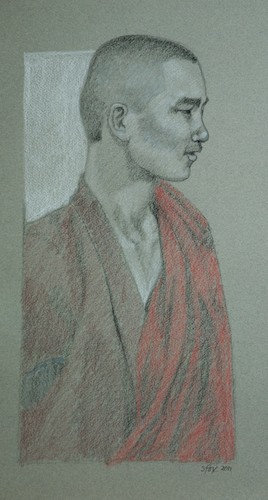
After looking through Drew Struzen’s wonderful book, “Oeuvre”, I got inspired to pull out some toned Canson paper and try some portraits of Mongol people I’ve photographed over the years. I’m not anywhere near his league, but I’m really having fun doing this kind of finished drawing again.

These are all on Canson Mi Tientes paper, drawn with a 6B General’s Charcoal Pencil and a white Prismacolor colored pencil. For the monks, I added a couple of other colors for their robes.

A herder from Ikh Nartiin Chuluu, 2005
A young monk, Gandan Monastery, Ulaanbaatar, 2006
An older monk, Gandan Monastery, Ulaanbaatar, 2006
Camel herder's wife, Gobi, 2006

Mongolia Monday- An Album Of Bird Photos From 2011

I’m going to start a short series for the holidays of “albums” with images I’ve shot of various types of animals and species that I’ve seen on my travels to Mongolia.

First up are the birds I saw on this latest trip in August 2011. If you see a mis-identified bird, please let me know. The field guide situation for Mongolian birds is still not what it needs to be.

Finally, we didn’t go hunting for any of these birds. They are what I saw as we drove around or walked in the reserves and parks. Mongolia is an extraordinary birding destination that deserves to be better known.

Daurian partridges, Hustai National Park
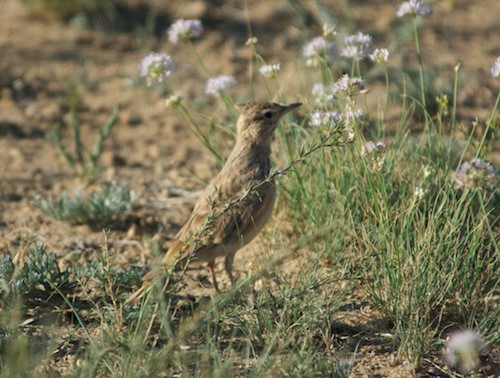
Crested lark, Ikh Nartiin Chuluu Nature Reserve
Houbara bustard, just outside the northern boundary of Ikh Nartiin Chuluu Nature Reserve (this may have been a rare sighting)
Whooper swan, Gun-Galuut Nature Reserve
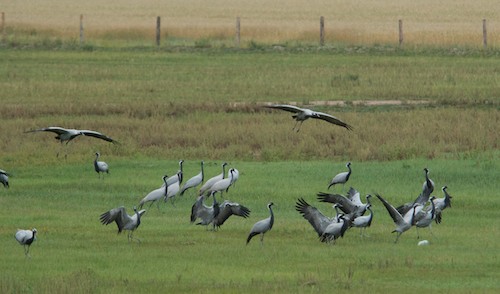
Demoiselle cranes, coming into Erdenet soum; part of a large flock
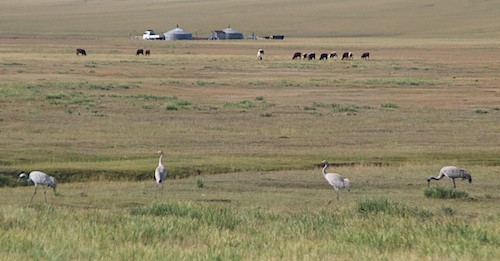
Eurasian (or Common) cranes, somewhere near Hayrhan, Arkhangai Aimag
White-napped cranes, Gun-Galuut Nature Reserve (endangered)
Grey wagtail, Tuul Gol, Jalman Meadows, Khan Khentii Mountains
Japanese quail chick (?), Gun-Galuut Nature Reserve
Common magpie, east of Horgo Terhiyn Tsagaan Nuur National Park
Daurian jackdaw, Amarbayasgalant Khiid
Cinereous vultures, Ikh Nartiin Chuluu Nature Reserve
Steppe eagle, Jalman Meadows, Khan Khentii Mountains
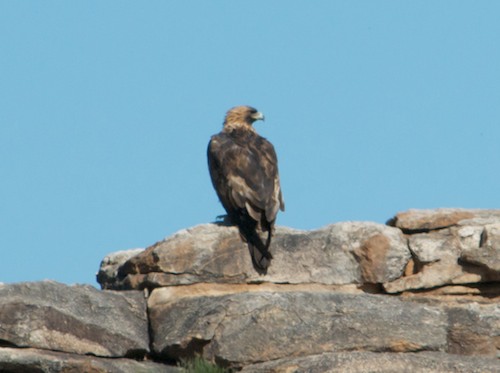
Golden eagle, Ikh Nartiin Chuluu Nature Reserve