On my previous trips to Mongolia it was either spring or fall, too early or too late to really see much in the way of wildflowers. There were some at Ikh Nartiin Chuluu last year, but I had no way to identify them. Then I found the field guide “Flowers of Hustai National Park” back in Ulaanbaatar, which appears to include most of the common flowers one is likely to encounter.
For the next three weeks I’ll post my flower images with my best guess at what they are since I’m not a botanist. I do garden, however, and many of them look suspiciously familiar.
I would love to have assistance in confirming or correcting my identifications.
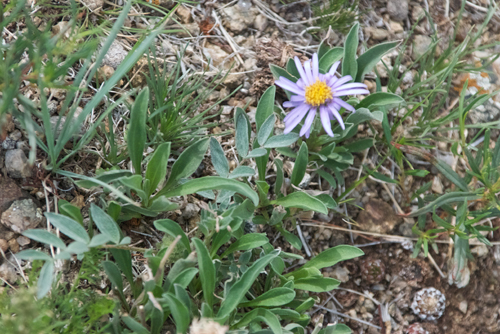
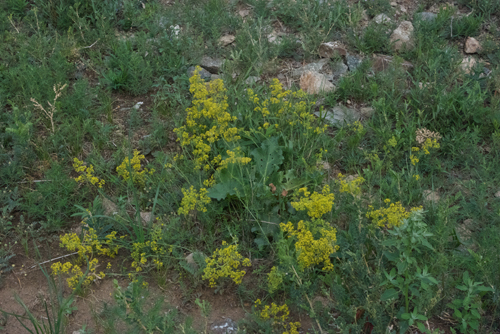
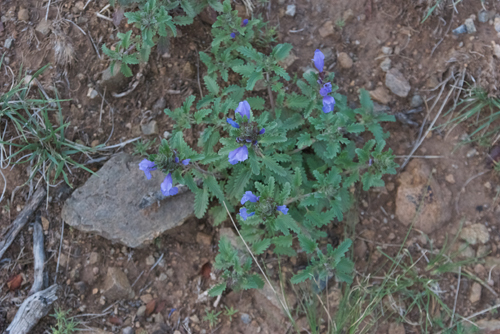
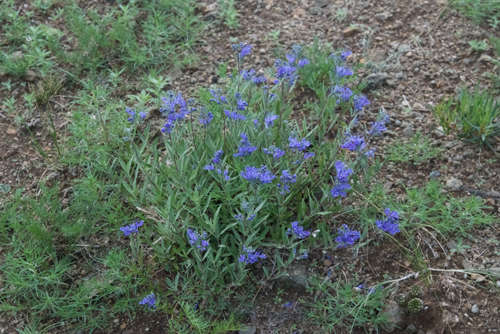
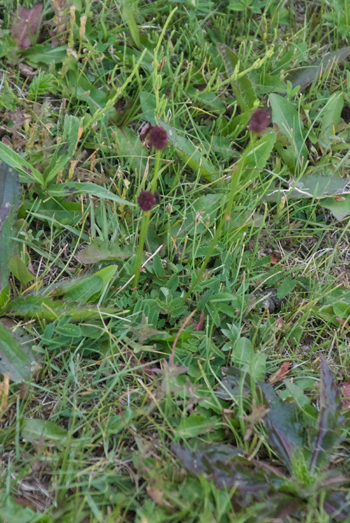
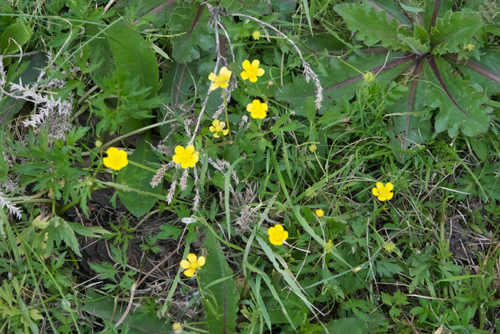
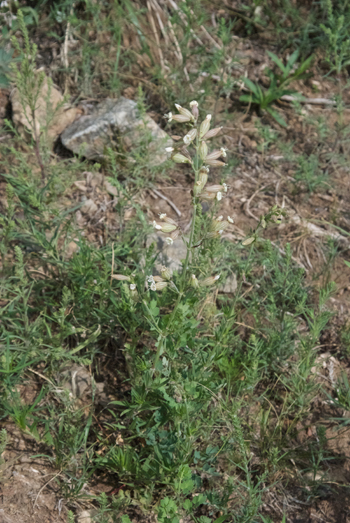
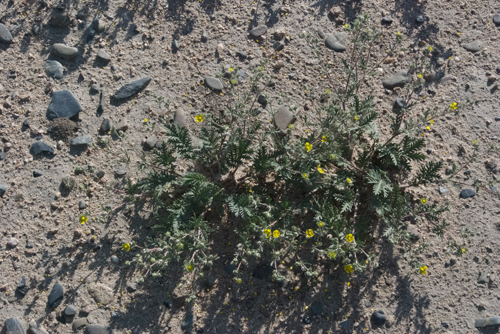
The following images are all from Gun-Galuut Nature Reserve, which is about two hours southeast of Ulaanbaatar. Some are from the rocky hillsides of Mt. Baits and some from the wetland on the north side of the mountain. None have been retouched in any way.
Here are four more new paintings to go with the two I posted last week. I had a problem with the background in the last one and thought I’d show how it was and how I changed it.
Heading Down For Breakfast 8x10" oil on canvasboard (price on request)
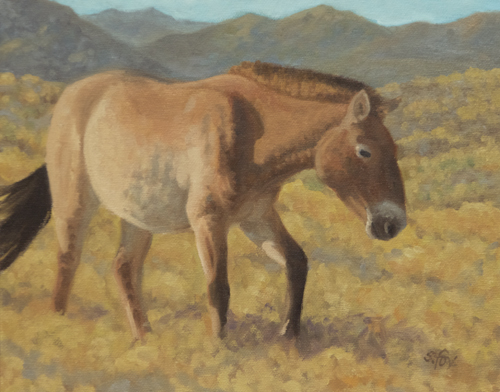
Here is one of the takhi (Przewalski’s horse) that I saw when I was at the Khomiin Tal reintroduction site in western Mongolia in September of 2006. It was first light a group of horses were coming down out of the hills to graze.
Mongol Horse #4; Afternoon Graze 9x12" oil on canvasboard (price on request)
This was a harem stallion that I saw at Ikh Nartiin Chuluu last fall. He was also the model for Mongol Horse #2. It amazes me that, given the extreme environment that they are exposed to year in and year out, that these tough small horses grow such long manes and tails. But they do.
Top O' The Morning 10x8" oil on canvasboard (price on request)
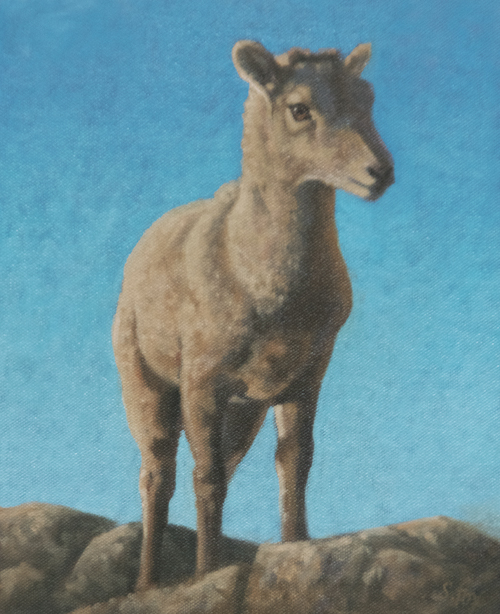
I saw this Rocky Mountain bighorn lamb with his mother near Tower Campground in Yellowstone National Park a couple of years ago. They were by the side of the road, which lacked interest as a setting, to say the least. So I moved him.
Catching the Morning Light 9x12" oil on canvasboard (price on request)
This argali ram, along with five others, gave me an eyeful on my first morning at Baga Gazriin Chuluu Nature Reserve in Mongolia in July. I wanted to work on capturing the quality of light without worrying about painting too many animals, so decided to start with a small painting. I had one idea for the rocks as you’ll see below but, on further review, something wasn’t working. Time to get out the scraper. What do you think was wrong? Answer below the second image.
First versionDetail of scraped out area
There were a couple of problems. One, in getting into the grooviness of painting the rocks, I completely lost track of my light source. The rocks are in full light, but are on the same plane as the ram. Buzzz. Second, I tried to use what I knew to design the rocks more or less from memory, which resulted in a boring, distracting (what an awful combination!) set of shapes. I went back to the rocks that were in the original photos and saw that they were much less rounded, which provided a needed contrast with the curves of the ram.
Taking a break from painting for the next week, so y’all are going to have to hang tuff to see the next step of the big argali painting. Tomorrow I’m off to the opening weekend festivities surrounding “Art and the Animal”, the annual majored juried show held by the Society of Animal Artists, of which I’m proud to have been a member since 2002. As those of you who follow this blog know, earlier in the year I learned that I had finally gotten into the show after coming up short for five or six years. I’ll try to blog a little of it while I’m there.
In other (great) news, along with some more pictures of the felt work:
Felt purse with horse motif
Yesterday I had an eagerly anticipated phone conversation with Gana Wingard, the Mongolian scientist (she’s married to an American attorney who specializes in natural resource law) who was my translator and liaison for my meetings with the herder women who live in and around the Ikh Nartiin Chuluu Nature Reserve. I came home on the 30th and she stayed to run the Earthwatch team, so I was out of touch for almost a month with anyone who could tell me what happened next.
The women went home the same day we left for Ulaanbaatar, but most of them plus more local men and women, came back on August 5 to clean out the spring that serves both the herders and the research camp. They also created some spots for the argali to drink.
Two physicians came and provided information and advice on infectious diseases like swine flu.
The Bag Governor and his wife (a “bag” is the smallest administrative unit in Mongolia) were there, too. Amgalaanbaatar, or Amgaa, who leads the argali research from the Mongolian side, gave them and the other local people who had not been at original meetings a briefing about the new association “Ikh Nart Is Our Future”. He also brought, by request, 3 meters of good thin felt from Ulaanbaatar that the ladies, according to Gana, very carefully divided up square foot by square foot.
Ibex purse custom made for a Chinese researcher studying argali; I did the drawing on the felt; the writing is old Mongolian script which, I think says "Ikh Nart" and the Mongol name they gave her "Ibex" or Yamar
The director of the association, Boloroo, was very happy to receive a laptop computer, which she badly needed for the association’s recordkeeping. The computer was given to her by the research project on the condition that I find a replacement, which is something I’ll be working on. If anyone reading this can donate or knows where I could buy reasonably, a good quality fairly new laptop, please let me know.
There has been no time for Amgaa to research prices for the felt press, so that has had to be put off until October.
Ikh Nart formalized a sister park relationship with Anza-Borrego State Park last fall. I haven’t really met any of the park people yet, but they have donated a fair amount of equipment and help with things like signs. Amgaa visited them in California in January, his first trip to the USA. Six people from the park were at Ikh Nart while Gana was there with the Earthwatch team. Boloroo came to the camp on a motorbike with a selection of craft items. The Anza-Borrego people bought over 100,000 tugrik (about $100) worth for themselves and as gifts. As you can imagine, I was thrilled to hear about this. Two of the American Earthwatch staff members also purchased over $150 of crafts. This means that at least a small income is already flowing to the women who showed up and worked so hard while I was there.
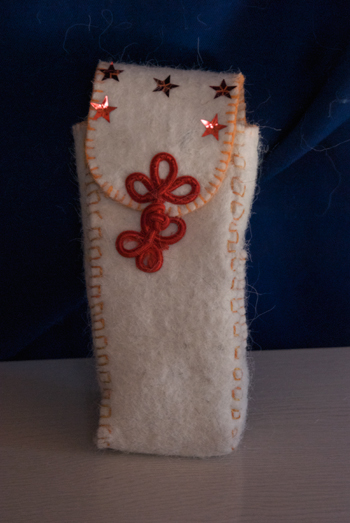
Eyeglass case; closure and stars from notions and extra craft things I brought as gifts
There are two more Earthwatch teams this year and Boloroo plans to visit each one. She has also contacted my guide who was interested in commissioning traditional felt rugs and it looks like something will happen there, too. All in all, a terrific beginning. It was hard not to have been there for what came next, but I’m looking forward to seeing everyone next year!
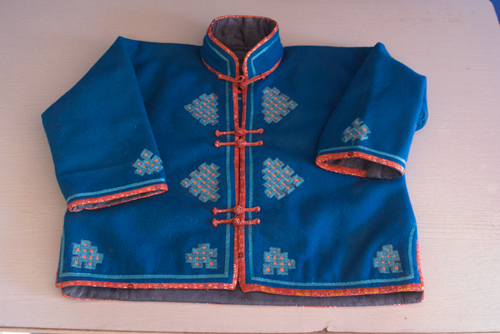
One woman also brought this child's khurem, or jacket, that she made, wanting to sell it because it was too big. All the ribbon decoration was done by hand. The jacket body is blue wool.
I started to write a reply to the (partially quoted) comment below and realized that the topic was worthy of its own post since, as you will see, I have strong opinions about the subject (Who, me?).
“I found your process very interesting…especially because I tend to ‘jump right in ass-first’ and not do any studies to figure out composition etc. I have no idea why I hate doing that…perhaps I am just impatient to get to the fun. of course this does cause problems!!…..Does Photoshop help you a lot in planning paintings? I have never once used it, I must admit…..You can re-position items in your photo using Photoshop? Man, Maybe I need to get a Photoshop For Dummies book!”
My response, which is intended to address the general issue, and not in any way the individual commenter who I quote above, is as follows:
I never use Photoshop for planning paintings in the way you describe. IMHO, it’s a pernicious trend that’s been used by way too many artists as an excuse to avoid the hard work of actually learning to DRAW.
It’s also very obvious a lot of the time when that’s how a picture has been put together. It looks like a bunch of bits with no cohesion. Animals that look pasted onto the background. Animals the wrong scale. Animals in a position that is impossible given the perspective of the setting. Light sources that don’t match. Uncorrected distortion from shooting the subject with a wide angle lens in which you end up with a back end view of something like an elk with a tiny butt that has an overly large head sticking out of it. Slavish adherence to the reference. Lack of variety of edges,with every edge same from front to back. No emotional punch or a point of view that’s unique. No exercise of the craft of painting. Just tedious rendering of Every Single Thing In The Photograph.
I’ve been in workshops watching artists beaver away at moving an animal around in a landscape on their computer and then transferring it directly to their canvas. Kind of pathetic, really. There’s a power and a mastery that comes from entering your subject directly into your brain by drawing it over and over. It’s how you learn what something looks like. Photoshopping short-circuits that. Look at who the top wildlife artists are and have been. They can all draw like crazy. Some stay with highly detailed work, like Carl Brenders, or push the limit of looseness, like Julie Chapman, but being able to draw lets them make the choice.
Copying a Photoshopped composition without having solid drawing skills cheats the artist out of all that is most important in the creative process, i.e. the creativity.
A painting is really just a series of judgments and choices. The better an artist gets at those, the better the paintings. Photoshopping images into a montage short-circuits this part of the painting process, too.
I realize that the struggle is a drag, but there isn’t any easy way to do good work that I’m aware of. The best work comes out of the struggle. I long ago lost count of the times I hit the wall on a painting, slid down to the floor, picked myself up and soldiered on until I broke through. It doesn’t happen as often now, but I know it could happen at any time.
What I do is go through a lot of paper. What you see in my posts are just a small sample. Since one of the reasons I’m an artist to begin with is that I always loved to draw from the time I was a little kid, it would defeat a main purpose of the exercise for me to eliminate that step. I also use a mirror to check my drawing for accuracy. It’s almost magical how errors jump out at you. Can’t use Photoshopped photographs for that.
I’ll just flatly say it- If you want to be any good, much less excel, as a painter of animals (or any other representational subject, for that matter), learn to draw. And draw live animals whenever possible. Period. No excuses.
Mongolia Photo of the Week
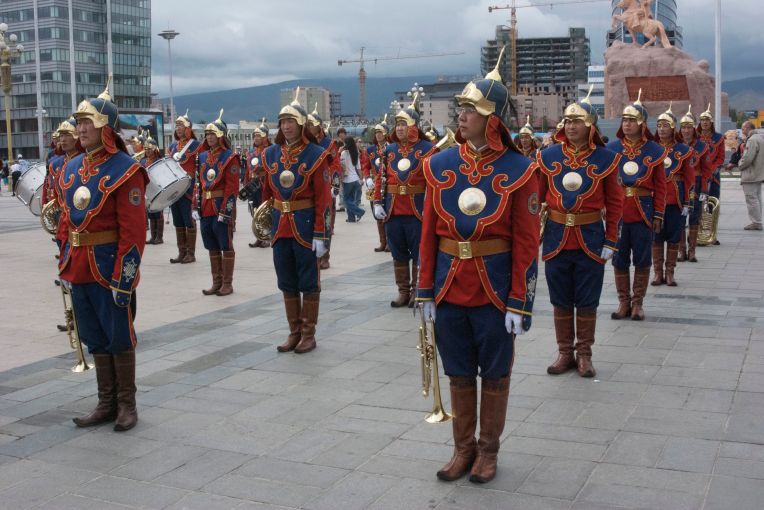
Start of national Naadam ceremony at Sukhbaatar Square, Ulaanbaatar; The band
One of the advantages of my illustration training is the process that we were taught for putting a picture together. I don’t do all the steps all the time, but now that I’m about to start one of the largest paintings I’ve done so far, I need the control that the process gives me.
My first sighting of argali at Baga Gazriin Chuluu Nature Reserve, thanks to Onroo the local camp staffer who knows the place and where the animals tend to hang out, was a group of rams in wonderful morning light. Mostly they were grazing and resting. For this painting, however, I wanted action. The essential image popped into my head and then it was a matter of getting it down on paper, which is one reason why the thumbnail process is so valuable.
Here’s some of the reference that I’m using:
I liked the pose of the big ram who is third from the left. This photo was taken at Gun-Galuut Nature Reserve. I dumped the image into Photoshop and did a horizontal reverse to get him going the direction I wanted. And then zoomed in as much as possible. The next three are from Baga Gazriin Chuluu. Talk about reference eye candy.
I did a couple of drawings of the main sheep to try out position and gesture.
In this one I added the a background to see how that worked.
My idea is to channel a little Edgar Degas and have the animals coming in from the frame, not have all of them within the frame. This is too static, but it gives me something to bounce off of. Gotta start somewhere.
Here’s the thumbnail sheet. I’m trying to figure out where the three masses of sheep will be in relation to each other. Then I did another, larger sketch.
This is more what I had in mind. Almost everything is on a diagonal, which gets rid of the too-static quality of the previous sketch. As I draw and re-draw the animals, I’m able to get to “know” them better and can refine and push the poses.
I spent a good chunk of yesterday doing a finished scale drawing that will be transferred to the canvas via the ancient and honorable grid system. I ended up with three layers of tracing paper. The bottom one had the lines for the edge. The second one had the drawing of the sheep. The third was the landscape. I did one and it’s really nice, but not right for this painting. Replaced it with a new sheet and re-did it. When I was satisfied that I had more or less what I wanted, I re-drew the argali, once again refining and tweaking the drawing.
At this point, I have solved the design/composition problem and the drawing problem. Both may be re-visited at any time as needed if I see something that needs fixing, but the next step is a value study, that is, the pattern of lights and darks. We were told in art school that if we get the values in a picture correct, then we can do anything we want with color, which I have found to be true. One of the tasks that needs doing to take the Gun-Galuut argali and the image of the sunny rocks and make them work with the Baga Gazriin Chuluu morning light. For that I’ll do a color study.
I hunted through my reference once again for the sheep images that I thought would work best. And here is, so far, finished drawing. Still not sure about the argali on the left. I’ll see how it looks to me on Monday. I also think I need a little more “air” on the right side and maybe the top. Not much, maybe a half-inch.
Finally, a favorite photo from the local Naadam at Erdene. Waiting for the race results.
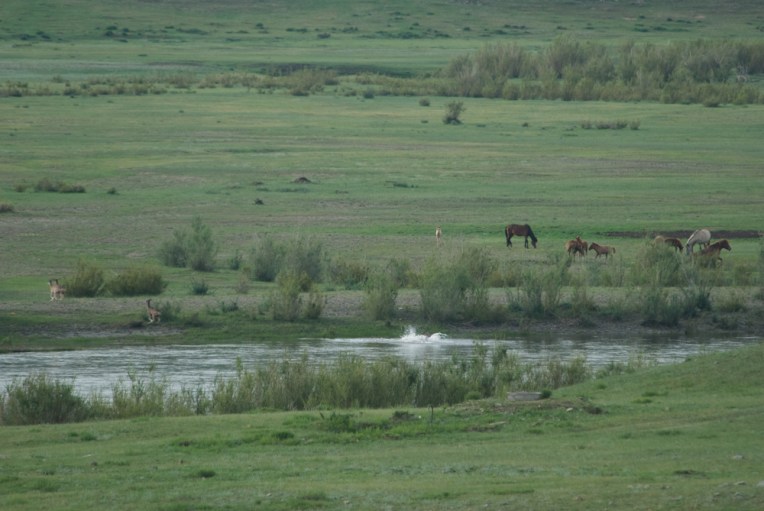
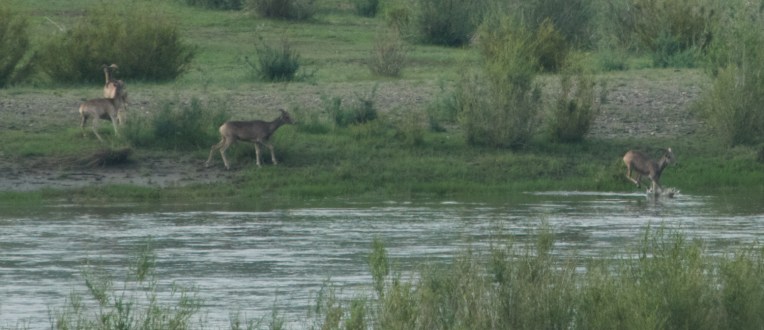
I have just received confirmation that I have taken the only known photographs of a Mongolian argali sheep crossing a river. This occurred at the Gun-Galuut Nature Reserve during my Flag Expedition on the very first morning of observations. In fact, he (Dr. Reading believes it was a yearling ram) was one of four of the first argali I saw on the trip.
Dr. Reading also noted in his reply to my query that “Well, I don’t think anyone ever doubted that argali cross these relatively shallow, relatively slow rivers (at least I never did). All ungulates (and most mammals) swim pretty well and you need something a LOT more substantial that the Kherlen River to stop them.”
The main reason, I believe, that no one has gotten photographs is that the only place where argali have been studied in any depth is at the Ikh Nartiin Chuluu Nature Reserve, which has a few small streams, but no rivers. Research has begun at Gun-Galuut and, in fact, an Earthwatch team is scheduled to be there for part of their time in September, but the emphasis has been on capturing and putting radio collars on the argali, not behavioral observations.
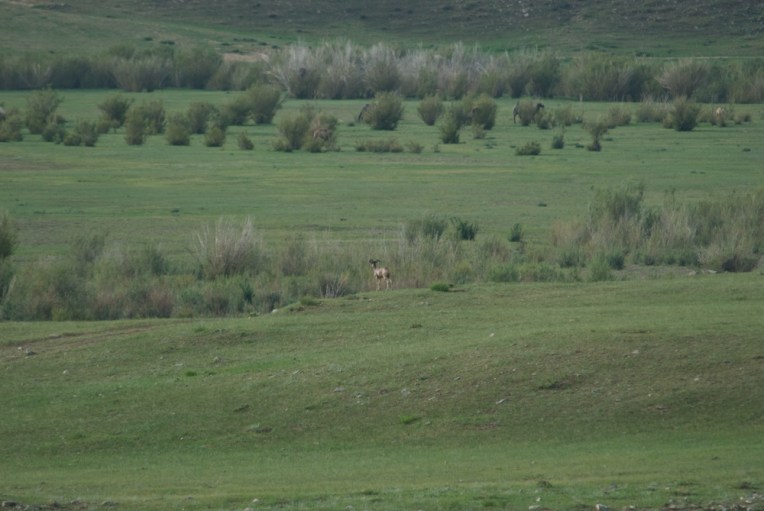
The four sheep that I watched were on the opposite side of the river from their home range, Mt. Baits. Their behavior appeared anxious and finally one bolted back across the river. He climbed up on a high point and looked back. The young ram finally turned and ran back up onto the mountain. The other three argali seemed indecisive and ultimately did not cross, but moved up onto a smaller mountain where I finally lost sight of them.
The group of argali down at the Kherlen RiverSuddenly one jumped inAnd made quite a splashAnd then swam directly towards usWhere's everyone else?
Here are detail shots of the main three photos:
Detail: jumping in the riverDetail: the splashDetail: swimming across the Kherlen River
I’ve been back a week now. Something special happened on this, my fourth trip. A lot of things came together for me and I was able to experience Mongolia and connect in ways that I hadn’t on previous trips, even though something kept driving me to return.
Some of it was simply gaining a familiarity that made this trip by turns exhilarating, relaxing and just plain fun, instead of low-level stressful. A lot of it was the two people I traveled with, Khatnaa, my guide for the first nine days, and Gana,with whom I traveled to Ikh Nart, who answered my questions with consideration and honesty, and helped me start to understand what it is to be a Mongol. But, mostly, I felt like the land itself let me in and then offered up treasure after treasure.
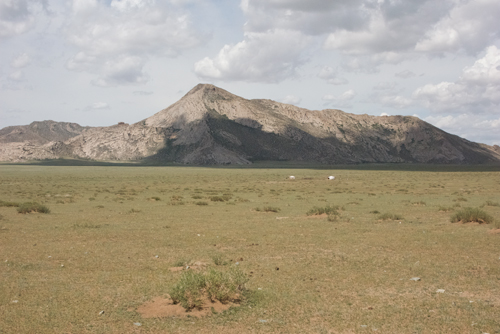
I’ll share some of those treasures over the next few posts. Today, it will be images of where Mongolia really starts – the land.
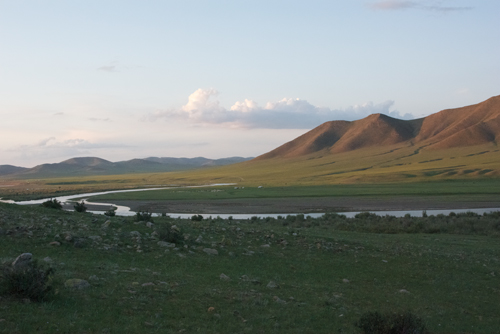
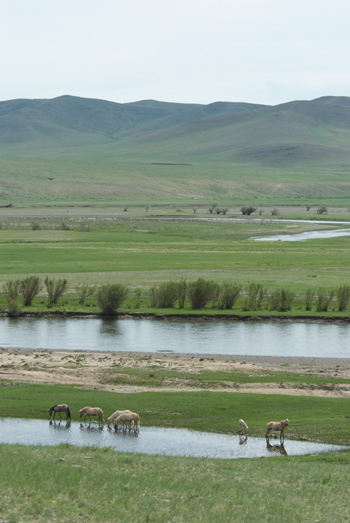
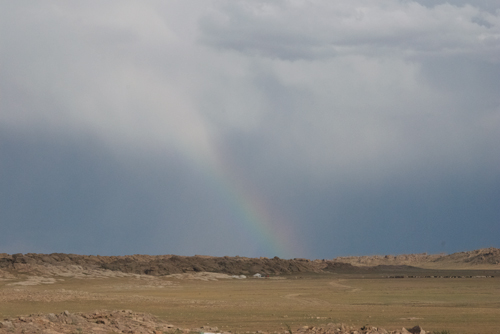
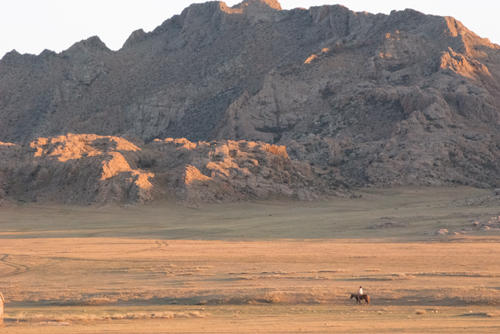
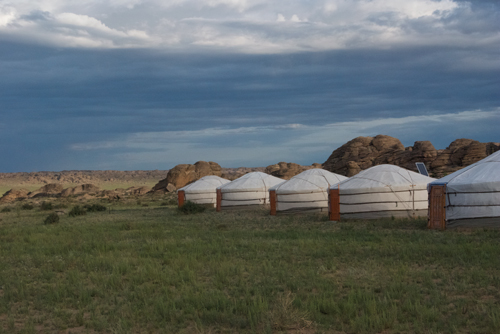
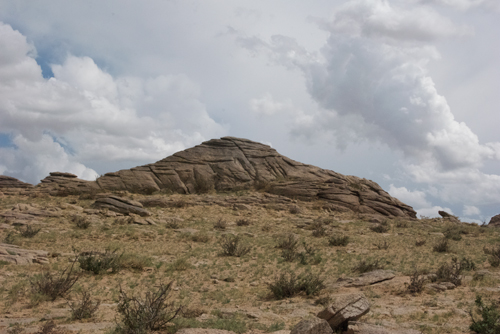
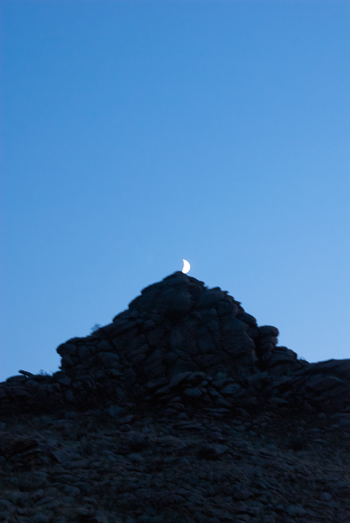
I love and grew up in forests, but traveling across the steppe on the earth roads is one of the things I most miss already.Small lake with demoiselle cranes in lower leftTahilgat HairhanLightning storm, Arburd Sands ger campKherlen Gul valley, morning light, Gun-Galuut Nature ReserveKherlen Gul and east slope of Baits Uul, morning light, Gun-Galuut Nature ReserveKherlen Gul valley, summer day, Gun-Galuut Nature ReserveRainbow over ger, Baga Gazriin Chuluu Nature ReserveStorm light, Baga Gazriin Chuluu Nature ReserveHorse and rider, early evening, Baga Gazriin Chuluu Nature ReserveAspens amid the rocks, early evening, Baga Gazriin Chuluu Nature ReserveOncoming storm, Red Rocks ger camp, Ikh Nartiin Chuluu Nature ReserveRock formation, Ikh Nartiin Chuluu Nature ReserveMoonrise, Ikh Nartiin Chuluu Nature Reserve
I had a pleasantly uneventful trip home from Mongolia. Glad to be home, but already plotting the trip next year. I was able to get to the Hi Fi music shop in UB and buy a few CDs of contemporary Mongol music, so I’ll have fun painting to that until it’s time to go again.
Yesterday afternoon, I had a final get-together with Gana Wingard and Sukhin Amgalanbaatar. We brought Amgaa up to speed on what had happened during the meetings with the women at Ikh Nart and talked about what the next steps should be.
I showed him some of the pictures I took of argali. It looks like I may have the first and only documented evidence of an argali crossing a river, which I saw on the first morning out at Gun-Galuut Nature Reserve. Up until last year, the only argali research in the world was being done at Ikh Nart, which has no rivers, streams, lakes or creeks. Apparently one scientist has maintained that they won’t cross water. I guess no one told the Gun-Galuut argali since at least four of them had before we got there and we watched one come back across. I’ll be working to confirm the significance of what I saw and what it means in terms of what is known about argali.
Today is “My mind is in California, but my body is still in Mongolia”, so I’m going to take it easy, unpack, do laundry, hang out with my husband, pet the cats and dog, maybe putter in the garden if the sun comes out and think about the past three weeks spent in a country that is starting to feel like a second home.
My trip to Ikh Nart was amazingly successful. It seemed like all the stars aligned for my three days of meetings with the women who want to start a crafts cooperative.
It’s going to take a bit to sort it all out and write it down coherently, but the punchline is that they got the word out, fourteen women took a five day felt workshop a month or so ago, and, when they showed up at the research camp (a half hour early), their new Director, Boloroo, handed me a fourteen page proposal and the ladies spread almost two dozen felt craft items out on the tables we’d set up.
To say that we were off and running would be a major understatement. The ladies even had a name for their group- “Ikh Nart Is Our Future”- ready for my approval. I approved. Immediately.
I had purchased four meters of felt in UB to give them and, in three days, all of that was turned into slippers, purses, a large rug and a variety of other things.
I also brought the fabric for them to make del for my husband and I. They finished both of them, fully lined and all the fastenings made by hand, sewn on manual sewing machines and ironed with old irons heated on a propane stove, in three days.
The next step will be to work out the details of the $800 loan that they have requested to buy a felt press, since their intention is to make the felt themselves, not buy factory-made.
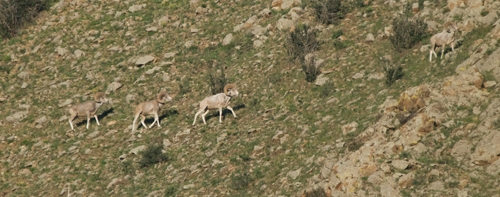
Gana Wingard, the biologist who made the trip with me as translator and liaison, was as blown away as I was at how much effort they had put into this. We were going to go out early and late to look for argali and ibex, but never had the time. The schedule and pace was set by the women and it was non-stop. I did see and photograph some argali on the way into the reserve and on the way out.
To Jeff Whiting and everyone at AFC- I can absolutely guarantee you that you have gotten your money’s worth and then some for awarding me this grant. There are single mothers and poor families who will be benefiting for years to come because you made it possible for me to go to Ikh Nart.
Here’s a few photos:
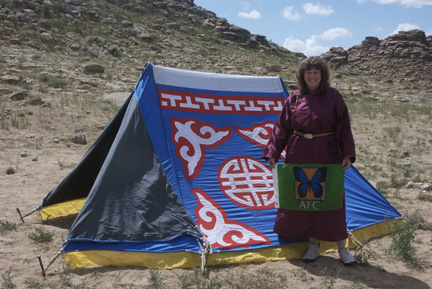
Argali ewe on rockThe ladies arrive at the research campLaying out Mongol felt rug designLadies working on felt projectsMe with new friendSewing my delA felt purse with Ikh Nart patch which was given to me as a giftReady for customers; eleven Aussies, as it turned outA "maikhan" or summer tent; me in my new del with the AFC FlagGroup shot, including Aussie tour group membersFour argali that we saw as we left the reserve this morning










 My idea is to channel a little Edgar Degas and have the animals coming in from the frame, not have all of them within the frame. This is too static, but it gives me something to bounce off of. Gotta start somewhere.
 This is more what I had in mind. Almost everything is on a diagonal, which gets rid of the too-static quality of the previous sketch. As I draw and re-draw the animals, I’m able to get to “know” them better and can refine and push the poses.













 Susan Fox, American Artist