Should Artists Go To Game Ranches To Shoot Reference?

Every artist and photographer will have to decide for themselves.  For me, after having been to two of game ranches and having been involved in animal welfare and rescue for the past four years, the answer is “no”.

I do want to make the point, as did Mangelsen, that I am specifically addressing game ranches; not zoos, reserves, sanctuaries or other places with wild animals which have vets and other staff trained in animal care and where the animals are not there for the purpose of “modeling” or “acting” for photographers or artists or to be used in movies, tv or advertising.

Here’s the link to a blog post in the new online publication, Wildlife Art Journal, in which Todd Wilkinson introduces an article by legendary wildlife photographer Thomas Mangelsen. Mangelsen pulls no punches and I applaud him for exposing to the light of day something that’s been hidden for too long: the price the animals pay so photographers and artists can get “that perfect shot”. For example:
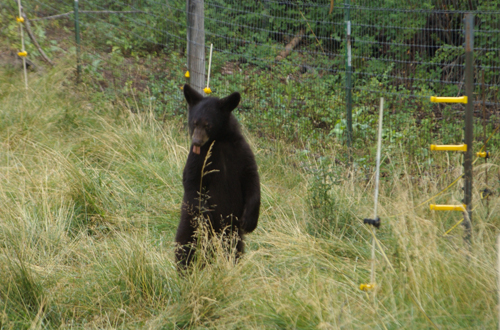
baby-bearThis bear cub was allowed to repeatedly shock itself on the electric wire in order to “teach” it to stay within the enclosure. The cub cried in pain every time and is seen here licking the spot that touched the wire. The keeper also “cuffed”, as in hit, the cub to “discipline it the way a mother bear would”.  To my knowledge, the keeper had no formal training, certification or degree in animal behavior. This was in front of a number of artists, including me, and clearly the keeper had no problem with us seeing how the cub was being introduced to working with humans.

Is any painting or photograph worth being complicit in a fellow creature being treated this way?

UPDATE 6-17-09: I have just learned that the person who is referred to above no longer works for that game ranch. He was fired because of how he treated the animals. Very good news indeed.

Here’s the comment that I left for Mangelsen’s article, which is here:

Finally. It’s not just me who’s wondered….

Posted By Susan Fox on Jun 14, 2009

I’ve been to workshops at two of these places and came away very ambivalent since I am also involved in animal welfare (NOT PETA-style animal rights) and dog and cat rescue. Yes, I got some “great” photos, but the other 10-20 artists who were there got almost exactly the same image.

I’ve noticed a proliferation of cougar paintings over the past few years, which coincide with a whole bunch of artists going to shoots put on by one particular ranch. How big a market is there for cougar paintings? Especially when so many show the same animal on the same red rocks? Do cougars even live in that habitat? I dunno.

Part of what makes me and my art interesting to people (Read: potential buyers) are the stories behind the paintings. So, what do you think a buyer finds more compelling:

“I was at the Lamar Valley in Yellowstone and had set up my easel to paint, but ended up watching one wolf attempt to distract the bull bison who had taken up a defensive posture while a second tried to dart in and cut out a calf. After a half hour they gave it up and, all of a sudden six more wolves popped up out of the grass and they all trotted off “(true story)

Or
“I photographed these two wolves splashing in the water and playing. One was the mother of the other, who was a young adult. No, I have no idea if one would see that interaction in the wild. I have no idea if wolves “play” in the water. I have no idea if they run around chasing each other like two crazy border collies.”
Or
“The cute baby raccoon was brought out and inserted into a hole in a tree stump that was placed on a table.”
I did paint that one and have it available as a giclee. I described him and what he was doing accurately, but otherwise feel that I committed at least a sin of omission. And, when people ask me, as they often do, if or where I saw him in the wild, I tell the truth. I like the image, it was fun to paint, but it and another of a captive animal have become somewhat problematical for me.

I’ve made it a point to do the travel, study and fieldwork required to see wildlife where it lives and learn about a species’ behavior and how it interacts with its habitat. Taking pictures of captive animals I’ve never seen in the wild turns out to be useless to me in that regard. There is so very much more to painting animals than their surface appearance, however appealing.

One thing I always tell people is that I don’t paint what I haven’t seen. And, of course, I have seen the captive animals. But I’ve decided finally that that’s not good enough. Taken out of the context of their habitat ultimately ruins their value to me for reference, except as a supplement to what I would shoot of the real, wild versions. It’s a step better than buying someone else’s photographs to do finished paintings from (as opposed to reference for a detail of some kind), but not good enough for me anymore.

As far as my visits to two game ranches:

I remember seeing, briefly, the cages, one that had an adult snow leopard in it. It was a quarter of the size of a kennel that would be considered an acceptable minimum for a large dog. There was barely enough headroom for the animal to stand up and turn around. It was in a covered area with no natural light.

I remember the baby black bear who was allowed to repeatedly come in contact with the electric hot wire around the enclosure area in order to “teach” him to stay within the boundary. He was also “cuffed” multiple times to supposedly duplicate the discipline of a mother bear. What would you think of someone who did that with a puppy or kitten? How in the world would a human with no background or education in animal behavior, as far as I could tell, have the faintest idea what a momma bear would cuff her cub for?

I remember the owner of one game ranch complaining to us about the owner of another one because the guy had gotten caught and cited by the Feds so many times that it had drawn increased scrutiny onto everyone else.

I remember speaking with a fairly well-known wildlife artist at a show, gingerly asking her about the game ranches. She immediately and strongly assured me that the animals were never mistreated to make them “perform”. I changed the subject.

I’ve wondered more than once when a litter is born, what happens to the babies or youngsters who aren’t willing to be socialized to people. If there are five wolf pups and only one can be handled, what happens to the other four? I think I can guess, but currently have no direct knowledge. However, these people are running businesses that need to make a profit, not sanctuaries.

I believe that there is an inherent conflict in the use of animals for profit at these game ranches. The owner’s revenue stream, profit, mortgage and care of their families is dependent on their ability to “deliver the goods”. And I think, with what I’ve seen in the pet rescue world, history has conclusively shown that if there is a choice between what serves human profit vs. what serves the animal’s interest, the animal almost always comes out on the short end.

Is there a disconnect between wildlife and animal artists who paint what they do out of love for animals, but who then patronize places that are questionable at best? Does the excitement of seeing the animals closeup and getting great photos bury any nagging little doubts or questions about what is going on at these ranches? Is it more convenient to take the explanations of the owners at face value about how they run their business?

I’m not saying that the owners are bad people or that there is deliberate abuse or cruelty going on. But, ask yourself honestly, are the conditions you’ve seen, if you’ve been to the ranches as opposed to the locations, appropriate or right or fair for any animal, much less wild ones.

I am ambivalent no longer. I will no longer patronize game ranches and I urge my fellow wildlife artists to look into their hearts and consider whether or not they should, either.

One Open Studio Weekend Down and One To Go + Photos!

I’m doing both weekends of North Coast Open Studios this year. People were very interested both in my upcoming trip to Mongolia and hearing about what the country is like. I had my computer going and was able to show people pictures of the takhi, domestic horses, gers, camels, Sukhbaatar Square in Ulaanbaatar with the new government building and the statue of Chinggis Khan that graces the front of it.

Towards the end of the day, a young woman came in who was riding by on her bicycle, saw the signs and came in to check it out. By the time she left, she had decided that she wants to throw in with me on my art/conservation initiative, Art Partnerships for Mongolian Conservation. She has experience and skills that will be extremely helpful. Plus, having traveled widely, she has an excellent grasp of the issues involved in coming into someone else’s country and working with people in a constructive, culturally sensitive way.

I also sold two originals, some cards and signed up almost everyone for my email newsletter. If you’d like to get Fox Tales, just go to the contact page on my website, fill it in and let me know that you want the newsletter. You can one-click unsubscribe at any time if you change your mind.

All in all it was a fun, successful weekend and I’m looking forward to this next one. If you’re in Humboldt County or heading this way, you’re invited to stop by between 11 am and 5 pm this Saturday and Sunday. Here’s some photos I took Saturday morning.

Roses from my garden
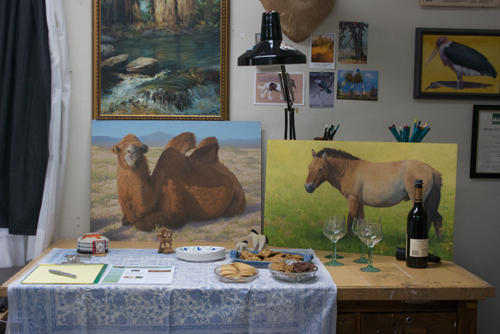
The refreshment table with a couple of recent paintings
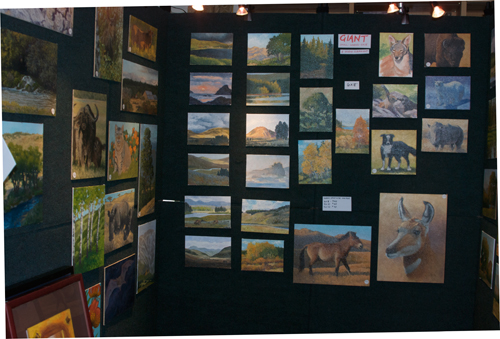
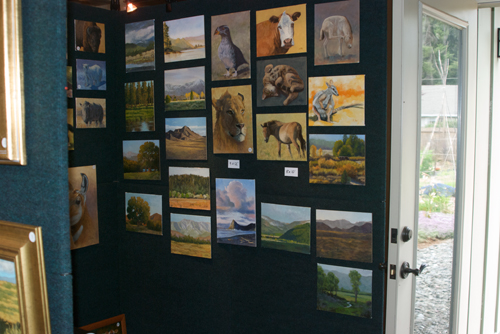
The "gallery" with price lists
The "Giant Small Works Sale"
More "Small Works"
More "Small Works"
Recent larger, framed works (I happily do layaway)
Looking from east to west with print bins and card rack
Looking from east to west with print bin and card rack
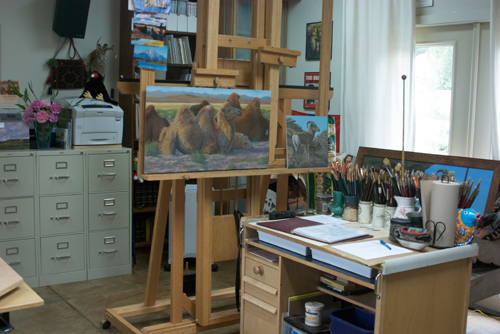
Easel and painting table

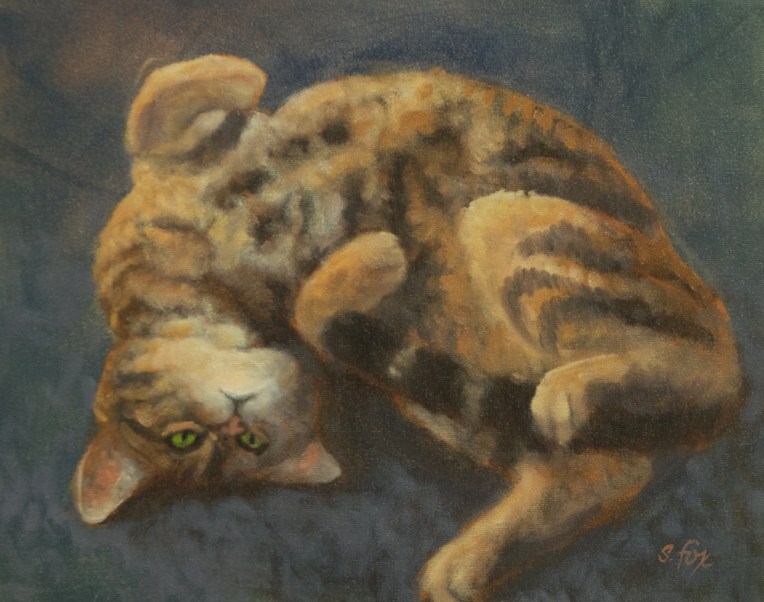
EBay Auction- 6-8-09 “Warm Pavement”

Warm Pavement 8x10" oil on canvasboard

Click to bid here

New Wildlife Art Magazine Debuts!

UPDATE 7-13-16: Unfortunately this online magazine had a short run and is now defunct. For awhile it looked like someone else would take it on but that never happened.

I just found out this afternoon that Wildlife Art Journal is now up and running. Members of the Society of Animal Artists got a heads-up a few months ago and we were able to view a preview version, but the real thing is available now here. Todd Wilkinson, who many will remember from his excellent articles in the old Wildlife Art magazine, is the editor and co-publisher of this new online-only publication. The plan is to update the content on an on-going basis instead of using the old monthly print magazine model. There is a blog also. It’s obvious that a tremendous amount of work and care have gone into creating this, driven by a deep love of wildlife and animal art.

I personally want to wish them all the very best!

Six Months on Facebook and…..

I know a lot of artists are wondering if getting on a social networking site like Facebook is worth it. They know they “ought” to, but see it as just another time suck when they can’t get everything done that needs doing anyway.

I decided to test drive it as part of my low (as in “no”) budget marketing plan. Here’s what’s happened since January:

After starting with a few people I knew in high school and art school, the number of friends I have has exploded to 173, mostly artists, some nationally known. But there are also local friends, some of whom are also gardeners, and people involved in animal welfare/rescue issues. So there I already have two groups that are potential buyers, except I don’t really think of them that way anymore.  Another friend is the editor of a major national art magazine, one writes every month for another art magazine and one is a gallery owner.

People are always posting about their work, interesting links, the shows they’re doing, the trips they’re taking, the new studio they’ve just moved into or an award they’ve won. Their friends hit the “Like” button or leave supportive comments. So if you feel isolated as an artist, Facebook is a great way to get connected and become part of a worldwide community of other artists. We cheer each other on, send virtual chocolate, flowers and sunshine to congratulate or commiserate and just generally enjoy each other’s “company”.

I “Share” my new blog posts and my Ebay auctions each week and I can see the spike in traffic on my blog and the click-throughs to my website after I’ve done so. When I post an image of a new painting, I get lots of strokes and compliments, which I really appreciate and which make the day a little brighter.

I’ve had one sale so far from a Facebook listing. The buyer was a fellow artist, who I originally connected with because we both have and love rough collies. She saw my eBay auction listing, bid and won.

I have friends in 18 countries, besides the USA. Most of them are fellow artists and it’s fun to see what’s going on elsewhere. Yesterday a new friend liked a painting of mine so much that she shared it on her Wall. She is from Argentina and now 59 of her friends, none of whom I know, will see my work. I was very please and flattered.

The countries I currently have friends in are: Jamaica, Trinidad and Tobago, Argentina, Costa Rica, Australia, New Zealand, Indonesia, South Africa, Kenya, Italy, France, Spain, England and Scotland (UK), Belgium, Switzerland, Canada, India and Mongolia. Plus two friends who don’t list where they live.

Honestly, what other way is there to make those kinds of connections for free? And I get so much more than just an marketing opportunity out of it. That, it turns out, was really only a starting point.

I have set limits on how I participate. I don’t get involved in any of the on-going games. I only use a few of the apps, either to send a “gift” to someone or when participating benefits a good cause like the Surfrider Foundation, bed nets for malaria prevention or saving the Rainforest. I do give in on some of the fun, silly quizzes, finding out that my aura is red, that I would be in Ravenclaw and that if I was a Star Trek character it would be Capt. Picard.

I get the feeds from sources as diverse as the White House (yes, THAT White House) and The Onion.

I have joined a variety of art-related groups, which I haven’t participated in as much as I would like. There also seem to be “fan” pages for just about every artist who ever lived that anyone has heard of. I’m a fan of, among others, Mucha, Sorolla and Waterhouse. These pages do post show and other information about the artists, along with images of their work.

As you’ve probably guessed by now, I’m a fan of Facebook. I believe that we are rapidly approaching the point where having a presence on a social networking site will be every bit as necessary as having a phone and a website. Oh, and I’m now on Twitter at http://twitter.com/s_fox too. Still working on what the best use of that will be for me, but I invite you come follow along!

———

I’m just about a month away from Mongolia and this (I hope)….

Argali rams at Ikh Nartiin Chuluu Nature Reserve, Sept. 2008

No Electricity, No Problem?… And Plein Air Painting in 1930s Scotland

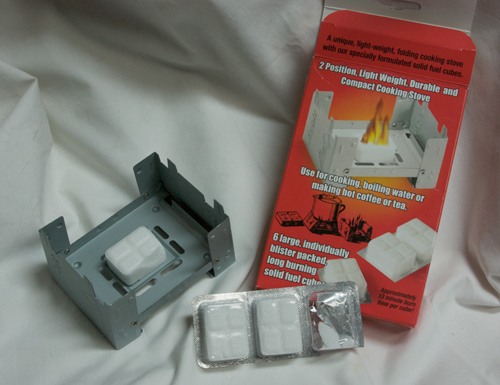
I may have found the perfect solution to safely heating water in a ger without a fire or electricity. Whoever designed this really backed up and asked themselves what problem they were trying to solve. And what they came up with was this:

Esbit Pocket Stove
Esbit Pocket Stove

This is obviously perfect for backpackers or anyone who might find themselves in a survival situation. The two upright ends fold down flat, so the dimensions are 3″x4″x 3/4″. It weighs 3.25 oz and is made in Germany, can you believe it. I haven’t tried it out yet, but it uses a solid fuel that is non-explosive. It burns about 13 minutes and is supposed to boil a pint of water in about 8 with no smoke. No kerosene bottles or other stuff that the airlines don’t like or allow.

I’ve thought of another use for it, too. Last winter around eight children died in Mongolia when they got caught out in an unexpected storm while herding animals and couldn’t get back home. What if they had had something like this to stay warm long enough for rescuers to find them? And the adults who also died in the cold too, of course. I’m going to see what I can find out about the issue when I’m there and see what might be done.

Plein Air Information Discovery!

I’ve been down with a cold since a week ago Saturday and it’s been a tenacious one. I’m almost over it, but still needing to take it easy. I’ve been doing a lot of resting and reading and decided to dive into the Peter Wimsey mysteries by Dorothy Sayers. I’m not a mystery fan, but I love these because they are so delightfully and excruciatingly English. I just started “Five Red Herrings”, which takes place in the western borderlands of Scotland. The area is heavily populated with artists, one of whom doesn’t play well with others and is deceased by page 17. Wimsey visits the site where the body was found. It appears that the artist was painting on location, took one step too far back from the work in progress and fell off a cliff, the kind of thing that can be an occupational hazard for those working in the great outdoors. In any case, Wimsy thoroughly paws through all the artist’s things, possibly providing clues but absolutely recording what a plein air painter in Scotland circa 1930 would be hauling around.

He gave his first attention to the picture. It was blocked in with a free and swift hand, and lacked the finishing touches, but it was even so a striking piece of work, bold in its masses and chiaroscuro, and strongly laid on with the knife.”

“Idly, Wimsey picked up the palette and painting-knife which lay on the stool. He noticed that —– used a simple palette of few colors, and this pleased him, for he liked to see economy of means allied with richness of result. (My emphasis. Wouldn’t we all?) On the ground was an aged satchel, which had evidently seen long service. Rather from habit than with any eye to deduction, he made an inventory of the contents.

In the main compartment he found a small flask of whiskey, half-full, a thick tumbler and a packet of bread and cheese, eight brushes, tied together with a dejected piece of linen which had once been a handkerchief but was now dragging out a dishonored existence as a paint-rag, a dozen loose brushes, two more painting-knives and a scraper. Cheek by jowl with these were a number of tubes of paint. Wimsey laid them out side by side on the granite, like a row of little corpses.

There was a half-pound of vermilion spectrum, new clean and almost unused, a studio-size tube of ultramarine No. 2, half-full, another of chrome yellow, nearly full and  another of the same, practically empty. Then came a half-pound tube of viridian, half-full, a studio-size cobalt three-quarters empty, and then an extremely dirty tube, with its label gone, which seemed to have survived much wear and tear without losing much of its contents. Wimsey removed the cap and diagnosed it as crimson lake. Finally, there was an almost empty studio-size tube of rose madder and a half-pound of lemon yellow, partly used and very dirty. The large compartment, however, yielded nothing further except some dried heather, a few shreds of tobacco and a quantity of crumbs, and he turned his attention to the two smaller compartments

In the first of these was, first, a small screw of grease-proof paper on which the brushes had been wiped; next, a repellent little tin, very sticky about the screw-cap, containing copal medium; and thirdly, a battered dipper, matching the one attached to the palette.

The third and last compartment of the satchel offered a more varied bag. There was a Swan vesta box, filled with charcoal, a cigarette-tin, also containing charcoal and a number of sticks of red chalk, a small sketchbook, heavily stained with oil, three or four canvas separators, on which Wimsey promptly pricked his fingers, some wine corks and a packet of Gold Flakes.”

“A wide cloak of a disagreeable check pattern lay beside the easel. He picked it up and went deliberately through the pockets. He found a pen-knife, with one blade broken, half a biscuit, another pack of cigarettes, a box of matches, a handkerchief, two trout-casts in a transparent envelope, and a piece of string.”

I find it interesting that the paint is measured in pounds. With variations for personal taste, however, I suspect that any regular plein air painter’s kit today would have a similar accumulation of odds and ends. But….Peter noticed that something was missing. And since I’m only on page 50, I haven’t the faintest idea what it is and wouldn’t say anyway.

Visit the AFC site here

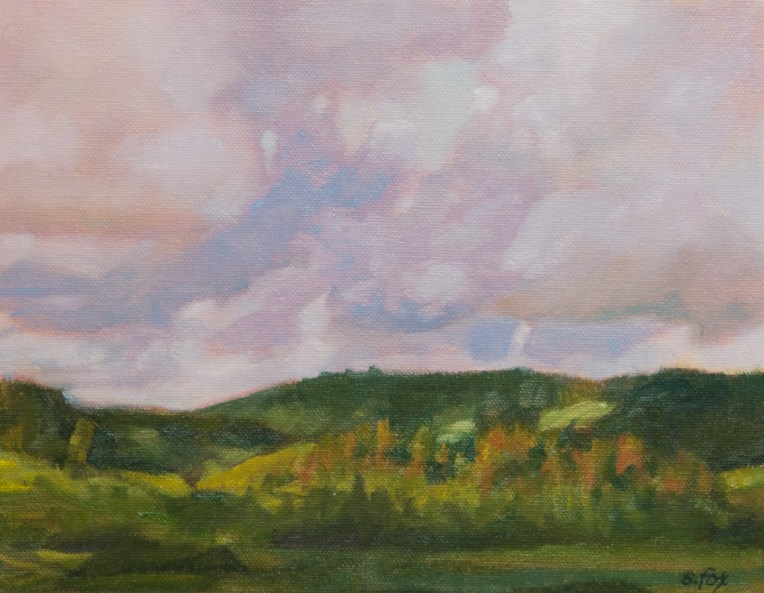
EBay Auction- 6-1-09: Sunset, Dry Lagoon- SOLD!

Sunset, Dry Lagoon 8x10" oil on canvasboard

Lupin Blooming in Redwood National Park

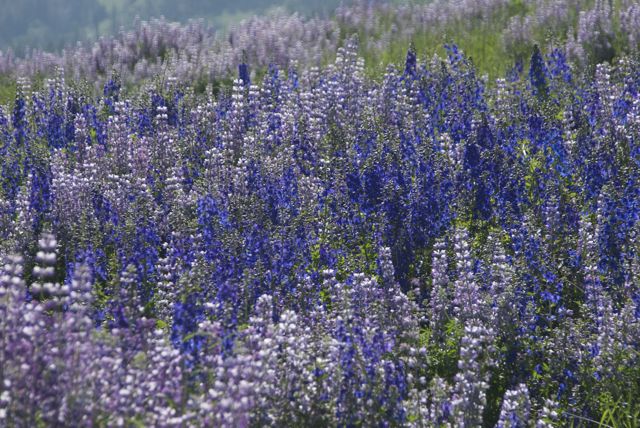
The word’s gone out and it made the front page of the local paper. There is a rare explosion of lupin bloom up on Bald Hills Road in Redwood National Park. My husband and I took the Jensen Healey out for a spin to go check it out this afternoon. I didn’t know what to expect, but went late in the afternoon hoping for good light. Interspersed amongst the lupin was darker purple larkspur, which added a good contrast of value and hue. Here’s some of the photos I shot:

It was mostly this huge patch by the road, spilling down the slope
The sun was going down, so things were starting to get backlit
This is looking south and a little west
It was really a living tapestry of flowers
These are just the highlights
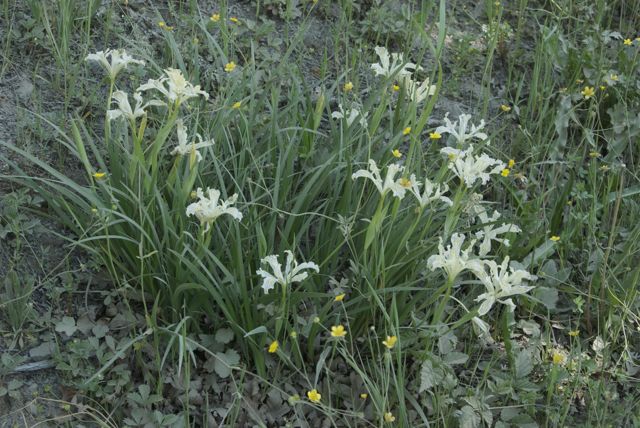
As a bonus, there were these white Douglas iris in bloom, too
As a bonus, there were white Douglas iris in bloom, too

Why I Love Mongolia

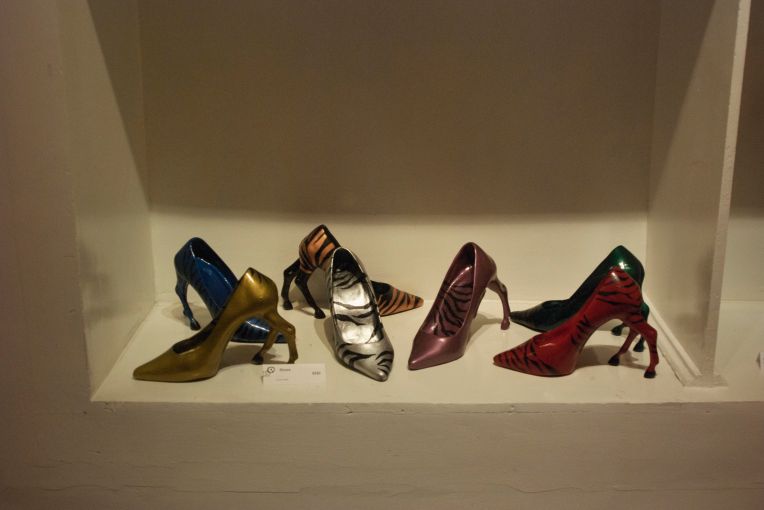
This art piece was at the Zanabazar Museum of Fine Art in Ulaanbaatar when we were there last year. Honestly, if it’s still there in July, it’s coming home with me. A perfect example of the humor and creativity of the world’s original horse culture-

Horse Shoes- I didn't get the name of the artist, more's the pity