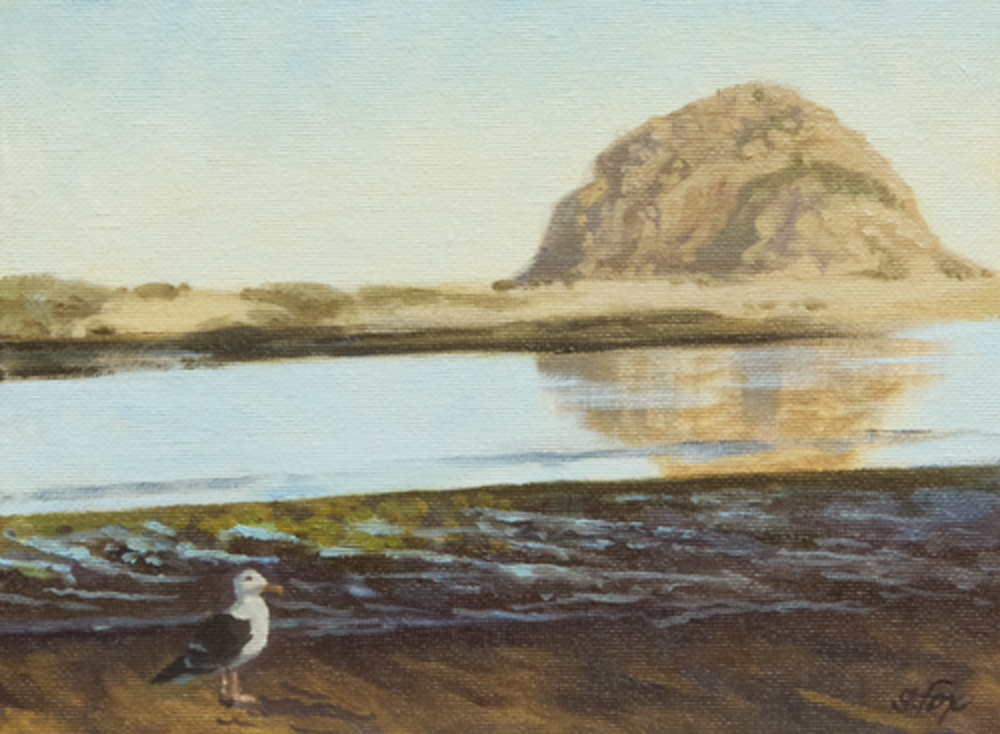
For more information or to bid, click here
For more information or to bid, click here
Sort of an odds and ends Friday as the year winds down. The deep freeze is over here in coastal Humboldt County and it’s back to nice normal rainy weather with nighttime lows in the 40s. I’ve been getting in some good easel time of the past few weeks. Here’s a new argali painting from reference that I shot in July at Gun-Galuut Nature Reserve. I watched this group of rams work their way across the rocky slope for almost an hour. “Uul” is Mongolian for “mountain”.

I’ve also decided that I want to paint not just the domestic Mongol horses, but the people who ride them. Which brings me back to wrestling with human figures, as described in an earlier post. I get a better result if I can scan the drawings rather than photograph them and also wanted to really hone in on accuracy, so these are smaller and done with a Sanford Draughting pencil, but on the same vellum bristol (which erases very nicely). The heads ended up being only 3/4″ high, which is pretty small, but it reminded me of a story from art school that I thought I might pass along.
One of my teachers was Randy Berrett, a very good illustrator who chose to work in oils. This was kind of masochistic, in a way, because it added a layer of complexity when he had to ship out a wet painting to meet a deadline. In any case, he was showing some examples of his work in class and one was a really large painting of the signers of the either the Declaration of Independence or the Constitution, I can’t remember which. Someone asked why he painted it so large. Randy’s answer really struck me at the time and has stayed with me. It’s something worth remembering when planning a painting. He said that he wanted the heads to be at least an inch high and that requirement controlled the final size of the painting. I’ve sized more than one painting on the basis of that criteria since then.
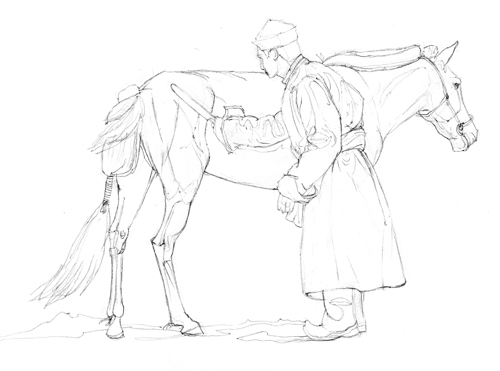
The first drawing combined two pieces of reference. One of the horse and one of the man. In the latter, he was in front of the horse’s head. In the former, I didn’t like the pose of the horse. Moving the man back works much better. The sweat from a winning horse is considered to be good luck. There are special scrapers made to remove it.
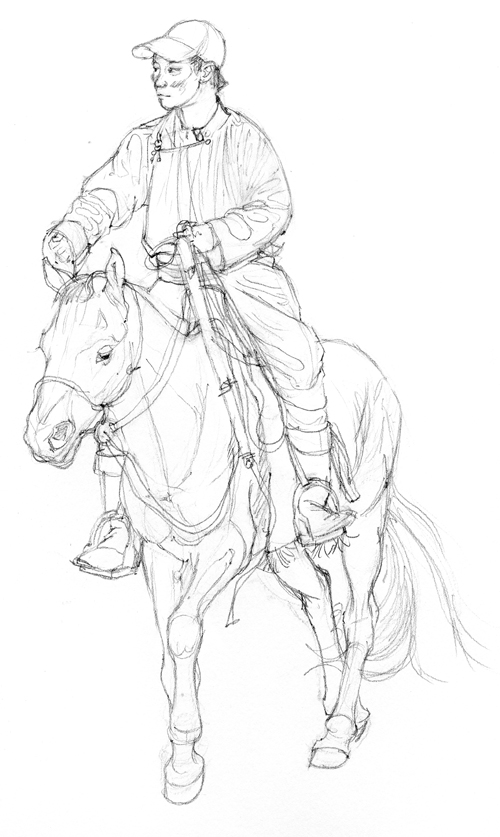
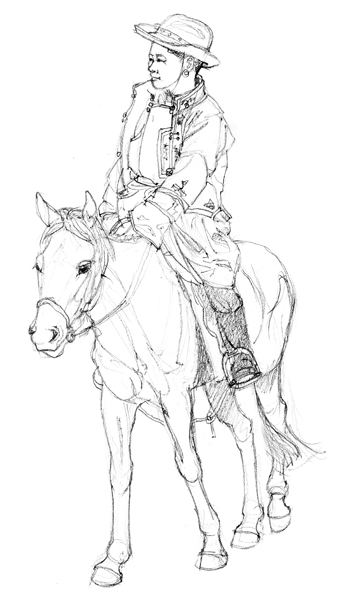
Part of the reason I did the previous two was to see if the images “drew well” and to work on horses coming forward at a 3/4 angle. The final two are head studies, in which the heads are 1 1/2″ from forehead to chin.


Finally, the folks at Eureka Books in Old Town, Eureka have decided to hold a special art show. Here’s the Call for Entries.

Last time, I posted videos from two great solo artists, Ganaa (from the “boy band” Camerton) and Mareljingoo. This week it will be six videos that were really my introduction to the lively pop and alternative rock scene in Ulaanbaatar. I first saw most of them on tv when I was staying at the Narantuul Hotel (highly recommended). I’ve since been able to acquire CDs by all of them and can now listen to their albums whenever I want, which is often.
First up is The Lemons, who are considered an alternative band. Whatever the category, they are one of THE hot bands in UB and one of the most original. I hear this song as background music at least a couple of times a trip in restaurants and stores. It was apparently a big, big hit. The song is called Tsenkher Nud, which I think means “light blue eyes”. It makes me smile every time I listen to it.
And, for something completely different, “Sex Rock”:
Next is A Capella, one of the popular new groups. They are very strong on vocal harmony. There seems to be a thread, going back to Camerton (who was one of the first hit groups in the 1990s after the transition from socialism) of doing songs about rain or that have rain in part of the video. A Capella seems to have taken it to the next level in this video they made for a song called “Boroo” or “Rain”. Another feel-good song.
Then there’s this steamy little number “247”
Finally, there’s A Sound, also very popular. Most of the groups I listen to do a wide range of styles. Even the hip hop groups sing lovely songs about mothers. It’s fun. Since there’s no big corporate music-making industry in Mongolia yet, the musicians can record quite a variety of styles in one album. I can’t think quite how to categorize A Sound. Kinda pop. Kinda alternative. But with a clear jazz influence at times. Very original. And the lead singer records some songs in quite good English.
First is “Shal Demii”. I don’t know what that is in English. One of the commenters on the YouTube video described this song as “Mongolian Bossa Nova”. Now that’s a concept.
And, finally, here is “30 Jil Hamt Baisan”, which I was told means “30 Years Together”. Country rock Mongol-style, anyone?
Enjoy!
Next time, what seems to be one of the most beloved groups in Mongolia, Nomin Talst and…..?

For more information or to purchase, click here
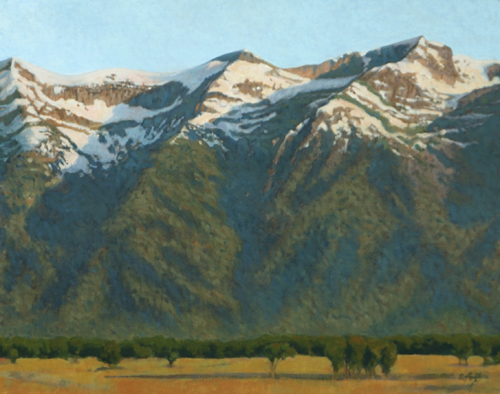
For more information or to purchase, click here
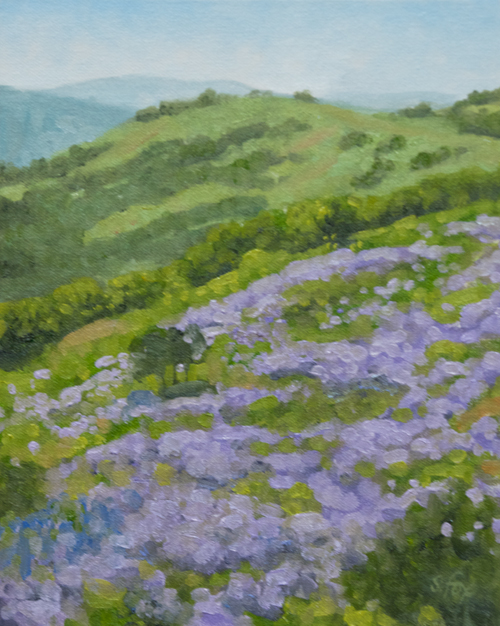
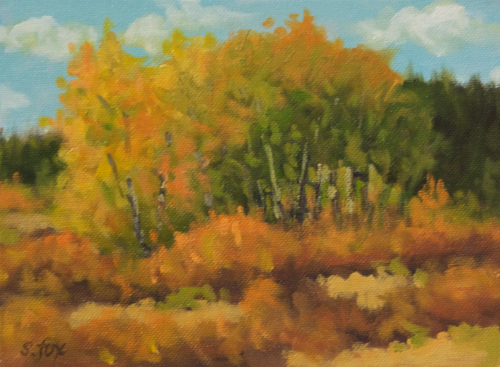
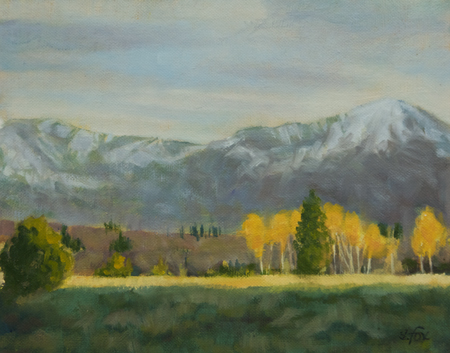
Lost Coast Daily Painters in having a big, Big, BIG holiday sale this Saturday night during Arts Alive in Old Town, Eureka, California. This may be your last chance to get one of our paintings listed in the Buy It Now section of the blog. I’ll be there with the other artists at Kathy O’Leary’s studio upstairs at 208 C St. from 5-9pm. We’re even offering free gift wrapping and can handle shipping if you find that special gift of art for someone who lives out of the area.
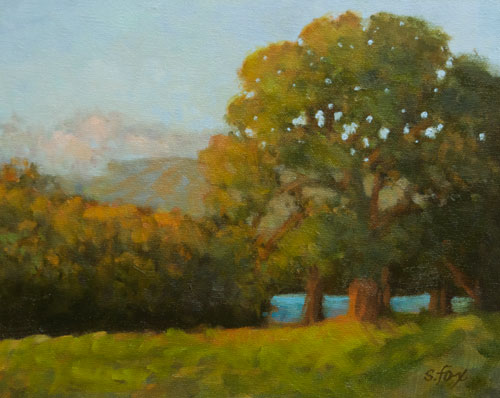
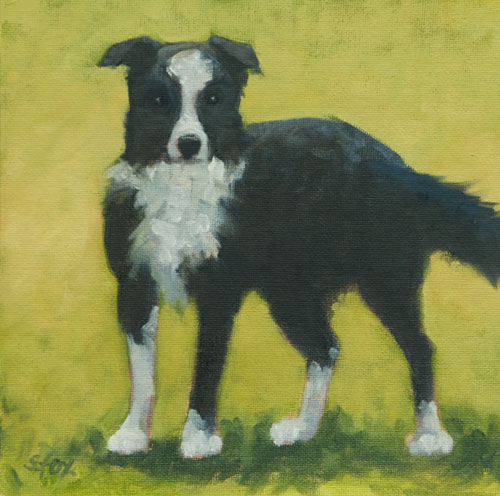
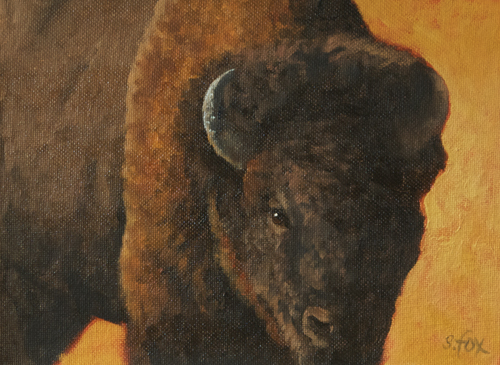
Here’s a selection of what I’ll have available. Almost everything will be $50-$95. They are all original oil paintings.




This isn’t a joke from Mongolia, but it’s about someone near and dear to the hearts of Mongols…Chinggis Khan:
One day an old Jewish Pole, living in Warsaw, has his last light bulb burn out. To get a new one he’ll have to stand in line for two hours at the store (and they’ll probably be out by the time he gets there), so he goes up to his attic and starts rummaging around for an old oil lamp he vaguely remembers seeing.
He finds the old brass lamp in the bottom of a trunk that has seen better days. He starts to polish it and (poof!) a genie appears in cloud of smoke.
“Ho ho, Mortal!” says the genie, stretching and yawning, “For releasing me I will grant you three wishes.”
The old man thinks for a moment, and says, “I want Genghis Khan resurrected. I want him to re-unite his Mongol hordes, march to the Polish border, and then decide he doesn’t want the place and march back home.”
“No sooner said than done!” thunders the genie. “Your second wish?”
“Ok. I want Genghis Khan resurrected. I want him to re-unite his Mongol hordes, march to the Polish border, and then decide he doesn’t want the place and march back home.”
“Hmmm. Well, all right. Your third wish?”
“I want Genghis Khan resurrected. I want him to re-unite his –“
“Ok ok ok. Right. What’s this business about Genghis Khan marching to Poland and turning around again?”
The old man smiles. “He has to pass through Russia six times.”
———–
Then there is this little gem:
Rich Mongolian guy had a cook, one day he had to fire him. His friend says, “That man was a good cook. Why did you fire him?”
“Every morning I have two eggs, one boiled and one fried. But that stupid cook keeps on frying the wrong egg!”
———
And, finally:
Хyyхнyyдийн зан
Хyyхнyyдийн учрыг олох хэцyy. Oдoхooр бyдyyлэг, oдoхгyй бол тэнэг гэх юм.
Mind of women is difficult to understand. When I flirt, they call me womaniser …when I don’t, they call me moron.
——–
Thank you to the forums on AsiaFinest for the last two.
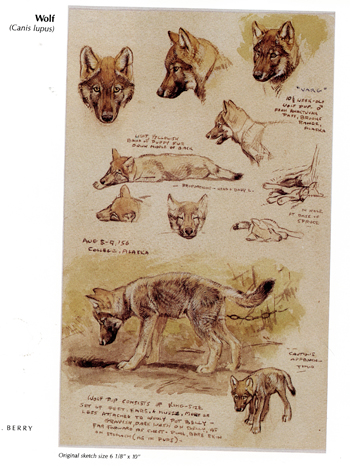
I had never heard of William D. Berry until I read a post about him over at James Gurney’s blog, GurneyJourney. Holy Cow, was he an incredible field artist! There is a book that covers three years of his field “sketches”, which you can buy here for the princely sum of…$8.50. This really is a book that should be in every animal artist’s library. One of the nice things he did was note whether or not a drawing was done from memory. If not so noted, they were done from live animals. To say that he thoroughly knew his subjects would be a serious understatement. Here’s a quote from the book on how he did it. Simple, really….
“What this meant was that I devoted a tremendous amount of time and energy to simply recording the facts of animal life – hundreds of hours and thousands of drawings in the zoos or in the forests, on mountains, in deserts, or plains. A caribou, for example, is never going to hold still for you, and a photograph of him, though useful for many reasons, is never going to show him doing exactly what you want him to be doing for a particular illustration (Berry also illustrated a number of field guides and other animal books) . You have to learn the beast inside-out and upside-down, so that you can put him together on the page from scratch and still have him look like he would if you did see him doing just that. So – instead of learning to paint, I was learning a hell of a lot of animals, birds, plants, whatever. I don’t feel I ever did master any mediums, except pencil – the medium I used to make field sketches.”
He used an Eagle pencil on Cameo paper (anyone know what that is or if it is still available?) which was supported by a clipboard, then sprayed the finished drawings with fixative. Here are a few pages that I particularly liked. Remember, these are all drawn from life (Sigh.):


 And, finally, one page of color studies.

 Susan Fox, American Artist