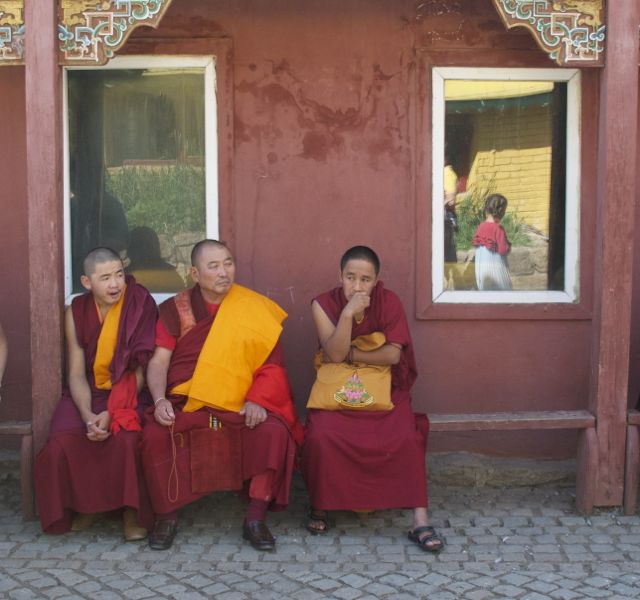
Morin khuur player who also sang khoomii. Hustai National Park, 2011
I thought I’d do a three part series on Mongolian music, using YouTube videos that I’ve found, and starting with three traditional forms- khoomii (throat singing), Urtyn Duu (long song) and morin khuur (horsehead fiddle). Next week, it will be Mongolian musicians and singers performing in western musical genres like rock and the third week will be music that is a synthesis of the first two.
Khoomii may the musical form best known by westerners due to a number of “folk” CDs available that feature throat singing, which originated in western Mongolia in an area just to the south of the Khar Us Nur lake complex.
Urtyn Duu means “long song”, but not that the songs themselves are long. The name refers to the singer stretching out the syllables of the words. Although both genders sing this form, the most famous long singers seem to be women.
Morin Khuur is the horsehead fiddle, probably the most famous Mongolian musical instrument and is one of the symbols of the country. With only two strings, the player can create truly beautiful musical sounds and also perfect imitations of the sounds that horses make. The selection in the video is one of my most favorite pieces of Mongolian music, “Mongolian Melody” by one of Mongol’s most esteemed composers, Jantsannarov.
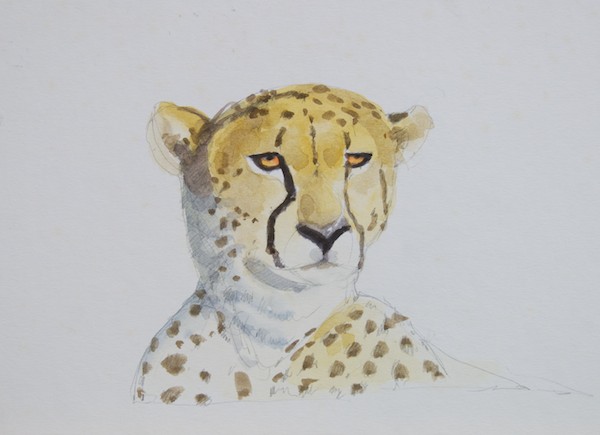
I’ve been invited to participate in a very special event on September 17, The Big Cat Quick Draw, which will be held at the Bedford Gallery in Walnut Creek, California from 2-5pm. I’ll be one of nine artists painting and drawing from a live cheetah, Tango, from Sierra Big Cat Haven. We’ll have between 60 and 90 minutes to create our piece of original art.
Once we’re done, our work will be auctioned off to raise money for Project Survival’s Cheetah Education Center at the Soysambu Conservancy in Kenya.
If you’re in the area, you’re invited! More information here.
To get ready for this event, I needed to brush up on cheetahs and decide what media I think I will want to use. So I got out my pencils, watercolors and some different art papers yesterday and did some quick studies. My reference was photos I took of cheetahs in the Masai Mara, Kenya, in October 2004, when I was one of ten artists who went on a 16 day art workshop/safari with internationally known wildlife life artist, the late Simon Combes, the father of Guy Combes, who is one of the organizers of the quick draw.
First was a pencil drawing on illustration board with watercolorWatercolor on Arches cold press paperHow fast can I do all those spots? Watercolor and pencil on paper I brought back many years ago from England, an unknown brand of very nice cold pressGraphite studies on vellum bristol
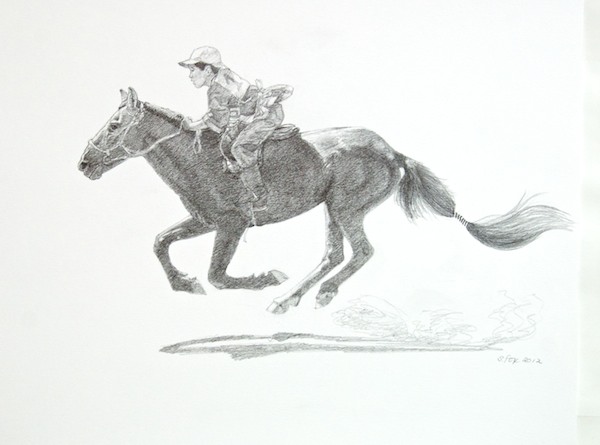
Winning horse and rider 14×17″ graphite on vellum bristol
Particularly when it’s a subject I haven’t painted before or one that is somewhat complex, like a horse and rider, I’m more and more inclined to do finished drawings before I start the painting. It’s a good way to find out if the reference image “draws well”, sort out parts that turn out to be tricky to understand, work out the essential value relationships and just get a general feel for the subject. The more problems I solve while doing the drawing, the more I can concentrate on the painting part. It allows me to simplify and refine the shapes since I will have drawn everything at least twice. Drawing is really the best way there is to learn what something looks like because the information is stored physically and mentally. Just looking at a photo or, worse, photoshopping and tracing a composition, doesn’t even come close.
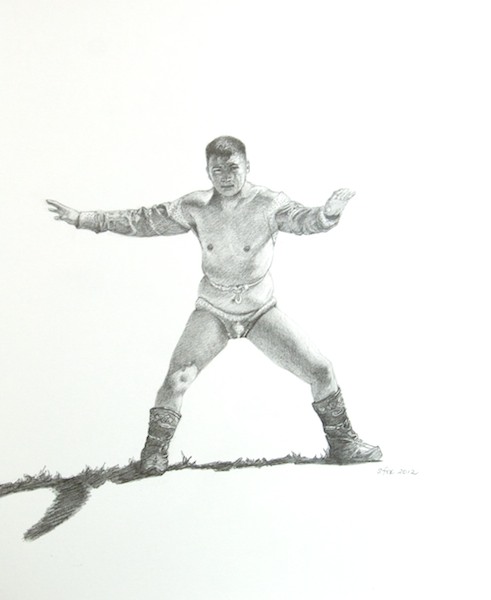
So here are four drawings I’ve done over the past few days, all graphite on vellum bristol paper. They took four to six hours each. The reference photos all happen to be from the local naadam I attended when I was at Arburd Sands ger camp in August.
Local Naadam wrestlerWrestler doing the devekh (Eagle Dance) before a boutCashmere goat
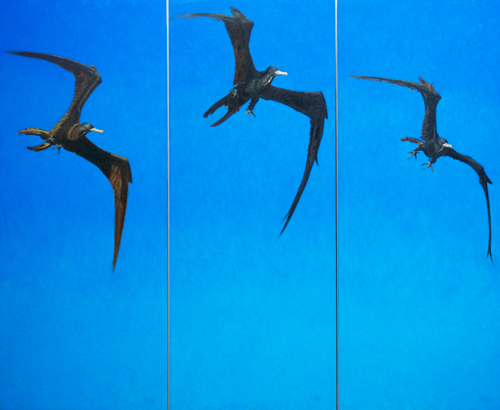
This is the third of three paintings I’ve done for the “Sea of Cortez” show, which will debut at the Arizona-Sonora Desert Museum in March.
It’s a triptych showing one Magnificent Frigatebird who came swooping in behind our boat after one of the artists caught a fish. His landing gear was down, hoping to snag it if he got a chance. I grabbed my camera and got five photos of him. I was really pleased to see these three and submitted all of them for the curator to chose from. And even more pleased when he gave me the go-ahead to do all of them as a set.
Here are the three paintings. Each of them is 40×16″:
You can see the other two paintings, “El Tigre (Nacapuli Canyon” and “Up Close-Sally Lightfoot Crab”, plus my other posts about my trip to the Sea of Cortez as part of a group of 30 artists here.
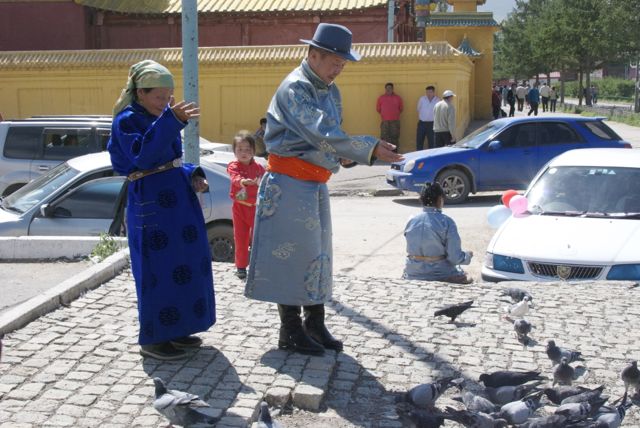
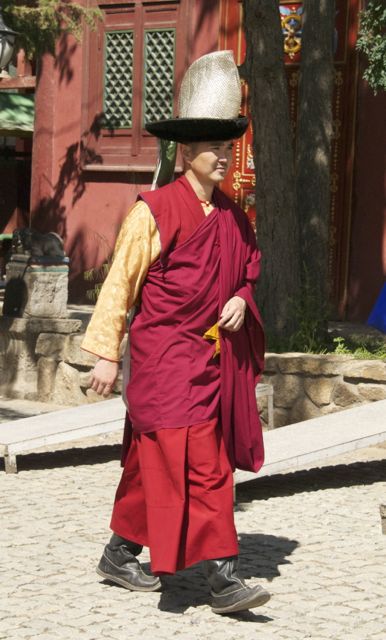
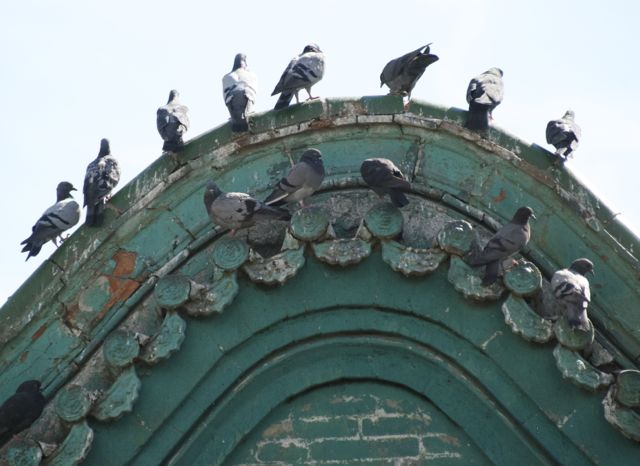
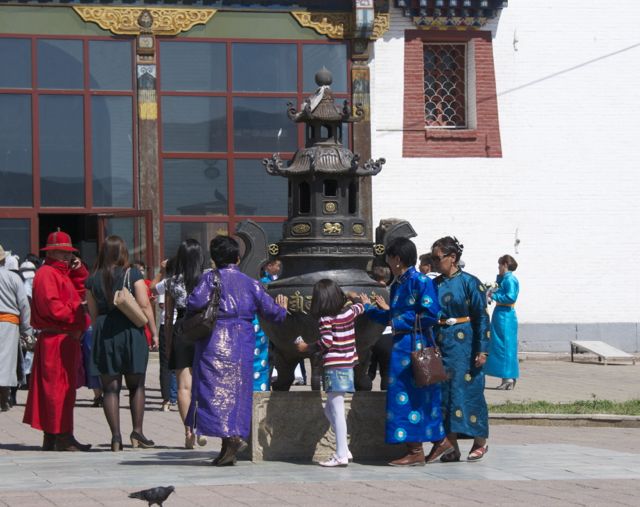
While I was in Ulaanbaatar this last trip, I spent a couple of mornings at Gandan Monastery sketching and taking photos. I thought that I would share some of my favorites with you of a truly special place that I always look forward to visiting when I’m in Mongolia.
Gandan’s main templeFeeding the pigeonsMonk leaving morning servicePigeons on a temple rooftopMonk with prayer beadsTemple visitors circling an incense burnerThree monksStupa with pigeons
I just finished my second painting, “El Tigre (Nacapuli Canyon)”, for the group show I’m participating in, “The Sea of Cortez”, which will be opening next March at the Arizona-Sonora Desert Museum in Tucson, Arizona. The first one “Up Close-Sally Lightfoot Crab” can be viewed here.
This new painting came about as a result of my interest in comparing the Gobi and the Sonoran Desert. There are argali sheep in the mountain ranges that rise out of the Gobi, so I wondered if there were desert bighorn in the part of the Sonoran Desert that we visited, particularly the spectacularly beautiful Nacapuli Canyon.
I was given the contact information for a scientist who is familiar with the megafauna of the area. He more or less told me that he had bad news and good news. The former was that there is no record or evidence of desert bighorns in the canyon. The good news (and very good news it was indeed) is that there have been sightings, along with pugmarks and other evidence, of jaguars in the canyon. So I knew what one of my paintings would be.
Nacapuli Canyon is quite popular with visitors to the area for picnicking and hiking. Big cats tend to be very wary about the presence of humans, so while other wildlife like birds and coatimundis aren’t too difficult to see, the odds of seeing a jaguar are close to zero. But…as an artist I knew that I could “see” a jaguar in the canyon and show other people something very special about this place that might help conserve it for future generations.
Here’s the step by step process of the creation of “El Tigre (Nacapuli Canyon)”-
One of the canyon reference photos I used. There were a total of 21 photos of the canyon, vegetation, jaguars and other big cats for paw position reference in my digital “album” for this painting.Study of the proposed painting, approved by the show curator, Dr. David WagnerCharcoal pencil studies. The lifted paw in my main reference photo was blurry, so I went through my other big cat reference and searched Google images to find paws in a similar position that were in focus. I also needed to understand the spot pattern before I started to paint it.
Finally it was time to start the painting:
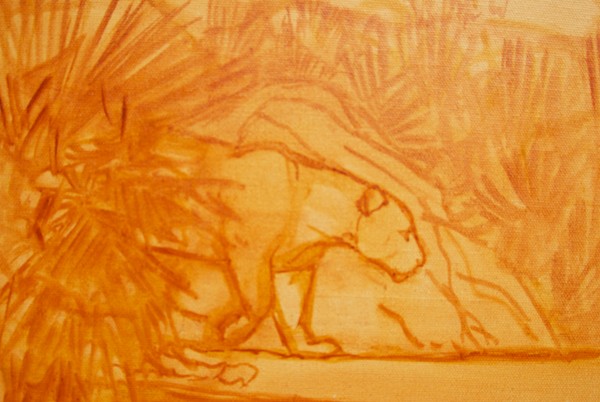
Blocking in the drawing with a brush, adjusting the relationships of the various elements as I go. I used a fairly intense burnt sienna tint which I knew would show through in spots in the finished work and give it a nice glow. I also changed the proportions, making it wider than I had originally planned.Close up of the star of the show. The visible part of him is 3.5″ long. His head is 1″ from ear to nose.First color lay in, indicating the shapes of the shadowsWell into it now, working over the whole surface of the painting. I finished the canyon and made a start on the jaguar. Then I left for Mongolia for seven weeks. I tweaked the farthest mountain, lightened the sky and finished the big kitty yesterday.Detail of the waterhole and surrounding rocks in progressEl Tigre (Nacapuli Canyon) oil 36×24″
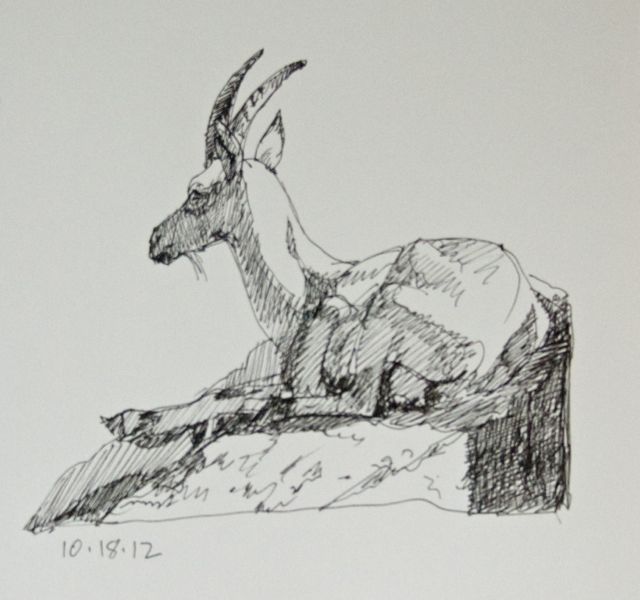
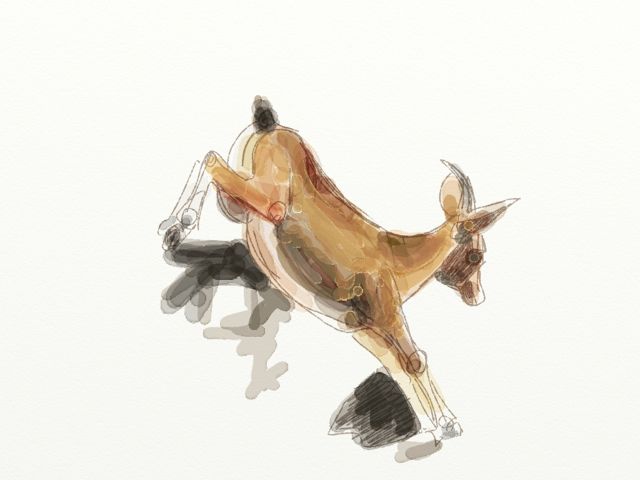
What? You say. She’s seen them and photographed them. Surely she knows what they look like. Well, in a manner of speaking, I do, of course. I’ve got quite of bit of reference of them from previous sightings and have done a couple of small paintngs. But until this past trip I didn’t really have sharp, close-up reference of ibex in good light and also doing interesting things. Now I do.
I spent three out of my first four mornings at Ikh Nartiin Chuluu Nature Reserve in August taking around 1000 photos of 2-3 groups of nannies, kids and young billies. I’ve done an initial sorting and 5-star rated (in Aperture, my image management software) the ones that caught my eye for possible paintings.
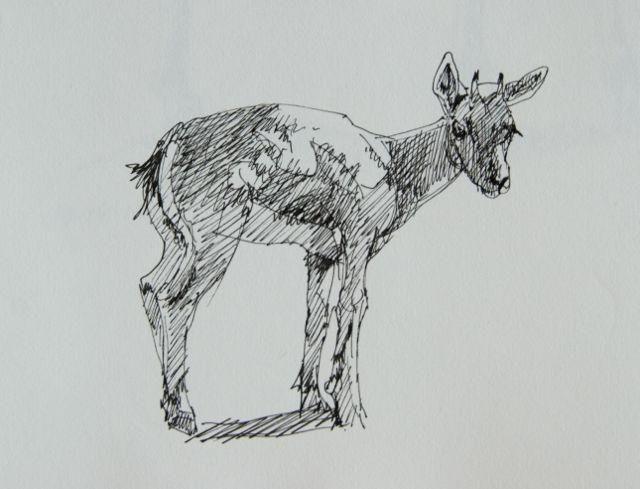
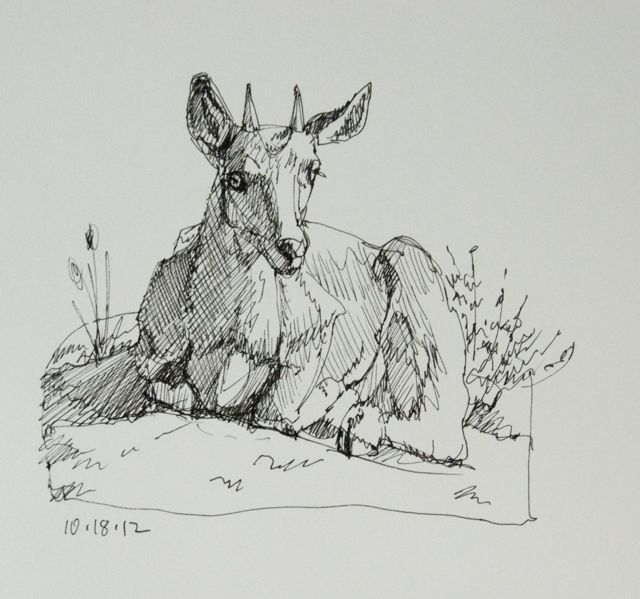
But…I’ve learned when I decide to paint a new species that I’ll be sorry if I just dive in and hit the easel. I first need to “learn what the animal looks like” and to do that I simplify things by doing a number of monochrome sketches and drawings to familiarize myself with their structure, proportions and anatomy, along with looking for interesting behaviors. I pick reference photos that have a strong light and shadow pattern or some kind of interesting, perhaps, challenging, pose. Sometimes I throw in a quick indication of the ground so I can start to think about that, too.
I like doing small, fairly quick pen sketches. For those I use Sakura Micron .01. and .02 pens on whatever sketchbook I have on hand. They give me a basic idea of what I need to know. Then I’ll often do some finished larger graphite drawings on vellum bristol. I also did a couple of iPad drawings using ArtRage, which makes it easy to lay in some color.
Pen and ink sketches- I do these directly with the pen and spend about 10-30 minutes max on them depending on sizePen and ink sketchPen and ink sketchPen and ink sketchPen and ink sketchGraphite on vellum bristolgraphite on vellum bristolgraphite on vellum bristoliPad using ArtRage appiPad using ArtRage app
I’ve known since my first trips to Mongolia that art is an extremely important part of the culture, but had not found a way to meet or connect with any of the artists themselves. Until now.
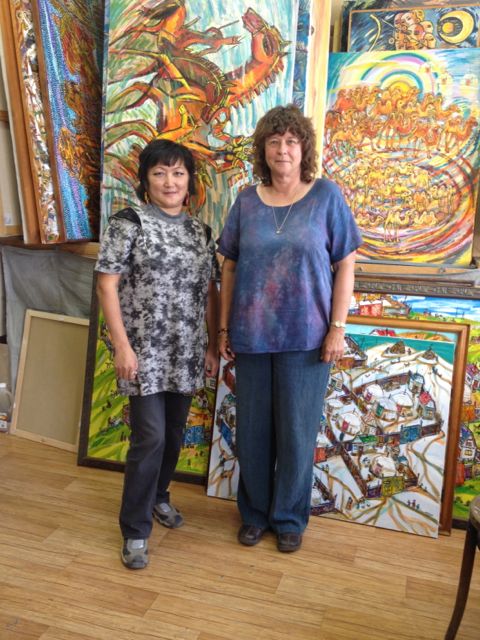
Thanks to Janna, the Director of ArtiCour Gallery, who hosted my Ulaabaatar art event on September 22, I got my wish and then some. The gallery represents some of Mongolia’s most prominent and honored painters. Some of them were kind enough to come to the event and two invited me to visit their studios, which I did the next day. I had a wonderful time, thanks to Janna and Khaliunaa, who was one of my interpreters for the art event (along with Buyandelger) and who was nice enough to come along so that I could talk to the artists.
Although they did not have access to the West during what the Mongols call “socialist times”, many Mongolian artists traveled to Moscow, St. Petersburg and other Eastern Bloc countries to study in a variety of art academies and schools, so they were trained in classical, academic methods. They were limited in what was acceptable to paint, Impressionism apparently being totally off-limits, but still found ways to express themselves with great originality. With the coming of democracy in 1991, the artists of Mongolia became free to go wherever their artistic vision leads them.
The following is a “album” of my visit to the studios of six artists, all members of the Union of Mongolian Artists, which was founded in 1944 and has its own large, airy gallery space in the heart of Ulaanbaatar. I’ve been going there every trip since 2006 to see their exhibitions.
The studio photos and some of the art images were taken with my iPhone. Some of the other painting images I scanned from materials like brochures and booklets that the artists gave to me as gifts. I hope you enjoy this “studio tour” and you can be sure that there will be more to come in the future.
The artists are presented in the order in which I met them.
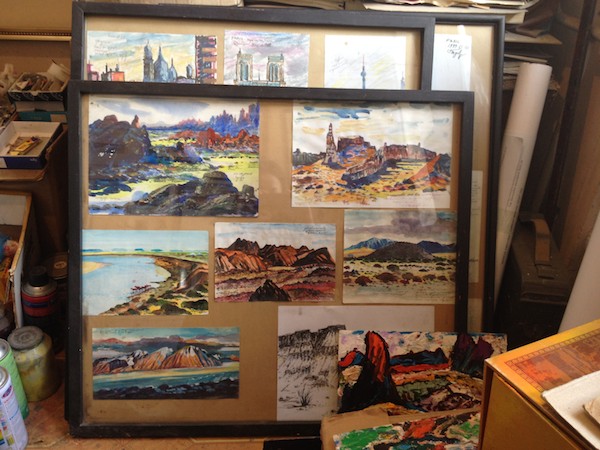
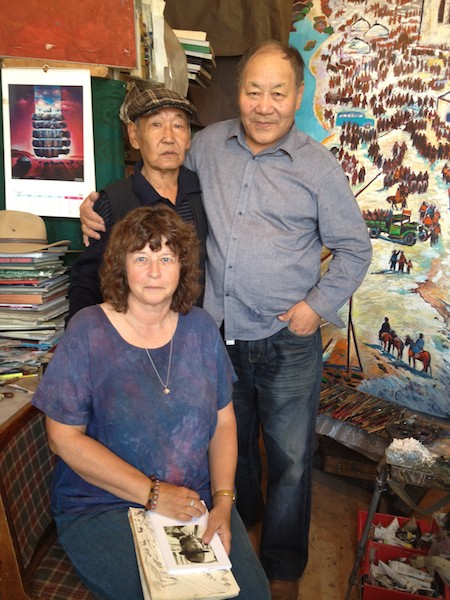
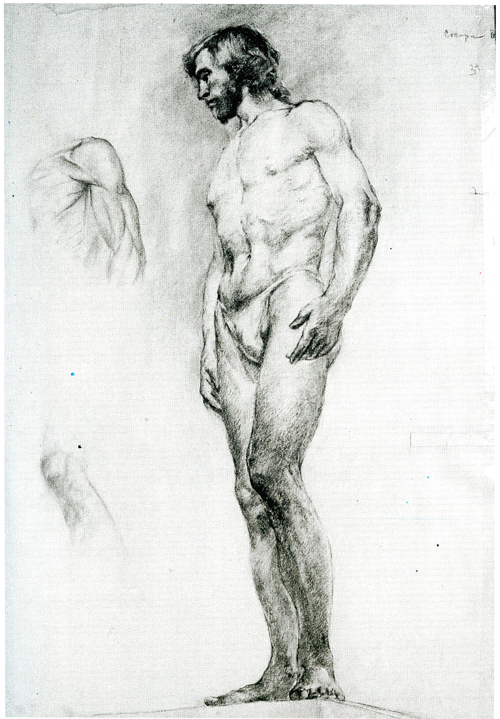
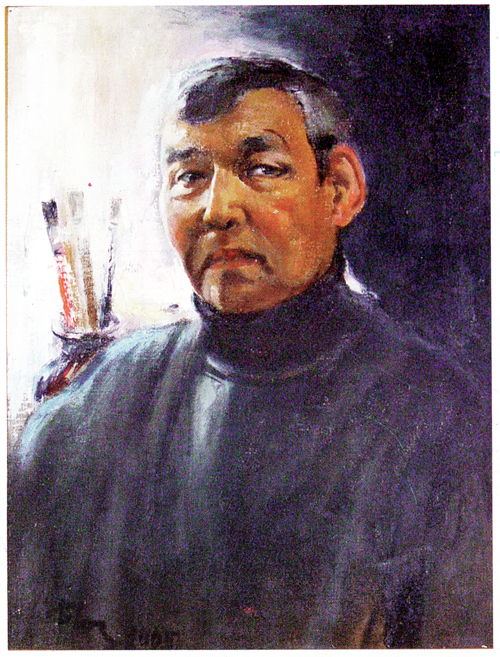
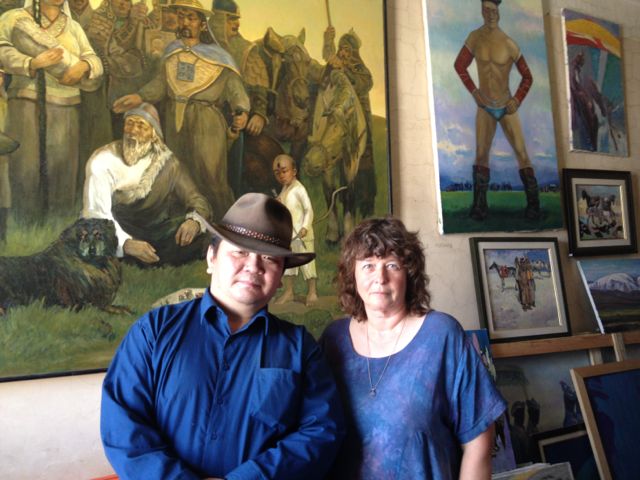
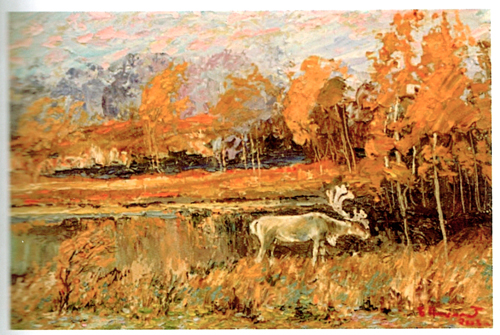
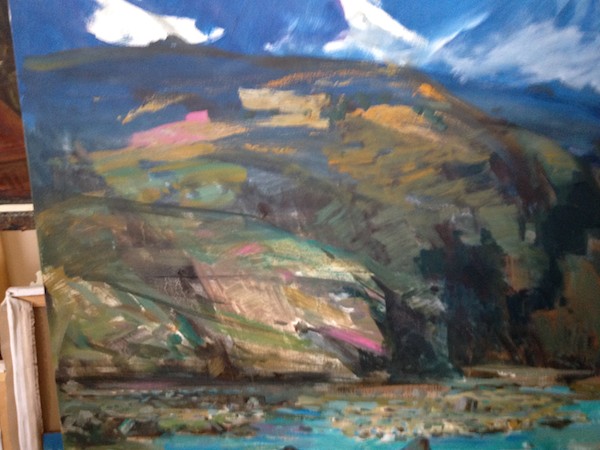
E. Sukhee, who I was told is one of the most eminent artists in MongoliaUulen Choloonii Nar by E. SukheeG. Dunburee; he was definitely the extrovert of the groupDunburee’s famous painting “Ikh Khuree”, a scene of Ulaanbaatar in the 1920s, one of a seriesSome of Dunburee’s location paintingsFellow artist, Sosobaram, who stopped in for a short time, Dunburee and ISosobaram gave me a lovely booklet of his life and work. I scanned this and the following two images from it. Here is one of his drawings, I think from when he was a student.Tsagaan Sarnai by B. SosorbaramAvto Portret 2006 (Self Portrait 2006) by B. SosorbaramS. BayarbaatarTalin Unselt by BayarbaatarNatsagdorj- one of the very few watercolor artists of his generationIkh Taigin Namar by Natsagdorj; he is from the northern part of Mongolia and at one time specialized in images of the Tsaatsan or “Reindeer People”.Tugs-Oyun SodnomGer District 2009 by Tugs-OyunD.MunkhLandscape in progress- MunkhLandscape in progress- detailFinally, Tugs-Oyun, me and Janna Kamimila, the Director of ArtiCour Gallery, who arranged this memorable afternoon with the artists, who couldn’t have been more welcoming
I arrived home from my seven week trip to Mongolia last Tuesday. I’ve been alternating catching up and doing….nothing or at least nothing more strenuous than watching a baseball game. The first order of business was to download and start categorizing the over 8000 images I shot on the trip. I always feel better when everything is safely on the hard drive, backed up to the remote Vault and visible in Aperture.
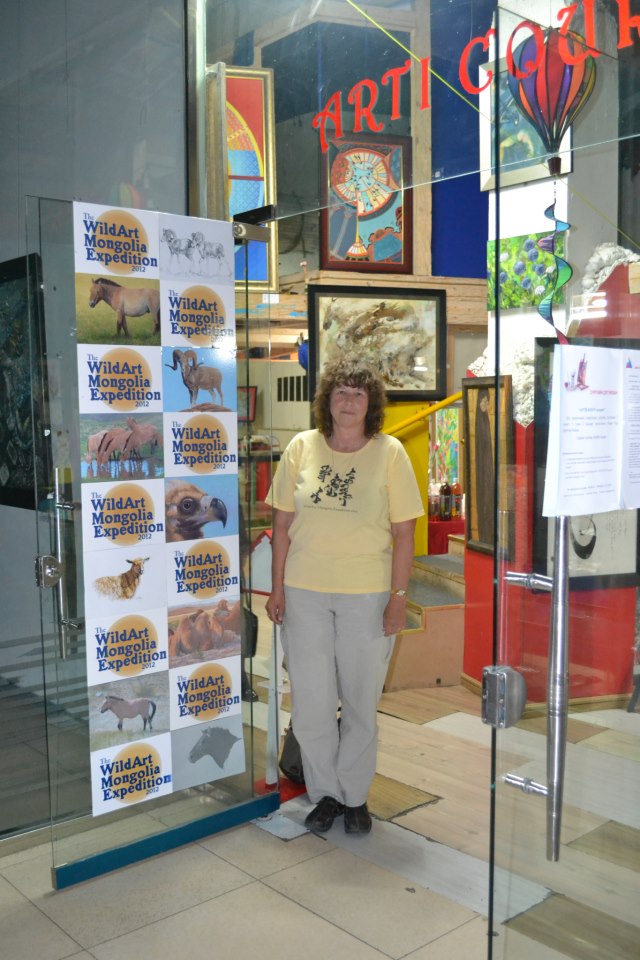
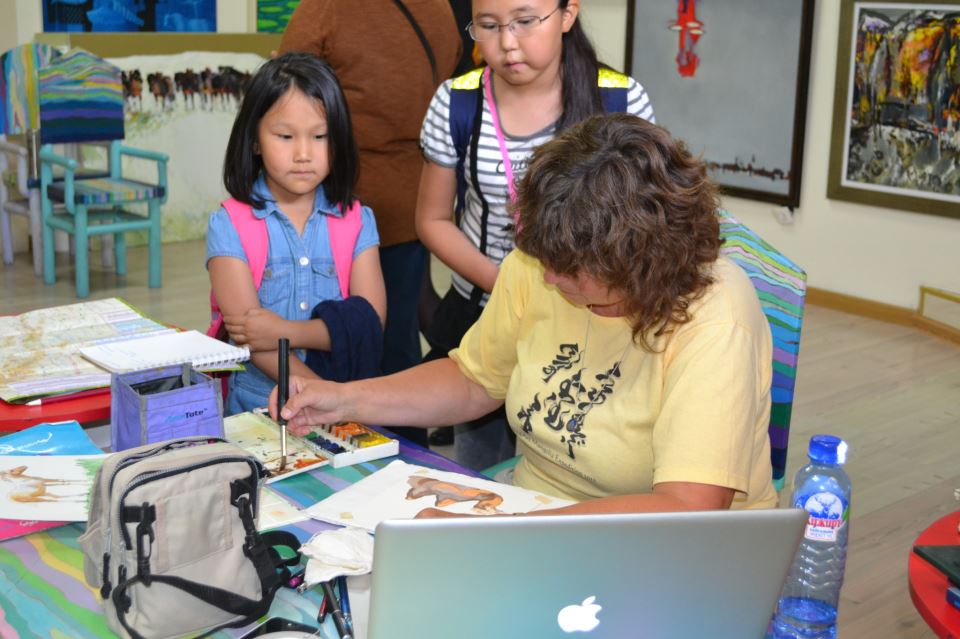
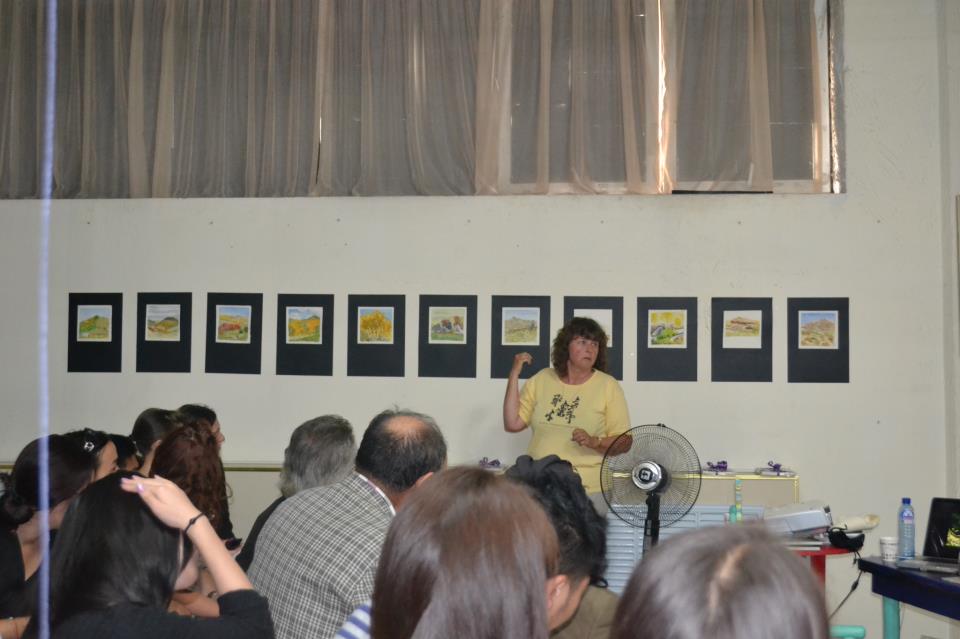
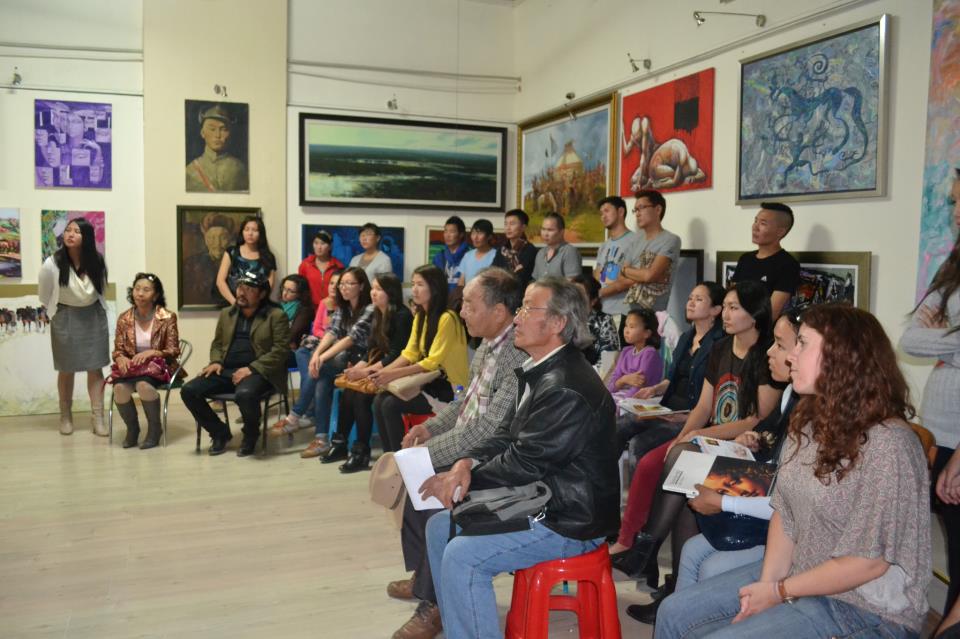
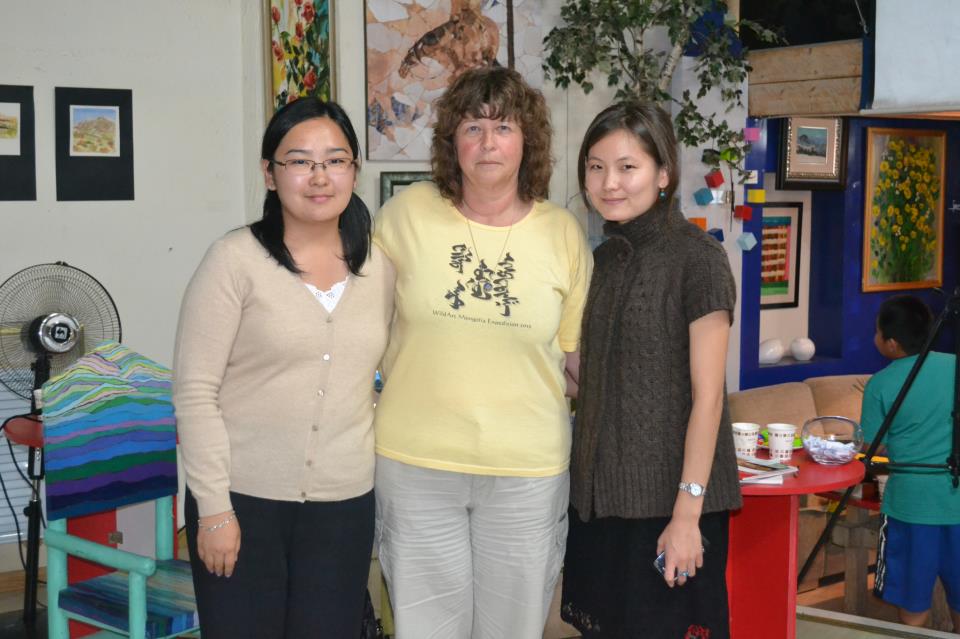
My final days in Ulaanbaatar were a bit of a whirlwind. The art event at ArtiCour Gallery was great! There was a steady stream of people all day, some of whom I knew. There was a lot of interest in the WildArt Mongolia Expedition and at least three artists expressed an interest in going next year. Many art students came by. The director of a Mongolian magazine which publishes articles on artists stopped in and said that they want to do an article on my and my work! Even more special to me personally, a number of very prominent Mongol artists attended, all of them members of the venerable Union of Mongolian Artists, which was founded in 1944. Two of them invited me to visit their studios. But that will be a tale for another post.
Here’s a selection of photos taken at “American Artist Susan Fox-The WildArt Mongolia Expedition”, which was the first in ArtiCour’s new Visiting International Artists series.
Entrance to ArtiCour GalleryMeeting E. Sukhee, one of Mongolia’s most famous artistsWatercolor demonstrationBactrian camel. watercolor demoDisplay of watercolors I did on location over two afternoons while I was visiting Hustai National Park, one of the three places in Mongolia where takhi (Przewalski’s horse) have been reintroducedMeeting Dunburee, also a very prominent Mongol artistDoing a fast sketching demo during my evening presentationI couldn’t have had a better, more attentive group and they asked some great questions later on.Meeting with Ekhbat Lantuu, President of the New Century Art Association, which promotes environmental issues through the arts.My interpreters, Khailiunaa and Buyandelger, without whom I wouldn’t have been able to talk to anyoneJanna Kamimila, the Director of ArtiCour Gallery and my host





























 Susan Fox, American Artist