This installment of my occasional series “Five Photos of Favorite Places” features Hustai National Park, one of the three places in Mongolia where takhi/Przewalski’s horse has been reintroduced and by far the easiest to get to, since it’s only a two hour drive from Ulaanbaatar, the capital, and most of that is on tarmac road. You can view the other parts by scrolling down the Categories drop down menu in the right hand column to “5 Photos….
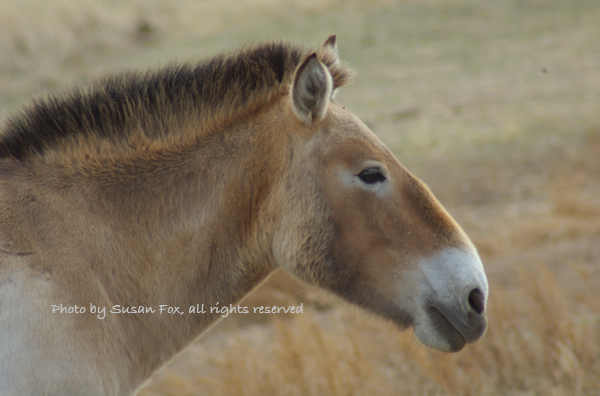
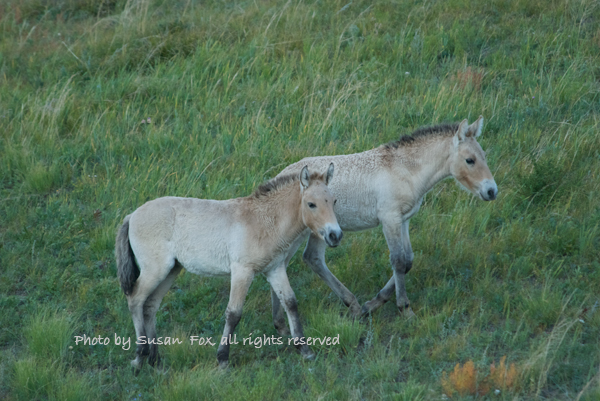
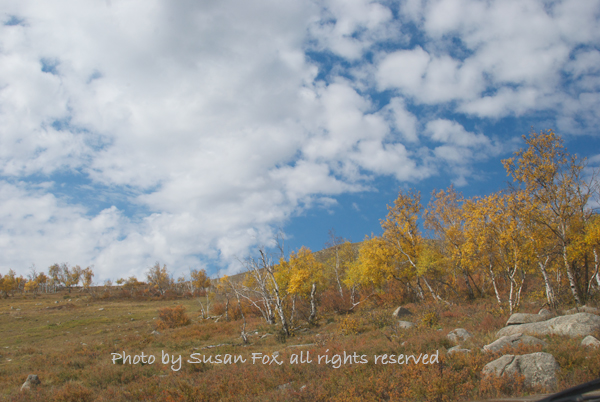
Takhi stallion, April 2005- This was from my first trip to Mongolia in spring of 2005. It was freezing cold, literally, and it was very windy. But I was enchanted with my first look at the world’s only true wild horse running free (I’d seen them for the very first time at the Berlin Zoo in October 2004). To me, this head shot sums up what they are about…a very special horse that looks like it just stepped out of a cave painting.Takhi foals, September 2008. I always look forward to seeing the new generation when I visit Hustai and of course the foals are fun to watch as they romp around and play. There are now around 300 takhi in Hustai and they are doing well. The world population, counting both captive and reintroduced horses is around 2000. A studbook established in 1978 keeps track of every one of them.Siberian marmot, July 2010. Hustai is one of the few places left where one can see marmots in any number. Their population crashed by close to 90% due to demand for their pelts by the Chinese. Now they are an endangered species where once there were millions. I’d gone to Hustai for the weekend with I driver I’d had before, but no guide, and Onroo didn’t speak English. But we got along fine with my little bit of Mongolian and a phrase book. It is a running joke between us that we will always stop for “taravak”….marmots, so I can try to get a good photo like this one.Hustai landscape, August 2011. “Hustai” means “birch” in Mongolian. There are birch woods like these above a certain elevation on the mountains in the park. You can see two grazing takhi in the middle. From this point on up to the bare rocks like you can see in the background “bokh”, or elk, are to be found, the same genus as the Rocky Mountain and Roosevelt elk of the United States, but a different species.Birches and blue sky, September 2012. Last year was the latest that I had visited the park and so I saw the fall colors for the first time. And they were spectacular!
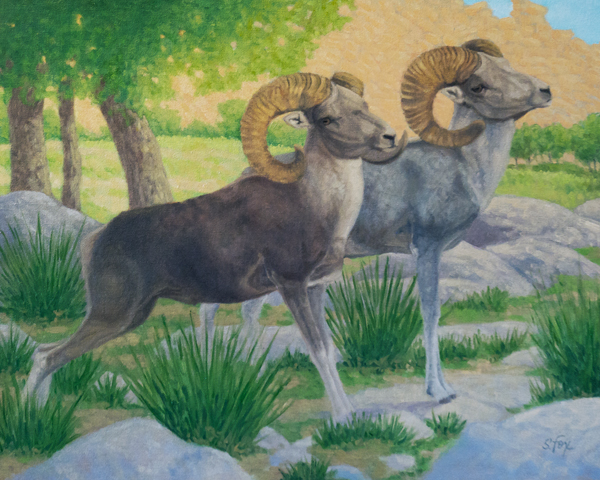
This is the second, and largest, of the three argali paintings I’ve just finished. You can see the first one here. I’ll post the third one next Friday.
I spent over an hour watching these rams at Ikh Nartiin Chuluu Nature Reserve in 2010. And sometimes they watched me. But mostly they grazed, scratched, rested and did a little pre-rut testing.
One of the things I wanted to capture in this painting is how individual they all are, being different colors depending on their ages and having horns of various sizes and condition. It was a group of five and these were the three big boys, fully mature males, who probably weigh over 300 pounds each. Behind two of them is one of the younger rams,
Chinggis Khan, Parliament building, Ulaanbaatar, Mongolia
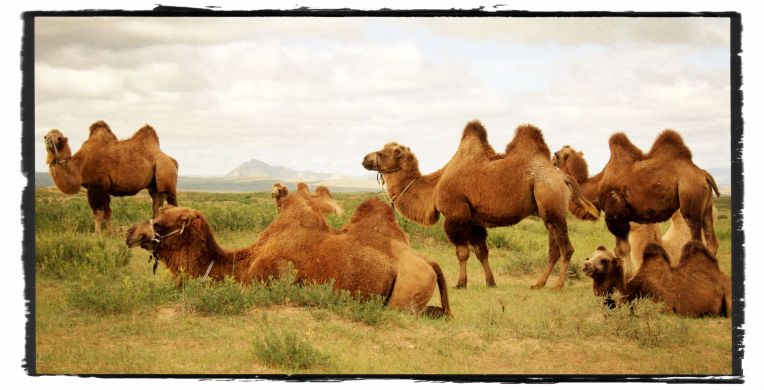
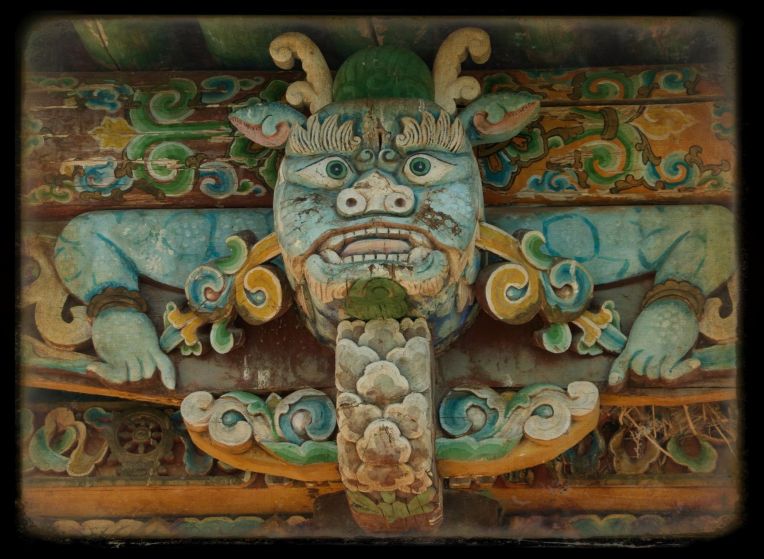
I’ve been having fun using a variety of photo effects on some of my iPad drawings using the Camera Awesome app on my iPad. I thought it would be interesting to do the same with a selection of my Mongolia photos. Here’s five I did this morning to see what I could come up with. I like it. So much of what one sees in Mongolia has an iconic, storybook quality that the images really lend themselves to “special effects”.
Bactrian camels with Zurgul Uul in the background, Bayan Onguul soumHorse trainer, DalanjargalanGers on a stormy day, en route from Ikh Nart to Gun-Galuut, 2011Decorative carving on old temple, Gachen Lama Khiid, Erdenesogt, Khangai Mountains, 2010
It’s been an intense two weeks since I decided to do a series of three argali paintings at the same time. My idea was to enter all three in a particular juried show, with the hope that maybe all three will get in because they will look good together on the wall. Will it work? Who knows? It was a good experience and something I haven’t tried before. It made sense to work back and forth on all of them since it was the same group of rams in the same light and location, so I was using the same colors.
I think I’m a little “argalied” out at the moment, so I’ll be moving on to some other pieces that I already have in progress, but I feel like I’m off to a good start for 2013.
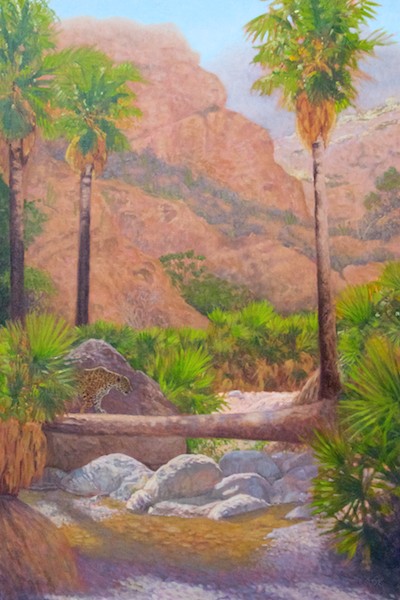
Here’s all the latest information on the Sea of Cortez art exhibition that I am one of thirty artists participating in. You can find out about the trip we all took, the opening weekend and see an example of each participating artist’s work here. Shown here are two of the works that I will have in the show.
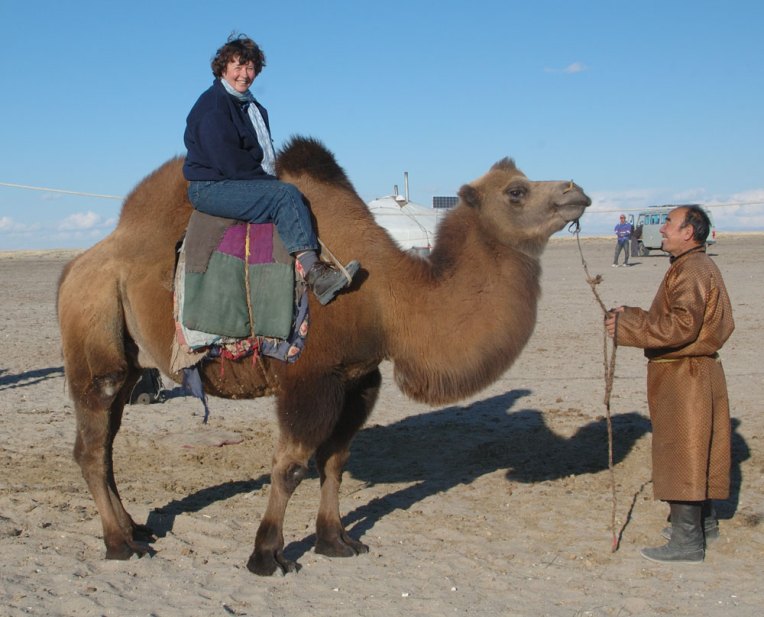
My first camel ride in Mongolia, September 2006. No, I didn’t fall off.
Owen Lattimore’s books are filled with information and lore about all kinds of things that one would encounter traveling with Mongols back in the 1920s, including the fine art of riding a bactrian (two-humped) camel.
“I have never been thrown by a camel when I was really trying to stick on unless the girth gave. Camels are too awkwardly built to do any fancy bucking, but when they do their best they can almost always burst the girth, because it is a healthy principle of camel-riding that the girth should always be weak. If the rider should be caught with a foot jammed in the stirrup when thrown or when the camel has managed to sling the saddle around under its belly it would be very serious. It is better to have the girth part and to be thrown clear, even though the fall is much higher than from a horse. As a matter of fact, the greater fall seems to let you hit the ground with muscles relaxed. I do not remember feeling badly shaken when falling from a camel, and the Mongols say: “Fall from a camel-nothing to worry about; fall from a donkey-break your leg.”
Claude Monet Painting in his Garden at Argenteuil by Renoir
If a painting of a tree was only the exact representation of the original, so that it looked just like the tree, there would be no reason for making it; we might as well look at the tree itself. But the painting, if it is of the right sort, gives something that neither a photograph nor a view of the tree conveys. It emphasizes something of character, quality, individuality. We are not lost in looking at thorns and defects; we catch a vision of the grandeur and beauty of a king of the forest.
-Calvin Coolidge, speech, Jan. 17, 1925
Painting from nature is not copying the object; it is realizing one’s sensations.
-Paul Cezanne
Jackson Pollock painting
I have no fear of making changes, destroying the image, etc., because the painting has a life of its own.
-Jackson Pollock
Painting is self-discovery. Every good artist paints what he is.
-Jackson Pollock
Painting is easy when you don’t know how, but very difficult when you do.
-Edgar Degas
Portrait as an Artist by van Gogh
“If you hear a voice within you say “you cannot paint“, then by all means paint and that voice will be silenced.”
-Vincent van Gogh
“You must forget all your theories, all your ideas before the subject. What part of these is really your own will be expressed in your expression of the emotion awakened in you by the subject.”
-Henri Matisse
After the first brush-stroke, the canvas assumes a life of its own; at this point, you become both governor and spectator to your own event.
-Anonymous
Turner on Varnishing Day by William Parrott
When making a painting, only one thing counts: what you do next.
-Darby Bannard
“Painting should never look as if it were done with difficulty, however difficult it may actually have been.”
– Robert Henri, in his book The Art Spirit, p135.
Churchill Painting at the Easel by
In Cezanne’s paintings, “edges aren’t boundaries but places where paint, surging across the surface, changes color.”
– Art critic Peter Schjeldahl, “Cezanne versus Pissarro”, New Yorker magazine, 11 July 2005
The painter’s work will be of little merit if he takes the painting of others as his standard, but if he studies from nature he will produce good fruits.
-Leonardo da Vinci, Thoughts on Art and Life
Taken from “Nomads and Commissars-Mongolia Revisited” by Owen Lattimore, Oxford University Press New York, 1962. I’ll be writing more about him in a future post, but suffice to say for now that Owen Lattimore was one of my inspirations for “getting involved” in Mongolia because of the affection he is held in by the Mongols for representing them and their culture accurately to the West, even to the point of being given a medal by the government.
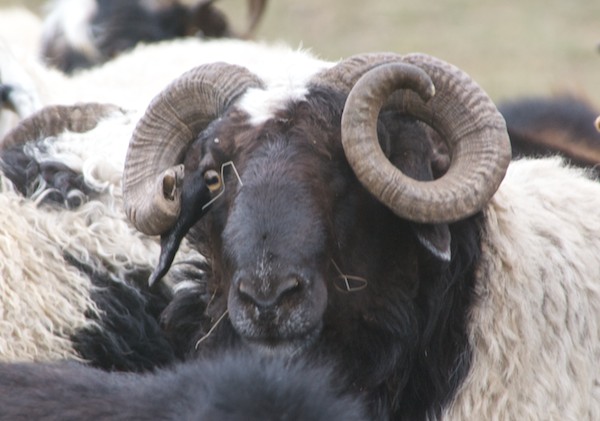
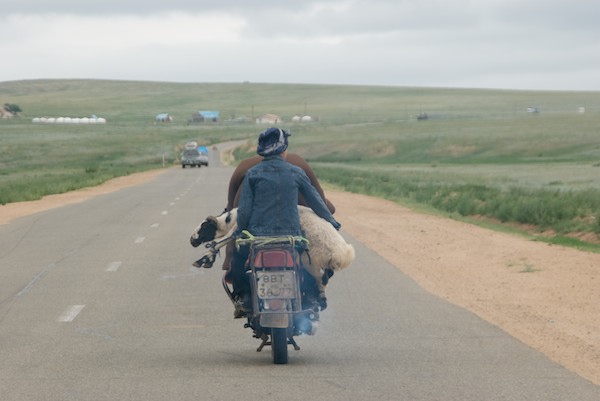
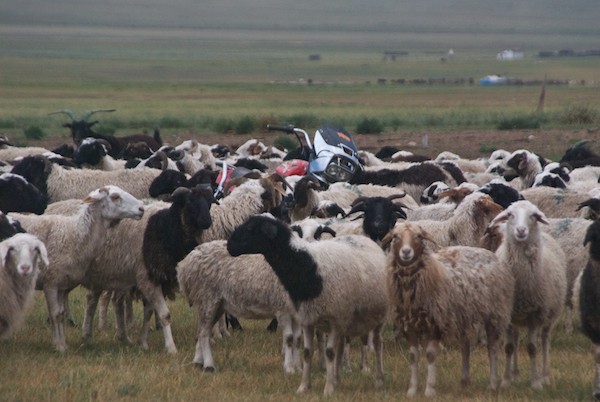
This post, however, has a somewhat more prosaic theme….sheep, one of what the Mongols refer to as The Five Snouts, the others being horses, goats, camels and cattle/yaks.
“There are several breeds of Mongolian sheep, adapted to all kinds of pasture-from the high and cold to the low and sandy. While the horse has always been the noble animal, the sheep is economically indispensible to the old nomadic life. It is the only animal that supplies all the basic needs: food, clothing, housing, fuel. Besides meat, it provides milk for drinking and for making cheese. The hide with the fleece on makes the best heavy winter gown. The wool, matted into felt, covers the ger, the round, domed Mongol tent. (Nowadays, although the inner covering of the tent is still felt, which is the best insulator, the outer covering is normally of heavy white canvas, which sheds water well and absorbs less dust than felt.) When sheep are penned at night, they trample the dung that they drop. It gradually builds up in thickness, until it can be spaded out in rectangular bricks and burned as fuel. It makes a very hot fire, but its smoke is irritating to the eyes. The best dung-fuel is cow dung; the next best is camel dung. The most obvious mark of the different breeds or strains of the Mongolian sheep is the size of the tail, which varies from a small, goat-sized tail to a huge mass of fat weighing forty pounds or more.
One of the great successes of experimental cross-breeding in Mongolia has been the establishment of a new breed of sheep, the “Orkhon”. It has almost all the hardiness of the native breeds and a finer, longer staple of wool. good for modern machine-made textiles. It also produces a good mutton. ”











 Susan Fox, American Artist