Inktober 2018: Michiko

Michiko 2 900

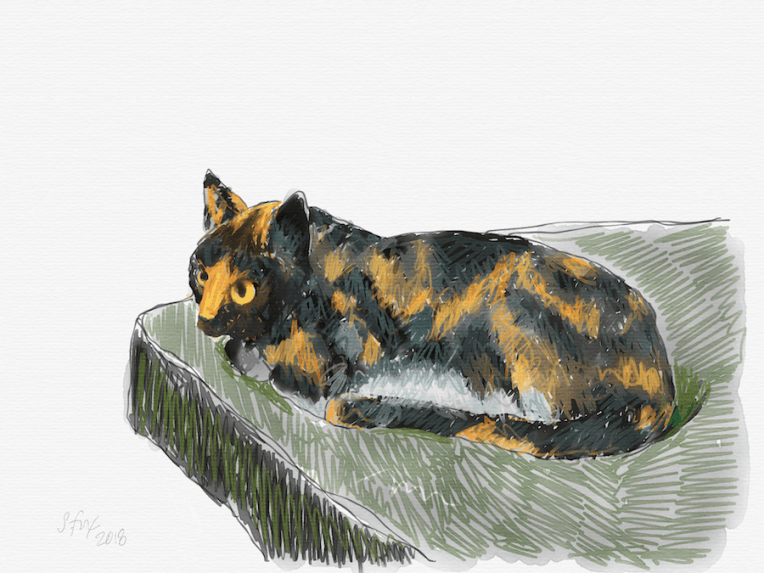
Michiko held this position just long enough for me to sketch in her head and basic body position. She’s a 13 year old tamed feral who we’ve had since she was 3 months old. She recently went deaf and has some arthritis in her hind end but otherwise is in great shape. Created on my iPad Pro with Tayasui Sketches Pro using the pen and watercolor brush tools. #inktober #inktober2018 #catsofinstagram #catartist #animalartists #calicocat #tayasui #ipadproart
 

Inktober 2018! I’m Doing It!

Inktober 1- Michiko copy

I’ve decided to participate in Inktober 2018! The idea is to post an ink drawing every day this month. I’m going to do my best to accomplish that. Real and digital “ink” are equally acceptable and I plan to do both. Yesterday evening I decided to start with a quick sketch of one of our cats, Michiko. I used Tayasui Sketches Pro on my iPad Pro with a Box Wave stylus and the dip pen and watercolor brush tools. It took about five minutes.

I won’t be posting every piece here, just a selection of them. All of them can be viewed on Instagram (foxartist) and Pinterest (foxstudio)

#inktober #inktober2018
More about the event here: https://inktober.com/

TBT: “Pretty in Pink”

Yes, I missed the “deadline”. Sigh. “Pretty in Pink” oil 16×20” 2005- Peruvian pink-backed pelicans that I saw at the Berlin Zoo in 2004. Loved the colors and their expressions!

Collection of the artist.

Thinking About Art: Simplification

Mongol Wrestler oil 12x12" 900
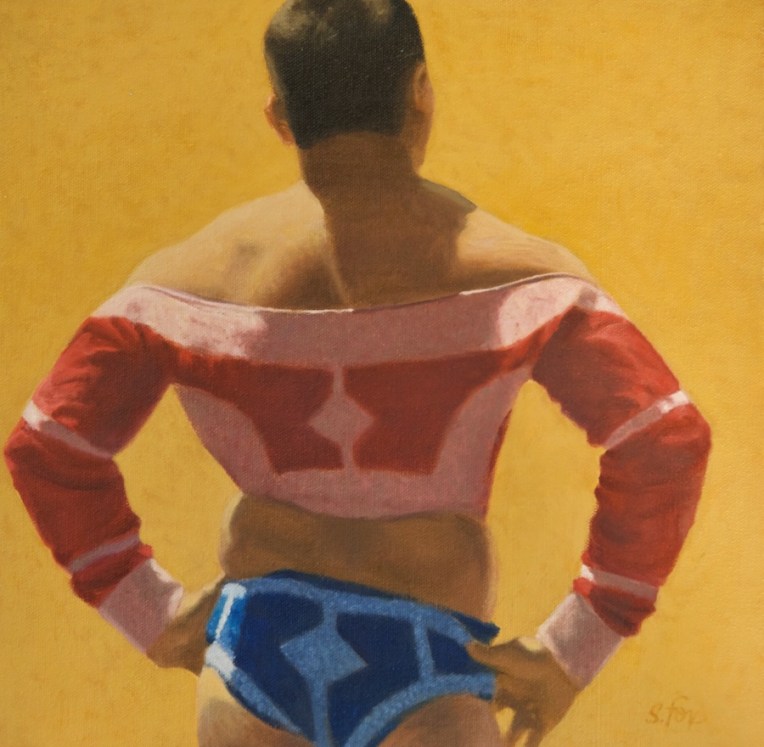
“Mongol Wrestler” oil 12×12″ $950 (Salmagundi Club Summer Exhibition, Certificate of Merit)

I’ve always remembered one of the first things my Illustration II teacher at the Academy of Art told us, which is that “the simpler statement is the stronger statement”. Easy to say, surprisingly hard to do. It’s easy to just accept what’s in front of you and put it in your painting or drawing, whether it’s individual the leaves on a tree or every hair of a coat of fur. It’s much more challenging (and ultimately rewarding) to edit and leave things out. That, however, is a judgement call and the possibility exists that one will make the wrong choice. Scary! Actually, it’s inevitable. But that’s ok as long as one is honest about it and is willing to keep trying. While a good teacher or experienced artist friend can help, ultimately you have to decide what to do based on your vision (you DO have a vision of where you want to end up, right?) of where and how to simplify. In future posts I’ll be discussing a variety of ways to approach simplifying your image.

Example: here’s a 12×12″ oil I did of a Mongolian wrestler. I started by deciding that the painting would be about his pose and the light/shadow pattern. Also the positive shape of the pose and the negative shapes that were then created in the background. I cropped the figure VERY carefully, taking into account the overlap of the frame. When I shot the reference photo kinds of stuff were going on around him on the event field, none of which I needed and which would just get in the way. The gutsy move for me was the golden yellow background. I had to control both color and value so that the subject would still pop out, but keep that sun-drenched feeling. It worked. But if it hadn’t I would have painted over it with something else, most likely still letting a bit of it show through. “Mongol Wrestler” was awarded a Certificate of Merit in the Salmagundi Club’s Members Show in 2017.

This is one example of what I’m offering on my Patreon site…solid, experience-based information. Please consider becoming one of my valued Patrons! https://www.patreon.com/susanfox/posts

TBT: “Black Oyster Catcher”

Black-Oystercatcher

TBT “Black Oystercatcher” a 12×24″ oil from 2007. Private collection.

I took lots of photos of this oystercatcher moving around on the rocks near Trinidad State Beach and than had fun painting both the bird and the water

TBT- “A Grand Morning”

Grand-Morning
“A Grand Morning” oil 16×20″

TBT- On Thursday mornings I’ll be giving you a look at art I’ve created over the past twenty years. Today…”A Grand Morning” oil from 2007. A different part of the Grand Tetons in the fall. It’s currently hanging on the wall in our dining area.

Watercolors From My Latest Trip To Mongolia, Part 2. And Horses!

Ikh Nart 1

I go to Ikh Nartiin Chuluu (Ikh Nart, for short) Nature Reserve on every trip to Mongolia. It’s where I went on my very first one in April of 2005 to participate in an Earthwatch Institute-sponsored expedition to assist in research that has been carried out there since the mid-1990s. For the two weeks the team of ten of us were there it never got above 32F/0C (not exactly spring weather on the north coast of California where I live), with almost constant wind. Loved every day of it. As of 2016 I bought my own ger with furnishings and have been given permission by the reserve director, who was one of the argali sheep researchers on the Earthwatch project, to set it up in the reserve. So I’ve known him for a long time and am very grateful for being able to “live” in this very special place for a week or more a year. When I’m not there he has the use of the ger for the reserve’s guests.

This year I was allowed to set up at the research camp, which was very convenient since it’s one of the best places to see wildlife. The caretaker, Ulzii, and I have also known each other since that first trip, so I had a trusted back-up just in case I needed it. Which was good because Ikh Nart had gotten no rain to speak of when I got there and then had three corking good storms come through in five days. I got to watch the land go from brown and parched to green with flowers blooming. I also watched the dry streambed turn into quite a “raging” torrent for an hour or so. Many photos and video, so that will be the topic of a future post and a YouTube video.

I did my usual tramping about wildlife watching, also sketching and painting. I still need to scan my journal, which I do a lot of drawing in, but here are my watercolors.

Ikh Nart 2
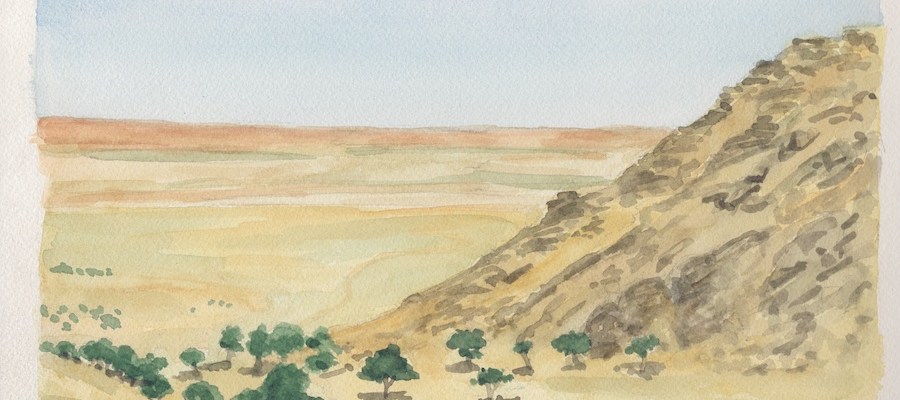
The research camp valley’s west end where it opens out onto the steppe. I’ve always loved this view. Watercolor 9×12″ on Arches 140lb.cold press block
Ikh nart 7
Ikh Nart view west to the steppes. Watercolor 9×12″ 140lb. Arches cold press block
Ikh Nart 5
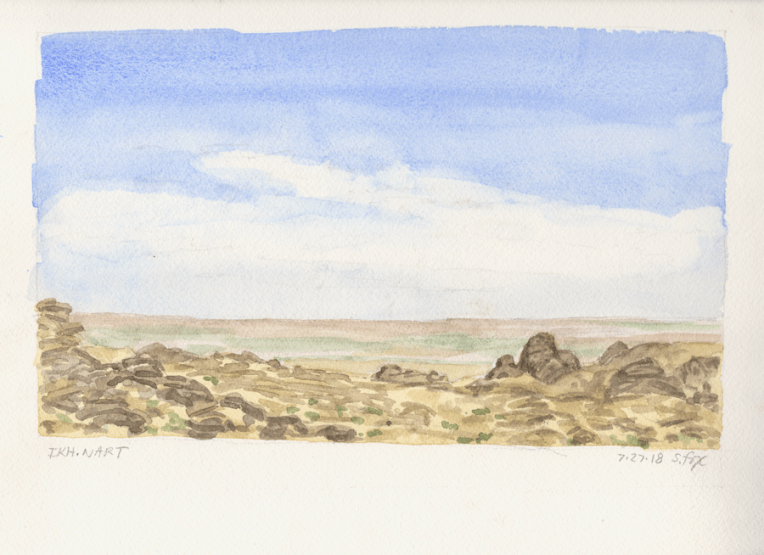
Ikh Nart rocks. Watercolor 8×8″ Waterford 140lb. cold press


I was out hiking the south edge of the valley and spotted this dramatic overhang. Found some nice flat rocks to sit on and lay out my paints. Looked up and there was an animal standing under it looking at me. Grabbed some quick photos. Then it lay down with just its head showing. Before I finished the painting it left, so I added it from memory. But, when I got back to camp and downloaded the day’s images onto my MacBook Pro I saw that it hadn’t been an ibex, but was instead a female gazelle! Twelve trips to Ikh Nart over the years and this was the first time I’d seen a gazelle in this part of the reserve. But for the painting, an ibex she will remain.

Ikh Nart 3
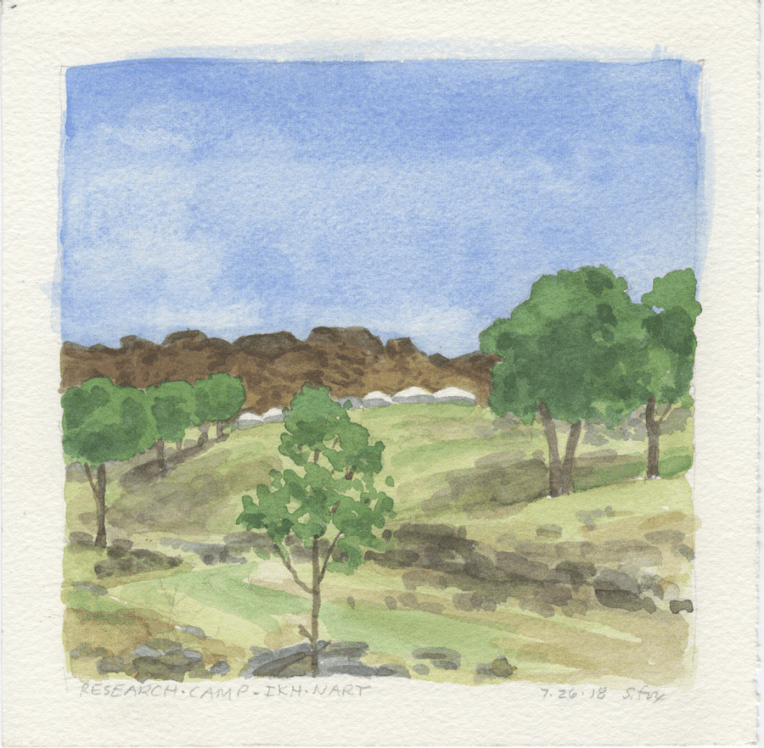
Looking back up the valley to the research camp. Watercolor 8×8″ Waterford 140lb. cold press
Ikh Nart 4 (2)
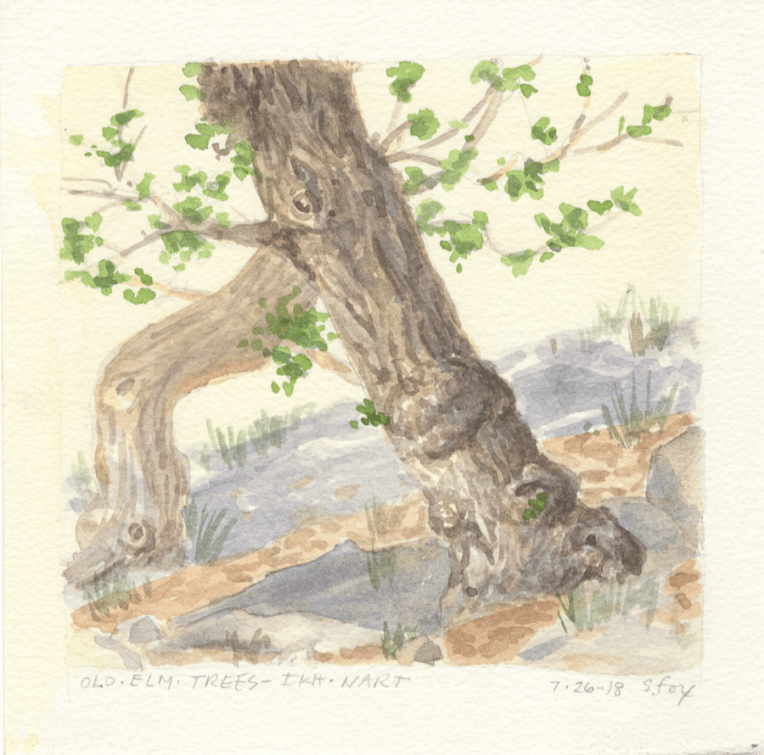
Elm trees. Watercolor 8×8″ 140lb. Waterford cold press

It was getting hot so I left the top of the valley and went back down into it to look for a location with shade. I found it in a clump of old elm trees and did this study, along with the view towards the research camp. When it hasn’t rained a number of species lose all their leaves and look like they’ve died. But add any amount of rain and they seem to almost instantly leaf out again. I was working away totally focused when I heard a noise behind me. I turned and saw this…

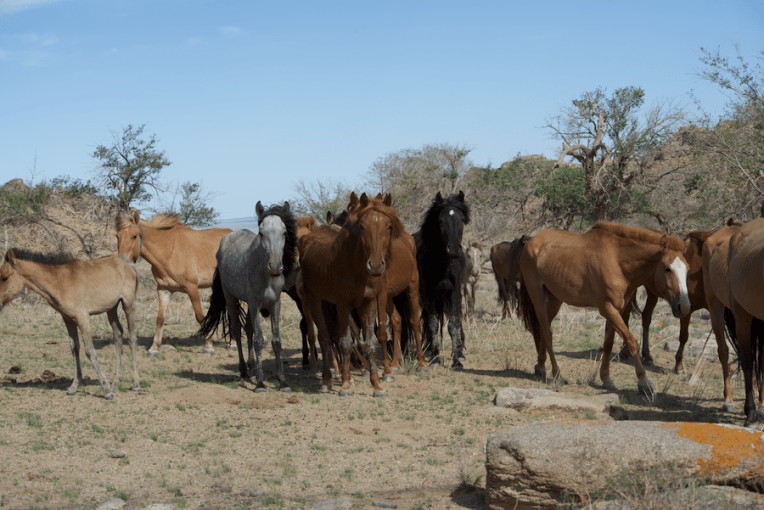
horses

It was a “burrrr” and a snort from this herd of domestic Mongol horses who wanted to get to the spring to drink. And I seemed to be in the way. I looked at them. They looked at me. Then the stallion made his decision.

horses 4_wm

horses 2

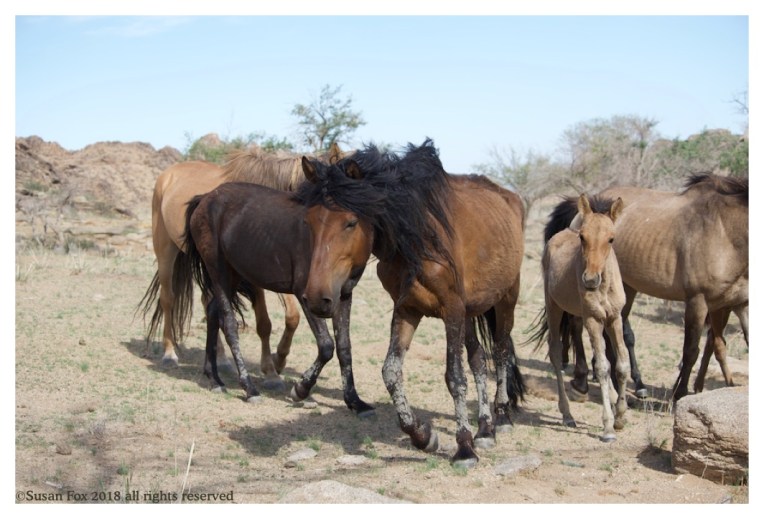
The herd split and went around me on both sides as I madly snapped as many photos as I could.

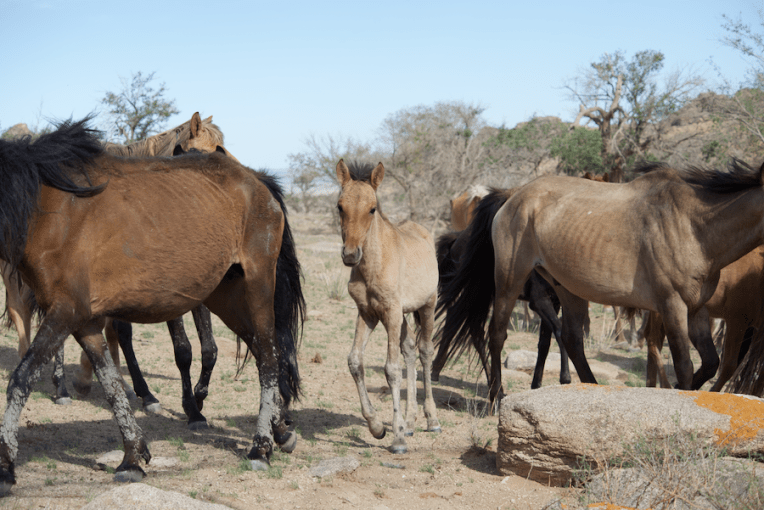
horses 3_wm

They rejoined and continued on to the spring. As you can see they were very thin from lack of graze, especially the mares with foals. This was the third dry year in a row. But the storms that came through, I hope, brought enough rain to let them fatten up for the long, very hard Mongolian winter. There are no horses tougher than these, so they’ve got a good chance.

My Blog Is Now My “Journal”. Watercolors From My Latest Trip To Mongolia, Part 1

Arburd Sands 3
Yarka watercolors on Waterford cold press paper

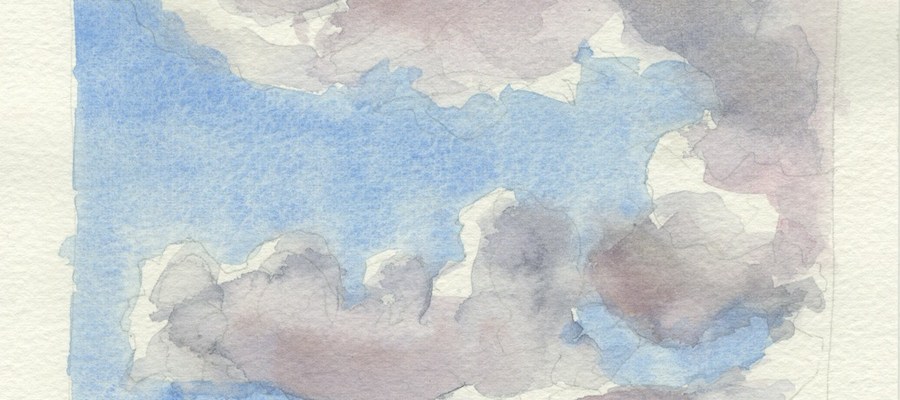
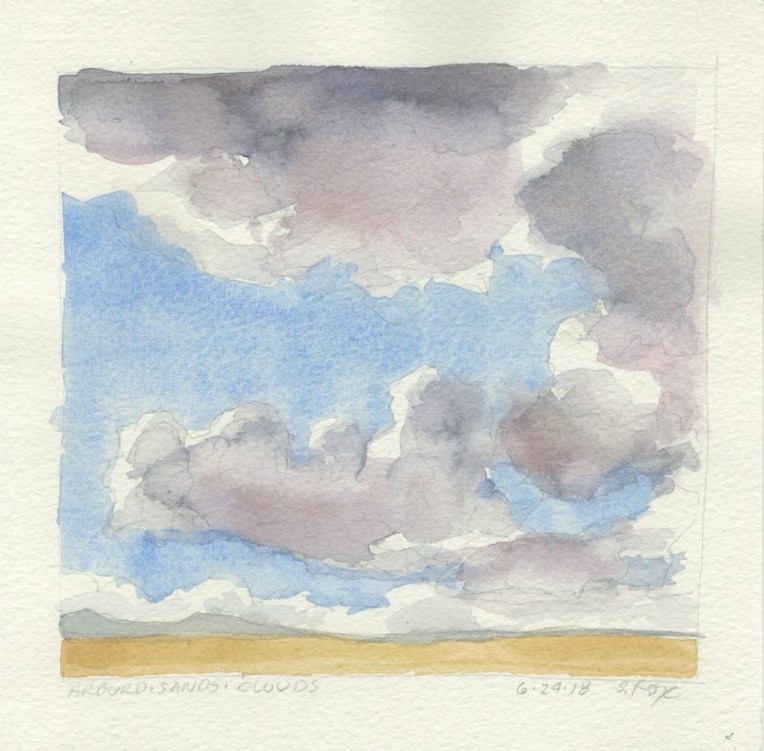
I returned on July 31 from my twelfth trip to Mongolia since 2005. I traveled to a number of places, starting with Arburd Sands ger camp in Bayan-Onjuul Soum, Tov Aimag, about two hours south-west of Ulaanbaatar. The area features a 20km stretch of dunes running east-west, the northernmost extent of the Gobi. I enjoyed capturing the clouds as they drifted by.

Arburd Sands 2
Yarka watercolors on Waterford cold press paper


Arburd Sands 4
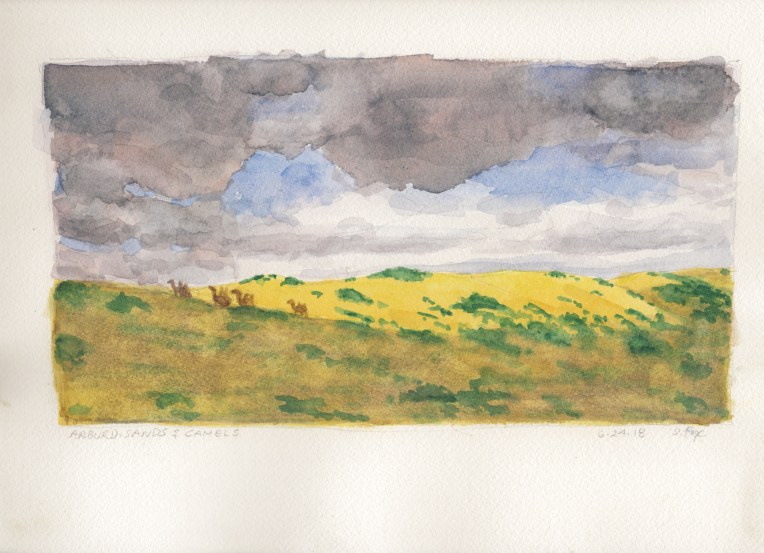
Yarka watercolors on Arches cold press paper

A group of camels was nice enough to move through the scene.

Arburd Sands 1
Yarka watercolors on Waterford cold press paper

This was actually the first one I did as a warm-up. A relatively overcast day in a country that gets 250 days of sunshine a year.

In the Field: I Go To A Plein Air Workshop With Paul Kratter; But First, A Stop At The San Francisco Zoo

Paul gets the workshop under way with a demo at Carmel River State Beach.

Paul gets the workshop under way with a demo at Carmel River State Beach.

I headed down the road April 21 for a plein air workshop with an artist I’ve admired for some time, Paul Kratter. I’ve always been sorry that I missed having him as an instructor in animal drawing, by just a year, at the Academy of Art University (then College) in San Francisco, where I earned a BFA Illustration in 1989. But we crossed paths and connected on Facebook a few years ago and I’m a great admirer of the plein air work he’s known for these days. It has the crispness and concise draftsmanship that one sees in the work of many artists who have an illustration background. So when I saw that he was going to be offering a workshop, “From Sketch to Painting”, within driving distance of where I live in Humboldt County, I signed up immediately.

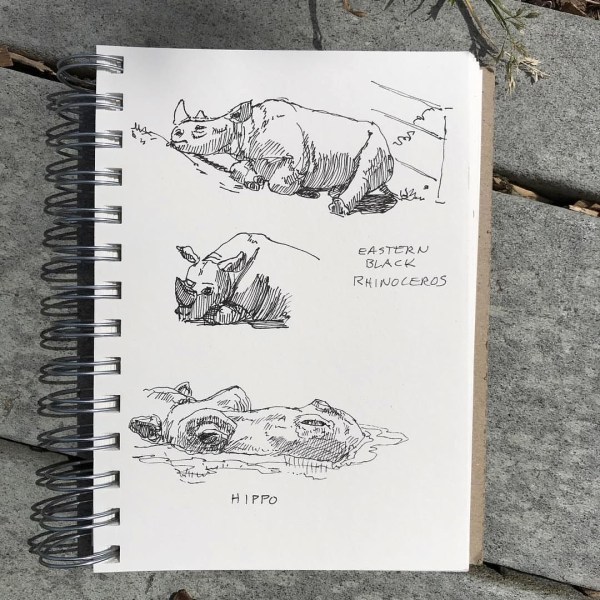
Looking to capitalize on the trip, I left a day early and went as far as San Francisco, staying the night at an inn right across from the San Francisco Zoo. Sketching live animals is something I’ve been doing since 1989, starting at the same zoo while I was at the Academy. I was there when they opened in the morning and left to head down to Carmel in the early afternoon. Here’s the results. I only had, at most, a minute or two to capture most of them. The hippo and penguins were nice enough to stay still a bit longer. The koala never even twitched. I used a Sakura Micron .01 pen in a 7×5″ Pentalic Nature Sketch sketchbook.

SF Zoo 2

zoo

I arrived in Carmel, checked into my Airbnb room, got a bite of dinner, then went to Carmel Visual Arts to watch Paul do a demo by way of introducing what he was going to teach us over the next three days.

The next morning we all met at our first location, Carmel River State Beach, where Paul did another demo. I’ve personally never been much of a fan of them since in my experience they’ve mostly been about how the instructor paints with very little that was relevant to me and my goals as a painter. But both Paul’s and Scott Christensen’s (a local artist friend and I attended his 10-day plein air intensive ten years ago) were full of useful information.
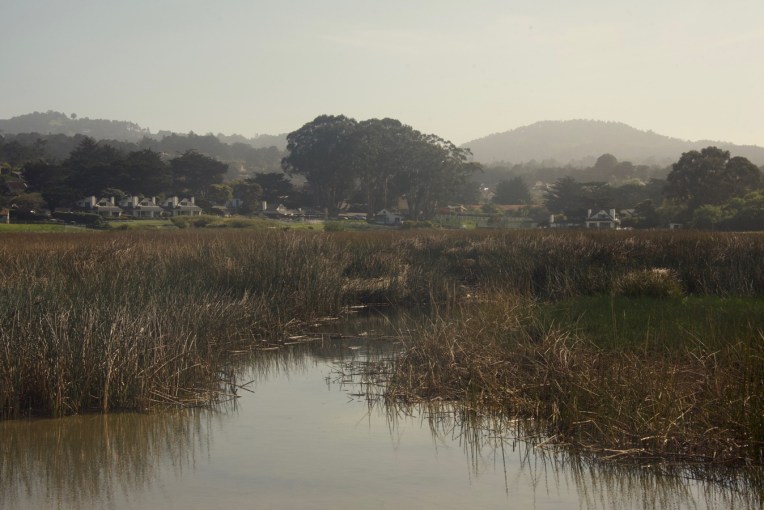
2

The motive or motif (plein air-speak for what the artist has chosen as her or his subject). Not the greatest light, but some decent atmospheric perspective, with the hills becoming lighter the farther back they were.

Paul uses an Open Box M that is mounted on a camera tripod. He starts with an indication brush drawing of the main shapes using a brush called a "bright". It's shorter than a flat which is a, well, flat rectangle. He moved his hand in sharp, short strokes

Paul uses an Open Box M that is mounted on a camera tripod. He starts with a brush drawing to indicate the main shapes (only 3-4 on a small piece) using a brush called a “bright”. It’s shorter and more square than a flat which is, well,  a flat rectangle. He moved his hand in sharp, short strokes. No niggling, searching or doodling.

5

The finished demo. I was really interested in how he moved away from the literal colors, rearranged elements to suit him then, to top it off, changed what had become a blue sky back to the more atmospheric yellowish tone that you can see in the photo. Lots of food for thought, filtered through how I have seen my motifs when I’m out painting..
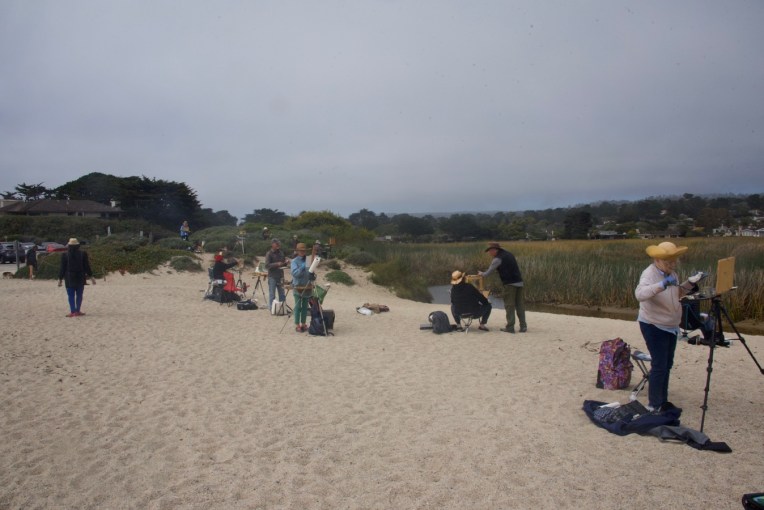
6

Plein air painters “on the job”. I had my old Soltek easel which has a VERY persnickity mechanism at the feet that doesn’t go well with sand or dirt. I’d anticipated this and brought some cutdown plastic bags that new brushes are packed in by art suppliers and rubber bands to hold them onto the ends of the legs. I have a pochade box I bought years ago at the Sennelier art shop in Paris and I’m going to switch to it before I go out again. How I mount it on my tripod will be the subject of a future post.
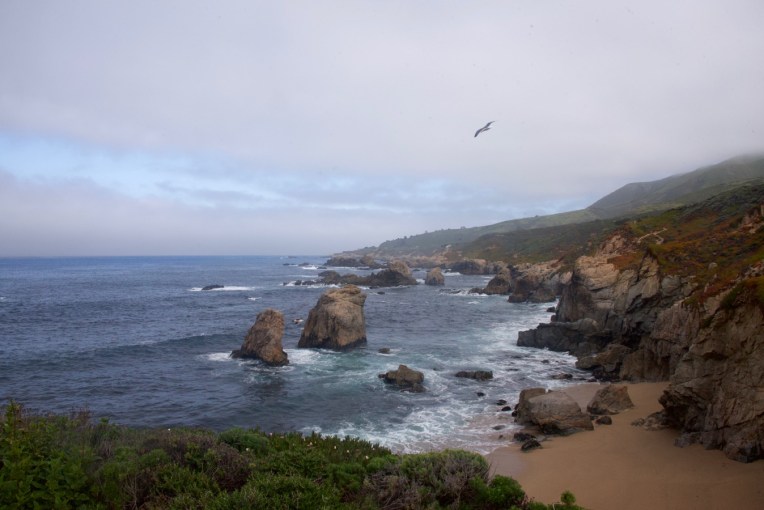
7

The next day found us at Garrapata State Park, where we were stuck having to choose between scenes like this…
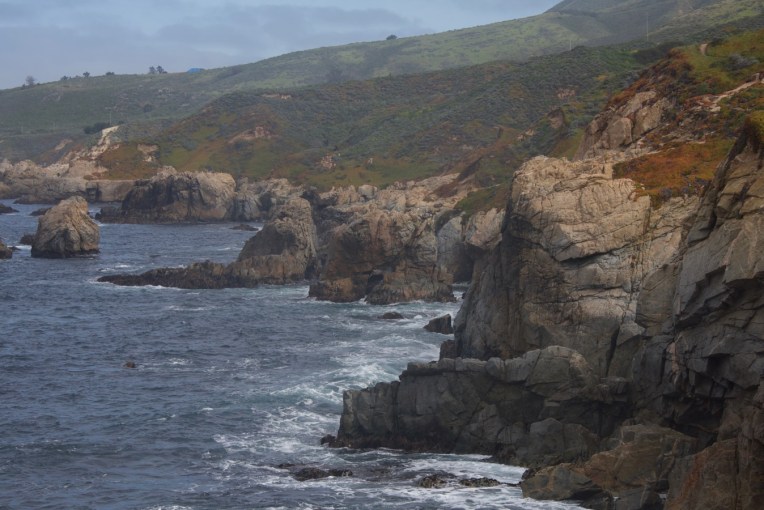
gsp

This…

gsp w

Or this…

I only watched the first part of his demo since I really wanted to get a first pass done on the piece I’d started before we had to break off and meet for dinner. I get a lot out of watching other artist’s “starts”.

GPS d1

This is a good example of one of Paul’s starts. Basic shapes, no detail.

gsp d2

He then did a first pass with color, quickly filling in the shapes, paying attention to value relationships and color temperature. Farther away means lighter and cooler as the general rule.

gps d3

He’s now adding the shapes of the shadows. Notice how loose they are. No hard edges.

PKW 1

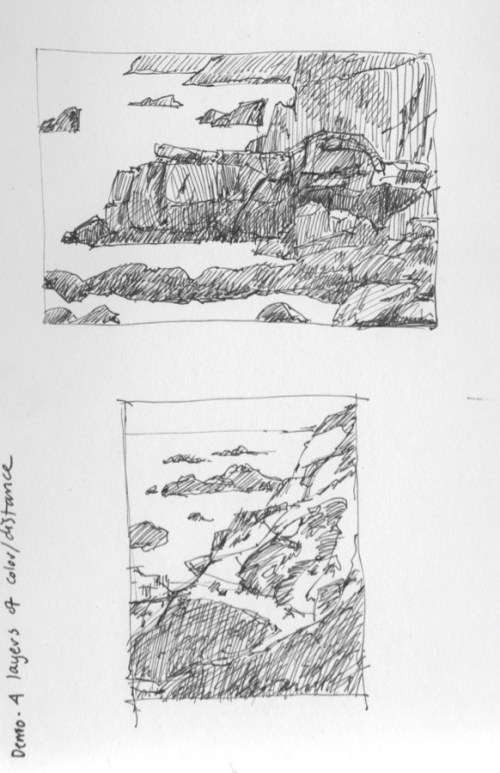
In the meantime, I’d spent the morning working on understanding how to do the preliminary sketches with a pen. I absolutely understood the value of doing them, but it took awhile to start to get the knack of it and make good choices. I made a hash of the first one. Paul was nice enough to do the sketch on the right to demonstrate finding just a few large shapes, which makes for a much stronger composition. He also thought that what I was most interested in would work better as a horizontal than vertical composition.
PKW 3


I soldiered on and finally felt like I was starting to get the hang of seeing what I was looking at in a better way.

PKW 2

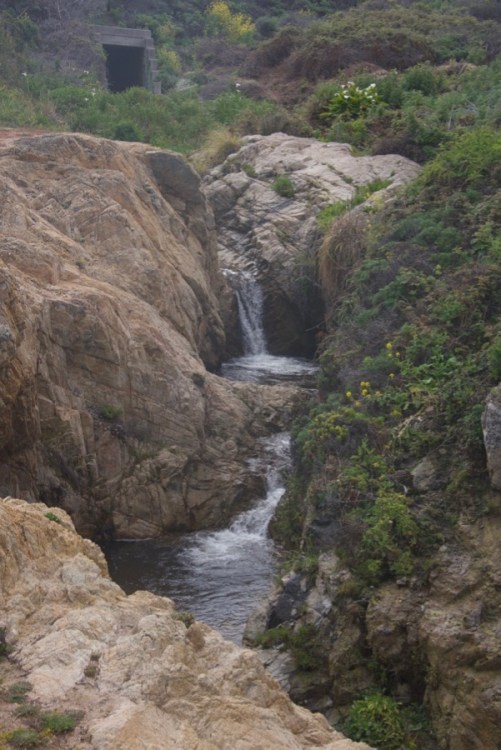
It got a little easier with each sketch. Then I tackled the waterfall. I ended up losing value contrast because of too many lines in the water. What a mess. After consultation with Paul and understanding where I’d gone wrong, when I got home I took an #11 Exacto knife and scrapped out the water. While not great, it was definitely an improvement. And I learned something valuable about keeping water the lightest value, the white paper color, as a starting default. It’s important not too get attached to sketches like this and to use them as a way to problem solve with pencil or pen, doing whatever it takes to fix or improve them. They’re simply a means to an end, but an important one.
PKW lunch

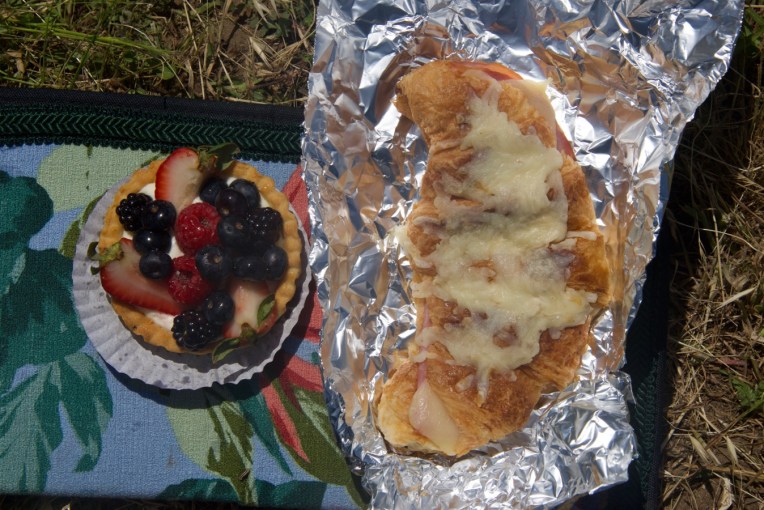
Oh, yeah, I did have time for lunch, suffering for my art, but not much.
11

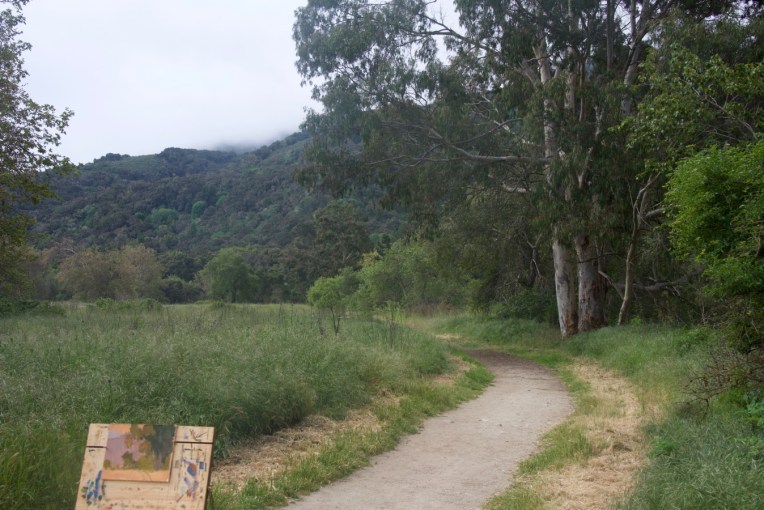
The third and final day we went out to a great regional open space to the east to try to get out of the coastal overcast. It was time for the iconic eucalyptus trees (introduced from Australia as they were) beloved by California plein air painters for over a century.

8

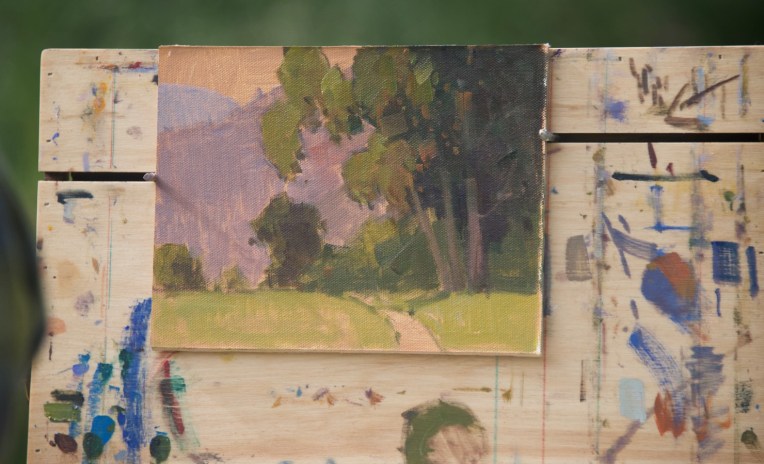
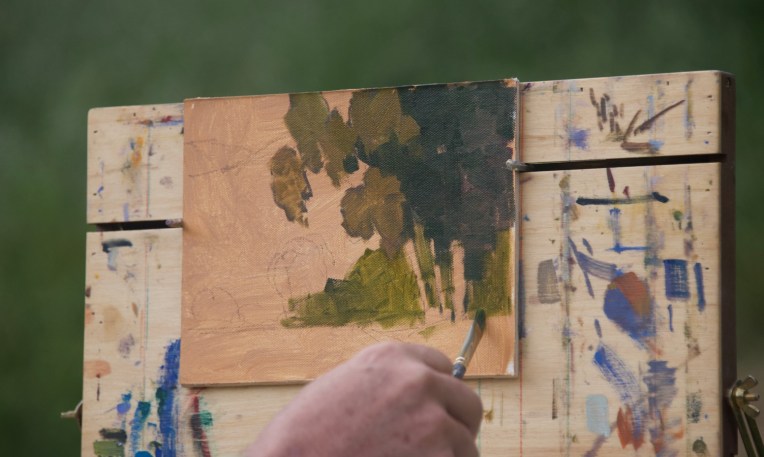
You can see Paul’s preliminary sketch and, faintly, the pencil layout on his panel. Here’s the sequence of the demo:
9

10

12

14

15

And I’m most pleased to say that this lovely painting is now in our personal collection.

PK example


I had also decided to paint the eucalyptus trees. I was definitely focused on the overall composition and value relationships in my sketch. Paul is a connoiseur of trees, looking for the same individuality that I seek when I’m drawing or painting an animal. He came by, saw my sketch and then took a few minutes to do a custom demo and talk about capturing light direction correctly. I love having examples like this to refer back to when I’m home, so thank you Paul!

my trees

The final piece I did in the workshop. Went to a smaller size and a larger, flat brush and got loose. I’m happy overall with the result and brought home something I can build on. I go to a workshop planning to “fail”, not make pretty pictures that simply repeat what I already know. Why pay money for that?

A big, big thank you to Rich Brimer, the Director at Carmel Visual Arts, for a very well designed and run workshop! I had a great time and learned a lot.