
Come check them out! The originals are dip pen and ink drawings on Clearprint Heavy Vellum. All of the images are from photos I’ve taken myself on my travels over the years. You can buy them here:

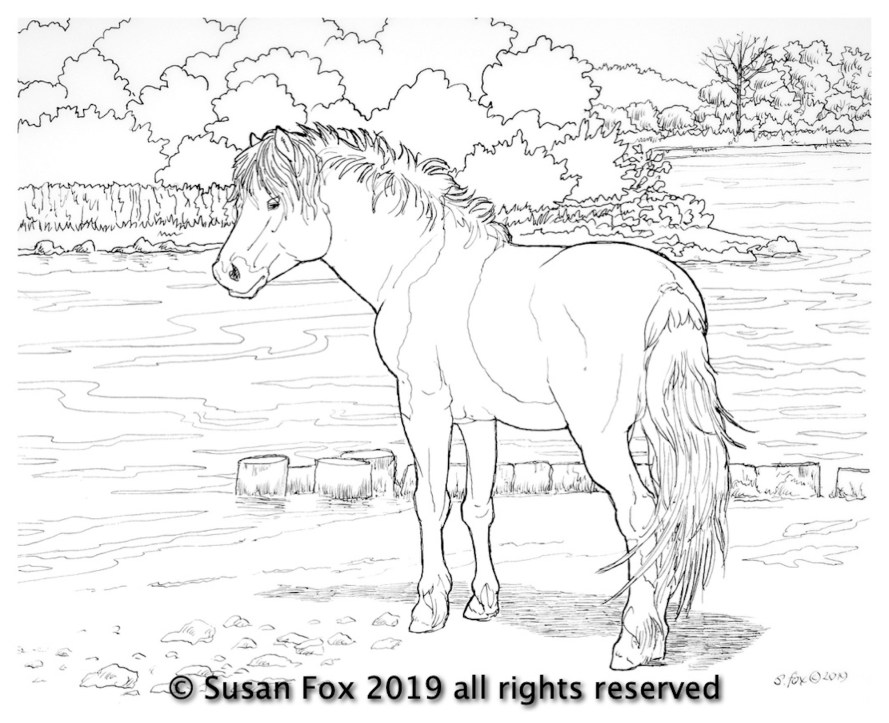
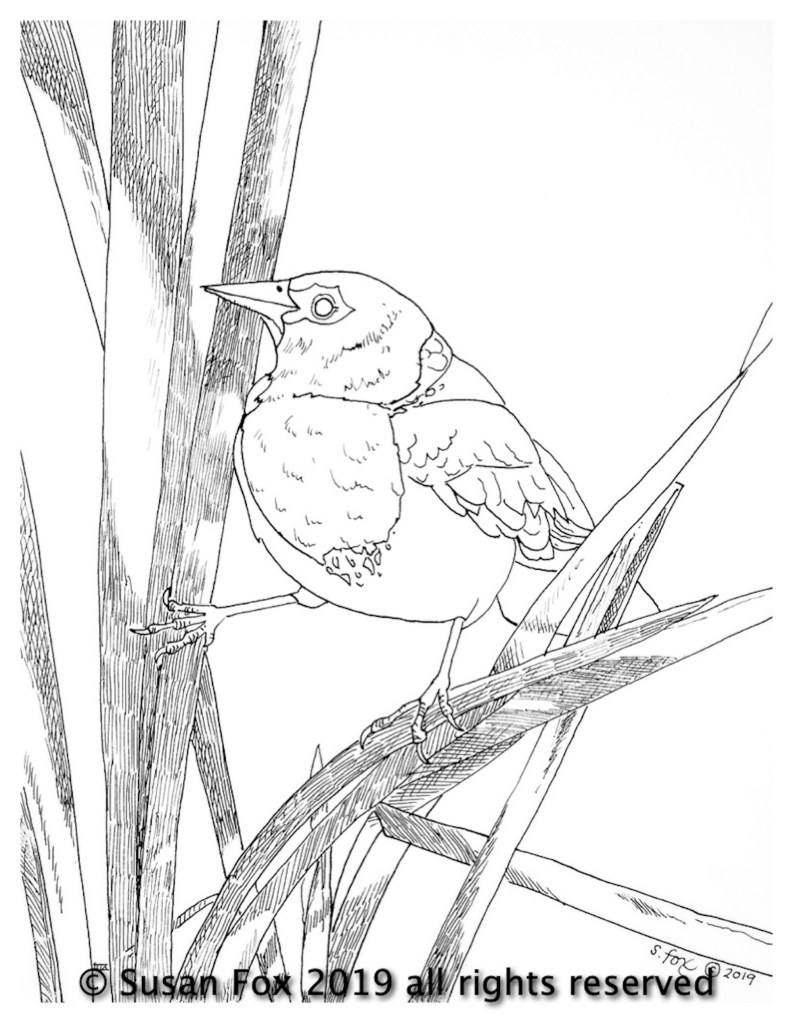
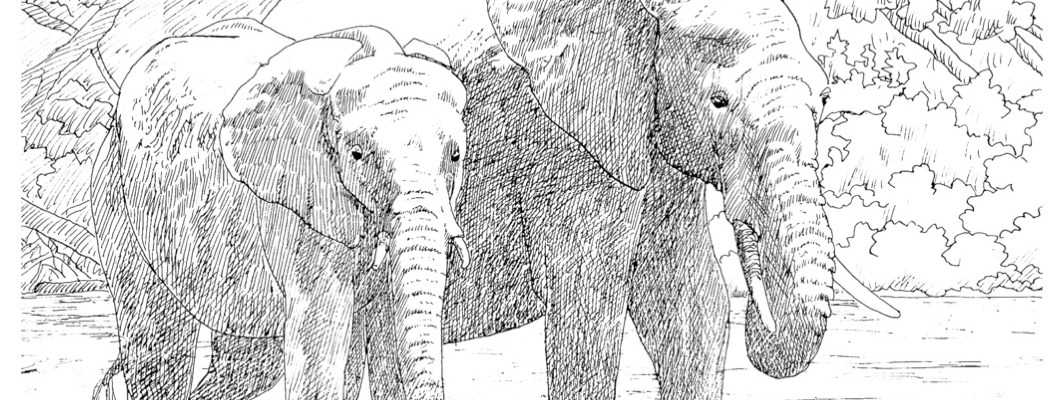
Come check them out! The originals are dip pen and ink drawings on Clearprint Heavy Vellum. All of the images are from photos I’ve taken myself on my travels over the years. You can buy them here:
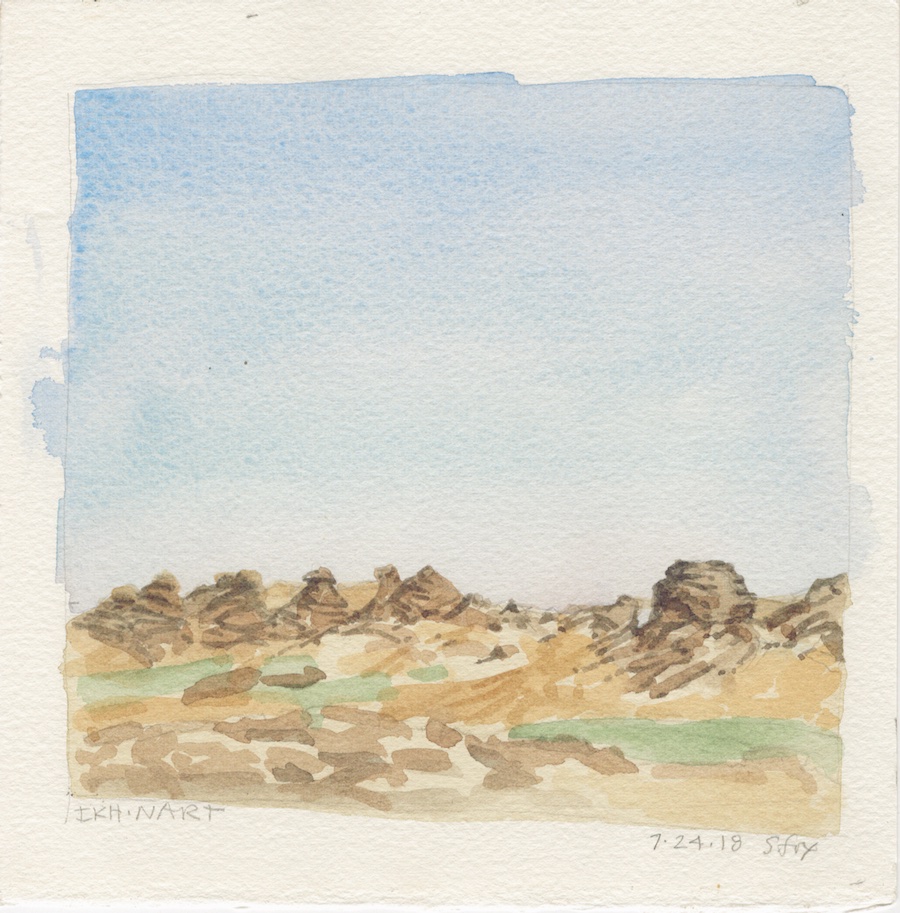
I go to Ikh Nartiin Chuluu (Ikh Nart, for short) Nature Reserve on every trip to Mongolia. It’s where I went on my very first one in April of 2005 to participate in an Earthwatch Institute-sponsored expedition to assist in research that has been carried out there since the mid-1990s. For the two weeks the team of ten of us were there it never got above 32F/0C (not exactly spring weather on the north coast of California where I live), with almost constant wind. Loved every day of it. As of 2016 I bought my own ger with furnishings and have been given permission by the reserve director, who was one of the argali sheep researchers on the Earthwatch project, to set it up in the reserve. So I’ve known him for a long time and am very grateful for being able to “live” in this very special place for a week or more a year. When I’m not there he has the use of the ger for the reserve’s guests.
This year I was allowed to set up at the research camp, which was very convenient since it’s one of the best places to see wildlife. The caretaker, Ulzii, and I have also known each other since that first trip, so I had a trusted back-up just in case I needed it. Which was good because Ikh Nart had gotten no rain to speak of when I got there and then had three corking good storms come through in five days. I got to watch the land go from brown and parched to green with flowers blooming. I also watched the dry streambed turn into quite a “raging” torrent for an hour or so. Many photos and video, so that will be the topic of a future post and a YouTube video.
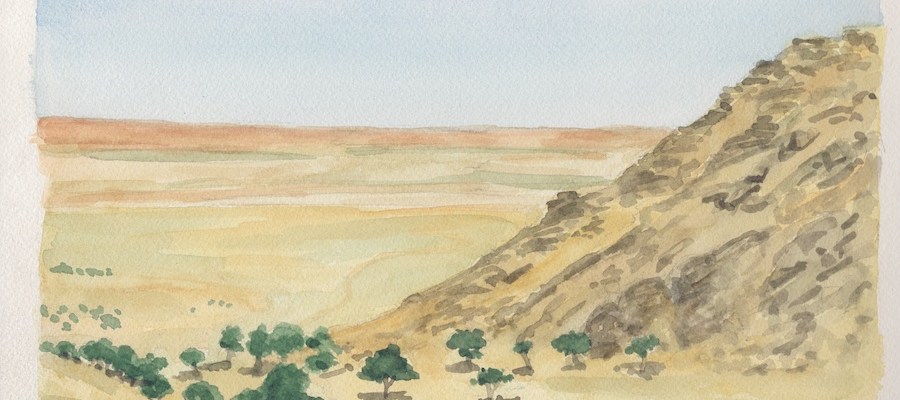
I did my usual tramping about wildlife watching, also sketching and painting. I still need to scan my journal, which I do a lot of drawing in, but here are my watercolors.
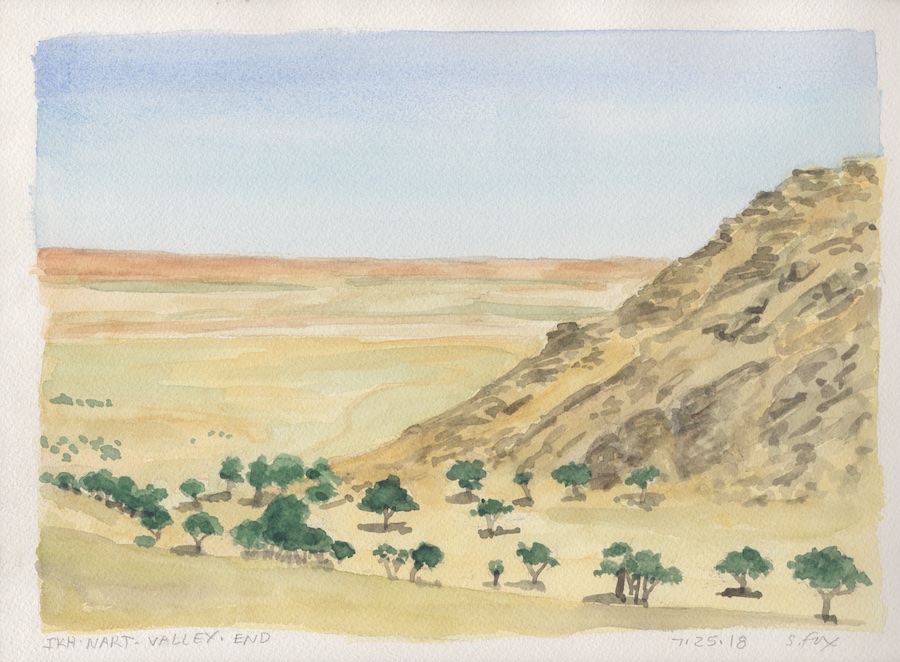
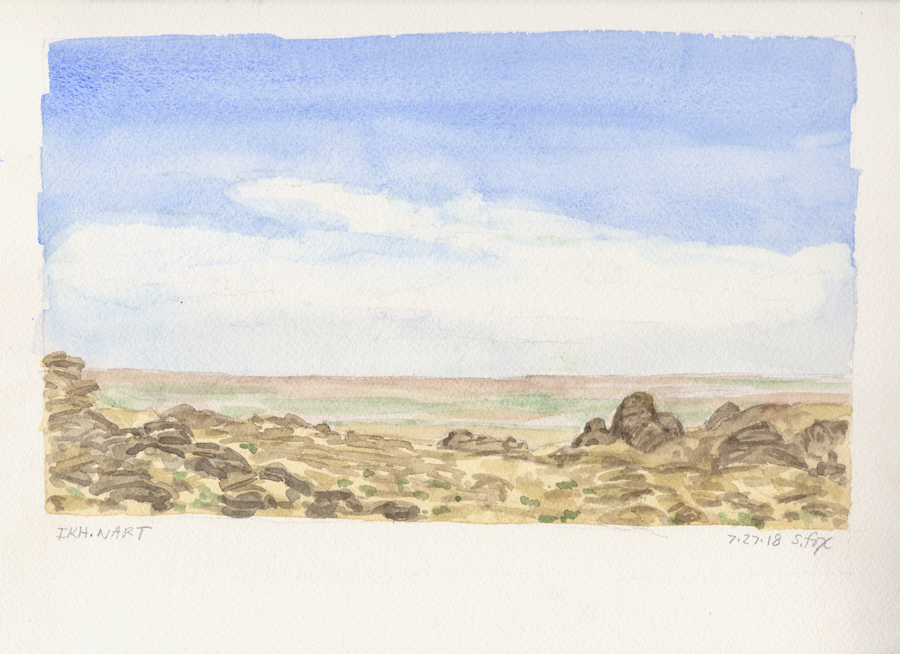
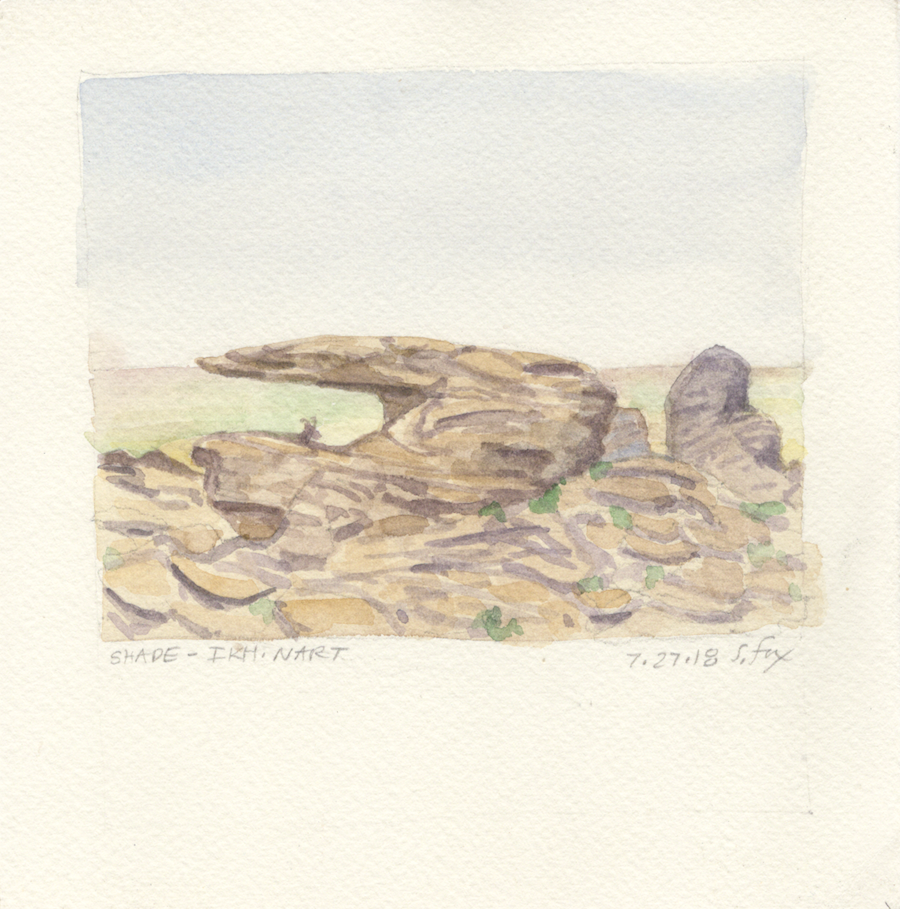
I was out hiking the south edge of the valley and spotted this dramatic overhang. Found some nice flat rocks to sit on and lay out my paints. Looked up and there was an animal standing under it looking at me. Grabbed some quick photos. Then it lay down with just its head showing. Before I finished the painting it left, so I added it from memory. But, when I got back to camp and downloaded the day’s images onto my MacBook Pro I saw that it hadn’t been an ibex, but was instead a female gazelle! Twelve trips to Ikh Nart over the years and this was the first time I’d seen a gazelle in this part of the reserve. But for the painting, an ibex she will remain.
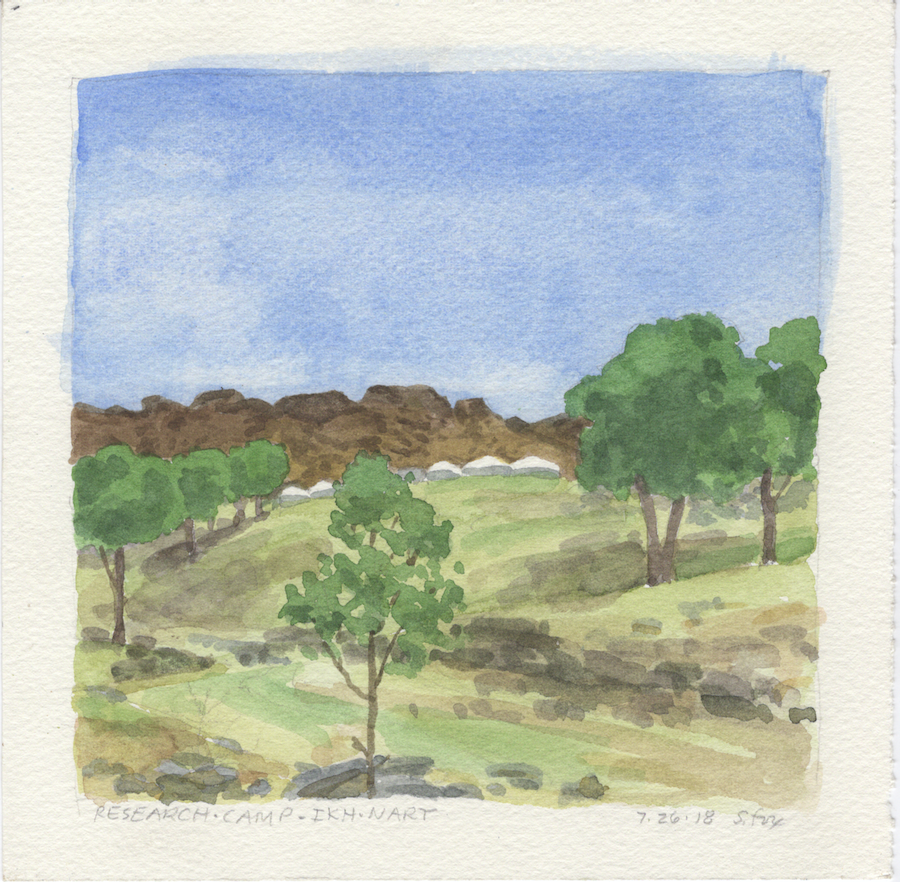
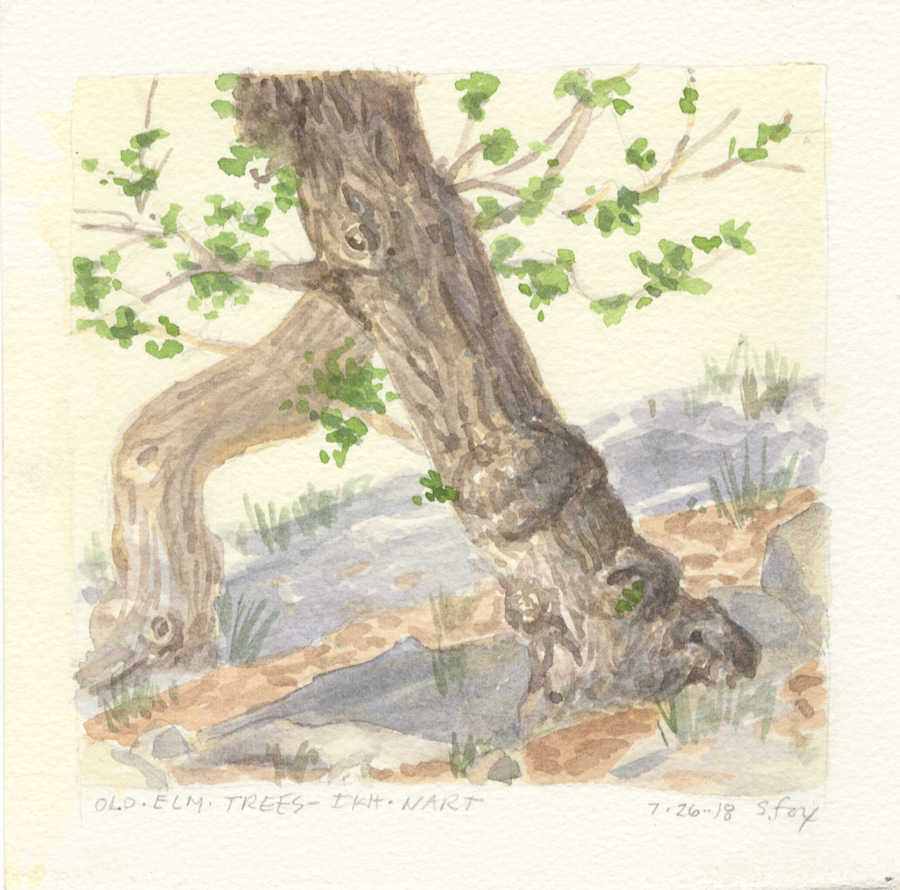
It was getting hot so I left the top of the valley and went back down into it to look for a location with shade. I found it in a clump of old elm trees and did this study, along with the view towards the research camp. When it hasn’t rained a number of species lose all their leaves and look like they’ve died. But add any amount of rain and they seem to almost instantly leaf out again. I was working away totally focused when I heard a noise behind me. I turned and saw this…
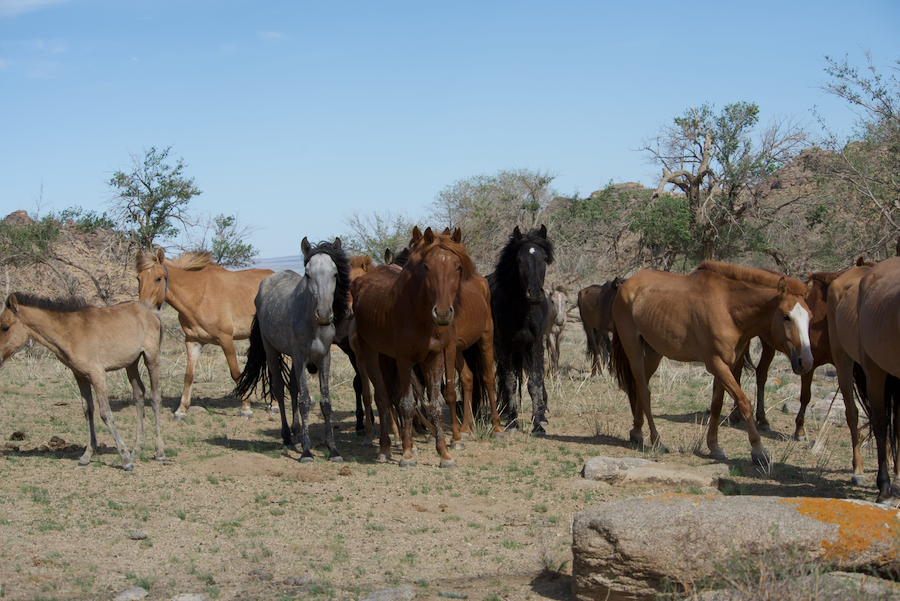
It was a “burrrr” and a snort from this herd of domestic Mongol horses who wanted to get to the spring to drink. And I seemed to be in the way. I looked at them. They looked at me. Then the stallion made his decision.
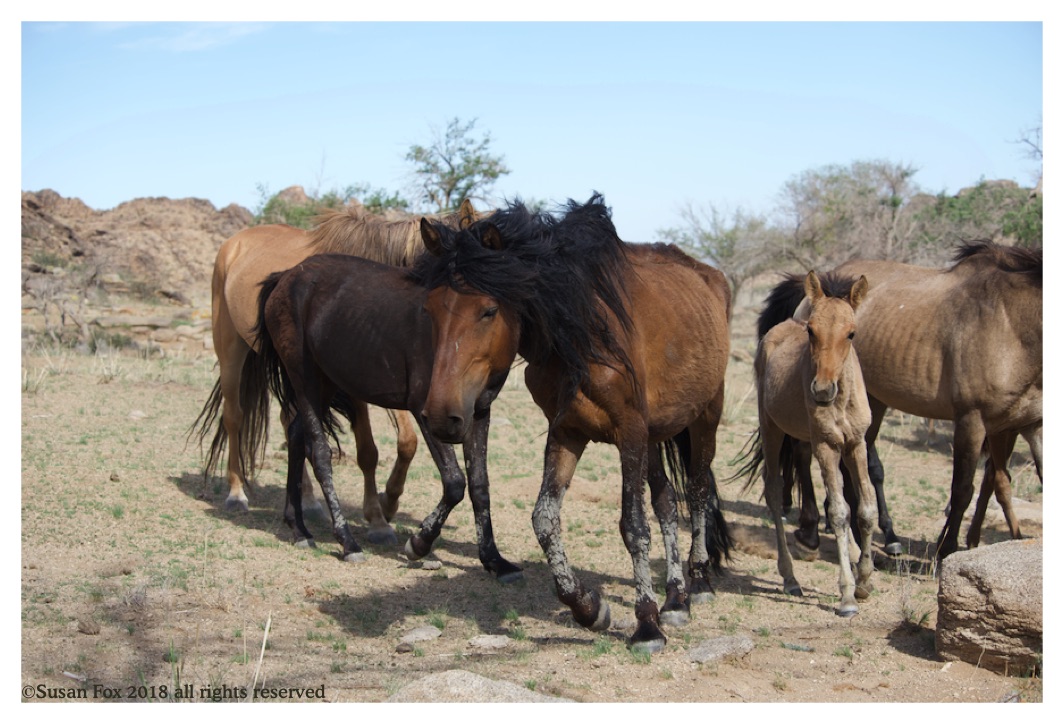
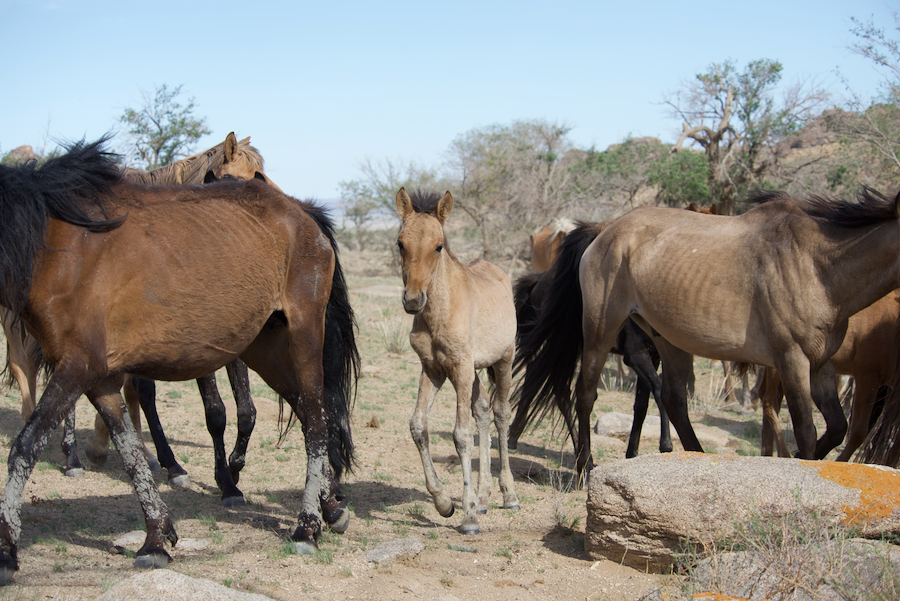
The herd split and went around me on both sides as I madly snapped as many photos as I could.
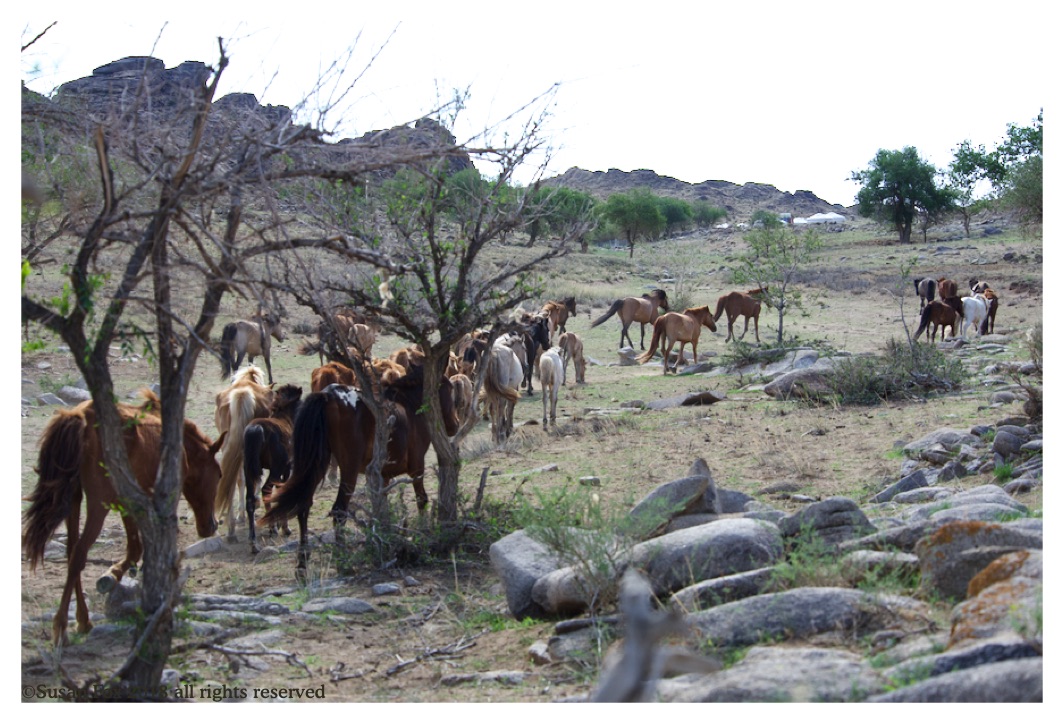
They rejoined and continued on to the spring. As you can see they were very thin from lack of graze, especially the mares with foals. This was the third dry year in a row. But the storms that came through, I hope, brought enough rain to let them fatten up for the long, very hard Mongolian winter. There are no horses tougher than these, so they’ve got a good chance.

Our time in Great Gobi A at an end, we packed up and headed back north the way we’d come. The fuel level in the Land Cruiser was low so the first order of business was to get to a soum center, Bayan-Ondor, to fill up. We also had lunch there. Soyoloo, our cook, went into a cafe and arranged for us to use a table and to get a thermos of milk tea. This worked out very nicely.
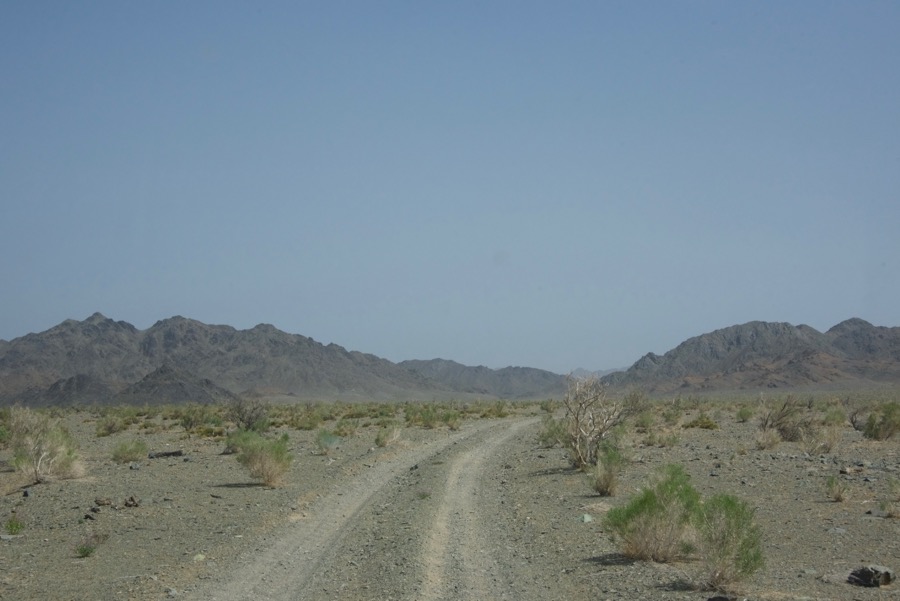
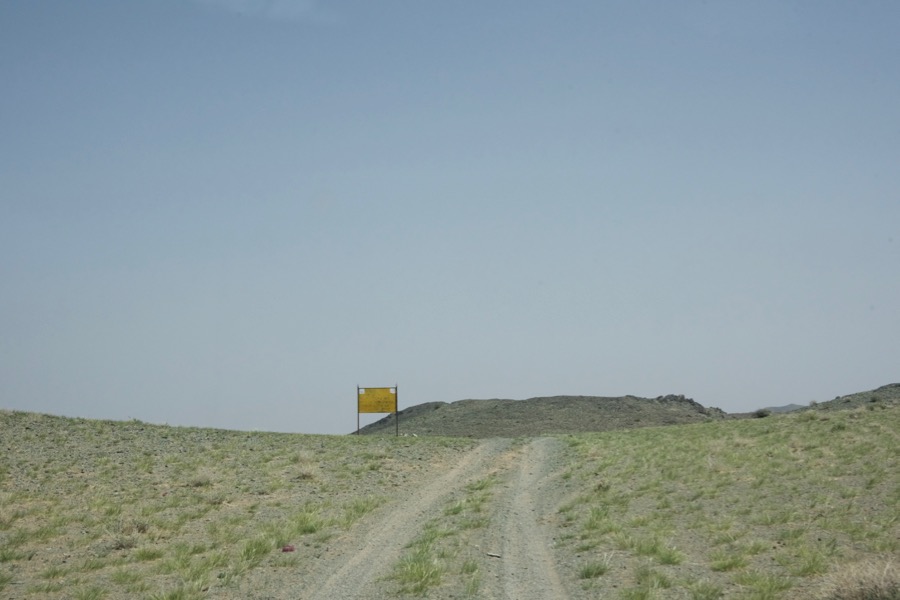
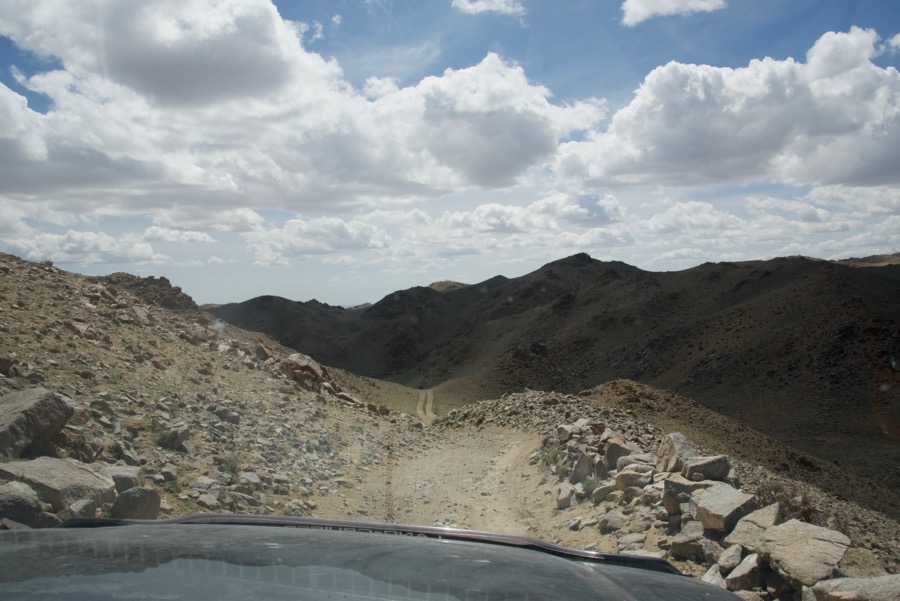
Once again I’ve included a fair number of photos to show our route in case it might be of interest to someone else doing research about going there.





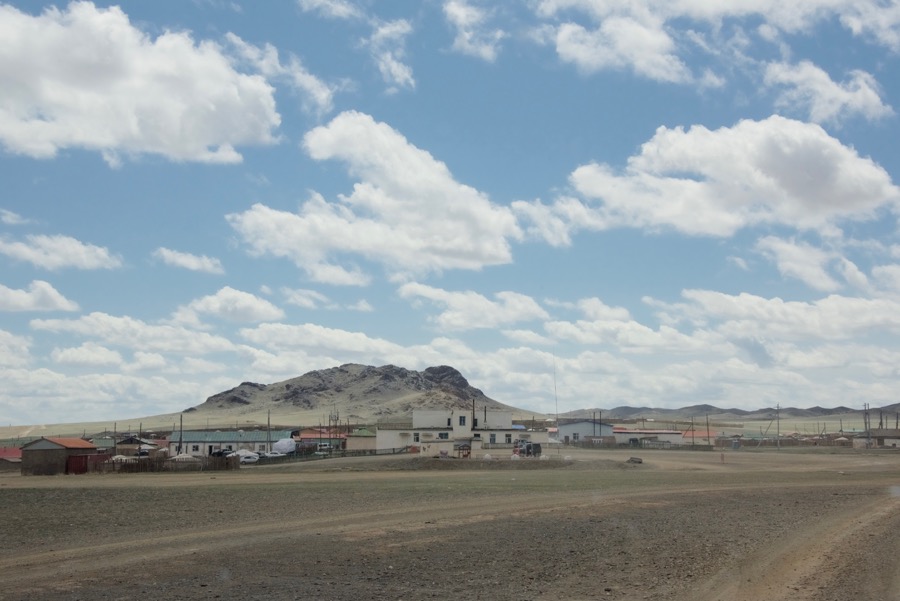



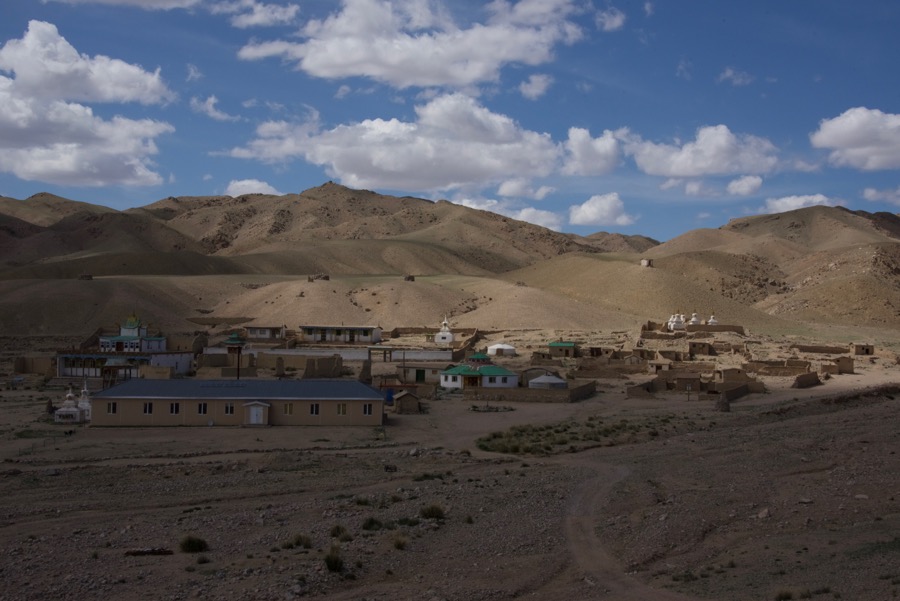
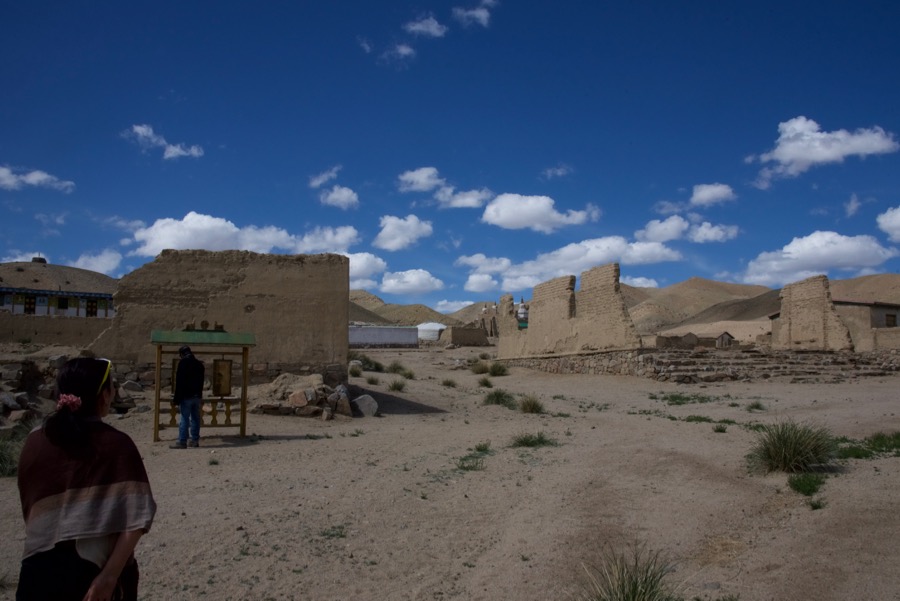
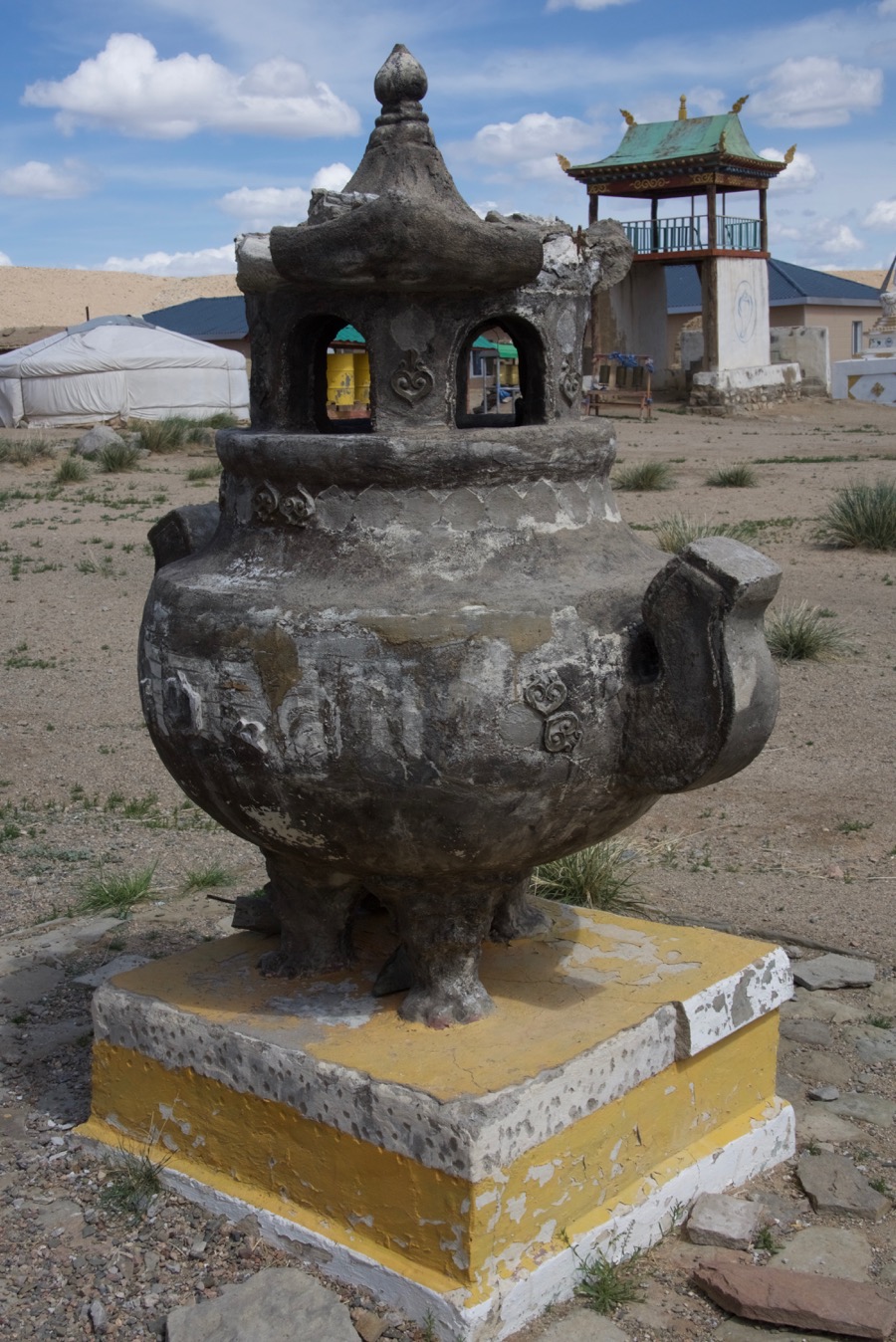
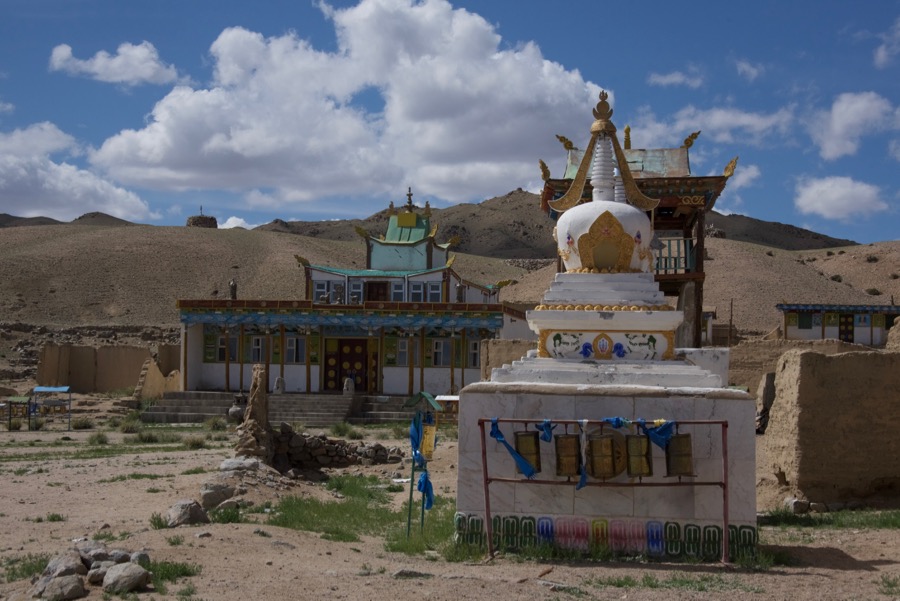
I started to feel uneasy not long after we started to visit the second temple. Wasn’t sure why. There was a stillness I found unsettling and not just that it was quiet. We were shown a couple of large panels in the main temple that listed all the people who had donated to the restoration, along with the amounts they had given. It added up to millions and millions of tugrik. The surviving old temple was in poor condition and visible repairs were cheaply done, although the interior wood framing and supports looked sturdy and good. The new temple, in the shape of a ger, also had a feeling of being built quickly and cheaply. The ceiling was made square panels a little like the acoustic tiles one sees in America. Some were askew and some seemed worse for wear. In both cases, it felt like no one had noticed and no one cared. The tower for, I assumed, calling the monks to prayer, looked to be in pretty bad shape. A new long, low building, had been constructed (visible in the front of the photo of the complex above). There was also a good array of solar panels to provide power. Our young student tour guides walked us past the newish long living quarters building on our way out, answering some last questions, and a very unfriendly male voice ordered them back inside. The closest school was 60km away and the boys only attended one week a month. The rest of their time was at the monastery taking classes in Buddhist practice. And so we left. We had been given permission to camp somewhere in the vicinity and we drove around looking for a spot. I became more and more uncomfortable and stressed, to the point that I finally had to say that I needed to leave now, right now. Something felt bad and wrong there and I needed to get away from it. It was so very odd and I was clearly the only one who felt it, or at least no one else said anything. Have never had anything like this happen on any of my travels to any place before. But leave we did and found a spot on an open plain to the north with a great view. As sometimes happens a local herder and his wife showed up on their motorbike to check us out and have a visit. We went to their ger the next day.

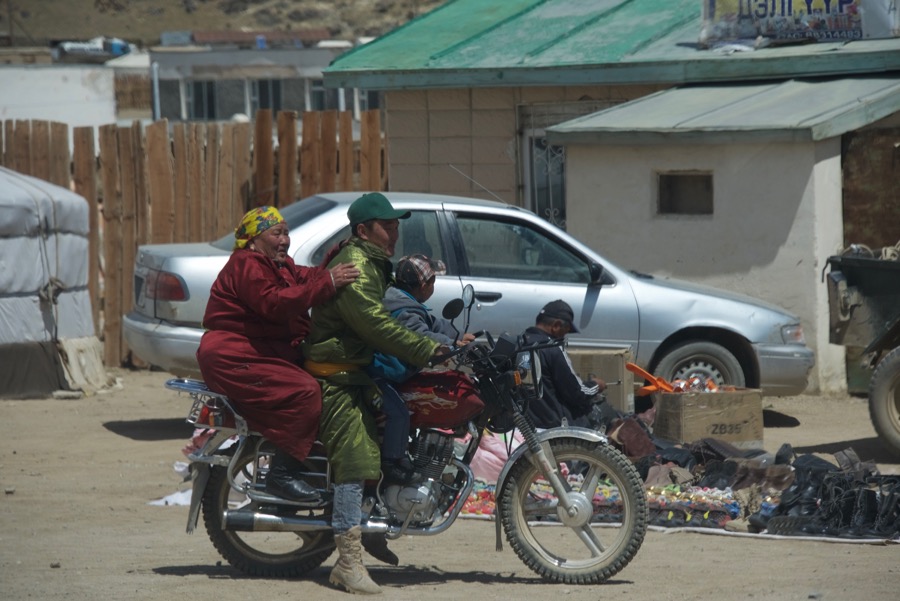
As we pulled up the woman came out. She was holding her hand which was wrapped in a plastic bag. We could see instantly that it was terribly swollen, a bite of some kind. I gave her a half-dozen or so ibuprophen for the pain, emphasing that she should take no more than three at a time. Her husband was going to take her to the soum center hospital, probably more of a clinic. It turned out after some chat and a translation from our guide, Batana, that the woman had gotten down on the floor of the ger, reached under a bed to get something and felt a sting. At that point all the Mongols decided that it had been a scorpion. Her life wasn’t in danger, but she definitely needed to see a doctor. They left and we were on our way a short time later after getting water from their well.

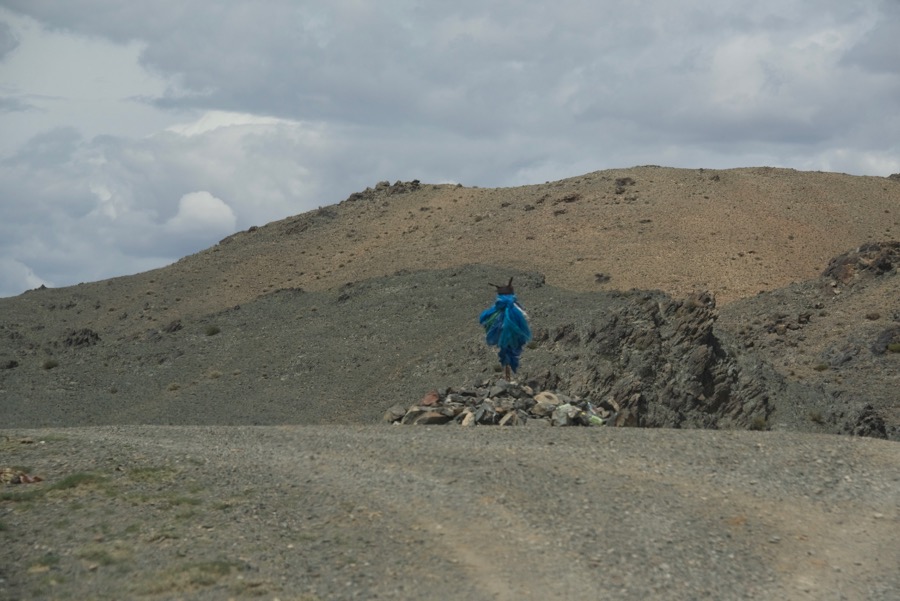


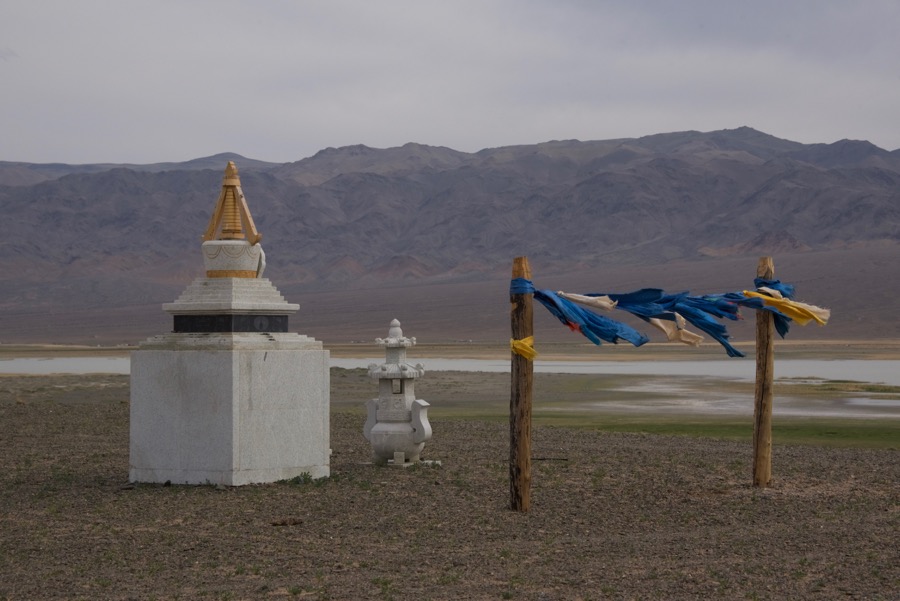
We continued on and found a sheltered spot not far from a soum center. It was quite windy, as it had been for a lot of the Expedition. The drivers and guide went into town to get gas and buy snacks.


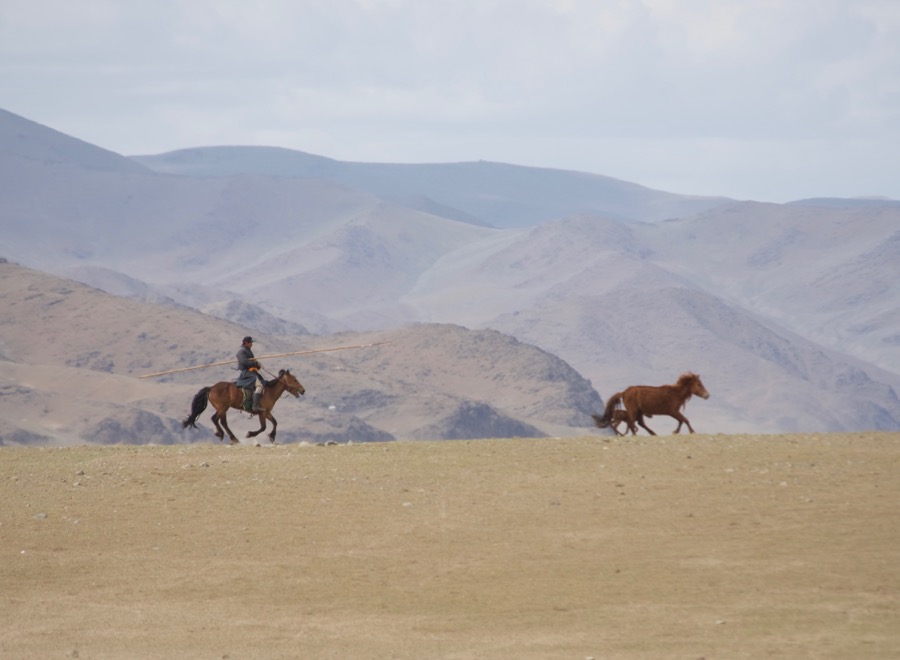
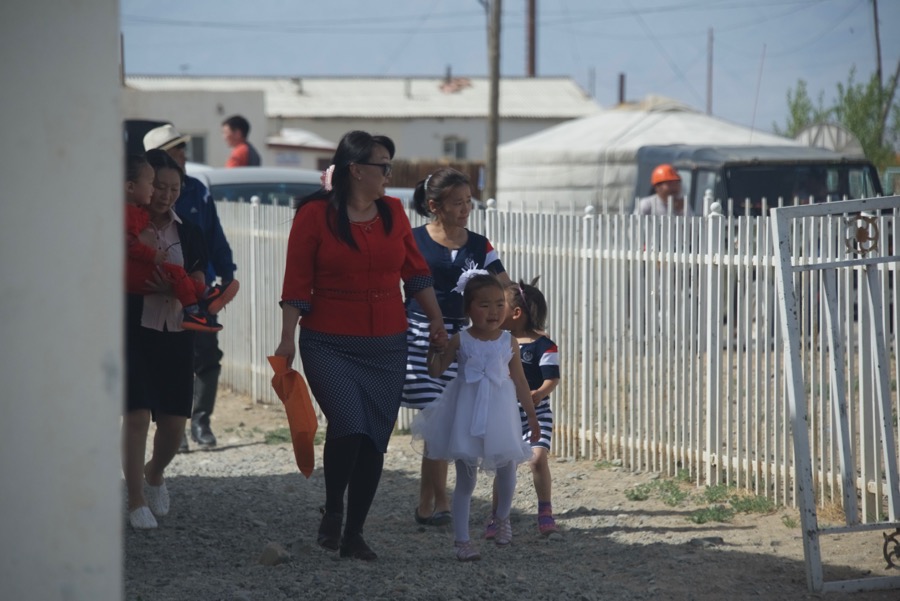


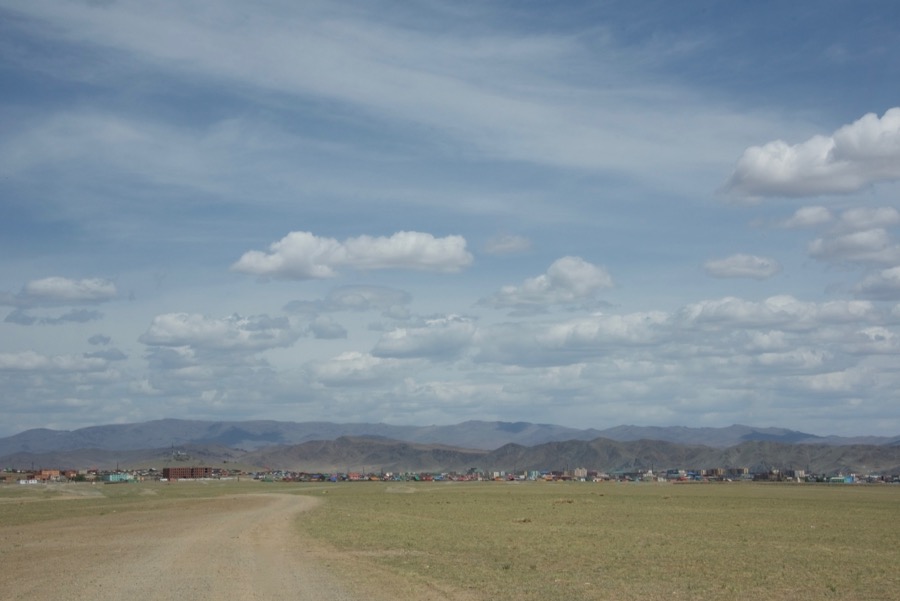
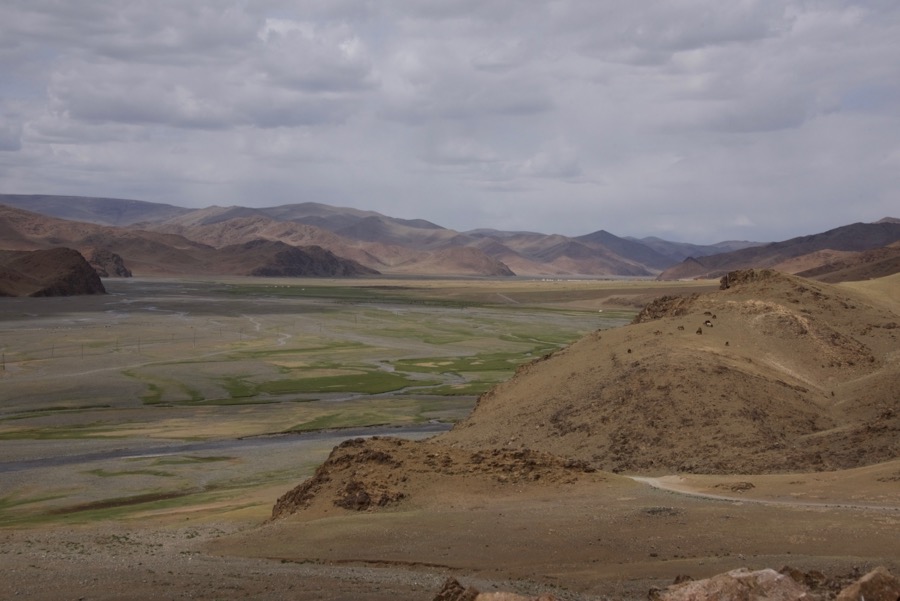
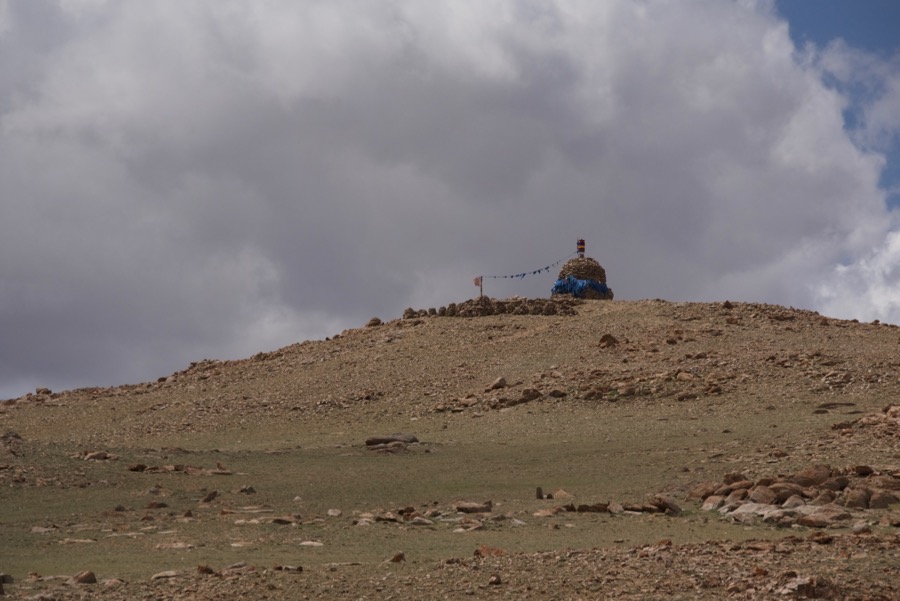
We drove up to a high point with an ovoo and wonderful view of the river valley, then backtracked a short way to a special spot where we set up camp for a few days. And that will be next week’s story.

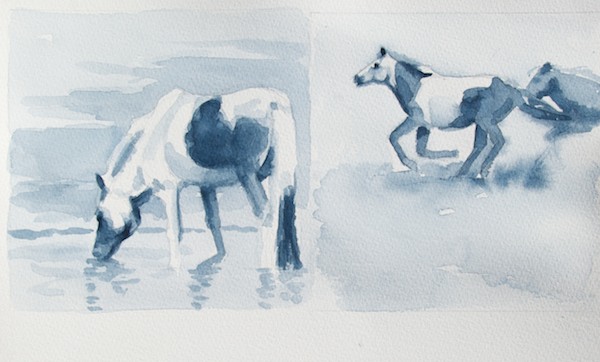
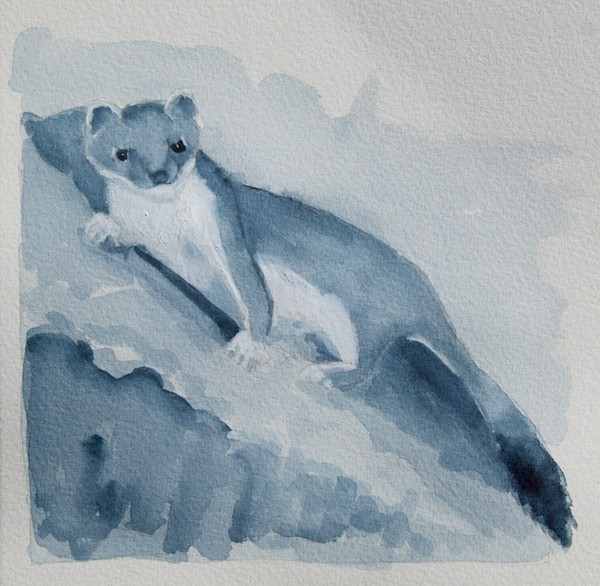
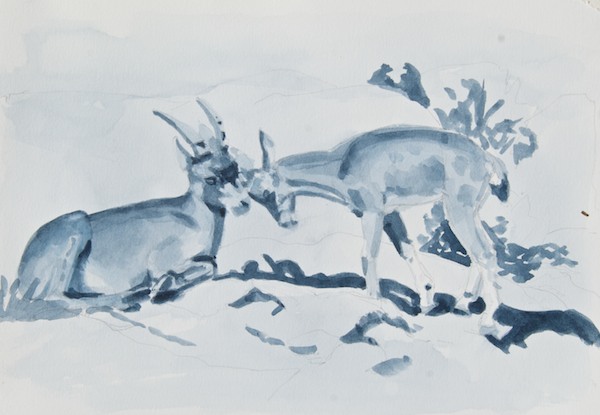
I’m getting ready to begin my Fall Painting Season and decided to start by tweaking my working process. Every successful representational painting has two things: solid composition and a strong, well-thought out value pattern. Of course drawing, color and edges are important also, but one can make the case that the design and values are critical. So I’ve spent the last few days doing small value studies of reference photos that I’m thinking about painting. I’m working on the drawing part at the same time, too. None of them took more than an hour or so.
They are all done on various types of watercolor paper I already have on hand, experimenting to see which one serves my purpose best, and with one color…Winsor Newton Payne’s Gray. The brush is a Round No. 10 Prolene by ProArts. The study sizes run from 6×6″ to 7×10″, so not very big.
I got the idea to use watercolor for preliminary value studies (instead of, for instance, pencils or oils) from my friend and colleague, nationally-known watercolorist David Rankin. You can read his information about what he calls “Gray Studies” here.
I like it because it’s fast, effective, fun and let’s me practice with the media I use on location when I’m in Mongolia.
So, if your paintings are looking kind of flat or you’re finding that using color is confusing your values, I highly recommend that you get the simple set of materials listed below and try this. It may be a bit of a struggle at first to truly grasp the difference between color and value (the relative light and dark of something separate from its color) and to move away from your reference in order to get the right amount of contrast in the right places (a viewer’s eye is going to go first to the area of highest contrast, so you need to make a conscious decision about where your focal point is), but hang in there, just keep adjusting and experimenting and you’ll be rewarded by a visible improvement in your work.
Materials list:
1 tube Winsor Newton Payne’s Gray transparent watercolor
1 small dish or whatever you think will work for a palette.
Watercolor paper (I’m using “stock on hand”….small blocks of Art Lana Lanaquarelle hot press, Arches cold press and Saunders Waterford cold press; or you can get sheets of 300 lb, which doesn’t have to be stretched). If you buy sheets then you will need something to mount them to. I use a rectangular scrap of foamcore taped around the edges with clear packing tape and then use 1/2″ drafting tape to hold the corners of the paper to the board.
1 brush- Use at least a no. 10 round or 1/2” flat; your choice of brand (I like the Robert Simmons Sapphire synthetics, but also have a couple of the Prolene and Dick Blick rounds)
Reference photos with strong light and shadow patterns.
Here’s some more of what I’ve been doing:

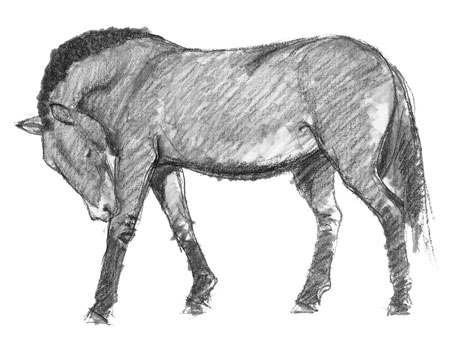
Since, judging from the stats, the subject seemed to be very popular, I thought I would continue today with more on the takhi, specifically how I take the reference I shoot and turn it into a painting. More and more I start with drawings to become familiar with a new species or figure out things about one I’ve painted before.
Here are three drawings from last year, the first two of which were published in the Society of Animal Artists newsletter.

Now I’ll show you how I take an animal from one time and place and put her in a setting from another time and place, a challenge that every wildlife artist needs to meet successfully. Here’s the setting:

What a treat! We came around the bend in the dirt track early in the morning and there, right in front of us were two harems at the same time, sorting out who gets to go first.

I always try for a variety of shots; close-ups and the “big picture” for context. I used to come home with great close shots of something like a tree and found that I’d completely forgotten to get the surroundings, which really cut down on my options. Notice that the above photo is kinda fuzzy. But it’s still useable for reference.
Now here is the horse reference. Different part of the park, different year, different season. I’ve included two as an example of what to look for when evaluating images. These are similar, but the second, to me, is clearly superior. I love the rhythm of her gesture.


So next I did a drawing to capture that.

And, putting them together, here is the finished painting, completed in 2007. What I hope is that you can’t tell that I “stitched” together the reference from two sources.

I also wanted to let you know that two of my takhi images are available as limited edition giclees, framed or unframed. The full information is on my website. Click on “Limited edition giclees” under Fox Studio in the column on the right and it will take you directly to my giclee page.

I saw this foal on the same trip as the mare in the painting above. He or she was quite a character.
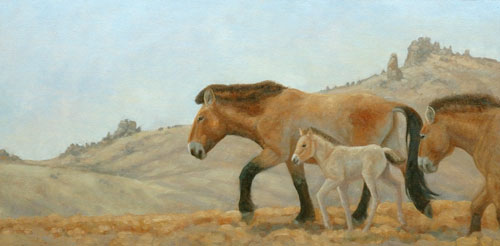
I posted this last week, as the original painting is still available, but have also published it as a giclee. It’s another example of how I took the mare and foal, who were against a grassy hillside and moved them to a ridge that has Hustai’s famous mountain as the background. The third horse was added as a design element.
All my giclees are available for holiday delivery.
ART THOUGHT FOR THE DAY
Let this be plain to all: design, or as it is called by another name, drawing, constitutes the fountain-head and substance of painting and sculpture and architecture and every other kind of painting, and is the root of all sciences. Let him who has attained the possession of this be assured that he possesses a great treasure…:
Michaelangelo (who ought to know)

Just listed on EBay. Seven day auction. Starting bid- $40. Buy it now- $60. Free shipping. Return in 14 days for any reason.
“Scratch That Itch” is a 10″x8″ original oil painting on canvas board. It is unframed.
The subject is a takhi foal I photographed at Hustai National Park in May of 2005. One of the rarest animals in the world (there are only around 2000), takhi are the only surviving species of true wild horse and are being reintroduced to three locations in Mongolia. I’ve been lucky enough to visit two of them.
You can view the listing here
Happy bidding!
One of the most rewarding parts of travel is finding out how many ways there are to address the everyday challenges of life which are perfectly valid, but really, really different from how one does things at home. If the traveler is open to new experiences with an attitude of neutral curiosity, he or she might find that “difference”, in and of itself, is not threatening. Pity the impervious person who spends fair sums of money and time to travel and comes home utterly unaffected and unchanged. What an opportunity for the enrichment of one’s life wasted.
Mongolia is such a great place to get out of one’s own bubble. Customs and practices that haven’t changed in 1000 years exist happily alongside 20th/21st century technology. So, the country family holds its annual foal branding and a city relative records the occasion with her cell phone camera. Perfect.
(I would also like to note here that I have zero tolerance for those who want to deny more traditional cultures modern equipment, technology or goods because it will somehow “spoil” them. Selfish, romantic nonsense. The thought that a people like the Mongols could somehow be “spoiled” by integrating the modern world into their lives is ridiculous, IMHO. Lack of western technology does not equal stupid. Grant people the right to make up their own minds and choose what makes sense to them.)
Which brings us to today’s theme- how to get around, round, round in Mongolia. We will proceed from western high-tech to (for westerners) the picturesque.


Love the seat cover!
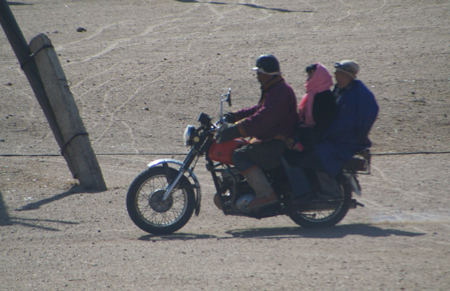

The Mongolians might be the greatest mechanics in the world. Travel stories by writers who have gone there are filled with accounts of impossible repairs in the middle of nowhere. Lack of money, parts, towing services (Ha!) and the need to find a way has bred an amazing level of ingenuity, which I have personally experienced with awe and respect. But those are stories for future posts.

You travel in these to ensure you get there, not because they’re comfortable. Four gear shift levers and counting.

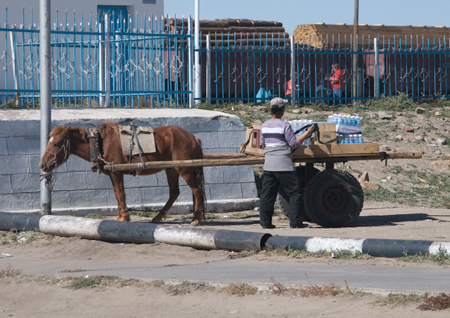


My guide had talked about “the boat” (!?) when we were leaving Hovd for Khomiin Tal. Our last night out I found out what he was talking about. He’d purchased this inflatable boat when he was in Germany and this was his first chance to try it out.
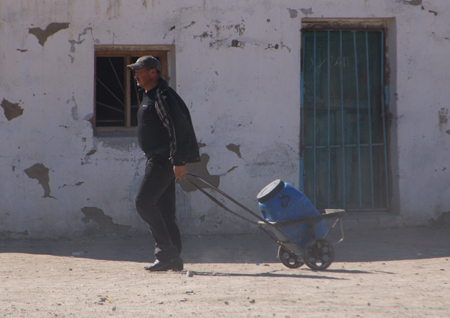
There doesn’t seem to be much in the way of running water in the towns I’ve been in, so one sees it being hauled in these carts. It makes you think about your use of water and be more mindful of what it took to provide it.


Lots of people have to walk to where they need to go, but, of course, the quintessential way to get around in Mongolia has always been on horseback.
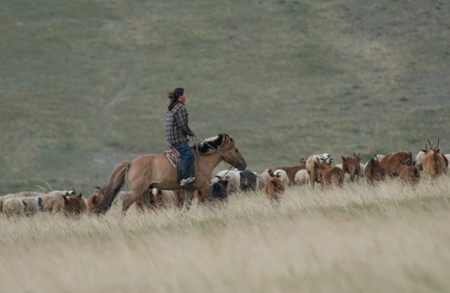
I like this picture because you can really see how she is riding standing up in the saddle. The stirrups are tied together under the belly of the horse to keep them in place. Ah, THAT’S the secret.

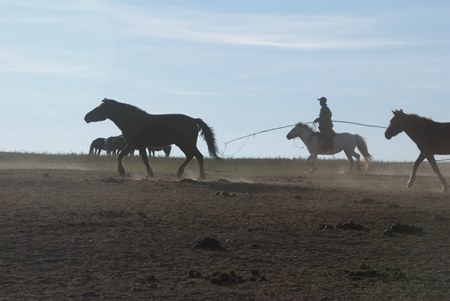
I don’t know about other artists, but after a long trip it takes a little internal shove for me to get going again. I need to shake the rust off, get in the groove, just….start…..working.
I also spent some time thinking about my work procedures. I love to paint and tend to dive in, flail around and pull it together, or not. I’ve got some ideas about what I want my work to look like and have come to conclusion that I need to spend more time on the preliminaries, especially for larger works. That means drawing, drawing, drawing. Plus value and color studies as needed.
Winter is when I try to push my work to the next level and experiment and, since the first winter storm of the year arrived yesterday, I guess it’s time.
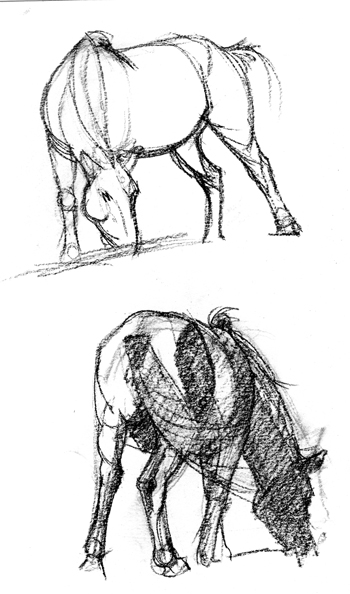
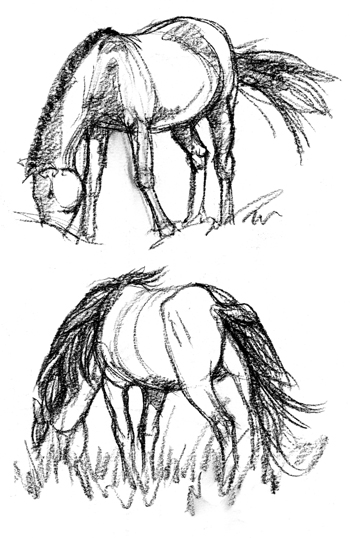
This week I’ve done a pile of charcoal drawings of the Mongolian horses, which I got fantastic reference photos of. I’ve always struggled for some reason with poses where the horses have their heads down, grazing, so I decided to get a handle on that once and for all. What worked was doing the body first and then adding the head. I’d been doing it the other way around, to my eternal frustration.
Here’s a selection of some I feel came out ok. They are done with a 6B extra soft General Charcoal pencil on 2 ply Strathmore Vellum Bristol and are unretouched. I’m always looking for what will add to the illusion of three dimensional structure and a body in space and what will help me get a handle on the anatomy.
These took 15-20 minutes each.
I also want to get some action into my work, so here’s a couple of running horses.


No idea if any of these will find their way into paintings, but I enjoyed doing them.
ART THOUGHT FOR THE DAY
“Artistic growth is, more than anything else, a refining of the sense of truthfulness. The stupid believe that to be truthful is easy: only the great artist knows how difficult it is.”
Willa Cather
 Susan Fox, American Artist