
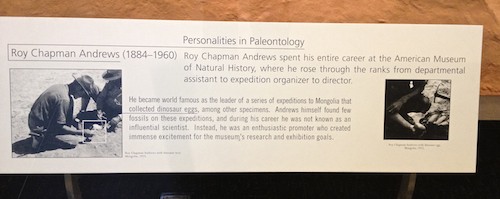
Last week’s Mongolia Monday post was about reptiles and amphibians I’ve seen in Mongolia. It was well received on Facebook, so I decided to follow up with this excerpt from Roy Chapman Andrews’ book about his Central Asiatic Expeditions “The New Conquest of Asia- a narrative of the Central Asiatic Expeditions in Mongolia and China, 1921-1930”, in which they have a pretty intense encounter with one of the four poisonous snakes that occur in Mongolia. He appears to be referring to Agkistrodon halys intermedius (now Echis carinatus) since he states earlier in the book that “…the brown pit-viper, Agkistrodon halys intermedius, which is the only poisonous snake we have encountered in the Gobi, is fairly abundant.”
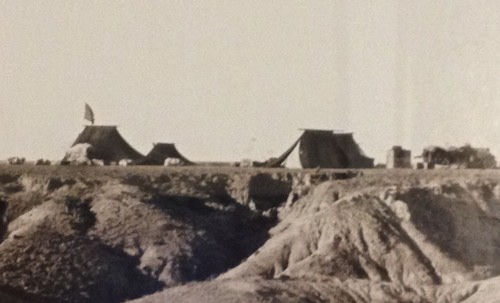
“Our next camp, ten miles to the north of Baron Sog-in-Sumu, was very
similar to the one we had left. The tents were pitched on a great promontory
which projected far out into the basin. Near them was an obo, or religious
monument, and shortly after our arrival two lamas came to call. They were
delegates from a temple, Tukhum-in-Sumu, four miles away, and asked us
to be particularly careful not to shoot or kill any birds or animals on the
bluff. It was a very sacred spot and the spirits would be angry if we took
life in the vicinity. Of course, I agreed to respect their wishes and gave orders
at once. But we had promised more than we could fulfill, as events proved.
similar to the one we had left. The tents were pitched on a great promontory
which projected far out into the basin. Near them was an obo, or religious
monument, and shortly after our arrival two lamas came to call. They were
delegates from a temple, Tukhum-in-Sumu, four miles away, and asked us
to be particularly careful not to shoot or kill any birds or animals on the
bluff. It was a very sacred spot and the spirits would be angry if we took
life in the vicinity. Of course, I agreed to respect their wishes and gave orders
at once. But we had promised more than we could fulfill, as events proved.
VIPER CAMP
In the first two hours of prospecting, three pit-vipers, Agkistrodon, were
discovered close to the tents. A few days later the temperature suddenly
dropped in the late afternoon and the camp had a busy night. The tents
were invaded by an army of vipers which sought warmth and shelter. Lovell
was lying in bed when he saw a wriggling form cross the triangular patch of
moonlight in his tent door. He was about to get up to kill the snake when
he decided to have a look about before he put his bare feet upon the ground.
Reaching for his electric flashlamp, he leaned out of bed and discovered a
viper coiled about each of the legs of his camp cot. A collector’s pickax was
within reach and with it Lovell disposed of the two snakes which had hoped
to share his bed. Then he began a still-hunt for the viper that had first
crossed the patch of moonlight in the door and which he knew was some-
where in the tent. He was hardly out of bed when an enormous serpent
crawled out from under a gasoline box near the head of his cot. Lovell was having rather a lively evening of it — but he was not alone.
discovered close to the tents. A few days later the temperature suddenly
dropped in the late afternoon and the camp had a busy night. The tents
were invaded by an army of vipers which sought warmth and shelter. Lovell
was lying in bed when he saw a wriggling form cross the triangular patch of
moonlight in his tent door. He was about to get up to kill the snake when
he decided to have a look about before he put his bare feet upon the ground.
Reaching for his electric flashlamp, he leaned out of bed and discovered a
viper coiled about each of the legs of his camp cot. A collector’s pickax was
within reach and with it Lovell disposed of the two snakes which had hoped
to share his bed. Then he began a still-hunt for the viper that had first
crossed the patch of moonlight in the door and which he knew was some-
where in the tent. He was hardly out of bed when an enormous serpent
crawled out from under a gasoline box near the head of his cot. Lovell was having rather a lively evening of it — but he was not alone.
Morris killed five vipers in his tent, and Wang, one of the Chinese chauffeurs,
found a snake coiled up in his shoe. Having killed it, he picked up his soft
cap which was lying on the ground and a viper fell out of that. Doctor Loucks
actually put his hand on one which was lying on a pile of shotgun cases. We
named the place “Viper Camp,” because forty-seven snakes were killed in
the tents. Fortunately, the cold had made them sluggish and they did not
strike quickly. Wolf, the police dog, was the only one of our party to be
bitten. He was struck in the leg by a very small snake, but since George
Olsen treated the wound at once, he did not die. The poor animal was very
ill and suffered great pain, but recovered in thirty-six hours.
found a snake coiled up in his shoe. Having killed it, he picked up his soft
cap which was lying on the ground and a viper fell out of that. Doctor Loucks
actually put his hand on one which was lying on a pile of shotgun cases. We
named the place “Viper Camp,” because forty-seven snakes were killed in
the tents. Fortunately, the cold had made them sluggish and they did not
strike quickly. Wolf, the police dog, was the only one of our party to be
bitten. He was struck in the leg by a very small snake, but since George
Olsen treated the wound at once, he did not die. The poor animal was very
ill and suffered great pain, but recovered in thirty-six hours.
The snake business got on our nerves and everyone became pretty
jumpy. The Chinese and Mongols deserted their tents, sleeping in the cars
and on camel boxes. The rest of us never moved after dark without a flash-
light in one hand and a pickax in the other. When I walked out of the tent
one evening, I stepped upon something soft and round. My yell brought
the whole camp out, only to find that the snake was a coil of rope ! We had
to break my promise to the lamas and kill the vipers, but our Mongols
remained firm. It was amusing to see one of them shooing a snake out of his
tent with a piece of cloth to a place where the Chinese could kill it. The
vipers were about the size of our copperheads, or perhaps a little larger.
While their fangs probably do not carry enough poison to kill a healthy man,
it would make him very ill.
jumpy. The Chinese and Mongols deserted their tents, sleeping in the cars
and on camel boxes. The rest of us never moved after dark without a flash-
light in one hand and a pickax in the other. When I walked out of the tent
one evening, I stepped upon something soft and round. My yell brought
the whole camp out, only to find that the snake was a coil of rope ! We had
to break my promise to the lamas and kill the vipers, but our Mongols
remained firm. It was amusing to see one of them shooing a snake out of his
tent with a piece of cloth to a place where the Chinese could kill it. The
vipers were about the size of our copperheads, or perhaps a little larger.
While their fangs probably do not carry enough poison to kill a healthy man,
it would make him very ill.
The snakes inhabit bluffs throughout the desert, like the one on which
we were camped. Their great number at this particular spot was due to the
fact that it was a sacred place and the Mongols would not kill them there.
This viper appears to be the only poisonous snake in the Gobi, and we
collected but one non-poisonous species. The climate is too dry and cold to
favor reptilian life.”
we were camped. Their great number at this particular spot was due to the
fact that it was a sacred place and the Mongols would not kill them there.
This viper appears to be the only poisonous snake in the Gobi, and we
collected but one non-poisonous species. The climate is too dry and cold to
favor reptilian life.”
———–
The entire amazing account is available free through the Internet Archive (archive.org) in a variety of formats. It can be downloaded onto iPads through an app called Megareader or saved as a pdf, for instance. There are facsimile versions and also OCR scans, which work but can be filled with errors. Here’s a facsimile version of the book itself, which includes all the photos: http://www.archive.org/stream/newconquestofcen00andr#page/n0/mode/2up



 Susan Fox, American Artist