In September of 2008, my husband and I went together to Mongolia. One of the places we stayed at was Arburds Sands ger camp. It turned into one of the most memorable experiences that I’ve had in Mongolia because we were invited to a foal branding. The post on that is here.
I got a lot of great pictures, including some of the family patriarch, Choidog. He is a famous horse trainer who won the national Naadam horse race three times in the 1960s. During socialist times, he and the other herdsmen were only allowed to have 75 horses. Twenty years after the changeover to a parliamentary democracy, he has between 300 and 400. I suspect he thinks that’s just about right, but even by horse-loving Mongol standards, it’s a lot.
I decided recently that I wanted to start painting not just the Mongol horses, but their riders, too. And where better to start than with a man who is now 80 years old, who still rides every day and whose life has been dedicated to horses?
Choidog and Black 18x24" oil on canvasboard
As much as they love their horses, Mongols do not sentimentalize them and don’t give them what we would call “real” names. Choidog is riding his current favorite horse, who is simply called “Khar” or “Black”. Black could take his master 140 km to Ulaanbaatar if necessary, probably without breaking a sweat.
In this painting, Choidog is circling and looking over the horse herd that has been gathered in. Most of the foals are already tied to a picket line, but some of the men are out lassoing the others with urga, a long pole with a loop on the end.
We were told afterward, while sitting in the ger drinking airag with the family and friends, that Choidog had made his boots himself over the previous winter. The toes are upturned, not because it looks cool, but so that when walking (which people like Choidog never do if they can ride), the wearer won’t scuff the earth and damage it. The Mongols learned over a thousand years ago that they had to live with and respect the land in order to survive. Hum….
My guide/driver, Khatnaa, picked me up at the hotel at 9am and off to the countryside we went. I’m just going to hit the highlights here due to time constraints. I’ll cover each location more in separate posts after I get home.
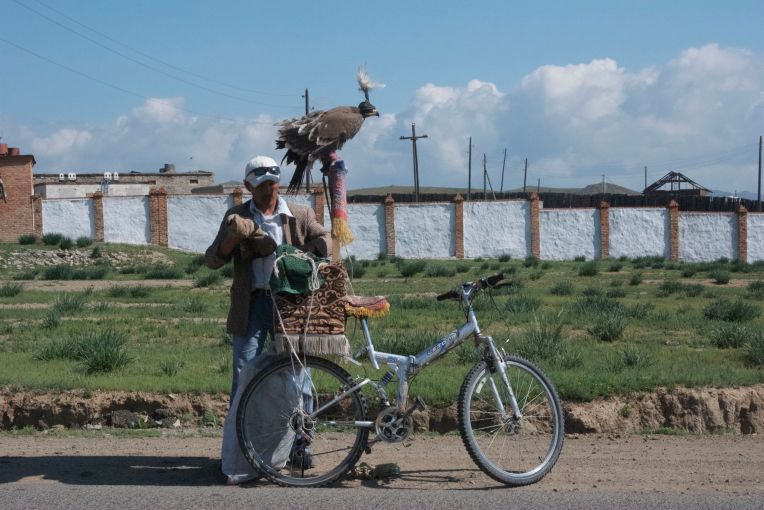
We were about 40 minutes out of UB when we came upon a Kazakh man on a bicycle with his two year old golden eagle perched on the top of stack of parcels. What a way to start the trip!
Kazakh Man and his eagle
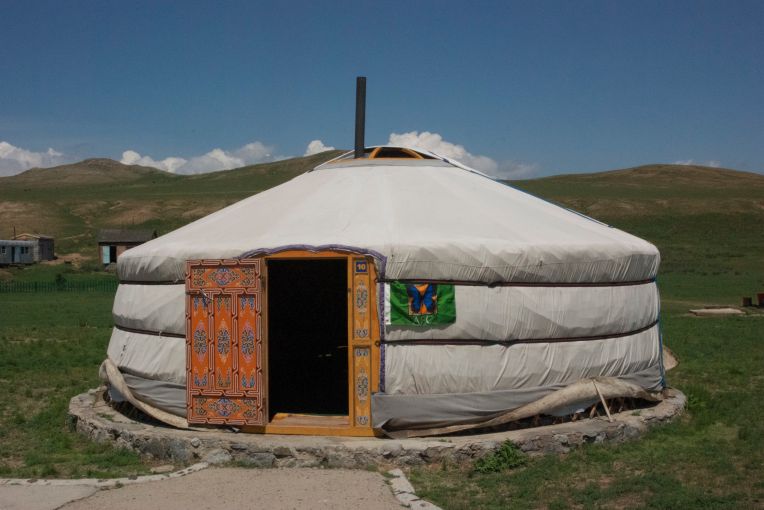
We arrived at the Gun-Galuut (pronounced “goon-galote”) after a pleasant two-hour drive. Lovely tourist ger camp overlooking the valley of the Kherlen River. Here’s my ger-
My ger at Gun-Galuut with AFC flag
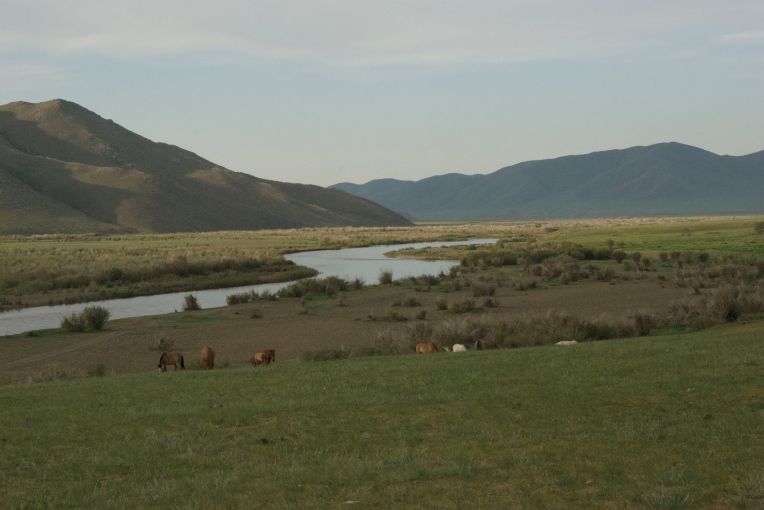
We got settled in. I walked down to the river and sat by it for awhile, caught up on the Journal and got organized for the upcoming fieldwork.
View from my ger
The next four days took on a basic pattern of getting up at 6am, out the door by 6:30, game drive until about 9, back for breakfast, do what needed doing, back out after early dinner by 6:30, drive until light gone between 8:30 and 9. Fall over. Repeat.
The first morning, while Khatnaa was scanning the hills, I took a look along the river and, halfway through the first sweep from left to right spotted four young argali rams on the other side of the river. We were off to a good start. Here’s a selection of other images. I’m saving all the best stuff for the paintings, but these will give you an idea of what I saw.
Kherlen Gul valleyEndangered white-napped cranes; one of three pair in the reserve White-napped crane and domestic yaks
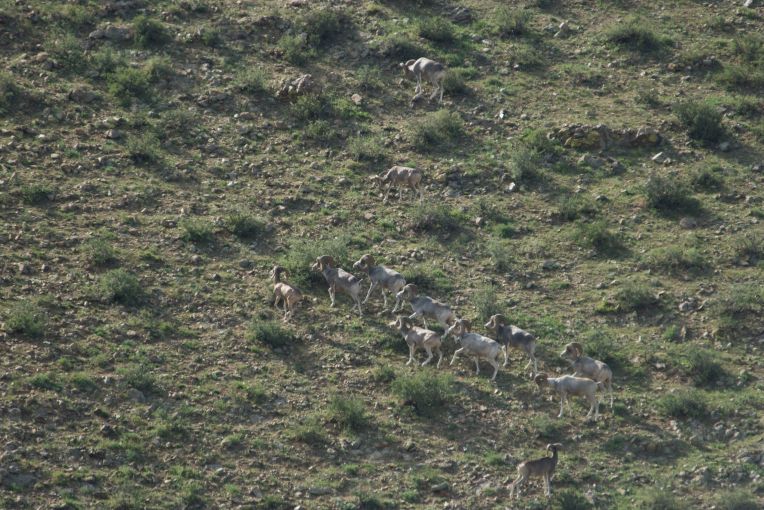
Domestic bactrian camelsPosing with the flagArgali; the big group of 14 we saw
After four fabulous days at Gun-Galuut, we drove back through UB, where I picked up a copy of a bird guide and we ran a couple of other errands. Then it was south to Baga Gazriin Chuluu, with a one night stay at Arburd Sands. It was windy and there were dark clouds around. We stopped for lunch and could hear thunder in the distance. Then it got interesting.
Hail; looking out car window
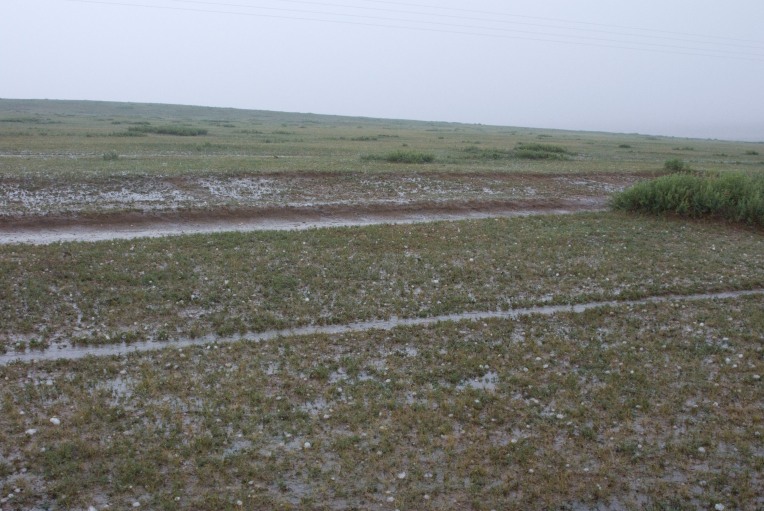
We found ourselves out in the open on the steppe in a violent rain and then hail storm. It was so bad that Khatnaa turned the car so that the back was to the wind to protect the windshield. The sound of the hail hitting the top of the car was really loud and left dents. All we could do was sit tight and wait it out.
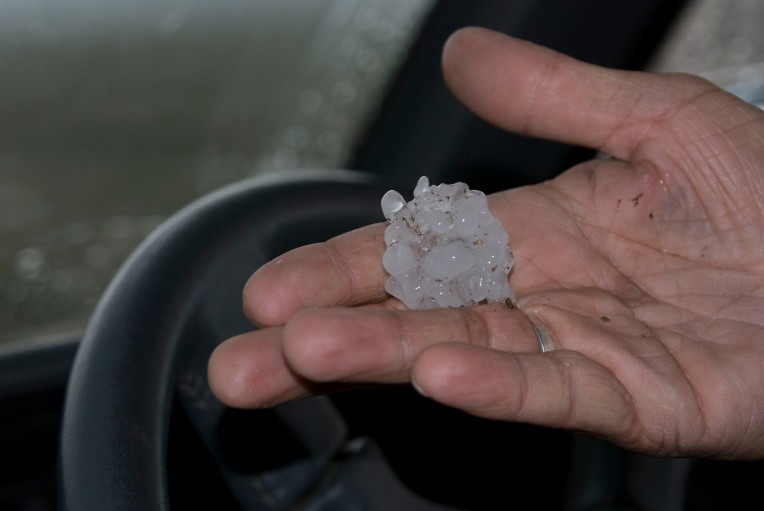
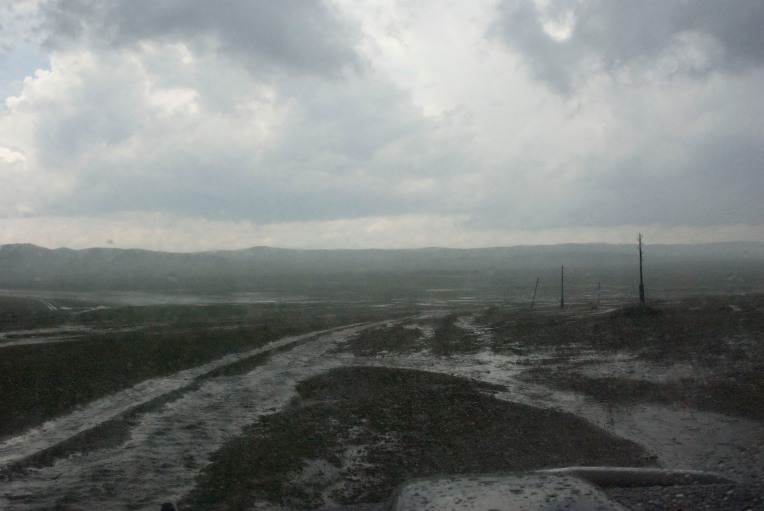
Hailstone that Khatnaa picked up off the groundRoad after hailstorm; the direction we were heading
All the dirt track, or as Khatnaa called them, earth roads had become rushing rivers of water. Amazingly, he was able to pick our way across this safely and without getting stuck in his Mitsubishi Pajaro diesel SUV.
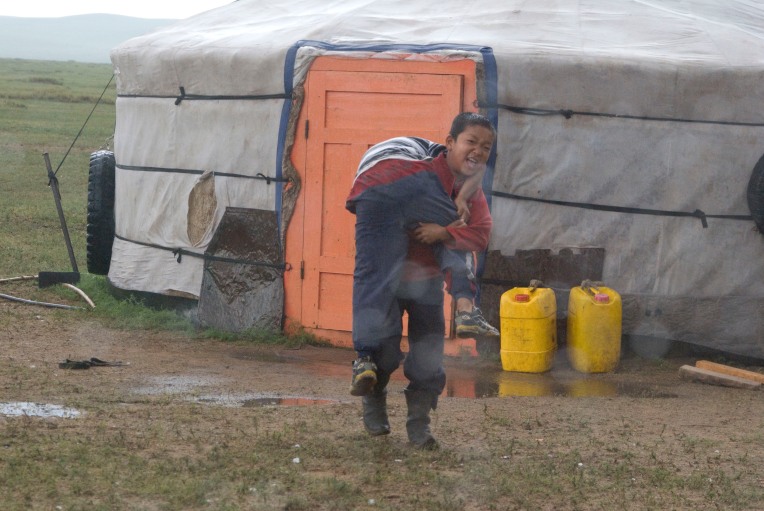
Kids wrestling in the rain
Finally, the hail stopped and we were able to go on. Khatnaa had only been to Arburd Sands once a number of years ago and when he became unsure of the route, he stopped a couple of times and asked for directions. These kids put on a wrestling demo for me while I waited in the car. They were really showing off their moves.
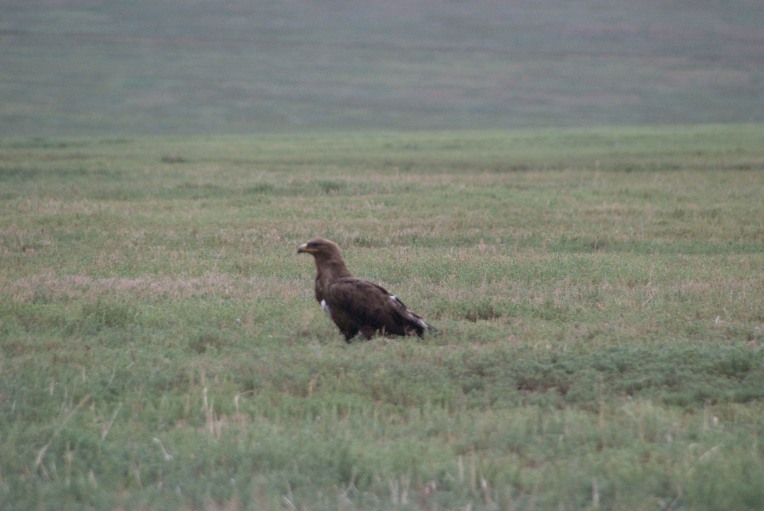
Young golden eagle by side of road
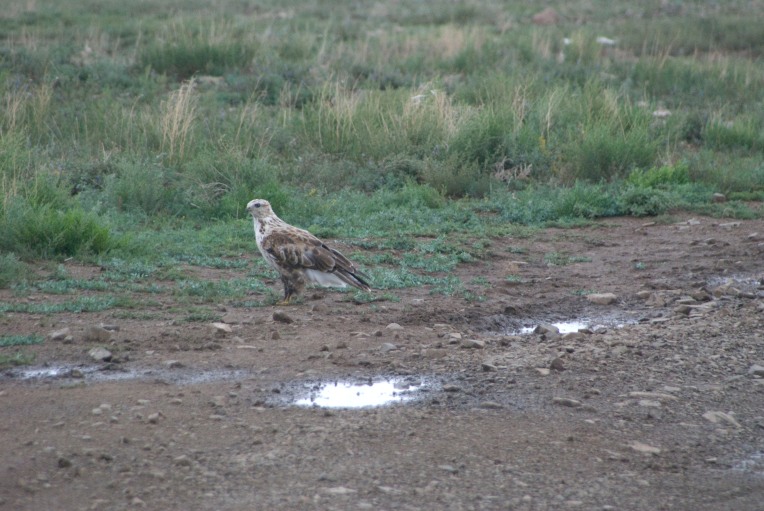
We started to see raptors by the side of the road once we got out past the storm front.
Upland buzzard
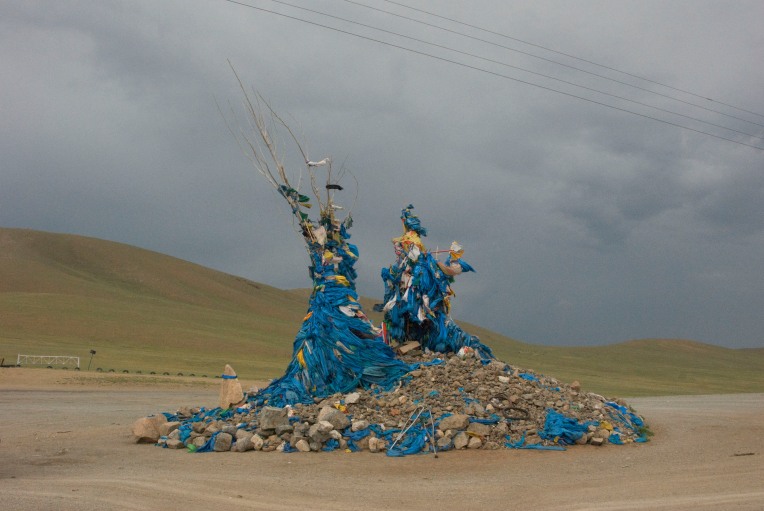
We also passed a number of ovoo. If it was a major one, we stopped, got out and circled it, adding a stone or small tugrik bills. Khatnaa honked at smaller ones as we went by them. More on ovoos in a future post.
Large ovoo
We arrived at Arburd Sands and found out that the storm we had sat through had hit UB, causing the worst flooding in many years. At least 21 people died. If we had not gotten out of UB when we did, we might not have made it out of town at all.
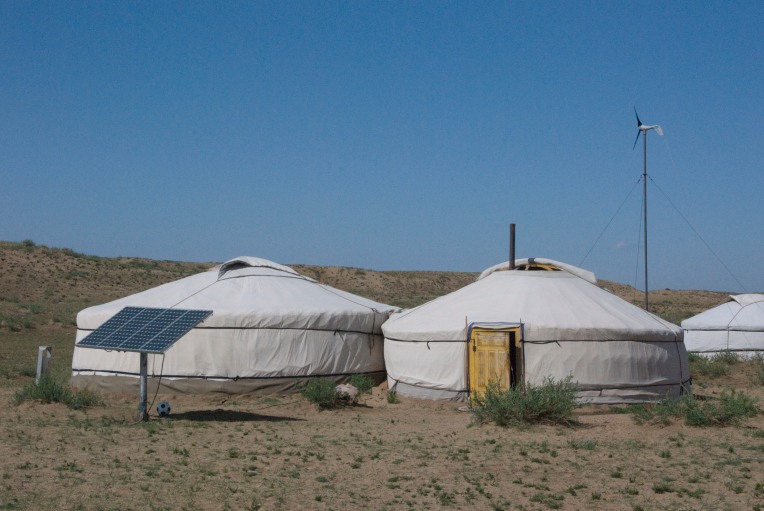
Arburd Sands ger camp is a seasonable sustainable operation which is planned so that it leaves as little a mark on the land as possible. They use solar and wind for power.
Sustainable energy at Arburd Sands
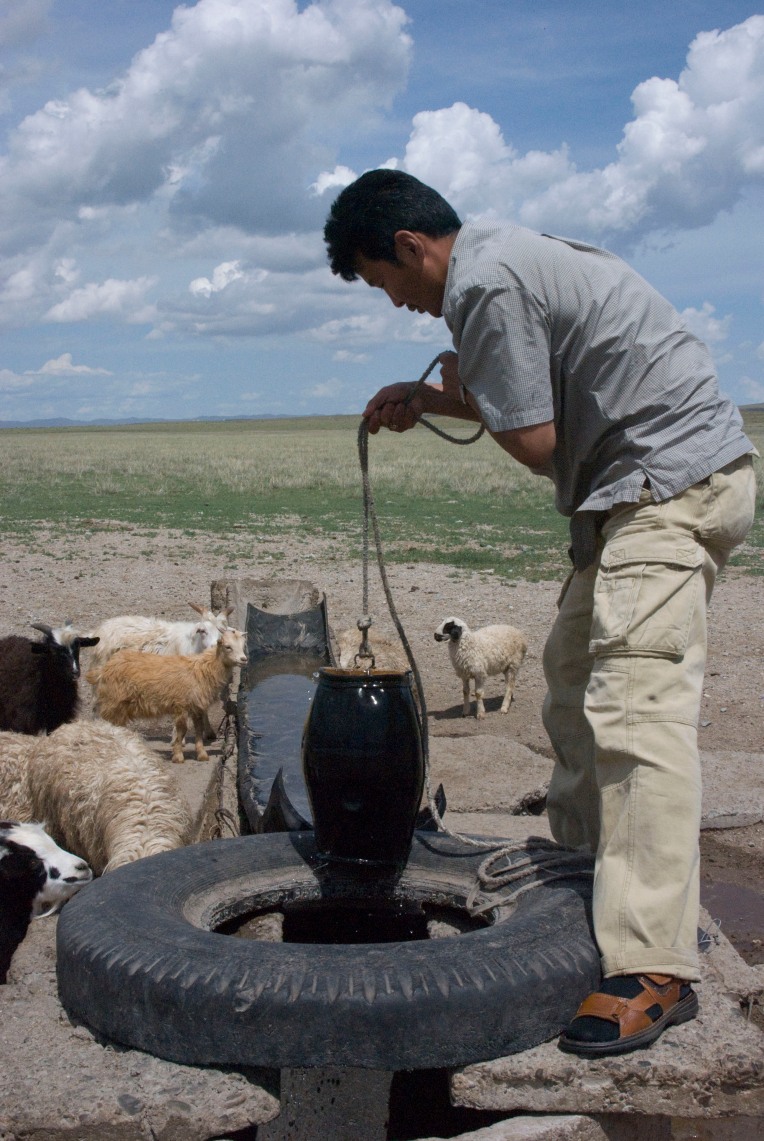
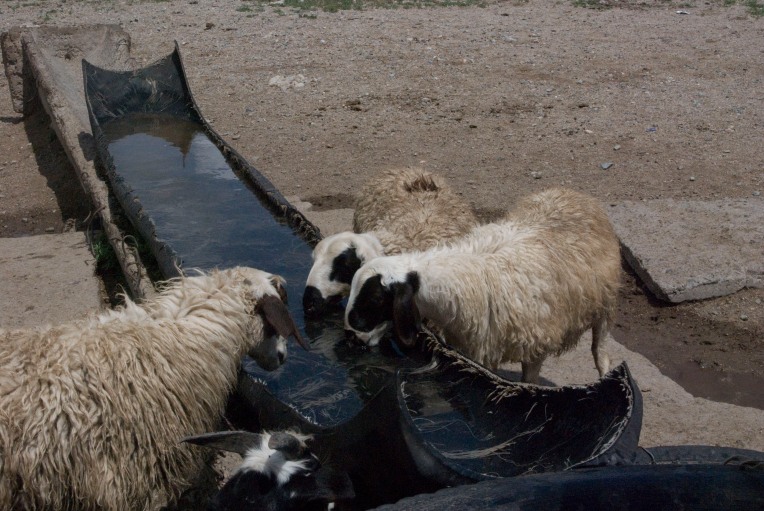
There was an amazing display of thunder and lightning that evening, stretching from east to west. But it only rained during the night. No hail. The next morning we continued on to Baga Gazriin Chuluu Nature Reserve. But, as I am coming to realize is routine when one travels in Mongolia, there were interesting things along the way. Like when Khatnaa stopped at this well and, following the ancient Mongol tradition, drew a couple of buckets of cool water for the animals.
Khatnaa pulls water from the wellSheep drinking the cool well water
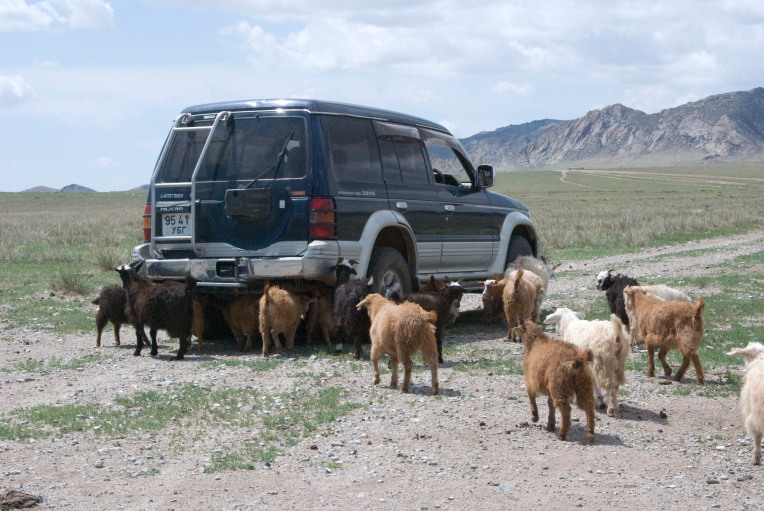
Meanwhile, the goats were seizing another, albeit temporary, opportunity to take advantage of the shade under the car.
Goats going for the shade
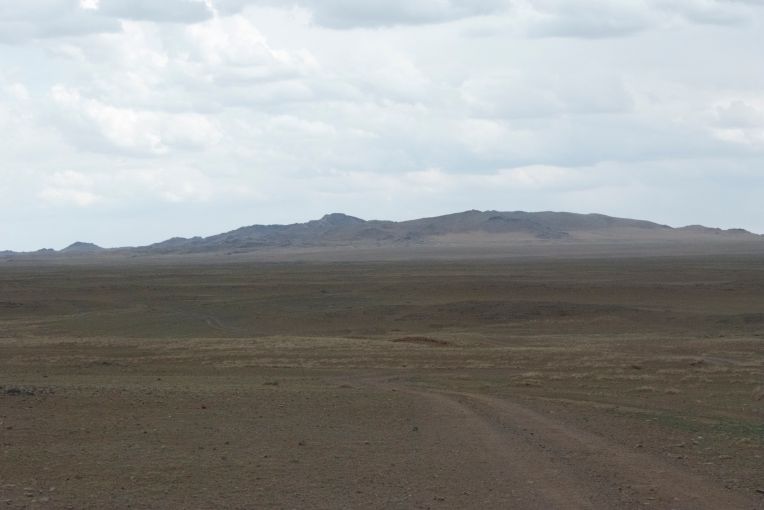
We traveled across the rolling steppe, passing an enormous and impressive mountain, a small lake and many country people and their flocks of animals. Finally, in the distance, we could see our destination, Baga Gazriin Chuluu.
Baga Gazriin Chuluu rises out of the steppe
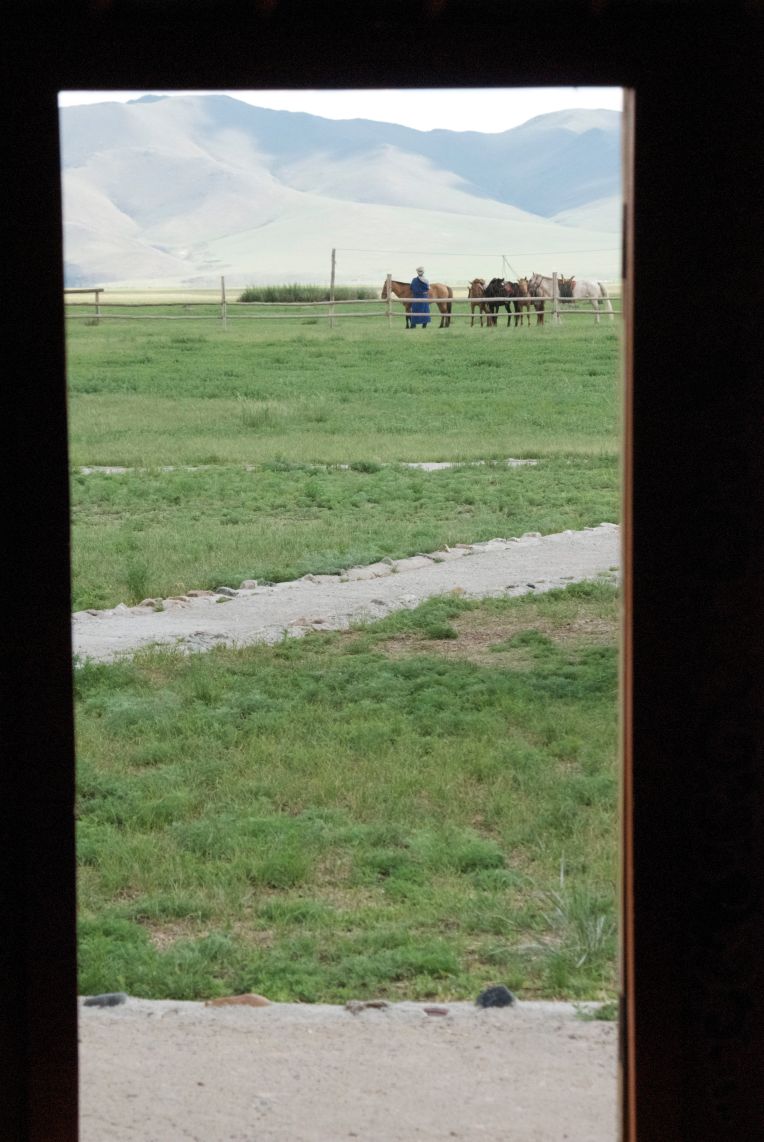
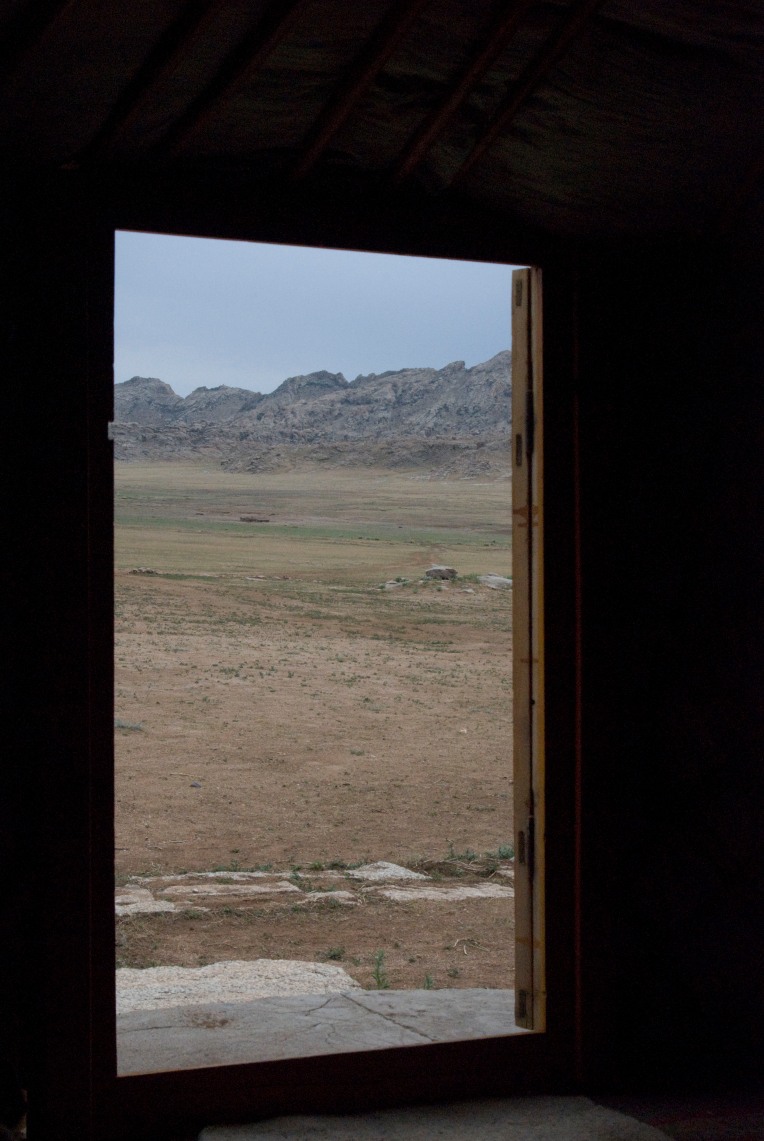
We arrived at the ger camp and went through the usual routine of settling in. Here’s my view through the door of my small, but comfortable ger.
View through the door of my ger
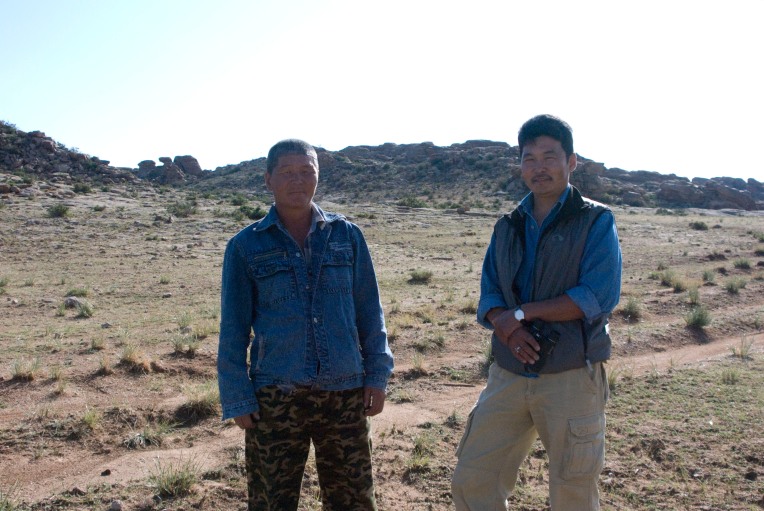
Khatnaa, as the guides usually do, started to chat up the camp staff. He found that one man, Onroo, had lived full-time at the reserve for three years and had a pretty good idea of where the animals were to be found. He went with us both mornings and proved to be indispensable.
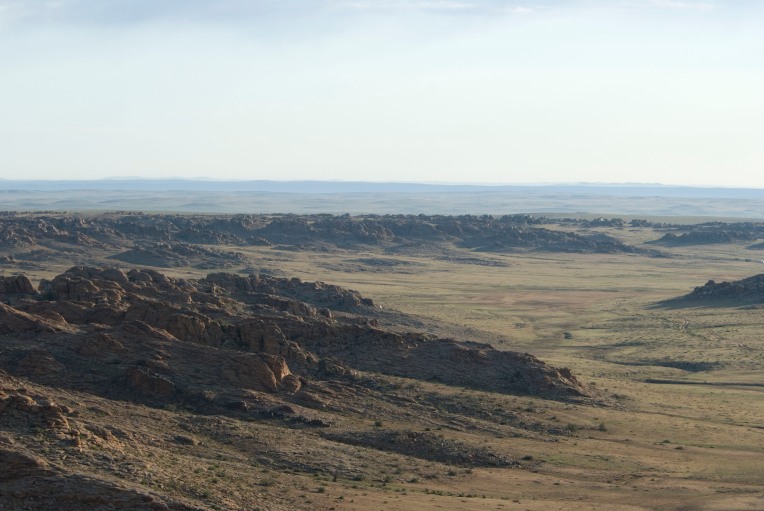
The setting
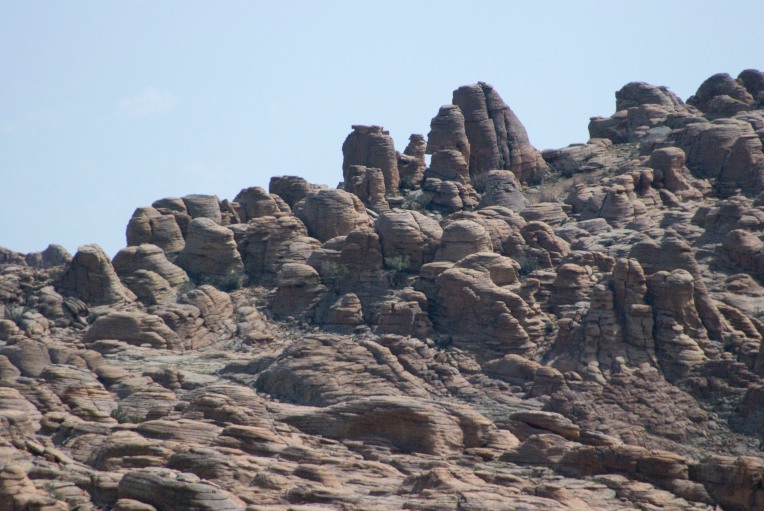
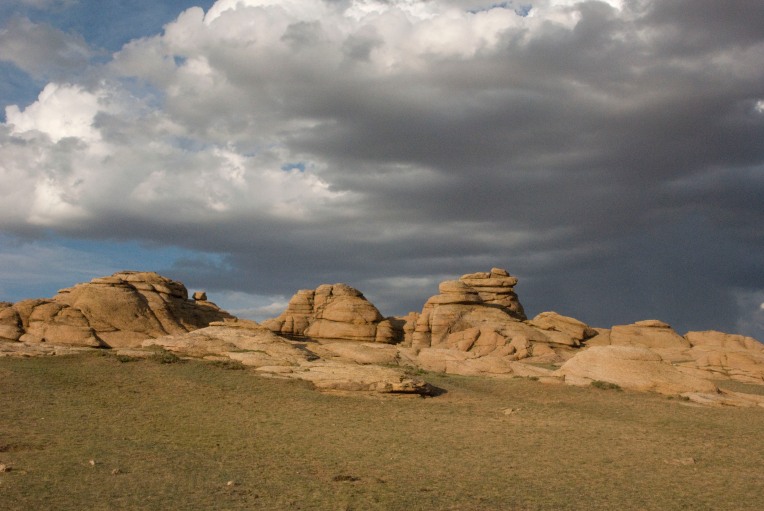
Some of the fantastic rock formations.
Rock formationsRocks, late afternoon
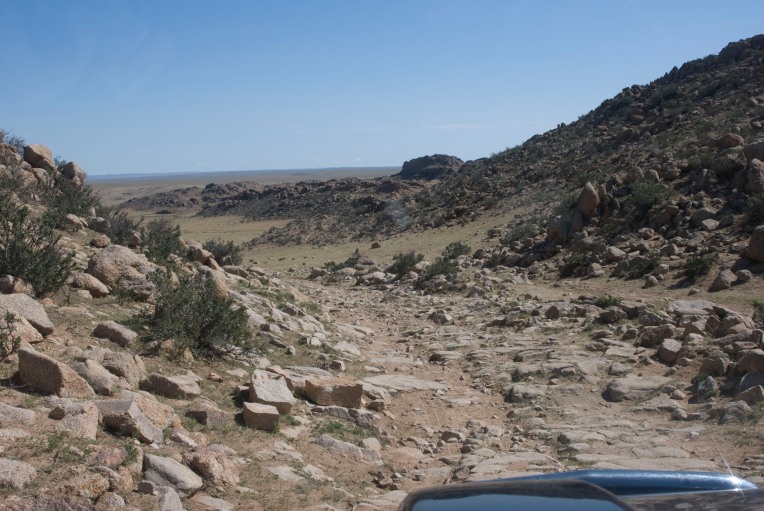
Sometimes the going got interesting as we worked our way around the reserve.
Rocky road
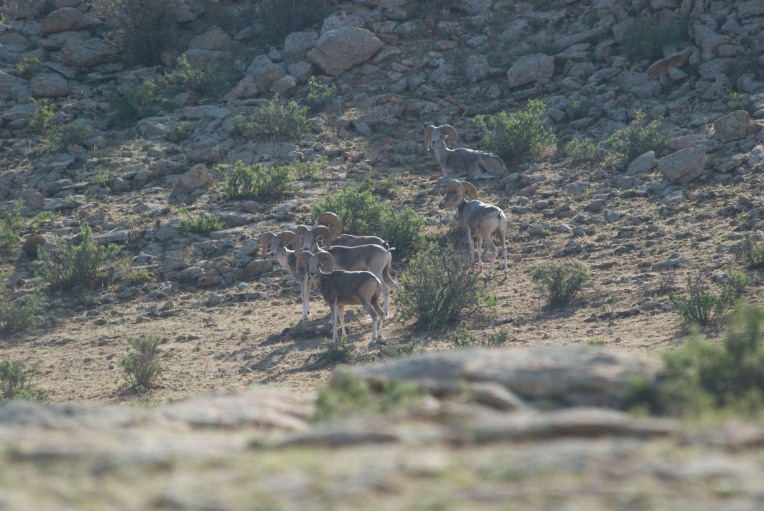
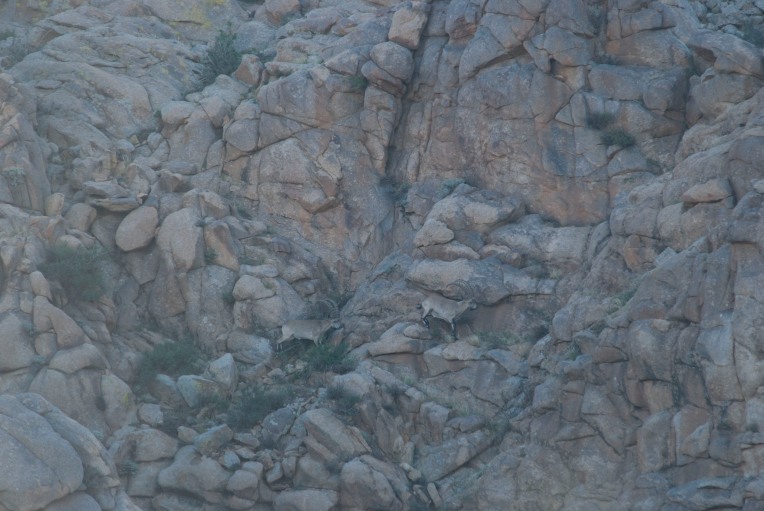
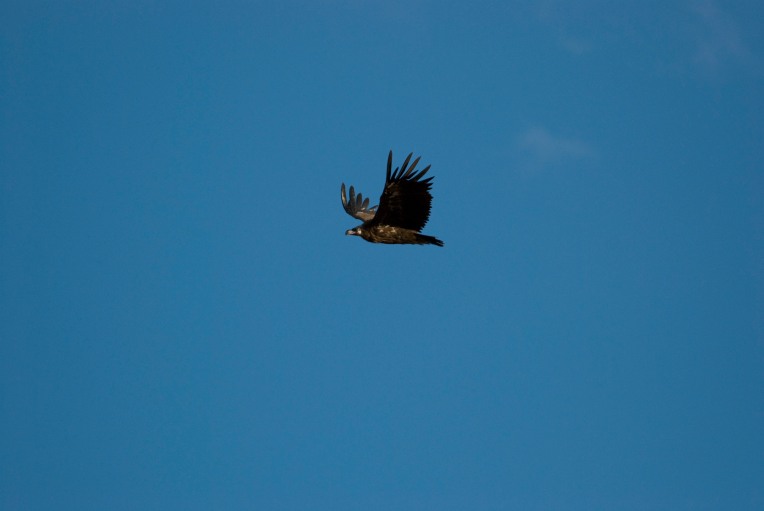
The main species of interest here are argali, ibex and the cinereous vultures.
Six argali
These animals were so tolerant of our presence that we were able to get out of the car and take pictures of each other with the sheep in the (somewhat distant, about 800 meters) background.
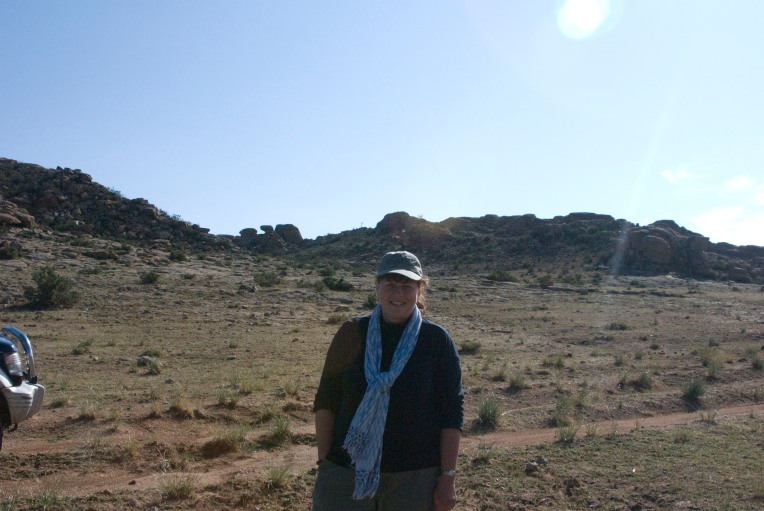
Onroo and Khatnaa in front of argaliMe in front of argali
They’re at the base of the rocky hill to my right on a line with my cap.
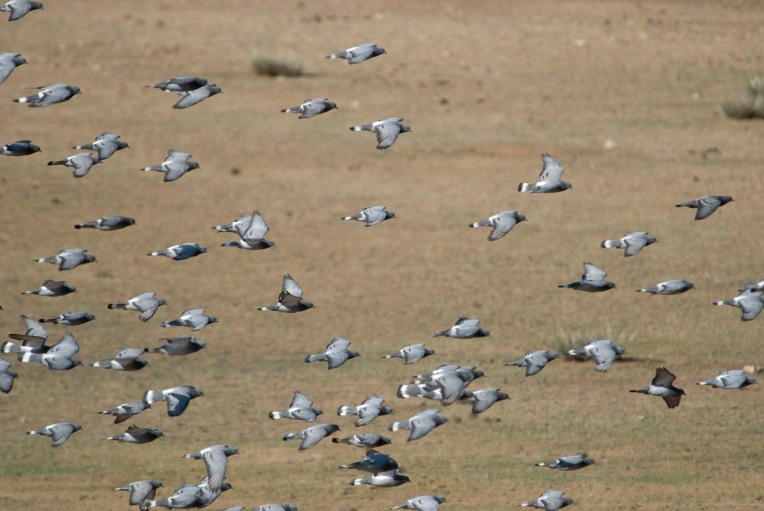
Ibex; two large billies of a group of fiveCinereous vultureHill pigeons (Columba rupestris); a relative of our "beloved"urban rock pigeon
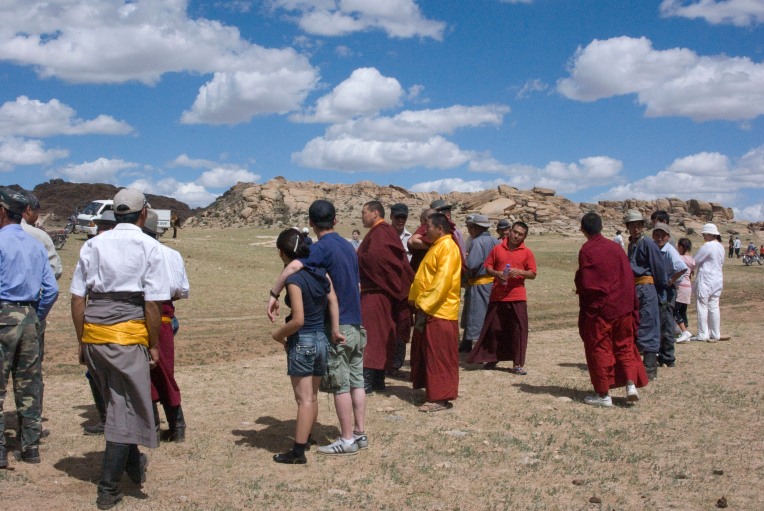
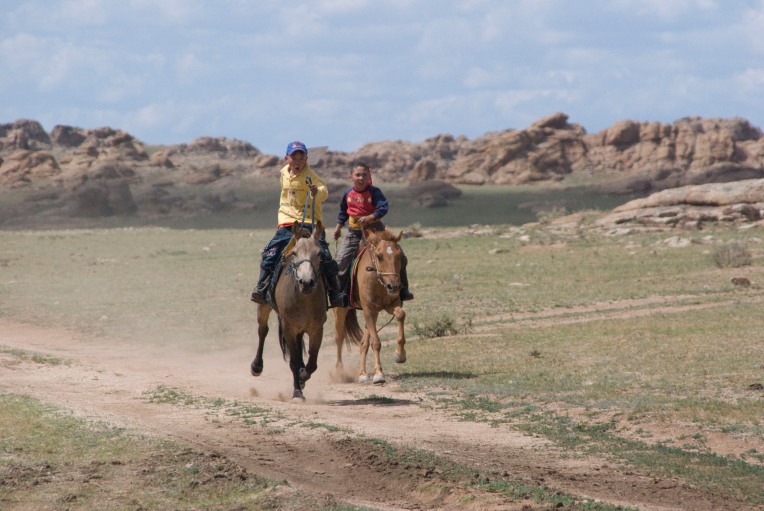
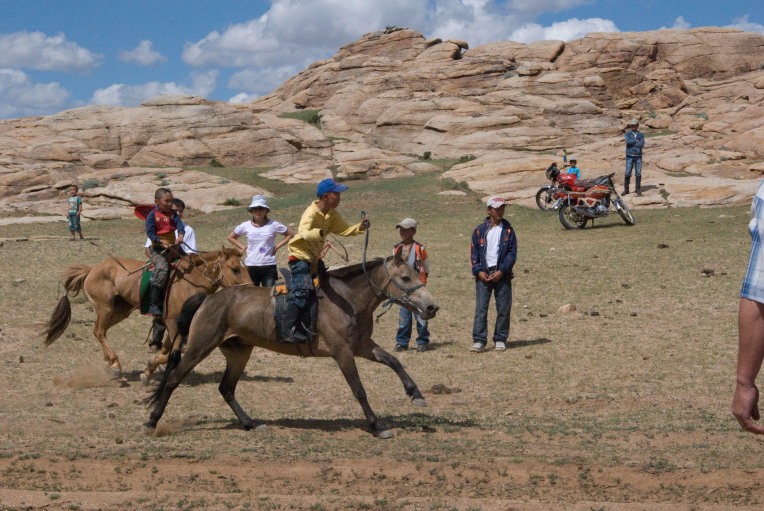
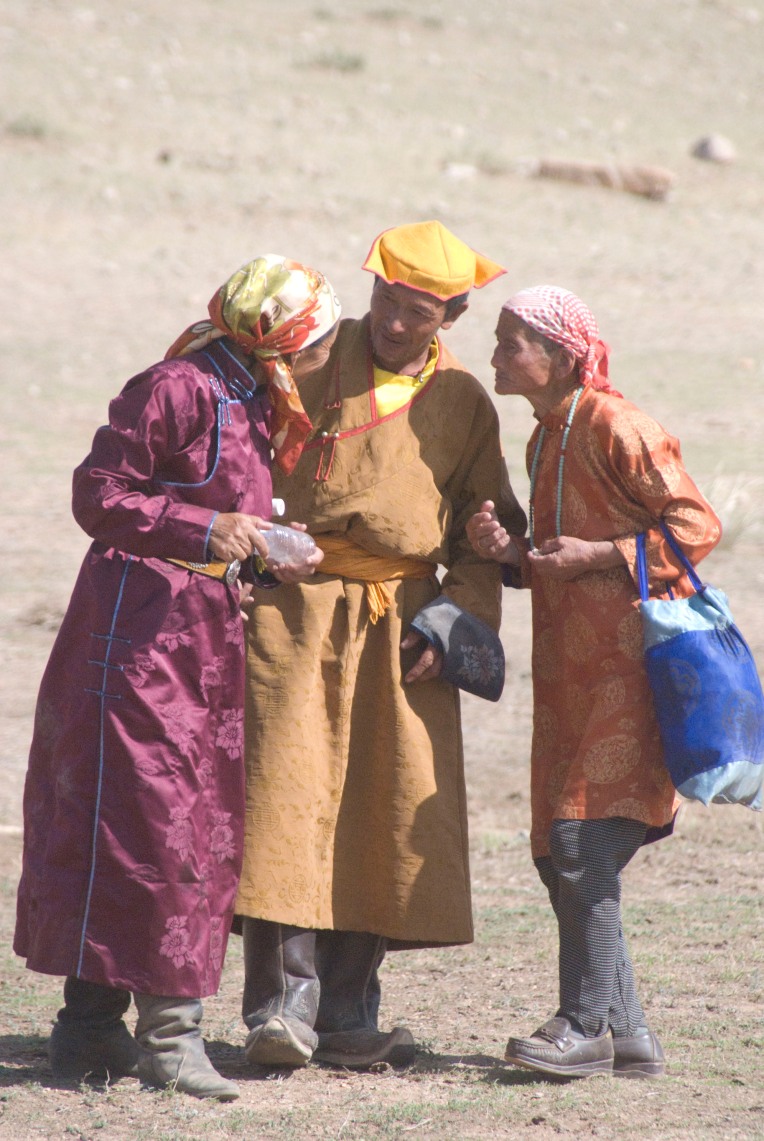
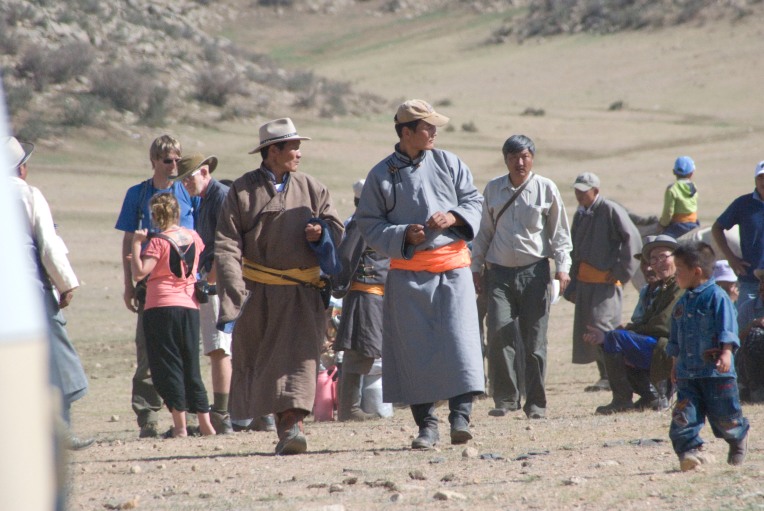
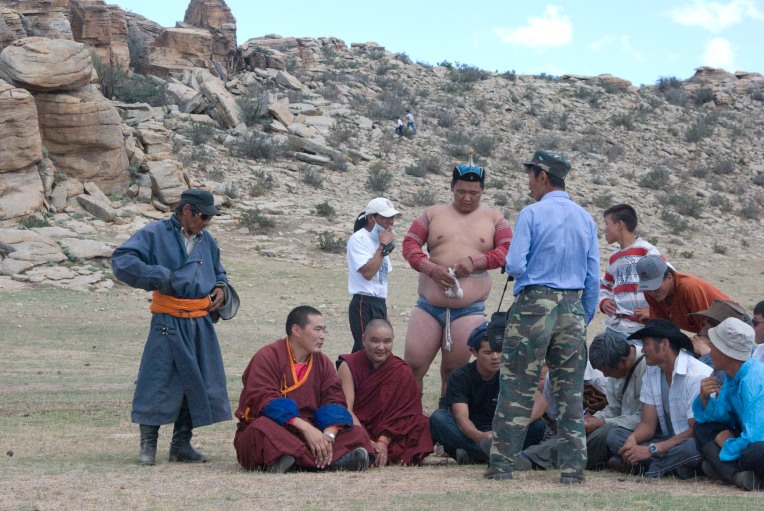
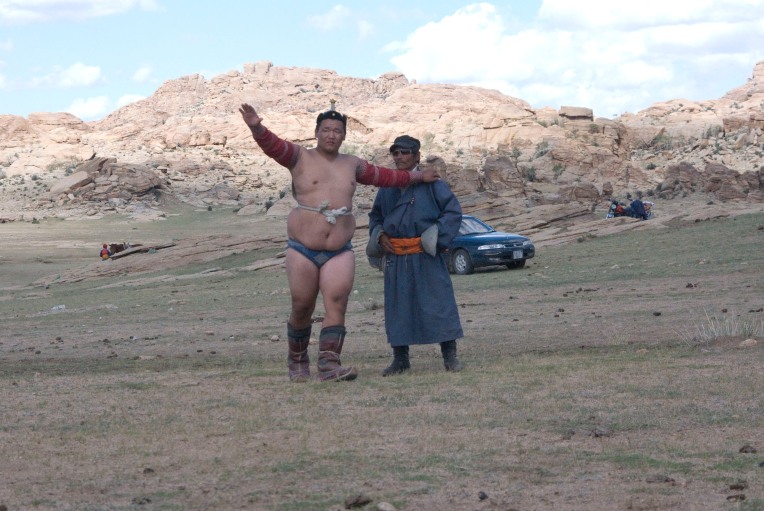
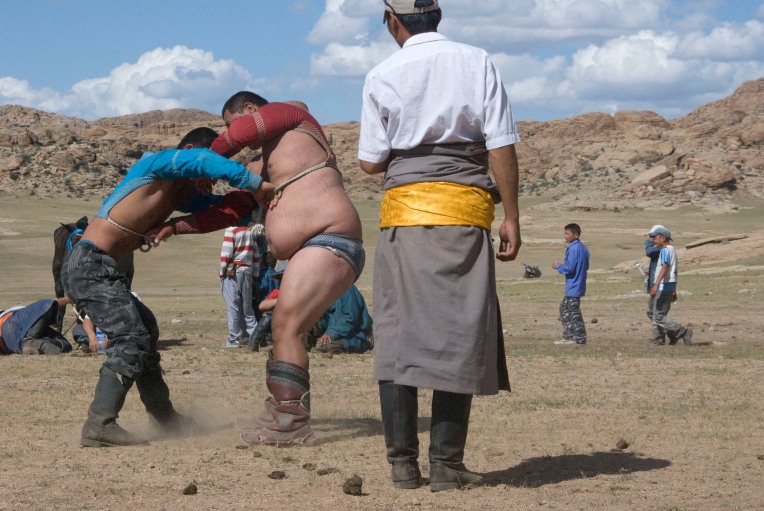
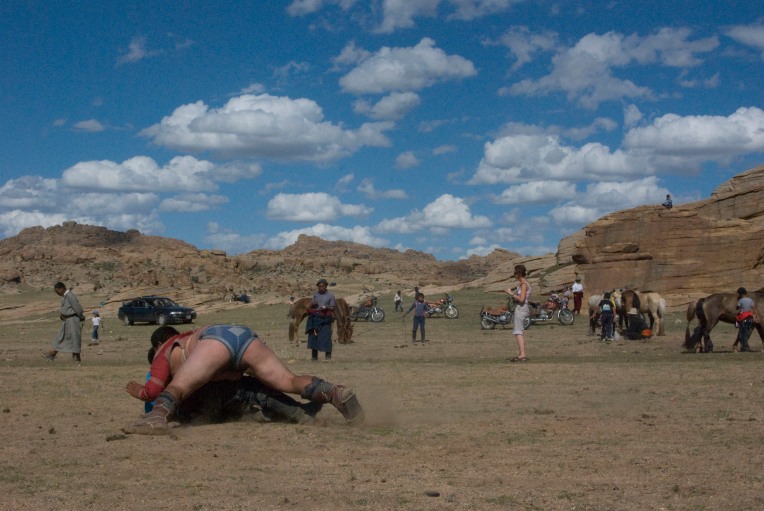
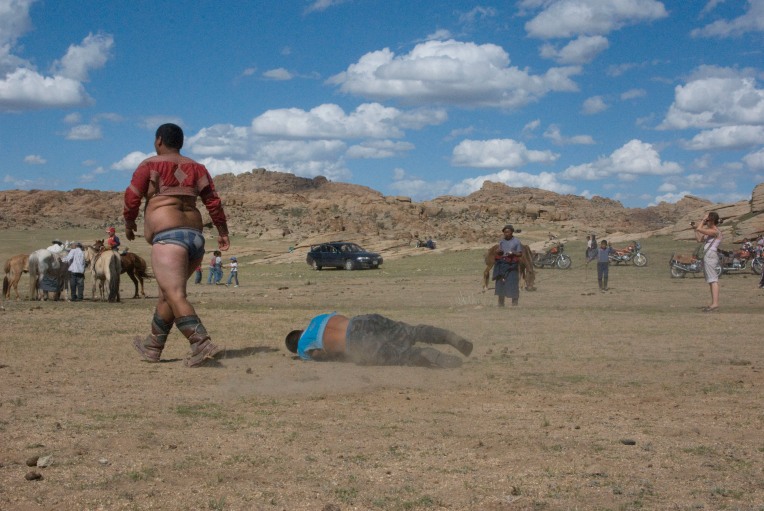
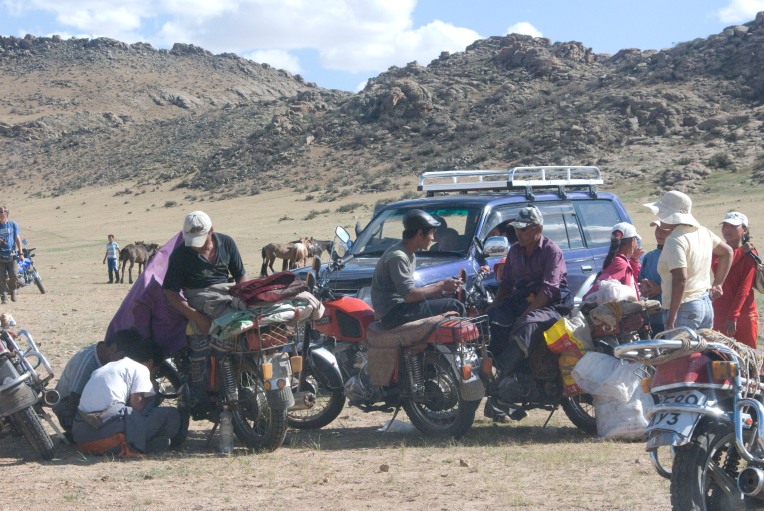
I ended up having a couple of wonderful cultural experiences also, which included a ger visit where I got to watch soup made with boortz, dried meat, and where we were served that and cream, aruul, yogurt and milk tea and also getting to attend a “mountain washing” ceremony that included chanting Buddhist monks, a horse race, wrestling and anklebone shooting.
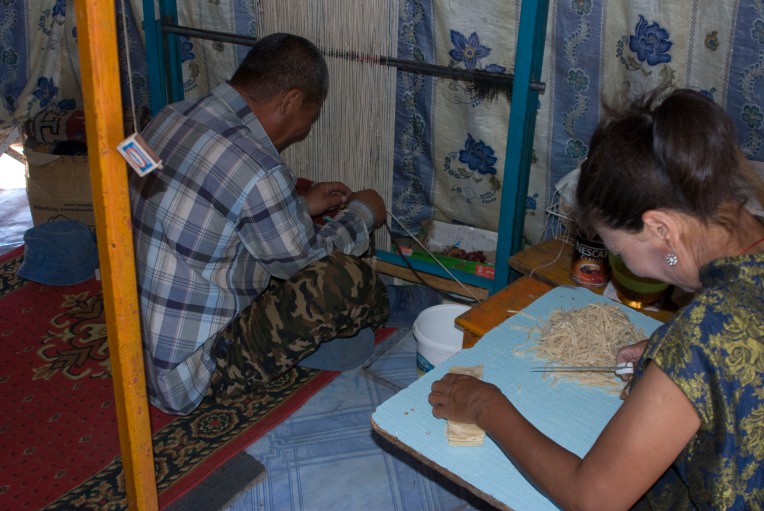
In Yanjmaa's ger; she's making noodles for soup and Onroo is doing some weaving on her loomHorse race spectatorsHorse raceHorse raceMountain ceremony attendeesMen in del and sashes; they look good and they know itWrestling; almost ready to start The Falcon of the Aimag doing the traditional Eagle Dance before a boutGrappling for advantageHe fell on every opponent like this The guy on the ground was up in a moment and ok; the Falcon won the competitionEnd of the event; last chance to chat
I thought I’d start off the New Year with the subject that’s most near and dear to Mongolians’ hearts – horses.
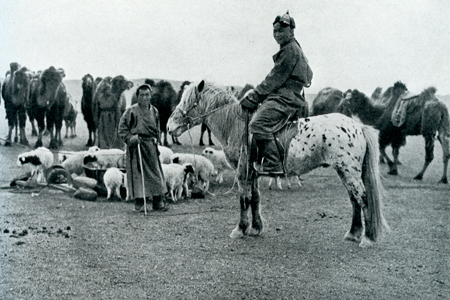
Here’s an old photo from the late 1920’s, taken on one of Roy Chapman Andrews’ Central Asiatic Expeditions:
Mongolian herder, late 1920's
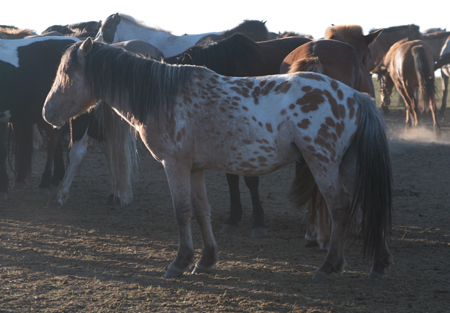
Here’s a horse I saw this past September:
Mongolian horse, Arburd Sands
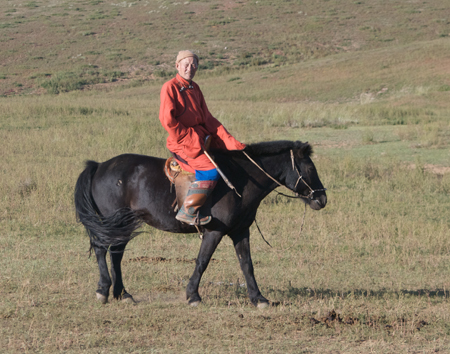
And here’s the herder who owns the horse. Other than the head gear, not much has changed. The long robe or “del” is the perfect garment for the climate and environment. And while I have seen herders wearing the traditional pointed hat, they tend to be mostly the young men. Baseball caps are what one usually sees. The older men often wear snappy-looking fedoras.
Choidog, Arburd Sands
On Friday I’ll be debuting my latest Mongolian horse painting!

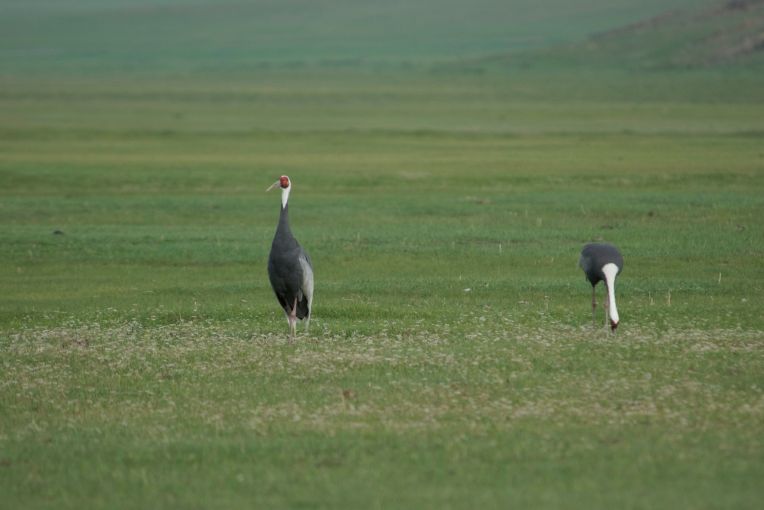
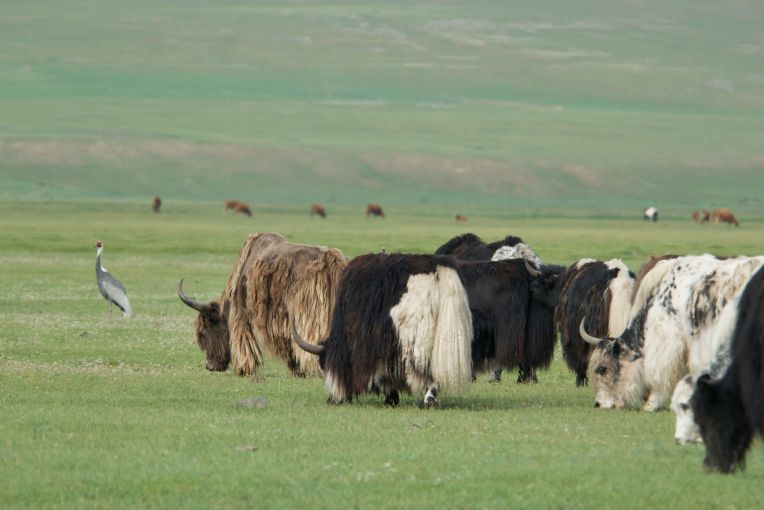 White-napped crane and domestic yaks
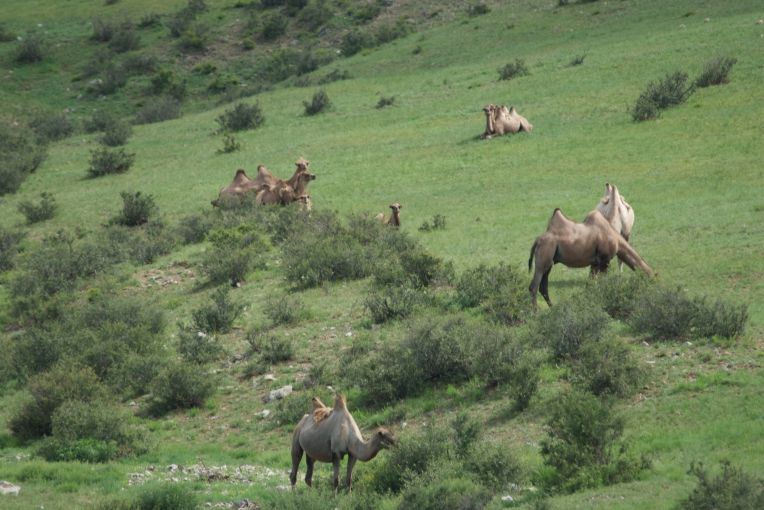
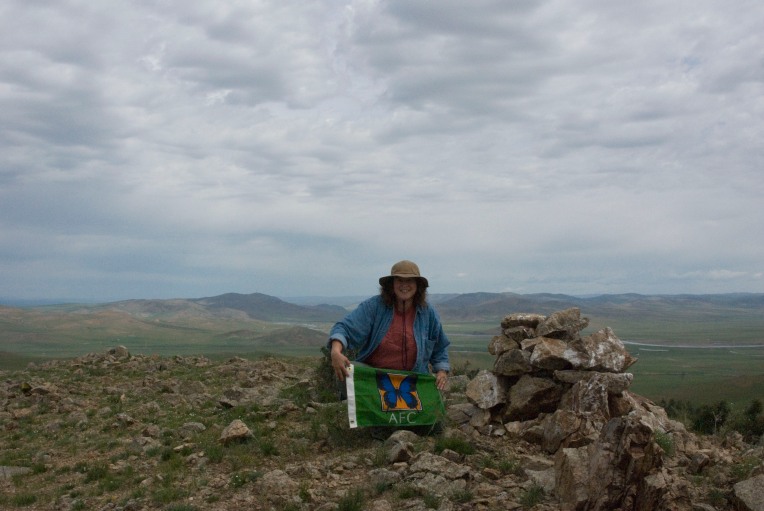
 Susan Fox, American Artist